

Ethological, Clinical, and Neurobiological Studies on Cannibalism in Black-Necked Pheasants (Phasianus colchicus) and Correction of Behavioral Disorders by Applying Nutritional Supplements

 ,
,  ,
,  , , and
Simple Summary
Abstract
1. Introduction
2. Materials and Methods
3. Results
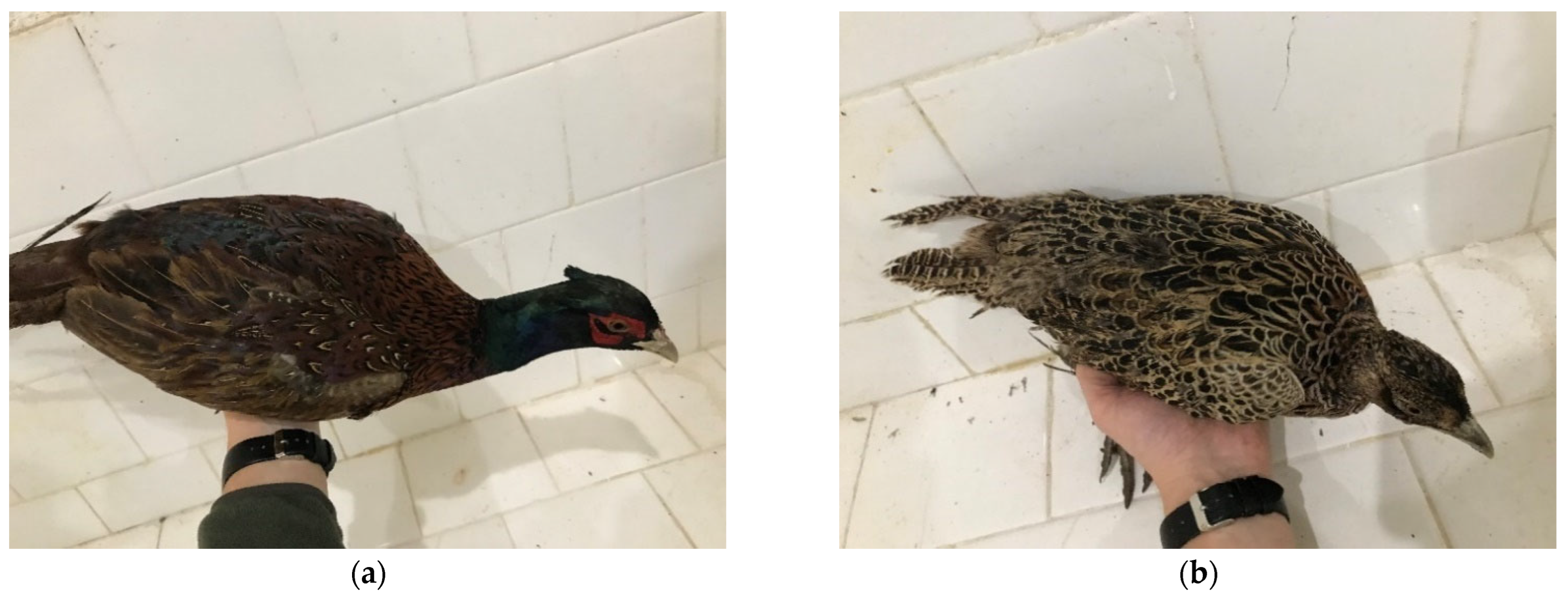
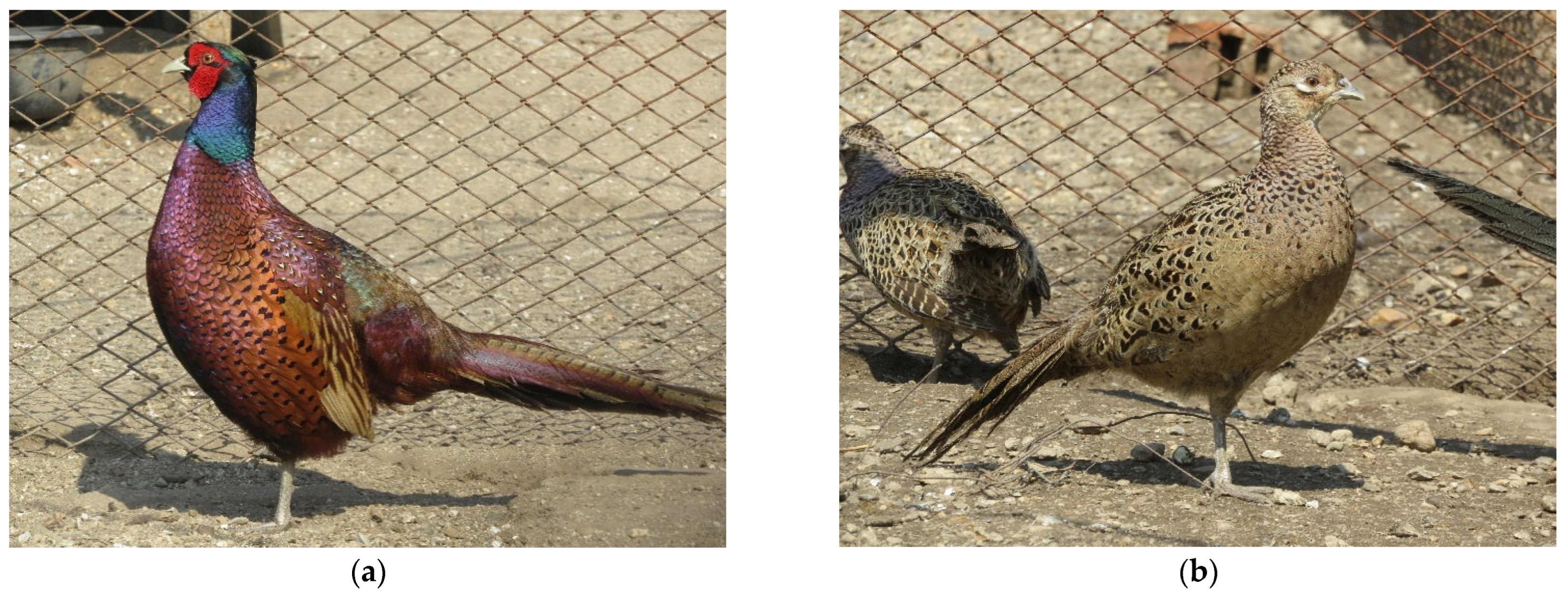
3.1. Behavioral Diagnostics
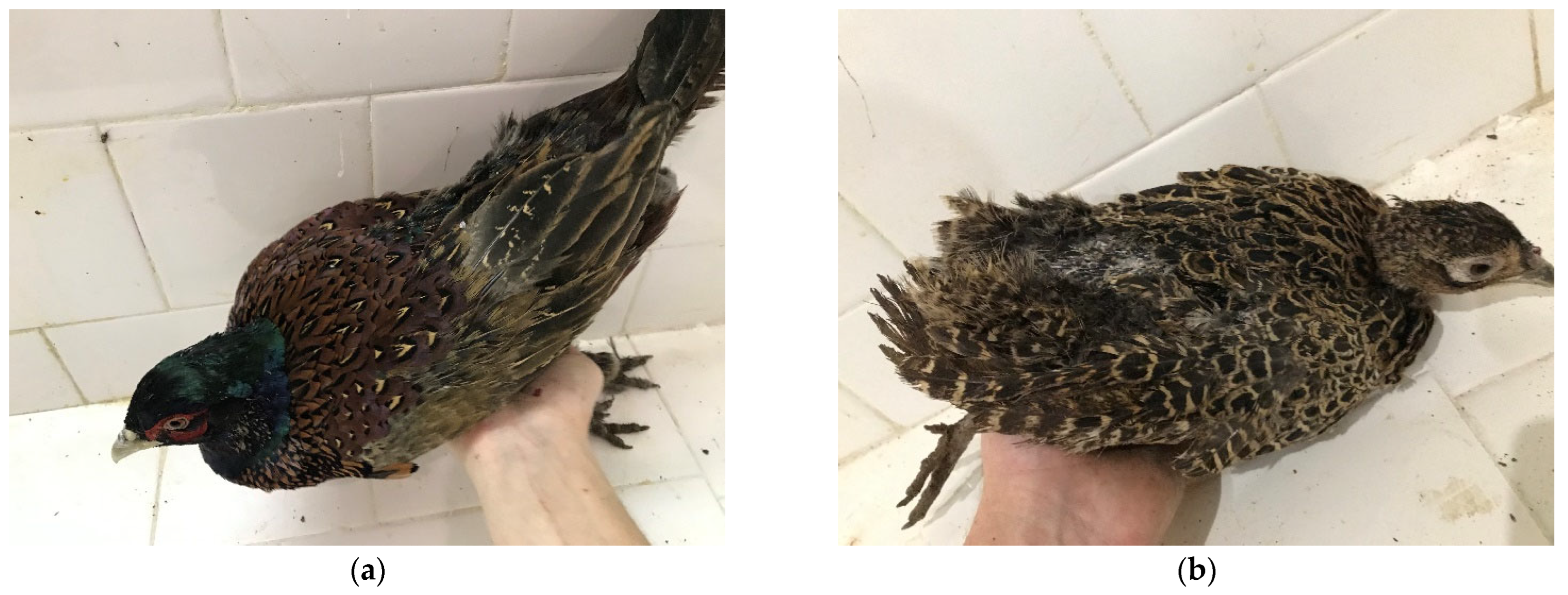
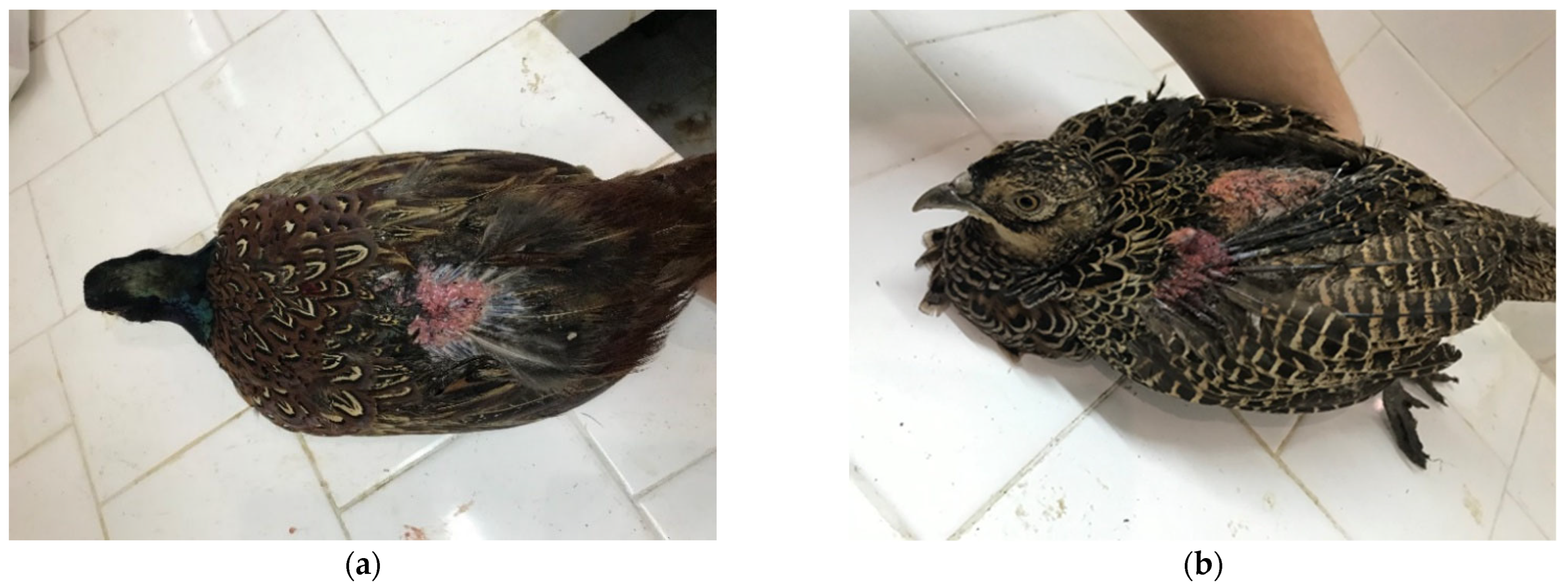
3.2. Clinical Examination
3.3. Neurobiological Studies
4. Discussion
5. Conclusions
Supplementary Materials
Author Contributions
Funding
Institutional Review Board Statement
Informed Consent Statement
Data Availability Statement
Acknowledgments
Conflicts of Interest
Abbreviations
| EU | European Union |
| IP | Injurious pecking |
| PF | Feather pecking |
| AAAs | Aromatic amino acids |
| TRP | Tryptophan |
| PHE | Phenylalanine |
| TYR | Tyrosine |
| SFP | Severe feather pecking |
| SIL | Silymarin |
| 5-HT | 5-hydroxytryptamine |
| DA | Dopamine |
| LC/MS | Liquid chromatography-mass spectrometry |
| DVR | Digital video recorder |
| AJS | Agilent jet Stream |
| GFP | Gentle feather pecking |
| adj. p | Adjusted p value. |
References
- Blanco, G.; Cuevas, J.A.; Frías, Ó.; del Barrio, J.L.G. A shot in the dark: Sport hunting of declining corvids promotes the inadvertent shooting of threatened red-billed choughs. J. Nat. Conserv. 2019, 52, 125739. [Google Scholar] [CrossRef]
- Humphreys, R. A ‘Game’ bird? On why hunting is not a game and thus not a sport. Sport Ethics Philos. 2023, 17, 432–442. [Google Scholar] [CrossRef]
- Kokoszynski, D.; Bernacki, Z.; Cisowska, A. Growth and development of young game pheasants (Phasianus colchicus). Arch. Tierz. 2011, 54, 83–92. [Google Scholar] [CrossRef][Green Version]
- Flis, M.; Czyżowski, P.; Rytlewski, G.; Grela, E.R. Insect meal as a dietary protein source for pheasant quails: Performance, carcass traits, amino acid profile and mineral contents in muscles. Animals 2024, 14, 2992. [Google Scholar] [CrossRef]
- Nikolov, S.; Kanakov, D. Influencing factors leading to damaging behavior—Feather pecking and cannibalism in game birds. Trakia J. Sci. 2020, 18, 377–387. [Google Scholar] [CrossRef]
- Nikolov, S. Classification of methods for the prevention and correction of injurious pecking in game birds and poultry. Trakia J. Sci. 2025, 23, 139–145. [Google Scholar] [CrossRef]
- Kuzniacka, J.; Adamski, M. Growth rate of body weight and measurements in pheasants reared up to the 24th week of life. Arch. Tierz. 2010, 53, 360–367. [Google Scholar] [CrossRef]
- Hrabčáková, P.; Voslářová, E.; Bedáňová, I.; Pištěková, V.; Chloupek, J.; Večerek, V. Haematological and biochemical parameters during the laying period in common pheasant hens housed in enhanced cages. Sci. World J. 2014, 2014, 364602. [Google Scholar] [CrossRef]
- Birkl, P.; Franke, L.; Rodenburg, T.B.; Ellen, E.; Harlander-Matauschek, A. A role for plasma aromatic amino acids in injurious pecking behavior in laying hens. Physiol. Behav. 2017, 175, 88–96. [Google Scholar] [CrossRef]
- Daigle, C.L. Controlling feather pecking and cannibalism in egg laying flocks. In Egg Innovations and Strategies for Improvements; Hester, P., Ed.; Academic Press: London, UK, 2017; pp. 111–121. [Google Scholar]
- Ferrante, V.; Lolli, S.; Ferrari, L.; Watanabe, T.T.N.; Tremolada, C.; Marchewka, J.; Estevez, I. Differences in prevalence of welfare indicators in male and female turkey flocks (Meleagris gallopavo). Poult. Sci. 2019, 98, 1568–1574. [Google Scholar] [CrossRef]
- Nikolov, S.; Kanakov, D. Types and clinical presentation of damaging behaviour—Feather pecking and cannibalism in birds. Bulg. J. Vet. Med. 2022, 25, 349–358. [Google Scholar] [CrossRef]
- Hrabcaková, P.; Bedanova, I.; Voslarova, E.; Pistekova, V.; Vecerek, V. Evaluation of tonic immobility in common pheasant hens kept in different housing systems during laying period. Arch. Tierz. 2012, 55, 626–632. [Google Scholar] [CrossRef]
- Gilani, A.M.; Knowles, T.G.; Nicol, C.J. The effect of rearing environment on feather pecking in young and adult laying hens. Appl. Anim. Behav. Sci. 2013, 148, 54–63. [Google Scholar] [CrossRef]
- Kaukonen, E.; Valros, A. Feather pecking and cannibalism in non-beak-trimmed laying hen flocks—Farmers’ perspectives. Animals 2019, 9, 43. [Google Scholar] [CrossRef]
- de Haas, E.N.; Bolhuis, J.E.; de Jong, I.C.; Kemp, B.; Janczac, A.M.; Rodenburg, T.B. Predicting feather damage in laying hens during the laying period: Is it the past or is it the present? Appl. Anim. Behav. Sci. 2014, 160, 75–85. [Google Scholar] [CrossRef]
- Van Krimpen, M.M.; Kwakkel, R.P.; Van Der Peet-Schwering, C.M.C.; Den Hartog, L.A.; Verstegen, M.W.A. Effects of dietary energy concentration, nonstarch polysaccharide concentration, and particle size on digesta mean retention time and gut development in laying hens. Br. Poult. Sci. 2011, 52, 730–741. [Google Scholar] [CrossRef] [PubMed]
- Birkl, P.; Bharwani, A.; Kjaer, J.B.; Kunze, W.; McBride, P.; Forsythe, P.; Harlander-Matauschek, A. Differences in cecal microbiome of selected high and low feather-pecking laying hens. Poult. Sci. 2018, 97, 3009–3014. [Google Scholar] [CrossRef] [PubMed]
- Birkl, P.; Chow, J.; McBride, P.; Kjaer, J.B.; Kunze, W.; Forsythe, P.; Harlander-Matauschek, A. Effects of acute tryptophan depletion on repetitive behavior in laying hens. Front. Vet. Sci. 2019, 6, 230. [Google Scholar] [CrossRef] [PubMed]
- Nikolov, S.; Kanakov, D.; Ivanov, V.; Nikolova, G.; Karamalakova, Y. Oxidative stress in Black-necked pheasants with signs of cannibalism—The use of tryptophan and silymarin as antioxidants. Tradit. Mod. Vet. Med. 2022, 7, 50–56. [Google Scholar] [CrossRef]
- Nikolov, S.; Kanakov, D.; Ivanov, V. Plasma cholesterol and triglyceride levels in Black-necked pheasants, Gray and Chukar partridges with cannibalism treated with silymarin and tryptophan. Bulg. J. Vet. Med. 2024, 27, 8–14. [Google Scholar] [CrossRef]
- Saeed, M.; Babazadeh, D.; Arif, M.; Arain, M.A.; Bhutto, Z.A.; Shar, A.H.; Kakar, M.U.; Manzoor, R.; Chao, S. Silymarin: A potent hepatoprotective agent in poultry industry. World’s Poult. Sci. J. 2017, 73, 483–492. [Google Scholar] [CrossRef]
- Haddadi, R.; Shahidi, Z.; Eyvaribrooshghalan, S. Silymarin and neurodegenerative diseases: Therapeutic potential and basic molecular mechanisms. Phytomedicine 2020, 79, 153320. [Google Scholar] [CrossRef]
- Wang, X.; Zhang, Z.; Wu, S.C. Health benefits of Silybum marianum: Phytochemistry, pharmacology, and applications. J. Agric. Food Chem. 2020, 68, 11644–11664. [Google Scholar] [CrossRef] [PubMed]
- Xiao, B.; Jiang, Y.; Yuan, S.; Cai, L.; Xu, T.; Jia, L. Silibinin, a potential fasting mimetic, inhibits hepatocellular carcinoma by triggering extrinsic apoptosis. MedComm 2024, 5, e457. [Google Scholar] [CrossRef] [PubMed]
- Jaffar, H.M.; Al-Asmari, F.; Khan, F.A.; Rahim, M.A.; Zongo, E. Silymarin: Unveiling its pharmacological spectrum and therapeutic potential in liver diseases—A comprehensive narrative review. Food Sci. Nutr. 2024, 12, 3097–3111. [Google Scholar] [CrossRef] [PubMed]
- Youssef, S.F.; Abdelfatah, M.H.; Abdelatif, H.A.; Mohamed, M.S.; Abd El-Halim, H.A.H.; Mohamed, H.S.; El-Gabry, H.E.; Badr, H.; Sayed-ElAhl, R.M.H.; Abdel-Kafy, E.M. Substitution of synthetic vitamins, prebiotics and antibiotics by plant feed additives in layer diet of quails reared under chronic heat stress. Egypt. Poult. Sci. J. 2023, 43, 319–330. [Google Scholar] [CrossRef]
- Youssef, S.F.; Sayed-ElAhl, R.M.H.; Mohamed, M.H.A.; El-Gabry, H.E.; Abd El-Halim, H.A.H.; Eshera, A.A. Supplementing growing quail diets with silymarin and curcumin to improve productive performance and antioxidant status and alleviate aflatoxin B1 adverse effects during the summer season. Egypt. J. Agric. Res. 2022, 100, 529–539. [Google Scholar] [CrossRef]
- Carpenter, J.W. Exotic Animal Formulary, 5th ed.; Elsevier: St. Louis, MO, USA, 2018. [Google Scholar]
- Đuričić, D.; Sablić, M. Potential applications and effects of silymarin in domestic animals—A review. Vet. Stanica 2025, 56, 257–264. [Google Scholar] [CrossRef]
- Sedlackova, M.; Bilcik, B.; Kostal, L. Feather pecking in laying hens: Environmental and endogenous factors. Acta Vet. Brno 2004, 73, 521–531. [Google Scholar] [CrossRef][Green Version]
- Van Krimpen, M.M.; Kwakkel, R.P.; Reuvekamp, B.F.J.; Van Der Peet-Schwering, C.M.C.; Den Hartog, L.A.; Verstegen, M.W.A. Impact of feeding management on feather pecking in laying hens. World’s Poult. Sci. J. 2005, 61, 663–685. [Google Scholar] [CrossRef]
- Stoev, S.D.; Mircheva, T.; Denev, S.; Chobanova, S.; Ivanov, V. The Protective Effect of Silymarin against Ochratoxin A Induced Histopathological and Biochemical Changes in Chicks. J. Adv. Vet. Res. 2021, 11, 1–8. [Google Scholar]
- Ahmad, M.; Saleemi, M.K.; Khan, M.Z.; Muhammad, F.; Hassan, Z.U.; Khatoon, A.; Bhatti, S.A.; Abbas, R.Z.; Rizvi, F.; Ahmed, I. Effects of ochratoxin A feeding in white leghorn cockerels on hematological and serum biochemical parameters and its amelioration with silymarin and vitamin E. Pak. Vet. J. 2012, 32, 520–524. [Google Scholar]
- Bozakova, N.A. Guide to Exercises in Veterinary Hygiene and Ethology; Alfavision: Stara Zagora, Bulgaria, 2020. [Google Scholar]
- Moriarty, O.; McGuire, B.E.; Finn, D.P. The effect of pain on cognitive function: A review of clinical and preclinical research. Prog. Neurobiol. 2011, 93, 385–404. [Google Scholar] [CrossRef]
- Juck, M.; Long, W. Determination of Hormones in Serum by LC–MS/MS Using Agilent Bond Elut Plexa SPE. 2017. Application Note, Agilent Technologies, Inc., Publication Number 5991-8042EN. Available online: https://www.agilent.com/cs/library/applications/5991-8042EN.pdf?srsltid=AfmBOoozPj2tU6oq9q9WP-qzqUtaLmL05HIpMXmoVq1c4gu9dnNXu3gv (accessed on 8 December 2025).
- Lambton, S.L.; Nicol, C.J.; Friel, M.; Main, D.C.J.; McKinstry, J.L.; Sherwin, C.M.; Walton, J.; Weeks, C.A. A bespoke management package can reduce levels of injurious pecking in loose housed laying hen flocks. Vet. Rec. 2013, 172, 423–430. [Google Scholar] [CrossRef]
- Nicol, C.J. Feather pecking and cannibalism: Can we really stop beak trimming? In Advances in Poultry Welfare; Academic Press: Cambridge, MA, USA, 2018; pp. 175–197. [Google Scholar] [CrossRef]
- Parmentier, H.K.; Rodenburg, T.B.; Reilingh, G.D.; Beerda, B.; Kemp, B. Does enhancement of specific immune responses predispose laying hens for feather pecking? Poult. Sci. 2009, 88, 536–542. [Google Scholar] [CrossRef]
- Rodenburg, T.B.; Van Krimpen, M.M.; de Jong, I.C.; de Haas, E.N.; Kops, M.S.; Riedstra, B.J.; Nordquist, R.E.; Wagenaar, J.P.; Bestman, M.; Nicol, C.J. The prevention and control of feather pecking in laying hens: Identifying the underlying principles. World’s Poult. Sci. J. 2013, 69, 361–373. [Google Scholar] [CrossRef]
- Cronin, G.M.; Hopcroft, R.L.; Groves, P.J.; Hall, E.J.S.; Phalen, D.N.; Hemsworth, P.H. Why did severe feather pecking and cannibalism outbreaks occur? Poult. Sci. 2018, 97, 1484–1502. [Google Scholar] [CrossRef] [PubMed]
- Bozakova, N.; Gerzilov, V.; Sotirov, L. Ethological study of free-range hens with zinc and vitamin C supplemented diet. Bulg. J. Agric. Sci. 2017, 23, 289–297. [Google Scholar]
- Bright, A. Time course of plumage damage in commercial layers. Vet. Rec. 2009, 164, 334–335. [Google Scholar] [CrossRef] [PubMed]
- Nicol, C.J.; Bestman, M.; Gilani, A.M.; de Haas, E.N.; de Jong, I.C.; Lambton, S.L.; Wagenaar, J.P.; Weeks, C.A.; Rodenburg, T.B. The prevention and control of feather pecking: Application to commercial systems. World’s Poult. Sci. J. 2013, 69, 775–788. [Google Scholar] [CrossRef]
- Michel, V.; Berk, J.; Bozakova, N.; Van der Eijk, J.; Estevez, I.; Mircheva, T.; Relic, R.; Rodenburg, T.B.; Sossidou, E.N.; Guinebretière, M. The relationships between damaging behaviours and health in laying hens. Animals 2022, 12, 986. [Google Scholar] [CrossRef] [PubMed]
- Lambton, S.L.; Knowles, T.G.; Yorke, C.; Nicol, C.J. Risk factors affecting the development of gentle and severe feather pecking in loose housed laying hens. Appl. Anim. Behav. Sci. 2010, 123, 32–42. [Google Scholar] [CrossRef]
- Riber, A.B.; Nielsen, B.L.; Ritz, C.; Forkman, B. Diurnal activity cycles and synchrony in layer hen chicks. Appl. Anim. Behav. Sci. 2007, 108, 276–287. [Google Scholar] [CrossRef]
- Van de Weerd, H.A.; Elson, A. Rearing factors that influence the propensity for injurious feather pecking in laying hens. World’s Poult. Sci. J. 2006, 62, 654–664. [Google Scholar] [CrossRef]
- Bestman, M.W.P.; Koene, P.; Wagenaar, J.P. Influence of farm factors on the occurrence of feather pecking in organic reared hens and their predictability for feather pecking in the laying period. Appl. Anim. Behav. Sci. 2009, 121, 120–125. [Google Scholar] [CrossRef]
- Drake, K.A.; Donnelly, C.A.; Dawkins, M.S. Influence of rearing and lay risk factors on propensity for feather damage in laying hens. Br. Poult. Sci. 2010, 51, 725–733. [Google Scholar] [CrossRef]
- Kops, M.S.; de Haas, E.N.; Rodenburg, T.B.; Ellen, E.D.; Korte-Bouws, G.A.H.; Olivier, B.; Güntürkün, O.; Bolhuis, J.E.; Korte, S.M. Effects of feather pecking phenotype on serotonergic and dopaminergic activity in brain areas of laying hens. Physiol. Behav. 2013, 120, 77–82. [Google Scholar] [CrossRef]
- Kops, M.S.; Kjaer, J.B.; Güntürkün, O.; Westphal, K.G.C.; Korte-Bouws, G.A.H.; Olivier, B.; Bolhuis, J.E.; Korte, S.M. Serotonin release in the caudal nidopallium of adult laying hens genetically selected for high and low feather pecking behavior: An in vivo microdialysis study. Behav. Brain Res. 2014, 268, 81–87. [Google Scholar] [CrossRef]
- Van Hierden, Y.M.; De Boer, S.F.; Koolhaas, J.M.; Korte, S.M. The control of feather pecking by serotonin. Behav. Neurosci. 2004, 118, 575–583. [Google Scholar] [CrossRef]
- Glatz, P.C.; Bourke, M. Pecking problems. In Beak Trimming Handbook for Egg Producers: Best Practices for Minimising Cannibalism in Poultry; CSIRO Publishing: Collingwood, Australia, 2006; pp. 1–5. [Google Scholar]
- Daigle, C.L.; Rodenburg, T.B.; Bolhuis, J.E.; Swanson, J.C.; Siegford, J.M. Individual consistency of feather pecking behavior in laying hens: Once a feather pecker, always a feather pecker? Front. Vet. Sci. 2015, 2, 6. [Google Scholar] [CrossRef]
- Rodenburg, T.B.; Tuyttens, F.A.M.; De Reu, K.; Herman, L.; Zoons, J.; Sonck, B. Welfare assessment of laying hens in furnished cages and non-cage systems: An on-farm comparison. Anim. Welf. 2008, 17, 363–373. [Google Scholar] [CrossRef]
- Kjaer, J.B.; Guémené, D. Adrenal reactivity in lines of domestic fowl selected on feather pecking behavior. Physiol. Behav. 2009, 96, 370–373. [Google Scholar] [CrossRef]
- Fernstrom, J.D.; Fernstrom, M.H. Tyrosine, phenylalanine, and catecholamine synthesis and function in the brain. J. Nutr. 2007, 137, 1539–1547. [Google Scholar] [CrossRef]
- Van Hierden, Y.M.; Koolhaas, J.M.; Korte, S.M. Chronic increase of dietary tryptophan decreases gentle feather pecking behaviour. Appl. Anim. Behav. Sci. 2004, 89, 71–84. [Google Scholar] [CrossRef]
- Cheng, H.W.; Singleton, P.; Muir, W.M. Social stress differentially regulates neuroendocrine responses in laying hens: Genetic basis of dopamine responses under three different social conditions. Psychoneuroendocrinology 2003, 28, 597–611. [Google Scholar] [CrossRef]
- Bolhuis, J.E.; Ellen, E.D.; Van Reenen, C.G.; De Groot, J.; Napel, J.T.; Koopmanschap, R.E.; Reilingh, G.D.V.; Uitdehaag, K.A.; Kemp, B.; Rodenburg, T.B. Effects of genetic group selection against mortality on behavior and peripheral serotonin in laying hens with trimmed and intact beaks. Physiol. Behav. 2009, 97, 470–475. [Google Scholar] [CrossRef] [PubMed]
- Brunberg, E.; Jensen, P.; Isaksson, A.; Keeling, L.J. Feather pecking behavior in laying hens: Hypothalamic gene expression in birds performing and receiving pecks. Poult. Sci. 2011, 90, 1145–1152. [Google Scholar] [CrossRef]
- Buitenhuis, A.J.; Rodenburg, T.B.; Van Hierden, Y.M.; Siwek, M.; Cornelissen, S.J.B.; Nieuwland, M.G.B.; Crooijmans, R.P.M.; Groenen, M.A.M.; Koene, P.; Korte, S.M.; et al. Mapping quantitative trait loci affecting feather pecking behaviour and stress responses in laying hens. Poult. Sci. 2003, 82, 1215–1222. [Google Scholar] [CrossRef] [PubMed]
- Kjaer, J.B. Effects of stocking density and group size on the condition of the skin and feathers of pheasant chicks. Vet. Rec. 2004, 154, 556–558. [Google Scholar] [CrossRef]

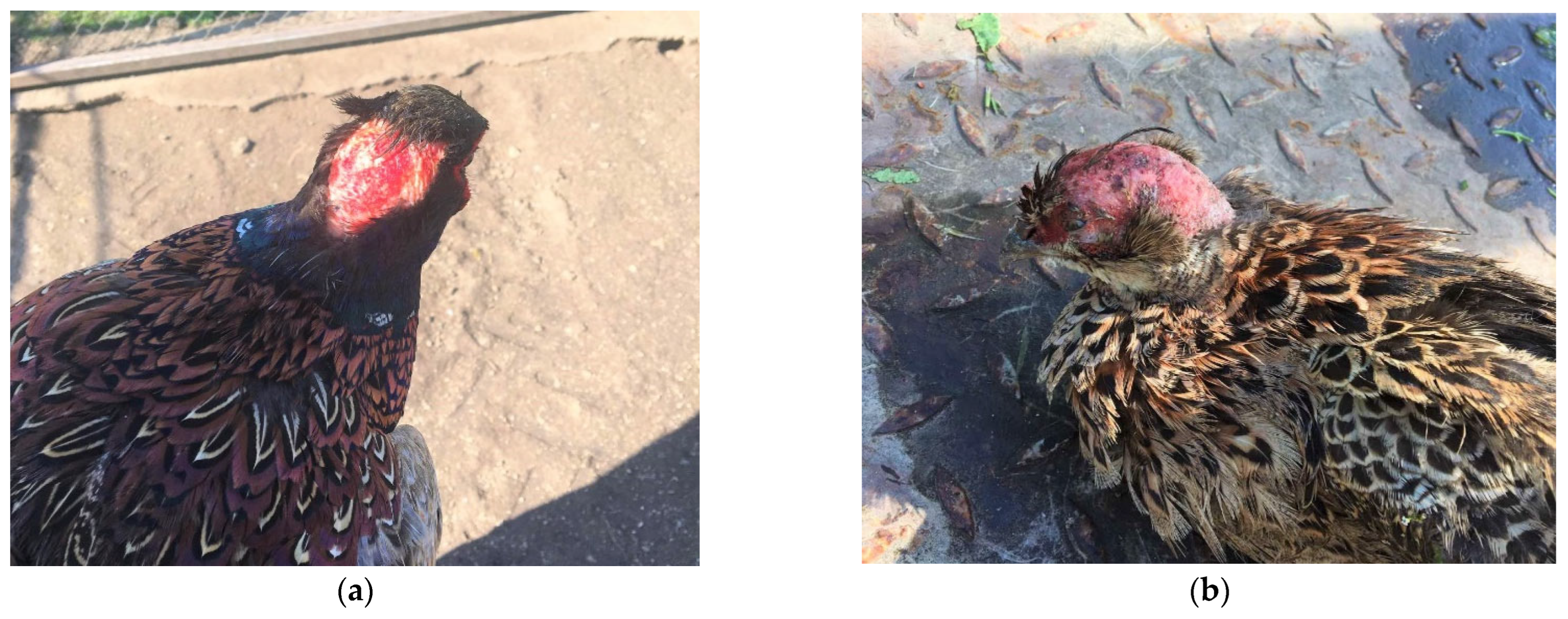
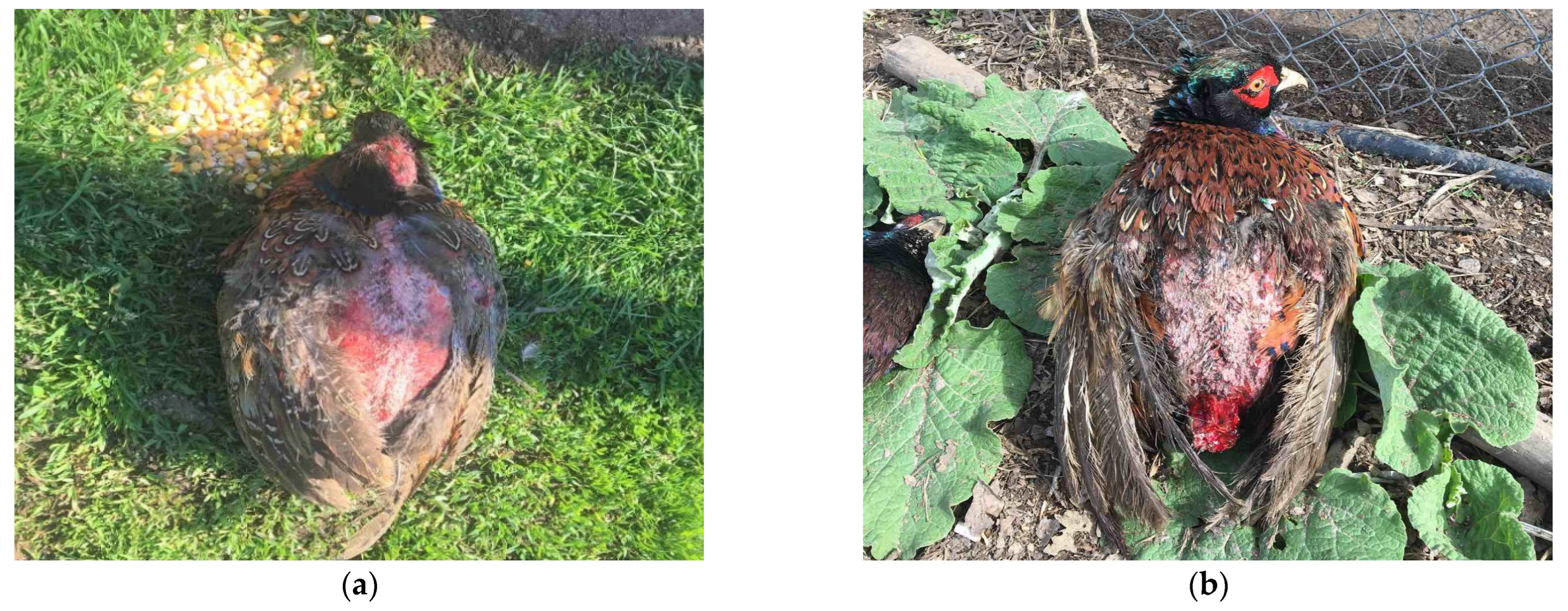

| Anatomical Area | I Negative Control | II Treated with TRP | III Treated with SIL | IV Positive Control |
|---|---|---|---|---|
| Forms of gentle feather pecking (GFP) (number of birds performing the behavior) | ||||
| Face and beak | 0.33 ± 0.96 | 0.17 ± 0.57 | 0.08 ± 0.41 | 0.0 ± 0.0 |
| Neck | 0.50 ± 1.22 | 0.0 ± 0.0 1b | 0.0 ± 0.0 1b | 0.0 ± 0.0 1b |
| Back | 0.25 ± 0.90 | 0.0 ± 0.0 | 0.0 ± 0.0 | 0.0 ± 0.0 |
| Wings | behavior was not performed | |||
| Rump | 0.58 ± 1.61 | 0.0 ± 0.0 | 0.0 ± 0.0 | 0.25 ± 1.23 |
| Forms of severe feather pecking (SFP) and tissue pecking (cannibalism) (number of birds performing the behavior) | ||||
| Head | 0.0 ± 0.0 | 0.25 ± 0.68 | 0.25 ± 0.90 | 0.58 ± 0.93 1b, 2a, 3a |
| Neck | behavior was not performed | |||
| Back | 0.0 ± 0.0 | 1.75 ± 1.80 1c | 1.50 ± 1.98 1b | 1.92 ± 2.00 1c |
| Wings | 0.0 ± 0.0 | 1.42 ± 1.72 1c | 1.29 ± 1.27 1c | 1.67 ± 1.93 1c |
| Rump | 0.0 ± 0.0 | 2.42 ± 2.34 1c | 1.42 ± 1.82 1a | 4.04 ± 2.37 1c, 2a, 3c |
| Tail | 0.0 ± 0.0 | 0.50 ± 1.06 | 0.50 ± 1.06 | 0.75 ± 0.99 1b |
| Cloaca | 0.0 ± 0.0 | 0.0 ± 0.0 | 0.0 ± 0.0 | 0.50 ± 1.06 1c, 2c, 3c |
| Group | Serotonin (ng/mL) | Dopamine (DA, ng/mL) |
|---|---|---|
| I, negative control | 237.77 ± 17.01 a | 0.67 ± 0.23 a |
| II, treated with TRP | 155.48 ± 14.45 a | 0.56 ± 0.32 a, b |
| III, treated with SIL | 80.15 ± 06.96 b | 0.62 ± 0.25 a |
| IV, positive control | 60.51 ± 08.02 b | 0.33 ± 0.10 b |
| p-value | <0.001 | <0.001 |
Disclaimer/Publisher’s Note: The statements, opinions and data contained in all publications are solely those of the individual author(s) and contributor(s) and not of MDPI and/or the editor(s). MDPI and/or the editor(s) disclaim responsibility for any injury to people or property resulting from any ideas, methods, instructions or products referred to in the content. |
© 2025 by the authors. Licensee MDPI, Basel, Switzerland. This article is an open access article distributed under the terms and conditions of the Creative Commons Attribution (CC BY) license (https://creativecommons.org/licenses/by/4.0/).
Share and Cite
Nikolov, S.; Mileva, R.; Yordanova, A.; Bozakova, N.; Milanova, A.; Kanakov, D. Ethological, Clinical, and Neurobiological Studies on Cannibalism in Black-Necked Pheasants (Phasianus colchicus) and Correction of Behavioral Disorders by Applying Nutritional Supplements. Animals 2025, 15, 3561. https://doi.org/10.3390/ani15243561
Nikolov S, Mileva R, Yordanova A, Bozakova N, Milanova A, Kanakov D. Ethological, Clinical, and Neurobiological Studies on Cannibalism in Black-Necked Pheasants (Phasianus colchicus) and Correction of Behavioral Disorders by Applying Nutritional Supplements. Animals. 2025; 15(24):3561. https://doi.org/10.3390/ani15243561
Chicago/Turabian StyleNikolov, Slavko, Rositsa Mileva, Antoaneta Yordanova, Nadya Bozakova, Aneliya Milanova, and Dian Kanakov. 2025. "Ethological, Clinical, and Neurobiological Studies on Cannibalism in Black-Necked Pheasants (Phasianus colchicus) and Correction of Behavioral Disorders by Applying Nutritional Supplements" Animals 15, no. 24: 3561. https://doi.org/10.3390/ani15243561
APA StyleNikolov, S., Mileva, R., Yordanova, A., Bozakova, N., Milanova, A., & Kanakov, D. (2025). Ethological, Clinical, and Neurobiological Studies on Cannibalism in Black-Necked Pheasants (Phasianus colchicus) and Correction of Behavioral Disorders by Applying Nutritional Supplements. Animals, 15(24), 3561. https://doi.org/10.3390/ani15243561