


Review

Advancing Wildlife Conservation Through Biobanking in South America
by
Carla B. Madelaire
1,
Alexsandra F. Pereira
2,
Adrián J. Sestelo
3,
Aléxia P. Bom-Conselho
4,5,
Carolina Vaj
6,
Felipe C. Mosalve
6,7,
Larissa S. Brandão-Souza
4,5,
Marcela R. Tavares
8,
Matteo Duque Rodriguez
6,7,
Raquel O. Restrepo
6,
Roberta F. Leite
4,5,
Yann Locatelli
9,
Thyara Deco-Souza
4,10 and
Gediendson R. de Araujo
4,10,*
1
Beckman Center for Conservation Research, San Diego Zoo Wildlife Alliance, Escondido, CA 92027, USA
2
Laboratory of Animal Biotechnology, Federal Rural University of Semi-Arid, Mossoró 59625-000, RN, Brazil
3
Laboratorio de Biotecnología Reproductiva para la Conservación Animal y Biobanco, Ecoparque Interactivo, Buenos Aires C1425, Argentina
4
Instituto Reprocon, Campo Grande 79052-280, MS, Brazil
5
Faculty of Veterinary Medicine and Animal Science, University of São Paulo, São Paulo 05508-040, SP, Brazil
6
Grupo INCA-CES, Facultad de Medicina Veterinaria y Zootecnia, Universidad CES, Medellín 050001, Antioquia, Colombia
7
Grupo de Investigación en Biotecnología Animal, Facultad de Ciencias Agrarias, Politécnico Colombiano Jaime Isaza Cadavid, Medellín 050021, Antioquia, Colombia
8
BioParque do Rio, Quinta da Boa Vista, São Cristóvão, Rio de Janeiro 20940-040, RJ, Brazil
9
Réserve Zoologique de la Haute Touche, Muséum National d'Histoire Naturelle, 36290 Obterre, France
10
Postgraduate Program in Animal Science, Faculty of Zootechnics and Veterinary Medicine, Federal University of Mato Grosso do Sul, Campo Grande 79070-900, MS, Brazil
*
Author to whom correspondence should be addressed.
Animals 2025, 15(22), 3261; https://doi.org/10.3390/ani15223261
Submission received: 3 September 2025 / Revised: 25 October 2025 / Accepted: 31 October 2025 / Published: 11 November 2025
(This article belongs to the Section Wildlife)

Simple Summary

Biobanks are special collections that keep animal cells, tissues, and genetic material stored under safe conditions for long periods of time. In South America, this is very important because the region has one of the greatest biodiversities in the world, but several wild animals are facing serious threats such as habitat loss, climate change, and illegal hunting. By saving biological samples today, biobanks create opportunities to study, protect, and even restore species in the future. This review explores how biobanking is developing in South America, the progress already achieved, and the difficulties that still need to be overcome. It also highlights how connecting biotechnology with conservation can open new paths to protect endangered wildlife and ensure that the region’s natural heritage is preserved for the generations.

Abstract

South America harbors one of the world’s richest biodiversities, yet its wildlife faces escalating threats from climate change and anthropogenic pressures. Biobanking different types of cells and tissues represents an important strategy to preserve genetic diversity and support conservation efforts in the long run. This review highlights the main challenges, opportunities, and future perspectives for biobanking as a conservation tool in South America. Key challenges include technical standardization, funding, and integration with conservation policies. Despite these barriers, recent advances demonstrate the growing importance of biobanking as a complementary tool for safeguarding endangered species and strengthening long-term conservation strategies in the region. The integration of biotechnological approaches into conservation programs positions biobanks as pivotal tools for advancing wildlife management and safeguarding the unique biodiversity of South America.

1. Introduction

In the past century, vertebrate extinction rates have surpassed natural levels, marking the first human-driven mass extinction—the sixth in 65 million years. According to the International Union for Conservation of Nature (IUCN), 41% of amphibians, 26% of mammals, and 14% of birds face extinction [1,2]. Urgent conservation strategies, both in situ and ex situ, are critical to mitigate biodiversity loss and preserve genetic diversity [3,4].
In recent years, biobanking has been shown to be a robust complementary conservation strategy to preserve genetic diversity that is essential for species resilience (Figure 1). Its value is now widely recognized as a core component of the One Plan and One Health approaches (https://www.cpsg.org/our-work/our-approach/one-plan-approach, accessed on 24 October 2025) and multiple international frameworks, including the United Nations Sustainable Development, the Convention on Biological Diversity, the Nagoya Protocol, and the Kunming-Montreal Global Biodiversity Framework, with the IUCN formally forming a Conservation Specialist Group in the topic (https://iucn.org/our-union/commissions/group/iucn-ssc-animal-biobanking-conservation-specialist-group, accessed on 24 October 2025). Animal biobanks can indefinitely store several sample types, including live somatic cell lines, gametes, embryos, and non-live samples, such as tissues, DNA, exosomes under deep cold (−196 °C) (see Table 1, Figure 1) [5,6,7,8].
When accessible to researchers, these repositories can be powerful tools for effective conservation biotechnology and other applications that can help manage and recover in situ and ex situ populations [16] (Figure 1). Thus, biobanks are active platforms for conservation, beyond their traditional role as passive repositories, integrating sample storage with advanced reproductive technologies, genomic analysis, and adaptive management strategies [17] (Figure 1).
However, building a biobank encompasses several challenges, including collecting meaningful biological samples, developing standardized protocols, and building and maintaining worldwide networks [7,18,19,20] (Figure 1). South America, the home of several biodiversity hotspots, offers vast opportunities for enhancing biobank conservation efforts in the region [21]. This document discusses the challenges, opportunities, and future directions of biobanking for wildlife conservation in South America.

2. Challenges in Establishing Biobanks for Conservation in South America

A core challenge in biobanking lies in the lack of standardized, clear, and repeatable protocols for sample collection, preservation, and validation. There is currently no established consensus on the priority for creating biobanks for a species over others or for specific individuals within a population. However, the threat level of the species, as presented by the IUCN Red List [2], could be the basis for establishing these priorities. Other factors, such as lower genetic diversity of the population, and a decreasing trend in the number of individuals in the population, should also be considered. It is important to collect material from populations that are still classified as Near-Threatened or Vulnerable, as they have greater genetic amplitude [22,23]. The relevance of the species to the ecosystem and knowledge related to the reproduction and reproductive biotechnologies of the species are also highly relevant [22].
The development of standardized protocols that align with international best practices while also being adaptable to local contexts guarantees that the material stored remains viable in the long term. For somatic cells, factors like tissue origin [24], morphological differences [25], and transport conditions [26] might demand tailored approaches. Germplasm biobanking is even more complex, particularly for female gametes and non-mammalian taxa (e.g., amphibians, reptiles, sharks), where the absence of domestic models and several logistical barriers—such as the remoteness of wild populations, limited access to specialized equipment, and the difficulty of maintaining appropriate temperature and transport in field conditions—complicate protocol development [22,27]. For instance, reptiles show a temperature-dependent gamete viability that requires customized protocols [28]. For amphibians, the world’s most threatened vertebrates, reproductive biotechnology protocols have been developed, including semen cryopreservation in Atelopus spumarius [29] and a simplified intracytoplasmic sperm injection (ICSI) protocol in Xenopus [30]. Several groups in South America have made progress in unveiling variability across cell types, species, and individuals, adapting equipment and protocols traditionally used for domestic animals [27,31]. However, much more work has to be done to keep advancing efforts in the region.
Many endangered species lack ex situ insurance populations, making field collection essential, adding another layer to the challenges of biobanking genetic diversity. For example, Brazil’s critically endangered jaguar populations (from Caatinga and Atlantic Forest) have no ex situ individuals, resulting in the need to collect tissue in free-living and post-mortem sampling strategies [32,33,34]. Reproductive and skin tissues obtained from post-mortem animals in advanced decomposition may be challenging to establish cell culture. In cases where the animal has been dead for many hours, and the tissue is in an advanced state of decomposition, it can be functionally restored by xenotransplantation into immunodeficient mice [35], offering a valuable conservation tool for difficult-to-capture species frequently found as roadkill. The challenges associated with capturing animals in the wild and keeping samples viable until they can be processed in the lab require multiple collaborations between different teams and organizations. While immediate refrigeration and/or freezing might seem ideal, maintaining proper cryogenic conditions in remote field sites is often unfeasible, and temperature fluctuations during transport can compromise cell viability and tissue integrity. Furthermore, many tissues and gametes require short-term processing or equilibration to ensure successful long-term preservation.
Additionally, the decision-making process for species prioritization that considers IUCN threat status with genetic diversity and ecological role can be hampered because of the lack of data for several species from understudied areas [22,23]. Mammals are the majority of taxa represented in biobanking efforts, while reptiles, amphibians, and fish remain underrepresented [23]. This gap reflects both technical hurdles and limited funding for non-charismatic species. A regional strategy could address this by targeting evolutionarily distinct or climate-vulnerable taxa, leveraging South America’s megadiverse ecosystems.
Biobanks are only as valuable as their curation and associated data, yet many South American collections lack standardized databases. For storage, a secure, controlled environment with adequate space is required, along with redundancy through duplicated locations and backup systems, continuous temperature maintenance (see Table 1 for requirements for each sample type), regular equipment maintenance, sample integrity monitoring, and a robust labeling system to ensure proper tracking, while allowing for future expansion. Effective management also requires meticulous sample metadata (e.g., collection protocols, animal health records), and integration with other datasets (e.g., physiology, genomics, proteomics). Consistent sample annotations using international standards are vital for these samples to be usable for conservation purposes [36,37,38,39]. Lessons from human biobanks could guide infrastructure development, but conservation-specific adaptations, such as ecological and behavioral data linkages, could be potentially vital for future conservation efforts [40,41,42]. A significant challenge to data sharing is the absence of a universal, accessible database for all countries and users. In the United States, initiatives like Zoological Information Management Systems (ZIMS; species360.org) have started developing standardized data modules to capture metadata. However, annual membership fees can be prohibitive for many South American institutions. Consequently, an open-access database is vital to ensure equitable accessibility. Additionally, the lack of clear legislation addressing genetic resource ownership, sample exportation, and health monitoring in South America is also a challenge to advancing biobanking. Unlike human biobanking, which is well-regulated in many countries (e.g., the EU’s General Data Protection Regulation [GDPR] and the U.S. NIH guidelines), wildlife biobanking remains largely unregulated in the region. Brazil, despite its unparalleled biodiversity, still lacks specific laws governing wildlife biobanks, relying instead on fragmented regulations from agencies like Brazilian Agricultural Research Corporation (EMBRAPA, which oversees agricultural genetic resources) and Chico Mendes Institute for Biodiversity Conservation (ICMBio, responsible for endangered species). Some countries, such as the UK (Frozen Ark Project) and Australia (Australian Wildlife Biobank), have advanced policies that could serve as models. However, in South America, only a few initiatives, such as Argentina’s Banco de Germoplasma de Fauna Silvestre have begun formalizing biobanking practices. Given the region’s role as a biodiversity hotspot, governments must urgently develop tailored legislation to regulate ethical standards while facilitating conservation research. Without legal clarity, biobanking efforts risk inefficiency, ethical conflicts, and missed opportunities to safeguard genetic diversity in the face of escalating extinction threats.
Finally, biobanking’s potential hinges on coordinated networks. South America’s biobanks initiatives are often fragmented across universities, zoos, and Non-Governmental Organizations (NGOs), with uneven adherence to standards. Building a resilient network requires harmonizing protocols and advertising guidelines, securing long-term funding, and fostering cross-border partnerships, especially for species spanning multiple countries (e.g., Andean condors). The new IUCN’s Animal Biobanking Specialist Group (2022) (https://www.iucn.org/our-union/commissions/group/iucn-ssc-animal-biobanking-conservation-specialist-group, accessed on 18 March 2024) offers a starting point, but regional buy-in and developing local policy to adapt to the South American scenario are essential to ensure biobanks become a cornerstone of conservation in the region. This regional approach would not only strengthen the individual conservation efforts of each country but also provide a robust, interconnected network that is more resilient to future challenges in wildlife conservation.

3. Opportunities

Biobanks can significantly boost biodiversity conservation through strategic collaborations. Partnerships with different institutions and laboratories accelerate research by sharing knowledge, resources, and infrastructure [43]. Regional networks are especially valuable, enabling countries to share data, methods, and expertise while leveraging niche knowledge in species and ecosystems. Such cooperation enhances biobanks’ efficiency, scalability, and impact. Training and capacity-building of professionals involved in biobank operations and management is another missed opportunity that can help standardize techniques across institutions, ensuring the viability of stored samples. Additionally, teamwork and the inclusion of diverse professional profiles are crucial for addressing challenges in an interdisciplinary manner. Investing in training not only improves biobank efficiency but also strengthens the network of professionals dedicated to conservation, creating a solid foundation for innovative solutions.
Technological innovations such as cloning, cellular reprogramming and genomics in phenome research open new possibilities in the field of biobanking [9,12,44]. These techniques have transformative potential, both for the conservation of endangered species and for regenerative medicine, allowing, for example, the recovery of genetically viable populations from stored samples [4,45,46].
The lack of financial resources is a significant obstacle, but also an opportunity to engage new stakeholders by demonstrating the value of biobanks for biodiversity conservation [47,48]. There is an opportunity to grow, maintain, and consolidate biobank practices in the region. Developing robust plans and securing diversified sources of funding, including public and private, as well as partnerships with non-governmental organizations, is probably the most well-structured strategy.
Ensuring responsible and ethical use of biological data requires prioritizing both data sharing and transparency [49]. While raw data may contain sensitive information, aggregated datasets are often sufficient to inform decision-making for practitioners, policymakers, and the public. To achieve this balance, the establishment of ethical data-sharing frameworks is critical, particularly to build trust with Indigenous communities and other stakeholders who provide sensitive or proprietary information (Nagoya protocol—http://data.europa.eu/eli/agree_prot/2014/283/oj, accessed on 24 October 2025). Promoting structured, transparent, and collaborative data practices allows biobanks to maximize their scientific and conservation impact while safeguarding privacy and equity. Effective database planning and management should foster a symbiosis between the biobank operations and the IT systems to ensure maintenance of samples, facilitate data collection, and support conservation efforts and future research and international cooperation [37,38]. Finally, incorporating biobanking as a topic in higher education and raising public awareness by engaging local communities, research centers, and universities creates a shared vision of the importance of this conservation practice that can foster a long-term culture of protection and responsibility toward biological heritage [50].

4. The Future of Biobanking in South America

In recent years, the expansion of biobanks has completely transformed the way biodiversity is conserved [51]. In the short to medium term, biobanks preserve and help identify genetic diversity, which supports targeted breeding and other conservation strategies. This is especially vital in biodiverse regions like Latin America, where the rate of habitat loss and climate change is significantly higher [52].
A remarkable example of successful conservation is Brazil’s program for the golden lion tamarin (Leontopithecus rosalia), a critically endangered primate endemic to the Atlantic Forest. In 1960, the population was just 300 individuals. Then, coordinated efforts in semen cryopreservation, genetic management, and assisted reproduction boosted numbers to 4800 by 2023 [53] (Arakaki et al., 2019 [54]; https://www.savetheliontamarin.org/news/population-census-shows-31-increase-in-wild-glts, accessed on 24 October 2025). By integrating biobanking with captive breeding and reintroduction programs, supported by partnerships among several institutions, researchers have not only recovered population numbers but also preserved genetic diversity. This approach demonstrates how biobanks can provide ethical and sustainable models to restore threatened populations while minimizing wild captures [55]. A pioneering study in Argentina with bobcats (Lynx rufus) demonstrated the potential of reproductive biotechnologies for wild feline conservation. Researchers successfully cryopreserved semen and evaluated their fertility using domestic cat oocytes in a heterologous in vitro fertilization, producing hybrid embryos that developed to the pre-implantation stage [56]. While these findings represent an important step toward the use of assisted reproductive technologies (ARTs) in wild felids, the results remain preliminary. Significant challenges persist, particularly in obtaining viable and mature bobcat oocytes consistently and ensuring the production of biologically competent embryos when using conspecific gametes. Therefore, further research is required before these techniques can be reliably applied to support sustainable population management in this species.
New technologies need to be explored to overcome many of the logistical limitations of traditional cryopreservation. One promising example is dry biobanking, an alternative inspired by natural mechanisms such as anhydrobiosis, which involves the preservation of cells through controlled desiccation. This technique could enable the storage of genetic material at room temperature, with lower costs, reduced dependence on specialized infrastructure, and greater safety during transport. Its potential is particularly valuable for countries with technical or economic constraints, as it democratizes access to genetic conservation technologies and expands their global reach [57]. However, the practical application of dry biobanking still faces important limitations. To produce viable offspring from desiccated material, advanced assisted reproductive technologies (ARTs) such as intracytoplasmic sperm injection (ICSI) and embryo transfer must be optimized for each target species. The infrastructure, technical expertise, and species-specific biological knowledge required for these procedures remain limited in many regions, highlighting the need for further research and capacity building before large-scale implementation.
The integration of biobanking with assisted reproductive technologies presents a powerful conservation solution for endangered species. By combining cryopreservation, genomic-phenotypic analysis, and assisted reproduction, we can restore populations even from critically diminished genetic pools. These technologies can provide crucial insights into evolutionary adaptations and genetic diversity, essential tools for combating habitat loss and climate change impacts (Howell et al., 2022 a,b [58,59]). Modern biobanks should be more than genetic repositories and act as dynamic conservation platforms, preserving biodiversity while helping enhance ecological resilience, which is a vital tool in addressing the global biodiversity crisis ([4,60,61], Howell et al., 2020 [62]; https://reviverestore.org/projects/biobanking/, accessed on 24 October 2025).
Looking ahead, biobanks are evolving into standardized, collaborative systems with shared protocols and ethical frameworks. Public–private and non-profit partnerships could help drive innovation while ensuring financial and operational sustainability. To overcome potential ethical risks when profit motives influence the use of biomaterials from endangered species, implementing transparent governance and strict material transfer agreements is essential to prevent misuse and ensure that such collaborations align with conservation goals. Additionally, the convergence of assisted reproductive technologies, genome-to-phenome research, and biobanking offers a promising outlook for the conservation of endangered species, making it possible to restore viable populations from stored genetic material, even in scenarios of low genetic variability or severe population decline.
Finally, the future of biobanks is projected toward a more integrated, harmonized, and sustainable model. This entails progress toward the standardization of protocols, data interoperability, and the implementation of common regulations to ensure the quality, traceability, and ethical use of biological resources and improve technological innovation, capacity building, and financial sustainability.

5. Conclusions

Biobanking represents a powerful tool to strengthen wildlife conservation strategies in South America, a region recognized for its biodiversity but also for its high level of threats to its ecosystems. By enabling the preservation of genetic, cellular, and reproductive resources, biobanks provide opportunities for research, species recovery, and long-term safeguarding of genetic diversity. However, advancing this field requires coordinated efforts among governments, academic institutions, conservation organizations, and local communities. Establishing standardized protocols, securing sustainable funding, and promoting international collaboration will be essential to fully unlock the potential of biobanking in South America.

Author Contributions

All authors contributed to conceptualization, methodology, formal analysis, investigation, data curation, writing—Original draft, Writing—review and Editing. All authors have read and agreed to the published version of the manuscript.

Funding

This study was partially financed by the Fundação de Apoio ao Desenvolvimento do Ensino, Ciência e Tecnologia de Mato Grosso do Sul (FUNDECT, no. PAE-MS 2023), Coordenação de Aperfeiçoamento de Pessoal de Nível Superior—Brasil (CAPES, Financial Code 001), Conselho Nacional de Desenvolvimento Científico e Tecnológico, Brasil (CNPq, no. 444347/2024-0; no. 309078/2021-0) and San Diego Zoo Wildlife Alliance.

Institutional Review Board Statement

Not applicable.

Informed Consent Statement

Not applicable.

Data Availability Statement

The data presented in this study are available upon request from the corresponding author.

Conflicts of Interest

Author Marcela R. Tavares was employed by the company BioParque do Rio. The remaining authors declare that the research was conducted in the absence of any commercial or financial relationships that could be construed as a potential conflict of interest.

References

  1. Ceballos, G.; Ehrlich, P.R.; Barnosky, A.D.; García, A.; Pringle, R.M.; Palmer, T.M. Accelerated modern human-induced species losses: Entering the sixth mass extinction. Sci. Adv. 2015, 19, e1400253. [Google Scholar] [CrossRef]
  2. IUCN. The IUCN Red List of Threatened Species; Version 2022-2; International Union for Conservation of Nature and Natural Resources: Gland, Switzerland, 2022. [Google Scholar]
  3. Prentice, J.R.; Anzar, M. Cryopreservation of mammalian oocyte for conservation of animal genetics. Vet. Med. Int. 2010, 2011, 146405. [Google Scholar] [CrossRef] [PubMed]
  4. Bolton, R.L.; Mooney, A.; Pettit, M.T.; Bolton, A.E.; Morgan, L.; Drake, G.J.; Appeltant, R.; Walker, S.L.; Gillis, J.D.; Hvilsom, C. Resurrecting biodiversity: Advanced assisted reproductive technologies and biobanking. Reprod. Fertil. 2022, 3, R121–R146. [Google Scholar] [CrossRef]
  5. Hobbs, R.J.; O’Brien, J.K.; Spindler, R.E. Strategic gene banking for conservation: The ins and outs of a living bank. In Scientific Foundations of Zoos and Aquariums, 1st ed.; Kaufman, A.B., Bashaw, M.J., Maple, T.L., Eds.; Cambridge University Press: Cambridge, UK, 2019; pp. 112–146. [Google Scholar] [CrossRef]
  6. Hewitt, R.; Watson, P. Defining biobank. Biopreservation Biobank 2013, 11, 309–315. [Google Scholar] [CrossRef] [PubMed]
  7. Strand, J. Biobanking in amphibian and reptilian conservation and management: Opportunities and challenges. Conserv. Genet. Resour. 2020, 12, 709–725. [Google Scholar] [CrossRef]
  8. Leon-Quinto, T.; Simon, M.A.; Cadenas, R.; Jones, J.; Martinez-Hernandez, F.J.; Moreno, J.M.; Vargas, A.; Martinez, F.; Soria, B. Developing biological resource banks as a supporting tool for wildlife reproduction and conservation The Iberian lynx bank as a model for other endangered species. Anim. Reprod. Sci. 2009, 112, 347–361. [Google Scholar] [CrossRef]
  9. Verma, R.; Liu, J.; Holland, M.K.; Temple-Smith, P.; Williamson, M.; Verma, P.J. Nanog is an essential factor for induction of pluripotency in somatic cells from endangered felids. Biores. Open Access 2013, 2, 72–76. [Google Scholar] [CrossRef]
  10. Teodoro, L.O.; Camargo, L.S.; Scheeren, V.F.C.; Freitas-Dell’Aqua, C.P.; Papa, F.O.; Honsho, C.S.; Souza, F.F. First successful frozen semen of the maned wolf (Chrysocyon brachyurus). Reprod. Domest. Anim. 2021, 56, 1464–1469. [Google Scholar] [CrossRef]
  11. Napolitano, C.; Clavijo, C.; Rojas-Bonzi, V.; Miño, C.I.; González-Maya, J.F.; Bou, N.; Giraldo, A.; Martino, A.; Miyaki, C.Y.; Aguirre, L.F.; et al. Understanding the conservation-genetics gap in Latin America: Challenges and opportunities to integrate genetics into conservation practices. Front. Genet. 2024, 15, 1425531. [Google Scholar] [CrossRef]
  12. Rola, L.D.; Buzanskas, M.E.; Melo, L.M.; Chaves, M.S.; Freitas, V.J.F.; Duarte, J.M.B. Assisted reproductive technology in neotropical deer: A model approach to preserving genetic diversity. Animals 2021, 11, 1961. [Google Scholar] [CrossRef]
  13. Espejo, C.; Ezenwa, V.O. Extracellular vesicles: An emerging tool for wild immunology. Discov. Immunoly 2024, 3, kyae011. [Google Scholar] [CrossRef]
  14. Comizzoli, P.; Power, M. Reproductive microbiomes in wild animal species: A new dimension in conservation biology. Adv. Exp. Med. Biol. 2019, 1200, 225–240. [Google Scholar] [CrossRef]
  15. Dallas, J.W.; Warne, R.W. Captivity and animal microbiomes: Potential roles of microbiota for influencing animal conservation. Microb. Ecol. 2023, 85, 820–838. [Google Scholar] [CrossRef]
  16. Machado, C.M.; Oliveira, V.C.; Paraventi, M.D.; Cardoso, R.N.R.; Martins, D.S.; Ambrósio, C.E. Maintenance of Brazilian Biodiversity by germplasm bank. Pesq. Vet. Bras. 2016, 36, 62–66. [Google Scholar] [CrossRef]
  17. Biasetti, P.; Mercugliano, E.; Schrade, L.; Spiriti, M.M.; Goritz, F.; Holtze, S.; Seet, S.; Galli, C.; Stejskal, J.; Colleoni, S.; et al. Ethical assessment of genome resource banking (GRB) in wildlife conservation. Cryobiology 2024, 117, 104956. [Google Scholar] [CrossRef] [PubMed]
  18. Baust, J.M.; Corwin, W.L.; VanBuskirk, R.; Baust, J.G. Biobanking in the 21st century. In Revue Francaise de Psychanalyse, 1st ed.; Karimi-Busheri, F., Ed.; Springer: Cham, Switzerland, 2021; Volume 65. [Google Scholar]
  19. Clulow, J.; Clulow, S. Cryopreservation and other assisted reproductive technologies for the conservation of threatened amphibians and reptiles: Bringing the ARTs up to speed. Reprod. Fertil. Dev. 2016, 28, 1116–1132. [Google Scholar] [CrossRef]
  20. Costa, M.; Bruford, M.W. The Frozen Ark Project—Biobanking endangered animal samples for conservation and research. Inside Ecol. Mag. 2018, 2, 16–25. [Google Scholar]
  21. Chen, D.M.; Mastromonaco, G.F. The evolution of conservation biobanking: A literature review and analysis of terminology, taxa, location, and strategy of wildlife biobanks over time. Biopreservation Biobank 2025, 23, 307–317. [Google Scholar] [CrossRef] [PubMed]
  22. Brereton, J.E.; Spooner, S.L.; Walker, S.L.; Mooney, A.; Wilson, P.; Mastromonaco, G.F.; Hunter, E.; White, S. When to cryopreserve and when to let it go? A systematic review of priorities in wild animal cryobanking. Theriogenology Wild 2025, 6, 100119. [Google Scholar] [CrossRef]
  23. Mooney, A.; Ryder, O.A.; Houck, M.L.; Staerk, J.; Conde, D.A.; Buckley, Y.M. Maximizing the potential for living cell banks to contribute to global conservation priorities. Zoo Biol. 2023, 42, 697–708. [Google Scholar] [CrossRef]
  24. Santos, M.D.C.B.; Aquino, L.V.C.; Nascimento, M.B.; Silva, M.B.; Rodrigues, L.L.V.; Praxedes, E.A.; Oliveira, L.R.M.; Silva, H.V.R.; Nunes, T.G.P.; Oliveira, M.F.; et al. Evaluation of different skin regions derived from a postmortem jaguar, Panthera onca (Linnaeus, 1758), after vitrification for development of cryobanks from captive animals. Zoo Biol. 2021, 40, 280–287. [Google Scholar] [CrossRef]
  25. Praxedes, É.A.; Oliveira, L.R.M.; Silva, M.B.; Borges, A.A.; Santos, M.V.O.; Silva, H.V.R.; Pereira, A.F. Effects of cryopreservation techniques on the preservation of ear skin–An alternative approach to conservation of jaguar, Panthera onca (Linnaeus, 1758). Cryobiology 2019, 88, 15–22. [Google Scholar] [CrossRef]
  26. Queiroz Neta, L.B.; Lira, G.P.O.; Borges, A.A.; Santos, M.V.O.; Silva, M.B.; Oliveira, L.R.M.; Silva, A.R.; Oliveira, M.F.; Pereira, A.F. Influence of storage time and nutrient medium on recovery of fibroblast-like cells from refrigerated collared peccary (Pecari tajacu Linnaeus, 1758) skin. Vitr. Cell. Dev. Biol. Anim. 2018, 5, 486–495. [Google Scholar] [CrossRef]
  27. Le Gac, S.; Ferraz, M.; Venzac, B.; Comizzoli, P. Understanding and assisting reproduction in wildlife species using microfluidics. Trends Biotechnol. 2021, 39, 584–597. [Google Scholar] [CrossRef] [PubMed]
  28. Silva, A.M.; Pereira, A.F.; Comizzoli, P.; Silva, A.R. Cryopreservation and culture of testicular tissues: An essential tool for biodiversity preservation. Biopreservation Biobank 2020, 18, 235–243. [Google Scholar] [CrossRef] [PubMed]
  29. Naranjo, R.E.; Naydenova, E.; Proaño-Bolaños, C.; Vizuete, K.; Debut, A.; Arias, M.T.; Coloma, L.A. Development of assisted reproductive technologies for the conservation of Atelopus sp. (spumarius complex). Cryobiology 2022, 105, 20–31. [Google Scholar] [CrossRef]
  30. Péricard, L.; Mével, S.L.; Marquis, O.; Locatelli, Y.; Coen, L. Intracytoplasmic Sperm Injection Using 20-Year-Old Cryopreserved sperm results in normal, viable, and reproductive offspring in Xenopus laevis: A major pioneering achievement for amphibian conservation. Animals 2025, 15, 1941. [Google Scholar] [CrossRef]
  31. Mastromonaco, G. 40 ‘wild’ years: The current reality and future potential of assisted reproductive technologies in wildlife species. Anim. Reprod. 2024, 21, e20240049. [Google Scholar] [CrossRef] [PubMed]
  32. Benham, H.M.; McCollum, M.P.; Nol, P.; Frey, R.K.; Clarke, P.R.; Rhyan, J.C.; Barfield, J.P. Production of embryos and a live offspring using postmortem reproductive material from bison (Bison bison bison) originating in Yellowstone National Park, USA. Theriogenology 2021, 160, 33–39. [Google Scholar] [CrossRef]
  33. Herrick, J.R.; Bartels, P.; Krisher, R.L. Postthaw evaluation of in vitro function of epididymal spermatozoa from four species of free-ranging African bovids. Biol. Reprod. 2004, 71, 948–958. [Google Scholar] [CrossRef]
  34. Meintjes, M.; Bezuidenhout, C.; Bartels, P.; Visser, D.S.; Loskutoff, N.M.; Fourie, F.L.R.; Barry, D.M.; Godke, R.A. In Vitro maturation and fertilization of oocytes recovered from free-ranging Burchell’s zebra (Equus burchelli) and Hartmann’s zebra (Equus zebra hartmannae). J. Zoo Wildl. Med. 1997, 28, 251–259. [Google Scholar]
  35. Souza, L.S.B.; Polizelle, S.R.; Olindo, S.L.; Silva, M.C.C.; Vieria, G.C.; Acacio, B.R.; Navarezi, I.F.; Chagas, M.G.; Silva, N.C.; Jorge Neto, P.N.; et al. Xenotransplante de tecido somático de onça-pintada (Panthera onca) em camundongos NSG: Uma alternativa para obtenção de fibroblastos de animais mortos por atropelamento. Rev. Bras. Reprod. Anim. 2023, 47, 5. [Google Scholar]
  36. Paskal, W.; Paskal, A.M.; Dębski, T.; Gryziak, M.; Jaworowski, J. Aspects of Modern Biobank Activity—Comprehensive Review. Pathol. Oncol. Res. 2018, 24, 771–785. [Google Scholar] [CrossRef]
  37. Artene, S.; Ciurea, M.E.; Purcaru, S.O.; Tache, D.T.; Tataranu, L.G.; Lupu, M.; Dricu, A. Biobanking in a constantly developing medical world. Sci. World J. 2013, 23, 343275. [Google Scholar] [CrossRef] [PubMed]
  38. Späth, M.B.; Grimson, J. Applying the archetype approach to the database of a biobank information management system. Int. J. Med. Inform. 2011, 80, 205–226. [Google Scholar] [CrossRef]
  39. Zika, E.; Paci, D.; Braun, A.; Rijkers-Defrasne, S.; Deschênes, M.; Fortier, I.; Laage-Hellman, J.; Scerri, C.A.; Ibarreta, D. A European survey on biobanks: Trends and issues. Public Health Genom. 2011, 14, 96–103. [Google Scholar] [CrossRef]
  40. Leroy, G.; Boettcher, P.; Besbes, B.; Danchin-Burge, C.; Baumung, R.; Hiemstra, S.J. Cryoconservation of Animal Genetic Resources in Europe and Two African Countries: A Gap Analysis. Diversity 2019, 11, 240. [Google Scholar] [CrossRef]
  41. Praxedes, É.A.; Queiroz Neta, L.B.; Borges, A.A.; Silva, M.B.; Santos, M.V.O.; Ribeiro, L.R.; Pereira, A.F. Quantitative and descriptive histological aspects of jaguar (Panthera onca Linnaeus, 1758) ear skin as a step towards formation of biobanks. Anat. Histol. Embryol. 2020, 49, 121–129. [Google Scholar] [CrossRef] [PubMed]
  42. Eiseman, E.; Bloom, G.; Brower, J.; Clancy, N.; Olmsted, S.S. Case Studies of Existing Human Tissue Repositories: “Best Practices” for a Biospecimen Resource for the Genomic and Proteomic Era; RAND Corporation: Santa Monica, CA, USA, 2003; p. 246. Available online: https://www.jstor.org/stable/10.7249/mg120ndc-nci (accessed on 3 August 2025).
  43. Fujihara, M.; Comizzoli, P. Human and wildlife biobanks of germplasms and reproductive tissues can contribute to a broader concept of One Health. FS Rep. 2025, 6, 63–66. [Google Scholar] [CrossRef] [PubMed]
  44. Madelaire, C.B.; Klink, A.C.; Israelsen, W.J.; Hindle, A.G. Fibroblasts as an experimental model system for the study of comparative physiology. Comp. Biochem. Physiol. Part B Biochem. Mol. Biol. 2022, 260, 110735. [Google Scholar] [CrossRef]
  45. Hutchinson, A.M.; Appeltant, R.; Burdon, T.; Bao, Q.; Bargaje, R.; Bodnar, A.; Chambers, S.; Comizzoli, P.; Cook, L.; Endo, Y.; et al. Advancing stem cell technologies for conservation of wildlife biodiversity. Development 2024, 151, 203116. [Google Scholar] [CrossRef]
  46. Zimkus, B.M.; Hassapakis, C.L.; Houck, M.L. Integrating current methods for the preservation of amphibian genetic resources and viable tissues to achieve best practices for species conservation. Amphib. Reptile Conserv. 2018, 12, 1–27. [Google Scholar]
  47. Comizzoli, P.; Wildt, D.E. Cryobanking Biomaterials from Wild Animal Species to Conserve Genes and Biodiversity: Relevance to Human Biobanking and Biomedical Research. In Biobanking of Human Biospecimens; Hainaut, P., Vaught, J., Zatloukal, K., Pasterk, M., Eds.; Springer: Cham, Switzerland, 2017. [Google Scholar] [CrossRef]
  48. Rao, A.; Vaught, J.; Tulskie, B.; Olson, D.; Odeh, H.; McLean, J.; Moore, H.M. Critical financial challenges for biobanking: Report of a National Cancer Institute Study. Biopreservation Biobank 2019, 17, 129–138. [Google Scholar] [CrossRef] [PubMed]
  49. Lee, Y.S.; Garrido, N.L.B.; Lord, G.; Maggio, Z.A.; Khomtchouk, B.B. Ethical considerations for biobanks serving underrepresented populations. Biotechics 2025, 39, 240–249. [Google Scholar] [CrossRef] [PubMed]
  50. Parry-Jones, A. Enhancing quality biobanking through education. Cryobiology 2022, 109, 22. [Google Scholar] [CrossRef]
  51. Holt, W.V. Biobanks, offspring fitness and the influence of developmental plasticity in conservation biology. Anim. Reprod. 2023, 28, e20230026. [Google Scholar] [CrossRef]
  52. Singh, B.; Mal, G.; Gautam, S.K.; Mukesh, M. Biotechnology for Wildlife. Adv. Anim. Biotech. 2019, 6, 501–513. [Google Scholar] [CrossRef]
  53. Miranda, C.R.R. The Golden lion tamarin Leontopithecus rosalia: A conservation success story. Int. Zoo Yearb. 2012, 46, 36–45. [Google Scholar] [CrossRef]
  54. Arakaki, P.R.; Salgado, P.A.B.; Losano, J.D.D.A.; Gonçalves, D.R.; Valle, R.D.R.D.; Pereira, R.J.G.; Nichi, M. Semen cryopreservation in golden-headed lion tamarin, Leontopithecus chrysomelas. Am. J. Primatol. 2019, 81, e23071. [Google Scholar] [CrossRef] [PubMed]
  55. Aliaga-Samanez, G.G.; Javarotti, N.B.; Orecife, G.; Chávez-Congrains, K.; Pissinatti, A.; Monticelli, C.; Cristina Marques, M.; Galbusera, P.; Galetti, P.M., Jr.; Domingues de Freitas, P. Genetic diversity in ex situ populations of the endangered Leontopithecus chrysomelas and implications for its conservation. PLoS ONE 2023, 18, e0288097. [Google Scholar] [CrossRef]
  56. Gañán, R.; González, A.S.; Garde, J.J.; Sánchez, I.; Aguilar, J.M.; Gomendio, M.; Roldan, E.R.S. Male reproductive traits, semen cryopreservation, and heterologous in vitro fertilization in the bobcat (Lynx rufus). Theriogenology 2009, 72, 341–352. [Google Scholar] [CrossRef]
  57. Saragusty, J.; Anzalone, D.A.; Palazzese, L.; Arav, A.; Patrizio, P.; Gosálvez, J.; Loi, P. Dry biobanking as a conservation tool in the Anthropocene. Theriogenology 2020, 150, 130–138. [Google Scholar] [CrossRef]
  58. Howell, L.G.; Johnston, S.D.; O’Brien, J.K.; Frankham, R.; Rodger, J.C.; Ryan, S.A.; Beranek, C.T.; Clulow, J.; Hudson, D.S.; Witt, R.R. Modelling genetic benefits and financial costs of integrating biobanking into the captive management of koalas. Animals 2022, 12, 990. [Google Scholar] [CrossRef]
  59. Howell, L.G.; Mawson, P.R.; Comizzoli, P.; Witt, R.R.; Frankham, R.; Clulow, S.; O’Brien, J.K.; Clulow, J.; Marinari, P.; Rodger, J.C. Modeling genetic benefits and financial costs of integrating biobanking into the conservation breeding of managed marsupials. Conserv. Biol. 2023, 37, e14010. [Google Scholar] [CrossRef] [PubMed]
  60. Caenazzo, L.; Tozzo, P. The Future of Biobanking: What Is Next? BioTech 2020, 9, 23. [Google Scholar] [CrossRef] [PubMed]
  61. Vazquez, J.M.; Khudyakov, J.I.; Madelaire, C.B.; Godard-Codding, C.A.; Routti, H.; Lam, E.; Piotrowski, E.; Merrill, G.; Wisse, J.; Allen, K.; et al. Ex vivo and in vitro methods as a platform for studying anthropogenic effects on marine mammals: Four challenges and how to meet them. Front. Mar. Sci. 2021, 11, 1466968. [Google Scholar] [CrossRef]
  62. Howell, L.G.; Frankham, R.; Rodger, J.C.; Witt, R.R.; Clulow, S.; Upton, R.M.; Clulow, J. Integrating biobanking minimises inbreeding and produces significant cost benefits for a threatened frog captive breeding programme. Conserv. Lett. 2021, 14, e12776. [Google Scholar] [CrossRef]
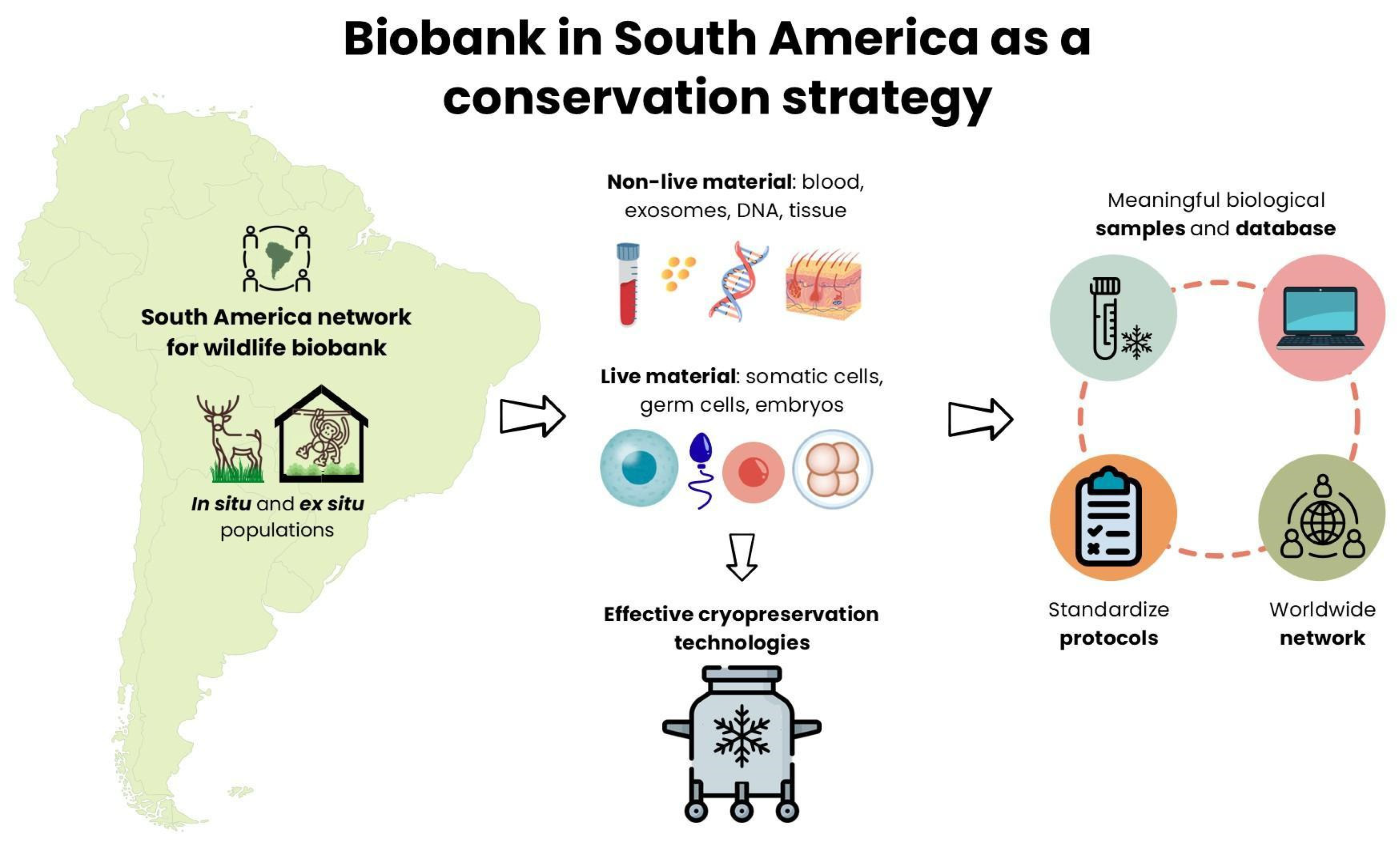
Figure 1. Biobank as a conservation strategy consists of the integration of diverse and viable sample types accompanied by relevant metadata, along with in situ and ex situ conservation strategies coordinated at both regional and world-wide levels.
Animals 15 03261 g001
Table 1. Types of samples and their definition, preservation temperature and examples of application.
Sample TypeDefinitionLive or
Non-Living
Preservation
Temperature
Possible
Application
Examples of Conservation ApplicationReference
Somatic cellDiploid cells (e.g., fibroblasts)LiveLiquid nitrogen (−196 °C)Experimental cell physiologyJaguar (Panthera onca) fibroblasts induced to pluripotent stage[9]
Germ cellsReproductive cells (e.g., sperm, oocytes) LiveLiquid nitrogen (−196 °C)Assisted ReproductionCryopreservation of maned wolf (Chrysocyon brachyurus) sperm[10]
Tissues, blood, and cell pelletAliquots of organs, blood, non-live cells Non-livingFreezer (−80 °C)Genomic sequencing Several species[11]
EmbryosEarly-stage development of multicellular organisms produced by IVF or cloningLiveLiquid nitrogen (−196 °C)Assisted ReproductionNeotropical deer species[12]
ExosomesMessager particles released by cellsNon-livingFreezer (−80 °C)Therapeutic application Several species[13]
MicrobiomesAssociated micro-organisms (bacteria, fungi, viruses)LiveLiquid nitrogen (−196 °C)/Freezer (−80 °C)Conservation and restoration of the adaptive capacity of a species to its environmentGeneral[14,15]
Disclaimer/Publisher’s Note: The statements, opinions and data contained in all publications are solely those of the individual author(s) and contributor(s) and not of MDPI and/or the editor(s). MDPI and/or the editor(s) disclaim responsibility for any injury to people or property resulting from any ideas, methods, instructions or products referred to in the content.



