


Chronic State and Relationship to Humans Influence How Horses Decode Emotions in Human Voices: A Brain and Behavior Study

 , , ,
, , ,
Simple Summary
Abstract
1. Introduction
2. Materials and Methods
2.1. Participants
2.2. Emotional Voices
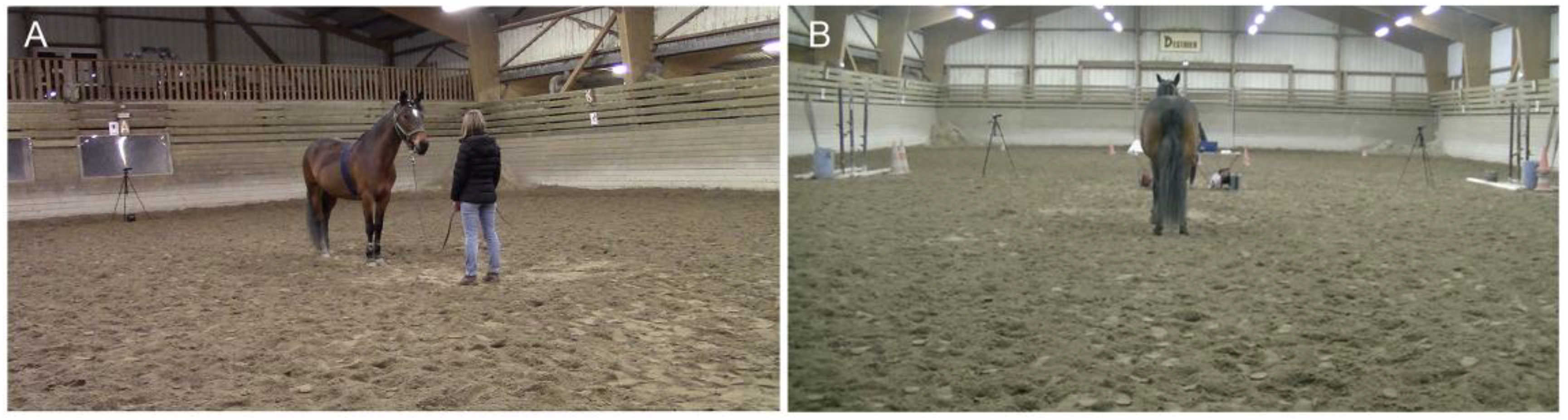
2.3. Testing Procedure
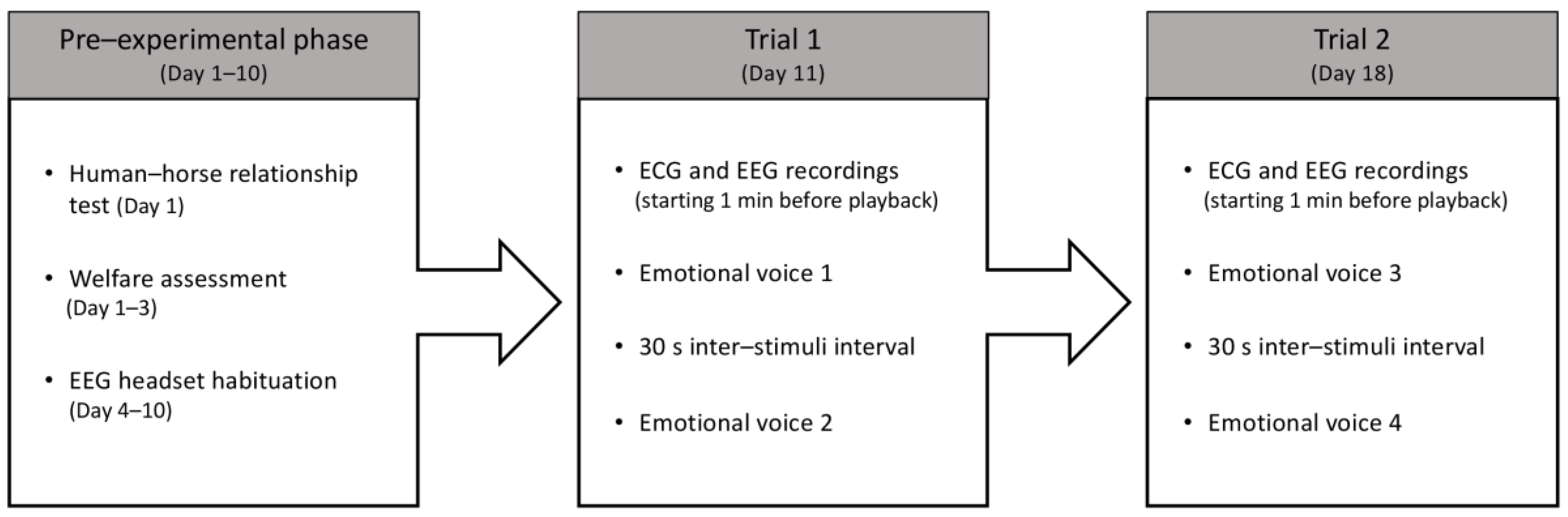
2.4. Procedure
2.5. Data Analysis
2.5.1. Behavioral Analysis
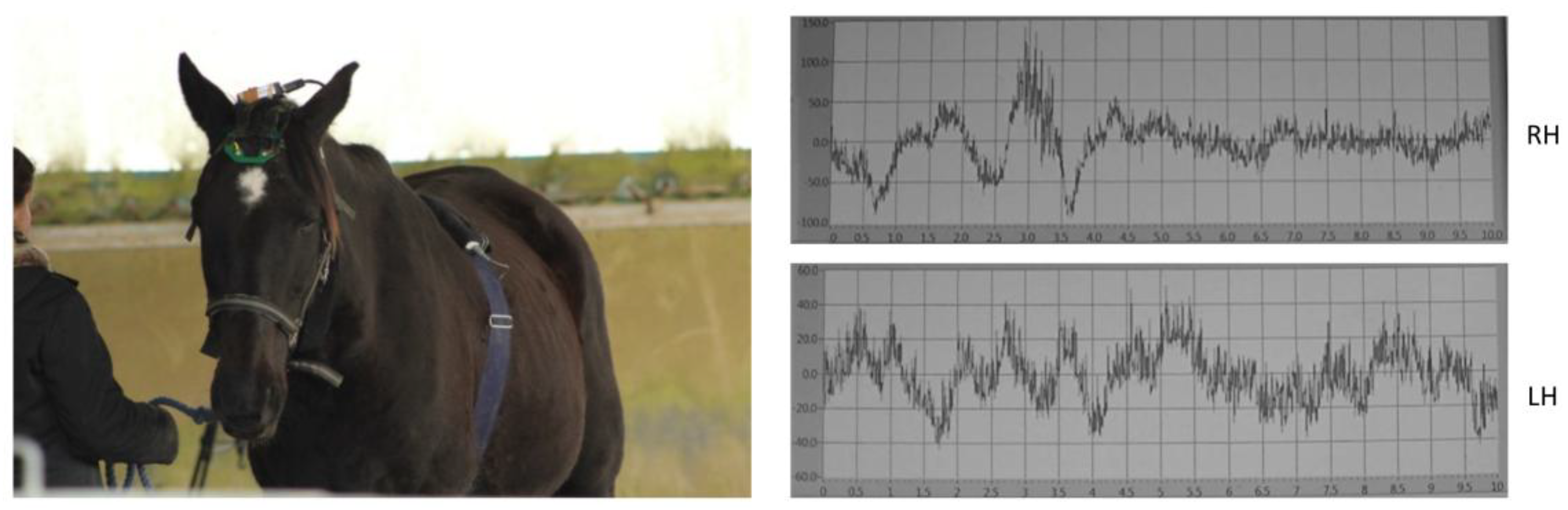
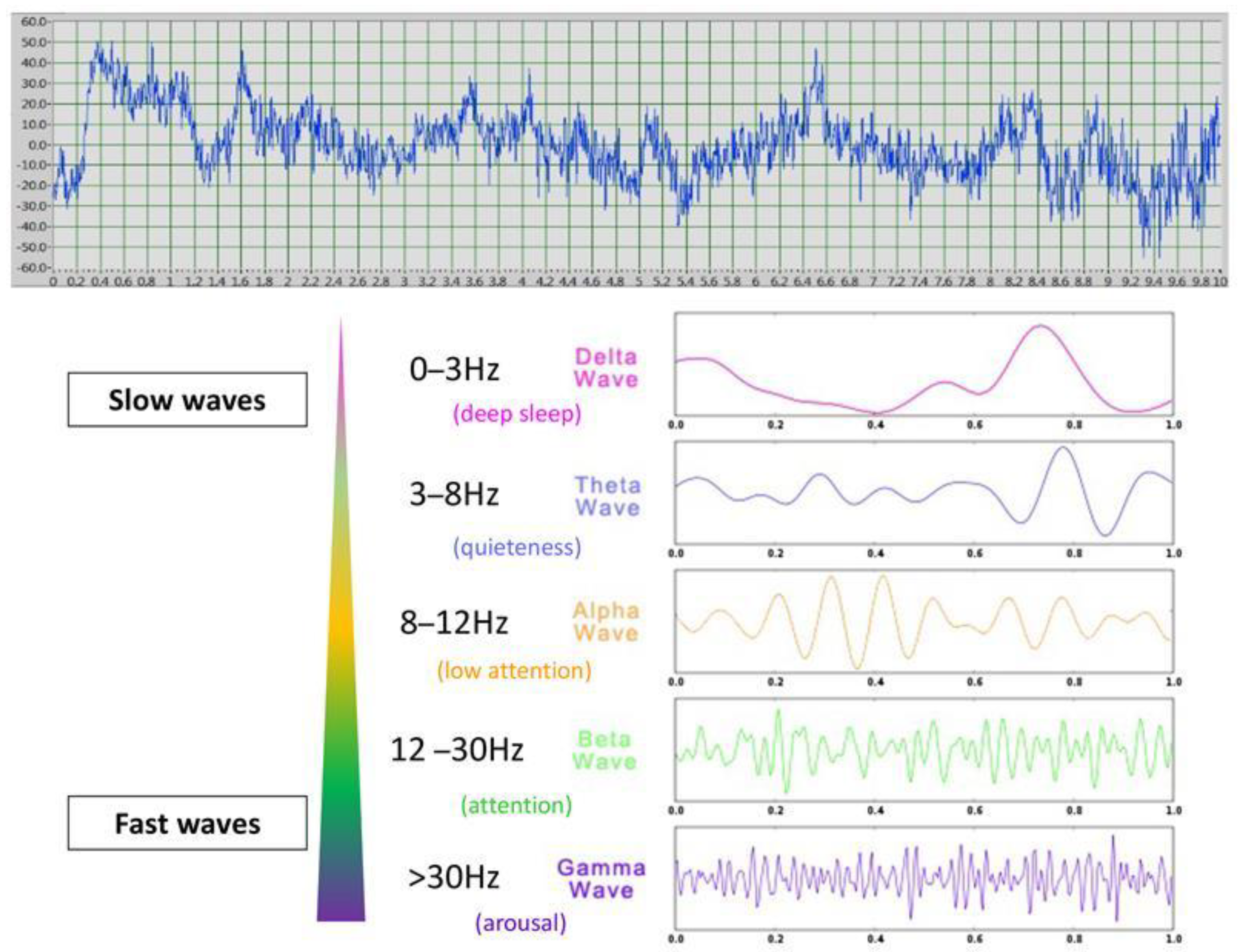
2.5.2. Electroencephalography and Electrocardiography
2.5.3. Welfare Assessment and Human Animal Relationship Tests
2.6. Statistical Analyses
3. Results
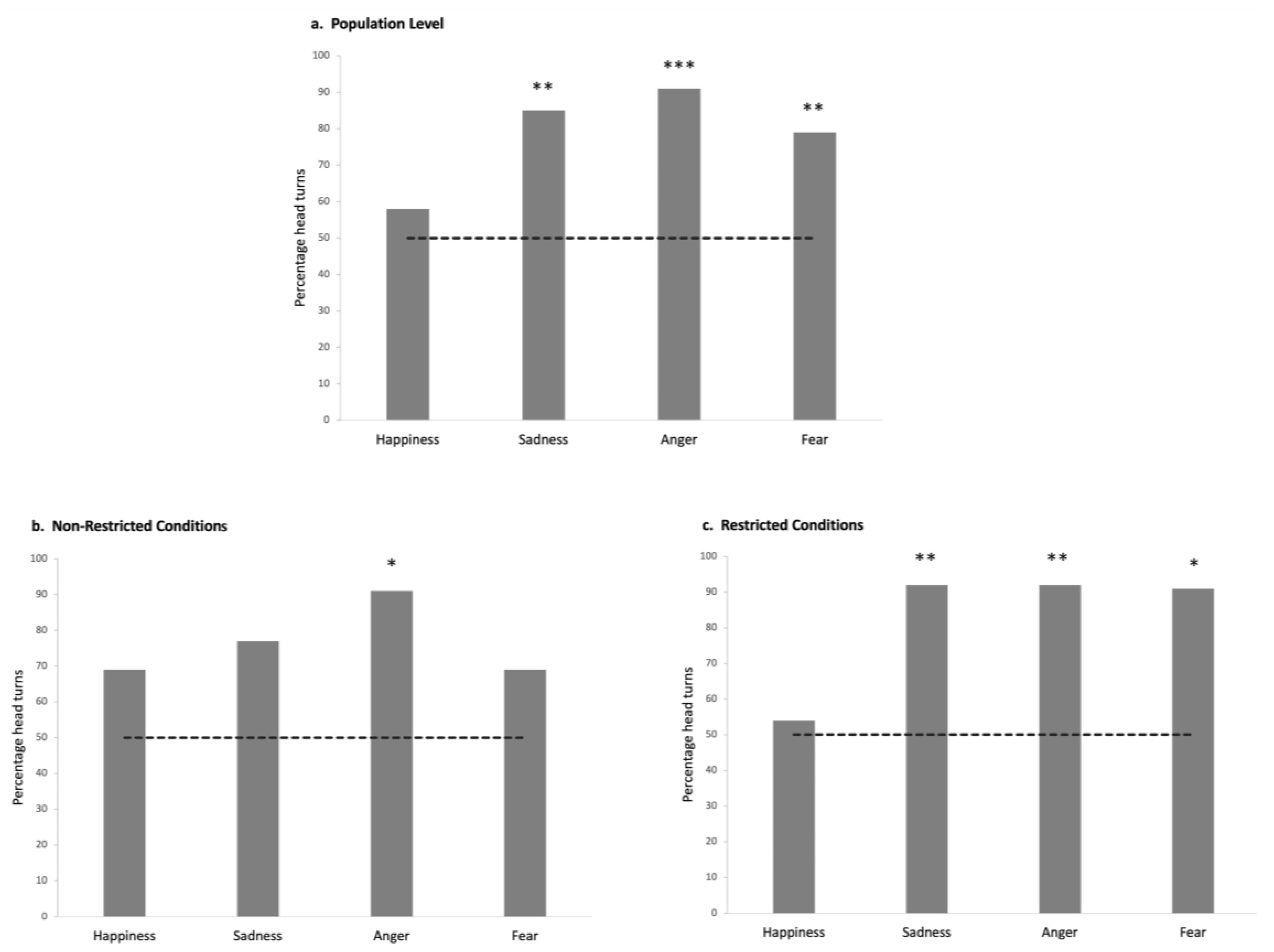
3.1. Horses Show Differentiation of Negative Versus Positive Emotional Cues in Human Voices at the Overall Population Level
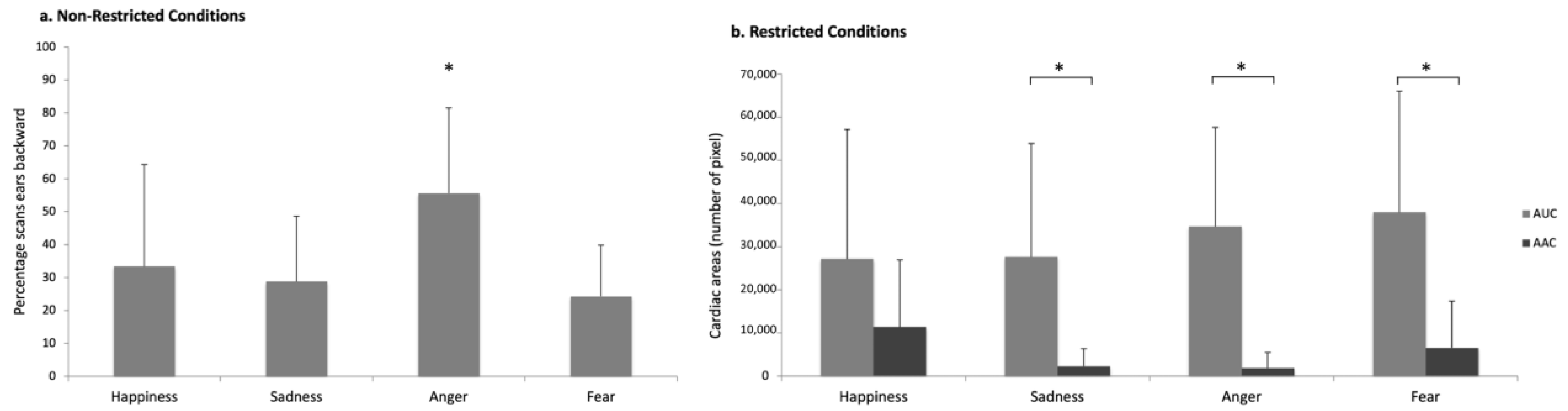
3.2. Horses from Two Different Populations React Differently to Emotional Human Voices
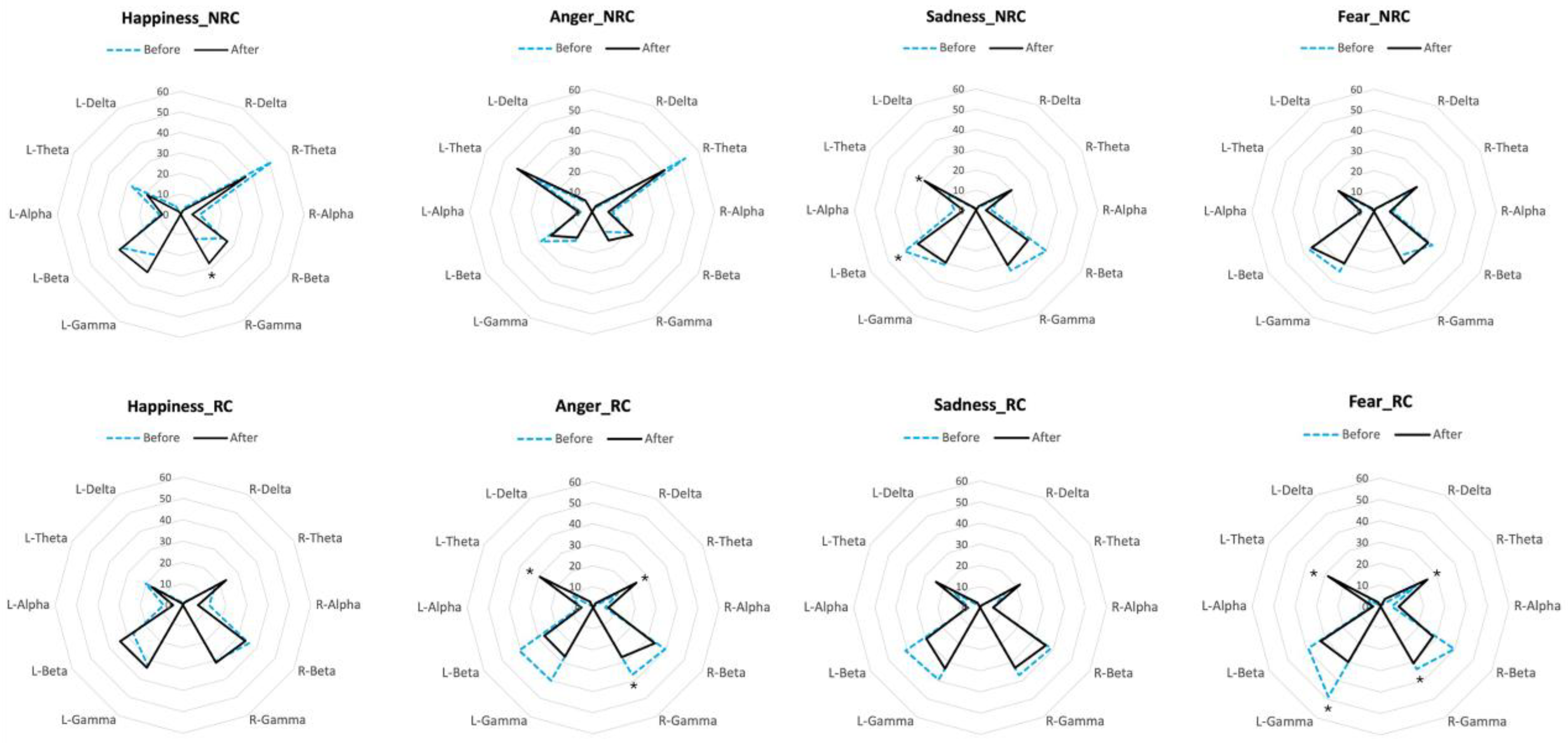
3.3. Perception of Emotional Voices Is Reflected in Brain Activity
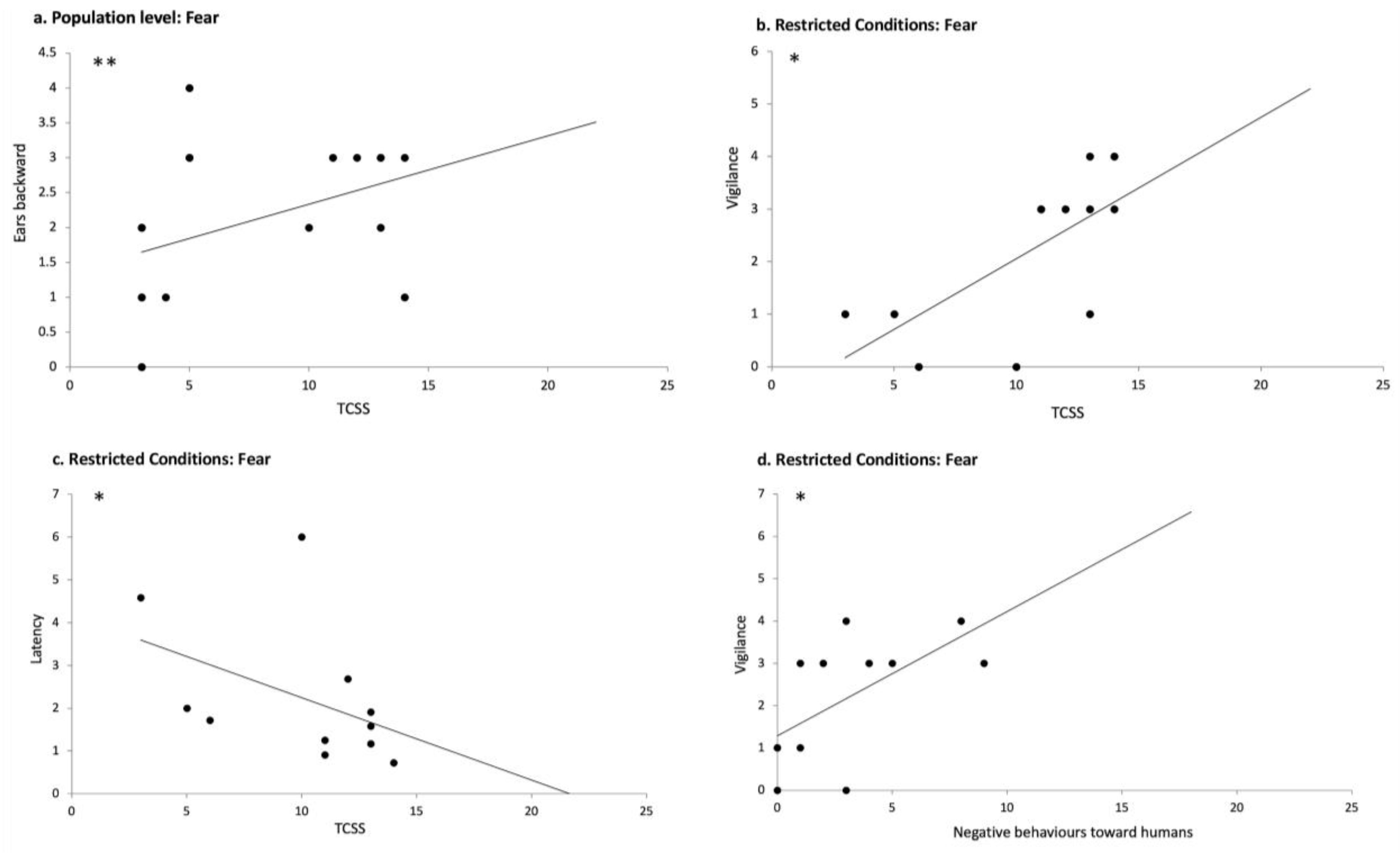
3.4. Individual and Population Responses to Emotional Human Voices Are Influenced by Horses’ Welfare State
3.5. Horses’ Relationships with Humans Influence Their Responses to Emotional Voices
4. Discussion
5. Conclusions
Supplementary Materials
Author Contributions
Funding
Institutional Review Board Statement
Informed Consent Statement
Data Availability Statement
Acknowledgments
Conflicts of Interest
References
- Siniscalchi, M.; d’Ingeo, S.; Quaranta, A. Lateralized emotional functioning in domestic animals. Appl. Anim. Behav. Sci. 2021, 237, 105282. [Google Scholar] [CrossRef]
- Maigrot, A.-L.; Hillmann, E.; Briefer, E.F. Cross-species discrimination of vocal expression of emotional valence by Equidae and Suidae. BMC Biol. 2022, 20, 106. [Google Scholar] [CrossRef] [PubMed]
- Filippi, P.; Congdon, J.V.; Hoang, J.; Bowling, D.L.; Reber, S.A.; Pašukonis, A.; Hoeschele, M.; Ocklenburg, S.; de Boer, B.; Sturdy, C.B.; et al. Humans recognize emotional arousal in vocalizations across all classes of terrestrial vertebrates: Evidence for acoustic universals. Proc. R. Soc. B Biol. Sci. 2017, 284, 20170990. [Google Scholar] [CrossRef]
- Mendl, M.; Burman, O.H.P.; Paul, E.S. An integrative and functional framework for the study of animal emotion and mood. Proc. R. Soc. B Biol. Sci. 2010, 277, 2895–2904. [Google Scholar] [CrossRef]
- Russell, J.A. Core affect and the psychological construction of emotion. Psychol. Rev. 2003, 110, 145–172. [Google Scholar] [CrossRef]
- Morton, E.S. On the Occurrence and Significance of Motivation-Structural Rules in Some Bird and Mammal Sounds. Am. Nat. 1977, 111, 855–869. [Google Scholar] [CrossRef]
- Siniscalchi, M.; d’Ingeo, S.; Fornelli, S.; Quaranta, A. Lateralized behavior and cardiac activity of dogs in response to human emotional vocalizations. Sci. Rep. 2018, 8, 77. [Google Scholar] [CrossRef]
- Quaranta, A.; d’Ingeo, S.; Amoruso, R.; Siniscalchi, M. Emotion recognition in cats. Animals 2020, 10, 1107. [Google Scholar] [CrossRef]
- Smith, A.V.; Proops, L.; Grounds, K.; Wathan, J.; McComb, K. Domestic horses (Equus caballus) discriminate between negative and positive human nonverbal vocalisations. Sci. Rep. 2018, 8, 13052. [Google Scholar] [CrossRef]
- Nawroth, C.; Albuquerque, N.; Savalli, C.; Single, M.-S.; McElligott, A.G. Goats prefer positive human emotional facial expressions. R. Soc. Open Sci. 2018, 5, 180491. [Google Scholar] [CrossRef]
- Trösch, M.; Cuzol, F.; Parias, C.; Calandreau, L.; Nowak, R.; Lansade, L. Horses categorize human emotions cross-modally based on facial expression and non-verbal vocalizations. Animals 2019, 9, 862. [Google Scholar] [CrossRef]
- Jardat, P.; Lansade, L. Cognition and the human-animal relationship: A review of the sociocognitive skills of domestic mammals toward humans. Anim. Cogn. 2021, 25, 369–384. [Google Scholar] [CrossRef] [PubMed]
- Nakamura, K.; Takimoto-Inose, A.; Hasegawa, T. Cross-modal perception of human emotion in domestic horses (Equus caballus). Sci. Rep. 2018, 8, 8660. [Google Scholar] [CrossRef] [PubMed]
- Barber, A.L.A.; Randi, D.; Müller, C.A.; Huber, L. The processing of human emotional faces by pet and lab dogs: Evidence for lateralization and experience effects. PLoS ONE 2016, 11, e0152393. [Google Scholar] [CrossRef] [PubMed]
- Rosenberger, K.; Simmler, M.; Langbein, J.; Keil, N.; Nawroth, C. Performance of goats in a detour and a problem-solving test following long-term cognitive test exposure. R. Soc. Open Sci. 2021, 8, 210656. [Google Scholar] [CrossRef]
- Reefmann, N.; Muehlemann, T.; Wechsler, B.; Gygax, L. Housing induced mood modulates reactions to emotional stimuli in sheep. Appl. Anim. Behav. Sci. 2012, 136, 146–155. [Google Scholar] [CrossRef]
- Salmi, R.; Jones, C.E.; Carrigan, J. Who is there? Captive western gorillas distinguish human voices based on familiarity and nature of previous interactions. Anim. Cogn. 2021, 25, 217–228. [Google Scholar] [CrossRef]
- D’Ingeo, S.; Quaranta, A.; Siniscalchi, M.; Stomp, M.; Coste, C.; Bagnard, C.; Hausberger, M.; Cousillas, H. Horses associate individual human voices with the valence of past interactions: A behavioural and electrophysiological study. Sci. Rep. 2019, 9, 11568. [Google Scholar] [CrossRef]
- Hausberger, M.; Muller, C. A brief note on some possible factors involved in the reactions of horses to humans. Appl. Anim. Behav. Sci. 2002, 76, 339–344. [Google Scholar] [CrossRef]
- Sankey, C.; Henry, S.; André, N.; Richard-Yris, M.-A.; Hausberger, M. Do horses have a concept of person? PLoS ONE 2011, 6, e18331. [Google Scholar] [CrossRef]
- Fureix, C.; Jego, P.; Sankey, C.; Hausberger, M. How horses (Equus caballus) see the world: Humans as significant “objects”. Anim. Cogn. 2009, 12, 643–654. [Google Scholar] [CrossRef]
- Paul, E.S.; Harding, E.J.; Mendl, M. Measuring emotional processes in animals: The utility of a cognitive approach. Neurosci. Biobehav. Rev. 2005, 29, 469–491. [Google Scholar] [CrossRef] [PubMed]
- Harding, E.J.; Paul, E.S.; Mendl, M. Cognitive bias and affective state. Nature 2004, 427, 312. [Google Scholar] [CrossRef] [PubMed]
- Brajon, S.; Laforest, J.-P.; Schmitt, O.; Devillers, N. The way humans behave modulates the emotional state of piglets. PLoS ONE 2015, 10, e0133408. [Google Scholar] [CrossRef]
- Fureix, C.; Meagher, R.K. What can inactivity (in its various forms) reveal about affective states in non-human animals? A review. Appl. Anim. Behav. Sci. 2015, 171, 8–24. [Google Scholar] [CrossRef]
- Scheumann, M.; Hasting, A.S.; Kotz, S.A.; Zimmermann, E. The Voice of Emotion across Species: How Do Human Listeners Recognize Animals’ Affective States? PLoS ONE 2014, 9, e91192. [Google Scholar] [CrossRef]
- Takahashi, T.; Murata, T.; Hamada, T.; Omori, M.; Kosaka, H.; Kikuchi, M.; Yoshida, H.; Wada, Y. Changes in EEG and autonomic nervous activity during meditation and their association with personality traits. Int. J. Psychophysiol. 2005, 55, 199–207. [Google Scholar] [CrossRef]
- Putman, P.; van Peer, J.; Maimari, I.; van der Werff, S. EEG theta/beta ratio in relation to fear-modulated response-inhibition, attentional control, and affective traits. Biol. Psychol. 2010, 83, 73–78. [Google Scholar] [CrossRef]
- Sammler, D.; Grigutsch, M.; Fritz, T.; Koelsch, S. Music and emotion: Electrophysiological correlates of the processing of pleasant and unpleasant music. Psychophysiology 2007, 44, 293–304. [Google Scholar] [CrossRef]
- Davidson, R.J. Cerebral Asymmetry, Emotion, and Affective Style in Brain Asymmetry; MIT Press: Cambridge, MA, USA, 1995; pp. 361–387. [Google Scholar]
- Schmidt, L.A.; Trainor, L.J. Frontal brain electrical activity (EEG) distinguishes valence and intensity of musical emotions. Cogn. Emot. 2001, 15, 487–500. [Google Scholar] [CrossRef]
- Balconi, M.; Vanutelli, M.E. Vocal and visual stimulation, congruence and lateralization affect brain oscillations in interspecies emotional positive and negative interactions. J. Soc. Neuro. 2016, 11, 297–310. [Google Scholar] [CrossRef] [PubMed]
- Knyazev, G.G. Motivation, emotion, and their inhibitory control mirrored in brain oscillations. Neurosci. Biobehav. Rev. 2007, 31, 377–395. [Google Scholar] [CrossRef]
- Fitzgibbon, S.; Pope, K.; Mackenzie, L.; Clark, C.; Willoughby, J. Cognitive tasks augment gamma EEG power. Clin. Neurophysiol. 2004, 115, 1802–1809. [Google Scholar] [CrossRef]
- Aftanas, L.I.; Golocheikine, S.A. Human anterior and frontal midline theta and lower alpha reflect emotionally positive state and internalized attention: High-resolution EEG investigation of meditation. Neurosci. Lett. 2001, 310, 57–60. [Google Scholar] [CrossRef]
- Myhrer, T.; de Groot, D.M. Immobility-related hippocampal theta activity in rats during reaction to novelty. Scand. J. Psychol. 1988, 29, 214–222. [Google Scholar] [CrossRef]
- Hausberger, M.; Cousillas, H.; Meter, A.; Karino, G.; George, I.; Lemasson, A.; Blois-Heulin, C. A crucial role of attention in lateralisation of sound processing? Symmetry 2019, 11, 48. [Google Scholar] [CrossRef]
- Henry, S.; Fureix, C.; Rowberry, R.; Bateson, M.; Hausberger, M. Do horses with poor welfare show ‘pessimistic’ cognitive biases? Sci. Nat. 2017, 104, 8. [Google Scholar] [CrossRef]
- Lesimple, C. Indicators of Horse Welfare: State-of-the-Art. Animals 2020, 10, 294. [Google Scholar] [CrossRef]
- ANSES 2018; Saisie n° 2016-SA-0288. Agence Nationale de Sécurité Sanitaire de L’alimentation, de L’environnement et du Travail: Maisons-Alfort, France, 2018.
- Olofsson, J.K.; Nordin, S.; Sequeira, H.; Polich, J. Affective Picture Processing: An Integrative Review of ERP Findings. Biol. Psychol. 2008, 77, 247–265. [Google Scholar] [CrossRef] [PubMed]
- Magyari, L.; Huszár, Z.; Turzó, A.; Andics, A. Event-Related Potentials Reveal Limited Readiness to Access Phonetic Details during Word Processing in Dogs. R. Soc. Open Sci. 2020, 7, 200851. [Google Scholar] [CrossRef] [PubMed]
- Cousillas, H.; Oger, M.; Rochais, C.; Pettoello, C.; Ménoret, M.; Henry, S.; Hausberger, M. An ambulatory electroencephalography system for freely moving horses: An innovating approach. Front. Vet. Sci. 2017, 4, 57. [Google Scholar] [CrossRef]
- Stomp, M.; d’Ingeo, S.; Henry, S.; Cousillas, H.; Hausberger, M. Brain activity reflects (chronic) welfare state: Evidence from individual electroencephalography profiles in an animal model. Appl. Anim. Behav. Sci. 2021, 236, 105271. [Google Scholar] [CrossRef]
- Rochais, C.; Sébilleau, M.; Menoret, M.; Oger, M.; Henry, S.; Hausberger, M.; Cousillas, H. Attentional state and brain processes: State-dependent lateralization of EEG profiles in horses. Sci. Rep. 2018, 8, 10153. [Google Scholar] [CrossRef] [PubMed]
- Basile, M.; Boivin, S.; Boutin, A.; Blois-Heulin, C.; Hausberger, M.; Lemasson, A. Socially dependent auditory laterality in domestic horses (Equus caballus). Anim. Cogn. 2009, 12, 611–619. [Google Scholar] [CrossRef] [PubMed]
- Waring, G.H. Horse Behavior; William Andrew: Norwich, NY, USA, 2002. [Google Scholar]
- Altman, J. Observational study of behavior: Sampling methods. Behaviour 1974, 49, 227–266. [Google Scholar] [CrossRef]
- Stomp, M.; D’iNgeo, S.; Henry, S.; Lesimple, C.; Cousillas, H.; Hausberger, M. EEG individual power profiles correlate with tension along spine in horses. PLoS ONE 2020, 15, e0243970. [Google Scholar] [CrossRef]
- Hausberger, M.; Fureix, C.; Bourjade, M.; Wessel-Robert, S.; Richard-Yris, M.A. On the Significance of Adult Play: What Does Social Play Tell Us about Adult Horse Welfare? Naturwissenschaften 2012, 99, 291–302. [Google Scholar] [CrossRef]
- Bolker, B.M.; Brooks, M.E.; Clark, C.J.; Geange, S.W.; Poulsen, J.R.; Stevens, M.H.H.; White, J.-S.S. Generalized linear mixed models: A practical guide for ecology and evolution. Trends Ecol. Evol. 2009, 24, 127–135. [Google Scholar] [CrossRef]
- Albuquerque, N.; Guo, K.; Wilkinson, A.; Savalli, C.; Otta, E.; Mills, D. Dogs recognize dog and human emotions. Biol. Lett. 2016, 12, 20150883. [Google Scholar] [CrossRef]
- Nicastro, N.; Owren, M.J. Classification of domestic cat (Felis catus) vocalizations by naive and experienced human listeners. J. Comp. Psychol. 2003, 117, 44–52. [Google Scholar] [CrossRef]
- Pongrácz, P.; Miklósi, Á.; Csányi, V. Owner’s beliefs on the ability of their pet dogs to understand human verbal communication: A case of social understanding. Cogn. Psychol. 2001, 20, 87–107. [Google Scholar]
- Tallet, C.; Špinka, M.; Maruščáková, I.; Šimeček, P. Human perception of vocalizations of domestic piglets and modulation by experience with domestic pigs (Sus scrofa). J. Comp. Psychol. 2010, 124, 81–91. [Google Scholar] [CrossRef] [PubMed]
- MacLeod, C.; Mathews, A. Anxiety and the allocation of attention to threat. Q. J. Exp. Psychol. 1988, 40, 653–670. [Google Scholar] [CrossRef] [PubMed]
- Matthews, G.R.; Antes, J.R. Visual attention and depression: Cognitive biases in the eye fixations of the dysphoric and the nondepressed. Cogn. Ther. Res. 1992, 16, 359–371. [Google Scholar] [CrossRef]
- Fureix, C.; Jego, P.; Henry, S.; Lansade, L.; Hausberger, M. Towards an ethological animal model of Depression? A study on Horses. PLoS ONE 2012, 7, e39280. [Google Scholar] [CrossRef]
- Burman, O.; Owen, D.; AbouIsmail, U.; Mendl, M. Removing individual rats affects indicators of welfare in the remaining group members. Physiol. Behav. 2008, 93, 89–96. [Google Scholar] [CrossRef]
- Hausberger, M.; Roche, H.; Henry, S.; Visser, E.K. A review of the human–horse relationship. Appl. Anim. Behav. Sci. 2007, 109, 1–24. [Google Scholar] [CrossRef]
- Sankey, C.; Richard-Yris, M.A.; Leroy, H.; Henry, S.; Hausberger, M. Positive Interactions Lead to Lasting Positive Memories in Horses, Equus caballus. Anim. Behav. 2010, 79, 869–875. [Google Scholar] [CrossRef]
- Gábor, A.; Andics, A.; Miklósi, Á.; Czeibert, K.; Carreiro, C.; Gácsi, M. Social relationship-dependent neural response to speech in dogs. Neuroimage 2021, 243, 118480. [Google Scholar] [CrossRef]
- Mason, M.A.; Semple, S.; Marshall, H.H.; McElligott, A.G. Goats discriminate emotional valence in the human voice. Anim. Behav. 2024, 209, 227–240. [Google Scholar] [CrossRef]
- Lesimple, C.; Fureix, C.; Menguy, H.; Hausberger, M. Human Direct Actions May Alter Animal Welfare, a Study on Horses (Equus caballus). PLoS ONE 2010, 5, e10257. [Google Scholar] [CrossRef]
- Horn, L.; Range, F.; Huber, L. Dogs’ attention towards humans depends on their relationship, not only on social familiarity. Anim. Cogn. 2012, 16, 435–443. [Google Scholar] [CrossRef] [PubMed]
- D’Ingeo, S.; Siniscalchi, M.; Straziota, V.; Ventriglia, G.; Sasso, R.; Quaranta, A. Relationship between asymmetric nostril use and human emotional odours in cats. Sci. Rep. 2023, 13, 3280. [Google Scholar] [CrossRef] [PubMed]
- Siniscalchi, M.; d’Ingeo, S.; Minunno, M.; Quaranta, A. Facial asymmetry in dogs with fear and aggressive behaviors towards humans. Sci. Rep. 2022, 12, 12345. [Google Scholar] [CrossRef] [PubMed]
- Rogers, L.J.; Vallortigara, G.; Andrew, R.J. Divided Brains: The Biology and Behavior of Brain Asymmetries; Cambridge University Press: Cambridge, UK, 2013. [Google Scholar]
- Siniscalchi, M.; D’Ingeo, S.; Quaranta, A. The dog nose “KNOWS” fear: Asymmetric nostril use during sniffing at canine and human emotional stimuli. Behav. Brain Res. 2016, 304, 34–41. [Google Scholar] [CrossRef]
- Motoi, M.; Egashira, Y.; Nishimura, T.; Choi, D.; Matsumoto, R.; Watanuki, S. Time window for cognitive activity involved in emotional processing. J. Physiol. Anthropol. 2014, 33, 25. [Google Scholar] [CrossRef]
- Jardat, P.; Destrez, A.; Damon, F.; Menard--Peroy, Z.; Parias, C.; Barrière, P.; Keller, M.; Calandreau, L.; Lansade, L. Horses discriminate human body odors between fear and joy contexts in a habituation-discrimination protocol. Sci. Rep. 2023, 13, 3285. [Google Scholar] [CrossRef]
- Bekkedal, M.Y.V.; Rossi, J.; Panksepp, J. Human brain EEG indices of emotions: Delineating responses to affective vocalizations by measuring frontal theta event-related synchronization. Neurosci. Biobehav. Rev. 2011, 35, 1959–1970. [Google Scholar] [CrossRef]
- Balconi, M.; Brambilla, E.; Falbo, L. Appetitive vs. defensive responses to emotional cues: Autonomic measures and brain oscillation modulation. Brain Res. 2009, 1296, 72–84. [Google Scholar] [CrossRef]
- Knyazev, G.G.; Bocharov, A.V.; Levin, E.A.; Savostyanov, A.N.; Slobodskoj-Plusnin, J.Y. Anxiety and oscillatory responses to emotional facial expressions. Brain Res. 2008, 1227, 174–183. [Google Scholar] [CrossRef]
- López-Madrona, V.J.; Pérez-Montoyo, E.; Álvarez-Salvado, E.; Moratal, D.; Herreras, O.; Pereda, E.; Mirasso, C.R.; Canals, S. Different theta frameworks coexist in the rat hippocampus and are coordinated during memory-guided and novelty tasks. eLife 2020, 9, e57313. [Google Scholar] [CrossRef]
- Wolff, A.; Hausberger, M.; Scolan, N.L. Experimental tests to assess emotionality in horses. Behav. Processes 1997, 40, 209–221. [Google Scholar] [CrossRef]
- Keeling, L.J.; Jonare, L.; Lanneborn, L. Investigating horse–human interactions: The effect of a nervous human. Vet. J. 2009, 181, 70–71. [Google Scholar] [CrossRef]
Disclaimer/Publisher’s Note: The statements, opinions and data contained in all publications are solely those of the individual author(s) and contributor(s) and not of MDPI and/or the editor(s). MDPI and/or the editor(s) disclaim responsibility for any injury to people or property resulting from any ideas, methods, instructions or products referred to in the content. |
© 2025 by the authors. Licensee MDPI, Basel, Switzerland. This article is an open access article distributed under the terms and conditions of the Creative Commons Attribution (CC BY) license (https://creativecommons.org/licenses/by/4.0/).
Share and Cite
d’Ingeo, S.; Siniscalchi, M.; Quaranta, A.; Cousillas, H.; Hausberger, M. Chronic State and Relationship to Humans Influence How Horses Decode Emotions in Human Voices: A Brain and Behavior Study. Animals 2025, 15, 3217. https://doi.org/10.3390/ani15213217
d’Ingeo S, Siniscalchi M, Quaranta A, Cousillas H, Hausberger M. Chronic State and Relationship to Humans Influence How Horses Decode Emotions in Human Voices: A Brain and Behavior Study. Animals. 2025; 15(21):3217. https://doi.org/10.3390/ani15213217
Chicago/Turabian Styled’Ingeo, Serenella, Marcello Siniscalchi, Angelo Quaranta, Hugo Cousillas, and Martine Hausberger. 2025. "Chronic State and Relationship to Humans Influence How Horses Decode Emotions in Human Voices: A Brain and Behavior Study" Animals 15, no. 21: 3217. https://doi.org/10.3390/ani15213217
APA Styled’Ingeo, S., Siniscalchi, M., Quaranta, A., Cousillas, H., & Hausberger, M. (2025). Chronic State and Relationship to Humans Influence How Horses Decode Emotions in Human Voices: A Brain and Behavior Study. Animals, 15(21), 3217. https://doi.org/10.3390/ani15213217

