
Analyses of Genetic Diversity in the Endangered “Berrenda” Spanish Cattle Breeds Using Pedigree Data
by
 ,
,
Rafael González-Cano
1, 
Ana González-Martínez
2,
María Eva Muñoz-Mejías
3,
Pablo Valera
4 and
Evangelina Rodero
2,* 1
CERSYRA-IRIAF, Avenida del Vino 10, 048619 Valdepeñas Ciudad Real, Spain
2
Department of Animal Production, Faculty of Veterinary Sciences, University of Cordoba, 14071 Córdoba, Spain
3
Department of Animal Pathology, Animal Production, Bromathology and Food Technology, University of Las Palmas de Gran Canaria, 35001 Las Palmas de Gran Canaria, Spain
4
Gescan, Gestión de Programas de Cría, 35017 Las Palmas de Gran Canaria, Spain
*
Author to whom correspondence should be addressed.
Animals 2022, 12(3), 249; https://doi.org/10.3390/ani12030249
Submission received: 30 November 2021
/
Revised: 10 January 2022
/
Accepted: 18 January 2022
/
Published: 20 January 2022
(This article belongs to the Special Issue Competitiveness of Spanish Local Breeds)
Simple Summary
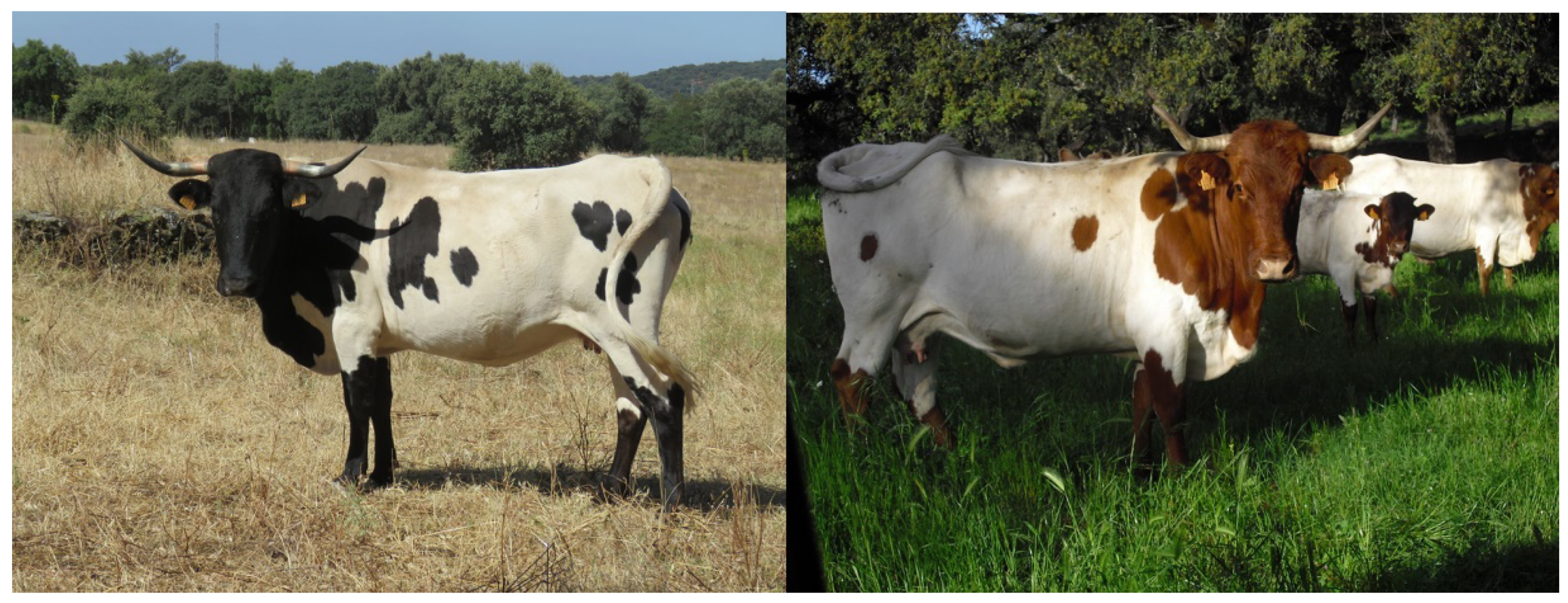
The two “berrenda” cattle breeds are important for the conservation of livestock genetic diversity in Spain. They have a great phenotypic and genotypic uniqueness and both of them are important from the cultural and the tourist perspectives. They also contribute to the conservation of the traditional “Dehesa” ecosystem. Both breeds are considered as endangered ones, but their genealogies have never been used for quantifying the risk status of their populations. The aim of this work was to monitor the structure of the “Berrenda en Negro” and the “Berrenda en Colorado” populations, their inbreeding rate and some other parameters that could be useful to prevent losses in their genetic diversity and to conduct and analyze the effect of the conservation programs developed by ANABE Breeders Association and finally, as a tool to implement some selective measures. We found that both “berrenda” cattle breeds retain a huge genetic variability from their founders’ populations, although they have been affected by a shallow depth in their pedigrees; as a consequence, we suggest increasing exchanges of breeding animals among herds, more specifically in the case of the “Berrenda en Negro” breed.
Abstract
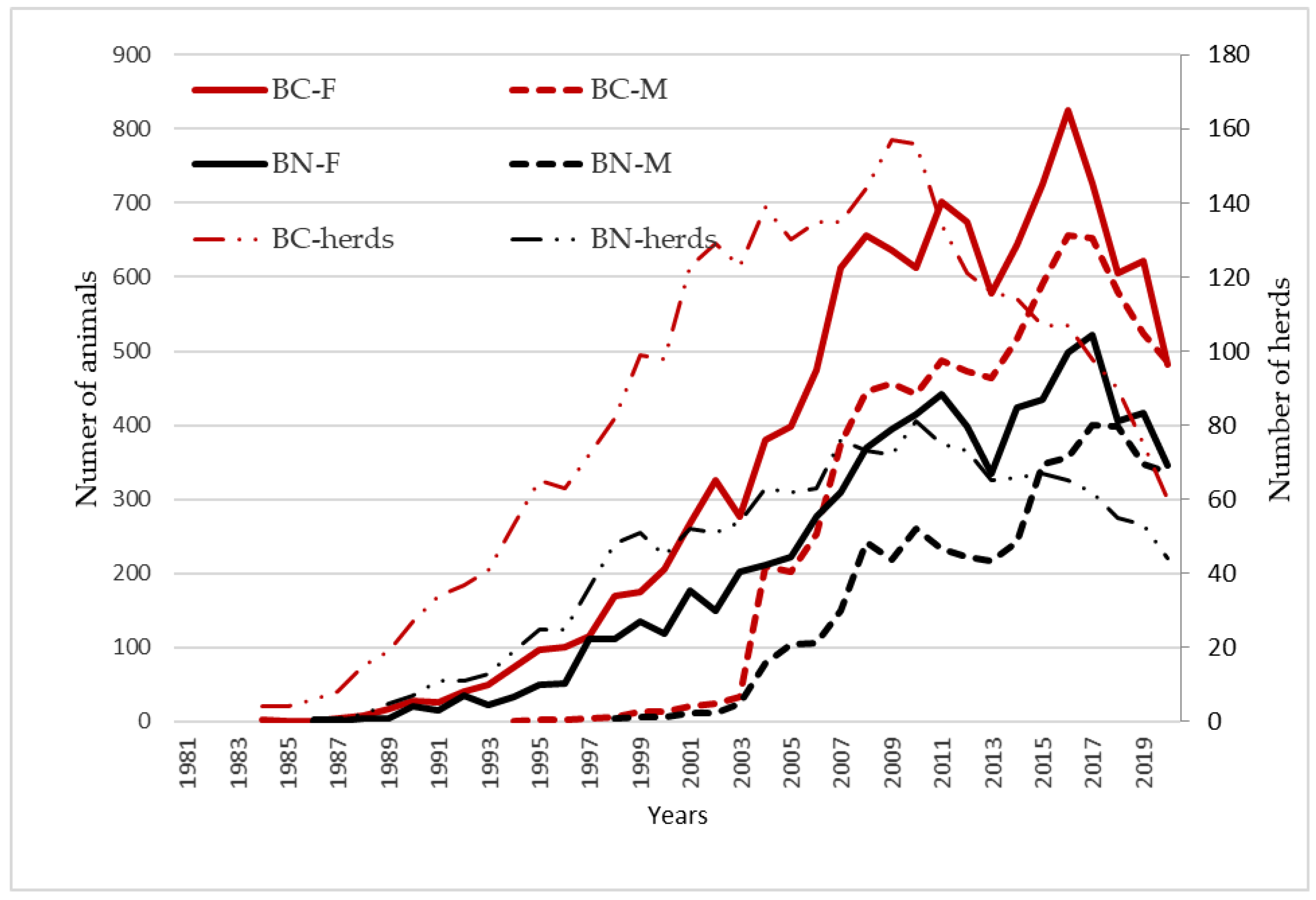
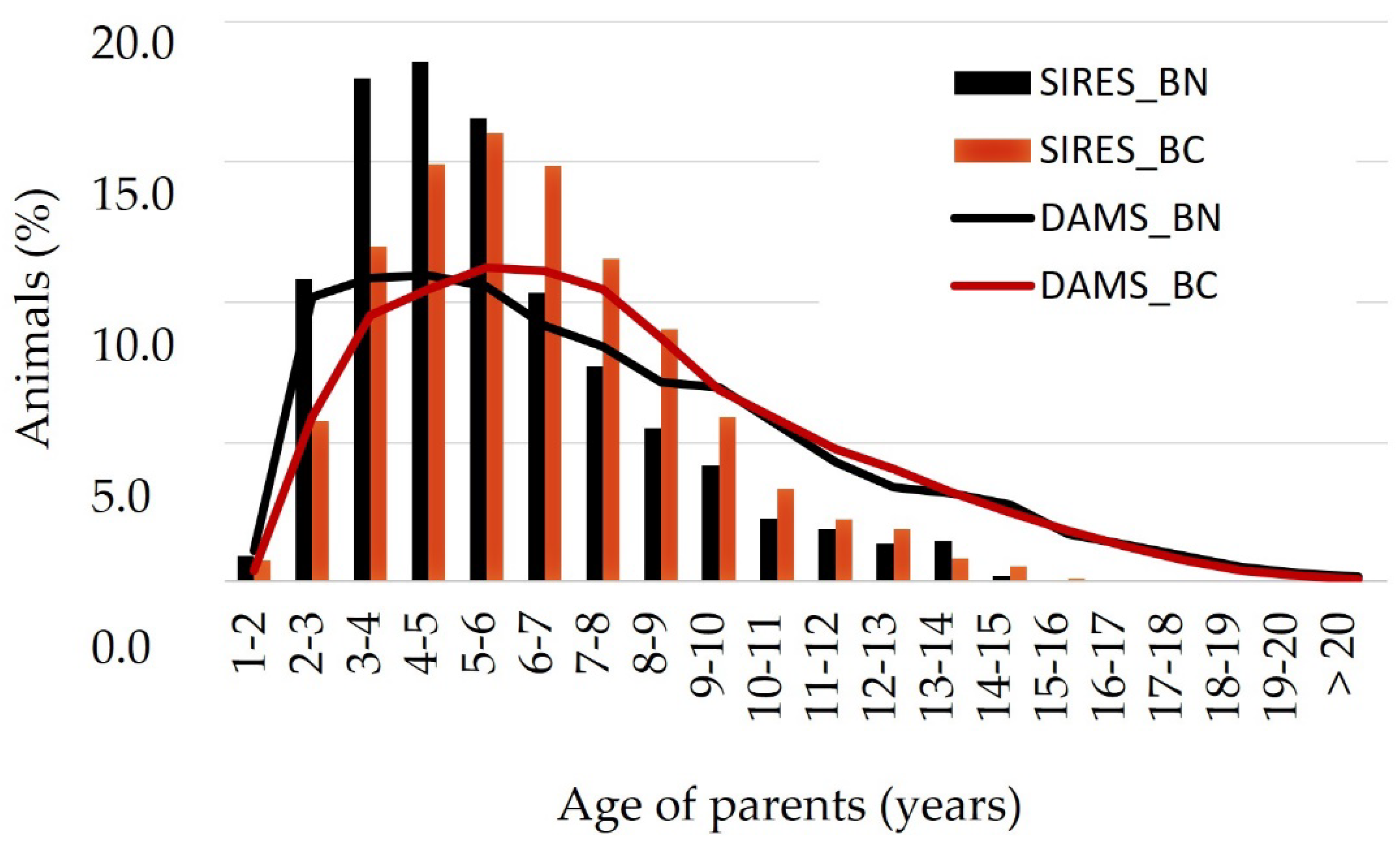
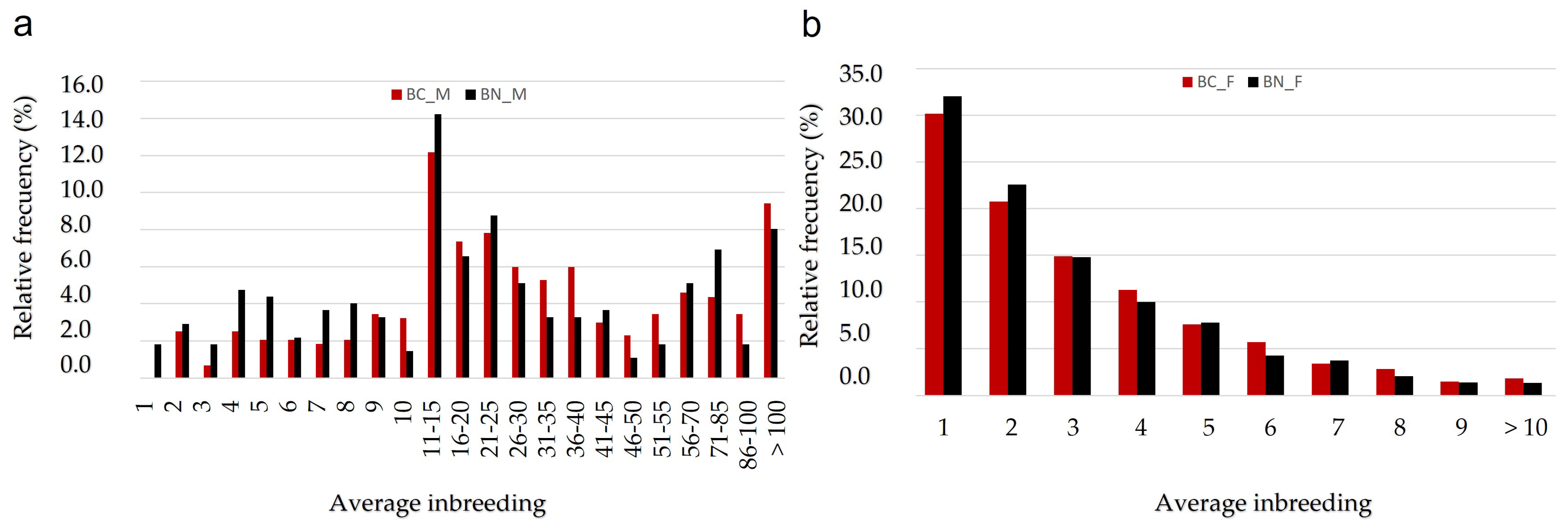
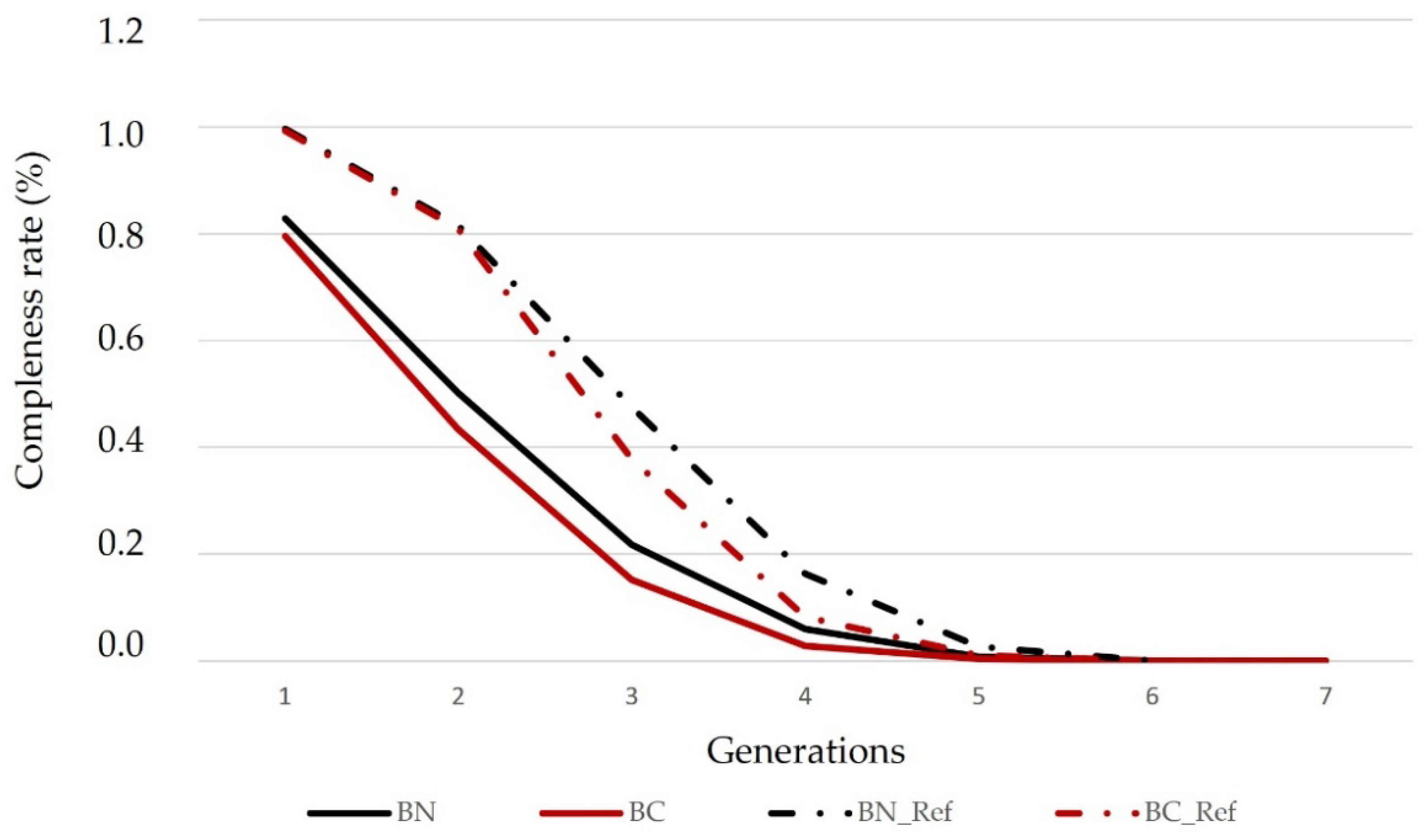
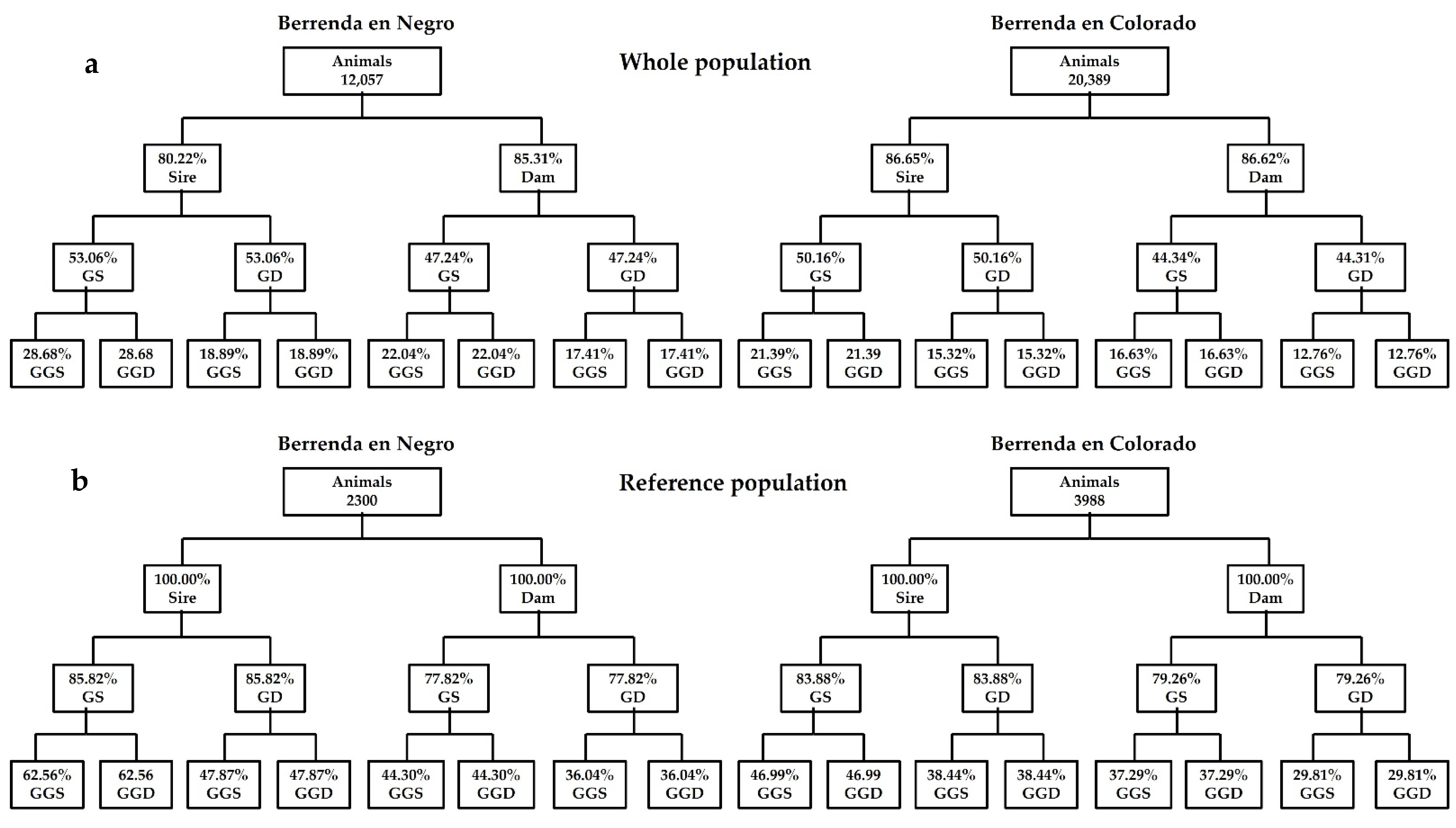
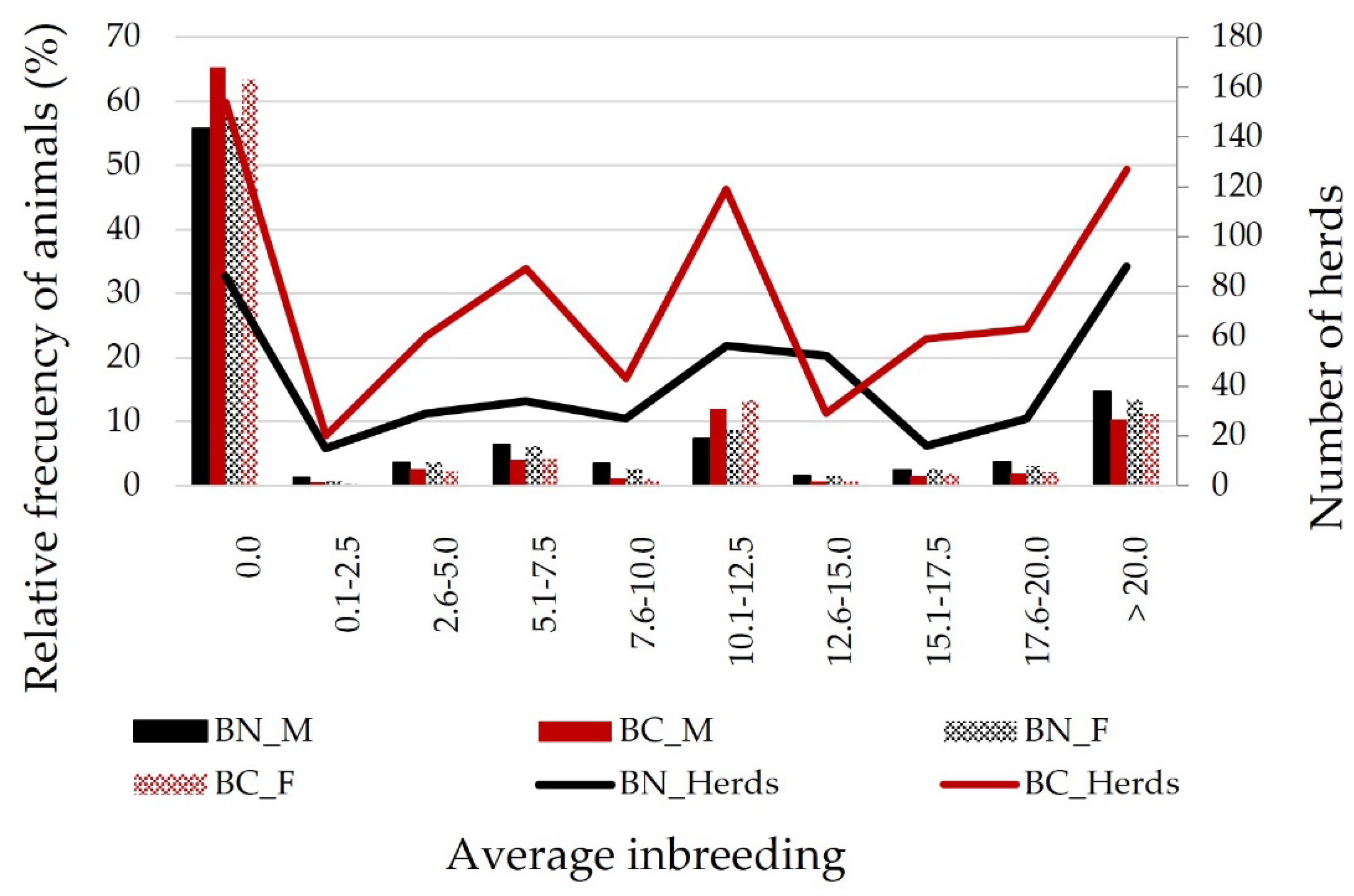
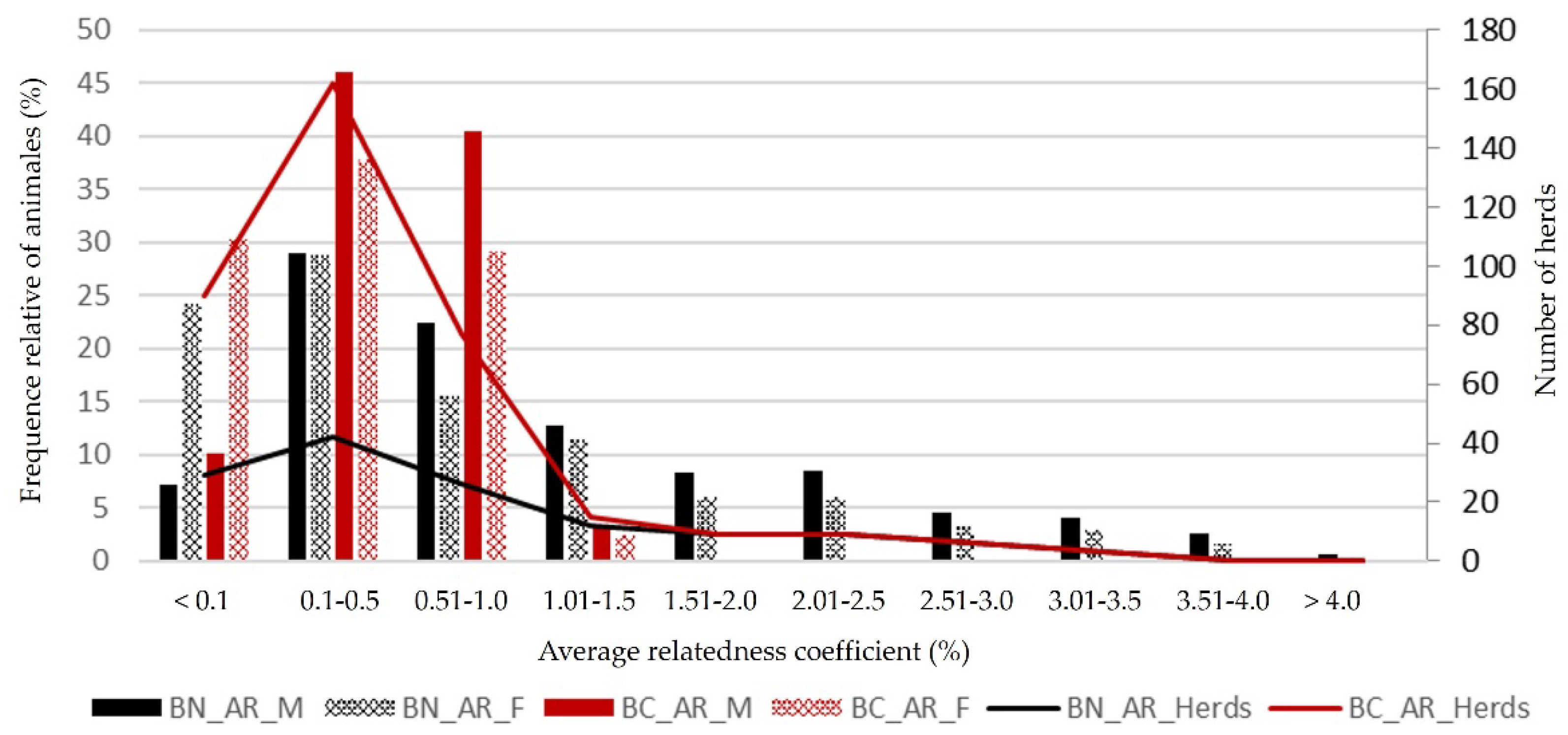
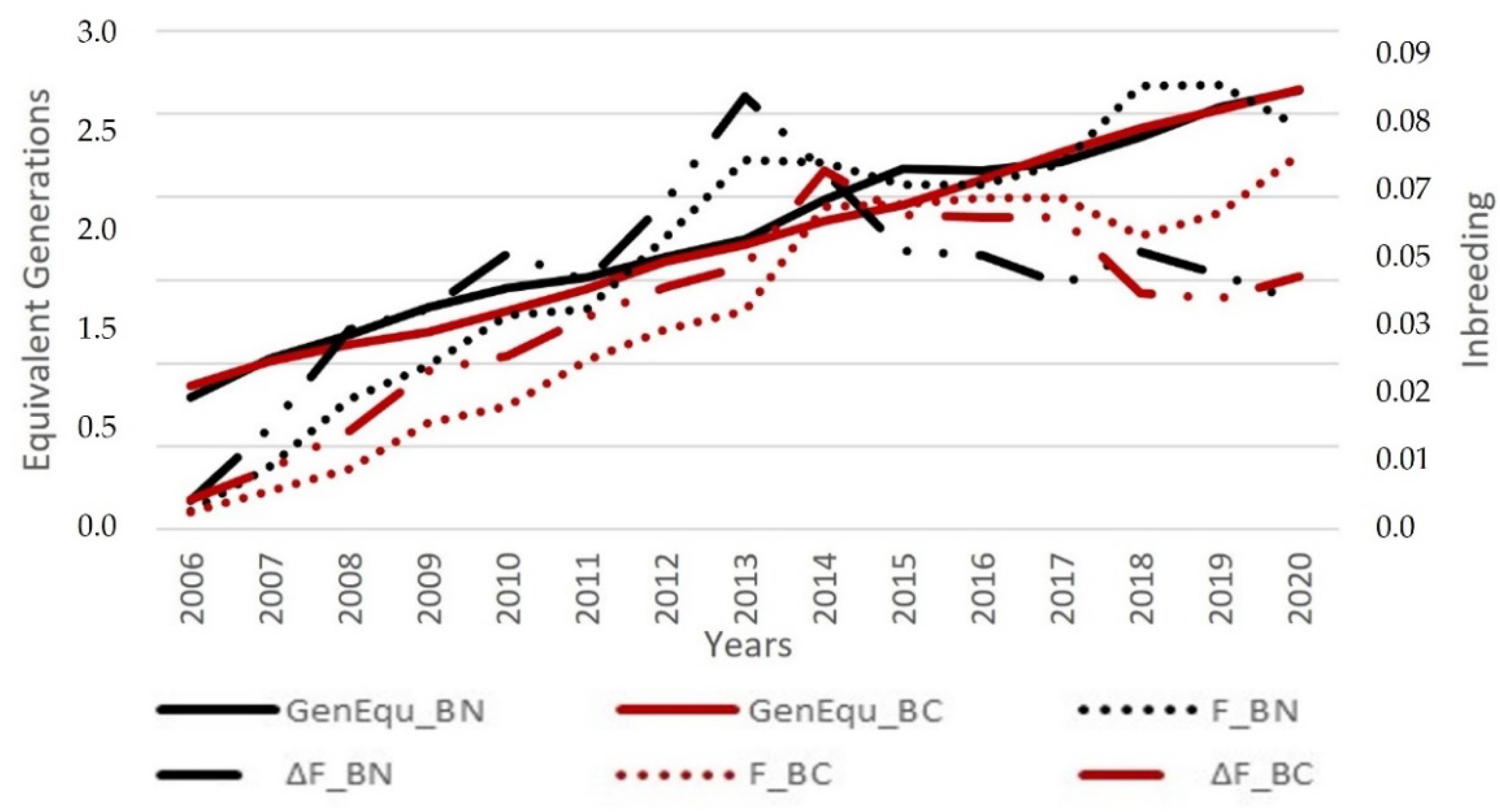
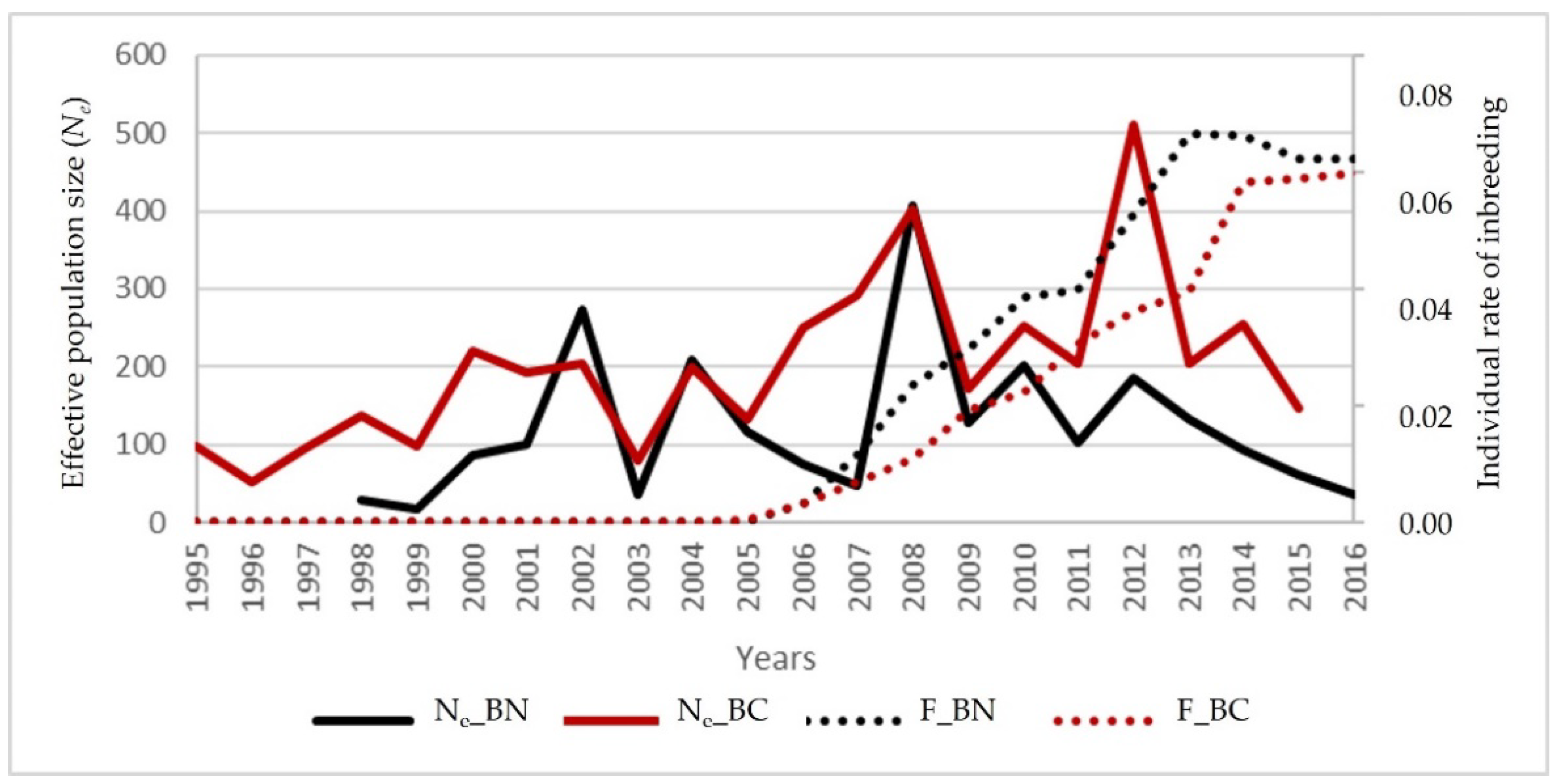
Pedigree analyses of two endangered cattle breeds were performed in order to study the structure and the genetic variability in their populations. Pedigree data were analyzed from 12,057 individuals belonging to the “Berrenda en Negro” cattle breed (BN) and 20,389 individuals belonging to the “Berrenda en Colorado” cattle breed (BC) that were born between 1983 and 2020. BN and BC reference populations (RP) were set up by 2300 and 3988 animals, respectively. The generation interval in BN and BC reference populations was equal to 6.50 and 6.92 years, respectively. The pedigree completeness level was 82.76% in BN and 79.57% in BC. The inbreeding rates were 4.5% in BN and 3.4% in BC, respectively. The relationship among animals when they were born in different herds was 1.8% in BN and 5% in BC; these values increased to 8.5% and 7.7%, respectively when comparing animals that were born in the same herd. The effective number of founding herds was 23.9 in BN and 60.9 in BC. Number of ancestors needed to explain 50% of genes pool in the whole population was 50 and 101, in BN and in BC, respectively. The effective population size based on co-ancestries was 92.28 in BN and 169.92 in BC. The genetic variability has been maintained in both populations over time and the results of this study suggest that measures to promote the conservation of the genetic variability in these two breeds would go through for the exchange of breeding animals among farms and for monitoring the genetic contributions before implementing any selective action.