Exploratory Assessment of Iron- and Sulfate-Reducing Bacteria in Sediments Co-Contaminated with Metals and Polycyclic Aromatic Hydrocarbons


Abstract
1. Introduction
2. Methods
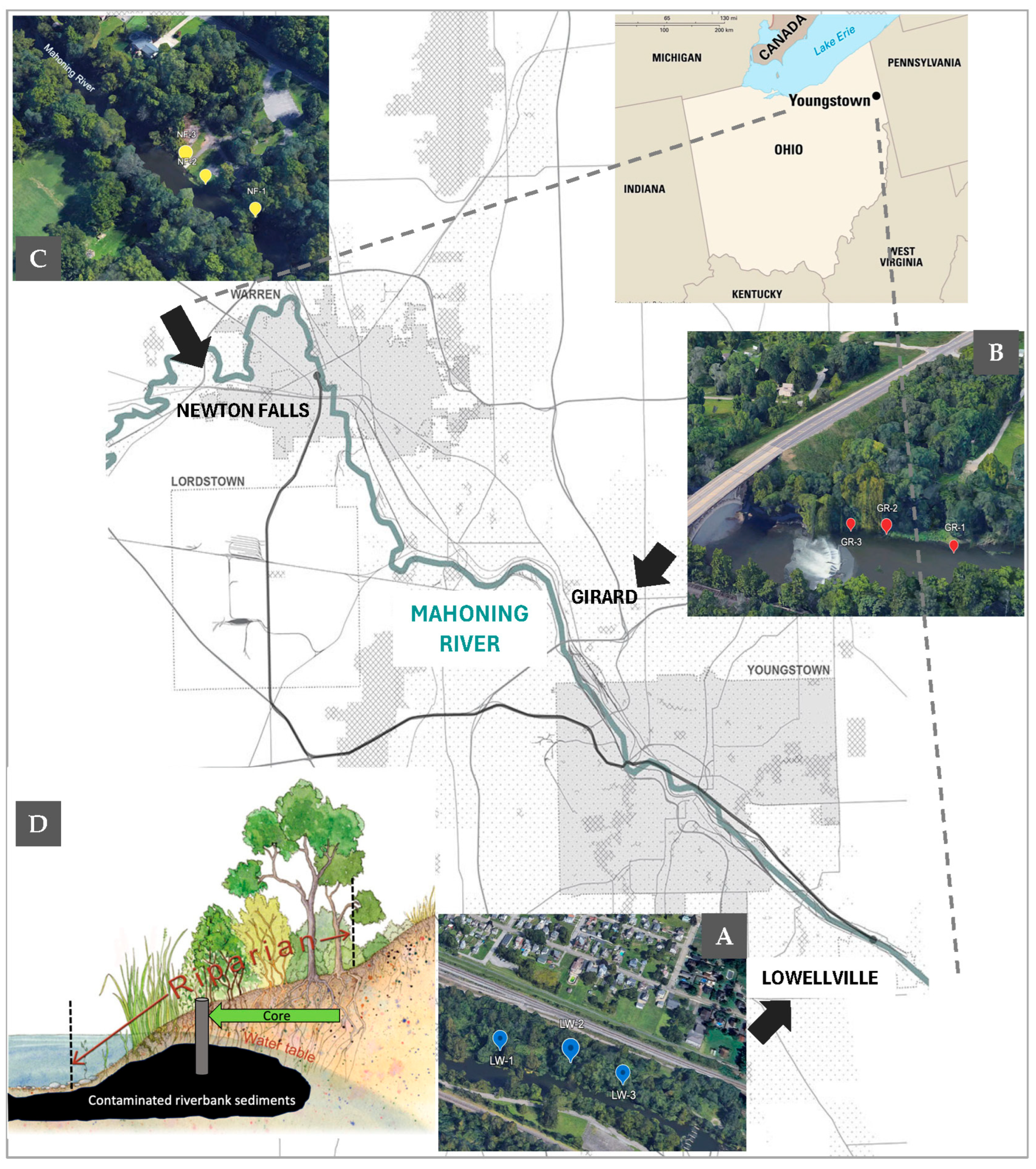
2.1. Study Site, Sampling, and Physicochemical Analyses
2.2. Sediment Geochemistry
2.3. Bacterial Enumeration
2.4. Bacterial, Archaeal and Iron-Reducing Community Composition by NGS
2.5. Clone Library Construction and Sequencing Analysis of Dissimilatory Sulfite Reductase (dsrAB)
2.6. Statistical Analysis
3. Results
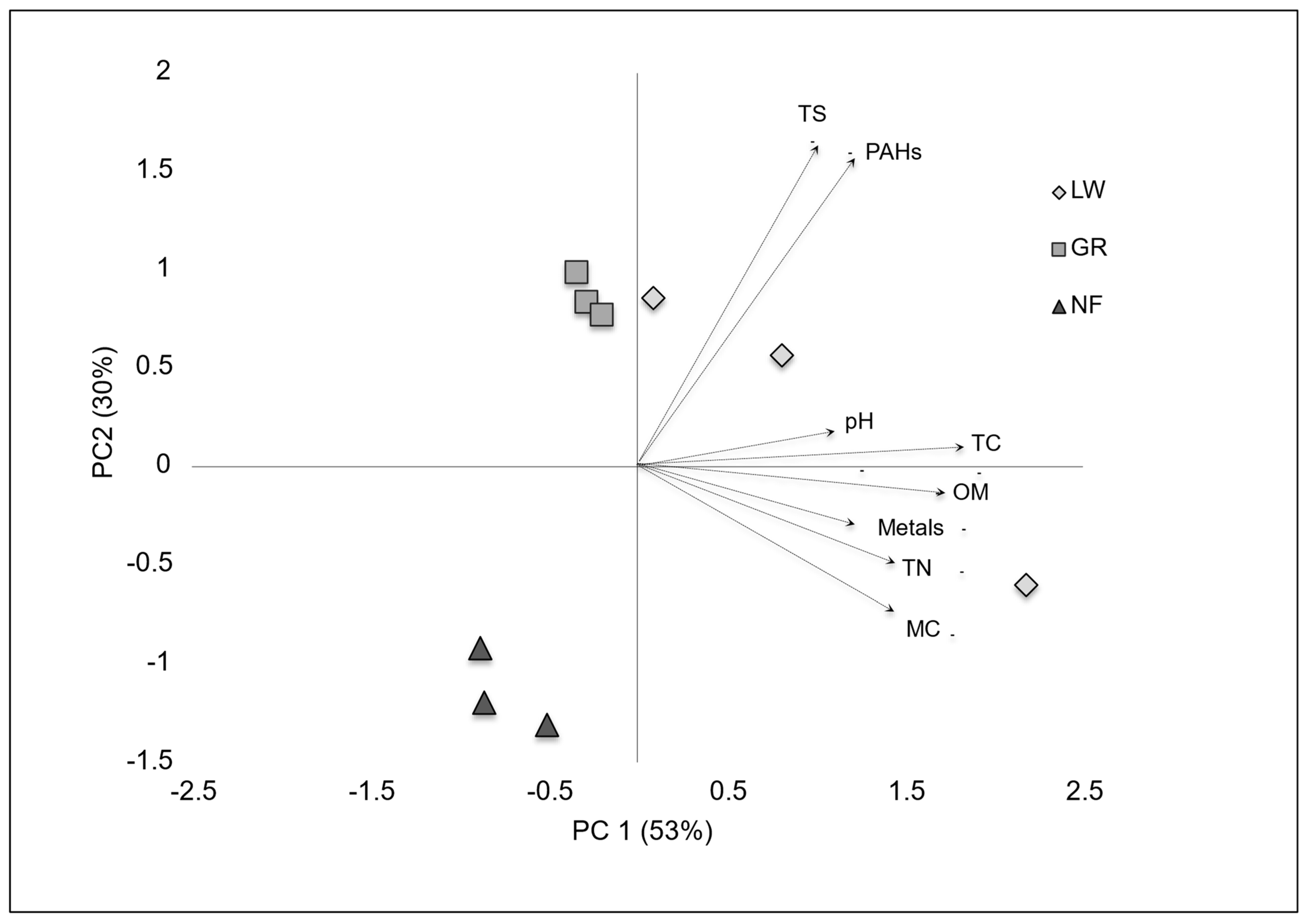
3.1. Soil Geochemistry
3.2. Bacterial Abundance
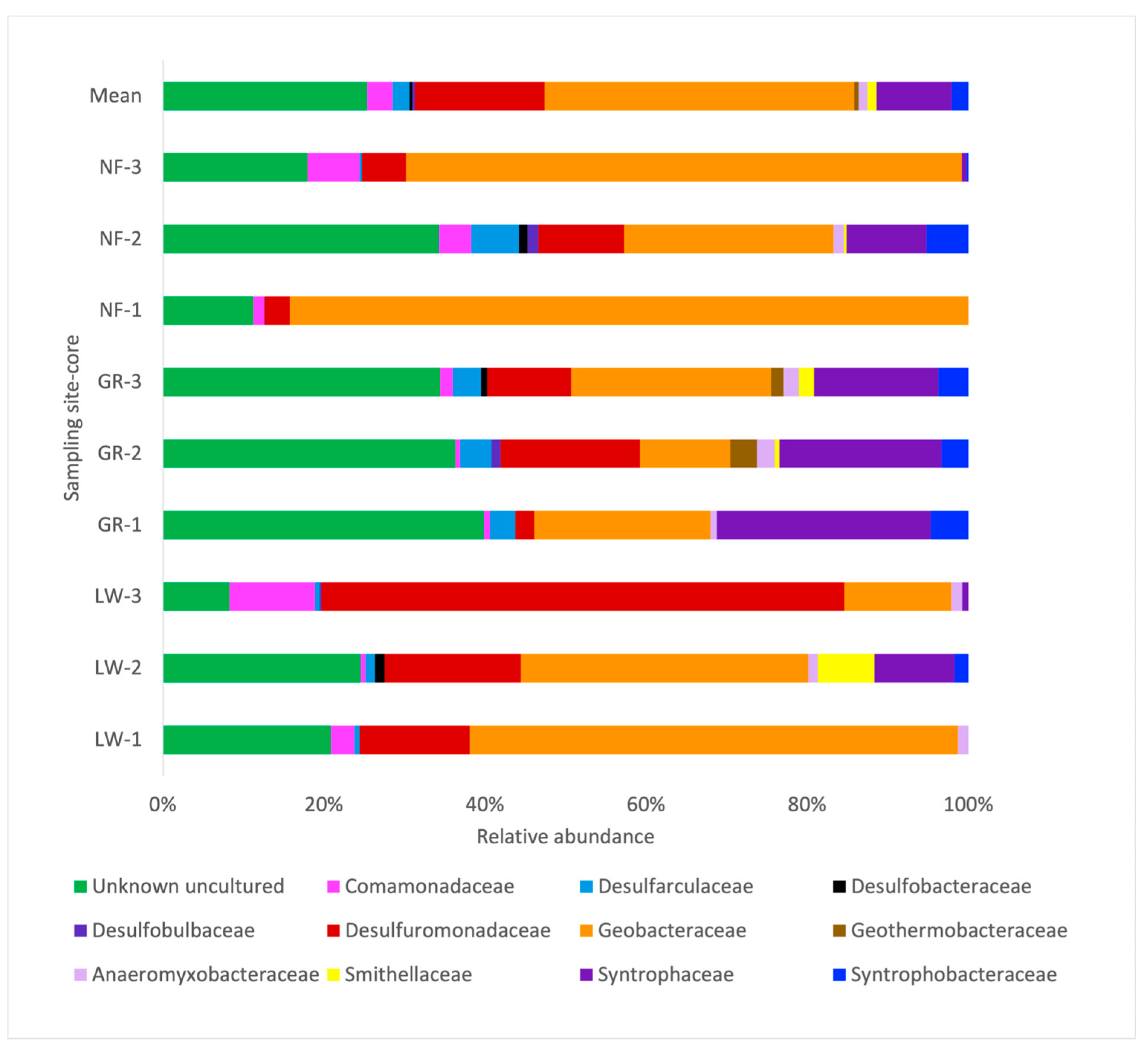
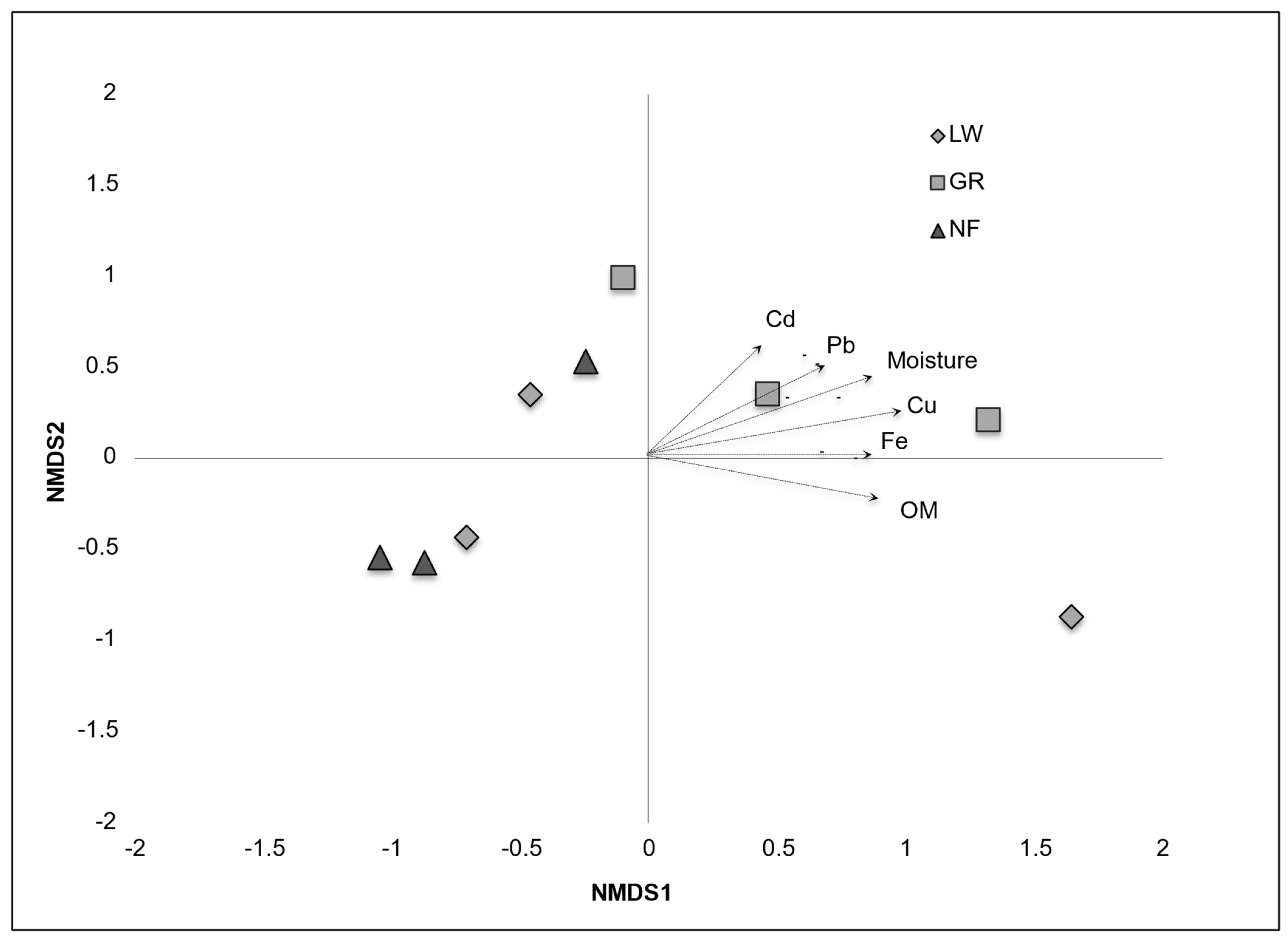
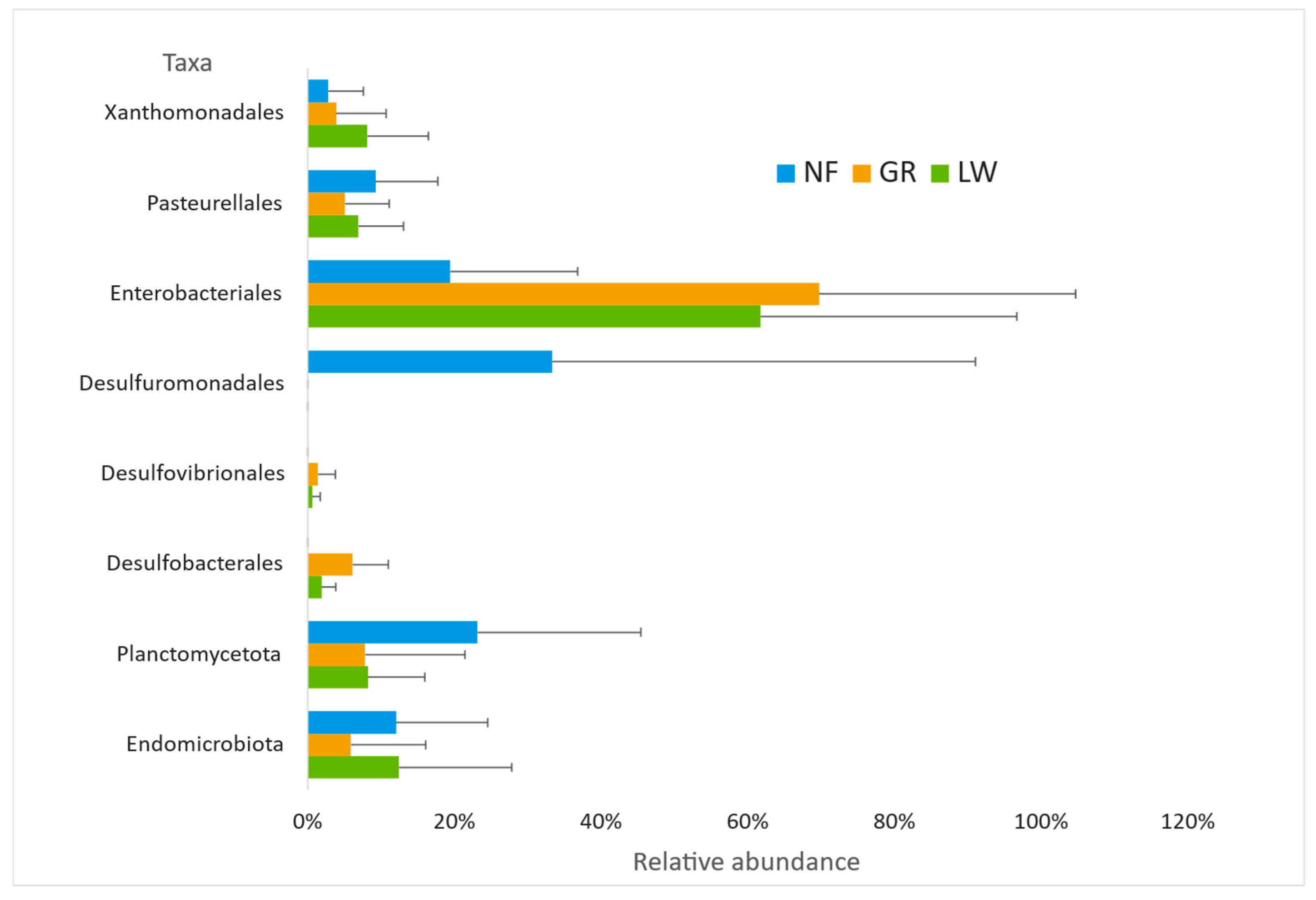
3.3. Microbial Community
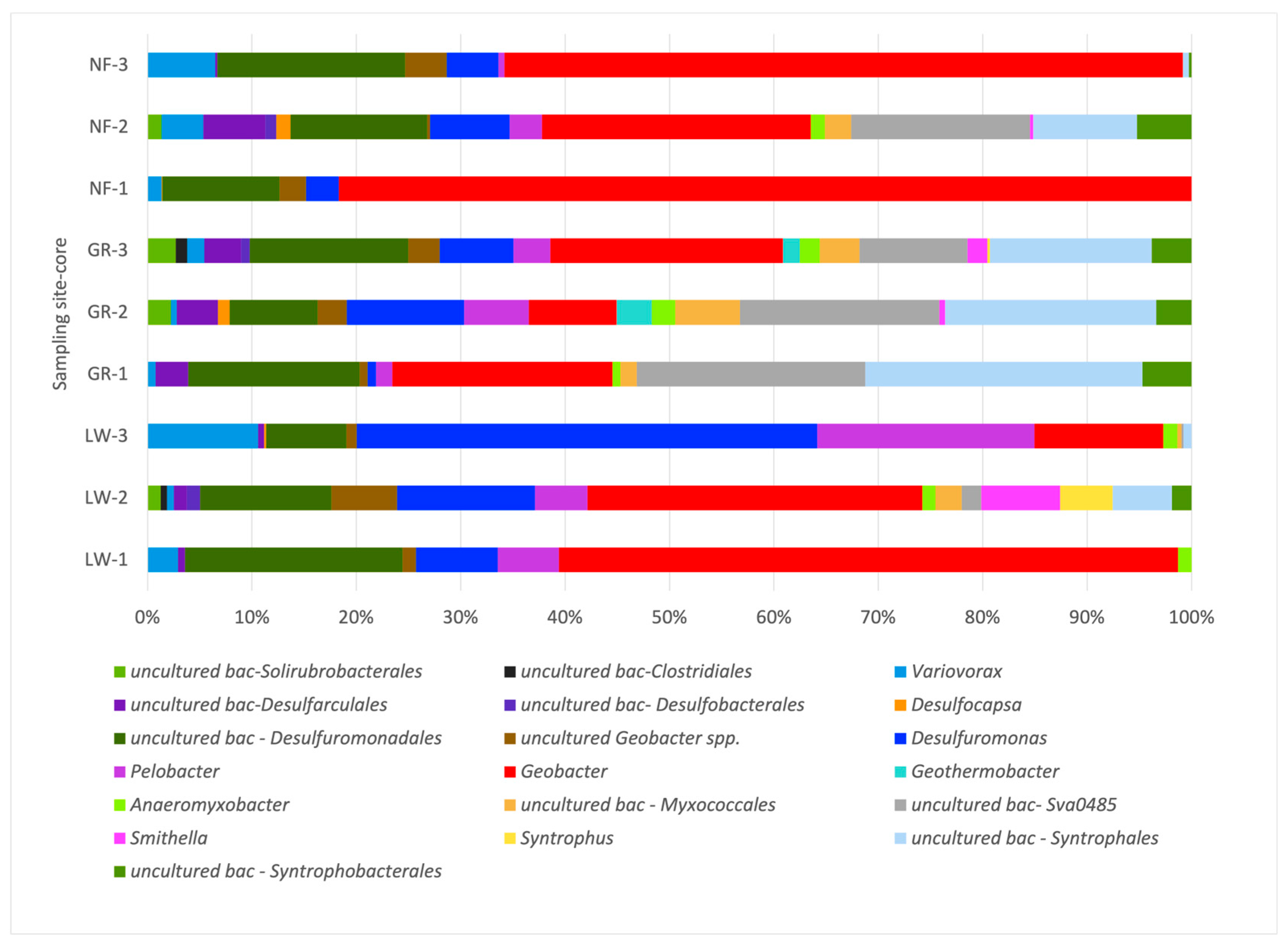
3.4. The Composition of the Iron-Reducing Community
3.5. Molecular Diversity of dsrAB Genes
4. Discussion
4.1. Geochemical Footprints
4.2. Iron-Reducing Bacteria in High-Iron Environments
4.3. Sulfate-Reducing Bacteria and the Cryptic Cycle
4.4. Limitations of the Study
5. Conclusions
Author Contributions
Funding
Institutional Review Board Statement
Informed Consent Statement
Data Availability Statement
Acknowledgments
Conflicts of Interest
References
- Zhao, N.; Zhang, Z.; Ding, H.; Guillemot, T.; Wang, D.; Wang, H. Electron transfer versatility of a Geobacter sp. links PAH degradation with multi-electron acceptor respiration, including crystalline magnetite. J. Hazard. Mater. 2026, 502, 141052. [Google Scholar] [CrossRef] [PubMed]
- Hu, C.; Yang, Z.; Chen, Y.; Tang, J.; Zeng, L.; Peng, C.; Chen, L.; Wang, J. Unlocking soil revival: The role of sulfate-reducing bacteria in mitigating heavy metal contamination. Environ. Geochem. Health 2024, 46, 417. [Google Scholar] [CrossRef] [PubMed]
- Ondrasek, G.; Shepherd, J.; Rathod, S.; Dharavath, R.; Rashid, M.I.; Brtnicky, M.; Shahid, M.S.; Horvatinec, J.; Rengel, Z. Metal contamination—A global environmental issue: Sources, implications & advances in mitigation. RSC Adv. 2025, 15, 3904–3927. [Google Scholar] [CrossRef]
- Johnston, G.; Lineman, D.; Johnston, C.; Leff, L. Characterization, sources and ecological risk assessment of polycyclic aromatic hydrocarbons (PAHs) in long-term contaminated riverbank sediments. Environ. Earth Sci. 2015, 74, 3519–3529. [Google Scholar] [CrossRef]
- Castro, A.R.; Martins, G.; Salvador, A.F.; Cavaleiro, A.J. Iron Compounds in Anaerobic Degradation of Petroleum Hydrocarbons: A Review. Microorganisms 2022, 10, 2142. [Google Scholar] [CrossRef]
- Zhang, M.; Wang, Q.; Song, X.; Ali, M.; Tang, Z.; Liu, X.; Zhang, Z.; Ma, S.; Bi, J.; Li, Z. Co-occurrence of PFASs, heavy metals and PAHs and their composite impacts on microbial consortium in soil: A field study. Pedosphere 2024, 34, 736–748. [Google Scholar] [CrossRef]
- Gou, Y.; Pang, H.; Wu, H.; Zhang, J.; Li, X.; Wang, J.; Zeng, L.; Wei, L.; Kang, R.; Wei, W.; et al. Response characteristics of microbial community in soil cocontaminated with heavy metals and chlorinated hydrocarbons: A field study at a demolished electroplating plant site. Int. Biodeterior. Biodegrad. 2026, 206, 106211. [Google Scholar] [CrossRef]
- Wunder, L.C.; Aromokeye, D.A.; Yin, X.; Richter-Heitmann, T.; Willis-Poratti, G.; Schnakenberg, A.; Otersen, C.; Dohrmann, I.; Römer, M.; Bohrmann, G.; et al. Iron and sulfate reduction structure microbial communities in (sub-)Antarctic sediments. ISME J. 2021, 15, 3587–3604. [Google Scholar] [CrossRef]
- Diao, M.; Dyksma, S.; Koeksoy, E.; Ngugi, D.K.; Anantharaman, K.; Loy, A.; Pester, M. Global diversity and inferred ecophysiology of microorganisms with the potential for dissimilatory sulfate/sulfite reduction. FEMS Microbiol. Rev. 2023, 47, fuad058. [Google Scholar] [CrossRef]
- Jha, A.; Barsola, B.; Pathania, D.; Raizada, P.; Thakur, P.; Singh, P.; Rustagi, S.; Khosla, A.; Chaudhary, V. Nano-Biogenic Heavy Metals Adsorptive Remediation for Enhanced Soil Health and Sustainable Agricultural Production. Environ. Res. 2024, 252, 118926. [Google Scholar] [CrossRef] [PubMed]
- Zampieri, B.D.B.; da Costa Andrade, V.; Chinellato, R.; Garcia, C.A.B.; de Oliveira, M.A.; Brucha, G.; de Oliveira, A.J.F.C. Heavy metal concentrations in Brazilian port areas and their relationships with microorganisms: Can pollution in these areas change the microbial community? Environ. Monit. Assess. 2020, 192, 512. [Google Scholar] [CrossRef] [PubMed]
- Kushkevych, I.; Kovářová, A.; Dordevic, D.; Gaine, J.; Kollar, P.; Vítězová, M.; Rittmann, S.K.-M.R. Distribution of sulfate-reducing bacteria in the environment: Cryopreservation techniques and their potential storage application. Processes 2021, 9, 1843. [Google Scholar] [CrossRef]
- Lovley, D.; Holmes, D.; Nevin, K. Dissimilatory Fe(III) and Mn(IV) reduction. Adv. Microb. Physiol. 2004, 49, 219–286. [Google Scholar] [CrossRef] [PubMed]
- Fan, L.; Zhao, F.; Liu, J.; Frost, R. The As behavior of natural arsenical-containing colloidal ferric oxyhydroxide reacted with sulfate reducing bacteria. Chem. Eng. J. 2018, 332, 183–191. [Google Scholar] [CrossRef]
- Di, H.; Zhang, M.; Ning, Z.; Liu, C.; He, Z.; Wang, S.; Kong, S.; Gan, S.; Sun, W.; Xu, Z.; et al. Metagenomic Insights into the Abundance of Iron-Reducing Microorganisms in a Petroleum-Contaminated Iron-Rich Aquifer. Microorganisms 2025, 13, 433. [Google Scholar] [CrossRef]
- Zu, Y.; Li, Z.; Zhang, Z.; Chen, X.; Wu, B.; Ho, S.; Wang, A. Iron-reduction driven extracellular electron transfer widely promotes microbial reductive dechlorination metabolism. Water Res. 2025, 281, 123592. [Google Scholar] [CrossRef]
- Jørgensen, B. Sulfur biogeochemical cycle of marine sediments. Geochem. Perspect. 2021, 10, 145–307. [Google Scholar] [CrossRef]
- Lovley, D.; Phillips, E. Rapid Assay for Microbially Reducible Ferric Iron in Aquatic Sediments. Appl. Environ. Microbiol. 1987, 53, 1536–1540. [Google Scholar] [CrossRef] [PubMed]
- Grijalva-Rodriguez, T.; Turchyn, A.; Albin, S.; Eliani-Russak, E.; Manashirov, A.; Zweig, I.; Kamyshny, A. Evidence for cryptic sulfur cycling in Atlantic ocean sediments affected by aeolian dry deposition of Saharan dust. Front. Mar. Sci. 2025, 12, 1663305. [Google Scholar] [CrossRef]
- Jørgensen, B.; Beulig, F.; Egger, M.; Petro, C.; Scholze, C.; Røy, H. Organoclastic sulfate reduction in the sulfate-methane transition of marine sediments Geochim. Cosmochim. Acta 2019, 254, 231–245. [Google Scholar] [CrossRef]
- Chen, S.C.; Li, X.M.; Battisti, N.; Guan, G.; Montoya, M.A.; Osvatic, J.; Pjevac, P.; Pollak, S.; Richter, A.; Schintlmeister, A.; et al. Microbial iron oxide respiration coupled to sulfide oxidation. Nature 2025, 646, 925–933. [Google Scholar] [CrossRef]
- Ruiz-Blas, F.; Bartholomäus, A.; Henny, C.; Russell, J.; Kallmeyer, J.; Vuillemin, A. Cryptic sulfur cycling in the deep biosphere of ferruginous Lake Towuti, Indonesia. Front. Microbiol. 2025, 16, 1725877. [Google Scholar] [CrossRef] [PubMed] [PubMed Central]
- Zhao, Y.; Duan, F.A.; Cui, Z.; Hong, J.; Ni, S.Q. Insights into the vertical distribution of the microbiota in steel plant soils with potentially toxic elements and PAHs contamination after 60 years operation: Abundance, structure, co-occurrence network and functionality. Sci. Total Environ. 2021, 786, 147338. [Google Scholar] [CrossRef]
- Heinrich, L.; Dietel, J.; Hupfer, M. Sulphate reduction determines the long-term effect of iron amendments on phosphorus retention in lake sediments. J. Soils Sediments 2022, 22, 316–333. [Google Scholar] [CrossRef]
- Wang, Y.; Pan, J. Microbial response of Fe and Mn biogeochemical processes in hyporheic zone affected by groundwater exploitation along riverbank. Water 2025, 17, 3408. [Google Scholar] [CrossRef]
- Bai, J.; Yuan, Z.; Lyu, H.; Wang, J.; Yan, Y.; Zheng, Z.; Su, X. Response of redox zoning and microbial community structure in riverbed sediments to the riverbed scouring during bank filtration. J. Hydrol. 2023, 619, 129288. [Google Scholar] [CrossRef]
- Johnston, G.; Leff, L. Bacterial community composition and biogeochemical heterogeneity in PAH-contaminated riverbank sediments. J. Soils Sediments 2015, 15, 225–239. [Google Scholar] [CrossRef]
- Johnston, G.; Kalik, Z.; Johnston, C. Effect of carbonyl cyanide m-chlorophenylhydrazone (CCCP) on microbial activity and polycyclic aromatic hydrocarbons (PAH) degradation in contaminated river sediments. Environ. Earth Sci. 2016, 75, 778. [Google Scholar] [CrossRef]
- Pratt, B.; Riesen, R.; Johnston, C. PLFA analyses of microbial communities associated with PAH-contaminated riverbank sediment. Microb. Ecol. 2012, 64, 680–691. [Google Scholar] [CrossRef]
- Farnham, L.; Johnston, G.; Johnston, C.; Simeonsson, J. Development and application of a sequential extraction procedure for characterization and analysis of elemental pollutants in contaminated river sediments. Youngstown State University: Youngstown, OH, USA, 2012; manuscript in preparation.
- United States Environmental Protection Agency (USEPA). Ultrasonic Extraction Method 3550C. 2015. Available online: https://www.epa.gov/sites/default/files/2015-12/documents/3550c.pdf (accessed on 15 December 2013).
- United States Environmental Protection Agency (USEPA). Microwave Assisted Acid Digestion of Aqueous Samples and Extracts Method 3015A. 2015. Available online: https://www.epa.gov/sites/default/files/2015-12/documents/3015a.pdf (accessed on 14 December 2013).
- Johnsen, A.; Bendixen, K.; Karlson, U. Detection of microbial growth on polycyclic aromatic hydrocarbons in microtiter plates using the respiration indicator WST-1. Appl. Environ. Microbiol. 2002, 68, 2683–2689. [Google Scholar] [CrossRef]
- Fortin, D.; Davis, B.; Beveridge, T. Role of Thiobacillus and sulfate-reducing bacteria in iron biocycling in oxic and acidic mine tailings. FEMS Microbiol. Ecol. 1996, 21, 11–24. [Google Scholar] [CrossRef]
- Zhang, W.; Jang-Seu, K.; Pei-Yuan, Q. Microbial diversity in polluted harbor sediments I: Bacterial community assessment based on four clone libraries of 16S rDNA. Estuar. Coast. Shelf Sci. 2008, 76, 668–681. [Google Scholar] [CrossRef]
- Yan, Y.; Rene, E.; Ma, M.; Ma, W.; Li, X.; Lun, X. Role of sulfate on the potential biodegradation of pentabromodiphenyl ether (BDE-99) in soil columns with reclaimed water and microbial community. Int. Biodeterior. Biodegrad. 2018, 132, 1–9. [Google Scholar] [CrossRef]
- Holmes, D.; Finneran, K.; O’Neil, R.; Lovley, D. Enrichment of members of the family Geobacteraceae associated with stimulation of dissimilatory metal reduction in uranium-contaminated aquifer sediments. Appl. Environ. Microbiol. 2002, 68, 2300–2306. [Google Scholar] [CrossRef]
- Cummings, D.; Snoeyenbos-West, O.; Newby, D.; Niggemyer, A.; Lovley, D.; Achenbach, L.A.; Rosenzweig, R.F. Diversity of Geobacteraceae species inhabiting metal-polluted freshwater lake sediments ascertained by 16S rDNA analyses. Microb. Ecol. 2003, 46, 257–269. [Google Scholar] [CrossRef]
- Caporaso, J.; Kuczynski, J.; Stombaugh, J.; Bittinger, K.; Bushman, F. QIIME allows analysis of high-throughput community sequencing data. Nat. Methods 2010, 7, 335–336. [Google Scholar] [CrossRef] [PubMed]
- Edgar, R. Search and clustering orders of magnitude faster than BLAST. Bioinformatics 2010, 26, 2460–2461. [Google Scholar] [CrossRef]
- Quast, C.; Pruesse, E.; Yilmaz, P.; Gerken, J.; Schweer, T.; Yarza, P.; Peplies, J.; Glöckner, F.O. The SILVA Ribosomal RNA Gene Database Project: Improved data processing and web-based tools. Nucleic Acids Res. 2012, 41, 590–596. [Google Scholar] [CrossRef]
- Edgar, R. MUSCLE: Multiple Sequence Alignment with High Accuracy and High Throughput. Nucleic Acids Res. 2004, 32, 1792–1797. [Google Scholar] [CrossRef]
- Ferreira, D.; Barbosa, A.; Oliveira, G.; Catarino, T.; Venceslau, S.; Pereira, I. The DsrD functional marker protein is an allosteric activator of the DsrAB dissimilatory sulfite reductase. Proc. Natl. Acad. Sci. USA 2022, 119, e2118880119. [Google Scholar] [CrossRef] [PubMed] [PubMed Central]
- Jiang, L.; Zheng, Y.; Peng, X.; Zhou, H.; Zhang, C.; Xiao, X.; Wang, F. Vertical distribution and diversity of sulfate-reducing prokaryotes in the Pearl River estuarine sediments, Southern China. FEMS Microbiol. Ecol. 2009, 70, 249–262. [Google Scholar] [CrossRef]
- Zhu, X.; Chen, L.; Pan, H.; Wang, L.; Zhang, X.; Wang, D. Diversity and biogenesis contribution of sulfate-reducing bacteria in arsenic-contaminated soils from realgar deposits. Environ. Sci. Pollut. Res. 2022, 29, 31110–31120. [Google Scholar] [CrossRef]
- Minh, B.Q.; Schmidt, H.A.; Chernomor, O.; Schrempf, D.; Woodhams, M.D.; von Haeseler, A.; Lanfear, R. IQ-TREE 2: New models and efficient methods for phylogenetic inference in the genomic era. Mol. Biol. Evol. 2020, 37, 1530–1534. [Google Scholar] [CrossRef] [PubMed]
- Kalyaanamoorthy, S.; Minh, B.Q.; Wong, T.; von Haeseler, A.; Jermiin, L.S. ModelFinder: Fast model selection for accurate phylogenetic estimates. Nat. Methods 2017, 14, 587–589. [Google Scholar] [CrossRef] [PubMed]
- Zeneli, A.; Kastanaki, E.; Simantiraki, F.; Gidarakos, E. Monitoring the biodegradation of TPH and PAHs in refinery solid waste by biostimulation and bioaugmentation. J. Environ. Chem. Eng. 2019, 7, 103054. [Google Scholar] [CrossRef]
- Saeedi, M.; Li, L.; Salmanzadeh, M. Heavy metals and polycyclic aromatic hydrocarbons: Pollution and ecological risk assessment in street dust of Tehran. J. Hazard. Mater. 2012, 227–228, 9–17. [Google Scholar] [CrossRef]
- United States Environmental Protection Agency (USEPA). The Arsenic Rule: Background and Rule Provisions. 2026. Available online: https://www.epa.gov/sites/default/files/2015-09/documents/train1-background.pdf (accessed on 14 January 2026).
- United States Environmental Protection Agency (USEPA). Freshwater Sediment Screening Benchmarks. 2026. Available online: https://www.epa.gov/risk/freshwater-sediment-screening-benchmarks (accessed on 22 February 2026).
- Bhagobaty, R.K. Culture dependent methods for enumeration of sulphate reducing bacteria (SRB) in the Oil and Gas industry. Rev. Environ. Sci. Biotechnol. 2014, 13, 11–16. [Google Scholar] [CrossRef]
- Bravo, A.G.; Zopfi, J.; Buck, M.; Xu, J.; Bertilsson, S.; Schaefer, J.K.; Poté, J.; Cosio, C. Geobacteraceae are important members of mercury-methylating microbial communities of sediments impacted by wastewater releases. ISME J. 2018, 12, 802–812. [Google Scholar] [CrossRef]
- Reyes, C.; Dellwig, O.; Dähnke, K.; Gehre, M.; Noriega-Ortega, B.; Böttcher, M.E.; Meister, P.; Friedrich, M.W. Bacterial communities potentially involved in iron-cycling in Baltic Sea and North Sea sediments revealed by pyrosequencing. FEMS Microbiol. Ecol. 2016, 92, fiw054. [Google Scholar] [CrossRef]
- Reyes, C.; Schneider, D.; Thürmer, A.; Kulkarni, A.; Lipka, M.; Sztejrenszus, S.Y.; Böttcher, M.E.; Daniel, R.; Friedrich, M.W. Potentially Active Iron, Sulfur, and Sulfate Reducing Bacteria in Skagerrak and Bothnian Bay Sediments. Geomicrobiol. J. 2017, 34, 840–850. [Google Scholar] [CrossRef]
- Zhou, L.; Ou, P.; Zhao, B.; Zhang, W.; Yu, K.; Xie, K.; Zhuang, W. Assimilatory and dissimilatory sulfate reduction in the bacterial diversity of biofoulant from a full-scale biofilm-membrane bioreactor for textile wastewater treatment. Sci. Total Environ. 2021, 772, 145464. [Google Scholar] [CrossRef]
- Mosley, O.; Gios, E.; Handley, K. Implications for nitrogen and sulphur cycles: Phylogeny and niche-range of Nitrospirota in terrestrial aquifers. ISME Commun. 2024, 4, ycae047. [Google Scholar] [CrossRef]
- Acer, Ö.; Johnston, G.P.; Lineman, D.; Johnston, C. Evaluating degradation of polycyclic aromatic hydrocarbon (PAH) potential by indigenous bacteria isolated from highly contaminated riverbank sediments. Environ. Earth Sci. 2021, 80, 773. [Google Scholar] [CrossRef]
- Chen, J.; Gu, J.-D. The environmental factors used in correlation analysis with microbial community of environmental and cultural heritage samples. Int. Biodeterior. Biodegrad. 2022, 173, 105460. [Google Scholar] [CrossRef]
- Zhang, X.; Yang, H.; Sun, R.; Cui, M.; Sun, N.; Zhang, S. Evaluation and analysis of heavy metals in iron and steel industrial area. Environ. Dev. Sustain. 2022, 24, 10997–11010. [Google Scholar] [CrossRef]
- Zhao, Y.; Wu, Z.; Yu, M.; Zhang, Z.; Wang, X.; Zhang, X.; Wang, G. Seasonal iron-sulfur interactions and the stimulated phosphorus mobilization in freshwater lake sediments. Sci. Total Environ. 2021, 768, 144336. [Google Scholar] [CrossRef]
- Pester, M.; Knorr, K.-H.; Friedrich, M.W.; Wagner, M.; Loy, A. Sulfate-reducing microorganisms in wetlands–fameless actors in carbon cycling and climate change. Front. Microbiol. 2012, 3, 72. [Google Scholar] [CrossRef] [PubMed]
- Zhao, Q.; Li, X..; Wang, Y.; Cheng, Y.; Fan, W. Long-term bioremediation of cadmium contaminated sediment using sulfate reducing bacteria: Perspective on different depths of the sediment profile. Chem. Eng. J. 2023, 451, 138697. [Google Scholar] [CrossRef]
- Gosai, H.; Panseriya, H.; Patel, P.; Ajay, C.; Shankar, A.; Varjani, S.; Dave, B.P. Exploring bacterial communities through metagenomics during bioremediation of polycyclic aromatic hydrocarbons from contaminated sediments. Sci. Total Environ. 2022, 842, 156794. [Google Scholar] [CrossRef] [PubMed]
- Sela-Adler, M.; Zeev, R.; Barak, H.; Gilad, A.; Vigderovich, H.; Eckert, W.; Sivan, O. Co-existence of Methanogenesis and Sulfate Reduction with Common Substrates in Sulfate-Rich Estuarine Sediments. Front. Microbiol. 2017, 8, 766. [Google Scholar] [CrossRef]
- Fan, X.; Xing, P. Differences in the composition of archaeal communities in sediments from contrasting zones of Lake Taihu. Front. Microbiol. 2016, 7, 1510. [Google Scholar] [CrossRef]
- Vigderovich, H.; Liang, L.; Herut, B.; Wang, F.; Wurgaft, E.; Rubin-Blum, M.; Sivan, O. Evidence for microbial iron reduction in the methanic sediments of the oligotrophic southeastern Mediterranean continental shelf. Biogeosciences 2019, 16, 3165–3181. [Google Scholar] [CrossRef]
- Kim, S.; Park, S.; Chan, I.; Min, D.; Kin, J.; Chung, W.; Chae, J.; Jeon, C.; Rhee, S. Metagenomic analysis of toluene-degrading bacteria. Environ. Microbiol. 2014, 16, 189–204. [Google Scholar] [CrossRef]
- Lovley, D.; Phillips, E.; Lonergan, D.; Widman, P. Fe(III) and S0 reduction by Pelobacter carbinolicus. Appl. Environ. Microbiol. 1995, 61, 2132–2138. [Google Scholar] [CrossRef]
- Ayangbenro, A.; Olanrewaju, O.; Babalola, O. Sulfate-reducing bacteria as an effective tool for sustainable acid mine bioremediation. Front. Microbiol. 2018, 9, 1986. [Google Scholar] [CrossRef] [PubMed]
- Mills, J.; Antler, G.; Turchyn, A. Geochemical evidence for cryptic sulfur cycling in salt marsh sediments. Earth Planet. Sci. Lett. 2016, 453, 23–32. [Google Scholar] [CrossRef]
- Foti, M.; Sorokin, D.; Lomans, B.; Mussman, M.; Zacharova, E.E.; Pimenov, N.V.; Kuenen, J.G.; Muyzer, G. Diversity, activity, and abundance of sulfate-reducing bacteria in saline and hypersaline soda lakes. Appl. Environ. Microbiol. 2007, 73, 2093–2100. [Google Scholar] [CrossRef] [PubMed] [PubMed Central]
- Sitte, J.; Akob, D.; Kaufmann, C.; Finster, K.; Banerjee, D.; Burkhardt, E.-M.; Kostka, J.E.; Scheinost, A.C.; Büchel, G.; Küsel, K. Microbial links between sulfate reduction and metal retention in Uranium and heavy metal contaminated soil. Appl. Environ. Microbiol. 2010, 76, 3143–3152. [Google Scholar] [CrossRef]
- Suárez-Suárez, A.; Lopez-Lopez, A.; Tovar, A.; Yarza, P.; Orfila, A.; Terrados, J.; Arnds, J.; Marqués, S.; Niemann, H.; Schmitt-Kopplin, P.; et al. Response of sulfate-reducing bacteria to an artificial oil-spill in a coastal marine sediment. Environ. Microbiol. 2011, 13, 1488–1499. [Google Scholar] [CrossRef] [PubMed]
- Zhang, H.; He, T.Z.; Mi, Y.; Zhen, L.L.; Fu, Y. Chen Distribution of sulfate-reducing bacteria in surface sediments from East China Sea. J. Environ. Sci. 2016, 36, 3750–3758. [Google Scholar]
- Chen, M.; Grégoire, D.; St-Germain, P.; Berdugo-Clavijo, C.; Hug, L. Aquifer microbial communities are highly variable in response to thermal arsenic mobilization. bioRxiv 2024, 10, 616553. [Google Scholar] [CrossRef]
- Nghiem, A.A.; Prommer, H.; Mozumder, M.R.H.; Siade, A.; Jamieson, J.; Ahmed, K.M.; van Geen, A.; Bostick, B.C. Sulfate reduction accelerates groundwater arsenic contamination even in aquifers with abundant iron oxides. Nat. Water 2023, 1, 151–165. [Google Scholar] [CrossRef] [PubMed]
- Holmkvist, L.; Ferdelman, T.; Jørgensen, B. A cryptic sulfur cycle driven by iron in the methane zone of marine sediment (Aarhus Bay, Denmark). Geochim. Cosmochim. Acta 2011, 75, 3581–3599. [Google Scholar] [CrossRef]





| Site | Core | Latitude/Longitude | MC% | SO4−2 (μM) | TN% | OM% | TC% | ∑PAHs | Depth (m) | pH |
|---|---|---|---|---|---|---|---|---|---|---|
| Lowellville | LW1 | 41.038450, −80.541306 | 38.2 | 8754.4 | 0.2 | 9.1 | 8.9 | 416,290.2 | 2.7 | 6.9 |
| LW2 | 41.038253, −80.540208 | 42.9 | 3463.8 | 0.2 | 8.5 | 10.2 | 218,037.4 | 2.4 | 7.2 | |
| LW3 | 41.037950, −80.539464 | 36.0 | 5058.8 | 0.2 | 11.5 | 6.9 | 122,275.0 | 2.1 | 7.3 | |
| Girard | GR1 | 41.155017, −80.706528 | 50.2 | 822.9 | 0.2 | 7.4 | 7.7 | 95,195.9 | 1.2 | 6.8 |
| GR2 | 41.154714, −80.706450 | 52.7 | 336.1 | 0.2 | 9.5 | 8.7 | 79,484.9 | 1.5 | 7.0 | |
| GR3 | 41.154553, −80.706389 | 47.3 | 771.5 | 0.2 | 9.3 | 8.3 | 107,072.4 | 2.1 | 7.2 | |
| Newton Falls | NF1 | 41.135164, −80.967211 | 20.4 | 1291.4 | 0.1 | 1.8 | 1.0 | 102,451.8 | 2.1 | 6.9 |
| NF2 | 41.135486, −80.967144 | 25.3 | 2298.7 | 0.1 | 2.5 | 1.8 | 51,347.3 | 1.2 | 6.0 | |
| NF3 | 41.135644, −80.967067 | 22.2 | 1326.2 | 0.0 | 1.6 | 0.5 | 56,622.3 | 1.5 | 6.6 |
| Site | Metal Concentrations | |||||||||||||||||||||
|---|---|---|---|---|---|---|---|---|---|---|---|---|---|---|---|---|---|---|---|---|---|---|
| Core | Be | Al | Cr | V | Mn | Fe | Co | Ni | Cu | Zn | Ga | As | Se | Sr | Cd | Ag | Ba | Pb | Tl | U | ||
| Lowellville | LW1 | Mean | 1.5 | 13,047.8 | 175.6 | 63.8 | 7703.3 | 320,968.1 | 36.5 | 84.7 | 423.5 | 1157.0 | 5.7 | 32.8 | 3.4 | 53.7 | 3.4 | 5.2 | 118.8 | 349.5 | 3.5 | 1.5 |
| SD | 0.9 | 594.1 | 23.3 | 6.2 | 102.6 | 5863.3 | 2.3 | 11.5 | 58.5 | 193.8 | 0.3 | 4.1 | 0.2 | 3.9 | 0.3 | 1.0 | 15.1 | 61.2 | 0.8 | 0.5 | ||
| LW2 | Mean | 0.8 | 15,007.6 | 231.4 | 54.8 | 6903.7 | 236,704.6 | 29.0 | 87.1 | 403.1 | 1782.1 | 5.1 | 22.0 | 4.3 | 54.1 | 3.1 | 7.1 | 135.7 | 441.3 | 4.2 | 1.1 | |
| SD | 0.3 | 2453.0 | 28.1 | 4.0 | 83.9 | 16,046.5 | 1.8 | 9.9 | 69.9 | 578.1 | 0.5 | 3.1 | 0.9 | 3.1 | 0.6 | 1.3 | 12.4 | 133.9 | 0.3 | 0.2 | ||
| LW3 | Mean | 0.2 | 6886.9 | 215.5 | 43.7 | 8623.5 | 344,115.3 | 33.8 | 98.9 | 437.2 | 949.5 | 3.7 | 14.1 | 0.5 | 48.9 | 1.4 | 2.5 | 78.8 | 226.2 | 1.9 | 0.6 | |
| SD | 0.2 | 1175.4 | 26.3 | 4.8 | 1458.0 | 50,206.3 | 3.5 | 9.8 | 102.6 | 213.9 | 0.5 | 1.7 | 0.5 | 2.7 | 0.7 | 1.1 | 24.4 | 49.6 | 0.7 | 0.1 | ||
| Girard | GR1 | Mean | 0.8 | 11,664.7 | 728.7 | 80.4 | 6575.1 | 380,035.7 | 56.9 | 281.9 | 1641.0 | 1729.4 | 8.8 | 72.1 | 3.5 | 41.6 | 6.2 | 15.1 | 135.2 | 431.9 | 4.1 | 1.9 |
| SD | 0.2 | 1970.3 | 220.4 | 8.4 | 462.7 | 16,811.3 | 2.6 | 44.5 | 78.0 | 103.2 | 0.3 | 10.4 | 1.8 | 4.5 | 0.7 | 1.0 | 15.0 | 16.0 | 0.4 | 0.3 | ||
| GR2 | Mean | 0.7 | 14,562.3 | 712.3 | 81.9 | 5975.8 | 289,943.1 | 40.3 | 347.7 | 1225.0 | 2511.9 | 7.0 | 48.1 | 2.2 | 57.4 | 7.4 | 20.5 | 142.7 | 500.8 | 3.5 | 1.7 | |
| SD | 0.3 | 1467.5 | 12.8 | 3.1 | 443.4 | 26,126.4 | 1.6 | 9.0 | 31.0 | 98.1 | 0.1 | 1.8 | 3.4 | 4.2 | 0.6 | 0.4 | 4.3 | 14.4 | 0.2 | 0.2 | ||
| GR3 | Mean | 1.0 | 14,211.0 | 631.5 | 99.2 | 6551.9 | 315,851.4 | 51.5 | 284.1 | 1540.0 | 2246.1 | 8.3 | 59.1 | 0.7 | 51.9 | 8.7 | 15.9 | 152.8 | 420.5 | 4.6 | 4.7 | |
| SD | 0.3 | 2560.7 | 88.5 | 13.7 | 1363.3 | 8608.9 | 2.6 | 35.4 | 190.2 | 264.4 | 0.7 | 7.0 | 1.7 | 10.1 | 2.2 | 0.8 | 30.8 | 40.0 | 1.2 | 0.9 | ||
| Newton Falls | NF1 | Mean | 0.3 | 7548.9 | 19.7 | 37.5 | 1725.8 | 16,820.5 | 21.4 | 14.2 | 23.8 | 164.5 | 5.0 | 11.8 | 0.0 | 10.2 | 0.2 | 0.4 | 63.9 | 10.0 | 0.5 | 0.6 |
| SD | 0.2 | 807.8 | 3.1 | 3.9 | 531.2 | 2169.7 | 2.0 | 1.3 | 2.4 | 36.1 | 0.5 | 2.1 | 0.7 | 0.9 | 0.2 | 0.2 | 9.3 | 0.8 | 0.2 | 0.2 | ||
| NF2 | Mean | 0.7 | 6475.9 | 19.6 | 30.2 | 427.1 | 11,831.6 | 13.4 | 10.5 | 21.8 | 192.3 | 3.9 | 6.1 | 0.6 | 5.9 | 0.6 | 0.4 | 39.8 | 8.8 | 0.8 | 0.5 | |
| SD | 0.7 | 1211.4 | 1.1 | 3.8 | 41.1 | 1052.5 | 1.4 | 1.1 | 3.9 | 131.8 | 0.2 | 0.6 | 1.4 | 0.4 | 0.2 | 0.5 | 2.9 | 1.6 | 1.0 | 0.1 | ||
| NF3 | Mean | 0.4 | 7163.6 | 21.2 | 33.0 | 417.5 | 11,356.4 | 15.3 | 11.3 | 18.7 | 82.7 | 4.9 | 7.4 | 0.9 | 6.3 | 0.1 | 0.2 | 46.8 | 7.7 | 0.3 | 0.4 | |
| SD | 0.5 | 1886.8 | 3.7 | 8.3 | 60.7 | 1916.2 | 4.6 | 3.1 | 5.6 | 19.1 | 1.6 | 0.8 | 2.7 | 1.1 | 0.2 | 0.1 | 12.1 | 1.8 | 0.0 | 0.1 | ||
| MC | TN | TC | Sulfate | pH | Depth | |
|---|---|---|---|---|---|---|
| MC | ||||||
| TN | 0.929 | |||||
| TC | 0.888 | 0.939 | ||||
| Sulfate | 0.077 | 0.149 | 0.408 | |||
| pH | 0.497 | 0.690 | 0.657 | 0.097 | ||
| Depth | 0.022 | 0.266 | 0.425 | 0.663 | 0.652 | |
| ∑PAH | 0.163 | 0.293 | 0.520 | 0.966 | 0.338 | 0.797 |
| ∑METAL | 0.877 | 0.959 | 0.894 | 0.258 | 0.656 | 0.275 |
| Site | Core | H′ | Chao1 | Good’s |
|---|---|---|---|---|
| Lowellville | LW1 | 4.29 | 41.9 | 87% |
| LW2 | 4.76 | 58.1 | 80% | |
| LW3 | 3.62 | 33.5 | 90% | |
| Girard | GR1 | 4.65 | 48.2 | 84% |
| GR2 | 4.82 | 60.6 | 82% | |
| GR3 | 5.17 | 76.1 | 74% | |
| Newton Falls | NF1 | 3.68 | 29.1 | 92% |
| NF2 | 4.92 | 68.0 | 78% | |
| NF3 | 4.47 | 42.5 | 88% |
Disclaimer/Publisher’s Note: The statements, opinions and data contained in all publications are solely those of the individual author(s) and contributor(s) and not of MDPI and/or the editor(s). MDPI and/or the editor(s) disclaim responsibility for any injury to people or property resulting from any ideas, methods, instructions or products referred to in the content. |
© 2026 by the authors. Licensee MDPI, Basel, Switzerland. This article is an open access article distributed under the terms and conditions of the Creative Commons Attribution (CC BY) license.
Share and Cite
Johnston, G.P.; Lisko, D.J.; Johnston, C.G. Exploratory Assessment of Iron- and Sulfate-Reducing Bacteria in Sediments Co-Contaminated with Metals and Polycyclic Aromatic Hydrocarbons. Microorganisms 2026, 14, 885. https://doi.org/10.3390/microorganisms14040885
Johnston GP, Lisko DJ, Johnston CG. Exploratory Assessment of Iron- and Sulfate-Reducing Bacteria in Sediments Co-Contaminated with Metals and Polycyclic Aromatic Hydrocarbons. Microorganisms. 2026; 14(4):885. https://doi.org/10.3390/microorganisms14040885
Chicago/Turabian StyleJohnston, Gloria Patricia, Daniel J. Lisko, and Carl G. Johnston. 2026. "Exploratory Assessment of Iron- and Sulfate-Reducing Bacteria in Sediments Co-Contaminated with Metals and Polycyclic Aromatic Hydrocarbons" Microorganisms 14, no. 4: 885. https://doi.org/10.3390/microorganisms14040885
APA StyleJohnston, G. P., Lisko, D. J., & Johnston, C. G. (2026). Exploratory Assessment of Iron- and Sulfate-Reducing Bacteria in Sediments Co-Contaminated with Metals and Polycyclic Aromatic Hydrocarbons. Microorganisms, 14(4), 885. https://doi.org/10.3390/microorganisms14040885