Article

Identification of Novel Streptomyces sp. BPTC-684 as a Biocontrol Agent Against Challenging Maize Root Rot Caused by Fusarium verticillioides


by
Tran Van Chi
1,
Nguyen Trinh Hoang Anh
2 and
Tuan Manh Nguyen
3,4,*
1
Institute of Biotechnology—Food Technology, Thai Nguyen University of Agriculture and Forestry, 251-210 Quyet Thang, Thai Nguyen 25000, Vietnam
2
Ministry of Science and Technology, 18 Nguyen Du, Ha Noi 100000, Vietnam
3
Institute of Life Sciences, Thai Nguyen University, 251-210 Quyet Thang, Thai Nguyen 25000, Vietnam
4
Faculty of Agricultural Technology, Thai Nguyen University of Agriculture and Forestry, 251-210 Quyet Thang, Thai Nguyen 25000, Vietnam
*
Author to whom correspondence should be addressed.
Microorganisms 2026, 14(4), 818; https://doi.org/10.3390/microorganisms14040818
Submission received: 4 March 2026 / Revised: 26 March 2026 / Accepted: 1 April 2026 / Published: 2 April 2026
(This article belongs to the Section Antimicrobial Agents and Resistance)

Abstract

Maize (Zea mays L.) cultivation is severely affected by Fusarium verticillioides, a highly adaptable systemic pathogen that causes serious yield losses, reduces grain quality, and produces toxic fumonisin, posing significant health risks to humans and livestock. A biological control approach to combating it was investigated. Streptomyces sp. BPTC-684 showed strong inhibitory activity (53.11%) against F. verticillioides BNGO-16, isolated from a diseased tissue sample. Based on physiological and biochemical characteristics, 16S rRNA gene sequencing, average nucleotide identity, and digital DNA–DNA hybridization, strain BPTC-684 is considered a candidate new species belonging to the genus Streptomyces. In silico analysis of Streptomyces sp. BPTC-684 showed that it expresses diverse biosynthetic gene clusters encoding potential bioactive compounds, notably antibiotics (kinamycin, antimycin, fuelimycins A-C, hangtaimycin, and deoxyhangtaimycin) and siderophores (desferrioxamines B and E). In addition, plant growth-promoting behaviors, such as indole-3-acetic acid production; phosphate solubilization; and the production of extracellular lytic enzymes that degrade cellulose, chitin, proteins, amylose, and xylan, were also discovered in Streptomyces sp. BPTC-684. The pot experiments demonstrated that plant height, fresh weight, and dry root weight were increased in strain BPTC-684 by 37.88%, 132.50%, and 223.81%, respectively, compared to F. verticillioides BNGO-16 on the 15th day of infection. These findings suggest that Streptomyces sp. BPTC-684 is a promising biological control agent for inhibiting fungal diseases and promoting maize growth.

1. Introduction

Maize (Zea mays L.) is the most widely grown crop worldwide, playing a crucial role in ensuring food security and serving as an essential raw material for various industries. According to the Foreign Agricultural Service [1], global maize production is projected to reach 1.23 billion metric tons, accounting for approximately 44% of total major grain production in 2024. In Vietnam, with its tropical climate favorable for agricultural development, maize contributes about 12% to the country’s gross domestic product (GDP) [2]; it is regarded as the second-most-important food crop and provides the greatest economic value in Vietnam. Both the total area and production of maize have increased annually, from 0.43 million hectares and 0.67 million tons in 1990 to 0.77 million hectares and 4.42 million tons in 2022 [3,4]. Maize is an indispensable food source and a key ingredient in the production of animal feed for the growing livestock and poultry industry. The role of maize is even more evident in the midland and mountainous regions of Northern Vietnam, where the terrain is mainly hilly; cultivation must take place on sloping land, and water resources are difficult to control, making rice cultivation difficult [3,4].
However, tropical climates pose significant challenges in controlling plant diseases and pests caused by fungi, viruses, and bacteria. Among these, F. verticillioides is the main causative agent of infectious wilt and rot disease in maize [5,6], resulting in a potential 30–50% reduction in yield [7]. Furthermore, F. verticillioides produces dangerous mycotoxins (toxic metabolites with low molecular weight), notably fumonisin B1, which easily contaminates the food chain, posing serious health risks to humans and animals, such as cancer, liver damage, and immunosuppression [8,9]. Furthermore, fumonisin B1 is stable at normal boiling temperatures, only being destroyed at very high temperatures [10,11], which further increases the risk of toxin contamination in the food chain from raw materials contaminated with F. verticillioides when they are used in food and animal feed processing.
F. verticillioides is widely known as a soil-borne fungus that infects maize through the root system or seeds planted in contaminated soil. Not only is it capable of thriving in a variety of conditions, such as drought and high temperatures [6,12,13], but it also produces spores, including microconidia and macroconidia, allowing for widespread dispersal and long-term survival under adverse conditions. This hampers the effectiveness of crop rotation and soil improvement measures in agriculture. While chemical pesticides can effectively control F. verticillioides, their long-term use poses risks of pesticide residue in products and the environment, increased resistance to pesticides, and the elimination of non-target beneficial insects [14,15,16,17].
Recent studies have shown that using microorganisms that produce characteristic metabolites, such as antifungals, to control plant fungal diseases not only supports improved nutrient absorption and enhances disease resistance pathways but also provides a safe, environmentally friendly solution [18,19]. Microorganisms inhibit plant fungal diseases by producing antifungal substances, extracellular lytic enzymes, and siderophores [6,20]. To date, a diverse range of species for controlling plant fungal diseases have been reported, with the genus Streptomyces as a potential source of biomaterials [20,21]. The aim of this study was to identify the fungus causing maize root rot and to gain insights into the antagonistic activity of Streptomyces sp. BPTC-684 through in vitro and genome analysis.

2. Materials and Methods

2.1. Sampling, Isolation, and Identification of Pathogenic Fungi

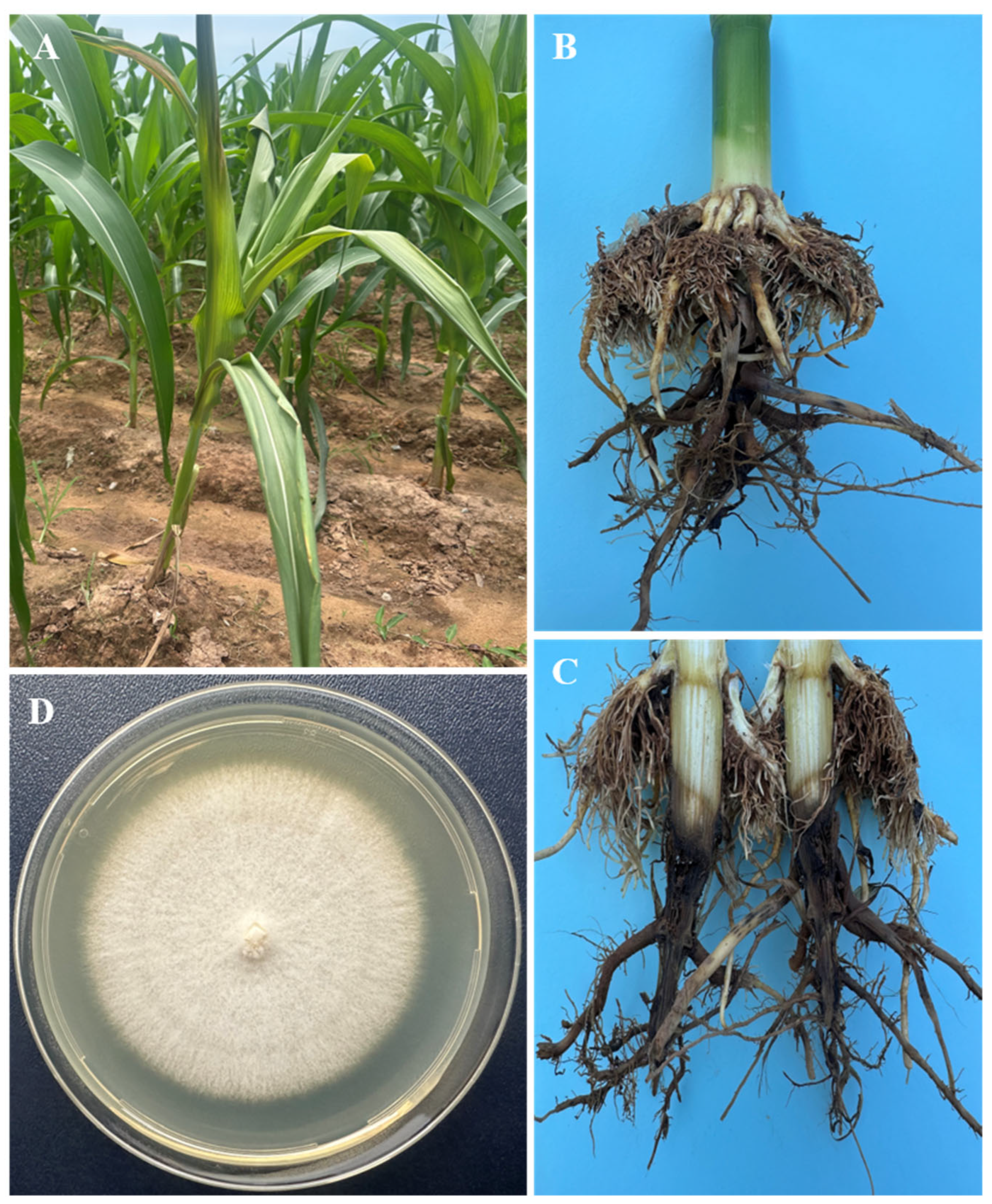
A diseased maize root sample (Figure 1A–C) was collected in Bac Kan, Vietnam (GPS 22°32′17″ N 105°59′47″ E), in October 2024. The pathological tissue sample was washed three times in sterile distilled water, cut, and surface-disinfected as described by Wang et al. [5]. Then, the pieces were placed on potato dextrose agar (PDA) medium (200 g of potato, 10 g of anhydrous glucose, 15 g of agar, 1 L of distilled water, pH 5.6) supplemented with oxytetracycline at a final concentration of 50 mg/L. The plates were cultured at 25 °C for 5 days in the dark. Subsequently, several subcultures were performed on a clean PDA plate to obtain pure mycelia, which were then stored at a final glucose concentration of 10% at −70 °C. Pure mycelium was cultured in potato dextrose broth (PDB: 200 g of potato, 10 g of glucose, 1 L of distilled water, pH 5.6) for 24 h at 130 rpm for DNA extraction. The Quick-DNA Fungal/Bacterial Midiprep Kit (Zymo Research, Irvine, CA, USA) was used to extract genomic DNA following the manufacturer’s instructions.
The Internal Transcribed Spacer (ITS) and Translation Elongation Factor 1-alpha (TEF-1α) genes were used to identify the isolated fungus via PCR. The primer pair ITS1F TCCGTAGGTGAACCTGCGG and ITS4R TCCTCCGCTTATTGATATGC was used for the ITS gene [22], and the primer pair EF1-728F CATCGAGAAGTTCGAGAAGG-3′ and EF2-986R TACTTGAAGGAACCCTTACC was used for the TEF-1α gene [23]. The PCRs were prepared in final volumes of 25 µL containing 10 ng of genomic DNA, with 35 thermal cycles as described by Wang et al. [5], using annealing temperatures of 58 °C for ITS and 53 °C for TEF-1α. The PCR products were sequenced at Macrogen Inc. (Synapse, Singapore). The ITS and TEF-1α gene sequences were compared with Fusarium species published in the FUSARIOID-ID database (https://www.fusarium.org; accessed on 12 February 2026). The ITS and TEF-1α gene sequences of related species were obtained from the FUSARIOID-ID database, and multi-sequence alignment was performed using the CLUSTAL X2 [24]. The neighbor-joining method [25] was used in the MEGA v.12 program [26] to reconstruct the phylogenetic tree; bootstrap values were based on 1000 repeats [27].

2.2. Isolation of Actinomycetes

Ten rhizosphere soil samples from maize grown in hilly areas in Cao Bang, Vietnam, were collected in October 2022. Soil samples (10 g), after drying at room temperature and removing plant biomass and stones, were diluted in 90 mL of 0.85% (w/v) NaCl, and further diluted to 10−6. The suspension (100 µL) was spread onto International Streptomyces Project Medium 4 (ISP 4: 10 g of difco soluble starch, 2 g of CaCO3, 1 g of K2HPO4, 1 g of MgSO7H2O, 1 g of NaCl, 2 g of (NH4)2SO4, 1 mg of FeSO4·7H2O, 1 mg of MnCl2·4H2O, 1 mg of ZnSO4·7H2O, 15 g of agar, 800 mL of distilled water) [28] with a slight modification, adding 200 mL of soil extract [29] to obtain a greater diversity of growing Actinomycetes species. Briefly, the soil extract was prepared as follows: 1000 g of dry maize rhizosphere soil was extracted in 80% methanol, then the methanol was removed using a vacuum rotary evaporator at 40 °C. The residue was dissolved in 200 mL of sterile distilled water and filtered through a 0.22 µm nitrocellulose filter (GSWP04700; Merck Millipore Ltd., Darmstadt, Germany). This filtrate (200 mL) was added to the sterilized ISP 4 medium. A 50 mg/mL of cycloheximide stock solution filtered through a 0.2 µm membrane was also supplemented with ISP4 medium at a final concentration of 50 mg/L after sterilization at approximately 50 °C to inhibit fungal contamination from the collected soil samples. The final pH of the modified medium was 7.0 ± 0.2. The plates were cultured at 28 °C for 2 weeks under aerobic conditions. Colonies were purified by subculture and stored at −70 °C in 20% (v/v) glycerol.

2.3. Screening of Antifungal Isolates

F. verticillioides BNGO-16 was activated on PDB medium at 28 °C for 10 days, with shaking at 150 rpm. Spores of F. verticillioides BNGO-16 were collected by centrifugation at 3000 rpm and 4 °C, for 15 min. The residue was washed in sterile distilled water and filtered through sterile gauze to remove mycelium and hypha debris. The spore suspension was adjusted to a final concentration of 1 × 10⁶ CFU/mL [30]. The isolated Actinomycetes were refreshed in R2A medium (0.5 g of yeast extract, 0.5 g of proteose peptone, 0.5 g of casamino acids, 0.5 g of glucose, 0.5 g of starch, 0.3 g of Na-pyruvate, 0.3 g of K2HPO4, 0.05 g of MgSO4·7H2O, 15 g of agar, 1 L of distilled water, pH 7.2) for 3 days at 28 °C. Antifungal screening was performed by spot inoculation on PDA medium. The isolates were spot-inoculated onto a PDA control medium containing 100 µL of F. verticillioides BNGO-16 spore suspension at a concentration of 1 × 10⁶ CFU/mL that had been spread. The plates were cultured at 25 °C for 7 days. The antifungal activity of the isolates was determined using the formula D–d, where D is the average diameter of the antifungal zone (mm) and d is the diameter of the isolated actinomycete (mm). Simultaneously, the percentage inhibition of fungal growth was determined using the agar plug method (5 mm in diameter) and then calculated according to the description of Zygadlo et al. [31] after 7 days of incubation at 25°C via the formula PI (%) = [(D0 − D1)/D0] × 100, where D0 is the average diameter of the untreated fungus, and D1 is the diameter of the fungus treated with the antifungal isolate. The experiments were carried out with three biological replications. Based on the antifungal zone results, strain BPTC-684 was selected for further studies.

2.4. Morphological and Biochemical Characteristics of Strain BPTC-684

The phenotypic characteristics of strain BPTC-684 were determined according to the description by Shirling & Gottlieb [32] using Czapek–Dox agar, Potato dextrose agar, Nutrient agar, Trypticase soy agar (TSA), Yeast extract–malt extract agar (ISP 2), Oatmeal agar (ISP 3), Inorganic salts–starch agar (ISP 4), Glycerol–asparagine agar (ISP 5), and Peptone Yeast Extract Iron Agar (ISP 6) at 28 °C for 21 days. The morphology of the spores of the isolate cultured on ISP 4 and incubated at 28 °C for 21 days was observed using a scanning electron microscope (EVO MA 10, ZEISS, Jena, Germany). Simultaneously, strain BPTC-684 was grown at various temperatures (10, 15, 20, 25, 28, 30, 37, 40, and 45 °C), pHs (4.0–10.0; at 0.5 unit intervals), and NaCl concentrations (1–10%; at 0.5% unit intervals) on Trypticase soy agar medium.
The siderophore produced by strain BPTC-684 was detected on Chrome Azurol S medium (MP, Biomedicals, Irvine, CA, USA) at 28 °C over 14 days of incubation. The siderophore production index (SPI) was determined from the orange-yellow halo formed around the colony as described by Afridi et al. [33] as follows: SPI = (halo color zone + colony)/colony diameters.
The indole-3-acetic acid (IAA) product was determined according to the description by Glickmann and Dessaux [34]. Briefly, strain BPTC-684 was cultured in 150 mL Erlenmeyer flasks containing 30 mL of TSB medium supplemented with 0.1% L-tryptophan (w/v), with shaking at 150 rpm, at 28 °C for 7 days. The cell biomass was removed by centrifugation, and the culture was mixed with Salkowski reagent at a 2:1 (v/v) ratio in a capped glass tube. The suspension was covered with foil, mixed well, and kept at room temperature for 30 min. A color change from yellow to pink was considered positive. The IAA content (µg/mL) in the suspension was determined at a wavelength of 530 nm using a UV-VIS spectrophotometer (BioMate 3, Thermo Fisher Scientific, Waltham, MA, USA), and an IAA calibration curve across concentrations of 0–100 µg/mL was constructed.
The extracellular lytic activities of strain BPTC-684 were also assayed, including cellulose degradation using carboxymethyl cellulose medium (CMC: 1 g of (NH4)2SO4, 1 g of MgSO4·7H2O, 1 g of CaCl2·2H2O, 0.2 g of FeCl3, 1 g of K2HPO4, 2 g of casitone, 15 g of carboxymethyl cellulose (Sigma-Aldrich, St. Louis, MO, USA), 6 g of agar, 1 L of distilled water). For chitin degradation, the medium used contained 10 g of chitin ((C8H13NO5)n; Sigma-Aldrich), 6 g of Na2HPO4, 3 g of KH2PO4, 1 g of NH4Cl, 20 g of NaCl, 0.05 g of yeast extract, 0.5 g of MgSO4·7H2O, 15 g of agar, and 1 L of distilled water. These culture plates were incubated at 28 °C for 7 days, and the halo color was recorded as a clear zone or as a 1% Congo red stain. Each experiment was carried out with three biological replications.

2.5. Classification of Strain BPTC-684 Based on 16S rRNA Gene and Whole Genome Sequencing

2.5.1. Identification of 16 rRNA Gene Sequencing

Strain BPTC-684 was cultured in Tryptic soy broth at 28 °C for 2 days, with shaking at 150 rpm. DNA was extracted using the Quick-DNA Fungal/Bacterial Midiprep Kit (Zymo Research, Irvine, CA, USA). The two primer pairs used were 27F-AGAGTTTGATCMTGGCTCAG and 1492R TACGGYTACCTTGTTACGACTT [35]. A final PCR volume of 50 µL was prepared containing 80 ng of genomic DNA. The PCR amplification was performed for 25 cycles, with an annealing temperature of 55 °C [36]. The PCR products were sequenced at Macrogen Inc. (Synapse, Singapore). The 16S rRNA gene sequence of strain BPTC-684 was compared with the EzBioCloud Database (https://www.ezbiocloud.net/; accessed on 16 February 2026). Simultaneously, a phylogenetic tree based on the 16S rRNA gene sequence of BPTC-684 and its closest species was constructed in MEGA v.12 [26]. The 16 rRNA gene sequencing was performed with three replications. The accession number for the 16S rRNA gene sequence of strain BPTC-684 is OQ921823.

2.5.2. Characteristic and Taxonomic Whole Genome Sequencing

The genome of strain BPTC-684 was assembled using a combination of Illumina MiniSeq (Illumina, San Diego, CA, USA) and Oxford Nanopore Technologies (ONT, Oxford, UK). Adapters and low-quality nucleotides were removed from the Illumina and ONT sequences using Fastp v0.23.1 [37] and Filtlong v0.2.1 [38]. Flye v2.9 [39] was used for de novo assembly of the genomic DNA sequence. Next, newly assembled contigs were corrected using Medaka v1.4.3 and POLCA (MaSuRCA v4.0.9). Circlator v1.5.5 [40] was used for splicing and identifying cyclic contigs. The whole genome sequence was subjected to rapid annotation using a subsystem technology tool kit (RASTtk) [41]. The genome sequencing was completed with three replications. The whole genome sequencing accession number for strain BPTC-684 is CP124863. Then, secondary metabolite gene clusters were identified using antiSMASH v.8.0.4 software (https://antismash.secondarymetabolites.org/; accessed on 10 February 2026) [42]. Simultaneously, the taxonomy of strain BPTC-684 and its closest type strains based on genomes was simultaneously confirmed via digital DNA–DNA hybridization (dDDH) using the Genome-to-Genome Distance Calculator v3.0 (https://ggdc.dsmz.de/ggdc.php; accessed on 7 February 2026) [43], and Average Nucleotide Identity (ANI) values were determined using OrthoANI v8.0, accessed on 10 February 2026 [44] and ANI based on BLAST v2.2.29+ (ANIb), accessed on 10 February 2026 [45].

2.6. Plant Growth Promotion in Pot Experiment

Native glutinous corn seeds from Bac Kan, Vietnam, were used in this study. These corn seeds were treated in a 0.75% (w/v) NaOCl solution for 30 min. The NaOCl was then removed using sterile distilled water [46]. Two-day-old germinated corn was prepared and tested to evaluate the plant growth-promoting ability of Streptomyces sp. BPTC-684 as described by Figueroa-López et al. [47], with the following changes: spores at a density of 1 × 10⁶ CFU/mL of the F. verticillioides BNGO-16 and BPTC-684 were prepared separately. First, each germinated corn seed was planted individually in a separate pot containing 1 kg of a 4:1 (w/w) mixture of sandy loam and well-rotted manure. Next, 50 mL of suspension containing 1 × 10⁶ CFU/mL of either F. verticillioides BNGO-16 or Streptomyces sp. BPTC-684 was added to the experimental pots. The experiments included a control (without added F. verticillioides BNGO-16 or Streptomyces sp. BPTC-684 as control), F. verticillioides BNGO-16, and Streptomyces sp. BPTC-684 + F. verticillioides BNGO-16. These pots were placed in a greenhouse with temperatures maintained at 25–30 °C and a natural light cycle. Distilled water was applied regularly once every 3 days. The maize growth was determined on the 15th day in terms of plant height (cm), fresh plant weight (g), and dried root weight (g). The experiments were established with a completely randomized design with three replications, each using ten plants in a pot experiment.

2.7. Statistical Analysis

The results of this study are presented as means ± standard deviations, analyzed using JASP v0.95.4 software. A significance level of p < 0.05 was used to determine statistical significance.

3. Results

3.1. Identifying Pathogenic Fungi in Infected Corn Growing in the Field

The corn, collected from the field, showed signs of wilting, yellowing leaves, and rotting (Figure 1A), and crumbling roots (Figure 1B,C). Five fungal strains were detected from the tissue samples, but they showed no differences in colony morphology characteristics or growth rate on PDA medium. These isolates were designated as strain BNGO-16. Colonies of strain BNGO-16 were white in color, with a cottony to porous surface, smooth margin, and growth rate of 4.75 ± 0.68 mm/day (Figure 1D).
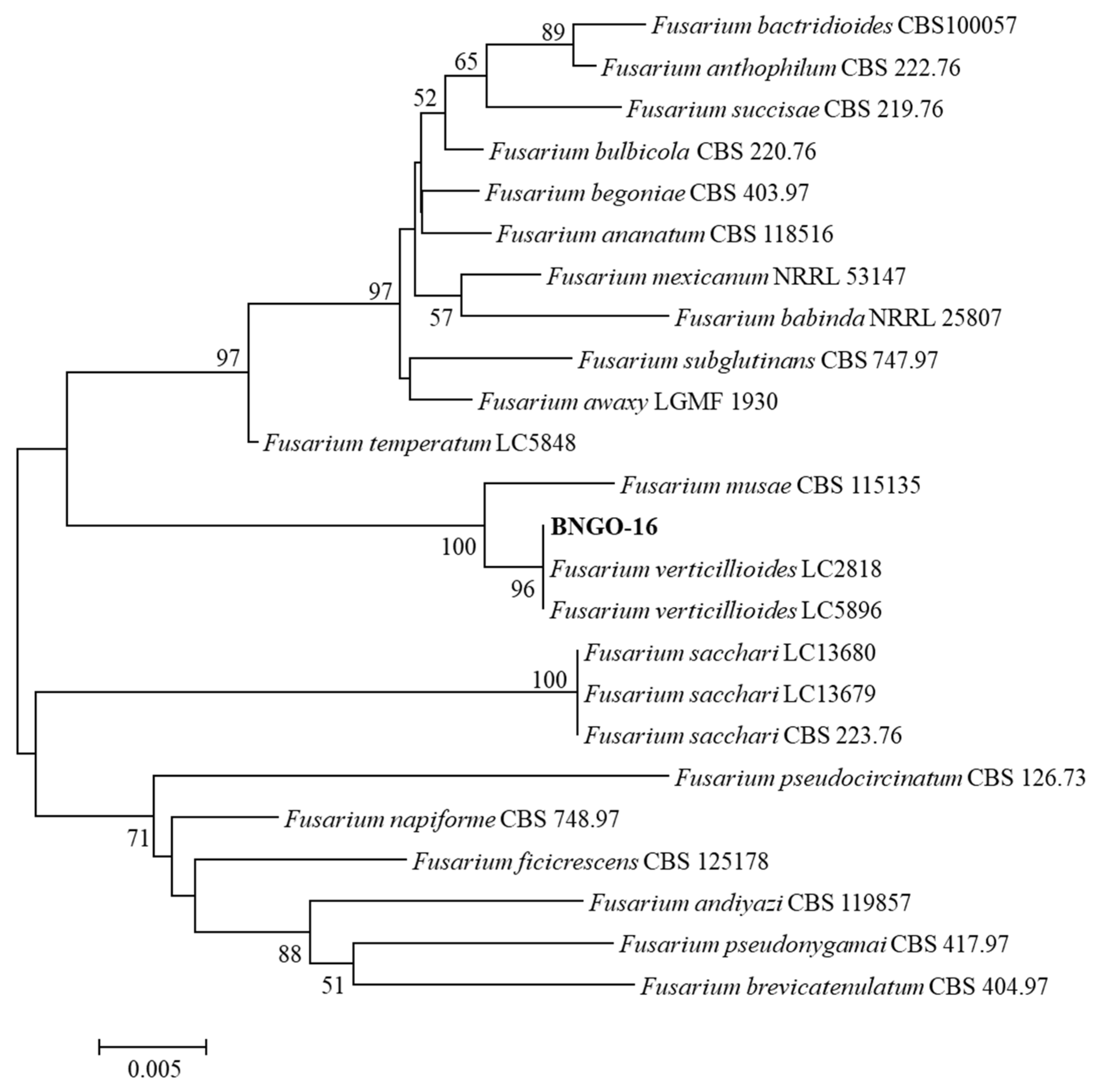
To determine the taxonomy of strain BNGO-16, two genes—ITS (accession number PX475066; length of 559 bp) and TEF-1α (PX724859; 673 bp)—were used. The results of ITS and TEF-1α sequencing were compared using the FUSARIOID-ID database v3.0, revealing that strain BNGO-16 belongs to the genus Fusarium. Simultaneously, a neighbor-joining tree was constructed by associating the ITS and TEF-1α within members of the genus Fusarium. The results indicated that strain BNGO-16 was monohybridized from F. verticillioides LC2818 and F. verticillioides LC5896, with a bootstrap value of 96%. The taxonomic position of strain BNGO-16 was distinct from that of other Fusarium species (Figure 2). Therefore, strain BNGO-16 is identified as F. verticillioides.

3.2. Screening of Antifungal Isolates and Morphological Strain BPTC-684

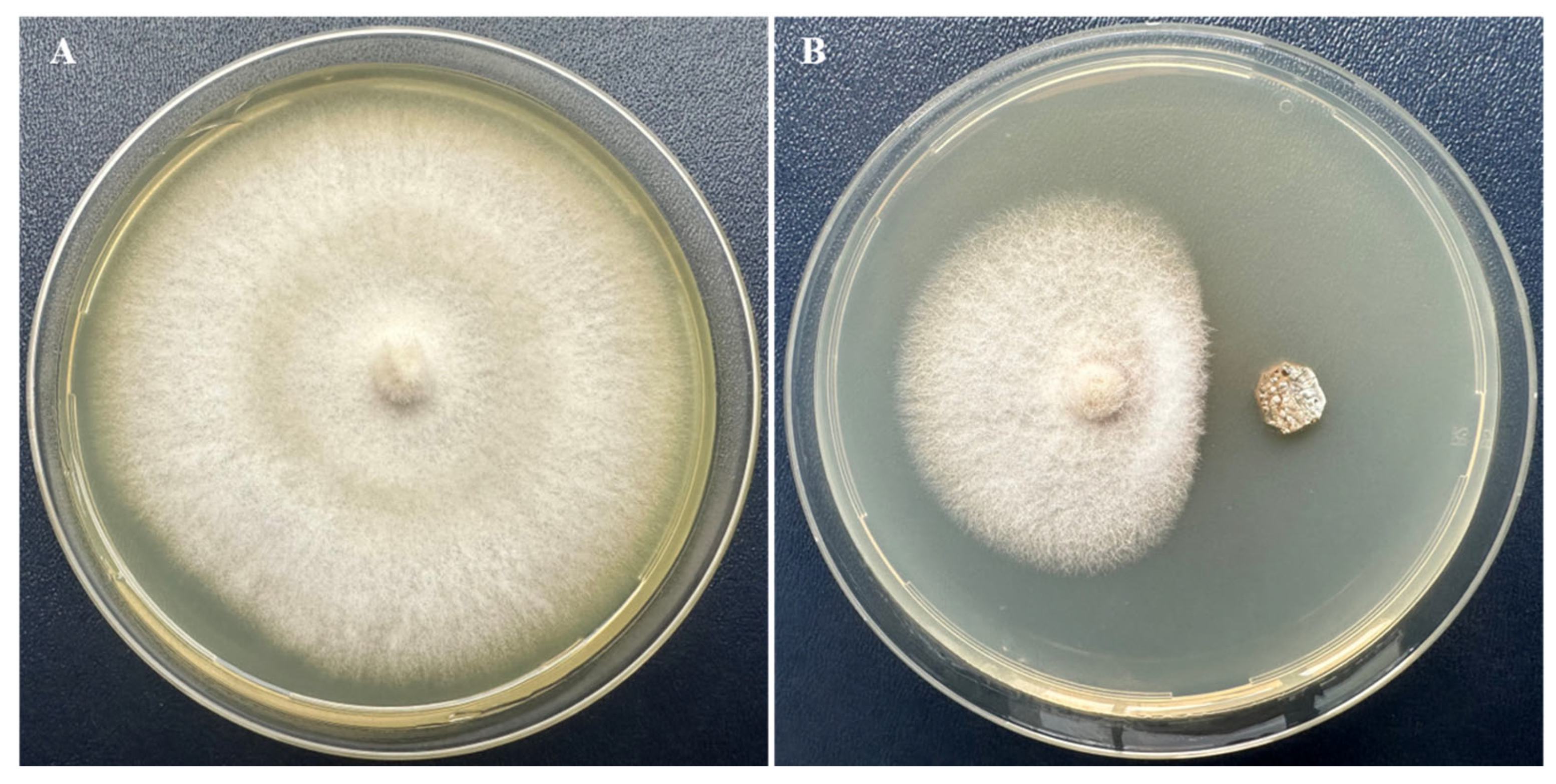
From 10 corn rhizosphere soil samples, 19 Actinomycete species exhibiting growth inhibition against F. verticillioides BNGO-16 were isolated using the spot culture method. Among these, strain BPTC-684 showed the strongest antifungal activity with an inhibition zone of 53.11 ± 2.41% (Figure 3).
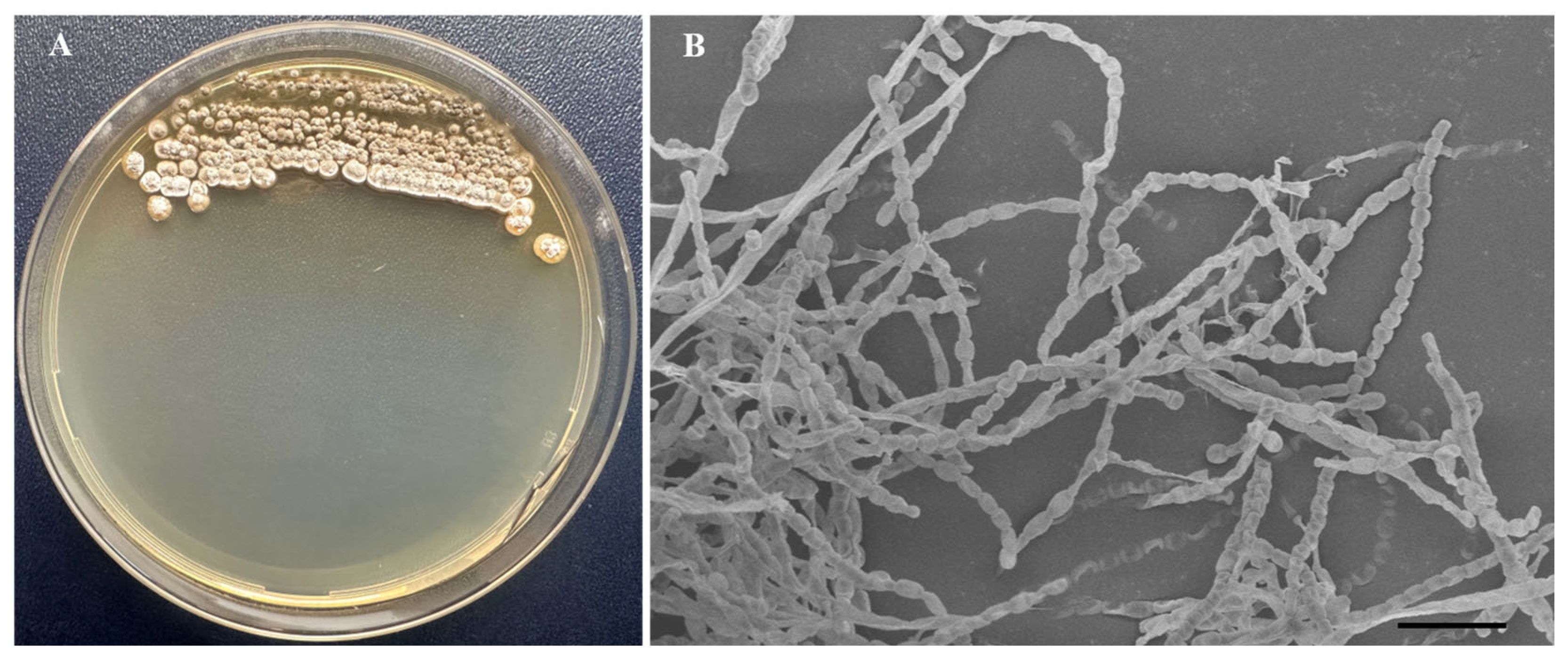
Strain BPTC-684 was capable of growing in a variety of media, including Czapek–Dox agar, potato dextrose agar, nutrient agar, trypticase soy agar, ISP 2, ISP 3, ISP 4, ISP 5, and ISP 6 (optimum nutrient agar, ISP 2, ISP 3, ISP 4, ISP 5, and ISP 6). Spores formed on potato dextrose agar, ISP 2, ISP 3, and ISP 4, with light gray coloration on potato dextrose agar, ISP 3, and ISP 4 (Figure 4A). Reverse mycelium and diffusible pigment coloration appeared on trypticase soy agar, ISP 2, ISP 3, ISP 4, ISP 5, and ISP 6 after 21 days of cultivation at 28 °C (Table S1). On ISP 4, strain BPTC-684 produced straight-to-rectiflexible spore chains and elliptical or short, rod-shaped spores with smooth surfaces (Figure 4B). The isolate grew at 20–40 °C and pH 4–9, and was resistant to 7% NaCl. Notably, it produced IAA and siderophore with activities of 61.74 ± 2.48 µg/mL and 5.05 ± 0.11, respectively. Extracellular hydrolytic enzymes, including cellulase, protease, and chitinase, were also produced by the isolate. Strain BPTC-684 was able to digest L-arabinose, D-xylose, D-fructose, cellulose, and L-tyrosine as carbon and nitrogen sources, respectively (Table 1).

3.3. Cultural and Molecular Taxonomy of Strain BPTC-684

Cultural characteristics of strain BPTC-684 and closely related Streptomyes species were compared, revealing differences in aerial mycelium color, substrate mycelium color, and production of soluble pigment on specialized ISP 2–6 media. Notably, soluble pigment was detected in strain BPTC-684 on ISP 2, ISP 4, and ISP 5 media, while other species did not produce (Table 2).
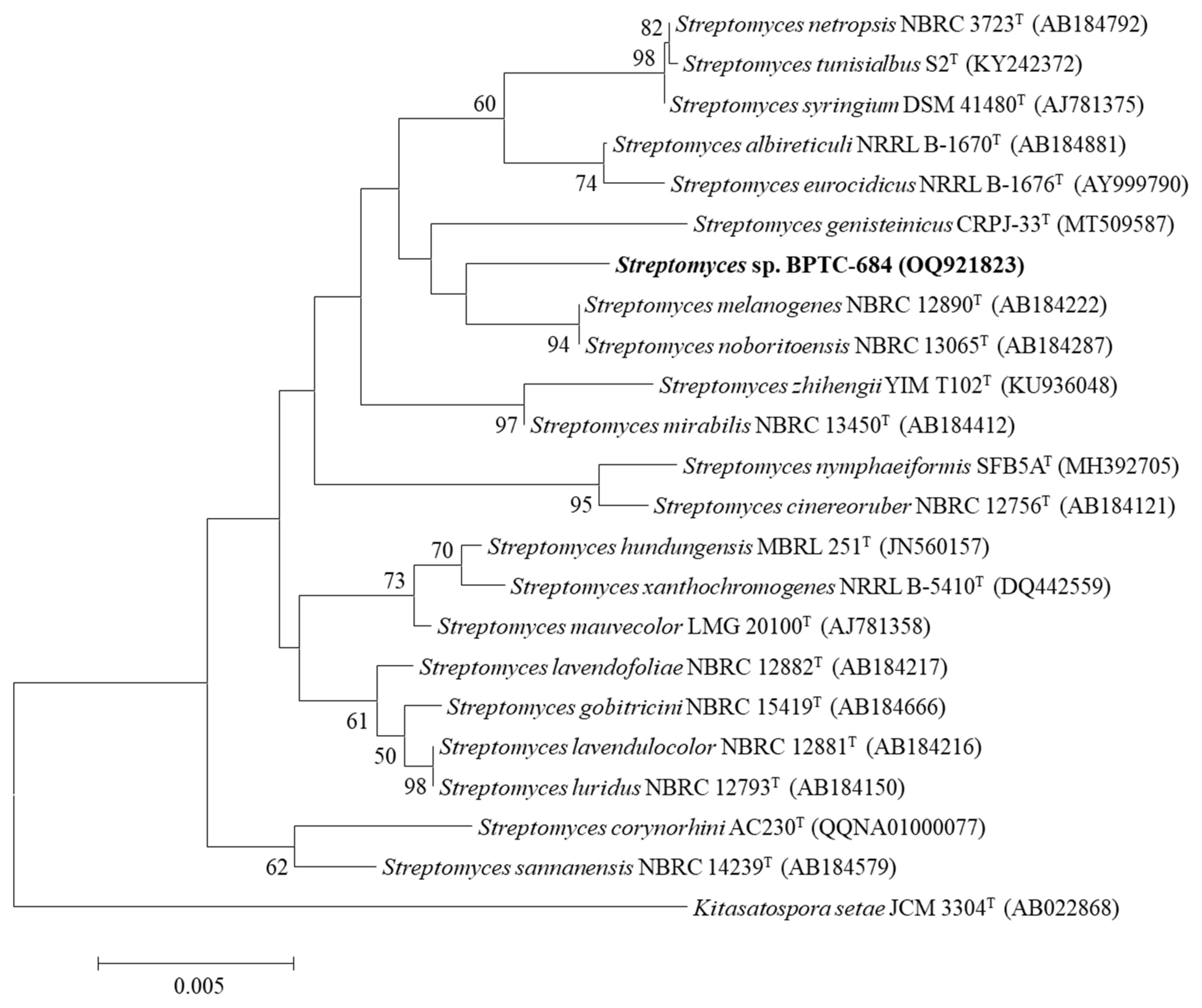
The nearly full-length 16S rRNA gene sequence of strain BPTC-684 (GenBank accession number OQ921823; 1526 bp) was compared with the EzBioCloud Database, revealing that strain BPTC-684 had the highest similarity (98.83%) to S. genisteinicus CRPJ-33T (MT509587) and S. melanogenes NBRC 12890T (AB184222), 98.82% to S. noboritoensis NBRC 13065T (AB184287), and 98.18–98.69% to other Streptomyces species (Table S2). Concurrently, the phylogenetic tree (Figure 5) also showed that strain BPTC-684 belongs to the genus Streptomyces but occupies an independent position relative to its closest relatives. This result implies that strain BPTC-684 is a candidate new species within the genus Streptomyces.
To accurately determine the taxonomic position of strain BPTC-684, whole-genome sequencing of the isolate and its closest type strains was performed to simultaneously estimate ANI and dDDH values. The accession numbers for these whole-genome sequences in the NCBI database are mentioned in Table 3. Following this approach, the OrthoANI, ANIb, and dDDH results between strain BPTC-684 and its closest type strains revealed orthology of 78.74–94.88, 77.66–94.38, and 20.20–59.60%, respectively (Table 3). These orthologous ANI and dDDH values were below the cutoffs (<95% for ANI and <70% for dDDH). This suggests that strain BPTC is a candidate new species of the genus Streptomyces.

3.4. Genome Assembly and Annotation

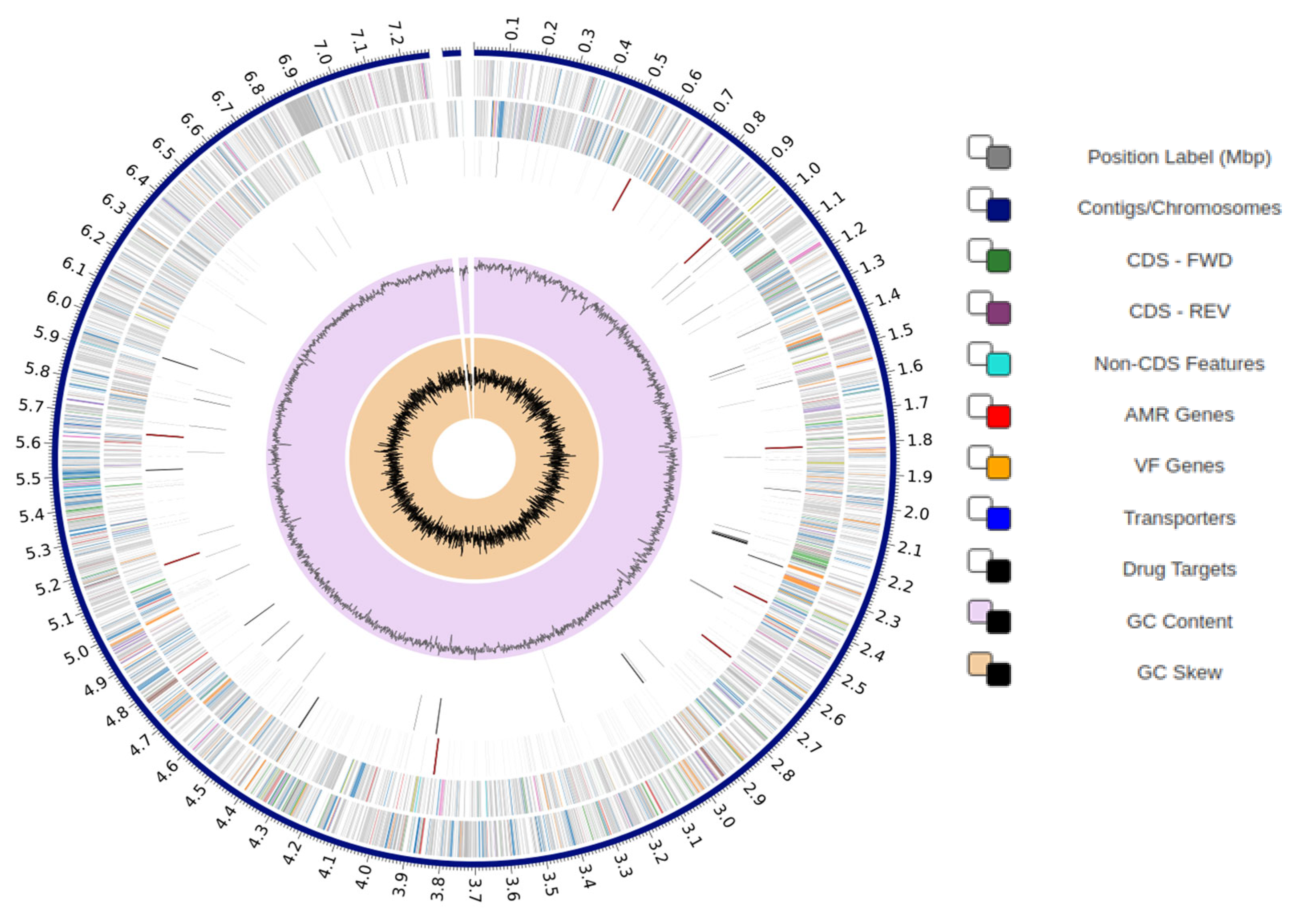
The whole genome sequence of strain BPTC-684 was completed using a combination of Illumina MiniSeq and ONT flongle technologies, and was deposited in DDBJ/ENA/GenBank under the accession number CP124863. The chromosome has a length of 7,333,529 bp, with two contigs (the largest, 7,281,262 bp), and a DNA GC content of 71.45%. It has a total of 6881 coding sequences, 213 repeat regions, 23 rRNAs, and 67 tRNAs (Figure 6).
Using antiSMASH revealed 31 biosynthetic gene clusters (BGCs) with a wide range of potential products. Notably, a high-confidence and diverse range of antibiotics were predicted to be produced by the isolate, including kinamycin (belonging to the region 7 gene encoding type II polyketide synthase (T2PKS) and non-ribosomal peptide synthetase-independent siderophore (NI-siderophore)); antimycin (region 27, gene encoding type I polyketide synthase (T1PKS) and non-ribosomal peptide synthetase (NRPS)); fuelimycin A/fuelimicin B/fuelimicin C (region 28, gene encoding T1PKS and prodigiosin); and hangtaimycin/deoxyhangtaimycin (region 30, gene encoding cyclodipeptide synthase (CDPS), trans-AT polyketide synthases (trans AT-PKS)-like, NRPS, PKS-like, and type III polyketide synthase (T3PKS)). Furthermore, siderophores such as the desferrioxamin B/desferrioxamine E gene encoding NI-siderophore (region 16) were also detected (Table 4).

3.5. Genes Involved in Plant Growth Promotion

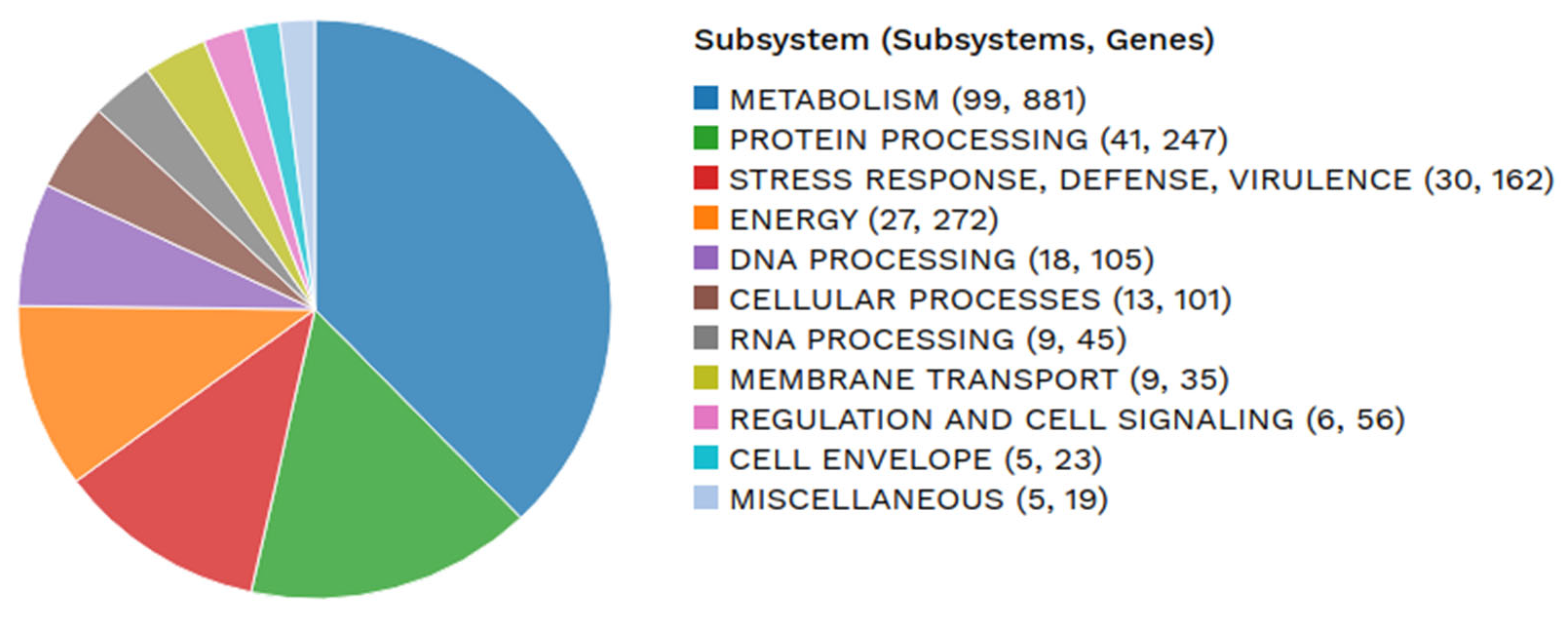
In addition to the potential gene clusters encoding secondary metabolites shown in Table 4, RASTtk analysis of the genome of strain BPTC-684 revealed a diverse range of subsystem features (Figure 7). Notably, 11 genes encoding chitin-degrading enzymes were discovered—including 9 genes encoding chitinase, 1 gene encoding a putative endochitinase (1 gene), and 1 gene encoding a secreted chitinase—along with 33 proteolytic genes including intracellular protease (3 genes), trypsin-like protease (2 genes), putative protease (4 genes), putative metalloprotease (3 genes), metallopeptidase (3 genes), putative peptidase (8 genes), peptidase M48 (2 genes), protease (1 gene), putative secreted protease (1 gene), secreted protease (1 gene), putative dipeptidase (1 gene), peptidase type IV (1 gene), aminopeptidase S (1 gene), putative secreted peptidase (1 gene), and peptidase (1 gene) (Table S3). Chitin and protein are the main components of fungal cells. The presence of these degrading enzymes can inhibit the growth of fungal pathogens affecting corn roots. Simultaneously, genomic strain BPTC-684 also contains the gene encoding indole-3-glycerol phosphate synthase and other functional genes related to tryptophan synthesis and metabolism, implying that IAA biosynthesis in strain BPTC-684 occurs via an independent pathway. Furthermore, the isolate also exhibits a diverse range of genes encoding metabolic products that support plant growth, such as cellulose, amylose, and xylan degradation; urea degradation; phosphorus solubility; and nitrogen metabolism (Table S3).

3.6. Impact of Streptomyces sp. BPTC-684 on Treating Fungal Disease in Maize in a Pot Experiment

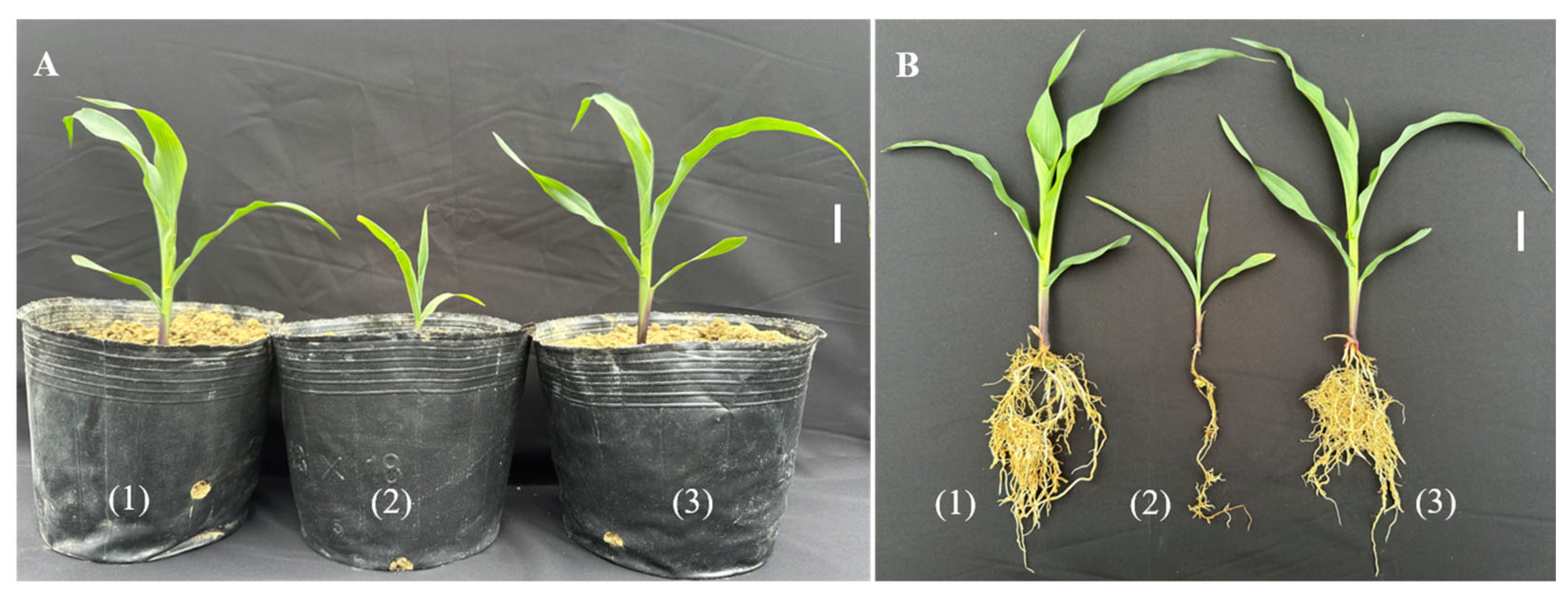
Pot experiments were conducted to evaluate the ability of Streptomyces sp. BPTC-684 as a growth inhibitor to control the fungal disease infecting the plants, as shown in Table 5 and Figure 8. The results revealed no significant differences in plant height, fresh plant weight, or dried root weight between the control and Streptomyces sp. BPTC-684 + F. verticillioides BNGO-16 inoculation. However, simultaneous infection with Streptomyces sp. BPTC-684 and F. verticillioides BNGO-16 increased plant height, fresh plant weight, and dry root weight compared to infection with F. verticillioides BNGO-16 only, with results of 37.88, 132.50, and 223.81%, respectively (Table 5). This suggests that the presence of Streptomyces sp. BPTC-684 supports better maize growth when the maize is infected with the fungal diseases on the 15th day of cultivation in pots.

4. Discussion

Controlling maize fungal diseases is essential to prevent yield and quality losses, and contribute to food security for a growing population. These diseases cause serious economic damage, degrade food quality, and produce mycotoxins, necessitating proactive management with biological antagonists [6,51,52] or in combination with sustainable methods such as good agricultural practices [53,54] and fungal-resistant corn [7,55] to maintain healthy, productive agriculture.
F. verticillioides, belonging to the F. fujikuroi species complex (FFSC), is not only known as the primary infectious agent of wilt and rot in maize [5,6], but also produces dangerous and persistent toxins that seriously contaminate the food chain for humans and livestock [8,9,10,11]. Furthermore, F. verticillioides is found in most natural, arid regions and adapts well to adverse conditions [6,13]. Scientists have shown that controlling F. verticillioides with antagonistic microorganisms is an increasingly validated solution for agricultural production [6,18,19]. Here, strain BNGO-16, isolated from infected maize roots, exhibits colony morphology in forms of color, surface, and margin that are typical of F. verticillioides as described by Nirenberg [56]. The TEF-1α shows 99.68% similarity to F. verticillioides LC2818 (MW580508) or F. verticillioides LC5896 (MW580509) as classified by Chehri et al. 2011 [57]. This value is higher than the cut-off of 99.4% for the same species [58]. The neighbour-joining tree also confirmed this. Therefore, strain BNGO-16 is identified as F. verticillioides.
With a more unique genome compared to other Prokaryotes genera, the diversity and abundance of Streptomyces species have been classified and their biological potential explored to date [59,60,61]. Our understanding of Streptomyces will continue to be strengthened and expanded through new isolated candidates. In this report, strain BPTC-684, isolated from soil using ISP 4 medium supplemented with soil extract [29], demonstrated inhibitory activity of 53.11 ± 2.41% against F. verticillioides BNGO-16. Strain BPTC-684 could be considered a candidate new species of the genus Streptomyces based on simultaneous data analysis of the differences in cultural characteristics, 16S rRNA gene sequencing, and OrthoANI, ANIb and dDDH values below the thresholds of 95% for ANI [44,45] and 70% for dDDH [43].
The genomic analysis of the novel Streptomyces sp. BPTC-684 revealed a G+C content of 71.45% and 31 BGCs; these values fall within the range reported by Belknap et al. [59]. In addition, a diverse range of bioactive compounds, including antibiotics (kinamycin, antimycin, fuelimycins A-C, hangtaimycin, and deoxyhangtaimycin) and siderophores (desferrioxamines B and E), can be produced by strain BPTC-684. Notably, previous reports have shown that kinamycin, a polyketide secondary metabolite (an aminoglycoside antibiotic), known for its potent antimicrobial and cytotoxic properties, often exhibits antifungal activity against agricultural pathogens [62,63]. Reports by Zhu et al. [64] and Park [65] show that antimycin acts as a potent inhibitor of mitochondrial respiration in fungi and other competing microorganisms. It acts as an environmental weapon by disrupting the respiratory chain, inhibiting energy production, and causing rapid cell death. Two bioactive compounds, desferrioxamines B and E, are siderophores (high-affinity iron-chelating compounds) that indirectly inhibit fungi by sequestering essential iron from pathogenic fungi [66,67]. From these arguments it is suggested that kinamycin and antimycin directly participate in the inhibition of F. verticillioides BNGO-16 growth, while presence of the remaining bioactive compounds plays an indirect role. As a result, co-involvement of these bioactive compounds may enhance the antifungal efficacy more strongly than that of each compound individually. In addition, Streptomyces sp. BPTC-684 produces an enzyme that breaks down chitin, a major component of the fungal cell wall, thereby inhibiting the growth of the pathogenic fungus. During its growth, Streptomyces sp. BPTC-684 also exhibited the ability to produce IAA, dissolve phosphorus, and degrade cellulose. Collectively, these traits suggest that Streptomyces sp. BPTC-684 enhances maize growth even under F. verticillioides infection.
Recent reports indicate that these soil-dwelling bacteria inhibit the fungus through direct antagonistic mechanisms, reducing mycotoxin production and inducing systemic resistance in the crop [20,52,68]. Our findings are consistent with these reports, as BPTC 684 exhibited strong killing of F. verticillioides in vitro and promoted better growth of the infected maize in pot experiments.

5. Conclusions

In summary, based on differences in cultural characteristics, 16S rRNA gene sequencing, and OrthoANI, ANIb and dDDH values below the thresholds compared to closely related species suggest that BPTC 684 represents a novel Streptomyces species. Streptomyces sp. BPTC-684 inhibited the growth of F. verticillioides BNGO-16 by 53.11%, resulting in increased plant height, fresh weight, and dry root weight by 37.88%, 132.50%, and 223.81%, respectively, in pot experiment infected with the fungus. Therefore, a novel Streptomyces sp. BPTC-684 is a potential candidate for the sustainable biological control of fungal diseases and growth promotion in maize.

Supplementary Materials

The following supporting information can be downloaded at: https://www.mdpi.com/article/10.3390/microorganisms14040818/s1. Table S1: Characteristics of strain BPTC-684 grown on various media after 21 days of incubation at 28 °C; Table S2: Comparison of 16S rRNA gene sequence of strain BPTC-684 with the closest type strains; Table S3: Genes involved in plant growth-promoting traits were detected in the genome of strain BPTC-684.

Author Contributions

T.V.C.: Conceptualization, Methodology, Software, Formal analysis, Investigation, Data curation, Writing—original draft, and Visualization; N.T.H.A.: Software, Formal analysis, Investigation, and Writing—original draft; T.M.N.: Validation, Investigation, Data curation, Writing—review & editing, Supervision, Project administration, and Funding acquisition. All authors have read and agreed to the published version of the manuscript.

Funding

This research was funded by the Vietnam National Foundation for Science and Technology Development (NAFOSTED) under grant number 108.06-2019.03.

Institutional Review Board Statement

Not applicable.

Informed Consent Statement

Not applicable.

Data Availability Statement

The original contributions presented in this study are included in the article/Supplementary Material. Further inquiries can be directed to the corresponding author.

Acknowledgments

We would like to thank Derek Wilkinson from Charles University in Prague for assistance in improving the English level of the manuscript.

Conflicts of Interest

The authors declare no conflict of interest.

References

  1. USDA. Production, Supply and Distribution Online. 2025. Available online: https://www.fas.usda.gov/data/production/commodity/0440000 (accessed on 18 December 2025).
  2. World Bank. Agriculture, Forestry, and Fishing, Value Added (% of GDP)—Vietnam. 2024. Available online: https://data.worldbank.org/indicator/NV.AGR.TOTL.ZS?locations=VN (accessed on 18 December 2025).
  3. Thang, N.X.; Thanh, N.C. Development of maize hybrids for production and economic growth in the northern midland and mountainous region of Vietnam. VMOST J. Soc. Sci. Humanit. 2024, 66, 21–28. [Google Scholar] [CrossRef]
  4. Huy, M.T.; Quilloy, A.J.A.; Cuc, M.T.; Huong, M.T.; Phuong, D.N.; Hai, T.M. Adoption of conservation agriculture practices and its impacts on yields and incomes: Evidence from smallholder maize farmers in the Northwest mountainous region of Vietnam. Environ. Chall. 2025, 19, 101143. [Google Scholar] [CrossRef]
  5. Wang, W.; Wang, B.; Sun, X.; Qi, X.; Zhao, C.; Chang, X.; Khaskheli, M.I.; Gong, G. Symptoms and pathogens diversity of corn Fusarium sheath rot in Sichuan Province, China. Sci. Rep. 2021, 11, 2835. [Google Scholar] [CrossRef]
  6. Omotayo, O.P.; Babalola, O.O. Fusarium verticillioides of maize plant: Potentials of propitious phytomicrobiome as biocontrol agents. Front. Fungal Biol. 2023, 4, 1095765, Erratum in Front. Fungal Biol. 2023, 29, 1298350. [Google Scholar] [PubMed]
  7. Xu, Y.; Fan, Y.; Liu, L.; Cao, J.; Zhou, J.; Liu, E.; Li, R.; Ma, P.; Yao, W.; Wu, J.; et al. Enhancing maize resistance to Fusarium verticillioides through modulation of cell wall structure and components by ZmXYXT2. J. Adv. Res. 2025, 78, 111–128. [Google Scholar] [CrossRef]
  8. Chen, J.; Wen, J.; Tang, Y.; Shi, J.; Mu, G.; Yan, R.; Cai, J.; Long, M. Research progress on fumonisin B1 contamination and toxicity: A review. Molecules 2021, 26, 5238. [Google Scholar] [CrossRef] [PubMed]
  9. Gherlone, F.; Jojić, K.; Huang, Y.; Hoefgen, S.; Valiante, V.; Janevska, S. The palmitoyl-CoA ligase Fum16 is part of a Fusarium verticillioides fumonisin subcluster involved in self-protection. mBio 2025, 16, e0268124. [Google Scholar] [CrossRef]
  10. Czembor, E.; Stępień, Ł.; Waśkiewicz, A. Effect of environmental factors on Fusarium species and associated mycotoxins in maize grain grown in Poland. PLoS ONE 2015, 10, e0133644. [Google Scholar] [CrossRef]
  11. Anumudu, C.K.; Ekwueme, C.T.; Uhegwu, C.C.; Ejileugha, C.; Augustine, J.; Okolo, C.A.; Onyeaka, H. A review of the mycotoxin family of fumonisins, their biosynthesis, metabolism, methods of detection and effects on humans and animals. Int. J. Mol. Sci. 2024, 26, 184. [Google Scholar] [CrossRef] [PubMed]
  12. Puértolas, A.; Boa, E.; Bonants, P.J.M.; Woodward, S. Survival of Phytophthora cinnamomi and Fusarium verticillioides in commercial potting substrates for ornamental plants. J. Phytopathol. 2018, 166, 484–493. [Google Scholar] [CrossRef]
  13. Czembor, E.; Frasiński, S.; Urbaniak, M.; Waśkiewicz, A.; Czembor, J.H.; Stępień, Ł. Fusarium species shifts in maize grain as a response to climatic changes in Poland. Agriculture 2024, 14, 1793. [Google Scholar] [CrossRef]
  14. Lengai, G.M.W.; Muthomi, J.W.; Mbega, E.R. Phytochemical activity and role of botanical pesticides in pest management for sustainable agricultural crop production. Sci. Afr. 2020, 7, e00239. [Google Scholar] [CrossRef]
  15. Quandahor, P.; Kim, L.; Kim, M.; Lee, K.; Kusi, F.; Jeong, I.-H. Effects of agricultural pesticides on decline in insect species and individual numbers. Environments 2024, 11, 182. [Google Scholar] [CrossRef]
  16. Zhou, W.; Li, M.; Achal, V. A comprehensive review on environmental and human health impacts of chemical pesticide usage. Emerg. Contam. 2025, 11, 100410. [Google Scholar] [CrossRef]
  17. Wang, C.; Luo, X.; Zhang, Y.; Pu, X.; Liu, J.; Zhang, S.; Ye, M.; Li, X. Green pesticide research and development integrating molecular targets, mechanisms, resistance, and innovation in theory and technology. J. Agric. Food Chem. 2025, 73, 32460–32489. [Google Scholar] [CrossRef]
  18. Thambugala, K.M.; Daranagama, D.A.; Phillips, A.J.L.; Kannangara, S.D.; Promputtha, I. Fungi vs. fungi in biocontrol: An overview of fungal antagonists applied against fungal plant pathogens. Front. Cell. Infect. Microbiol. 2020, 10, 604923. [Google Scholar] [CrossRef] [PubMed]
  19. Todorović, I.; Moënne-Loccoz, Y.; Raičević, V.; Jovičić-Petrović, J.; Muller, D. Microbial diversity in soils suppressive to Fusarium diseases. Front. Plant Sci. 2023, 14, 1228749. [Google Scholar] [CrossRef]
  20. Khan, S.; Srivastava, S.; Karnwal, A.; Malik, T. Streptomyces as promising biological control agents for plant pathogens. Front. Microbiol. 2023, 14, 1285543. [Google Scholar] [CrossRef] [PubMed]
  21. Jeyaram, M.; Jeyaram, Y.; Ayyadurai, T.; Gurusamy, M. Exploration of Streptomycetes as biocontrol agents against plant pathogens. In Streptomycetes: Biological Candidates for Sustainable Agriculture; Kaur, T., Kumar, H., Manhas, R.K., Eds.; Springer: Singapore, 2026; pp. 167–188. [Google Scholar]
  22. White, T.J.; Bruns, T.D.; Lee, S.; Taylor, J.W. Amplification and direct sequencing of fungal ribosomal RNA genes for phylogenetics. In PCR Protocols: A Guide to Methods and Applications; Innis, M.A., Gelfand, D.H., Sninsky, J., White, T.J., Eds.; Academic Press: San Diego, CA, USA, 1990; pp. 315–322. [Google Scholar]
  23. Carbone, I.; Kohn, L.M. A method for designing primer sets for speciation studies in filamentous ascomycetes. Mycologia 1999, 91, 553–556. [Google Scholar] [CrossRef]
  24. Larkin, M.A.; Blackshields, G.; Brown, N.P.; Chenna, R.; McGettigan, P.A.; McWilliam, H.; Valentin, F.; Wallace, I.M.; Wilm, A.; Lopez, R.; et al. Clustal W and Clustal X version 2.0. Bioinformatics 2007, 23, 2947–2948. [Google Scholar] [CrossRef]
  25. Saitou, N.; Nei, M. The neighbor-joining method: A new method for reconstructing phylogenetic trees. Mol. Biol. Evol. 1987, 4, 406–425. [Google Scholar] [CrossRef]
  26. Kumar, S.; Stecher, G.; Suleski, M.; Sanderford, M.; Sharma, S.; Tamura, K. MEGA12: Molecular evolutionary genetic analysis version 12 for adaptive and green computing. Mol. Biol. Evol. 2024, 41, msae263. [Google Scholar] [CrossRef]
  27. Felsenstein, J. Confidence limits on phylogenies: An approach using the bootstrap. Evolution 1985, 39, 783–791. [Google Scholar] [CrossRef]
  28. Kuster, E.; Williams, S.T. Selective media for isolation of Streptomycetes. Nature 1964, 202, 928–929. [Google Scholar] [CrossRef]
  29. Nguyen, T.M.; Seo, C.; Ji, M.; Paik, M.J.; Myung, S.W.; Kim, J. Effective soil extraction method for cultivating previously uncultured soil bacteria. Appl. Environ. Microbiol. 2018, 84, e01145-18. [Google Scholar] [CrossRef] [PubMed]
  30. Ma, P.; Liu, E.; Zhang, Z.; Li, T.; Zhou, Z.; Yao, W.; Chen, J.; Wu, J.; Xu, Y.; Zhang, H. Genetic variation in ZmWAX2 confers maize resistance to Fusarium verticillioides. Plant Biotechnol. J. 2023, 21, 1812–1826. [Google Scholar] [CrossRef]
  31. Zygadlo, J.; Guzman, C.; Grosso, N. Antifungal properties of the leaf oils of Tagetes minuta L. and T. filifolia Lag. J. Essent. Oil Res. 1994, 6, 617–621. [Google Scholar] [CrossRef]
  32. Shirling, E.B.; Gottlieb, D. Methods for characterization of Streptomyces species. Int. J. Syst. Bacteriol. 1966, 16, 313–340. [Google Scholar] [CrossRef]
  33. Afridi, M.; Sadaiappan, B.; Nassar, A.S.; Mahmoudi, H.; Khan, M.A.; Mundra, S. Mangrove sediments-associated bacterium (Bacillus sp. SW7) with multiple plant growth-promoting traits promotes the growth of tomato (Solanum lycopersicum). Front. Mar. Sci. 2024, 11, 1379439. [Google Scholar] [CrossRef]
  34. Glickmann, E.; Dessaux, Y. A critical examination of the specificity of the Salkowski reagent for indolic compounds produced by phytopathogenic bacteria. Appl. Environ. Microbiol. 1995, 61, 793–796. [Google Scholar] [CrossRef] [PubMed]
  35. Lane, D.J. 16S/23S rRNA sequencing. In Nucleic Acid Techniques in Bacterial Systematics; Stackebrandt, E., Goodfellow, M., Eds.; John Wiley & Sons: New York, NY, USA, 1991; pp. 115–175. [Google Scholar]
  36. Klindworth, A.; Pruesse, E.; Schweer, T.; Peplies, J.; Quast, C.; Horn, M.; Glöckner, F.O. Evaluation of general 16S ribosomal RNA gene PCR primers for classical and next-generation sequencing-based diversity studies. Nucleic Acids Res. 2013, 41, e1. [Google Scholar] [CrossRef]
  37. Chen, S.; Zhou, Y.; Chen, Y.; Gu, J. fastp: An ultra-fast all-in-one FASTQ preprocessor. Bioinformatics 2018, 34, 884–890. [Google Scholar] [CrossRef]
  38. Wick, R.R.; Judd, L.M.; Gorrie, C.L.; Holt, K.E.; Phillippy, A.M. Unicycler: Resolving bacterial genome assemblies from short and long sequencing reads. PLoS Comput. Biol. 2017, 13, e1005595. [Google Scholar] [CrossRef]
  39. Kolmogorov, M.; Yuan, J.; Lin, Y.; Pevzner, P.A. Assembly of long, error-prone reads using repeat graphs. Nat. Biotechnol. 2019, 37, 540–546. [Google Scholar] [CrossRef]
  40. Hunt, M.; Silva, N.D.; Otto, T.D.; Parkhill, J.; Keane, J.A.; Harris, S.R. Circlator: Automated circularization of genome assemblies using long sequencing reads. Genome Biol. 2015, 16, 294. [Google Scholar] [CrossRef]
  41. Brettin, T.; Davis, J.J.; Disz, T.; Edwards, R.A.; Gerdes, S.; Olsen, G.J.; Olson, R.; Overbeek, R.; Parrello, B.; Pusch, G.D.; et al. RASTtk: A modular and extensible implementation of the RAST algorithm for building custom annotation pipelines and annotating batches of genomes. Sci. Rep. 2015, 5, 8365. [Google Scholar] [CrossRef]
  42. Blin, K.; Shaw, S.; Vader, L.; Szenei, J.; Reitz, Z.L.; Augustijn, H.E.; Cediel-Becerra, J.D.D.; de Crécy-Lagard, V.; Koetsier, R.A.; Williams, S.E.; et al. antiSMASH 8.0: Extended gene cluster detection capabilities and analyses of chemistry, enzymology, and regulation. Nucleic Acids Res. 2025, 53, 32–38. [Google Scholar] [CrossRef]
  43. Meier-Kolthoff, J.P.; Auch, A.F.; Klenk, H.P.; Göker, M. Genome sequence-based species delimitation with confidence intervals and improved distance functions. BMC Bioinform. 2013, 14, 60. [Google Scholar] [CrossRef] [PubMed]
  44. Yoon, S.H.; Ha, S.M.; Lim, J.M.; Kwon, S.J.; Chun, J. A large-scale evaluation of algorithms to calculate average nucleotide identity. Antonie Van Leeuwenhoek 2017, 110, 1281–1286. [Google Scholar] [CrossRef] [PubMed]
  45. Richter, M.; Rosselló-Móra, R.; Oliver, G.F.; Peplies, J. JSpeciesWS: A web server for prokaryotic species circumscription based on pairwise genome comparison. Bioinformatics 2016, 32, 929–931. [Google Scholar] [CrossRef] [PubMed]
  46. Daniels, B.A. Elimination of Fusarium moniliforme from corn seed. Plant Dis. 1983, 67, 609–611. [Google Scholar] [CrossRef]
  47. Figueroa-López, A.M.; Cordero-Ramírez, J.D.; Martínez-Álvarez, J.C.; López-Meyer, M.; Lizárraga-Sánchez, G.J.; Félix-Gastélum, R.; Castro-Martínez, C.; Maldonado-Mendoza, I.E. Rhizospheric bacteria of maize with potential for biocontrol of Fusarium verticillioides. SpringerPlus 2016, 5, 330. [Google Scholar] [CrossRef]
  48. Hu, S.; Li, K.; Wang, Y.; Guo, Y.; Zhou, M.; Tang, X.; Gao, J. Streptomyces genisteinicus sp. nov., a novel genistein-producing actinomycete isolated from a Chinese medicinal plant and proposal of Streptomyces michiganensis Corbaz et al. 1957 as a later heterotypic synonym of Streptomyces xanthochromogenes Arishima et al. 1956. Int. J. Syst. Evol. Microbiol. 2021, 71, 004954. [Google Scholar] [CrossRef] [PubMed]
  49. Idris, H.; Labeda, D.P.; Nouioui, I.; Castro, J.F.; Del Carmen Montero-Calasanz, M.; Bull, A.T.; Asenjo, J.A.; Goodfellow, M. Streptomyces aridus sp. nov., isolated from a high altitude Atacama Desert soil and emended description of Streptomyces noboritoensis Isono et al. 1957. Antonie Van Leeuwenhoek 2017, 110, 705–717. [Google Scholar] [CrossRef][Green Version]
  50. Kampfer, P. Genus Streptomyces. In Bergey’s Manual of Systematic Bacteriology, the Actinobacteria, Part A, 2nd ed.; Goodfellow, M., Kampfer, P., Busse, H.J., Trujillo, M.E., Suzuki, K., Ludwig, W., Whitman, W.B., Eds.; Springer: New York, NY, USA, 2012; Volume 5, pp. 1455–1767. [Google Scholar]
  51. N, D.; Achar, P.N.; Sreenivasa, M.Y. Current perspectives of biocontrol agents for management of Fusarium verticillioides and its Fumonisin in cereals—A Review. J. Fungi 2021, 7, 776. [Google Scholar] [CrossRef] [PubMed]
  52. Tran, T.M.; Ameye, M.; Devlieghere, F.; De Saeger, S.; Eeckhout, M.; Audenaert, K. Streptomyces strains promote plant growth and induce resistance against Fusarium verticillioides via transient regulation of auxin signaling and archetypal defense pathways in maize plants. Front. Plant Sci. 2021, 12, 755733. [Google Scholar] [CrossRef]
  53. Madege, R.R.; Audenaert, K.; Kimanya, M.; Tiisekwa, B.; De Meulenaer, B.; Bekaert, B.; Landschoot, S.; Haesaert, G. Control of Fusarium verticillioides (Sacc.) Nirenberg and Fumonisins by using a combination of crop protection products and fertilization. Toxins 2018, 10, 67. [Google Scholar] [CrossRef]
  54. Simões, D.; Carbas, B.; Soares, A.; Freitas, A.; Silva, A.S.; Brites, C.; Andrade, E. Assessment of agricultural practices for controlling Fusarium and mycotoxins contamination on maize grains: Exploratory study in maize farms. Toxins 2023, 15, 136. [Google Scholar] [CrossRef]
  55. Ayesiga, S.B.; Rubaihayo, P.; Sempiira, J.B.; Adjei, E.A.; Dramadri, I.O.; Oloka, B.M.; Sserumaga, J.P. Combining ability and gene action for resistance to Fusarium ear rot in tropical maize hybrids. Front. Plant Sci. 2025, 16, 1509859. [Google Scholar] [CrossRef]
  56. Nirenberg, H.L. Untersuchungen uber die morphologische und biologische differenzierung in der Fusarium section Liseola. Mitteilungen Aus Der Biol. Bundesanst. Fur Land-Und Forstwirtsch. 1976, 169, 1–117. [Google Scholar]
  57. Chehri, K.; Salleh, B.; Yli-Mattila, T.; Reddy, K.R.; Abbasi, S. Molecular characterization of pathogenic Fusarium species in cucurbit plants from Kermanshah province, Iran. Saudi J. Biol. Sci. 2011, 18, 341–351. [Google Scholar] [CrossRef] [PubMed]
  58. Jambhulkar, P.P.; Bajpai, R.; Reddy, H.J.; Tripathy, P.S.; Varun, P.; Rout, A.K.; Behera, B.K.; Lakshman, D.K.; Nanjundappa, M. Assessment of genetic diversity and the population structure of species from the Fusarium fujikuroi species complex causing Fusarium stalk rot of maize. J. Fungi 2024, 10, 574. [Google Scholar] [CrossRef]
  59. Belknap, K.C.; Park, C.J.; Barth, B.M.; Andam, C.P. Genome mining of biosynthetic and chemotherapeutic gene clusters in Streptomyces bacteria. Sci. Rep. 2020, 10, 2003. [Google Scholar] [CrossRef]
  60. Alam, K.; Mazumder, A.; Sikdar, S.; Zhao, Y.M.; Hao, J.; Song, C.; Wang, Y.; Sarkar, R.; Islam, S.; Zhang, Y.; et al. Streptomyces: The biofactory of secondary metabolites. Front. Microbiol. 2022, 13, 968053. [Google Scholar] [CrossRef] [PubMed]
  61. Anjum, M.S.; Khaliq, S.; Ashraf, N.; Anwar, M.A.; Akhtar, K. Bioactive Streptomycetes: A powerful tool to synthesize diverse nanoparticles with multifarious properties. J. Basic Microbiol. 2024, 64, e2400129. [Google Scholar] [CrossRef] [PubMed]
  62. Shrestha, S.K.; Chang, C.W.; Meissner, N.; Oblad, J.; Shrestha, J.P.; Sorensen, K.N.; Grilley, M.M.; Takemoto, J.Y. Antifungal amphiphilic aminoglycoside K20: Bioactivities and mechanism of action. Front. Microbiol. 2014, 5, 671. [Google Scholar] [CrossRef]
  63. Subedi, Y.P.; AlFindee, M.N.; Takemoto, J.Y.; Chang, C.T. Antifungal amphiphilic kanamycins: New life for an old drug. Med. Chem. Commun. 2018, 9, 909–919. [Google Scholar] [CrossRef]
  64. Zhu, L.; Weng, C.; Shen, X.; Zhu, X. Aptly chosen, effectively emphasizing the action and mechanism of antimycin A1. Front. Microbiol. 2024, 15, 1371850. [Google Scholar] [CrossRef]
  65. Park, W.H. Antimycin A: From mitochondrial poison to multifaceted biological probe and therapeutic agent. Chem. Biol. Interact. 2025, 422, 111805. [Google Scholar] [CrossRef]
  66. Miethke, M.; Marahiel, M.A. Siderophore-based iron acquisition and pathogen control. Microbiol. Mol. Biol. Rev. 2007, 71, 413–451. [Google Scholar] [CrossRef]
  67. Symeonidis, A.S. The role of iron and iron chelators in zygomycosis. Clin. Microbiol. Infect. 2009, 15, 26–32. [Google Scholar] [CrossRef]
  68. Strub, C.; Dieye, C.A.T.; Nguyen, P.A.; Constancias, F.; Durand, N.; Guendouz, S.; Pratlong, M.; Fontana, A.; Schorr-Galindo, S. Transcriptomes of the interaction between Fusarium verticillioides and a Streptomyces strain reveal the fungal defense strategy under the pressure of a potential biocontrol agent. Fungal Biol. 2021, 125, 78–88. [Google Scholar] [CrossRef] [PubMed]
Figure 1. Morphology of corn infected with fungal disease. Diseased corn in the field (A); External (B) and internal (C) symptoms of corn root rot; Colony morphology on the front sides (D) of strain BNGO-16 on PDA medium at 25 °C, 5 days of incubation.
Microorganisms 14 00818 g001
Figure 2. Neighbour-joining tree based on a combination of ITS and TEF-1α of strain BNGO-16 and closely related members of the genus Fusarium. Note: Numbers at the nodes represent level of bootstrap support (%) based on a neighbour-joining analysis of 1000 resampled datasets. Only bootstrap values greater than 50% are mentioned. Bar, 0.005 substitutions per site.
Microorganisms 14 00818 g002
Figure 3. Activity against F. verticillioides BNGO-16 of strain BPTC-684 at 25 °C, 7 days of incubation. (A): control and (B): strain BPTC-684. Note: Strain BPTC-684 produced bioactive substances that diffused into the medium, inhibiting 53.11 ± 2.41% of the fungus BNGO-16. Data is determined as mean ± standard deviation (SD).
Microorganisms 14 00818 g003
Figure 4. Morphology characteristics of strain BPTC-684 grown on inorganic salts starch agar (ISP 4) at 28°C for 21 days. (A): Colonies and (B): Scanning electron micrograph of spore chain morphology of strain BPTC-684 at 3000× magnification with a 5 µm scale bar.
Microorganisms 14 00818 g004
Figure 5. Neighbour-joining tree of strain BPTC-684 and its closely related Streptomyces species based on 16S rRNA gene sequencing. Note: Numbers at the nodes represent level of bootstrap support (%) based on a neighbour-joining analysis of 1000 resampled datasets. Only bootstrap values greater than 50% are given. Kitasatospora setae JCM 3304T (AB022868) was used as the outgroup. Bar, 0.005 substitutions per site.
Microorganisms 14 00818 g005
Figure 6. Circular map of Streptomyces sp. BPTC-684. Note: CDS—FWD: Coding Sequences Forward; CDS—REV: Coding Sequences Reverse; AMR genes: Antimicrobial Resistance Genes.
Microorganisms 14 00818 g006
Figure 7. Graphical subsystem category counts of Streptomyces sp. BPTC-684 annotated by RASTtk. RASTtk: Rapid Annotations using Subsystems Technology tool kit.
Microorganisms 14 00818 g007
Figure 8. Effect of Streptomyces sp. BPTC-684 on maize growth in potted plant experiment on the 15th day. (A): Maize grown in pot; (B): Morphology characteristic of the maize plant; (1): Control; (2): F. verticillioides BNGO-16 inoculation; (3): Streptomyces sp. BPTC-684 and F. verticillioides BNGO-16 inoculation. Bar, 3 cm.
Microorganisms 14 00818 g008
Table 1. Physiological and biochemical characteristics of strain BPTC-684.
CharacteristicResult
Temperature range for growth (°C)20–40 (optimum 25–30)
pH range for growth4.0–9.0 (optimum 6.5–7.0)
Growth at NaCl concentration (%, w/v)0–7 (optimum 0–4)
IAA production61.74 ± 2.48 µg/mL
Siderophore production index5.05 ± 0.11
Phosphate solubilization+
Extracellular lytic activities:
Cellulase+
Chitinase+
Protease+
Growth on sole carbon sources (1%, w/v):
L-Arabinose+
D-Xylose+
D-Fructose+
Cellulose+
Rhamnosew
Raffinose
Growth on sole nitrogen sources (0.1% w/v):
L-Arginine
L-Tyrosine+
L-Valinew
−: Negative; +: Positive; w: Weakly positive.
Table 2. Cultural characteristics of strain BPTC-684 and closely related species of the genus Streptomyces on ISP media.
Characteristic12 a345 c6 a
Yeast extract malt extract agar (ISP 2):
Aerial spore mass colorIvory-None bGrey yellow
Brown b
--
Color of aerial massIvoryPale olive greyWhite cGrey cYellowPale smoke grey
Color of reverse myceliumPale reddish orangeOld goldDark yellow
brown b
Dark grey
yellow
brown b
Yellow brown to greyed yellow Warm blackish brown
Diffusible pigmentPale reddish orangeNoneNone bNone bNoneNone
Oatmeal agar (ISP 3):
Aerial spore mass colorLight grey-White bYellow
white b
--
Color of aerial massLight greyPallid neutral greyGreyish yellowish pink cGrey cYellowCourt grey
Color of reverse myceliumLight beigeViridine greenDark
yellow
brown b
Mild
yellow
brown b
Yellow brown to greyed yellowViridine green
Diffusible pigmentNoneNoneNone bNone bNoneNone
Inorganic salts starch agar (ISP 4):
Aerial spore mass colorLight grey-Dark yellow brown bWhite b--
Color of aerial massLight greyLight mineral greyGreyish yellowish pink cGrey cYellowLight mineral grey
Color of reverse myceliumPale goldPale viridine yellowLight grey yellow
brown b
Dark grey yellow
brown b
Yellow brown to greyed yellowChrysolite green
Diffusible pigmentPale goldNoneNone bNone bNoneNone
Glycerol asparagine agar (ISP 5):
Aerial spore mass colorNone- None bNone b--
Color of aerial massNonePale olive greyNone cGrey cYellowWhite
Color of reverse myceliumYellowish brownSulphur yellowMild yellow
brown b
Dark grey
yellow
brown b
Yellow brown to greyed yellowAmber yellow
Diffusible pigmentYellowish brownNoneNone bNone bNoneNone
Peptone yeast extract iron agar (ISP 6):
Aerial spore mass colorNone-Light grey yellow brown bNone b--
Color of aerial massNoneWhiteNone cNone cNoneWhite
Color of reverse myceliumGreyPale orange yellowDark grey
yellow
brown b
Dark grey
yellow
brown b
Yellow brown to greyed yellowCapucine yellow
Diffusible pigmentGreyNoneDark grey
yellow
brown b
None bNoneNone
1: Streptomyces sp. BPTC-684 (this study); 2: S. genisteinicus CRPJ-33T; 3: S. melanogenes NBRC 12890T; 4: S. noboritoensis NBRC 13065T; 5: S. xanthochromogenes NRRL B-5410T; 6: S. zhihengii YIM T102T. Data was taken from a Hu et al. [48]; b Idris et al. [49]; c Kampfer [50]. -: not known.
Table 3. OrthoANI, ANIb, and dDDH values between strain BPTC-684 and its closest related type strains.
Closest Type StrainNCBI Accession NumberGC Content (%)OrthoANI (%)ANIb (%)dDDH
(%)
S. genisteinicus CRPJ-33TCP06082573.3980.0679.1924.00
S. melanogenes NBRC 12890TBMTS0000000071.3594.7894.3859.10
S. noboritoensis NBRC 13065TJBHMQV0000000071.0794.8894.4759.60
S. xanthochromogenes NRRL B-5410TBMUZ0000000071.1182.5581.8126.00
S. zhihengii YIM T102TGCA_01691924572.8781.4379.2724.10
S. albireticuli NRRL B-1670TNSJV0000000072.4278.9277.8223.30
S. mauvecolor LMG 20100TBAAASQ01000000070.8682.9482.1826.40
S. eurocidicus NRRL B-1676TLGUI0000000072.6278.7477.6623.00
S. netropsis NBRC 3723TBMRW0000000071.5678.7677.7520.20
ANI: Average Nucleotide Identity; ANIb: Average Nucleotide Identity based on BLAST v2.2.29+; dDDH: digital DNA–DNA hybridization. ANI ≥ 95% and dDDH ≥ 70% are the cutoff thresholds for the same species, respectively.
Table 4. Predicting biosynthetic gene clusters (BGCs) for genome assembly of strain BPTC-684 using the antiSMASH v.8.0.4 tool.
RegionTypeFromToSimilarity ConfidenceMost Similar Known Cluster
1Terpene80,786107,363HighHopene
2T1PKS, hglE-KS134,846186,081--
3Redox-cofactor, T3PKS252,577306,071--
4PKS-like453,156498,998--
5RiPP-like591,124613,671Low14-hydroxyisochainin
6Hydrogen-cyanide653,362666,355LowAborycin
7T2PKS, NI-siderophore820,681899,701HighKinamycin
8CDPS1,268,6321,289,354LowBD-12
9Terpene-precursor1,593,0951,614,093--
10Lanthipeptide-class-i1,758,2391,782,673--
11T3PKS2,654,1672,695,264--
12Terpene2,793,6202,815,851LowTVA-YJ-2
13NRPS-like3,184,5723,227,172LowArginomycin
14Melanin3,530,6273,541,001Medium4-hydroxy-3-nitrosobenzamide
15Phenazine3,564,5103,584,998LowDiastaphenazine/Izumiphenazine C
16NI-siderophore4,078,8234,108,601HighDesferrioxamin B/Desferrioxamine E
17Butyrolactone4,356,3314,367,224LowCoelimycin P1
18Lanthipeptide-class-iii4,516,9144,539,559MediumSapB
19Other4,870,1744,910,590LowStlassin
20Ectoine5,037,3785,047,782HighEctoine
21RiPP-like5,826,5505,836,777--
22T2PKS5,923,7765,996,372MediumAlnumycin A/alnumycin B/Alnumycin C/Alnumycin P/Prealnumycin/Thalnumycin A/Thalnumycin B/K1115A/1,6-dihydro-8-propylanthraquinone
23Melanin6,098,0436,108,471LowMelanin
24Terpene6,121,3516,142,412HighPristinol
25Lanthipeptide-class-iv6,169,6056,192,400--
26T3PKS6,203,9666,245,003HighFlaviolin/1,3,6,8-tetrahydroxynaphthalene
27T1PKS, NRPS6,268,1966,350,117HighAntimycin
28T1PKS, prodigiosin6,554,8896,635,104HighFuelimycin A/Fuelimicin B/Fuelimicin C
29Lanthipeptide-class-iv, terpene6,775,3646,801,729--
30CDPS, trans-AT-PKS-like, NRPS, PKS-like, T3PKS6,816,4096,932,063HighHangtaimycin/Deoxyhangtaimycin
31Terpene7,127,9157,148,721--
NRPS: Non-ribosomal peptide synthetase; NRPS-like: NRPS-like fragment; T1PKS: Type I polyketide synthase; T2PKS: Type II polyketide synthase; T3PKS: type III polyketide synthase; RiPP-like: Ribosomally synthesized and Post-translationally modified peptides; CDPS: Cyclodipeptide synthase; trans-AT-PKS-like: trans-acyltransferase polyketide synthases; NI-siderophore: Non-Ribosomal Peptide Synthetase-Independent Siderophore; -: not detected.
Table 5. Comparison of promoting plant growth in the potted plant experiment.
TreatmentPlant Height
(cm)
Fresh Plant Weight
(g)
Dry Root Weight
(g)
Control25.08 ± 1.81 a1.01 ± 0.13 a0.74 ± 0.15 a
BNGO-16 inoculation17.74 ± 1.74 b0.40 ± 0.09 b0.21 ± 0.07 b
BPTC-684 and BNGO-16 inoculation24.46 ± 1.65 a0.93 ± 0.16 a0.68 ± 0.11 a
Different letters in the same column indicate statistically significant differences at the p ≤ 0.05 by using JASP 0.95.4 software. Data are presented as mean values ± standard deviation (SD).
Disclaimer/Publisher’s Note: The statements, opinions and data contained in all publications are solely those of the individual author(s) and contributor(s) and not of MDPI and/or the editor(s). MDPI and/or the editor(s) disclaim responsibility for any injury to people or property resulting from any ideas, methods, instructions or products referred to in the content.