
Crohn’s Disease in Malaysia: Could Application of the Precautionary Principle Reduce Future Incidence?

 ,
,  ,
,  , ,
, ,
Abstract
1. Introduction
2. Epidemiology and Crohn’s Disease in Malaysia
3. Genetic Susceptibility and Ethnic Variation
4. Environmental and Microbial Factors
5. Lifestyle and Dietary Influences
5.1. Increase in Beef Demand: Johne’s Disease in Malaysia
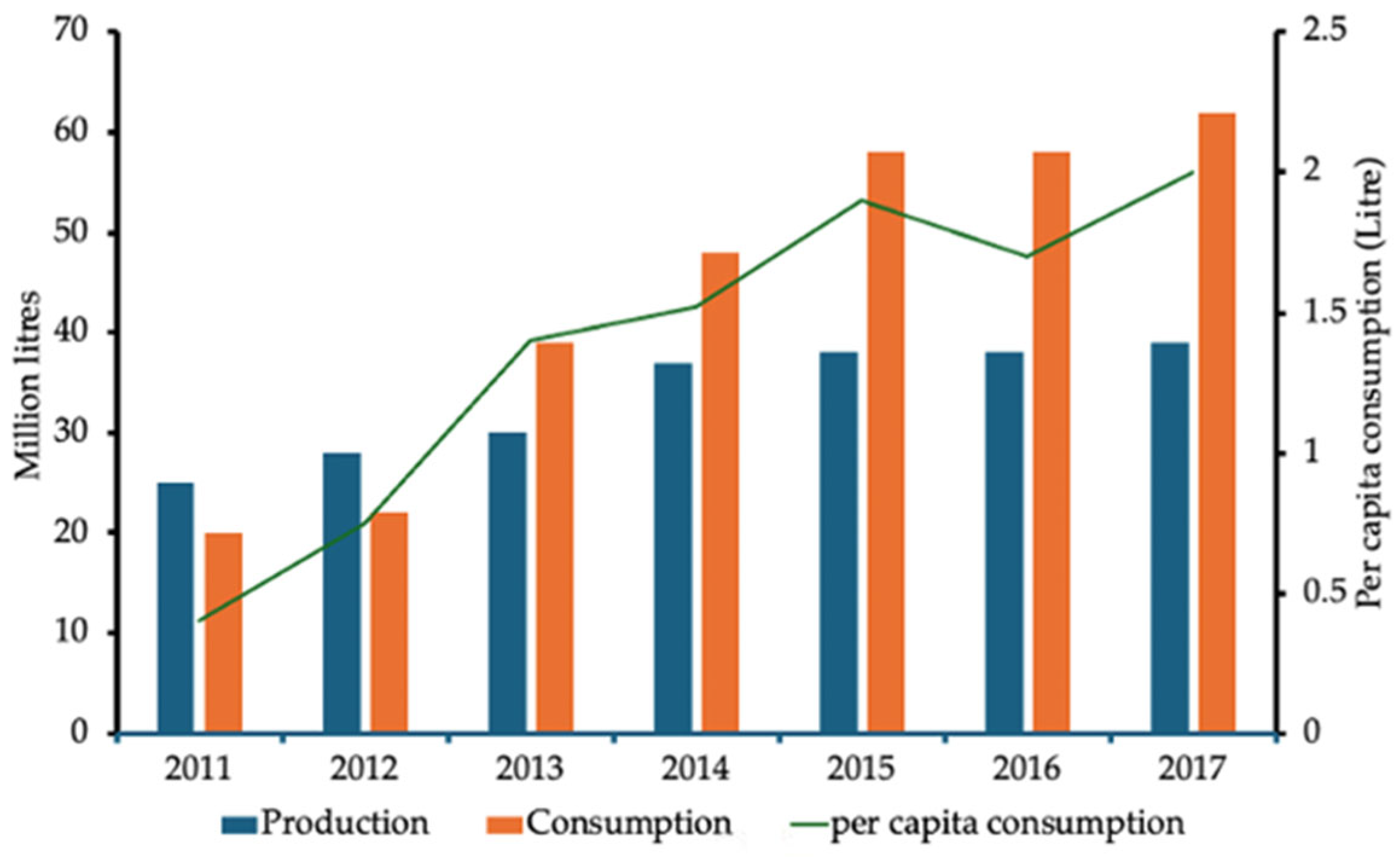
5.2. Milk Production and Consumption in Malaysia: Increased and Changing Demand
5.3. Relating to Newborns
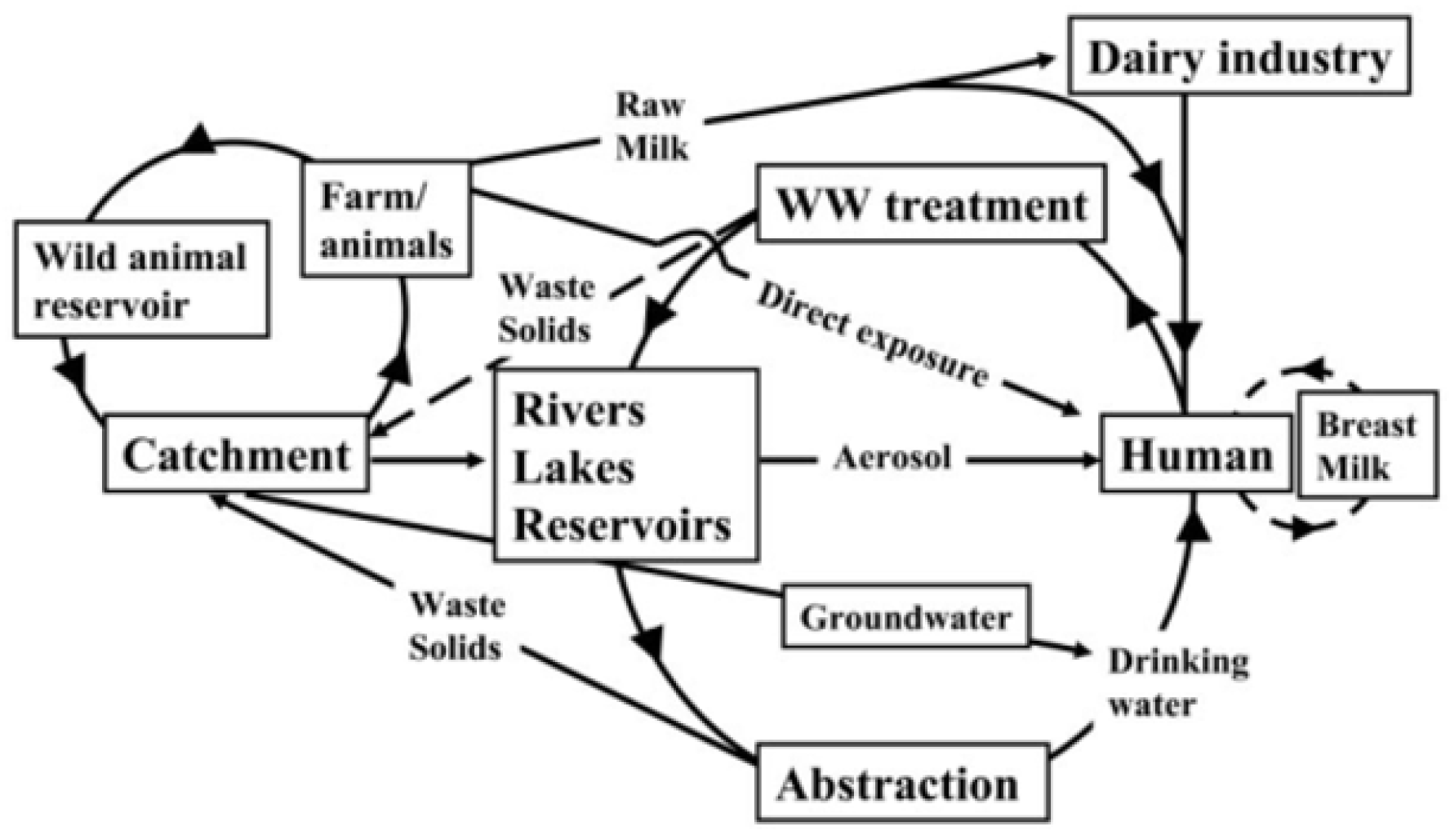
5.4. Water
6. Public Health Implications and Control Strategies
6.1. Recommendations for Malaysia
6.1.1. Genetics
6.1.2. Malaysian CD Patient Screening for MAP
6.1.3. Cattle Surveillance Strategy
6.1.4. Milk Imports
6.1.5. Water Quality Surveillance
6.2. Future Vaccination and Therapeutic Strategies
6.3. Cost Implications
7. Conclusion and Future Directions
- The convincing association between CD and MAP;
- The worldwide MAP-induced endemic of JD;
- The increasing reliance of Malaysia on imported cattle and milk products from areas of high Johne’s prevalence to meet increasing demand;
- Changes in milk preferences in the Malaysian population;
- The low but increasing incidence of CD in Malaysia;
- The proven association of CD and MAP through exposure to milk, dairy products, water, and the environment.
Author Contributions
Funding
Institutional Review Board Statement
Informed Consent Statement
Data Availability Statement
Conflicts of Interest
Abbreviations
| CD | Crohn’s disease |
| FISH | Fluorescent in situ hybridisation |
| JAKIM | Jabatan Kemajuan Islam Malaysia, Islamic authorities |
| JD | Johne’s Disease |
| DVS | Malaysian Department of Veterinary Services |
| MAP | Mycobacterium avium subspecies paratuberculosis |
| MYR | Malaysian Ringgit (currency) |
| PCR | Polymerase chain reaction |
| UC | Ulcerative Colitis |
| USDA | United States Department of Agriculture |
| SEA | Southeast Asia |
References
- Torres, J.; Mehandru, S.; Colombel, J.F.; Peyrin-Biroulet, L. Crohn’s disease. Lancet 2017, 389, 1741–1755. [Google Scholar] [CrossRef]
- Burke, K.E.; D’Amato, M.; Ng, S.C.; Pardi, D.S.; Ludvigsson, J.F.; Khalili, H. Microscopic colitis. Nat. Rev. Dis. Primers 2021, 7, 39. [Google Scholar] [CrossRef] [PubMed]
- Paul, S.; Boschetti, G.; Rinaudo-Gaujous, M.; Moreau, A.; Del Tedesco, E.; Bonneau, J.; Presles, E.; Mounsef, F.; Clavel, L.; Genin, C.; et al. Association of anti-glycan antibodies and inflammatory bowel disease course. J. Crohn’s Colitis 2015, 9, 445–451. [Google Scholar] [CrossRef] [PubMed]
- Eltantawy, N.; El-Zayyadi, I.A.; Elberry, A.A.; Salah, L.M.; Abdelrahim, M.E.A.; Kassem, A.B. A review article of inflammatory bowel disease treatment and pharmacogenomics. Beni-Suef Univ. J. Basic Appl. Sci. 2023, 12, 35. [Google Scholar] [CrossRef]
- Pasvol, T.J.; Horsfall, L.; Bloom, S. Incidence and prevalence of inflammatory bowel disease in UK primary care: A population-based cohort study. BMJ Open 2020, 10, e036584. [Google Scholar] [CrossRef]
- Alatab, S.; Sepanlou, S.G.; Ikuta, K.; Vahedi, H.; Bisignano, C.; Safiri, S.; Sadeghi, A.; Nixon, M.R.; Abdoli, A.; Abolhassani, H.; et al. The global, regional, and national burden of inflammatory bowel disease in 195 countries and territories, 1990–2017: A systematic analysis for the global burden of disease study 2017. Lancet Gastroenterol. Hepatol. 2020, 5, 17–30. [Google Scholar] [CrossRef]
- Behzadi, P.; Behzadi, E.; Ranjbar, R. The incidence and prevalence of Crohn’s disease in global scale. SOJ Immunol. 2015, 32, 1–6. [Google Scholar]
- Li, Y.; Li, L.; Yin, W.; Wan, J.; Zhong, X. Bibliometric analysis of the correlation between H. pylori and inflammatory bowel disease. J. Gastroenterol. Hepatol. Open 2024, 15, e70014. [Google Scholar] [CrossRef]
- Rubin, G.P.; Hungin, A.P.S.; Kelly, P.J.; Ling, J. Inflammatory bowel disease: Epidemiology and management in an English general practice population. Aliment. Pharm. Ther. 2000, 14, 1553–1559. [Google Scholar] [CrossRef]
- Thompson, N.P.; Fleming, D.M.; Charlton, J.; Pounder, R.E.; Wakefield, A.J. Patients consulting with Crohn’s disease in primary care in England and Wales. Eur. J. Gastroenterol. Hepatol. 1998, 10, 1007–1012. [Google Scholar] [CrossRef] [PubMed]
- Gunesh, S.; Thomas, G.A.O.; Williams, G.T.; Roberts, A.; Hawthorne, A.B. The incidence of Crohn’s disease in Cardiff over the last 75 years: An update for 1996–2005. Aliment Pharm Ther. 2008, 27, 211–219. [Google Scholar] [CrossRef]
- Molodecky, N.A.; Soon, I.S.; Rabi, D.M.; Ghali, W.A.; Ferris, M.; Chernoff, G.; Benchimol, E.I.; Panaccione, R.; Ghosh, S.; Barkema, H.W.; et al. Increasing incidence and prevalence of the inflammatory bowel diseases with time, based on systematic review. Gastroenterology 2012, 142, 46–54. [Google Scholar] [CrossRef]
- Freeman, K.; Ryan, R.; Parsons, N.; Taylor-Phillips, S.; Willis, B.H.; Clarke, A. The incidence and prevalence of inflammatory bowel disease in UK primary care: A retrospective cohort study of the iqvia medical research database. BMC Gastroenterol. 2021, 21, 139. [Google Scholar] [CrossRef]
- Park, S.H. Update on the epidemiology of inflammatory bowel disease in Asia: Where are we now? Intest. Res. 2022, 20, 159–164. [Google Scholar] [CrossRef]
- Hracs, L.; Windsor, J.W.; Gorospe, J.; Cummings, M.; Coward, S.; Buie, M.J.; Quan, J.; Goddard, Q.; Caplan, L.; Markovinovic, A.; et al. Global evolution of inflammatory bowel disease across epidemiologic stages. Nature 2025, 642, 458–466. [Google Scholar] [CrossRef] [PubMed]
- Hilmi, I.; Jaya, F.; Chua, A.; Heng, W.C.; Singh, H.; Goh, K.L. A first study on the incidence and prevalence of ibd in Malaysia—Results from the Kinta Valley ibd epidemiology study. J. Crohn’s Colitis 2015, 9, 404–409. [Google Scholar] [CrossRef] [PubMed]
- Chew, D.C.H.; Khoo, X.H.; Lee, T.S.; Chin, K.Y.; Ali, R.A.R.; Nawawi, K.N.M.; Ibrahim, N.R.W.; Hilmi, I. A systematic review on the increasing incidence of inflammatory bowel disease in Southeast Asia: Looking beyond the urbanization phenomenon. Inflamm. Bowel Dis. 2023, 30, 1566–1578. [Google Scholar] [CrossRef]
- Mokhtar, N.M.; Nawawi, K.N.M.; Verasingam, J.; Zhiqin, W.; Sagap, I.; Azman, Z.A.M.; Mazlan, L.; Hamid, H.A.; Yaacob, N.Y.; Rose, I.M.; et al. A four-decade analysis of the incidence trends, sociodemographic and clinical characteristics of inflammatory bowel disease patients at single tertiary centre, Kuala Lumpur, Malaysia. BMC Public Health 2019, 19, 550. [Google Scholar] [CrossRef]
- Mak, W.Y.; Zhao, M.; Ng, S.C.; Burisch, J. The epidemiology of inflammatory bowel disease: East meets west. J. Gastroenterol. Hepatol. 2020, 35, 380–389. [Google Scholar] [CrossRef]
- Ng, S.C.; Shi, H.Y.; Hamidi, N.; Underwood, F.E.; Tang, W.; Benchimol, E.I.; Panaccione, R.; Ghosh, S.; Wu, J.C.Y.; Chan, F.K.L.; et al. Worldwide incidence and prevalence of inflammatory bowel disease in the 21st century: A systematic review of population-based studies. Lancet 2017, 390, 2769–2778. [Google Scholar] [CrossRef] [PubMed]
- Arms-Williams, B.; Hawthorne, A.B.; Cannings-John, R.; Berry, A.; Harborne, P.; Trivedi, A. Changes in incidence and clinical features of inflammatory bowel disease in Cardiff, UK over 50 years: An update for 2005–2016. Scand. J. Gastroenterol. 2023, 58, 619–626. [Google Scholar] [CrossRef]
- Cockburn, E.; Kamal, S.; Chan, A.; Rao, V.; Liu, T.; Huang, J.Y.; Segal, J.P. Crohn’s disease: An update. Clin. Med. 2023, 23, 549–557. [Google Scholar] [CrossRef]
- Kellermann, L.; Riis, L.B. A close view on histopathological changes in inflammatory bowel disease, a narrative review. Dig. Med. Res. 2021, 4, 3. [Google Scholar] [CrossRef]
- Tharu, R.; Ahlawat, G.M.; Kushwaha, S.; Khanna, P. Gut microbiota disparities between active Crohn’s disease and healthy controls: A global systematic review. Clin. Epidemiol. Glob. Health 2023, 25, 101497. [Google Scholar] [CrossRef]
- Wright, K.; Mizzi, R.; Plain, K.M.; Purdie, A.C.; de Silva, K. Mycobacterium avium subsp. paratuberculosis exploits mirna expression to modulate lipid metabolism and macrophage polarisation pathways during infection. Sci. Rep. 2022, 12, 9681. [Google Scholar] [CrossRef] [PubMed]
- Neustaeter, A.; Leibovitzh, H.; Turpin, W.; Croitoru, K.; CCC GEM Consortium. Understanding predictors of Crohn’s disease: Determinants of altered barrier function in pre-disease phase of Crohn’s disease. J. Can. Assoc. Gastroenterol. 2024, 7, 68–77. [Google Scholar] [CrossRef] [PubMed]
- Oken, H.A.; Saleeb, P.G.; Redfield, R.R.; Schimpff, S.C. Is Mycobacterium avium paratuberculosis the Trigger in the Crohn’s Disease Spectrum? Open Forum Infect. Dis. 2017, 4, ofx104. [Google Scholar] [CrossRef]
- Agrawal, G.; Borody, T.J.; Aitken, J.M. Mapping Crohn’s disease pathogenesis with Mycobacterium avium subspecies paratuberculosis: A hijacking by a stealth pathogen. Dig. Dis. Sci. 2024, 69, 2289–2303. [Google Scholar] [CrossRef]
- Caron, B.; Honap, S.; Peyrin-Biroulet, L. Epidemiology of inflammatory bowel disease across the ages in the era of advanced therapies. J. Crohn’s Colitis 2024, 18, ii3–ii15. [Google Scholar] [CrossRef]
- Department of Statistics Malaysia. Population & Demography; Department of Statistics Malaysia: Putrajaya, Malaysia, 2024. [Google Scholar]
- Chen, Y.Y.; Wang, Y.N.; Shen, J. Role of environmental factors in the pathogenesis of Crohn’s disease: A critical review. Int. J. Color. Dis. 2019, 34, 2023–2034. [Google Scholar] [CrossRef]
- Liu, J.Z.; Anderson, C.A. Genetic studies of Crohn’s disease: Past, present and future. Best Pract. Res. Clin. Gastroenterol. 2014, 28, 373–386. [Google Scholar] [CrossRef] [PubMed]
- El Hadad, J.; Schreiner, P.; Vavricka, S.R.; Greuter, T. The genetics of inflammatory bowel disease. Mol. Diagn. Ther. 2024, 28, 27–35. [Google Scholar] [CrossRef]
- Zhernakova, A.; van Diemen, C.C.; Wijmenga, C. Detecting shared pathogenesis from the shared genetics of immune-related diseases. Nat. Rev. Genet. 2009, 10, 43–55. [Google Scholar] [CrossRef] [PubMed]
- Chua, K.H.; Hilmi, I.; Ng, C.C.; Eng, T.L.; Palaniappan, S.; Lee, W.S.; Goh, K.L. Identification of NOD2/CARD15 mutations in malaysian patients with Crohn’s disease. J. Dig. Dis. 2009, 10, 124–130. [Google Scholar] [CrossRef] [PubMed]
- Kee, B.P.; Ng, J.G.; Ng, C.C.; Hilmi, I.; Goh, K.L.; Chua, K.H. Genetic polymorphisms of ATG16l1 and IRGM genes in Malaysian patients with Crohn’s disease. J. Dig. Dis. 2020, 21, 29–37. [Google Scholar] [CrossRef]
- Palomino-Morales, R.J.; Oliver, J.; Gomez-Garcia, M.; Lopez-Nevot, M.A.; Rodrigo, L.; Nieto, A.; Alizadeh, B.Z.; Martin, J. Association of ATG16l1 and IRGM genes polymorphisms with inflammatory bowel disease: A meta-analysis approach. Genes Immun. 2009, 10, 356–364. [Google Scholar] [CrossRef]
- Luu, L.D.W.; Popple, G.; Tsang, S.P.W.; Vinasco, K.; Hilmi, I.; Ng, R.T.; Chew, K.S.; Wong, S.Y.; Riordan, S.; Lee, W.S.; et al. Genetic variants involved in innate immunity modulate the risk of inflammatory bowel diseases in an understudied Malaysian population. J. Gastroenterol. Hepatol. 2022, 37, 342–351. [Google Scholar] [CrossRef]
- Chua, K.H.; Hilmi, I.; Lian, L.H.; Patmanathan, S.N.; Hoe, S.Z.; Lee, W.S.; Goh, K.L. Association between inflammatory bowel disease gene 5 (IBD5) and interleukin-23 receptor (IL23R) genetic polymorphisms in Malaysian patients with Crohn’s disease. J. Dig. Dis. 2012, 13, 459–465. [Google Scholar] [CrossRef]
- Chua, K.H.; Ng, J.G.; Ng, C.C.; Hilmi, I.; Goh, K.L.; Kee, B.P. Association of NOD1, CXCL16, STAT6 and TLR4 gene polymorphisms with Malaysian patients with Crohn’s disease. PeerJ 2016, 4, e1843. [Google Scholar] [CrossRef]
- Tailor, P.; Tamura, T.; Ozato, K. IRF family proteins and type i interferon induction in dendritic cells. Cell Res. 2006, 16, 134–140. [Google Scholar] [CrossRef]
- Abel, S.; Hundhausen, C.; Mentlein, R.; Schulte, A.; Berkhout, T.A.; Broadway, N.; Hartmann, D.; Sedlacek, R.; Dietrich, S.; Muetze, B.; et al. The transmembrane CXC-chemokine ligand 16 is induced by IFN-gamma and TNF-alpha and shed by the activity of the disintegrin-like metalloproteinase adam10. J. Immunol. 2004, 172, 6362–6372. [Google Scholar] [CrossRef] [PubMed]
- Zouiten-Mekki, L.; Kharrat, M.; Karoui, S.; Serghimi, M.; Fekih, M.; Matri, S.; Kallel, L.; Boubaker, J.; Filali, A.; Chaabouni, H. Tolllike receptor 4 (TLR4) polymorphisms in Tunisian patients with Crohn’s disease: Genotype-phenotype correlation. BMC Gastroenterol. 2009, 9, 62. [Google Scholar] [CrossRef]
- Chua, K.H.; Lian, L.H.; Kee, B.P.; Thum, C.M.; Lee, W.S.; Hilmi, I.; Goh, K.L. Identification of DLG5 and SLC22a5 gene polymorphisms in Malaysian patients with Crohn’s disease. J. Dig. Dis. 2011, 12, 459–466. [Google Scholar] [CrossRef]
- Yee, O.S.; Heng, C.K.; Ida, H.; Lee, G.K.; Pin, K.B. Association of JAK2 gene polymorphisms in Malaysian patients with Crohn’s disease. Asian J. Med. Biomed. 2018, 61. [Google Scholar]
- Ng, S.C.; Tsoi, K.K.F.; Kamm, M.A.; Xia, B.; Wu, J.T.; Chan, F.K.L.; Sung, J.J.Y. Genetics of inflammatory bowel disease in Asia: Systematic review and meta-analysis. Inflamm. Bowel Dis. 2012, 18, 1164–1176. [Google Scholar] [CrossRef]
- Aniwan, S.; Santiago, P.; Loftus, E.V., Jr.; Park, S.H. The epidemiology of inflammatory bowel disease in Asia and Asian immigrants to western countries. United Eur. Gastroenterol. 2022, 10, 1063–1076. [Google Scholar] [CrossRef] [PubMed]
- Hermon-Taylor, J. Gut pathogens: Invaders and turncoats in a complex cosmos. Gut Pathog. 2009, 1, 3. [Google Scholar] [CrossRef]
- Hermon-Taylor, J. Mycobacterium avium subspecies paratuberculosis, Crohn’s disease and the doomsday scenario. Gut Pathog. 2009, 1, 15. [Google Scholar] [CrossRef]
- Matthews, C.; Cotter, P.D.; O’ Mahony, J. Map, Johne’s disease and the microbiome; current knowledge and future considerations. Anim. Microbiome 2021, 3, 34. [Google Scholar] [CrossRef]
- Whittington, R.; Donat, K.; Weber, M.F.; Kelton, D.; Nielsen, S.S.; Eisenberg, S.; Arrigoni, N.; Juste, R.; Sáez, J.L.; Dhand, N.; et al. Control of paratuberculosis: Who, why and how. A review of 48 countries. Bmc Vet. Res. 2019, 15, 198. [Google Scholar] [CrossRef] [PubMed]
- Mallikarjunappa, S.; Brito, L.F.; Pant, S.D.; Schenkel, F.S.; Meade, K.G.; Karrow, N.A. Johne’s disease in dairy cattle: An immunogenetic perspective. Front. Vet. Sci. 2021, 8, 718987. [Google Scholar] [CrossRef]
- Verma, D.K. Survival tactics of Mycobacterium avium subspecies paratuberculosis. J. Adv. Lab. Res. Biol. 2013, 4, 141–149. [Google Scholar]
- Meles, D.K.; Mustofa, I.; Khairullah, A.R.; Wurlina, W.; Mustofa, R.I.; Suwasanti, N.; Akintunde, A.O.; Putra, S.W.; Kusala, M.K.J.; Moses, I.B.; et al. A comprehensive review of paratuberculosis in animals and its implications for public health. Open Vet. J. 2024, 14, 2731–2744. [Google Scholar] [CrossRef]
- Millar, D.; Ford, J.; Sanderson, J.; Withey, S.; Tizard, M.; Doran, T.; HermonTaylor, J. IS900 PCR to detect Mycobacterium paratuberculosis in retail supplies of whole pasteurized cows’ milk in England and Wales. Appl. Environ. Microb. 1996, 62, 3446–3452. [Google Scholar] [CrossRef] [PubMed]
- Grant, I.R.; Rowe, M.T.; Dundee, L.; Hitchings, E. Mycobacterium avium subspecies paratuberculosis: Its incidence, heat resistance and detection in milk and dairy products. Int. J. Dairy Technol. 2001, 54, 2–13. [Google Scholar] [CrossRef]
- Chaubey, K.K.; Chaudhary, N.; Dayal, D.; Sharma, S.; Sanghi, A.K.; Pal, A.K.; Thapliya, S.; Mukartal, S.Y. Load of Mycobacterium avium subspecies paratuberculosis in commercial milk and milk products supplied in Braj region using different diagnostic methods. Asian J. Dairy Food Res. 2025, 1–7. [Google Scholar] [CrossRef]
- Gill, C.O.; Saucier, L.; Meadus, W.J. Mycobacterium avium subspecies paratuberculosis in dairy products, meat, and drinking water. J. Food Prot. 2011, 74, 480–499. [Google Scholar] [CrossRef] [PubMed]
- Kuenstner, L.; Kuenstner, J.T. Mycobacterium avium ssp. paratuberculosis in the food supply: A public health issue. Front. Public Health 2021, 9, 647448. [Google Scholar] [CrossRef]
- Pickup, R.W.; Rhodes, G.; Arnott, S.; Sidi-Boumedine, K.; Bull, T.J.; Weightman, A.; Hurley, M.; Hermon-Taylor, J. Mycobacterium avium subspecies paratuberculosis in the catchment area and water of the River Taff in South Wales, United Kingdom, an its potential relationship to clustering of Crohn’s disease cases in the city of Cardiff. Appl. Environ. Microb. 2005, 71, 2130–2139. [Google Scholar] [CrossRef]
- Pickup, R.W.; Rhodes, G.; Bull, T.J.; Arnott, S.; Sidi-Boumedine, K.; Hurley, M.; Hermon-Taylor, J. Mycobacterium avium subspecies paratuberculosis in lake catchments, in river water abstracted for domestic use, and in effluent from domestic sewage treatment works: Diverse opportunities for environmental cycling and human exposure. Appl. Environ. Microb. 2006, 72, 4067–4077. [Google Scholar] [CrossRef]
- Richardson, H.; Rhodes, G.; Henrys, P.; Sedda, L.; Weightman, A.J.; Pickup, R.W. Presence of Mycobacterium avium subspecies paratuberculosis monitored over varying temporal and spatial scales in river catchments: Persistent routes for human exposure. Microorganisms 2019, 7, 136. [Google Scholar] [CrossRef] [PubMed]
- Asgari, N.; Ghaemi, E.A.; Tavasoli, S.; Aghaei, M.; Nikoo, H.R.; Zamani, S. Exploring the association between Mycobacterium avium subspecies paratuberculosis infection and rheumatoid arthritis: An immunological perspective. Arthritis Res. Ther. 2025, 27, 36. [Google Scholar] [CrossRef] [PubMed]
- Agrawal, G.; Aitken, J.; Hamblin, H.; Collins, M.; Borody, T.J. Putting Crohn’s on the map: Five common questions on the contribution of Mycobacterium avium subspecies paratuberculosis to the pathophysiology of Crohn’s disease. Dig. Dis. Sci. 2021, 66, 348–358. [Google Scholar] [CrossRef]
- Ekundayo, T.C.; Okoh, A. Systematic assessment of Mycobacterium avium subspecies paratuberculosis infections from 1911–2019: A growth analysis of association with human autoimmune diseases. Microorganisms 2020, 8, 1212. [Google Scholar] [CrossRef]
- Asgari, N.; Ghaemi, E.A.; Naeimi, M.H.; Tahamtan, A.; Sechi, L.A.; Zamani, S. Cross-reactivity between Mycobacterium avium subspecies paratuberculosis 4027 peptide and human IRF may contribute to multiple sclerosis in Iranian patients. Heliyon 2023, 9, e22137. [Google Scholar] [CrossRef]
- Asgari, N.; Ghaemi, E.A.; Tavasoli, S.; Aghaei, M.; Nikoo, H.R.; Sechi, L.A.; Zamani, S. Detection of Mycobacterium avium subspecies paratuberculosis in the blood of patients with rheumatoid arthritis by using serological and molecular techniques. Curr. Microbiol. 2023, 80, 359. [Google Scholar] [CrossRef]
- Park, J.; Cheon, J. Incidence and prevalence of inflammatory bowel disease across Asia. Yonsei Med. J. 2021, 62, 99–108. [Google Scholar] [CrossRef] [PubMed]
- Bull, T.J.; McMinn, E.J.; Sidi-Boumedine, K.; Skull, A.; Durkin, D.; Neild, P.; Rhodes, G.; Pickup, R.; Hermon-Taylor, J. Detection and verification of Mycobacterium avium subspecies paratuberculosis in fresh ileocolonic mucosal biopsy specimens from individuals with and without Crohn’s disease. J. Clin. Microbiol. 2003, 41, 2915–2923. [Google Scholar] [CrossRef]
- Bull, T.J.; Sidi-Boumedine, K.; McMinn, E.J.; Stevenson, K.; Pickup, R.; Hermon-Taylor, J. Mycobacterial interspersed repetitive units (miru) differentiate Mycobacterium avium subspecies paratuberculosis from other species of the avium complex. Mol. Cell. Probe 2003, 17, 157–164. [Google Scholar] [CrossRef]
- Feller, M.; Huwiler, K.; Stephan, R.; Altpeter, E.; Shang, A.; Furrer, H.; Pfyffer, G.E.; Jemmi, T.; Baumgartner, A.; Egger, M. Mycobacterium avium subspecies paratuberculosis and Crohn’s disease: A systematic review and meta-analysis. Lancet Infect. Dis. 2007, 7, 607–613. [Google Scholar] [CrossRef]
- Mintz, M.J.; Lukin, D.J. Mycobacterium avium subspecies paratuberculosis (MAP) and Crohn’s disease: The debate continues. Transl. Gastroenterol. Hepatol. 2023, 8, 28. [Google Scholar] [CrossRef]
- Elhenawy, W.; Tsai, C.N.; Coombes, B.K. Host-specific adaptive diversification of Crohn’s disease-associated adherent-invasive Escherichia coli. Cell Host Microbe 2019, 25, 301–312.e305. [Google Scholar] [CrossRef]
- Agrawal, G.; Hamblin, H.; Clancy, A.; Borody, T. Anti-mycobacterial antibiotic therapy induces remission in active paediatric Crohn’s disease. Microorganisms 2020, 8, 1112. [Google Scholar] [CrossRef]
- Triantaphyllopoulos, K.A. Long non-coding RNAs and their “discrete” contribution to ibd and Johne’s disease-what stands out in the current picture? A comprehensive review. Int. J. Mol. Sci. 2023, 24, 13566. [Google Scholar] [CrossRef] [PubMed]
- Xue, M.Y.; Leibovitzh, H.; Shao, J.C.; Neustaeter, A.; Dong, M.; Xu, W.; Espin-Garcia, O.; Griffiths, A.M.; Steinhart, A.H.; Turner, D.; et al. Environmental factors associated with risk of Crohn’s disease development in the Crohn’s and colitis Canada—Genetic, environmental, microbial project. Clin. Gastroenterol. Hepatol. 2024, 22, 1889–1897. [Google Scholar] [CrossRef] [PubMed]
- Rose, J.D.; Roberts, G.M.; Williams, G.; Mayberry, J.F.; Rhodes, J. Cardiff Crohn’s disease jubilee: The incidence over 50 years. Gut 1988, 29, 346–351. [Google Scholar] [CrossRef]
- Mayberry, J.; Rhodes, J.; Hughes, L.E. Incidence of Crohn’s disease in Cardiff between 1934 and 1977. Gut 1979, 20, A441. [Google Scholar] [CrossRef] [PubMed]
- McNees, A.L.; Markesich, D.; Zayyani, N.R.; Graham, D.Y. Mycobacterium paratuberculosis as a cause of Crohn’s disease. Expert Rev. Gastroenterol. 2015, 9, 1523–1534. [Google Scholar] [CrossRef]
- Fridriksdottir, V.; Gunnarsson, E.; Sigurdarson, S.; Gudmundsdottir, K.B. Paratuberculosis in Iceland: Epidemiology and control measures, past and present. Vet. Microbiol. 2000, 77, 263–267. [Google Scholar] [CrossRef]
- Nakajo, K.; Yamazaki, M.; Chung, H.W.; Xu, Y.R.; Qiu, H. Trends in the prevalence and incidence of Crohn’s disease in Japan and the United States. Int. J. Color. Dis. 2024, 39, 61. [Google Scholar] [CrossRef]
- Chiba, M.; Morita, N.; Nakamura, A.; Tsuji, K.; Harashima, E. Increased incidence of inflammatory bowel disease in association with dietary transition (westernization) in Japan. JMA J. 2021, 4, 347–357. [Google Scholar] [CrossRef] [PubMed]
- Shoda, R.; Matsueda, K.; Yamato, S.; Umeda, N. Epidemiologic analysis of Crohn’s disease in Japan: Increased dietary intake of n-6 polyunsaturated fatty acids and animal protein relates to the increased incidence of Crohn’s disease in Japan. Am. J. Clin. Nutr. 1996, 63, 741–745. [Google Scholar] [CrossRef]
- Kodama, M.; Okano, S.; Nojri, S.; Abe, K.; Fukata, M.; Nagase, Y.; Kodama, H. Longitudinal and regional association between dietary factors and prevalence of Crohn’s disease in Japan. PLoS ONE 2024, 19, e0300580. [Google Scholar] [CrossRef] [PubMed]
- Hruska, K.; Pavlik, I. Crohn’s disease and related inflammatory diseases: From many single hypotheses to one “superhypothesis”. Vet. Med. 2014, 59, 583–630. [Google Scholar] [CrossRef]
- Monif, G.R.G. The Hruska postulate of Crohn’s disease. Med. Hypotheses 2015, 85, 878–881. [Google Scholar] [CrossRef]
- Zayadi, R. Current outlook of livestock industry in Malaysia and ways towards sustainability. J. Sustain. Nat. Resour. 2021, 2, 1–11. [Google Scholar] [CrossRef]
- Roseliza, R.; Khoo, E.M.; Fhitri, S.M.; Normah, M.; Nazri, R.; Norhanani, R.S.; Norazariyah, M.N.; Hanim, M.S.F. Diagnosis of paratuberculosis by microbiological culture in veterinary research institute from 2001 to 2018. Malays. J. Vet. Res. 2019, 10, 15–21. [Google Scholar]
- Chung, E.L.T.; Jesse, F.F.A.; Marza, A.D.; Ibrahim, H.H.; Abba, Y.; Zamri-Saad, M.; Haron, A.W.; Lila, M.A.M.; Saharee, A.A.; Omar, A.R.; et al. Responses of pro-inflammatory cytokines, acute phase proteins and cytological analysis in serum and cerebrospinal fluid during haemorrhagic septicaemia infection in buffaloes. Trop. Anim. Health Prod. 2019, 51, 1773–1782. [Google Scholar] [CrossRef]
- Firdaus, F.; Abdullah, J.F.F.; Adamu, L.H.; Yin, Y.J.; Osman, A.Y.; Haron, A.W.; Saharee, A.A. Suspected Johne’s disease in a herd of dairy cattle: A case report. IOSR J. Agric. Vet. Sci. 2013, 4, 58–62. [Google Scholar]
- Mohd Nor, M.N.; Abu Mustapa, A.J.; Abu Hassan, M.A.; Chang, K.W. The organisation of the department of veterinary services in Malaysia. Rev. Sci. Tech. 2003, 22, 485–497. [Google Scholar] [CrossRef]
- Sohal, J.S.; Singh, S.V.; Brajesh Singh, B.S.; Sunita Thakur, S.T.; Aseri, G.K.; Neelam Jain, N.J.; Sujata Jayaraman, S.J.; Parul Yadav, P.Y.; Neeraj Khare, N.K.; Saurabh Gupta, S.G.; et al. Control of paratuberculosis: Opinions and practices. Adv. Anim. Vet. Sci. 2015, 3, 156–163. [Google Scholar] [CrossRef]
- Geraghty, T.; Graham, D.A.; Mullowney, P.; More, S.J. A review of bovine Johne’s disease control activities in 6 endemically infected countries. Prev. Vet. Med. 2014, 116, 1–11. [Google Scholar] [CrossRef]
- de Lisle, G.W. Johne’s disease in New Zealand: The past, present and a glimpse into the future. N. Z. Vet. J. 2002, 50, 53–56. [Google Scholar] [CrossRef]
- World Integrated Trade Solution. Malaysia Animal Imports by Country in US$ Thousand 2022. Available online: https://wits.worldbank.org/CountryProfile/en/Country/MYS/Year/LTST/TradeFlow/Export/Partner/by-country/Product/01-05_Animal (accessed on 15 January 2026).
- Animal and Plant Health Inspection Service. NVAP Reference Guide: Johne’s Disease (Control and Eradication). 2024. Available online: https://www.aphis.usda.gov/nvap/reference-guide/control-eradication/johnes (accessed on 15 January 2026).
- Momotani, E. Epidemiological situation and control strategies for paratuberculosis in Japan. Jpn. J. Vet. Res. 2012, 60, S19–S29. [Google Scholar]
- Huiying, Z.; Mingfeng, C.; Wei, C.; Shuiyun, C.; Yuchen, L.; Honghai, W.; Xuelong, C.; Yanping, Q. Prevalence of bovine paratuberculosis in Chinese cattle populations: A meta-analysis. Front. Cell. Infect. Microbiol. 2024, 14, 1424170. [Google Scholar] [CrossRef] [PubMed]
- Suntharalingam, C. Marketing mix of milk and dairy products in peninsular Malaysia. In Food Value Chain in Asean: Case Studies Focusing on Local Producers; ERIA Research Project Report FY2018; Kusano, E., Ed.; Eria: Jakarta, Indonesia, 2019. [Google Scholar]
- Suntharalingam, C.; Zhong, Z. Dairy Sector in Malaysia: A Review of Policies and Programs; FFTC Agricultural Policy Platform: Taipei, Taiwan, 2021. [Google Scholar]
- Statistica Import Volume of Milk and Milk Products in Malaysia from 2012 to 2023 (in 1000 Metric Tons of Milk Equivalent). Available online: https://www.statista.com/statistics/809165/imports-of-milk-and-milk-products-malaysia/ (accessed on 15 January 2026).
- New Zealand Trade and Enterprise (N.Z.T.E.). Enterprise Division. In Usage and Attitudes Study for Dairy Products in Malaysia; N.Z.T.E.: Wellington, New Zealand, 2022. [Google Scholar]
- Knific, T.; Ocepek, M.; Kirbis, A.; Krt, B.; Prezelj, J.; Gethmann, J.M. Quantitative risk assessment of exposure to Mycobacterium avium subsp. Paratuberculosis (map) via different types of milk for the Slovenian consumer. Foods 2022, 11, 1472. [Google Scholar] [CrossRef]
- Barling, P.M. Lactose tolerance and intolerance in Malaysians. Int. e-J. Sci. Med. Educ. 2012, 6, S12–S23. [Google Scholar] [CrossRef]
- Hruska, K.; Bartos, M.; Kralik, P.; Pavlik, I. Mycobacterium avium subspecies paratuberculosis in powdered infant milk: Paratuberculosis in cattle: The public health problem to be solved. Vet. Med. 2005, 50, 327–335. [Google Scholar] [CrossRef]
- Hruska, K.; Slana, I.; Kralik, P.; Pavlik, I. Mycobacterium avium subsp. paratuberculosis in powdered milk: F57 competitive real time pcr. Vet. Med. 2011, 56, 226–230. [Google Scholar] [CrossRef]
- Monif, G.R.G. Crohn’s disease: The infectious disease incorporated’s perspective. Gastrointest. Disord. 2021, 3, 138–141. [Google Scholar] [CrossRef]
- Beumer, A.; King, D.; Donohue, M.; Mistry, J.; Covert, T.; Pfaller, S. Detection of Mycobacterium avium subspecies paratuberculosis in drinking water and biofilms by quantitative PCR. Appl. Environ. Microb. 2010, 76, 7367–7370. [Google Scholar] [CrossRef]
- Bryan, B.A.; Kandulu, J.; Deere, D.A.; White, M.; Frizenschaf, J.; Crossman, N.D. Adaptive management for mitigating risk in source water: A case study in an agricultural catchment in South Australia. J. Environ. Manag. 2009, 90, 3122–3134. [Google Scholar] [CrossRef] [PubMed]
- Praveena, S.M.; Aris, A.Z.; Hashim, Z. Drinking water quality status in Malaysia: A scoping review of occurrence, human health exposure, and potential needs. J. Expo. Sci. Environ. Epidemiol. 2024, 34, 161–174. [Google Scholar] [CrossRef] [PubMed]
- MS 2320:2010; Drinking Water-Quality Requirements. Department of Standards Malaysia: Cyberjaya, Malaysia, 2010.
- Taylor, K.M.; Hanscombe, K.B.; Prescott, N.J.; Iniesta, R.; Traylor, M.; Taylor, N.S.; Fong, S.; Powell, N.; Irving, P.M.; Anderson, S.H.; et al. Genetic and inflammatory biomarkers classify small intestine inflammation in asymptomatic first-degree relatives of patients with Crohn’s disease. Clin. Gastroenterol. Hepatol. 2020, 18, 908–916.e913. [Google Scholar] [CrossRef]
- Rayment, N.; Rhodes, G.; Hudspith, B.; Hughes, V.; Chianini, F.; Agrawal, G.; Bull, T.J.; Pickup, R.; Sanderson, J. Visualisation of Mycobacterium avium subsp. Paratuberculosis in Cultured Cells, Infected Sheep and Human Tissue Sections Using Fluorescent In Situ Hybridization (FISH). J. Microbiol. Methods 2024, 224, 107001, Erratum in J. Microbiol. Methods 2024, 225, 107024.. [Google Scholar] [CrossRef]
- FAS. Dairy hygiene inspection. In Manual For Official Controls; FAS: Washington, DC, USA, 2024. [Google Scholar]
- FAS. Raw Drinking Milk Hygiene Guidance; FAS: Washington, DC, USA, 2014. [Google Scholar]
- Tank, E.U.T. The Precautionary Principle: Definitions, Applications and Governance; Springer International Publishing: Cham, Switzerland, 2015; ISBN 978-3-319-12558-9. [Google Scholar]
- van Herten, J.; Bovenkerk, B. The precautionary principle in zoonotic disease control. Public Health Ethics 2021, 14, 180–190. [Google Scholar] [CrossRef]
- Garvey, M. Mycobacterium avium subspecies paratuberculosis: A disease burden on the dairy industry. Animals 2020, 10, 1773. [Google Scholar] [CrossRef]
- Gordon, H.; Minozzi, S.; Kopylov, U.; Verstockt, B.; Chaparro, M.; Buskens, C.; Warusavitarne, J.; Agrawal, M.; Allocca, M.; Atreya, R.; et al. ECCO guidelines on therapeutics in crohn’s disease: Medical treatment. J. Crohn’s Colitis 2024, 18, 1531–1555. [Google Scholar] [CrossRef] [PubMed]
- Sanderson, J.; Aboagye, J.; Makinson, R.; Rapi, K.; Provstgaard-Morys, S.; Stockdale, L.; Alison, L.; Lanigan, I.; Halim, N.; Douiri, A.; et al. A phase 1b clinical trial to determine the safety, tolerability and immunogenicity of simian adenovirus and poxvirus vectored vaccines against a Mycobacterium avium complex subspecies in patients with active Crohn’s disease. eBioMedicine 2025, 113, 105570. [Google Scholar] [CrossRef]
- Hetta, H.F.; Ramadan, Y.N.; Alharbi, A.A.; Alsharef, S.; Alkindy, T.T.; Alkhamali, A.; Albalawi, A.S.; El Amin, H. Gut microbiome as a target of intervention in inflammatory bowel disease pathogenesis and therapy. Immuno 2024, 4, 400–425. [Google Scholar] [CrossRef]
- Ramadan, Y.N.; Kamel, A.M.; Medhat, M.A.; Hetta, H.F. Microrna signatures in the pathogenesis and therapy of inflammatory bowel disease. Clin. Exp. Med. 2024, 24, 217. [Google Scholar] [CrossRef]
- Aljabri, R.; Al-Saraie, S.; Alhouti, A. Optimizing biologic therapy for the prevention of post-operative recurrence in crohn’s disease: Current evidence and future perspectives. Biomedicines 2025, 13, 1232. [Google Scholar] [CrossRef] [PubMed]
- Aljabri, A.; Soliman, G.M.; Ramadan, Y.N.; Medhat, M.A.; Hetta, H.F. Biosimilars versus biological therapy in inflammatory bowel disease: Challenges and targeting strategies using drug delivery systems. Clin. Exp. Med. 2025, 25, 107. [Google Scholar] [CrossRef] [PubMed]
- Ghosh, N.P.; Purushothaman, P. A UK Care Cost Model for Inflammatory Bowel Disease. Frontline Gastroenterol. 2015, 6, 169–174. [Google Scholar] [CrossRef]
- Park, K.T.; Ehrlich, O.G.; Allen, J.I.; Meadows, P.; Szigethy, E.M.; Henrichsen, K.; Kim, S.C.; Lawton, R.C.; Murphy, S.M.; Regueiro, M.; et al. The cost of inflammatory bowel disease: An initiative from the Crohn’s & colitis foundation. Inflamm. Bowel Dis. 2020, 26, 1–10. [Google Scholar] [CrossRef]
- Wei, S.C. Diferences in the public medical insurance systems for inflammatory bowel disease in Asian countries. Intest. Res. 2016, 14, 218–223. [Google Scholar] [CrossRef]
- Pakdin, M.; Zarei, L.; Bagheri Lankarani, K.; Ghahramani, S. The cost of illness analysis of inflammatory bowel disease. BMC Gastroenterol. 2023, 23, 21. [Google Scholar] [CrossRef] [PubMed]
- Committee on Diagnosis and Control of Johne’s Disease. Diagnosis and Control of Johne’s Disease; Volume Economic Implications of Johne’s Disease; National Academies Press: Washington, DC, USA, 2003. [Google Scholar]
- Beinhauerova, M.; Beinhauerova, M.; McCallum, S.; Sellal, E.; Ricchi, M.; O’Brien, R.; Blanchard, B.; Slana, I.; Babak, V.; Kralik, P. Development of a reference standard for the detection and quantification of Mycobacterium avium subsp. paratuberculosis by quantitative PCR. Sci. Rep. 2021, 11, 11622. [Google Scholar] [CrossRef]
- Zhang, Y.Z.; Li, Y.Y. Inflammatory bowel disease: Pathogenesis. World J. Gastroenterol. 2014, 20, 91–99. [Google Scholar] [CrossRef]



| Country | Period | UC | CD |
|---|---|---|---|
| China | 2011–2013 | 1.21 | 0.34 |
| Hong Kong | 2014 | 1.51 | 1.46 |
| India | 2012–2013 | 5.40 | 3.91 |
| Japan | 2014 | 12.2 | 2.0 |
| Korea | 2015 | 6.58 | 2.42 |
| Southwest Asia | 2011–2013 | 0.49 | 0.36 |
| Taiwan | 2015 | 0.95 | 0.47 |
| UK | 2000–2018 | 15.7 | 10.2 |
| Clinical Presentation | West (W) | East (E) |
|---|---|---|
| Age at Diagnosis | Peak 1: 20–39 Peak 2: 60–79 | Peak 1: 20–50 Less common after 50 |
| Gender differences | Female > male for CD No difference for UC | Male > female for CD and UC |
| Phenotype | CD: 70–80% inflammatory UC: no W-E difference | CD: 30% structuring/penetrative symptoms CD More perianal and upper GI UC: no W-E difference |
| Complications | CD: Same W-E UC: Colectomy > E | CD: Same W-E complications UC: less severe/colectomy less likely |
| Hospital | W > E High but decreasing | E < W but increasing. |
| Gene | SNP | Gene Product Role and Impact | Susceptible Population | Reference |
|---|---|---|---|---|
| NOD2 | SNP5 & JW1 | Intracellular sensor for bacteria triggering an immune response. Early onset/stricturing. | I not M | [35] |
| ATG16L1 | rs2241880 | Autophagy and SNP impair the body’s response to pathogens and contributing to inflammation. | M | [36] |
| ATG16L2 | rs1123567 | Potential inhibitor or modulator of autophagy. Reduced ATG16L2 expression may lead to increased autophagy. Protective. | M only | [37] |
| LINC00824 | rs6651252 | Increasing the expression promotes cell growth and proliferation, and chronic inflammation. | M | [38] |
| IBD5 | IGR2198a_1 IGR2092a_2 | Increased stricturing or penetrating CD. | MI | [39] |
| IRF5 | rs3807306 rs10954213 | The IRF5 gene has a crucial role in regulating the immune system’s response, leading to an overactive or dysregulated immune system that can cause a hyperactive inflammatory state. | [40,41] | |
| CXC16 | rs2277680 | Pro-inflammatory role in IBD A tenfold increase in CD patients compared with healthy control subjects. | M | [40,42] |
| TLR4 | rs4986791 | Immune dysregulation. | M | [43] |
| DLG5 | Halotype 4136C/A | May result in loss of structure in epithelial cells and increased risk of infection. | M | [44] |
| JAK2 | rs10974944 | A key role in inflammatory signalling pathways, if unregulated, then inflammation increases. | C | [45] |
Disclaimer/Publisher’s Note: The statements, opinions and data contained in all publications are solely those of the individual author(s) and contributor(s) and not of MDPI and/or the editor(s). MDPI and/or the editor(s) disclaim responsibility for any injury to people or property resulting from any ideas, methods, instructions or products referred to in the content. |
© 2026 by the authors. Licensee MDPI, Basel, Switzerland. This article is an open access article distributed under the terms and conditions of the Creative Commons Attribution (CC BY) license.
Share and Cite
Pickup, R.W.; Ooi, P.B.; Agrawal, G.; Atkinson, P.M.; Sanderson, J.; Ali, R.A.R. Crohn’s Disease in Malaysia: Could Application of the Precautionary Principle Reduce Future Incidence? Microorganisms 2026, 14, 295. https://doi.org/10.3390/microorganisms14020295
Pickup RW, Ooi PB, Agrawal G, Atkinson PM, Sanderson J, Ali RAR. Crohn’s Disease in Malaysia: Could Application of the Precautionary Principle Reduce Future Incidence? Microorganisms. 2026; 14(2):295. https://doi.org/10.3390/microorganisms14020295
Chicago/Turabian StylePickup, Roger W., Pei Boon Ooi, Gaurav Agrawal, Peter M. Atkinson, Jeremy Sanderson, and Raja Affendi Raja Ali. 2026. "Crohn’s Disease in Malaysia: Could Application of the Precautionary Principle Reduce Future Incidence?" Microorganisms 14, no. 2: 295. https://doi.org/10.3390/microorganisms14020295
APA StylePickup, R. W., Ooi, P. B., Agrawal, G., Atkinson, P. M., Sanderson, J., & Ali, R. A. R. (2026). Crohn’s Disease in Malaysia: Could Application of the Precautionary Principle Reduce Future Incidence? Microorganisms, 14(2), 295. https://doi.org/10.3390/microorganisms14020295