
Comparative Transcriptomics Reveals Distinct Adaptation Mechanisms for Degradation of n-Alkane and Branched Alkane in the Salt-Tolerant Bacterium Dietzia sp. CN-3

Abstract
1. Introduction
2. Materials and Methods
2.1. Culture Media and Growth Conditions
2.2. Biosurfactant Production Detection
2.3. Total RNA Extraction
2.4. cDNA Library Construction and Transcriptome Sequencing
2.5. Sequence Assembly and Mapping
2.6. Expression Analysis and Functional Annotation
2.7. Real-Time Quantitative PCR Validation
2.8. Construction of ΔalkB and ΔCYP153 Mutants
2.9. Statistical Analysis
3. Results and Discussion
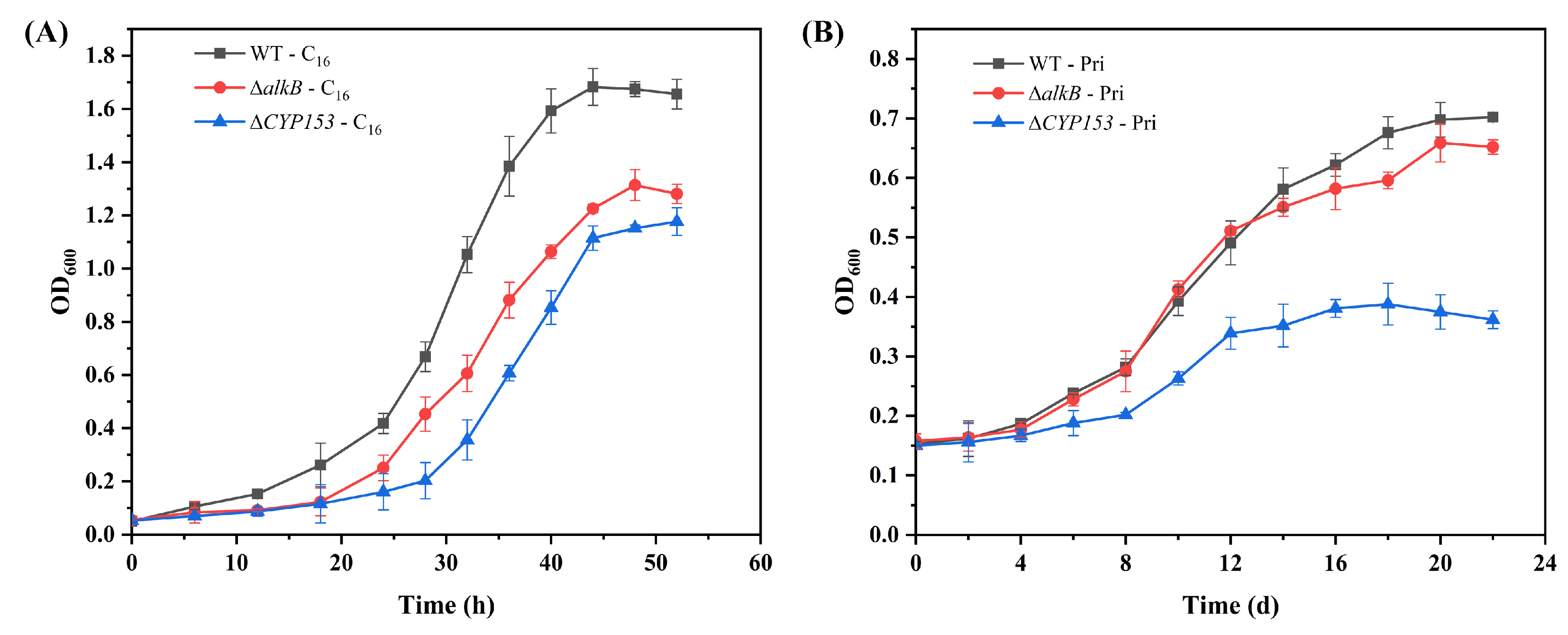
3.1. Growth Characteristics, Degradation Rate, and Biosurfactant Production
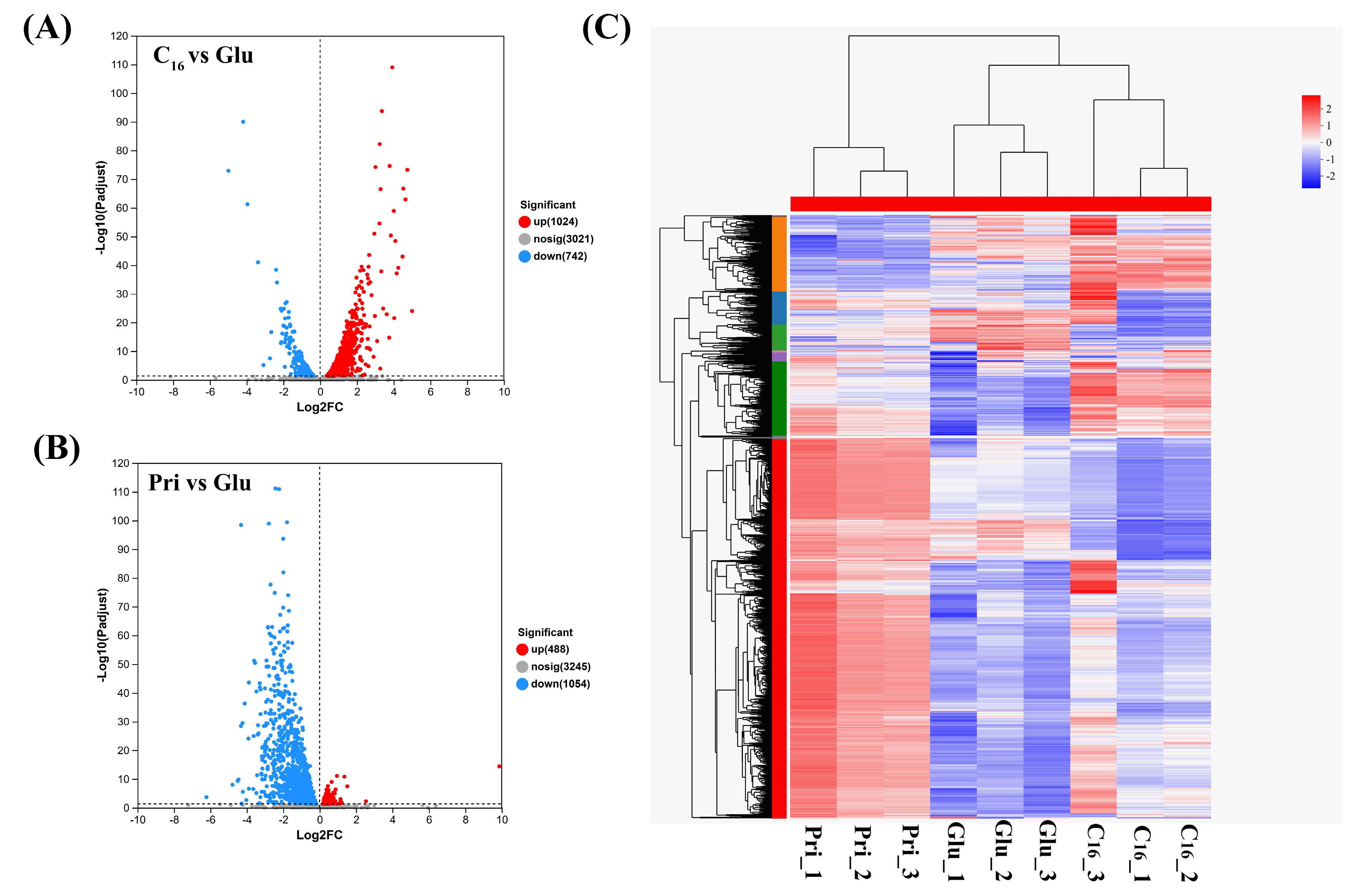
3.2. General Features of Transcriptome in Three Carbon Sources
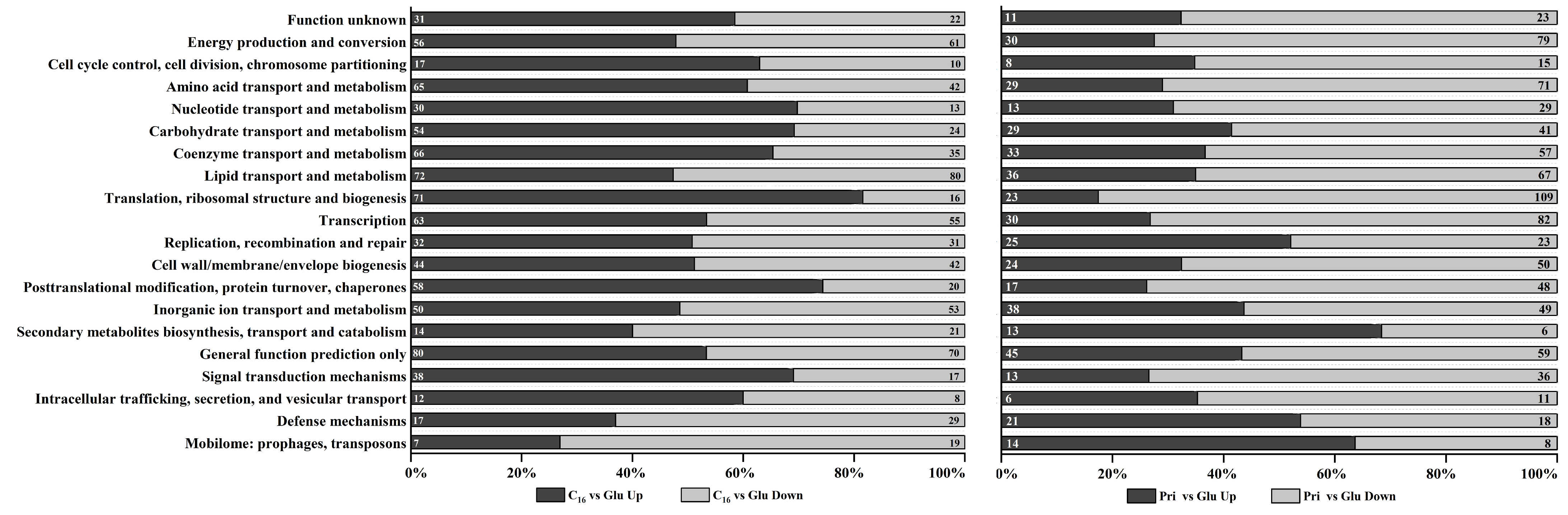
3.3. Functional Classification
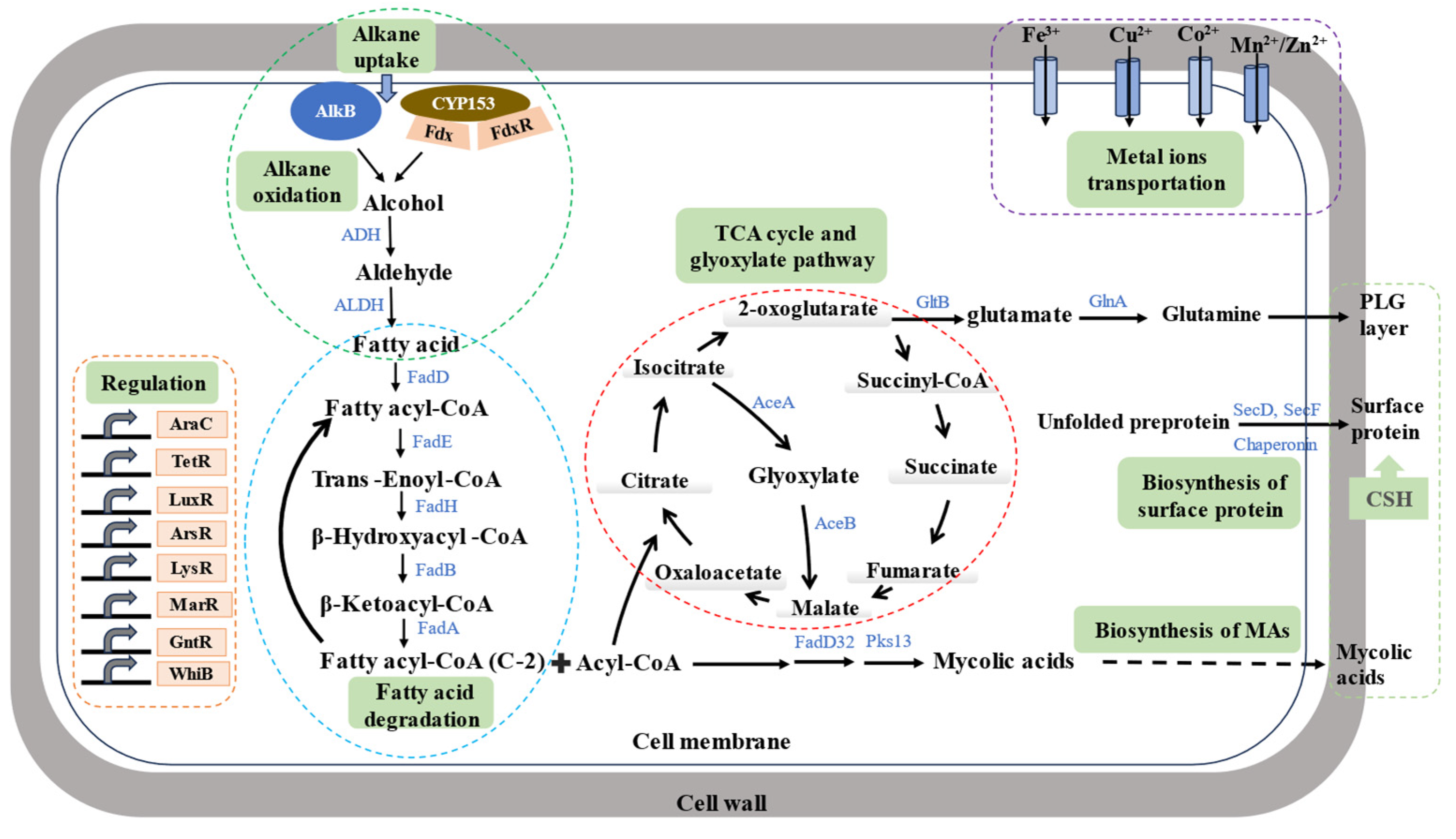
3.4. Core Alkane Degradation
3.4.1. Alkane Uptake
3.4.2. Alkane Oxidation
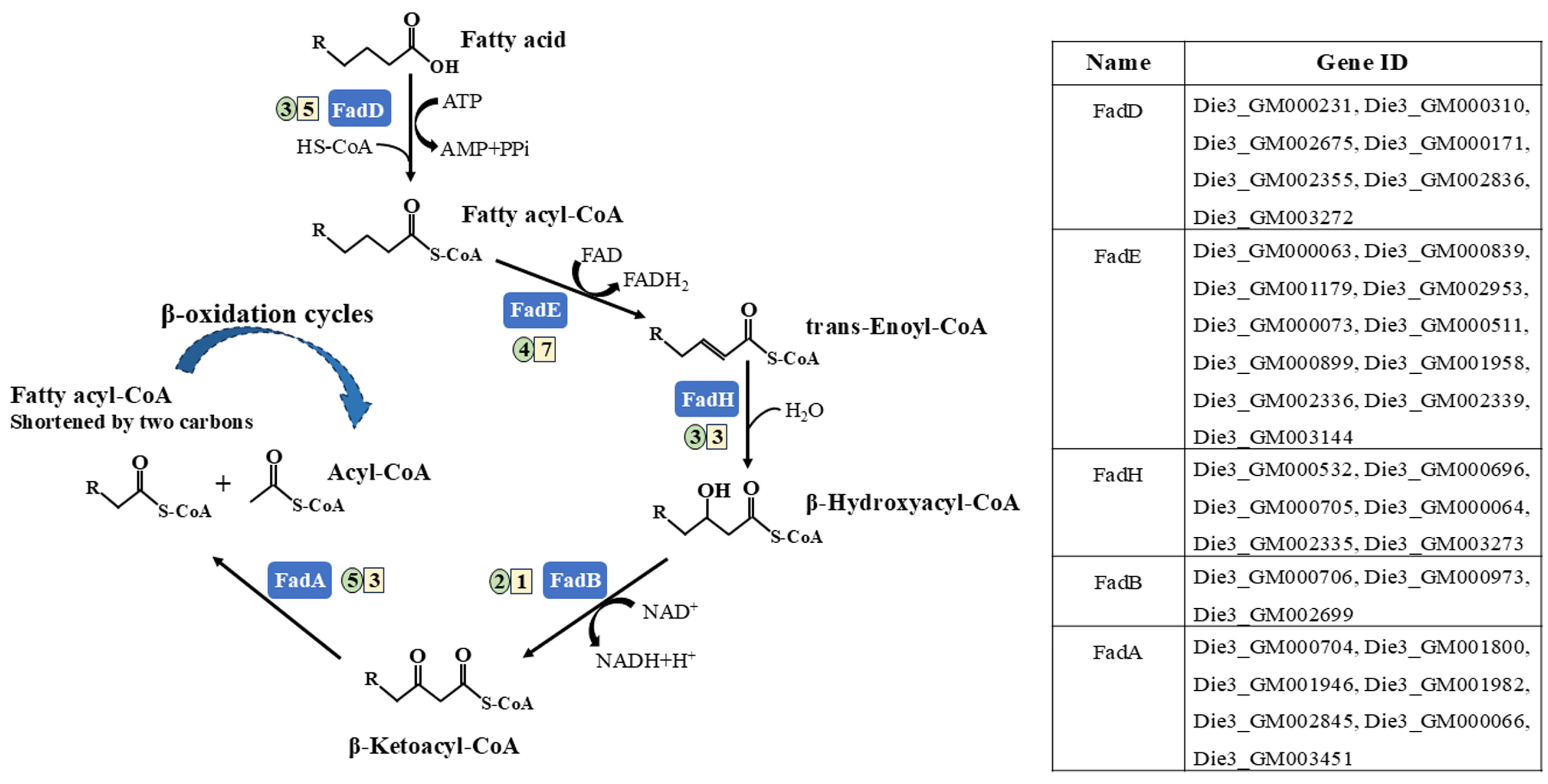
3.5. Lipid Metabolism
3.6. Energy Metabolism
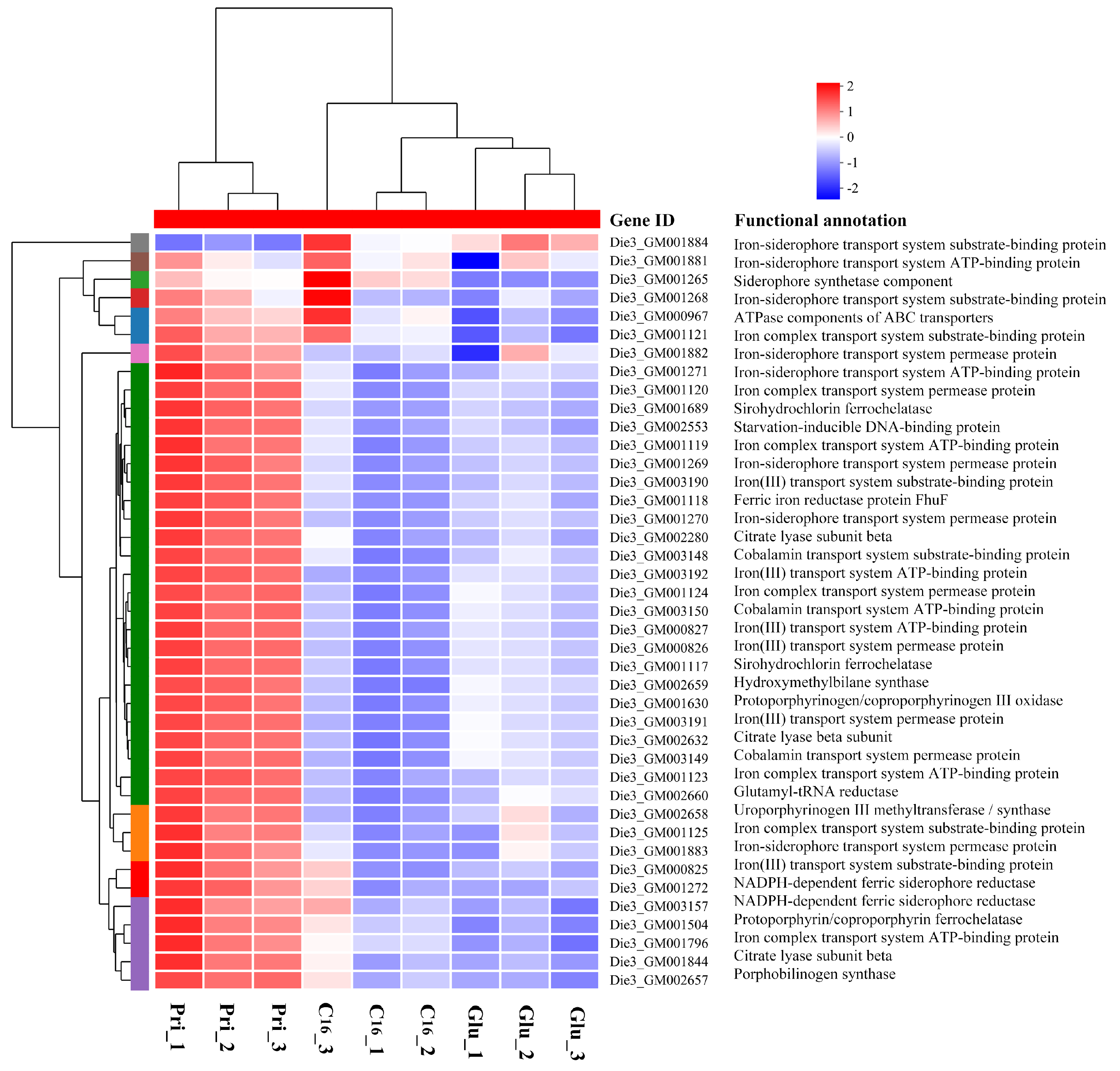
3.7. Metal Ions Transportation
3.8. Biosynthesis of Cell Surface Compositions
3.9. Transcription Regulation
4. Conclusions
Supplementary Materials
Author Contributions
Funding
Institutional Review Board Statement
Informed Consent Statement
Data Availability Statement
Conflicts of Interest
References
- Vauloup, A.; Cébron, A. Development of a device to trap soil bacteria capable of degrading organic contaminants such as alkanes and polycyclic aromatic hydrocarbons. J. Hazard. Mater. 2025, 491, 137690. [Google Scholar] [CrossRef] [PubMed]
- Rojo, F. Degradation of alkanes by bacteria. Environ. Microbiol. 2009, 11, 2477–2490. [Google Scholar] [CrossRef]
- Lea-Smith, D.J.; Biller, S.J.; Davey, M.P.; Cotton, C.A.; Perez Sepulveda, B.M.; Turchyn, A.V.; Scanlan, D.J.; Smith, A.G.; Chisholm, S.W.; Howe, C.J. Contribution of cyanobacterial alkane production to the ocean hydrocarbon cycle. Proc. Natl. Acad. Sci. USA 2015, 112, 13591–13596. [Google Scholar] [CrossRef]
- Li, Y.; Liu, Y.; Guo, D.Y.; Dong, H.L. Differential degradation of petroleum hydrocarbons by Shewanella putrefaciens under aerobic and anaerobic conditions. Front. Microbiol. 2024, 15, 1389954. [Google Scholar] [CrossRef]
- Mu, B.Z.; Nazina, T.N. Recent advances in petroleum microbiology. Microorganisms 2022, 10, 1706. [Google Scholar] [CrossRef]
- Gaid, M.; Pöpke, D.; Reinhard, A.; Berzhanova, R.; Mukasheva, T.; Urich, T.; Mikolasch, A. Characterization of the mycoremediation of n-alkanes and branched-chain alkanes by filamentous fungi from oil-polluted soil samples in Kazakhstan. Microorganisms 2023, 11, 2195. [Google Scholar] [CrossRef] [PubMed]
- Shou, L.B.; Liu, Y.F.; Zhou, J.; Liu, Z.L.; Zhou, L.; Liu, J.F.; Yang, S.Z.; Gu, J.D.; Mu, B.Z. New evidence for a hydroxylation pathway for anaerobic alkane degradation supported by analyses of functional genes and signature metabolites in oil reservoirs. AMB Express 2021, 11, 18. [Google Scholar] [CrossRef] [PubMed]
- Dawson, K.S.; Schaperdoth, I.; Freeman, K.H.; Macalady, J.L. Anaerobic biodegradation of the isoprenoid biomarkers pristane and phytane. Org. Geochem. 2013, 65, 118–126. [Google Scholar] [CrossRef]
- Xu, H.X.; Tang, Y.Q.; Nie, Y.; Wu, X.L. Comparative transcriptome analysis reveals different adaptation mechanisms for degradation of very long-chain and normal long-chain alkanes in Dietzia sp. DQ12-45-1b. Environ. Microbiol. 2022, 24, 1932–1945. [Google Scholar] [CrossRef]
- Feng, L.; Wang, W.; Cheng, J.S.; Ren, Y.; Zhao, G.; Gao, C.X.; Tang, Y.; Liu, X.Q.; Han, W.Q.; Peng, X.; et al. Genome and proteome of long-chain alkane degrading Geobacillus thermodenitrificans NG80-2 isolated from a deep-subsurface oil reservoir. Proc. Natl. Acad. Sci. USA 2007, 104, 5602–5607. [Google Scholar] [CrossRef]
- Throne-Holst, M.; Wentzel, A.; Ellingsen, T.E.; Kotlar, H.K.; Zotchev, S.B. Identification of novel genes involved in long-chain n-alkane degradation by Acinetobacter sp. strain DSM 17874. Appl. Environ. Microbiol. 2007, 73, 3327–3332. [Google Scholar] [CrossRef]
- Wang, W.P.; Shao, Z.Z. Genes involved in alkane degradation in the Alcanivorax hongdengensis strain A-11-3. Appl. Microbiol. Biotechnol. 2012, 94, 437–448. [Google Scholar] [CrossRef]
- Wang, W.P.; Shao, Z.Z. Diversity of flavin-binding monooxygenase genes (almA) in marine bacteria capable of degradation long-chain alkanes. FEMS Microbiol. Ecol. 2012, 80, 523–533. [Google Scholar] [CrossRef]
- Wang, W.P.; Shao, Z.Z. Enzymes and genes involved in aerobic alkane degradation. Front. Microbiol. 2013, 4, 116. [Google Scholar] [CrossRef]
- Liu, C.L.; Wang, W.P.; Wu, Y.H.; Zhou, Z.W.; Lai, Q.L.; Shao, Z.Z. Multiple alkane hydroxylase systems in a marine alkane degrader, Alcanivorax dieselolei B-5. Environ. Microbiol. 2011, 13, 1168–1178. [Google Scholar] [CrossRef] [PubMed]
- Nie, Y.; Liang, J.L.; Fang, H.; Tang, Y.Q.; Wu, X.L. Characterization of a CYP153 alkane hydroxylase gene in a gram-positive Dietzia sp. DQ12-45-1b and its “team role” with alkW1 in alkane degradation. Appl. Microbiol. Biotechnol. 2014, 98, 163–173. [Google Scholar] [CrossRef] [PubMed]
- Wang, X.B.; Nie, Y.; Tang, Y.Q.; Wu, G.; Wu, X.L. Alkane chain length alters Dietzia sp. strain DQ12-45-1b biosurfactant production and cell surface activity. Appl. Environ. Microbiol. 2013, 79, 400–402. [Google Scholar] [CrossRef]
- Zhang, H.; Zhang, W.C.; Zong, Y.W.; Kong, D.Y.; Ma, L.Y.; Wu, X.L.; Zhao, K. Dynamics of microbial-induced oil degradation at the microscale. Microbiol. Spectr. 2024, 12, e0117624. [Google Scholar] [CrossRef]
- Elumalai, P.; Parthipan, P.; AlSalhi, M.S.; Huang, M.; Devanesan, S.; Karthikeyan, O.P.; Kim, W.; Rajasekar, A. Characterization of crude oil degrading bacterial communities and their impact on biofilm formation. Environ. Pollut. 2021, 286, 117556. [Google Scholar] [CrossRef] [PubMed]
- Wang, W.; Shao, Z. The long-chain alkane metabolism network of Alcanivorax dieselolei. Nat. Commun. 2014, 5, 5755. [Google Scholar] [CrossRef]
- Liang, J.L.; JiangYang, J.H.; Nie, Y.; Wu, X.L.; Löffler, F.E. Regulation of the alkane hydroxylase CYP153 gene in a gram-positive alkane-degrading bacterium, Dietzia sp. strain DQ12-45-1b. Appl. Environ. Microbiol. 2016, 82, 608–619. [Google Scholar] [CrossRef]
- Liang, J.L.; Nie, Y.; Wang, M.; Xiong, G.; Wang, Y.P.; Maser, E.; Wu, X.L. Regulation of alkane degradation pathway by a TetR family repressor via an autoregulation positive feedback mechanism in a gram-positive Dietzia bacterium. Mol. Microbiol. 2016, 99, 338–359. [Google Scholar] [CrossRef] [PubMed]
- Ji, N.N.; Wang, X.L.; Yin, C.; Peng, W.L.; Liang, R.B. CrgA protein represses AlkB2 monooxygenase and regulates the degradation of medium-to-long-chain n-alkanes in Pseudomonas aeruginosa SJTD-1. Front. Microbiol. 2019, 10, 400. [Google Scholar] [CrossRef]
- Gunasekera, T.S.; Striebich, R.C.; Mueller, S.S.; Strobel, E.M.; Ruiz, O.N. Transcriptional profiling suggests that multiple metabolic adaptations are required for effective proliferation of Pseudomonas aeruginosa in jet fuel. Environ. Sci. Technol. 2013, 47, 13449–13458. [Google Scholar] [CrossRef] [PubMed]
- Li, S.W.; Huang, Y.X.; Liu, M.Y. Transcriptome profiling reveals the molecular processes for survival of Lysinibacillus fusiformis strain 15-4 in petroleum environments. Ecotoxicol. Environ. Saf. 2020, 192, 110250. [Google Scholar] [CrossRef]
- Rainey, F.A.; Klatte, S.; Kroppenstedt, R.M.; Stackebrandt, E. Dietzia, a new genus including Dietzia maris comb. nov., formerly Rhodococcus maris. Int. J. Syst. Bacteriol. 1995, 45, 32–36. [Google Scholar] [CrossRef][Green Version]
- Sun, J.Q.; Xu, L.; Zhang, Z.; Li, Y.; Tang, Y.Q.; Wu, X.L. Diverse bacteria isolated from microtherm oil-production water. Antonie Van Leeuwenhoek 2014, 105, 401–411. [Google Scholar] [CrossRef] [PubMed]
- Hu, B.; Wang, M.; Geng, S.; Wen, L.; Wu, M.; Nie, Y.; Tang, Y.Q.; Wu, X.L. Metabolic exchange with non-alkane-consuming Pseudomonas stutzeri SLG510A3-8 improves n-alkane biodegradation by the alkane degrader Dietzia sp. strain DQ12-45-1b. Appl. Environ. Microbiol. 2020, 86, e02931-19. [Google Scholar] [CrossRef]
- Gurav, R.; Lyu, H.; Ma, J.; Tang, J.; Liu, Q.; Zhang, H. Degradation of n-alkanes and PAHs from the heavy crude oil using salt-tolerant bacterial consortia and analysis of their catabolic genes. Environ. Sci. Pollut. Res. Int. 2017, 24, 11392–11403. [Google Scholar] [CrossRef]
- Chen, W.W.; Sun, J.W.; Ji, R.P.; Min, J.; Wang, L.Y.; Zhang, J.W.; Qiao, H.J.; Cheng, S.W. Crude oil biodegradation by a biosurfactant-producing bacterial consortium in high-salinity soil. J. Mar. Sci. Eng. 2024, 12, 2033. [Google Scholar] [CrossRef]
- Chen, W.W.; Li, J.D.; Sun, X.N.; Min, J.; Hu, X.K. High efficiency degradation of alkanes and crude oil by a salt-tolerant bacterium Dietzia species CN-3. Int. Biodeterior. Biodegrad. 2017, 118, 110–118. [Google Scholar] [CrossRef]
- Wang, W.; Cai, B.; Shao, Z.Z. Oil degradation and biosurfactant production by the deep sea bacterium Dietzia maris as-13-3. Front. Microbiol. 2014, 5, 711. [Google Scholar] [CrossRef]
- Rosenberg, M. Bacterial adherence to hydrocarbons: A useful technique for studying cell surface hydrophobicity. FEMS Microbiol. Lett. 1984, 22, 289–295. [Google Scholar] [CrossRef]
- Trapnell, C.; Hendrickson, D.G.; Sauvageau, M.; Goff, L.; Rinn, J.L.; Pachter, L. Differential analysis of gene regulation at transcript resolution with RNA-seq. Nat. Biotechnol. 2013, 31, 46. [Google Scholar] [CrossRef] [PubMed]
- Livak, K.J.; Schmittgen, T.D. Analysis of relative gene expression data using real-time quantitative PCR and the 2−ΔΔCT method. Methods 2001, 25, 402–408. [Google Scholar] [CrossRef]
- Gunasekera, T.S.; Bowen, L.L.; Zhou, C.E.; Howard-Byerly, S.C.; Foley, W.S.; Striebich, R.C.; Dugan, L.C.; Ruiz, O.N. Transcriptomic analyses elucidate adaptive differences of closely related strains of Pseudomonas aeruginosa in fuel. Appl. Environ. Microbiol. 2017, 83, e03249-16. [Google Scholar] [CrossRef] [PubMed]
- Mounier, J.; Hakil, F.; Branchu, P.; Naitali, M.; Goulas, P.; Sivadon, P.; Grimaud, R. AupA and AupB are outer and inner membrane proteins involved in alkane uptake in Marinobacter hydrocarbonoclasticus SP17. MBio 2018, 9, e00520-18. [Google Scholar] [CrossRef]
- Sabirova, J.S.; Becker, A.; Lünsdorf, H.; Nicaud, J.-M.; Timmis, K.N.; Golyshin, P.N. Transcriptional profiling of the marine oil-degrading bacterium Alcanivorax borkumensis during growth on n-alkanes. FEMS Microbiol. Lett. 2011, 319, 160–168. [Google Scholar] [CrossRef]
- Saurin, W.; Dassa, E. Sequence relationships between integral inner membrane proteins of binding protein-dependent transport systems: Evolution by recurrent gene duplications. Protein Sci. 1994, 3, 325–344. [Google Scholar] [CrossRef]
- Gregson, B.H.; Metodieva, G.; Metodiev, M.V.; Golyshin, P.N.; McKew, B.A. Differential protein expression during growth on medium versus long-chain alkanes in the obligate marine hydrocarbon-degrading bacterium Thalassolituus oleivorans MIL-1. Front. Microbiol. 2018, 9, 3130. [Google Scholar] [CrossRef]
- Gregson, B.H.; Metodieva, G.; Metodiev, M.V.; McKew, B.A. Differential protein expression during growth on linear versus branched alkanes in the obligate marine hydrocarbon-degrading bacterium Alcanivorax borkumensis SK2T. Environ. Microbiol. 2019, 21, 2347–2359. [Google Scholar] [CrossRef] [PubMed]
- Li, L.X.; Zhang, Y.Y.; Huang, X.F.; He, M.F.; Liu, J.; Lu, L.J.; Cai, C.; Peng, K.M. Transcriptomic insights into lower biomass and higher cell-surface hydrophobicity of Dietzia natronolimnaea S-XJ-1 grown on alkanes compared to fatty acid esters. Int. Biodeterior. Biodegrad. 2022, 171, 105423. [Google Scholar] [CrossRef]
- Park, C.; Shin, B.; Jung, J.; Lee, Y.; Park, W. Metabolic and stress responses of Acinetobacter oleivorans DR1 during long-chain alkane degradation. J. Microbial Biotechnol. 2017, 10, 1809–1823. [Google Scholar] [CrossRef]
- Fang, H.; Xu, J.B.; Nie, Y.; Wu, X.L. Pangenomic analysis reveals that the evolution of Dietzia species depends on their living habitats. Environ. Microbiol. 2021, 23, 861–877. [Google Scholar] [CrossRef]
- Sato, M.; Torres-Bacete, J.; Sinha, P.K.; Matsuno-Yagi, A.; Yagi, T. Essential regions in the membrane domain of bacterial complex I (NDH-1): The machinery for proton translocation. J. Bioenerg. Biomembr. 2014, 46, 279–287. [Google Scholar] [CrossRef] [PubMed]
- Cook, G.M.; Hards, K.; Vilcheze, C.; Hartman, T.; Berney, M. Energetics of respiration and oxidative phosphorylation in mycobacteria. Microbiol. Spectr. 2014, 2, 10. [Google Scholar] [CrossRef] [PubMed]
- O’Donnell, A.; Harvey, L.M.; McNeil, B. The roles of the alternative NADH dehydrogenases during oxidative stress in cultures of the filamentous fungus aspergillus Niger. Fungal Biol. 2011, 115, 359–369. [Google Scholar] [CrossRef]
- Ahn, S.; Jung, J.; Jang, I.A.; Madsen, E.L.; Park, W. Role of glyoxylate shunt in oxidative stress response. J. Biol. Chem. 2016, 291, 11928–11938. [Google Scholar] [CrossRef]
- Park, C.; Shin, B.; Park, W. Alternative fate of glyoxylate during acetate and hexadecane metabolism in Acinetobacter oleivorans DR1. Sci. Rep. 2019, 9, 14402. [Google Scholar] [CrossRef]
- Sritharan, M. Iron homeostasis in mycobacterium tuberculosis: Mechanistic insights into sideropho-remediated iron uptake. J. Bacteriol. 2016, 198, 2399–2409. [Google Scholar] [CrossRef]
- Parus, A.; Ciesielski, T.; Woźniak-Karczewska, M.; Ślachciński, M.; Owsianiak, M.; Ławniczak, Ł.; Loibner, A.P.; Heipieper, H.J.; ’Chrzanowski, Ł. Basic principles for biosurfactant-assisted (bio)remediation of soils contaminated by heavy metals and petroleum hydrocarbons-A critical evaluation of the performance of rhamnolipids. J. Hazard. Mater. 2023, 443, 130171. [Google Scholar] [CrossRef]
- Huang, X.; Peng, K.; Lu, L.; Wang, R.; Liu, J. Carbon source dependence of cell surface composition and demulsifying capability of Alcaligenes sp. S-XJ-1. Environ. Sci. Technol. 2014, 48, 3056–3064. [Google Scholar] [CrossRef] [PubMed]
- Fagan, R.P.; Fairweather, N.F. Biogenesis and functions of bacterial S-layers. Nat. Rev. Microbiol. 2014, 12, 211–222. [Google Scholar] [CrossRef] [PubMed]
- Tsukazaki, T. Structure-based working model of SecDF, a proton-driven bacterial protein translocation factor. FEMS Microbiol. Lett. 2018, 365, fny112. [Google Scholar] [CrossRef]
- Aldarini, N.; Alhasawi, A.A.; Thomas, S.C.; Appanna, V.D. The role of glutamine synthetase in energy production and glutamine metabolism during oxidative stress. Antonie Leeuwenhoek 2017, 110, 629–639. [Google Scholar] [CrossRef]
- Marrakchi, H.; Lanéelle, M.; Daffé, M. Mycolic Acids: Structures, biosynthesis, and beyond. Chem. Biol. 2014, 21, 67–85. [Google Scholar] [CrossRef]
- Gallegos, M.T.; Schleif, R.; Bairoch, A.; Hofmann, K.; Ramos, J.L. AraC/XylS family of transcriptional regulators. Microbiol. Mol. Biol. Rev. 1997, 61, 393–410. [Google Scholar] [CrossRef] [PubMed]
- Xu, Z.; Wang, M.; Ye, B.C. TetR family transcriptional regulator pccd negatively controls propionyl coenzyme a assimilation in Saccharopolyspora erythraea. J. Bacteriol. 2017, 199, e00281-17. [Google Scholar] [CrossRef] [PubMed]
- Segura, A.; Molina, L. LuxR402 of Novosphingobium sp. HR1a regulates the correct configuration of cell envelopes. Front. Microbiol. 2023, 14, 1205860. [Google Scholar] [CrossRef]
- Kan, J.; Peng, T.; Huang, T.W.; Xiong, G.M.; Hu, Z. NarL, a Novel repressor for CYP108j1 expression during PAHs degradation in Rhodococcus sp. P14. Int. J. Mol. Sci. 2020, 21, 983. [Google Scholar] [CrossRef]
- Song, C.X.; Aundy, K.; van de Mortel, J.; Raaijmakers, J.M. Discovery of new regulatory genes of lipopeptide biosynthesis in Pseudomonas fluorescens. FEMS Microbiol. Lett. 2014, 356, 166–175. [Google Scholar] [CrossRef][Green Version]
- Ren, S.; Li, Q.; Xie, L.; Xie, J. Molecular mechanisms underlying the function diversity of ArsR family metalloregulator. Crit. Rev. Eukaryot. Gene Expression 2017, 27, 19–35. [Google Scholar] [CrossRef]
- Maddocks, S.E.; Oyston, P.C. Structure and function of the LysR-type transcriptional regulator (LTTR) family proteins. Microbiology 2008, 154, 3609–3623. [Google Scholar] [CrossRef]
- Grove, A. MarR family transcription factors. Curr. Biol. 2013, 23, R142–R143. [Google Scholar] [CrossRef]
- Mihasan, M.; Stefan, M.; Hritcu, L.; Artenie, V.; Brandsch, R. Evidence of a plasmid-encoded oxidative xylose-catabolic pathway in Arthrobacter nicotinovorans pAO1. Res. Microbiol. 2013, 164, 22–30. [Google Scholar] [CrossRef] [PubMed]
- Hong, Y.H.; Deng, M.C.; Xu, X.M.; Wu, C.F.; Xiao, X.; Zhu, Q.; Sun, X.X.; Zhou, Q.Z.; Peng, J.; Yuan, J.P.; et al. Characterization of the transcriptome of Achromobacter sp. HZ01 with the outstanding hydrocarbon-degrading ability. Gene 2016, 584, 185–194. [Google Scholar] [CrossRef]
- Sharma, V.; Hardy, A.; Luthe, T.; Frunzke, J. Phylogenetic distribution of WhiB- and Lsr2-Type regulators in Actinobacteriophage genomes. Microbiol. Spectr. 2021, 9, e0072721. [Google Scholar] [CrossRef] [PubMed]
- Bez, C.; Javvadi, S.G.; Bertani, I.; Devescovi, G.; Guarnaccia, C.; Studholme, D.J.; Geller, A.M.; Levy, A.; Venturi, V. AzeR, a transcriptional regulator that responds to azelaic acid in Pseudomonas nitroreducens. Microbiology 2020, 166, 73–84. [Google Scholar] [CrossRef] [PubMed]
- Wei, G.; Li, S.; Ye, S.; Wang, Z.; Zarringhalam, K.; He, J.; Wang, W.P.; Shao, Z.Z. High-resolution small RNAs landscape provides insights into alkane adaptation in the marine alkane-degrader Alcanivorax dieselolei B-5. Int. J. Mol. Sci. 2022, 23, 15995. [Google Scholar] [CrossRef]
- Wang, T.T.; Jing, J.W.; Huang, P.F.; Guo, X.Y.; Li, C.; Qu, Y.Y. Bioremediation of alkane-containing saline soils using the long-chain alkane-degrading bacterium Pseudomonas aeruginosa DL: Effects, communities, and networks. J. Hazard. Mater. 2025, 488, 137401. [Google Scholar] [CrossRef]



| Functional | Gene ID | Function | C16/Glu | Pri/Glu | Pri/C16 |
|---|---|---|---|---|---|
| Alkane uptake | Die3_GM000328 | Glycosyltransferase | 0.53 | −0.16 | −0.75 |
| Die3_GM000521 | Glycosyltransferase family 2 | 0.57 | −0.46 | −1.08 | |
| Die3_GM000522 | Glycosyltransferase family 2 | 0.66 | −1.18 | −1.90 | |
| Die3_GM002677 | Glycosyltransferase | 1.14 | −0.45 | −1.64 | |
| Die3_GM003163 | Glycosyltransferase | 0.53 | 0.16 | −0.43 | |
| Die3_GM003164 | Glycosyltransferase | −0.29 | 0.42 | 0.64 | |
| Die3_GM000935 | Lipoprotein | 0.97 | −1.76 | −2.80 | |
| Die3_GM003229 | ABC transporter permease | −0.65 | 0.42 | 0.99 | |
| Die3_GM000578 | Adhesin | 0.94 | 0.32 | −0.69 | |
| Alkane hydroxylation | Die3_GM000017 | Alkane hydroxylase-rubredoxin fusion protein, AlkB | 4.09 | −0.02 | −4.17 |
| Die3_GM000105 | Cytochrome P450, CYP153 | 4.75 | 1.15 | −3.64 | |
| Die3_GM000104 | Ferredoxin | 4.26 | 1.22 | −3.07 | |
| Die3_GM000106 | Ferredoxin reductase | 4.53 | 1.75 | −3.64 | |
| Die3_GM001585 | Baeyer–Villiger monooxygenase | −0.48 | 0.24 | 0.65 | |
| Die3_GM003194 | Baeyer–Villiger monooxygenase | 0.75 | 0.19 | −0.63 | |
| Dehydrogenation of alcohols | Die3_GM000170 | Alcohol dehydrogenase | 1.98 | −0.63 | −2.67 |
| Die3_GM001258 | Alcohol dehydrogenase | 0.90 | −0.48 | −1.45 | |
| Die3_GM001307 | Alcohol dehydrogenase | 1.40 | −0.34 | −1.80 | |
| Die3_GM002689 | Alcohol dehydrogenase | 1.32 | −0.36 | −1.75 | |
| Die3_GM002991 | Alcohol dehydrogenase | 0.51 | −0.24 | −0.81 | |
| Die3_GM001956 | Alcohol dehydrogenase | −0.27 | 0.25 | 0.45 | |
| Die3_GM002554 | Alcohol dehydrogenase | −0.97 | 0.08 | 0.99 | |
| Dehydrogenation of aldehydes | Die3_GM000037 | Aldehyde dehydrogenase | 0.58 | −0.02 | −0.67 |
| Die3_GM000266 | Aldehyde dehydrogenase | 0.61 | −0.34 | −1.01 | |
| Die3_GM000241 | Aldehyde dehydrogenase | −5.67 | −4.11 | 1.51 | |
| Die3_GM002359 | Aldehyde dehydrogenase | −0.77 | 0.26 | 0.96 | |
| Die3_GM002915 | Aldehyde dehydrogenase | −0.39 | 0.02 | 0.35 | |
| Die3_GM000896 | Aldehyde dehydrogenase | −0.44 | 0.28 | 0.65 | |
| Die3_GM002352 | Aldehyde dehydrogenase | −0.82 | 0.38 | 1.14 |
| Pathways | Gene ID | Functional Annotation | C16/Glu | Pri/Glu | Pri/C16 |
|---|---|---|---|---|---|
| TCA cycle | Die3_GM000733 | Citrate synthase | 0.77 | −1.60 | −2.41 |
| Die3_GM001512 | Aconitase | 0.94 | −0.77 | −1.78 | |
| Die3_GM001914 | Isocitrate dehydrogenase | 1.10 | −0.66 | −1.82 | |
| Die3_GM002241 | Succinyl-CoA synthetase, alpha subunit | 0.38 | −1.60 | −2.05 | |
| Die3_GM002242 | Succinyl-CoA synthetase, beta subunit | 0.25 | −1.79 | −2.09 | |
| Die3_GM000809 | Succinate dehydrogenase iron–sulfur subunit | −0.29 | −2.16 | −1.92 | |
| Die3_GM000810 | Succinate dehydrogenase flavoprotein subunit | −0.06 | −1.16 | −1.16 | |
| Die3_GM000811 | Succinate dehydrogenase membrane anchor subunit | 0.06 | −1.22 | −1.33 | |
| Die3_GM000812 | Succinate dehydrogenase cytochrome b subunit | 0.17 | −1.54 | −1.76 | |
| Die3_GM001943 | Fumarase | 1.35 | −1.00 | −2.41 | |
| Die3_GM001000 | Malate dehydrogenases | 0.94 | −0.42 | −1.42 | |
| Glyoxylate pathway | Die3_GM002700 | Isocitrate lyase (AceA) | 0.66 | −2.23 | −2.94 |
| Die3_GM001647 | Malata synthetase (AceB) | 1.36 | −0.84 | −2.26 |
Disclaimer/Publisher’s Note: The statements, opinions and data contained in all publications are solely those of the individual author(s) and contributor(s) and not of MDPI and/or the editor(s). MDPI and/or the editor(s) disclaim responsibility for any injury to people or property resulting from any ideas, methods, instructions or products referred to in the content. |
© 2025 by the authors. Licensee MDPI, Basel, Switzerland. This article is an open access article distributed under the terms and conditions of the Creative Commons Attribution (CC BY) license (https://creativecommons.org/licenses/by/4.0/).
Share and Cite
Chen, W.; Sun, J.; Zhang, X.; Zhang, J.; Wang, Y.; Cheng, S. Comparative Transcriptomics Reveals Distinct Adaptation Mechanisms for Degradation of n-Alkane and Branched Alkane in the Salt-Tolerant Bacterium Dietzia sp. CN-3. Microorganisms 2025, 13, 2206. https://doi.org/10.3390/microorganisms13092206
Chen W, Sun J, Zhang X, Zhang J, Wang Y, Cheng S. Comparative Transcriptomics Reveals Distinct Adaptation Mechanisms for Degradation of n-Alkane and Branched Alkane in the Salt-Tolerant Bacterium Dietzia sp. CN-3. Microorganisms. 2025; 13(9):2206. https://doi.org/10.3390/microorganisms13092206
Chicago/Turabian StyleChen, Weiwei, Jiawei Sun, Xin Zhang, Jiawen Zhang, Yuan Wang, and Shiwei Cheng. 2025. "Comparative Transcriptomics Reveals Distinct Adaptation Mechanisms for Degradation of n-Alkane and Branched Alkane in the Salt-Tolerant Bacterium Dietzia sp. CN-3" Microorganisms 13, no. 9: 2206. https://doi.org/10.3390/microorganisms13092206
APA StyleChen, W., Sun, J., Zhang, X., Zhang, J., Wang, Y., & Cheng, S. (2025). Comparative Transcriptomics Reveals Distinct Adaptation Mechanisms for Degradation of n-Alkane and Branched Alkane in the Salt-Tolerant Bacterium Dietzia sp. CN-3. Microorganisms, 13(9), 2206. https://doi.org/10.3390/microorganisms13092206