


Abstract
Plants inhabiting arid regions often harbor microbial communities that contribute to their resilience under extreme conditions. Yet, the genomic diversity and functional potential of bacterial endophytes associated with desert-adapted plants, particularly in Africa, remain largely unexplored. In this study, we investigated Microbacterium endophytes from the xerophytic cucurbit Citrullus colocynthis L. (Cucurbitaceae), collected in a semi-arid environment in central Morocco. Using culture-based isolation, phenotypic characterization, and whole-genome sequencing, we analyzed three representative isolates from leaf and root tissues. Genome-based taxonomy combined with polyphasic analyses identified two novel species, Microbacterium xerophyticum sp. nov. and Microbacterium umsixpiens sp. nov., with genome sizes of approximately 4.0 Mb and 3.9 Mb, respectively. Functional annotation revealed traits consistent with endophytism in water-limited ecosystems, including oxidative and osmotic stress responses, metal homeostasis, and high-affinity phosphate uptake. Differences in siderophore acquisition and nitrogen metabolism suggest niche partitioning between the two species. These findings document two novel bacterial species from a medicinal plant native to arid ecosystems, broaden the known diversity of plant-associated Microbacterium, and provide region-specific genomic references with adaptive traits relevant to host resilience under arid conditions.
1. Introduction
Drylands, comprising arid and semi-arid ecosystems, cover more than 40% of the Earth’s terrestrial surface and sustain nearly two billion people worldwide [1]. These regions are shaped by extreme environmental pressures, including high temperatures, irregular and scarce rainfall, recurrent droughts, intense solar and ultraviolet radiation, and poor soil fertility [2]. Such stressors not only constrain biodiversity but also make drylands among the most fragile ecosystems on the planet. In Morocco, desertification is intensifying due to the combined effects of climate change and anthropogenic pressures, particularly overgrazing and unsustainable land use [3,4]. Rising temperatures and declining precipitation patterns are accelerating land degradation and threatening agriculture, biodiversity, and local livelihoods [5,6]. Beyond regional consequences, the degradation of these ecosystems has global implications through altered carbon and nutrient cycles, reduced agricultural productivity, and increased vulnerability to climate change [4,7].
Despite these challenges, Morocco’s arid and semi-arid landscapes host resilient xerophytic vegetation adapted to water scarcity and nutrient-poor soils [8]. The Marrakech–Safi region, for instance, supports a mosaic of drought-tolerant plants that thrive in microhabitats where soil moisture, organic matter, and microbial biomass are relatively enriched [9,10,11]. These microhabitats not only provide ecological niches for plants but also support diverse microbial communities that may contribute to plant adaptation under stress. Increasing evidence suggests that plant–microbe interactions are central to survival in drylands, with microbial endophytes acting as hidden allies that improve plant resilience to abiotic and biotic stresses [12].
Among these plants, Citrullus colocynthis (L.) Schrader (Cucurbitaceae), also known as bitter apple, colocynth, or desert gourd, is widely distributed across the Sahara, Middle East, and Indian subcontinent, and is particularly abundant in Morocco’s semi-arid ecosystems [13]. This perennial creeping vine has long been recognized for its medicinal properties; extracts from its roots, fruits, and seeds have been used in traditional medicine for their purgative, anti-inflammatory, and antimicrobial effects [14]. Phytochemical studies have revealed a rich arsenal of bioactive compounds, including cucurbitacins, alkaloids, flavonoids, and glycosides, which contribute to its medicinal and ecological resilience [15]. Beyond chemical defenses, the ability of C. colocynthis to survive under extreme conditions suggests potential reliance on microbial symbionts that enhance stress tolerance and nutrient acquisition. Endophytic microbes colonizing C. colocynthis may therefore play crucial roles in shaping its ecological success and adaptive strategies.
The family Microbacteriaceae (phylum Actinobacteria) includes small, Gram-positive, non-spore-forming bacteria with high G + C content. Members of the genus Microbacterium have been isolated from diverse habitats such as soils, freshwater, marine sediments, industrial effluents, and, importantly, plant tissues [16,17]. Several species are known as plant endophytes, where they contribute to host fitness by promoting growth, improving nutrient acquisition, and enhancing stress tolerance [18]. Microbacterium spp. are versatile metabolically and are reported to degrade xenobiotics, tolerate heavy metals, and survive in nutrient-limited conditions, traits that likely support their persistence in extreme environments [19].
The contribution of Microbacterium to plant growth promotion (PGP) has been demonstrated in several studies [20,21,22,23,24]. These bacteria employ both direct and indirect mechanisms. Direct mechanisms include nitrogen fixation, phosphate solubilization, production of phytohormones (auxins, cytokinins), siderophore production, and ACC deaminase activity, all of which enhance nutrient availability, stimulate root development, and mitigate ethylene stress [25]. Indirect mechanisms involve the induction of systemic resistance, antioxidant responses, and tolerance to abiotic stresses such as drought, salinity, and heavy metal contamination [26]. For example, M. imperiale and M. paraoxydans have been shown to induce systemic responses in host plants, thereby increasing resilience to heavy metal stress [27,28]. Beyond growth promotion, Microbacterium spp. also contribute to phytoremediation by supporting plants in contaminated soils, enabling them to tolerate and remediate pollutants [18,29]. Together, these features highlight the ecological and biotechnological significance of the genus in sustainable agriculture and environmental restoration, particularly in fragile ecosystems such as drylands.
Despite their importance, genomic insights into plant-associated Microbacterium remain limited, especially in Africa. Most studies involving C. colocynthis and other local xerophytes rely on cultivation-dependent methods or 16S rRNA gene surveys, which provide limited taxonomic and functional resolution [30,31]. Genome-resolved studies of Microbacterium from plant origins are available outside Africa, for example, isolates have been reported from grapevine xylem, rice seeds, and potato [30,32,33]. By contrast, in North Africa, genome-sequenced Microbacterium strains have been described only from industrial effluents, such as M. metallidurans TL13 (from Tunisian leather effluent) [34], Microbacterium sp. Nx66 (from Algerian petrochemical effluent) [35], and M. algeriense (from Algerian oil-production water) [36]. This imbalance highlights a striking knowledge gap: there is no genomic reference for Microbacterium directly isolated from plant hosts in African arid or semi-arid ecosystems.
Establishing genome-defined species from C. colocynthis in Morocco’s semi-arid environments provides valuable region-specific references for both taxonomic and ecological studies. Such references not only expand the recognized diversity of plant-associated Microbacterium but also enable deeper understanding of their adaptive traits and potential roles in plant resilience under extreme conditions.
In this study, we describe the genome-based characterization of two novel Microbacterium species isolated from root and foliar tissues of C. colocynthis collected in central Morocco. Using culture-based isolation, phenotypic characterization, and whole-genome sequencing, we determined their taxonomic status through average nucleotide identity (ANI), digital DNA–DNA hybridization (dDDH), and phylogenomic inference. Genomic features, including genome size, G + C content, and coding potential, were also analyzed. Functional annotation was carried out to identify traits associated with plant colonization and adaptation to arid ecosystems. Our results support the recognition of Microbacterium xerophyticum sp. nov. and Microbacterium umsixpiens sp. nov., expanding the diversity of plant-associated actinobacteria and providing genomic insights into their potential ecological functions in arid environments.
2. Materials and Methods
2.1. Sampling and Isolation
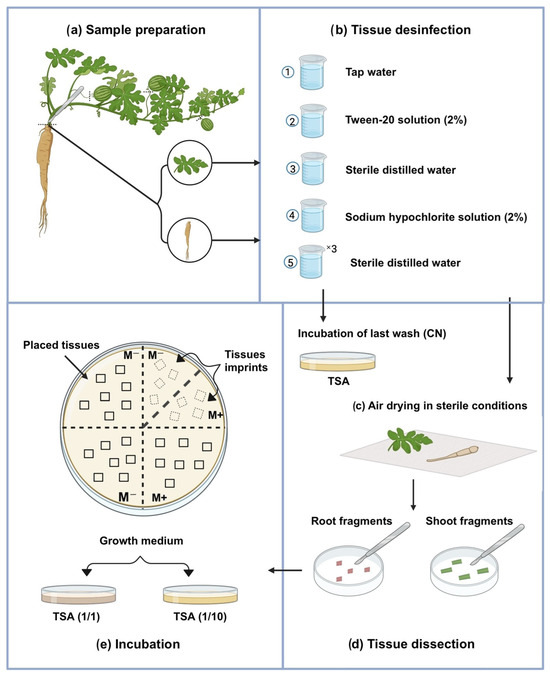
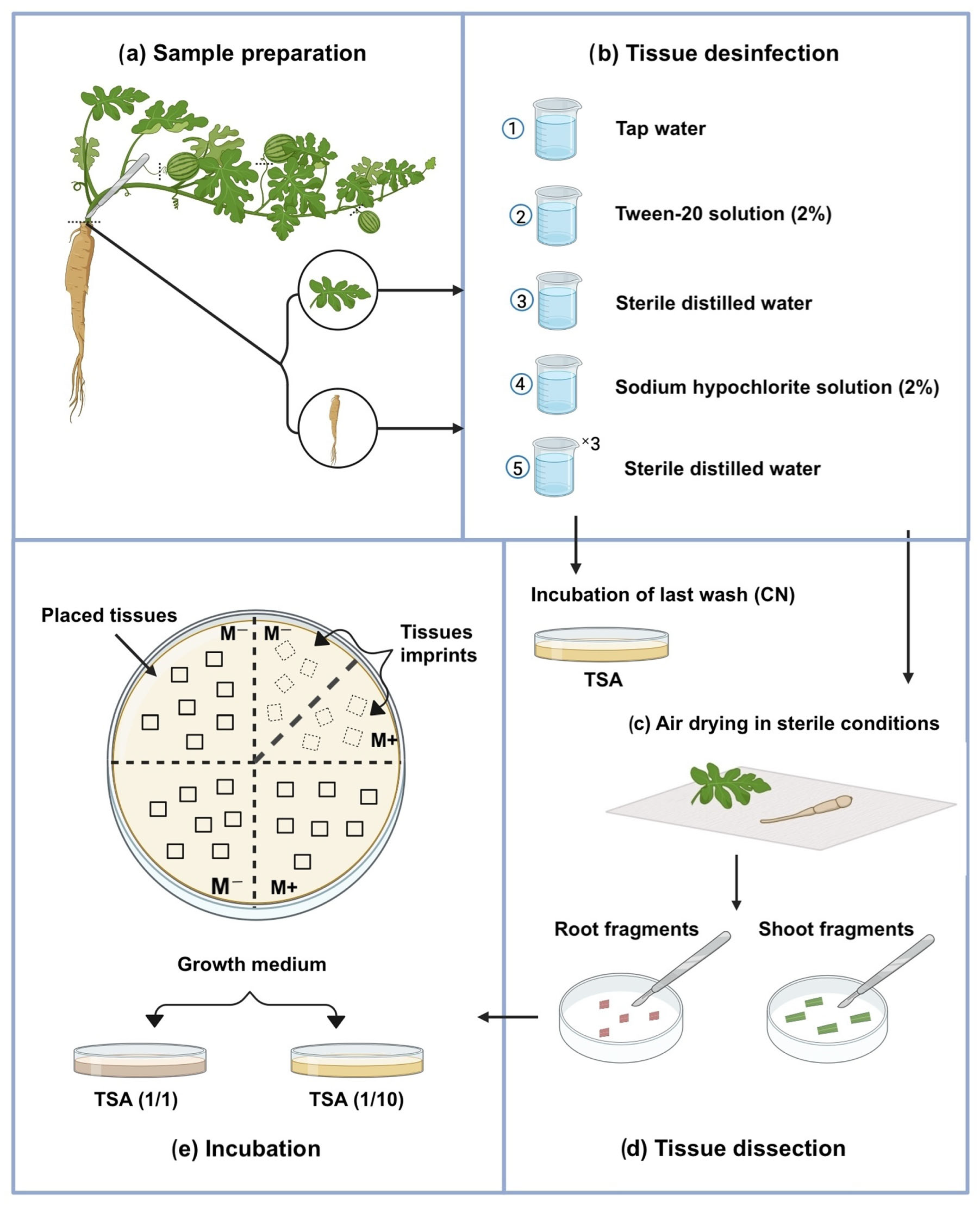
Three Microbacterium strains were isolated from the roots and leaf tissues of Citrullus colocynthis collected at the flowering stage along a decommissioned wastewater canal near Green City, Benguerir, Morocco (32°11′48.6″ N, 7°56′30.0″ W) on 23 July 2023. Plants were transported on ice and processed immediately. Root and foliar tissues were surface-sterilized, with sterility confirmed by imprint tests and final rinse controls. Sterilized tissues were cut into 5 × 5 mm fragments and plated on Tryptone Soya Agar (TSA) medium (per liter: pancreatic digest of casein 17 g, papaic digest of soybean meal 3 g, NaCl 5 g, K2HPO4 2.5 g, glucose 2.5 g, and agar 15 g) (Oxoid, Thermo-Fisher, Temara, Morocco), both at full-strength and 1/10 dilution, with one quadrant supplemented with sugar-free minimal medium. Plates were incubated at 28 °C for up to 4 weeks, after which distinct colonies were purified and cryopreserved in TSB containing 25% (v/v) glycerol at −80 °C (Figure 1).
Figure 1.
Workflow for the isolation process of endophytic bacteria. (a) Sample preparation. (b,c) tissue disinfection and drying. (d) tissue dissection. (e) growth of endophytic bacteria. CN: control negative; M+: TSA enriched with M medium; M−: TSA without M medium enrichment.
2.2. DNA Extraction, 16S rRNA Gene Sequencing and Whole-Genome Sequencing
Genomic DNA from each isolate was extracted from fresh bacterial suspensions [37]. Isolates were initially identified by PCR amplification and Sanger sequencing of the 16S rRNA gene [29,37]. For whole-genome sequencing, DNA from the three isolates was quantified, and libraries were prepared using a Nextera XT kit (Illumina, MegaFlex, Casablanca, Morocco) following the manufacturer’s protocol (200 ng input per sample; unique dual indexes). Libraries were loaded and sequenced individually, achieving a cluster density of 202 K/mm2. Sequencing was performed in a 2 × 151 bp paired-end format. The resulting data were demultiplexed with bcl2fastq (v2.17.1.14; Illumina) to ensure accurate sample identification and assignment for downstream analysis. This workflow enabled efficient, high-precision bacterial genome sequencing.
2.3. Bioinformatics Workflow
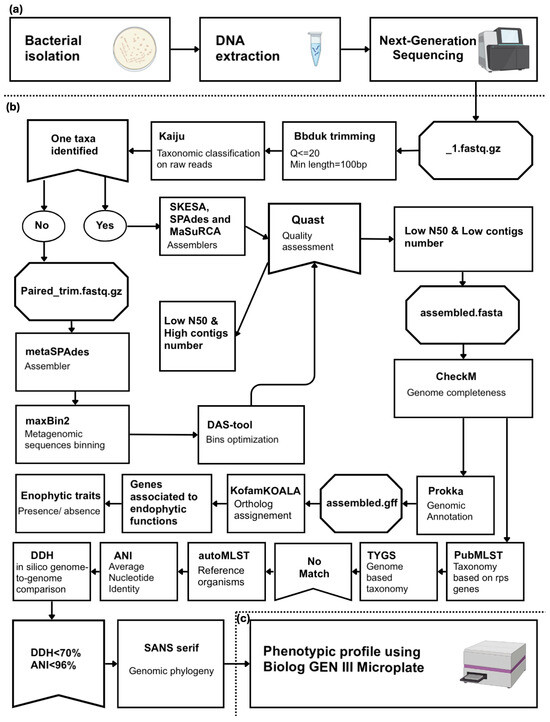
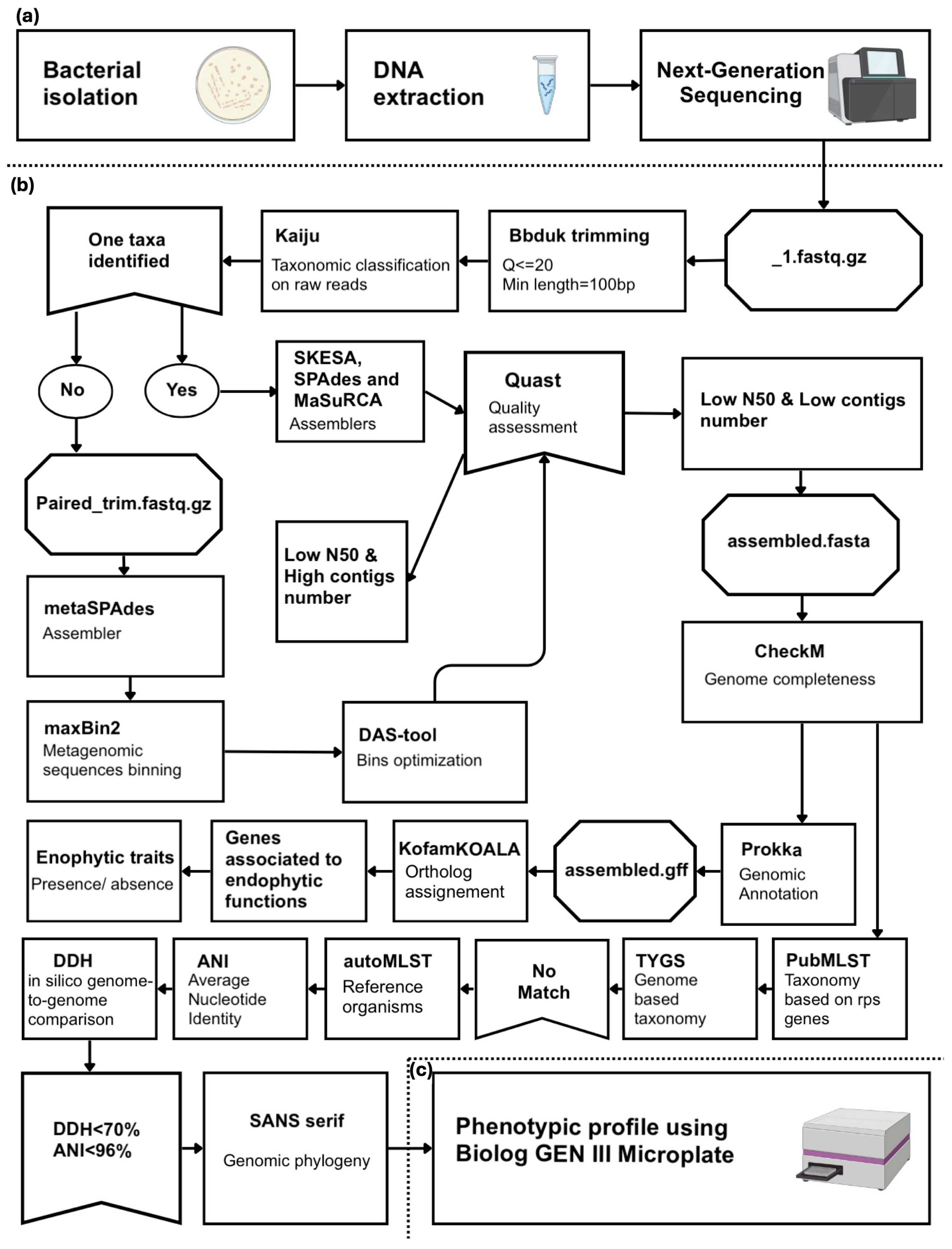
Figure 2 summarizes the bioinformatics pipeline, from raw sequence data to species delineation. The subsections below detail the exact tools, parameters, and thresholds applied at each step.
Figure 2.
Experimental workflow and bioinformatic pipelines for identifying new species. (a) Pre-bioinformatic steps. (b) Bioinformatics workflow. (c) Phenotypic profiling.
2.4. Raw Data Preprocessing and Quality Assessment
Raw sequencing reads were preprocessed using BBDuk74 to remove low-quality sequences (Q ≤ 20) and short reads (minimum length = 100 bp). To assess potential contamination from non-target bacterial species, the filtered reads were analyzed with Kaiju for taxonomic classification [38].
2.5. Genome Assembly, Completeness, and Optimization
De novo assembly of each sample was performed using MaSuRCA v4.1.4 [39]. Assemblies were evaluated with QUAST v5.3.0 [40], and the versions with the fewest contigs and highest N50 values were selected for further analysis. Genome completeness was estimated using CheckM v1.2.0 [41]. In cases where Kaiju v1.10.1 detected contamination and assembly metrics were suboptimal, metaSPAdes v4.2.0 [42] was applied. Prior to assembly, MaxBin v2.2.7 [43] was used to separate potential contaminant bins, and DAS Tool v1.1.7 [44] was employed to refine bins based on sequence similarity. Final assemblies were again assessed with QUAST v5.3.0, and the most complete, least fragmented genome was selected for downstream analysis.
2.6. Taxonomic Assignment
For post-assembly taxonomic classification, isolates were analyzed using the Type (Strain) Genome Server (TYGS) [45] and PubMLST; https://pubmlst.org accessed on 3 November 2025 [46]. TYGS compared whole-genome and 16S rRNA sequences against type strains to identify closely related taxa and assess the novelty of the isolates. PubMLST indexed up to 53 ribosomal protein subunit genes (rps genes) for multilocus sequence typing (MLST), reporting support percentages at a 95% confidence threshold relative to the closest reference strains.
2.7. Phylogenetic Characterization, Species Inference, and Endophytic Traits
To evaluate the novelty of the isolates, species boundaries were inferred using ANI (average nucleotide identity) with a 96% threshold [47] and digital DNA–DNA hybridization (dDDH) with a 70% cutoff via the Genome-to-Genome Distance Calculator [48]. Whole-genome-based phylogenetic relationships were inferred using the Type (Strain) Genome Server (TYGS; https://tygs.dsmz.de, accessed on 5 November 2025). Draft assemblies of the novel Microbacterium strains, the type strains of the closest Microbacterium species identified in ANI/dDDH analyses, and the outgroup Leifsonia xyli DSM 46,306 were analyzed with the Genome BLAST Distance Phylogeny (GBDP) method under default parameters. Phylogenetic inference was performed with FastME on the GBDP distance matrix, with branch lengths representing intergenomic distances and node support values estimated from 100 pseudo-bootstrap replicates. The resulting tree was visualized and manually rerooted on the outgroup in iTOL.
Endophytic traits were investigated by annotating genomes with Prokka v1.14.6 [49], followed by KEGG Orthology assignment using KofamKOALA [50]. A curated list of genes linked to endophytic functions was applied to identify and classify candidate genes [51,52].
2.8. Draft Genome Visualization and Comparative Analysis
Draft genomes were visualized with Proksee; https://proksee.ca accessed on 3 November 2025, highlighting GC content, GC skew, mobile elements, and resistance genes based on MobileOG-db 1.1.3 [53] and CARD [54]. Comparative genomic analyses were performed using the RAST; https://rast.nmpdr.org (accessed on 3 November 2025) subsystems database [55] to identify core metabolic pathways and functional genes. Normalized data were used to construct heatmaps in RStudio (R 4.3.2) with the pheatmap package (version 1.0.12) [56].
2.9. Phenotypic Charcterization of Novel Species
Phenotypic profiling was conducted with the Biolog GEN III system (Biolog Inc., Hayward, CA, USA), following the manufacturer’s guidelines. This system assessed carbon source utilization and chemical sensitivity. Absorbance at 590 nm was recorded with a Biolog MicroStation™ at 24 h intervals for up to seven days. The resulting profiles were compared to the Biolog GEN III database for species-level characterization [57].
2.10. Genome Alignment Visualization
Pairwise whole-genome alignments were generated with Mauve (progressiveMauve module; default scoring 2.4.0) using default scoring parameters (including seed weight and minimum LCB size). Draft assemblies (AGC47, AGC85, AGC62) in FASTA format were aligned as AGC47 vs. AGC85 and AGC62 vs. AGC85. Locally collinear block weight (LCB w) were identified and visualized with the Mauve viewer, where inverted segments appear in reverse orientation. The alignment plots were exported directly from Mauve as PNG images [58,59].
3. Results
3.1. Isolation and Characterization of Bacaterial Endophytes
Three Microbacterium isolates were obtained: AGC47 (leaf; Cc-F), AGC85 (root; Cc-R), and AGC62 (root; Cc-R). Cc-F = Citrillus colocynthis, foliar tissue; Cc-R = Citrillus colocynthis, roots tissue. AGC47 was isolated from a distinct C. colocynthis plant sample, whereas AGC62 and AGC85 originated from the same plant (root and leaf, respectively). Comparative genomic analyses supported the recognition of two novel species: M. xerophyticum sp. nov. (AGC47, AGC85) and M. umsixpiens sp. nov. (AGC-62).
3.2. Genome Features of Novel Microbacterium Strains
M. umsixpiens AGC62 had a genome size of 3.91 Mb, with a genome completeness of 99.17% and contamination of 1.01% (Table S1). MLST analysis indicated a 66% relatedness to M. liquefaciens (GCF_024362265.1). ANI (86.5%) and dDDH (44.4%) values confirmed its novelty at the species level, and no alignment was detected with TYGS type strains (Table 1).
Table 1.
Taxonomic classification of Microbacterium isolates from Citrullus colocynthis.
M. xerophyticum sp. nov. (AGC47, AGC85) showed a genome completeness of 99.19% and 97.47%, with contamination levels of 1.06% and 0.61%, respectively (Table S1). The two genomes share 99.99% ANI. Both isolates clustered with M. profundi (GCF_000763375.1) in MLST analysis but fell below species-level thresholds (ANI: 89.1%; dDDH: 33%) (Table 1).
A detailed overview of assembly approaches, genome statistics, quality assessments, coding sequences (CDSs), tRNA counts, 16S rRNA gene recovery, and SRA accession numbers is provided in Table S1.
3.3. Gene Content
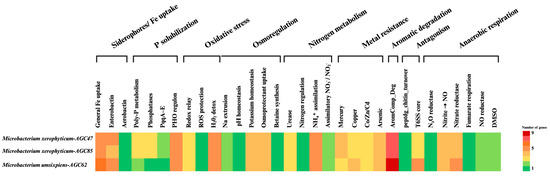
Across the three genomes, we identified a conserved set of stress-response and nutrient-acquisition genes (Figure 3). Oxidative stress management modules (e.g., thioredoxin/thioredoxin-reductase), metal homeostasis and efflux systems, osmoprotection mechanisms, and phosphate scavenging (e.g., high-affinity phosphate uptake, polyphosphate metabolism) were consistently present. Siderophore biosynthesis and uptake loci were irregularly distributed. None of the genomes encoded a complete denitrification pathway; nitrogen metabolism was restricted to assimilatory nitrate/nitrite reduction. These features collectively suggest adaptation to oxidative and osmotic stress and nutrient limitation, particularly phosphorus scarcity, typical of semi-arid ecosystems.
Figure 3.
Heatmap shows the distribution of functional gene categories involved in plant growth promotion, stress response, and metabolism, based on gene count.
3.4. Taxonomic Assignment
Taxonomic classification using MLST (PubMLST; https://pubmlst.org accessed on 3 November 2025) analysis confirmed that the isolates were distinct from described Microbacterium species. Strains AGC47 (leaf) and AGC85 (root) grouped together as M. xerophyticum sp. nov., sharing 100% MLST similarity and showing M. profundi as their closest relative (ANI = 89.1%; dDDH = 33%), values below the species thresholds (ANI ≥ 95%; dDDH ≥ 70%). Strain AGC62 (root) was classified as M. umsixpiens sp. nov., showing 66% MLST similarity, 86.5% ANI, and 44.4% dDDH with M. liquefaciens. TYGS analysis did not return a match to any type strain for the three isolates. These results support the delineation of two novel Microbacterium species associated with C. colocynthis (Table 1).
3.5. Nomenclature and Biochemical Profiling of Novel Bacterial Species
3.5.1. Microbacterium umsixpiens sp. nov.
Microbacterium umsixpiens AGC62 was isolated from the roots of C. colocynthis. Growth occurred at 28–30 °C on TSA medium after 24 h. Colonies were egg-yellow, round, convex, and viscoid, with a diameter of approximately 2 mm. Genome-inferred chemotaxonomic profiles (peptidoglycan, menaquinone, polar lipid, cell-wall sugar, fatty-acid pathways) are summarized in Table S3.
Etymology: M.L. neut. adj. umsixpiens; derived from “UM6P,” the institution where the strain was isolated.
- Type strain: AGC62^T (=CCMM B1339T).
- Accession numbers: 16S rRNA gene, PV706301; whole genome, SRR29855759.
- BioProject: PRJNA1133887; Biosample: SAMN42389299.
- DNA G + C content: 68.54%; Genome size: 3.91 Mb.
- ANI/closest relative: 86.5%. dDDH: 44.4%.
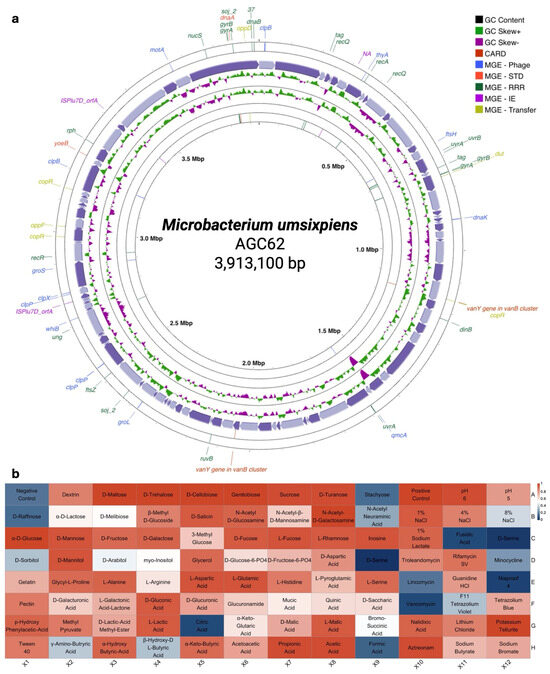
Phenotypic profiling revealed 93.8% similarity to M. maritypicum. The strain displayed broad metabolic versatility, utilizing diverse carbohydrates (dextrin, D-maltose, D-trehalose, D-cellobiose, sucrose, α-D-lactose), organic acids (D-gluconic acid, D-saccharic acid), and amino acids (L-alanine, L-aspartic acid, L-glutamic acid, L-histidine). It grew at pH 5–6, tolerated NaCl up to 8%, and resisted troleandomycin, rifamycin, nalidixic acid, and aztreonam. The draft genome and metabolic profile are presented in Figure 4.
Figure 4.
Genome map and biochemical profile of Microbacterium umsixpiens sp. nov. (a) The genome map, the outermost circles indicate genome annotations for mobile genetic elements (MGEs), categorized into Phage, Stability Transfer Defense (STD), Replication Recombination Repair (RRR), Integration Excision (IE), and Transfer. Purple arrows represent the contigs assembled in each sample, with the GC content and GC skew (±) displayed. The innermost circle highlights antimicrobial resistance annotations using the CARD database; https://card.mcmaster.ca accessed on 3 November 2025. (b) The biochemical profile, assessed using a GEN III plate type and analyzed using the Biolog MicroStation v4.20.05, Microbacterium umsixpiens sp. nov. strain AGC62, isolated from the root compartment in Citrullus colocynthis.
Comparative phenotypic profiles of Microbacterium umsixpiens AGC62 and its closest related-type strain, Microbacterium liquefaciens DSM 20,638 ((Collins et al. [60]) Takeuchi and Hatano [61], Strain DSM 206338), are summarized in Table S4.
3.5.2. Microbacterium xerophyticum sp. nov.
Microbacterium xerophyticum AGC47 (leaf) and AGC85 (root) were isolated from C. colocynthis. Growth occurred at 28–30 °C on TSA medium after 24 h. Colonies were neon yellow, round, pulvinate, and smooth, with a diameter of approximately 2 mm. Genome-inferred chemotaxonomic profiles (peptidoglycan, menaquinone, polar lipid, cell-wall sugar, fatty-acid pathways) are summarized in Table S3.
Etymology: M.L. neut. adj. xerophyticum; from Greek “xeros” (dry) + “phyton” (plant), reflecting its adaptation to arid environments as an endophyte.
- Specie name: Microbacterium xerophyticum sp. nov.
- Type strain: AGC85^T (=CCMM B1344T).
- Accession numbers: 16S rRNA gene, PV706316; whole genome, SRR29855758.
- BioProject: PRJNA1133887; Biosample: SAMN42389300.
- DNA G + C content, 67.23%; Genome size, 4.06 Mb.
- ANI/closest relative: 89.1%. dDDH: 33%.
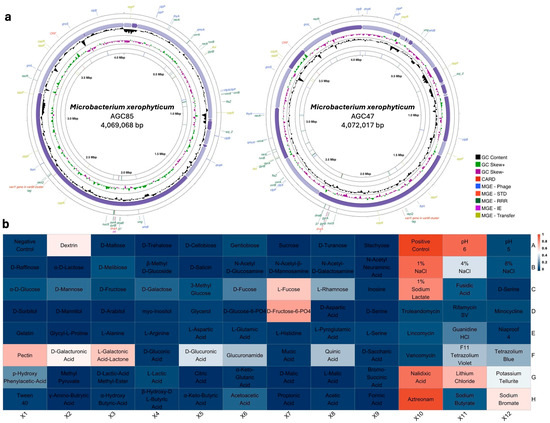
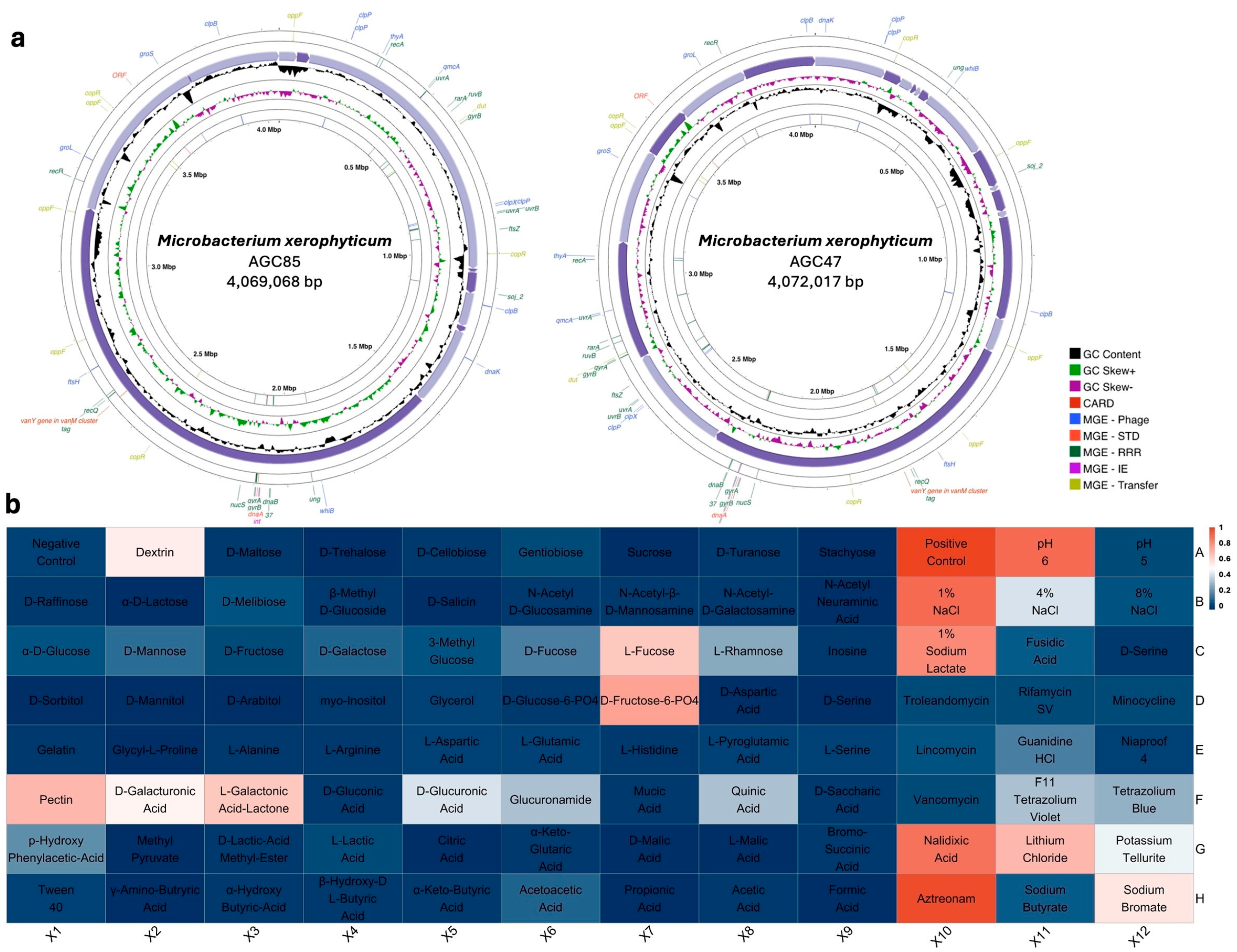
The biochemical profile of AGC85 revealed metabolic specialization, with the ability to metabolize D-fucose, L-fucose, L-rhamnose, sodium lactate, and several organic acids (pectin, D-galacturonic acid, L-galactonic acid lactone, D-glucuronic acid, glucuronamide, quinic acid). Growth was supported at pH 6 and up to 4% NaCl. The strain was resistant to nalidixic acid, aztreonam, lithium chloride, potassium tellurite, and sodium bromate. The draft genome and biochemical profile are shown in Figure 5.
Figure 5.
Genome map and biochemical profile of Microbacterium xerophyticum sp. nov. (a), The genome map, the outermost circles indicate genome annotations for mobile genetic elements (MGEs), categorized into Phage, Stability Transfer Defense (STD), Replication Recombination Repair (RRR), Integration Excision (IE), and Transfer. Purple arrows represent the contigs assembled in each sample, with GC content and GC skew (±) displayed. The innermost circle highlights antimicrobial resistance annotations using the CARD database. (b), The biochemical profile, assessed using a GEN III plate type and analyzed using the Biolog MicroStation.
Comparative phenotypic profiles comparing Microbacterium xerophyticum AGC85 and its closest related-type strain, Microbacterium profundi DSM 22,239 Wu et al. [62]), are summarized in Table S4.
3.6. Phylogenetic Analysis
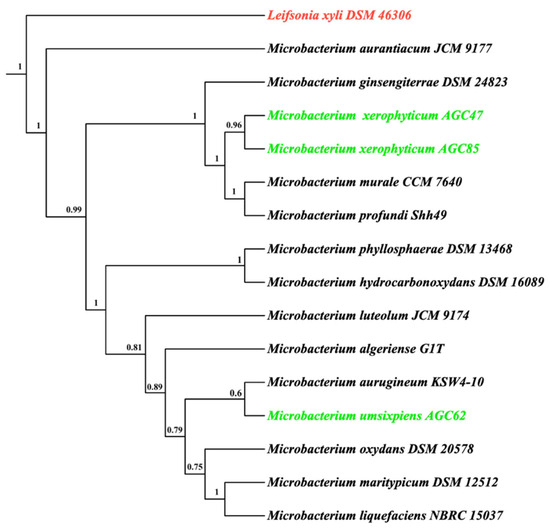
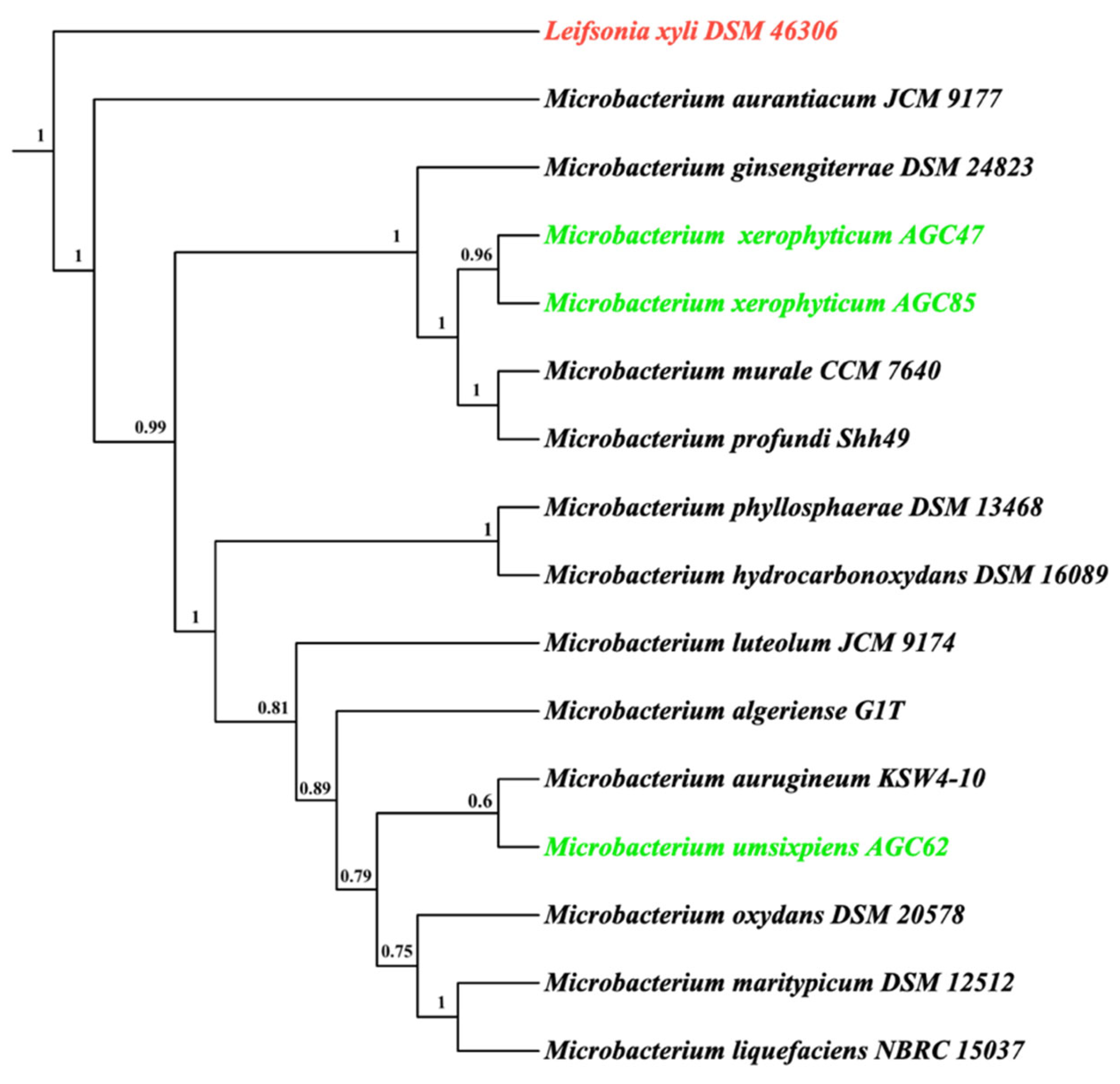
A species-level phylogeny was inferred using Leifsonia xyli DSM 46,306 as the outgroup. Branch support values are indicated at nodes, and scale bars represent substitutions per site (Figure 6). The tree resolved two distinct clades: AGC47 and AGC85 formed a monophyletic branch consistent with M. xerophyticum sp. nov., closely related to M. profundi; AGC62 formed an independent branch corresponding to M. umsixpiens sp. nov., closest to M. aquaticae. These relationships corroborate ANI and dDDH results, confirming species-level distinctiveness.
Figure 6.
Phylogenomic tree of Microbacterium strains from Citrullus colocynthis showing the placement of novel isolates Microbacterium xerophyticum AGC47, AGC85, and Microbacterium umsixpiens AGC62. The outgroup Leifsonia xyli DSM 46306 is shown in red, the novel isolates are shown in green.
3.7. Genome Alignement of M. umsixpiens and M. xerophyticum (AGC62 and AGC85) with Either Closest Bacterial Relatives Using Mauve
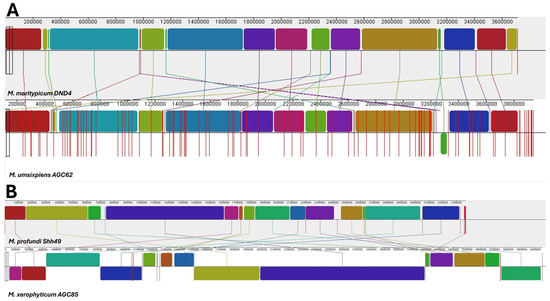
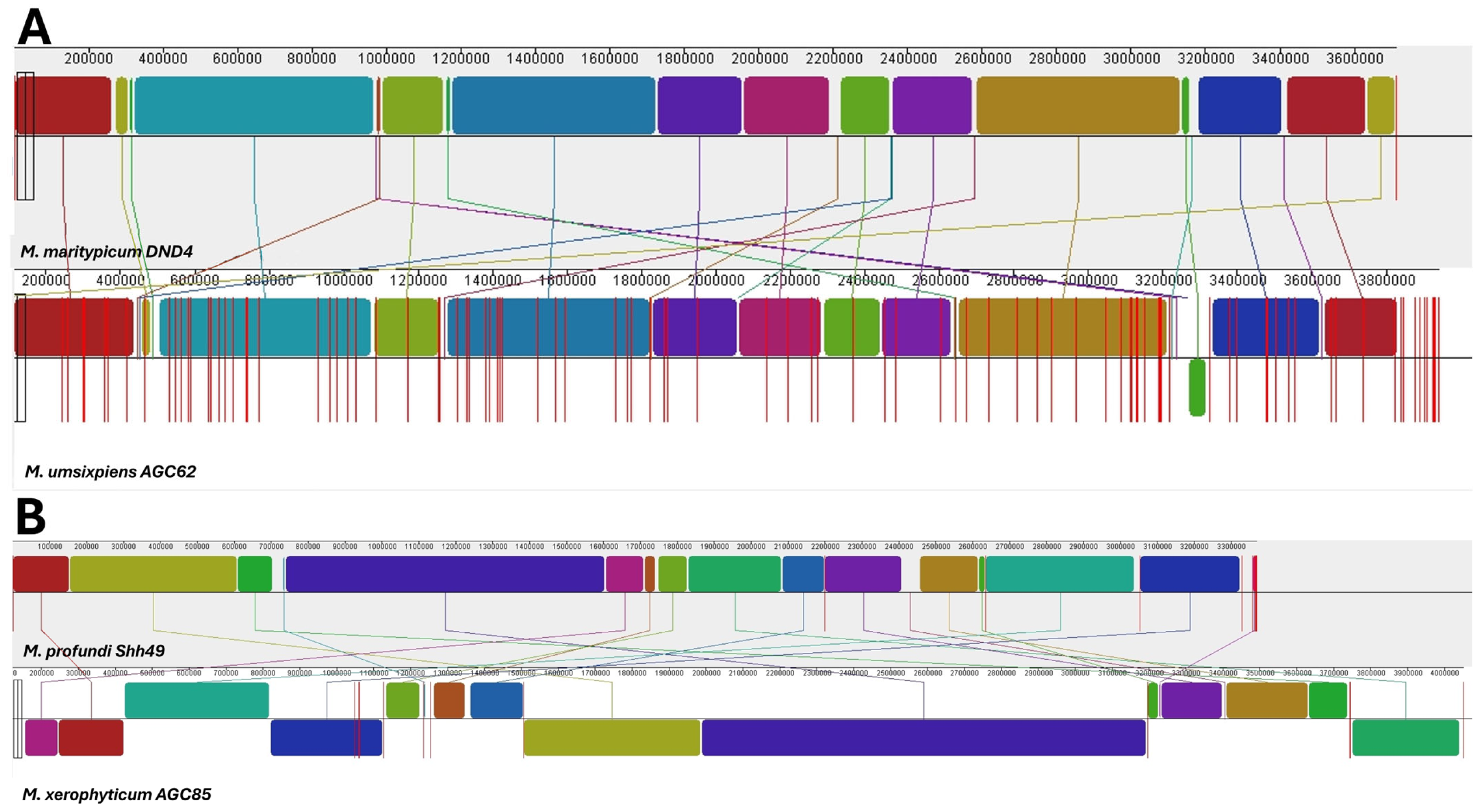
Whole-genome alignment using Mauve v 2.4.0 revealed conserved chromosomal synteny in both novel species, AGC62 and AGC85, when compared with their closest relatives, Microbacterium liquefaciens DSM and Microbacterium profundi strain Shh49, respectively (Figure 7). After contig reordering according to reference position, M. umsixpiens AGC62 exhibited extensive collinearity with M. liquefaciens DSM, illustrated by and LCB weight of 266 (Figure 7A), with the corresponding maximum LCB w. Similarly, M. xerophyticum AGC85 displayed comparable conservation with M. profundi strain Shh49 (91 LCB w) (Figure 7B), and its associated maximum LCB w.
Figure 7.
Whole-genome alignments of novel Microbacterium species with their closest relatives. (A) M. umsixpiens AGC62 vs. M. liquefaciens DSM (266 LCB w). (B) M. xerophyticum AGC85 vs. M. profundi Shh49 (91 LCB w). Contigs were ordered by reference position using Mauve.
These alignment patterns indicate extensive genome collinearity with limited rearrangements, mainly short inversions and transpositions, concentrated near terminal regions, and only a few internal breakpoints. No major insertions or deletions were observed within the core genomic backbone, consistent with their classification as novel species based on ANI and TYGS analyses. The observed patterns are congruent with ANI values and TYGS phylogenetic placement of both isolates, supporting their designation as novel Microbacterium species exhibiting slight structural divergence.
3.8. Inter-Species Genome Restructuring Between M. xerophyticum and M. umsixpiens
Comparative analysis of M. xerophyticum (used as the reference genome) and M. umsixpiens revealed extensive genome reorganization (Figure 8). Mauve resolved the chromosomes into 454 small locally collinear blocks (LCBs), with the corresponding maximum LCB w. Frequent inversions and translocations were distributed throughout the chromosome, with only a few long collinear segments remaining. The dense crossings and fragmented synteny indicate genome-wide reshuffling of gene order. These patterns are consistent with genome-based species delineation (ANI, TYGS) and further support the classification of M. umsixpiens as a distinct species from M. xerophyticum.
Figure 8.
Inter-species genome restructuring between M. xerophyticum AGC85 and M. umsixpiens AGC62. Mauve alignment reveals extensive genome reorganization (454 LCB w), with contigs ordered according to the reference genome.
4. Discussion
We report the isolation and genome-based characterization of three endophytic Microbacterium strains from Citrullus colocynthis collected in a semi-arid region of Morocco, resolving them into two novel species: M. xerophyticum sp. nov. (leaf and root isolates) and M. umsixpiens sp. nov. (root isolate). Their genome sizes (4.06/3.91 Mb), GC contents (67.23/68.54%), and coding sequence counts (3932/3996 CDS) are consistent with values reported for Microbacterium and other high-GC actinobacteria [63].
Whole-genome alignments reveal contrasting synteny patterns at two scales. Between M. umsixpiens AGC62 and M. xerophyticum AGC85, macro-synteny is highly fragmented with numerous inversions and transpositions, indicating broad structural divergence. On the other hand, the two M. xerophyticum strains (AGC47 vs. AGC85) are predominantly co-linear, with only a few localized inversions adjacent to contig boundaries in the draft assemblies. These visual patterns are consistent with our species delineation.
The three genomes shared a conserved repertoire of stress-response and nutrient-acquisition genes, including modules for oxidative stress defense, metal homeostasis, osmoprotection, and phosphate scavenging (high-affinity uptake and polyphosphate metabolism). Siderophore acquisition loci were detected in M. xerophyticum. Such traits are characteristic of plant-associated Microbacterium. For example, M. testaceum strains from rice carry phosphate-acquisition and siderophore genes and enhance host growth under stress [16]. In potato leaves, endophytic Microbacterium (e.g., StLB037) contribute to biocontrol via redox regulation and competition [64]. Likewise, grapevine endophyte Microbacterium che218 exhibits genomic features that support host metabolism in planta [65]. Comparative studies across 70 Microbacterium genomes further highlight conserved functions in phosphate use, siderophore production, secondary metabolite biosynthesis, and stress tolerance [63]. Our isolates therefore align well with the established functional profile of plant-associated Microbacterium.
A key difference between the two species concerns nitrogen metabolism. Genes for nitrate/nitrite assimilation were present in M. xerophyticum (AGC47, AGC85) but absent in M. umsixpiens (AGC62). This suggests potential niche partitioning: M. xerophyticum may utilize inorganic nitrogen inside plant tissues, whereas M. umsixpiens relies more on organic nitrogen, consistent with its expanded amino acid catabolism. Experimental validation, e.g., nitrate-reductase assays or growth on nitrate/nitrite as sole N sources, would help clarify these functional distinctions.
The occurrence of M. xerophyticum in both leaf and root tissues demonstrates its compartmental flexibility in C. colocynthis. Its genome indicates a core endophytic toolkit without strong compartment-specific specialization.
Biochemical profiles reinforced the ecological differentiation between the two species. M. xerophyticum (AGC85) showed selective metabolism of deoxy sugars (D-/L-fucose, L-rhamnose), pectin and uronic acids, quinic acid, and sodium lactate, substrates linked to plant cell wall turnover and phenolic metabolism [66,67,68], Its growth under moderate salinity (4% NaCl) and pH 6, and tolerance to lithium chloride, potassium tellurite, sodium bromate, and antibiotics, suggests adaptation to plant-derived polymers and oxidative/metal stresses. In contrast, M. umsixpiens (AGC62) exhibited broader metabolic versatility, utilizing diverse carbohydrates (dextrin, maltose, trehalose, cellobiose, sucrose, lactose), organic acids (gluconate, saccharate), and amino acids. Its higher NaCl tolerance (up to 8%) indicates greater osmoadaptation, potentially favoring persistence deeper in the root or rhizosphere.
Overall, these results suggest two complementary endophytic strategies in C. colocynthis: (i) M. xerophyticum, a host-metabolite specialist that exploits plant-derived sugars and acids in both root and leaf tissues, and (ii) M. umsixpiens, a generalist with broad substrate utilization and enhanced osmotic tolerance. Both species harbor stress-response and nutrient-acquisition traits that support persistence in water-limited, nutrient-poor tissues, while also contributing to host stress mitigation through redox balance and osmotic regulation.
5. Conclusions
This study identifies two novel endophytic Microbacterium species, M. xerophyticum sp. nov. (leaf and root) and M. umsixpiens sp. nov. (root), from the xerophytic plant Citrullus colocynthis in arid Morocco. Genome-based taxonomy (ANI, dDDH, phylogenomics) establishes them as distinct lineages, while functional profiles highlight capacities central to endophytism in drylands: oxidative and osmotic stress responses, metal homeostasis, phosphate uptake and polyphosphate metabolism, and siderophore acquisition. Differences in nitrogen metabolism and carbon use suggest ecological partitioning between a plant-metabolite specialist (M. xerophyticum) and a stress-tolerant generalist (M. umsixpiens).
By providing region-specific genomic references from a North African semi-arid ecosystem, this work strengthens microbial taxonomy in underexplored regions and advances understanding of Microbacterium adaptation to arid plants. The results also offer practical leads for applications: assays of phosphate solubilization, siderophore activity, nitrate/nitrite utilization, and salt/oxidative tolerance, followed by host inoculation tests, could evaluate these strains as bioregion-appropriate bioinoculants. By integrating taxonomy with functional genomics in a local context, this study contributes to microbial knowledge sovereignty and highlights the potential of indigenous endophytes to enhance crop resilience in arid agroecosystems.
Supplementary Materials
The following supporting information can be downloaded at https://www.mdpi.com/article/10.3390/microorganisms13112583/s1, Table S1. Taxonomic identification of endophytic bacterial isolates from Citrullus colocynthis based on 16S rRNA gene sequencing using the Sanger method. Table S2. Main characteristics of the draft genome assemblies of Microbacterium isolates from Citrullus colocynthis. Table S3. Gene count for major functional gene categories involved in chemotaxonomic characterization. Table S4. Phenotypic profile and carbon-source utilization of type strains Microbacterium umsixpiens AGC62 and Microbacterium xerophyticum AGC85 versus their closest relatives’ reference-type strains.
Author Contributions
K.A.S.M. and S.M. conducted the experiments, analysed the data, and drafted the manuscript. N.R., K.E. and I.M.K. assisted with experiments and data collection. D.M.A.-M. contributed to data analysis, while J.C.F.-C. coordinated the project, analysed data, and contributed to drafting the manuscript. M.H. provided conceptualization, supervision, funding, and manuscript review. All authors contributed to the discussion and interpretation of the results. All authors have read and agreed to the published version of the manuscript.
Funding
This research was funded by OCP Nutricrops (Project AS-85) and UM6P.
Institutional Review Board Statement
Not applicable.
Informed Consent Statement
Not applicable.
Data Availability Statement
Accession numbers for the 16S rRNA gene sequences are available in GenBank under PV706301 and PV706316. Genome sequence data for the bacterial isolates have been deposited in the Sequence Read Archive (SRA) under SRR29855773, SRR29855759, and SRR29855758. The type strains of the two novel species have been deposited in the Moroccan Coordinated Collections of Micro-organisms (CCMM) (https://www.ccmm.ma, accessed on 5 November 2025), with accession numbers B1344T (Microbacterium xerophyticum sp. nov.) and B1339T (Microbacterium umsixpiens sp. nov.). The genome assemblies are publicly accessible on Zenodo (https://zenodo.org/ accessed on 3 November 2025) under the following DOIs: https://doi.org/10.5281/zenodo.17503980.
Acknowledgments
We extend our gratitude to Bulbul Ahmed, Zined Rchiad, Imad Khatour, Safaa Machraoui, and Salah Eddine Azaroual for their technical support and assistance. We also gratefully acknowledge the support of OCP Nutricrops (Project AS-85) for this work. Archive (SRA) at https://www.ncbi.nlm.nih.gov/sra/, accessed on 5 November 2025, under the BioProject accession numbers.
Conflicts of Interest
The authors declare no conflicts of interest.
References
- Stringer, L.C.; Mirzabaev, A.; Benjaminsen, T.A.; Harris, R.M.B.; Jafari, M.; Lissner, T.K.; Stevens, N.; Tirado-von der Pahlen, C. Climate change impacts on water security in global drylands. One Earth 2021, 4, 851–864. [Google Scholar] [CrossRef] [Scilit]
- Li, W.; Migliavacca, M.; Forkel, M.; Walther, S.; Reichstein, M.; Orth, R. Revisiting Global Vegetation Controls Using Multi-layer Soil Moisture. Geophys. Res. Lett. 2021, 48, e2021GL092856. [Google Scholar] [CrossRef] [Scilit]
- Karmaoui, A.; Moumane, A.; El Jaafari, S.; Menouni, A.; Al Karkouri, J.; Yacoubi, M.; Hajji, L. Thirty Years of Change in the Land Use and Land Cover of the Ziz Oases (Pre-Sahara of Morocco) Combining Remote Sensing, GIS, and Field Observations. Land 2023, 12, 2127. [Google Scholar] [CrossRef] [Scilit]
- Huang, J.; Zhang, G.; Zhang, Y.; Guan, X.; Wei, Y.; Guo, R. Global desertification vulnerability to climate change and human activities. Land Degrad. Dev. 2020, 31, 1380–1391. [Google Scholar] [CrossRef] [Scilit]
- Yu, J.; Yin, Q.; Niu, J.; Yan, Z.; Wang, H.; Wang, Y.; Chen, D. Consistent effects of vegetation patch type on soil microbial communities across three successional stages in a desert ecosystem. Land Degrad. Dev. 2022, 33, 1552–1563. [Google Scholar] [CrossRef] [Scilit]
- El Fartassi, I.; Milne, A.E.; El Alami, R.; Rafiqi, M.; Hassall, K.L.; Waine, T.W.; Zawadzka, J.; Diarra, A.; Corstanje, R. Evidence of collaborative opportunities to ensure long-term sustainability in African farming. J. Clean. Prod. 2023, 392, 136170. [Google Scholar] [CrossRef] [Scilit]
- Liu, J.; Sun, X.; Zuo, Y.; Hu, Q.; He, X. Plant species shape the bacterial communities on the phyllosphere in a hyper-arid desert. Microbiol. Res. 2023, 269, 127314. [Google Scholar] [CrossRef] [Scilit]
- Ingrao, C.; Strippoli, R.; Lagioia, G.; Huisingh, D. Water scarcity in agriculture: An overview of causes, impacts and approaches for reducing the risks. Heliyon 2023, 9, e18507. [Google Scholar] [CrossRef] [Scilit] [PubMed]
- Radouane, N.; Meliane, Z.; Errafii, K.; Ait Si Mhand, K.; Mouhib, S.; Hijri, M. Influence of Ziziphus lotus (Rhamnaceae) Plants on the Spatial Distribution of Soil Bacterial Communities in Semi-Arid Ecosystems. Microorganisms 2025, 13, 1740. [Google Scholar] [CrossRef] [Scilit] [PubMed]
- Legeay, J.; Basiru, S.; Ziami, A.; Errafii, K.; Hijri, M. Response of Alternaria and Fusarium Species to Low Precipitation in a Drought-Tolerant Plant in Morocco. Microb. Ecol. 2024, 87, 127. [Google Scholar] [CrossRef] [Scilit]
- Legeay, J.; Errafii, K.; Ziami, A.; Hijri, M. The rhizosphere of a drought-tolerant plant species in Morocco: A refuge of high microbial diversity with no taxon preference. Environ. Microbiol. Rep. 2024, 16, e13254. [Google Scholar] [CrossRef] [Scilit]
- Radouane, N.; Errafii, K.; Mouhib, S.; Mhand, K.A.; Legeay, J.; Hijri, M. Potential Plant-To-Plant Transmission: Shared Endophytic Bacterial Community Between Ziziphus lotus and Its Parasite Cuscuta epithymum. Microb. Ecol. 2024, 87, 119. [Google Scholar] [CrossRef] [Scilit]
- Li, Q.Y.; Munawar, M.; Saeed, M.; Shen, J.Q.; Khan, M.S.; Noreen, S.; Alagawany, M.; Naveed, M.; Madni, A.; Li, C.X. Citrullus colocynthis (L.) Schrad (Bitter Apple Fruit): Promising Traditional Uses, Pharmacological Effects, Aspects, and Potential Applications. Front. Pharmacol. 2021, 12, 791049. [Google Scholar] [CrossRef] [Scilit]
- Singh, G.; Zomuansangi, R.; Hnamte, V.; Tirkey, A.; Singh, B.P.; Singh, P.K.; Zothanpuia; Gupta, V.K.; Deka, P.; Upadhyaya, K.; et al. Chapter 6—Endophytic microbes from medicinal plants, their antimicrobial potential, and role in green agriculture. In Microbial Endophytes and Plant Growth; Solanki, M.K., Yadav, M.K., Singh, B.P., Gupta, V.K., Eds.; Academic Press: Oxford, UK, 2023; pp. 87–97. [Google Scholar]
- Anitha, T.; Balamurugan, V.; Kabilan, M.; Jayakumar, M.; Nandhini, P.M.U.; Raja, V. Cucurbits as a natural pharmacy: A review of phytochemical richness and therapeutic potentials. Ann. Phytomed. Int. J. 2025, 14, 314–326. [Google Scholar] [CrossRef] [Scilit]
- Patel, A.; Sahu, K.P.; Mehta, S.; Balamurugan, A.; Kumar, M.; Sheoran, N.; Kumar, S.; Krishnappa, C.; Ashajyothi, M.; Kundu, A.; et al. Rice leaf endophytic Microbacterium testaceum: Antifungal actinobacterium confers immunocompetence against rice blast disease. Front. Microbiol. 2022, 13, 1035602. [Google Scholar] [CrossRef] [Scilit]
- Patel, A.; Sahu, K.P.; Mehta, S.; Javed, M.; Balamurugan, A.; Ashajyothi, M.; Sheoran, N.; Ganesan, P.; Kundu, A.; Gopalakrishnan, S.; et al. New Insights on Endophytic Microbacterium-Assisted Blast Disease Suppression and Growth Promotion in Rice: Revelation by Polyphasic Functional Characterization and Transcriptomics. Microorganisms 2023, 11, 362. [Google Scholar] [CrossRef] [Scilit]
- Vilchez, J.I.; Niehaus, K.; Dowling, D.N.; Gonzalez-Lopez, J.; Manzanera, M. Protection of Pepper Plants from Drought by Microbacterium sp. 3J1 by Modulation of the Plant’s Glutamine and alpha-ketoglutarate Content: A Comparative Metabolomics Approach. Front. Microbiol. 2018, 9, 284. [Google Scholar] [CrossRef] [Scilit]
- Zhao, J.; Liu, X.; Hou, L.; Xu, G.; Guan, F.; Zhang, W.; Luo, H.; Wu, N.; Yao, B.; Zhang, C.; et al. The seed endophytic microbe Microbacterium testaceum M15 enhances the cold tolerance and growth of rice (Oryza sativa L.). Microbiol. Res. 2024, 289, 127908. [Google Scholar] [CrossRef] [Scilit] [PubMed]
- Dash, D.M.; Osborne, W.J. A systematic review on the implementation of advanced and evolutionary biotechnological tools for efficient bioremediation of organophosphorus pesticides. Chemosphere 2023, 313, 137506. [Google Scholar] [CrossRef] [Scilit] [PubMed]
- Sun, W.; Xiong, Z.; Chu, L.; Li, W.; Soares, M.A.; White, J.F., Jr.; Li, H. Bacterial communities of three plant species from Pb-Zn contaminated sites and plant-growth promotional benefits of endophytic Microbacterium sp. (strain BXGe71). J. Hazard. Mater. 2019, 370, 225–231. [Google Scholar] [CrossRef] [Scilit]
- Karlidag, H.; Esitken, A.; Turan, M.; Sahin, F. Effects of root inoculation of plant growth promoting rhizobacteria (PGPR) on yield, growth and nutrient element contents of leaves of apple. Sci. Hortic. 2007, 114, 16–20. [Google Scholar] [CrossRef] [Scilit]
- Wang, W.Z.; Morohoshi, T.; Someya, N.; Ikeda, T. Diversity and distribution of N-acylhomoserine lactone (AHL)-degrading activity and AHL-lactonase (AiiM) in genus microbacterium. Microbes Environ. 2012, 27, 330–333. [Google Scholar] [CrossRef] [Scilit] [PubMed]
- Chen, J.; Xie, J. Role and regulation of bacterial LuxR-like regulators. J. Cell. Biochem. 2011, 112, 2694–2702. [Google Scholar] [CrossRef] [Scilit]
- Alotaibi, F.; St-Arnaud, M.; Hijri, M. In-Depth Characterization of Plant Growth Promotion Potentials of Selected Alkanes-Degrading Plant Growth-Promoting Bacterial Isolates. Front. Microbiol. 2022, 13, 863702. [Google Scholar] [CrossRef] [Scilit] [PubMed]
- Alotaibi, F.; Hijri, M.; St-Arnaud, M. Overview of Approaches to Improve Rhizoremediation of Petroleum Hydrocarbon-Contaminated Soils. Appl. Microbiol. 2021, 1, 329–351. [Google Scholar] [CrossRef] [Scilit]
- Mandal, D.; Das, S.K.; Adhikari, J.; Chatterjee, D.; Bandyopadhyay, T.K.; Basu, A. Genome sequencing, annotation and application of a strain of Microbacterium paraoxydans—A bacterium with arsenic bioremediation and plant growth promoting potential. Microbe 2024, 4, 100132. [Google Scholar] [CrossRef] [Scilit]
- Freitas, M.A.; Medeiros, F.H.V.; Melo, I.S.; Pereira, P.F.; Peñaflor, M.F.G.V.; Bento, J.M.S.; Paré, P.W. Stem inoculation with bacterial strains Bacillus amyloliquefaciens (GB03) and Microbacterium imperiale (MAIIF2a) mitigates Fusarium root rot in cassava. Phytoparasitica 2018, 47, 135–142. [Google Scholar] [CrossRef] [Scilit]
- Alotaibi, F.; Lee, S.J.; St-Arnaud, M.; Hijri, M. Salix purpurea and Eleocharis obtusa Rhizospheres Harbor a Diverse Rhizospheric Bacterial Community Characterized by Hydrocarbons Degradation Potentials and Plant Growth-Promoting Properties. Plants 2021, 10, 1987. [Google Scholar] [CrossRef] [Scilit]
- Procter, M.; Kundu, B.; Sudalaimuthuasari, N.; AlMaskari, R.S.; Saeed, E.E.; Hazzouri, K.M.; Amiri, K.M.A. Microbiome of Citrullus colocynthis (L.) Schrad. Reveals a Potential Association with Non-Photosynthetic Cyanobacteria. Microorganisms 2022, 10, 2083. [Google Scholar] [CrossRef] [Scilit]
- Ali, A.R.; Bahrami, Y.; Kakaei, E.; Mohammadzadeh, S.; Bouk, S.; Jalilian, N. Isolation and identification of endophytic actinobacteria from Citrullus colocynthis (L.) Schrad and their antibacterial properties. Microb. Cell Factories 2022, 21, 206. [Google Scholar] [CrossRef] [Scilit] [PubMed]
- Shao, Q.; Ran, Q.; Li, X.; Dong, C.; Zhang, Y.; Han, Y. Differential responses of the phyllosphere abundant and rare microbes of Eucommia ulmoides to phytohormones. Microbiol. Res. 2024, 286, 127798. [Google Scholar] [CrossRef] [Scilit]
- Aoki, Y.; Asada, T.; Nojiri, M.; Suzuki, S. Complete genome sequence of Microbacterium sp. che218, an endophyte isolated from Vitis vinifera cv. Chardonnay shoot xylem. Microbiol. Resour. Announc. 2024, 13, e0053624. [Google Scholar] [CrossRef] [Scilit] [PubMed]
- Ouertani, R.; Ouertani, A.; Mahjoubi, M.; Bousselmi, Y.; Najjari, A.; Cherif, H.; Chamkhi, A.; Mosbah, A.; Khdhira, H.; Sghaier, H.; et al. New Plant Growth-Promoting, Chromium-Detoxifying Microbacterium Species Isolated From a Tannery Wastewater: Performance and Genomic Insights. Front. Bioeng. Biotechnol. 2020, 8, 521. [Google Scholar] [CrossRef] [Scilit] [PubMed]
- Cheraiti, N.; Plewniak, F.; Tighidet, S.; Sayeh, A.; Gil, L.; Malherbe, L.; Memmi, Y.; Zilliox, L.; Vandecasteele, C.; Boyer, P.; et al. Complete Genome Sequence of Microbacterium sp. Strain Nx66, Isolated from Waters Contaminated with Petrochemicals in El Saf-Saf Valley, Algeria. Microbiol. Resour. Announc. 2020, 9, 47. [Google Scholar] [CrossRef] [Scilit]
- Lenchi, N.; Anzil, A.; Servais, P.; Kebbouche-Gana, S.; Gana, M.L.; Lliros, M. Microbacterium algeriense sp. nov., a novel actinobacterium isolated from Algerian oil production waters. Int. J. Syst. Evol. Microbiol. 2020, 70, 6044–6051. [Google Scholar] [CrossRef] [Scilit]
- Ducousso-Detrez, A.; Lahrach, Z.; Fontaine, J.; Lounes-Hadj Sahraoui, A.; Hijri, M. Cultural techniques capture diverse phosphate-solubilizing bacteria in rock phosphate-enriched habitats. Front. Microbiol. 2024, 15, 1280848. [Google Scholar] [CrossRef] [Scilit]
- Menzel, P.; Ng, K.L.; Krogh, A. Fast and sensitive taxonomic classification for metagenomics with Kaiju. Nat. Commun. 2016, 7, 11257. [Google Scholar] [CrossRef] [Scilit]
- Zimin, A.V.; Marcais, G.; Puiu, D.; Roberts, M.; Salzberg, S.L.; Yorke, J.A. The MaSuRCA genome assembler. Bioinformatics 2013, 29, 2669–2677. [Google Scholar] [CrossRef] [Scilit] [PubMed]
- Mikheenko, A.; Prjibelski, A.; Saveliev, V.; Antipov, D.; Gurevich, A. Versatile genome assembly evaluation with QUAST-LG. Bioinformatics 2018, 34, i142–i150. [Google Scholar] [CrossRef] [Scilit]
- Parks, D.H.; Imelfort, M.; Skennerton, C.T.; Hugenholtz, P.; Tyson, G.W. CheckM: Assessing the quality of microbial genomes recovered from isolates, single cells, and metagenomes. Genome Res. 2015, 25, 1043–1055. [Google Scholar] [CrossRef] [Scilit]
- Nurk, S.; Meleshko, D.; Korobeynikov, A.; Pevzner, P.A. metaSPAdes: A new versatile metagenomic assembler. Genome Res. 2017, 27, 824–834. [Google Scholar] [CrossRef] [Scilit]
- Wu, Y.W.; Simmons, B.A.; Singer, S.W. MaxBin 2.0: An automated binning algorithm to recover genomes from multiple metagenomic datasets. Bioinformatics 2016, 32, 605–607. [Google Scholar] [CrossRef] [Scilit]
- Sieber, C.M.K.; Probst, A.J.; Sharrar, A.; Thomas, B.C.; Hess, M.; Tringe, S.G.; Banfield, J.F. Recovery of genomes from metagenomes via a dereplication, aggregation and scoring strategy. Nat. Microbiol. 2018, 3, 836–843. [Google Scholar] [CrossRef] [Scilit]
- Meier-Kolthoff, J.P.; Goker, M. TYGS is an automated high-throughput platform for state-of-the-art genome-based taxonomy. Nat. Commun. 2019, 10, 2182. [Google Scholar] [CrossRef] [Scilit] [PubMed]
- Jolley, K.A.; Bray, J.E.; Maiden, M.C.J. Open-access bacterial population genomics: BIGSdb software, the PubMLST.org website and their applications. Wellcome Open Res. 2018, 3, 124. [Google Scholar] [CrossRef] [Scilit] [PubMed]
- Richter, M.; Rossello-Mora, R. Shifting the genomic gold standard for the prokaryotic species definition. Proc. Natl. Acad. Sci. USA 2009, 106, 19126–19131. [Google Scholar] [CrossRef] [Scilit]
- Meier-Kolthoff, J.P.; Auch, A.F.; Klenk, H.P.; Goker, M. Genome sequence-based species delimitation with confidence intervals and improved distance functions. BMC Bioinform. 2013, 14, 60. [Google Scholar] [CrossRef] [Scilit]
- Seemann, T. Prokka: Rapid prokaryotic genome annotation. Bioinformatics 2014, 30, 2068–2069. [Google Scholar] [CrossRef] [Scilit] [PubMed]
- Aramaki, T.; Blanc-Mathieu, R.; Endo, H.; Ohkubo, K.; Kanehisa, M.; Goto, S.; Ogata, H. KofamKOALA: KEGG Ortholog assignment based on profile HMM and adaptive score threshold. Bioinformatics 2020, 36, 2251–2252. [Google Scholar] [CrossRef] [Scilit]
- Bhardwaj, P.; Jain, R.; Kumar, S. Draft Genome Sequence of Endophytic Sphingomonas faeni Strain ALB2, Isolated from the Leaf of a Cold-Desert Medicinal Plant. Microbiol. Resour. Announc. 2022, 11, e0068722. [Google Scholar] [CrossRef] [Scilit]
- Morobane, D.M.; Tshishonga, K.; Serepa-Dlamini, M.H. Draft Genome Sequence of Pantoea sp. Strain MHSD4, a Bacterial Endophyte with Bioremediation Potential. Evol. Bioinform. 2024, 20, 11769343231217908. [Google Scholar] [CrossRef] [Scilit] [PubMed]
- Brown, C.L.; Mullet, J.; Hindi, F.; Stoll, J.E.; Gupta, S.; Choi, M.; Keenum, I.; Vikesland, P.; Pruden, A.; Zhang, L. mobileOG-db: A Manually Curated Database of Protein Families Mediating the Life Cycle of Bacterial Mobile Genetic Elements. Appl. Environ. Microbiol. 2022, 88, e0099122. [Google Scholar] [CrossRef] [Scilit]
- McArthur, A.G.; Waglechner, N.; Nizam, F.; Yan, A.; Azad, M.A.; Baylay, A.J.; Bhullar, K.; Canova, M.J.; De Pascale, G.; Ejim, L.; et al. The comprehensive antibiotic resistance database. Antimicrob. Agents Chemother. 2013, 57, 3348–3357. [Google Scholar] [CrossRef] [Scilit]
- Overbeek, R.; Olson, R.; Pusch, G.D.; Olsen, G.J.; Davis, J.J.; Disz, T.; Edwards, R.A.; Gerdes, S.; Parrello, B.; Shukla, M.; et al. The SEED and the Rapid Annotation of microbial genomes using Subsystems Technology (RAST). Nucleic Acids Res. 2014, 42, D206–D214. [Google Scholar] [CrossRef] [Scilit]
- Kolde, R. Implementation of Heatmaps That Offers More Control over Dimensions and Appearance. 2010. Available online: https://CRAN.R-project.org/package=pheatmap (accessed on 5 November 2025).
- Bochner, B.R. Global phenotypic characterization of bacteria. FEMS Microbiol. Rev. 2009, 33, 191–205. [Google Scholar] [CrossRef] [Scilit] [PubMed]
- Darling, A.E.; Mau, B.; Perna, N.T. progressiveMauve: Multiple genome alignment with gene gain, loss and rearrangement. PLoS ONE 2010, 5, e11147. [Google Scholar] [CrossRef] [Scilit] [PubMed]
- Darling, A.C.; Mau, B.; Blattner, F.R.; Perna, N.T. Mauve: Multiple alignment of conserved genomic sequence with rearrangements. Genome Res. 2004, 14, 1394–1403. [Google Scholar] [CrossRef] [Scilit]
- Collins, M.D.; Jones, D.; Keddie, R.M.; Kroppenstedt, R.M.; Schleifer, K.H. Classification of some coryneform bacteria in a new genus Aureobacterium. Syst. Appl. Microbiol. 1983, 4, 236–252. [Google Scholar] [CrossRef] [Scilit]
- Takeuchi, M.; Hatano, K. Proposal of six new species in the genus Microbacterium and transfer of Flavobacterium marinotypicum ZoBell and Upham to the genus Microbacterium as Microbacterium maritypicum comb. nov. Int. J. Syst. Bacteriol. 1998, 48, 973–982. [Google Scholar] [CrossRef] [Scilit]
- Wu, Y.H.; Wu, M.; Wang, C.S.; Wang, X.G.; Yang, J.Y.; Oren, A.; Xu, X.W. Microbacterium profundi sp. nov., isolated from deep-sea sediment of polymetallic nodule environments. Int. J. Syst. Evol. Microbiol. 2008, 58, 2930–2934. [Google Scholar] [CrossRef] [Scilit]
- Corretto, E.; Antonielli, L.; Sessitsch, A.; Hofer, C.; Puschenreiter, M.; Widhalm, S.; Swarnalakshmi, K.; Brader, G. Comparative Genomics of Microbacterium Species to Reveal Diversity, Potential for Secondary Metabolites and Heavy Metal Resistance. Front. Microbiol. 2020, 11, 1869. [Google Scholar] [CrossRef] [Scilit] [PubMed]
- Legein, M.; Smets, W.; Vandenheuvel, D.; Eilers, T.; Muyshondt, B.; Prinsen, E.; Samson, R.; Lebeer, S. Modes of Action of Microbial Biocontrol in the Phyllosphere. Front. Microbiol. 2020, 11, 1619. [Google Scholar] [CrossRef] [Scilit] [PubMed]
- Teshigawara, Y.; Sato, S.; Asada, T.; Nojiri, M.; Suzuki, S.; Aoki, Y. Anthocyanin Accumulation in Grape Berry Skin Promoted by Endophytic Microbacterium sp. che218 Isolated from Wine Grape Shoot Xylem. Microorganisms 2024, 12, 1906. [Google Scholar] [CrossRef] [Scilit] [PubMed]
- Lara-Espinoza, C.; Carvajal-Millan, E.; Balandran-Quintana, R.; Lopez-Franco, Y.; Rascon-Chu, A. Pectin and Pectin-Based Composite Materials: Beyond Food Texture. Molecules 2018, 23, 942. [Google Scholar] [CrossRef] [Scilit]
- Villalobos, J.A.; Yi, B.R.; Wallace, I.S. 2-Fluoro-L-Fucose Is a Metabolically Incorporated Inhibitor of Plant Cell Wall Polysaccharide Fucosylation. PLoS ONE 2015, 10, e0139091. [Google Scholar] [CrossRef] [Scilit]
- Urbanowicz, B.R.; Pena, M.J.; Ratnaparkhe, S.; Avci, U.; Backe, J.; Steet, H.F.; Foston, M.; Li, H.; O’Neill, M.A.; Ragauskas, A.J.; et al. 4-O-methylation of glucuronic acid in Arabidopsis glucuronoxylan is catalyzed by a domain of unknown function family 579 protein. Proc. Natl. Acad. Sci. USA 2012, 109, 14253–14258. [Google Scholar] [CrossRef] [Scilit]



Disclaimer/Publisher’s Note: The statements, opinions and data contained in all publications are solely those of the individual author(s) and contributor(s) and not of MDPI and/or the editor(s). MDPI and/or the editor(s) disclaim responsibility for any injury to people or property resulting from any ideas, methods, instructions or products referred to in the content. |
© 2025 by the authors. Licensee MDPI, Basel, Switzerland. This article is an open access article distributed under the terms and conditions of the Creative Commons Attribution (CC BY) license (https://creativecommons.org/licenses/by/4.0/).