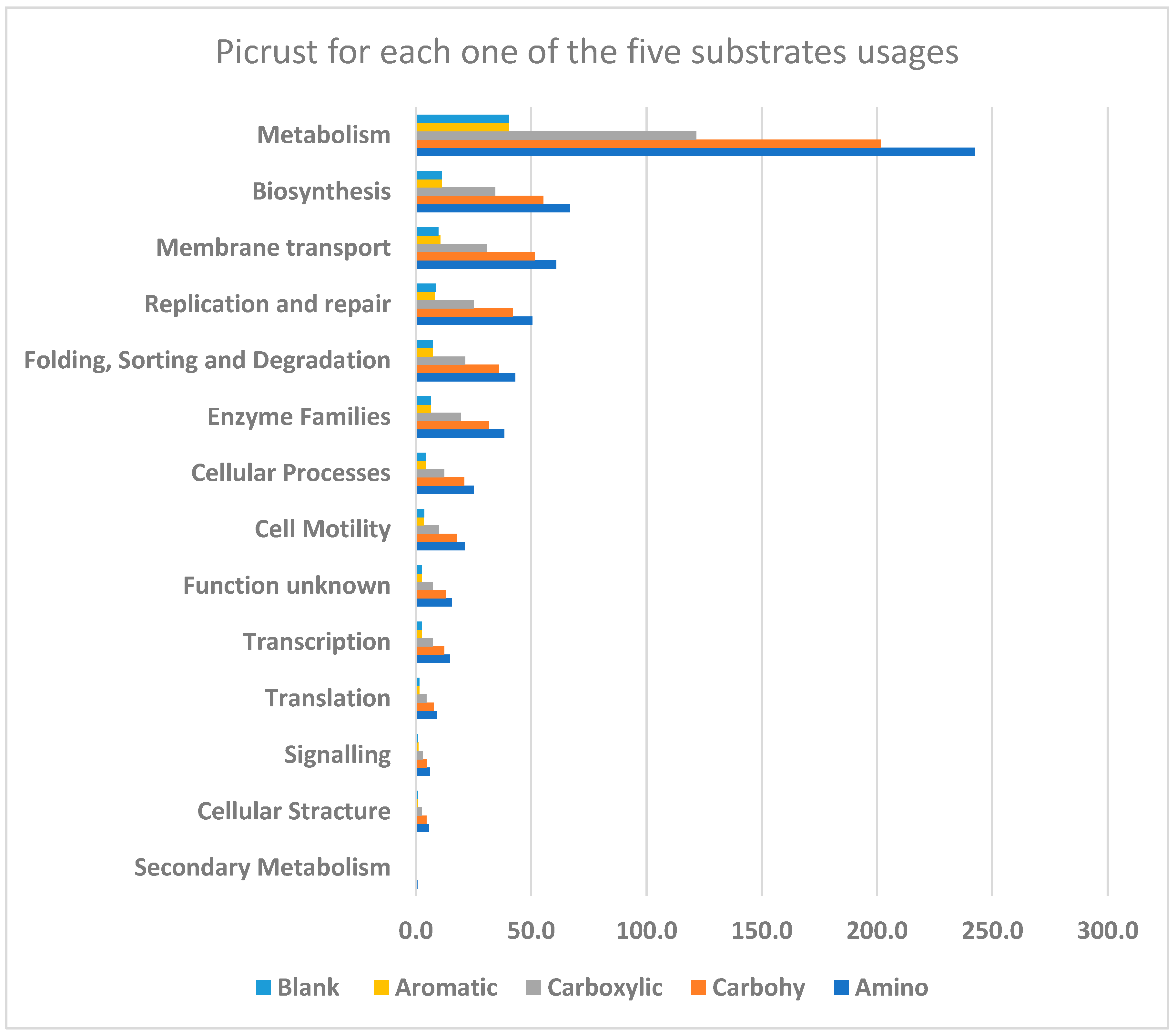

Are Changes Occurring in Bacterial Taxa Community and Diversity with the Utilization of Different Substrates within SIR Measurements?

Abstract
Share and Cite
Steinberger, Y.; Doniger, T.; Applebaum, I.; Sherman, C. Are Changes Occurring in Bacterial Taxa Community and Diversity with the Utilization of Different Substrates within SIR Measurements? Microorganisms 2024, 12, 2034. https://doi.org/10.3390/microorganisms12102034
Steinberger Y, Doniger T, Applebaum I, Sherman C. Are Changes Occurring in Bacterial Taxa Community and Diversity with the Utilization of Different Substrates within SIR Measurements? Microorganisms. 2024; 12(10):2034. https://doi.org/10.3390/microorganisms12102034
Chicago/Turabian StyleSteinberger, Yosef, Tirza Doniger, Itaii Applebaum, and Chen Sherman. 2024. "Are Changes Occurring in Bacterial Taxa Community and Diversity with the Utilization of Different Substrates within SIR Measurements?" Microorganisms 12, no. 10: 2034. https://doi.org/10.3390/microorganisms12102034
APA StyleSteinberger, Y., Doniger, T., Applebaum, I., & Sherman, C. (2024). Are Changes Occurring in Bacterial Taxa Community and Diversity with the Utilization of Different Substrates within SIR Measurements? Microorganisms, 12(10), 2034. https://doi.org/10.3390/microorganisms12102034