
Article

Comparative Study of Stator Electrically Excited Machines with and Without Dual-Armature Windings

1
School of Automation and Electrical Engineering, Zhejiang University of Science and Technology, Hangzhou 310023, China
2
Power Electronics and Machines Control Research Institute, University of Nottingham, Nottingham NG7 2RD, UK
3
Akribis Systems (Hangzhou) Co., Ltd., Hangzhou 310053, China
*
Author to whom correspondence should be addressed.
Actuators 2026, 15(2), 115; https://doi.org/10.3390/act15020115
Submission received: 8 January 2026 / Revised: 5 February 2026 / Accepted: 9 February 2026 / Published: 13 February 2026

Abstract

To meet the demand for high torque density in applications such as actuators, this paper investigates the use of dual-armature (DA) windings on both stator and rotor to enhance torque performance for stator electrically excited machines. A systematic comparison is conducted among four topologies, namely the conventional flux-switching electrically excited (FSEE) and variable flux reluctance (VFR) machines, as well as their DA counterparts. All machines are optimized under the same copper loss and torque ripple constraints to ensure a fair comparison. The results show that the FSEE machine delivers approximately 49% higher torque than the VFR machine, attributed to its higher stator back-EMF. By integrating the rotor armature winding that fully utilizes the rotor space, the DA-FSEE and DA-VFR machines achieve substantial torque improvements of 81% and 163%, respectively. While the DA-VFR machine shows the most pronounced torque enhancement, the DA-FSEE machine provides the highest-torque output. Benefiting from the improved torque performance, the DA-FSEE and DA-VFR machines also demonstrate 10–20% higher efficiency over their counterparts within a typical speed range. Furthermore, sensitivity analysis of key design parameters reveals that the split ratio has the most profound influence on torque output for all the machines, followed by the stator tooth width. In the DA machines, the rotor yoke thickness emerges as a consistently important factor for achieving high torque performance. These key findings provide valuable guidance for the optimal selection and detailed design of high-performance electrically excited machines in engineering practice.

1. Introduction

Electric-motor-driven actuators are critical and in high demand for energy conversion and precise motion control in fields such as aerospace, electric vehicles, robotics, and healthcare [1,2,3,4]. In this context, stator electrically excited machines present a promising solution, because they enable flexible speed regulation through field current control while also eliminating the need for rare-earth magnets [5,6,7]. The flux-switching electrically excited (FSEE) machine [8,9,10] and the variable flux reluctance (VFR) machine [11,12,13] are two representative types in this category. However, they usually suffer from low torque density in comparison with their permanent magnet (PM) counterparts, which hinders their applicability to high-torque scenarios. Hence, considerable research has been aimed at enhancing their torque performance.
A general approach involves selecting appropriate stator-slot/rotor-tooth combinations and optimizing key design parameters. For FSEE machines, an early comparative study [14] examines four machines that have 24 stator slots and employ overlapping windings, but with close numbers of rotor teeth. The results indicate that the FSEE machines with 13 and 14 rotor teeth produce higher back-EMFs than those of the 10- and 11-rotor-tooth designs. Therefore, these two FSEE machines, each having a diameter of 45 mm and an active axial length of 25 mm, generate the highest torque of about 0.35 Nm, under rated field and armature currents of 10 A and 14.1 A. However, the torque of the FSEE machine remains 30% lower than that of its counterpart with ferrite magnets of Br = 0.4 T, even though the DC field current is doubled. Further work in [15] suggests that halving the slot and teeth numbers can effectively improve torque density under the same copper loss condition. Even with the halved configuration, the 12-stator-slot/7-rotor-tooth structure still achieves a higher average torque than the widely studied 12-stator-slot/5-rotor-tooth structure, which achieves an average torque of 0.8 Nm under both field and armature currents of 10 A. The research in [16] further investigates the same stator-slot/rotor-tooth combinations as those in [14], but with non-overlapping winding arrangements. The 11- and 13-rotor-tooth designs are found to have the highest torque near 0.9 Nm under a fixed total copper loss of 100 W, followed by the 10-rotor-tooth design with approximately 10% lower. However, the previous optimal 14-rotor-tooth configuration is found to have the lowest torque there, due to different winding arrangements. In [17], the optimization of a 24-stator-slot/10-rotor-tooth FSEE machine demonstrates that a field-to-armature copper loss ratio of unity always maximizes torque output when magnetic saturation is neglected. For the double-layer overlapping winding arrangement, a torque output of 0.4 Nm is attained with the copper loss set to 37 W. On the other hand, the detailed optimal design, particularly those key parameters such as split ratio, is critically hinged on the magnetic flux density level and the permissible total loss.
For VFR machines, the early research in [18] compares different rotor tooth numbers under a conventional 6-stator-slot structure. While the 5-rotor-tooth design yields a relatively high torque (approximately 0.7 Nm) with field and armature currents both at 2 A, it introduces unbalanced magnetic force due to the odd pole count. To solve this issue, a subsequent study in [19] doubles the stator slots and rotor teeth simultaneously. The 12-stator-slot/10-rotor-tooth design not only produces the highest back-EMF compared to the 8-, 11-, 13-, and 14-rotor-tooth designs but also features very small low-order harmonics, thereby achieving an optimal balance between large torque and small unbalanced magnetic force. A torque slightly less than 0.4 Nm is reported when both field and armature currents are set as 4 A. Further research in [20] reveals that maintaining the rotor-tooth arc to rotor-tooth pitch ratio near a value of 1/3, along with a relatively smaller stator-tooth arc, is crucial for achieving good torque performance. A torque of 0.74 Nm is reported for the six-stator-slot/five-rotor-tooth design under 30 W total copper loss for the active part, which corresponds to a current density near 8 A/mm2 for both field and armature windings. In [21], rotor tooth numbers of 7, 16, and 17 beyond conventional choices are investigated for 12-stator-slot VFR machines through the application of the Vernier effect with high gear ratios. As a typical example, the 6-rotor-tooth configuration produces a torque of 6 Nm and a power factor of 0.2 under 600 W copper loss, which indicates improved torque performance at the expense of more copper loss and degraded power factor.
Another general approach refers to developing new topologies. The dual-armature (DA) winding configuration, which is characterized by placing armature windings on both the stator and rotor with different phase numbers, has been successfully applied to various PM machines for torque enhancement. Its first application to a flux-switching PM machine is reported to increase 47% torque output [22]. Subsequent implementations in flux-reversal and doubly salient PM machines achieve approximately 50% improvement in torque density [23,24]. Furthermore, a DA configuration with dual PMs is proposed in [25]. It contributes to an increase in torque up to 60% as well as good fault-tolerant capability, despite more complex magnetic fields.
While the DA technique has been applied in PM machines, its application to electrically excited machines remains limited. One of the very few studies [26] integrates the DA windings into an FSEE machine. A significant torque improvement up to 75% is achieved, which even surpasses those reported for stator PM machines in [22,23,24,25]. However, the effectiveness of the DA winding configuration in other types of stator electrically excited machines has not been investigated. The VFR machine, with its robust rotor core structure similar to that of the FSEE machine, appears to be a naturally suitable candidate. Motivated by this potential, the present work investigates the integration of the DA winding configuration in both FSEE and VFR machines and provides a comprehensive comparison of electromagnetic performance between these machines with and without DA windings. It further aims to determine the relative importance of key design parameters across machine types, thereby establishing an expanded understanding and design principles for DA-FSEE and DA-VFR machines compared to their conventional counterparts.

2. Machine Topologies and Operating Principles

2.1. Machine Topologies

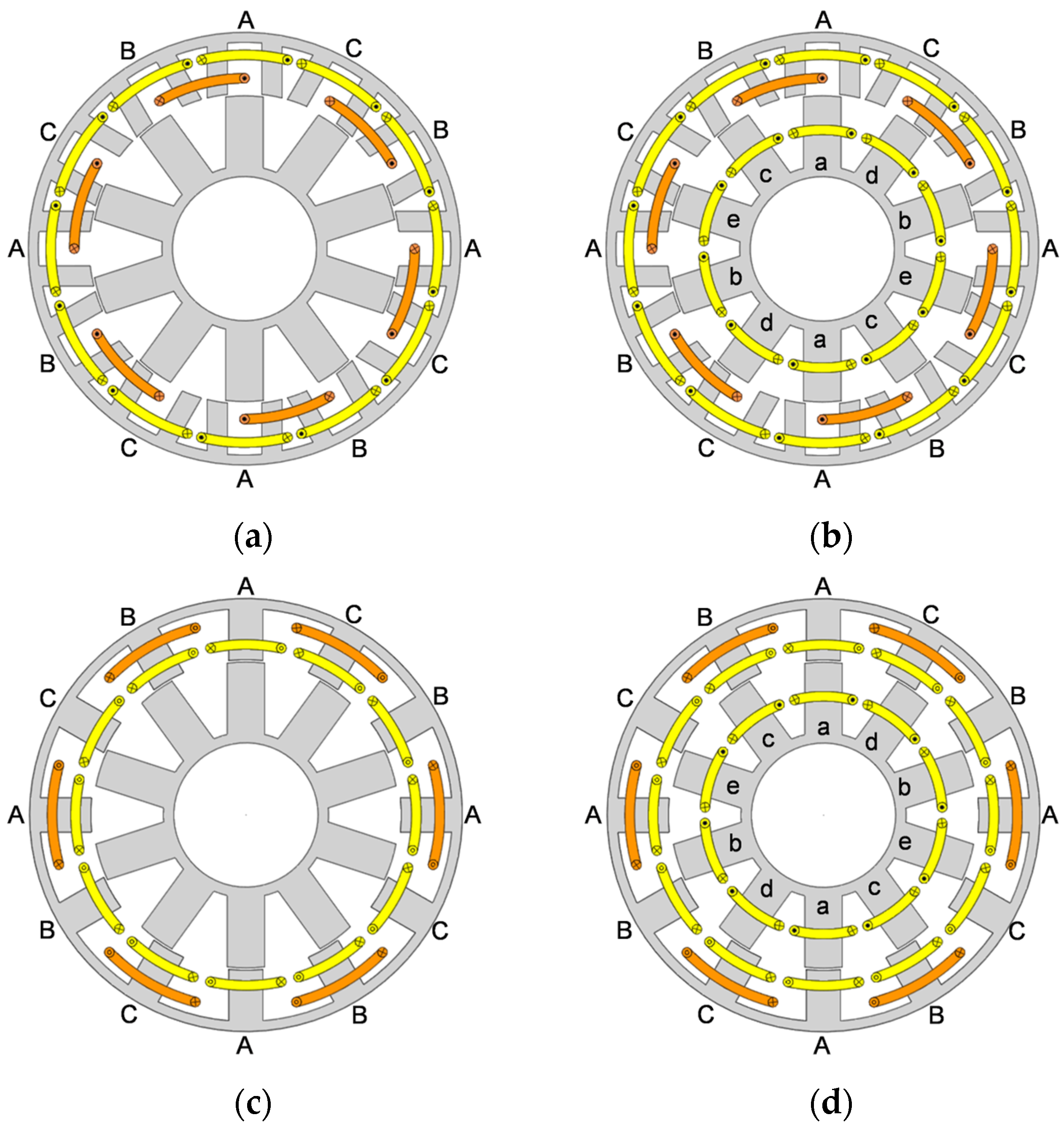
The topologies of typical FSEE and VFR machines are illustrated in Figure 1a,c. A 24-stator-slot/10-rotor-tooth configuration is selected to achieve an optimal balance among large average torque, low torque ripple, short end-winding length, and small unbalanced magnetic force. More importantly, this combination enables a reasonable and practical five-phase rotor design when employing the DA configuration, thereby avoiding the increased complexity and cost associated with excessive rotor phases. On the stator side, six single-layer field coils and 12 double-layer three-phase armature coils are placed in corresponding slots with different slot shapes. For the purpose of making a direct comparison with the FSEE machine, the VFR machine employs a 12-stator-slot/10-rotor-tooth configuration. Under this arrangement, the VFR machine can be regarded as a transformation of the FSEE machine, in which the DC field winding and the stator armature winding share the same stator slots.
By introducing an additional set of armature winding on the rotor of the FSEE and VFR machines, the corresponding dual-armature configurations, namely the DA-FSEE and DA-VFR machines, are obtained as shown in Figure 1b,d. It should be noted that the rotor armature winding necessitates an additional power supply, typically achieved through a slip ring. This introduces increased system complexity, potential reliability concerns, and additional losses from the slip ring and the associated inverter. However, these limitations are being addressed by progressive advancements in slip ring and inverter technology, along with the beneficial use of a five-phase rotor armature solution.

2.2. Operating Principles

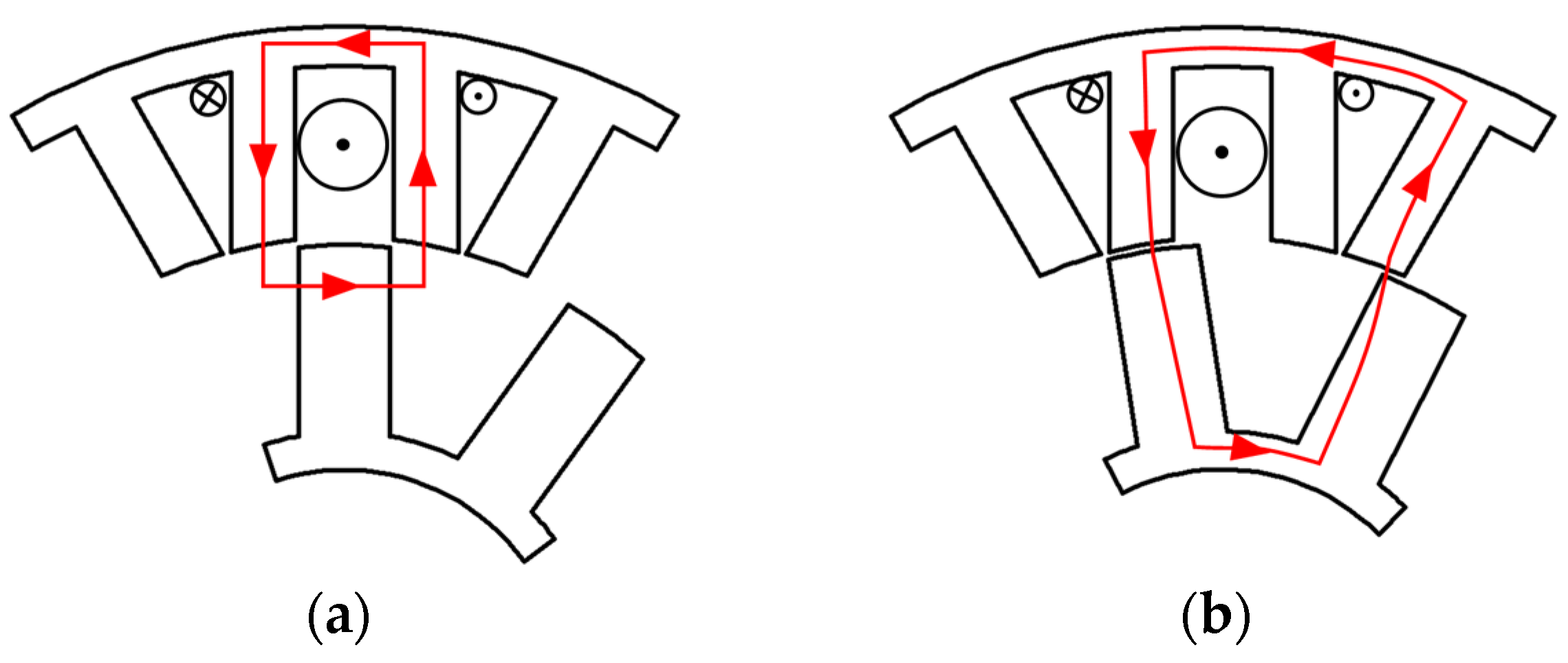
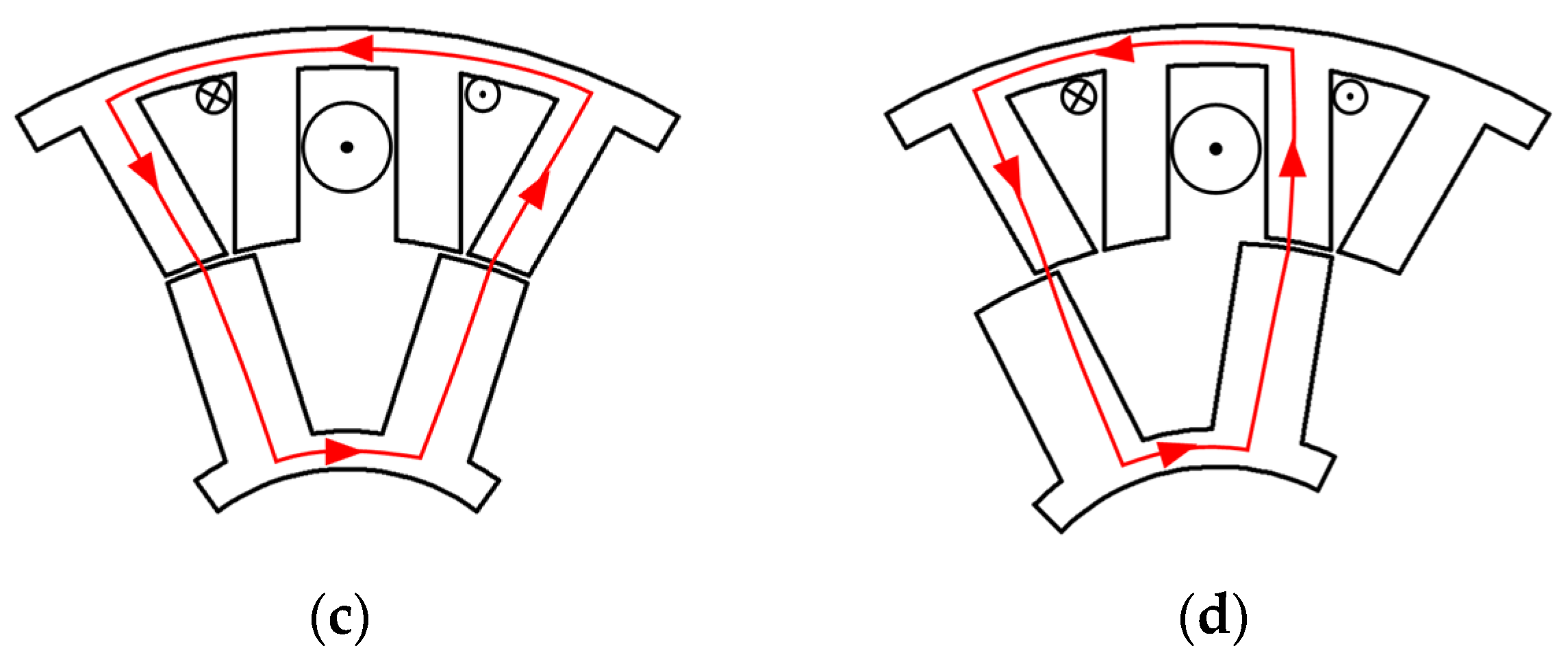
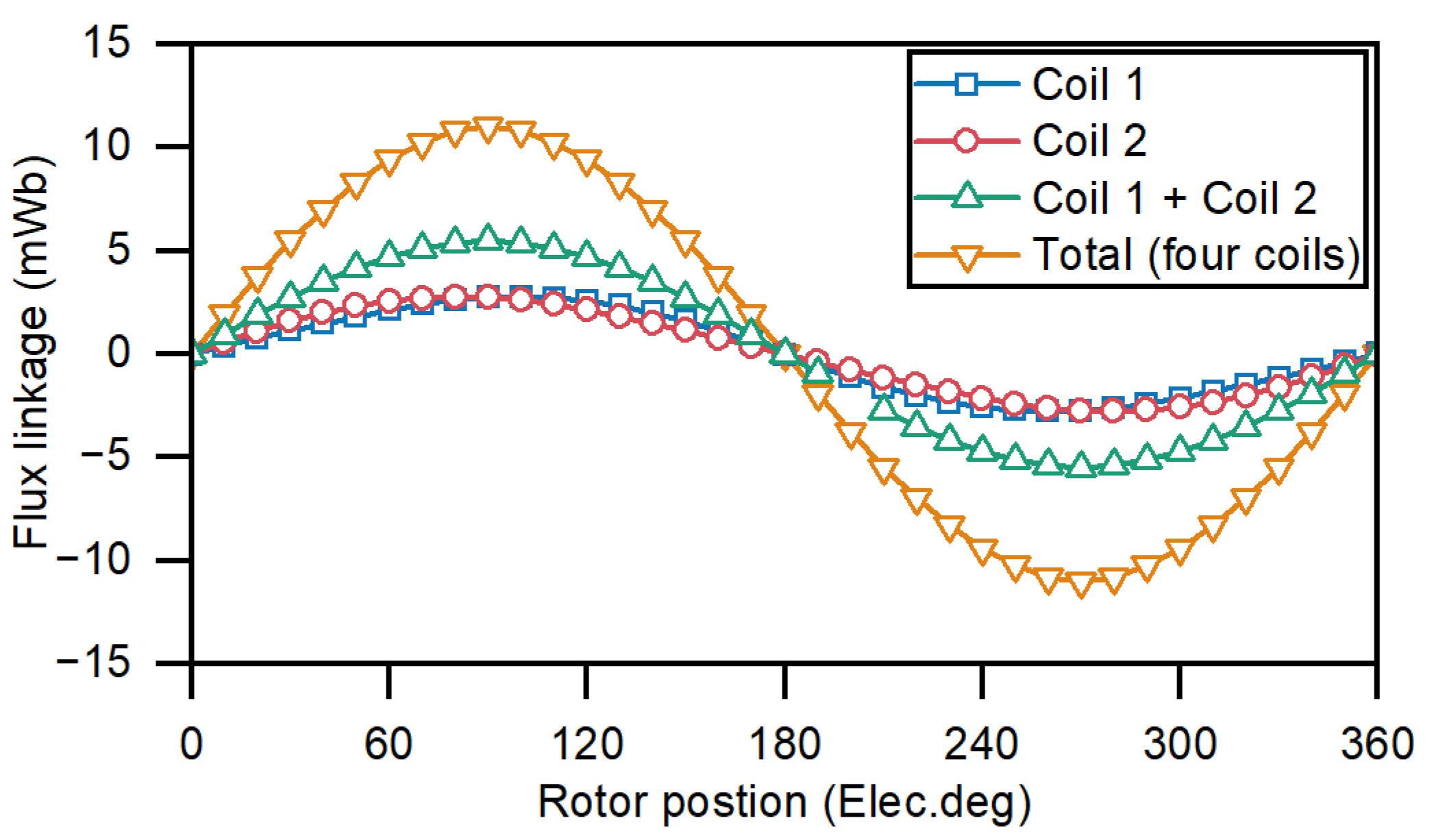
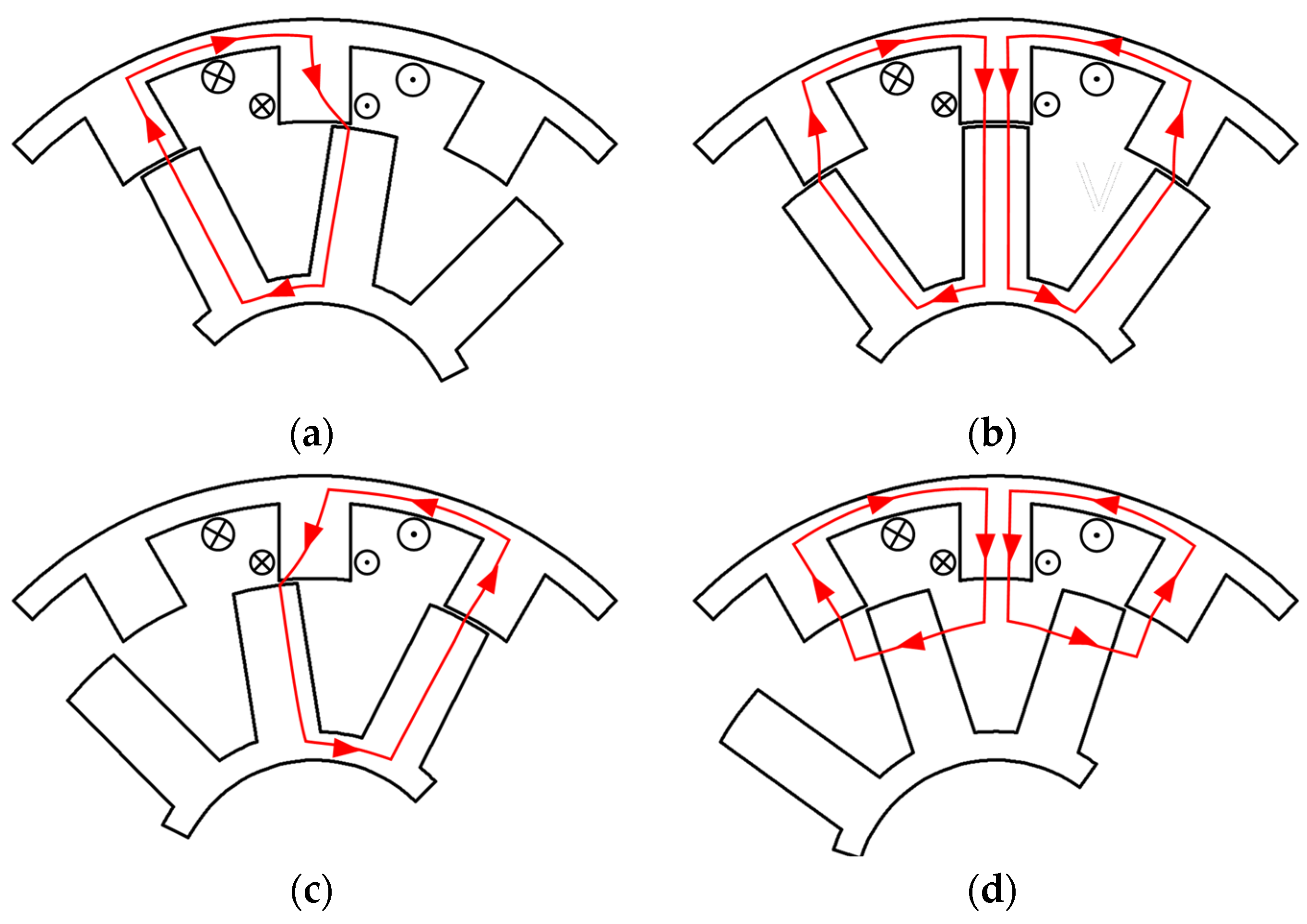
In the FSEE and DA-FSEE machines, the interaction between the DC field winding and the stator armature winding gives rise to the flux-switching operating principle. When the rotor is located at the mechanical positions of 0° and 18°, as illustrated in Figure 2a,c, the flux linkage of the stator armature coil is zero. When the rotor moves to the mechanical positions of 9° and 27°, as shown in Figure 2b,d, a magnetic path is formed through the adjacent stator and rotor teeth, resulting in the maximum flux linkage of the corresponding stator armature coil. Accordingly, after the rotor rotates through one tooth pitch (i.e., 36° mechanical angle), the magnetic field surrounding the stator armature coil undergoes a complete cycle. The flux linkage waveforms are illustrated in Figure 3. In this case, the electrical frequency of stator armature winding fs can be expressed as Equation (1),
f s = n P r / 60
where n is the rotational speed in units of RPM, and Pr is the number of rotor teeth.
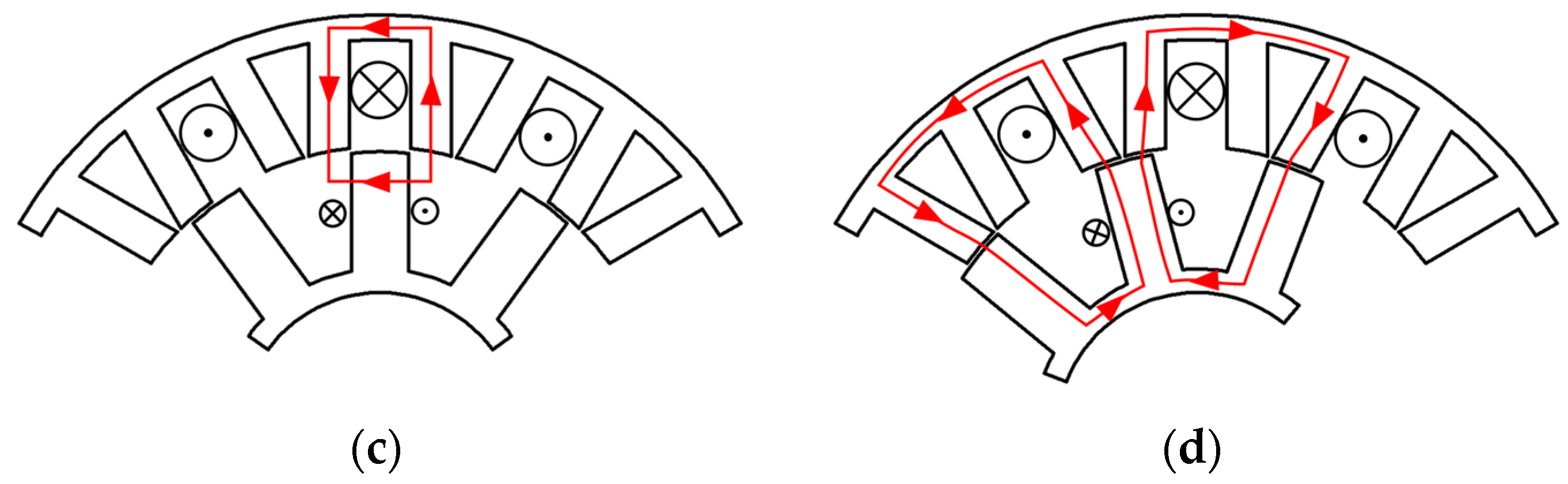
In the DA-FSEE machine, the additional rotor armature winding interacts with the DC field winding, following the operating principle of a conventional electrically excited synchronous machine. The only difference here is that the DC field winding is stationary, but the armature winding rotates. Under the present machine topology, both of the winding sets have 6 pole pairs. Consequently, when the rotor rotates through 60° mechanical angle, the magnetic field surrounding the rotor armature winding completes one electrical cycle. Specifically, when the rotor is located at the mechanical positions of 0° and 30°, as shown in Figure 4a,c, the flux linkage of the rotor armature coil is zero. When the rotor reaches the mechanical positions of 15° and 45°, as illustrated in Figure 4b,d, the flux linkage reaches its maximum value. The electrical frequency of rotor armature winding fr can therefore be expressed as Equation (2),
f r = n P s / 60
where Ps is the DC field pole number.
Based on the above principal analyses, it can be noticed that the stator and rotor armature windings in the DA-FSEE machine have different pole-pair numbers and, consequently, different electrical frequencies. However, through the magnetic field modulation by the stator and rotor teeth, harmonic magnetic fields with identical pole-pair numbers and rotational speeds can be generated from these two armature fields. These harmonics interact with each other to produce additional electromagnetic torque.
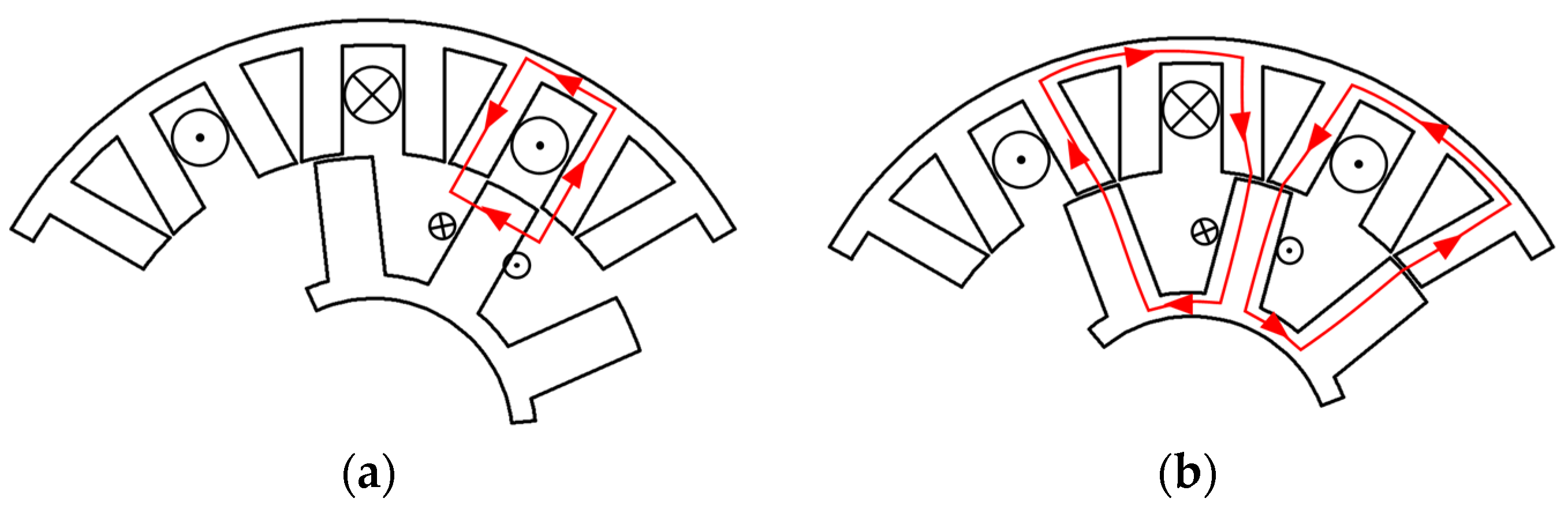
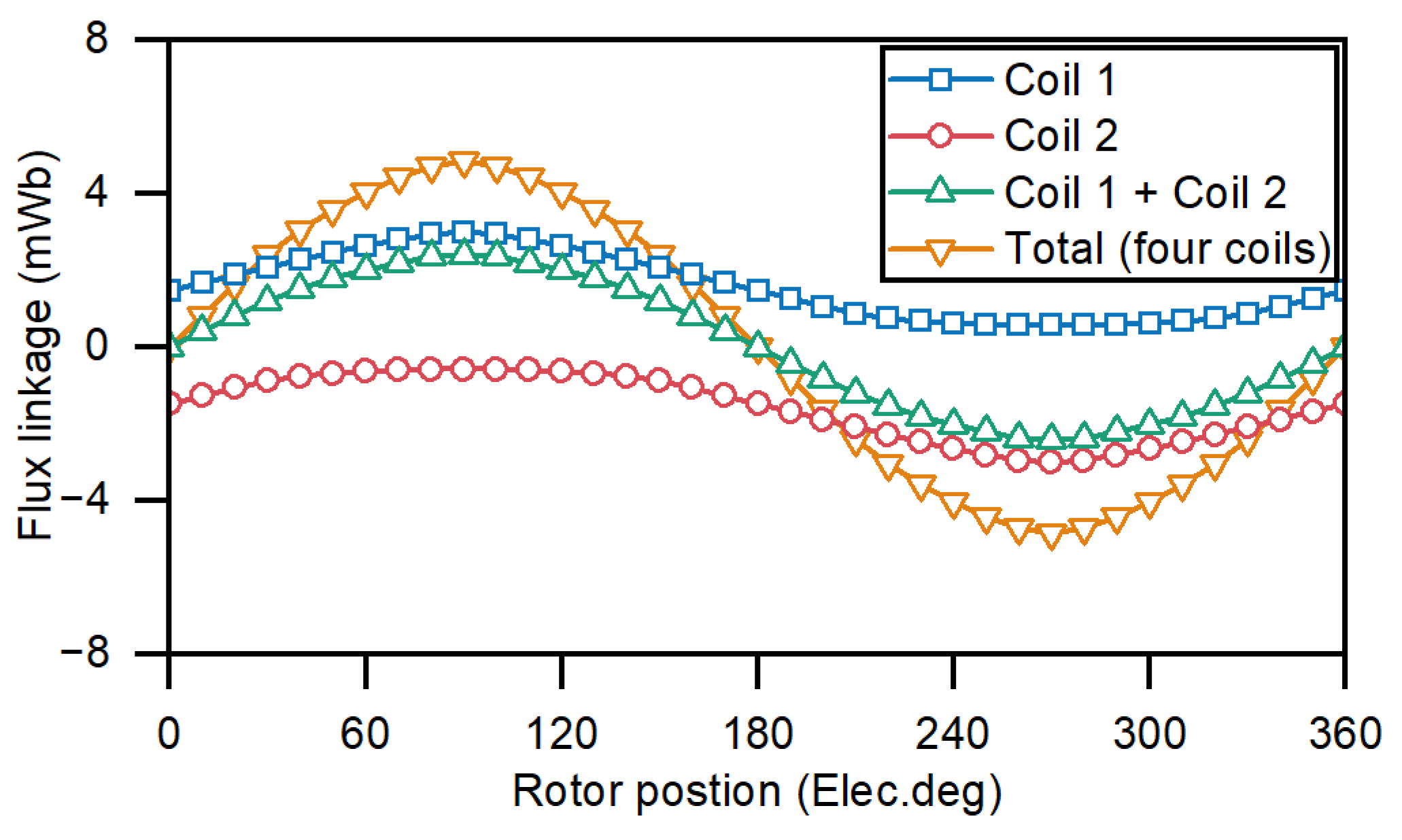
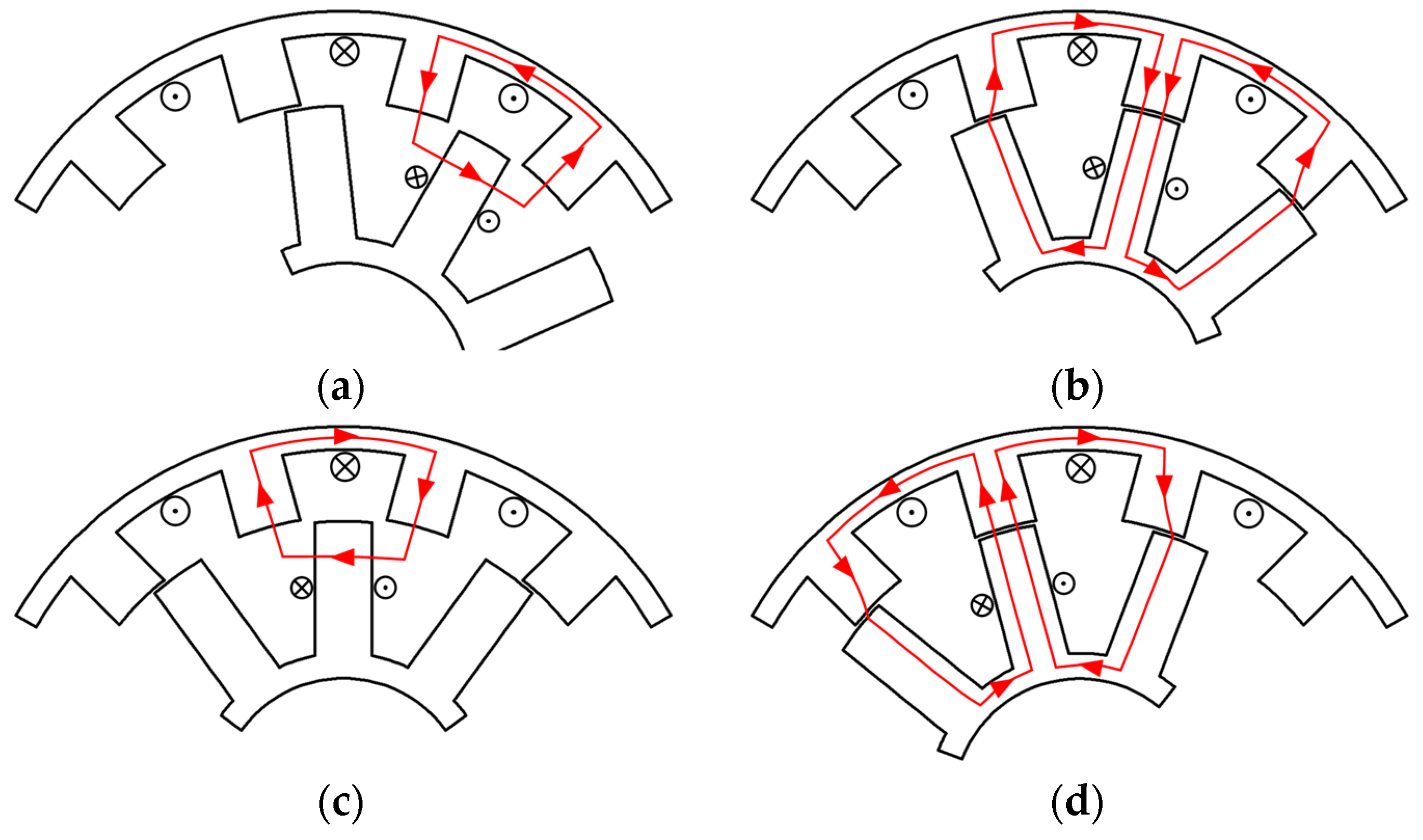
As another class of stator electrically excited machines, the operating principles of the VFR and DA-VFR machines share similarities with those of the FSEE and DA-FSEE machines, while also exhibiting notable differences. Four typical rotor positions, as presented in Figure 5, are selected to explain the operating principle of the stator part. The flux linkage of the stator armature winding undergoes an approximately sinusoidal variation, as shown in Figure 6, due to the change in magnetic reluctance caused by the rotor salient poles. Accordingly, rotating 36° mechanical angle also corresponds to one electrical period for the stator armature winding. However, since the stator armature winding coils and the DC field coils are wound on the same stator teeth, the flux linkage of a stator armature coil under open-circuit conditions remains either entirely positive or entirely negative, exhibiting a unipolar characteristic, as shown in Figure 6. Moreover, the flux linkage of another stator armature coil, which belongs to the same phase but three slot pitches apart, has an opposite polarity. The superposition of the flux linkage of these two coils results in a sinusoidal flux linkage waveform with a mean of zero.
The operating principle of the rotor armature winding in the DA-VFR machine is explained along with Figure 7. Its pole-pair number remains six, which also equals the DC field pole-pair number. Compared with the DA-FSEE machine, the matched pole-pair relationship is preserved, while the number of stator teeth is reduced from 24 to 12, leading to a different magnetic field modulation effect.

3. Machine Optimization

3.1. FE Simulation

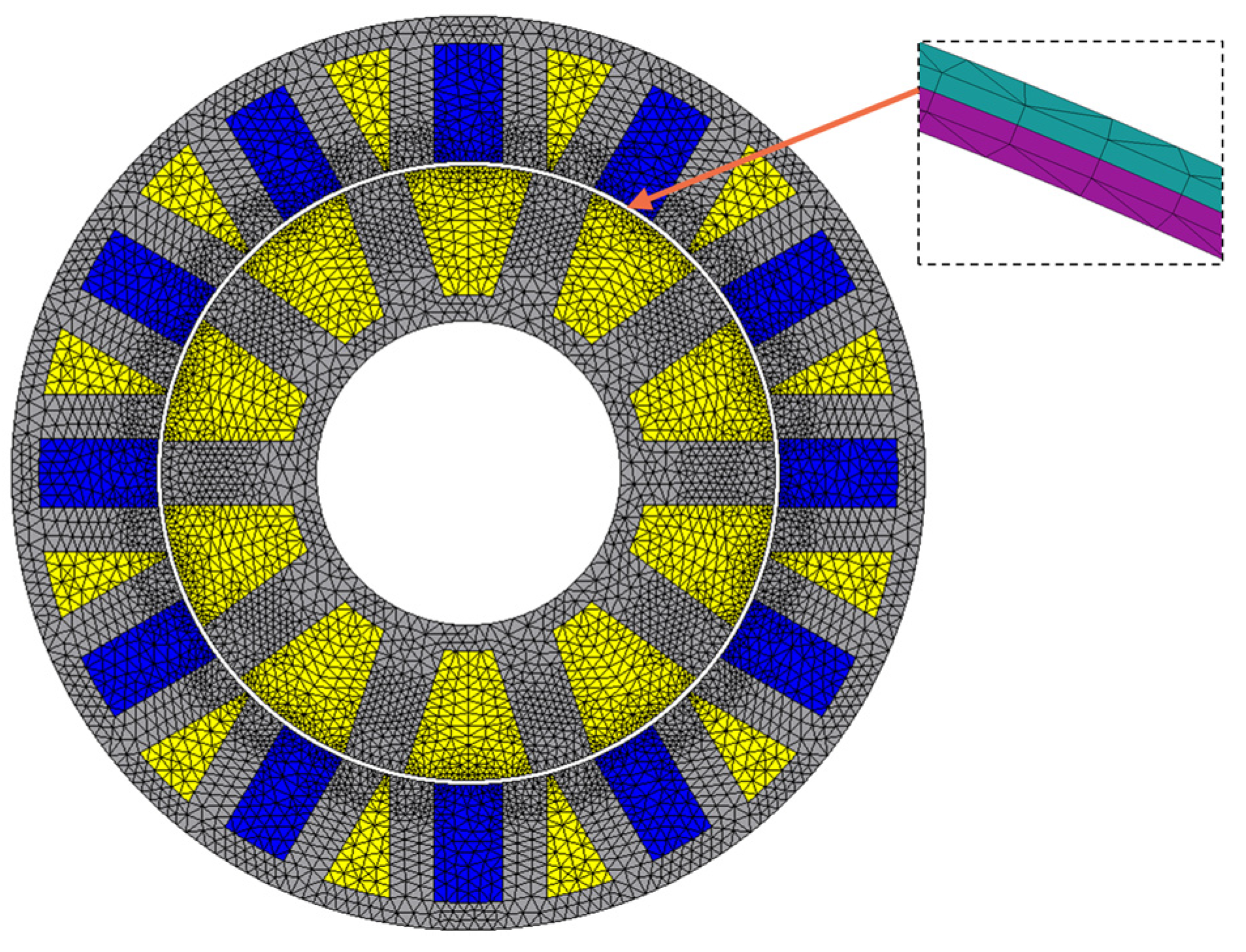
The electromagnetic analysis of the four stator electrically excited machines is based on the commercial finite element (FE) software JMAG 24. A two-dimensional model is established for each machine, containing approximately 16,000 elements in total, as illustrated in Figure 8. The airgap region is discretized into four layers of mesh, with 360 elements in the circumferential direction. The simulation time is set to half a mechanical period (i.e., 180°), corresponding to five electrical periods for the stator and three electrical periods for the rotor. The time step is set to 1/180 of the total simulation time, representing a rotation of 1° per step. Taking the rated speed of 300 RPM as an example, the simulation time is defined as 0.1 s. Ideal sinusoidal currents with frequencies of 50 Hz and 30 Hz are injected into the stator and rotor armature windings, respectively. The two-dimensional modeling approach is sufficiently accurate for average torque prediction, with verification from another three-dimensional FE simulation showing approximately 1% difference for both the DA-FSEE and DA-VFR machines.
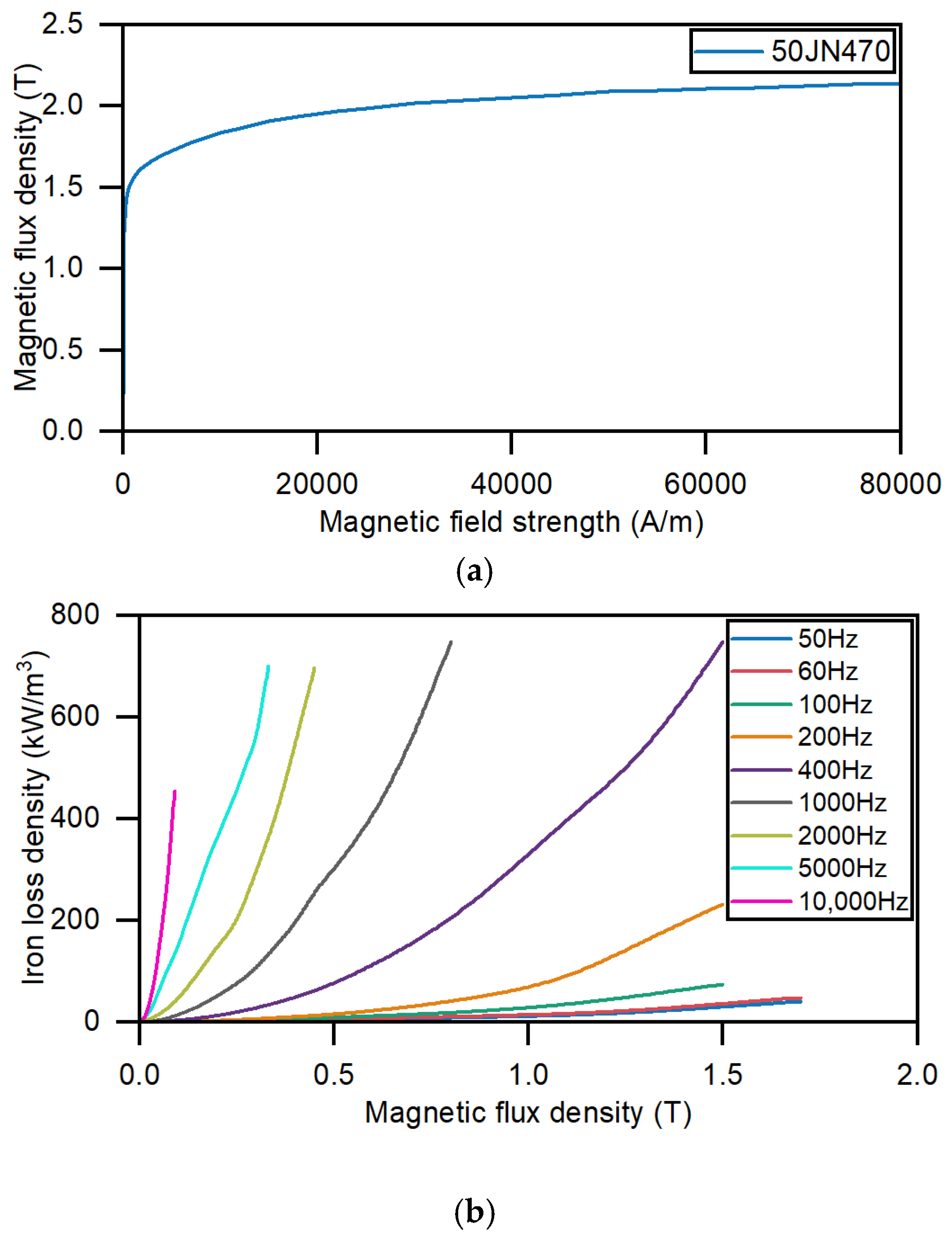
Both the stator and rotor cores are modeled using core material 50JN470 from the software’s library. Its B-H curve and iron-loss curves are presented in Figure 9. The iron loss is calculated from the time-series magnetic flux density data of each element. Specifically, the hysteresis loss and eddy current loss are derived from the virtual hysteresis loop and Fast Fourier Transform (FFT) analysis, respectively.
The total copper loss consists of three components according to the following Equation (3), whereas the FSEE and VFR machines do not have rotor copper loss. Each copper loss is calculated according to the injected current and the resistance at room temperature. The end-winding length is included for resistance calculation, according to the following Equation (4). The first and second terms within the brackets represent the circumferential length and the axial extension of the end winding, respectively.
P C u = P C u f + P C u s + P C u r
where PCu is the total copper loss, and PCuf, PCus, and PCur stand for the field winding copper loss, stator armature copper loss, and rotor armature copper loss, respectively.
L e n d = 2 × τ s l o t R s l o t + 2 × A s l o t β H s l o t
where Lend is the end-winding length of a single coil, Rslot is the radius of the slot center, τslot is the pitch between two slots for holding a coil in units of rad, Aslot is the slot area, β is the winding layer number, and Hslot is the slot depth.
The machine-level efficiency is calculated as the following Equation (5), which only accounts for the dominant copper loss and the iron loss at the operating point. It is worth noting that the overall system efficiency of the two DA machines might be somewhat overestimated in comparison to the FSEE and VFR machines, due to the neglect of additional losses from the slip ring and the five-phase inverter.
η = T e ω T e ω + P C u + P F e
where η is the machine efficiency, Te is the electromagnetic torque, ω is the rotational speed in units of rad/s, PCu is the total copper loss, and PFe is the iron loss.

3.2. Optimization Objectives and Constraints

Each of the four machines is optimized to ensure fair comparison of electromagnetic performance, particularly torque characteristics. A unified airgap length is specified. The stator outer diameter, rotor inner diameter, and active axial length are also fixed, thereby ensuring a consistent machine envelope. Furthermore, the turn number of each set of winding and the slot filling factor across all the slots are defined as constants. Therefore, the wire diameter is allowed to vary according to the slot area while maintaining the predefined total copper loss.
Considering the stringent requirements of actuator applications for high torque density and low torque ripple, the optimization objective is set to maximize the average electromagnetic torque. Meanwhile, a constraint is imposed such that the torque ripple does not exceed 5%, and any designs violating this requirement are excluded.
Since copper loss is the dominant heat source at low- and medium-speed ranges, a fixed total copper loss is adopted as a primary constraint during the optimization process. This constraint is based on a raw consideration of the same thermal limit. The specified value of 80 W at room temperature, to a large extent, necessitates effective cooling conditions. Nevertheless, this choice is sensible for typical actuator duties, which often involve short-period and non-continuous operation. In addition, it should be noted that although the total copper loss is maintained at the same level, this does not entail strictly comparable cooling performance and remains case-dependent. For instance, in scenarios where effective rotor cooling is feasible, such as with a hollow shaft or an open-endcap structure, the DA machines may experience improved heat dissipation, owing to the increased cooling surface area and the separated distribution of heat sources.

3.3. Optimization Variables

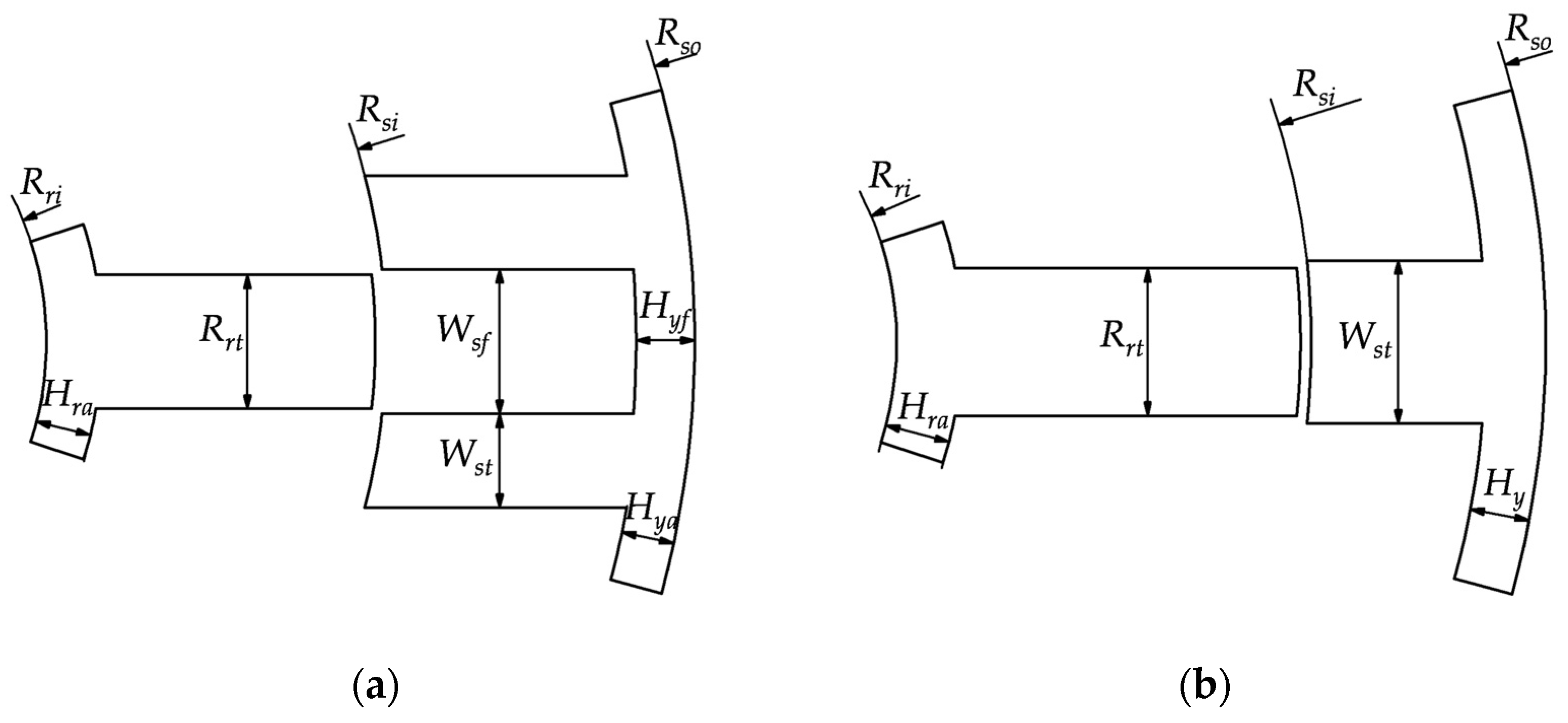
The optimization variables can be categorized into two groups. The first group consists of geometric parameters. The geometric parameters are illustrated in Figure 10, where most of them share common definitions. All machines employ parallel-side stator teeth. Nevertheless, due to the differences in stator, the VFR and DA-VFR machines include only one stator yoke thickness variable, whereas the FSEE and DA-FSEE machines contain two independent variables, namely the stator field yoke thickness and the stator armature yoke thickness. For the FSEE and DA-FSEE machines, parallel-side field slots are further adopted, resulting in a dependently varied width for the stator armature slot.
The second group of optimization variables comprises the current parameters, including current amplitudes and phase angles. For machines with dual-armature configurations, three sets of windings are involved, giving rise to five independent current parameters. As a distinctive feature of stator electrically excited machines, the current parameters of different windings reflect their interactions in producing the resultant electromagnetic torque. All current parameters, as independent variables, should meet the previously defined fixed total copper loss constraint.

3.4. Optimization Method

A multi-objective genetic algorithm is employed for the optimization. Initially, a number of machine models that satisfy all the constraints are randomly generated to form the initial population. In each generation, a new population of candidate designs is produced through a combination of selection, crossover, and mutation operations. The evolutionary process continues until the performance improvement between two successive generations falls below a predefined threshold or the maximum number of generations is reached, at which point the optimization is considered converged. In this study, the maximum number of generations is set to 10 times the number of optimization variables, while the population size of each generation is set to twice the product of the number of optimization variables and objective functions.

3.5. Optimization Results

The optimal designs of the four machines are summarized in Table 1. It can be observed that the VFR and DA-VFR machines, which have half the number of stator slots compared with the FSEE and DA-FSEE machines, exhibit significantly larger stator tooth widths, with values approximately 1.7–1.9 times those of their FSEE-based counterparts. Machines with DA configurations exhibit larger split ratios, particularly the DA-VFR machine, for which the split ratio increases from 0.66 to 0.76 compared with the VFR machine. This highlights the significant contribution of the rotor armature winding to torque production.
For the FSEE and VFR machines, the optimal ratio between excitation copper loss and armature copper loss is unity. The stator current phase angle is 0°, corresponding to the Id = 0 control strategy for maximum torque. In contrast, the copper loss distributions in the DA-FSEE and DA-VFR machines are very uneven. In general, the optimal designs entail the largest share of copper loss in the rotor armature winding among the three winding sets. In addition, both DA machines achieve their maximum torque when the rotor current phase angle is set to −40°, which provides a clear advantage over the conventional Id = 0 control strategy, specifically in these two machines. However, this improvement is contingent upon precise control of the rotor current vector relative to the excitation field. Rotor position feedback is essential during operation and is typically provided by an encoder. Subsequently, the target Id and Iq currents are regulated by the rotor-side inverter.

4. Comparisons of Electromagnetic Performance

Based on the optimization results presented in Section 3, comparisons of electromagnetic performance of the four machines are conducted, focusing on back electromotive force (back-EMF), torque performance, loss, and efficiency.

4.1. Back-EMF

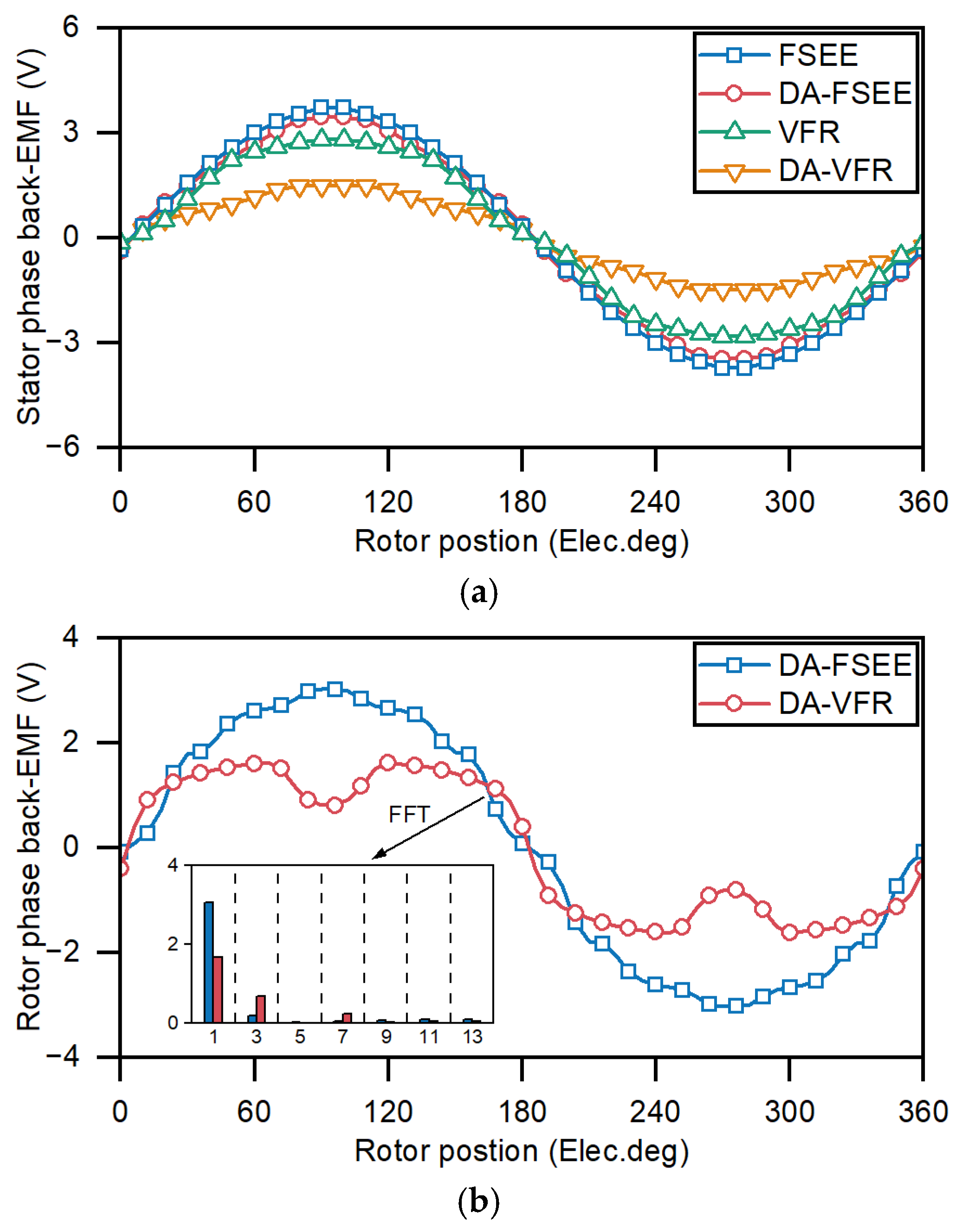
The phase back-EMF waveforms of the stator armature windings for the four machines are shown in Figure 11. It can be observed that the FSEE and DA-FSEE machines exhibit relatively good sinusoidal features. In contrast, the VFR and DA-VFR machines experience more pronounced distortion, with total harmonic distortion (THD) exceeding 5%, as given in Table 2. For the DA machines, the stator back-EMF amplitudes are relatively lower, which is directly related to the reduced DC field currents. In particular, the stator back-EMF of the DA-VFR machine is less than half that of the VFR machine, as its DC field current is reduced from 2.38 A to 1.15 A.
In the DA machines, the sinusoidal quality of the rotor phase back-EMF waveforms is poorer than that of the stator phase back-EMF, as clearly observed from the total harmonic distortion (THD) values in Table 2. Notably, the rotor back-EMF THD of the DA-VFR machine is extremely high as 43%. Specifically, the FFT results in Figure 11b show that a substantial contribution comes from the 3rd-order harmonic, followed by the 7th-order harmonic. This characteristic brings about greater challenges for power electronic devices and control strategies, which represents a major drawback of the DA-VFR machine. From a hardware standpoint, the non-sinusoidal rotor back-EMF can lead to phase currents with higher peak and RMS values for a given torque output, which entails increased current rating and thermal load for the inverter. Moreover, the significant low-order harmonics may reduce the effective voltage utilization and aggravate torque ripple and electromagnetic noise.
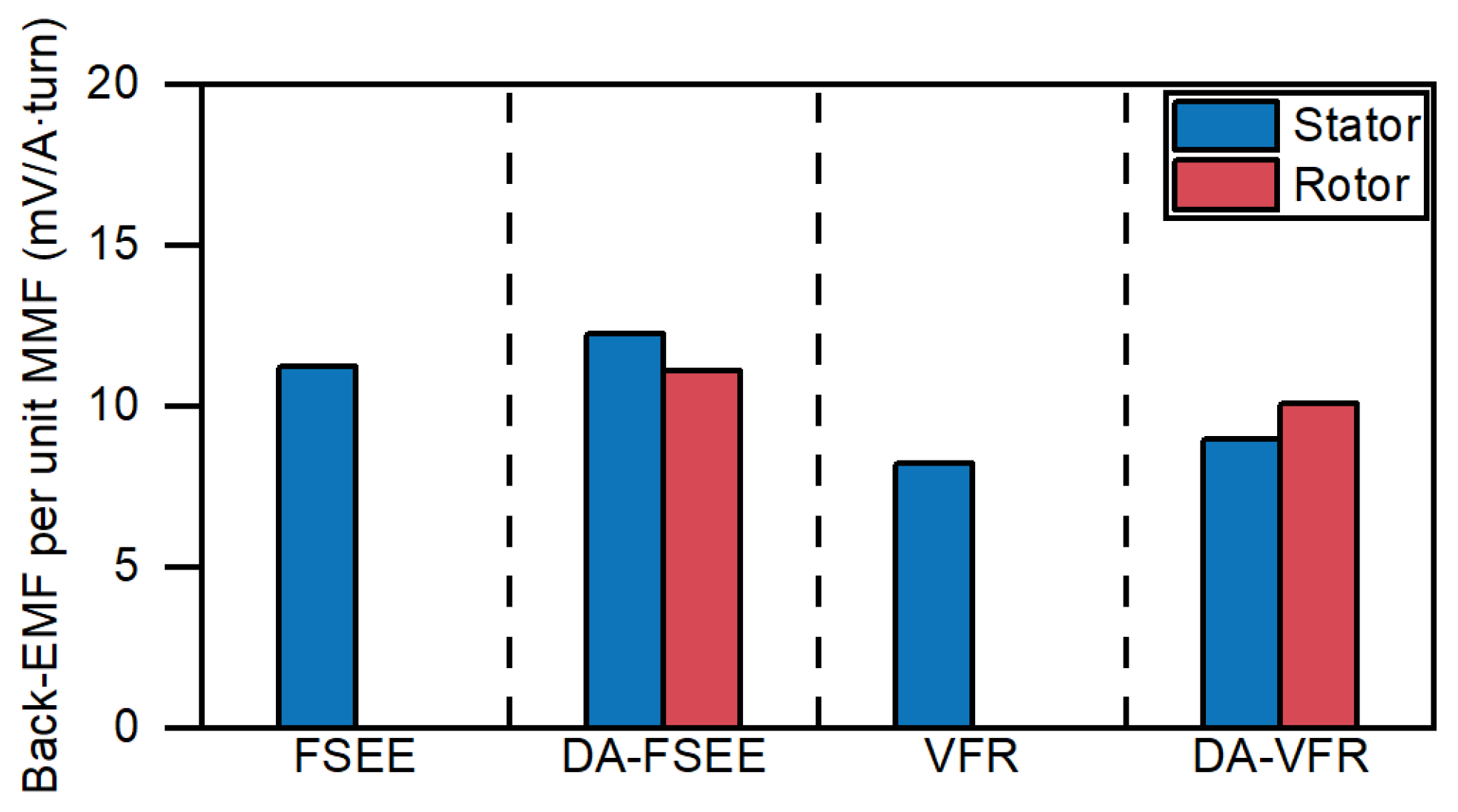
To enable a more in-depth comparison, the fundamental amplitudes of the back-EMF are calculated under the same magnetomotive force (MMF) condition for the DC field excitation. The results are presented in Figure 12. It can be observed that the stator back-EMF per unit MMF of the VFR machine is much lower than that of the FSEE machine, with the former being only 73% of the latter. On the other hand, after adopting the DA configuration, the stator back-EMFs per unit MMF of both the DA-FSEE and DA-VFR machines are effectively enhanced. This improvement is attributed to the wider tooth widths and thicker yokes, which enable higher magnetic load. Nevertheless, as evidenced by the higher DC field currents in the FSEE and VFR machines given in Table 1, the stator back-EMFs of both DA machines are consequently lower, as shown in Figure 11a. On the other hand, for both DA machines, the magnitude of the rotor back-EMF per unit MMF is comparable to that of the stator back-EMF. Considering the fact that the rotor armature winding has more phases and more turns than the stator armature winding, this observation indicates a more significant contribution of the rotor side to torque production.

4.2. Torque Performance

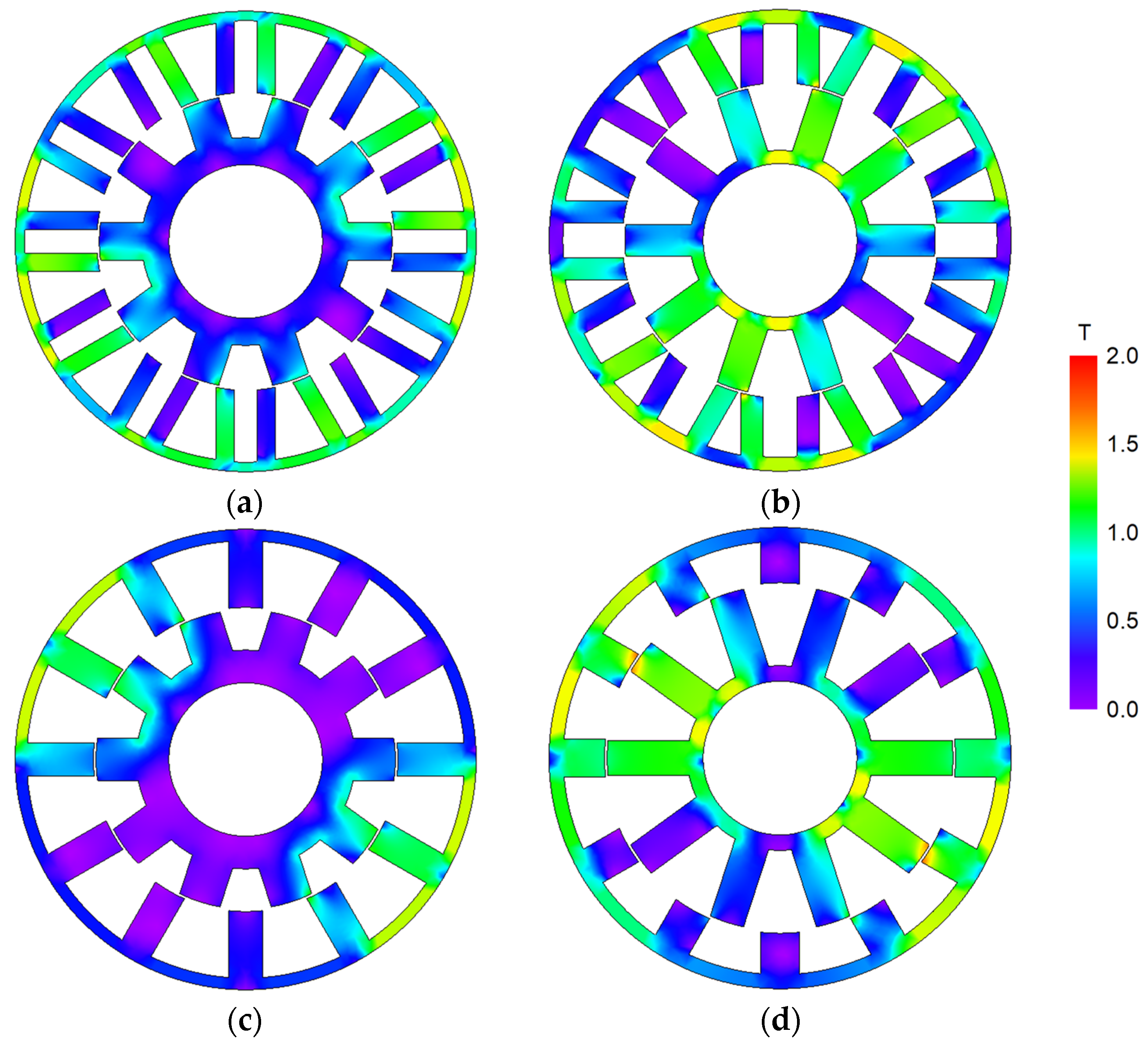
The magnetic flux density distribution under load conditions with 80 W total copper loss is presented in Figure 13. For each machine pair, the stator side exhibits comparable flux density levels, even though the DA machine produces significantly higher torque. In all the machines, the stator side experiences the highest flux density around 1.5 T in the yoke region. However, the area of this high-flux-density yoke region in the DA-FSEE machine is smaller than that in the FSEE machine; the DA-VFR machine has a smaller stator area compared to the VFR machine, but the high-flux-density region occupies a relatively large proportion. In both DA machines, the rotor side clearly shows a substantially higher flux density due to the presence of the rotor armature winding.
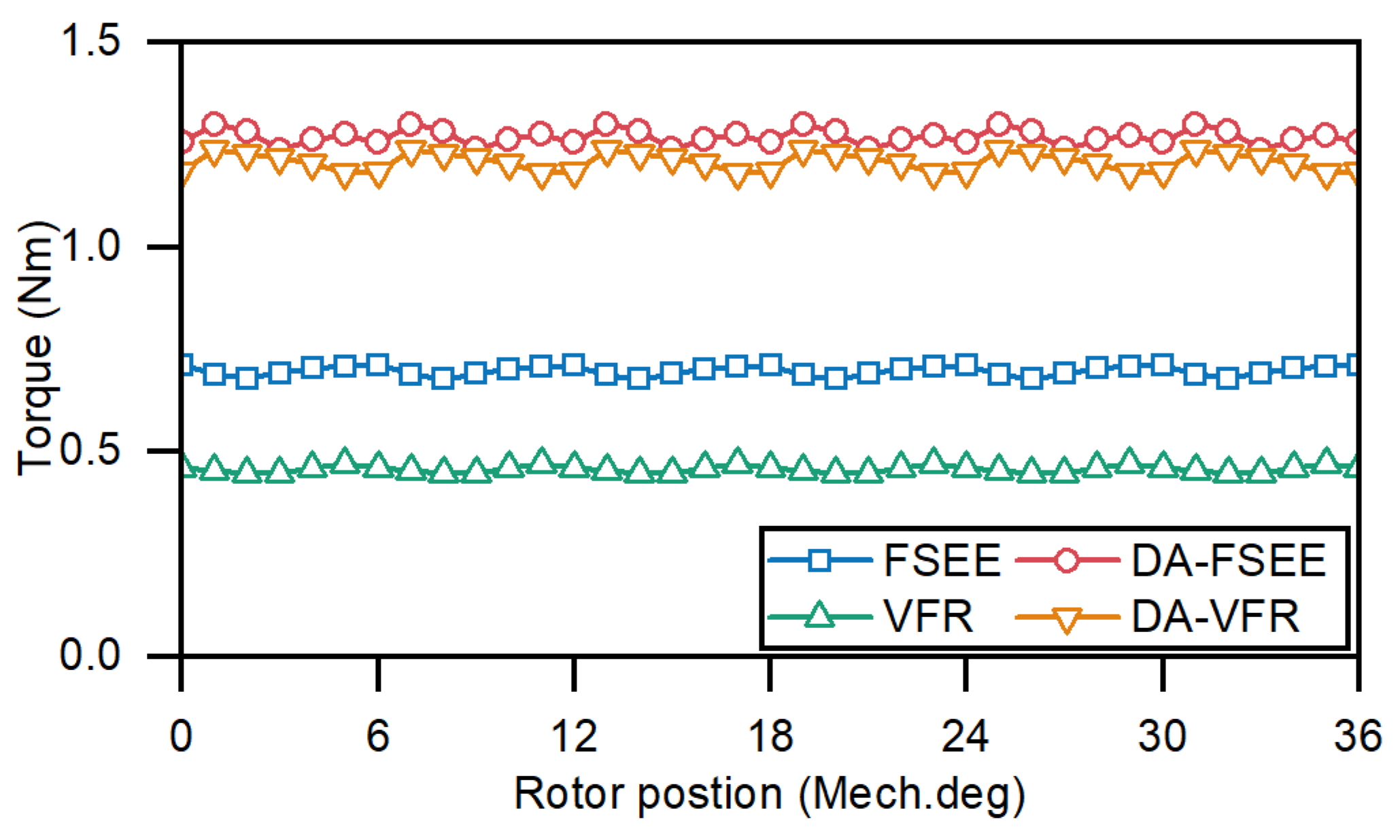
The torque statistics and corresponding torque waveforms of the four machines are presented in Table 3 and in Figure 14. The FSEE machine exhibits an average torque 49% higher than the VFR machine, demonstrating much better torque performance. This result aligns with the earlier analysis of the stator back-EMFs. By contrast, after introducing the DA configuration, the torque performance of both machine types is significantly enhanced. One of the main reasons is fully utilizing the idle rotor space, enabling them to carry higher currents. Specifically, the average torque of the DA-FSEE machine is increased by 81% compared with that of the FSEE machine, and the DA-FSEE machine delivers the highest torque output among the four machines. The torque enhancement of the DA-VFR machine is even more pronounced, with a 163% increase from the VFR machine that has the lowest torque (i.e., 0.46 Nm) among the four machines.
In addition, all four machines satisfy the torque ripple constraint of less than 5%, making them suitable for actuator applications. The corresponding torque waveforms are shown in Figure 14, where the dominant ripple repeats at a mechanical angle of 6°, corresponding to 1/6 of a stator electrical period and 1/10 of a rotor electrical period.
Due to the identical machine envelope with those in references [14,15,16,17,18,19,20], a direct comparison of torque performance is feasible and straightforward. By employing the DA winding configuration, the proposed DA-FSEE and DA-VFR machines demonstrate a significant advantage in torque per unit copper loss compared to the FSEE and VFR machines reported in prior studies, which were also optimized under fixed copper loss. However, it should be mentioned that a completely fair comparison is hindered by potential differences in core material, slot filling factor, and winding-end calculation.

4.3. Loss and Efficiency

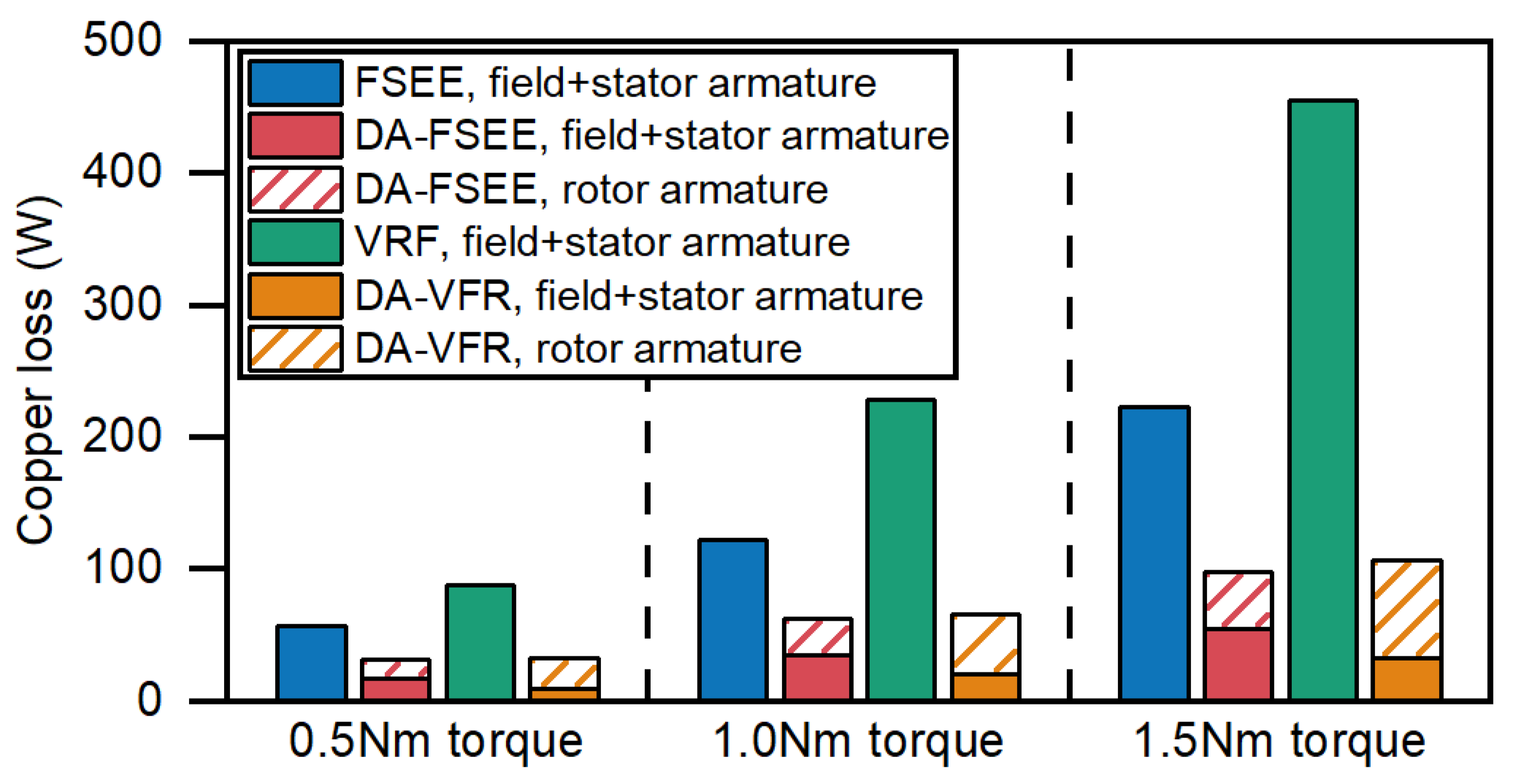
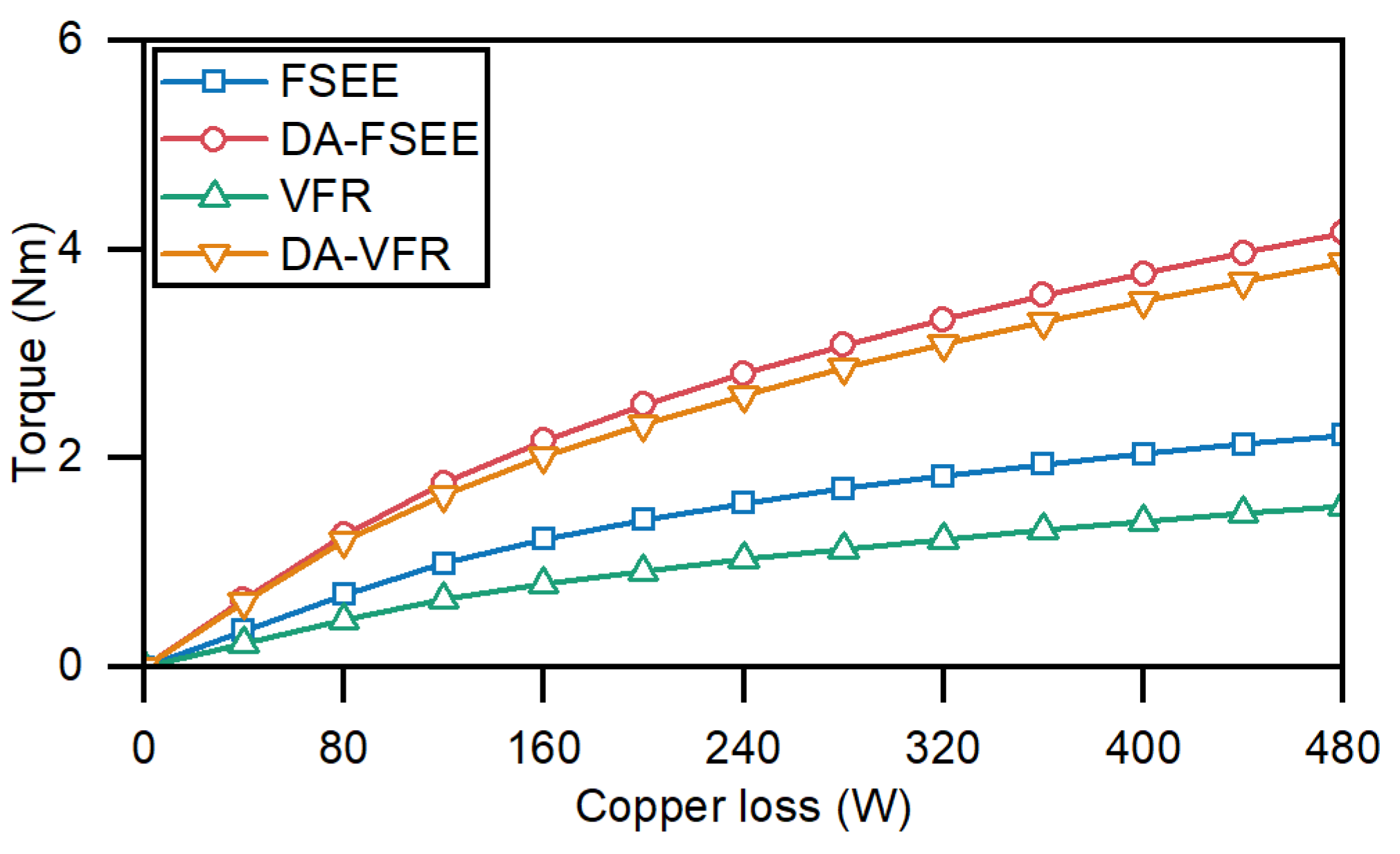
The dependence of torque on copper loss is illustrated in Figure 15. The DC field, stator armature, and rotor armature currents are scaled proportionally in accordance with Table 1. Therefore, the copper loss ratios among the winding sets are also fixed. As shown in the figure, the FSEE and VFR machines need roughly twice the copper loss of their DA counterparts to achieve the same torque level. Furthermore, the copper losses of these two machines increase sub-linearly with torque, which can be attributed to escalated magnetic saturation. In contrast, the DA machines still show a linear trend. All the copper loss characteristics underscore the significant torque improvement brought by the DA windings. Three representative torque values (0.5 Nm, 1.0 Nm, and 1.5 Nm) are further selected to illustrate copper loss amounts and composition simultaneously, as shown in Figure 16. It can be seen that the rotor copper loss accounts for less than half in the DA-FSEE machine, whereas it occupies around 2/3 in the DA-VFR machine.
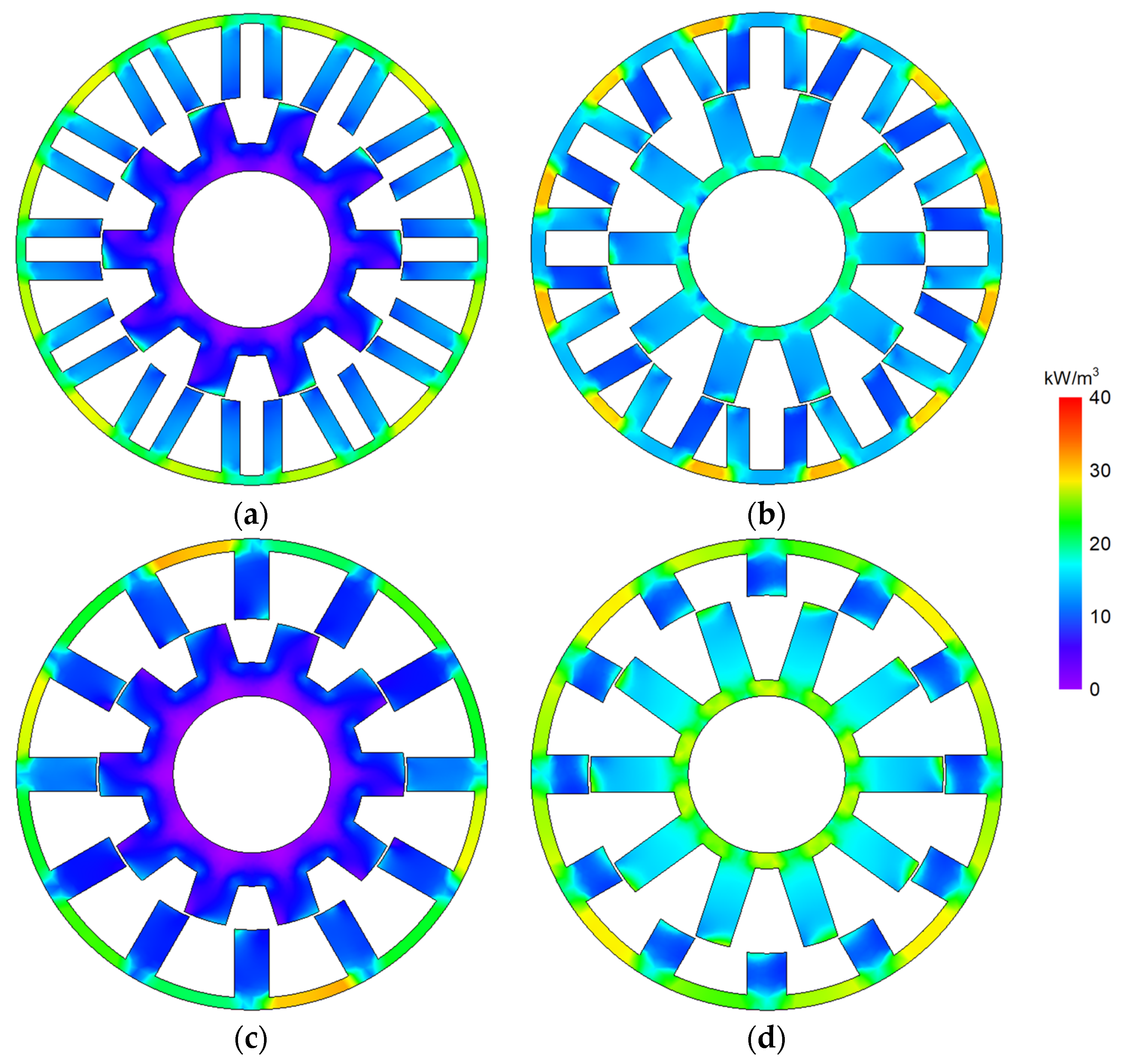
The iron loss distribution under 80 W total copper loss and 300 RPM is presented in Figure 17. It can be observed that the FSEE and DA-FSEE machines exhibit comparable iron loss density levels in the stator, although the DA-FSEE machine has higher loss in some yoke and lower loss in some teeth. For the VFR and DA-VFR machines, the DA-VFR machine demonstrates slightly higher loss in the teeth and slightly lower loss in the yoke. Both DA-FSEE and DA-VFR machines show significantly higher iron loss density in the rotor, which is attributed to the much higher magnetic flux density, as can be observed in Figure 13. It should be noted that the iron loss density contours in Figure 17 correspond to the load condition of the same copper loss. In other words, if compared under the same torque condition, the iron loss of the DA machines would decrease significantly.
The iron loss for each machine is then evaluated at the representative operating point of 1 Nm and 300 RPM. This provides a baseline for estimating iron loss at different speeds, because according to the method described in Section 3.1, the spatiotemporal distribution of magnetic flux density remains unchanged; only the electrical frequency varies. As shown in Table 4, the iron losses are significantly lower than the corresponding copper losses, due to the low electrical frequencies. The introduction of the rotor armature winding leads to strengthened magnetic flux density in the rotor core and thus an increase in rotor iron loss. Nevertheless, the total iron losses of the DA-FSEE and DA-VFR machines are lower than those of their counterparts. This is because the DA machines require less DC and AC currents to hold the same torque level, which indicates a lower magnetic flux density level in the stator core. When increasing the speed while maintaining the same torque (without considering voltage limits), the iron loss increases approximately with the speed raised to the power of 1.5 for all the machines, as implied by the iron loss data in Table 4 and Table 5. The data further reveal that the iron losses of the FSEE and VFR machines grow slightly more rapidly than those of the DA machines. This is because, according to the iron loss curves provided in Figure 9, at the same flux density, the iron loss increases supra-linearly with the electrical frequency.
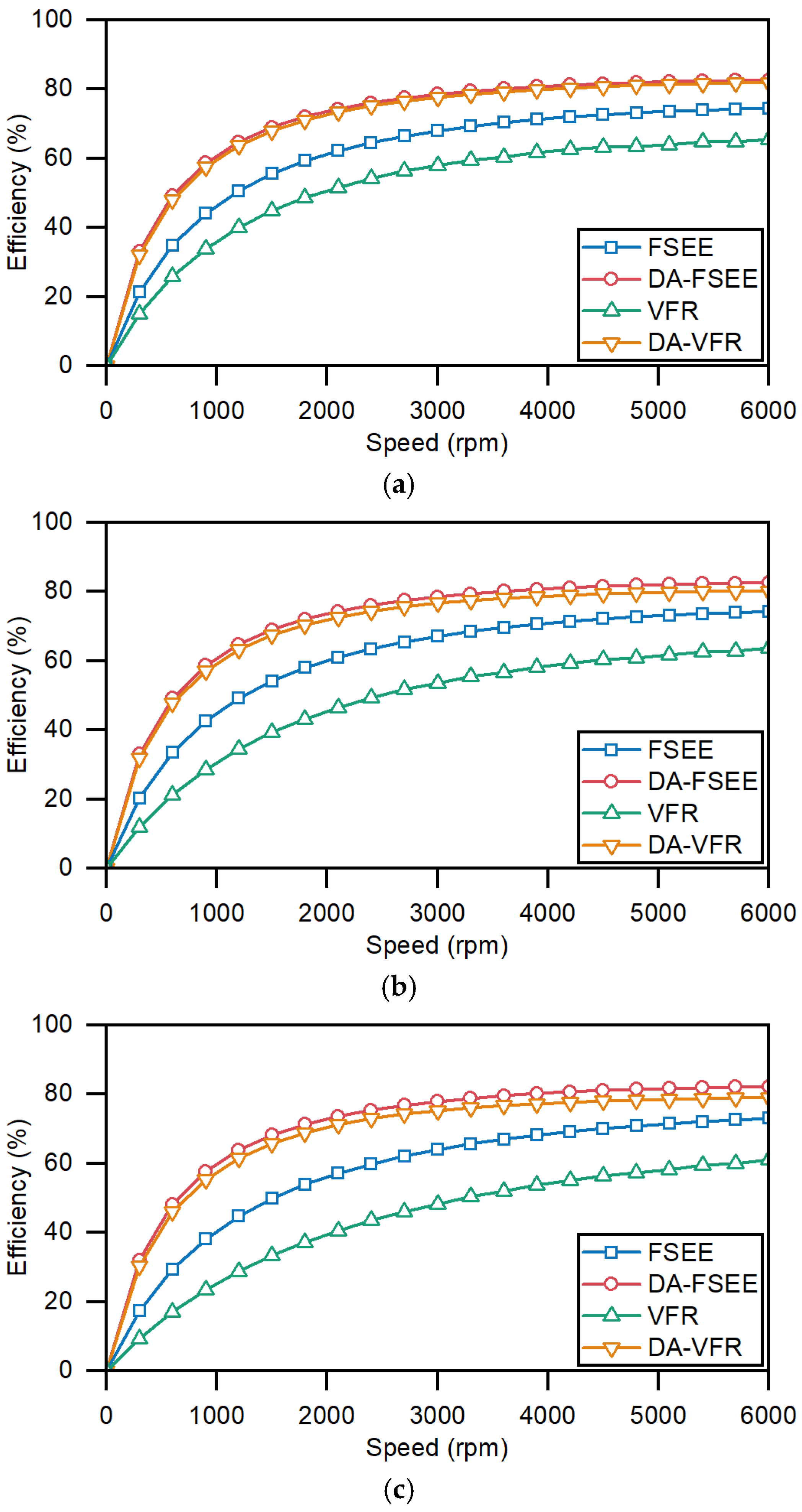
The efficiency for each machine is calculated over a specified speed range of 0–6000 RPM, according to Equation (5) mentioned in Section 3.1. It is worth mentioning that the efficiency comparison is primarily aimed at highlighting the potential advantage at the initial design stage, without considering practical constraints such as voltage limits and mechanical factors. As shown in Figure 18, the DA machines exhibit 10–20% higher efficiency than their counterparts across the entire operating range. Furthermore, this efficiency advantage is more pronounced under low-speed and high-load conditions, as the efficiency curves in Figure 18 show greater separation between each other under these conditions. Although the DA-VFR machine exhibits a larger relative efficiency improvement, the DA-FSEE machine consistently achieves the highest efficiency. These observations are in full agreement with the previous analysis of torque performance.

5. Influence of Key Parameters on Average Torque

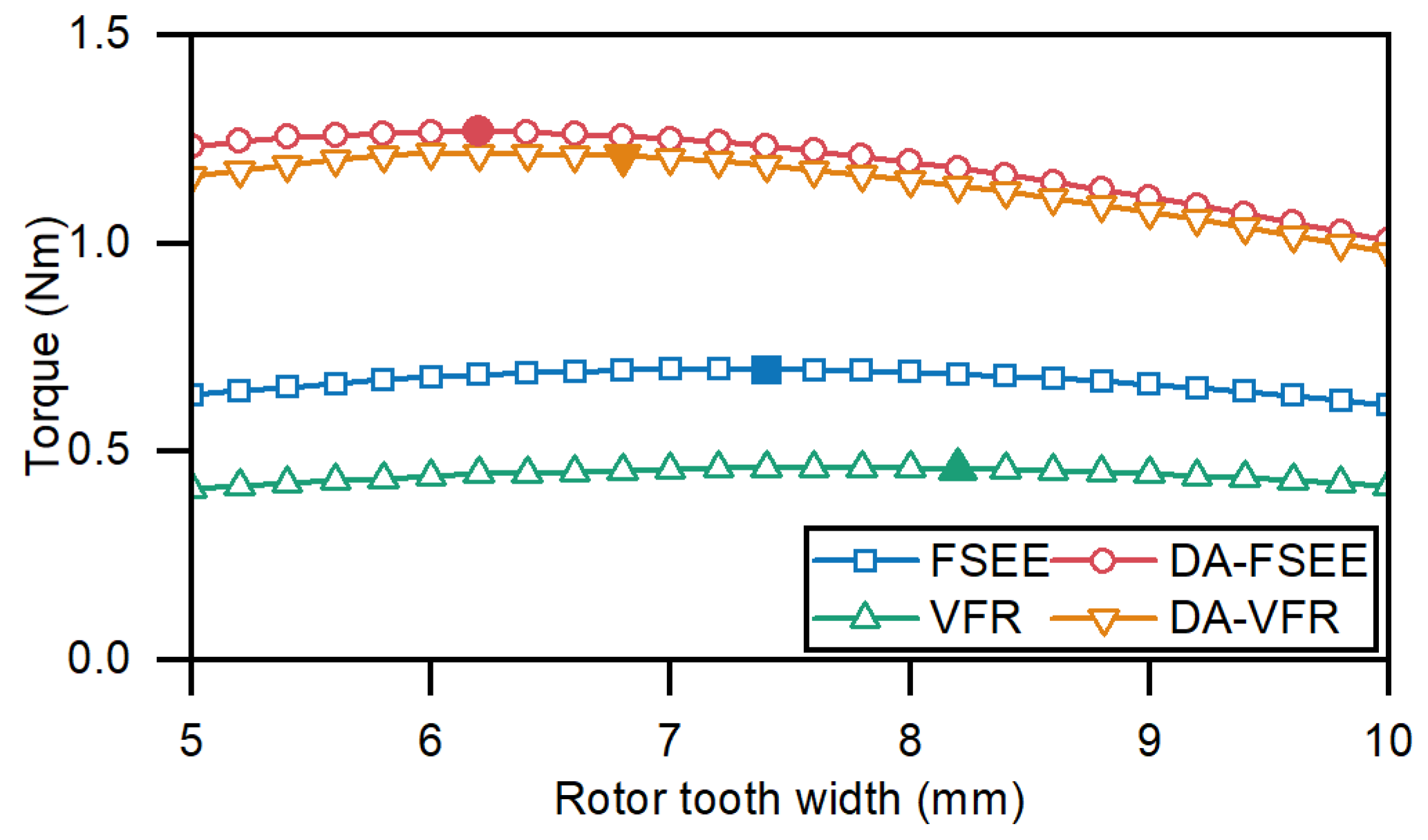
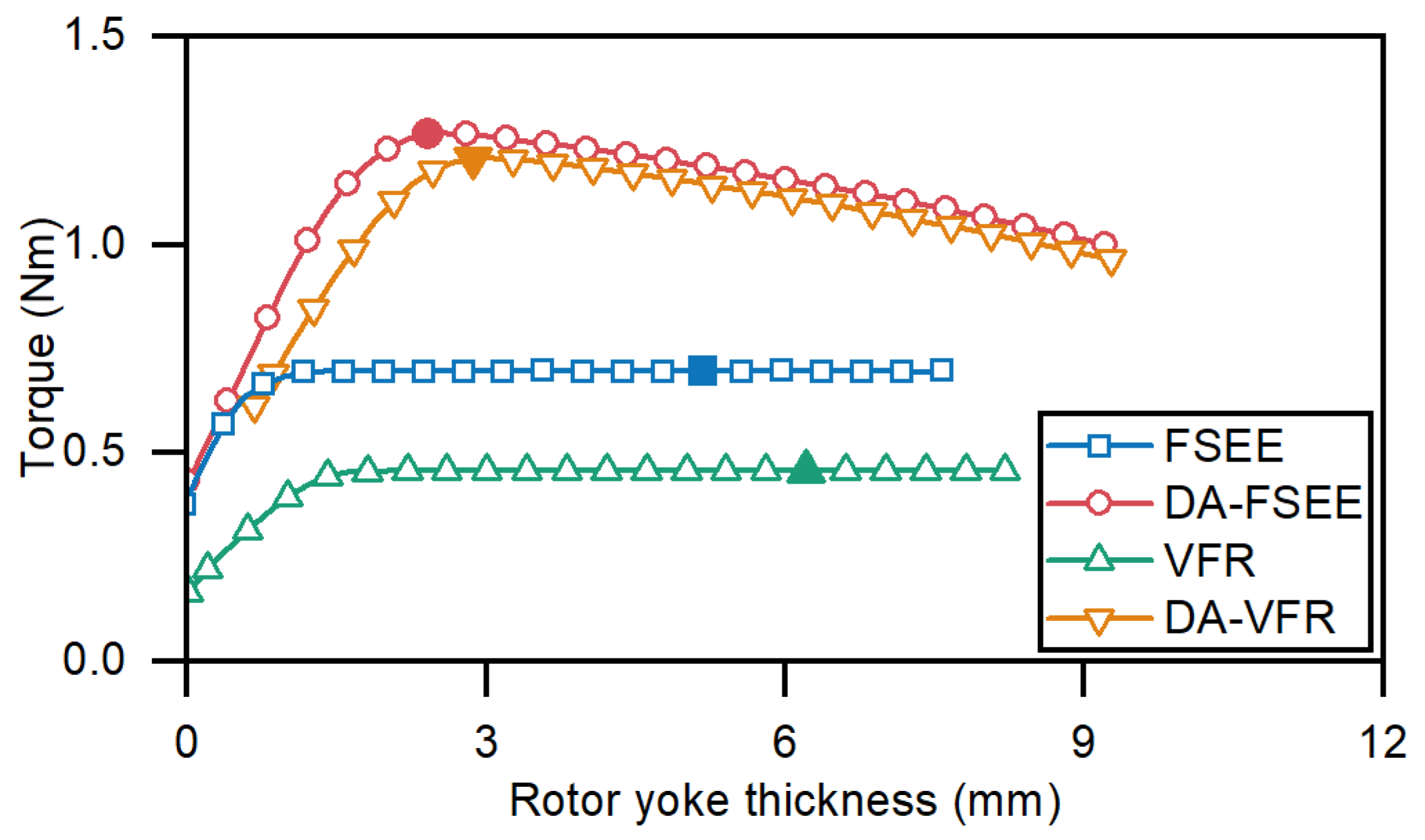
The influence of key parameters on average torque is evaluated in this section. Each parameter is varied individually while keeping the remaining parameters unchanged. The results are presented in Figure 19, Figure 20, Figure 21, Figure 22, Figure 23 and Figure 24, where the optimal designs mentioned in Table 1 are denoted by filled markers in these figures.

5.1. Split Ratio

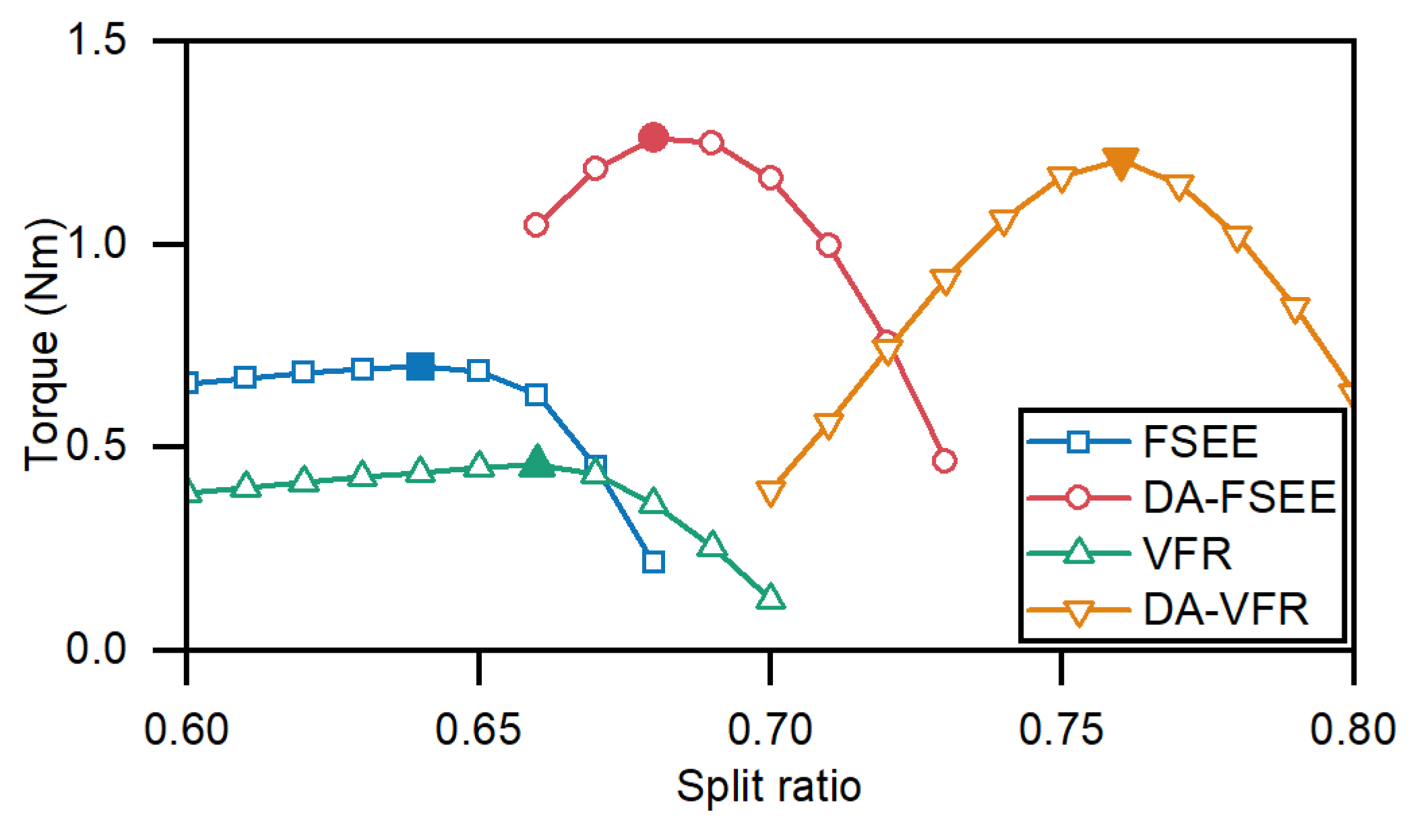
The optimal split ratios of the four machines have been preliminarily compared in the previous sections. As shown in Figure 19, with an increase in the split ratio, the average torque of all four machines first increases and then decreases, but the trends are different from each other. For the FSEE and VFR machines, increasing the split ratio simply leads to a reduction in stator space, thereby reducing the MMFs produced by the DC field winding and the stator armature winding. However, for the DA-FSEE and DA-VFR machines, the increase in the split ratio leads to larger rotor space, which enhances the MMF of the rotor armature winding on the other hand. Consequently, the torque stemming from the interaction between the rotor armature winding and the DC field winding, as well as that between the rotor and stator armature windings, is strengthened. As a design trade-off, the DA machines allocate more space to the rotor armature winding for torque generation, which consequently results in larger optimal split ratios. In general, the split ratio is the most crucial design parameter among the investigated parameters.
Figure 19. Variation in average torque with split ratio.
Actuators 15 00115 g019

5.2. Stator Tooth Width

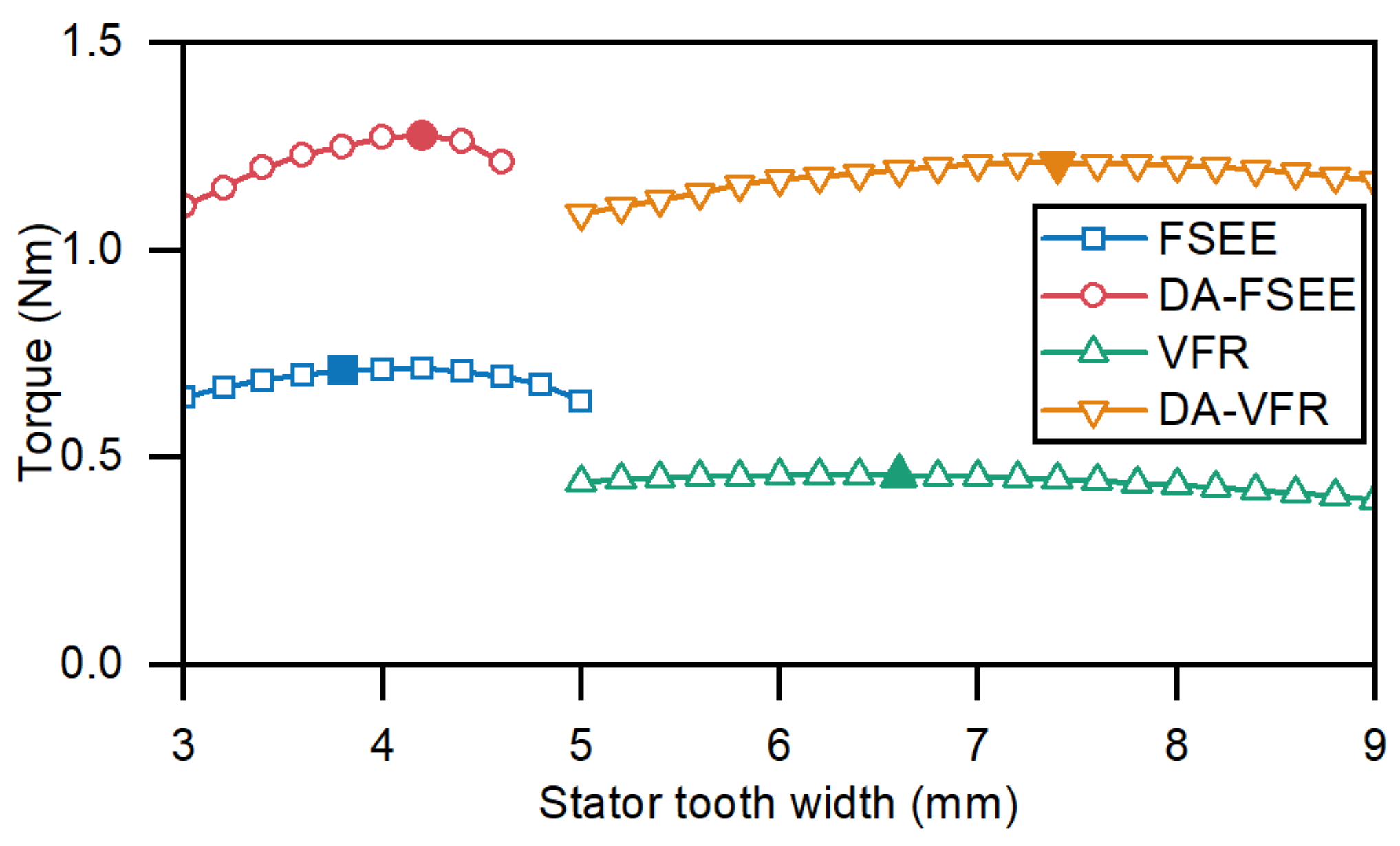
The stator tooth width is a critical structural parameter that directly governs the magnetic flux distribution and saturation level, thereby affecting air-gap field modulation. As illustrated in Figure 20, the average torque of all four machines first increases and then decreases with the stator tooth width. Designing an appropriate width helps alleviate stator tooth saturation and thus improves torque output. However, when the stator tooth width becomes excessively large, the slot area of the stator parts is reduced, leading to a decrease in the MMFs of the DC field winding and the stator armature winding. As a result, the torque stemming from their interaction is greatly suppressed. It should be noted that the noticeable slopes shown in Figure 20 indicate that the stator tooth width is a critical parameter, second only to the split ratio.
Figure 20. Variation in average torque with stator tooth width.
Actuators 15 00115 g020

5.3. Field Slot Width

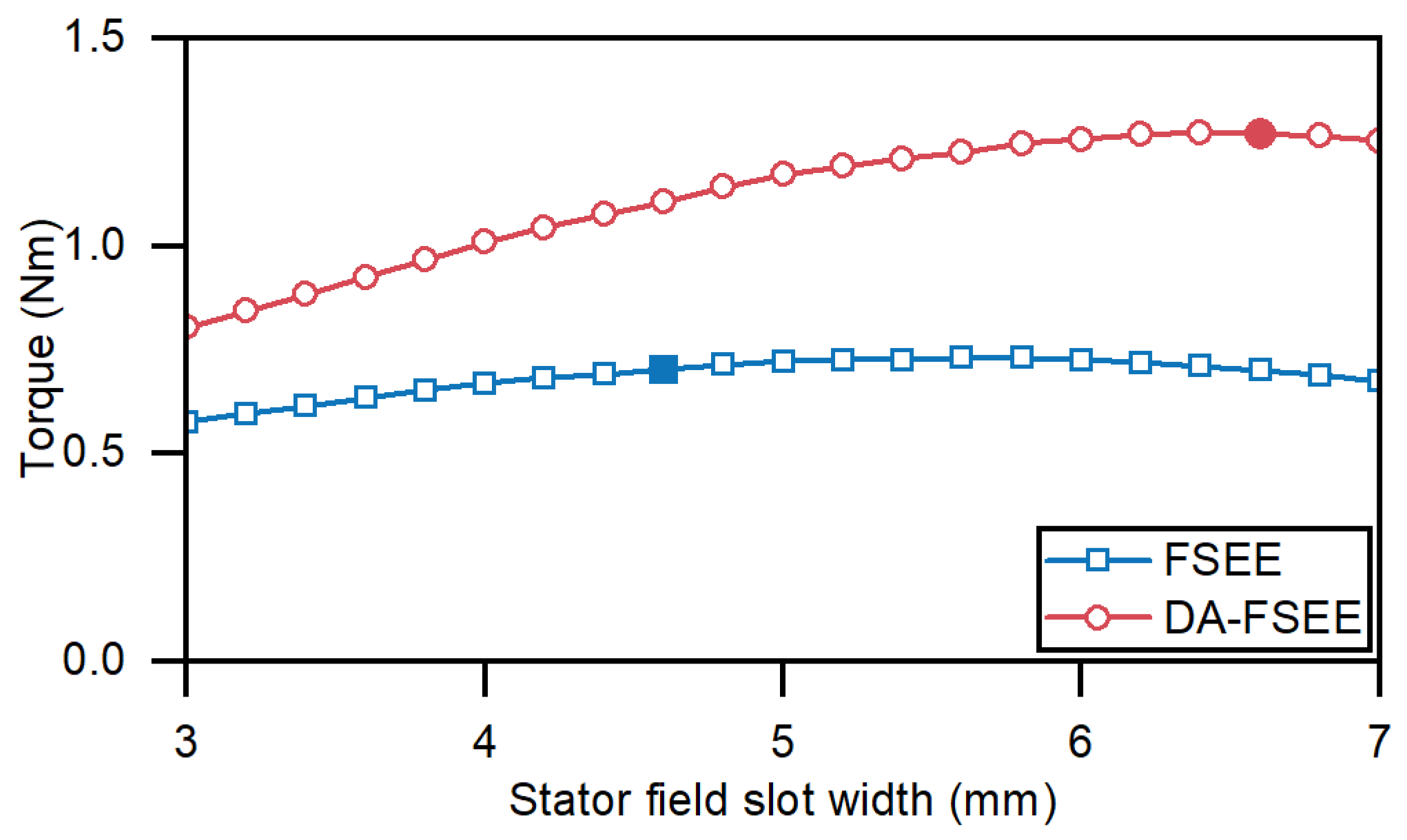
The DC field slot width reflects, to some extent, the space competition for stator space between the DC field winding and the stator armature winding. Owing to the presence of two different stator slot types, the stator field slot width is a unique design variable for the FSEE and DA-FSEE machines. As shown in Figure 21, the average torque of the FSEE and DA-FSEE machines initially increases and then decreases with increasing this slot width. Enlarging it allows a higher DC field MMF, thereby increasing the average torque. However, an excessively large width results in an overly narrow stator armature slot opening, which aggravates leakage flux and ultimately degrades torque performance.
Figure 21. Variation in average torque with field slot width.
Actuators 15 00115 g021

5.4. Stator Yoke Thickness

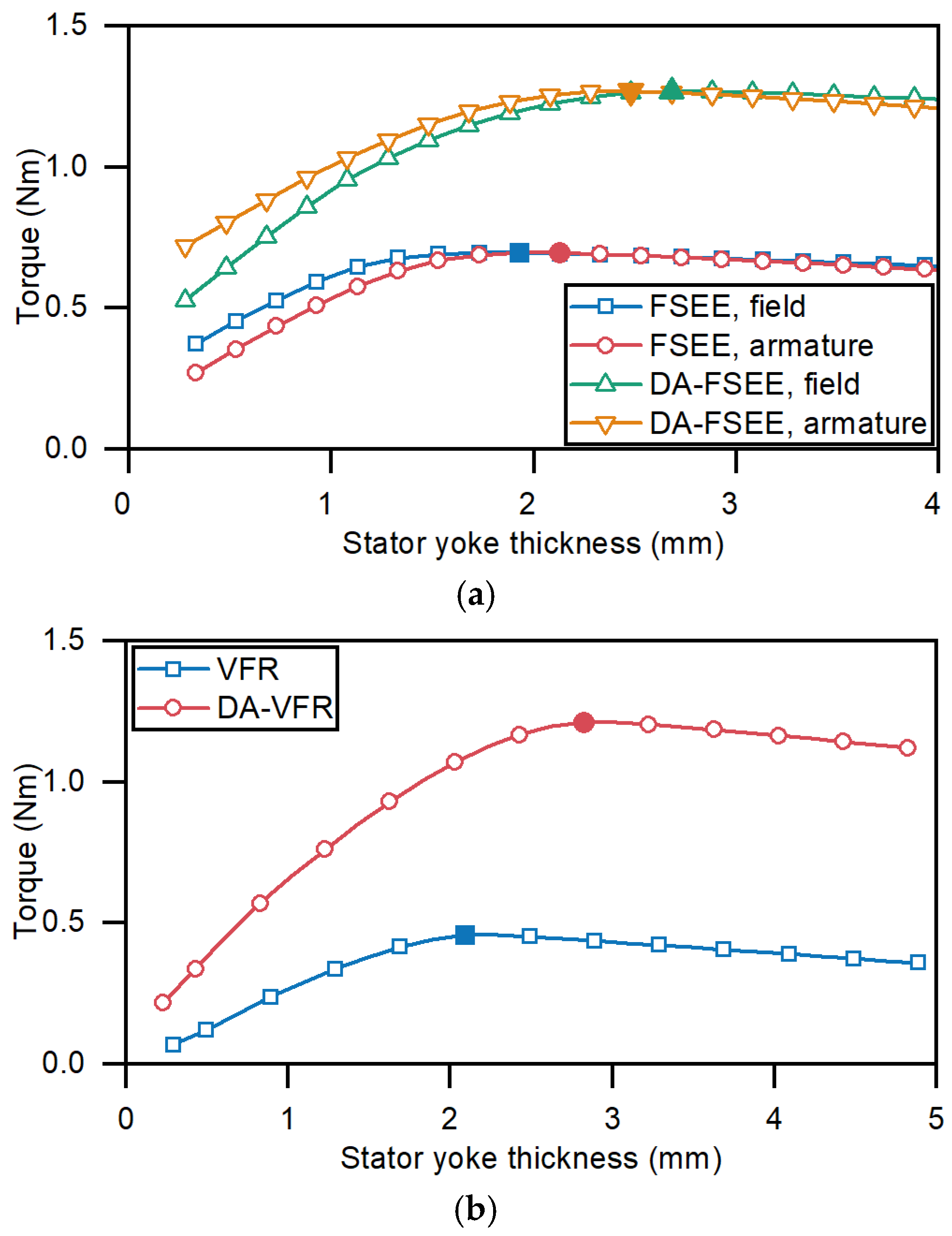
The stator yoke thickness typically varies in coordination with the stator tooth width and jointly determines the effective reluctance of the magnetic path in the stator part. As shown in Figure 22, no matter for the stator field yoke thickness and armature yoke thickness in the FSEE and DA-FSEE machines or the stator yoke thickness in the VFR and DA-VFR machines, the average torque exhibits a trend of first increasing and then decreasing. The optimal values of the stator field yoke thickness and armature yoke thickness in the FSEE and DA-FSEE machines are close to each other, with a difference in less than 10%. Reducing these yoke thicknesses increases the slot area and is beneficial for enhancing the corresponding MMFs, thereby improving torque performance.
Figure 22. Variation in average torque with stator yoke thickness: (a) FSEE and DA-FSEE machines; (b) VFR and DA-VFR machines.
Actuators 15 00115 g022

5.5. Rotor Tooth Width

In the FSEE and VFR machines, the rotor tooth width has a main impact on the modulation effect. As shown in Figure 23, the average torque of the FSEE and VFR machines first increases and then decreases with increasing rotor tooth width. An excessively small rotor tooth width primarily causes magnetic saturation on the rotor side. Conversely, when the rotor tooth width is excessively large, the DC-excited magnetic flux tends to form local loops near the rotor tooth tips, leading to much more severe flux leakage. In the DA-FSEE and DA-VFR machines, the rotor teeth should further accommodate higher magnetic flux densities induced by the rotor armature reaction. Increasing the rotor tooth width reduces the rotor slot area and thus decreases the MMF of the rotor armature winding. Consequently, the optimal rotor tooth widths of the DA machines are approximately 80% of those of their counterparts.
Figure 23. Variation in average torque with rotor tooth width.
Actuators 15 00115 g023

5.6. Rotor Yoke Thickness

In the FSEE and VFR machines, the rotor yoke functions primarily as a magnetic flux path and is thus a less critical design parameter. As shown in Figure 24, an undersized rotor yoke thickness leads to a slight reduction in average torque, except that its size is far below 1.5 mm. In contrast, for the DA-FSEE and DA-VFR machines, this parameter also dictates the size of the rotor slot available for the armature winding. Consequently, its impact is more pronounced. The optimal thickness is around 3 mm, and the average torque exhibits a significant reduction once beyond this optimal value, which is different from the FSEE and VFR machines. It emerges as a consistently important factor for achieving high torque performance in both DA machines.
Figure 24. Variation in average torque with rotor yoke thickness.
Actuators 15 00115 g024

6. Conclusions

This paper conducts a systematic comparison between four stator electrically excited machines, including conventional FSEE and VFR machines and novel DA-FSEE and DA-VFR machines with additional armature winding on the rotor. All the machines are optimized under the constraints of fixed copper loss, consistent machine envelope, and identical torque ripple limit to ensure fair comparison.
The optimization results show that the FSEE machine delivers approximately 49% higher torque than the VFR machine, primarily due to its superior stator back-EMF fundamental amplitude. The introduction of the DA windings dramatically enhances torque output for both topologies by fully utilizing the previously idle rotor space. The fundamental amplitude of the rotor back-EMF per unit MMF is comparable to that of the stator, but the rotor armature winding has more phases and more turns. As a result, the DA-FSEE and DA-VFR machines achieve substantial torque improvements of 81% and 163% over the FSEE and VFR machines. While the DA-VFR machine shows the most pronounced enhancement, the DA-FSEE machine provides the highest torque output. The significant torque enhancement under fixed copper loss constraints results in superior efficiency at the machine level, while ignoring the additional losses introduced by the slip ring and rotor-side inverter. As evidenced by evaluation across a specified speed range under three representative torque values, both the DA-FSEE and DA-VFR machines consistently achieve 10–20% higher efficiency than their conventional counterparts.
A comprehensive sensitivity analysis of key geometric parameters reveals that the split ratio exerts the most profound influence on average torque for all the machines, followed by the stator tooth width. In the DA machines, the rotor yoke thickness emerges as a consistently important factor for achieving high torque performance. These key findings provide valuable guidance for the optimal selection and detailed design of high-performance electrically excited machines in engineering practice.

Author Contributions

Conceptualization, H.W., B.C. and W.W.; methodology, B.C.; software, B.C. and Y.W.; validation, H.W. and B.C.; formal analysis, B.C. and Y.W.; investigation, W.W.; writing—original draft preparation, H.W. and B.C.; writing—review and editing, H.W., B.C., W.W. and X.Q.; supervision, H.W., W.W. and X.Q. All authors have read and agreed to the published version of the manuscript.

Funding

This research received no external funding.

Institutional Review Board Statement

Not applicable.

Informed Consent Statement

Not applicable.

Data Availability Statement

The original contributions presented in this study are included in the article. Further inquiries can be directed to the corresponding author.

Conflicts of Interest

Author Yufei Wang was employed by the company Akribis Systems (Hangzhou) Co., Ltd., Hangzhou, China. The remaining authors declare that the research was conducted in the absence of any commercial or financial relationships that could be construed as a potential conflict of interest.

Nomenclature

Aslotslot area
frelectrical frequency of rotor armature winding
fselectrical frequency of stator armature winding
Hrarotor yoke thickness
Hslotslot depth
Hystator yoke thickness
Hyastator armature yoke thickness
Hyfstator field yoke thickness
Iarrotor armature phase current
Iasstator armature phase current
Idd-axis current
IdcDC field current
Iqq-axis current
Lendthe end-winding length of a single coil
laactive axial length
lgairgap length
Narrotor armature winding turns
Nasstator armature winding turns
Ndcfield winding turns
nrotational speed in units of RPM
PCutotal copper loss
PCuffield winding copper loss
PCurrotor armature copper loss
PCusstator armature copper loss
PFeiron loss
Prthe number of rotor teeth
PsDC field pole number
Rrirotor inner radius
Rrtrotor tooth width
Rsistator inner radius
Rslotthe radius of the slot center
Rsostator outer radius
Teelectromagnetic torque
Wsfstator field slot width
Wststator tooth width
βwinding layer number
ηmachine efficiency
τslotthe pitch between two slots for holding a coil in units of rad
φrrotor current angle
φsstator current angle
ωrotational speed in units of rad/s

References

  1. Sayed, E.; Abdalmagid, M.; Pietrini, G.; Sa’adeh, N.; Callegaro, A.D.; Goldstein, C.; Emadi, A. Review of electric machines in more-/hybrid-/turbo-electric aircraft. IEEE Trans. Transp. Electrif. 2021, 7, 2976–3005. [Google Scholar] [CrossRef]
  2. Gadiyar, N.; Bohach, G.; Nahin, M.M.; Van de Ven, J.; Severson, E.L. Development of an integrated electro-hydraulic machine to electrify off-highway vehicles. IEEE Trans. Ind. Appl. 2022, 58, 6163–6174. [Google Scholar] [CrossRef]
  3. Lee, T.; Hong, D.; Jung, T. High-speed, high-power motor design for a four-legged robot actuator optimized using the weighted sum and response surface methods. CES Trans. Electr. Mach. Syst. 2021, 5, 224–231. [Google Scholar] [CrossRef]
  4. Lalonde, I.; Denis, J.; Lamy, M.; Girard, A. A dual-motor actuator for ceiling lift with high-force and high-speed capabilities. Actuators 2025, 14, 92. [Google Scholar] [CrossRef]
  5. Zhu, Z.Q.; Zhou, Y.J. Recent development in stator wound field synchronous machines. J. Electr. Eng. 2015, 10, 11–25. [Google Scholar]
  6. Zhu, Z.Q.; Liu, X. Novel stator electrically field excited synchronous machines without rare-earth magnet. IEEE Trans. Magn. 2015, 51, 1–10. [Google Scholar] [CrossRef]
  7. Wen, H.; Wang, Y.; Zheng, Y.; Zeng, W.; Qu, X.; Cai, J. Electromagnetic-thermal coupled analyses and joint optimisation of electrically-excited flux-switching linear machines. CES Trans. Electr. Mach. Syst. 2022, 6, 368–377. [Google Scholar] [CrossRef]
  8. Zhu, Z.Q.; Wu, Z.Z.; Evans, D.J.; Chu, W.Q. A wound field switched flux machine with field and armature windings separately wound in double stators. IEEE Trans. Energy Convers. 2015, 30, 772–783. [Google Scholar] [CrossRef]
  9. Jiang, W.; Huang, W.; Lin, X.; Zhao, Y.; Wu, X.; Zhao, Y. A novel stator wound field flux switching machine with the combination of overlapping armature winding and asymmetric stator poles. IEEE Trans. Ind. Electron. 2022, 69, 2737–2748. [Google Scholar] [CrossRef]
  10. Fukami, T.; Matsuura, Y.; Shima, K.; Momiyama, M.; Kawamura, M. A multipole synchronous machine with nonoverlapping concentrated armature and field windings on the stator. IEEE Trans. Ind. Electron. 2012, 59, 2583–2591. [Google Scholar] [CrossRef]
  11. Liu, X.; Zhu, Z.Q. Electromagnetic performance of novel variable flux reluctance machines with DC-field coil in stator. IEEE Trans. Magn. 2013, 49, 3020–3028. [Google Scholar] [CrossRef]
  12. Zhu, Z.Q.; Wu, Z.Z.; Liu, X. A partitioned stator variable flux reluctance machine. IEEE Trans. Energy Convers. 2016, 31, 78–92. [Google Scholar] [CrossRef]
  13. Zhao, X.; Wang, S.; Niu, S.; Fu, W.; Zhang, X. A novel high-order-harmonic winding design method for vernier reluctance machine with DC coils across two stator teeth. IEEE Trans. Ind. Electron. 2022, 69, 7696–7707. [Google Scholar] [CrossRef]
  14. Chen, J.T.; Zhu, Z.Q.; Iwasaki, S.; Deodhar, R. Low cost flux-switching brushless AC machines. In Proceedings of the 2010 IEEE Vehicle Power and Propulsion Conference, Lille, France, 1–3 September 2010; pp. 1–6. [Google Scholar]
  15. Zhou, Y.J.; Zhu, Z.Q. Comparison of wound-field switched-flux machines. IEEE Trans. Ind. Appl. 2014, 50, 3314–3324. [Google Scholar] [CrossRef]
  16. Zhu, Z.Q.; Zhou, Y.J.; Chen, J.T.; Green, J.E. Investigation of nonoverlapping stator wound-field synchronous machines. IEEE Trans. Energy Convers. 2015, 30, 1420–1427. [Google Scholar] [CrossRef]
  17. Wang, W.; Wang, Y.; Ma, E.; Wu, L. Optimal designs of wound field switched flux machines with different DC windings configurations. CES Trans. Electr. Mach. Syst. 2022, 6, 359–367. [Google Scholar] [CrossRef]
  18. Liu, X.; Zhu, Z.Q. Influence of rotor pole number on electromagnetic performance of novel variable flux reluctance machine with DC-field coil in stator. In Proceedings of the 7th International Power Electronics and Motion Control Conference, Harbin, China, 2–5 June 2012; pp. 1108–1115. [Google Scholar]
  19. Liu, X.; Zhu, Z.Q. Stator/rotor pole combinations and winding configurations of variable flux reluctance machines. IEEE Trans. Ind. Appl. 2014, 50, 3675–3684. [Google Scholar] [CrossRef]
  20. Shi, J.T.; Liu, X.; Wu, D.; Zhu, Z.Q. Influence of stator and rotor pole arcs on electromagnetic torque of variable flux reluctance machines. IEEE Trans. Magn. 2014, 50, 1–10. [Google Scholar] [CrossRef]
  21. Jia, S.; Qu, R.; Li, J.; Li, D.; Lu, H. Design considerations of stator DC-winding excited vernier reluctance machines based on the magnetic gear effect. IEEE Trans. Ind. Appl. 2017, 53, 1028–1037. [Google Scholar] [CrossRef]
  22. Wu, L.; Zhu, J.; Fang, Y. A novel doubly-fed flux-switching permanent magnet machine with armature windings wound on both stator poles and rotor teeth. IEEE Trans. Ind. Electron. 2020, 67, 10223–10232. [Google Scholar] [CrossRef]
  23. Wu, L.; Zheng, Y.; Fang, Y.; Huang, X. Novel fault-tolerant doubly fed flux reversal machine with armature windings wound on both stator and rotor teeth. IEEE Trans. Ind. Electron. 2021, 68, 4780–4789. [Google Scholar] [CrossRef]
  24. Ming, G.; Wu, L.; Zhang, L.; Zhu, J. Comparative study of novel doubly fed doubly salient PM machines with different stator/rotor-pole number combinations. IEEE Trans. Magn. 2021, 57, 1–5. [Google Scholar] [CrossRef]
  25. Sun, P.; Jia, S.; Yang, D.; Liu, Z.; Liang, D. Analysis of a novel dual winding dual magnet machine with compound fault-tolerance capability. IEEE Trans. Ind. Electron. 2024, 71, 15424–15434. [Google Scholar] [CrossRef]
  26. Wen, H.; Chen, B.; Wang, W.; Cai, J.; Wu, L. Comparative study of flux-switching PM and EE machines with dual armature winding configuration. In Proceedings of the 2024 International Conference on Electrical Machines, Torino, Italy, 1–4 September 2024; pp. 1–7. [Google Scholar]
Figure 1. Topologies of four stator electrically excited machines, field winding in orange, and armature winding(s) in yellow with phase definition labeled: (a) FSEE; (b) DA-FSEE; (c) VFR; (d) DA-VFR.
Actuators 15 00115 g001
Figure 2. Operating principle of stator armature winding in FSEE and DA-FSEE machines (a) zero flux linkage; (b) positive maximum flux linkage; (c) zero flux linkage; (d) negative maximum flux linkage.
Actuators 15 00115 g002aActuators 15 00115 g002b
Figure 3. Flux linkage waveforms of stator winding and single coils in DA-FSEE machine.
Actuators 15 00115 g003
Figure 4. Operating principle of rotor armature winding in DA-FSEE machine (a) zero flux linkage; (b) positive maximum flux linkage; (c) zero flux linkage; (d) negative maximum flux linkage.
Actuators 15 00115 g004aActuators 15 00115 g004b
Figure 5. Operating principle of stator armature winding in VFR and DA-VFR machines (a) zero flux linkage; (b) positive maximum flux linkage; (c) zero flux linkage; (d) negative maximum flux linkage.
Actuators 15 00115 g005
Figure 6. Flux linkage waveforms of stator winding and single coils in DA-VFR machine.
Actuators 15 00115 g006
Figure 7. Operating principle of rotor armature winding in DA-VFR machine (a) zero flux linkage; (b) positive maximum flux linkage; (c) zero flux linkage; (d) negative maximum flux linkage.
Actuators 15 00115 g007
Figure 8. FE meshing for the DA-FSEE machine.
Actuators 15 00115 g008
Figure 9. Material properties of 50JN470: (a) B-H curve; (b) iron-loss curves.
Actuators 15 00115 g009
Figure 10. Geometric parameters of four machines: (a) FSEE and DA-FSEE; (b) VFR and DA-VFR.
Actuators 15 00115 g010
Figure 11. Phase back-EMF waveforms of four machines: (a) stator armature winding; (b) rotor armature winding.
Actuators 15 00115 g011
Figure 12. Fundamental amplitudes of phase back-EMFs per unit MMF.
Actuators 15 00115 g012
Figure 13. Magnetic flux density distribution of four machines under 80 W total copper loss: (a) FSEE; (b) DA-FSEE; (c) VFR; (d) DA-VFR.
Actuators 15 00115 g013
Figure 14. Torque waveforms of four machines.
Actuators 15 00115 g014
Figure 15. Variation in torque with copper loss.
Actuators 15 00115 g015
Figure 16. Copper loss composition at representative torque output.
Actuators 15 00115 g016
Figure 17. Iron loss density distribution of four machines under 80 W total copper loss and 300 RPM: (a) FSEE; (b) DA-FSEE; (c) VFR; (d) DA-VFR.
Actuators 15 00115 g017
Figure 18. Efficiency at various torque outputs: (a) 0.5 Nm; (b) 1 Nm; (c) 1.5 Nm.
Actuators 15 00115 g018
Table 1. Optimized parameters of four machines.
ParameterFSEEDA-FSEEVFRDA-VFR
Stator/rotor phases3/3/53/3/5
Active axial length, la25 mm
Stator outer radius, Rso45 mm
Stator inner radius, Rsi29.07 mm30.71 mm29.71 mm34.17 mm
Stator tooth width, Wst3.57 mm4.34 mm6.53 mm7.54 mm
Stator field slot width, Wsf4.50 mm6.69 mm//
Stator field yoke thickness, Hyf1.85 mm2.70 mm//
Stator armature yoke thickness, Hya2.04 mm2.44 mm//
Stator yoke thickness, Hy//2.27 mm2.77 mm
Airgap length, lg0.5 mm
Rotor inner radius, Rri15 mm
Rotor tooth width, Rrt7.37 mm6.21 mm8.29 mm6.83 mm
Rotor yoke thickness, Hra5.31 mm2.56 mm6.38 mm3.02 mm
Field winding turns, Ndc72
Stator armature winding turns, Nas134
Rotor armature winding turns, Nar/144/144
DC field current, Idc2.26 A
(12.8 A/mm2)
1.92 A
(8.9 A/mm2)
2.43 A
(9.5 A/mm2)
1.15 A
(7.6 A/mm2)
Stator armature phase current, Ias2.82 Arms
(10.2 A/mm2)
1.35 Arms
(11.1 A/mm2)
2.38 Arms
(12.3 A/mm2)
0.96 Arms
(7.5 A/mm2)
Rotor armature phase current, Iar/1.71 Arms
(10.3 A/mm2)
/2.42 Arms
(11.1 A/mm2)
Field winding copper loss, PCuf40 W25 W40 W15 W
Stator armature copper loss, PCus40 W20 W40 W10 W
Rotor armature copper loss, PCur/35 W/55 W
Stator current angle, φs
Rotor current angle, φr/−40°/−40°
Table 2. Total harmonic distortion of phase back-EMFs in four machines.
FSEEDA-FSEEVFRDA-VFR
Stator2.4%3.3%6.3%7.4%
Rotor/7.3%/43.2%
Table 3. Torque statistics of four machines under 80 W total copper loss.
ParameterFSEEDA-FSEEVFRDA-VFR
Average torque0.70 Nm1.27 Nm0.46 Nm1.21 Nm
Torque ripple5.0%5.0%4.9%4.7%
Table 4. Iron loss under the condition of 1 Nm and 300 RPM.
FSEEDA-FSEEVFRDA-VFR
Stator0.82 W0.53 W0.96 W0.52 W
Rotor0.15 W0.26 W0.22 W0.45 W
Total0.97 W0.79 W1.18 W0.97 W
Table 5. Iron loss under the condition of 1 Nm and 6000 RPM.
FSEEDA-FSEEVFRDA-VFR
Stator83.71 W49.05 W111.16 W51.35 W
Rotor12.10 W20.85 W16.77 W38.09 W
Total95.81 W69.90 W127.93 W89.44 W
Disclaimer/Publisher’s Note: The statements, opinions and data contained in all publications are solely those of the individual author(s) and contributor(s) and not of MDPI and/or the editor(s). MDPI and/or the editor(s) disclaim responsibility for any injury to people or property resulting from any ideas, methods, instructions or products referred to in the content.