Article

Second-Order Model-Based Predictive Control of Dual Three-Phase PMSM Based on Current Loop Operation Optimization

1
College of Intelligent Systems Science and Engineering, Harbin Engineering University, Harbin 150006, China
2
School of Electrical and Electronic Engineering, Harbin University of Science and Technology, Harbin 150080, China
3
Beijing Institute of Astronautics System Engineering, Beijing 100076, China
4
Institute of Smart City, Shanghai University, Shanghai 200444, China
5
School of Astronautics, Harbin Institute of Technology, Harbin 150080, China
*
Author to whom correspondence should be addressed.
Actuators 2022, 11(9), 251; https://doi.org/10.3390/act11090251
Submission received: 2 August 2022 / Revised: 27 August 2022 / Accepted: 29 August 2022 / Published: 1 September 2022

Abstract

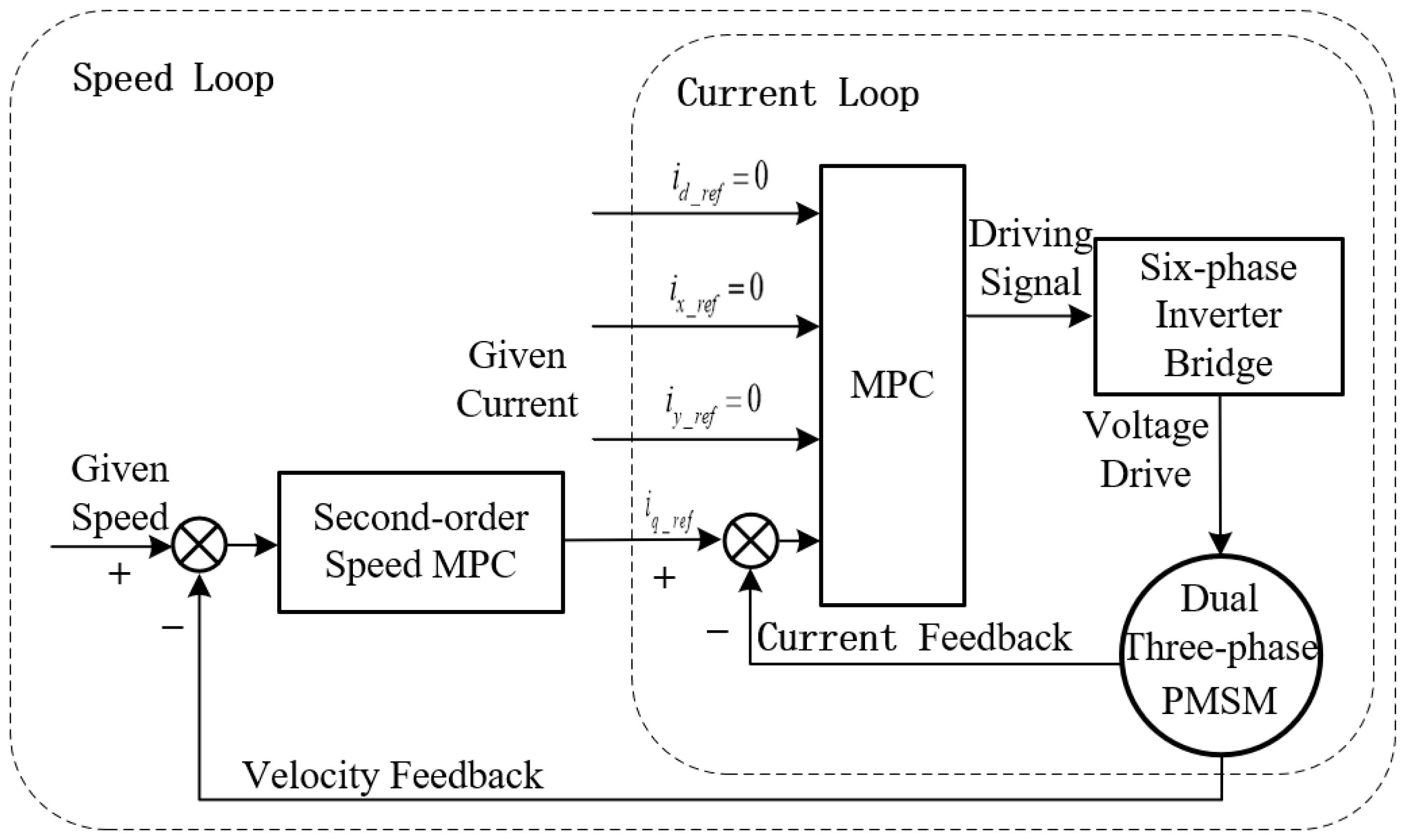
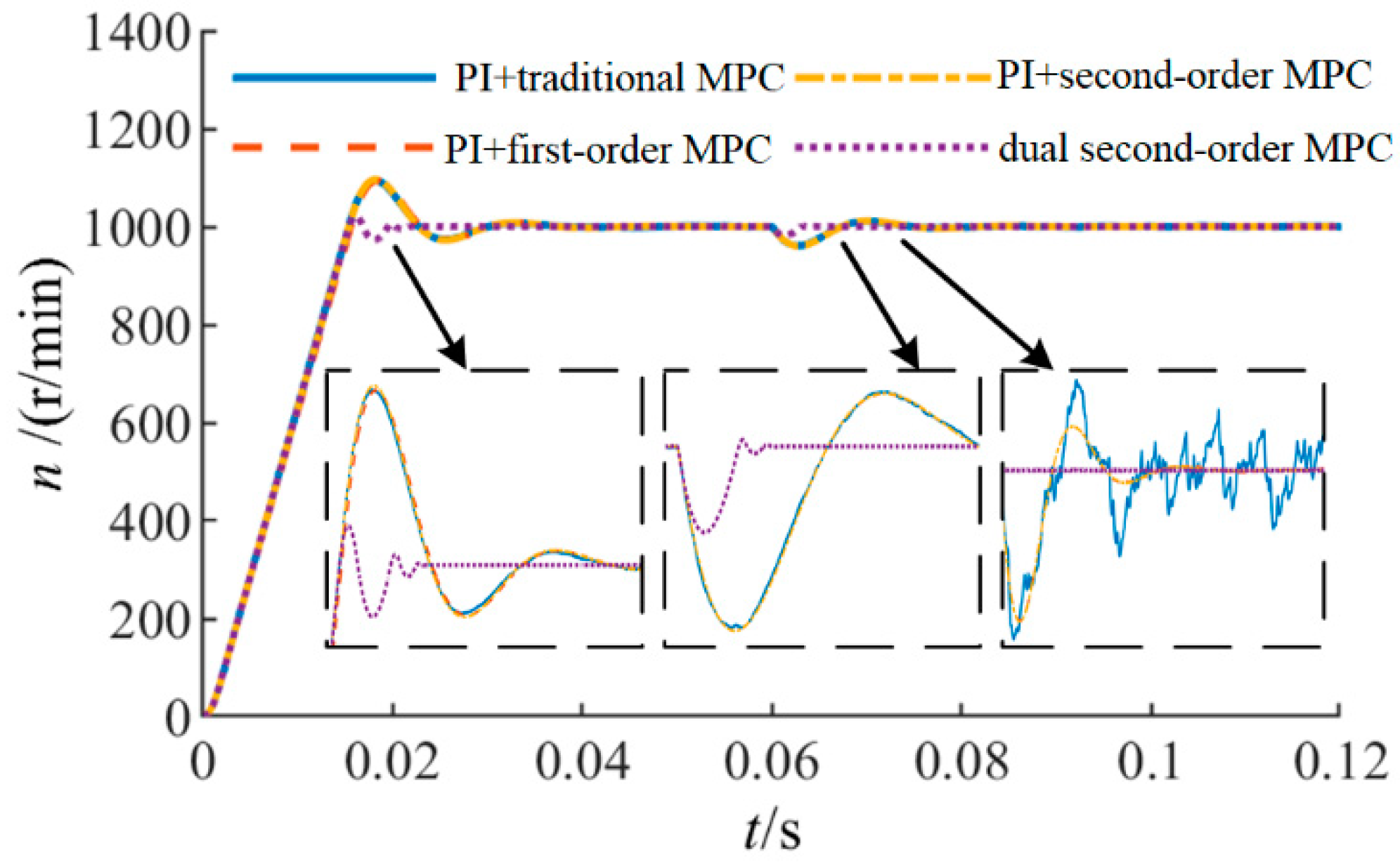
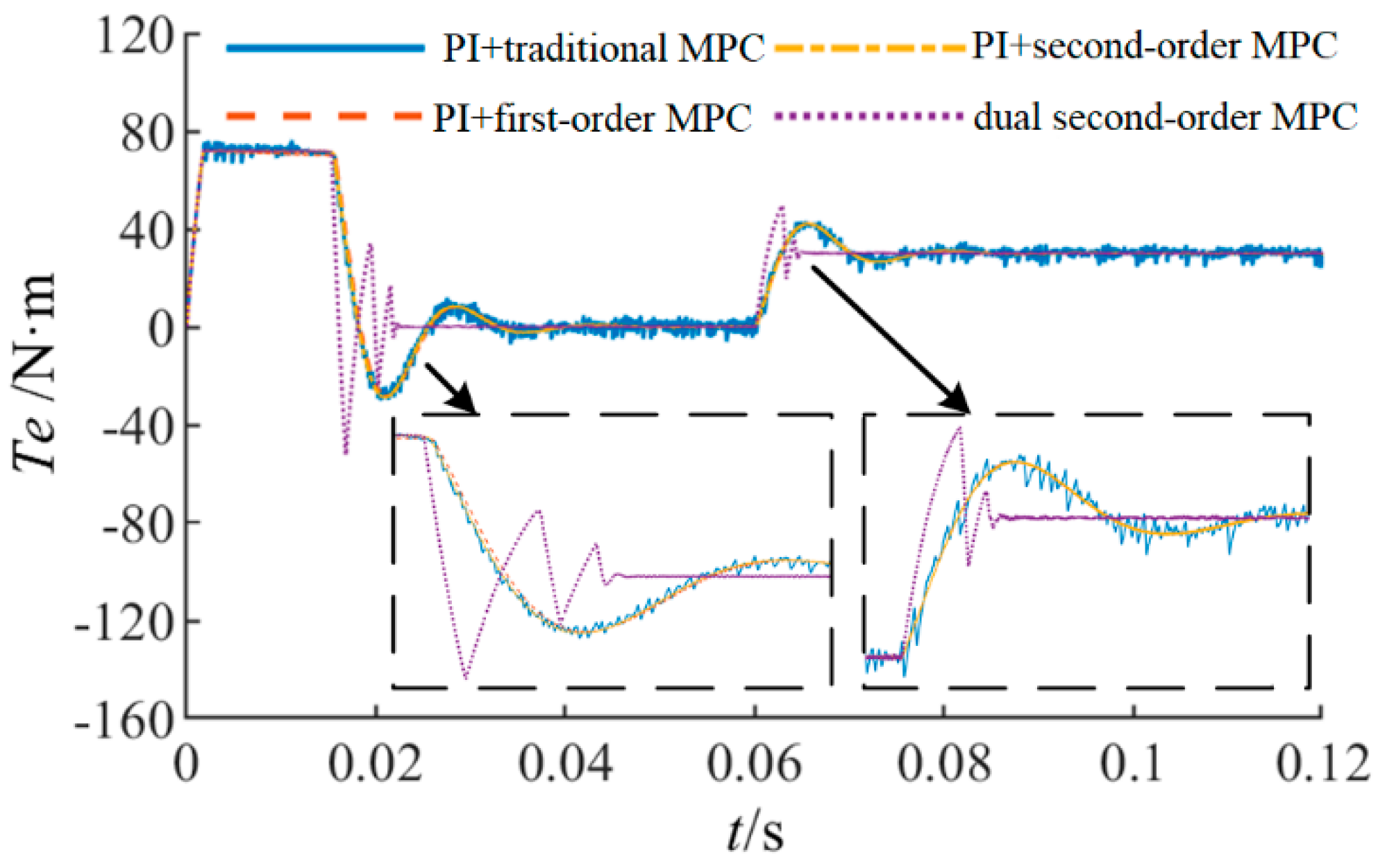
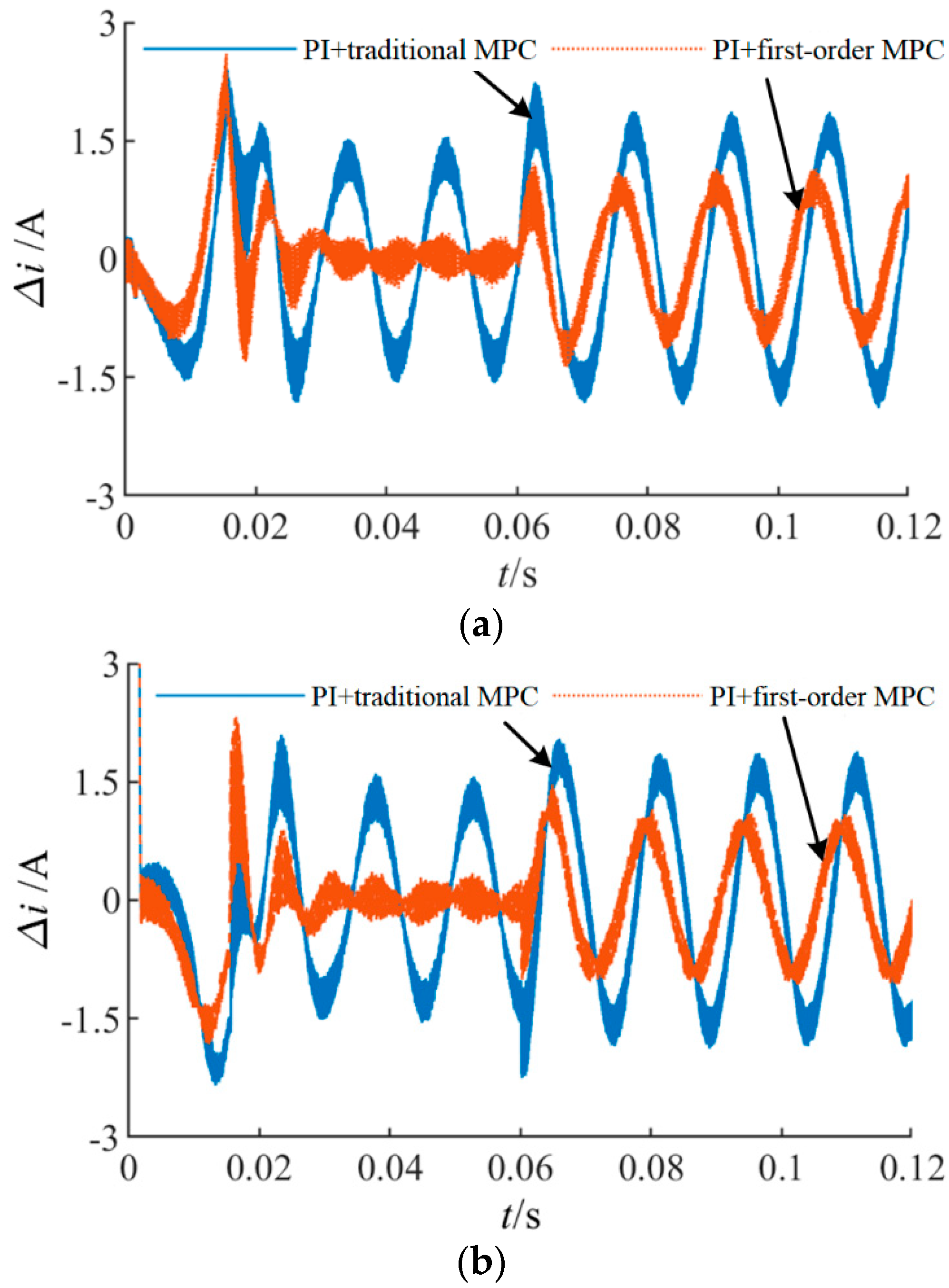
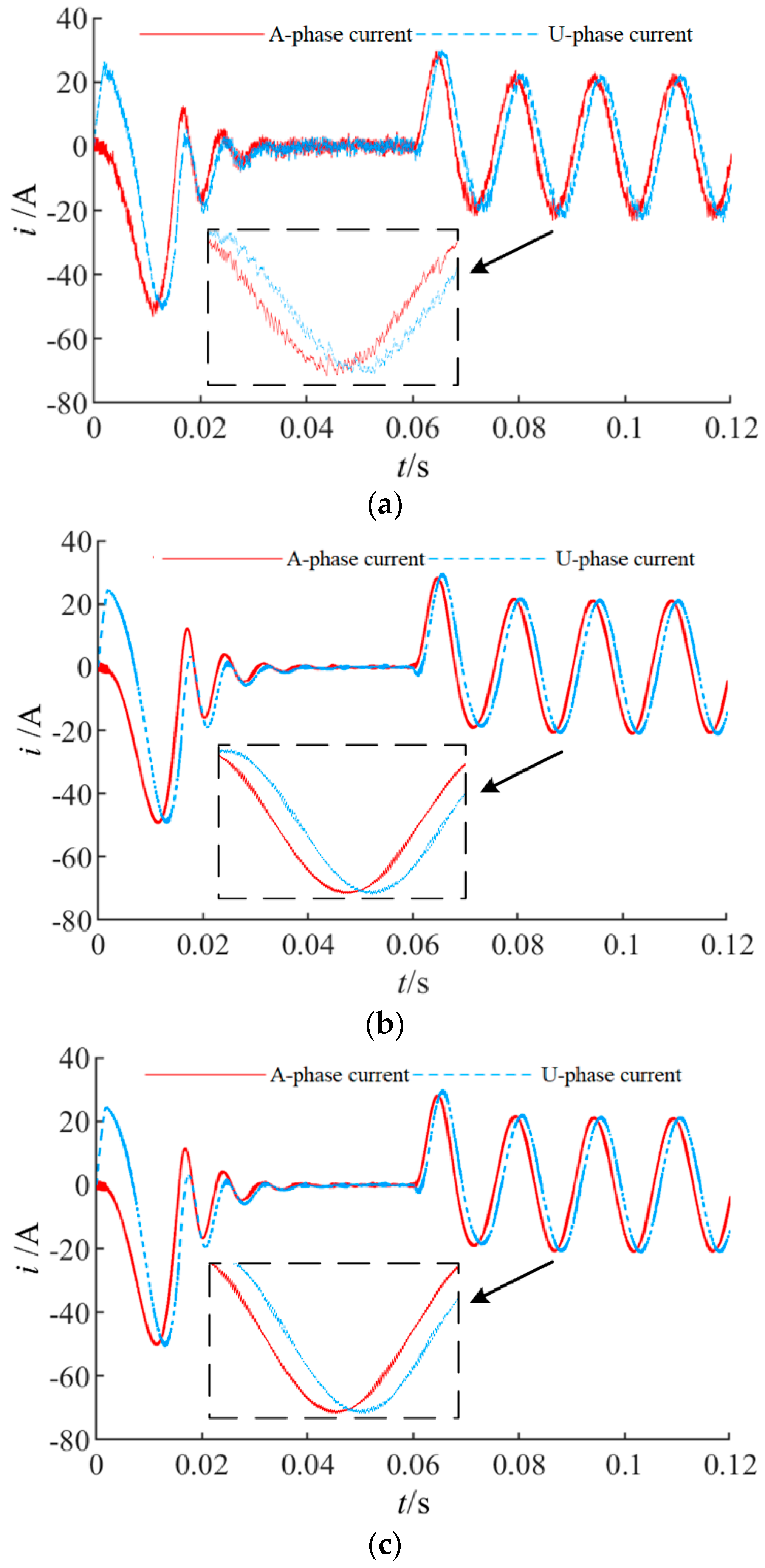
To reduce the amount of computation in traditional model predictive current control, to improve the flexibility in choosing the direction and amplitude in the voltage vector synthesis of a dual three-phase motor by two degrees of freedom, and to reduce the output torque ripple and current ripple, this paper proposes a dual second-order model predictive control algorithm based on current loop operation optimization. Compared with the conventional speed loop using the PI control algorithm and the traditional MPC control algorithm, the proposed algorithm adopts the second-order MPC control mode in the speed loop, which decreases the speed regulation time and increases motor immunity. Meanwhile, the second-order MPC control mode is adopted in the current loop, and the traditional iterative calculation method is improved to calculate the direction and amplitude of the output voltage vector through the analytic function, which increases the flexibility of the output voltage vector. Additionally, a four-vector SVPWM is employed to modulate the voltage vector to reduce the current amplitude in the harmonic subspace. The simulation results indicate that the algorithm proposed in this paper can significantly reduce the torque ripple and the current ripple as well as increase the transient performance of the motor.
Keywords: dual three-phase permanent magnet synchronous motor; dual second-order model predictive control; current loop optimization; iterative optimization dual three-phase permanent magnet synchronous motor; dual second-order model predictive control; current loop optimization; iterative optimization