Article

Integrating MALDI-TOF Mass Spectrometry and Machine Learning for Rapid and Clinically Relevant Differentiation of MRSA and MSSA

1
Medical Microbiology Laboratory, Aydin Ataturk State Hospital, Aydin 09020, Türkiye
2
Medical Microbiology Laboratory, Istanbul Basaksehir Cam and Sakura City Hospital, Istanbul 34480, Türkiye
3
Vezirkopru District Directorate of Health, Samsun 55900, Türkiye
*
Author to whom correspondence should be addressed.
Pathogens 2026, 15(2), 191; https://doi.org/10.3390/pathogens15020191
Submission received: 23 January 2026 / Revised: 1 February 2026 / Accepted: 4 February 2026 / Published: 9 February 2026
(This article belongs to the Section Bacterial Pathogens)

Abstract

Matrix-assisted laser desorption/ionization time-of-flight mass spectrometry (MALDI-TOF MS) is routinely used in clinical microbiology for rapid species identification; however, its potential to support early antimicrobial decision-making remains under active investigation. Rapid discrimination of methicillin-resistant Staphylococcus aureus (MRSA) and methicillin-susceptible Staphylococcus aureus (MSSA) at the time of identification could facilitate earlier optimization of antimicrobial therapy and infection control measures. In this study, MALDI-TOF MS spectral data were analyzed to evaluate supervised machine learning–based differentiation of MRSA and MSSA. A total of 91 S. aureus isolates (37 MRSA and 54 MSSA) were included, with methicillin susceptibility determined by the cefoxitin disk diffusion test according to EUCAST guidelines and used as the reference standard. MALDI-TOF MS spectra were acquired following standard on-plate extraction, subjected to quality control, and preprocessed prior to analysis. Principal component analysis demonstrated partial but consistent separation between MRSA and MSSA isolates. A Random Forest classifier was trained and validated using stratified 10-fold cross-validation, achieving an overall classification accuracy of 81.3% and a receiver operating characteristic area under the curve of 0.916. Class-specific analysis revealed high precision for MRSA (95.5%) and excellent recall for MSSA (98.1%). These findings indicate that MALDI-TOF MS combined with machine learning can provide clinically relevant information for rapid MRSA/MSSA differentiation and may serve as a cost-free decision-support approach in routine clinical microbiology workflows, complementing standard phenotypic susceptibility testing.

1. Introduction

Matrix-assisted laser desorption/ionization time-of-flight mass spectrometry (MALDI-TOF MS) has become a widely used tool in clinical microbiology laboratories for the rapid and accurate identification of microorganisms [1]. This technology enables the characterization of organisms based on their unique protein mass fingerprints, which are generated from ribosomal and other abundant cellular proteins and subsequently compared with reference databases for species-level identification [2].
In recent years, MALDI-TOF MS has attracted increasing attention not only as an identification tool but also as a potential method for predicting antimicrobial resistance [3]. In particular, the discrimination between methicillin-resistant Staphylococcus aureus (MRSA) and methicillin-susceptible Staphylococcus aureus (MSSA) isolates in clinically important pathogens such as S. aureus may yield results more quickly than conventional antibiogram and genotypic methods [4].
Numerous studies have shown that specific m/z peaks in MALDI-TOF MS spectra vary between MRSA and MSSA isolates [2,4,5,6,7]. For instance, some studies have identified peaks uniquely associated with MRSA. Despite these findings, there is currently no consistent, widely applicable method for using this information in routine clinical diagnosis [6]. However, potential differentiation of certain characteristic peaks has been found in spectra obtained from a wide range of clinical isolates, and these differences have been supported by in vitro phenotypic and genotypic data [7].
While traditional statistical methods have relied on p-values to identify differences, machine learning approaches have become increasingly popular in recent years for revealing distinct features in multivariate data and improving classification accuracy. Random Forest (RF), Support Vector Machine, and other supervised learning algorithms have been successfully used to predict antimicrobial resistance phenotypes from MALDI-TOF MS data. These methods have shown higher accuracy and better generalization compared to traditional analyses. Systematic studies have identified trends and strengths in this area, indicating that well-trained machine learning models can accurately predict resistance profiles from MALDI-TOF MS spectra [7,8,9,10].
Nevertheless, a standardized protocol to integrate MALDI-TOF MS and machine learning to differentiate between MRSA and MSSA in clinical practice has not yet been developed, and there is a lack of consistency across devices, data structures, and analysis methods [4].
The rapid identification of MRSA and MSSA using routine MALDI-TOF MS could enable earlier optimization of antimicrobial therapy and infection control decisions, potentially improve patient outcomes, and reduce unnecessary use of broad-spectrum agents [11].
Previous studies indicate that MALDI-TOF MS combined with machine learning can predict methicillin resistance in S. aureus. However, these studies often use centralized datasets and complex analyses that are impractical for routine diagnostic laboratories. While MALDI-TOF MS enables rapid species identification of S. aureus, it cannot distinguish MRSA from MSSA isolates, necessitating traditional phenotypic antimicrobial susceptibility testing that can take hours to days to yield results.
This study aimed to evaluate the feasibility and clinical decision-support value of supervised machine learning for differentiating MRSA from MSSA using MALDI-TOF MS spectra generated through standard diagnostic workflows. By using routinely acquired spectra without incurring additional costs, specialized instruments, or proprietary software, we sought to determine whether it is possible to extract resistance-related information during identification. This approach aims to complement rather than replace traditional phenotypic susceptibility testing.

2. Materials and Methods

2.1. Bacterial Isolates and Culture Conditions

MRSA isolates included in this study were obtained from a previously published, molecularly characterized isolate collection described by Ceylan et al. [12]. In the referenced study, the methicillin resistance of these isolates had been confirmed by polymerase chain reaction (PCR) detection of the mecA gene. Permission to use archived isolates and associated molecular data from the previous study was obtained prior to the initiation of the present research. For the current study, archived MRSA isolates were retrieved from storage and re-cultured exclusively for MALDI-TOF MS–based spectral analysis and machine learning modeling. No additional molecular testing was performed, and no patient-identifiable clinical data were accessed or used.
MSSA isolates were obtained from non-duplicate routine clinical specimens submitted to the microbiology laboratory of Basaksehir Cam and Sakura City Hospital. Specimen types included blood, wound swabs, respiratory samples, and other clinical materials. MSSA isolates were identified using standard microbiological methods, and no molecular testing was performed. A total of 91 non-duplicate S. aureus isolates (MRSA and MSSA) were included in the study.
All isolates were stored at −80 °C until further analysis and subcultured onto blood agar plates prior to MALDI-TOF MS analysis. As the study was retrospective and based on archived, anonymized laboratory isolates, patient-specific demographic data, such as age and sex, were unavailable and not analyzed.

2.2. Antimicrobial Susceptibility Testing (AST)

Methicillin susceptibility testing was performed for all S. aureus isolates using the cefoxitin (30 µg) disk diffusion method on the same day as MALDI-TOF MS analysis. A 0.5 McFarland bacterial suspension prepared from overnight cultures was inoculated onto Mueller–Hinton agar plates, cefoxitin disks were applied, and plates were incubated at 35 ± 1 °C for 18–24 h. Inhibition zone diameters were measured and interpreted according to EUCAST clinical breakpoints; isolates with cefoxitin inhibition zone diameters < 22 mm were classified as methicillin-resistant (MRSA), whereas isolates with zone diameters ≥ 22 mm were classified as methicillin-susceptible (MSSA). For the purpose of this study, isolates were phenotypically classified as MRSA or MSSA based on cefoxitin disk diffusion results, which served as the reference standard for all subsequent statistical and machine-learning analyses. In the isolate collection analyzed in this study, no mecA-positive but phenotypically cefoxitin-susceptible S. aureus isolates were observed.

2.3. MALDI-TOF MS Sample Preparation

MALDI-TOF MS sample preparation was performed using a standard on-plate extraction protocol. Following overnight incubation on blood agar plates, a single fresh bacterial colony was transferred onto a stainless-steel MALDI target plate (Bruker Daltonics, Bremen, Germany). After air drying, the bacterial spot was overlaid with formic acid to facilitate protein extraction and cell wall disruption. The spot was allowed to dry completely at room temperature. Subsequently, a matrix solution was applied to each spot and air-dried prior to analysis. The matrix consisted of a saturated solution of α-cyano-4-hydroxycinnamic acid (HCCA), prepared according to the manufacturer’s recommendations. All samples were prepared using identical procedures to ensure consistency and reproducibility across MRSA and MSSA isolates.

2.4. MALDI-TOF MS Data Acquisition

Mass spectra were acquired using a Bruker MALDI-TOF MS system operated with the manufacturer’s standard software (Bruker SMART/Biotyper environment, version 3.1). Spectra were recorded in linear positive ion mode within the standard mass range used for bacterial identification. For each isolate, spectra were generated from freshly prepared spots and used for subsequent spectral preprocessing and analysis. Only spectra yielding a Bruker Biotyper identification score ≥ 2.0 were included in the study.

2.5. Instrument Calibration and Quality Control

Prior to MALDI-TOF MS analysis, external calibration was performed according to the manufacturer’s recommendations using the Bruker Bacterial Test Standard (BTS), which contains a defined mixture of Escherichia coli proteins for mass accuracy calibration across the relevant m/z range. Calibration was verified before routine measurements to ensure optimal mass precision and spectral reproducibility. Quality control was implemented during data acquisition utilizing the Bruker Biotyper software environment (version 3.1). We visually inspected the acquired spectra for overall signal intensity, baseline stability, resolution, and peak distribution. Spectra that showed low signal intensity, poor resolution, or irregular peak patterns were excluded from further analysis. To reduce technical variability, all spectra were acquired using identical instrument settings and acquisition parameters throughout the study.

2.6. Spectral Preprocessing and Peak Detection

MALDI-TOF MS spectra (mzML) were imported into the Mass-Up software platform (version 1.0.14) for spectral preprocessing and analysis, which is an open-source tool based on the MALDIquant framework [13]. Quality control and preprocessing were applied to reduce technical noise and improve spectral comparability across isolates, including smoothing, baseline correction, and intensity normalization. Following preprocessing, peak detection and peak alignment were performed to generate a matched peak list dataset, enabling direct comparison of corresponding m/z values between MRSA and MSSA isolates. Datasets were labeled according to reference cefoxitin susceptibility results.
Principal component analysis (PCA) and inter-class comparative analysis were performed to identify discriminatory peaks, with statistical significance assessed using p-values and false discovery rate-corrected q-values. Peaks with p < 0.05 and q < 0.05 were considered statistically significant. Selected peaks were visually evaluated using overlay spectra. Machine learning–based classification was subsequently conducted using an RF algorithm implemented in the integrated Waikato Environment for Knowledge Analysis (WEKA) environment with stratified 10-fold cross-validation, and model performance was evaluated using standard classification metrics and confusion matrices. Phenotypically confirmed MRSA and MSSA isolates were used as reference categories for machine learning analyses, while instrument calibration and spectral quality control were ensured using the Bruker Bacterial Test Standard (BTS).

2.7. Statistical Analysis of Discriminatory Peaks

To identify spectral features associated with methicillin resistance, a comparative inter-class analysis was performed between the MRSA and MSSA groups using the matched peak list dataset. For each detected m/z value, the presence or absence of the peak across isolates was recorded and compared between groups using univariate statistical tests. Statistical significance was assessed by calculating p-values for each peak, followed by false discovery rate correction to obtain q-values. Peaks showing statistically significant differences after correction were considered candidate discriminatory features. The consistency of peak occurrence within each group was additionally evaluated to support biological relevance. Selected discriminatory peaks were subsequently visually validated using overlay spectra and included in downstream machine-learning analyses.

2.8. Machine Learning Classification and Model Evaluation

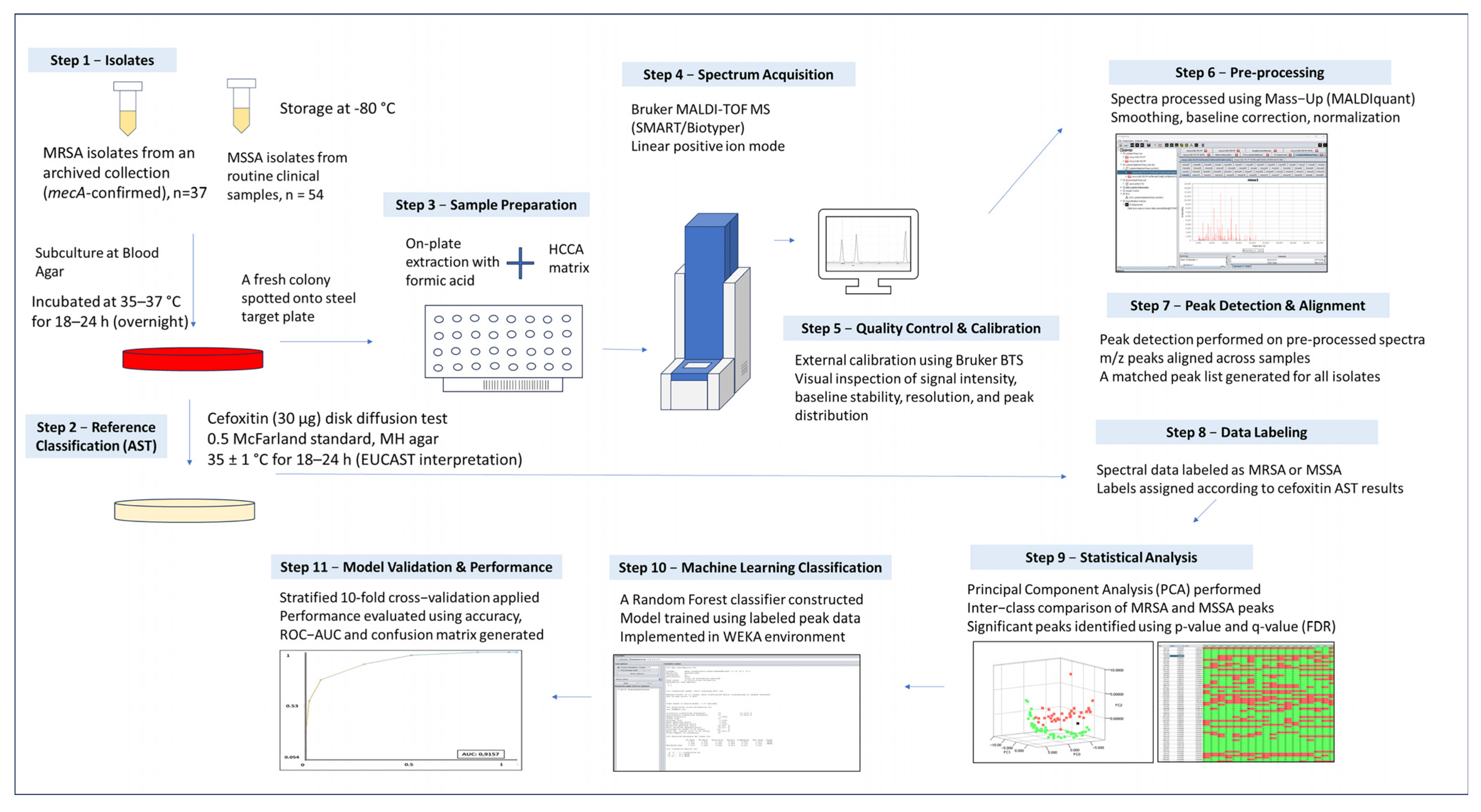
MALDI-TOF MS spectra obtained during routine identification were used for machine learning–based discrimination of MRSA and MSSA isolates. The overall analytical workflow is summarized in Figure 1, illustrating each step from isolate processing to classification output.
Spectral data were preprocessed to improve comparability between samples, including baseline correction, normalization, and peak alignment. These steps were applied uniformly to all spectra prior to analysis. The resulting processed spectra were then used as input features for supervised machine learning.
Machine learning analyses were performed using WEKA (version 3.8), an open-source data mining and machine learning software developed by the University of Waikato, New Zealand (https://www.cs.waikato.ac.nz/ml/weka/, accessed on 1 February 2026). An RF classifier was selected, as it is a robust ensemble learning method that combines multiple decision trees to improve classification performance and reduce overfitting, particularly when handling complex, high-dimensional data such as mass spectra.
Model performance was evaluated using stratified 10-fold cross-validation, ensuring that MRSA and MSSA isolates were proportionally represented in both the training and test sets. Classification performance was assessed using standard metrics, including accuracy, sensitivity, specificity, precision, F1-score, and the area under the receiver operating characteristic curve (ROC-AUC).
The machine learning model output consisted of predicted MRSA or MSSA classifications based solely on MALDI-TOF MS spectral data, which were subsequently compared with phenotypic cefoxitin susceptibility results, used as the reference standard.

3. Results

3.1. Study Population and MALDI-TOF MS Data Overview

A total of 91 S. aureus isolates were included in the study, comprising 54 MSSA and 37 MRSA isolates. Isolates were obtained from a broad range of clinical specimen types, most frequently urine cultures, tracheal aspirates, nasal swabs, blood cultures, and wound/tissue specimens (Supplementary Table S1).
MALDI-TOF MS analysis was successfully performed for all isolates included in the study, and spectra with a Bruker Biotyper identification score of ≥2.0 were included in the analysis dataset. The final dataset used for statistical and machine learning analyses comprised a matched peak list containing 2663 spectral features, representing unique m/z peaks detected across all isolates after peak detection and alignment, rather than peaks derived from a single strain.

3.2. Global Spectral Variability Between MRSA and MSSA Isolates

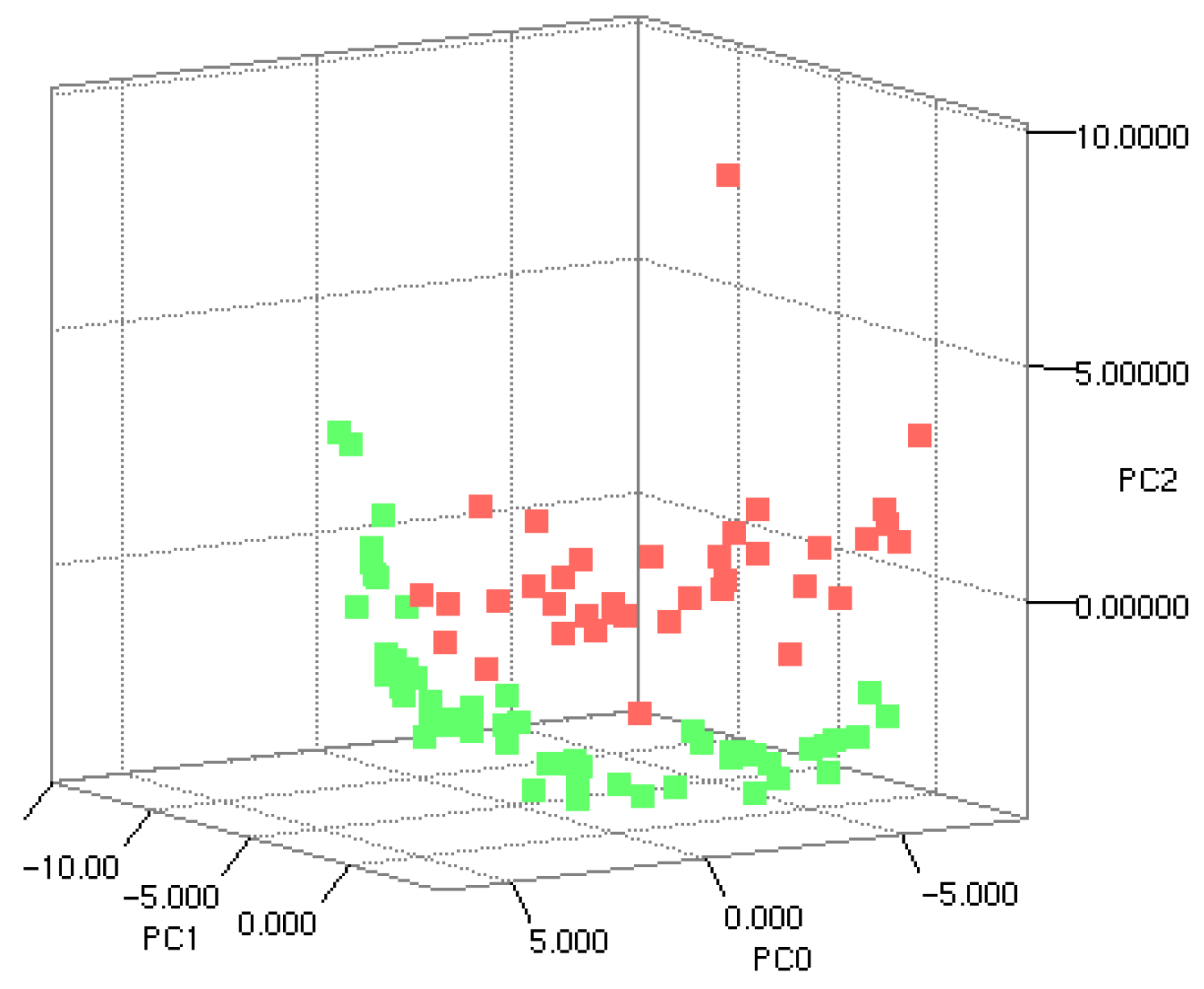
Principal component analysis (PCA) was performed as an exploratory approach to visualize overall variability in MALDI-TOF MS spectra and to assess potential separation between MRSA and MSSA isolates. PCA score plots showed partial but consistent separation between the two groups, with MRSA and MSSA isolates exhibiting distinct distributions across the principal components (Figure 2). Although overlap between groups was observed, the clustering pattern suggested the presence of underlying spectral differences associated with methicillin resistance.

3.3. Identification of Discriminatory MALDI-TOF MS Peaks

A comparative inter-class analysis of the matched peak list dataset identified multiple m/z values that showed statistically significant differences between MRSA and MSSA isolates. After correction for multiple testing, 37 m/z values remained statistically significant based on FDR-corrected (false discovery rate) q-values and consistent group-specific presence patterns (Supplementary Table S2).
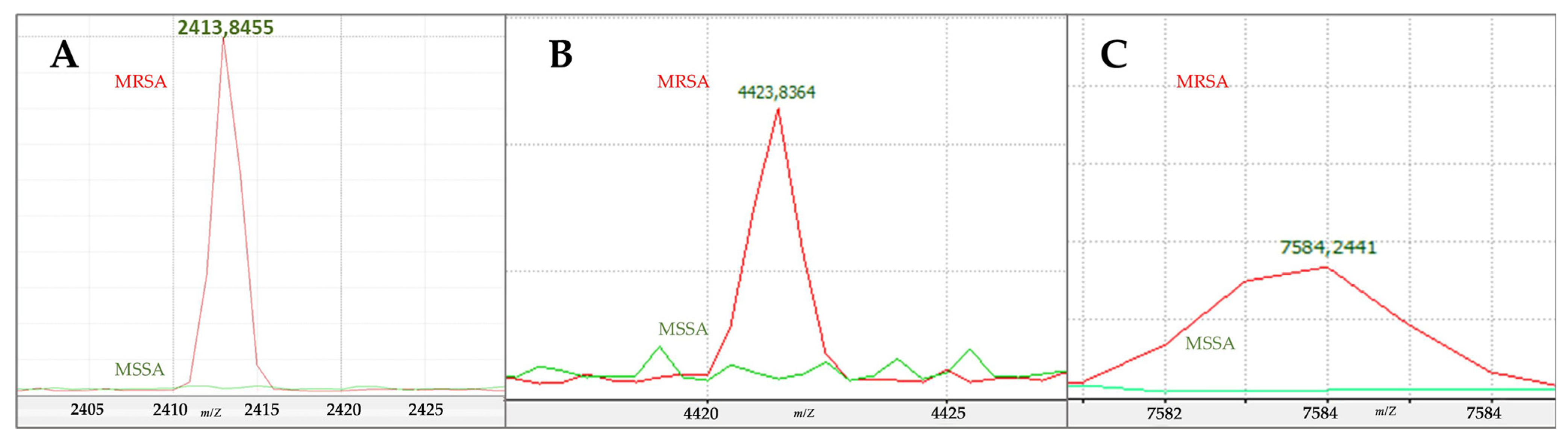
To support the robustness of the statistical findings, representative discriminatory m/z values were further examined using overlay spectra. Several peaks were consistently present in the majority of MRSA isolates but absent or weak in MSSA isolates, whereas other peaks showed the opposite pattern. These reproducible patterns provided visual confirmation of the discriminatory potential of the identified peaks (Figure 3).

3.4. Machine Learning Classification Performance

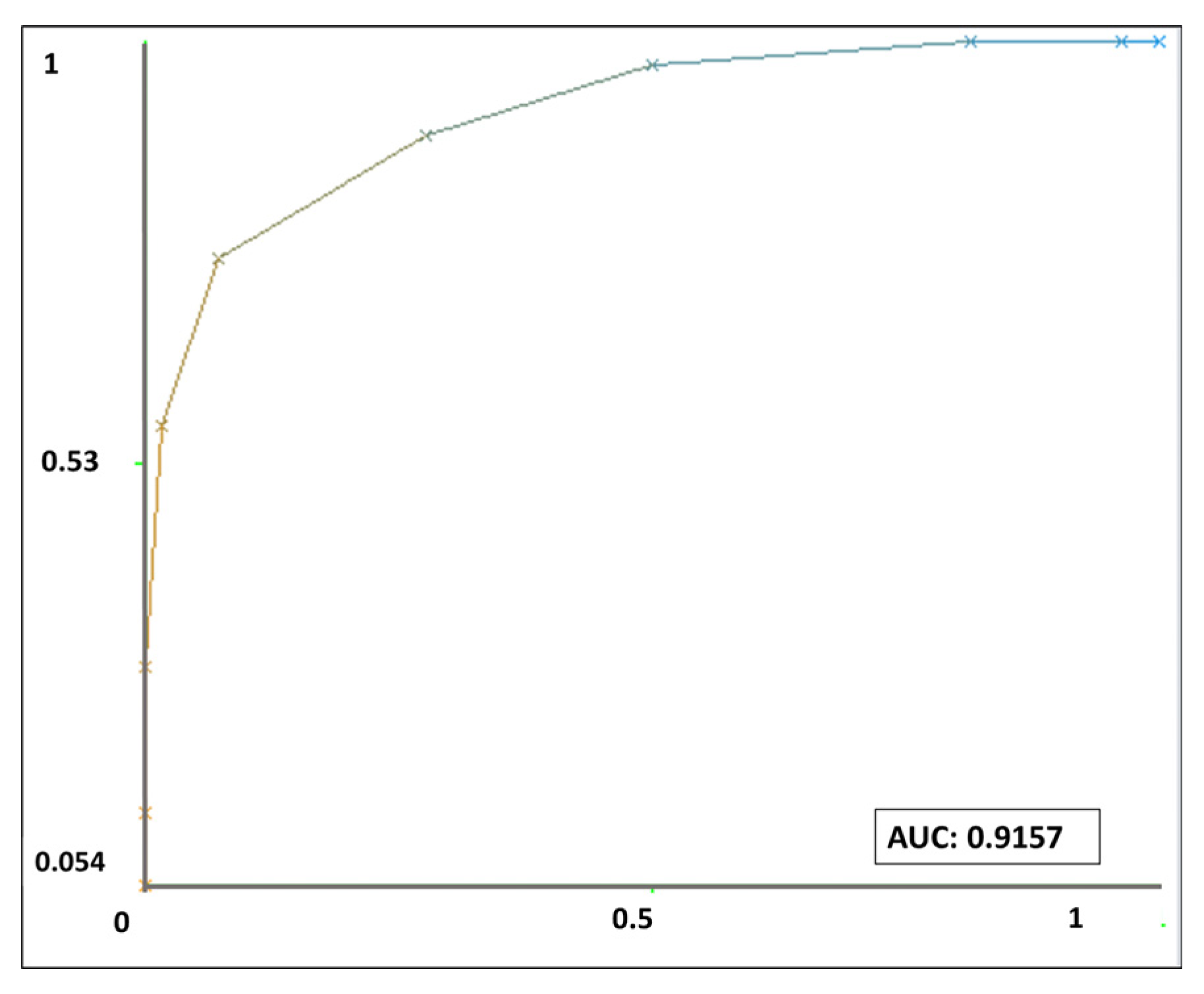
RF classification was applied to the matched-peak-list dataset to discriminate MRSA and MSSA isolates. Using stratified 10-fold cross-validation, the model achieved an overall classification accuracy of 81.3%, correctly classifying 74 of 91 isolates. The Cohen’s kappa statistic was 0.586, indicating moderate agreement beyond chance. Receiver operating characteristic (ROC) analysis demonstrated strong discriminatory performance, with an area under the curve (ROC-AUC) of 0.916 (Figure 4).

3.5. Class-Specific Performance and Confusion Matrix Analysis

Class-specific performance analysis revealed differences in classification performance between MRSA and MSSA isolates (Table 1). The model achieved a recall of 0.981 for MSSA isolates, indicating that nearly all were correctly classified, although precision was lower (0.768), reflecting a higher false-positive rate in susceptibility prediction. For MRSA isolates, recall (sensitivity) was 0.568, whereas precision reached 0.955, indicating that most isolates predicted as MRSA were truly resistant. The F-measure values summarize the trade-off between precision and recall for each class and highlight the model’s asymmetric classification behavior. Consistent ROC-AUC values (0.916) for both classes indicate strong overall discriminatory performance across different classification thresholds.
Analysis of the confusion matrix showed that 53 MSSA and 21 MRSA isolates were correctly classified, whereas 16 MRSA isolates were misclassified as MSSA and one MSSA isolate was misclassified as MRSA (Table 2).

4. Discussion

In this study, we evaluated the integration of MALDI-TOF MS–derived spectral data with RF–based machine learning to differentiate methicillin-resistant and methicillin-susceptible S. aureus isolates. Our findings demonstrate that MALDI-TOF MS spectra exhibit reproducible proteomic differences associated with methicillin resistance, and that these differences can be leveraged by supervised learning to provide meaningful discrimination within a clinically relevant timeframe.
Exploratory analysis using PCA revealed partial but consistent separation between MRSA and MSSA isolates, suggesting underlying spectral variability associated with resistance status. However, the observed overlap between groups confirms that unsupervised approaches alone are insufficient for reliable MRSA discrimination, a limitation that has been consistently reported in previous MALDI-TOF MS–based resistance studies [8,14,15]. These findings support the use of supervised machine learning methods to capture complex, multivariate spectral patterns that are not readily apparent through dimensionality reduction techniques.
Inter-class statistical analysis identified 37 m/z peaks that differed significantly between MRSA and MSSA isolates after FDR correction, highlighting the presence of resistance-associated proteomic signatures (p < 0.05, q < 0.05). Several discriminatory peaks identified in this study fall within m/z ranges previously linked to methicillin resistance. In particular, the peak at approximately m/z 2413.8 was markedly more prevalent among MRSA isolates, consistent with prior reports associating this signal with the phenol-soluble modulin mec (PSM-mec), a peptide encoded within certain SCCmec elements [2,16,17,18,19]. However, as reported in earlier studies, this peak was not universally present across MRSA isolates, reinforcing the notion that no single spectral feature can serve as a universal biomarker of methicillin resistance [5]. The variability of the m/z 2413.8 peak among MRSA isolates likely reflects regulatory control of PSM-mec by the agr system, which is frequently impaired in hospital-associated MRSA lineages. Accordingly, PSM-mec expression may be suppressed in agr-deficient strains despite mecA carriage, as previously demonstrated by Josten et al. [20].
Interestingly, several peaks were more frequently observed among MSSA isolates, such as m/z 5340.9 (75.9% in MSSA vs. 9.3% in MRSA; p < 0.001), suggesting that methicillin resistance–associated proteomic changes may involve not only the acquisition of resistance-linked peptides but also alterations in the expression of core cytoplasmic proteins. This observation aligns with prior studies that emphasize that methicillin resistance reflects a complex remodeling of the S. aureus proteome rather than simple on–off expression of a single resistance determinant [2,10,21].
By utilizing the complete matched peak list dataset (2663 spectral features) in an RF model without preliminary feature selection, leveraging the inherent ability of RF to handle high-dimensional data and rank feature importance, we achieved an overall classification accuracy of 81.3% with clinically relevant discriminatory performance, as reflected by a ROC-AUC value (0.916). This approach leverages the inherent capacity of RF algorithms to handle high-dimensional data and assess feature importance without extensive preprocessing. While large-scale studies such as that of Yu et al. (2022) primarily aimed to optimize predictive performance using centralized, multi-institutional datasets and analytically complex pipelines, the present study was designed to address a complementary question: whether robust MRSA/MSSA discrimination can be achieved using spectra generated under routine diagnostic workflows in a single laboratory setting, without additional instrumentation, proprietary software, or extensive feature engineering [7]. The observed performance is consistent with previous reports employing supervised machine learning for MRSA prediction from MALDI-TOF MS data. Although direct cross-study comparisons are limited by differences in acquisition platforms, preprocessing strategies, and isolate cohorts, reported sensitivities in RF-based MRSA models typically range from 68% to 92%, with AUC values between 0.82 and 0.88 [10,14,22]. Notably, the achieved accuracy of 81.3% and ROC-AUC of 0.916 are consistent with established benchmarks reported in the literature and indicate that meaningful discriminatory information can be extracted from routinely acquired MALDI-TOF MS spectra even without targeted feature engineering [9,14,22,23].
Class-specific performance analysis revealed a clinically significant asymmetry in the model’s predictive capabilities. We achieved very high precision for MRSA (95.5%) and an exceptional recall for MSSA (98.1%). This performance profile mirrors observations in prior studies where high specificity is often attained at the expense of sensitivity [4]. This asymmetry is likely rooted in the biological heterogeneity of MRSA lineages; the variable expression of resistance-associated proteins can lead some resistant isolates to appear spectrally similar to MSSA, resulting in the moderate sensitivity (56.8%) observed here [6].
However, from a clinical perspective, this performance profile is particularly advantageous. Because MALDI-TOF MS is already the standard method for species identification, the simultaneous extraction of resistance-related information provides actionable insights hours before conventional phenotypic susceptibility results become available, without additional costs or workflow complexity. The high precision observed for MRSA classification (95.5%) enables confident rule-in decisions, such as prompt patient isolation and initiation of appropriate empirical therapy. Conversely, the excellent MSSA recall (98.1%) is highly relevant to antimicrobial stewardship, as it may facilitate early de-escalation from empirical anti-MRSA therapy, including vancomycin, to narrower-spectrum β-lactam agents. This strategy is consistent with recommendations from the Infectious Diseases Society of America, which emphasize the superiority of β-lactams over vancomycin for MSSA infections and highlight the importance of minimizing unnecessary vancomycin exposure to reduce toxicity and the development of resistance [3,24,25]. Although the moderate sensitivity necessitates confirmation of negative predictions by standard phenotypic testing, the proposed model functions as a rapid, cost-free decision-support tool that meaningfully accelerates clinical decision-making in routine microbiology workflows.
Several limitations of this study should be acknowledged. The absence of external validation using an independent, multi-center dataset may limit the generalizability of the findings. The present study was specifically designed to evaluate MRSA/MSSA discrimination within S. aureus isolates. Evaluation of mecA-positive coagulase-negative staphylococci (CoNS) as negative or near-neighbor controls would be valuable for further assessment of specificity and generalizability; however, this was beyond the scope of the present study. Additionally, platform-specific factors and preprocessing choices may influence model performance across laboratories. As emphasized in systematic reviews, standardization of acquisition protocols, data processing pipelines, and validation strategies remains a critical challenge for the clinical implementation of machine learning–based MALDI-TOF MS applications [8].

5. Conclusions

In conclusion, this study demonstrates that MALDI-TOF MS spectra, when analyzed using supervised machine learning, enable reliable differentiation between MRSA and MSSA isolates. The observed performance, including high precision for MRSA and excellent recall for MSSA, supports the use of this approach as a rapid, cost-free decision-support tool within routine clinical microbiology workflows. While not intended as a standalone screening method, this strategy may facilitate early therapeutic decisions and antimicrobial de-escalation. Further multi-center validation and external testing will be required to confirm broader clinical applicability.

Supplementary Materials

The following supporting information can be downloaded at: https://www.mdpi.com/article/10.3390/pathogens15020191/s1, Table S1: Distribution of MSSA and MRSA Isolates by Clinical Specimen Type, Table S2: List of statistically significant MALDI-TOF MS peaks (p < 0.05, FDR-corrected) distinguishing MRSA and MSSA isolates.

Author Contributions

Conceptualization, A.G. and A.N.C.; methodology, A.G.; software, Y.S.; validation, A.G., A.N.C. and S.K.; formal analysis, Y.S.; investigation, A.G.; resources, B.Ö.; data curation, Y.S.; writing—original draft preparation, A.G.; writing—review and editing, A.G., A.N.C., S.K., B.Ö. and Y.S.; visualization, A.G.; supervision, A.N.C.; project administration, A.G. All authors have read and agreed to the published version of the manuscript.

Funding

This research received no external funding.

Institutional Review Board Statement

The study was conducted in accordance with the Declaration of Helsinki, and approved by the Clinical Research Ethics Committee of Başakşehir Çam and Sakura City Hospital (protocol code KAEK/2021.12.277, approved on 15 December 2021).

Informed Consent Statement

Patient consent was waived due to the retrospective nature of the study and the use of anonymized clinical bacterial isolates, with no identifiable patient information involved.

Data Availability Statement

The data supporting the findings of this study are available from the corresponding author upon reasonable request. The data are not publicly available due to ethical restrictions related to clinical bacterial isolates.

Conflicts of Interest

The authors declare no conflicts of interest.

Abbreviations

The following abbreviations are used in this manuscript:
MALDI-TOF MSMatrix-Assisted Laser Desorption/Ionization Time-of-Flight Mass Spectrometry
MRSAMethicillin-Resistant Staphylococcus aureus
MSSAMethicillin-Susceptible Staphylococcus aureus
ASTAntimicrobial Susceptibility Testing
PCAPrincipal Component Analysis
RFRandom Forest
ROC-AUCReceiver Operating Characteristic Area Under the Curve
FDRFalse Discovery Rate
EUCASTEuropean Committee on Antimicrobial Susceptibility Testing

References

  1. Ojima-Kato, T.; Yamamoto, N.; Iijima, Y.; Tamura, H. Assessing the performance of novel software Strain Solution on automated discrimination of Escherichia coli serotypes and their mixtures using matrix-assisted laser desorption ionization-time of flight mass spectrometry. J. Microbiol. Methods 2015, 119, 233–238. [Google Scholar] [CrossRef] [PubMed]
  2. Santos, P.; Alho, I.; Ribeiro, E. MALDI-TOF MS Biomarkers for Methicillin-Resistant Staphylococcus aureus Detection: A Systematic Review. Metabolites 2025, 15, 540. [Google Scholar] [CrossRef] [PubMed]
  3. Florio, W.; Baldeschi, L.; Rizzato, C.; Tavanti, A.; Ghelardi, E.; Lupetti, A. Detection of Antibiotic-Resistance by MALDI-TOF Mass Spectrometry: An Expanding Area. Front. Cell. Infect. Microbiol. 2020, 10, 572909. [Google Scholar] [CrossRef] [PubMed]
  4. Kim, J.M.; Kim, I.; Chung, S.H.; Chung, Y.; Han, M.; Kim, J.S. Rapid Discrimination of Methicillin-Resistant Staphylococcus aureus by MALDI-TOF MS. Pathogens 2019, 8, 214. [Google Scholar] [CrossRef]
  5. Alksne, L.; Makarova, S.; Avsejenko, J.; Cibrovska, A.; Trofimova, J.; Valciņa, O. Determination of methicillin-resistant Staphylococcus aureus and Staphylococcus epidermidis by MALDI-TOF MS in clinical isolates from Latvia. Clin. Mass Spectrom. 2020, 16, 33–39. [Google Scholar] [CrossRef]
  6. Gao, W.; Li, B.; Ling, L.; Zhang, L.; Yu, S. MALDI-TOF MS method for differentiation of methicillin-sensitive and methicillin-resistant Staphylococcus aureus using (E)-Propyl α-cyano-4-Hydroxyl cinnamylate. Talanta 2022, 244, 123405. [Google Scholar] [CrossRef]
  7. Yu, J.; Tien, N.; Liu, Y.C.; Cho, D.Y.; Chen, J.W.; Tsai, Y.T.; Huang, Y.C.; Chao, H.J.; Chen, C.J. Rapid Identification of Methicillin-Resistant Staphylococcus aureus Using MALDI-TOF MS and Machine Learning from over 20,000 Clinical Isolates. Microbiol. Spectr. 2022, 10, e0048322. [Google Scholar] [CrossRef]
  8. Weis, C.V.; Jutzeler, C.R.; Borgwardt, K. Machine learning for microbial identification and antimicrobial susceptibility testing on MALDI-TOF mass spectra: A systematic review. Clin. Microbiol. Infect. 2020, 26, 1310–1317. [Google Scholar] [CrossRef]
  9. Jeon, K.; Kim, J.-M.; Rho, K.; Jung, S.H.; Park, H.S.; Kim, J.-S. Performance of a Machine Learning-Based Methicillin Resistance of Staphylococcus aureus Identification System Using MALDI-TOF MS and Comparison of the Accuracy according to SCCmec Types. Microorganisms 2022, 10, 1903. [Google Scholar] [CrossRef]
  10. Santiago, L.S.; Guerrero-López, A.; Sevilla-Salcedo, C.; Rodríguez-Temporal, D.; Rodríguez-Sánchez, B.; Gómez-Verdejo, V. Machine Learning applied to MALDI-TOF data in a clinical setting: A systematic review. bioRxiv 2025. [Google Scholar] [CrossRef]
  11. Vela-Bernal, S.; Bea-Serrano, C.; de Gracia-Leon, A.I.; Belmonte-Domingo, A.; Pinto-Pla, C.; Ferrer-Ribera, A.; de Castro-Oliver, A.; Torres, I.; Colomina, J.; Oltra-Sempere, M.R. Impact of MALDI-TOF implementation and antimicrobial stewardship programs on the optimization of antibiotic therapy in Staphylococcus aureus bloodstream infections. Enfermedades Infecc. Microbiol. Clin. 2025, 43, 674–681. [Google Scholar] [CrossRef]
  12. Ceylan, A.N.; Sümbül, B.; Doymaz, M.Z. Screening of mecC Gene in Methicillin Resistant Staphylococcus aureus Isolates. Bezmiâlem Sci. 2022, 10, 226–230. [Google Scholar] [CrossRef]
  13. Gibb, S.; Strimmer, K. MALDIquant: A versatile R package for the analysis of mass spectrometry data. Bioinformatics 2012, 28, 2270–2271. [Google Scholar] [CrossRef] [PubMed]
  14. Wang, H.Y.; Chung, C.R.; Wang, Z.; Li, S.; Chu, B.Y.; Horng, J.T.; Lu, J.J.; Lee, T.Y. A large-scale investigation and identification of methicillin-resistant Staphylococcus aureus based on peaks binning of matrix-assisted laser desorption ionization-time of flight MS spectra. Brief. Bioinform. 2021, 22, bbaa138. [Google Scholar] [CrossRef]
  15. Złoch, M.; Pomastowski, P.; Maślak, E.; Monedeiro, F.; Buszewski, B. Study on Molecular Profiles of Staphylococcus aureus Strains: Spectrometric Approach. Molecules 2020, 25, 4894. [Google Scholar] [CrossRef]
  16. Rhoads, D.D.; Wang, H.; Karichu, J.; Richter, S.S. The presence of a single MALDI-TOF mass spectral peak predicts methicillin resistance in staphylococci. Diagn. Microbiol. Infect. Dis. 2016, 86, 257–261. [Google Scholar] [CrossRef]
  17. Du, Z.; Yang, R.; Guo, Z.; Song, Y.; Wang, J. Identification of Staphylococcus aureus and determination of its methicillin resistance by matrix-assisted laser desorption/ionization time-of-flight mass spectrometry. Anal. Chem. 2002, 74, 5487–5491. [Google Scholar] [CrossRef]
  18. Paskova, V.; Chudejova, K.; Sramkova, A.; Kraftova, L.; Jakubu, V.; Petinaki, E.A.; Zemlickova, H.; Neradova, K.; Papagiannitsis, C.C.; Hrabak, J. Insufficient repeatability and reproducibility of MALDI-TOF MS-based identification of MRSA. Folia Microbiol. 2020, 65, 895–900. [Google Scholar] [CrossRef]
  19. Hu, Y.; Huang, Y.; Lizou, Y.; Li, J.; Zhang, R. Evaluation of Staphylococcus aureus Subtyping Module for Methicillin-Resistant Staphylococcus aureus Detection Based on Matrix-Assisted Laser Desorption Ionization Time-of-Flight Mass Spectrometry. Front. Microbiol. 2019, 10, 2504. [Google Scholar] [CrossRef]
  20. Josten, M.; Dischinger, J.; Szekat, C.; Reif, M.; Al-Sabti, N.; Sahl, H.G.; Parcina, M.; Bekeredjian-Ding, I.; Bierbaum, G. Identification of agr-positive methicillin-resistant Staphylococcus aureus harbouring the class A mec complex by MALDI-TOF mass spectrometry. Int. J. Med. Microbiol. 2014, 304, 1018–1023. [Google Scholar] [CrossRef]
  21. Ng, W. Annotation of ribosomal protein mass peaks in MALDI-TOF mass spectra of bacterial species and their phylogenetic significance. Arch. Clin. Biomed. Res. 2021, 5, 862–904. [Google Scholar] [CrossRef]
  22. Kong, P.H.; Chiang, C.H.; Lin, T.C.; Kuo, S.C.; Li, C.F.; Hsiung, C.A.; Shiue, Y.L.; Chiou, H.Y.; Wu, L.C.; Tsou, H.H. Discrimination of Methicillin-resistant Staphylococcus aureus by MALDI-TOF Mass Spectrometry with Machine Learning Techniques in Patients with Staphylococcus aureus Bacteremia. Pathogens 2022, 11, 586. [Google Scholar] [CrossRef]
  23. Liu, X.; Su, T.; Hsu, Y.S.; Yu, H.; Yang, H.S.; Jiang, L.; Zhao, Z. Rapid identification and discrimination of methicillin-resistant Staphylococcus aureus strains via matrix-assisted laser desorption/ionization time-of-flight mass spectrometry. Rapid Commun. Mass Spectrom. 2021, 35, e8972. [Google Scholar] [CrossRef]
  24. Rybak, M.J.; Le, J.; Lodise, T.P.; Levine, D.P.; Bradley, J.S.; Liu, C.; Mueller, B.A.; Pai, M.P.; Wong-Beringer, A.; Rotschafer, J.C.; et al. Therapeutic Monitoring of Vancomycin for Serious Methicillin-resistant Staphylococcus aureus Infections: A Revised Consensus Guideline and Review by the American Society of Health-system Pharmacists, the Infectious Diseases Society of America, the Pediatric Infectious Diseases Society, and the Society of Infectious Diseases Pharmacists. Clin. Infect. Dis. 2020, 71, 1361–1364. [Google Scholar] [CrossRef]
  25. Barlam, T.F.; Cosgrove, S.E.; Abbo, L.M.; MacDougall, C.; Schuetz, A.N.; Septimus, E.J.; Srinivasan, A.; Dellit, T.H.; Falck-Ytter, Y.T.; Fishman, N.O.; et al. Implementing an Antibiotic Stewardship Program: Guidelines by the Infectious Diseases Society of America and the Society for Healthcare Epidemiology of America. Clin. Infect. Dis. 2016, 62, e51–e77. [Google Scholar] [CrossRef]
Figure 1. Schematic overview of the workflow used for machine learning–based discrimination of MRSA and MSSA. Clinical Staphylococcus aureus isolates were first subjected to routine MALDI-TOF MS identification and phenotypic antimicrobial susceptibility testing using cefoxitin disk diffusion, which served as the reference classification. MALDI-TOF MS spectra obtained during routine identification were preprocessed (baseline correction, normalization, and peak alignment) and subsequently analyzed using supervised machine learning (Random Forest). Model performance was evaluated using stratified cross-validation, and the final output included predicted MRSA/MSSA classifications and associated performance metrics.
Pathogens 15 00191 g001
Figure 2. Principal component analysis (PCA) of matrix-assisted laser desorption/ionization time-of-flight mass spectrometry (MALDI-TOF MS) spectra from methicillin-resistant Staphylococcus aureus (MRSA) and methicillin-susceptible Staphylococcus aureus (MSSA) isolates. MRSA isolates are shown in red, while MSSA isolates are shown in green. Three-dimensional PCA score plot based on matched peak list data derived from MALDI-TOF MS spectra, with PC1, PC2, and PC3 representing the first three principal components. Each point represents a single S. aureus isolate. The plot demonstrates partial separation between the two groups, indicating underlying spectral differences associated with methicillin resistance.
Pathogens 15 00191 g002
Figure 3. Representative overlay spectra of selected discriminatory m/z peaks. Overlay plots illustrate m/z values that showed statistically significant differences between methicillin-resistant Staphylococcus aureus (MRSA) and methicillin-susceptible Staphylococcus aureus (MSSA) isolates and exhibit consistent group-specific patterns across multiple isolates. In each panel, red lines represent MRSA spectra and green lines represent MSSA spectra. Panels (AC) show representative overlay spectra for three different discriminatory m/z peaks, illustrating distinct intensity patterns between the two groups. These peaks are shown as representative examples; additional discriminatory peaks are reported in the main peak list (Supplementary Table S2).
Pathogens 15 00191 g003
Figure 4. Receiver operating characteristic (ROC) curve of the Random Forest model for binary classification of methicillin-resistant (MRSA) and methicillin-susceptible (MSSA) Staphylococcus aureus isolates based on MALDI-TOF MS spectra. The ROC curve represents the one-vs-rest classification performance, with an area under the curve (AUC) of 0.916.
Pathogens 15 00191 g004
Table 1. Class-specific performance metrics of the Random Forest classifier for methicillin-resistant Staphylococcus aureus (MRSA) and methicillin-susceptible Staphylococcus aureus (MSSA).
ClassPrecisionRecall (TP Rate)F-MeasureFP RateROC-AUC
MSSA0.7680.9810.8620.4320.916
MRSA0.9550.5680.7120.0190.916
Weighted average0.8440.8130.8010.2640.916
Precision: positive predictive value; Recall (TP Rate): sensitivity; F-measure: harmonic mean of precision and recall; FP Rate: false positive rate; ROC-AUC: area under the receiver operating characteristic curve.
Table 2. Confusion matrix of the Random Forest classifier for MRSA and MSSA discrimination.
Actual ClassPredicted MSSAPredicted MRSATotal
MSSA53154
MRSA162137
Disclaimer/Publisher’s Note: The statements, opinions and data contained in all publications are solely those of the individual author(s) and contributor(s) and not of MDPI and/or the editor(s). MDPI and/or the editor(s) disclaim responsibility for any injury to people or property resulting from any ideas, methods, instructions or products referred to in the content.