Next Article in Journal
Hepatocyte Autophagy in Malaria: Current Concepts, Emerging Mechanisms, and Future Therapeutic Directions
Previous Article in Journal
About Zika Virus (ZIKV). Reply to Weidmann et al. Zika Virus Pathogenicity Versus Transmissibility. Comment on “Roozitalab et al. Distinct Virologic Properties of African and Epidemic Zika Virus Strains: The Role of the Envelope Protein in Viral Entry, Immune Activation, and Neuropathogenesis. Pathogens 2025, 14, 716”
Review

Current Research Status of Fusarium Crown and Root Rot Diseases in Wheat-Growing Countries of North Africa: A Review

1
Plant Protection Unit, Department of Plant Production, Protection and Biotechnology, Hassan II Institute of Agronomy and Veterinary Medicine, Rabat 10101, Morocco
2
Research Unit of Plant Breeding and Conservation of Plant Genetic Resources, National Institute for Agricultural Research, Rabat 10101, Morocco
3
International Center for Agricultural Research in the Dry Areas (ICARDA), Biodiversity and Integrated Gene Management, Rabat 10101, Morocco
*
Author to whom correspondence should be addressed.
Pathogens 2026, 15(1), 69; https://doi.org/10.3390/pathogens15010069
Submission received: 12 October 2025 / Revised: 12 December 2025 / Accepted: 17 December 2025 / Published: 9 January 2026
(This article belongs to the Special Issue Current Research in the Control of Plant Pathogenic Fusarium Species)

Abstract

Bread and durum wheat are the most important staple crops, providing 55% of the carbohydrates and 20% of the daily caloric intake for nearly 40% of the global population. However, yield losses in durum wheat can reach up to 56% due to reductions in grain yield and agronomic traits. Local wheat production is increasingly declining because of biotic and abiotic stress. The severity of Fusarium crown and root rot diseases is influenced by cereal mono-culture, specific agronomic practices, and the cultivation of susceptible wheat cultivars. The review highlights current research on the causal agents, economic importance, and management practices of Fusarium crown and root rot diseases in North African countries. The review will contribute to the study of these diseases in wheat.

1. Introduction

Bread and durum wheat (Triticum aestivum L. and Triticum turgidum L. durum Desf.) are the most important staple crops, providing 55% of carbohydrates and 20% of daily caloric intake to nearly 40% of the global population [1]. In North African countries (Morocco, Tunisia, Algeria, and Egypt), wheat is a strategic crop occupying up to 5 million hectares, representing 75% of the total cultivated land [2]. Durum wheat covers approximately 50 to 60% of total cereal areas, particularly in semi-arid and arid zones, and is consumed as couscous, semolina, and traditional breads [3,4,5,6]. Wheat consumption in the North African region provides up to 36% of daily caloric intake and 38% of protein needs, which is higher than the global average [7]. North African countries are wheat import-dependent to meet more than 55% of their wheat consumption [7]. High import dependency makes the countries in the regions vulnerable to global market shocks due to climate change and conflicts. Despite the importance of wheat, its production is constrained by insect pests and foliar- and soil-borne diseases. Among these, Fusarium crown and root rot (FCRR) are important farm binding constraints in wheat-growing dry areas in North Africa.
In this review, we summarize the distribution, importance of FCRR diseases, and their epidemiology and management practices to identify research gaps that need to be addressed by national and international wheat research programs in North Africa.

2. Distribution and Economic Importance of FCRR Diseases of Wheat in North Africa

In North Africa, FCRR diseases are widespread in wheat-growing regions, causing varying levels of yield losses. In Algeria, surveys conducted during 2014 and 2015 cropping seasons recorded high disease severity, reflecting the intensity of symptoms on infected plants, mainly due to drought and heat stress, and the major pathogen isolated was Fusarium culmorum [8]. In Morocco, field surveys in different seasons showed that the disease incidence, indicating the proportion of plants affected within a field, ranged from 80 to 93% depending on the wheat species, and the major pathogen identified was F. culmorum [9,10,11]. Disease prevalence and incidence were affected by climatic conditions and levels of nitrogen fertilization. In Tunisia, a field survey reported that FCRR incidence was the highest in humid zones (60–100%), followed by sub-humid zones (14–90%) and the lowest was in semi-arid zones (8–22%) [12].
Most assessments of yield and agronomic trait losses were derived from disease surveys and a few designed field experiments (Table 1). These types of assessments help to clarify how the losses were measured, since surveys reflect natural field conditions while designed experiments provide more controlled estimates of disease impact. This distinction is important for interpreting variability in yield and agronomic trait losses reported among countries. Yield and agronomic component losses varied across countries depending on weather conditions, crop and disease management practices, wheat growth stages, cultivar susceptibility, and specific pathogens involved in FCRR diseases complex. Most of the studies in the region showed that durum wheat experienced higher yield losses than bread wheat, mainly due to reductions in plant height, grain weight, number of tillers, and overall biomass. The decrease in biomass also contributed to feed shortages in crop–livestock farming systems.

3. Fusarium Species Causing FCRR Diseases of Wheat in North Africa

Fusarium crown and root rot diseases are mainly caused by different Fusarium spp., significantly affecting wheat productivity in North African countries. Isolation from infected roots and crowns of wheat plants revealed multiple Fusarium species coexisting in the same fields, all contributing to the disease in the five countries covered in this review. These results indicate that FCRR is caused by a complex of interacting Fusarium species rather than a single pathogen (Table 2). The most isolated Fusarium species across the North African countries were F. culmorum, F. pseudograminearum, F. graminearum, and F. oxysporum. This dominance pattern likely reflects ecological adaptation across the region: F. culmorum is consistently the dominant species in the semi-arid wheat-growing areas of North Africa and seems well-adapted to survive on cereal residues under low-moisture conditions, whereas F. graminearum is more common in the relatively more humid sub-regions. F. pseudograminearum and other species occur only sporadically. Some of the Fusarium spp. isolated from diseased crown and roots of wheat are known to cause wilt/root rot diseases of temperate legumes which are key components of the wheat rotation system.
Some of the isolated Fusarium spp. are known producers of mycotoxins (DON, ZEA, nivalenol, and T-2 toxin), which pose health risks to humans and livestock. In Morocco, Tunisia, and Algeria, mycotoxin contamination has been reported and represents an important food safety concern [17,18].

4. Methods of Identification of Fusarium Species

Identification of Fusarium spp. is usually performed following traditional methods, which involve isolating the pathogens using potato dextrose agar, carnation leaf agar, or peptone sucrose agar, followed by identification using standard taxonomic keys and descriptions [27,28,29,30]. Initial identification is based on colony morphology, pigmentation, growth rate, and microscopic features of macroconidia and microconidia. However, traditional methods should be supported with molecular tools for more accurate species identification to make FCRR disease management more effective on wheat [31,32]. Molecular identification of Fusarium species is increasingly employed in many studies. For example, in Morocco, Fusarium species were identified using EF-1α gene to assess the distribution of F. culmorum and F. pseudograminearum across surveyed wheat farms in different regions [33]. In Tunisia, Tri5, Tri3, and Tri7 genes were used to identify trichothecene-producing Fusarium spp. [34] and TEF1 gene was used as a molecular marker for species identification and genetic diversity analyses of F. culmorum [31]. In Algeria, mating type markers were employed to assess the genetic diversity of F. culmorum population [32].

5. Symptomatology and Epidemiology of FCRR Diseases of Wheat

5.1. Symptomatology

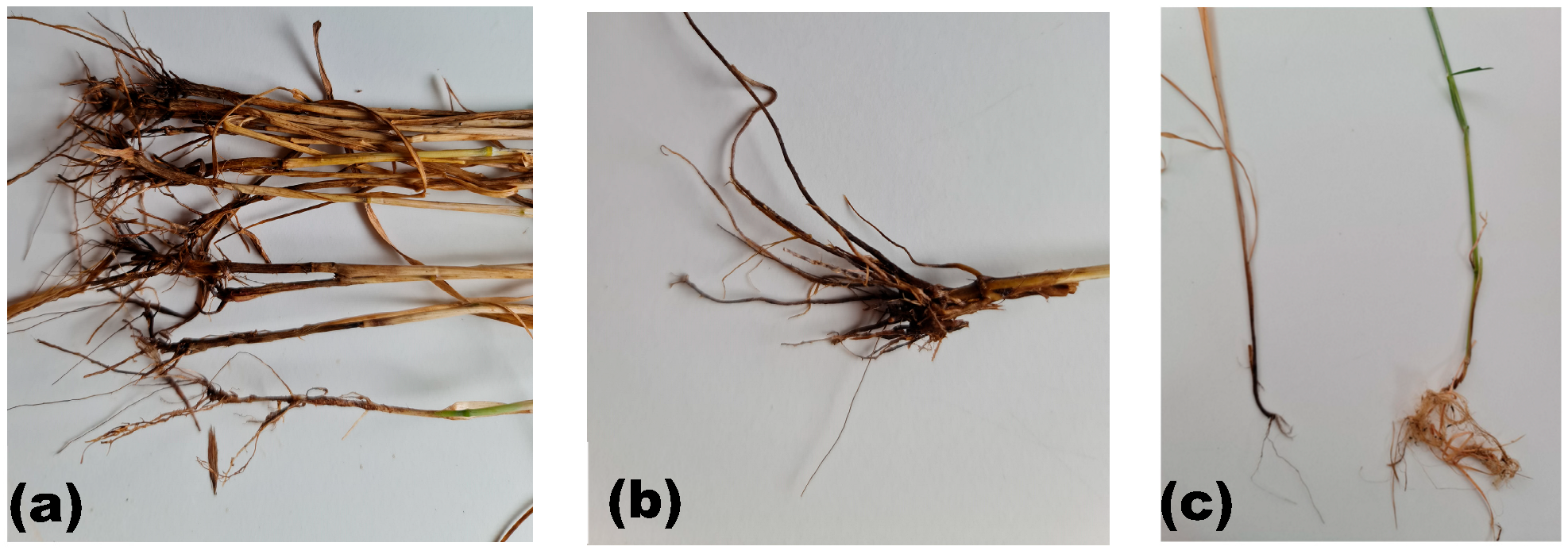
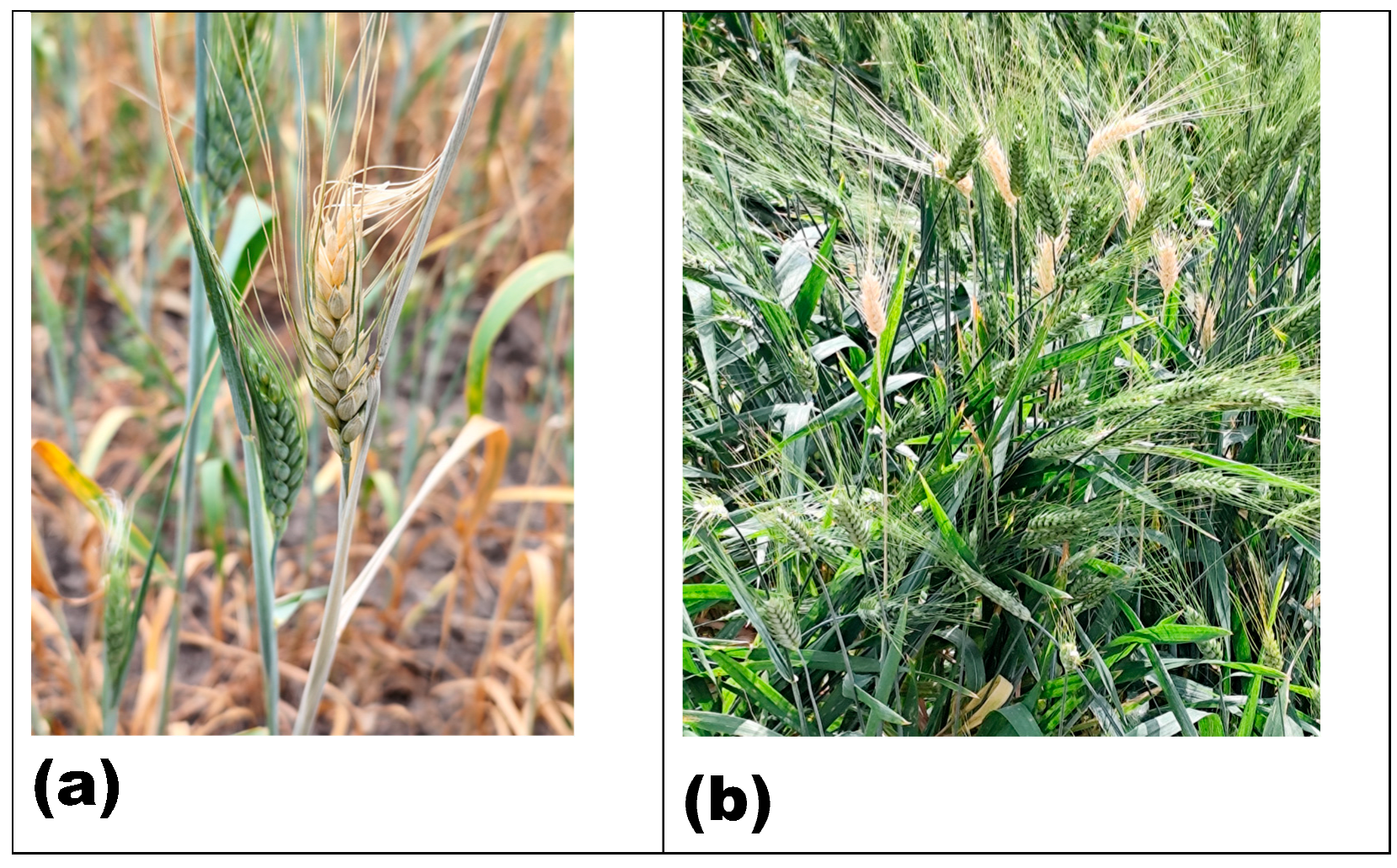
Fusarium crown and root rot are major soil-borne disease complexes affecting wheat, particularly in arid and semi-arid regions of North Africa. Effective management of FCRR in these regions requires a thorough understanding of its symptoms and epidemiology in relation to pathogen diversity, genetic variability, survival strategies, cropping practices, and climate variability. Different Fusarium spp. affect wheat at different stages of the crop and cause different types of infections. Seedling infections cause blight from seed-borne inoculum [35,36]. Infections on the crown and basal stem cause brown-to-reddish discoloration of the crown and stem base, often accompanied by cell wall reinforcement through lignification as a host defense response, although this response may not completely stop disease progression [37,38]. Root infection results in brown or reddish-brown lesions along the root’s axis caused by the same pathogens that affect crown and stem base. Infection root necrosis, honey-brown discoloration at the tiller base, whiteheads, reduced tillering, and early senescence are experienced, as well as the development of whiteheads, a symptom closely linked to the timing of infection due to disruption of vascular tissues and reduced water transport to developing spikes, ultimately leading to spike bleaching. Whiteheads represent the premature bleaching and senescence of wheat spikes during the transition from milk to dough growth stage. Although whitehead heads are considered a characteristic symptom of FCRR, similar symptoms can be caused by severe under late-season drought stress or with other pathogens [14,39,40,41,42] (Figure 1 and Figure 2).

5.2. Drivers of FCRR Epidemics in North Africa

Several factors, including environmental conditions, pathogen biology, and crop management, play key roles in the distribution and severity of FCRR. The disease is widespread in wheat-growing regions of North Africa, where drought, heat, and agronomic practices contribute to its development [8,11,12].

5.2.1. Drought

Wheat is largely produced as a rainfed crop in many North African countries, where low and irregular rainfall frequently exposes crops to drought stress. Drought is the main obstacle to agricultural productivity in the Central and West Asia and North Africa (CWANA) region, leading to substantial reduction in wheat yields due to terminal water stress, which favors FCRR epidemics [43].

5.2.2. Agronomic Practices

Farmers use several traditional and emerging agronomic practices that affect FCRR severity on wheat crops. In Morocco, high inorganic nitrogen fertilization (150–200 kg/ha) increased FCRR severity and the incidence of whitehead symptoms [44]. In addition to the amount of nitrogen applied, the type and timing of application also contributed to increased FCRR severity [45].
Assessments comparing direct drilling with conventional drilling showed that the former increased the average percentage of whiteheads of durum wheat (73%) in Tunisia [46]. In Morocco, a high incidence of FCRR was also associated with high nitrogen fertilization [11]. Monocropping is becoming more common in North African countries, causing declines in productivity and increased disease pressure which pose challenges for farmers [47,48]. Wheat–legume and wheat–cereal rotations are widely practiced in North African countries and significantly influence FCRR incidence and severity on wheat. Studies in Tunisia showed that wheat–barley rotation increased F. pseudograminearum infections on durum wheat compared to rotations with chickpea, faba bean, or fallow [49].

5.2.3. Pathogen Survival and Diversity

Pathogen survival and diversity are key factors affecting the effective management of FCRR diseases in wheat production. Fusarium species associated with FCRR show diverse survival strategies and genetic and ecological diversity, which explains their coexistence and differing behavior in the field. Limited studies were conducted on pathogen survival and the diversity of Fusarium spp. complex. In Algeria and Tunisia, Fusarium spp. were isolated from infected crop residues that serve as a primary inoculum source [8,12]. Pathogens such as F. culmorum can survive for many years in the soil as chlamydospores [14] while F. pseudograminearum persists mainly as mycelium on undecomposed wheat residues [50,51]. This long-term survival reduces the effectiveness of short-term crop rotation and zero tillage [52].
Studies have examined the genetic diversity of F. culmorum (in Morocco, Tunisia, and Algeria) and F. graminearum using RAPD, SSR, ISSR, TEF-1α gene sequencing, and protein profiling. The genetic diversity of the F. culmorum population showed limited regional differentiation in each country [31,32,53]. Moreover, pathogen populations showed variations in mycotoxin production and aggressiveness in Algeria and Tunisia [31,54], which was evaluated through chromatographic quantification of trichothecenes and disease severity scoring after artificial inoculation, respectively. In Egypt, distinct genetic groups were identified from F. graminearum populations collected in Assiut Governorate [55].
The mating types of F. culmoroum and F. graminearum were analyzed using mating specific primers and both MAT1 and MAT2 were detected. This indicates a potential for sexual reproduction, which could increase pathogen diversity and contribute to the formation of primary inoculum through airborne ascospores [31,32,34].

6. FCRR Disease Management Strategies in North Africa

Managing FCRR is challenging due to the complexity of the disease and the long survival of the pathogen in soil and crop residues. Based on the epidemiological drivers discussed above, several crop management practices can be used to reduce disease pressure. These include growing resistant varieties, seed treatment, crop rotation, using healthy seeds, soil fertility management, irrigation, and adjusting sowing time and planting techniques to minimize conditions that favor disease development.

6.1. Cultural Practices

In North Africa, several studies showed that crop rotation, tillage practices, and nitrogen fertilization reduced disease pressure and maintained wheat productivity [56]. In Tunisia, research demonstrated that no-tillage combined with supplemental irrigation and organic fertilization significantly reduced FCRR severity in durum wheat [14].
Crop rotation with legumes and barley helps reduce FCRR incidence by lowering the buildup of soil-borne Fusarium inoculum, even though these crops are not strict non-hosts and may still allow limited saprophytic survival on their residues. The introduction of Brassica crops in wheat-based rotations in some North African countries, as alternative to drought-tolerant crops [57,58], can reduce pathogen inoculum through bio-fumigation.
Limited research has been conducted on the role of bio-fumigation in controlling FCRR in North Africa. Bio-fumigation is a natural soil disinfestation process in which Brassica plant residues release volatile compounds, particularly isothiocyanates, which have strong antifungal activity against soil-borne pathogens. In a greenhouse experiment, the incorporation of rocket (Eruca sativa) and turnip (Brassica rapa) residues significantly lowered the severity and incidence of F. nygamai infections on bread wheat cultivars [23]. Similarly, Brassica crops (cabbage, turnip, rocket, and radish) were found to mitigate the severity of FCRR and Fusarium head blight caused by F. pseudograminearum on wheat varieties under Egyptian conditions [59].
In Egypt, field removal of crop residue limited sources of primary inoculum on bread wheat [60]. Deep plowing and improved drainage reduced pathogen buildup in the wheat rhizospheres [61].

6.2. Conventional and Nano-Based Seed Treatments

Fungicides seed treatments are widely used to control seed and soil-borne pathogens of wheat [18,61,62]. Their primary goal is to reduce the primary inoculum level and protect the roots. Several fungicides are used to treat wheat seeds against the FCRR disease complex. The major products include Metalaxyl-M + Fludioxonil, Triticonazole, Carbendazim, Carboxin + Thiram, Difenoconazole, Azoxystrobin + Difenoconazole and Penconazole in Egypt; and Thiram in Morocco [17,60,61]. Recently, nano-based seed treatments have been emerging as innovative tools to improve the control of seed-borne infections and enhance bioherbicide performance [62,63]. In Egypt, the use of silver nanoparticles (AgNPs at 20 mg/L) applied by seed soaking effectively reduced pre-emergence and post-emergence root rot caused by F. culmorum [64].

6.3. Biological and Botanical Controls

Biological and botanical approaches play key roles in the development and implementation of biorational strategies for FCRR disease management. In North Africa, most biological and botanical products are applied as seed coatings, while soil drenches are less commonly used. Botanicals refer to plant-derived extracts; however, only limited studies in the region have evaluated essential oils in the management of FCRR in wheat. Most research, conducted primarily under greenhouse conditions and to a lesser extent in the field, have focused on evaluating effective biological control methods focused on antagonistic (Trichoderma spp.) and endophytic fungi (F. subglutinans and Meyerozyma guilliermondii), beneficial bacteria (Bacillus subtilis, Paenibacillus, Pseudomonas spp.), and actinobacteria (Streptosporangium becharense), all of which resulted in good levels of disease reduction caused by F. culmorum mainly under greenhouse conditions. Across these studies, microbial agents were most commonly applied as seed treatments, either through seed soaking or seed coating, while some experiments also included soil applications depending on the organism and the experimental design [6,17,65,66,67,68,69,70,71,72]. The mechanisms of actions of these biocontrol agents include direct antagonism, production of siderophores, antifungal compounds, and strong rhizosphere colonization.
Limited studies were conducted on the use of botanical seed treatments to control FCRR diseases of wheat in North Africa. Plant extracts from Origanum onites, Thymus satureioides, Portulaca oleracea, and Beta vulgaris have shown effectiveness in reducing FCRR caused by F. culmorum. The essential oils evaluated in the reviewed studies were mainly rich in carvacrol, p-cymene, and thymol, which are compounds typical of Origanum and Thymus species. Other botanical extracts were generally assessed at the whole-extract level, with their antifungal effects reported without detailed compositional analysis [73,74,75].

6.4. FCRR Resistance Breeding

Genetic control involves the development and use of resistant or tolerant wheat cultivars capable of limiting infection or disease severity. Wheat breeding for resistance is one of the most sustainable and effective strategies to prevent FCRR diseases in North Africa. Both national and international (ICARDA and CIMMYT) wheat breeding programs are investing resources in developing elite germplasm and varieties with resistance or partial resistance to FCRR diseases. In Egypt, key bread wheat varieties (Sids-1, Sakha-69, Gimaza-9 and Masr-1) were found susceptible to FCRR diseases caused by F. nivale, F. graminearum, and F. tricinctum [22,24,68,76].
In Tunisia, the widely cultivated durum wheat cv. Karim was found highly susceptible whereas cv. Om Rabiaa showed strong resistance [5,14,77] to FCRR diseases caused by F. culmorum. Local durum wheat landraces were more susceptible to FCRR than bread wheat [6,15,44]. In Morocco, researchers identified durum and bread wheat genotypes resistant to FCRR diseases [9,19,45,74].
In Morocco, the evaluation of commercial varieties and ICARDA elite durum lines for susceptibility F. culmorum infections showed that cv. Marouan was resistant while five ICARDA elite genotypes showed moderately resistant reactions [73]. The national and ICARDA durum wheat breeding program have developed and released cv. Faraj (PI 699898) with good levels of resistance to insects and Fusarium root diseases [78]. In Algeria, landraces of durum and bread wheat showed better resistance to FCRR caused by F. culmorum and F. pseudograminearum [54,66] and durum wheat to F. equiseti [25]. These findings highlight the potential of exploiting local landraces as sources of resistance for incorporation into high-yielding wheat varieties. Within the CIMMYT durum wheat breeding program, genotypes resistant to F. pseudograminearum at seedling and adult plant stages (84 and # 197, CIMMYT genotype numbers 7409071 and 7410562) have been identified [79]. Resistant breeding lines developed by ICARDA and CIMMYT can be shared with the national breeding program in North Africa to support regional improvement [80].

6.5. Integrated Management of FCRR Diseases

Bio-rational disease management, defined as the use of ecologically based, low-toxicity strategies such as biocontrol agents, botanicals, resistant varieties, and cultural practices, is increasingly recognized as a viable approach for managing diseases caused by pathogen complexes. The approach combines multiple complementary strategies to reach synergistic effects and promotes sustainable and resilient disease management in wheat-based production systems of North Africa [81]. In North African countries, integration of control options (fungicides, healthy seeds, seed treatments; biocontrol agents, agronomic practices, and resistant varieties) were reported to effectively manage FCRR diseases caused by different Fusarium spp. under greenhouse and field conditions [14,17,60,61,69].

6.6. Conclusion and Research Gaps in FCRR Diseases in North Africa

Wheat is a key staple crop in North Africa, and protecting its yield from diseases worsened by drought, monoculture, and poor management is a top priority. Both survey and designed experiments showed that FCRR can cause yield losses that contribute low yield grain and biomass yields in North African countries. Increasing temperatures, recurrent drought, and declining soil moisture strongly favor dryland Fusarium spp., particularly F. culmorum and F. pseudograminearum, increasing the prevalence and severity of FCRR under climate-change scenarios. Drought increases FCRR severity not only by favoring the survival and growth of dryland Fusarium spp., but also by weakening wheat’s physiological defenses, making plants more susceptible to infection. Several Fusarium spp. have been identified from infected roots and crown, with F. culmorum and F. graminearum being the dominant pathogens across the region. Shifts in weather patterns and cropping systems may alter the composition of the Fusarium community, potentially increasing mycotoxin risks. Some of the Fusarium spp. associated with FCRR are also known to infect temperature food legumes like faba bean, lentil, and chickpea crops, which are vital rotation crops. These crops may act either as alternative hosts or as substrates for saprophytic survival, allowing Fusarium spp. to persist in dry environments even in the absence of wheat. Continued monitoring of pathogens associated with FCRR using metagenomics and qPCR will improve our understanding of pathogen dynamics and support breeding programs and management practices.
Agronomic practices including crop rotation, conservation agriculture, sowing dates, and fertilizer application have shown both positive and negative effects on Fusarium spp. diversity and on the incidence of FCRR in the region. It is essential to integrate cultural practices that reduce initial inoculum to decrease FCRR severity and incidence at different growth stages of wheat. Minimizing wheat monoculture through introduction of legumes and Brassica improves soil health and reduces FCRR impacts. Supplementary irrigation also plays a key role in minimizing FCRR by alleviating drought stress on the crop.
Some Fusarium isolates behave as seed endophytes, remaining latent inside apparently healthy seeds and serving as a primary inoculum source once the crop is sown, which further highlights the importance of seed-targeted biopesticide formulations. Seed-applied biopesticides act by colonizing the seed surface or emerging roots, reducing seedborne Fusarium inoculum and providing early biological protection during the most susceptible seedling stages. The development and deployment of effective biopesticide to control seed-borne and soil-borne Fusarium spp. are still in the early stages in the region. Effective biocontrol agents used as consortia together with suitable formulation and delivery system can contribute to reducing the initial inoculum and FCRR diseases in wheat fields.
Taken together, the literature highlights three major areas that are central to understanding and managing FCRR in North Africa. First, the distribution and diversity of Fusarium species remain critical to identify the most prevalent pathogens across wheat-growing regions. Second, screening of durum and bread wheat germplasm under greenhouse and field conditions is essential to evaluate levels of resistance and susceptibility. Screening typically measures crown discoloration, root necrosis, seedling vigor, and yield performance under Fusarium inoculation, which together indicate the level of resistance. Third, advances in genomic tools such as genome-wide association studies (GWAS) provide new opportunities to dissect the genetic basis of resistance and to support breeding programs aimed at developing FCRR-resistant wheat varieties. Integrating these complementary approaches offers promising perspectives for sustainable management of FCRR in the region.
In North African countries, the growing conditions and the pathogens associated with FCRR are similar. Therefore, it requires regional research and capacity-building partnerships, bridging the gap between research and application. The partnerships can serve as a platform to strengthen germplasm exchange and ensure innovations meet the needs of farmers, thereby having wide impacts in the region.

Author Contributions

Conceptualization, Y.T. and S.A.K.; methodology, Y.T. and S.A.K.; software, Zotero; validation, Y.T., F.B., A.Z. and S.A.K.; formal analysis, Y.T.; investigation, Y.T.; resources, Y.T. and S.A.K.; data curation, Y.T.; writing—original draft preparation, Y.T.; writing—review and editing, Y.T., S.A.K., M.A.-J., F.B. and A.Z., R.M.; visualization, Y.T., S.A.K. and M.A.-J.; supervision, S.A.K., F.B. and A.Z.; project administration, S.A.K., F.B. and A.Z.; funding acquisition, R.M. All authors have read and agreed to the published version of the manuscript.

Funding

This research was funded by the MCGP INRA-ICARDA program (grant number IV) and the APC was funded by the MCGP INRA-ICARDA program.

Institutional Review Board Statement

Not applicable.

Data Availability Statement

No new data were created or analyzed in this study. Data sharing is not applicable to this article.

Conflicts of Interest

The authors declare no conflicts of interest. The funder had no role in the design; reviewing the writing of the manuscript; or in the decision to publish the results.

Abbreviations

The following abbreviations are used in this manuscript:
ICARDAInternational Center for Agricultural Research in the Dry Areas
INRANational Institute for Agricultural Research
FCRRFusarium Crown and Root Rot
CGIARConsultative Group on International Agricultural Research
DONDeoxynivalenol
ZEAZearalenone
CWANACentral and West Asia and North Africa
CIMMYTInternational Maize and Wheat Improvement Center
qPCRquantitative Polymerase Chain Reaction
GWASGenome-Wide Association Study

References

  1. Shewry, P.R.; Hey, S.J. The Contribution of Wheat to Human Diet and Health. Food Energy Secur. 2015, 4, 178–202. [Google Scholar] [CrossRef] [PubMed]
  2. FAOSTAT. Available online: https://www.fao.org/faostat/fr/#data/QCL (accessed on 4 January 2025).
  3. Khaldi, R.; Saaidia, B. Analyse de la Filière Céréalière en Tunisie et Identification des Principaux Points de Dysfonctionnement à L’origine des Pertes; FAO: Rome, Italy, 2018. [Google Scholar]
  4. Fakhfakh, M.M.; Yahyaoui, A.; Rezgui, S.; Elias, E.; Daaloul, A. Identification and pathogenicity assessment of Fusarium spp. sampled from durum wheat fields in Tunisia. Afr. J. Biotechnol. 2011, 10, 6492–6496. [Google Scholar]
  5. Chekali, S.; Gargouri, S.; Berraies, S.; Gharbi, M.S.; Nicol, M.J.; Nasraoui, B. Impact of Fusarium foot and root rot on yield of cereals in Tunisia. Tunis. J. Plant Prot. 2013, 8, 75–86. [Google Scholar]
  6. Kthiri, Z.; Jabeur, M.B.; Machraoui, M.; Gargouri, S.; Hiba, K.; Hamada, W. Coating Seeds with Trichoderma Strains Promotes Plant Growth and Enhance the Systemic Resistance against Fusarium Crown Rot in Durum Wheat. Egypt. J. Biol. Pest Control 2020, 30, 139. [Google Scholar] [CrossRef]
  7. Alborghetti, C.P. Wheat Import Dependency and Climate Change in North-Africa: The Case of Algeria, Egypt, Morocco, and Tunisia; Wageningen University & Research: Wageningen, The Netherlands, 2023; Available online: https://edepot.wur.nl/635042 (accessed on 8 August 2025).
  8. Abdallah-Nekache, N.; Laraba, I.; Ducos, C.; Barreau, C.; Bouznad, Z.; Boureghda, H. Occurrence of Fusarium Head Blight and Fusarium Crown Rot in Algerian Wheat: Identification of Associated Species and Assessment of Aggressiveness. Eur. J. Plant Pathol. 2019, 154, 499–512. [Google Scholar] [CrossRef]
  9. Oslane, I.; El Yousfi, B.; Ouabbou, H.; El Younsi, A.; Tellal, R. Assessment of the severity and tolerance of a Moroccan collection of durum wheat to root rot disease. Rev. Mar. Prot. Plantes 2014, 5, 17–30. [Google Scholar]
  10. Lyamani, A.R. Wheat Root Rot in West Central Morocco and Effects of Fusarium culmorum and Helminthosporium sativum Seed and Soil-Borne Inoculum on Root Rot Development, Plant Emergence and Crop Yield. Ph.D. Thesis, University Microfilms International, Ann Arbor, MI, USA, 1990. Available online: https://www.researchgate.net/publication/341205359_Wheat_root_rot_in_West_Central_Morocco_and_effects_of_Fusarium_culmorum_and_Helminthosporium_sativum_seed_and_soil-borne_inoculum_on_root_rot_development_plant_emergence_and_crop_yield_Recommended_Cit (accessed on 8 August 2025).
  11. El Yacoubi, H.; Hassikou, R.; Badoc, A.; Rochdi, A.; Douira, A. Complexe fongique de la pourriture racinaire du blé tendre au nord-ouest du Maroc. Bull. Société Pharm. Bordeaux 2012, 151, 35–48. [Google Scholar]
  12. Guermech, S.; Somma, S.; Masiello, M.; Haidukowski, M.; Sanzani, S.M.; Ippolito, A.; Moretti, A.; Gargouri, S. Geographical Distribution of Fusarium Species Involved in Fusarium Head Blight and Fusarium Crown Rot of Wheat in Tunisia and Their Mycotoxin Accumulation. Plant Pathol. 2025, 74, 1290–1301. [Google Scholar] [CrossRef]
  13. Ghodbane, A.; Mahjoub, M.; Djerbi, M.; Mlaik, A.; Sharen, A.L. Étude Des Pertes Causées Par Les Pathogènes Du Blé, Septoria Tritici et Fusarium spp. Rapp. Annu. Ministère L’agriculture Off. Céréal. Tunis. 1974, 106. [Google Scholar]
  14. Chekali, S.; Gargouri, S.; Paulitz, T.; Nicol, J.M.; Rezgui, M.; Nasraoui, B. Effects of Fusarium culmorum and Water Stress on Durum Wheat in Tunisia. Crop Prot. 2011, 30, 718–725. [Google Scholar] [CrossRef]
  15. Chekali, S.; Ayed, S.; Khemir, E.; Gharbi, M.S.; Marzougui, S.; Paulitz, T.; Gargouri, S. Response of Durum Wheat vs. Bread Wheat to Fusarium Foot and Root Rot under Semi-Arid Conditions. J. Plant Pathol. 2024, 106, 1207–1220. [Google Scholar] [CrossRef]
  16. El Yousfi, B. Contribution A L’etude de L’etiologie de L’epidemiologie et des Pertes en Rendement Dues aux Pourritures Racinaires du Ble et de L’orge; FAO: Rabat, Morocco, 1984. [Google Scholar]
  17. Qostal, S.; Kribel, S.; Chliyeh, M.; Selmaoui, K.; Serghat, S.; Benkirane, R.; Touhami, A.O.; Douira, A. Management of wheat and barley root rot through seed treatment with biopestcides and fungicides. Plant Cell Biotechnol. Mol. Biol. 2020, 21, 129–143. [Google Scholar]
  18. Qostal, S.; Kribel, S.; Chliyeh, M.; Mouden, N.; El Alaoui, M.; Serghat, S.; Ouazzani Touhami, A.; Douira, A. First Report of Fusarium Redolens Causing Root Rot Disease of Wheat and Barley in Morocco. Curr. Res. Environ. Appl. Mycol. 2021, 11, 263–273. [Google Scholar] [CrossRef]
  19. Qostal, S.; Kribel, S.; Chliyeh, M.; Serghat, S.; KarimaSelmaoui, A.O.T.; Zaarati, H.; Benkirane, R.; Douira, A. Study of the fungal complex responsible for root rot of wheat and barley in the north-west of Morocco. Plant Arch. 2019, 19, 2143–2157. [Google Scholar]
  20. Bouanaka, H.; Bellil, I.; Benouchenne, D.; Nieto, G.; Khelifi, D. First Report of Fusarium asiaticum and Fusarium incarnatum in Algeria, and Evaluation of Their Pathogenicity on Wheat Crown Rot. Bulg. J. Agric. Sci. 2023, 20, 908–916. [Google Scholar]
  21. Bouanaka, H.; Bellil, I.; Khelifi, D. First Report on Fusarium Cerealis, Identification and Virulence as Causal Agents of Crown Rot on Wheat in Algeria. Arch. Phytopathol. Plant Prot. 2022, 55, 597–614. [Google Scholar] [CrossRef]
  22. Fouly, H.M. Wheat Root Rotting Fungi in the “Old” and “New” Agricultural Lands of Egypt. Plant Dis. 1996, 80, 1298. [Google Scholar] [CrossRef]
  23. Amen, S.G.; Elsarag, E.E.; Abdalla, M.Y.; ElSharawy, A.A. Evaluation of Biofumigation Plants on Fusarium Crown Rot and Head Blight of Wheat in North Sinai. Microb. Biosyst. 2025, 10, 90–102. [Google Scholar] [CrossRef]
  24. Abo-Elnaga, H.I.G.; Amein, K.A. Differentiation in Protein Patterns in Fusarium sp. Causing Root Rot and Damping-Off Diseases in Sugar Beet and Wheat and Their Relation to Pathogenicity. Aust. J. Basic Appl. Sci. 2011, 5, 683–692. [Google Scholar]
  25. Bencheikh, A.; Rouag, N.; Mamache, W.; Belabed, I. First Report of Fusarium equiseti Causing Crown Rot and Damping-off on Durum Wheat in Algeria. Arch. Phytopathol. Plant Prot. 2020, 53, 915–931. [Google Scholar] [CrossRef]
  26. Bouaicha, O.; Laraba, I.; Boureghda, H. Identification, in Vitro Growth and Pathogenicity of Microdochium spp. Associated with Wheat Crown Rot in Algeria. J. Plant Pathol. 2022, 104, 1431–1442. [Google Scholar] [CrossRef]
  27. Leslie, J.F.; Summerell, B.A. (Eds.) The Fusarium Laboratory Manual, 1st ed.; Wiley: Hoboken, NJ, USA, 2006; ISBN 978-0-8138-1919-8. [Google Scholar]
  28. Nelson, P.E. Review of The Genus Fusarium. Mycologia 1972, 64, 1199–1202. [Google Scholar] [CrossRef]
  29. Nelson, P.E.; Toussoun, T.A.; Marasas, W.F.O. Fusarium Species: An Illustrated Manual for Identification; Pennsylvania State University Press: University Park, PA, USA, 1983; 193p. [Google Scholar]
  30. Burgess, L.W. Laboratory Manual for Fusarium Research; University of Sydney: Camperdown, Australia, 1988. [Google Scholar]
  31. Rebib, H.; Bouraoui, H.; Rouaissi, M.; Brygoo, Y.; Boudabbous, A.; Hajlaoui, M.R.; Sadfi-Zouaoui, N. Genetic Diversity Assessed by SSR Markers and Chemotyping of Fusarium culmorum Causal Agent of Foot and Root Rot of Wheat Collected from Two Different Fields in Tunisia. Eur. J. Plant Pathol. 2014, 139, 481–495. [Google Scholar] [CrossRef]
  32. Laraba, I.; Boureghda, H.; Abdallah, N.; Bouaicha, O.; Obanor, F.; Moretti, A.; Geiser, D.M.; Kim, H.-S.; McCormick, S.P.; Proctor, R.H.; et al. Population Genetic Structure and Mycotoxin Potential of the Wheat Crown Rot and Head Blight Pathogen Fusarium culmorum in Algeria. Fungal Genet. Biol. FG B 2017, 103, 34–41. [Google Scholar] [CrossRef]
  33. Khalifi, H.; Bentata, F.; Labhilili, M.; Hammoumi, S.; Karim, S.; Abdelali, M.; Brhadda, N.; Ziri, R. Identification, Morphological Characterization and Distribution of Fusarium Species in Moroccan Wheat. Trop. J. Nat. Prod. Res. 2025, 9, 2307–2313. [Google Scholar] [CrossRef]
  34. Khemir, E.; Chekali, S.; Moretti, A.; Gharbi, M.S.; Allagui, M.B.; Gargouri, S. Impacts of Previous Crops on Inoculum of Fusarium culmorum in Soil, and Development of Foot and Root Rot of Durum Wheat in Tunisia. Phytopathol. Mediterr. 2020, 59, 187–201. [Google Scholar] [CrossRef]
  35. Dyer, A.T.; Johnston, R.H.; Hogg, A.C.; Johnston, J.A. Comparison of Pathogenicity of the Fusarium Crown Rot (FCR) Complex (F. culmorum, F. pseudograminearum and F. graminearum) on Hard Red Spring and Durum Wheat. Eur. J. Plant Pathol. 2009, 125, 387–395. [Google Scholar] [CrossRef]
  36. Wiese, M.V. Compendium of Wheat Diseases. Soil Sci. 1978, 126, 190. [Google Scholar] [CrossRef]
  37. Scherm, B.; Balmas, V.; Spanu, F.; Pani, G.; Delogu, G.; Pasquali, M.; Migheli, Q. Fusarium culmorum: Causal Agent of Foot and Root Rot and Head Blight on Wheat. Mol. Plant Pathol. 2013, 14, 323–341. [Google Scholar] [CrossRef] [PubMed]
  38. Cook, R.J. Fusarium Foot Rot of Wheat and Its Control in the Pacific Northwest. Plant Dis. 1980, 64, 1061. [Google Scholar] [CrossRef]
  39. Hollaway, G.J.; Evans, M.L.; Wallwork, H.; Dyson, C.B.; McKay, A.C. Yield Loss in Cereals, Caused by Fusarium culmorum and F. pseudograminearum, Is Related to Fungal DNA in Soil Prior to Planting, Rainfall, and Cereal Type. Plant Dis. 2013, 97, 977–982. [Google Scholar] [CrossRef] [PubMed]
  40. Klein, T.A.; Burgess, L.W.; Ellison, F.W. The Incidence and Spatial Patterns of Wheat Plants Infected by Fusarium graminearum Group 1 [Soil Borne Fungus] and the Effects of Crown Rot on Yield. Aust. J. Agric. Res. Aust. 1991, 42, 399–407. [Google Scholar] [CrossRef]
  41. Smiley, R.W.; Gourlie, J.A.; Easley, S.A.; Patterson, L.-M. Pathogenicity of Fungi Associated with the Wheat Crown Rot Complex in Oregon and Washington. Plant Dis. 2005, 89, 949–957. [Google Scholar] [CrossRef]
  42. Smiley, R.W.; Backhouse, D.; Lucas, P.; Paulitz, T.C. Diseases Which Challenge Global Wheat Production—Root, Crown, and Culm Rots. In Wheat Science and Trade; Carver, B.F., Ed.; John Wiley & Sons: Hoboken, NJ, USA, 2009; pp. 125–153. [Google Scholar]
  43. Liu, C.; Ogbonnaya, F.C. Resistance to Fusarium Crown Rot in Wheat and Barley: A Review. Plant Breed. 2015, 134, 365–372. [Google Scholar] [CrossRef]
  44. Hemissi, I.; Gargouri, S.; Hlel, D.; Hachana, A.; Abdi, N.; Sifi, B. Impact of Nitrogen Fertilization on Fusarium Foot and Root Rot and Yield of Durum Wheat. Tunis. J. Plant Prot. 2018, 13, 31–38. [Google Scholar]
  45. Baha Eddine, S.; El Yousfi, B.; Douira, A. Interaction of Nitrogen Fertilizers with Wheat Growth Stage and Foliar Treatment with Urea Effects on Wheat Crown Rot Induced by Fusarium culmorum. Plant Arch. 2019, 19, 2829–2835. [Google Scholar]
  46. Chekali, S.; Gargouri, S.; Hammouda, M.B.; M’hamed, H.C.; Nasraoui, B. Incidence of Fusarium Foot and Root Rot of Cereals under Conservation Agriculture in North West Tunisia. Phytopathol. Mediterr. 2019, 58, 95–102. [Google Scholar] [CrossRef]
  47. Bouatrous, A.; Harbaoui, K.; Karmous, C.; Gargouri, S.; Souissi, A.; Belguesmi, K.; Cheikh Mhamed, H.; Gharbi, M.S.; Annabi, M. Effect of Wheat Monoculture on Durum Wheat Yield under Rainfed Sub-Humid Mediterranean Climate of Tunisia. Agronomy 2022, 12, 1453. [Google Scholar] [CrossRef]
  48. Bouatrous, A.; Gargouri, S.; Souissi, A.; Harbaoui, K.; Cheikh M’hamed, H.; Gharbi, M.S.; Annabi, M. The Impact of Stem and Root Fungal Diseases on Grain Yield and Quality of Bread Wheat under Wheat Mono-Cropping Systems in Mediterranean Subhumid Conditions of Tunisia. Eur. J. Plant Pathol. 2023, 166, 179–191. [Google Scholar] [CrossRef]
  49. Chekali, S.; Gargouri, S.; Rezgui, M.; Paulitz, T.; Nasraoui, B. Impacts of Previous Crops on Fusarium Foot and Root Rot, and on Yields of Durum Wheat in North West Tunisia. Phytopathol. Mediterr. 2016, 55, 253–261. [Google Scholar] [CrossRef]
  50. Poole, G.J.; Smiley, R.W.; Walker, C.; Huggins, D.; Rupp, R.; Abatzoglou, J.; Garland-Campbell, K.; Paulitz, T.C. Effect of Climate on the Distribution of Fusarium Spp. Causing Crown Rot of Wheat in the Pacific Northwest of the United States. Phytopathology 2013, 103, 1130–1140. [Google Scholar] [CrossRef] [PubMed]
  51. Cook, R.J. Fusarium Diseases of Wheat and Other Small Grains in North America. In Fusarium Disease Biology Taxonomy; Pennsylvania State University Press: University Park, PA, USA, 1981; pp. 39–52. [Google Scholar]
  52. Khemir, E.; Chekali, S.; Souissi, A.; Gharbi, M.S.; Allagui, M.B.; Gargouri, S. Survival of Fusarium culmorum, causal agent of foot and root rot of cereals, on wheat, barley and oat residues in Tunisia. Ann. INRAT 2018, 91, 39–52. [Google Scholar] [CrossRef]
  53. Oufensou, S.; Balmas, V.; Scherm, B.; Rau, D.; Camiolo, S.; Prota, V.A.; Ben-Attia, M.; Gargouri, S.; Pasquali, M.; El-Bok, S.; et al. Genetic Variability, Chemotype Distribution, and Aggressiveness of Fusarium culmorum on Durum Wheat in Tunisia. Phytopathol. Mediterr. 2019, 58, 103–113. [Google Scholar] [CrossRef]
  54. Touati-Hattab, S.; Barreau, C.; Verdal-Bonnin, M.-N.; Chereau, S.; Richard-Forget, F.; Hadjout, S.; Mekliche, L.; Bouznad, Z. Pathogenicity and Trichothecenes Production of Fusarium culmorum Strains Causing Head Blight on Wheat and Evaluation of Resistance of the Varieties Cultivated in Algeria. Eur. J. Plant Pathol. 2016, 145, 797–814. [Google Scholar] [CrossRef]
  55. Mahmoud, A.F. Genetic Variation and Biological Control of Fusarium graminearum Isolated from Wheat in Assiut-Egypt. Plant Pathol. J. 2016, 32, 145–156. [Google Scholar] [CrossRef]
  56. Devkota, M.; Singh, Y.; Yigezu, Y.A.; Bashour, I.; Mussadek, R.; Mrabet, R. Chapter Five—Conservation Agriculture in the Drylands of the Middle East and North Africa (MENA) Region: Past Trend, Current Opportunities, Challenges and Future Outlook. In Advances in Agronomy; Sparks, D.L., Ed.; Academic Press: Cambridge, MA, USA, 2022; Volume 172, pp. 253–305. [Google Scholar]
  57. Channaoui, S.; Kahkahi, R.E.; Charafi, J.; Mazouz, H.; Fechtali, M.E.; Nabloussi, A. Germination and Seedling Growth of a Set of Rapeseed (Brassica napus) Varieties under Drought Stress Conditions. Int. J. Environ. Agric. Biotechnol. 2017, 2, 487–494. [Google Scholar] [CrossRef]
  58. Aissiou, F.; Laperche, A.; Falentin, C.; Lodé, M.; Deniot, G.; Boutet, G.; Régnier, F.; Trotoux, G.; Huteau, V.; Coriton, O.; et al. A Novel Brassica rapa L. Genetic Diversity Found in Algeria. Euphytica 2018, 214, 241. [Google Scholar] [CrossRef]
  59. Amen, S.G.; Abdalla, M.Y.; ElSarag, E.I.; Mohamed, S.M.A.; ElSharawy, A.A. Biofumigation for Controlling Fusarium Crown Rot and Head Blight of Wheat. Sinai J. Appl. Sci. 2024, 13, 555–570. [Google Scholar] [CrossRef]
  60. Sameer, W.M. Compatibility of Biological Control Agents with Fungicides against Root Rot Diseases of Wheat. Al-Azhar J. Agric. Res. 2019, 44, 146–155. [Google Scholar] [CrossRef]
  61. El-Enany, A.M.; Abbas, E.E.A.; Zayed, M.A.; Atia, M.M. Efficiency of Some Biological and Chemical Treatments Against Wheat Root and Crown Rot Disease. Zagazig J. Agric. Res. 2019, 46, 1901–1918. [Google Scholar] [CrossRef]
  62. Chouhan, D.; Dutta, P.; Dutta, D.; Dutta, A.; Kumar, A.; Mandal, P.; Choudhuri, C.; Mathur, P. Effect of Silver Nanochitosan on Control of Seed-Borne Pathogens and Maintaining Seed Quality of Wheat. Phytopathol. Res. 2024, 6, 41. [Google Scholar] [CrossRef]
  63. La Iacona, M.; Scavo, A.; Lombardo, S.; Mauromicale, G. The Exploitation of Nanotechnology in Herbicides and Bioherbicides: A Novel Approach for Sustainable Weed Management. Agronomy 2025, 15, 228. [Google Scholar] [CrossRef]
  64. Rashed, A.-O.M.; Mohamed, A.E.A.A.R.; Abobakr, M.M. Wheat Protection from Root Rot Caused by Fusarium culmorum Using Silver Nanoparticles. J. Chem. Soc. Pak. 2016, 38, 898. [Google Scholar]
  65. Dendouga, W.; Boureghda, H.; Belhamra, M. Biocontrol of Wheat Fusarium Crown and Root Rot by Trichoderma Spp. and Evaluation of Their Cell Wall Degrading Enzymes Activities. Acta Phytopathol. Entomol. Hung 2016, 51, 1–12. [Google Scholar] [CrossRef]
  66. Lounaci, L.; Guemouri-Athmani, S.; Boureghda, H.; Achouak, W.; Heulin, T. Suppression of Crown and Root Rot of Wheat by the Rhizobacterium Paenibacillus Polymyxa. Phytopathol. Mediterr. 2016, 55, 355–365. [Google Scholar] [CrossRef]
  67. Boukaya, N.; Goudjal, Y.; Zamoum, M.; Chaabane Chaouch, F.; Sabaou, N.; Mathieu, F.; Zitouni, A. Biocontrol and Plant-Growth-Promoting Capacities of Actinobacterial Strains from the Algerian Sahara and Characterisation of Streptosporangium becharense SG1 as a Promising Biocontrol Agent. Biocontrol Sci. Technol. 2018, 28, 858–873. [Google Scholar] [CrossRef]
  68. Hassanein, N.M.; El-Gendy, M.M.A.A.; Abdelhameed, N.M. Molecular Typing, Biodiversity, and Biological Control of Endophytic Fungi of Triticum aestivum L. against Phytopathogenic Fungi of Wheat. BioTechnologia 2020, 101, 283–299. [Google Scholar] [CrossRef]
  69. Kthiri, Z.; Jabeur, M.B.; Chairi, F.; López-Cristoffanini, C.; López-Carbonell, M.; Serret, M.D.; Araus, J.L.; Karmous, C.; Hamada, W. Exploring the Potential of Meyerozyma Guilliermondii on Physiological Performances and Defense Response against Fusarium Crown Rot on Durum Wheat. Pathogens 2021, 10, 52. [Google Scholar] [CrossRef]
  70. Abdel-Kader, M.M.; El-Mougy, N.S.; Khalil, M.S.A.; El-Gamal, N.G. Biocontrol Agents for Controlling Wheat Root Rot Disease under Greenhouse Conditions. Indian J. Agric. Res. 2021, 55, 239–242. [Google Scholar] [CrossRef]
  71. Saadaoui, M.; Faize, M.; Rifai, A.; Tayeb, K.; Youssef, N.O.B.; Kharrat, M.; Roeckel-Drevet, P.; Chaar, H.; Venisse, J.-S. Evaluation of Tunisian Wheat Endophytes as Plant Growth Promoting Bacteria and Biological Control Agents against Fusarium culmorum. PLoS ONE 2024, 19, e0300791. [Google Scholar] [CrossRef]
  72. Belhadj Benyahia, F.; Kthiri, Z.; Hamada, W.; Boureghda, H. Trichoderma Atroviride Induces Biochemical Markers Associated with Resistance to Fusarium culmorum, the Main Crown Rot Pathogen of Wheat in Algeria. Biocontrol Sci. Technol. 2021, 31, 357–372. [Google Scholar] [CrossRef]
  73. Bouarda, J.; Labhilili, M.; Maafa, I.; El Aissami, A.; Benchacho, M.; Bentata, F. Chemical Composition and Antifungal Properties of Oregano Essential Oils against the Moroccan Soil-Born Pathogen Fusarium culmorum. J. Biosci. Appl. Res. 2023, 9, 231–242. [Google Scholar] [CrossRef]
  74. Zahraoui, E.M.; Yousfi, B.E.; Chahbouni, M.; Chellakhi, F.E.; Qarchaoui, S.; Boukachabine, K. Effect of Essential Oils from Thymus Satureioides and Origanum Compactum on Wheat Root Rot Induced by Fusarium culmorum and Bipolaris Sorokiniana. Moroc. J. Agric. Sci. 2023, 4, 86–92. [Google Scholar] [CrossRef]
  75. Sobhy, S.E.; Abo-Kassem, E.-E.M.; Sewelam, N.A.; Hafez, E.E.; Aseel, D.G.; Saad-Allah, K.M. Pre-Soaking in Weed Extracts Is a Reasonable Approach to Mitigate Fusarium graminearum Infection in Wheat. J. Plant Growth Regul. 2022, 41, 2261–2278. [Google Scholar] [CrossRef]
  76. El-Saadony, M.T.; Saad, A.M.; Najjar, A.A.; Alzahrani, S.O.; Alkhatib, F.M.; Shafi, M.E.; Selem, E.; Desoky, E.-S.M.; Fouda, S.E.E.; El-Tahan, A.M.; et al. The Use of Biological Selenium Nanoparticles to Suppress Triticum aestivum L. Crown and Root Rot Diseases Induced by Fusarium Species and Improve Yield under Drought and Heat Stress. Saudi J. Biol. Sci. 2021, 28, 4461–4471. [Google Scholar] [CrossRef]
  77. Alahmad, S.; Kang, Y.; Dinglasan, E.; Mazzucotelli, E.; Voss-Fels, K.P.; Able, J.A.; Christopher, J.; Bassi, F.M.; Hickey, L.T. Adaptive Traits to Improve Durum Wheat Yield in Drought and Crown Rot Environments. Int. J. Mol. Sci. 2020, 21, 5260. [Google Scholar] [CrossRef]
  78. Nsarellah, N.; Nachit, M.; Taghouti, M.; Lhaloui, S.; Amamou, A. Registration of ‘Faraj’, a Hessian Fly– and Multiple Disease–Resistant Durum Wheat Cultivar in Morocco. J. Plant Regist. 2022, 16, 378–384. [Google Scholar] [CrossRef]
  79. Yılmaz, O.D.; Karakaya, A.; Erginbas-Orakci, G.; Aydoğan, S.; Ammar, K.; Dababat, A.A. The Reaction of CIMMYT Durum Wheat Genotypes to Fusarium pseudograminearum at Seedling and Adult Plant Stages. Plant Genet. Resour. 2023, 21, 426–431. [Google Scholar] [CrossRef]
  80. Nsarellah, N.; Lhaloui, S.; Nachit, M. Breeding durum wheat for biotic stresses in the Mediterranean region. In Durum Wheat Improvement in the Mediterranean Region: New Challenges; Royo, C., Nachit, M., Di Fonzo, N., Araus, J.L., Eds.; Options Méditerranéennes: Série A. Séminaires Méditerranéens; CIHEAM: Zaragoza, Spain, 2000; n. 40; pp. 341–347. [Google Scholar]
  81. Simón, M.R.; Börner, A.; Struik, P.C. Editorial: Fungal Wheat Diseases: Etiology, Breeding, and Integrated Management. Front. Plant Sci. 2021, 12, 671060. [Google Scholar] [CrossRef] [PubMed]
Figure 1. Symptoms of Fusarium crown and root rot (FCRR) in adult wheat plants. (a,b) Typical symptoms showing dark brown lesions and necrosis on the crown and roots of infected plants; (c) comparison between infected (left) and healthy (right) plants. Source: Original figure prepared by the authors.
Pathogens 15 00069 g001
Figure 2. Premature bleaching of wheat heads (“whiteheads”) caused by Fusarium crown and root rot during the grain-filling period (Zadoks 75–85): (a) individual whitehead at the plant scale; (b) multiple whiteheads observed within an affected field. Source: Original figure prepared by the authors.
Pathogens 15 00069 g002
Table 1. Yield and agronomic component losses due to FCRR from surveys and designed studies in North Africa.
CountryType of WheatGrain Yield Loss (%)Loss of Agronomic TraitsType of StudyReferences
TunisiaDurum wheatUp to 44%Reduced spike number and grain weightSurvey[13]
38% (cv. Karim), 17% (cv. Om Rabiaa)Biomass and grain weight lossControlled conditions[14]
26%Shorter plants, fewer tillersDesigned field experiments [5]
Bread wheat<15%Minor grain weight lossDesigned field experiments
Durum wheat51–56%Grain weight reduction, spike abortionDesigned field experiments [15]
Bread wheat6–44%Lower grain weight and spike fertilityDesigned field experiments
MoroccoUnspecified13.4–14.6%Reduced plant height, thousand kernel weight Survey[11]
4.9–10.6%Grain-filling loss, biomass reductionSurvey
12–17%Reduced head length, kernel numberSurvey[16]
20–51%Spike sterility, poor tilleringSurvey[9]
Table 2. Fusarium species associated with FCRR diseases of wheat in North Africa.
CountryWheat Types InfectedDominant PathogensOther Fusarium SpeciesPotential Mycotoxin-Producing Fusarium spp.References
MoroccoBread and DurumF. culmorum, F. graminearumF. oxysporum, F. solani, F. poae, F. equiseti, F. sambucinum, F. avenaceum, F. nivale, F. redolens, F. moniliforme, F. pseudograminearumF. culmorum, F. graminearum, F. poae, F. avenaceum, F. moniliforme, F. sambucinum, F. nivale, F. pseudograminearum[11,16,17,18,19]
TunisiaF. culmorum, F. pseudograminearumF. oxysporum, F. solani, F. equiseti, F. compactum, F. verticillioides, F. avenaceum, F. anthophilum, F. algeriense, F. brachygibbosum, F. nygamai, F. redolensF. culmorum, F. pseudograminearum, F. verticillioides, F. avenaceum, F. sambucinum[7,13,20,21,22]
EgyptBread and DurumF. culmorum, F. oxysporumF. nygamai, F. solani, F. moniliforme, F. graminearum, F. nivale, F. tricinctumF. culmorum, F. graminearum, F. tricinctum, F. moniliforme, F. nivale, F. nygamai[22,23,24]
AlgeriaMostly DurumF. culmorum, F. graminearumF. cerealis, F. acuminatum, F. oxysporum, F. asiaticum, F. brachygibbosum, F. verticillioides, F. avenaceum, F. equiseti, Microdochium spp.,
F. incarnatum
F. culmorum, F. graminearum, F. cerealis, F. asiaticum, F. verticillioides, F. avenaceum[8,20,21,25,26]
Disclaimer/Publisher’s Note: The statements, opinions and data contained in all publications are solely those of the individual author(s) and contributor(s) and not of MDPI and/or the editor(s). MDPI and/or the editor(s) disclaim responsibility for any injury to people or property resulting from any ideas, methods, instructions or products referred to in the content.