
Article

Why Diversion Is Not Enough: A Comprehensive Community-Based Model for Juvenile Detention Alternatives, Diversion, and Restorative Services Programming

1
Youth Enrichment Services, Pittsburgh, PA 15206, USA
2
Combined Program in Education and Psychology, University of Michigan, Ann Arbor, MI 48109, USA
3
Department of Educational Psychology, University of Illinois Chicago, Chicago, IL 60607, USA
4
School of Social Work, Wayne State University, Detroit, MI 48202, USA
5
Department of Psychology, University of Washington, Seattle, WA 98195, USA
*
Author to whom correspondence should be addressed.
Soc. Sci. 2026, 15(4), 234; https://doi.org/10.3390/socsci15040234
Submission received: 7 January 2026 / Revised: 20 March 2026 / Accepted: 25 March 2026 / Published: 2 April 2026

Abstract

Diversionary programs in the United States juvenile justice system were designed to redirect youth from formal legal processing towards services such as treatment, community service, or counseling. Alternative to Detention (ATD) emerged as a key strategy to reduce youth incarceration, though research suggests these programs often provide inconsistent and short-term benefits. Despite these limitations, ATD remains one of the primary, and frequently sole, methods funded and implemented by courts and stakeholders as a diversionary strategy. This article introduces Youth Enrichment Services (YES), a community-based non-profit in Pittsburgh, Pennsylvania, and describes how the Integrated Model of Juvenile Justice (IMJJ) is applied through universal, selective, and indicated interventions. As a community-based, multi-level approach, YES offers a holistic, practice-based model of prevention, mentorship, and family engagement, with implications for policy and community-driven juvenile justice reform.

1. Introduction

Addressing juvenile delinquency remains a pressing issue in many urban contexts, where harsher punitive methods are now recognized as harmful and lacking the ability to appropriately address the needs of at-risk youth (Ackerman et al. 2024; Orendain et al. 2022). As a result, a multitude of restorative approaches have been developed to intervene in and prevent juvenile delinquency by centering positive youth development practices and addressing youth needs within multiple socio-ecological contexts (Cavanagh 2022; González 2020). While public health frameworks support the need for comprehensive and multi-level approaches to effectively address juvenile delinquency, many prevention and intervention efforts often only specialize in one service and address a limited scope of youth needs. Furthermore, juvenile probation offices are often hesitant to implement these services due to the sustained and long-term engagement they require despite promising outcomes resulting from Alternative to Detention (ATD) and Aftercare programs (Salyers et al. 2015).
In order to address this gap, the current article presents a descriptive case study of one community-based organization’s approach to addressing juvenile delinquency, Youth Enrichment Services’ (YES) Community-Based Model for Juvenile Detention Alternatives. YES’ model is supported by Pennsylvania Commission on Crime and Delinquency (PCCD) through the Edward Byrne Memorial Justice Assistance Grant. These fiscal resources support the development, evaluation, and replicability of YES’ model to address juvenile delinquency. Informed by the Integrated Model of Juvenile Justice, YES’ program model is described and situated within universal, selective, and indicated interventions, and the socio-ecological levels and criminogenic needs targeted are discussed. Furthermore, a program rationale is presented to situate YES’ program model within the current body of literature regarding juvenile diversionary services. The current model holds implications for other community-based organizations who may engage in this important work but may not integrate it to best support at-risk youth.

1.1. Youth Development and the Juvenile Justice System

Youth criminality is a multifaceted issue complicated by varying degrees of cognitive development, personal responsibility, and by perceptions of reality that are insufficiently addressed through the justice system (Cavanagh 2022). Criminalization of young people is deeply intertwined with systemic inequities and often reflects trends in criminalization at large, where marginalized groups, particularly Black and Latinx youth, youth from low-income backgrounds, and LGBTQ+ youth are disproportionately criminalized and overrepresented in the juvenile justice system (Abrams et al. 2021; Edelman 2019; Hereth 2022; JDAI 2017). Furthermore, criminalization of young people may be related to the distinct developmental period of adolescence. As decision-making skills continue to develop through adolescence, younger youth offenders commonly misperceive both what constitutes crime and the likelihood of their experiencing judicial consequences (Woolard et al. 2015). Neural–developmental and cognitive–behavioral studies have long reported a youth’s inability to sustain the emotional and psychological competencies necessary for a criminal trial held in adult courts (Warren et al. 2016). The reality that youth may not be rational in front of a jury further encouraged the development of a juvenile justice system (JJS) and of juvenile court officials capable of determining youth levels of responsibility and ruling in the best interest of each youth (Thompson and Morris 2016).
Although created to foster rehabilitative outcomes, justice-system involvement generates social and environmental consequences that negatively impact youths’ development. For example, court-involved youth often experience a stigma which can be explained by labeling theory, where the repeated negative connotation of youth labeled as “deviant” or “criminal” persuades them to eventually accept and act on the category they have been assigned (Lee et al. 2015). This negative label may contribute to a negative self-concept, where court-involved youth may withdraw from traditional roles in society and increase their risk for future juvenile delinquency and antisocial behavior (Moore et al. 2024). Furthermore, court-involved youth are often harassed and ridiculed in school by both peers and administrators, where “exclusionary policies” may be employed more frequently against criminally charged youth (Cole and Cohen 2013; Gardner et al. 2022).
These negative consequences frequently extend beyond the school environment, where members of the community, including future employers, negatively typecast system-active youth (Fields and Abrams 2010). Juvenile justice system involvement has stark consequences for youth future outcomes, negatively impacting psychological and physical health, educational attainment, and employment opportunities (Cauffman et al. 2023; Dierkhising et al. 2023). Furthermore, those that were involved in the system as youth are more likely to be involved in the adult criminal justice system (Cauffman et al. 2023). The negative consequences further extend to the children of those who were involved in the system as youth, where their children are more likely to be involved in the child welfare system (Schweer-Collins et al. 2024).
By the 1960s, an increased awareness of the unique complexities of juvenile criminality pushed for a juvenile justice system more apt to rehabilitating youth offenders and safeguarding against future youth recidivism (Feld 2007; Fox 1998). In response to the costly, poorly run, and highly discriminatory juvenile justice system, the 1967 President’s Commission on Law Enforcement and Administration of Justice urged lawmakers and service providers to explore alternative responses to youth criminality (Wilson et al. 2022). Accordingly, Alternative to Detention (ATD) programming was introduced to prevent the negative effects associated with prolonged juvenile justice system (JJS) contact and promote positive youth development.

1.2. Juvenile Detention Alternatives Programs

ATD programs are spaces to place pre-adjudicated youth as an alternative to secure detention facilities, often with the added benefit of resources to support positive development (Pennington 2019). Generally, ATD programs can be grouped into two categories, residential and community-based (Development Services Group 2024). While residential ATD programs involve placing youth outside of their home, including group homes and residential treatment centers, community-based ATD programs allow youth to live in their home while receiving supportive services and monitoring (Austin et al. 2005). Ultimately, what ATD looks like, how it is defined, and how it is implemented varies by jurisdiction (Development Services Group 2024).
Community-based ATD programs typically utilize service providers outside of the direct JJS, where charges are generally offset to provide youth with a means of behavioral redemption, and pro-social environments are generated to mitigate the effects of peer-based criminal networking (Pennington 2019). Although there are differences in the implementation of ATD programming, successful approaches entail a reduction in youth delinquency and recidivism, an increase in JJS efficiency, and a reduction in total cost per youth (Smith 2013). Some examples of ATD programs include day or evening treatment programs, intensive supervision programs, and family-based programs (Smith 2013). While ATD programs vary in the services they provide and the intervention dosage and frequency, most ATD programs incorporate elements of supervision, therapeutic services, and needs-based services (Smith 2013).
Community-based organizations are particularly well-equipped to act as providers for ATD programming. Community-based organizations have a unique understanding of the needs of the surrounding community and the ability to integrate youth within existing opportunity networks and program offerings for extended support (Greenwood 2008; Underwood et al. 2006). Community-based services are capable of fostering unity and intra-neighborhood relationship-building and diversifying each youth’s support system (Greenwood 2008; Smith 2013). Community-based organizations also have the flexibility to tailor services to meet youth needs within ATD programming, where they are able to move beyond crisis management to implement future preventative efforts that support youths’ positive development and future trajectories (Smith 2013). Furthermore, they may be particularly well-equipped to support the needs of minoritized youth.
Helping minority youth navigate through, and avoid future contact with, the JJS necessitates customized prevention strategies that address the plethora of diverse risk factors facing these youth (Cabaniss et al. 2007; Malvaso et al. 2023). Empowering youth to be self-agents of change requires cognitive development exercises in problem solving, impulse control, decision-making, and attention strengthening (Speer et al. 2019). These qualities enable the pro-social behavior and emotional regulation necessary to prevent habitual crime. Research into adolescent relationship formation and prioritization confirms that more personal and long-term exchanges, such as those afforded through mentorship as opposed to lecture-based service dissemination, foster lessons learned and meaningful development (Cavell et al. 2009; DeWit et al. 2016; Rhodes and DuBois 2008).
Mentoring as an intervention strategy meets pro-social development and delinquency-prevention objectives. Long-term benefits of intervention and mentoring services include an increase in family-based services, improved parental relationships, fewer unexcused school absences, and an increase in self-perceived academic competency (Tolan et al. 2013). Mentorship also affords youth opportunities to connect with and convey their emotions while learning healthy coping mechanisms (DeWit et al. 2016). Youth are more responsive to long-term mentoring relationships because these are more likely to identify and build on common ground between mentee and mentor. Even ATD programs with short-term mentoring do not yield substantially beneficial outcomes since mentorship values take at least a year to internalize and implement (DeWit et al. 2016). It is worth noting that failed mentoring relationships can be traumatizing for youth. Knowing this, agency decision-makers should vet mentors in depth and prioritize the quality of services they provide (DeWit et al. 2016; Smith 2013). Invested ATD program staff can invoke this degree of familiarity and trust through consistent and reliable mentorship.

1.3. Challenges with Current Alternative to Detention Models

Overall, the national movement to reduce youth juvenile crime and youth incarceration that began more than two decades ago continues to be successful. Data from the Sentencing Project indicates that between 2005 and 2021, the juvenile detention rate declined by 72%. A total of 24 states reduced their commitment rates by at least 50 percent during that period (Rovner 2024). The Juvenile Detention Alternatives Initiatives (JDAI) reported an aggregate reduction rate in youth detention by 54% since the start of the program in 2009 (JDAI 2017). However, youth of color are still three times as likely to be detained than their white non-Hispanic peers: as of 2016, youth of color accounted for 52 percent of the total youth population, but 80 percent of the detention population.
Detention alternative programs, recidivism ATD programs, and primary delinquency prevention programs are most needed in areas of high strain and conflict where high-risk youth need immediate services. There is a prevalent supply gap for at-risk youth and juvenile detention alternative and delinquency-preventive programming in minority-dominant areas (OJJDP 2014). Existing evidence-based programs and models are generated, validated, and disseminated from a suburban low-risk environment; consequently, they fail to consider the array of construct-variable fluctuations that can influence program effectiveness on cyclically at-risk youth (Tolan et al. 2013).
ATD programming alone is not yielding the extensive decline in youth crime it was created to provide (Bouchard and Wong 2017; Hockenberry and Puzzanchera 2015; Jalbert et al. 2010). Considering that ATD programming has now existed for several decades (Underwood et al. 2006), this suggests that the problem stems from a continued lack of understanding about the nature and expression of youth crime rather than solely from a failure in ATD service implementation. They further propose that criminology and youth behavioral studies have not determined whether the areas in which delinquent youth reside or the areas where they commit crime should be where prevention services are delivered. This argument highlights the domain of community-based services and the potential gains from expanding community-centric delinquency prevention best practices.
By keeping youth out of detention facilities, ATD programs present an opportunity to rehabilitate youths’ well-being before deviant behavior and decisions become chronic (Smith 2013). When ATD efforts immediately precede police contact, youth can be evaluated to assess their prevalent risk factors (Pennington 2019; Smith 2013). Effective ATD programs tailor action steps to address each youth’s matters of concern (Greenwood 2008; Smith 2013). However, the short-term nature of ATD services is problematic for the long-term development of at-risk youth and does not provide the long-term support necessary to prevent future juvenile justice system engagement (Smith 2013). Once ATD efforts are terminated, most youth are discharged without an integration plan or a process for tapering off support services, where the positive effects of ATD programming are uprooted. As a result, Aftercare programs were developed to support youth in successfully transitioning back into their community and sustain no system contact (Pennington 2019; Smith 2013).
Aftercare programs act as an extension of ATD services, where they provide supervision, including targeted services to address their needs and support positive development. Examples of services that aftercare programs may provide include workforce skills training, educational opportunities and support, counseling services, mentorship, and family interventions. Aftercare programming has led to promising results, where youth engaging in Aftercare programs were less likely to receive a future conviction (Wong et al. 2024). However, there is high variability in crime-related outcomes for Aftercare programming, pointing to the need of establishing evidence-based practices and more rigorous research efforts to determine the nuances of program effects (Wong et al. 2024). Further, while the literature long recognizes the need for extended services and care following ATD programming, the juvenile justice system is often hesitant to fund Aftercare programs and other preventive efforts and more often focuses on short-term intervention efforts following youth engagement with the juvenile justice system (Javdani 2019).
In addition to the need for aftercare services, the current literature suggests the need to develop more comprehensive program models to reduce juvenile recidivism. While prevention, ATD models, and aftercare models currently exist, they often operate separately, limiting their ability to address complex and diverse youth needs as they change over time. Rather than existing in silos, an integrated approach supports a continuum of care that provides a seamless transition between services and a comprehensive approach to addressing juvenile delinquency. To most effectively reduce juvenile recidivism rates, a combined model is necessary to address the needs of all youth.

1.4. Theoretical Model

In response to shifting perspectives on juvenile justice practices that emphasize the influence of developmental, social, and contextual factors on juvenile delinquency, diverse prevention strategies and interventions were developed to address the unique needs of at-risk youth (Austin et al. 2005). Consequently, three theoretical frameworks emerged as underpinning reformed approaches to juvenile justice, including restorative justice, socio-ecological, and public health models (April et al. 2023). While each theory has shown promise in informing juvenile justice interventions, a more integrated approach is required to ensure youth are receiving a comprehensive and equitable standard of care across all juvenile justice systems. Further, a combination of approaches may be required to comprehensively address the needs of at-risk youth, where one approach may not fully address the scope of youth risk and protective factors (April et al. 2023). To address these shortcomings, April et al. (2023) developed the Integrated Model of Juvenile Justice (IMJJ), a theoretical framework integrating the dominant approaches to juvenile justice.
Within the IMJJ, juvenile justice interventions occur at three levels, initially conceptualized within the public health model: universal, selective, and indicated. Universal interventions refer to preventative measures that reduce the likelihood of a health risk or reduce the number of cases in the future, targeting risk and protective health factors of the entire population (April et al. 2023). Selective interventions target at-risk populations and are intended to reduce or stop a health risk after it has already occurred (April et al. 2023). Indicated interventions provide individualized and intensive support to those who have not benefited from universal or selective interventions (April et al. 2023). Within the context of juvenile justice, universal interventions prevent juvenile delinquency before it occurs, selective interventions address juvenile delinquency after it happens, and indicated interventions would provide intensive support to those who have continued engagement within the juvenile justice system.
Nested within each level, there are socio-ecological contexts that must be taken into consideration to best support the needs of the population of interest, including: individual, family, community, and society. The unique socio-ecological contexts youth develop within contribute to a variety of risk and protective factors that are present at each level (April et al. 2023). Furthermore, each context does not operate in isolation but rather directly influences one another, requiring multi-level interventions to effectively address risk factors and promote positive development (April et al. 2023). Within the IMJJ, restorative justice practices are used to inform tailored interventions that occur at each socio-ecological level.
While there is variation in what is considered restorative justice practices, they are generally thought to encompass practices that address juvenile delinquency through repairing relationships between individuals and their community (April et al. 2023). The IMJJ focuses on three restorative justice practices that can be applied to intervene in juvenile delinquency, including victim reparation, or supporting youth in repairing the harm caused to the victim of an offense; community reconciliation, or supporting youth in restoring positive relationships within the community that were affected by an offense; and offender responsibility, or supporting youth in acknowledging and taking accountability for an offense they committed. Taken together, the IMJJ provides a framework to comprehensively prevent and intervene in juvenile delinquency, clearly outlining the different prevention and intervention strategies (universal, selective, and indicated), what level they occur at and how (individual, family, community, and society), and how they are implemented (restorative justice practices).
While the IMJJ framework presents a novel approach to intervention and prevention in the juvenile justice system, this model has not yet been applied in a practice-based, community setting. The current article applies the IMJJ framework in the context of one community-based organization’s approach to juvenile justice-related services, presenting a community-based model for an Alternative to Detention, diversion, and restorative services programming that connects theory to practice.

1.5. Background and Context

Youth Enrichment Services (YES), a community-based non-profit, was established in 1994 in Pittsburgh, Pennsylvania. YES provides socially, economically, and criminally at-risk youth with the opportunity to achieve success through participation in a variety of programs, including mentorship, education, and enrichment programming. Predominantly serving youth of color, YES engages youth in culturally relevant programming that pushes youth to explore, challenge, and rewrite the harmful narratives given by society as a means of self-realization and systemic change. Further, YES developed a diverse program portfolio to address social, economic, and academic disparities youth of color face. In response to student needs, YES developed Alternative to Detention Diversion and Restorative Services Programs, or prevention and intervention programming to create alternatives to youths’ punitive placement in secure detention facilities and to reduce juvenile justice system involvement and youth recidivism. The Alternative to Detention Diversion and Restorative Services Program includes three pillars, including Alternative to Detention (ATD), Aftercare, and prevention efforts embedded within holistic Programming and Mentorship Services.
As the sole provider of Juvenile Diversion services in Pittsburgh for youth ages 10–18, YES began its ATD program in partnership with the Allegheny County Juvenile Probation Office in 2000 and has since served over 1200 students’ families. The initial contract deliverables required YES to ensure that ATD participants attend their initial court hearing, monitor participants at home and at school through home and school visits along with curfew calls, and prevent reoffending between the time of the ATD referral and their initial court hearing. Service terms and expectations expanded as juvenile court judges anecdotally observed YES’ successful impact on recidivism rates, positive client pro-social behavior changes, and improved academic performance of clients (Lewis and Cohen 2016). Generally, this meant increases in overall clients served and in clients remaining active with YES throughout their six-month consent decree term, where they engaged in Aftercare programming that extended court-mandated ATD services to include personal and skill development curricula, family interventions and supports, and adult and peer mentorship.
Anecdotal evidence, in the form of conversations between YES staff and youth parents, suggested that traditional ATD services did not adequately address youth needs. YES staff also received frequent requests for more extensive and prolonged services from parents who insisted that maintaining their child’s abstinence from crime and avoidance of the JJS would not be sustainable after juvenile probation ended their ATD referral along with the associated intensive support of YES service providers. Ultimately, YES infused the ATD service design with their existing community-based youth development program, Mentoring Partnerships (MP), for a more holistic and sustainable delinquency diversion and prevention program called Aftercare.
Under the guidance of the Annie E. Casey Foundation (AECF), YES and the Allegheny County Juvenile Probation Office collaborated from 2014 to 2016 in developing a model for identifying evidence-based best practices and establishing knowledge management between a community-based service provider and a Juvenile Detention Alternative Initiative (JDAI) probation site. Addressing what Young et al. (2013) characterized as an absence of evidence-based practices (EBPs) regarding proper case management for youth in the JJS, YES has standardized their Aftercare program into a codified and replicable service plan. YES’ efforts to formulate and promote delinquency prevention strategies furthered Pennsylvania’s 2012 Juvenile Justice System Enhancement Strategy focused on utilizing EBPs and policy modification to achieve balanced and restorative justice (BARJ) principles within the juvenile justice system. The comprehensive YES model is described below alongside the IMJJ theoretical tenets.

2. YES’ Community-Based Model for Juvenile Detention Alternatives

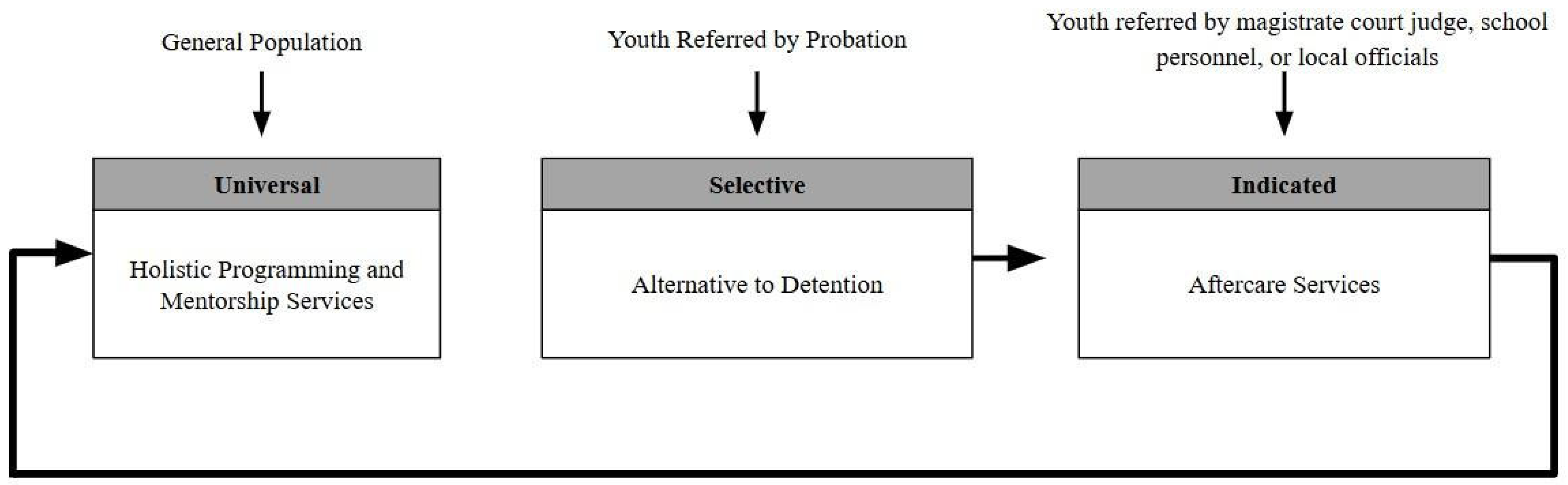
YES offers three tiers within their Community-Based Model for Juvenile Detention Alternatives: Holistic Programming and Mentorship Services, Alternative to Detention (ATD), and Aftercare. Each tier aligns with the IMJJ’s proposed intervention levels to reduce youth recidivism, where universal interventions are implemented within Holistic Programming and Mentorship Services, selective interventions within ATD programming, and indicated within Aftercare. The program sequence, detailing how youth move through programming, is presented in Figure 1. Each tier corresponds with restorative services that address criminogenic risk and protective factors in the various socio-ecological contexts. While the IMJJ model proposed general restorative services that could target the different socio-ecological contexts youth engage in, YES’ Community-Based Model for Juvenile Detention Alternatives extended the current framework by detailing specific services and interventions to address youth needs and promote positive youth development. Each tier, including how youth are referred, how youth service provisions are determined, intervention descriptions, and alignment with criminogenic needs, are presented in detail below.

2.1. Universal: Holistic Programming and Mentorship Services

YES provides universal interventions that incorporate diverse programming across various program domains, including mentoring, workforce and academic development, social, wellness, and cultural exposure and awareness, civic engagement and personal development. The IMJJ states that universal interventions should include multi-level socio-ecological interventions to improve impact, where YES’ universal program offerings intervene on the individual, family, and community levels. Each domain houses multiple programs, which each vary in frequency and dosage per week. Students are recruited from surrounding city and county districts and are typically between the ages of 13 to 18. Among the various services YES provides, mentorship is the primary service offered to prevent youth entry into the juvenile justice system. A full description of each domain, program services, frequency and dosage, criminogenic need targeted, and socio-ecological intervention level is provided in Table 1.
Mentoring has been shown to be an effective strategy to address risk factors for juvenile justice system involvement, including delinquent behavior, aggression, and antisocial behavior (Tolan et al. 2013). To address these risk factors, YES implements a mentoring modus operandi that aims to (1) provide pro-social support and personal development to prevent youth entry or reentry to the juvenile justice system, (2) lessen the influence of youth exposure to an abundance of negative environmental influences in their immediate community, schools, or household and (3) instill in youth the notions of self-worth, initiative and goal attainment through character development. Further, YES’ Motivational Model supports this work, where in meeting youths’ self-determination needs, conceptualized as four concentric circles, youth begin to become internally motivated to engage in YES programming (Jones et al. 2021). YES’ mentoring modus operandi is enacted within two gender-based mentorship programs: Voices to Men and Female Empowerment and Wellness Initiative, which facilitates individual and community mentorship-based interventions. Voices to Men and Female Empowerment and Wellness Initiative services and curriculum encourages participants to challenge gender-based stereotypes, identify community and societal risk factors, and pursue their aspirations. Gender differences impact the prevalence and type of delinquent behavior exhibited by youth, where these differences further impact youth outcomes of community-based prevention programs (Fagan and Lindsey 2014), supporting the need for gender-based programming to address delinquency risk factors.
Previous research suggests that high academic achievement functions as a protective factor against juvenile delinquency (Aazami et al. 2023). Further, high-quality summer programs provide access to learning opportunities, which is critical for low-income youth to address persistent opportunity gaps and support positive outcomes (Jones and Jones 2020). The findings regarding the influence of summer youth employment programs on juvenile delinquency are mixed. While some studies identify the potential of summer youth employment programs to increase juvenile delinquency (Staff et al. 2010), others find that summer youth employment programs substantially reduce both violent crime and mortality (Davis and Heller 2020; Modestino 2019). Further, summer youth employment programming has been shown to support youth future orientation (Jones et al. 2024). Due to these combined benefits, YES implements workforce and academic development programming that provides individual, family, and community interventions, including power hour tutoring, offered during the school year, and Learn and Earn, offered in the summer. Power hour tutoring provides free tutoring services to middle school, high school, and college students to support students’ academic needs. Learn and Earn encompasses three program offerings, including academic and employment preparation, conceptualized as Summer Work for Success, Summer Magic, and Summer Study for Success. Learn and Earn programming provides youth participants with six weeks of part-time summer employment. Summer Work for Success is a week-long curriculum that familiarizes participants with job readiness skills including but not limited to job applications, resume writing, workplace etiquette, financial literacy, and goal setting. Summer Study for Success and Summer Magic participants engage in youth participatory action research coursework, creating innovative research projects and developing community-based research methodologies over the course of 6 weeks. The research projects produced showed that youth developed rich understandings of issues in their communities, research skills, and critical perspectives that support academic achievement (Pearson et al. 2025).
Peer relationships have been shown to significantly influence juvenile delinquency, where high-quality and positive peer relationships are associated with reduced deviant behaviors (Dira and Subardjo 2025). Wellness has also been found to impact delinquency, where mental illness has long been associated with crime (Hancock 2023). YES provides youth with Social, Wellness, and Cultural Exposure and Awareness programming that implements individual and community interventions through Wellness Wednesdays and Social and Cultural Outings, both offered during the summer (Youth Enrichment Services 2024). Wellness Wednesdays includes holistic wellness programming that aims to promote healthy habits and practices to improve overall health and well-being (Youth Enrichment Services 2024). Program activities give students the opportunity to connect with other students and community members, think thoughtfully about their futures, and engage in wellness practices they may not have thought of before. Social and Cultural Outings allow students to engage with students they may not otherwise have before and be exposed to different leisure and learning opportunities within their community that they may not have had access to before (Youth Enrichment Services 2024).
Additional preventative measures that promote positive adolescent behaviors, like civic engagement, show promise in reducing delinquency (Leonard 2018). Civic Engagement and Personal Development provides individual and community interventions through Teen Council (Youth Justice Advisory Board) and Youth Civic Leadership Academy, both offered during the school year. Teen Council engages youth in thoughtful discussion around the various causes and implications of violence within their community, giving them the opportunity to collaboratively develop solutions to address it and implement those changes within their community. Youth Civic Leadership Academy further engages students in community-engaged work, where they work on identifying and addressing social issues, positioning students as changemakers in their community.
While universal and holistic programming prevents juvenile justice system engagement, intervention efforts are required to address the needs of court-involved youth to promote positive future outcomes for all youth.

2.2. Selective: Alternative to Detention Services

Alternative to Detention (ATD) delivers selective interventions to youth through pre-adjudication detention-alternative programming developed in collaboration with and funded by Allegheny County Juvenile Probation (ACJP) to address the over-confinement of children, detailed in internal program manuals and curriculums. Its primary function is to serve as a 24/7 monitoring and mentoring program for first-time juvenile offenders, where youth receiving intensive monitoring have been found to have lower recidivism rates in comparison to regular supervision (Sarver et al. 2012). Youth are referred by probation officers, where they are ATD-active from the time of arrest or detention hearing until they attend their adjudication hearing. ATD participants are probation-active and enrolled by their probation officer. The nature and extent of participant programming depends strongly on the terms that probation sets, where youth may be in the program from anywhere between 30 and 60 days. Upon probation officer or court judges request, ATD programming may be extended for an additional three to six months, where additional support and interventions are implemented in addition to intensive monitoring services in Diversion 2000 (D2000). In D2000, an Intervention Specialist determines a level of service related to youth risk level through an internally developed measure, the Service Delivery Matrix. A full description of services offered at each risk level is presented in Table 2.
Accordingly, ATD is reactive and diversionary in nature: services are provided to those already in the juvenile justice system. Detention alternatives are provided for youth alleged of misdemeanor or low-level felony charges. ATD participants are co-ed youth ages 10 to 18, vulnerable to societal and delinquency risk factors, struggling with below-par academic achievement, and lacking sufficient support systems to prevent recidivism prior to adjudication. ATD contract deliverables require that (1) ATD youth participants do not receive additional delinquency charges prior to the adjudicatory hearing, and (2) ATD youth are present at all pre-adjudicatory court dates.
In accordance with IMJJ guidelines for multi-level interventions in selective programming, ATD offers individual-, family-, and community-level interventions to provide comprehensive support and address needs across youth social contexts. The literature suggests that successful juvenile justice interventions provide both a supervision component and a therapeutic component, with particularly promising results for therapeutic approaches (Evans-Chase and Zhou 2014; Development Services Group 2024). YES integrates both supervision and therapeutic components, where Intervention Specialists conduct home and schools visits to both monitor youths progress and needs (i.e., monitor school attendance and youth curfew, conduct classroom and home observations, and ensure youth are meeting home and school expectations) and provide therapeutic interventions through multiple coordinated services (i.e., education advocacy and support, restorative services, family therapy and resource matching, individual counseling, and drug and alcohol counseling). Family therapy has particularly promising results, where family therapy has been found to address the root of problem behavior and promote family communication, support, and conflict resolution (Development Services Group 2014). Further, home and school visits allow Intervention Specialists to integrate into and strengthen youths’ existing support networks, coordinating with school personnel and families to understand and address the root of dysfunctional behavior.

2.3. Indicated: Aftercare Services

Due to the community and judiciary support for ATD services, probation officers and judges began ordering ATD youth to continue their participation with YES. The resulting service transitioned into the Aftercare program, an indicated intervention, which can be conceptually understood as the union of ATD and YES’ mentorship curricula, where all the ATD monitoring services are provided in addition to the personal-development curricula and value-added components that mentorship offers, detailed in internal program manuals and curriculum. Through all Aftercare activities, the primary goal is to develop, maintain, and strengthen vulnerable youths’ motivation to achieve and advance in all areas of their lives. Youth are referred by magistrate court judges, school personnel, or local officials, where they are assigned to a long-term mentoring relationship with their Intervention Specialist, who utilizes the validated Missouri Model of goal setting to encourage personal growth and self-investment. Youth typically are in Aftercare programming for three months, where transition readiness is then assessed to determine if further engagement is needed. Intervention Specialists determine a level of service associated with students’ risk level, as measured by the Service Delivery Matrix, described in Table 3.
The IMJJ model incorporates multi-level interventions at the indicated level, where YES implements individual, family, and community interventions in Aftercare. Aftercare participants receive the monitoring and mentoring services characteristic of ATD programming while integrating skill-building and personal development interventions, including adult and peer mentoring, cultural enrichment, and life skill development. Skill-building and development interventions have promising results in reducing recidivism (Crime Solutions 2021). Further, positive and supportive social networks are critical for a successful transition to adulthood and provide a protective factor against juvenile justice system involvement (Zwecker et al. 2018). However, juvenile justice system-involved youth often report that they lack positive and supportive individuals within their support network, prompting the need for services to directly target the development of healthy support systems for these youth (Zwecker et al. 2018). To accomplish this aim, Aftercare extends the support offered within traditional ATD services, where restorative practices are leveraged to integrate youth back into their family and school community through supporting youth in repairing relationships with their peers, school, and family.
Criminogenic risk factors develop within youth socio-ecological contexts, including home, school, and community, and the interpersonal relationships within each context (Van der Stouwe et al. 2014). Therefore, to effectively address criminogenic behaviors at the root, factors across all socio-ecological contexts youth inhabit must be addressed (Sapp 2023). YES Intervention Specialists establish lines of communication between the school, family, and home to map the youth’s holistic needs and assets and address risk across multiple socio-ecological levels. During monthly home visits, participants, parents/guardians, and Intervention Specialists discuss youth behavior, providing education on societal risk factors and improvements to establish and maintain a Family Action Plan to create long-term mentoring and advocacy relationships that stimulate and enrich the entire family unit. Further, staff conduct needs assessments to identify any barriers to a healthy and safe environment for participants and connect families with any necessary external resource providers. Lastly, YES staff conduct bi-weekly school visits to meet with administrators, counselors, teaching staff, and additional service providers to coordinate service delivery and advocate for each youth’s barriers to academic success.
YES prioritizes preventing disproportionate numbers of marginalized youth of color, particularly African American males, from entering the JJS by continuing to improve upon the Aftercare model so that it is validated and replicable for other JDAI sites with community partnership. In keeping with this priority, Aftercare services now reach a broadened population, including local school districts and housing authorities. By reinvigorating the JJS and the scope of preventative youth services, the Aftercare service model allows JDAI sites nationwide to ally with their respective local nonprofits.

3. Conclusions

The current article provided a descriptive case study of how one community-based organization applied the Integrated Model of Juvenile Justice in practice, describing a holistic approach to juvenile delinquency prevention and intervention that targets multiple socio-ecological levels to best support positive youth outcomes. While prevention, ATD models, and Aftercare programs currently exist, these programs often operate in silos, limiting their ability to comprehensively address youth needs. YES’ Community-Based Model for Juvenile Detention Alternatives provides a comprehensive, practice-based model that is currently absent from the literature, providing Holistic Programming and Mentorship Services, ATD programming, and aftercare services within one community-based space.
YES’ model, informed by 25 years of work, has been impactful for youth, families, court affiliates, and community stakeholders alike. In Pennsylvania, it costs as much as $211,000 a year to incarcerate a child, where non-carceral alternatives have been shown to be more cost effective, improving youth outcomes and seeing returns as much as $217.89 for each dollar spent (O’Conner 2023). YES has diverted nearly 1200 youths from juvenile detention and saved county taxpayers nearly 2 million dollars through the reduction in youth entering the school-to-prison pipeline and the disruption of long-term system involvement. Beyond the fiscal benefits, YES has instilled positive changes in program participants and has helped to improve their physical, emotional, and academic development, leading to their cultural enrichment, career development, life skill enhancement, and reduction in criminal activity (Lewis and Cohen 2016; Youth Enrichment Services 2018). On a community level, YES programming has helped to reduce delinquency, recidivism, per-youth expenditures, and increase JJS efficiency (Lewis and Cohen 2016). YES’ programming policies are well-aligned with the expectations of the county’s and state’s JJS and are overall perceived as effective by the Allegheny Juvenile Probation Department. At the state level, YES’ programming exhibits strong youth and family support, as well as Balanced and Restorative Justice (BARJ) and accountability measures as recommended by Pennsylvania’s Juvenile Act.
Feedback from program alumni, including program reports and unpublished focus group data, reinforce the positive program impact described above (Youth Enrichment Services 2018, 2024). In referencing former focus groups and evaluative surveys, program alumni report that YES has helped them refrain from reoffending, pursue personal goals, and alter their mindsets and habits through intentional mentoring. Their overall sentiments underscore the program’s effectiveness and lasting influence. Alumni successes are a testament to the transformative power of proper mentorship and opportunities and highlight how these young people grow into responsible, successful, and contributing members of society (Youth Enrichment Services 2018). Alumni also reflected on the welcoming environment YES cultivated, the meaningful opportunities provided, the inspiring role models guiding their way, the engaging activities that grounded them in productive opportunities, and access to beneficial program components designed to support and shape their experiences.
Overall, YES’ comprehensive service model incorporates intervention and prevention strategies, addresses risk and protective factors at multiple socio-ecological levels, and provides a diverse profile of restorative services. Offering a comprehensive service profile allows YES to address a wide range of youth needs that may be out of the scope of programs offering only one aspect of juvenile detention alternatives services. For example, ATD services provide only a short-term intervention that is often ineffective in developing support systems and addressing the complex needs of youth and their families that is often required to reduce recidivism (Smith 2013). To ensure youth continue on a positive trajectory, comprehensive approaches are necessary to create and sustain long-term change, where extended services provide consistent support, resources, and opportunities necessary to address youth needs and promote positive youth development. To address this gap, it is necessary to integrate and layer universal, selective, and indicated approaches that implement interventions at multiple socio-ecological levels to best meet the needs of juvenile justice involved youth. Further, holistic juvenile detention alternatives models must be rigorously evaluated to identify the effectiveness of each program element, identify best practices, and support the development of a standardized approach to juvenile delinquency.

4. Implications

4.1. Impact

YES promotes the adoption of protective factors (academic excellence, decision-making training) to lessen the effects of risk factors (financial ineptitude, negative peer influence, etc.). Aftercare program completion discourages delinquent behavior by fostering employability skills, improving academic standings, prioritizing healthy and stable family relationships, and developing appropriate stress-coping mechanisms. Intervention Specialists provide socialization and self-regulation training, including gaining comfort with authority figures and friendly eye contact, articulating thoughts and arguments with positivity, and structuring positive peer interaction. Equipped with newly fostered social etiquette skills, Aftercare youth display improvements in all aspects of personal development because a youth’s ability to communicate effectively lessens their sense of vulnerability and minimizes the risk of delinquent outbursts when attempting formalized social interaction. The desired result for Aftercare participants is prevention of further entry into the juvenile justice system. Youth who successfully complete Aftercare curricula are expected to exemplify the following: no additional justice system contact, no criminal charges received, enhanced self-worth, increased academic abilities, development of leadership skills, career development training, fostering of lasting pro-social relationships, engagement in their community, expanded mentor skill sets, and adoption of healthy and proactive decision-making habits. YES identifies these characteristics as primary delinquency prevention criteria since they are signs of empowered youth who can positively engage in community stewardship.

4.2. Influence

Over the years, reports from the YES model have shown that successful youth participants and families exhibit reduced effects of economic and academic disparities, social disengagement, vulnerability to negative social influences, and racial/ethnic over-incarceration rates. Exposure to mentoring and intervention services increases participant awareness of societal influences and motivates youth to break the cycles of community-linked or peer-associated delinquency by providing them with a role model, a service contact person, and a confidant. A degree of trust between community members and juvenile justice service providers is fostered as it becomes clearer that providers are interested in the participant’s wellbeing rather than in enforcing a punishment. Youth who have access to holistic support, an engaged family unit, and structured program services are more likely to combat as activists the societal underpinnings of socioeconomic restraints, academic hardship, and negative peer influence. While each Aftercare participant has a customized service plan, on average Aftercare youth receive 8 h of contact per week if they receive their two-hour home visit, two-hour school visit, two-hour curricula session, and daily 15 min curfew calls. These monitoring efforts are consistent with Jolliffe and Farrington’s (2007) findings that reoffending was prevented when mentoring sessions were longer in duration and occurred multiple times a week. Positive developments in the social–emotional, self-identity, and cognitive dimensions enhance youth regulation of complicated emotions (Jolliffe and Farrington 2007).

4.3. Policy

Given these demonstrated successes and the evident deficiencies of earlier approaches that lack the key dimensions of the model we have described here, a shift in policy at both the state and federal levels seems indicated. Frequently, funding for juvenile delinquency interventions and prevention typically are limited to short-term, band-aid solutions that do not provide enough support to effectively reduce recidivism. However, to fully break the school-to-prison pipeline, agencies at both levels need to commit to policy and funding structures that invest in long-term, comprehensive intervention and prevention models. Future directions of YES’ Community-Based Model for Juvenile Detention Alternatives include integrating diversion programming into school-based settings, providing an alternative to school resource officers and disrupting the school-to-prison pipeline. To persuade legislators to support the needed increases in spending, evaluations that support the tangible and sustained positive results in communities, including the effects on juvenile crime rates, recidivism, law enforcement costs, and local economies, are required. In particular, short-term ATD programs should be re-envisioned to facilitate the kinds of coordination and follow-up that have proven successful with Aftercare. Finally, if there is to be a “school-to-opportunity” pipeline or range of pipelines for at-risk youth, there will need to be changes at other socio-ecological levels: lowering or eliminating the cost of attending public college and targeting economic investment in low-income, low-employment neighborhoods by providing livable wages. Prepared and motivated youth will ascend to success, but there must be ladders for them to climb.
YES’ Aftercare model of prolonged and intensive diversion programming has only been implemented in the greater Pittsburgh area. However, other community-based service providers and JDAI site partners should adapt the presented practices and approaches to holistic and responsive intervention for the needs of their respective clientele. Testing the impact and influence of the Aftercare model in differing environments positively contributes to ongoing efforts to codify and package the Aftercare approach as a nationally recognized model for holistic crime prevention services. In addition to long-term and community-based mentorship services, school-based diversion programming should be further explored as a catalyst capable of enhancing and extending the short-term effects of standard crime diversion programming.

Author Contributions

Conceptualization, D.L.J., D.F.J. and L.C.; methodology, Z.V.P.; investigation, D.L.J.; writing—original draft preparation, Z.V.P. and L.C.; writing—review and editing, Z.V.P., D.L.J., B.P., D.C.E.S. and K.J.; visualization, Z.V.P.; supervision, D.L.J. and D.C.E.S.; funding acquisition, D.F.J. All authors have read and agreed to the published version of the manuscript.

Funding

This research was funded by Pennsylvania Commission on Crime and Delinquency, grant number 43019.

Institutional Review Board Statement

Not applicable.

Informed Consent Statement

Not applicable.

Data Availability Statement

The raw data supporting the conclusions of this article will be made available by the authors on request.

Acknowledgments

We would like to thank YES staff and students for their contributions to this project. We would also like to acknowledge the Pennsylvania Commission on Crime and Delinquency community for the resources to explore the development of a program model for aftercare services.

Conflicts of Interest

The authors declare no conflict of interest. The funders had no role in the design of the study; in the collection, analyses, or interpretation of data; in the writing of the manuscript; or in the decision to publish the results.

Abbreviations

The following abbreviations are used in this manuscript:
YESYouth Enrichment Services
ATDAlternative to Detention
IMJJIntegrated Model of Juvenile Justice
PCCDPennsylvania Commission on Crime and Delinquency
JJSJuvenile justice system
JDAIJuvenile Detention Alternatives Initiatives
AECFAnnie E. Casey Foundation
EBPsEvidence-based practices
BARJBalanced and restorative justice

References

  1. Aazami, Aida, Rebecca Valek, Andrea N. Ponce, and Hossein Zare. 2023. Risk and protective factors and interventions for reducing juvenile delinquency: A systematic review. Social Sciences 12: 474. [Google Scholar] [CrossRef]
  2. Abrams, Laura S., Matthew L. Mizel, and Elizabeth S. Barnert. 2021. The criminalization of young children and overrepresentation of black youth in the juvenile justice system. Race and Social Problems 13: 73–84. [Google Scholar] [CrossRef]
  3. Ackerman, E., J. Magram, and T. D. Kennedy. 2024. Systematic review: Impact of juvenile incarceration. Child Protection and Practice 3: 100083. [Google Scholar] [CrossRef]
  4. April, Keisha, Shannon W. Schrader, Toni E. Walker, Robert M. Francis, Hector Glynn, and Derrick M. Gordon. 2023. Conceptualizing juvenile justice reform: Integrating the public health, social ecological, and restorative justice models. Children and Youth Services Review 148: 1–11. [Google Scholar] [CrossRef]
  5. Austin, James, Kelly Dedel, and Ronald J. Weitzer. 2005. Alternatives to the Secure Detention and Confinement of Juvenile Offenders; Washington, DC: U.S. Department of Justice, Office of Justice Programs, Office of Juvenile Justice and Delinquency Prevention.
  6. Bouchard, Jessica, and Jennifer S. Wong. 2017. Examining the effects of intensive supervision and aftercare programs for at-risk youth: A systematic review and meta-analysis. International Journal of Offender Therapy and Comparative Criminology 62: 1509–34. [Google Scholar] [CrossRef] [PubMed]
  7. Cabaniss, Emily R., James Mary Frabutt, and Margaret H. Kendrick. 2007. Reducing disproportionate minority contact in the juvenile justice system: Promising practices. Aggression and Violent Behavior 12: 393–401. [Google Scholar] [CrossRef]
  8. Cauffman, Elizabeth, Marie L. Gillespie, Jordan Beardslee, Frank Davis, Maria Hernandez, and Tamika Williams. 2023. Adolescent contact, lasting impact? Lessons learned from two longitudinal studies spanning 20 years of developmental science research with justice-system-involved youths. Psychological Science in the Public Interest 24: 133–61. [Google Scholar] [CrossRef] [PubMed]
  9. Cavanagh, Caitlin. 2022. Healthy adolescent development and the juvenile justice system: Challenges and solutions. Child Development Perspectives 16: 141–47. [Google Scholar] [CrossRef]
  10. Cavell, Timothy A., L. C. Elledge, Kenya T. Malcolm, Melissa A. Faith, and Jan N. Hughes. 2009. Relationship quality and the mentoring of aggressive, high-risk children. Journal of Clinical Child & Adolescent Psychology 38: 185–98. [Google Scholar] [CrossRef]
  11. Cole, Heather, and Rebecca Cohen. 2013. Breaking down barriers: A case study of juvenile justice personnel perspectives on school reentry. Journal of Correctional Education 64: 13–35. Available online: http://www.jstor.org/stable/26507528 (accessed on 1 December 2025).
  12. Crime Solutions. 2021. Practice Profile: Skill-Building Interventions for Delinquent Behaviors of Youth; Washington, DC: U.S. Department of Justice, Office of Justice Programs. Available online: https://crimesolutions.ojp.gov/ratedpractices/skill-building-interventions-delinquent-behaviors-youth (accessed on 15 September 2025).
  13. Davis, Jonathan M., and Sara B. Heller. 2020. Rethinking the benefits of youth employment programs: The heterogeneous effects of summer jobs. Review of Economics and Statistics 102: 664–77. [Google Scholar] [CrossRef]
  14. Development Services Group. 2014. Family Therapy. Literature Review; Washington, DC: Office of Juvenile Justice and Delinquency Prevention. Available online: https://www.ojjdp.gov/mpg/litreviews/Family_Therapy.pdf (accessed on 10 September 2025).
  15. Development Services Group. 2024. Alternatives to Detention Confinement Model Programs Guide Literature Review; Washington, DC: US Department of Justice, Office of Justice Programs, Office of Juvenile Justice and Delinquency Prevention. Available online: https://ojjdp.ojp.gov/model-programs-guide/literature-reviews/alternatives-to-detention-and-confinement (accessed on 8 September 2025).
  16. DeWit, David J., David DuBois, Gizem Erdem, Simon Larose, and Ellen L. Lipman. 2016. The role of program-supported mentoring relationships in promoting youth mental health, behavioral, and developmental outcomes. Prevention Science 17: 646–57. [Google Scholar] [CrossRef]
  17. Dierkhising, Carly B., Andrea L. Eastman, and Kristine Chan. 2023. Juvenile justice and child welfare dual system involvement among females with and without histories of commercial sexual exploitation. Children and Youth Services Review 150: 106989. [Google Scholar] [CrossRef]
  18. Dira, Hayyu, and Ratna Y. S. Subardjo. 2025. Peer relationships and their impact on juvenile delinquency intensity: A cross-sectional study. Journal of Health Sciences and Medical Development 4: 116–26. [Google Scholar] [CrossRef]
  19. Edelman, Peter. 2019. Not a Crime to Be Poor: The Criminalization of Poverty in America. New York: The New Press. [Google Scholar]
  20. Evans-Chase, Michelle, and Huiquan Zhou. 2014. A systematic review of the juvenile justice intervention literature: What it can (and cannot) tell us about what works with delinquent youth. Crime & Delinquency 60: 451–70. [Google Scholar] [CrossRef]
  21. Fagan, Abigail A., and Andrea M. Lindsey. 2014. Gender Differences in the effectiveness of delinquency prevention programs: What can be learned from experimental research? Criminal Justice and Behavior 41: 1057–78. [Google Scholar] [CrossRef]
  22. Feld, Barry C. 2007. A Century of Juvenile Justice: A Work in Progress or a Revolution That Failed? Minnesota Legal Studies Research Paper No. 99-6. Minneapolis: University of Minnesota Law School. Available online: https://scholarship.law.umn.edu/faculty_articles/301/ (accessed on 1 December 2025).
  23. Fields, Diane, and Laura S. Abrams. 2010. Gender differences in the perceived needs and barriers of youth offenders preparing for community reentry. Child & Youth Care Forum 39: 253–69. [Google Scholar] [CrossRef] [PubMed]
  24. Fox, Sanford J. 1998. A contribution to the history of the American juvenile court. Juvenile and Family Court Journal 49: 7–16. [Google Scholar] [CrossRef]
  25. Gardner, Joby, Amanda Klonsky, Ishujon Clemens, Selena Gallardo, Rakeisha Harris, Natali Rosario, Ashley Suarez, Bridget Torres, and Maria E. Torre. 2022. Back in on the outside: Racialized exclusion at Chicago’s school/prison nexus and the promise of student voice. Urban Education 59: 1078–105. [Google Scholar] [CrossRef]
  26. González, Thalia. 2020. The legalization of restorative justice: A fifty-state empirical analysis. Utah Law Review 2019: 3. Available online: https://dc.law.utah.edu/ulr/vol2019/iss5/3 (accessed on 1 December 2025).
  27. Greenwood, Peter. 2008. Prevention and intervention programs for juvenile offenders. The Future of Children 18: 185–210. [Google Scholar] [CrossRef]
  28. Hancock, Katy. 2023. Wellness and delinquency at the intersection of gender and race. Crime & Delinquency 69: 1534–64. [Google Scholar] [CrossRef]
  29. Hereth, Jane. 2022. Overrepresentation of People Who Identify as LGBTQ+ in the Criminal Legal System. Chicago: Safety & Justice Challenge. Available online: https://www.pro-memoria.info/wp/wp-content/uploads/Overrepresentation-Of-People-Who-Identify-As-LGBTQ-In-The-Criminal-Legal-System-_Report-Safety-and-Justice-Challenge.pdf (accessed on 7 September 2025).
  30. Hockenberry, Sarah, and Charles Puzzanchera. 2015. Juvenile Court Statistics 2013 (National Report Series Bulletin); Washington, DC: US Department of Justice, Office of Justice Programs, Office of Juvenile Justice and Delinquency Prevention.
  31. Jalbert, Sarah K., William Rhodes, Christopher Flygare, and Michael Kane. 2010. Testing probation outcomes in an evidence-based practice setting: Reduced caseload size and intensive supervision effectiveness. Journal of Offender Rehabilitation 49: 233–53. [Google Scholar] [CrossRef]
  32. Javdani, Shabnam. 2019. Critical issues for youth involved in the juvenile justice system: Innovations in prevention, intervention, and policy. Journal of Prevention & Intervention in the Community 47: 67–75. [Google Scholar] [CrossRef]
  33. Jolliffe, Darrick, and David P. Farrington. 2007. A Rapid Evidence Assessment of the Impact of Mentoring on Re-Offending: A Summary. London: Home Office. [Google Scholar]
  34. Jones, Denise, and Dennis Jones. 2020. Transcend the summer slump: How summer programs can attract and retain low-income high school students. Afterschool Matters 31: 60–67. [Google Scholar]
  35. Jones, Denise, Paul Feigenbaum, and Denise F. Jones. 2021. Motivation (constructs) made simpler: Adapting self-determination theory for community-based youth development programs. Journal of Youth Development 16: 7–28. [Google Scholar]
  36. Jones, Denise, Zaida Pearson, Deanna C. Sinex, Jeremiah Nash, Aiwen Chen, and Dennis F. Jones. 2024. Making summer count: Youths’ perceptions of meaningfulness and future orientation in summer youth employment contexts. Afterschool Matters 38: 57–71. [Google Scholar]
  37. Juvenile Detention Alternatives Initiative (JDAI). 2017. Available online: https://www.aecf.org/work/juvenile-justice/jdai (accessed on 1 December 2025).
  38. Lee, JoAnna S., Mark E. Courtney, Tracy W. Harachi, and Emiko A. Tajima. 2015. Labeling and the effect of adolescent legal system involvement on adult outcomes for foster youth aging out of care. American Journal of Orthopsychiatry 85: 441. [Google Scholar] [CrossRef] [PubMed]
  39. Leonard, Latrice. 2018. Civic Engagement and Mentorship as Preventative Measures to Deter Adolescent Delinquency. Doctoral dissertation, Sam Houston State University, Huntsville, TX, USA. [Google Scholar]
  40. Lewis, Consuella, and Rachel M. Cohen. 2016. Diversion & Extended Diversion Evaluation Report. West Islip: Youth Enrichment Services. [Google Scholar]
  41. Malvaso, Catia, Michaela Magann, Pedro H. Ribeiro Santiago, Alicia Montgomerie, Rhiannon Pilkinton, Paul Delfabbro, and John Lynch. 2023. Early versus late contact with the youth justice system: Opportunities for prevention and diversion. Current Issues in Criminal Justice 36: 16–41. [Google Scholar] [CrossRef]
  42. Modestino, Alicia S. 2019. How do summer youth employment programs improve criminal justice outcomes, and for whom? Journal of Policy Analysis and Management 38: 600–28. [Google Scholar] [CrossRef]
  43. Moore, Kelly E., Sarah Phillips, Rachelle Kromash, Shania Siebert, Walter Roberts, MacKenzie Peltier, Madison D. Smith, Terril Verplaetse, Phillip Marotta, Catherine Burke, and et al. 2024. The causes and consequences of stigma among individuals involved in the criminal legal system: A systematic review. Stigma and Health 9: 224. [Google Scholar] [CrossRef]
  44. O’Conner, Corey. 2023. Historical Overview of Shuman Juvenile Detention Facility. Pittsburgh: Allegheny County Office of the Controller. Available online: https://alleghenycontroller.com/wp-content/uploads/2023/09/2023.09-Shuman-Review.pdf (accessed on 1 September 2025).
  45. OJJDP. 2014. Coming Into Focus: The Juvenile Justice Reform; Washington, DC: OJJDP.
  46. Orendain, Natalia, Adriana Galván, Emma Smith, Elizabeth S. Barnert, and Paul J. Chung. 2022. Juvenile confinement exacerbates adversity: A neurobiological impetus for decarceration. Frontiers in Neuroscience 16: 1004335. [Google Scholar] [CrossRef]
  47. Pearson, Zaida V., Denise L. Jones, Deanna C. Sinex, Lydnsey Del Castillo, Kreshon S. Singleton, Nneka Obiekwu, and Dennis F. Jones. 2025. Moving from theory to practice: Exploring how one community-based organization develops youth changemakers for health equity. Social Sciences 14: 662. [Google Scholar] [CrossRef]
  48. Pennington, Anessa L. 2019. Keep kids out of prison: Community-based alternatives for nonviolent juvenile offenders. Intuition: The BYU Undergraduate Journal of Psychology 14: 9. Available online: https://scholarsarchive.byu.edu/intuition/vol14/iss1/9 (accessed on 31 August 2025).
  49. Rhodes, Jean E., and David L. DuBois. 2008. Mentoring relationships and programs for youth. Current Directions in Psychological Science 17: 254–58. [Google Scholar] [CrossRef]
  50. Rovner, Joshua. 2024. Youth Justice by the Numbers. Washington, DC: The Sentencing Project. Available online: https://www.sentencingproject.org/policy-brief/youth-justice-by-the-numbers/ (accessed on 28 August 2025).
  51. Salyers, Michelle P., Brittany J. Hood, Katherine Schwartz, Andrew O. Alexander, and Matthew C. Aalsma. 2015. The experience, impact, and management of professional burnout among probation officers in juvenile justice settings. Journal of Offender Rehabilitation 54: 175–93. [Google Scholar] [CrossRef]
  52. Sapp, Karla. 2023. Multifaceted Nature of Criminal Behavior. In Understanding Offending Populations and the Power of Correctional Psychotherapy: Unlocking Insights. Cham: Springer International Publishing, pp. 7–15. [Google Scholar]
  53. Sarver, Christian M., Jennifer K. Molloy, and Robert P. Butters. 2012. Intensive Supervision (Juveniles): Technical Report. Salt Lake City: Utah Criminal Justice Center, University of Utah. [Google Scholar]
  54. Schweer-Collins, Maria L., Carly B. Dierkhising, and Leslie D. Leve. 2024. The long-term collateral consequences of juvenile justice involvement for females. Frontiers in Psychology 14: 1321355. [Google Scholar] [CrossRef]
  55. Smith, Charisa. 2013. Nothing about us without us! The failure of the modern juvenile justice system and a call for community-based justice. Journal of Applied Research on Children: Informing Policy for Children at Risk 4: 6. [Google Scholar] [CrossRef]
  56. Speer, Paul W., N. Andrew Peterson, Brian D. Christens, and Robert J. Reid. 2019. Youth cognitive empowerment: Development and evaluation of an instrument. American Journal of Community Psychology 64: 528–40. [Google Scholar] [CrossRef]
  57. Staff, Jeremy, D. Wayne Osgood, John E. Schulenberg, Jerald G. Bachman, and Emily E. Messersmith. 2010. Explaining the relationship between employment and juvenile delinquency. Criminology 48: 1101–31. [Google Scholar] [CrossRef]
  58. Thompson, Kristin C., and Richard J. Morris. 2016. History of the juvenile justice system. In Juvenile Delinquency and Disability. Advancing Responsible Adolescent Development. Cham: Springer, pp. 55–72. [Google Scholar] [CrossRef]
  59. Tolan, Patrick, David Henry, Michael Schoeny, Arin Bass, Peter Lovegrove, and Emily Nichols. 2013. Mentoring interventions to affect juvenile delinquency and associated problems: A systematic review. Campbell Systematic Reviews 9: 1–158. [Google Scholar] [CrossRef]
  60. Underwood, Lee A., Kara S. von Dresner, and Annie L. Phillips. 2006. Community treatment programs for juveniles: A best-evidence summary. International Journal of Behavioral Consultation and Therapy 2: 286–304. [Google Scholar] [CrossRef][Green Version]
  61. Van der Stouwe, Trudy, Jessica J. Asscher, Geert J. J. Stams, Maja Deković, and Peter H. van der Laan. 2014. The effectiveness of multisystemic therapy (MST): A meta-analysis. Clinical Psychology Review 34: 468–81. [Google Scholar] [CrossRef] [PubMed]
  62. Warren, Janet I., Shelly L. Jackson, and Jessica Jones Coburn. 2016. Evaluation and restoration of competency to stand trial. In APA Handbook of Psychology and Juvenile Justice. Edited by Kirk Heilbrun, David DeMatteo and Naomi E. S. Goldstein. Washington, DC: American Psychological Association, pp. 489–514. [Google Scholar] [CrossRef]
  63. Wilson, A., J. Phillips, M. Villodas, A. Parisi, and E. Dohler. 2022. Juvenile justice policies and programs. In Social Policy for Children and Families: A Risk and Resilience Perspective, 4th ed. Edited by William J. Hall, Paul J. Lanier, Jeffrey M. Jenson and Mark W. Fraser. Thousand Oaks: SAGE Publications, pp. 333–61. [Google Scholar]
  64. Wong, Jennifer S., Chelsey Lee, and Natalie Beck. 2024. The effects of aftercare/resettlement services on crime and violence in children and youth: A systematic review. Campbell Systematic Reviews 20: e1404. [Google Scholar] [CrossRef] [PubMed]
  65. Woolard, Jennifer L., Sarah Vidal, and Erika Fountain. 2015. Juvenile offenders. In APA Handbook of Forensic Psychology, Vol. 2: Criminal Investigation, Adjudication, and Sentencing Outcomes. Edited by Brian L. Cutler and Patricia A. Zapf. Washington, DC: American Psychological Association, pp. 33–58. [Google Scholar] [CrossRef]
  66. Young, Douglas W., Jill L. Farrell, and Faye S. Taxman. 2013. Impacts of Juvenile Probation Training Models on Youth Recidivism. Justice Quarterly 30: 1068–89. [Google Scholar] [CrossRef]
  67. Youth Enrichment Services. 2018. Annual Report: An Evaluation of YES’ Diversion 2000 Program. West Islip: Youth Enrichment Services. [Google Scholar]
  68. Youth Enrichment Services. 2024. Pathways to Success: 2024 Summer Report; West Islip: Youth Enrichment Services. Available online: https://www.youthenrichmentservices.org/annualreports (accessed on 1 December 2025).
  69. Zwecker, Naomi A., Anna J. Harrison, Leah J. Welty, Linda A. Teplin, and Karen M. Abram. 2018. Social support networks among delinquent youth: An 8-year follow-up Study. Journal of Offender Rehabilitation 57: 459–80. [Google Scholar] [CrossRef]
Figure 1. Program model.
Socsci 15 00234 g001
Table 1. Universal programming and services.
DomainProgramService DescriptionDosage & Duration Criminogenic Need AddressedEcological Level Targeted
Workforce & Academic DevelopmentPower Hour TutoringProgramming designed to support the academic needs and capacity of youth enrollees2 h, 4 times a week, school yearEducation & Skill Individual
Learn and EarnSummer youth employment programming connecting youth to meaningful work experiences15–25 h a week, 6 weeksEmployment DevelopmentIndividual, Family
Summer Work for SuccessSummer programming designed to build youths’ employability preparation skills 6 h a day, 5 times a week, 1 weekEducation & Skill
Employment Development
Individual
Summer MagicSummer programming designed to ignite youths’ curiosities, academic acumen, build youths; hands-on work experiences through apprenticeships6 h a day, 4 times a week, 6 weeksEducation & Skill
Employment Development
Individual, Community
Summer Study for SuccessSummer programming designed to support youths’ experiential learning through discovery workshops3 h a day, 2 times a week, 6 weeksEducation & Skill
Employment Development
Individual, Community
MentoringVoices to Men (VTM)Male-identifying group mentoring programming that encourages young males to discuss and challenge the obstacles they encounter2 h, 2 times a week, school yearPeer Relations Individual, Community
Female Empowerment and Wellness Initiative (FeWi)Female-identifying group mentoring programming that addresses societal and environmental pressures/biases that deter young women and misconceptions around wellness2 h, 2 times a week, school yearPeer RelationsIndividual, Community
Social, Wellness, and Cultural Exposure and AwarenessSocial and Cultural OutingsProgramming that exposes youth to the local and regional cultural landscape building their cultural competencies3 h, 1 time a week, 6 weeksLeisure & RecreationIndividual, Community
Wellness WednesdaysProgramming sessions that focus on different dimensions of wellness and teach mini lessons on self-care practices2 h, 1 time a week, 6 weeksLeisure & RecreationIndividual
Civic Engagement & Personal DevelopmentTeen Council (Youth Justice Advisory Board)Programming sessions that engage youth in in-depth discussion around root causes of violence, developing community-based solutions, and implementing teen-led solutions intervene and prevent violence2 h, 1 time a week, school yearEducation & SkillIndividual, Community
Youth Civic Leadership Academy Programming that engages youth in rigorous youth participatory action research curriculum and engages youth in discussion with community content experts 3 h, twice a week, 3 program cycles during the school year (8–12 weeks)Education & Skill Individual, Community
Table 2. D2000 intensity determination and level of service.
Service IntensityService Provisions
Low Intensity 2 School Visits
2 Home Visits
Case Management
Family Action Planning
Mentoring
Wellness Calls
Interventions
Medium Intensity 2 School Visits
2 Home Visits
Case Management
Family Action Planning
Additional Mentoring
Curfew Calls
Interventions
High Intensity3 School Visits
3 Home Visits
Case Management
Family Action Planning
Additional Mentoring
Curfew Calls
Interventions
Additional Services Outreach (Drug & Alcohol Counseling, Mental Health Services, Conflict Resolution, Family Therapy)
Table 3. Aftercare intensity determination and level of service.
Service IntensityService Provisions
Low Intensity 1 School Visit
1 time a week program session
Medium Intensity 2 School visits
1 Home visit
2 times a week program session
Additional mentoring session
High Intensity2 School visits
2 Home visits
2 times a week program session
Additional mentoring session
Additional Services Outreach (Drug & Alcohol Counseling, Mental Health Services, Conflict Resolution, Family Therapy)
Disclaimer/Publisher’s Note: The statements, opinions and data contained in all publications are solely those of the individual author(s) and contributor(s) and not of MDPI and/or the editor(s). MDPI and/or the editor(s) disclaim responsibility for any injury to people or property resulting from any ideas, methods, instructions or products referred to in the content.