Article

Constructing Stability: The Emergence and Persistence of a Newly Formed Status Characteristic

by
Alison J. Bianchi
1,* and
Lisa S. Walker
2
1
Department of Sociology and Criminology, The University of Iowa, Iowa City, IA 52242-1401, USA
2
Department of Sociology, The University of North Carolina at Charlotte, Charlotte, NC 28223, USA
*
Author to whom correspondence should be addressed.
Soc. Sci. 2026, 15(3), 184; https://doi.org/10.3390/socsci15030184
Submission received: 18 December 2025 / Revised: 23 February 2026 / Accepted: 6 March 2026 / Published: 13 March 2026
(This article belongs to the Special Issue Group Processes Using Quantitative Research Methods)

Abstract

This study examines whether a newly constructed status characteristic stabilizes across interaction contexts and over time, a question central to the diffusion of status value theory. Using a laboratory experiment, undergraduate women from a large public university (valid N = 100) were randomly assigned to high- or low-status positions on a novel status characteristic and then interacted within dyads consisting of participants and confederate partners across two distinct problem-solving tasks. A Latin square design was employed to counterbalance task order and assess whether initial task context moderated subsequent status processes. Influence behaviors were measured across repeated interactions. Results show that the constructed status characteristic reliably shaped influence in early interactions and remained stable across tasks. However, a significant interaction between status and task order indicates that the magnitude of status effects depended on which task participants encountered first. These findings demonstrate that newly created status characteristics can stabilize rapidly within interactional settings while remaining sensitive to task context. By identifying how task order may affect the persistence of novel status distinctions, the study advances research on status construction and clarifies the micro-level processes through which new status beliefs become durable features of social interaction.

1. Introduction

Across diverse task settings, status hierarchies reliably emerge from culturally shared expectations that link social categories to perceived competence (Berger et al. 1972). These status characteristics organize interaction, affect influence, and shape evaluations even when task ability is objectively unknown. A status characteristic is any socially recognized attribute with differentially valued states that are linked to culturally defined expectations for competence (Bianchi 2010). Status beliefs, those widely shared cultural understandings about the relative esteem, competence, and social advantage associated with particular categories, serve as the mechanism through which such attributes steer interaction (Ridgeway and Correll 2006).
While decades of research document the robustness of established status beliefs (Sell and Webster 2025), less is known about how newly constructed status characteristics operate once introduced into a task group (Ridgeway 2025). Do such characteristics exert durable effects across sequential tasks, or do their consequences dissipate as the interaction unfolds? Understanding the stability of constructed status characteristics is essential for clarifying how status beliefs form, persist, and potentially diffuse beyond their initial setting.
Although expectation states theories provide rigorous accounts of how culturally grounded status beliefs organize task group encounters (Berger and Webster 2022), far less is known about whether similar processes occur when a status characteristic is newly created within the group itself (Webster and Walker 2017; Harkness 2022). Constructed characteristics require participants to learn and apply the status information in real time, without the benefit of long-standing cultural schemas. This raises a core theoretical question: once introduced, do such status characteristics maintain their effects across sequential tasks, thereby mimicking the stability of established status beliefs, or do their effects weaken as group members gain experience with one another? Understanding this process is essential for clarifying how status beliefs originate, how they become stable enough to organize subsequent action, and under what conditions they might generalize beyond their initial task environment.
The present study examines this question using a Latin Squares experimental design that is directly motivated by Diffusion of Status Value Theory (Berger and Fişek 2006; Berger and Fişek 2013), which asserts that a status characteristic must first demonstrate stability across situations before it can acquire broader status value. To test this theory, participants in a social psychological experiment receive a constructed status characteristic and then complete two sequential tasks. By systematically varying both task order and the status assignment across conditions, the design provides a systematic test of whether the constructed characteristic maintains its effects across tandem task groups.
In the following sections, we delineate the theoretical foundations of the status construction process and its extension through Diffusion of Status Value Theory, detail the experimental design and procedures, present the analytic strategy and results, and conclude with implications for understanding the emergence and stability of newly formed status characteristics.

1.1. Status Characteristics Theory and Status Generalization

A status characteristic is any socially recognized attribute with differentially valued states that are linked to culturally defined expectations of competence (Bianchi 2010). The status characteristic of gender provides a useful illustration: within task groups, men are often assessed as having greater ability than their female counterparts. Such appraisals typically reflect not the objective reality of performance but rather status beliefs—widely shared cultural understandings that individuals from one social category are more esteemed, socially advantaged, and competent than those from another category (Ridgeway and Correll 2006).
Specific status characteristics refer to attributes that are directly relevant to the group’s immediate task, such as mathematical ability in a problem-solving task. In contrast, diffuse status characteristics, such as gender, race, or education, convey generalized expectations for competence across diverse contexts (Berger and Fişek 2006). While specific characteristics form expectations narrowly and locally, diffuse characteristics are discernable across situations, shaping both the distribution of influence within groups and the persistence of inequality across social contexts.
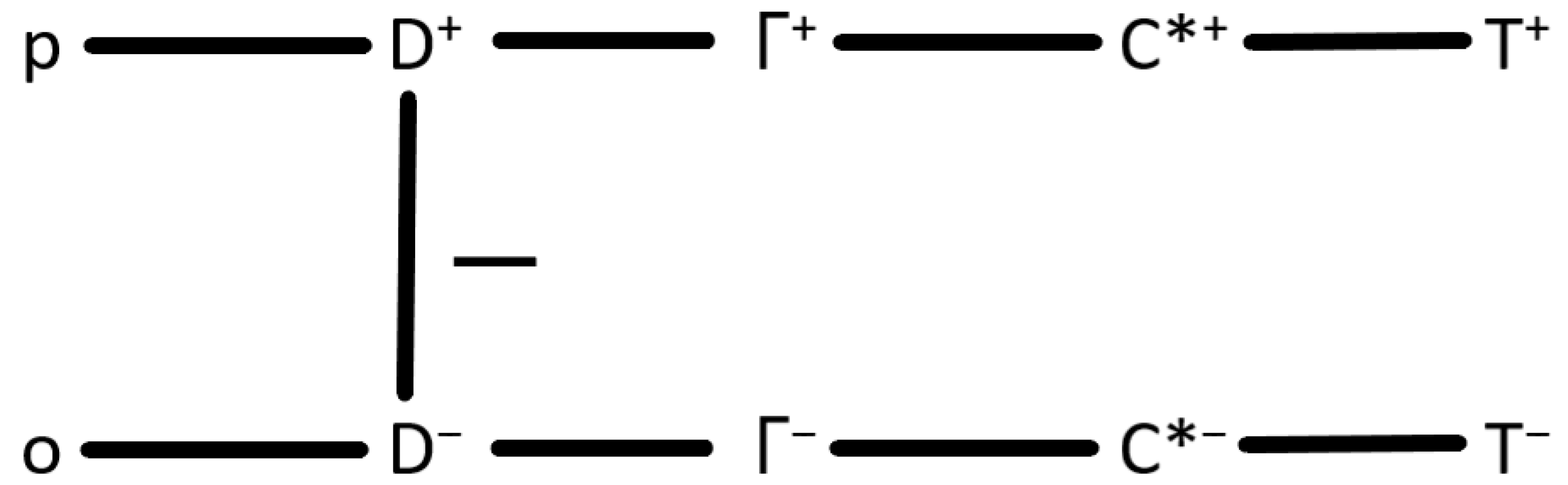
In Figure 1, actors draw on shared status beliefs to interpret the meaning of the status characteristic “gender”1, infer how others evaluate competence across gender categories (Walker et al. 1986), and behave in ways consistent with the presumed collective understanding of who is more competent (Berger et al. 1998). Figure 1 depicts gender as a diffuse status characteristic; namely, one that Berger and Fişek (2006) assert has four main elements: (1) it is socially recognized; (2) it has dissimilar, distinguishable states; (3) these states have attached to them status beliefs, such that their social worth has differing levels; and finally, (4) the differing levels are associated with disparate evaluations of general ability. The binary representation of gender fulfills each of these requirements for being a diffuse status characteristic, as its display is omnipresent (Ridgeway 2011), and in general, men are perceived as having higher social advantages vis-à-vis women (Foschi 1996; Wagner et al. 1986; Ridgeway 2002).
The foundational theory that delineates this dynamic is status characteristics theory (hereafter “SCT”; Berger et al. 1972), the core theory of the expectation states research program (Wagner and Berger 2002; Berger et al. 2014). SCT explains status generalization, a group process through which socially valued differences translate into influence hierarchies within task groups (Webster and Foschi 1988; Berger and Webster 2018). Our goal is not to restate SCT’s formal axioms (see Berger et al. 1977), but rather to provide a brief conceptual overview that motivates our examination of the stability of emergent status characteristics produced through the diffusion of status value.
According to SCT, status generalization occurs only within task groups that meet specific scope conditions (Walker and Cohen 1985). These conditions include task-orientation and collective orientation. Task-orientation refers to groups whose members understand that their primary goal is to complete a collective task and that there are correct and incorrect ways of doing so. Collective orientation refers to group members who address and incorporate one another’s behaviors, opinions, and cues when working on the group task.
At its essence, status generalization is the group process through which status cues from states of status characteristics are integrated into collectively held performance expectations—the implicit, “out-of-awareness” anticipations or intuitive “hunches” regarding actors’ relative capacities to perform a task effectively (Ridgeway and Walker 1995). The consensual ordering of these expectations constitutes the emergent status hierarchy, a micro-level stratification system that organizes participation and influence within the group. Through subsequent interaction, this hierarchy is reproduced and stabilized as behavioral patterns come to reflect, and thereby reinforce, the structure of differential performance expectations.
Returning to Figure 1, SCT also employs a graph-theoretic model to represent the structure of status generalization, accompanied by five formal principles that specify its underlying mechanisms. The path model serves a dual role: it provides a visual heuristic for understanding how status information operates within groups and a computational method for deriving scores that indicate members’ expected task contributions (Berger et al. 1977). We utilize both purposes to discuss how group members enact status generalization. Figure 1 presents a path model for the single, diffuse status characteristic of gender within a dyad. These individuals are working on the shared task of completing a math assignment for a study group.
The focal actor p represents a man, and o represents a woman. Because p possesses the positive state of the gender binary and o the negative, unsigned paths of possession are drawn between p and D+, and between o and D, where D denotes the diffuse status characteristic—here, gender. The characteristic becomes salient (per the salience principle) because the actors differ on its states. Accordingly, a signed path of dimensionality connects the opposing states of D, signifying the implicit hierarchical relation between the two actors: p is perceived as socially advantaged relative to o.
D+ and D then connect to г+ and г, respectively. The г symbols represent generalized expectation state; that is, widely shared cultural beliefs about which social category is presumed to possess greater general competence. The г’s, in turn, connect to the specific ability relevant to the task at hand—here C* (mathematical ability). Finally, C* connects to T+ and T, which represent the task outcomes: perceived success and failure, respectively. In this case, the outcomes are obtaining the correct answer to mathematical problems. All paths linking г’s to T’s are paths of relevance, indicating that the status characteristic has become relevant to the task (the burden of proof assumption).
D+ and D then connect to Γ+ and Γ, respectively; the Γ symbols represent generalized expectation states or general cultural beliefs about which social category is perceived to possess more general abilities as compared with another. The Γ’s are then connected to the particular ability needed to complete the task at hand, which in this case is math ability, represented by C*. Finally, the C*’s connect to T+ and T, which represent the situation—a task that has a perceived successful or unsuccessful outcome, respectively, which in this case is the right answer to math problems. All paths from Γ’s to T’s are paths of relevance, meaning that this status characteristic has become relevant to the task (the burden of proof assumption). These paths develop for all actors in the situation and will be modified, but not erased, if new status information becomes salient or a new actor enters the setting (the structure completion, or sequencing, assumption).
Next, we use the graph to compute actors’ profiles that represent their performance expectations2. We count path lengths and their algebraic signs, noting that the signed task outcome, T+ and T, also bears weight on the path sign. Thus, p has two paths from him/herself/themself to the situation T. One is a positive path of length 4 (ending at T+), and the other is a negative path of length 5, but since the path ends in T, it is considered a positive path of length 5. The principle of organized subsets or combining assumption states that, first, the values for positive paths combine (ep+), then the values for negative paths combine (ep−), and p’s expectation profile is the sum of ep+ and ep−. The equations used to compute the expectation profiles are:
ep+ = 1 − [(1 − f(4))(1 − f(5))] and ep− = −1 − [(1 − f(4))(1 − f(5))]}
The f(i) functions represent the characteristic number associated with a path of length i. We take p’s paths and their lengths, use the first equation to calculate the positive paths’ contribution to p’s overall expectation profile, then the second equation to calculate the contribution of the negative paths (in this case 0), and then sum the results together to compute p’s expectation profile (ep = ep+ + ep−). In the case of this dyad, ep represents p’s expectation advantage (if the value is positive) or disadvantage (if negative) as compared with the other, o. P’s expectation profile is ep = 0.3653, and so p has the expectation profile advantage over o.
We assume that all modeled processes unfold in the minds of group members. The validity of these models can be assessed by examining actors’ patterns of task behavior. Specifically, we may find differences in action opportunities—the prompts or openings that invite group members to contribute to task completion. We can then examine the distribution of performance outputs, the actual contributions made during the task. We also observe how some members’ contributions receive more positive evaluations than others, and, finally, who exerts influence over whom, particularly in moments of disagreement. High status actors, those with more favorable expectation profiles, should exhibit fewer invitations to act but produce more performance outputs, receive more positive evaluations, and exert greater influence than their lower-status counterparts. Distributions of these task behaviors represent the behavior translation principle.
We employ these procedures to determine whether an experimentally introduced status characteristic produces the diffusion of status value within the group. Successful diffusion should yield a stable diffuse status characteristic capable of organizing status hierarchies in subsequent tandem task groups.

1.2. The Process of the Diffusion of Status Value

The question of how status characteristics originate was first addressed by Ridgeway (1991), who proposed that a nominal trait N, defined as any socially recognized attribute with at least two distinct categories, can acquire status value such that individuals possessing NA are regarded as more competent or worthy than those possessing NB. In the case illustrated in Figure 1, NA corresponds to D+ and D, representing the completion of status value acquisition. Through this transformation, the nominal distinctions NA and NB become linked to generalized performance expectations (the Γ parameters), thereby generating a status hierarchy through the process of status generalization.
Ridgeway (1991) specified the interactional mechanism through which a nominal distinction acquires status value: the doubly dissimilar situation between two actors. In such a task- and collectively oriented encounter, where no other salient status cues are available, one actor possesses the nominal attribute NA and the other NB. These actors are situated within a broader social system characterized by unequal distributions of valued resources, such that NA is unmistakably associated with greater resource possession. Prior research demonstrates that observable cues of resource inequality become incorporated into actors’ performance expectations (Cook 1975; Harrod 1980; Stewart and Moore 1992). Consequently, differential expectations of competence will become attached to the nominal distinctions themselves, such that the individual possessing NA will be perceived as more capable than the individual with NB. Moreover, the individual possessing NB will be perceived as being more expressive and likeable, as compared with individual NA. A series of laboratory experiments confirmed this process empirically (Ridgeway et al. 1998; Ridgeway and Erickson 2000), culminating in what Ridgeway later termed status construction theory (Ridgeway 2025).
Beyond the doubly dissimilar encounter, additional interactional mechanisms can also endow nominal distinctions with status value. As Berger et al. (1972, pp. 128–30) first observed, status value associated with established status characteristics may become transferred to other elements of interaction, such as goal objects, defined as any tangible or intangible article that an actor desires. They noted that the transfer would take place if the state of the status characteristic (either positive or negative) was somehow like the presumed state of the goal object. That is, if an actor who possessed a positive state of a status characteristic obtained some valued object associated with his/her high state, then that object might be associated with higher status itself. For example, a renowned physician uses a particular brand of stethoscope to which other physicians may not have access. That kind of stethoscope may then acquire a symbolic association with elevated competence, raising its perceived value beyond its functional utility, as compared with other brands of stethoscopes of equal quality.
Building on these foundational ideas, Berger and Fişek (2006) theorized that linkages between established status characteristics and nominal distinctions can generate new diffuse status characteristics. Whereas their model formalizes this process through mathematical propositions, we describe it here in more intuitive terms:
  • In a situation S, actors p,o1,o2,…,on engage one another with a shared understanding of the status information present, including the evaluations and performance expectations encoded in status elements. These actors may or may not be part of every task- and collectively oriented group encounter but do possess the same or opposite states of a non-valued, recognized characteristic (Berger and Fişek 2013). In such situations, widely shared cultural schemas about status characteristics may enter the interaction from the global social context, yet immediate encounters also afford opportunities for locally generated status elements to emerge (Berger et al. 2002).
  • Consider a nominal attribute N with initially non-valued states NA and NB. When either state becomes directly or indirectly connected to positively or negatively evaluated states of recognized status characteristics, N acquires status value proportional to the number and strength of those connections (i.e., the length and magnitude of the paths’ connections).
  • As status value transfers to NA and NB, actors’ general performance expectations (Γ’s) become increasingly associated with these states, and linkages between Γ’s and task ability (C*s) emerge accordingly.
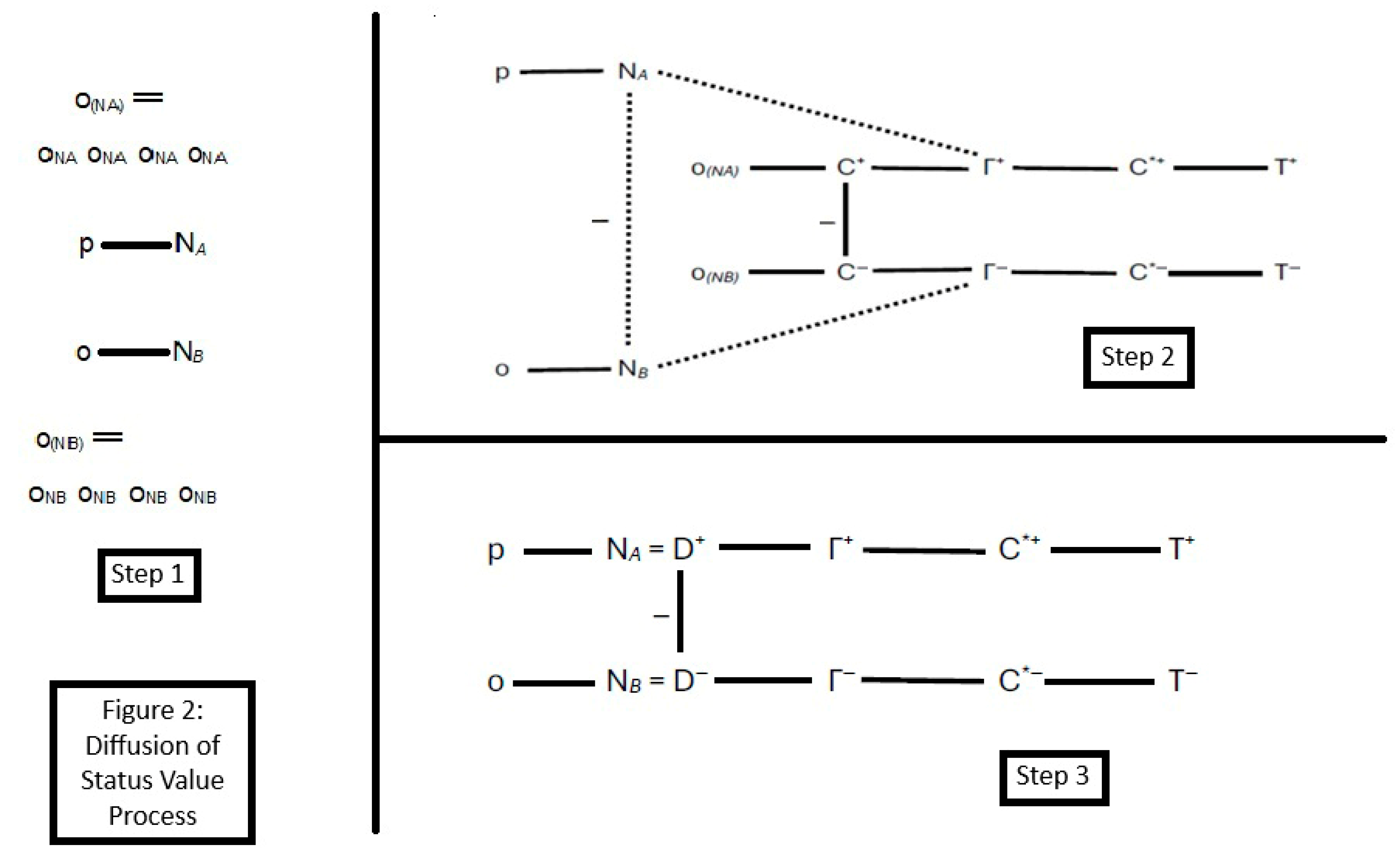
In Figure 2, we present a three-step scenario with path models that uses these terms to demonstrate one way that the transfer of status value may occur. In Step 1, person p possesses the non-valued NA and the person o possesses the non-valued NB for the nominal difference N. P and o are aware; however, that this attribute is possessed by similar others, called “referent others”, represented by the set of o(NA) and o(NB) individuals.
In Step 2, p and o learn that, during group interactions, oNA persons have a higher level of an ability C than do oNB persons, represented by the enactment of C as C+ and C in a typical two-person path model (as in Figure 1). As p and o compare themselves to similar referent others, characteristics path of relevance (Berger and Fişek 2013, p. 86) emerge. In Step 2, these are the dotted paths from NA and NB to Γ+ and Γ−. Note also that as these comparisons occur, NA and NB become attached with an emerging path of dimensionality, another dotted line that is between NA and NB, as would be enacted by an established status characteristic.
Finally, in Step 3, p and o have a group encounter during which they work on a goal-oriented task. N has developed into a diffuse status characteristic, which has been connected to generalized task ability. P and o enact this new status characteristic in the local group, as they recognize the distinction created by NA and NB and they also recognized that it is connected to generalized task ability (the Γ’s). Ostensibly, this new diffuse status characteristic will inform the next interactions of p and o with others who possess states of the once nominal attribute. This new diffuse status characteristic will continue to organize task behaviors in subsequent groups in situation S.
Walker et al. (2011) provided strong empirical support for this mechanism; however, they did not address the fourth and final assumption of status-value diffusion, which Berger et al. (2002, p. 166) refer to as validation. That is, these researchers did not examine the subsequent group encounters and the stability of the newly created status characteristic.

1.3. The Stability of the Diffusion Process

Status characteristics may emerge endogenously within a local group encounter, yet it remains unclear whether these newly formed status relations generalize beyond that setting. Although the characteristic acquires associated status beliefs during the initial interaction, these beliefs may be fragile. When the actor p enters a subsequent encounter with a new other o, where both hold opposing states of the newly formed characteristic, will the same status ordering be reproduced (Webster and Walker 2017; Harkness 2022)?
We again use more intuitive language to describe the fourth assumption. According to expectation states theories, newly created status characteristics become institutionalized only when actors treat one another in ways that imply shared status beliefs (Berger et al. 2002). This form of validation, a second-order legitimation process (Walker et al. 1986), occurs when actors behave in ways that they believe others view as appropriate or “right and proper.” These behaviors, in turn, signal that the emerging status order itself is right and proper, thereby reinforcing its legitimacy. Once this process is underway, actors proceed as though there is a shared consensus about the appropriate status hierarchy, and corresponding differences in task behaviors follow.
Thus, if actor p holds the positively valued state of the emergent characteristic and a new other o holds the negatively valued state, the critical question is whether o behaves as though p is more competent for the task. When o grants p deference through differential task behaviors—behaviors that signal higher performance expectations—both actors infer that others in the setting would do the same. It is through this perceived social consensus that the status beliefs tied to the newly formed characteristic become institutionalized within situation S (Berger et al. 2002).
If p receives more action opportunities, produces more performance outputs, obtains more positive evaluations for those outputs, and exerts greater influence than o, these asymmetries constitute behavioral validation (Berger et al. 1977; Ridgeway 1991). Such patterns indicate that the newly formed status characteristic has achieved the shared recognition required for the diffusion of status value. Moreover, when interaction patterns differentiate p as the more instrumental and competent actor and o as the more expressive and subordinate actor, these distinctions indicate that the emergent status characteristic has been institutionalized within the setting (Walker et al. 2011).

1.4. Research Questions

Building on status characteristics, status construction, and the diffusion of status value theories, the present study examines whether newly formed diffuse status characteristics persist beyond the local interactional settings in which they emerge. Although prior research demonstrates that nominal distinctions can acquire status value and organize behavior within initial encounters, less is known about the stability and validation of these emergent hierarchies across subsequent group interactions. Accordingly, we address the following research questions: (RQ1) Do newly constructed diffuse status characteristics persist across subsequent encounters? (RQ2) Do interactional behaviors in subsequent encounters validate and institutionalize newly constructed status characteristics? And (RQ3) does the persistence of constructed status hierarchies differ across task contexts, and is this persistence contingent on the order in which tasks are encountered?

2. Materials and Methods

2.1. Experimental Conditions

To assess the stability of a newly constructed status characteristic across group tasks, we conducted a laboratory experiment that enabled both the creation of a status characteristic and subsequent task-group encounters. We adapted the nominal difference and status-value imbuing procedures used by Ridgeway et al. (1998) and by Walker et al. (2011), and employed a standardized experimental setting consistent with Berger (2007). The experiment was structured as a 2 × 2 × 2 factorial design: participants were randomly assigned to either a high or low constructed status position (Status: High Competence vs. Low Competence), first encountering two different task environments (First Task: Meaning Insight vs. Contrast Sensitivity), and completed those tasks in one of two possible sequences (Over Time: MI→CS vs. CS→MI). These factors were operationalized through four experimental conditions, each consisting of a nominal difference routine with a status-value imbuing routine, and two collective tasks conducted with different confederate partners. A 2 × 2 × 2 Latin Square design was used to counterbalance task order and minimize nuisance effects related to differential task-expectation development (Fisher 1935; Montgomery 2020, p. 133). Table 1 displays the four experimental conditions.
This 2 × 2 × 2 structure provides a stringent test of stability by allowing the independent and joint effects of status assignment, first task type, and task order over time to be evaluated simultaneously. By crossing these factors, the design isolates whether the influence of the constructed status characteristic persists across different task environments, remains robust to shifts in task sequence, and generalizes beyond the immediate task in which it was introduced.

2.2. Study Participants

One hundred thirty-four White female undergraduates from a large Midwestern university participated in the study. Following standard practice in expectation states research, we restricted the sample to a demographically homogeneous group to prevent the activation of diffuse status characteristics associated with gender, race/ethnicity, or age, thereby isolating the effects of the newly constructed status characteristic. Consistent with prior studies, participants were excluded if they: (1) expressed suspicion about the nominal difference or status-value procedures; (2) failed to demonstrate adequate task orientation; (3) failed to display the collective orientation necessary for group decision-making tasks; or (4) did not meet the demographic inclusion criteria. Thirty-four participants3 (25%) met one or more of these exclusion conditions, yielding a final sample of 100 participants, with twenty-five assigned to each experimental condition. Participants were recruited through a university-wide email announcement, scheduled via a web-based sign-up system, and compensated monetarily for participation in a “study of decision-making in partnerships.”

2.3. Phase I: Nominal Distinction and Operationalizing the Spread of Status Value

Participants were escorted by trained research assistants to individual laboratory rooms, each equipped with a computer and monitor for receiving and responding to study prompts. After completing standard informed-consent procedures, participants were introduced to their purported partners. Using pre-recorded videos, we presented these partners as live confederates communicating through a Web camera. Participants were then asked to introduce themselves to their partners over this same interface. At this point, we informed them that they and their partners would soon complete the “Personal Response Style Test.”
Phase I consisted of a computer-based protocol designed to create a nominal distinction. Following Ridgeway et al.’s (1998) adaptation of the Tajfel et al. (1971) minimal-group procedure, participants viewed ten pairs of paintings displayed side-by-side, one by Paul Klee and one by Wassily Kandinsky, presented in randomized order. For each pair, participants selected the painting they preferred by clicking on the screen. Upon completion, the program informed them that their selections formed a “well-researched pattern of Personal Response Style,” labeled either “S2” or “Q2,” and that their partner had received the same classification. However, their partners possessed the opposing attribute. Participants were told that the meaning of these classifications would be explained later. In reality, no such response-style pattern exists, and the S2/Q2 labels bear no relationship to artistic preferences. These procedures were implemented solely to create a nominal difference with no preexisting expectations.
Next, we implemented the procedure designed to imbue status value into the nominal distinction, replicating the method shown effective by Walker et al. (2011). This approach uses referent actors, those individuals who share the nominal characteristic and who are shown to be associated with valued success or failure outcomes on a specific task. We told participants that substantial prior research had examined the S2/Q2 distinction and that we would summarize some of those findings. We explained that many previous two-person teams had completed a task known as “Lost on the Moon” or “Moon Survival,” in which participants rank items in order of importance for astronaut survival. We then stated that performance on this task appeared to be systematically related to the S2/Q2 classification. As Walker et al. (2011, p. 1657) describe, “the S2/Q2 distinction is linked to task outcomes,” and we conveyed this association explicitly.
We then presented participants with performance examples from four dyads composed of first- and second-year students from our university who differed on no attributes other than the S2/Q2 classification. In these examples, individuals labeled S2 received performance ratings of “excellent” or “very good” on the Moon Survival Task, whereas those labeled Q2 were rated as “somewhat” or “completely unsatisfactory.” By providing these outcomes, participants learned that the states of the nominal difference they possessed were also held by eight referent others whose performance was reliably associated with success or failure. Following Walker et al. (2011), we expected status value to diffuse from these specific task outcomes, through the referent actors, to the states of the nominal distinction. As a result, the nominal difference should be transformed into a status characteristic that, when activated, shapes behavior in the subsequent task groups.

2.4. Phases II and III: Team Contrast Sensitivity Task and Team Meaning Insight Task

Next, we provided instructions for the first team task. Depending on the condition, the first team task was either the Team Contrast Sensitivity Task or Team Meaning Insight Task. We begin with our description and instructions for the former.
Participants first received a description of the Team Contrast Sensitivity Task (TCST) and completed a brief practice trial to familiarize themselves with its structure (see Berger et al. 1977; Foschi et al. 1990; Troyer 1996). Participants were shown a chart with “national scores” for these tasks, demonstrating that the task had right and wrong answers to be assessed.
In each trial, participants were asked to judge which of two black-and-white rectangle patterns contained more white area4. They were then shown their partners’ initial decisions before rendering final choices. Participants were told that each trial had a correct answer and were encouraged to perform as accurately as possible, thereby orienting them toward the task. They were also instructed to consider their partner’s judgment when making their final decision, priming a collectively oriented response.
Participants completed 23 TCST trials. On 20 of these trials, the partners’ initial judgments intentionally contradicted the participants’ initial choices. After viewing this disagreement, participants made a final decision. Our key dependent measure is the P(s) score, or the proportion of “stay” responses—instances in which participants retained their initial judgment despite the partner’s disagreement. Higher P(s) scores indicate greater resistance to the partners’ influence and, under expectation states assumptions, reflect higher relative status vis-à-vis the partners.
After the first task, we administered a series of survey questions capturing the level of status beliefs concerning the S2/Q2 distinction. The participants also were administered another series of survey questions concerning their impressions of their partners’ ability and other attributes important in task completion.
After this first team task, participants were encouraged to stretch, have a drink of water, and take a short break. The next team task was done with a new confederate partner who possessed the same S2/Q2 distinction as the previous partner.
Participants were then instructed in how to execute the Team Meaning Insight Task. Participants were shown a word from a “primitive” language5 and asked to select another word from a set of two from the same language that matched the same meaning of the original word (Berger 2007, p. 359). Participants were told that this was a real ability that some individuals had to make these connections. They were shown a chart with nationally assessed scores to promote the notion that there were right and wrong answers to the task. Similar to the Team Contrast Sensitivity Task, participants were told to make initial decisions, then shown their partners’ initial decisions, and finally told to make final decisions. A P(s) score for each subject was calculated.
All of these activities were conducted using a computer protocol. Once the protocols were completed, research assistants interviewed the research participants for adherence to scope conditions, for manipulation checks, and for any impressions the participants had about the study. Participants were then debriefed concerning all deceptions and monetarily compensated.

3. Results

3.1. Phase II Findings

We begin our analyses by assessing the behavioral outcomes of the first collective tasks from Phase II, be they the Team Contrast Sensitivity Tasks of Conditions 1 and 2 or the Team Meaning Insight Tasks of Conditions 3 and 46. These serve as our baseline average P(s) scores and are important checks of replication for Walker et al.’s (2011) experimental results, which were collected at a different location. If the constructed status characteristic S2/Q2 successfully generated performance expectations, participants assigned to the high status/ability conditions (1 and 3) should reject influence attempts at a higher rate than those assigned to the low status/ability conditions (2 and 4), on average.
As mentioned above, we calculated the theoretical expectation advantage for the high status/ability participants as 0.3653, and thus the corresponding expectation disadvantage for the Q2 participants would be −0.3653. To translate these calculations from the theory into actual behavior, we must uncover the population and situational parameters for this current experimental instantiation. Fox and Moore (1979) offered the following OLS model to do so:
P(s) = m + q(ep − eo)
For this model, the expectation advantages and/or disadvantages are represented by ep − eo. M represents a population parameter: the baseline propensity for this subject pool to reject influence attempts independent of any behavioral test. Q represents the situational parameter regarding how important performance expectations were in this particular situation: if participants are very task-oriented, this parameter will be higher than if participants are not as interested in getting the answers correct. Past experiments have this situational parameter at about 0.2 (see Walker et al. 2011, for instance). Regressing our P(s) scores for the first task, m = 0.64 (p < 0.001) and q = 0.40 (p < 0.001), which are in the acceptable ranges. These estimates are then used to predict average P(s) scores.
Table 2 presents the predicted and observed average P(s) scores for Phase II of the current experiment. Much like the similar analyses in Walker et al. (2011), we find adequate fit of the results; notably, this is a different subject pool population from this original study, and so further support for the theory is encouraging. Prediction differences ranged from 0.00032 to −0.032 with mean absolute difference of 0.020. The chi-square test suggested a small but statistically detectable misfit, χ2(2) = 6.29, p = 0.043; however, other fit indices indicated adequate, even excellent, model fit. R2 for the OLS fit model is 0.976 and the G2, the proportional reduction in X2 of the model (a test by Fişek et al. 2002, p. 337), has an excellent fit statistic of 0.971. Therefore, we are confident that these results show a good fit to our predictions of a status effect, vis-à-vis the S2/Q2 constructed status characteristic.
Moreover, Table 3 presents results from the survey of participants’ impressions administered after the Phase II team tasks. We would expect that these subjective notions would reflect their experiences concerning their and their partners’ task abilities, as well as their perceptions about their partners’ task engagement. The second column of Table 3 presents the responses for the impression of which actor has more ability. On a 9-point scale, with the anchors “1” being “p has much more ability than o” and “9” being “o has much more ability than p”, we would expect that these values would be lower, on average, in Conditions 1 and 3 than in their concomitant Conditions 2 and 4, as p would be experiencing higher status and ability as an S2 versus o’s Q2, lower status and ability. A one-way ANOVA revealed a significant effect of condition, F(3, 96) = 22.46, p < 0.001, accounting for a substantial proportion of the variance (η2 = 0.41). Tukey HSD post hoc tests showed that Condition 1 had significantly lower scores than Condition 2 (MD = −1.24, 95% CI [−1.74, −0.74], p < 0.001) and Condition 3 had significantly lower scores than Condition 4 (MD = −0.96, 95% CI [−1.46, −0.46], p < 0.001).
When participants as focal actor p’s were asked if o’s were sure of themselves (a measure of self-confidence) and assertive, we collected their responses on semantic differentials ranging from 1 to 7, with anchors “1” being “o is sure of self” and “o is assertive” versus “7” anchors being “o is unsure of self” and “o is unassertive”. We would expect that in Conditions 1 and 3, average responses would be higher than in Conditions 2 and 4, as o would be expected to be less sure of themselves and less assertive, and thus closer to the “7” anchors on our questionnaire items. This is exactly what we found: for the self-confidence measure, a one-way ANOVA revealed a significant effect of condition, F(3, 96) = 7.55, p < 0.001, accounting for a substantial proportion of the variance (η2 = 0.19). Tukey HSD post hoc tests showed that Condition 1 had significantly higher scores than Condition 2 (MD = 0.92, 95% CI [0.11, 1.73], p = 0.019) and Condition 3 had significantly higher scores than Condition 4 (MD = 1.12, 95% CI [0.31, 1.93], p = 0.003). Similarly, for the assertiveness measure, a one-way ANOVA revealed a significant effect of condition, F(3, 96) = 5.24, p < 0.01, accounting for a substantial proportion of the variance (η2 = 0.14). Tukey HSD post hoc tests showed that Condition 1 had significantly higher scores than Condition 2 (MD = 0.80, 95% CI [0.04, 1.56], p = 0.034) and Condition 3 had significantly higher scores than Condition 4 (MD = 0.76, 95% CI [0.00, 1.52], p = 0.048).
For a final check on whether our S2/Q2 manipulation worked, after the first team tasks of Phase II, we asked participants questions about both their personal impressions of those possessing these attributes and what “most others”, or what could be called “the generalized other” (Mead 1934, pp. 152–64), might perceive about these attributes. To measure these status beliefs, we adopted questionnaire items used in other status construction studies (Ridgeway et al. 1998; Ridgeway and Correll 2006). We present these questions and the average responses to them in Table 4.
Note that the averages of responses reflect the assigned status beliefs. S2s are perceived to have more status than Q2s, both personally by respondents and as collective, “most people” perceptions. S2s are perceived as being more likely to be in leadership positions, more competent, and more knowledgeable, both personally and collectively, than Q2s. This is strong evidence, along with the behavioral patterns, that the S2/Q2 distinction is operating as a status characteristic in Phase II of our study.

3.2. Phase III Findings

If the newly constructed status characteristic possesses the cross-situational stability described by Diffusion of Status Value Theory, the influence advantage of high-status participants should persist across the sequential tasks rather than diminish as interactions proceeds. To explore this, given the 2 X 2 X 2 Latin Squares design, a mixed repeated-measures ANOVA was conducted with Over Time (Contrast Sensitivity vs. Meaning Insight) as a within-subjects factor and Status (S2 vs. Q2) and First Task (Contrast Sensitivity–first vs. Meaning Insight–first) as between-subjects factors. Table 5 presents the means and standard deviations of average P(s) scores by condition with the test statistics to fulfill this statistical examination.
Consistent with status generalization resulting from the activation of the newly formed status characteristic, there was a strong main effect of Status, F(1, 96) = 82.29, p < 0.001, η2 = 0.462, such that participants assigned to the S2 higher-status/ability conditions rejected influence more than those assigned to the lower-status/ability, Q2 conditions across tasks, on average. There was no main effect of First Task, F(1, 96) = 0.005, p = 0.942, η2 < 0.001, indicating that whether participants completed the Contrast Sensitivity or Meaning Insight task first did not, on its own, affect participants’ rejection of influence, on average. The Status × First Task interaction was not statistically significant, F(1, 96) = 2.63, p = 0.108, η2 = 0.027, suggesting that the magnitude of status differences was relatively consistent across task types. All of these results demonstrate that the status assignment was robust across conditions and that there was stability of the constructed status characteristic.
However, there was a significant main effect of Over Time, F(1, 96) = 28.32, p < 0.001, η2 = 0.228, indicating that participants’ rejection of influence differed reliably across the two tasks. To explore this effect in depth, we examined the interactions among between-subjects and within-subjects effects.
The Over Time × First Task interaction was significant, F(1, 96) = 6.67, p = 0.011, η2 = 0.065, indicating that rejection of influence across tasks varied as a function of task sequence. This effect is shown by a modest, order-related inflation of the average rejection of influence measures, consistent with the notion that fatigue over tasks was evident. However, the three-way interaction among Over Time, Status, and First Task was not significant, F(1, 96) = 1.18, p = 0.279, η2 = 0.012, indicating that the order-related variation in task performance did not differ systematically by status. This is important, again, because this result demonstrates stability of the status effects, even with slight inflation due to task fatigue.
Interestingly, the Over Time × Status interaction was significant, F(1, 96) = 12.78, p < 0.001, η2 = 0.117, indicating that the magnitude of the status effect differed as a function of task sequence. A significant interaction effect such as this reflects a difference-of-differences across conditions, which means that while the status effect of the S2/Q2 status characteristic was significant, it did dampen somewhat over time.
To contextualize the significant Over Time × Status interaction, post-session interviews were examined for recurring interpretive themes. Five participants explicitly noted that when they completed the Team Contrast Sensitivity task prior to the Team Meaning Insight task, they perceived themselves as substantially more competent at language-based tasks than at spatial tasks. No participants articulated this comparison when the task order was reversed. Although these qualitative observations were not part of the experimental manipulation, they suggest that completing the spatial task first may have activated culturally available beliefs about task-specific competence with the female participants. In turn, these beliefs may have intersected with the experimentally constructed status characteristic, contributing to differential performance expectations across tasks. In this way, perceptions regarding the “gendered” nature of the tasks may have served as an additional status-relevant cue, shaping expectations in ways that help explain the observed moderation of status effects by task order. These interpretations are offered as exploratory and illustrative rather than as formal tests of gender differences in task competence.
To assess whether learning or fatigue across the single-session protocol might account for observed status dynamics, we estimated repeated-measures logistic models using Generalized Estimating Equations (GEE; binomial distribution, logit link) predicting the probability of maintaining prior judgments (1 = stay, 0 = change) from trial order. Learning and fatigue effects reflect general performance shifts over repeated trials, whereas status effects refer to socially structured expectations that differentially shape influence within interaction.
For the first operationalization of P(s) in the first task, trial order exhibited a small negative association with staying (B = −0.015, SE = 0.005, Wald χ2 = 8.18, p = 0.004), indicating modest attenuation over time. However, when status position was included, the temporal slope was reduced and no longer statistically significant (B = −0.007, SE = 0.010, p = 0.469). Moreover, the Trial × Status interaction was non-significant (B = −0.015, SE = 0.012, p = 0.212), indicating that temporal drift did not vary across status conditions. Parallel analyses using the second operationalization of P(s) in the second task revealed no temporal trend (B = 0.002, SE = 0.006, p = 0.708) and no Trial × Status interaction (B = −0.006, SE = 0.012, p = 0.638). Across both measures, status position remained a strong predictor of response stability net of trial order. These findings suggest that observed status dynamics are not attributable to fatigue or learning effects across trials.
Finally, influence may operate not only behaviorally, through observable response change, but also normatively, through perceived expectations and obligations to align with others. Classic research distinguishes normative influence as conformity driven by social expectations or pressures to agree rather than purely informational updating (Deutsch and Gerard 1955). In status-structured settings, such alignment is shaped by shared legitimacy beliefs regarding whose views are socially valued and appropriate to follow (Ridgeway 2001). To capture this dimension of influence, we examined participants’ self-reported importance of changing one’s response to agree with others (1 = important, 7 = unimportant).
Collapsing across task context and examining differences by status position, lower status participants reported greater normative receptivity to agreement than higher status participants for both measures. For the first task, low-status participants (M = 3.84, SD = 1.36) rated changing to agree as significantly more important than high-status participants (M = 4.76, SD = 1.22), t(98) = −3.56, p < 0.001, mean difference = −0.92, 95% CI [−1.43, −0.41]. A similar pattern emerged for the second task: low status participants (M = 4.18, SD = 1.12) reported greater importance of agreement than high status participants (M = 4.66, SD = 1.17), t(98) = −2.10, p = 0.039, mean difference = −0.48, 95% CI [−0.94, −0.03].
These findings indicate that normative receptivity to convergence varies systematically by status position, consistent with influence patterns for status characteristics theory. Lower status participants expressed greater perceived importance of aligning their responses with others, reinforcing the interpretation that observed trial-level behavioral change reflects meaningful influence processes rather than fatigue or random responding.

4. Discussion and Conclusions

4.1. Stability and Contextual Contingency in Constructed Status Processes

The present study examined the diffusion and stability of newly constructed status hierarchies across group encounters. Addressing our research questions, we find that emergent status distinctions can persist beyond the specific task in which they originate within a bounded interactional episode. Moreover, this persistence is behaviorally validated through differential task participation and influence. Notably, however, the stability of these hierarchies is contingent on task context and shaped by the order in which tasks are encountered.
This study examined the stability of a newly constructed status characteristic across task contexts and task sequences, thus highlighting the portion of the Diffusion of Status Value Theory that emphasizes this concept. Consistent with this theory, the experimentally imbued status distinction exerted a strong and reliable effect on rejection of influence across tasks, indicating that even newly created status characteristics can organize expectations and shape behavior in short-term interactional settings. At the same time, the findings demonstrate that the expression of this status characteristic was not entirely context invariant. Sequences of tasks moderated influence in systematic ways, suggesting that early task experiences and task-specific competence beliefs can alter how status characteristics are interpreted and enacted. Taken together, these results underscore both the robustness and the contextual sensitivity of constructed status processes, highlighting the importance of situating status effects within the unfolding structure of task experiences.
Beyond demonstrating the emergence of influence differences, the present findings provide evidence for the stability of a newly constructed status characteristic across interactional contexts. Once introduced, the S2/Q2 distinction continued to organize influence even as participants transitioned to a second, substantively different task. This persistence suggests that the effects observed here reflect more than transient compliance or task-specific deference. Instead, the constructed status characteristic appears to have been incorporated into participants’ working expectations for competence, consistent with core claims of status characteristics theory. From this perspective, even minimal and experimentally induced status distinctions can become interactionally consequential once they are legitimated through evidence of others’ competence within the milieu. The present results therefore extend prior work on the spread of status value by demonstrating that newly created status characteristics need not be continuously reinforced to remain operative; rather, once established, they may stabilize and continue to shape influence patterns within ongoing interaction.
Moreover, the inclusion of a normative influence measure provides partial support for the construct representativeness of the influence operationalization by capturing participants’ explicit judgments regarding appropriate deference and competence. However, influence within status processes may also operate through subtler behavioral and interactional channels that are not fully encompassed by a single indicator. Thus, while the normative measure strengthens confidence that the observed behavioral patterns reflect status-based influence rather than idiosyncratic responding, it does not constitute a fully comprehensive representation of the influence construct. The convergence of normative and behavioral patterns in the predicted direction nevertheless provides supportive evidence that the experimentally constructed status distinction systematically shaped influence allocation.
At the same time, it is important to clarify the temporal scope of the stability documented here. The present design captures persistence within a single experimental session as participants moved across sequential task contexts. Thus, the findings speak to the short-term stabilization of newly constructed status characteristics within bounded interactional episodes rather than to their durability across extended time periods, repeated group encounters, or institutional contexts. We do not claim that experimentally induced status distinctions would necessarily endure beyond the immediate interactional setting observed here. Instead, our contribution is to demonstrate how rapidly such distinctions can become embedded in working expectations for competence and subsequently organize influence across changing task demands within an unfolding interaction. By specifying these temporal boundaries, the study more precisely situates its theoretical contribution within the early phases of status construction and diffusion.
The interaction effect of Over Time by Status reveals that the spread of status value may not be due to similar elements within group encounters, but perhaps even comparison processes across task groups. As Dovidio et al. (1988) demonstrated, the group activity itself may have status value and therefore may act as a status cue to be incorporated into the construction of status value for a newly formed status characteristic. More theory and empirical work will need to be done to determine how much this effect should be taken into consideration.
The Over Time × Status interaction raises the possibility that the diffusion of status value may not be limited to processes operating within a single group encounter but may also involve comparison processes that extend across task contexts. Prior research suggests that group activity itself can carry status value and may function as a cue incorporated into the formation of status beliefs (Dovidio et al. 1988). From this perspective, participation in an initial task may contribute to subsequent expectations for competence and influence, even when interactional contexts change. However, the present findings do not allow for a direct test of these mechanisms. Additional theoretical development and empirical research will be necessary to clarify the extent to which cross-task comparison processes contribute to the construction and stabilization of newly formed status characteristics.
Supplemental analyses examining potential learning and fatigue effects across repeated trials revealed no systematic temporal patterns in influence behavior. Trial progression did not significantly predict rejection of influence, nor did it moderate the effects of the constructed status characteristic. These findings increase confidence that the observed stability of influence hierarchies reflects status-organizing processes rather than experiential learning or task fatigue. While future research may further explore how status construction unfolds over longer interactional sequences, the present results suggest that short-term stabilization was not driven by trial-based performance adaptation.
The statistical patterns observed in this study provide insight into the mechanisms through which newly constructed status characteristics achieve interactional durability. The persistence of influence hierarchies, as reflected in the stability of P(s) across repeated interaction phases, suggests that once performance expectations become anchored to categorical distinctions, they continue to organize participation and decision acceptance even as groups accumulate shared task experience. In expectation states terms, this stability reflects the consolidation of performance expectations that structure subsequent influence allocation rather than mere repetition in behavioral choice patterns (Berger et al. 1972; Webster and Sell 2007). At the same time, the observed variation in P(s) across task type and task order indicates that status processes remain relationally contingent rather than fixed. Shifts in evaluative criteria and performance relevance appear capable of recalibrating the strength, though not necessarily the direction, of influence hierarchies, consistent with theoretical arguments that status processes are interactionally produced and context-sensitive (Fişek et al. 1991; Ridgeway 2014). Collectively, these findings suggest that status stability and contextual malleability operate simultaneously: constructed characteristics can generate durable influence structures, yet the expression of those structures remains responsive to interactional environments and experiential sequencing.

4.2. Limitations

Important limitations of the present study should be acknowledged. First, although the experimental design afforded a high degree of control over potential confounding variables, the participant pool was demographically homogeneous. This relative uniformity constrains external validity and limits the generalizability of the findings to more diverse populations. At the same time, this design feature was intentional and consistent with experimental traditions in expectation states research, where demographic homogeneity is often employed to minimize variation in diffuse status characteristics and to isolate the causal effects of experimentally manipulated status cues (Berger et al. 1972; Webster and Sell 2007). By reducing background status heterogeneity, the design strengthens internal validity and allows clearer identification of the focal status construction and stabilization processes. Accordingly, the findings are best interpreted as evidence of these processes under controlled conditions rather than as population-level estimates. More broadly, experimental research is designed to test theoretical mechanisms under controlled conditions rather than to generate population estimates (Lucas 2003).
Second, the experiment was conducted within a single interactional session over a relatively short time frame. As such, the study cannot directly assess whether the observed stability of status effects would persist across longer-term or more naturalistic interaction settings. The design was intended to capture the emergence and short-term stabilization of status processes, consistent with laboratory approaches that examine how performance expectations and influence orders form within bounded task episodes (Berger et al. 1972; Ridgeway 2014). Prior expectation states research has demonstrated that status structures often crystallize rapidly in small group interaction, even within brief encounters (Fişek et al. 1991).
Considered together, these limitations reflect trade-offs inherent in controlled experimental research. The design prioritizes internal validity and theoretical process identification, while bounding claims regarding population generalizability, temporal durability, and contextual complexity. Addressing these dimensions through complementary methodological approaches represents a productive direction for future inquiry into the construction and stability of status hierarchies.
Importantly, these limitations do not undermine the central contribution of the study, which is to demonstrate how quickly and robustly status processes can emerge and stabilize even under minimal conditions.

4.3. Practical Implications for Organizational and Educational Contexts

Although the present study is experimental in scope, expectation states theory provides a broader framework for understanding how status hierarchies may emerge and stabilize within organizational and educational environments. From a theoretical standpoint, the findings underscore the speed with which performance expectations and influence structures can crystallize through relatively brief interactional experiences. Applied to institutional settings, this suggests that early interactional conditions—including task design, evaluative criteria, and role allocation—may play a formative role in shaping subsequent participation structures. Initial opportunities to contribute, demonstrate competence, or occupy visible task positions may carry disproportionate weight in establishing enduring expectations about competence and authority.
Within educational contexts, this theoretical insight highlights the potential importance of how group work is structured at the outset. The sequencing of tasks, the distribution of informational resources, and the assignment (or emergence) of leadership roles may influence not only immediate collaboration patterns but also longer-term participation inequalities. For example, students afforded early opportunities to shape group decisions or display task-relevant competence may be accorded greater influence in subsequent interactions, independent of later performance. Conversely, students positioned peripherally in early task phases may encounter interactional barriers that persist beyond the initial encounter. These dynamics underscore the importance of deliberate instructional design in structuring equitable participation conditions.
Parallel implications emerge in organizational settings. Expectation states theory suggests that status hierarchies within teams may be shaped not solely by formal rank or credentialed expertise, but also by early interactional experiences within newly formed groups. Task assignment during onboarding, the ordering of project responsibilities, and the distribution of evaluative visibility may contribute to the rapid construction of influence hierarchies. Over time, these hierarchies may become self-reinforcing as early expectations guide deference, speaking opportunities, and decision authority. From this perspective, organizational leaders and team designers may benefit from attending to how early task environments structure opportunities for competence display and influence allocation.
Crucially, these implications derive from the theoretical logic of status construction rather than from direct extrapolation of experimental findings to institutional settings. The controlled design isolates core status processes, allowing clearer identification of the mechanisms through which performance expectations and influence hierarchies form. Translating these mechanisms into applied contexts invites future research that bridges laboratory and field environments. Longitudinal studies of classroom groups, workplace teams, or training cohorts would be especially valuable in examining how early interactional conditions shape the durability and institutionalization of status inequalities over time.

5. Conclusions

The present findings demonstrate how rapidly and robustly status hierarchies can emerge and stabilize, even when they are based on minimal and experimentally constructed distinctions. Across tasks, a newly formed status characteristic continued to organize influence, suggesting that early interactional moments play a decisive role in shaping expectations for competence. By showing that such effects do not require prolonged interaction or extensive reinforcement, this study highlights the power of early legitimacy and task sequencing in the reproduction of inequality. More broadly, the results underscore the importance of examining the micro-processes through which status value is constructed, stabilized, and carried forward across interactional contexts. Understanding these dynamics is essential for clarifying how seemingly small and transient differences can have enduring consequences for social influence and inequality.

Author Contributions

Conceptualization, A.J.B. and L.S.W.; methodology, A.J.B. and L.S.W.; software, not applicable; validation, A.J.B. and L.S.W.; formal analysis, A.J.B. and L.S.W.; investigation, A.J.B. and L.S.W.; resources, A.J.B. and L.S.W.; data curation, A.J.B. and L.S.W.; writing—original draft preparation, A.J.B. and L.S.W.; writing—review and editing, A.J.B. and L.S.W.; funding acquisition, A.J.B. and L.S.W. All authors have read and agreed to the published version of the manuscript.

Funding

This project was funded by the National Science Foundation USA: SES-0718293.

Institutional Review Board Statement

The study was conducted in accordance with the Declaration of Helsinki and approved by The University of Iowa Institutional Review Board #200807745, 18 July 2008.

Informed Consent Statement

Informed consent was obtained from all subjects involved in the study.

Data Availability Statement

Data are filed under the name “Personal Response Style Scores, Average P(s) Scores, and Post-Session Items for Newly Created Status Characteristic” at 10.25820/data.008192.

Acknowledgments

We wish to acknowledge the excellent guidance provided by Murray Webster, Jr. and Joseph Berger.

Conflicts of Interest

The authors declare no conflicts of interest.

Appendix A. GLM Model Diagnostic Tests

I.
Simple ANOVAs for Table 3
First ANOVA: p’s ability compared to o’s
Socsci 15 00184 i001aSocsci 15 00184 i001b
Diagnostic analyses were conducted to evaluate model assumptions. Visual inspection of standardized residual histograms and normal Q–Q plots n(above) indicated approximate normality. Standardized residuals ranged from −2.31 to 2.08, indicating no extreme outliers and supporting the assumption of residual normality. Although the Shapiro–Wilk test was significant, W = 0.892, p < 0.001, this was interpreted considering graphical diagnostics and the known sensitivity of formal normality tests at moderate sample sizes (N = 100). Levene’s test of homogeneity of variance was non-significant, F(3, 96) = 0.673, p = 0.571, supporting the assumption of equal variances across conditions. As a robustness check, Welch’s ANOVA—which does not assume homogeneity of variance — was also conducted and yielded a statistically significant result, F(3, 52.92) = 23.332, p < 0.001, consistent with the standard ANOVA findings. Examination of influence statistics indicated no influential observations; Cook’s distance values were low (maximum = 0.06), and no standardized residuals exceeded conventional thresholds. Collectively, these diagnostics supported the appropriateness of the ANOVA model.
Second ANOVA: o is sure of self
Socsci 15 00184 i002aSocsci 15 00184 i002b
Diagnostic analyses were conducted to evaluate model assumptions. Visual inspection of standardized residual histograms and normal Q–Q plots indicated approximate normality. Standardized residuals ranged from −1.65 to 2.33, indicating no extreme outliers and supporting the assumption of residual normality. Although the Shapiro–Wilk test was significant, W = 0.914, p < 0.001, this was interpreted considering graphical diagnostics and the known sensitivity of formal normality tests at moderate sample sizes (N = 100). Levene’s test of homogeneity of variance was significant, F(3, 96) = 8.721, p < 0.001, indicating violation of the homogeneity of variance assumption. As a robustness check, Welch’s ANOVA, which does not assume homogeneity of variance, was also conducted and yielded a statistically significant result, F(3, 52) = 7.191, p < 0.001, consistent with the standard ANOVA findings. Examination of influence statistics indicated no influential observations; Cook’s distance values were low (maximum = 0.06), and no standardized residuals exceeded conventional thresholds. Collectively, these diagnostics supported the appropriateness of the ANOVA model.
Third ANOVA: o is Assertive
Socsci 15 00184 i003aSocsci 15 00184 i003b
Diagnostic analyses were conducted to evaluate model assumptions. Visual inspection of standardized residual histograms and normal Q–Q plots indicated approximate normality. Standardized residuals ranged from −2.23 to 2.11, indicating no extreme outliers and supporting the assumption of residual normality. Although the Shapiro–Wilk test was significant, W = 0.962, p = 0.005, this was interpreted considering graphical diagnostics and the known sensitivity of formal normality tests at moderate sample sizes (N = 100). Levene’s test of homogeneity of variance was non-significant, F(3, 96) = 1.922, p = 0.131, supporting the assumption of equal variances across conditions. As a robustness check, Welch’s ANOVA, which does not assume homogeneity of variance, was also conducted and yielded a statistically significant result, F(3, 53.231) = 5.258, p = 0.003, consistent with the standard ANOVA findings. Examination of influence statistics indicated no influential observations; Cook’s distance values were low (maximum = 0.05), and no standardized residuals exceeded conventional thresholds. Collectively, these diagnostics supported the appropriateness of the ANOVA model.
II.
OLS Regression of First P(S) on Performance Expectations
Socsci 15 00184 i004
Plot of independent variable versus dependent variable:
Visual inspection of the bivariate scatterplot indicated a positive linear association between the predictor and outcome. Given the dichotomous coding of the independent variable, linearity assumptions were inherently satisfied. Group means differed in the expected direction, and no extreme outliers were visually apparent.
Socsci 15 00184 i005
Diagnostic analyses were conducted to evaluate the assumptions underlying the bi-variate regression model. Visual inspection of the scatterplot indicated a linear association between the predictor and outcome. Examination of standardized residuals supported approximate normality: the histogram displayed a roughly symmetric, bell-shaped distribution centered near zero, and the normal Q-Q plot showed close adherence to the diagonal reference line. Although the Shapiro–Wilk test was statistically significant, W = 0.963, p = 0.007, visual diagnostics suggested only minor deviations from normality, which were not considered consequential given the sample size (N=100). Inspection of the standardized residuals versus standardized predicted values plot revealed no evidence of heteroscedasticity, with residuals randomly dispersed around zero and exhibiting comparable variance across predicted values. Finally, influence diagnostics indicated no disproportionately influential observations (Cook’s D max = 0.074). Collectively, these diagnostics support that regression assumptions were adequately satisfied.
III.
Diagnostics for Repeated Measures ANOVA (Table 5)
Socsci 15 00184 i006
Diagnostic analyses supported the assumptions underlying the repeated-measures ANOVA. Because the within-subject factor contained two levels (PofS and PofS_A), the assumption of sphericity was inherently satisfied. Levene’s tests indicated homogeneity of variance across between-subject conditions for both dependent measures, PofS, F(3, 96) = 0.40, p = 0.753, and PofS_A, F(3, 96) = 2.40, p = 0.072. Examination of standardized residuals across repeated measures indicated approximate normality; histograms for both PofS and PofS_A displayed symmetric, bell-shaped distributions centered near zero, with no evidence of pronounced skewness or kurtosis. Inspection of residual ranges revealed no extreme outliers, with nearly all standardized residuals falling within acceptable bounds (±3), aside from one minor deviation that was not considered influential. Collectively, these diagnostics suggest that model assumptions were adequately satisfied.
IV.
Generalized Estimating Equations for Potential Learning and Fatigue Effects
To evaluate whether repeated exposure across the single-session experimental protocol introduced learning or fatigue effects that might confound status dynamics, we conducted a series of repeated-measures logistic regression analyses using Generalized Estimating Equations (GEE). Models specified a binomial distribution with logit link and accounted for within-subject dependence across the 23 trials (exchangeable working correlation structure). The dependent variable was trial-level response stability (1 = stay, 0 = change).
For the primary operationalization, P(s), trial order was initially associated with a small decline in the probability of staying (B = −0.015, SE = 0.005, Wald χ2 = 8.18, p = 0.004). However, when status condition was included, the temporal effect attenuated and was no longer statistically significant (B = −0.007, SE = 0.010, p = 0.469). Critically, the Trial × Status interaction was non-significant (B = −0.015, SE = 0.012, p = 0.212), indicating that temporal change did not differ by status position.
We replicated these analyses using the alternative operationalization, P(s)_A. In contrast to the primary measure, trial order was not associated with response stability (B = 0.002, SE = 0.006, p = 0.708), and again, the Trial × Status interaction was non-significant (B = −0.006, SE = 0.012, p = 0.638). In all models, status position remained a significant predictor of staying behavior net of trial order.
DVTrial BpTrial × Status Bp
P(s)_1−0.0150.004−0.0150.212
P(s) + Status−0.0070.469
P(s)_20.0020.708−0.0060.638
Together, these analyses indicate that while modest temporal attenuation may occur in some specifications, fatigue or learning effects do not differentially structure status processes and therefore cannot account for the observed status dynamics.

Notes

1
We recognize that gender is not a binary construct but encompasses a broad spectrum of identities and expressions (Lindqvist et al. 2020). Nonetheless, within dyads and small task groups, gender is often perceived and enacted as a binary distinction, particularly when modeling its role in status generalization. Future extensions of expectation states theory should more fully address the complexities of gender and the conditions under which these complexities shape status processes.
2
The values for f(4) = 0.1358 and f(5) = 0.0542 are calculated by Fişek et al. (1992). Expectation states theorists consider these values to be the standard.
3
Our study experienced a higher level of attrition than is commonly viewed as methodologically ideal. Texts on experimental methods note that attrition rates of approximately 20 percent are generally considered acceptable for multi-stage laboratory studies, particularly when procedures involve deception, multiple trials, or sequential task demands (e.g., Cook and Campbell 1979; Aronson et al. 1998). The elevated attrition in our study is not unexpected given the design: participants were required to complete a series of sequential phases, each of which increased the likelihood of dropout. Importantly, the pattern of attrition did not differ systematically across conditions.
4
These slides have 52% white and 48% black rectangles, as a true 50–50% white and black image favors the black rectangles with the naked eye (Moore [1965] 2015).
5
Early descriptions of the Meaning Insight Task referred to the use of a “primitive language.” For example, Conner (1964, p. 6) noted that participants selected between “primitive, non-English words (actually artificial words)” matched to English terms. Likewise, Berger (2007, p. 359) described the task as involving “phonetically presented words from a primitive language” constructed for experimental use. In both cases, the terminology refers to fictional linguistic stimuli rather than to any existing language.
6
Assumption diagnostics for all ANOVAs, the OLS regression, and the repeated-measures ANOVA indicated no concerns regarding residual normality, homoscedasticity, or influential observations (see Appendix A for full diagnostic analyses).

References

  1. Aronson, Elliot, Timothy D. Wilson, and Marilynn B. Brewer. 1998. Experimentation in Social Psychology. In The Handbook of Social Psychology, 4th ed. Edited by Daniel T. Gilbert, Susan T. Fiske and Gardner Lindzey. New York: McGraw-Hill, pp. 99–142. [Google Scholar]
  2. Berger, Joseph. 2007. The Standardized Experimental Situation in Expectation States Research: Notes on History, Uses, and Special Features. In Laboratory Experiments in the Social Sciences. Edited by Murray Webster, Jr. and Jane Sell. Amsterdam: Academic Press, pp. 269–93. [Google Scholar]
  3. Berger, Joseph, and M. Hamit Fişek. 2006. Diffuse Status Characteristics and the Spread of Status Value: A Formal Theory. American Journal of Sociology 111: 1038–79. [Google Scholar] [CrossRef]
  4. Berger, Joseph, and M. Hamit Fişek. 2013. The Spread of Status Value: A Theoretical Extension. In Advances in Group Processes: Thirtieth Anniversary Edition. Edited by Shane R. Thye and Edward J. Lawler. Bingley: Emerald Publishing, pp. 77–107. [Google Scholar]
  5. Berger, Joseph, and Murray Webster, Jr. 2018. Anatomy of the Expectation States Research Program. In Unequals: The Power of Status and Expectations in Our Social Lives. Edited by Murray Webster, Jr. and Lisa S. Walker. New York: Oxford University Press, pp. 281–314. [Google Scholar]
  6. Berger, Joseph, and Murray Webster, Jr. 2022. Expectations, Status, and Behavior Theories. In Contemporary Social Psychological Theories, 2nd ed. Edited by Peter J. Burke. Stanford: Stanford University Press, pp. 36–69. [Google Scholar]
  7. Berger, Joseph, Bernard P. Cohen, and Morris Zelditch, Jr. 1972. Status Characteristics and Social Interaction. American Sociological Review 37: 241–55. [Google Scholar] [CrossRef]
  8. Berger, Joseph, Cecilia L. Ridgeway, and Morris Zelditch, Jr. 2002. Construction of Status and Referential Structures. Sociological Theory 20: 157–79. [Google Scholar] [CrossRef]
  9. Berger, Joseph, Cecilia L. Ridgeway, M. Hamit Fişek, and Robert Z. Norman. 1998. Legitimation and Delegitimation of Power and Prestige Orders. American Sociological Review 63: 379–405. [Google Scholar] [CrossRef]
  10. Berger, Joseph, David G. Wagner, and Murray Webster, Jr. 2014. Expectation States Theory: Growth, Opportunities and Challenges. In Advances in Group Processes 31. Edited by Shane R. Thye and Edward J. Lawler. Bingley: Emerald, pp. 19–55. [Google Scholar]
  11. Berger, Joseph, M. Hamit Fişek, Robert Z. Norman, and Morris Zelditch, Jr. 1977. Status Characteristics and Social Interaction: An Expectation-States Approach. New York: Elsevier. [Google Scholar]
  12. Bianchi, Alison J. 2010. Status Characteristics/Expectation States Theory. In Encyclopedia of Group Processes and Intergroup Relations. Edited by John M. Levine and Michael A. Hogg. Thousand Oaks: SAGE Publications, pp. 726–28. [Google Scholar]
  13. Conner, Thomas L. 1964. Three Tasks for Use in Laboratory Small-Group Experiments. In Stanford Sociology Technical Report. no. 11. Stanford: Department of Sociology, Stanford University. [Google Scholar]
  14. Cook, Karen S. 1975. Expectations, Evaluations, and Equity. American Sociological Review 40: 372–88. [Google Scholar] [CrossRef]
  15. Cook, Thomas D., and Donald T. Campbell. 1979. Quasi-Experimentation: Design and Analysis Issues for Field Settings. Boston: Houghton Mifflin. [Google Scholar]
  16. Deutsch, Morton, and Harold B. Gerard. 1955. A Study of Normative and Informational Social Influences upon Individual Judgment. The Journal of Abnormal and Social Psychology 51: 629–36. [Google Scholar] [CrossRef]
  17. Dovidio, John F., Clifford E. Brown, Karen Heltman, Steve L. Ellyson, and Caroline F. Keating. 1988. Power Displays between Women and Men in Discussions of Gender-Linked Tasks. Journal of Personality and Social Psychology 55: 580–87. [Google Scholar] [CrossRef]
  18. Fisher, Ronald A. 1935. The Design of Experiments. Edinburgh: Oliver & Boyd. [Google Scholar]
  19. Fişek, M. Hamit, Joseph Berger, and James C. Moore, Jr. 2002. Evaluations, Enactment, and Expectations. Social Psychology Quarterly 65: 329–45. [Google Scholar] [CrossRef]
  20. Fişek, M. Hamit, Joseph Berger, and Robert Z. Norman. 1991. Participation in Heterogeneous and Homogeneous Groups: A Theoretical Integration. American Journal of Sociology 97: 114–42. [Google Scholar] [CrossRef]
  21. Fişek, M. Hamit, Robert Z. Norman, and Max Nelson-Kilger. 1992. Status Characteristics and Expectation States Theory: A Priori Model Parameters and Test. Journal of Mathematical Sociology 16: 285–303. [Google Scholar]
  22. Foschi, Martha. 1996. Double Standards in the Evaluation of Men and Women. Social Psychology Quarterly 59: 237–54. [Google Scholar] [CrossRef]
  23. Foschi, Martha, Larissa Lai, and Kirsten Sigerson. 1990. Gender and Double Standards in the Assessment of Job Applicants. Social Psychology Quarterly 53: 326–39. [Google Scholar]
  24. Fox, John, and James C. Moore, Jr. 1979. Status Characteristics and Expectation States: Fitting and Testing a Recent Model. Social Psychology Quarterly 42: 126–34. [Google Scholar] [CrossRef]
  25. Harkness, Sarah. 2022. Construction and the Spread of Status. In Unequals: The Power of Status and Expectations in Our Social Lives. Edited by Murray Webster, Jr. and Lisa S. Walker. New York: Oxford University Press, pp. 132–54. [Google Scholar]
  26. Harrod, Wendy J. 1980. Expectations from Unequal Rewards. Social Psychology Quarterly 43: 126–30. [Google Scholar] [CrossRef]
  27. Lindqvist, Anna, Marie G. Sendén, and Emma A. Renström. 2020. What is Gender, Anyway: A Review of the Options for Operationalising Gender. Psychology & Sexuality 12: 332–44. [Google Scholar] [CrossRef]
  28. Lucas, Jeffrey W. 2003. Theory-Testing, Generalization, and the Problem of External Validity. Sociological Theory 21: 236–53. [Google Scholar] [CrossRef]
  29. Mead, George Herbert. 1934. Mind, Self, and Society: From the Standpoint of a Social Behaviorist. Edited by Charles W. Morris. Chicago: University of Chicago Press. [Google Scholar]
  30. Montgomery, Douglas C. 2020. Design and Analysis of Experiments, 10th ed. Hoboken: Wiley. [Google Scholar]
  31. Moore, James C. 2015. Development of the Spatial Judgment Experimental Task. Stanford University Technical Report #15. Available online: https://hdl.handle.net/1969.1/154652 (accessed on 16 February 2026). First published 1965.
  32. Ridgeway, Cecilia L. 1991. The Social Construction of Status Value. Social Forces 70: 367–86. [Google Scholar] [CrossRef]
  33. Ridgeway, Cecilia L. 2001. The Emergence of Status Beliefs: From Structural Inequality to Legitimated Social Difference. In The Psychology of Legitimacy: Emerging Perspectives on Ideology, Justice, and Intergroup Relations. Edited by John. T. Jost and Brenda Major. Cambridge: Cambridge University Press, pp. 85–110. [Google Scholar]
  34. Ridgeway, Cecilia L. 2002. Gender, Status, and Leadership. Journal of Social Issues 57: 637–55. [Google Scholar] [CrossRef]
  35. Ridgeway, Cecilia L. 2011. Framed by Gender: How Gender Inequality Persists in the Modern World. New York: Oxford University Press. [Google Scholar]
  36. Ridgeway, Cecilia L. 2014. Why Status Matters for Inequality. American Sociological Review 79: 1–16. [Google Scholar] [CrossRef]
  37. Ridgeway, Cecilia L. 2025. Status Construction. In Handbook of Social Psychology. Edited by Lisa S. Walker and Gretchen Peterson. North Hampton: Edward Elgar Publishing, Inc., pp. 140–54. [Google Scholar]
  38. Ridgeway, Cecilia L., and Henry A. Walker. 1995. Status Structures. In Sociological Perspectives on Social Psychology. Edited by Karen S. Cook, Gary Alan Fine and James S. House. Needham Heights: Allyn and Bacon, pp. 281–310. [Google Scholar]
  39. Ridgeway, Cecilia L., and Kristan Glasgow Erickson. 2000. Creating and Spreading Status Beliefs. The American Journal of Sociology 106: 579–615. [Google Scholar] [CrossRef]
  40. Ridgeway, Cecilia L., and Shelley J. Correll. 2006. Consensus and the Creation of Status Beliefs. Social Forces 85: 431–53. [Google Scholar] [CrossRef]
  41. Ridgeway, Cecilia L., Elizabeth H. Boyle, Kathy J. Kuipers, and Dawn T. Robinson. 1998. How Do Status Beliefs Develop? The Role of Resources and Interactional Experience. American Sociological Review 63: 331–50. [Google Scholar] [CrossRef]
  42. Sell, Jane, and Murray Webster, Jr. 2025. Status and Performance Expectations. In Handbook of Social Psychology. Edited by Lisa S. Walker and Gretchen Peterson. North Hampton: Edward Elgar Publishing, Inc., pp. 115–39. [Google Scholar]
  43. Stewart, Penni A., and James C. Moore, Jr. 1992. Wage Disparities and Performance Expectations. Social Psychology Quarterly 55: 78–85. [Google Scholar] [CrossRef]
  44. Tajfel, Henri, Michael G. Billig, Robert P. Bundy, and Claude Flament. 1971. Social Categorization and Intergroup Behaviour. European Journal of Social Psychology 1: 149–78. [Google Scholar] [CrossRef]
  45. Troyer, Lisa. 1996. An Adaptation of the Computerized Standardized Experimental Setting. Iowa City: Center for the Study of Group Processes, University of Iowa. [Google Scholar]
  46. Wagner, David G., and Joseph Berger. 2002. Expectation States Theory: An Evolving Research Program. In New Directions in Contemporary Sociological Theory. Edited by Joseph Berger and Morris Zelditch, Jr. Lanham: Rowman and Littlefield, pp. 41–76. [Google Scholar]
  47. Wagner, David G., Rebecca S. Ford, and Thomas W. Ford. 1986. Can Gender Inequalities Be Reduced? American Sociological Review 51: 47–61. [Google Scholar] [CrossRef]
  48. Walker, Henry A., and Bernard P. Cohen. 1985. Scope Statements: Imperatives for Evaluating Theory. American Sociological Review 50: 288–301. [Google Scholar] [CrossRef]
  49. Walker, Henry A., George M. Thomas, and Morris Zelditch, Jr. 1986. Legitimation, Endorsement, and Stability. Social Forces 64: 620–43. [Google Scholar] [CrossRef]
  50. Walker, Lisa Slattery, Murray Webster, Jr., and Alison J. Bianchi. 2011. Testing the Spread of Status Value Theory. Social Science Research 40: 1653–63. [Google Scholar] [CrossRef]
  51. Webster, Murray, Jr., and Jane Sell, eds. 2007. Laboratory Experiments in the Social Sciences. Amsterdam: Elsevier. [Google Scholar]
  52. Webster, Murray, Jr., and Lisa S. Walker. 2017. How Status Spreads. In Advances in Group Processes. Edited by Shane R. Thye and Edward J. Lawler. Bingley: Emerald Publishing Limited, vol. 34, pp. 1–20. [Google Scholar]
  53. Webster, Murray, Jr., and Martha Foschi. 1988. Overview of Status Generalization. In Status Generalization: New Theory and Research. Edited by Murray Webster, Jr. and Martha Foschi. Stanford: Stanford University Press, pp. 1–22. [Google Scholar]
Figure 1. One Diffuse Status Characteristic; p is Advantaged.
Socsci 15 00184 g001
Figure 2. Diffusion of Status Value Process.
Socsci 15 00184 g002
Table 1. Experiment Conditions Numbers, Phases, and Task Variation.
ConditionPhase I:
Participants’ (p) and Partners’ (o)
Status Assignment
Phase II:Phase III:
FirstSecond
Group TaskGroup Task
1p: S2 (high competence)ContrastMeaning
o: Q2 (low competence)SensitivityInsight
2p: Q2 (high competence)ContrastMeaning
o: S2 (low competence)SensitivityInsight
3p: S2 (high competence)MeaningContrast
o: Q2 (low competence)InsightSensitivity
4p: Q2 (high competence)MeaningContrast
o: S2 (low competence)InsightSensitivity
Table 2. Phase II Predicted and Observed Behavioral Data (Average P(s) Scores by Condition).
ConditionPredicted P(s)Observed P(s)S.D.Difference
(Obs.-Pred.)
N
10.7860.7540.149−0.03225
20.4930.4860.135−0.00725
30.7860.8180.1330.03225
40.4930.5010.1700.00725
Table 3. Phase II Perceived Ability and Personal Attributes (Averages by Condition).
Condition (N)p’s Ability Compared to o’so Is Sure of Selfo Is Assertive
(9-Point Scale)(7-Point Scale)(7-Point Scale)
1 (25)3.563.483.84
2 (25)4.802.563.04
3 (25)3.643.764.04
4 (25)4.602.643.28
F22.46 ***7.55 ***5.24 **
** p < 0.01, *** p < 0.001.
Table 4. Status Beliefs Associated with States of N (N = 100).
Items and Response SetsMean (S.D.)t S2 ≠ Q2
(1) What are the relative status positions of S2 and Q2 individuals?
Most people see the groups as having these positions on status:
S2: high status 1 2 3 4 5 6 7 low statusS2: 2.78 (1.12)−9.30 ***
Q2: high status 1 2 3 4 5 6 7 low statusQ2: 4.64 (1.27)
I personally see the groups as having these positions on status:
S2: high status 1 2 3 4 5 6 7 low statusS2: 3.34 (.99)−4.73 ***
Q2: high status 1 2 3 4 5 6 7 low statusQ2: 4.00 (.99)
(2) What are the relative social roles of S2 and Q2 individuals?
Most people see the groups as having these positions on social roles:
S2: leader 1 2 3 4 5 6 7 followerS2: 2.65 (1.22)−10.14 ***
Q2: leader 1 2 3 4 5 6 7 followerQ2: 4.95 (1.31)
I personally see the groups as having these positions on social roles:
S2: leader 1 2 3 4 5 6 7 followerS2: 3.19 (1.28)−4.79 ***
Q2: leader 1 2 3 4 5 6 7 followerQ2: 4.17 (1.10)
(3) Where do S2 and Q2 individuals stand on overall competence?
Most people see the groups as having these positions on competence:
S2: competent 1 2 3 4 5 6 7 incompetentS2: 2.35 (1.16)−9.78 ***
Q2: competent 1 2 3 4 5 6 7 incompetentQ2: 4.50 (1.47)
I personally see the groups as having these positions on competence:
S2: competent 1 2 3 4 5 6 7 incompetentS2: 2.95 (1.07)−3.53 ***
Q2: competent 1 2 3 4 5 6 7 incompetentQ2: 3.51 (1.17)
(4) Where do S2 and Q2 individuals stand on knowledge?
Most people see the groups as having these positions on knowledge:
S2: knowledgeable 1 2 3 4 5 6 7 not knowledgeableS2: 2.68 (1.22)−7.17 ***
Q2: knowledgeable 1 2 3 4 5 6 7 not knowledgeableQ2: 4.21 (1.42)
I personally see the groups as having these positions on knowledge:
S2: knowledgeable 1 2 3 4 5 6 7 not knowledgeableS2: 3.09 (1.17)−2.36 *
Q2: knowledgeable 1 2 3 4 5 6 7 not knowledgeableQ2: 3.44 (1.13)
*** p < 0.001, * p < 0.05.
Table 5. Results of Mixed Repeated Measures ANOVA Means and (Standard Deviations) for Average P(s) Scores Test Statistics for Main and Interaction Effects.
ConditionPhase I:Phase II:Phase III:
1p: S2 (high competence)ContrastMeaning
(N = 25)o: Q2 (low competence)SensitivityInsight
0.7540.805
(0.149)(0.129)
2p: Q2 (high competence)ContrastMeaning
(N = 25)o: S2 (low competence)SensitivityInsight
0.4860.686
(0.135)(0.113)
3p: S2 (high competence)MeaningContrast
(N = 25)o: Q2 (low competence)InsightSensitivity
0.8180.822
(0.133)(0.163)
4p: Q2 (high competence)MeaningContrast
(N = 25)o: S2 (low competence)InsightSensitivity
0.5010.583
(0.170)(0.206)
Between-Subject Effects
EffectdfFpη2 (Effect Size)
Status (S2 vs. Q2)1, 9682.291<0.0010.462
First Task (CS vs. MI)1, 960.0050.9420.000
Status × First Task1, 962.6340.1080.027
Within-Subject Effects
EffectdfFpη2 (Effect Size)
Over Time1, 9628.317<0.0010.228
Over Time × Status1, 9612.780<0.0010.117
Over Time × First Task1, 966.6660.0110.065
Over Time × Status ×1, 961.1830.2790.012
First Task
Mauchly’s W = 1.000 (n.s.)
Disclaimer/Publisher’s Note: The statements, opinions and data contained in all publications are solely those of the individual author(s) and contributor(s) and not of MDPI and/or the editor(s). MDPI and/or the editor(s) disclaim responsibility for any injury to people or property resulting from any ideas, methods, instructions or products referred to in the content.