1. Introduction
Over the past two decades, active ageing has become one of the dominant paradigms in European and international policy agendas. Beginning with the World Health Organization’s
Active Ageing Framework (
WHO 2002), developed in continuity with the Madrid
International Plan of Action on Ageing (
United Nations 2002) and reinforced by the more recent
Decade for Healthy Ageing (
WHO 2020), ageing has been conceptualised as a multidimensional process aimed at promoting health, participation and security across the life course. The European Union has further consolidated this vision through a series of initiatives—from the 2012 European Year of Active Ageing to programmes on social innovation and the prevention of exclusion—positioning active ageing as a strategic and ostensibly universal policy objective.
However, national translations of this paradigm are neither linear nor homogeneous. The ways in which governments adopt and operationalise active ageing reflect their institutional arrangements, welfare regimes and policy cultures. In Italy, the absence—until very recently—of a coordinated national strategy, combined with strong regional autonomy and the enduring characteristics of the Mediterranean welfare model, has led to a fragmented and uneven development of active ageing policies. Interventions have largely concentrated on sectoral domains—primarily health and social care, or specific spheres of participation—mirroring the priorities and administrative capacities of regional and local systems. This heterogeneity raises crucial questions about how the paradigm has been reinterpreted, adapted and implemented within Italy’s multi-level governance structure, and about which forms of inequality are recognised, problematised or rendered invisible.
Alongside this institutional consolidation, international sociological research has highlighted the limits and ambivalences of the active ageing paradigm. Several scholars have emphasised its normative character (
Walker 2002), its tendency to promote a universalistic rhetoric that risks obscuring the social conditions shaping access to opportunities (
Boudiny 2013), and its potential to individualise responsibility by shifting attention from structural and material determinants to personal behaviours and choices (
Katz and Calasanti 2015). These critiques suggest that the “activity” promoted by the paradigm is socially situated and more easily achievable by individuals endowed with adequate economic, cultural and health resources. Moreover, the model has been described as implicitly oriented towards middle-class norms and insufficiently attuned to intersecting inequalities of gender, territory and socioeconomic position—dimensions that are particularly salient in the Italian context.
From a sociological perspective, active and healthy ageing is therefore understood here not as an individual attribute or the outcome of personal choice, but as the result of cumulative advantages and disadvantages shaped over the life course (
Elder 1998;
Dannefer 2003). Education, labour market trajectories, income, family networks and territorial contexts structure unequal opportunities to remain healthy, autonomous and socially engaged in later life. An intersectional perspective (
Crenshaw 1989;
Collins 2015) further highlights how gender, socioeconomic position and place of residence interact in producing differentiated ageing trajectories, challenging the universalistic assumptions underlying many active ageing policy frameworks. These theoretical perspectives do not constitute the object of review, but rather inform the analytical lens through which Italian policies and institutional discourses are examined.
Against this backdrop, a systematic reconstruction of the discourses and policies on active ageing produced in Italy is especially needed. Analysing how the paradigm is defined, mobilised and translated in institutional documents makes it possible to identify which dimensions of ageing are foregrounded, which remain marginal, and to what extent policy frameworks address—or overlook—the social and territorial differences that shape the experience of ageing.
The aim of this article is twofold: (1) to critically map the Italian landscape of active ageing policies and institutional documents, identifying recurring dimensions, priorities and omissions; and (2) to examine how these policies frame, incorporate or neglect the territorial, socioeconomic and gender inequalities that characterise the older population in Italy. Through a scoping review, this contribution seeks to illuminate both the continuity of Italian policies with international frameworks and the specific features of the national context, offering a sociological reading capable of revealing the tensions, potentials and limitations of current approaches to active ageing.
2. The Italian Context of Active Ageing Policies
The development of active ageing policies in Italy unfolds within a complex institutional landscape marked by significant administrative fragmentation and long-standing territorial inequalities. Although population ageing has been a central topic on European and international agendas for decades, the national uptake of the active ageing paradigm has historically been discontinuous and sectorial.
This fragmentation is not merely administrative; it reflects the structural features of the so-called Mediterranean welfare model, characterized by strong familism, weak institutionalization of social services, labour market segmentation, and pronounced territorial disparities in opportunities (
Ferrera 1996;
Naldini 2003). In this context, the ability to “age actively” is closely linked to the opportunity structures provided by local territories: socioeconomic conditions, family networks, the quality of the social environment, and access to services shape differentiated life-course trajectories and cumulative advantages and disadvantages (
Costa et al. 2003;
Dannefer 2003). The feminization of longevity, the persistence of a gendered division of care, and the sharp North–South gradients in access to social and healthcare services make ageing in Italy a matter of social and territorial justice rather than a universally accessible process (
Saraceno 2003;
da Roit 2007;
Bettio and Plantenga 2004;
Contoli et al. 2025).
A further element is the configuration of Italian regionalism. The highly decentralized structure of the National Health Service—and, more broadly, of the welfare system—has been accompanied by national coordination tools that have often proved insufficient to ensure uniform standards across regions (
ISTAT 2019). This configuration highlights the structural tension between regional autonomy and the need for national steering, echoing observation that Italy lacks institutional spaces capable of “holding together the necessary autonomies and a unified vision of polycentric governance.” This issue extends beyond the health sector and shapes the capacity of different regions to develop coherent active ageing policies. Regional disparities in resources, infrastructure and administrative capacity thus become key to understanding the diverse translations of the paradigm across the country.
A turning point occurred in 2019, when the Department for Family Policies established a national, participatory and multi-level Coordination on active ageing, with scientific leadership by INRCA. This initiative represented the first structured attempt to build a coherent national framework by systematically mapping regional and local policies and fostering structured engagement among institutional actors, territorial authorities and the Third Sector (
Lucantoni et al. 2022). The subsequent
Recommendations for the adoption of active ageing policies (
Lucantoni et al. 2021) articulated a strategic framework aligned with MIPAA and the 2030 Agenda, promoting the mainstreaming of ageing across public policies and emphasising participation, lifelong learning, intergenerational exchange and the prevention of inequalities.
This process strengthened the institutional landscape and culminated in the approval of Law 33/2023 and Legislative Decree 29/2024, which established a more stable multilayered governance system. The new legislation defines specific responsibilities for the Interministerial Committee for Policies in Favour of Older People (CIPA), the Department for Family Policies and regional authorities, and introduces the first national three-year plan for active ageing. Yet, the question of regional implementation capacity remains unresolved, given the structural heterogeneity of the Italian system.
Against this background, the development of active ageing policies in Italy cannot be fully understood without explicitly accounting for their temporal evolution. Over the period considered in this study, the paradigm has been progressively incorporated into scientific and institutional discourse through changing policy framings, governance arrangements and operational tools. A chronological reading of the documents analysed therefore allows for the identification of a pre- and a post-2019 phase, highlighting both shifts in policy language, priorities, instruments and discursive framings, and enduring continuities linked to structural territorial inequalities.
A closer examination of the corpus reveals a meaningful discontinuity around 2019, corresponding to the establishment of the National Coordination on Active Ageing promoted by the Department for Family Policies. While the active ageing paradigm had already been present in Italian scientific and institutional discourse throughout the previous decade, its translation into public action followed markedly different trajectories before and after this turning point.
In the pre-2019 phase, Italian policies and institutional documents display a largely fragmented and sectoral approach to active ageing. The paradigm is predominantly framed through health prevention, functional autonomy and long-term care, often disconnected from broader strategies of social inclusion, lifelong learning or participation. The language used in this period tends to emphasise individual responsibility, healthy lifestyles and behavioural prevention, with limited attention to structural constraints or territorial opportunity structures. Policy instruments are mainly project-based, experimental or embedded within existing sectoral frameworks, reflecting both the absence of a national coordinating mechanism and the strong reliance on regional and local initiative. As a result, inequalities—particularly territorial and gendered ones—are frequently acknowledged in descriptive terms, but rarely integrated in a systematic way into policy design, implementation or monitoring tools.
The post-2019 phase is characterised by a partial reconfiguration of both policy discourse and governance arrangements. Following the creation of the National Coordination on Active Ageing and the subsequent publication of national recommendations, documents increasingly adopt a more explicit life-course and mainstreaming perspective, framing active ageing as a transversal policy domain rather than as a set of isolated interventions. The language shifts towards participation, intergenerational solidarity, active citizenship and the integration of social and health policies, while inequalities are more frequently recognised as challenges to be addressed through coordination mechanisms and stakeholder involvement. New policy instruments—such as shared guidelines, mapping exercises and multi-level governance arrangements—emerge in this phase, culminating in recent legislative developments, including Law 33/2023 and Legislative Decree 29/2024.
Despite this discursive and institutional shift, the analysis highlights strong elements of continuity alongside change. While post-2019 documents signal greater awareness of territorial and social inequalities, their translation into operational tools and measurable outcomes remains uneven and highly dependent on regional administrative capacity and existing welfare infrastructures. The temporal comparison thus points not to a linear transition, but rather to a process of policy layering, in which new framings and priorities coexist with persistent structural constraints and long-standing regional disparities.
3. Methodology: A Scoping Review Approach
The aim of this study is to explore how the paradigm of active and healthy ageing is defined, discussed and operationalized in the Italian context, with particular attention to how social, territorial and gender inequalities are represented. Given the heterogeneity of this field—with its non-univocal definitions, divergent institutional uses and multidisciplinary contributions—a scoping review approach was adopted. This methodology, widely consolidated in international scholarship (
Arksey and O’Malley 2005;
Levac et al. 2010); is particularly suited not to assess the effectiveness of interventions but to map a knowledge domain, reconstruct how a concept is mobilized, and identify recurrent themes, discursive tensions and areas of opacity.
The scoping review enables the analysis of the semantic structure of a debate, the range of political and operational translations of a paradigm and its interaction with specific social and institutional contexts. In a field such as active ageing—located at the intersection of public health, social policy, multilevel welfare governance and the sociology of health—such a methodological tool is especially valuable for integrating a wide array of sources that differ in nature, format and purpose (
Munn et al. 2018).
The review followed the five phases outlined by
Arksey and O’Malley (
2005), subsequently refined by
Levac et al. (
2010): (1) identifying the research questions; (2) identifying relevant sources; (3) selecting documents; (4) charting the data; and (5) collating, summarizing and reporting the results. Two main questions guided the review: first, how the construct of active/healthy ageing is defined and employed within Italian scientific literature and policy documents; and second, whether and how these discourses acknowledge the inequalities—socioeconomic, gendered and territorial—that shape life-course trajectories and ageing conditions.
Within this framework, the synthesis of findings was conducted through an
inductive thematic analysis, aimed at identifying recurring patterns, meanings and silences across heterogeneous sources. Consistent with a
reflexive thematic analysis approach (
Braun and Clarke 2006,
2021), themes were generated inductively from the data rather than imposed a priori, allowing analytical categories to emerge through close and iterative engagement with the material. This approach was particularly suited to capturing both explicit framings of active ageing and more implicit assumptions regarding inequality, participation and responsibility embedded in policy and scientific discourse.
Sources were collected between January and August 2025, drawing on three main categories of material:
- (1)
Peer-reviewed scientific literature from major international databases (Scopus, Web of Science, PubMed);
- (2)
Institutional documents produced by national agencies (INRCA, INAPP, ISTAT, ISS) and relevant ministries;
- (3)
Grey literature generated by foundations, civil society networks, Third Sector organisations and nationally or EU-funded projects.
Search strategies combined keywords referring to three core conceptual areas:
- (1)
The paradigm of active and healthy ageing (“active ageing”, “healthy ageing”);
- (2)
The Italian context (Italy, Italian, Italia, Italian policies);
- (3)
Dimensions of social, territorial and gender inequality (inequalities, socioeconomic status, life-course, disuguaglianze).
When relevant, these were complemented by terms related to public policy and welfare (policy, governance, welfare), given their close conceptual connection to active/healthy ageing.
The selected time frame (2012–2024) corresponds to the phase of consolidation of the paradigm at the European level and allows for an examination of its progressive institutionalization in Italy.
Documents were included if they:
- (a)
Adopted or discussed the active/healthy ageing paradigm in the Italian context;
- (b)
Examined policies, strategies or instruments at the national or supra-regional level;
- (c)
Addressed structural, social, participatory or institutional dimensions of ageing;
- (d)
Provided policy-relevant implications or analysed governance arrangements.
Additionally, contributions situating active ageing within public health and welfare—such as health promotion, prevention, functional autonomy, quality of life, social policy, territorial services and governance—were included in line with the multidimensional definitions of the WHO and the European Commission.
Documents focused on a single Region or local case were excluded, in order to maintain a national-level focus and avoid compromising comparability due to the pronounced territorial heterogeneity of the Italian system—which is itself a key analytical dimension of this study. Similarly, strictly biomedical or clinical contributions (e.g., pharmacological trials, studies on specific diseases or rehabilitation interventions) were excluded as they fall outside the sociological scope of this review.
Following title, abstract and full-text screening, the final corpus consisted of 27 documents, representing the most relevant Italian production on the topic over the past twelve years. To ensure transparency and traceability, all documents were catalogued in an analytical matrix included in the
Appendix A, indicating bibliographic reference, type of document, main thematic area and a brief descriptive note.
Data extraction was conducted using a customised Data Extraction Form developed for this review (
Appendix B), ensuring consistency and replicability in the analysis of heterogeneous sources. The form included bibliographic and general information, operational definitions of the paradigm, theoretical models referenced, descriptions of instruments and policies, governance arrangements and actors involved, and specific attention to explicit or implicit references to social, gender and territorial inequalities. Coding and theme refinement were carried out through an iterative process of comparison between the two researchers, allowing for reflexive discussion and the progressive consolidation of the analytical framework.
To ensure transparency and traceability of the selection process, the review followed the PRISMA-ScR guidelines. The PRISMA-ScR checklist used to guide the scoping review process is provided as
Supplementary Materials (
File S1,
Page et al. 2021).
The PRISMA flow diagram (
Appendix C) summarises all stages of the screening and eligibility assessment. A total of 2854 records were identified through database searching (Scopus, Web of Science, PubMed), along with 5 additional records retrieved from other sources. After removing 653 duplicates, 2206 records were screened by title and abstract, of which 1912 were excluded as not relevant to the research questions. Subsequently, 294 full-text documents were assessed for eligibility, and 267 were excluded for the following primary reasons: not related to active or healthy ageing, not focused on the Italian context, limited exclusively to the regional or local level, or presenting a strictly biomedical or clinical perspective. The final corpus includes 27 documents, which constitute the evidence base analysed in this scoping review.
4. Results
A thematic analysis of the selected documents revealed a recurring structure in the Italian debate on active ageing, articulated around four main dimensions: health and wellbeing; social participation and inclusion; indicators and measurement tools; and governance and public policies. These categories do not correspond to predefined analytical frames but emerge inductively from the analysis, reflecting the ways in which the paradigm is translated and mobilised within Italian scholarly and policy-oriented literature.
4.1. Indicators and Measurement Tools
A first thematic area concerns the tools used to measure active ageing and to monitor the living conditions of older adults in Italy. Overall, the documents analysed highlight a predominance of quantitative approaches based on composite indicators, official statistical systems and sectoral measures, complemented by regional metrics and qualitative instruments designed to capture specific aspects of participation, health and territorial contexts. The diversity of tools reflects both the multidimensional nature of the active ageing paradigm and the heterogeneous ways in which it is operationalised across different institutional and territorial settings.
Among quantitative instruments, the Active Ageing Index (AAI) is the most commonly used methodological reference, employed both for comparative purposes and for subnational analyses. Across the documents reviewed, the AAI appears in numerous empirical studies—including
Zannella et al. (
2021);
Principi et al. (
2023);
Quattrociocchi et al. (
2020);
Barbabella et al. (
2020)—with the aim of analysing territorial differences, assessing economic and social participation, describing levels of independent living and measuring the enabling conditions provided by local contexts. Regional applications highlight significant disparities: dimensions related to independent living and access to services appear among the weakest, while gender gaps are particularly marked in the use of digital technologies (
Quattrociocchi et al. 2020). Some studies further employ the AAI to synthesise territorial patterns through clustering techniques. In particular,
Principi et al. (
2023) identify five regional clusters characterised by distinct combinations of domain-specific AAI scores (
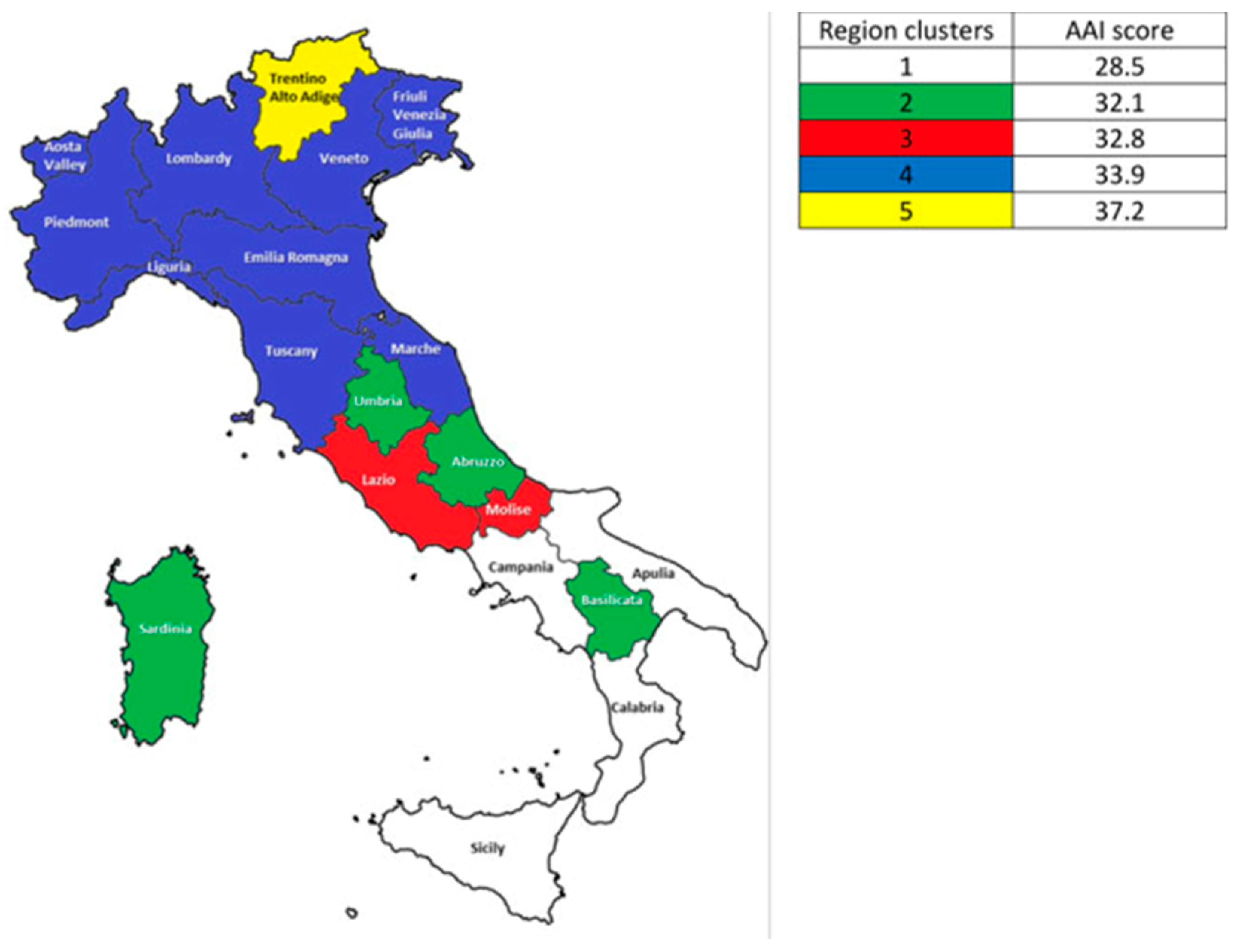
Figure 1), providing a synthetic representation of persistent territorial disparities in active ageing outcomes. This clustering makes visible how advantages and disadvantages are spatially concentrated and underscores the role of institutional capacity and welfare arrangements in shaping regional performance.
Alongside its extensive diffusion, the literature identifies several limitations of the AAI.
Zannella et al. (
2021) note that, despite its multidimensional structure, the index privileges formalised forms of participation while overlooking informal activities such as family care or community involvement. Moreover, the AAI does not incorporate individuals’ subjective preferences, thereby risking the promotion of a normatively oriented vision of activity in later life.
Zannella et al. (
2021) highlight further methodological challenges related to the selection and weighting of indicators, the comparative nature of the index and the difficulties of adapting it to subnational levels without generating distortions. The absence of measures relating to subjective wellbeing, the quality of social relationships, perceived safety or housing conditions further limits the index’s ability to capture the complexity of active ageing. In addition, migration background, citizenship status and ethnocultural diversity are entirely absent from the AAI framework, reinforcing an implicit assumption of homogeneous life-course trajectories and full welfare entitlement.
National statistical indicators constitute a second cluster of tools. ISTAT data, PASSI and PASSI d’Argento surveillance systems and regional socio-health databases are used to describe healthy life expectancy, multimorbidity, functional status, hospitalisation rates, access to territorial services, economic conditions, cultural participation and the quality of urban environments. These indicators are employed primarily in institutional reports and longitudinal analyses (INRCA; ISTAT; Ministry of Health) to monitor the evolution of factors associated with autonomy and prevention. However, they do not always allow for analyses capable of capturing intersectional inequalities related to education, housing conditions, migration background or area of residence, tending instead to address these dimensions separately rather than in their combined effects.
Another set of tools includes indicators developed at the regional or local level, often integrated into territorial planning systems. Several regions in Central and Northern Italy have created matrices for assessing social and health-related frailty, measures of service accessibility and indicators of community participation and volunteering within multi-year planning frameworks (see, among others,
Rospi 2018;
Poscia et al. 2017;
Principi et al. 2023). In other contexts—particularly in Southern Italy—these tools take the form of proxy indicators used to compensate for the limited availability of structured data. Despite methodological heterogeneity, such instruments capture the territorial dimension of active ageing and illustrate how outcomes depend on material infrastructures, the availability of territorial services and local social capital.
Alongside quantitative instruments, a smaller proportion of documents employs qualitative indicators based on interviews, focus groups or participatory assessments (
Ottaviano 2019;
Togni 2022;
Cappellato et al. 2021). These contributions enable the analysis of subjective perceptions of autonomy and wellbeing, perceived barriers to participation, the quality of informal networks and users’ evaluation of services, thus partially compensating for the blind spots of composite indicators.
Despite the plurality of tools available, several dimensions remain underrepresented. Intersectionality is rarely operationalised: few instruments allow for the combined analysis of gender, social class, migration background, family composition and area of residence. Similarly, the quality of participation—its intensity, continuity, agency and recognition—remains poorly measured, as does the contribution of informal networks. The measurement of digital ageing is marginal, despite the growing importance of digital transitions in everyday life. Finally, the weak integration between social and health indicators results in interpretations that privilege biomedical dimensions over relational, environmental and community-based ones.
Overall, the corpus analysed reveals an extensive reliance on composite indicators and official statistical systems, accompanied by contextual metrics and subnational tools. This heterogeneity reflects the complexity of active ageing, but also underscores enduring difficulties in measuring qualitative, participatory and relational dimensions, as well as structural inequalities related to territory, gender, socio-economic position and migration status. It therefore points to the need for measurement frameworks that are more sensitive to the differentiated and intersectional conditions shaping ageing trajectories in Italy.
4.2. Health and Wellbeing
Health constitutes the central axis through which the paradigm of active ageing is defined and operationalised in the Italian context. Among the 27 documents analysed, it is the most recurrent domain and the one that most strongly structures the very meaning of active and healthy ageing. Health is conceptualised both as a prerequisite for activity and as its outcome, generating a circular logic that links autonomy, psycho-physical wellbeing and the capacity to participate in social life. Within this thematic area, three key clusters emerge: the distinction between longevity and healthy longevity; the centrality of prevention across the life-course; and the role of functional autonomy. More recent themes, such as emotional and relational wellbeing, housing and environmental conditions, and territorial and gender inequalities, also appear across the corpus.
A first area of convergence concerns the need to distinguish between increased life expectancy and the quality of the years lived.
Noale et al. (
2012) argue that rising longevity risks becoming an “empty prize” unless accompanied by the maintenance of physical and cognitive functioning. Quantitative studies relying on the Active Ageing Index (AAI) reinforce this perspective:
Quattrociocchi et al. (
2020) highlight how autonomy, the ability to perform daily activities and access to safe services represent “essential dimensions for turning ageing from a burden into a resource,” while
Cevenini et al. (
2014) show that muscle strength, absence of disability and positive health perception are central predictors of active longevity, documenting at the same time “notable differences between Northern, Central and Southern Italy” (p. 964).
Prevention—conceptualised as an investment across the life course—is the second key dimension.
Gagliardi et al. (
2012) emphasise that “the life-course perspective is crucial for understanding health trajectories in old age.”
Mazzola et al. (
2016) similarly stress the importance of “education to prevention since young age” (p. 388), noting that interventions initiated only in later life cannot counterbalance already consolidated health disparities. Alongside these structural considerations, several studies underscore individual behaviours:
Cevenini et al. (
2014) and
Poscia et al. (
2017) highlight lifestyle factors, while
Daniele et al. (
2024) and
Godos et al. (
2023) examine the relationship between the Mediterranean diet, dietary choices and perceived wellbeing.
A third theme concerns functional autonomy, frequently treated as a core indicator of active ageing. Regional analyses of the AAI reveal that independent living—measured through mobility, housing safety, transport availability and the quality of the social environment—is one of the most critical dimensions in the Italian case.
Zannella et al. (
2021) report that “southern regions display lower scores across most AAI domains, with particular weaknesses in independent living.” This gap reflects the uneven territorial distribution of infrastructures and services, a pattern also highlighted in institutional reports (
Lucantoni et al. 2021,
2022), which incorporate housing conditions, access to proximity services and mobility constraints into the health domain, signalling the importance of ageing in place. The literature also points to specific vulnerabilities in rural areas, where limited transport options and weak integration of social and health services significantly hinder the ability to live autonomously.
Economic and gender inequalities appear explicitly in several contributions, although they are not systemically addressed.
Cappellato et al. (
2021) show that “the median equivalent income of older women is 7% lower than that of men” (p. 33), a divide that affects access to services, the ability to rely on private care and housing conditions. The feminisation of longevity thus corresponds to greater exposure to economic fragility, particularly in socioeconomically deprived regions. At the same time, many studies report that older women play a crucial role in intergenerational care provision—a role that can be both a source of wellbeing and a form of unrecognised burden (
Ottaviano 2019;
Quattrociocchi et al. 2020).
Beyond more consolidated approaches, part of the literature broadens the concept of wellbeing by incorporating emotional and relational dimensions.
Ottaviano (
2019) describes “grandmotherhood” as an experience of generativity and affective continuity that enhances feelings of usefulness, belonging and psychological wellbeing—elements that, although not captured by AAI indicators, emerge as meaningful components of perceived wellbeing. Other contributions (
Togni 2022) identify new forms of vulnerability, including the digital health divide: access to digital technologies—and the ability to use them for health or administrative services—has become a new determinant of wellbeing in later life, with the potential to amplify territorial and socioeconomic disparities.
Overall, the Italian literature depicts a complex and layered picture. On the one hand, a biomedical matrix—centred on autonomy, prevention and lifestyle—continues to dominate the representation of active ageing; on the other, emerging perspectives recognise the relevance of social determinants, territorial contexts and cumulative inequalities. Despite varying emphases, the documents analysed converge on the idea that health is not solely an individual condition but the outcome of social, environmental and institutional structures that unequally distribute opportunities to age actively and in good health.
4.3. Social Inclusion and Active Participation
Within the documents analysed, social inclusion and active participation emerge as one of the key pillars through which the active ageing paradigm is articulated in the Italian context. Participation is defined broadly: it does not coincide solely with labour market activity or economic engagement, but encompasses a wide range of social, cultural, educational, civic and community practices that contribute to older people’s quality of life and their role within society. In line with the WHO framework—which emphasises the optimisation of opportunities for health, participation and security—the literature converges in viewing participation as an enabling condition for active ageing, as well as a dimension that supports autonomy, wellbeing and social recognition.
A first recurring area concerns volunteering and civic engagement. Analyses based on the Active Ageing Index (AAI) identify formal participation in volunteering as a structural component of the “social participation” domain, revealing significant territorial disparities: civic engagement levels are higher in Northern regions, while participation is lower in Southern Italy, often linked to weaker associational structures, more fragile social networks and less consolidated public and community infrastructures (
Quattrociocchi et al. 2020;
Zannella et al. 2021). From this perspective, participation appears highly sensitive to contextual conditions, the availability of social infrastructures and the capacity of local networks to sustain processes of active citizenship.
Beyond volunteering, many contributions assign a central role to lifelong learning as a key factor of social inclusion and empowerment. Lifelong learning is described as supporting cognitive functioning, strengthening self-efficacy, expanding interpersonal networks and enabling older adults to act as active citizens (
Togni 2022). At the same time, the literature highlights systematic inequalities in access to educational opportunities: participation is higher among individuals with medium–high educational attainment, residents of urban areas and those living in regions equipped with structured educational provision. The pandemic further exacerbated the digital divide, limiting access to online learning for large segments of the older population (
Paone and Mairhofer 2022).
Participation also includes cultural, recreational and community activities, recognised as positive determinants of autonomy and psychosocial wellbeing. However, involvement in such activities is strongly shaped by logistical and environmental factors: transport availability, population density, the presence of public spaces, proximity to services and the quality of the urban environment. In areas characterised by infrastructural shortages—particularly rural territories and Southern regions—participation tends to be lower, reflecting constraints that are as much material as they are social.
A further dimension of participation concerns involvement in decision-making processes. Although active citizenship is a core objective of European policy frameworks, it is only marginally developed in Italian sources.
Lucantoni et al. (
2021) emphasise the importance of consultative bodies, territorial roundtables and deliberative processes as mechanisms for including older adults in policy design, yet note that such initiatives tend to be fragmented, episodic or concentrated in regions with more integrated governance and strong collaboration with the Third Sector.
The Italian landscape of social inclusion is also interpreted through the lens of the persistently familistic welfare model.
Mazzola et al. (
2016) observe that the family plays a dual role—both as the primary provider of care for older relatives and as the main target of policies. This configuration makes participation highly dependent on family networks, household economic resources and the availability of informal support. Some territorial policies experiment with alternative solutions, such as co-housing, described by
Rospi (
2018) as a model capable of enhancing independence and social participation and thus improving quality of life (p. 21). Yet such experiences remain limited and unevenly distributed.
The literature also shows that participation is not merely an outcome of inclusion but also a determinant of health.
Lucifora and Villar (
2024) demonstrate that the combination of physical, cognitive and social activities accounts for most of the positive association between participation and health status, with particularly significant effects among the oldest age groups. Social inclusion thus emerges as a crucial protective factor for older adults’ overall wellbeing.
Socioeconomic and gender-based barriers are clearly visible in this area as well.
Cappellato et al. (
2021) note that women’s participation is lower, shaped by reduced financial resources, persistent caregiving responsibilities and weaker informal networks. Similarly, individuals with a lower socioeconomic status are less likely to engage in cultural, educational or civic activities.
Ottaviano (
2019) shows that in many contexts, older adults’ participation occurs almost exclusively through family roles, with grandparents described as an emotional and economic resource in times of financial strain, thereby contributing significantly to the reproduction of familistic welfare arrangements.
Overall, the corpus depicts a scenario in which social inclusion and active participation are considered essential dimensions of active ageing but are profoundly conditioned by Italy’s social, economic and territorial landscape. Participation appears multidimensional and highly dependent on infrastructures and social networks, yet marked by structural barriers that reflect persistent inequalities related to gender, territory and socioeconomic position.
4.4. Governance and Public Policies
In the landscape of Italian policies on active ageing, governance emerges as the key mechanism through which principles, strategies and actors are institutionally translated into practice. The literature consistently portrays the institutional system as highly fragmented, characterised by a multilayered architecture in which the national level provides general—often non-binding—guidelines, while the design, implementation and evaluation of policies take place primarily at the regional and local levels. This configuration results in marked heterogeneity in programmatic priorities, administrative capacity, continuity of interventions and the degree of integration across social, health, educational and community policies. As
Barbabella et al. (
2020) observe, the Italian system is characterised by significant regional variability and non-homogeneous approaches to active ageing.
A number of contributions underscore the long-standing absence of an integrated national strategy. Prior to 2019, interventions were largely sectoral: health prevention and functional autonomy, long-term care policies, and isolated social, cultural or educational initiatives with limited coordination. The
Systematic Review of National and Regional Policies conducted by
Barbabella et al. (
2022) confirms this pattern, showing that until the late 2010s Italian policies tended to privilege specific domains—particularly health prevention and long-term care—without developing an intersectoral vision capable of integrating health, participation, lifelong learning and social inclusion. Broader institutional reports (
Barbabella et al. 2020;
Lucantoni et al. 2022) describe this configuration as a “mosaic system,” composed of uncoordinated regional programmes and regulations lacking a unified monitoring framework.
Principi et al. (
2023) further highlight the persistent difficulty in translating the active ageing paradigm into concrete policy practice, pointing to a structural gap between conceptual frameworks and public action.
The regional level thus emerges as the backbone of Italian governance. Some regions—particularly Emilia-Romagna, Tuscany, Veneto, Friuli-Venezia Giulia and the Autonomous Provinces—have progressively adopted comprehensive strategies for active ageing, supported by regional laws, permanent consultative bodies, observatories, multi-year action plans and models of integration across social, health, cultural and educational policies. In these contexts, stable partnerships between local authorities, the Third Sector, universities and community actors are well established. By contrast, many Southern regions exhibit weaker administrative capacity, discontinuous planning and lower levels of social and health integration. As
Barbabella et al. (
2020) emphasise, regional differences concern not only the existence of legislation but, more importantly, the degree of its actual implementation. Studies using the Active Ageing Index confirm these disparities:
Quattrociocchi et al. (
2020) show that significant regional gaps reflect differing institutional capacities, resources and governance models;
Zannella et al. (
2021) illustrate that regions with more structured governance arrangements achieve the highest AAI scores.
A pivotal turning point identified in several documents is the establishment in 2019 of the participatory and multilevel National Coordination on active ageing, promoted by the Department for Family Policies and scientifically led by INRCA. This initiative is presented as the first systematic attempt to develop a shared national vision, integrating the work of Ministries, Regions, Autonomous Provinces and key stakeholders while mapping existing territorial initiatives (
Lucantoni et al. 2022). The
National Recommendations issued in 2021 are interpreted as a significant step toward a mainstreaming ageing approach grounded in stakeholder participation and co-decision tools. The Coordination is framed as a process of policy learning that helped identify good practices and laid the groundwork for a more stable multilevel governance structure.
Recent legislative developments—Law 33/2023 and Legislative Decree 29/2024—represent the first organic attempt to establish a coherent national framework. The new legislation creates the Interministerial Committee for Policies for the Older Population (CIPA), introduces a three-year National Plan for Active Ageing and defines the responsibilities of Regions and local authorities in planning and implementing interventions. As noted by
Barbabella et al. (
2020), the Plan aims to cover the entire policy cycle—from agenda-setting to monitoring—but its effectiveness will depend on the capacity of territories to translate national guidelines into integrated and stable policies aligned with local service systems and resource availability.
A significant strand of the literature emphasises the role of territorial actors and the need to strengthen participatory processes. Contributions drawn from the fields of lifelong learning and the Third Sector (
Togni 2022;
Poscia et al. 2017) highlight the potential of learning communities, multi-stakeholder partnerships and co-design models, while noting that such experiences remain largely episodic and dependent on already consolidated institutional ecosystems.
Finally, many documents identify the historic separation between social and health policies as one of the main obstacles to constructing a comprehensive model of governance for active ageing. Critical issues concern the coordination between primary care, territorial services and local communities; the weakness of social-health integration—particularly in Southern regions; the absence of shared information platforms; and the lack of unified monitoring instruments.
Overall, the Italian landscape can be described as a “variable-geometry welfare system,” in which opportunities for health, participation and autonomy in older age depend heavily on regional arrangements, available resources and the capacity of local actors to develop coordinated, integrated and participatory governance models. While the recent legislative framework offers a significant opportunity, its actual impact remains closely tied to territorial capacities and the robustness of institutional and community networks.
5. Discussion
This scoping review reveals that the paradigm of active and healthy ageing—although internationally framed as universalistic and multidimensional—is translated in the Italian context through institutional and interpretive processes deeply shaped by territorial asymmetries and persistent socio-economic stratification. Across the corpus, the domains of health, participation, measurement tools and governance do not emerge as separate spheres but as convergent manifestations of a highly unequal opportunity structure that decisively shapes what can, in practice, be defined as “active and healthy ageing” in Italy.
These findings are largely consistent with the assessment provided in the report
Ageing Policies—Access to Services in Different Member States published by the
European Parliament (
2021), which explicitly recognises that older people who benefit most from health care, social participation and other key components of active ageing tend to have, on average, higher socio-economic and educational status. Both the European Parliament report and the present analysis stress that achieving more inclusive forms of active ageing requires addressing social inequalities in access to services, resources and opportunities, rather than focusing exclusively on individual behaviours or lifestyles.
A first cross-cutting theme concerns the fragmentation of the territorial welfare system, one of the most recurrent and structurally defining features of the Italian debate. As documented by
Barbabella et al. (
2020,
2022), Italy is characterised by a “mosaic system” in which the absence of a national strategy until 2019 granted wide discretion to Regions and local authorities—resulting in profound differences in administrative capacity, planning tools and the integration of social and health services. Regions in the Centre-North are able to develop dedicated legislation, permanent observatories and multi-year integrated plans, whereas large areas of the South display intermittent policy models, fewer resources and limited capacity to translate strategic guidelines into concrete action. Studies employing the Active Ageing Index corroborate this polarisation: as
Quattrociocchi et al. (
2020) and
Zannella et al. (
2021) argue, regional differences in AAI scores reflect institutional structures, service networks and socio-economic contexts rather than “individual behaviours.” This suggests that, despite its universalistic aspirations, the active ageing paradigm in Italy operates within an asymmetric territorial opportunity structure that determines who can effectively access the conditions required to remain active, autonomous and healthy.
Secondly, the review shows that active ageing often functions, implicitly or explicitly, as a device of inclusion and exclusion, generating new lines of distinction. While institutional and academic documents frequently present it as a democratic and enabling objective, its operational translation tends to reward those who already benefit from favourable economic, cultural and health resources. This dynamic is particularly visible in measurement tools: although multidimensional, the AAI mainly captures formalised participation, physical autonomy and access to ecosystemic services—dimensions unequally distributed across the population. As noted by
Zannella et al. (
2021), the index may “crystallise disparities” rather than reveal them, while
Zannella et al. (
2021) highlight its underlying productivist orientation, implicitly defining who counts as “active.” Informal forms of participation—such as unpaid care work, intergenerational support and everyday community practices—remain largely unrecognised, despite being central to the social and affective economy of ageing in Italy.
In line with this interpretation, the report
Ageing Policies—Access to Services in Different Member States (
European Parliament 2021) explicitly acknowledges the fundamental role played by informal carers and recognises the risks of stress and overburden associated with processes of re-familiarisation of care. While this institutional recognition represents an important convergence with the findings of this scoping review, the Italian documents analysed remain largely silent on the gendered nature of informal care. As our analysis highlights, in Italy informal caregiving is predominantly carried out by women, generating cumulative social and health costs that are only partially addressed within current active ageing policy frameworks.
A third interpretive axis concerns social, economic, territorial and gender differences, which appear unevenly addressed across the corpus—sometimes explicitly discussed, sometimes relegated to secondary variables. Contributions on health policies and social participation highlight persistent socio-economic gradients shaping older people’s opportunities for autonomy and wellbeing (
Cappellato et al. 2021;
Daniele et al. 2024). Gender differences represent one of the most critical blind spots: although some studies explore women’s role in social participation (
Barbaccia et al. 2022), the majority of documents adopt gender-neutral definitions, overlooking the gendered division of care that characterises Mediterranean familistic welfare. The figure of the grandmother as a pillar of intergenerational support—highlighted by
Ottaviano (
2019) and
Caridà (
2019)—illustrates how older women sustain essential but unrecognised forms of participation that may represent both sources of wellbeing and constraints on their capacity to age in place.
In this respect, it is important to note that the report
European Parliament (
2021) explicitly acknowledges the fundamental role played by informal carers and recognises the risks of stress and overburdening associated with the re-familiarisation of care in several Member States. The Italian literature reviewed here converges with this diagnosis, while further emphasising that informal care responsibilities are disproportionately borne by female family members, with significant implications for gender inequalities in later life—a dimension that remains less explicitly articulated in institutional policy frameworks.
Territorial inequalities are also discussed unevenly: urban–rural and North–South differentials are frequently listed but rarely interpreted as long-term outcomes of institutional decisions and uneven distributions of infrastructure, transport, services and community networks. These findings align with life-course evidence, underscoring how disadvantages accumulate over time.
Beyond age, gender and territory, the review also highlights a significant omission shared by both national and European policy frameworks: migration background, citizenship status and ethnocultural diversity remain marginal in dominant representations of active ageing. This silence should be interpreted as a substantive result of the analysis, revealing the boundaries of prevailing policy imaginaries rather than a simple lack of empirical attention.
Furthermore, while international and European documents emphasise inclusion, participation and life-course prevention, Italian policy implementation remains strongly sectoral—concentrated mainly in healthcare and long-term care—with limited integration across urban, housing, educational and community policies. Recent legislative innovations (Law 33/2023; Legislative Decree 29/2024) constitute an important step towards a more coherent framework, yet their impact is conditioned by uneven territorial capacities and still-fragmented governance mechanisms. This generates a structural tension: active ageing is framed as a universal right, but the welfare system distributes its conditions of possibility in highly uneven ways.
Overall, this scoping review shows that in the Italian context active ageing is an ambivalent paradigm: it promises inclusion yet risks producing distinction; it proclaims universalism while operating within unequal social systems; it values participation while privileging forms recognised mainly by specific social groups. The analysis suggests that individualising and activation-oriented logics emerge primarily through uneven national and subnational implementation processes, interacting with familistic welfare arrangements and territorial fragmentation.
In line with the European Parliament’s call for stronger public action, coordination and equity-oriented policies, the Italian case underscores the need to treat social, gender, territorial and migration-related inequalities not as residual issues of implementation, but as constitutive dimensions of how active ageing is defined, measured and governed.
6. Conclusions
This scoping review provides an overview of how the paradigm of active and healthy ageing has been interpreted and operationalised in the Italian context over the past decade. The findings show that, although references to the WHO and the European active ageing agenda are now widely consolidated, the national translation of the paradigm takes shape within a welfare system marked by institutional fragmentation, persistent territorial inequalities and an uneven distribution of social, economic and cultural resources. In line with recent European policy reflections, the Italian case confirms that active ageing outcomes are strongly conditioned by access to services and opportunity structures, rather than being reducible to individual behaviours or choices. The four thematic areas identified—health and wellbeing; social inclusion and participation; indicators and measurement tools; governance and public policies—outline a discursive field in which universalistic aspirations coexist with selective mechanisms that ultimately shape who can effectively “age actively” in Italy.
From an analytical standpoint, three main results emerge. First, health is the most developed and institutionalised dimension of the paradigm, yet it is frequently approached through a biomedical and behavioural lens that emphasises functional autonomy and individual lifestyle choices, while overshadowing the social and environmental determinants of health. Second, social participation—although recognised as a pillar of active ageing—is largely associated with formalised forms of citizenship such as volunteering, lifelong learning and cultural activities, which are more accessible to individuals with greater economic and cultural capital; meanwhile, unpaid care work, performed predominantly by women, remains structurally invisible. Third, the widespread adoption of the Active Ageing Index has contributed to the standardisation of measurement practices but has also reinforced a normative view of activity, often crystallising pre-existing differences between regions and social groups rather than systematically addressing their underlying causes.
At the institutional level, the review shows that Italian governance of active ageing remains a “variable-geometry welfare system,” where the capacity to plan and implement integrated policies varies widely across territories. The initiatives introduced by the National Coordination on Active Ageing and the recent legislative reforms (Law 33/2023; Legislative Decree 29/2024) represent important steps toward establishing a more coherent national framework. Compared with earlier phases, these developments signal a shift from a predominantly experimental and fragmented policy environment towards a more structured and coordinated approach. However, their capacity to produce more equitable outcomes should be considered an open empirical question rather than an automatic consequence of legislative change. Their effectiveness will depend on the ability of regions to translate national directives into stable, integrated practices consistent with territorial services. Persistent asymmetries in administrative capacity, social infrastructure and local welfare systems remain among the primary factors shaping unequal access to opportunities for health, participation and autonomy in later life.
The implications for sociological research highlight the need to investigate more systematically the role of intersectional inequalities—not only gender and territory, but also socio-economic position, migration background, housing conditions and cumulative vulnerabilities—in shaping both the definition and the lived experience of active ageing. The literature examined only partially addresses these dimensions, leaving substantial space for further research on how life-course trajectories produce cumulative advantages and disadvantages that materialise in old age. Recent policy developments make this line of inquiry particularly timely, as they open new opportunities to analyse how national frameworks are differentially implemented across regions and social groups. A second research avenue concerns the development of indicators capable of capturing qualitative dimensions of participation and informal support practices, which are currently excluded from standardised tools. Finally, more participatory and deliberative research approaches are needed, involving older people and local stakeholders in defining priorities and policy needs.
Overall, the findings indicate the need to move beyond a conception of active ageing centred primarily on individual health, personal responsibility and formalised participation, and towards a model that recognises the material and institutional conditions that enable, or constrain, participation. From this perspective, active ageing should be understood as a transversal policy domain, integrated with urban planning, housing, digital inclusion, labour market policies, mobility systems and community welfare. Achieving this requires stronger multilevel governance instruments, stable coordination between the State and Regions, and long-term investment in territorial services, community infrastructure and social networks capable of reducing, rather than reproducing, existing inequalities.
In conclusion, this scoping review suggests that an Italian model of active and healthy ageing can be genuinely inclusive only if it is intersectoral, multilayered and sensitive to difference. The recent institutional reforms provide a necessary but not sufficient condition for such a shift. This entails embedding in policy design not only the goals of health and participation, but also the deep socio-economic, territorial and gender inequalities that shape ageing in Italy, treating them as constitutive dimensions of policy processes rather than as residual implementation challenges.