
Article

A Life-Stage Comparative Study of the Psychosocial Care Burdens and Needs of Middle-Aged and Older Family Carers in Home Care


1
Department of Community and Public Health Nursing, Graduate School of Health Sciences, Hokkaido University, N12-W5 Kita-ku, Sapporo 060-0812, Hokkaido, Japan
2
Department of Community and Public Health Nursing, Faculty of Health Sciences, Hokkaido University, N12-W5 Kita-ku, Sapporo 060-0812, Hokkaido, Japan
*
Authors to whom correspondence should be addressed.
Soc. Sci. 2026, 15(2), 129; https://doi.org/10.3390/socsci15020129
Submission received: 26 December 2025 / Revised: 9 February 2026 / Accepted: 14 February 2026 / Published: 16 February 2026
(This article belongs to the Section Family Studies)

Abstract

Population aging has increased reliance on family carers, whose psychosocial burdens and support needs vary by life stage. This exploratory study aimed to compare psychosocial care burdens and support needs between middle-aged family carers (MFCs) and older family carers (OFCs) providing home-based care in Japan from a life-stage perspective. A cross-sectional survey was conducted among family carers registered with a community general support center in Sapporo, Japan. Data from 153 respondents were analyzed. Psychosocial care burden was assessed across perceived burden, underlying causes, and broader life challenges. Support needs were evaluated based on preferences for 20 types of services and supports. Overall, 60% of MFCs and 53.9% of OFCs experienced care burden. MFCs reported significantly greater burdens related to family relationships (Cramer’s V = 0.168) and work-related concerns (Cramer’s V = 0.235). They also expressed higher needs for Care Leave Accessibility, Flexible Work for Care, and Carer Job Support, with small-to-moderate effect sizes. The findings suggest that psychosocial burdens and support needs among family carers may vary across different age-defined life stages. Middle-aged carers balancing work and family responsibilities face distinct challenges, underscoring the need for targeted policies, workplace support, and life-stage-responsive, role-sensitive support systems in aging societies.

1. Introduction

The number of individuals certified as requiring long-term care or support in Japan has been increasing. As of March 2023, the number of such individuals was approximately 6.94 million, about 2.7 times higher than in 2000 (Ministry of Health, Labour and Welfare 2022a). This rapid increase in care needs reflects a broader global trend. Internationally, family members play a central role in supporting individuals who require long-term care, with more than one in eight people aged 50 years and older (13%) across OECD countries engaged in the provision of informal care (OECD 2025). These figures underscore that family caregiving is not a country-specific phenomenon, but rather a widespread and indispensable component of long-term care systems worldwide.
In Japan, the number of family carers has also grown in tandem with the increase in the number of individuals requiring in-home care. In 2016, the number of people aged 15 years or older who regularly provided care for family members was 6,987,000, an increase of 158,000 compared with 2011 (Statistics Bureau of Japan 2016). Furthermore, the landscape of home caregiving is undergoing changes. Compared with 2000, the number of single-person households that contain a family member requiring long-term care or support and the number of households consisting solely of older adult couples has substantially increased (Ministry of Health, Labour and Welfare 2022b). The structure of caregiving has undergone substantial change as a result of persistently low birth rates, with Japan’s total fertility rate declining from 1.45 in 2015 to 1.20 in 2023 (Ministry of Health, Labour and Welfare 2023a), and accelerated population aging, reflected in an increase in the proportion of adults aged 65 years and older from 26.6% to 29.1% over the same period (Cabinet Office Japan 2024), together with the growing prevalence of nuclear family structures. Whereas multiple family members once shared caregiving responsibilities within the same household, in an increasing number of caregiving cases, only a few carers or even a single carer bear most of the care burden. In the context of the changing caregiving structure, it is presumed that the burden on family carers has been increasing both qualitatively and quantitatively. In response to these circumstances, the Japanese government and local authorities have been promoting the development of community-based integrated care systems, while also strengthening the support structure for carers through carer support ordinances and other measures (Ministry of Health, Labour and Welfare 2023b; Hokkaido Prefecture 2022). However, the current support systems are uniform (The Government of Japan 1997), and there is an issue in that they do not adequately consider the diverse characteristics and life-stage differences among carers.
Family caregiving involves long-term and intensive physical (McCurry et al. 2007), psychological (Abdelhalim et al. 2024), social (Qian et al. 2025; Liang et al. 2024), and economic burdens (Fakeye et al. 2022; Akyol and Nolan 2025). Consistent with these findings, international evidence indicates that family carers experience a substantial level of burden, with the median prevalence of care burden estimated at 49.26% (Soh et al. 2025), suggesting that nearly half of carers worldwide are affected by significant caregiving demands. It has been reported that it can lead to depression (Abdelhalim et al. 2024; De Fazio et al. 2015), a decline in quality of life (Martis et al. 2024; Contreras et al. 2021), and even an increased risk of early death (Schulz and Beach 1999). Moreover, the deterioration in the health and quality of life of family carers is not only problematic in itself but also poses a risk of directly impacting the health and quality of life of the care recipients (Martyr et al. 2018). Therefore, maintaining the health and well-being of family carers is a critical issue within the community-based integrated care system, and it is essential to clarify the reality of care burdens and support needs in order to address this challenge.
Care burden is a key factor that directly affects the physical and mental health of carers, and providing appropriate support to alleviate this burden is a central issue in carer support policies (Lindt et al. 2020). Care burden encompasses multiple dimensions, including physical, psychological, social, and economic burdens (Zarit et al. 1980), and significantly impacts the carer’s stress process (Pearlin et al. 1990). This multidimensional nature of care burden has been further substantiated by recent empirical studies, which demonstrate that carers experience interconnected physical, psychological, emotional, and social burdens across a wide range of caregiving contexts (Ghazawy et al. 2020; Lai et al. 2022). Additionally, it has been suggested that the support needed varies according to the magnitude and nature of the burden (Adelman et al. 2014). Moreover, unresolved issues and unmet needs of care not only decrease their quality of life (Hodgkinson et al. 2007) but also negatively affect the health outcomes of the care recipients (Hodgkinson et al. 2007). Therefore, clarifying “which burdens are most prominent in which groups” and “what types of support are required” is essential to enhance the effectiveness of carer support programs.
In this study, psychosocial care burden is conceptualized with reference to Pearlin’s stress process model (Pearlin et al. 1990) and defined as an integrative construct capturing the psychological and social stress associated with caregiving. Rather than replicating the full structure of the stress process model, the present study focuses on stress-related experiences that are most proximal to carers’ daily lives. Specifically, psychosocial care burden is delineated into three interrelated aspects: (1) subjective burden perceived by the carer, reflecting cognitive and emotional appraisal; (2) caregiving situations and role-related factors that function as stressors; and (3) concerns and anxieties in daily life that reflect stress-related spillover. Previous research has demonstrated that caregiving stress is shaped not only by objective demands but also by carers’ perceptions and by stress spillover into daily life, which in turn affects health and well-being (Zarit et al. 1980; Schulz and Sherwood 2008). The needs in this study refer to the totality of support and resources carers require to alleviate their psychosocial care burden and maintain their quality of life, as outlined in the Family Caregiver Alliance’s caregiver assessment framework (Family Caregiver Alliance 2006). Specifically, the needs are categorized into three domains: (1) needs related to support and services to maintain the carer’s own life and health, (2) needs to enable work and caregiving balance, and (3) needs for activities to deepen social understanding and empathy for carers. This classification reflects the three key pillars emphasized in recent carer support policies and international guidelines, “living support,” “employment support,” and “social recognition,” and is valid for the comprehensive design of carer support (National Association of Counties 2024; Lilly et al. 2007).
However, these needs cannot be assumed to be uniform, as they are fundamentally shaped by carers’ life-stage-specific roles, responsibilities, and social contexts (Denham et al. 2020; Heckel et al. 2015; Utz and Warner 2022; Wang et al. 2022). Middle-aged carers (30–64 years) are more likely to bear a “triple role” of simultaneously managing work, child-rearing, and caregiving, which results in significant stress, role conflict, career interruptions, and economic burden (Longacre et al. 2016; Li et al. 2015; Wolff et al. 2016). On the other hand, older carers (65 years and older) face physical burdens and health concerns primarily due to declining health functions and physical limitations (Navaie-Waliser et al. 2002; Fernández-Carro et al. 2025).
Life stage is commonly operationalized using age-based classifications, as chronological age reflects cumulative social transitions, role expectations, and health trajectories that systematically differentiate caregiving experiences (Erikson 1993; Levinson 1986). Accordingly, age functions as a valid and widely accepted proxy indicator of life stage. Previous studies have demonstrated that age-based comparisons alone can identify meaningful differences in care burden, underscoring the central role of age as a key stratification variable in life-stage-oriented caregiving research (Koumoutzis et al. 2021; Spatuzzi et al. 2020).
Therefore, the novelty of the present study lies not in the age-based comparison per se, but in its specific research context and analytical focus. Firstly, this study examines family carers registered with community general support centers in Japan, a setting that reflects real-world caregiving within a formalized community care system. Secondly, it applies a structured needs framework to elucidate how psychosocial care burdens and support needs vary across age-defined life stages within this context. Accordingly, this exploratory study aims to characterize psychosocial care burdens and support needs among family carers providing home-based care through a stratified analysis of middle-aged family carers (MFCs) and older family carers (OFCs). By explicitly adopting age as a proxy indicator of life stage, the study seeks to identify age-specific patterns in psychosocial care burden and differences in support needs, thereby generating context-specific evidence to inform more responsive, life-stage-sensitive carer support strategies.

2. Materials and Methods

2.1. Study Design

This study used a cross-sectional design with an anonymous, self-administered survey.

2.2. Participants

The study participants were home care providers registered with a community general support center in Sapporo City, Hokkaido, Japan. The current population of Sapporo City is 1,955,678, with 562,745 individuals aged ≥ 65 years, and an aging rate of 28.8% (City of Sapporo 2025). Community general support centers were established by municipal governments to provide comprehensive support for improving public health and social welfare in Japan. Their primary objective is to assist residents in maintaining their health and ensuring a stable livelihood by offering necessary aid and services (Long-Term Care Insurance Act. 2005 (The Government of Japan 1997)). We approached 300 family carers who were registered at a community general support center through both oral and written invitations to participate in this study. Of these, 157 (52.3%) responded to the anonymous self-administered questionnaire survey. After excluding individuals who did not provide age data, data for 153 participants were analyzed (51.0%). The data were collected between November 2024 and January 2025.

2.3. Measurements

2.3.1. Demographic Characteristics of Family Carers

The following demographic characteristics of family carers were measured: age (<29 years, 30–64 years, 65–74 years, 75–84 years, ≥85 years), sex (male, female), living status (living alone, living with a spouse, living with children, living with grandchildren, living with relatives, living with parents’ household, other; multiple responses allowed), relationship to care recipient (spouse, child, grandchild, parent, grandparent, sibling, relative, other), duration of caregiving (<1 year, 1–4 years, 5–9 years, ≥10 years), frequency of caregiving (daily, 4–6 days per week, 2–3 days per week, once a week, 2–3 days per month, other), and caregiving collaborators (spouse, child, grandchild, parent, grandparent, sibling, relative, neighbor or acquaintance, healthcare professional, caregiving service provider, no one, other). In this study, “family” was defined as two or more individuals who mutually rely on each other for emotional, physical, and economic support (Hanson and Boyd 2001). Therefore, participants identifying as neighbors or acquaintances were included if they served a primary caregiving role. Carers aged 30–64 years were categorized as MFCs, whereas those aged ≥ 65 years were categorized as OFCs.

2.3.2. Demographic Characteristics of Care Recipients

The following demographic characteristics of care recipients were measured: age (<40 years, 40–64 years, 65–74 years, 75–84 years, ≥85 years), sex (male, female), reasons for needing care (general frailty, dementia, physical disability, intellectual disability, addiction, mental illness, severe physical and intellectual disabilities, medical care needs, intractable diseases, social withdrawal, other), and care level (support level 1, support level 2, care level 1, care level 2, care level 3, care level 4, care level 5, not applied, application in process, unknown). These different levels of care were determined during the certification process of Japan’s public long-term care insurance system. Care levels 3–5 correspond to higher care needs, whereas support levels 1–2 and care levels 1–2 indicate comparatively lower levels of care need.

2.3.3. Psychosocial Care Burdens of Family Carers

Psychosocial care burden in this study was conceptualized with reference to Pearlin’s stress process model (Pearlin et al. 1990) and operationalized using a three-part structure. Subjective burden constituted the primary outcome of interest and captured carers’ perceived psychological and emotional strain associated with caregiving. Items classified as “Causes of care burden” were treated as antecedents of psychosocial care burden, reflecting caregiving situations and role-related factors that function as primary and secondary stressors within the stress process. These antecedents encompassed caregiving demands and role strain that precede and contribute to the development of subjective burden. In contrast, items related to concerns and anxieties in daily life were treated as correlates of psychosocial care burden, capturing stress-related difficulties that co-occur with, but are analytically distinct from, subjective burden.
Accordingly, three aspects of the psychosocial care burdens of family carers were assessed: perceived care burden, its underlying causes, and carers’ broader life challenges and concerns. To measure perceived care burden, participants were asked, “To what extent do you feel burdened by caregiving?” There were five response options: extremely burdensome, somewhat burdensome, not very burdensome, not burdensome at all, or other. To measure the causes of care burden, participants were asked, “What are the main causes of your care burden?” Participants were allowed to select multiple responses from the following options: mental stress, physical strain, financial burden, anxiety about the future, family relationships, do not feel burdened, or other. To evaluate carers’ life challenges and concerns, participants were asked, “Do you have any concerns or challenges in your daily life?” Participants were allowed to select multiple responses from the following options: personal physical and mental health, outlook for the future, financial problems, work-related issues, difficulty maintaining life balance, lack of personal free time, relationship with the care recipient, insufficient quality or quantity of care services, family relationships, relationships with neighbors, workplace relationships, or other. These items were refined through consultations with public health researchers and professionals in geriatric care, including one expert in public health nursing, one public health nurse, and two social workers. The consultations focused on establishing the content validity of the items and improving the clarity and appropriateness of their wording, thereby ensuring their relevance to family carers’ lived experiences. In addition, relevant items and response categories were reviewed by referring to the Comprehensive Survey of Living Conditions conducted by the Japanese Ministry of Health, Labour and Welfare (Ministry of Health, Labour and Welfare 2022a, 2022b), to ensure that they aligned with nationally recognized indicators. A pilot test was conducted with a small group of experts to ensure that the items were clear and relevant, and minor revisions to the wording were made accordingly.

2.3.4. Needs of Family Carers

Assessment of the needs of family carers focused on their preferences for various forms of support and services. In relation to their desired support and services, participants were asked to indicate their level of need for 20 different types of support and services. Needs were classified into three categories: 11 items related to services and support for carers, 7 items on the balance between work and caregiving, and 2 items related to activities aimed at promoting understanding of carers. Detailed descriptions of each variable are provided in the Supplementary Material (Table S1). Response options were provided on a two-point Likert scale: desired or not desired.

2.4. Ethical Considerations

This research was conducted in accordance with the 1964 Declaration of Helsinki (and its amendments), and the ethical guidelines for life sciences and medical research involving human subjects presented by the Ministry of Health, Labour and Welfare of Japan. The study protocol was approved by the Institutional Review Board of Hokkaido University (approval No. 24–71, 2 October 2024). All subjects provided written informed consent and voluntarily participated in this study after receiving a written explanation of its purpose and methods, as well as of ethical and all other aspects relevant to their decision to participate.

2.5. Statistical Analysis

Descriptive statistics were used to summarize the demographic characteristics of carers and care recipients, and the distribution of psychosocial care burdens and care needs. Differences between MFCs and OFCs in demographic characteristics of carers and care recipients, psychosocial care burdens, underlying causes, and life challenges were analyzed using chi-square tests. Similarly, differences in care needs and preferences for support services were assessed using chi-square tests to determine statistically significant differences between MFCs and OFCs. In addition to statistical significance, the magnitude of the association was evaluated by calculating Cramer’s V as an effect size. Cramer’s V values of 0.100, 0.300, and 0.500 were interpreted as small, moderate, and large effect sizes, respectively (Cohen 1988). To ensure robustness, missing data were handled using listwise deletion. All statistical analyses were performed using IBM SPSS Statistics (version 26.0; SPSS Inc., Chicago, IL, USA), with a significance threshold set at p < 0.05. Results are reported as frequencies and percentages to facilitate comparison across carer age groups.

3. Results

3.1. Demographic Characteristics of Family Carers

Table 1 shows the demographic characteristics of family carers. A total of 82.2% of MFCs and 82.5% of OFCs were women, and 35.6% of MFCs and 57.1% of OFCs lived with a spouse. Regarding the relationship with the care recipient, most respondents in the MFC group provided care for their parents (91.1%), whereas most respondents in the OFC group cared for their spouse (60.3%). In terms of caregiving duration, 46.7% of MFCs and 57.1% of OFCs had been providing care for 1 to 4 years. Regarding caregiving frequency, 51.1% of MFCs and 71.4% of OFCs reported providing daily care. Regarding caregiving collaborators, MFCs most commonly reported receiving help from siblings (38.9%), whereas OFCs most commonly reported having no caregiving help (28.6%). The chi-square test identified significant differences between MFCs and OFCs in living status (p = 0.035, Cramer’s V = 0.308), relationship to the care recipient (p < 0.001, Cramer’s V = 0.712), caregiving frequency (p = 0.047, Cramer’s V = 0.273), and caregiving collaborators: siblings (p = 0.001, Cramer’s V = 0.277), no one (p = 0.021, Cramer’s V = 0.188), and children (p = 0.013, Cramer’s V = 0.203).

3.2. Demographic Characteristics of Care Recipients

Table 2 shows the demographic characteristics of care recipients. Among them, 72.2% of MFCs and 49.2% of OFCs were aged ≥ 85 years, and 71.1% of MFCs and 44.4% of OFCs were women. General frailty was cited as the primary reason for requiring care by 85.6% of MFCs and 68.3% of OFCs. Additionally, 35.6% of MFCs and 42.9% of OFCs reported their care level as support level 1. The chi-square test showed significant differences between MFCs and OFCs in age (p = 0.008, Cramer’s V = 0.281), sex (p < 0.001, Cramer’s V = 0.293), and reasons for needing care: general frailty (p = 0.016, Cramer’s V = 0.195) and physical disability (p = 0.002, Cramer’s V = 0.246).

3.3. The Psychosocial Care Burdens of Family Carers

Table 3 shows the psychosocial care burdens of family carers. A total of 60% of MFCs and 53.9% of OFCs experienced care burdens. Importantly, the chi-square test showed two significant differences between MFCs and OFC: family relationships as a cause of care burden (13.3% vs. 3.2%, p = 0.039, Cramer’s V = 0.168), which reflected a small effect size, and work as a life challenge and concern (20.0% vs. 4.8%, p = 0.006, Cramer’s V = 0.235), which indicated a small-to-moderate effect size.

3.4. The Needs of Family Carers

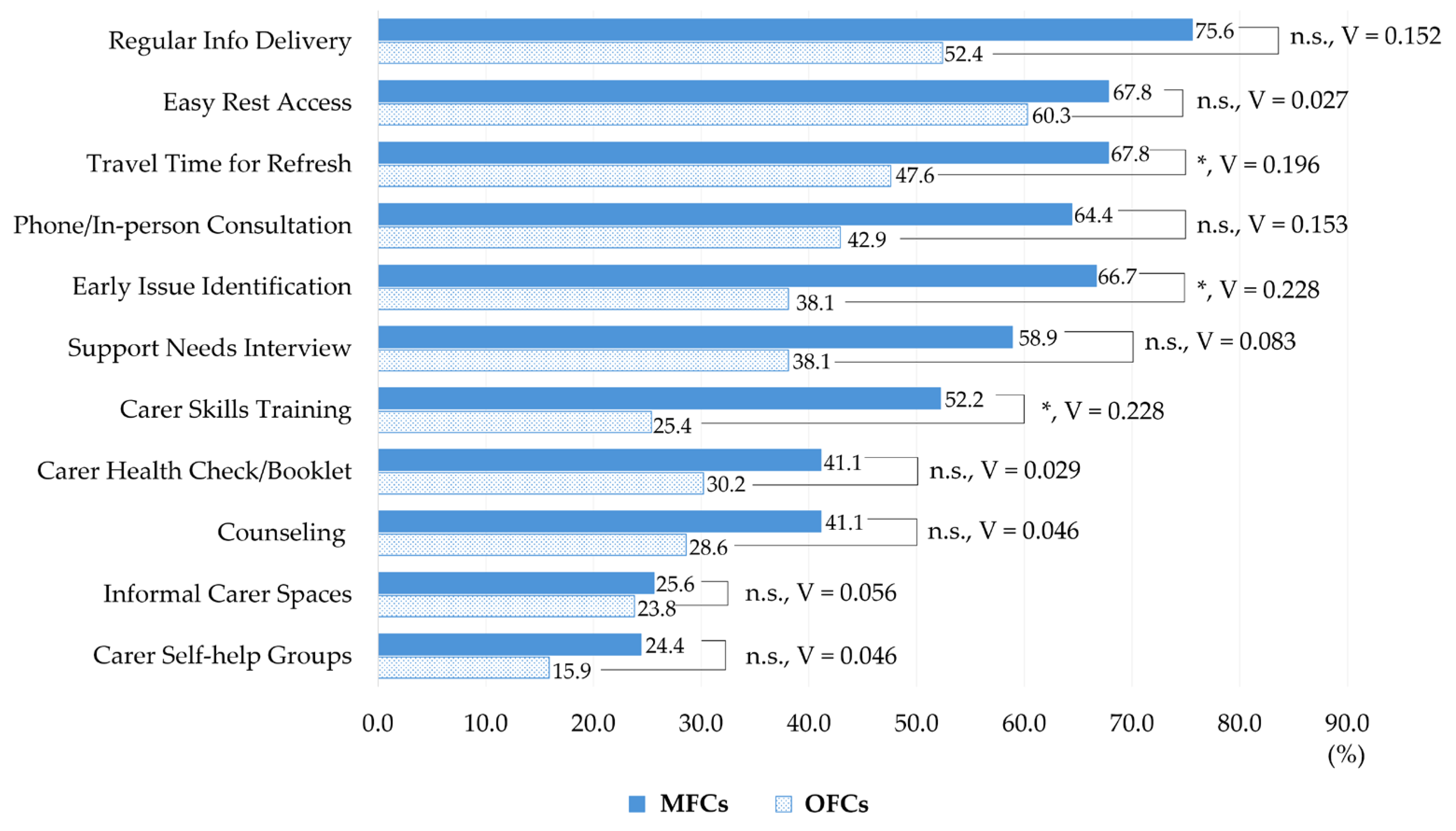
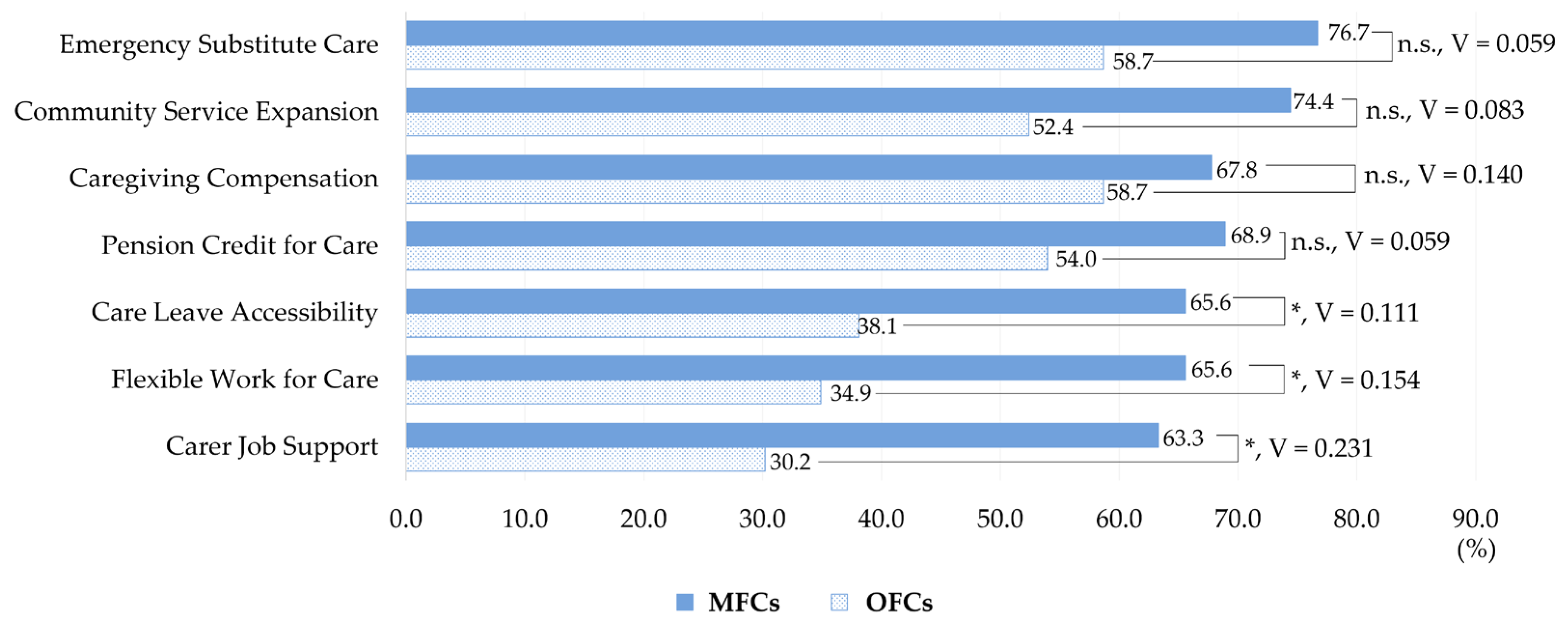
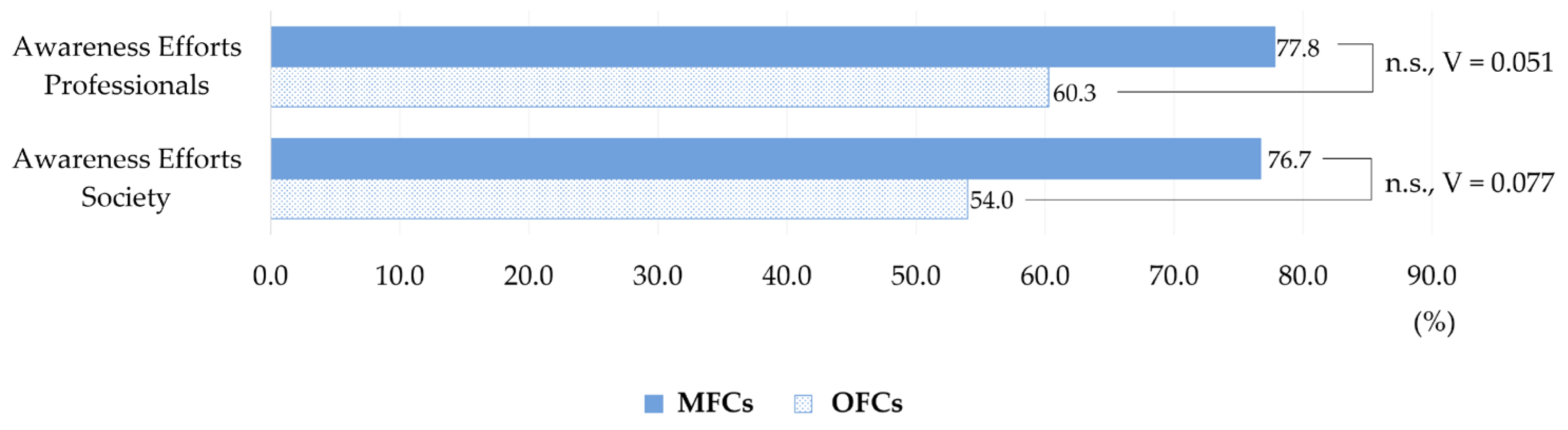
Figure 1, Figure 2 and Figure 3 show the needs of family carers. A significantly higher proportion of MFC respondents (67.8%) than OFC respondents (47.6%) reported a need for Travel Time for Refresh, indicating a statistically significant difference with a small effect size (Cramer’s V = 0.196). Regarding service-related needs, significant differences were observed in responses to Early Issue Identification (Cramer’s V = 0.228) and Carer Skills Training (Cramer’s V = 0.228), both reflecting small-to-moderate associations between carer group and reported needs. MFCs expressed significantly higher levels of care-related needs in the areas of Care Leave Accessibility (Cramer’s V = 0.111), Flexible Work for Care (Cramer’s V = 0.154), and Carer Job Support (Cramer’s V = 0.231), compared with OFCs (p < 0.05) (Figure 2). While the effect sizes for Care Leave Accessibility and Flexible Work for Care were small, the effect size for Carer Job Support reached a small-to-moderate level, suggesting meaningful differences between groups. In contrast, no significant differences were found between MFCs and OFCs concerning needs related to activities that promote understanding of carers (Figure 3).

4. Discussion

4.1. Novelty and Strength of This Exploratory Study

The novelty and strength of this exploratory study are demonstrated by its age-stratified analysis of MFCs and OFCs within a real-world community care setting. By examining psychosocial care burdens and support needs across these age-defined groups, the study offers a generational perspective that elucidates variation in carers’ experiences and needs, thereby reinforcing the importance of tailoring carer support strategies to different life stages.
An additional strength of the study lies in its empirical foundation. The survey of 300 home-based carers registered with community general support centers yields robust, practice-grounded data that capture caregiving experiences within an established community care system. By identifying age-related differences between MFCs and OFCs using real-world data and a structured needs framework, the study provides actionable insights and practical implications for enhancing the effectiveness and responsiveness of carer support policies and programs.

4.2. The Psychosocial Care Burdens of Family Carers

In this study, although no statistically significant association was found between care burden and MFC or OFC grouping, it is noteworthy that 60.0% of MFCs and 53.9% of OFCs reported experiencing a care burden. A previous study on carers of patients with colorectal or lung cancer found that adult child carers experienced significantly higher levels of social and emotional burden than spousal carers (p < 0.01) (Fenton et al. 2022). Moreover, despite spending less time on caregiving tasks, adult child carers report a greater perceived burden than spousal carers (Kunicki et al. 2021). Similarly, in the present study, although the association was not statistically significant, a higher proportion of MFCs, most of whom were adult child carers, reported experiencing care burden. This may be related to the nature of the carer–care recipient relationship. Spousal carers often view caregiving as a natural extension of their marital commitment, whereas adult child carers tend to see caregiving as an extra obligation for which they are often less prepared (Lee and Smith 2012). These differing perspectives on caregiving roles may cause adult child carers to perceive their caregiving experience as more burdensome than that of spousal carers. In addition, adult child carers frequently face the challenge of balancing multiple responsibilities, such as employment and childcare, whereas spousal carers typically encounter fewer competing demands (Lee and Smith 2012; Chappell et al. 2014). Therefore, it is plausible that MFC respondents, who were mainly adult child carers, experienced greater caregiving burden than OFC respondents, which may be associated with the need to simultaneously manage multiple roles.
A significantly higher proportion of MFC respondents (13.3%) compared with OFC respondents (3.2%) identified family relationships as a source of psychosocial care burden. This suggests that the nature of the relationship with the care recipient may affect how the burden is perceived. In the MFC group, 91.1% of respondents reported caring for a parent. Providing care for one’s own parent typically involves a close familial bond that is often shaped by shared living arrangements or long-standing emotional ties. Such circumstances can give rise to a new, or substantially altered, form of dependency between the carer and the care recipient. Several studies have reported that family carers may experience confusion and emotional conflict when confronted with the severe decline of a close relative (Albert 1990; Ungerson 1987). These findings suggest that the role reversal inherent in caring for a parent may substantially contribute to the psychosocial care burden. Furthermore, in this study, the concept of “family relationships” encompassed not only the carer–care recipient dynamic but also interactions with other family members. Among MFCs, siblings were the most frequently cited caregiving collaborators (38.9%), suggesting that they are key sources of support. Previous research has emphasized the value of siblings in caregiving roles; because of their shared memories of the parent’s earlier and current states, they can offer both emotional and practical support (Kamiyama et al. 2016). However, many studies have also found that primary carers often feel dissatisfied with the unequal distribution of caregiving duties among siblings, with such imbalances sometimes becoming a source of interpersonal tension (Strawbridge and Wallhagen 1991; Suitor and Pillemer 1993; Ingersoll-Dayton et al. 2003). In addition, for MFCs, challenges in balancing caregiving with employment are often exacerbated by a perceived lack of understanding or support from other family members or relatives (Ochi et al. 2011). Collectively, these findings suggest that MFCs may experience more relational conflict, both with the care recipient and within the wider family network, compared with OFCs.
A significantly higher proportion of MFC respondents (20.0%) compared with OFC respondents (4.8%) identified work as a life challenge and concern. In Japan, this disparity may be because MFCs, who are aged between 30 and 64 years, constitute the core of the working population that sustains both the economy and social security systems. Previous research has demonstrated that the dual demands of employment and caregiving can result in psychological stress (Calvano 2015; Duxbury et al. 2011) and increased care burden (Kaur et al. 2021), which have a negative effect on carers’ mental health. When these responsibilities become difficult to reconcile, family carers may take temporary leave, opt for early retirement, or modify their working arrangements; for example, by switching from full-time to part-time employment, taking on less demanding roles, or postponing career advancement opportunities (Van Houtven et al. 2013). This indicates that caregiving responsibilities can considerably disrupt employment patterns. Indeed, the number of individuals leaving the workforce owing to caregiving responsibilities in Japan reached approximately 90,000 in 2017, almost twice as many as in 2007 (Ministry of Health, Labour and Welfare 2017). In light of Japan’s aging population and the growing prevalence of nuclear family structures, household sizes are expected to continue shrinking, placing an even greater burden on individual carers. Consequently, strengthening support systems for MFCs, who are often required to balance multiple roles across work, caregiving, and daily life, remains an urgent policy priority.

4.3. The Needs of Family Carers

A significantly higher proportion of respondents in the MFC (67.8%) than in the OFC (47.6%) group reported a need for “Travel Time for Refresh”. It has been shown that spousal carers and adult child carers have differing perceptions about the need for personal time (Tatangelo et al. 2018). Rather than a need for time away from the caregiving role, adult child carers identified a general lack of time overall. As most MFC are adult child carers, it is likely that competing responsibilities—such as employment, caregiving, and household duties—hinder their ability to secure time for themselves. A lack of such personal time has been shown to negatively affect carers’ well-being, increase stress levels, and reduce caregiving ability (Ducharme et al. 2014; Macleod et al. 2017; Meyer et al. 2016; Rayment et al. 2019). Therefore, ensuring access to respite opportunities, such as time for restorative travel, is essential for alleviating carer burden and promoting sustainable caregiving.
Regarding carers’ service-related needs, significant differences were observed in the responses to “Early Issue Identification” and “Carer Skills Training.” A study examining the caregiving needs of family members supporting older adults with early-stage dementia found that mean scores on “I want to know how to deal with repetitive behaviors” on the “Care methods and deterioration prevention” subscale of the Care Needs Scale were significantly higher in younger carers (<65 years) than in older carers (≥65 years) (Kimura et al. 2024). Furthermore, previous research indicates that the needs of spousal carers differ from those of adult child carers. Whereas spousal carers generally require more emotional support, adult child carers are more likely to need extra help coordinating professional services and managing dementia-related care (Peeters et al. 2010). Therefore, MFCs may be more proactive in addressing the care recipient’s condition and more motivated to maintain a balance between caregiving, work, and household responsibilities.
Regarding the need to balance work and caregiving, MFCs expressed significantly higher levels of care-related needs in the areas of Care Leave Accessibility, Flexible Work for Care, and Carer Job Support, compared with OFCs. This difference may be affected by differences between the groups in financial need levels. Many MFCs are still in their prime working years and often have substantial financial responsibilities, such as living expenses, child-rearing costs, and housing loans. Even if they are forced to leave their jobs because of caregiving duties, they must maintain a stable income. In contrast, many OFCs receive public pensions or retirement benefits, which allow them to maintain a basic standard of living without the need for paid employment. Therefore, MFCs are more likely to express a greater need for re-employment support, which may be associated with the greater financial pressures they commonly face. A survey of family carer attitudes showed that more than half (56.3%) of those who left their jobs to take up caregiving roles but then wished to return to work and actively sought re-employment were unable to find new work (Administrative Evaluation Bureau 2025). This highlights the fact that although MFCs are generally of working age, they still face considerable challenges in securing re-employment. As a result, their demand for employment support is likely to be especially high.
No significant differences were found between OFCs and MFCs in needs related to activities aimed at promoting understanding of carers. However, in the MFC group, 77.8% of respondents expressed a desire for activities that “provide initiatives for professionals and administrative agencies to better understand the role and needs of carers,” while 76.7% indicated the need for activities that “promote wider societal understanding and recognition of carers in communities, workplaces, and public settings.” Previous qualitative research has highlighted carers’ need to receive understanding and recognition, indicating their desire for their roles to be understood and for caregiving situations to be recognized in the workplace (Neller et al. 2024). The findings of the present study align with those of previous research. To create a better caregiving environment, relevant stakeholders and community members need to deepen their understanding of carer support and raise societal awareness. Furthermore, previous studies have shown that carers who have more unmet needs experience greater burden and symptoms of depression (Black et al. 2013; Ryan et al. 2010). Therefore, it is essential to develop programs and care systems that specifically address the needs of carers.

4.4. Limitations

This study has three limitations. Firstly, the research was conducted in Hokkaido with a relatively small sample size, which significantly limits the generalizability of the findings to a broader population. Given the limited sample size, the results may not accurately reflect the diversity of caregiving experiences across different regions or populations. The second limitation is that this study did not analyze the characteristics of carers or care recipients, such as age or gender, in detail, as the primary focus was on life-stage differences between MFCs and OFCs. In both groups, the majority of participants were women, which warrants caution when generalizing the findings to men who provide care. Previous research indicates that caregiving roles and perceived burden vary by gender, with women generally reporting higher levels of subjective burden and emotional distress (Yee and Schulz 2000; Pinquart and Sörensen 2006). These gender differences are shaped, in part, by culturally embedded norms and expectations surrounding caregiving responsibilities and individuals’ capacity for choice (Sharma et al. 2016). However, given the limited sample size, a robust gender-based analysis was not feasible in the present study. Future research with larger and more diverse samples should explicitly examine gender differences and their interaction with life stage and cultural context to inform the development of more nuanced and responsive support strategies for family carers. Thirdly, although this study employed age-based groupings to represent differences in life stage, other core dimensions of life stage—such as employment status, parenting responsibilities, and financial obligations—were not directly assessed. Life stage is a multidimensional construct that extends beyond chronological age to encompass social roles and responsibilities; therefore, the present findings should be interpreted with appropriate caution. Future research should incorporate a broader range of role-related variables to more comprehensively capture life-stage differences in caregiving experiences and support needs.

5. Conclusions

This study highlighted the multifaceted challenges faced by MFCs in comparison with OFCs. Although psychosocial care burden was prevalent in both groups, MFCs reported a significantly greater burden associated with strained family relationships and work-related concerns. These findings suggest that age-defined life stage is associated with meaningful differences in psychosocial care burden, particularly among carers of working age. Furthermore, the significantly higher levels of care-related needs reported by MFCs—including access to care leave, flexible work arrangements, and employment support—underscore the importance of developing comprehensive and tailored support mechanisms that reflect the lived experiences of working-age carers. Although social roles such as employment and multiple responsibilities were not directly measured in this study, the observed pattern of needs is consistent with the interpretation that age-defined life stage captures relevant differences in caregiving contexts and associated support requirements. Rather than implying that these differences are driven by social roles alone, the findings highlight the limitations of one-size-fits-all support models and point to the value of incorporating life-stage-specific considerations into the design of carer support systems. Taken together, these results underscore the need for support structures that are responsive to the diverse circumstances of carers within aging societies. The development of tailored programs and care systems that address the specific challenges faced by different carer groups therefore remains an urgent priority, with the potential to reduce caregiving burden and promote more sustainable and equitable caregiving practices.

Supplementary Materials

The following supporting information can be downloaded at: https://www.mdpi.com/article/10.3390/socsci15020129/s1, Table S1: Description of variables associated with the needs of family carers.

Author Contributions

Conceptualization, N.O. and E.T.; methodology, N.O.; software, N.O.; validation, N.O., Y.I., Y.T., A.Y. and E.T.; formal analysis, N.O.; investigation, N.O. and E.T.; resources, E.T.; data curation, N.O., Y.I., Y.T., A.Y. and E.T.; writing—original draft preparation, N.O.; writing—review and editing, N.O., Y.I., Y.T., A.Y. and E.T.; visualization, N.O.; supervision, E.T.; project administration, E.T.; funding acquisition, E.T. All authors have read and agreed to the published version of the manuscript.

Funding

This research was funded by the Japan Society for the Promotion of Science (JSPS) KAKENHI, grant number 23H03219 (PI: Etsuko TADAKA).

Institutional Review Board Statement

This research was conducted in accordance with the 1964 Declaration of Helsinki (and its amendments), and the ethical guidelines for life sciences and medical research involving human subjects presented by the Ministry of Health, Labour and Welfare of Japan. The study protocol was approved by the Institutional Review Board of Hokkaido University (approval No. 24–71, 2 October 2024).

Informed Consent Statement

All subjects provided written informed consent and voluntarily participated in this study after receiving a written explanation of its purpose and methods, as well as of ethical and all other aspects relevant to their decision to participate.

Data Availability Statement

The datasets used and/or analyzed during the current study are available from the corresponding authors on reasonable request.

Acknowledgments

We thank all the carers and the community general support center who graciously gave their time and energy to participate in this study.

Conflicts of Interest

The authors declare no conflicts of interest.

Abbreviations

The following abbreviations are used in this manuscript:
MFCsMiddle-aged family carers
OFCsOlder family carers

References

  1. Abdelhalim, Doaa S., Marwa M. Ahmed, Hoda A. Hussein, Ola O. Khalaf, and Mai D. Sarhan. 2024. Burden of Care, Depression, and Anxiety Among Family Caregivers of People With Dementia. Journal of Primary Care & Community Health 15: 21501319241288029. [Google Scholar] [CrossRef] [PubMed]
  2. Adelman, Ronald D., Lyubov L. Tmanova, Diana Delgado, Sarah Dion, and Mark S. Lachs. 2014. Caregiver Burden: A Clinical Review. JAMA 311: 1052. [Google Scholar] [CrossRef] [PubMed]
  3. Administrative Evaluation Bureau. 2025. Administrative Evaluation and Monitoring of Care Policies: Focusing on Measures to Alleviate the Burden on Family Caregivers of Elderly Individuals. Available online: https://www.soumu.go.jp/main_content/000557687.pdf (accessed on 4 April 2025).
  4. Akyol, Pelin, and Matt Nolan. 2025. Effects of informal caring on labour market outcomes of carers: Evidence from HILDA. Journal of Health Economics 103: 103028. [Google Scholar] [CrossRef] [PubMed]
  5. Albert, Steven M. 1990. The dependent elderly, home health care, and strategies of household adaptation. In The Home Care Experience: Ethnography and Policy. Edited by Jaber F. Gubrium and Andrea Sankar. Chatswood: Sage, pp. 19–36. [Google Scholar]
  6. Black, Betty S., Deirdre Johnston, Peter V. Rabins, Ann Morrison, Constantine Lyketsos, and Quincy M. Samus. 2013. Unmet Needs of Community-Residing Persons with Dementia and Their Informal Caregivers: Findings from the Maximizing Independence at Home Study. Journal of the American Geriatrics Society 61: 2087–95. [Google Scholar] [CrossRef]
  7. Cabinet Office Japan. 2024. Annual Report on the Ageing Society. Available online: https://www8.cao.go.jp/kourei/whitepaper/w-2024/html/gaiyou/s1_1.html (accessed on 29 July 2025).
  8. Calvano, Lisa. 2015. Eldercare: The new frontier of work-family balance. The Psychologist 28: 202–5. [Google Scholar]
  9. Chappell, Neena L., Carren Dujela, and André Smith. 2014. Spouse and Adult Child Differences in Caregiving Burden. Canadian Journal on Aging/La Revue Canadienne du Vieillissement 33: 462–72. [Google Scholar] [CrossRef]
  10. City of Sapporo. 2025. Basic Resident Register. Available online: https://www.city.sapporo.jp/toukei/jinko/juuki/documents/kusosu202501.pdf (accessed on 31 March 2025).
  11. Cohen, Jacob. 1988. Statistical Power Analysis for the Behavioral Sciences, 2nd ed. Mahwah: Lawrence Erlbaum Associates. [Google Scholar]
  12. Contreras, Milena L., Eneida Mioshi, and Naoko Kishita. 2021. Factors Related to the Quality of Life in Family Carers of People with Dementia: A Meta-Analysis. Journal of Geriatric Psychiatry and Neurology 34: 482–500. [Google Scholar] [CrossRef]
  13. De Fazio, Pasquale, Paola Ciambrone, Gregorio Cerminara, Elvira Barbuto, Antonella Bruni, Patrizia Gentile, Amalia Talarico, Roberto Lacava, Pietro Gareri, and Cristina Segura-Garcìa. 2015. Depressive symptoms in caregivers of patients with dementia: Demographic variables and burden. In Clinical Interventions in Aging. Abingdon: Taylor & Francis, pp. 1085–90. [Google Scholar] [CrossRef]
  14. Denham, Alexandra M. J., Olivia Wynne, Amanda L. Baker, Neil J. Spratt, Alyna Turner, Parker Magin, Kerrin Palazzi, and Billie Bonevski. 2020. An online survey of informal caregivers’ unmet needs and associated factors. PLoS ONE 15: E0243502. [Google Scholar] [CrossRef]
  15. Ducharme, Francine, Marie-Jeanne Kergoat, Renée Coulombe, Louise Lévesque, Pascal Antoine, and Florence Pasquier. 2014. Unmet support needs of early-onset dementia family caregivers: A mixed-design study. BMC Nursing 13: 49. [Google Scholar] [CrossRef]
  16. Duxbury, Linda, Christopher Higgins, and Rob Smart. 2011. Elder care and the impact of caregiver strain on the health of employed caregivers. WORK: A Journal of Prevention, Assessment & Rehabilitation 40: 29–40. [Google Scholar] [CrossRef]
  17. Erikson, Erik H. 1993. Childhood and Society. New York: W. W. Norton & Co. [Google Scholar]
  18. Fakeye, Maningbè B. Keita, Laura J. Samuel, and Jennifer L. Wolff. 2022. Financial contributions and experiences of non-spousal, employed family caregivers. Journal of Applied Gerontology 41: 2459–68. [Google Scholar] [CrossRef]
  19. Family Caregiver Alliance. 2006. Caregiver Assessment: Principles, Guidelines and Strategies for Change. In Report from a National Consensus Development Conference. San Francisco: National Center on Caregiving, Family Caregiver Alliance, vol. 1. [Google Scholar]
  20. Fenton, Anny T. H. R., Nancy L. Keating, Katherine A. Ornstein, Erin E. Kent, Kristin Litzelman, Julia H. Rowland, and Alexi A. Wright. 2022. Comparing adult-child and spousal caregiver burden and potential contributors. Cancer 128: 2015–24. [Google Scholar] [CrossRef] [PubMed]
  21. Fernández-Carro, Celia, Aina Faus-Bertomeu, Carmen Rodríguez-Blazquez, Maria J. Forjaz, Amaya Bernal-Alonso, and Alba Ayala. 2025. The Impact of Caregiving on Older Caregivers’ Health: A Scoping Review. Ageing International 50: 34. [Google Scholar] [CrossRef]
  22. Ghazawy, Eman R., Eman S. Mohammed, Eman M. Mahfouz, and Marwa G. Abdelrehim. 2020. Determinants of caregiver burden of persons with disabilities in a rural district in Egypt. BMC Public Health 20: 1156. [Google Scholar] [CrossRef]
  23. Hanson, Shirley M. H., and Sheryl T. Boyd. 2001. Family Health Care Nursing: Theory, Practice, and Research. Translated by Keiko Murata, Noriko Tsuda, and Yasuko Arakawa. Tokyo: Igaku-Shoin. (In Japanese) [Google Scholar]
  24. Heckel, Leila, Kate M. Fennell, John Reynolds, Richard H. Osborne, Jacquie Chirgwin, Mari Botti, David M. Ashley, and Patricia M. Livingston. 2015. Unmet needs and depression among carers of people newly diagnosed with cancer. European Journal of Cancer 51: 2049–57. [Google Scholar] [CrossRef] [PubMed]
  25. Hodgkinson, Katharine, Phyllis Butow, Glenn E. Hunt, Rebecca Wyse, Kim M. Hobbs, and Gerard Wain. 2007. Life after cancer: Couples’ and partners’ psychological adjustment and supportive care needs. Supportive Care in Cancer 15: 405–15. [Google Scholar] [CrossRef]
  26. Hokkaido Prefecture. 2022. Hokkaido Carer Support Ordinance [Reiwa 4 Hokkaido Ordinance No. 2]. Available online: https://www.pref.hokkaido.lg.jp/hf/khf/103401.html (accessed on 25 July 2025).
  27. Ingersoll-Dayton, Berit, Margaret B. Neal, Jung-hwa Ha, and Leslie B. Hammer. 2003. Redressing Inequity in Parent Care Among Siblings. Journal of Marriage and Family 65: 201–12. [Google Scholar] [CrossRef]
  28. Kamiyama, Chieko, Mari Taba, and Tomoko Morimoto. 2016. Experience of daughter caregiver who takes care of dementia elderly-Difficulty experienced in the daily life of care giving and things that can serve as an anchor to such daily life. Bulletin of Naragakuen University 5: 67–79. (In Japanese) [Google Scholar]
  29. Kaur, Navneet, Alka Puria, Ajay Kumar, Suprakash Chaudhury, Ekram Goyal, and Vivek P. Singh. 2021. Caregiver burden among working women and homemakers taking care of psychiatric patients. Industrial Psychiatry Journal 30: S166–S71. [Google Scholar] [CrossRef]
  30. Kimura, Hiromi, Kayoko Koga, and Midori Nishio. 2024. Care needs of caregivers of the elderly with early-stage dementia. Journal of Rural Medicine 19: 57–65. [Google Scholar] [CrossRef]
  31. Koumoutzis, Athene, Kelly E. Cichy, Mary Dellmann-Jenkins, and Maureen Blankemeyer. 2021. Age differences and similarities in associated stressors and outcomes among young, midlife, and older adult family caregivers. International Journal of Aging and Human Development 92: 431–49. [Google Scholar] [CrossRef] [PubMed]
  32. Kunicki, Zachary J., Brandon A. Gaudiano, Ivan W. Miller, Geoffrey Tremont, Stephen Salloway, Ellen Darling, Monica K. Broughton, Morganne A. Kraines, Ryan Hoopes, and Gary Epstein-Lubow. 2021. Differences in Burden Severity in Adult-Child Family Caregivers and Spousal Caregivers of Persons with Dementia. Journal of Gerontological Social Work 64: 518–32. [Google Scholar] [CrossRef] [PubMed]
  33. Lai, Aiping, Julie Richardson, Lauren Griffith, Ayse Kuspinar, and Jenna Smith-Turchyn. 2022. The impact of care-recipient relationship type on health-related quality of life in community-dwelling older adults with dementia and their informal caregivers. Quality of Life Research 31: 3377–90. [Google Scholar] [CrossRef] [PubMed]
  34. Lee, Youjung, and Laura Smith. 2012. Qualitative Research on Korean American Dementia Caregivers’ Perception of Caregiving: Heterogeneity between Spouse Caregivers and Child Caregivers. Journal of Human Behavior in the Social Environment 22: 115–29. [Google Scholar] [CrossRef]
  35. Levinson, Daniel J. 1986. A conception of adult development. American Psychologist 41: 3–13. [Google Scholar] [CrossRef]
  36. Li, Andrew, Jonathan Shaffer, and Jessica Bagger. 2015. The psychological well-being of disability caregivers: Examining the roles of family strain, family-to-work conflict, and perceived supervisor support. Journal of Occupational Health Psychology 20: 40–49. [Google Scholar] [CrossRef]
  37. Liang, Jiaming, Maria P. Aranda, Yuri Jang, and Kathleen Wilber. 2024. The Role of Social Isolation on Mediating Depression and Anxiety among Primary Family Caregivers of Older Adults: A Two-Wave Mediation Analysis. International Journal of Behavioral Medicine 31: 445–58. [Google Scholar] [CrossRef]
  38. Lilly, Meredith B., Audrey Laporte, and Peter C. Coyte. 2007. Labor Market Work and Home Care’s Unpaid Caregivers: A Systematic Review of Labor Force Participation Rates, Predictors of Labor Market Withdrawal, and Hours of Work. The Milbank Quarterly 85: 641–90. [Google Scholar] [CrossRef]
  39. Lindt, Nienke, Jantien Van Berkel, and Bob C. Mulder. 2020. Determinants of overburdening among informal carers: A systematic review. BMC Geriatrics 20: 304. [Google Scholar] [CrossRef]
  40. Longacre, Margaret L., Vivian G. Valdmanis, Elizabeth A. Handorf, and Carolyn Y. Fang. 2016. Work Impact and Emotional Stress Among Informal Caregivers for Older Adults. The Journals of Gerontology Series B: Psychological Sciences and Social Sciences 72: 522–31. [Google Scholar] [CrossRef]
  41. Macleod, Ashley, Gemma Tatangelo, Marita McCabe, and Emily You. 2017. “There isn’t an easy way of finding the help that’s available”. Barriers and facilitators of service use among dementia family caregivers: A qualitative study. International Psychogeriatrics 29: 765–76. [Google Scholar] [CrossRef] [PubMed]
  42. Martis, Clarita S., Rajeshkrishna P. Bhandary, Ramesh Chandrababu, Vani R. Lakshmi, Panambur V. Bhandary, Judith A. Noronha, Jyothi Chakrabarty, Debbie Tolson, and Elsa S. Devi. 2024. Caring burden and quality of life among the caregivers of people living with dementia—A cross-sectional study in Udupi district of Karnataka. Home Health Care Services Quarterly 43: 191–204. [Google Scholar] [CrossRef] [PubMed]
  43. Martyr, Anthony, Sharon M. Nelis, Catherine Quinn, Yu-Tzu Wu, Ruth A. Lamont, Catherine Henderson, Rachel Clarke, John V. Hindle, Jeanette M. Thom, Ian R. Jones, and et al. 2018. Living well with dementia: A systematic review and correlational meta-analysis of factors associated with quality of life, well-being and life satisfaction in people with dementia. Psychological Medicine 48: 2130–39. [Google Scholar] [CrossRef] [PubMed]
  44. McCurry, Susan M., Rebecca G. Logsdon, Linda Teri, and Michael V. Vitiello. 2007. Sleep disturbances in caregivers of persons with dementia: Contributing factors and treatment implications. Sleep Medicine Reviews 11: 143–53. [Google Scholar] [CrossRef]
  45. Meyer, Jennie, Joanne Mc Cullough, and Ingela Berggren. 2016. A phenomenological study of living with a partner affected with dementia. British Journal of Community Nursing 21: 24–30. [Google Scholar] [CrossRef]
  46. Ministry of Health, Labour and Welfare. 2017. Survey on Employment Trends (Heisei 29). Available online: https://www.mhlw.go.jp/toukei/itiran/roudou/koyou/doukou/18-2/index.html (accessed on 18 June 2024).
  47. Ministry of Health, Labour and Welfare. 2022a. Annual Report on the Status of the Long-Term Care Insurance System for Fiscal Year Reiwa 4. Available online: https://www.mhlw.go.jp/topics/kaigo/osirase/jigyo/22/dl/r04_gaiyou.pdf (accessed on 1 January 2025).
  48. Ministry of Health, Labour and Welfare. 2022b. Overview of the 2022 (Reiwa 4) Comprehensive Survey of Living Conditions. Available online: https://www.mhlw.go.jp/toukei/saikin/hw/k-tyosa/k-tyosa22/dl/05.pdf (accessed on 21 January 2025).
  49. Ministry of Health, Labour and Welfare. 2023a. Overview of the Annual Population Dynamics Statistics (Provisional Figures). Available online: https://www.mhlw.go.jp/toukei/saikin/hw/jinkou/geppo/nengai23/dl/gaikyouR5.pdf (accessed on 29 July 2025).
  50. Ministry of Health, Labour and Welfare. 2023b. Basic Guidelines for the 9th Insured Long-Term Care Service Plan. Available online: https://www.mhlw.go.jp/content/12300000/001119105.pdf (accessed on 25 July 2025).
  51. National Association of Counties. 2024. National Strategy to Support Family Caregivers. Available online: https://www.naco.org/sites/default/files/2024-01/Natl-Strategy-Support-Fam-Caregivers.pdf (accessed on 25 July 2025).
  52. Navaie-Waliser, Maryam, Penny H. Feldman, David A. Gould, Carol Levine, Alexis N. Kuerbis, and Karen Donelan. 2002. When the Caregiver Needs Care: The Plight of Vulnerable Caregivers. American Journal of Public Health 92: 409–13. [Google Scholar] [CrossRef]
  53. Neller, Sarah A., Megan T. Hebdon, Emily Wickens, Debra L. Scammon, Rebecca L. Utz, Kara B. Dassel, Alexandra L. Terrill, Lee Ellington, and Anne V. Kirby. 2024. Family caregiver experiences and needs across health conditions, relationships, and the lifespan: A Qualitative analysis. International Journal of Qualitative Studies on Health and Well-Being 19: 2296694. [Google Scholar] [CrossRef]
  54. Ochi, Wakana, Etsuko Tadaka, Yuka Dai, Chie Kawahara, Rie Taguchi, and Waka Itoi. 2011. Descriptive study on the issue on work life balance of middle aged family care giver. Journal of Japan Academy of Community Health Nursing 13: 140–45. (In Japanese) [Google Scholar]
  55. OECD. 2025. Health at a Glance 2025: OECD Indicators. Paris: OECD. [Google Scholar] [CrossRef]
  56. Pearlin, Leonard I., Joseph T. Mullan, Shirley J. Semple, and Marilyn M. Skaff. 1990. Caregiving and the Stress Process: An Overview of Concepts and Their Measures. The Gerontologist 30: 583–94. [Google Scholar] [CrossRef]
  57. Peeters, José M., Adriana P. Van Beek, Julie H. Meerveld, Peter M. Spreeuwenberg, and Anneke L. Francke. 2010. Informal caregivers of persons with dementia, their use of and needs for specific professional support: A survey of the National Dementia Programme. BMC Nursing 9: 9. [Google Scholar] [CrossRef]
  58. Pinquart, Martin, and Silvia Sörensen. 2006. Gender differences in caregiver stressors, social resources, and health: An updated meta-analysis. Journal of Gerontology: Series B, Psychological Sciences and Social Sciences 61: P33–P45. [Google Scholar] [CrossRef] [PubMed]
  59. Qian, Yiqing, Mary L. Pomeroy, Claire M. Petchler, Martha Abshire Saylor, Thomas K. M. Cudjoe, and Katherine A. Ornstein. 2025. The Epidemiology of Social Isolation and Loneliness Among Family and Unpaid Caregivers of Older Adults: Findings From the National Study of Caregiving. The Journals of Gerontology, Series B: Psychological Sciences and Social Sciences 80: Gbaf101. [Google Scholar] [CrossRef] [PubMed]
  60. Rayment, Georgie, Katherine Swainston, and Gemma Wilson. 2019. Using photo-elicitation to explore the lived experience of informal caregivers of individuals living with dementia. British Journal of Health Psychology 24: 102–22. [Google Scholar] [CrossRef] [PubMed]
  61. Ryan, Kelly A., Annie Weldon, Nicole M. Huby, Carol Persad, Arijit K. Bhaumik, Judith L. Heidebrink, Nancy Barbas, Nancy Staffend, Lindsay Franti, and Bruno Giordani. 2010. Caregiver support service needs for patients with mild cognitive impairment and Alzheimer disease. Alzheimer Disease and Associated Disorders 24: 171–76. [Google Scholar] [CrossRef]
  62. Schulz, Richard, and Paula R. Sherwood. 2008. Physical and mental health effects of family caregiving. American Journal of Nursing 108: 23–27. [Google Scholar] [CrossRef]
  63. Schulz, Richard, and Scott R. Beach. 1999. Caregiving as a risk factor for mortality: The Caregiver Health Effects Study. JAMA 282: 2215–19. [Google Scholar] [CrossRef]
  64. Sharma, Nidhi, Subho Chakrabarti, and Sandeep Grover. 2016. Gender differences in caregiving among family caregivers of people with mental illnesses. World Journal of Psychiatry 6: 7–17. [Google Scholar] [CrossRef]
  65. Soh, Xun C., Andree Hartanto, Naoki Ling, Mayr Reyes, Lester Sim, and Nadyanna M. Majeed. 2025. Prevalence of depression, anxiety, burden, burnout, and stress in informal caregivers: An umbrella review of meta-analyses. Archives of Gerontology and Geriatrics Plus 2: 100197. [Google Scholar] [CrossRef]
  66. Spatuzzi, Roberta, Maria V. Giulietti, Marcello Ricciuti, Fabiana Merico, Francesca Romito, Giorgio Reggiardo, Loredana Birgolotti, Paolo Fabbietti, Letizia Raucci, Gerardo Rosati, and et al. 2020. Does family caregiver burden differ between elderly and younger caregivers in supporting dying patients with cancer? An Italian study. American Journal of Hospice and Palliative Medicine 37: 576–81. [Google Scholar] [CrossRef]
  67. Statistics Bureau of Japan. 2016. Survey on Time Use and Leisure Activities, Heisei 28. Available online: https://www.stat.go.jp/data/shakai/2016/pdf/gaiyou2.pdf (accessed on 21 June 2024).
  68. Strawbridge, William J., and Margaret I. Wallhagen. 1991. Impact of family conflict on adult child caregivers. The Gerontologist 31: 770–77. [Google Scholar] [CrossRef]
  69. Suitor, Jill J., and Karl Pillemer. 1993. Support and interpersonal stress in the social networks of married daughters caring for parents with dementia. The Journals of Gerontology 48: S1–S8. [Google Scholar] [CrossRef]
  70. Tatangelo, Gemma, Marita McCabe, Ashley Macleod, and Emily You. 2018. “I just don’t focus on my needs”: The unmet health needs of partner and offspring caregivers of people with dementia: A qualitative study. International Journal of Nursing Studies 77: 8–14. [Google Scholar] [CrossRef]
  71. The Government of Japan. 1997. Long-Term Care Insurance Act. Japanese Law Translation. Available online: https://www.japaneselawtranslation.go.jp/en/laws/view/3807/en (accessed on 3 August 2025).
  72. Ungerson, Clare. 1987. Policy Is Personal: Sex, Gender and Informal Care. Hong Kong: Tavistock. [Google Scholar]
  73. Utz, Rebecca. L., and Echo L. Warner. 2022. Caregiver burden among diverse caregivers. Cancer 128: 1904–6. [Google Scholar] [CrossRef]
  74. Van Houtven, Courtney H., Norma B. Coe, and Meghan M. Skira. 2013. The effect of informal care on work and wages. Journal of Health Economics 32: 240–52. [Google Scholar] [CrossRef] [PubMed]
  75. Wang, Lan, Yang Zhou, Xiaofeng Fang, and Guiyu Qu. 2022. Care burden on family caregivers of patients with dementia and affecting factors in China: A systematic review. Frontiers in Psychiatry 13: 1004552. [Google Scholar] [CrossRef] [PubMed]
  76. Wolff, Jennifer L., Brenda C. Spillman, Vicki A. Freedman, and Judith D. Kasper. 2016. A national profile of family and unpaid caregivers who assist older adults with health care activities. JAMA Internal Medicine 176: 372–79. [Google Scholar] [CrossRef] [PubMed]
  77. Yee, Jennifer L., and Richard Schulz. 2000. Gender differences in psychiatric morbidity among family caregivers: A review and analysis. The Gerontologist 40: 147–64. [Google Scholar] [CrossRef]
  78. Zarit, Steven H., Karen E. Reever, and Julie Bach-Peterson. 1980. Relatives of the impaired elderly: Correlates of feelings of burden. The Gerontologist 20: 649–55. [Google Scholar] [CrossRef]
Figure 1. Comparison of family carers’ needs for “services and support” between middle-aged and older family carers. Note. The figure shows the percentage of respondents who expressed a desire for each type of service. χ2 tests were used for group comparisons. Effect sizes were expressed as Cramer’s V (V). n.s. = not statistically significant. MFCs, middle-aged family carers; OFCs, older family carers. * p < 0.05.
Socsci 15 00129 g001
Figure 2. Comparison of family carers’ needs related to “balancing work and caregiving” between middle-aged and older family carers. Note. The figure shows the percentage of respondents who expressed a desire for each type of service. χ2 tests were used for group comparisons. Effect sizes were expressed as Cramer’s V (V). n.s. = not statistically significant. MFCs, middle-aged family carers; OFCs, older family carers. * p < 0.05.
Socsci 15 00129 g002
Figure 3. Comparison of family carers’ needs for “promoting public understanding of caregiving” between middle-aged and older family carers. Note. The figure shows the percentage of respondents who expressed a desire for each type of service. χ2 tests were used for group comparisons. Effect sizes were expressed as Cramer’s V (V). n.s. = not statistically significant. MFCs, middle-aged family carers; OFCs, older family carers.
Socsci 15 00129 g003
Table 1. Comparison of demographic characteristics between middle-aged and older family carers (N = 153).
MFCs
n = 90
OFCs
n = 63
pEffect Size
n%n%
Sex 0.9220.008
      Male1516.71117.5
      Female7482.25282.5
      Missing data11.100
Living status 0.035 *0.308
      Living alone44.411.6
      Living with a spouse3235.63657.1
      Living with children1516.7812.7
      Living with grandchildren0011.6
      Living with relatives22.200
      Living with parents’ household2628.9711.1
      Other66.757.9
      Missing data55.657.9
Relationship to care recipient <0.001 *0.712
      Spouse22.23860.3
      Child33.300
      Grandchild0000
      Parent8291.11930.2
      Grandparent11.100
      Sibling0023.2
      Relative0011.6
      Other11.111.6
      Missing data11.123.2
Duration of caregiving 0.3790.142
      Less than 1 year1011.1711.1
      1–4 years4246.73657.1
      5–9 years2123.31320.6
      More than 10 years1718.969.5
      Missing data0011.6
Frequency of caregiving 0.047 *0.273
      Daily4651.14571.4
      4–6 days per week33.323.2
      2–3 days per week2022.269.5
      Once a week1112.223.2
      2–3 days per month55.646.3
      Other55.611.6
      Missing data0034.8
Caregiving collaborators
(multiple responses)
      Sibling3538.9812.70.001 *0.277
      Caregiving service provider2730.01523.80.5040.055
      Spouse2730.01015.90.0630.152
      No one1314.41828.60.021 *0.188
      Child1112.21727.00.013 *0.203
      Healthcare professional910.023.20.1250.125
      Relative33.3000.1530.117
      Neighbor or acquaintance22.223.20.6790.034
      Other22.223.20.6790.034
      Parent22.2000.2450.095
      Grandchild0000--
      Grandparent0000--
      Missing data0034.8
Note. MFCs, middle-aged family carers; OFCs, older family carers. Effect size: Cramer’s V (values of approximately 0.100, 0.300, and 0.500 indicate small, moderate, and large effect sizes, respectively). * p < 0.05.
Table 2. Comparison of demographic characteristics of care recipients between middle-aged and older family carers (N = 153).
MFCs
n = 90
OFCs
n = 63
pEffect Size
n%n%
Age 0.008 *0.281
      Under 4033.300
      40–640000
      65–7455.6812.7
      75–841617.82234.9
      85 and older6572.23149.2
      Missing data11.123.2
Sex <0.001 *0.293
      Male2123.33250.8
      Female6471.12844.4
      Missing data55.634.8
Reasons for needing care (multiple responses)
      General frailty7785.64368.30.016 *0.195
      Dementia2730.01727.00.7300.028
      Physical disability1314.42234.90.002 *0.246
      Intractable diseases55.634.80.8460.016
      Other55.623.20.5010.055
      Intellectual disability33.3000.1470.118
      Mental illness22.2000.2370.096
      Addiction11.146.30.0700.147
      Social withdrawal11.123.20.3570.075
      Medical care needs11.111.60.7900.022
      Severe physical and intellectual disabilities0011.60.2270.098
      Missing data0011.6
Care level 0.6120.220
      Support level 13235.62742.9
      Support level 23033.31930.2
      Care level 1910.01015.9
      Care level 255.623.2
      Care level 355.611.6
      Care level 422.200
      Care level 511.111.6
      Not applied22.200
      Application in process11.111.6
      Unknown11.100
      Missing data22.223.2
Note. MFCs, middle-aged family carers; OFCs, older family carers. Effect size: Cramer’s V (values of approximately 0.100, 0.300, and 0.500 indicate small, moderate, and large effect sizes, respectively). * p < 0.05.
Table 3. Comparison of care burdens between middle-aged and older family carers (N = 153).
MFCs
n = 90
OFCs
n = 63
pEffect Size
n%n%
Care burden a5460.03453.9-
      Extremely burdensome66.746.30.8070.103
      Somewhat burdensome4853.33047.6
      Not very burdensome3033.32539.7
      Not burdensome at all currently44.446.3
      Other11.100
      Missing data11.100
Causes of care burden
(multiple responses)
      Mental stress6471.14266.70.8840.012
      Anxiety about the future2730.01727.00.8260.018
      Physical strain2325.61930.20.4140.067
      Financial burden1617.8914.30.6550.037
      Do not feel burdened1011.11015.90.3270.080
      Family relationships1213.323.20.039 *0.168
      Other88.911.60.0680.149
      Missing data0034.8--
Life challenges and concerns (multiple responses)
      Physical and mental health5358.94165.10.5140.055
      Outlook for the future3741.11930.20.1260.130
      Financial problems2325.61219.00.3020.088
      Work-related issues1820.034.80.006 *0.235
      Lack of personal free time1617.81625.40.2790.092
      Relationship with the care recipient1617.81117.50.9080.010
      Difficulty maintaining life balance1011.1914.30.5910.046
      Insufficient quality or quantity of care services66.746.30.9080.010
      Family relationships55.634.80.8030.021
      Other33.334.80.6740.036
      Workplace relationships33.3000.1380.126
      Relationships with neighbors11.1000.3960.072
      Missing data910.057.9--
Note. MFCs, middle-aged family carers; OFCs, older family carers. a Experiencing a care burden, combining scores for participants who responded “Extremely burdensome” and those who responded “Somewhat burdensome”. Effect size: Cramer’s V (values of approximately 0.100, 0.300, and 0.500 indicate small, moderate, and large effect sizes, respectively). * p < 0.05.
Disclaimer/Publisher’s Note: The statements, opinions and data contained in all publications are solely those of the individual author(s) and contributor(s) and not of MDPI and/or the editor(s). MDPI and/or the editor(s) disclaim responsibility for any injury to people or property resulting from any ideas, methods, instructions or products referred to in the content.