Article

Innovative Means of Artistic Expression in the Pipe Organ Music Literature and Improvisation Achieved Through the Use of Mechatronic Programmable Key Action Control System

by
Tomasz Mateusz Mońko
1,2
1
Faculty of Creativity, Interpretation, Music Education and Production, Academy of Music in Łódź, Gdańska 32, 90-716 Łódź, Poland
2
Faculty of Instrumental Performance, Academy of Music in Łódź, Gdańska 32, 90-716 Łódź, Poland
Arts 2026, 15(6), 120; https://doi.org/10.3390/arts15060120
Submission received: 14 November 2025 / Revised: 13 March 2026 / Accepted: 15 April 2026 / Published: 1 June 2026
(This article belongs to the Special Issue Sound, Space, and Creativity in Performing Arts)

Abstract

The pipe organ, unlike many other instruments used in so–called classical music, is inextricably entwined with technology and contemporary improvements throughout its history. The craftsmanship of organ building is closely related to the evolution of organ music, as can be seen in musical literature. These two fields have always propelled each other. This article provides a view of the author’s invention and its effect on music. The described project comprises two parts and closely links two supposedly distant fields. The first part is the instrument: a pipe organ equipped with a prototype mechatronic programmable key action. The other is the recording of the interpretations of existing baroque and contemporary literature and original improvisations, which constitutes research material and demonstrates the improved elements of artistic expression enabled by the enhanced capabilities of the prototype. Two methods of research were used: perceptual evaluation of the innovative means of expression and simplified FFT analysis of selected samples. Research results prove that automating the key action in the described manner leads to a significant expansion of the range of means of artistic expression achievable on the pipe organ.

1. Introduction

In the case of the most popular musical instruments in European culture, one can argue that they have achieved their final form and thus set a certain standard both in terms of their mechanical structure and the means of artistic expression they are capable of providing. New sonic possibilities are usually discovered through instrument preparations (as is the case with the prepared piano) and similar experiments that do not constitute the main path of the instrument’s evolution. The pipe organ, on the other hand, is a specific instrument whose evolution is somewhat different in nature and still ongoing. The history of organ-building comprises constant development and the search for new possibilities, such as technical solutions facilitating musical performance, creating new sound effects and innovative means of artistic expression. There is no definite standard of the pipe organ; moreover, it is an instrument that can be understood as a more or less freely composed “orchestral” ensemble, most often harmonizing with the acoustic properties of its surroundings. The field of exploration seems very broad, so it is not surprising that the art of organ building encompasses the latest technological advancements and continuous research.
Pipe organs are quite unique among traditional acoustic instruments in terms of how they receive the energy needed to produce sound. During the evolution of their construction, a system developed that ensures a constant supply of air to the windchests and excellent stabilization of their pressure. This “constant power supply” is characteristic only of instruments supplied indirectly, that is, those with some type of non-organic device providing energy from the outside—such as, for example, the wheel fiddle (hurdy-gurdy), in which a wheel is used to excite the vibrations of the strings, capable of rotating continuously, or bagpipes, where the air reservoir allows for maintaining a [very roughly] constant pressure and an uninterrupted stream of air flowing to the reeds, despite the necessity of providing air by mouth, of course in the form of intermittent exhalations or cyclical, manual compression of the bellow (bag). Thanks to a design that ensures such uninterrupted stability, organs gain a wonderful feature—the freedom of playing in terms of the duration of individual sounds. This feature, undoubtedly an advantage allowing for arbitrarily long-lasting sounds, even creating an impression of artificiality, can be at the same time a limitation: uninterrupted access to a supply of air at constant pressure, which is beyond the control of the player, and the separation of the performer from the elements that directly affect the supply of air to the pipes, deprives the artist of many means of expression and greatly narrows the possibilities of modifying the sound. Even when using a direct mechanical (tracker) action system, widely (though falsely) believed to be the most perfect in terms of its potential for shaping musical expression, the performer has a limited range of means at their disposal, practically to the same extent as with other types of action systems (Woolley 2006). Apart from the means of expression resulting from registration, the only options available are manipulating tempo and articulation with great skill.
The aforementioned widespread belief that a mechanical tracker action offers more in terms of sound shaping, although false, shows some kind of desire for such control among many organists. Following this trail and the incessant trend of adapting the most recent technological achievements to organ-building craft, the author of this article has developed an innovative technological solution based on mechatronic modules, which allows for the automation of the organ key action in such a way as to enable a higher degree of control over the airflow to the pipes by programming (designing) the subsequent phases of the valve displacement. The automated (and thus accurately repeatable) modification of the airflow over time leads to obtaining new, previously unknown means of artistic expression while maintaining the traditional pipes as the only sound source.

2. Leading Idea

There are numerous technical solutions (mostly experimental) that aim for expansion of pipe organ sound in terms of dynamics and articulation, based on a non-binary mode of valve operation (i.e., “proportional” key action, which, by the way, failed to provide the desired result) or utilizing some degree of automation (i.e., “Hyperorgan”). These mechanisms, designed mostly within the last 15 years, prove that there is still room for development in organ building and new means of expression are still to be discovered. However, even in those systems, the degree of control over the airflow is somewhat limited, either requiring accurate keyboard manipulation, using a modifier pedal to adjust the pressure (which affects a whole division instead of individual tones), or only providing basic articulatory means like automated tone truncation, like a regular “staccato”. There is no mention of any particular system of that kind in the article, as none of these solutions nor their elements were the basis or an inspiration for the author.
The main idea of this article is to demonstrate successful validation of the hypothesis, that implementing full control (achieved through the use of automation) over the airflow unleashes even more possibilities and leads to discovery of novel means of artistic expression in pipe organ sound and music, and this can be achieved with mechatronic key action with designable pallet motion profile which, thanks to the automation, requires no special skills from the player.
Moreover, while the aforementioned inventions were developed by companies, having large resources at their disposal, the original solution proposed in this article was designed solely by the author (principle of operation, hardware and software), built by the author and financed from the author’s own funds, which shows that it is more achievable than one would expect.

3. Mechatronic Key Action

3.1. Terminology

There are many specialized terms used in this article—both those commonly used in instrumental studies, including those related to the performance of organ music, improvisation and organ construction, as well as new ones, whose meanings are not always precisely determined and which have not yet become firmly established in scholarship. Some of these terms were even created specifically for the needs of newly developed author’s original solutions. It is therefore important to clarify the conceptual scope of selected terms used in this chapter (especially the less obvious ones) so that the discussions in which they appear and of which they are a part can be clearly understood.

3.1.1. Action (Key Action)

Pipe organ key action is one of the fundamental terms, well-known to both organ players and every organ builder (Asutay et al. 2012). It is so obvious that it should not require a detailed definition here. However, this work concerns means of artistic expression achieved through the instrument’s special construction, so it is worth adopting a certain framework for the meaning of the term “key action” in this specific case (Woolley 2010). There are two separate types of action in a given instrument, where more than a single stop exists: the key action and the stop action. The assumptions presented in this chapter concern only the key action. This term, commonly understood, encompasses “everything between the player’s fingers and feet (the performing apparatus) and the windchest valves”, which—in simple terms—physically mediates between the musician and the pipe inlets. Here, however, since the description will concern an instrument with a special type of key action, designed and built for research purposes, where the type of keyboard or any other control device used is irrelevant, and the overall sound is determined solely by a set of prototype devices located in the windchest, the term “key action” will refer to the part of the control mechanism that is physically and mechanically connected to the pallet valves regulating the airflow to the windchest grid. It will also include the electronics controlling the actuators, which essentially constitute a set of mechatronic devices with programmable behavior. Note: the terms “pallet” and “valve” are used interchangeably in the document and refer to the windchest’s pallet valves (Asutay 2013; Pykett 2002).

3.1.2. Mechatronics

This relatively new field of science, although defined differently in detail, encompasses electronics (primarily digital) and mechanics (especially so-called “precision”) integrated into a coherent whole. The term itself, a compound acronym derived from the words “mechanics” and “electronics”, was registered by a Japanese company in 1971 as a trademark, although it soon became widespread worldwide and the company relinquished its exclusive rights to use it. The boundaries of mechatronics are not strictly defined; it can also include certain elements of computer science, robotics, control theory, and telecommunications. The prototype organ action mechanism presented in this article fully covers this very scope of the concept of “mechatronics”, as will be demonstrated by its operation and the description of its structure (Harashima et al. 1996; Kowol et al. 2023, 2024).

3.1.3. Mechatronic Key Action/Mechatronic Action

This term was introduced for the purposes of this article. It denotes a newly created type of key action mechanism developed for the main research objective. Unlike commonly encountered types of action: tracker (purely mechanical), pneumatic (tubular or mechanical) or electromagnetic (electro-mechanical and electro-pneumatic), the mechatronic device provides accurate control over the amount of air reaching the pipes (separately for each tone) as a function of time, whereby none of the actuator modules directly (mechanically) links the keys to the valves. The manner the valves move can be controlled manually (i.e., with the use of a MIDI modifier wheel) or automatically—based on a control “map” prepared by the operator (Kowol et al. 2023).
In recent years, organ companies have begun experimenting with mechatronics. The result of these experiments is a type of action mechanism often referred to as proportional, whose task is to control the pallet valves in such a way as to imitate the displacement of the keys in a more or less “analogue” manner. The author of this article developed a prototype of this kind in 2005 without any knowledge about the existence of so-called proportional action and used the term imitative action instead to describe the newly designed mechanism (Shannon 2014). Regardless of the terminology and solutions used, the goal of the aforementioned mechanisms was to enable true control over the displacement of the pallets (which would lead to the fulfillment of the aforementioned desire among many organists, based on a false belief that the mechanical tracker action provides such control), while maintaining the mechanical separation of the keyboards from the rest of the instrument. This is no different from the regular electromagnetic action—it reduces the force needed to press the keys on the musician’s side and allows for flexible planning of the organ’s design, regardless of the location of the organ console or even multiple consoles. However, the “proportional” action failed to meet its assumptions, mostly because it still requires a fine and accurate keyboard control from the player, which is often impossible because of the so-called Druckpunkt (pressure point) artificially introduced to the key mechanism, which cancels the expected effect entirely.
In turn, the concept of a mechatronic action means something different: it is a type of mechanism that not only allows for precise control of the windchest valves without mechanical link to the keyboards (which is essentially only one of its possible functions), but it also constitutes an entire system that automates the displacement of the pallets which allows the organist to design the sound envelope in advance and ensures its preservation across the entire instrument division (or even further—through software development in the future—it enables the design of the envelope/pallet motion profile for each tone separately).
In summary, a mechatronic action is defined as a valve control system in windchests (the pallet type in this case), mechanically independent of the keyboards, automating the behavior of the valves in order to produce the desired sound effect. Its basic mode of operation is described as maintaining the pallet displacement profile designed by the organist, without the need to give up the idea of simplified, binary keyboard operation (where keystroke speed and force are irrelevant) that most organists are used to (Kądziołka et al. 2021).
In the specific case of the instrument built for this research, the prototype system within the windchest includes (in simplified terms):
  • stepper motor modules equipped with individual controllers (connected to the module control unit with a single communication line)
  • pallet rods
  • module control unit
  • pallet motion profile design interface (as an external web application).
Since modules composed of microprocessor-controlled stepper motors are—in fact—mechatronic devices (according to the aforementioned approximate definition of the term mechatronics), using this adjective to describe the entire action system seems appropriate.

3.1.4. Envelope and Pallet Motion Profile

An envelope is actually a mathematical concept from the field of differential geometry (Pei et al. 2019; Takahashi and Yu 2021), although it is also used in a less precise sense in the context of various sorts of signal processing, where, if we think of an intuitive representation, it means the “contour” of the amplitude. Most common understanding of the term envelope in music or in sound engineering suggests the subsequent phases of the sound amplitude (commonly: A-D-S-R or attack-decay-sustain-release). This is somewhat analogous to the motion of the windchest pallets in the mechatronic key action.
As in the case of sound, the dynamics shaping factor is an envelope, so in the case of the physical operation of the windchest valves, a different term should be introduced to denote the function of their displacement in the time domain. Although the word “envelope” clearly emphasizes the direct connection between the way the pallet moves and the resulting sound effects (Bauer et al. 2023; Deutsch and Deutsch 1979; Hruška and Dlask 2020), the more accurate term would be “motion profile”. It should be understood as the function of the windchest pallet displacement or change in position over time, beginning with the moment the corresponding key is pressed and ending at the moment it is released. For clarity and due to being closely related to the sound envelope, the motion profile is also divided into subsequent phases, denoted A, D, S and R (attack, decay, sustain and release, respectively).

3.2. Objective and Implementation

The objective of the mechatronic action project was to take another step in the art of organ building, aiming to expand the range of musical means of expression available for organ literature and improvisation; to examine the artistic effects resulting from the ability to obtain new, unprecedented sounds from the instrument—newly created means of expression—and to apply them both to contemporary music (especially improvised music), as well as to attempt to use some of them in examples of well-known organ literature from centuries past, and also to consider the legitimacy of performing early music using them.
Initially, modification of the existing instrument with a mechanical or electromechanical action was considered. However, due to differences in the construction of the new type of mechatronic action compared to existing “ready-made” solutions, as well as organizational difficulties, it was decided to build a new instrument from scratch. This is a much more complex and costly task, but it seemed to be the most appropriate decision for a non-standard, prototype project.
Therefore, the concept of a three-manual organ with a fairly universal layout was developed, although with a clear stylistic distinction between its individual divisions. The project involved the staggered dismantling of the existing low-quality organ in the church of St. Peter and Paul in Łódź, Poland, and the gradual replacement of the dismantled parts with newly constructed divisions of an experimental instrument. Due to financial constraints, this project was planned to take several years to complete. For research purposes, a single common division of the instrument was built and used to record experimental improvisations and existing baroque and contemporary works. The recordings have been assembled in post-production from separate layers played one at a time by the organ from pre-recorded MIDI files (although with modulations applied live during the recording). This division is equipped with a mechatronic action with the following disposition: Subbas 16′, Praestant 8′, Open fluit 8′, Praestant 4′, Gedekt 4′, Quint 22/3′, Superoctaaf 2′, Mixtuur 4–5st., Trompet 8′. The Dutch-sounding stop names, as well as the division names, were used in reference to the country from which the used pipes were obtained. This single unit serves as the Hoofdwerk, Bovenwerk (or Positief), and Pedaal divisions in the recording. The names “Bovenwerk” or “Positief” refer only to the auditory impression—it simply denotes a division located slightly further from the listener than the “Hoofdwerk,” not a physical location higher up. In practice, the parts belonging to the “Hoofdwerk” and “Bovenwerk”, as layers of the recording, were edited to create the impression of their different locations within the interior space.
The new organ’s “mechatronic windchests” were designed in such a way as to facilitate the installation of the pallet actuator modules, to highlight the effects of mechatronics, and thus to enable more accurate research on listeners’ perception of music performed using new artistic means.

Project Construction

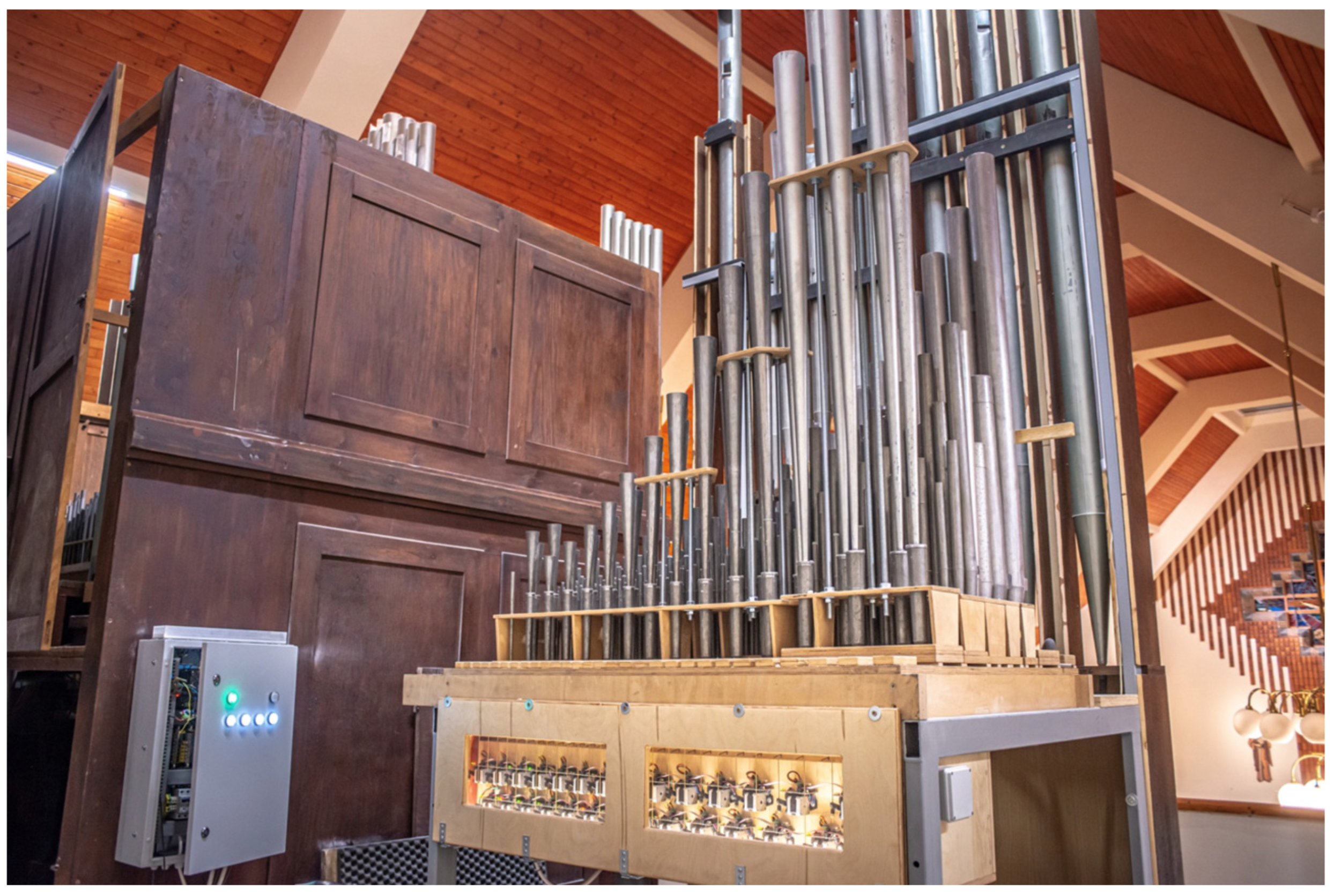
The experimental part of the instrument consists of two whole-tone scale windchests belonging to a single common division, one beginning with the C tone, the other beginning with C#. These windchests were placed to the left and right of the existing pneumatic action organ (not used in the research), surrounding it and creating a considerable distance of several meters apart, which in turn enhances the spatial acoustic effect.
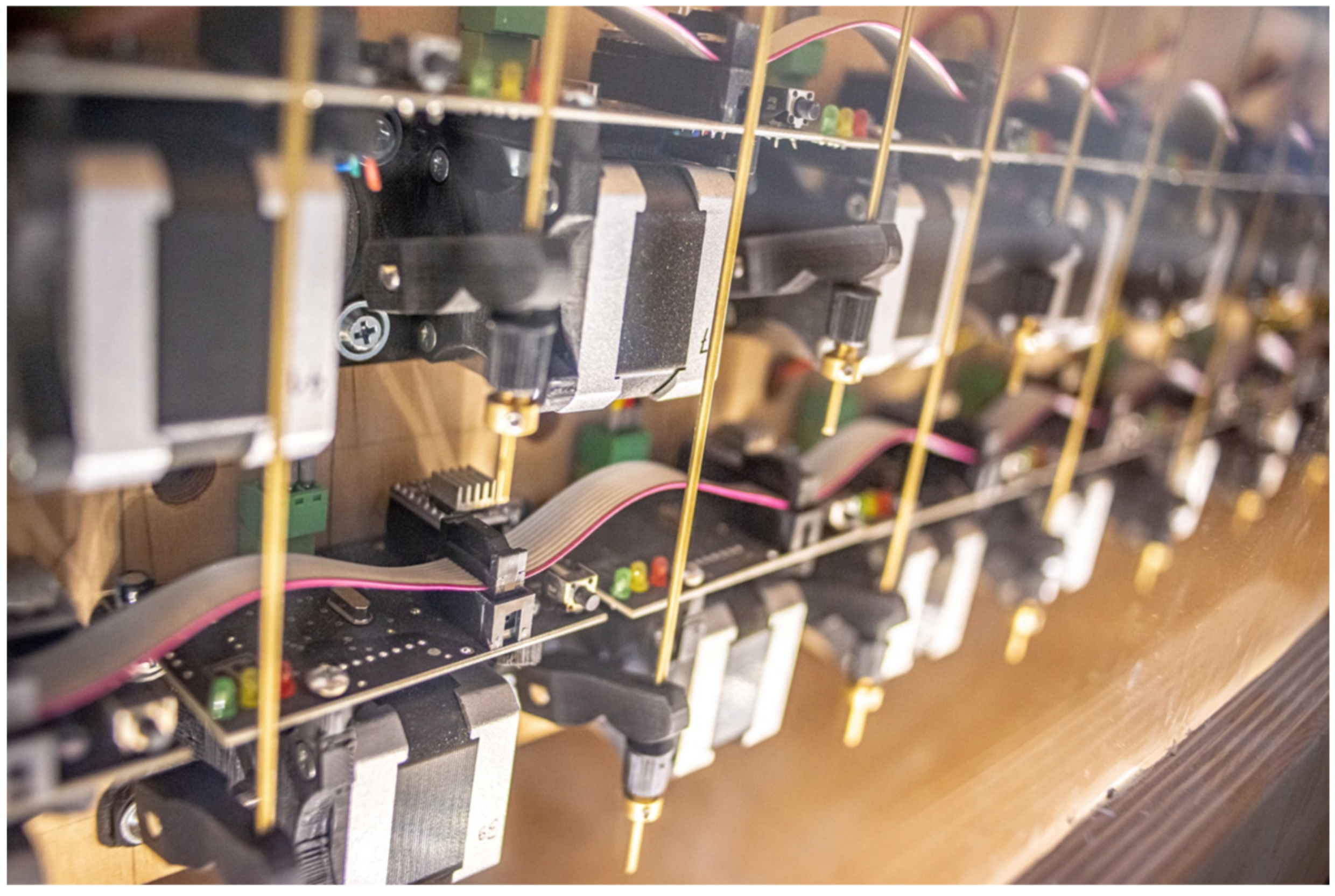
Since there is no direct, mechanical linkage from the outside of the windchest, there is no need to extend any moving elements beyond the closed, compressed air-containing part of the windchest, so the actuators were placed inside the windchest box, unlike conventional construction methods, where the control elements are usually located on the outside. The stepper motor modules (actuators) are larger than the standard “flat” electromagnets commonly used to control pallet valves—due to this fact, appropriately much space was allocated inside the windchest box—its vertical extension is clearly visible in the photo above. Additionally, transparent acrylic “windows” were made in the outer panel, and lighting was installed inside the box—all this to allow for visual inspection of the action mechanism’s behavior (Figure 1 and Figure 2).
The pallet valves used in this particular mechatronic system are no different from those used in instruments with tracker action. They are single-piece pallets made of oak. Of course, in a project like this, folding/two-piece pallets would enhance the effects achieved with automation and simplify the software, and adjustments would also become easier. This prototype, however, was designed to demonstrate that this type of automation can be used in any instrument with simple single-piece pallets (the vast majority of tracker action organs have this simplest type of valves). Treating this as a design challenge, it was decided to build a windchest with “standard” solid pallets, which made the tasks related to software development and mechanism adjustments significantly more difficult, but ultimately proved that the task was feasible, with equally interesting end results.
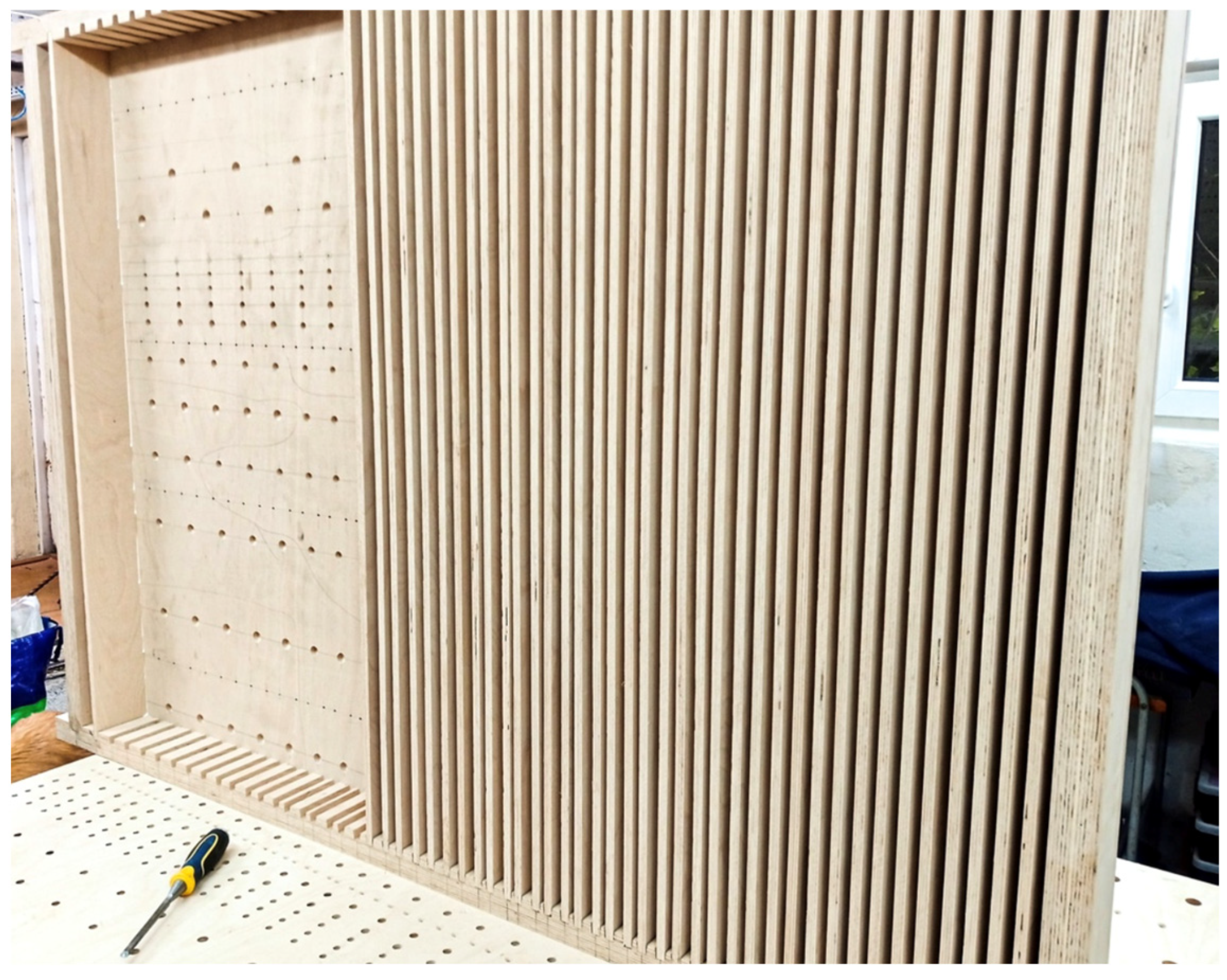
The individual tone chambers in the windchest grid were separated by “vacant” chambers (Figure 3) in order to limit their volumes and, consequently, the inertia of compressed air filling and emptying them during the opening and closing of the valves, which translates into enhanced precision of the attack and release phases of the sound envelope. Due to the compressibility, the air filling the chamber volume can act as a kind of high-cut (low-pass) filter and tends to relatively stabilize the pressure, which would reduce the modulation effect at higher frequencies of valve position changes, hence the idea of limiting chambers’ volumes (Bordoni et al. 2024; Hruška and Dlask 2020; Pitsch et al. 2010; Verge et al. 1994).
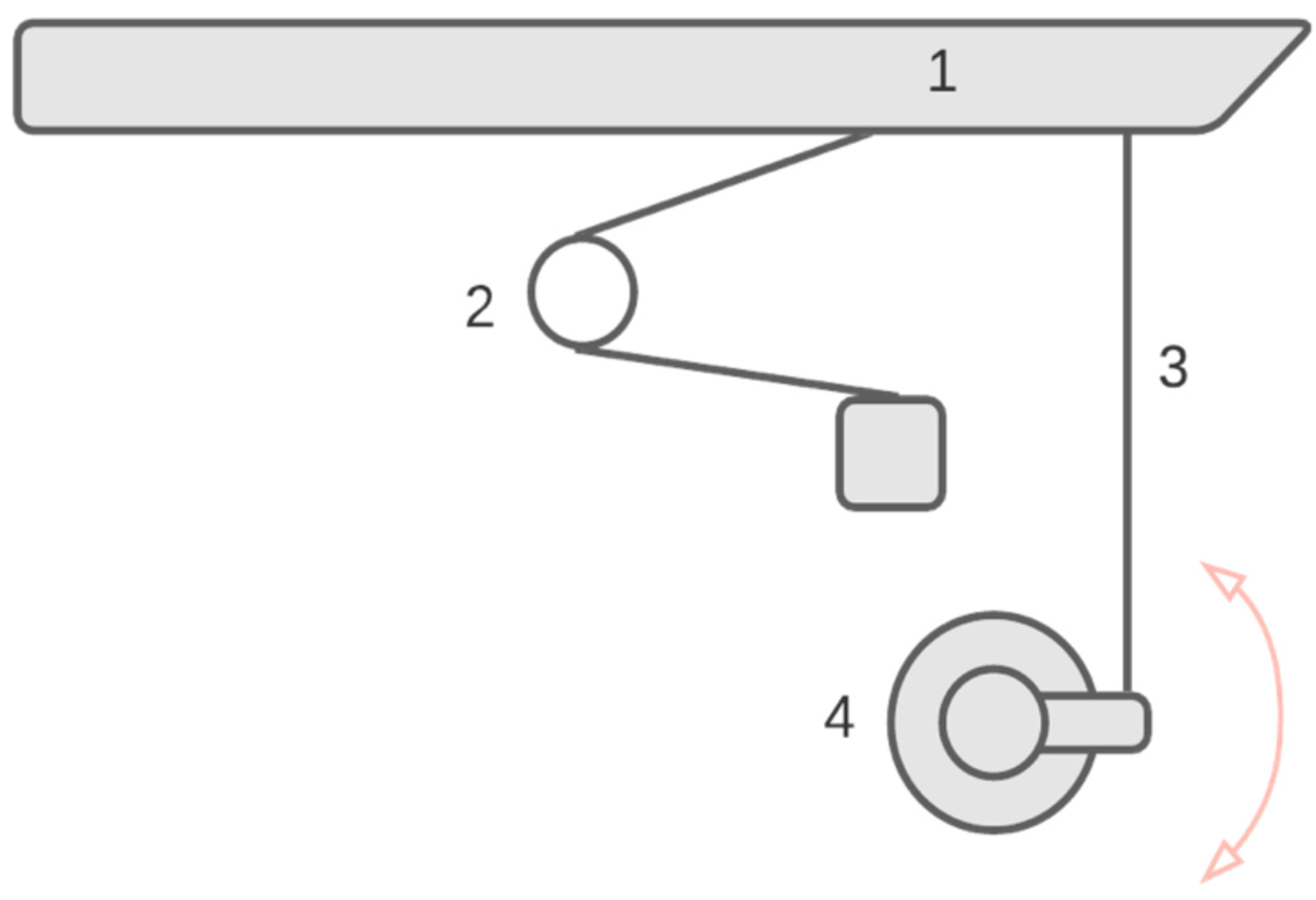
The linkage between the pallets and the actuators is identical to that found in mechanical tracker action. This is illustrated by the following diagram, which depicts a well-known concept:
The control system was developed from scratch specifically for the needs of the research on the experimental action, hence its somewhat specific structure and the assumption that each of the actuator modules should have its own microcontroller performing calculations of single pallet displacement, according to a stored table of motion profile data and responding to instructions sent by the master unit. This allows each key to behave independently, which significantly expands the possibilities of shaping the organ’s sound. Arnold Schönberg mentioned these characteristics of the instrument in 1949, defining his expectations for an organ that would be appropriate for his musical esthetic: “[The organ] should allow for dynamic changes to each tone independently […]” (Giesen 2005).
For research purposes, a simplified version of the system has been built—the instrument’s central unit is a single division controller equipped with a direct MIDI input capable of interfacing with various control devices such as a keyboard with a “modulation wheel.”
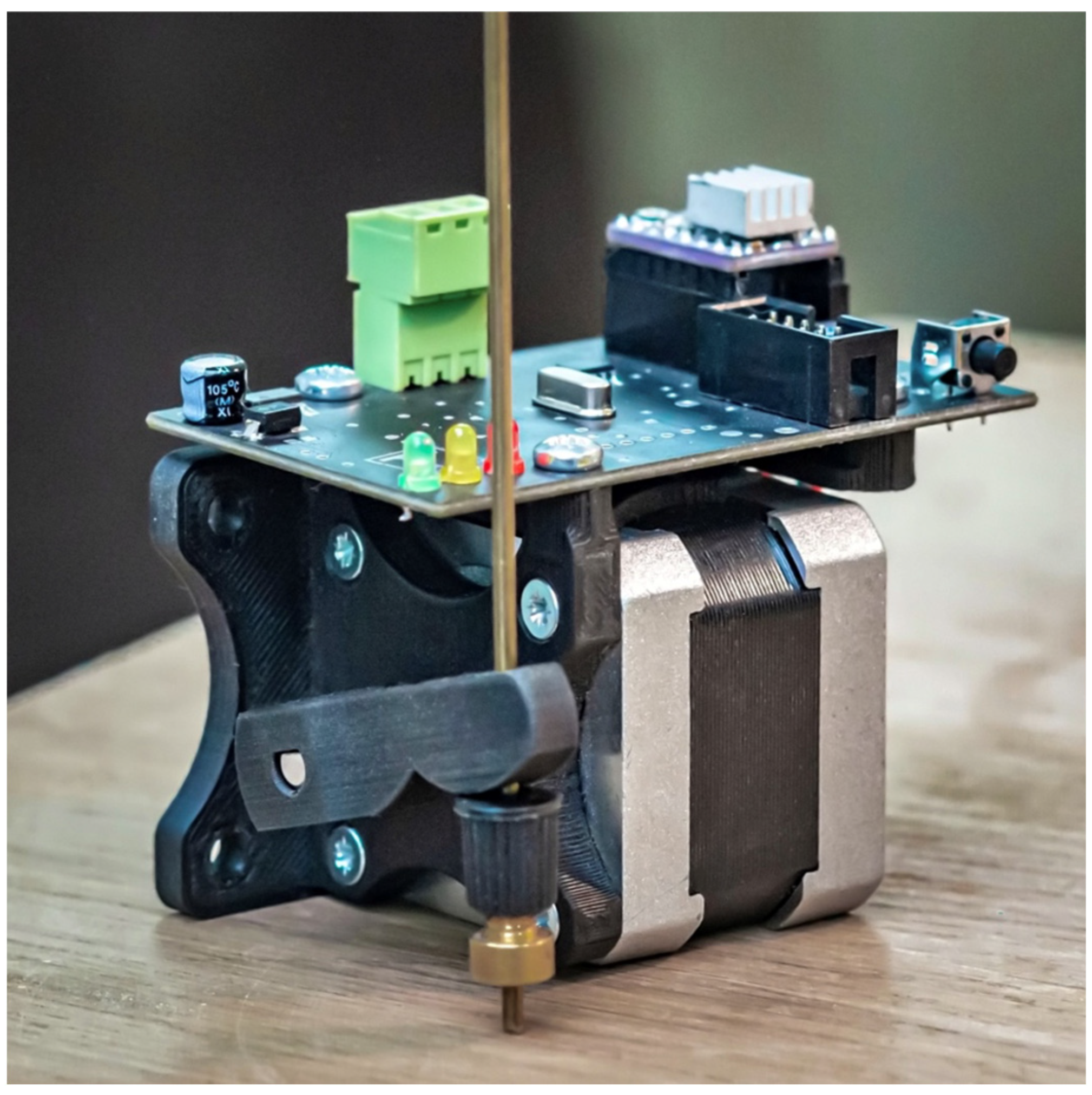
The element clearly visible in Figure 1 is a steel cabinet that houses the power supply for the windchest modules and the main control electronics. This includes a central unit designed specifically for use in pipe organs, based on an ATMega128 microcontroller, as well as a wireless network module (based on ESP8266) capable of downloading software updates and motion profiles data via wireless network. A digital radio communication module (NRF24L01+) is also included for use with a remote control to facilitate tuning and voicing, or for wireless connection to any MIDI keyboard/controller. The wiring then reaches the windchests, where it supplies power: 18 V high-amperage for the module motors and 7.5 V to power the logic circuits. Each of the modules is equipped with a 5-volt linear regulator. This solution was implemented to eliminate unwanted voltage drops that could disrupt the operation of the microcontrollers. Additionally, RLC suppressors have been added to the endpoints of the power lines to protect the sensitive electronics from surges that occur when the system supply is switched on or off. A differential pair communication wire runs along with the power cable, transmitting information packets from the central unit in parallel to all the actuator modules, which are in turn connected to each other via a single, common signal flat cable. Each module is a stepper motor with a protruding arm, with its own controller, in a 3D-printed frame suitable for mounting inside a windchest (Figure 4). The AVR ATMega8 microcontroller provides logic signals for the motor driver according to a pre-defined motion profile. The high-current motor driver is a popular A4988 (or equivalent). Three LEDs in different colors are also provided to indicate the operating mode and status. Thanks to these, when the module is activated by, for example, the musician depressing a key, it is easy to recognize which motion profile phase the program is currently in: red indicates the attack and decay phases, yellow indicates the sustain phase, and green indicates the release phase. When the system is inactive, a flashing red LED indicates readiness to accept data. Every motor module is attached to a pallet in exactly same manner as a rod in traditional tracker action is (Figure 2 and Figure 5).
For the purposes of this study, the standard MIDI protocol (Rothstein 1995) was used as the input, due to the ease of connecting any keyboards, controllers, and other similar devices to the organ. The division’s central unit processes MIDI packets and combines data from the keyboards and other controllers with data from the wireless remote control (Murphy et al. 2014; Ness et al. 2011). The next step is the application of couplers (if active), which in this case is limited to sub-octave and super-octave or other transpositions. In the recordings, an additional coupler with a shift in a fifth, implemented by the pedal division controller, was used to achieve emulation of a 102/3′ stop (approximately—due to the equal temperament). The controller’s next task is to send appropriate commands along with addresses to specific actuator modules.
It should be noted that the operations listed above do not necessarily occur sequentially. For optimization of the algorithm, the software has been designed so that data processing occurs within the keyboard buffer in the microcontroller’s memory, and all communication-related tasks are performed asynchronously utilizing an interrupt mechanism. The communication protocol, which allows for information exchange between the instrument’s circuits, was developed from scratch for the prototype; a detailed description of the data packet structure is unnecessary here. The physical communication layer, however, is based on an RS485 (EIA/TIA485) multipoint structure where the transmission lines are differential pairs that provide high immunity to electromagnetic interference. This is especially useful for pipe organs—an environment full of highly inductive parts that cause electromagnetic interference: magnetic coils, motors, transformers. The overall design assumes a modular tree-topology network.

3.3. Principle of Operation

Since stepper motors are responsible for moving the pallets in a mechatronic action windchest, their operation obviously differs from traditional systems, where the keystrokes are transferred to the pallets via mechanical link or with the use of simple electromagnets. While these differences may seem minor in general, in fact, using stepper motors means the need for solving numerous technical problems and for developing special software that would calculate the linkage arm travel according to the specified motion profile.
Due to the popularity and relatively low cost, the NEMA17 motors have been used in the prototype. They have a resolution of two hundred steps per revolution. It was decided to use a simple output arm, without any complex gears, to avoid problems with possible backlash and additional adjustments. The effective length of the arm is 26 mm. In active mode (automatic motion operation), the motor is controlled microstep-wise (one pulse is 1/32 of a full step), which means that with the planned 127 pulses for full opening, the maximum pallet displacement at its attachment point is (ignoring negligible lateral movement):
2 π 127 200 · 32 · 26   mm 8   mm
However, since the pallet attachment point is a few centimeters away from the pallet edge, this edge can move slightly further than the calculated 8 mm. Dividing the step into 32 micro-steps allows for very precise control of the valve opening, which is particularly significant during the initial two or three millimeters of displacement, especially since in the rest/closed position it is additionally held by pressure of compressed air, which can be difficult to overcome while maintaining the accuracy of the valve opening. In the emulation mode of a “standard” electromechanical action mechanism, the motor is also controlled in micro-steps, but the controller is set to 1/16 of a full step per pulse—here, the resolution is irrelevant and a greater pallet displacement is achieved—respectively:
2 π 127 200 · 16 · 26   mm 16   mm
whereby the displacement is software-limited to 12 mm.
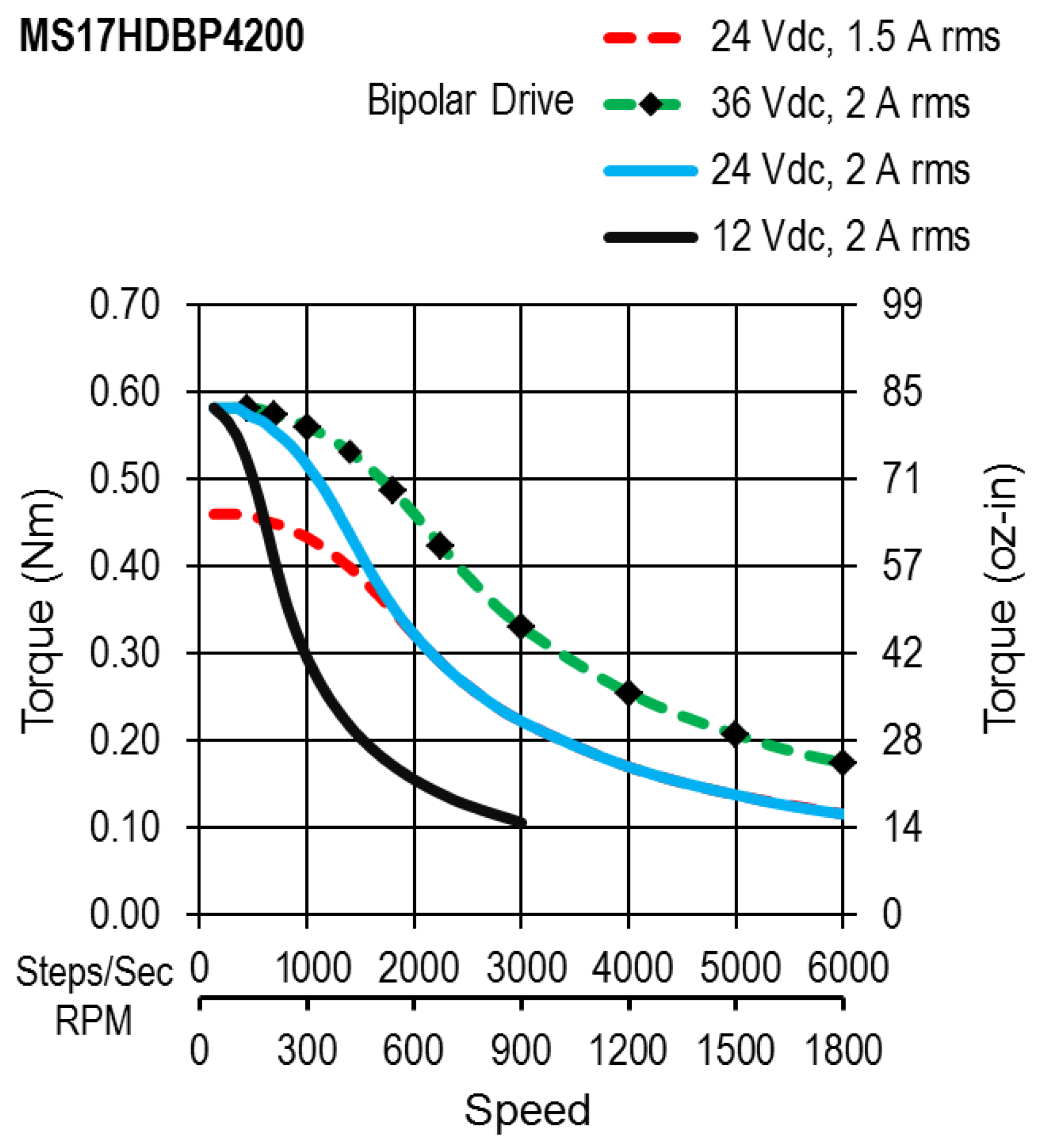
The pallet movement speed (control pulse timing) is calculated to achieve a compromise between motor torque and the keystroke repeatability. The calculations considered active automatic mode (profile-based), as in this mode, unnaturally rapid movement of the action elements can be expected. Considering the relatively large mass of the oak pallets and their resulting significant inertia, the target nominal repetition rate was assumed to be 8 keystrokes per second, which corresponds to 62.5 ms per full cycle. The pallet must therefore be able to travel a minimum distance of 16 mm (opening plus closing) 8 times per second, which (ignoring the inertia damped by the compression spring and the elasticity of the linkage) translates to 128 mm/s in total or approximately 128/26 ≈ 4.92 radians per second or circa 295 radians per minute, which, when divided by 2π, gives a result of about 47 in revolutions per minute—(RPM is a unit commonly used in motors). This allows us to compare the calculation with the torque chart provided by the manufacturer in the datasheet for the NEMA17:
Figure 6 shows that at such a relatively low speed and an 18 V power supply, it is possible to achieve almost the maximum torque of about 0.35 Nm, so the force is:
1 0.026   m · 0.35   N m 13.5   N
That is almost 1.4 kg. For comparison, the strongest standard-available action solenoids, manufactured by Otto Heuss GMBH, have a nominal force of 1.2 kg, although the technical description specifies their maximum value. Since the force of the arm-type solenoid nonlinearly depends on the position of its arm, and therefore also on the area of the magnetic circuit in a high-permeability material such as steel, when activated in the rest (open) position, a much weaker pull can be expected, which only increases with the square of the arm travel distance. Despite this pessimal scheme, such a solenoid is capable of overcoming air pressure and spring pull. Therefore, the prototype actuator based on a stepper motor provides a greater force than commonly available solenoids, with sufficient reserve even for the largest pallets (found in lower tone chambers). This margin allows for ignoring issues related to valve initial drag caused by the air pressure in the windchest, as well as sudden reversals, where the main concern would be the inertia of the pallet itself, the actuator and all other parts in motion. It is worth emphasizing that the stepper motor module, unlike a standard arm-type organ valve solenoid, operates with the same force regardless of its position—this is one of the most important reasons for choosing this particular element as the basis for the construction of the mechatronic action (initial experiments also involved using a standard solenoid with a power control (pulse width modulation) controller, but maintaining the system’s stability proved extremely difficult, and its durability left much to be desired.
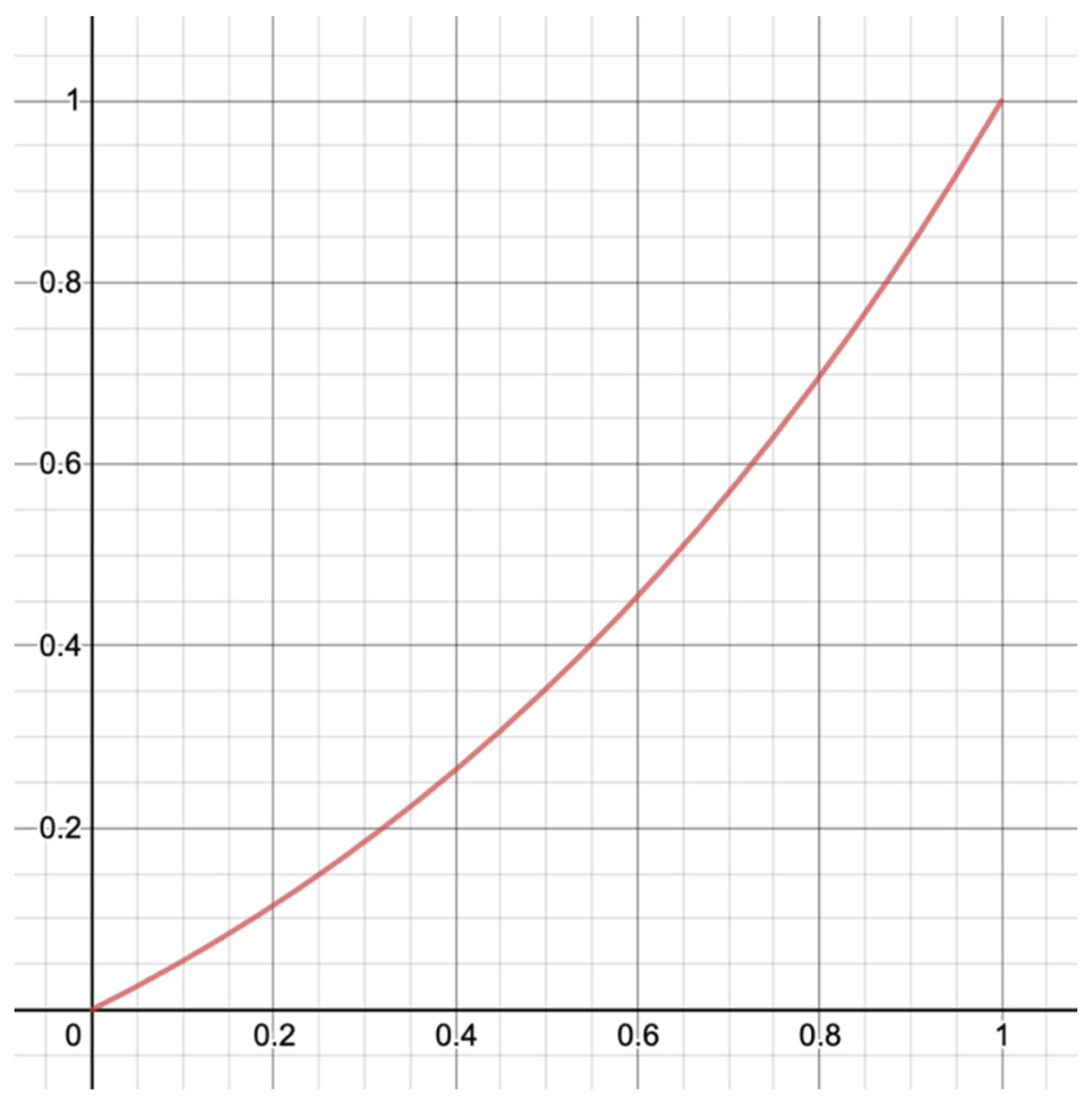
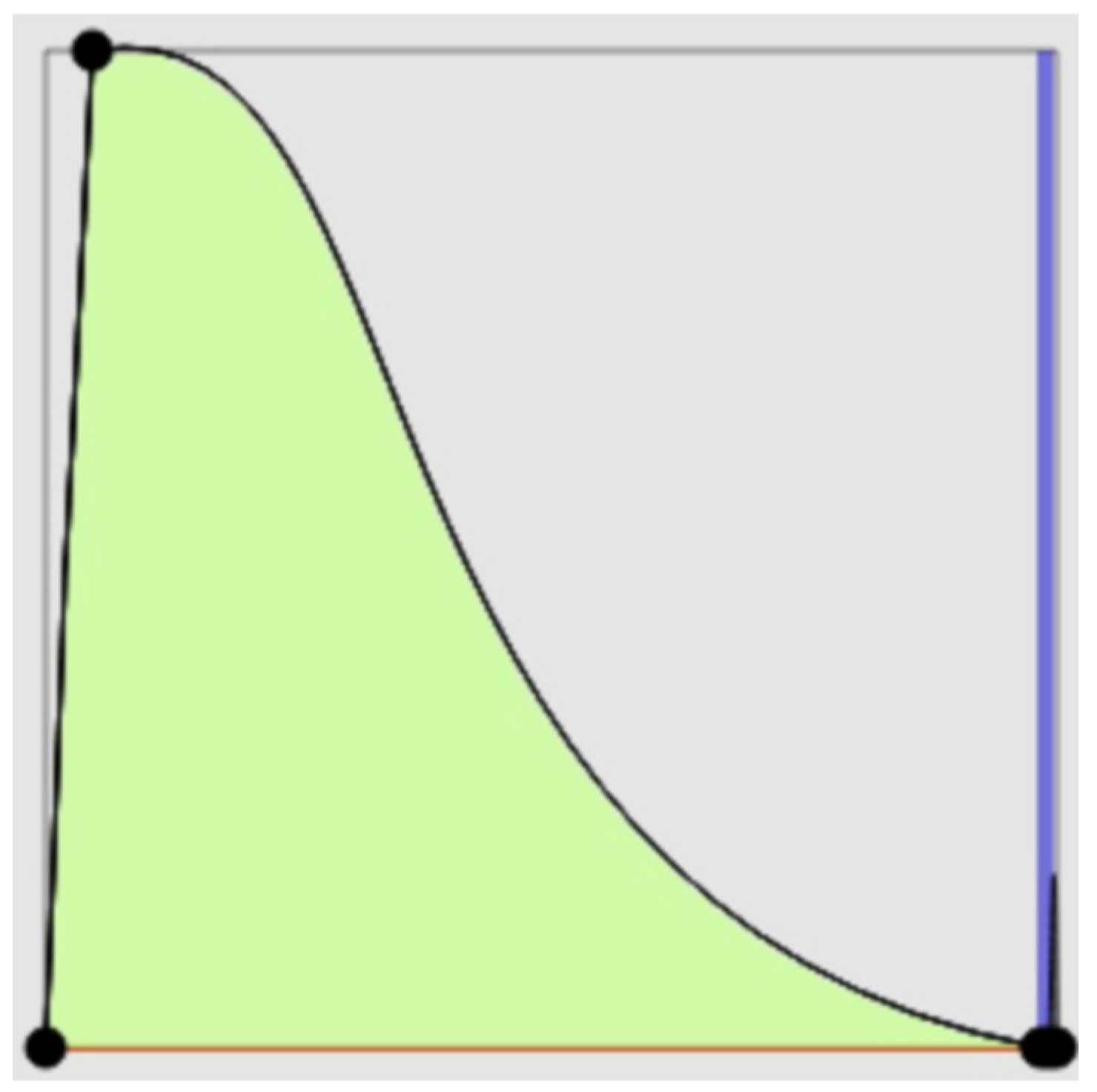
The auditory effect in the pipe sound during the initial phase of valve opening is only noticeable within a very small range of pallet displacement—as experience shows—up to about two millimeters (measured at the pallet linkage attachment point). Due to this fact, any special effects worth noting require valve control within the first dozen or so control pulses of the actuator. If the resulting displacement were identical to the graphically designed motion profile, the graph would have to focus on an extremely narrow range of values to translate into any audible changes in the sound, which would be very cumbersome for the user. Therefore, to increase accuracy and utilize the entire available graph range, the internal program of each actuator module includes a correction procedure that converts the received motion profile data according to an exponential curve of an experimentally chosen formula:
d n d 1
and an empirically selected coefficient n = 2, which denotes the intensity of the correction (curvature of the correction function, illustrated in Figure 7), where parameter d denotes the valve displacement value, where 0 ≤ d ≤ 1 (0 = fully closed, 1 = maximum open). The final multiplication by parameter d compensates the result by concentrating a larger number of values around the location of displacement initiation, until the resolution decreases when the displacement is close to the end point.
The pallet displacement function is multiplied by the correction curve shown in the illustration. Its experimentally determined degree of “bend” (the angle of the derivative) sufficiently increases the resolution or accuracy of valve operation at the initial point, and decreases it as the valve opening widens. This makes it easier to graphically design the motion profile whose effect, thanks to the correction, is finer at the crucial stage of valve opening and becomes coarser further, where accuracy is no longer necessary (at which point pallet displacement has practically no impact on the sound of the pipes).
The organ equipped with an experimental action described here can, of course, operate in “traditional” mode—that is, without pallet automation—providing only two fixed states: valve open and valve closed. No dedicated switch (hardware or software) was planned for these modes—instead, to enable playing in both modes, a dynamic MIDI keyboard can be used. The force (or rather velocity) of a keystroke is the factor for disabling or enabling the pallet automation (for each note separately!). Thanks to this solution, it is enough to play firmly on the keyboard to make the pipes sound in a “standard” way and—to activate the profile-based automation—the keys must be pressed with less force/velocity (the threshold can be adjusted in the main unit’s software). In this way, the organist can make the instrument produce different types of sound effects directly from the keyboard.
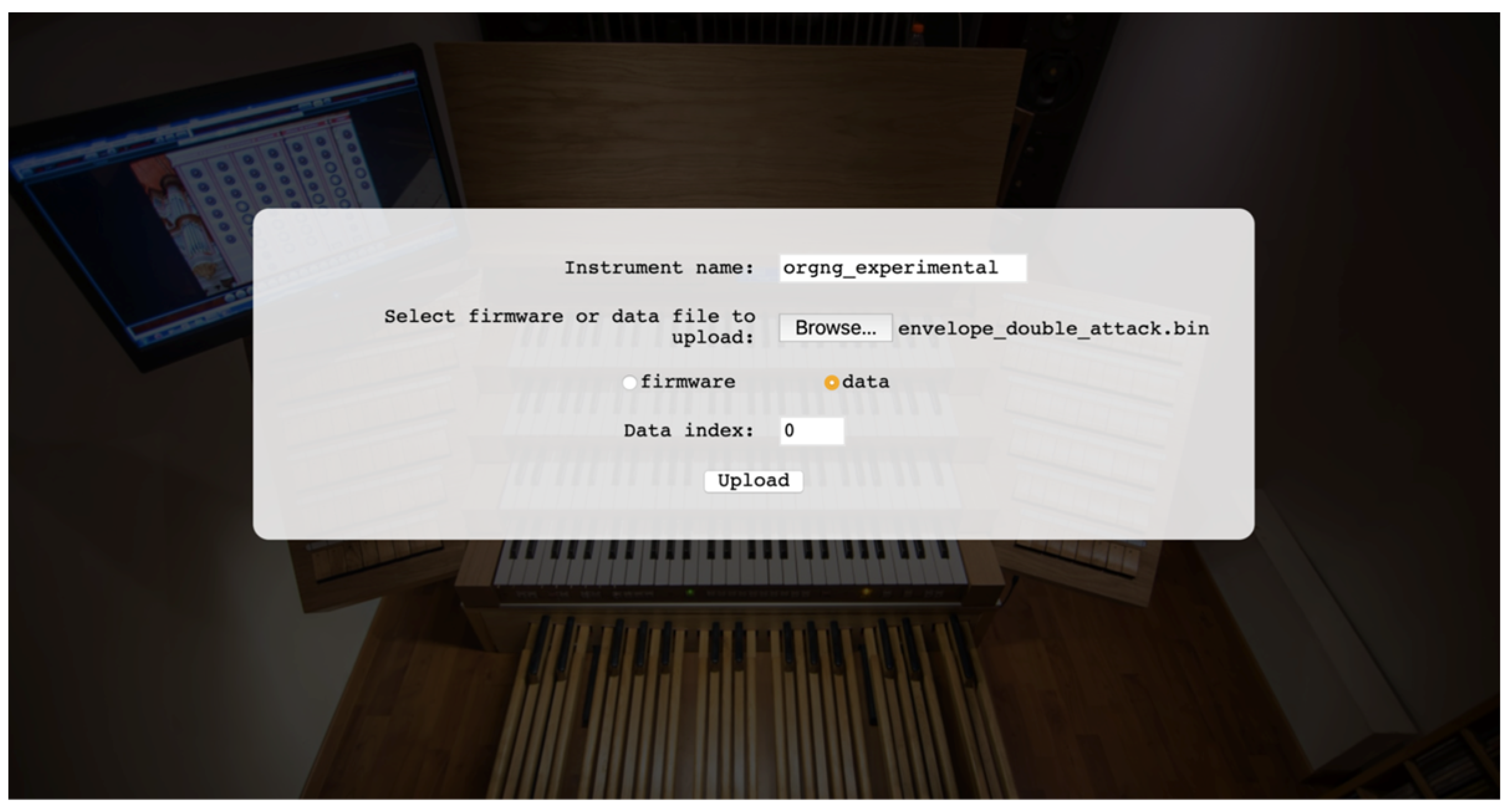
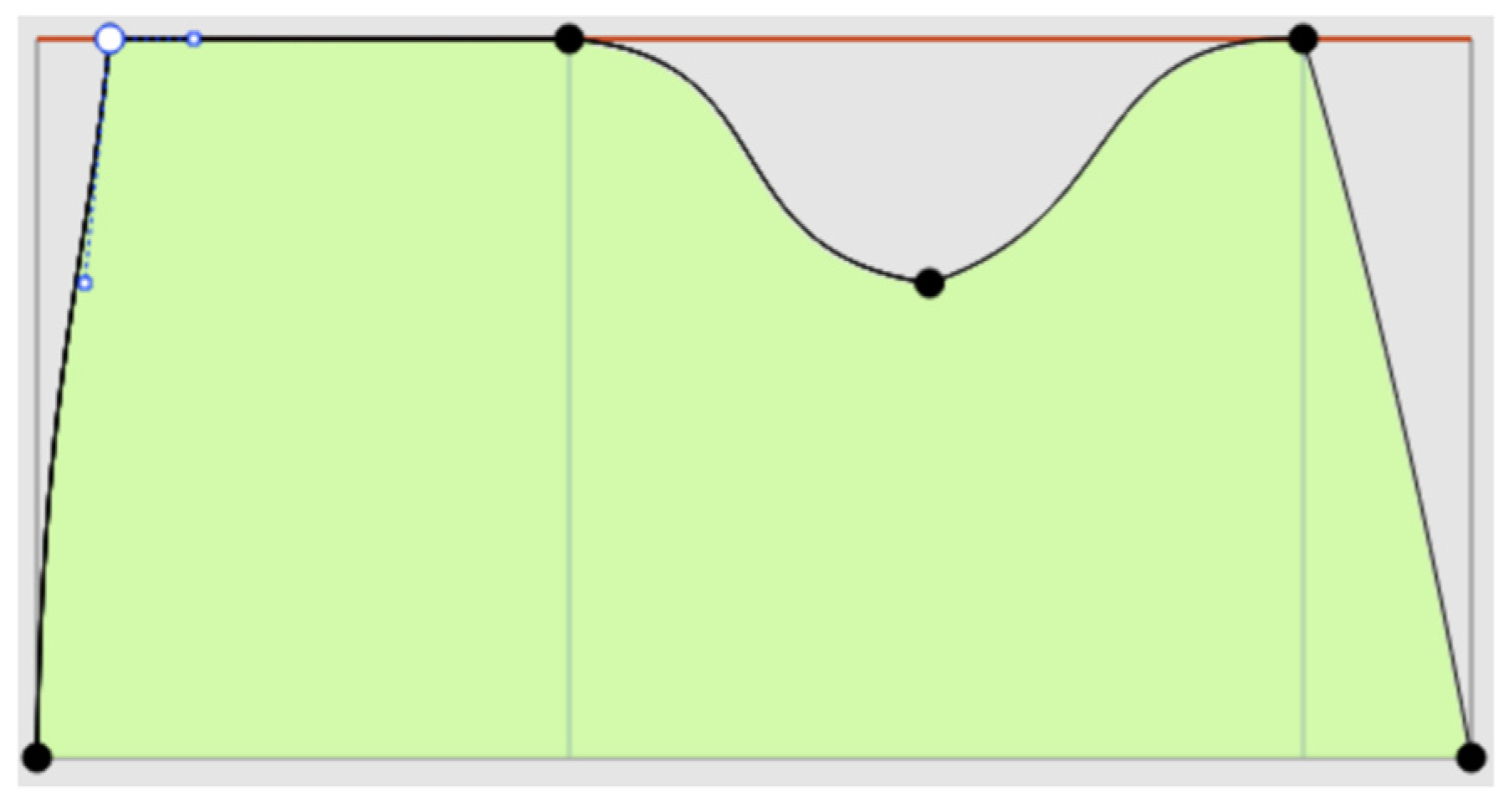
The essence of the mechatronic action is the ability to design the motion profiles according to which the windchest valves are controlled. This requires the player to plot such motion profiles as graphs and transmit the data to the instrument’s control unit. Ultimately, special software will be developed that will allow for the connection of a handheld computer or even a USB drive to the organ. A touchscreen built into the organ console is also planned for direct interaction with the system. A non-volatile memory will also be used, in which the designed motion profiles can be stored alongside stop combinations, just like in a standard combinational memory system. For the research, however, the simplest solution proved to be a dynamic website with JavaScript code that allows the user to plot motion graphs with Bézier curves (Baydas and Karakas 2019). Generated data is uploaded to a server using a special website (Figure 8) and then transferred over the WiFi network—the instrument connects to the specified hotspot and automatically downloads the appropriate file.
After uploading a motion profile, the musician still has influence on it during the play. It is possible to control the time base of the displacement function, as well as to limit the maximum pallet travel. This can be achieved by using any custom-designed control device, such as the expression pedal typically used in organ construction, a breath controller, an interesting MIDI accessory for influencing the sound with air flow (imitating a wind instrument such as an oboe)—or a MIDI keyboard with aftertouch support, where sound modulation is determined by varying pressure applied to the key after it is initially depressed.
Two modulation wheels, simple devices built into a basic MIDI keyboard, were used during the recording. One of them is used to adjust the limit to which the valve can open. This allows, for example, to manually, slowly expand or cut off the air supply to the pipes (this effect is used in the recording of G. Ligeti’s Etude). The second modulation wheel is mounted on a spring, which causes it to automatically return to its center position—this proved convenient for adjusting the time base (or, to put it simply: the speed) of the motion profile “playback” by the motor controller. This time-based adjustment can be used in the solo voices of chorale pieces, where the cantus firmus vibrates during selected, longer notes, with the intensity of these vibrations regulated by the modulation wheel, which allows for a significant approximation to a truly vocal effect. It is worth mentioning that, in the recordings, the time base was empirically determined so that each whole motion profile phase could last up to two seconds unmodified, while also ensuring that the time resolution of subsequent steps did not cause noticeable jerk in the servo motor, even under extreme slowdown. Each phase is represented by up to 255 bytes with a step resolution of up to 127 steps (plus an adjustable constant component, stored in the module’s non-volatile memory during general key action adjustment), which translates to 1271/2 possible position changes per second at the standard, zero-modulation setting. Modifying the time base with the aforementioned wheel allows for several-fold acceleration or deceleration of the motion profile “playback”, which is a sufficient range to produce an interesting and explicit audible effect.


4. Practical Research: Selected New Means of Artistic Expression Exemplified by Recordings

This chapter provides an analytic view of the recorded music and contains an explanation of each of the newly acquired means of artistic expression applied to the performed interpretations and improvisations. A few short representative, easy-to-isolate samples taken throughout the recording have been acoustically analyzed in the basic scope. Results of these analyses are provided as support for the described auditory sensations, which result from the perception of the new means of artistic expression achieved with the use of automatic valve control, which is unique to the prototype system.
The means of artistic expression discovered and described in this work are based on modifications to the sound of the organ pipes: the frequency and phase of the sound waves (spectra) and the temporal envelopes. These modifications do not result in any way from changes in the construction of the pipes, but solely from the regulation of their airflow. The resulting effects are therefore not necessarily static, but can vary over the duration of the sound. For the analysis of signals, particularly periodic or quasi-periodic ones, the best known and simplest tool in practical use is the Fourier transform. Therefore, the FFT (Fast Fourier Transform) algorithm included in the “Sonic Visualizer” software was used for spectral analysis with the following parameters: window size—8192 samples (about 186 ms), overlapping—about 12 ms.
The spectrograms are not subjected to detailed descriptions and in-depth interpretation, but only generally characterized—the purpose of the research is not a thorough analysis of the recorded signal as such, but rather the creation of visual evidence and an explanation of the physical causes of the auditory sensations experienced by the listener when listening to music that utilizes the newly discovered techniques.

4.1. Sound Possibilities Created by Programming the Behavior of the Mechatronic Action in Compositions and Improvisations with a Separate Solo Voice

4.1.1. Johann Sebastian Bach—Chorale Prelude on the Theme “Nun komm, der Heiden Heiland” BWV 659

Registration:
  • manual I: Praestant 8′ + pallets behavior automation
  • manual II: Open flute 8′, Gedekt 4′
  • pedal: Subbass 16′, Praestant 8′
The choice of this Prelude was dictated by the fact of possessing a cantus firmus that could be enriched with “vocal” ornamentation. The artistic means of expression here is therefore “vocal” vibrato, and even an effect resembling ribattuta di gola/Zurückschlag, additionally creating the impression of suspension in a wide space, the intensity of which is directly influenced by the performer using any of the available accessories (here: the modulation wheel).
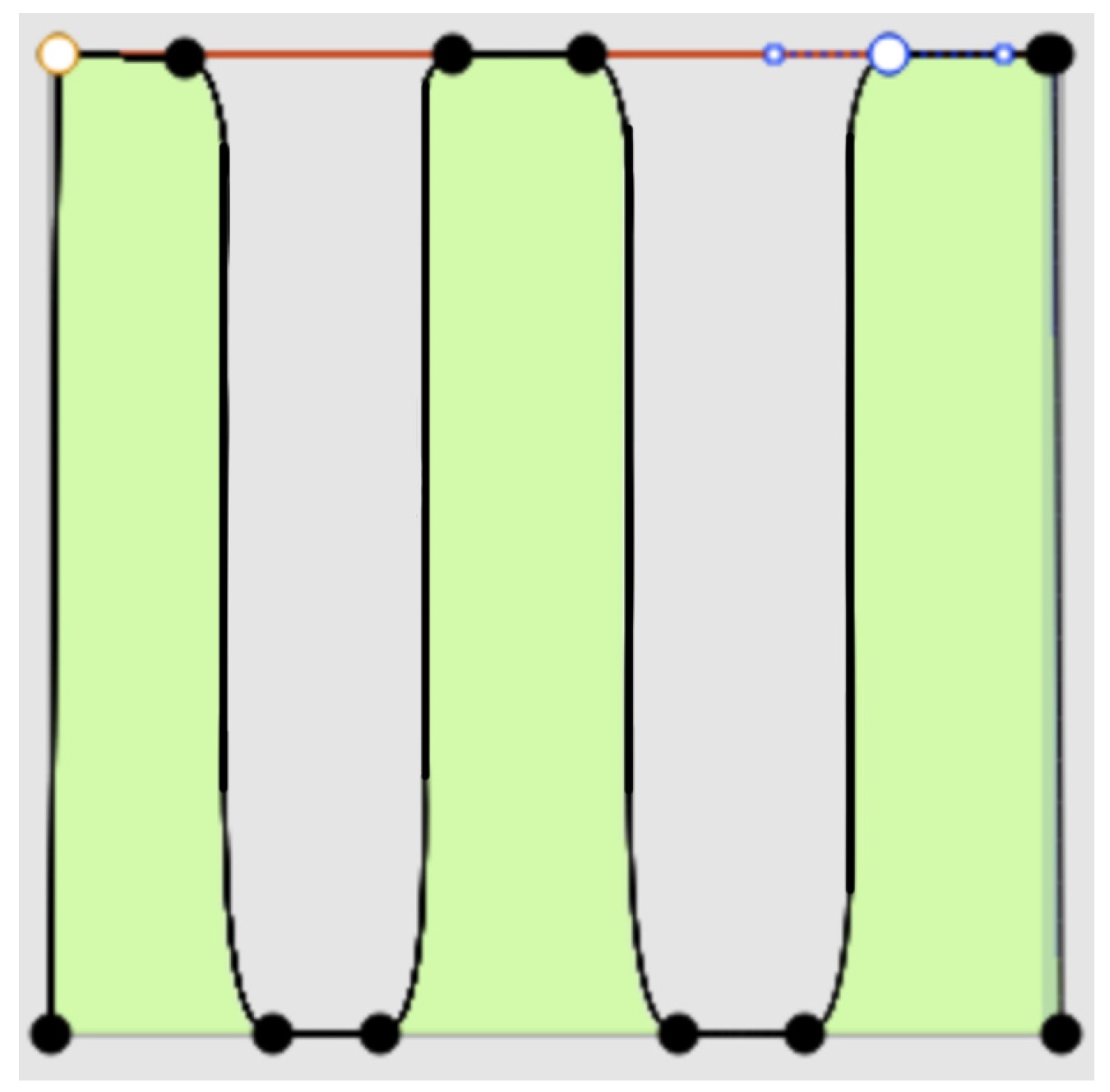
The programmed motion profile of the valve movement for this piece’s cantus firmus is pictured in Figure 9.
The intensity of the vibrato was regulated by the performer in real-time during the performance. The asynchronous nature of the ornamentation is audible, which creates a strong impression of naturalness of expression and an exceptionally successful imitation of vocal technique. The mechatronic action automation precisely controls the opening of the valves according to the scheme imposed by the performer, and thanks to the dynamic adjustment of the time base, the interpretation of the piece remains “lively,” because this specific vibrato is directly influenced by the musician-performer.

4.1.2. Tomasz Mońko—Improvisation on the Theme “O Mensch, bewein dein Sünde groß”—The “Trio” Part

Registration:
  • manual I: Praestant 8′, Subbas 16′
  • manual II: Praestant 8′, Gedekt 4′, Quint 2 2/3′ + pallets behavior automation
  • pedal: Trompet 8′ + pallets behavior automation
Another example demonstrating the effect of the vibrato described above is an improvisation on the theme “O Mensch, bewein dein Sünde groß”—a part stylized in the baroque trio form. The motion profile programmed here is the same as in the previous example. The difference, however, is that the mechatronic action assistance was used to vibrate both the solo voice (assigned to the pedal keyboard’s Trompet 8′) and the upper manual voice. The interweaving of these two vibrating voices sounds exceptionally interesting; it resembles a dialog between vocalists with equal roles.
The existence for several hundred years in the construction of pipe organs of mechanisms such as the tremulant or stops such as Vox Humana (whose name literally means “human voice”), allows us to conclude that in the past attempts were made to bring the sound of organ pieces composed on the basis of themes taken from vocal music closer to the natural sound of the human voice. This, in turn, suggests that if greater technical possibilities had existed, composers such as J. S. Bach might have moved towards a more perfect imitation of artistic means characteristic of vocal music, and their sonic imagination would have encompassed similar acoustic effects unattainable on organs in their time, and they would have eagerly used solutions exemplified in the recording described here. This is supported, for example, by the conviction of the eminent Baroque theorist, Johann Mattheson, that a musical instrument should be played in such a way as to create the impression of singing: “[…] it is a proven fact that no one will acquire the skill of ornamental playing if he does not derive what is most important from the art of vocal music—for every product of human hands serves only to imitate the human voice—therefore the art of ornamental singing stands higher and provides instrumentalists with many valuable rules […]” (Mattheson 1739). Johann Joachim Quantz states even more explicitly: “Every instrumentalist must strive to perform [pieces in a] cantabile [style] as good singers do” (Quantz 1752).
The question of the imagination of Baroque organist-composers regarding the expression of cantabile passages in their works remains in the realm of speculation, in relation to the differences between the means available on the instruments of that time and the intentions with which they composed and the means they would have liked to have at their disposal. Although determining this unknown factor is no longer possible today, it should be assumed that following the path of further “vocalization” of pipe organs remains consistent with the assumptions of the aforementioned creators. The recording analyzed here shows the result of taking another step in the development of the organ’s sound capabilities, which perhaps composers and theorists of the Baroque period would have been pleased with. This step allowed for expanding the range of artistic means of expression proper to the organ, the use of which in performances of works drawing on vocal music, including Baroque choral preludes with a separate solo voice, seems entirely justified.
To visually represent the described means of artistic expression, a sample of the last tone of the first phrase of the cantus firmus (b flat) played using the Trompet 8′ stop was analyzed. The primary effect is the frequency oscillation, which normally would be obtained using a traditional organ tremulant. In contrast to this method, however, the effect obtained through automatic control of the valves allows for control over both the moment of vibration onset and its speed. This is clearly shown in the following spectrogram (Figure 10).

4.2. Sound Possibilities Created by Programming the Behavior of the Mechatronic Action in Compositions and Improvisations Without a Separate Solo Voice

Contemporary (or at least non-Baroque) styling allows for further development of the experiment and for explorations of artistic means that go far beyond those possible with the Baroque style, thanks to the application of mechatronic action.
During the research, a number of effects were discovered that resemble the sounds of other instruments (even those belonging to other groups, such as percussion), and also those leaning towards sonorism. The recorded musical pieces utilized not only the programmable behavior of the pallet valves, but also the possibility of manually controlling the value of their maximum opening. Due to the fact that the motion profile can be saved to memory and recalled in the same way as stops in ordinary combination memory, in some of the improvisations, more than one newly discovered means of expression can be heard.

4.2.1. Tomasz Mońko —Improvisation on the Theme “Allein Gott in der Höh’ sei Ehr’”

Registration for parts A, A′:
  • manual I: Open flute 8′ + pallet behavior automation
  • manual II: Superoctave 2′, III rank mixture + pallet behavior automation
Registration for part B:
  • manual I: Praestant 8′ + “selective” suboctave + pallet behavior automation
  • manual II: Superoctave 2′, III rank mixture + pallet behavior automation
  • pedal: Subbass 16′, Praestant 8′
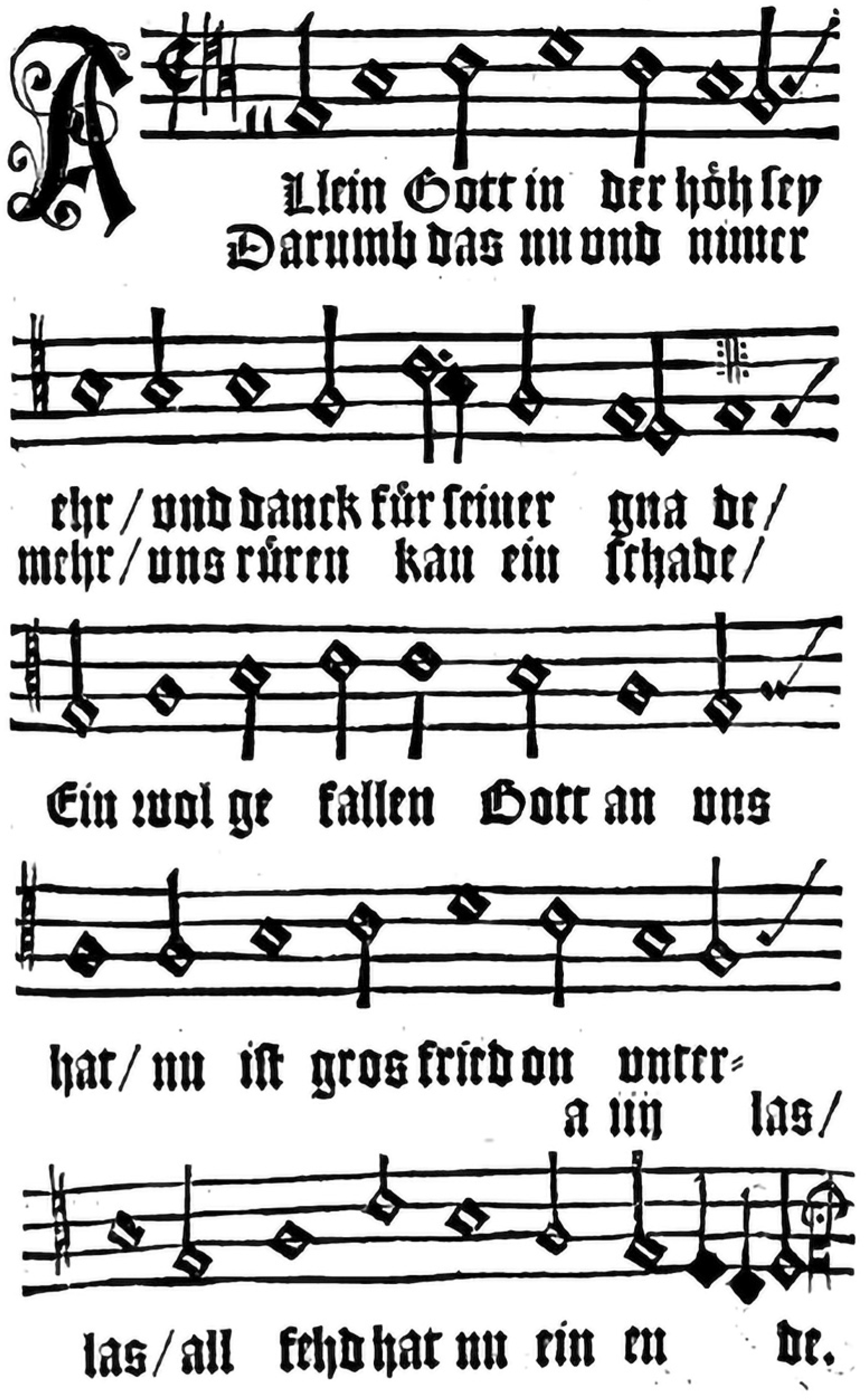
The hymn “Allein Gott in der Höh’ sei Ehr’”, probably written by Nikolaus Decius in 1523, is one of the earliest hymns of the Reformation. The source of the improvisation’s theme is its notation (Figure 11) from the hymnbook by Johann Spangenberg, “Kirchengesenge Deudtsch” from 1545.
This is a hymn that paraphrases the Latin “Gloria”—a part of the Catholic Mass. Its content, therefore, invokes the Persons of the Holy Trinity in the form of a laudatory text, which is reflected in the improvisation. This ex tempore composition presents itself in a fairly symmetrical A–B–A′ form, where the “A” sections constitute a short introduction and conclusion, somewhat reminiscent of quotation marks or parentheses that surround the complementary statement, and their character refers to the content of the first verse of the hymn, which is also its title—the author’s intention was to evoke the impression of the transcendental nature of the musical content, as much as possible given the available instrument and the use of appropriate means of artistic expression created with the help of the prototype mechatronic action. The entire form oscillates around the key of A major, referring to the preceding arrangement in the same key, “Allein Gott” by Johann Sebastian Bach.
The effect that can be easily noticed in the sound right at the beginning of the improvisation is tremolo, although here, it is used in a sense not typical for organ music—understood as the repetition of the same sound. Each press of a key on the manual is, thanks to a suitably designed motion profile, processed into two short, single strokes. The doubling of notes in a short time is further amplified by the reverberation of the interior, which affects the listener’s perception of the fragment, causing a somewhat unreal impression of a large space and the placement of the sound source in the distance—in addition to the reverberation, there is also the impression of a perfectly recognizable, albeit artificially obtained, echo. Some listeners might also associate this impression with the characteristics of percussion instruments.
The notation of the initial fragment of the “counterpoint” would look like this:
Arts 15 00120 i001
while the version resulting from the automation process would have to be written as:
Arts 15 00120 i002
with an indication of staccato, or even staccatissimo articulation (Figure 12).
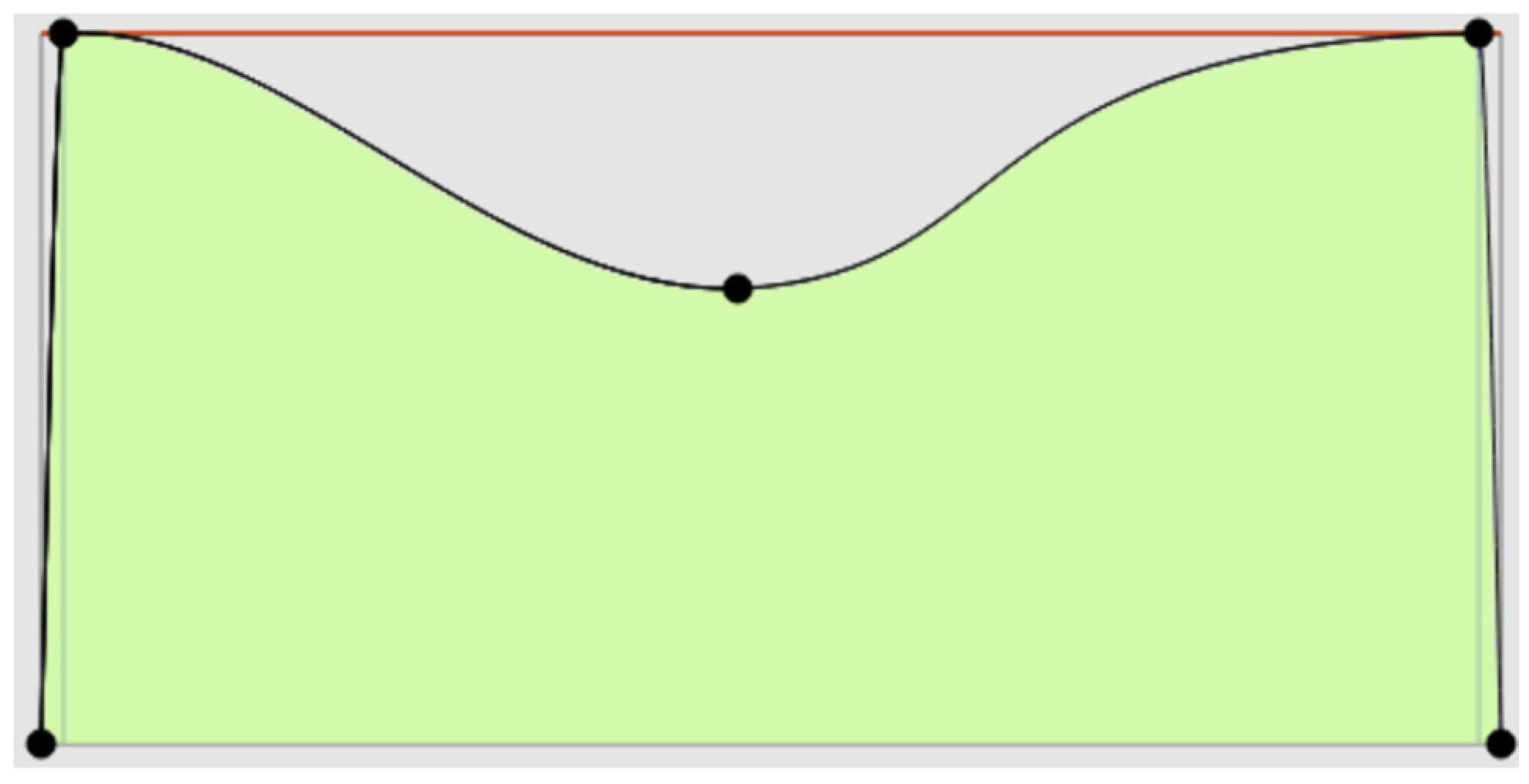
In the background, chord progressions are heard, played using an eight-foot flute stop. A “waving” effect is noticeable in the wide sound space—another means of artistic expression, achieved through the following valve displacement profile (Figure 13):
The resulting sound may be reminiscent of that obtained using stops such as vox celeste or unda maris, which are based on the “interpenetration” of sound phases at close frequencies (beating), but in this case, virtually any available set of stops, or even a single stop, can be used to produce the audible “undulation,” because the phase interpenetration results from a slightly different phenomenon—the LFO (Low Frequency Oscillation) modulation well-known from electronic synthesizers (Stolet 2009). Here, the beating is a result of very subtle oscillations in the frequency of the sounds, which interact with their own reflections created by the geometry of the interior (the aforementioned sonic effect would not be possible without the involvement of the interior—however, pipe organs outside a building are rare; the acoustic properties of the structure in which they are installed seem to be an inseparable component of their sound), and therefore the cyclical discrepancies and convergences of phases are just as noticeable as those resulting from the use of the aforementioned “traditional,” two-rank stops. An additional, new element of this means of expression is the fact that—although this was not utilized in the recording—the frequency of the beats can be dynamically adjusted during performance if needed.
Following the introduction, there is a change in registration in the main section, and the entry of the theme occurs, which is almost unprocessed melodically (with the exception of chromatic changes resulting from tonal modulations and triplet ornamentations, which are a subtle reference to the Persons of the Holy Trinity mentioned in subsequent verses of the cited hymn). This theme is harmonized: the highest voice of the chords constitutes a melody of cantus firmus, as does the lowest voice, which doubles that melody in the octave. Each chord, with a few exceptions, consists of five components, which would create a major performance inconvenience—it would require encompassing extensive chords with one hand and rapid changes between uncomfortable hand positions, but here these problems have been solved by using another feature of the digital control system: the action has been programmed so that the sub-octave coupling is active only for the highest note played on a given keyboard. Considering such a simple effect as “enclosing” the chords with doubled highest component as a means of artistic expression may be dubious, but it is mentioned here because it provides a relatively large simplification in performance of such improvised harmonization of this type, even though it does not require the use of mechatronic elements in the windchest, but only appropriate programming of the central unit.
The melody quoted in the manual part is accompanied in the pedal part by a canon alla octava, although—mainly due to the “free style” of improvisation—without strictly maintaining the rhythmic structure. Neither of these layers contains any sound modifications that would result from the capabilities of the mechatronic action—they quote the theme “purely,” without overloading the piece with an abundance of means of expression. The registration used consists of foundation stops (except for the 16-foot Subbass).
The final section of the improvised piece is a formally processed repetition of the introduction; the artistic means of expression used here are therefore identical to those at the beginning. The ending of the piece resembles an abrupt stop, an unfinished work, a suspension in space, or an understatement, which is intended to emphasize the character of the expression already captured in the first bars.
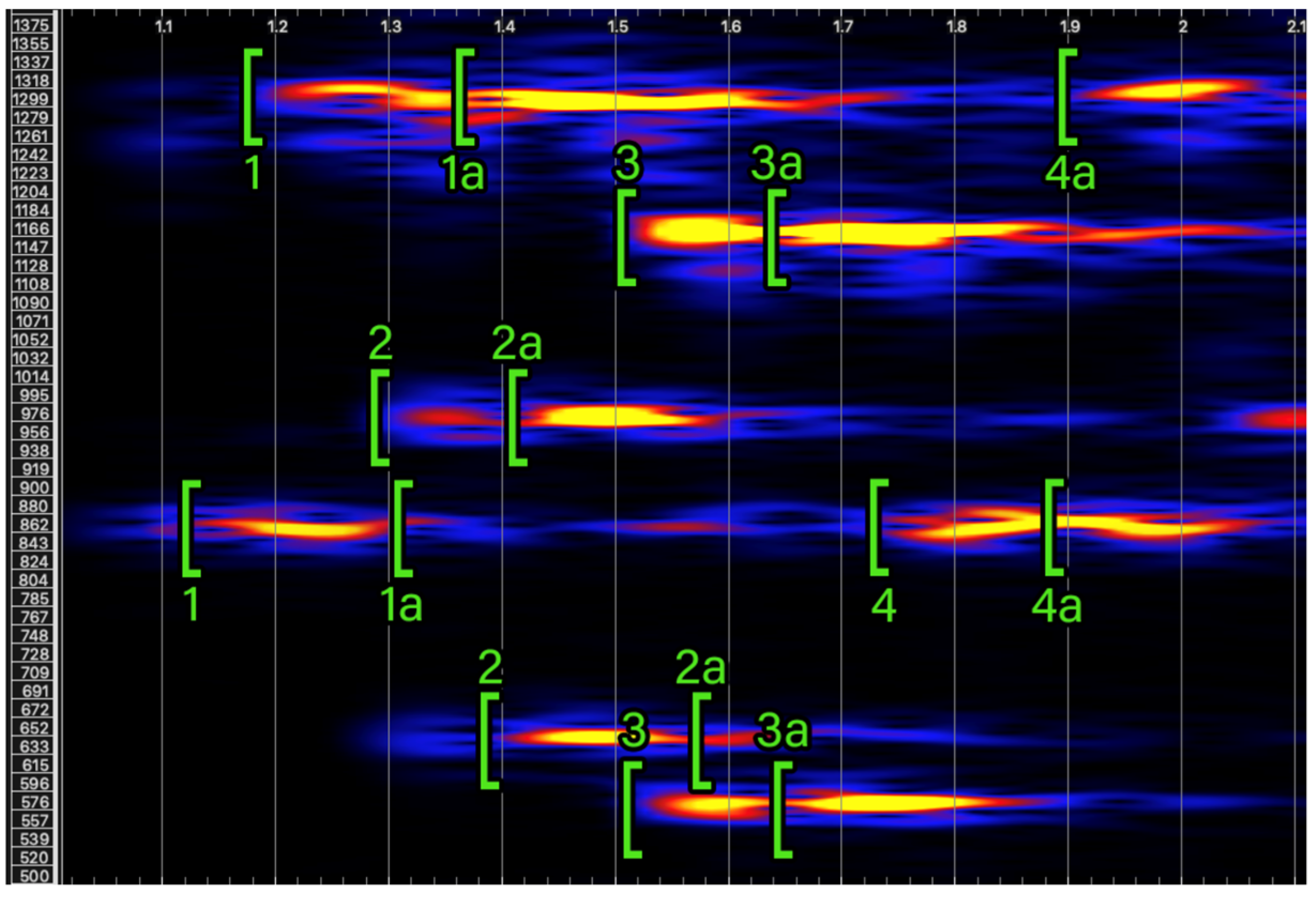
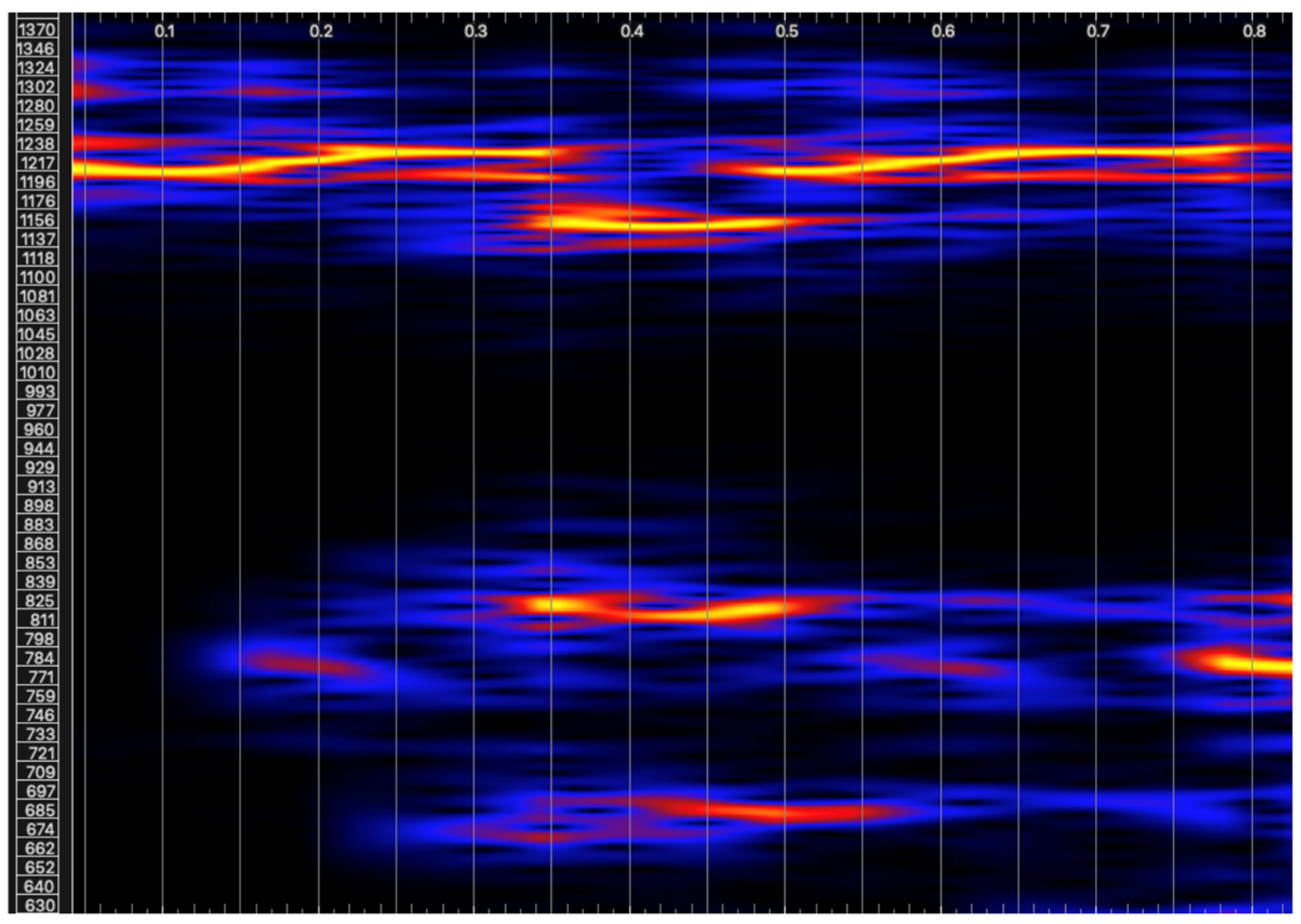
A one-second segment of the recording was spectrally analyzed, containing the four initial sounds of the “counterpoint”. The doubling of the subsequent tones by the automation results in the appearance of eight subsequent reverberations.
The spectrogram above shows that each key press is doubled in time by circa a tenth of a second. Two frequency ranges occur almost in parallel: these are the fundamentals of the two-foot stop and the third rank of mixture. From the image, it is easy to deduce that the frequencies of sounds of the mixture pipes used here are in a ratio of 1.5 (a fifth) to the two-foot fundamental in the case of the first, second and fourth tones, while the third tone is in a ratio of 2 (an octave). This difference results from the characteristic of mixture stops. With the first key press, the third-order mixture pipe sounds with a delay, and with the fourth press, the initial tone is missing—this is due to inaccuracies in its construction and voicing. Another delay, caused by similar reasons, occurs with the second tone in the four-foot stop. Each sound onset is marked with a green bracket with the consecutive tone number, and the letter ‘a’ indicates the moment of secondary valve opening. It is also visible that in the initial phase of pressing the key, there is a slightly larger frequency range, which, after a while, converges to one specific value (Woolley 2013). This type of transient is characteristic of the blowing phase of labial pipes. The moment of valve closing resulting from the programmed motion profile is also visible in the spectrogram as a narrowing of the spectral range and a decrease in amplitude approximately 0.1 s after the first blowing. Despite this, there is also a clear tendency to establish a constant frequency—the second repetition does not require as much time to stabilize, because the column of air has already been set into vibration during the first opening of the flap and did not completely stop immediately with its brief closing (Figure 14).

4.2.2. Tomasz Mońko—Improvisation on the Theme “O Mensch, bewein dein Sünde groß”—The “Triolets” Part

Registration:
  • manual I: Praestant 8′, Praestant 4′, II/I
  • manual II: Gedekt 4′ + pallet behavior automation
  • pedal: Subbass 16′, Praestant 8′
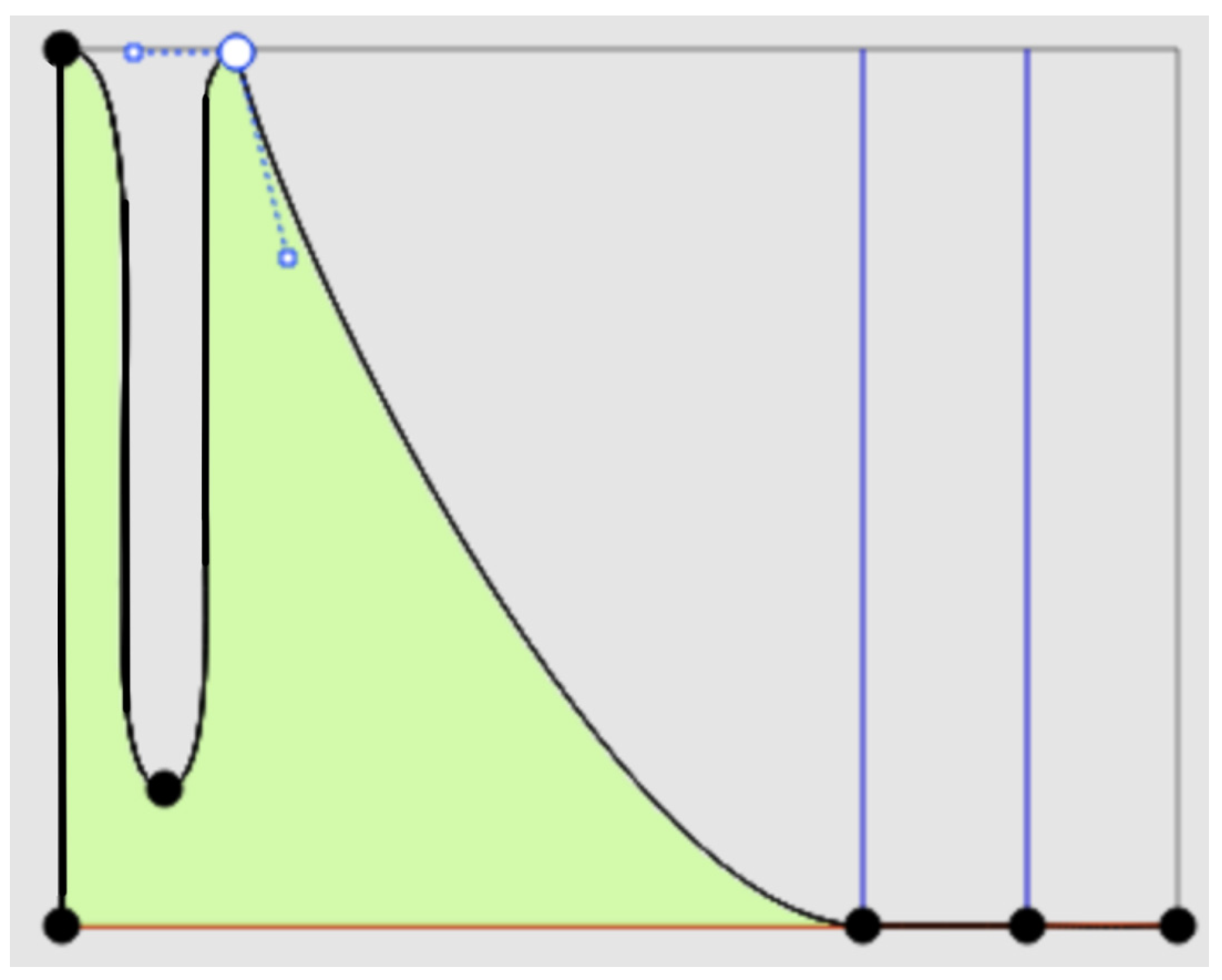
The title “Triolets” directly describes the way the theme is developed, which is through a triplet rhythmization of the cantus firmus. This consistently maintained texture, along with the uncomplicated harmony, gives the piece a rather romantic style. However, to create a sense of contrast, a specific means of expression was used here, which makes the sound of the organ almost “percussive”. This was achieved thanks to a specially designed pallet displacement profile depicted in Figure 15, which in effect causes multiple automatic repetitions of each chord at a relatively fast tempo.
To maintain the characteristic sound of pipe organs, the main section of the instrument operates in “traditional” mode, with only the operation of the secondary stop (Gedekt 4′) being automated. As a result, the listener has the impression of hearing not a single instrument, but a musical ensemble, including a percussion section, in which the continuous tremolo of a xylophone or marimba is recognizable (which only subsides on the final progression of tonic chords).
The diagram of the designed motion profile shows a threefold repetition of the valve opening, although the tempo of the variation performance, and therefore the duration of individual notes, allows for only a twofold opening each time. However, the speed of the mechanism’s operation is quite high, so much so that a single moment of airflow is very short (approximately 0.075 s), and the pipes of the four-foot stop are unable to fully resonate. Therefore, only the initial phase of sound production, i.e., the formation of vibrations, is audible, in which the sound of the pipe is characterized by a significantly greater number of noise components than in the phase of proper resonance. This is precisely what gives rise to the “percussive” character of the Gedekt 4′ part.
The beginning of the piece can be written as follows:
Arts 15 00120 i003
through the programmed behavior of the valves, a transformation is made to a form that could approximately be written as:
Arts 15 00120 i004
which is impossible to achieve under normal conditions, but becomes possible thanks to the operation of the mechatronic action.
Here we are dealing with a means of artistic expression that consists of a multiplied, short sound with a significant amount of noise, similar to a percussion instrument such as a xylophone or marimba, with an additional tremolo effect. This effect is achieved through the use of a programmable mechatronic action, as it is difficult to imagine such rapid repetition performed by a player in chord playing the organ, and certainly it would be impossible to simultaneously use another section of the instrument at the same time through manual keyboards coupling so that this section is not subject to the aforementioned tremolo, which, however, can be heard in the recording of the piece.
On the same principle, a continuous tremolo can be obtained, understood as a technique of rapid repetition of sounds. Translating the A/D phase function, visible in the Figure 15, to the S phase will cause the tremolo to last as long as the key is held down. With appropriate efficiency and precise adjustment of the mechanism, even the frullato technique known from flute music would become achievable on the organ.
The newly discovered means of artistic expression described here fits perfectly into the historical trend in organ building: throughout the history of this art, there have been clear aspirations to make the organ resemble a musical ensemble, and individual stops to resemble specific other instruments. This is even suggested by the names of most registers, such as flute, horn, gamba, trumpet, clarinet, etc., or even vox humana. Thanks to the programmable mechatronic system, the performance of organ music can now incorporate not only—as has been the case until now—the spectrum of sounds from various orchestral instruments, but also some of the performance techniques characteristic of them.
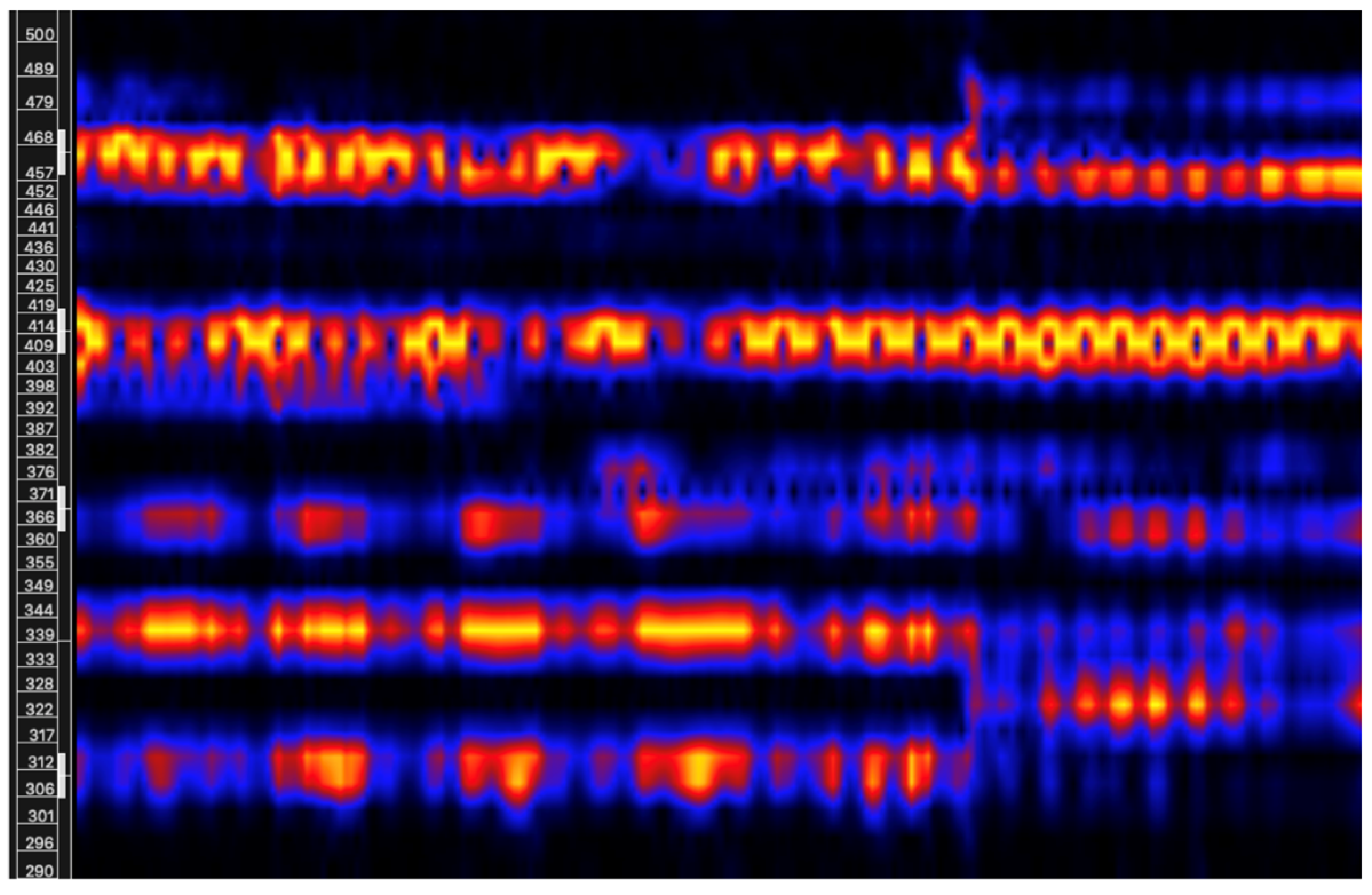
The spectogram pictured in Figure 16 shows the result of acoustic analysis of the first triplet—three chords of the piece, each doubled by the automated action, and played using a four-foot stop. The time the valves are open is so short that there is not enough time for the proper frequency of each tone to stabilize. It is visible in the form of vertical “splits” in the spectrogram. The pipes do not sound “correctly” at all, which is particularly evident in the first and third chords, where only the highest tone is somewhat clear. The inaccurate, incomplete sounding and the resulting detuning of the tones, combined with the qualities of the four-foot stop, create a very distinct impression of a percussive character in the sound of the excerpt, which the above spectrogram perfectly illustrates.

4.2.3. Tomasz Mońko—Improvisation on the Theme “O Mensch, bewein dein Sünde groß”—The “Meditation” Part

Registration:
  • manual I: Praestant 8′, Open fluit 8′, II/I
  • manual II: Praestant 8″ + pallet behavior automation
  • pedal: Subbass 16′, Praestant 8′
This variation, as its title suggests, is a meditative piece, built on long-held chords, mostly quite dense harmonically, developed—of course—on the basis of the theme, where the highest voice is its imitation. The combination of three voices of the same pitch creates the impression of a rather broad, fairly massive sound within three imposed eight-foot stops, and a delicate undulation resulting from minor tuning imperfections between them. The manual part consists of two combined layers, one of which is performed traditionally, without the use of automation, and the other is automatically controlled using this designed motion profile pictured in Figure 17.
The graph shows that the Praestant 8′ stop contains sounds with no S/R phases; therefore, the sound decays almost immediately in phase D, regardless of the time the keys are pressed. This is somewhat reminiscent of the sound envelope of a piano or the string section of an orchestra in pizzicato, which, combined with the sound of the traditionally controlled section, results in a strong accentuation of each individual note at its beginning. In addition, both the momentary load on the air system and the fact that the initial phase of the pipe sound is characterized by frequency fluctuations before the desired vibrations form properly (thus the sound contains many non-harmonic components and noise), makes a momentary “ripple” in the sound audible, similar to the effect characteristic of stops such as unda maris, which decays after a while—the “waviness” quickly decreases to a minimum, leaving a relatively “flat”, clean-sounding chord.
As mentioned in the introduction, the usual pipe organ is an instrument of “unmodifiable constant sound”—once a key is depressed, there is no possibility to alter the manner in which particular pipes speak, which can be perceived either as an advantage or a deficiency. Attempts to overcome this limitation have been made using simple electropneumatic devices, an example of which is the Schoenstein instrument: opus 126 from 1997 in Lincoln, Nebraska, where one can find the “Pizzicato Bass”—a device that allows for the automatic truncating of the pipe sound regardless of the duration of key press (Bethards 2002). Although the result of this invention is an interesting effect—reminiscent of the authentic pizzicato of the bass string section in a symphony orchestra, its operation is limited to a single organ stop, and there is no possibility of adjusting its parameters (lengthening or shortening the articulation) or influencing in any way the onset or decay of the sound. The parameters of the effect are therefore fixed, which limits its application as a means of artistic expression. Mechatronic action, however, allows one to go much further: to extend the use of the aforementioned effect to any chosen registration and to adjust its parameters. Thanks to the automation of such an action, organ music can be enriched with many of these previously “missing” expressive possibilities, as shown, among others, in the example of “Meditation”. The accentuation in the form of dynamics, such as the pizzicato audible in the recording, was not previously achievable on a pipe organ in the range of a stop or a set of stops freely selected from all those available in the section, which makes it a new means of artistic expression in organ performance, now easy to apply in any configuration.

4.2.4. Ligeti György Sándor—Organ Etude #1, “Harmonies”

Registration:
  • manual I: Gedekt 4′, susequently: + Praestant 8′, + first mixture rank, - Praestant 8, - first mixture rank; the whole division is transposed down by octave
  • manual II: Praestant 8′, pallet behavior automation
  • pedal: Subbass 16′
György Ligeti’s Organ Etude #1, “Harmonies”, is an example of existing organ music literature whose performance becomes much easier in practice thanks to the automation of the mechatronic action, and more interesting due to the wider possibilities of manipulating the effect required by the composer, which is the essence of this piece.
Ligeti is one of the most important avant-garde composers of the second half of the 20th century. His works include pieces for organ, among them a collection of two etudes, the first of which, entitled “Harmonies,” according to the composer’s instructions, requires specific preparation of the instrument. This piece was chosen for artistic realization in order to demonstrate that this preparation is not necessary if the instrument is equipped with a mechatronic action.
The compositional idea of this piece is based on the continuous transformation of cluster-like structures, played using organ stops supplied with air at greatly reduced pressure in order to obtain, among other things, microtonality (in the introduction, Ligeti uses the phrase “contaminated sound”).
In the case of organs with traditional action and not equipped with mechanisms that allow manipulation of the pressure supplying the sections, achieving these conditions requires resorting to various actions—from partially pulling out the stop knobs, where possible, through opening the windchest, to utilizing a vacuum cleaner as a supply pump (!) instead of a typical blower. These are suggested methods of performance, which can also be read in the introduction to the piece. Richard Steinitz, in his book about Ligeti, emphasizes that these methods are the only possible ones (Steinitz 2003), although the composer himself does not exclude the use of other, arbitrary techniques at the performer’s discretion, thus anticipating that the technologies used in the construction of pipe organs will develop and new possibilities will emerge that were not available at the time of writing “Harmonies”, which is precisely what was utilized in the recorded performance that is part of this research. The properties of the mechatronic action mechanism overcome the limitations mentioned by Steinitz: from now on, microtonality resulting from reduction in the air pressure supplying the whole instrument can be achieved by manipulating air flow to the pipes instead. It can also be controlled from the console—and what is more—without the need to affect the operation of the air supply system. Precise control over the intensity of the effect is also possible.
Interestingly, although the musical notation itself gives no indication of the graphic structure of the work, plotting the individual notes in a pitch versus time graph (usual representation for MIDI files) reveals a specific emerging pattern, which, due to its exceptional regularity, raises the question: what was the composer’s original intention and what type of material was created as the initial idea? This structure, clearly emerging in Figure 18, was discovered by the author of this article while working on the recording. The resulting graphic form seems fascinating and raises the question of whether such a regular structure (although characterized by “broken” symmetry) could have arisen intentionally or as a “side effect”. It is probable that this structure was the original framework on which Ligeti built the musical content, although this cannot be stated with absolute certainty. Perhaps this very clear pattern, which the composer probably followed, was deliberately veiled by the composer and waited over fifty years to be discovered.
In the recorded piece, only precise control of the pallet displacement was used to fulfill the objectives of the Etude; manipulation of the windchest supply air pressure was not necessary at all. The maximum permissible degree of valve opening is adjusted with the “modulation wheel” by the performer. This setting varies throughout the piece, which is clearly noticeable, especially at the beginning, where there is a momentary fluctuation in dynamics. The dynamic climax around the middle part (fourth minute) is the moment of the highest setting of this parameter (although it is still not even close to full valve opening).
At the time the composition “Harmonies” was created, the technology to control the degree of flap opening did not exist. The use of mechatronic action to perform this etude is another example of the application of new possibilities offered by technology in the performance of existing literature. The means of expression, which can be called “microtonality through supply air flow reduction”, is not entirely new in itself, but the method of its technical implementation and the increased control that the artist has over it allow it to be considered “rediscovered”.
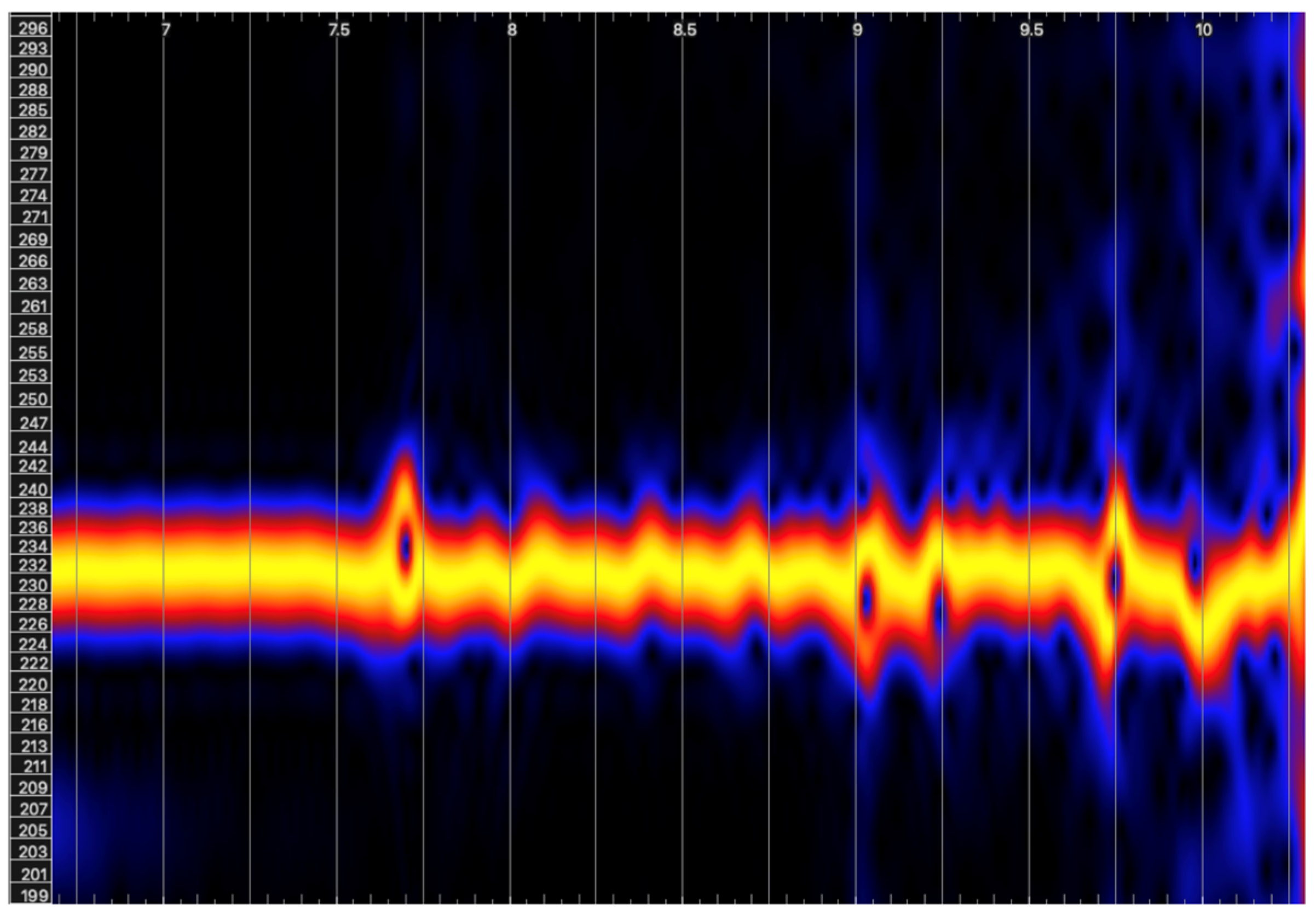
The resulting spectrogram (Figure 19) illustrates an interesting sound effect: prominent beating due to microtonality, which is achieved by reducing air flow to the pipes. Thanks to the characteristics of mechatronic action, this effect can be obtained by limiting the degree of valve opening to near minimum. The narrowing of the air passage can be dynamically regulated by the performer. In the etude “Harmonies”, this regulation is slow and gentle throughout the whole piece. The valves never fully open at any point—all the chords, according to the composer’s intention, are “tainted,” their individual components are not tuned to be harmonically consonant, resulting in countless low-frequency beats throughout the entire etude. The spectrogram presents an analysis of a fragment encompassing a “chord” with two changes in individual tones. The most noticeable effect is the beating—audible as vibrations of a frequency range from several to a dozen times per second, and visible as a jagged spectrum image.

5. Conclusions

Pipe organs definitely are not an instrument whose development has ended; therefore, the range of artistic means of expression available to the organist, which can be achieved primarily through technological solutions, is not definitively limited, and continuous exploration in this field is possible. The means discovered and described in this article are not the only ones offered by mechatronic action. On the contrary, they only present a small segment of what can be achieved by experimenting with the settings of automation of the valve displacement over time in a way unattainable for a musician’s performance apparatus without auxiliary tools. The aim of this article was not to comprehensively “invent” all possible sound effects, but rather to open up the opportunities and to create a foundation for broad (both artistically and scientifically) explorations that performers, improvisers, composers and organbuilders will be able to undertake from now on.
The emergence of new means of expression, those previously unheard of in organ music or those that are an extension of those already used, results from the use of specific solutions in the construction of the instrument’s internal mechanism and specially developed control software. From the perspective of the history of organ building and literature for this instrument, one can see a strong feedback loop, still active today, between the evolution of both. This suggests that the same could happen in the case of the subject of this article: the expansion of the organ’s capabilities will lead to the creation of compositions utilizing new means, and perhaps this, in turn, will create a demand for further, previously unknown effects. After all, the most important feature of the mechatronic action developed by the author is its programmable behavior, which paves the way for easier and faster exploration of new sound possibilities. As demonstrated in the recording of Bach’s choral prelude, the implementation of means only now achievable in early music is also an interesting field for research into interpretation using previously unusual effects offered by the instrument.
The author of this work hopes that the new means of artistic expression in organ music, discovered through the use of a specially designed mechatronic action system, will be applied, at least in part, in performance and composition practice, and above all, that the fact of their discovery will serve as an inspiration for further research both in organ music and in the art of organ building.

Supplementary Materials

The following supporting information can be downloaded at: https://tomaszmonko.com/upload/innovative_means__article.zip (accessed on 10 November 2025).

Funding

This research received no external funding.

Institutional Review Board Statement

Not applicable.

Informed Consent Statement

Not applicable.

Data Availability Statement

The original contributions presented in this study are included in the article/Supplementary Material. Further inquiries can be directed to the corresponding author.

Conflicts of Interest

The author declares that there are no conflicts of interest related to this article. The work has been prepared independently, without the influence of any financial, personal, or institutional relationships that could have affected its content.

References

  1. Asutay, Erkin. 2013. Physical Measurements and Subjective Characterization of Pipe Organ Mechanical Key Actions. Available online: https://www.semanticscholar.org/paper/Physical-measurements-and-subjective-of-pipe-organ-Asutay/0397e2f958c2d896842de2368786e8044e73fff6 (accessed on 10 September 2025).
  2. Asutay, Erkin, Mendel Kleiner, and Daniel Västfjäll. 2012. Development of methodology for documentation of key action properties and haptic sensation of pipe organ playing. Acoustics Bulletin 37: 42–44. [Google Scholar]
  3. Bauer, Manuel, Netharasan Balaratnam, Julia Weidenauer, Fabian Wagner, and Markus Kley. 2023. Comparison of envelope demodulation methods in the analysis of rolling bearing damage. Journal of Vibration and Control 29: 5009–20. [Google Scholar] [CrossRef]
  4. Baydas, Senay, and Bulent Karakas. 2019. Defining a curve as a Bezier curve. Journal of Taibah University for Science 13: 522–28. [Google Scholar] [CrossRef]
  5. Bethards, Jack. 2002. A Brief for the Symphonic Organ. The British Insitute of Organ Studies Journal 26: 16. [Google Scholar]
  6. Bordoni, Paolo, Piotr Odya, Józef Kotus, and Bożena Kostek. 2024. Sounding Mechanism of a Flue Organ Pipe—A Multi-Sensor Measurement Approach. Sensors 24: 1962. [Google Scholar] [CrossRef] [PubMed]
  7. Deutsch, Ralph, and Leslie J. Deutsch. 1979. ADSR envelope generator. The Journal of the Acoustical Society of America 66: 936. [Google Scholar] [CrossRef]
  8. Giesen, Matthias. 2005. Arnold Schönberg und die Orgel. Österreichisches Orgelforum 7: 14. [Google Scholar]
  9. Harashima, Fumio, Masayoshi Tomizuka, and Toshio Fukuda. 1996. Mechatronics—“What Is It, Why, and How?” An editorial. IEEE/ASME Transactions on Mechatronics 1: 1–4. [Google Scholar] [CrossRef]
  10. Hruška, Viktor, and Pavel Dlask. 2020. On a Robust Descriptor of the Flue Organ Pipe Transient. Archives of Acoustics 45: 377–84. [Google Scholar] [CrossRef]
  11. Kądziołka, Tomasz, Sławomir Kowalski, and Tomasz Mońko. 2021. Pipe organ evolution. From mechanical to mechatronical subsysystems. Journal of Engineering, Energy and Informatics 1: 29–42. [Google Scholar]
  12. Kowol, Paweł, Paweł Nowak, and Grazia Lo Sciuto. 2023. A Control Strategy for Mechatronic Action of a Pipe Organ Using a VCM Actuator. Electronics 12: 4754. [Google Scholar] [CrossRef]
  13. Kowol, Paweł, Paweł Nowak, Luca Di Nunzio, Carlo G. Cardarilli, Giacomo Capizzi, and Grazia Lo Sciuto. 2024. Pipe Organ Design Including the Passive Haptic Feedback Technology and Measurement Analysis of Key Displacement, Pressure Force and Sound Organ Pipe. Applied System Innovation 7: 37. [Google Scholar] [CrossRef]
  14. Mattheson, Johann. 1739. Der Vollkommene Capellmeister. Hamburg: Christian Herold, p. 109. Available online: https://ks15.imslp.org/files/imglnks/usimg/7/7b/IMSLP67752-PMLP136831-Mattheson,_Der_vollkommene_Capellmeister.pdf (accessed on 2 October 2025).
  15. Murphy, Jim, Ajay Kapur, and Dale A. Carnegie. 2014. Mechatronic Keyboard Music: Design, Evaluation, and Use of a New Mechatronic Harmonium. Paper presented at 40th Proceedings International Computer Music Conference, Athens, Greece, September 14–20, vol. 2014, pp. 678–85. Available online: http://smc.afim-asso.org/smc-icmc-2014/images/proceedings/OS21-B04-MechatronicKeyboardMusic.pdf (accessed on 18 September 2025).
  16. Ness, Steven, Shawn Trail, Peter Driessen, Andrew Schloss, and George Tzanetakis. 2011. Music Information Robotics: Coping Strategies for Musically Challenged Robots. Paper presented at 12th Proceedings International Society of Music Information Retrieval Conference, Miami, FL, USA, October 24–28, vol. 2011, pp. 567–72. Available online: https://archives.ismir.net/ismir2011/paper/000101.pdf (accessed on 22 September 2025).
  17. Pei, Donghe, Masatomo Takahashi, and Haiou Yu. 2019. Envelopes of one-parameter families of framed curves in the Euclidean space. Journal of Geometry 110: 48. [Google Scholar] [CrossRef]
  18. Pitsch, Stephan, Sture Holmberg, and Judit Angster. 2010. Ventilation system design for a church pipe organ using numerical simulation and on-site measurement. Building and Environment 45: 2629–43. [Google Scholar] [CrossRef]
  19. Pykett, Colin E. 2002. Pipe organs: Physics in an action. Physics World 15: 21–22. [Google Scholar] [CrossRef]
  20. Quantz, Johann. 1752. Versuch einer Anweisung die Flöte Traversiere zu Spielen. Berlin: Johann Friedrich Voß, p. 110. Available online: https://books.google.pl/books?id=EaARf3buCjAC (accessed on 2 October 2025).
  21. Rothstein, Joseph. 1995. MIDI. A Comprehensive Introduction. Madison: A-R Editions. [Google Scholar]
  22. Shannon, John R. 2014. Understanding the Pipe Organ: A Guide for Students, Teachers and Lovers of the Instrument. Jefferson: McFarland. [Google Scholar]
  23. Steinitz, Richard. 2003. Microtonality and the organ Études. In György Ligeti; Music of the Imagination. Boston: Northeastern University Press, pp. 180–83. [Google Scholar]
  24. Stolet, Jeffrey. 2009. Low Frequency Oscillators. Electronic Music Interactive 2: 31. [Google Scholar]
  25. Takahashi, Masatomo, and Haiou Yu. 2021. Envelopes of families of framed surfaces and singular solutions of first-order partial differential equations. Proceedings of the Royal Society of Edinburgh Section A: Mathematics 151: 1515–42. [Google Scholar] [CrossRef]
  26. Verge, M. P., B. Fabre, W. E. A. Mahu, A. Hirschberg, R. R. van Hassel, A. P. J. Wijnands, J. J. de Vries, and C. J. Hogendoorn. 1994. Jet formation and jet velocity fluctuations in a flue organ pipe. The Journal of the Acoustical Society of America 95: 1119–32. [Google Scholar] [CrossRef]
  27. Woolley, Alan. 2006. The Physical Characteristics of Mechanical Pipe Organ Actions and How They Affect Musical Performance. Ph.D. thesis, The University of Edinburgh, Edinburgh, Scotland, UK. Available online: https://www.acoustics.ed.ac.uk/wp-content/uploads/Theses/Woolley_Alan__PhDThesis_UniversityOfEdinburgh_2006.pdf (accessed on 24 October 2025).
  28. Woolley, Alan. 2010. Mechanical Pipe Organ Actions and why Expression is Achieved with Rhythmic Variation Rather than Transient Control. Paper presented at International Symposium on Music Acoustic, Sydney and Katoomba, Australia, August 25–31; pp. 1–7. Available online: https://www.acoustics.asn.au/conference_proceedings/ICA2010/cdrom-ISMA2010/papers/p2.pdf (accessed on 10 November 2025).
  29. Woolley, Alan. 2013. Transient variation in mechanical action and electric action pipe organs. Proceedings of Meetings on Acoustics 19: 035057. [Google Scholar] [CrossRef]
Figure 1. The prototype mechatronic-action windchest (C-part). Photo: author’s private source.
Arts 15 00120 g001
Figure 2. The mechatronic action modules located inside the windchest. Photo: author’s private source.
Arts 15 00120 g002
Figure 3. The windchest under construction. Tone chamber grid visible. Photo: author’s private source.
Arts 15 00120 g003
Figure 4. Mechatronic actuator module: frame/chassis, stepper motor, arm and adjustable rod, controller board. Photo: author’s private source.
Arts 15 00120 g004
Figure 5. Diagram of the linkage between the pallet and the actuating elements: 1—pallet; 2—pallet spring; 3—adjustable rod; 4—stepper motor module with autonomous control. Illustration: author’s private source.
Arts 15 00120 g005
Figure 6. The NEMA17 motor torque chart (source: https://s3.moonsindustries.com/staticpic/images/MS17HDBP4200.png; received: 4 November 2025).
Arts 15 00120 g006
Figure 7. Input-output correction curve of the pallet displacement functions. Horizontal axis: input values of the designed motion profile (0: valve closed, 1: valve open), vertical axis: corrected values, implemented by the controller. Illustration: author’s private source.
Arts 15 00120 g007
Figure 8. A web interface created by the author of this article for transferring data files of designed motion profiles to the instrument via an Internet connection. Illustration: author’s private source.
Arts 15 00120 g008
Figure 9. Motion profile designed for the cantus firmus of the described piece. Pallet displacement function over time: valve closed = lowest value, valve fully open = highest value, horizontal division: phases A/D, S and R. Duration given relatively. Each dot indicates Bézier control points (only relevant for curve design process). Illustration: author’s private source.
Arts 15 00120 g009
Figure 10. Spectrogram of a sample of the last sound of the first phrase of the cantus firmus. Range: around the main component (232 Hz, b flat), Amplitude subjected to dynamic compression (locally maximized). Horizontal axis: time [s]—linear scale. Vertical axis: frequency [Hz], linear scale. Color: relative amplitude of the spectral coefficient. Illustration: author’s private source.
Arts 15 00120 g010
Figure 11. Notation of the hymn “Allein Gott in der Höh’ sei Ehr’” used as the source text for the improvisation theme. Source: Johann Spangenberg—“Kirchengesenge Deudtsch”, 1545, digitized version: https://en.wikipedia.org/wiki/Allein_Gott_in_der_H%C3%B6h_sei_Ehr#/media/File:Allein-Gott-Spangenberg-1545.png (received: 4 November 2025).
Arts 15 00120 g011
Figure 12. Motion profile of the counterpoint tones of the described piece. Pallet displacement function over time: valve closed = lowest value, valve fully open = highest value, horizontal division: phases A/D, S and R. Duration given relatively. Each dot indicates Bézier control points (only relevant for curve design process). Illustration: author’s private source.
Arts 15 00120 g012
Figure 13. The motion profile is used when playing chord progressions. Pallet displacement function over time: valve closed = lowest value, valve fully open = highest value, horizontal division: phases A/D, S and R. Duration given relatively. Each dot indicates Bézier control points (only relevant for curve design process). Illustration: author’s private source.
Arts 15 00120 g013
Figure 14. Spectrogram of the counterpoint voice, the first four sounds, each automatically doubled. Horizontal axis: time [s]—linear scale. Vertical axis: frequency [Hz]—linear scale. Color: relative amplitude of the spectral coefficient. Illustration: author’s private source.
Arts 15 00120 g014
Figure 15. Pallet motion profile for the triplet chords in the described piece. Pallet displacement function over time: valve closed = lowest value, valve fully open = highest value, horizontal division: phases A/D, S and R. Duration given relatively. Each dot indicates Bézier control points (only relevant for curve design process). Illustration: author’s private source.
Arts 15 00120 g015
Figure 16. Spectrogram of a sample of the first three chords in the described piece—four-feet stop solo, doubled onset. Horizontal axis: time [s]—linear scale. Vertical axis: frequency [Hz]—logarithmic scale, color. Relative amplitude of the spectral coefficient. Illustration: author’s private source.
Arts 15 00120 g016
Figure 17. Motion profile for the Praestant 8′ stop. Pallet displacement function over time: valve closed = lowest value, valve fully open = highest value, horizontal division: phases A/D, S and R. Duration given relatively. Each dot indicates Bézier control points (only relevant for curve design process). Illustration: author’s private source.
Arts 15 00120 g017
Figure 18. György Ligeti—Organ Etude No. 1: “Harmonies”, transformation of the musical notation of the entire piece into a graph showing pitch (vertical axis) and regular duration of notes without considering rubato and fermatas (horizontal axis). Illustration: author’s private source.
Arts 15 00120 g018
Figure 19. György Ligeti—Etude No. 1 “Harmonies”, spectrogram of one of the “chords”, showing two changes in individual sounds. Duration: approximately 3 s. Horizontal axis: time. Vertical axis: frequency [Hz]. Color: relative amplitude of the spectral coefficient. Illustration: author’s private source.
Arts 15 00120 g019
Disclaimer/Publisher’s Note: The statements, opinions and data contained in all publications are solely those of the individual author(s) and contributor(s) and not of MDPI and/or the editor(s). MDPI and/or the editor(s) disclaim responsibility for any injury to people or property resulting from any ideas, methods, instructions or products referred to in the content.