3.2. Objective and Implementation
The objective of the mechatronic action project was to take another step in the art of organ building, aiming to expand the range of musical means of expression available for organ literature and improvisation; to examine the artistic effects resulting from the ability to obtain new, unprecedented sounds from the instrument—newly created means of expression—and to apply them both to contemporary music (especially improvised music), as well as to attempt to use some of them in examples of well-known organ literature from centuries past, and also to consider the legitimacy of performing early music using them.
Initially, modification of the existing instrument with a mechanical or electromechanical action was considered. However, due to differences in the construction of the new type of mechatronic action compared to existing “ready-made” solutions, as well as organizational difficulties, it was decided to build a new instrument from scratch. This is a much more complex and costly task, but it seemed to be the most appropriate decision for a non-standard, prototype project.
Therefore, the concept of a three-manual organ with a fairly universal layout was developed, although with a clear stylistic distinction between its individual divisions. The project involved the staggered dismantling of the existing low-quality organ in the church of St. Peter and Paul in Łódź, Poland, and the gradual replacement of the dismantled parts with newly constructed divisions of an experimental instrument. Due to financial constraints, this project was planned to take several years to complete. For research purposes, a single common division of the instrument was built and used to record experimental improvisations and existing baroque and contemporary works. The recordings have been assembled in post-production from separate layers played one at a time by the organ from pre-recorded MIDI files (although with modulations applied live during the recording). This division is equipped with a mechatronic action with the following disposition: Subbas 16′, Praestant 8′, Open fluit 8′, Praestant 4′, Gedekt 4′, Quint 22/3′, Superoctaaf 2′, Mixtuur 4–5st., Trompet 8′. The Dutch-sounding stop names, as well as the division names, were used in reference to the country from which the used pipes were obtained. This single unit serves as the Hoofdwerk, Bovenwerk (or Positief), and Pedaal divisions in the recording. The names “Bovenwerk” or “Positief” refer only to the auditory impression—it simply denotes a division located slightly further from the listener than the “Hoofdwerk,” not a physical location higher up. In practice, the parts belonging to the “Hoofdwerk” and “Bovenwerk”, as layers of the recording, were edited to create the impression of their different locations within the interior space.
The new organ’s “mechatronic windchests” were designed in such a way as to facilitate the installation of the pallet actuator modules, to highlight the effects of mechatronics, and thus to enable more accurate research on listeners’ perception of music performed using new artistic means.
Project Construction
The experimental part of the instrument consists of two whole-tone scale windchests belonging to a single common division, one beginning with the C tone, the other beginning with C#. These windchests were placed to the left and right of the existing pneumatic action organ (not used in the research), surrounding it and creating a considerable distance of several meters apart, which in turn enhances the spatial acoustic effect.
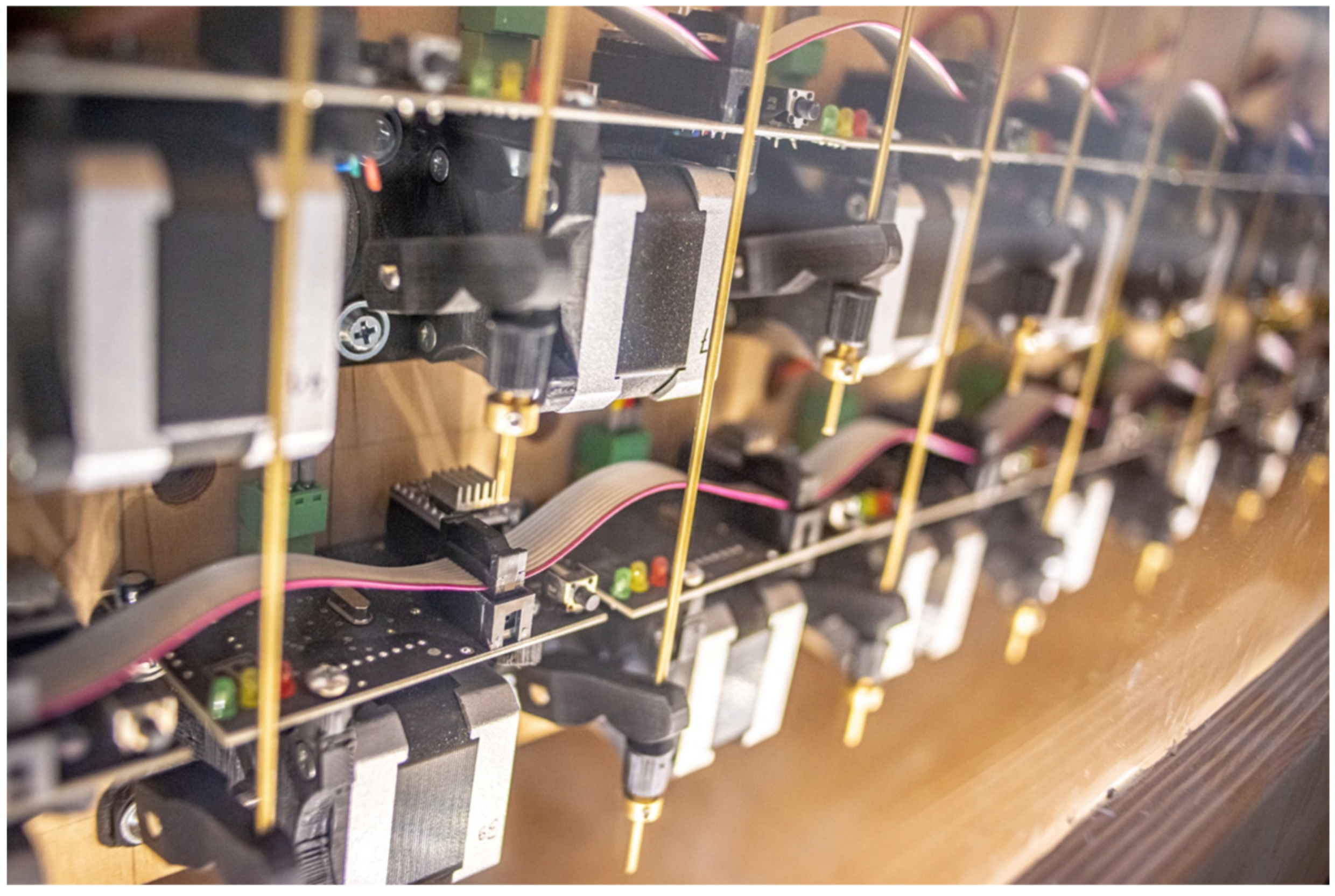
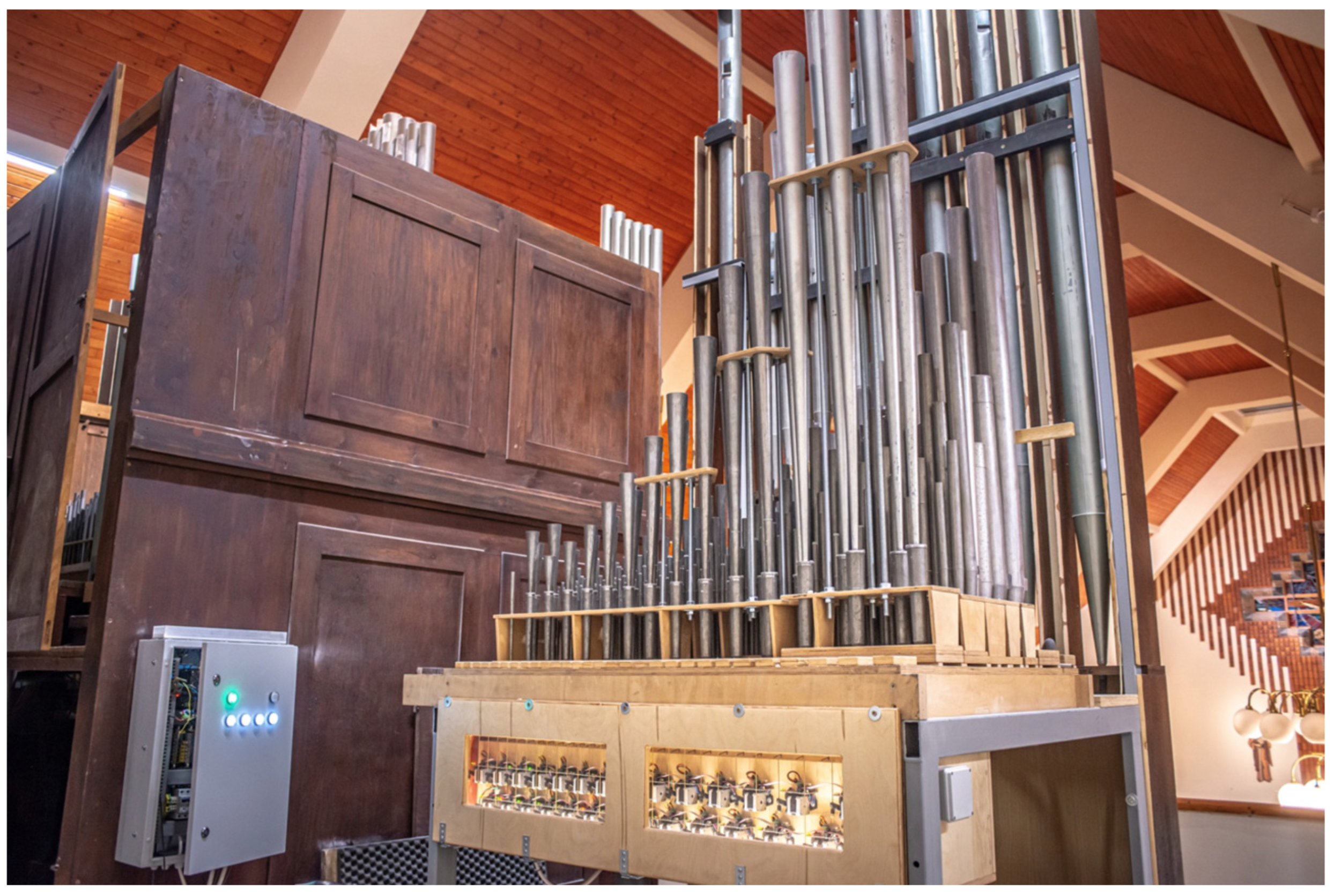
Since there is no direct, mechanical linkage from the outside of the windchest, there is no need to extend any moving elements beyond the closed, compressed air-containing part of the windchest, so the actuators were placed inside the windchest box, unlike conventional construction methods, where the control elements are usually located on the outside. The stepper motor modules (actuators) are larger than the standard “flat” electromagnets commonly used to control pallet valves—due to this fact, appropriately much space was allocated inside the windchest box—its vertical extension is clearly visible in the photo above. Additionally, transparent acrylic “windows” were made in the outer panel, and lighting was installed inside the box—all this to allow for visual inspection of the action mechanism’s behavior (
Figure 1 and
Figure 2).
The pallet valves used in this particular mechatronic system are no different from those used in instruments with tracker action. They are single-piece pallets made of oak. Of course, in a project like this, folding/two-piece pallets would enhance the effects achieved with automation and simplify the software, and adjustments would also become easier. This prototype, however, was designed to demonstrate that this type of automation can be used in any instrument with simple single-piece pallets (the vast majority of tracker action organs have this simplest type of valves). Treating this as a design challenge, it was decided to build a windchest with “standard” solid pallets, which made the tasks related to software development and mechanism adjustments significantly more difficult, but ultimately proved that the task was feasible, with equally interesting end results.
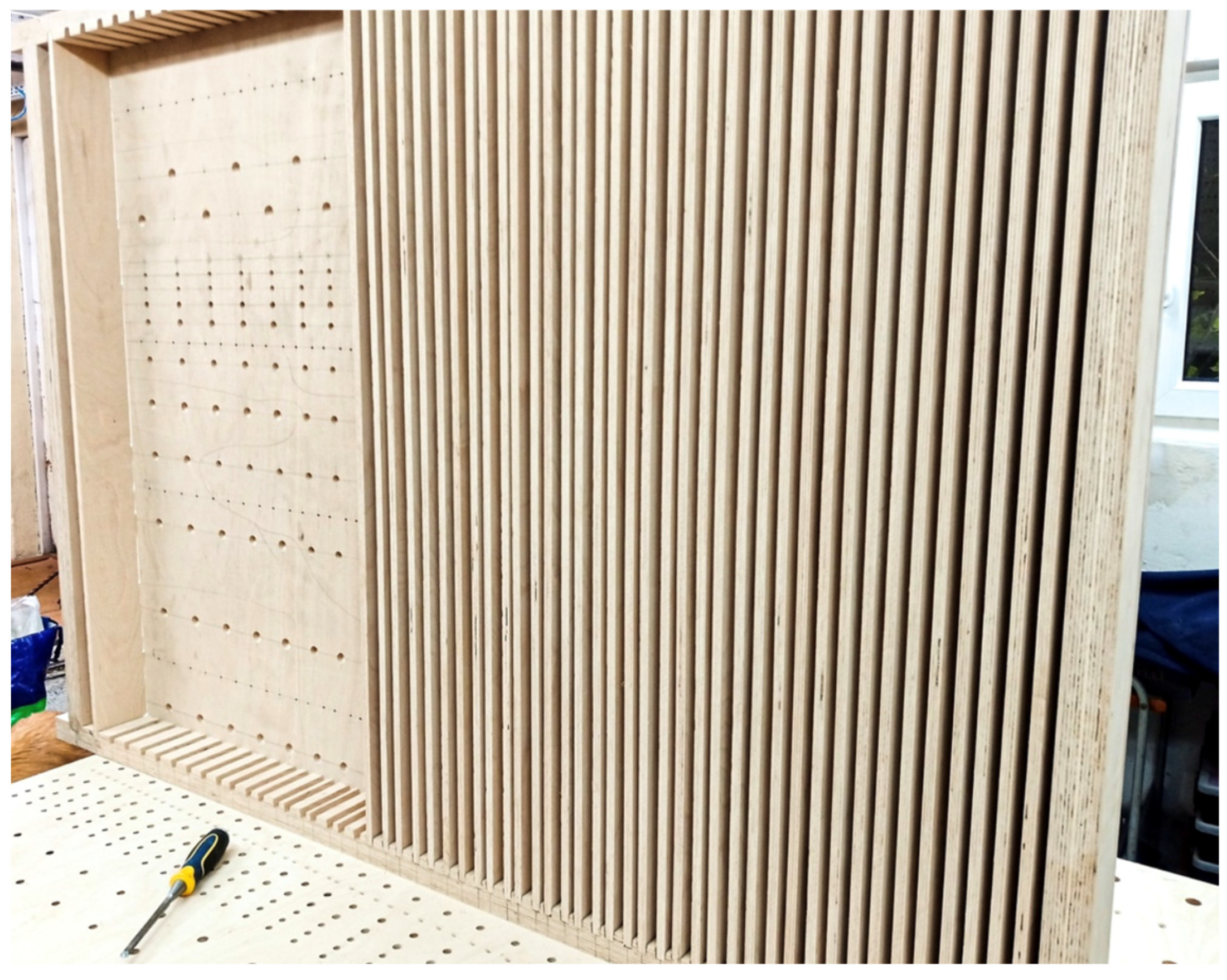
The individual tone chambers in the windchest grid were separated by “vacant” chambers (
Figure 3) in order to limit their volumes and, consequently, the inertia of compressed air filling and emptying them during the opening and closing of the valves, which translates into enhanced precision of the attack and release phases of the sound envelope. Due to the compressibility, the air filling the chamber volume can act as a kind of high-cut (low-pass) filter and tends to relatively stabilize the pressure, which would reduce the modulation effect at higher frequencies of valve position changes, hence the idea of limiting chambers’ volumes (
Bordoni et al. 2024;
Hruška and Dlask 2020;
Pitsch et al. 2010;
Verge et al. 1994).
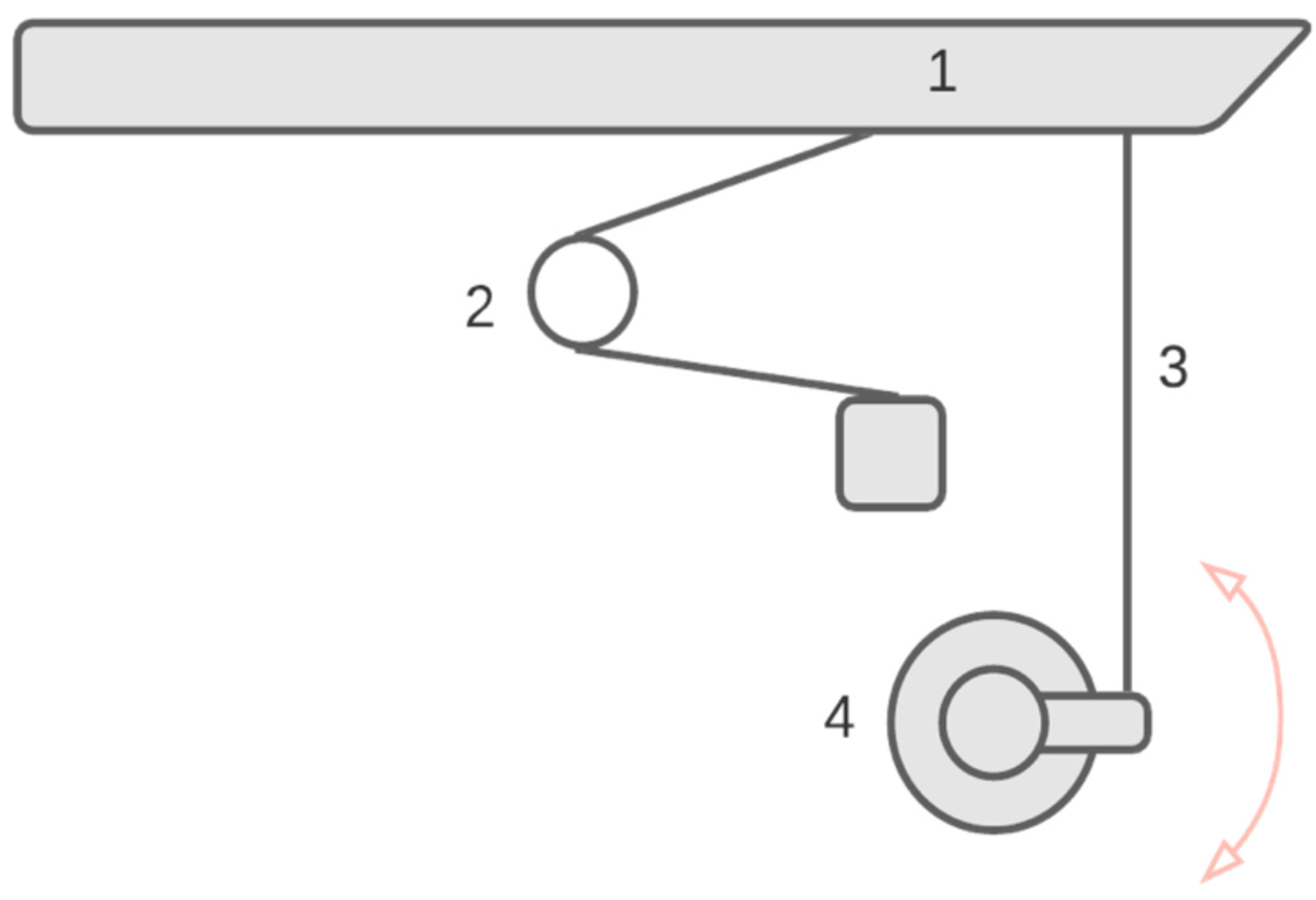
The linkage between the pallets and the actuators is identical to that found in mechanical tracker action. This is illustrated by the following diagram, which depicts a well-known concept:
The control system was developed from scratch specifically for the needs of the research on the experimental action, hence its somewhat specific structure and the assumption that each of the actuator modules should have its own microcontroller performing calculations of single pallet displacement, according to a stored table of motion profile data and responding to instructions sent by the master unit. This allows each key to behave independently, which significantly expands the possibilities of shaping the organ’s sound. Arnold Schönberg mentioned these characteristics of the instrument in 1949, defining his expectations for an organ that would be appropriate for his musical esthetic: “[The organ] should allow for dynamic changes to each tone independently […]” (
Giesen 2005).
For research purposes, a simplified version of the system has been built—the instrument’s central unit is a single division controller equipped with a direct MIDI input capable of interfacing with various control devices such as a keyboard with a “modulation wheel.”
The element clearly visible in
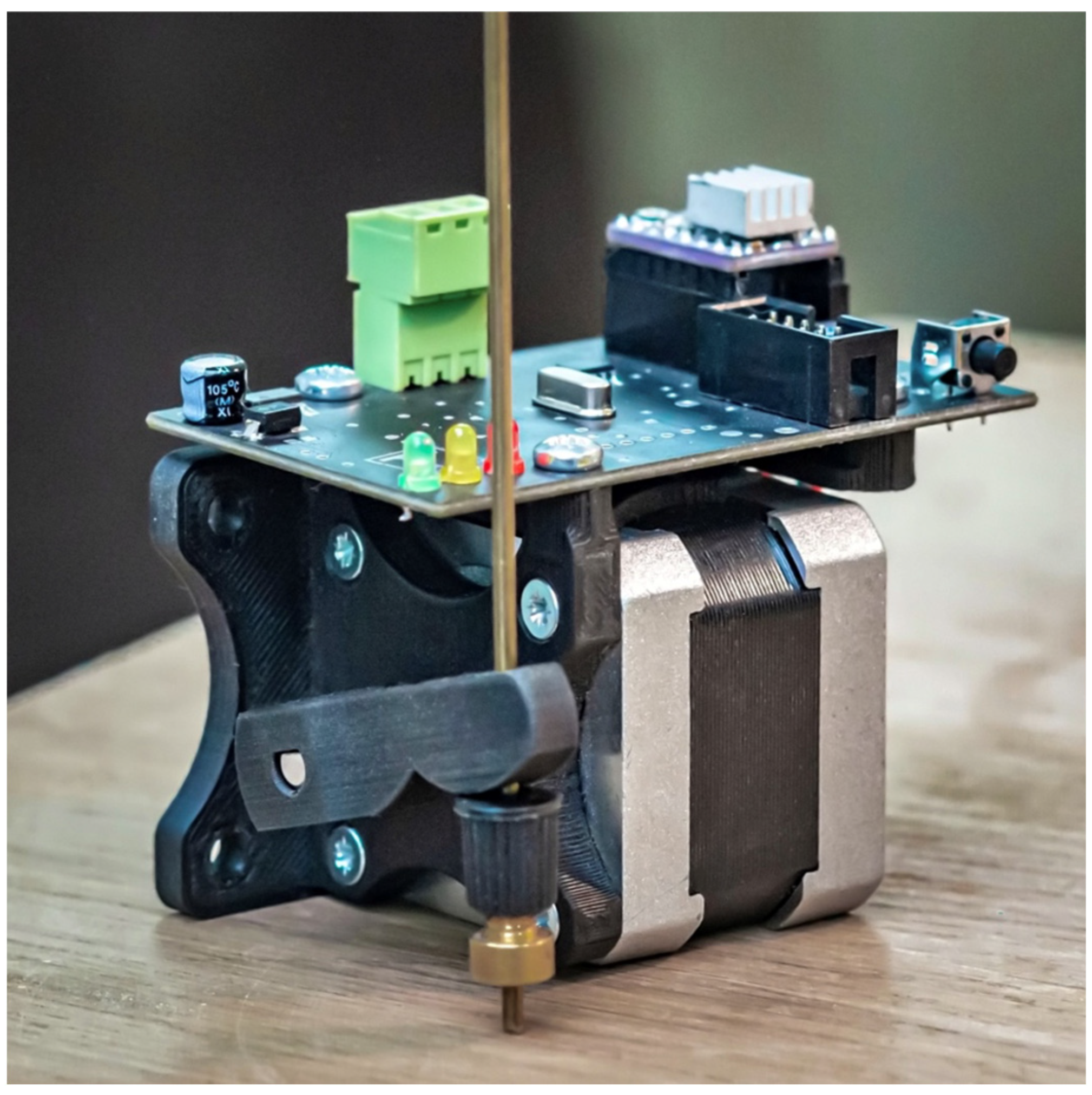
Figure 1 is a steel cabinet that houses the power supply for the windchest modules and the main control electronics. This includes a central unit designed specifically for use in pipe organs, based on an ATMega128 microcontroller, as well as a wireless network module (based on ESP8266) capable of downloading software updates and motion profiles data via wireless network. A digital radio communication module (NRF24L01+) is also included for use with a remote control to facilitate tuning and voicing, or for wireless connection to any MIDI keyboard/controller. The wiring then reaches the windchests, where it supplies power: 18 V high-amperage for the module motors and 7.5 V to power the logic circuits. Each of the modules is equipped with a 5-volt linear regulator. This solution was implemented to eliminate unwanted voltage drops that could disrupt the operation of the microcontrollers. Additionally, RLC suppressors have been added to the endpoints of the power lines to protect the sensitive electronics from surges that occur when the system supply is switched on or off. A differential pair communication wire runs along with the power cable, transmitting information packets from the central unit in parallel to all the actuator modules, which are in turn connected to each other via a single, common signal flat cable. Each module is a stepper motor with a protruding arm, with its own controller, in a 3D-printed frame suitable for mounting inside a windchest (
Figure 4). The AVR ATMega8 microcontroller provides logic signals for the motor driver according to a pre-defined motion profile. The high-current motor driver is a popular A4988 (or equivalent). Three LEDs in different colors are also provided to indicate the operating mode and status. Thanks to these, when the module is activated by, for example, the musician depressing a key, it is easy to recognize which motion profile phase the program is currently in: red indicates the attack and decay phases, yellow indicates the sustain phase, and green indicates the release phase. When the system is inactive, a flashing red LED indicates readiness to accept data. Every motor module is attached to a pallet in exactly same manner as a rod in traditional tracker action is (
Figure 2 and
Figure 5).
For the purposes of this study, the standard MIDI protocol (
Rothstein 1995) was used as the input, due to the ease of connecting any keyboards, controllers, and other similar devices to the organ. The division’s central unit processes MIDI packets and combines data from the keyboards and other controllers with data from the wireless remote control (
Murphy et al. 2014;
Ness et al. 2011). The next step is the application of couplers (if active), which in this case is limited to
sub-octave and
super-octave or other transpositions. In the recordings, an additional coupler with a shift in a fifth, implemented by the pedal division controller, was used to achieve emulation of a 10
2/3′ stop (approximately—due to the equal temperament). The controller’s next task is to send appropriate commands along with addresses to specific actuator modules.
It should be noted that the operations listed above do not necessarily occur sequentially. For optimization of the algorithm, the software has been designed so that data processing occurs within the keyboard buffer in the microcontroller’s memory, and all communication-related tasks are performed asynchronously utilizing an interrupt mechanism. The communication protocol, which allows for information exchange between the instrument’s circuits, was developed from scratch for the prototype; a detailed description of the data packet structure is unnecessary here. The physical communication layer, however, is based on an RS485 (EIA/TIA485) multipoint structure where the transmission lines are differential pairs that provide high immunity to electromagnetic interference. This is especially useful for pipe organs—an environment full of highly inductive parts that cause electromagnetic interference: magnetic coils, motors, transformers. The overall design assumes a modular tree-topology network.
3.3. Principle of Operation
Since stepper motors are responsible for moving the pallets in a mechatronic action windchest, their operation obviously differs from traditional systems, where the keystrokes are transferred to the pallets via mechanical link or with the use of simple electromagnets. While these differences may seem minor in general, in fact, using stepper motors means the need for solving numerous technical problems and for developing special software that would calculate the linkage arm travel according to the specified motion profile.
Due to the popularity and relatively low cost, the NEMA17 motors have been used in the prototype. They have a resolution of two hundred steps per revolution. It was decided to use a simple output arm, without any complex gears, to avoid problems with possible backlash and additional adjustments. The effective length of the arm is 26 mm. In active mode (automatic motion operation), the motor is controlled microstep-wise (one pulse is 1/32 of a full step), which means that with the planned 127 pulses for full opening, the maximum pallet displacement at its attachment point is (ignoring negligible lateral movement):
However, since the pallet attachment point is a few centimeters away from the pallet edge, this edge can move slightly further than the calculated 8 mm. Dividing the step into 32 micro-steps allows for very precise control of the valve opening, which is particularly significant during the initial two or three millimeters of displacement, especially since in the rest/closed position it is additionally held by pressure of compressed air, which can be difficult to overcome while maintaining the accuracy of the valve opening. In the emulation mode of a “standard” electromechanical action mechanism, the motor is also controlled in micro-steps, but the controller is set to 1/16 of a full step per pulse—here, the resolution is irrelevant and a greater pallet displacement is achieved—respectively:
whereby the displacement is software-limited to 12 mm.
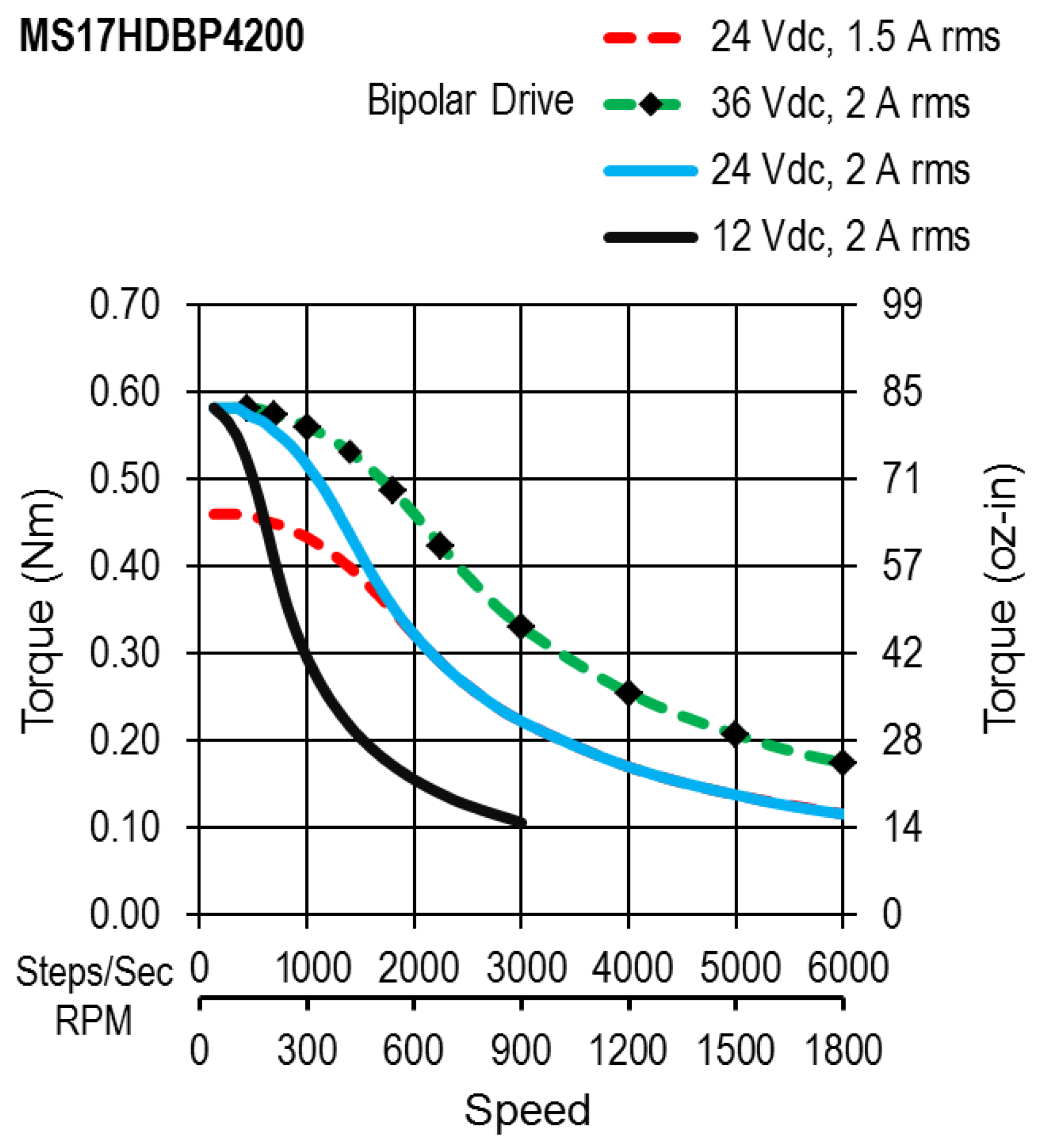
The pallet movement speed (control pulse timing) is calculated to achieve a compromise between motor torque and the keystroke repeatability. The calculations considered active automatic mode (profile-based), as in this mode, unnaturally rapid movement of the action elements can be expected. Considering the relatively large mass of the oak pallets and their resulting significant inertia, the target nominal repetition rate was assumed to be 8 keystrokes per second, which corresponds to 62.5 ms per full cycle. The pallet must therefore be able to travel a minimum distance of 16 mm (opening plus closing) 8 times per second, which (ignoring the inertia damped by the compression spring and the elasticity of the linkage) translates to 128 mm/s in total or approximately 128/26 ≈ 4.92 radians per second or circa 295 radians per minute, which, when divided by 2π, gives a result of about 47 in revolutions per minute—(RPM is a unit commonly used in motors). This allows us to compare the calculation with the torque chart provided by the manufacturer in the datasheet for the NEMA17:
Figure 6 shows that at such a relatively low speed and an 18 V power supply, it is possible to achieve almost the maximum torque of about 0.35 Nm, so the force is:
That is almost 1.4 kg. For comparison, the strongest standard-available action solenoids, manufactured by Otto Heuss GMBH, have a nominal force of 1.2 kg, although the technical description specifies their maximum value. Since the force of the arm-type solenoid nonlinearly depends on the position of its arm, and therefore also on the area of the magnetic circuit in a high-permeability material such as steel, when activated in the rest (open) position, a much weaker pull can be expected, which only increases with the square of the arm travel distance. Despite this pessimal scheme, such a solenoid is capable of overcoming air pressure and spring pull. Therefore, the prototype actuator based on a stepper motor provides a greater force than commonly available solenoids, with sufficient reserve even for the largest pallets (found in lower tone chambers). This margin allows for ignoring issues related to valve initial drag caused by the air pressure in the windchest, as well as sudden reversals, where the main concern would be the inertia of the pallet itself, the actuator and all other parts in motion. It is worth emphasizing that the stepper motor module, unlike a standard arm-type organ valve solenoid, operates with the same force regardless of its position—this is one of the most important reasons for choosing this particular element as the basis for the construction of the mechatronic action (initial experiments also involved using a standard solenoid with a power control (pulse width modulation) controller, but maintaining the system’s stability proved extremely difficult, and its durability left much to be desired.
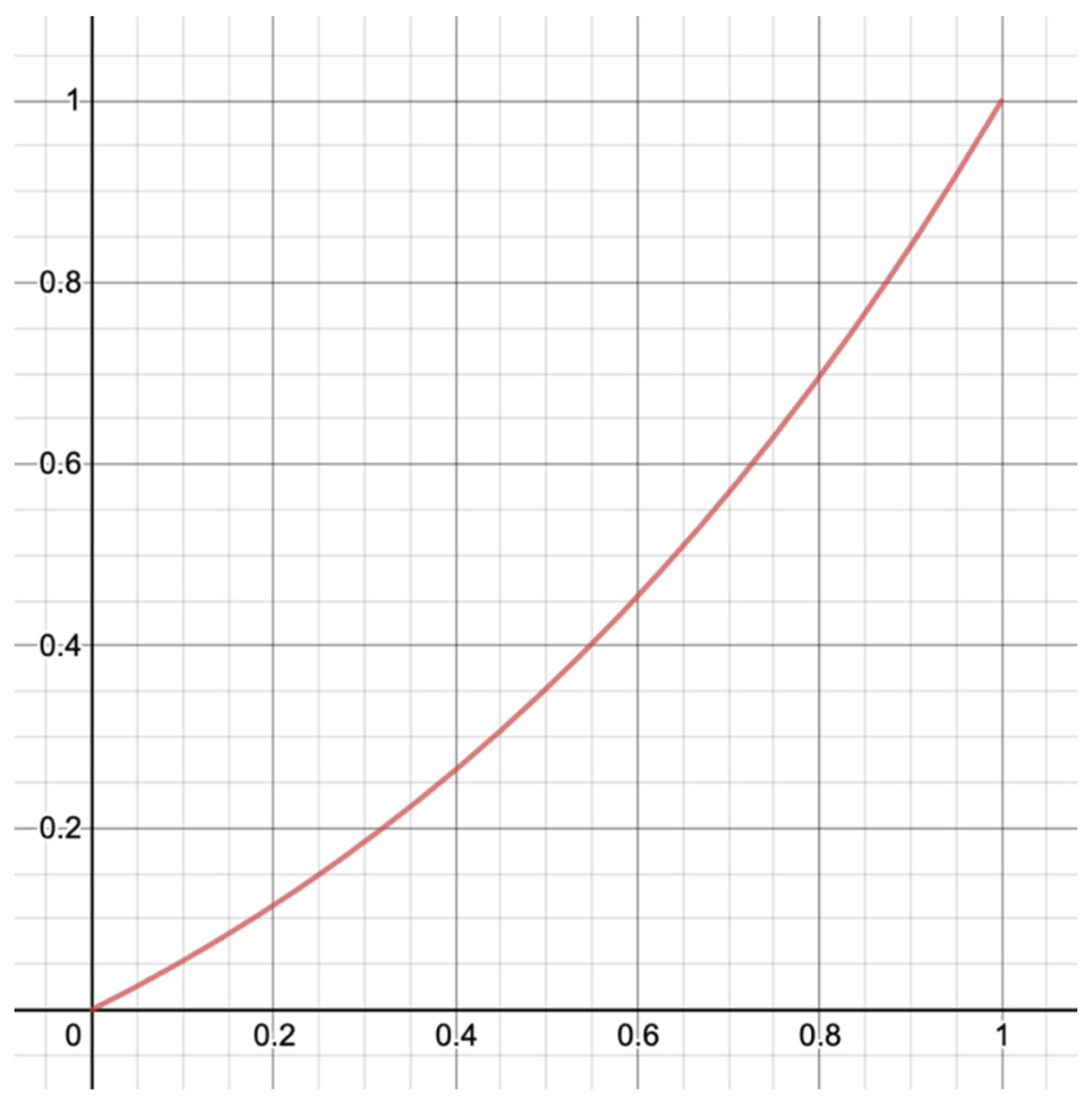
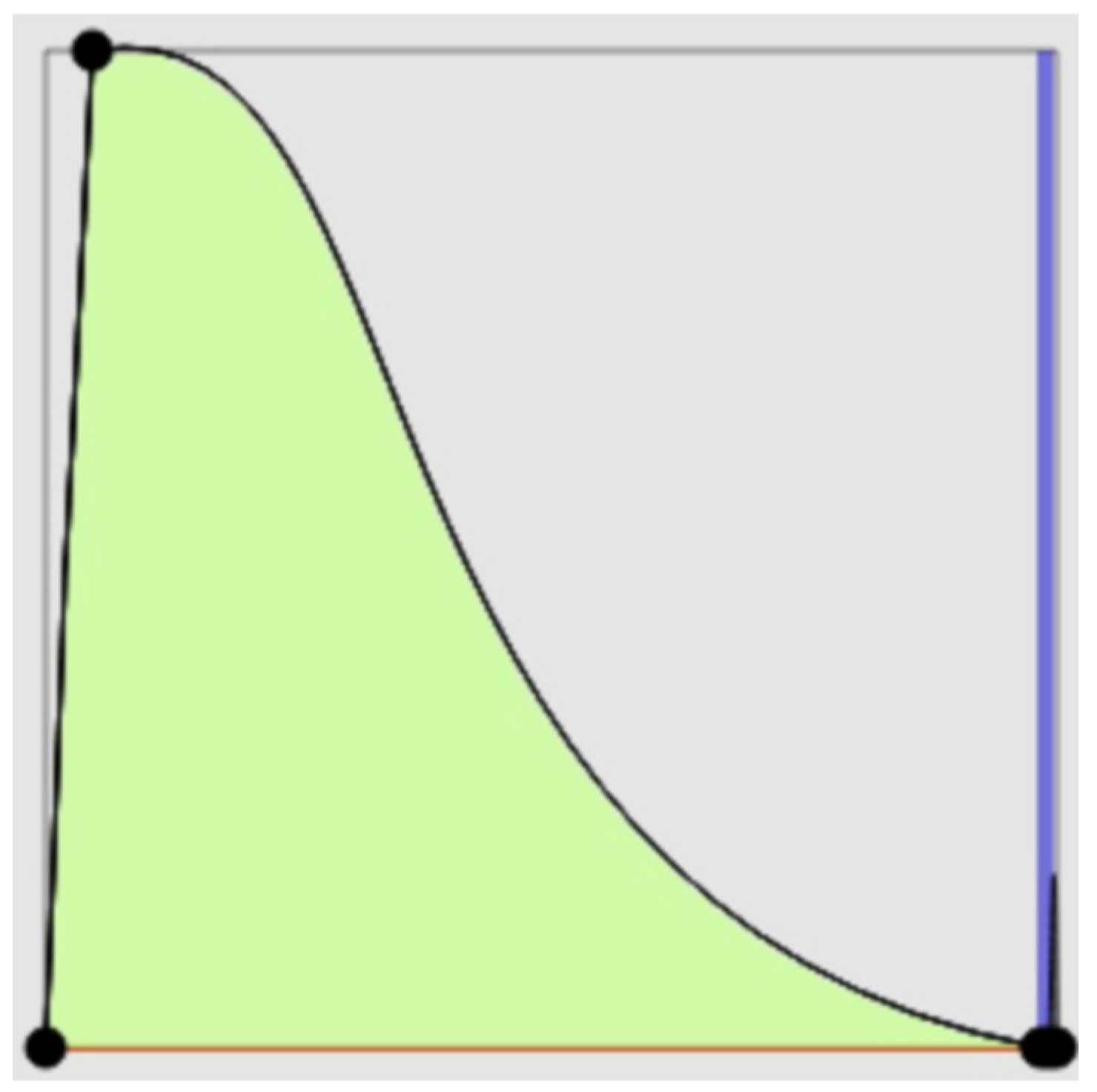
The auditory effect in the pipe sound during the initial phase of valve opening is only noticeable within a very small range of pallet displacement—as experience shows—up to about two millimeters (measured at the pallet linkage attachment point). Due to this fact, any special effects worth noting require valve control within the first dozen or so control pulses of the actuator. If the resulting displacement were identical to the graphically designed motion profile, the graph would have to focus on an extremely narrow range of values to translate into any audible changes in the sound, which would be very cumbersome for the user. Therefore, to increase accuracy and utilize the entire available graph range, the internal program of each actuator module includes a correction procedure that converts the received motion profile data according to an exponential curve of an experimentally chosen formula:
and an empirically selected coefficient
n = 2, which denotes the intensity of the correction (curvature of the correction function, illustrated in
Figure 7), where parameter
d denotes the valve displacement value, where 0 ≤
d ≤ 1 (0 = fully closed, 1 = maximum open). The final multiplication by parameter
d compensates the result by concentrating a larger number of values around the location of displacement initiation, until the resolution decreases when the displacement is close to the end point.
The pallet displacement function is multiplied by the correction curve shown in the illustration. Its experimentally determined degree of “bend” (the angle of the derivative) sufficiently increases the resolution or accuracy of valve operation at the initial point, and decreases it as the valve opening widens. This makes it easier to graphically design the motion profile whose effect, thanks to the correction, is finer at the crucial stage of valve opening and becomes coarser further, where accuracy is no longer necessary (at which point pallet displacement has practically no impact on the sound of the pipes).
The organ equipped with an experimental action described here can, of course, operate in “traditional” mode—that is, without pallet automation—providing only two fixed states: valve open and valve closed. No dedicated switch (hardware or software) was planned for these modes—instead, to enable playing in both modes, a dynamic MIDI keyboard can be used. The force (or rather velocity) of a keystroke is the factor for disabling or enabling the pallet automation (for each note separately!). Thanks to this solution, it is enough to play firmly on the keyboard to make the pipes sound in a “standard” way and—to activate the profile-based automation—the keys must be pressed with less force/velocity (the threshold can be adjusted in the main unit’s software). In this way, the organist can make the instrument produce different types of sound effects directly from the keyboard.
The essence of the
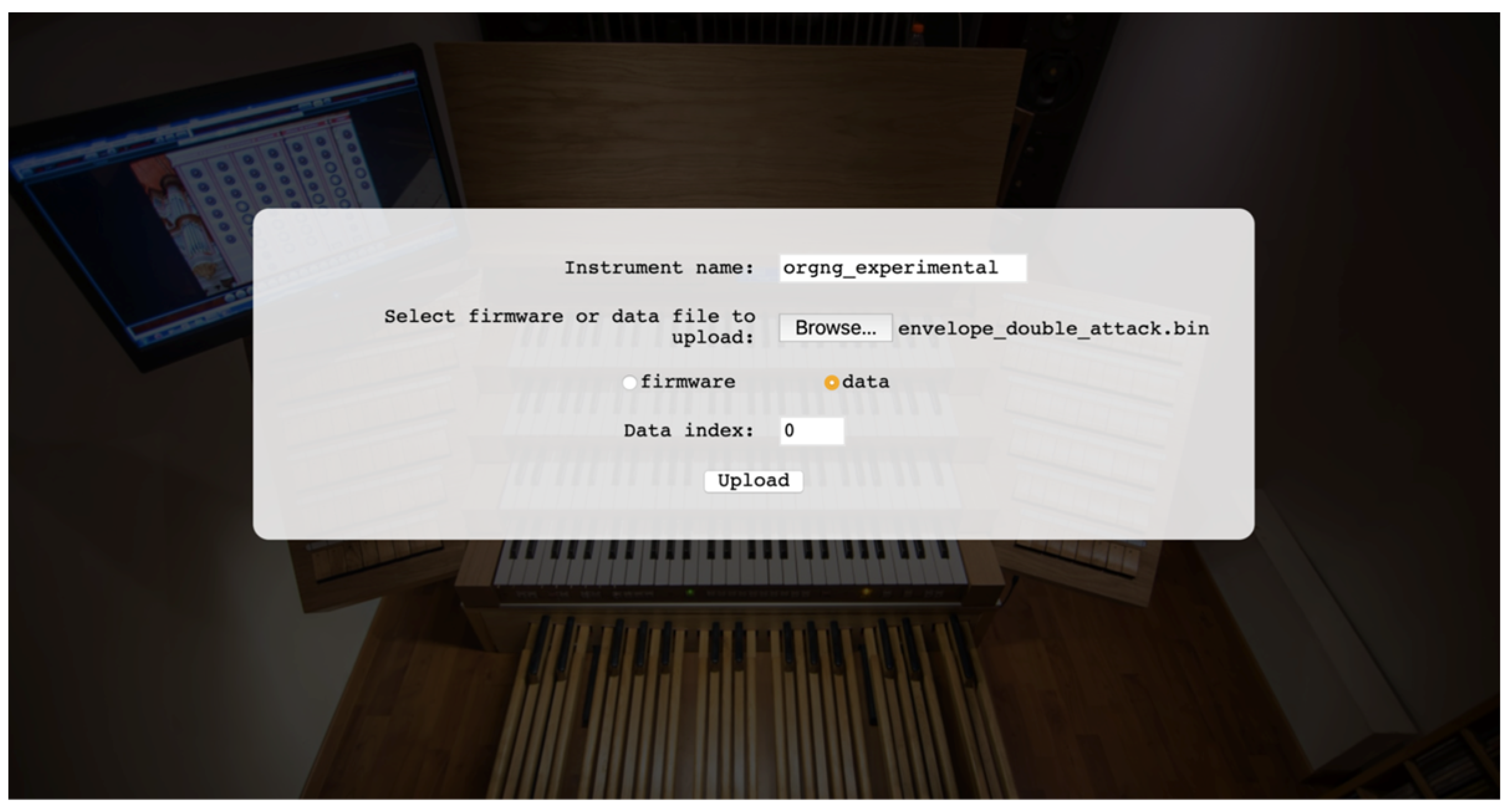
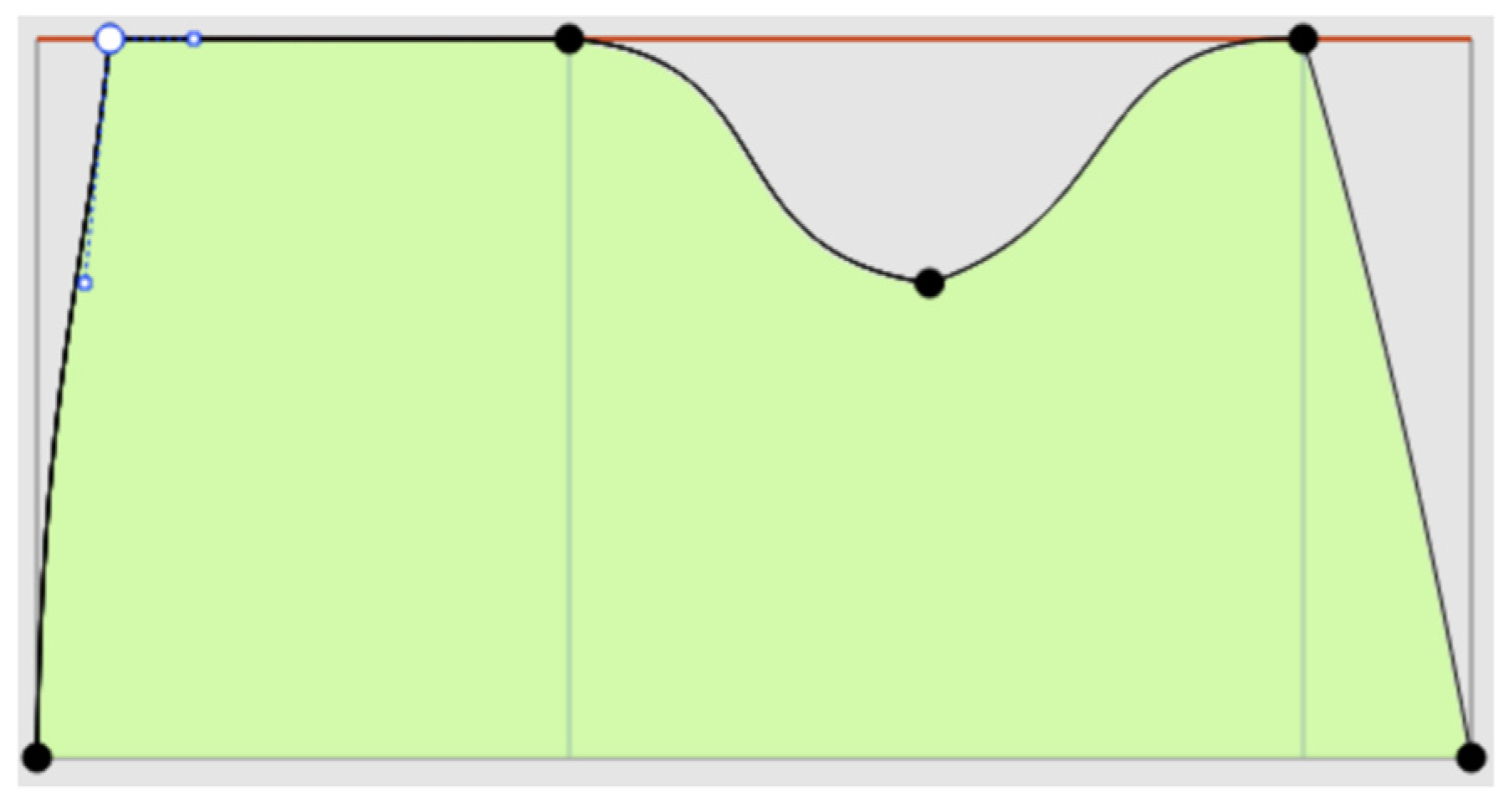
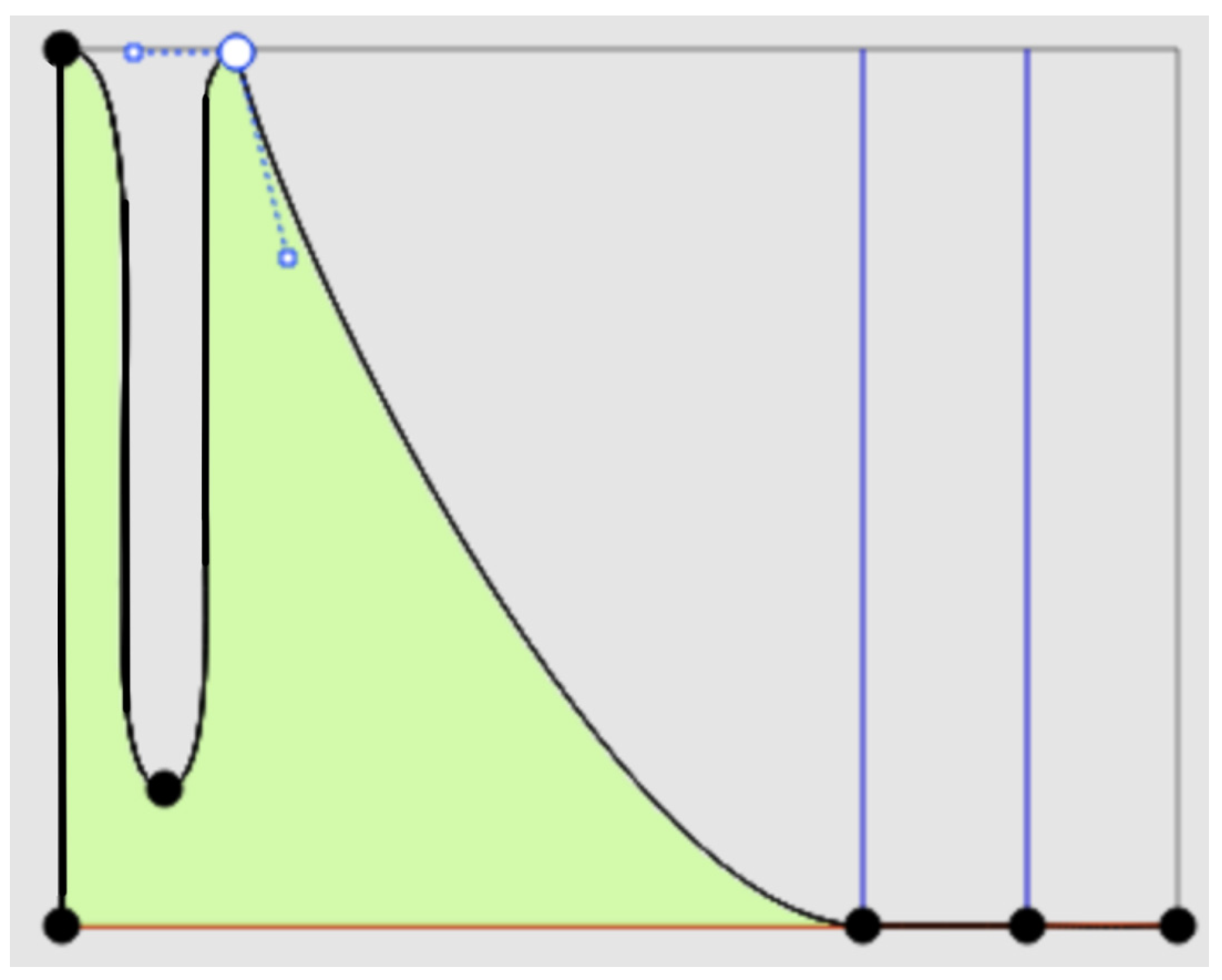
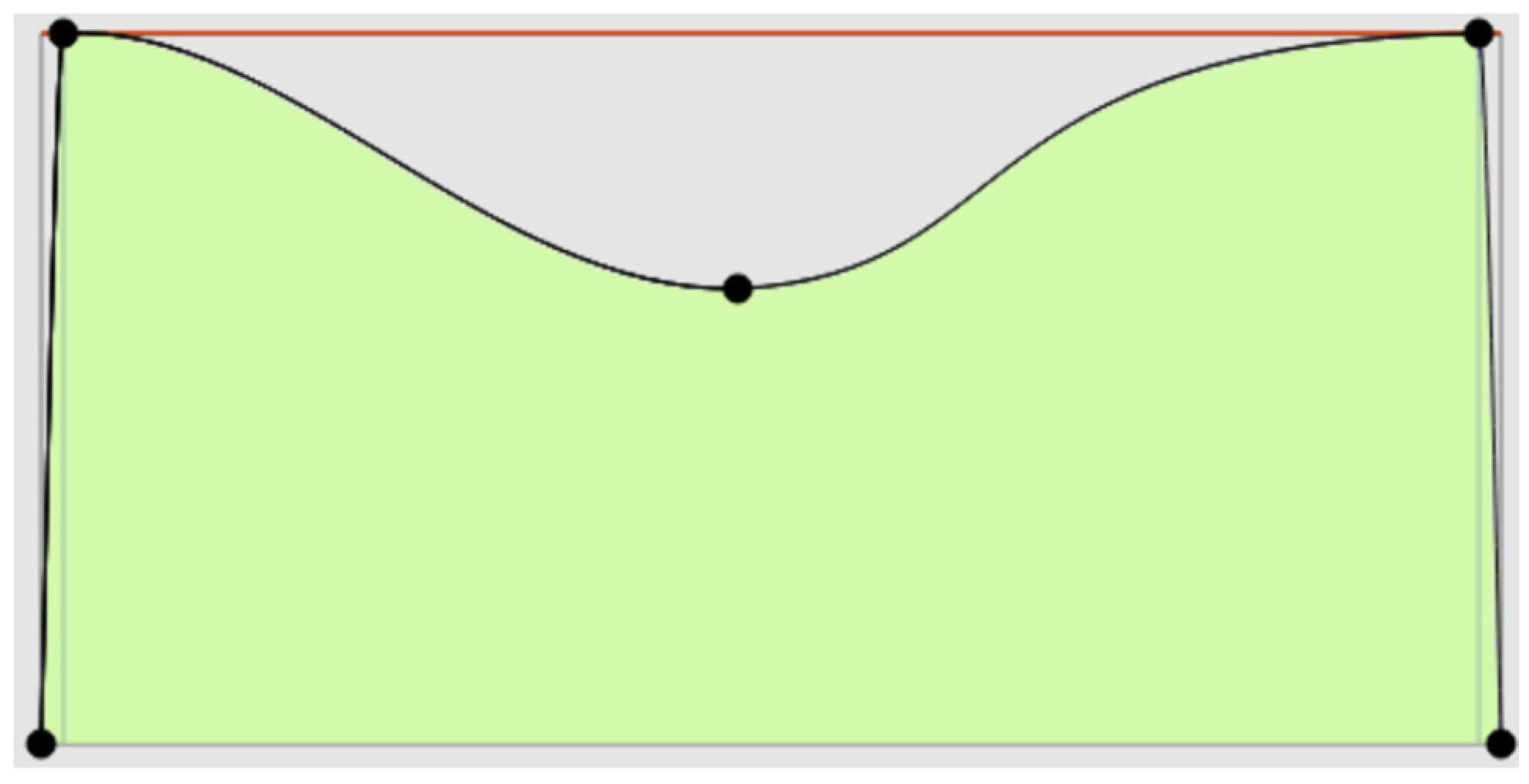
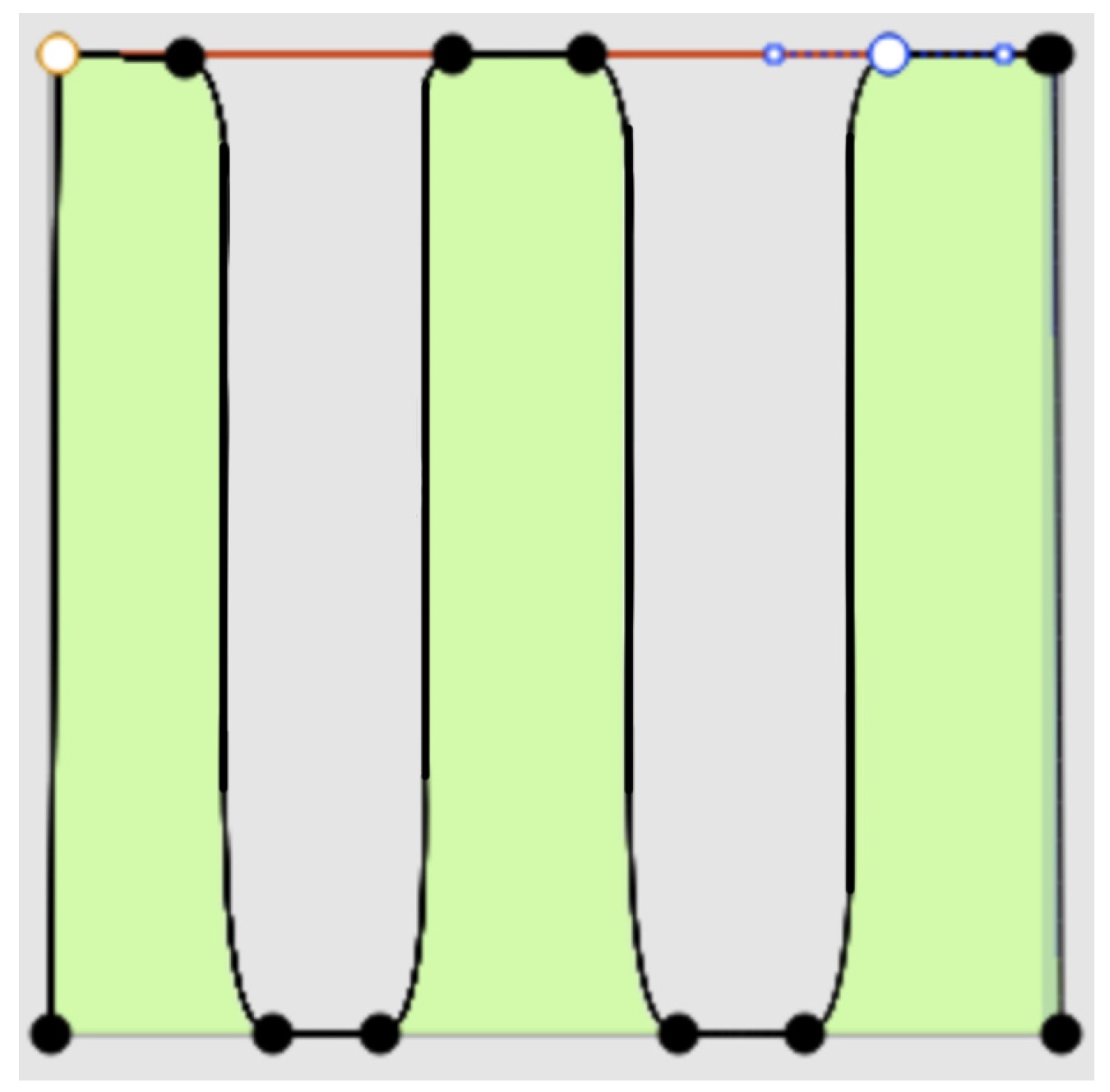
mechatronic action is the ability to design the motion profiles according to which the windchest valves are controlled. This requires the player to plot such motion profiles as graphs and transmit the data to the instrument’s control unit. Ultimately, special software will be developed that will allow for the connection of a handheld computer or even a USB drive to the organ. A touchscreen built into the organ console is also planned for direct interaction with the system. A non-volatile memory will also be used, in which the designed motion profiles can be stored alongside stop combinations, just like in a standard combinational memory system. For the research, however, the simplest solution proved to be a dynamic website with JavaScript code that allows the user to plot motion graphs with Bézier curves (
Baydas and Karakas 2019). Generated data is uploaded to a server using a special website (
Figure 8) and then transferred over the WiFi network—the instrument connects to the specified hotspot and automatically downloads the appropriate file.
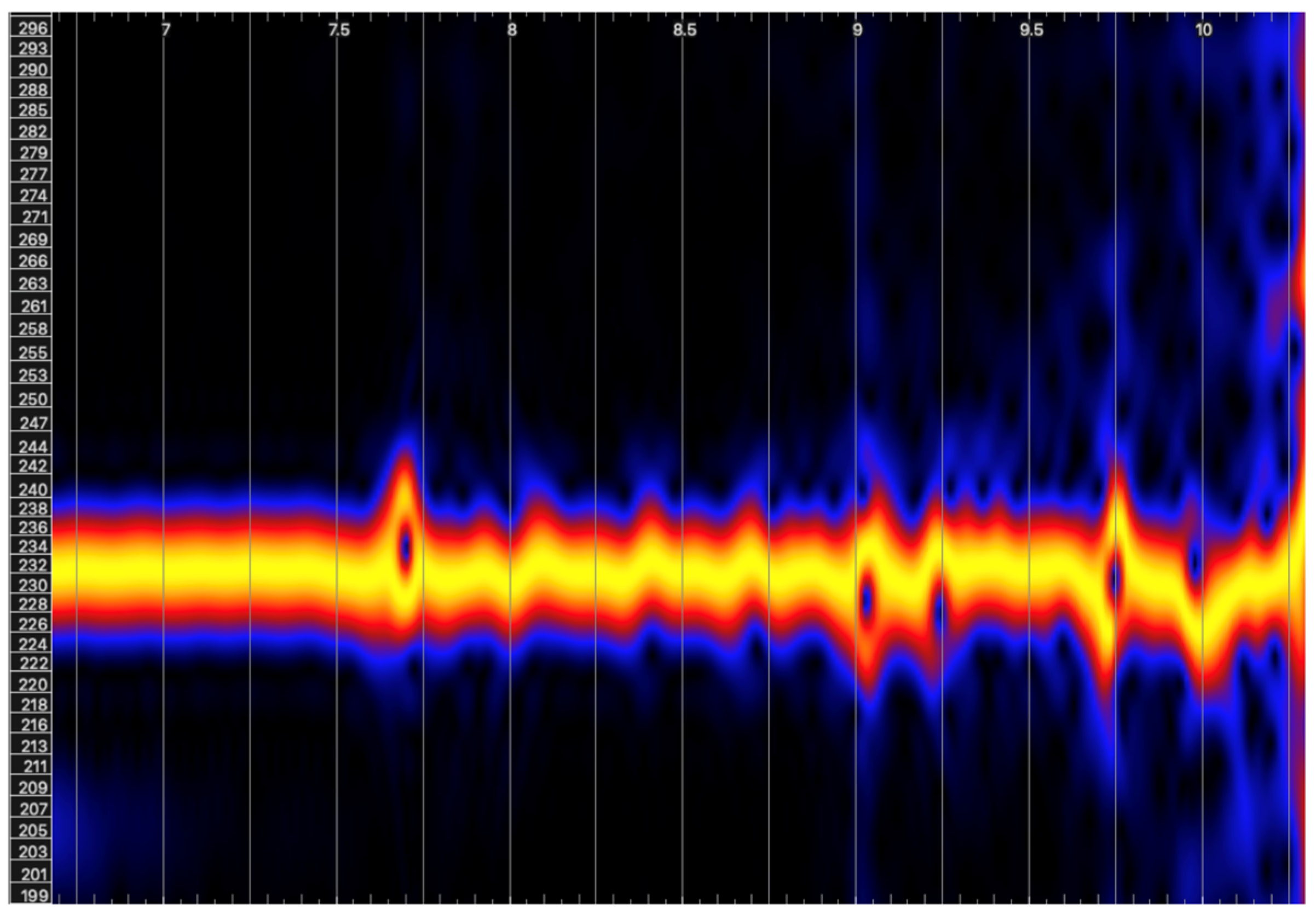
After uploading a motion profile, the musician still has influence on it during the play. It is possible to control the time base of the displacement function, as well as to limit the maximum pallet travel. This can be achieved by using any custom-designed control device, such as the expression pedal typically used in organ construction, a breath controller, an interesting MIDI accessory for influencing the sound with air flow (imitating a wind instrument such as an oboe)—or a MIDI keyboard with aftertouch support, where sound modulation is determined by varying pressure applied to the key after it is initially depressed.
Two modulation wheels, simple devices built into a basic MIDI keyboard, were used during the recording. One of them is used to adjust the limit to which the valve can open. This allows, for example, to manually, slowly expand or cut off the air supply to the pipes (this effect is used in the recording of G. Ligeti’s Etude). The second modulation wheel is mounted on a spring, which causes it to automatically return to its center position—this proved convenient for adjusting the time base (or, to put it simply: the speed) of the motion profile “playback” by the motor controller. This time-based adjustment can be used in the solo voices of chorale pieces, where the cantus firmus vibrates during selected, longer notes, with the intensity of these vibrations regulated by the modulation wheel, which allows for a significant approximation to a truly vocal effect. It is worth mentioning that, in the recordings, the time base was empirically determined so that each whole motion profile phase could last up to two seconds unmodified, while also ensuring that the time resolution of subsequent steps did not cause noticeable jerk in the servo motor, even under extreme slowdown. Each phase is represented by up to 255 bytes with a step resolution of up to 127 steps (plus an adjustable constant component, stored in the module’s non-volatile memory during general key action adjustment), which translates to 1271/2 possible position changes per second at the standard, zero-modulation setting. Modifying the time base with the aforementioned wheel allows for several-fold acceleration or deceleration of the motion profile “playback”, which is a sufficient range to produce an interesting and explicit audible effect.