1. Introduction
The visual absence of pregnant bodies in the history of Western art contrasts sharply with the omnipresence of maternal imagery, particularly that of the Virgin and Child. The pregnant body has often been considered transgressive, ambiguous, or theologically problematic (
Betterton 2018). Despite this, during the Early Modern period, certain iconographic types emerged in the Iberian Peninsula that prominently featured the pregnant female figure, especially in representations of the Virgin Mary. This article argues that these images not only deserve renewed scholarly attention but also benefit from a new methodological approach: the inclusion of Artificial Intelligence in visual analysis.
Rather than using AI as a simple tool for image recognition, this study approaches it in two phases: first, a pre-iconographic phase in which the AI is asked to analyze works of art without historical or theological context; second, a post-contextual phase in which contextual metadata (such as religious themes, character identities, dates, authors, and liturgical contexts) are introduced to observe how interpretations change. This two-phase approach reveals that the communicative content of sacred images is not inherent to their forms, but is intensely shaped by knowledge, narrative, and expectations.
2. Theoretical Framework and Previous Research
This study is situated at the intersection of feminist visual theory, iconographic tradition, and digital humanities. It is based on the initial premise that images are not obvious carriers of meaning, but rather culturally and ideologically mediated constructs. In this sense, the methodology combines classical iconographic interpretation, especially Panofsky’s three levels of image analysis, with the new epistemological approach of computer vision (
Panofsky 1939).
One of the central theoretical concerns is the invisibility of the pregnant body in canonical Western art. Authors such as Griselda Pollock (
Pollock 1999), Rozsika Parker (
Parker 1995) and Rosemary Betterton (
Betterton 2018) have long denounced the suppression or idealization of motherhood, considering it both a cultural absence and a symptom of patriarchal aesthetics. Betterton argues that the maternal has become “formless, unrepresentable, and monstrous” throughout much of art history, creating a persistent visual discomfort with corporeal gestation. In this context, sacred pregnancy, frequently linked to representations of the Virgin Mary, offers a unique space of visual and symbolic tension. As Georg Maria Lechner noted, the iconography of the “pregnant Mary” remained limited, ambiguous, and often subordinated to abstract theological motifs such as the Incarnation, rather than to the material reality of pregnancy (
Lechner 1981). A well-known exception within European painting is Piero della Francesca’s Madonna del Parto (c. 1460), in which Mary’s pregnancy is presented with unusual corporeal emphasis. The Virgin stands frontally with one hand resting on her abdomen while opening her mantle, making the condition of gestation visually explicit. Such examples demonstrate that Marian pregnancy could at times receive greater bodily visibility, although these cases remain relatively rare within the broader visual tradition of sacred imagery. Although pregnancy does appear in these well-known works of European painting, such as also Raphael’s Visitation (1517), where the encounter between Mary and Elizabeth foregrounds their gestational condition, these examples remain relatively limited within the broader visual tradition. In most cases, pregnancy is frequently communicated through gesture, posture, and narrative context rather than through physiologically explicit markers of the pregnant body. This ambiguity becomes even more pronounced in sacred imagery, where theological meaning and devotional decorum often shape the visual language through which gestation is represented.
Iconography, developed by Aby Warburg and Ernst Gombrich, is essential to this approach. Warburg’s concept of Nachleben der Antike (the survival of antiquity) reminds us that imagery tropes persist in ways that are often disconnected from their original meanings (
Warburg 1999). Sacred representations of gestation can therefore be seen as fragments of displaced symbolism, images that persist but whose interpretation is transformed or suppressed over time. Warburg’s method fosters sensitivity to gesture, pose, and repetition, key features of sacred representations of Mary and Elizabeth. Georges Didi-Huberman extends Warburg’s thinking by emphasizing anachronism as a mode of interpretation (
Didi-Huberman 2003). According to Didi-Huberman, the temporality of the image is never linear. On the contrary, images operate as temporal assemblages where memory, anticipation, and rupture coexist. This perspective is essential when applying AI to sacred images: the disconnect between what the image encodes and what the AI perceives reflects Didi-Huberman’s claim that images are not mere visual evidence, but sites of epistemological friction.
Feminist theory adds another critical layer. Julia Kristeva’s notion of the “abject” (
Kristeva 1980)—the ambiguous space between subject and object, body and language—offers a compelling way to interpret the elision of maternal–fetal bonds in sacred imagery. The pregnant body, from this perspective, threatens the symbolic order because it resists binary categorization: it is neither one nor two, neither fully subject nor fully other. This conceptual instability might partly explain why sacred art often emphasizes the Virgin’s spiritual mission over her embodied status as a mother-to-be.
In this regard, Lisa Tickner (
Tickner 1988) and Laura Mulvey (
Mulvey 1975) have questioned the visual paradigm underpinning traditional art historical analysis, showing how traditional modes of seeing are often shaped by male-dominated structures of visibility. The use of AI, recognizing that it is not neutral, becomes a useful dissonant tool in this case: by asking what the machine sees or does not see, the researcher opens up new avenues for challenging habitual visual norms. Finally, the study draws on digital humanities, particularly researchers such as Johanna Drucker (
Drucker 2013), who oppose the positivism that often prevails in digital analysis. Drucker advocates a performative and interpretive use of digital tools, precisely what this study proposes in its two-phase methodology. AI is not used here to replace interpretation, but rather to make the very conditions of visual legibility visible.
3. Corpus and Methodology
This study examines a corpus of fifty-two artworks produced in Spain and Portugal between the late 14th and early 17th centuries. The corpus includes 22 images of the Virgin of Expectation (María gravida), 17 representations of the Visitation, and 13 scenes depicting the Nativity of the Virgin, selected to reflect the primary iconographies in which pregnancy or maternal embodiment is thematically present. These include altarpieces, sculptures, illuminated manuscripts, devotional paintings, and architectural frescoes located in cathedrals, convents, and museums across Castile, Catalonia, Andalusia, Galicia, and northern Portugal. The works were selected based on their connection to three Marian iconographies in which pregnancy is depicted, implied, or symbolically encoded: the Virgin of Expectation (Virgen de la O), the Visitation, and the Nativity of the Virgin (
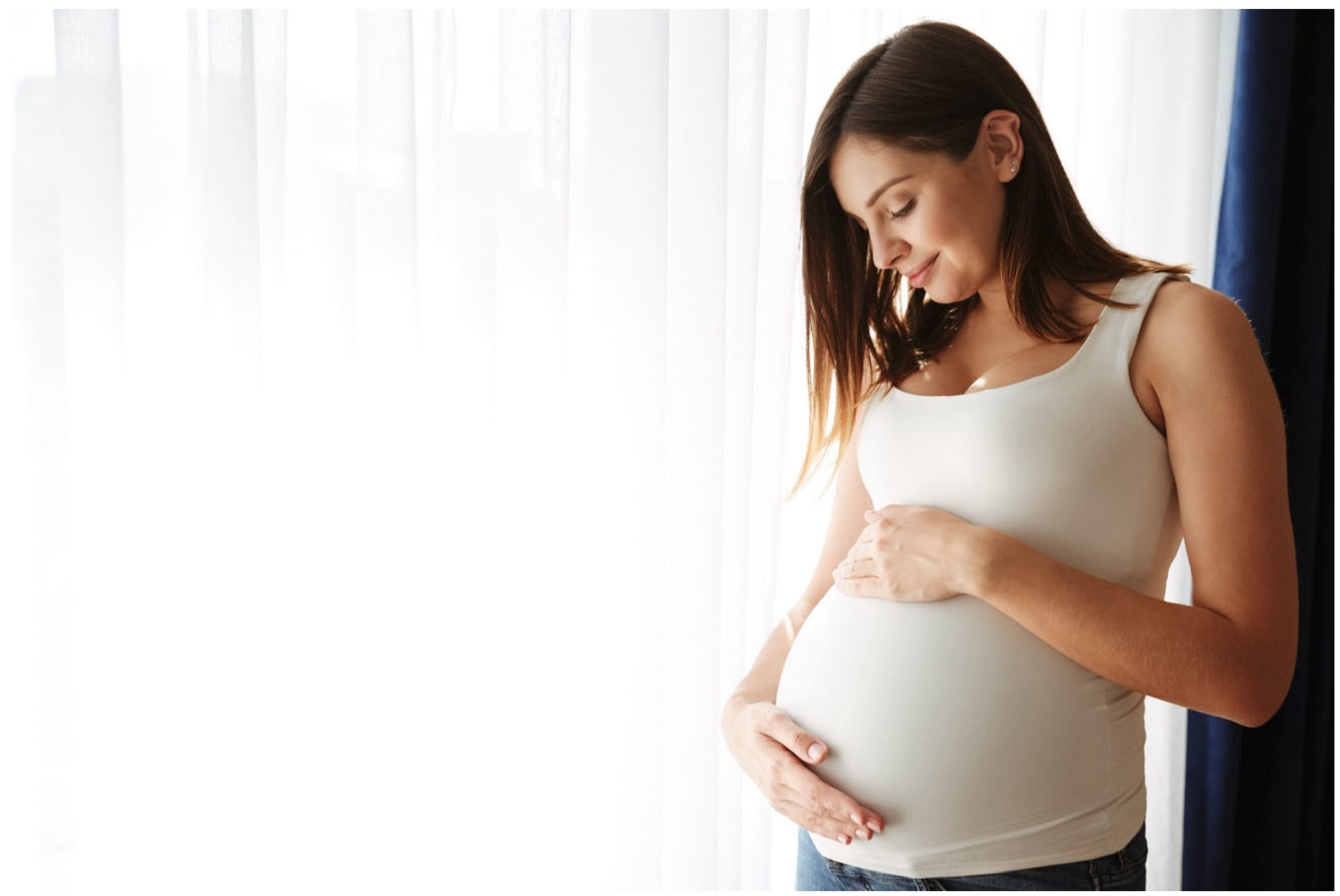
Trens 1946). Additionally, one contemporary photographic image of a woman in late pregnancy was included as a secular contrast to highlight perceptual shifts in gestational visibility.
Selection criteria included iconographic clarity and sufficient resolution for machine and human interpretation, geographical and stylistic variety to reflect regional differences in Marian visual culture, relevance of the scene to the theme of gestation, whether overt or theologically mediated, liturgical or devotional function, to distinguish popular versus clerical forms of religious engagement.
3.1. Technical Framework: Artificial Intelligence Tool
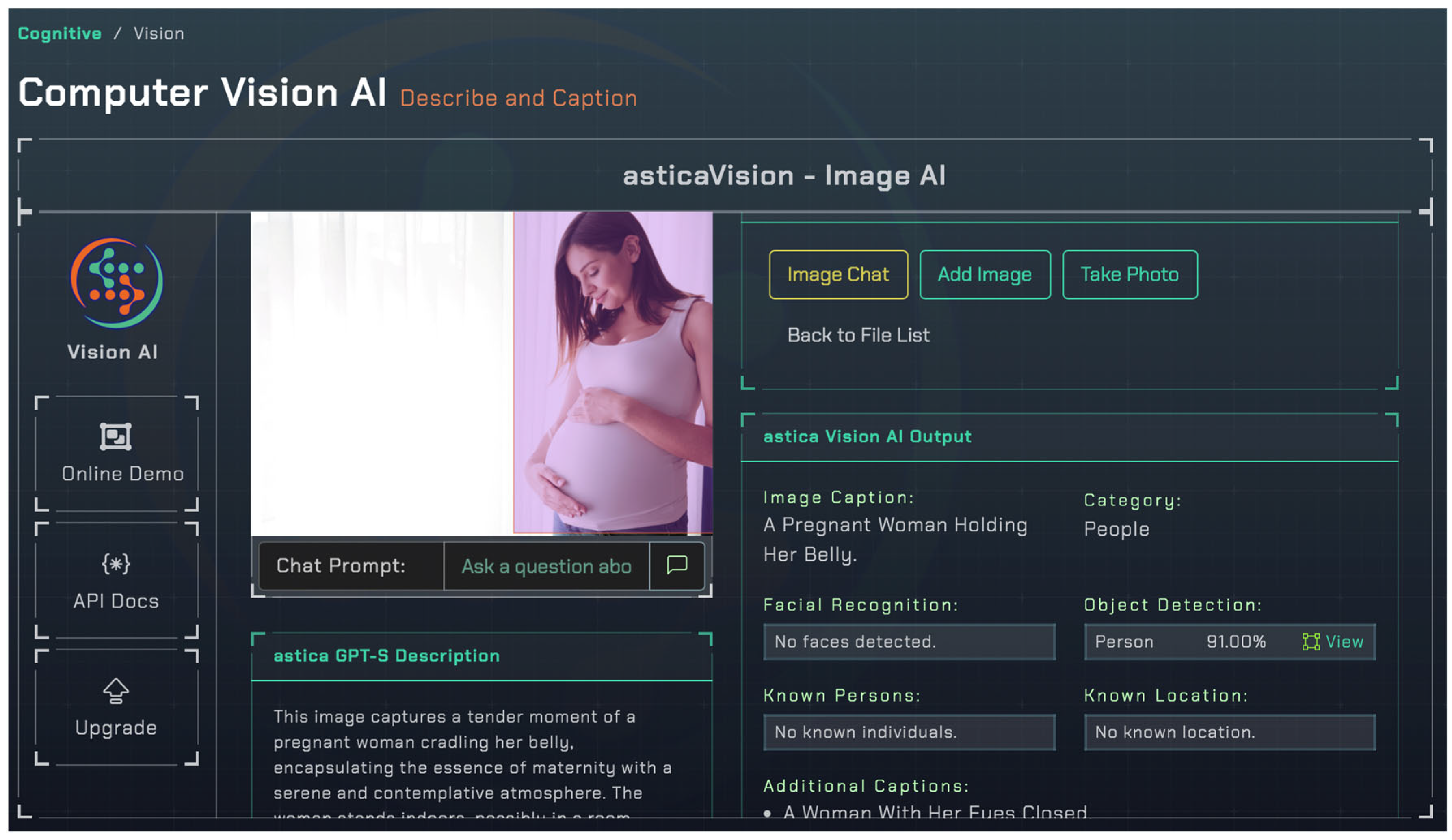
The artificial intelligence system used for image analysis in this study was the Astica Vision API, a multimodal AI platform developed by Astica.org (last accessed June–July 2025). Astica’s API processes image files and returns descriptive metadata using natural language generation. Its primary functions include object recognition, emotional tone detection, symbol identification, and scene summarization, making it well suited for pre-iconographic interpretation of visual artworks.
Unlike traditional machine learning models trained on labeled art datasets, Astica uses a transformer-based architecture to generate textual descriptions of images based on general pattern recognition across diverse visual inputs. Each artwork in this study was uploaded via HTTP request to the API using a standardized protocol, and the results were logged in JSON format. No custom training was applied; the model operated as a black-box interpreter to simulate an “uninformed” viewer.
The version used was Astica Vision v2.0, and the analysis followed a two-phase structure: a context-free prompt (“Describe this image”) and a contextualized prompt with theological or iconographic metadata (e.g., “This is the pregnant Virgin Mary in a Spanish 17th-century painting”).
3.2. Phase One: Pre-Iconographic (Context-Free) Analysis
In this phase, each artwork was uploaded to the Astica Vision webpage without any accompanying metadata. The prompt used first was:
“Describe what you see in this image.”
This would correspond to Panofsky’s pre-iconographic level, where form and gesture are interpreted without symbolic or narrative indications. The aim was to observe whether the AI could independently detect indicators of pregnancy, holiness, or maternal–fetal–child bonding.
Surprisingly, the results showed that in most cases, the AI failed to identify signs of pregnancy, particularly when forms of bodies were covered by robes or presented in static frontal postures. Figures were described by Astica in generic terms such as “standing woman,” “religious figure,” or “female portrait,” and there was no mention about gestational states or maternal relationships. Even in the Visitation scenes, where two pregnant women interact to each other, the model interpreted the encounter as a generic greeting or formal interaction.
3.3. Phase Two: Contextual (Iconographic and Iconological) Analysis
In the second stage, the same images were submitted to Astica with explicit contextual metadata. Examples of modified prompts included:
“This is a depiction of the Virgin Mary pregnant with Jesus, painted in 17th-century Spain.”
“This is a representation of the Visitation: Mary and Elizabeth, both pregnant, embracing.”
In this phase, the AI shifted its interpretation. The descriptions included symbolic markers such as halos, posture of reverence, or abstract emotions like “anticipation,” “serenity,” or “divine purpose.” The narrative overlay significantly altered the semantic frame.
However, even when context was provided, the model still rarely described the pregnancy in biological or affective terms. Gestation was present primarily as a theological symbol, confirming that sacred art historically prioritized doctrinal meaning over maternal embodiment.
3.4. Methodological Value of Machine Misreading
This methodological design does not position AI as a source of objective interpretation, but rather as a provocative interlocutor that reveals the boundaries of perception. The failure, or silence, of the machine in recognizing embodied gestation reflects the theological abstraction inherent in sacred art.
This becomes particularly evident when the AI analyzes a contemporary photograph of a pregnant woman in her third trimester of pregnancy. Without metadata, the model readily identified the pregnancy, noted the affective posture, and described emotional tones such as “nurturing,” “protective,” and “introspective.” This contrast supports the article’s central argument: the visibility of pregnancy is not intrinsic to the body, but culturally constructed through visual codes, and sacred iconography often suppresses or abstracts these codes.
3.5. Methodological Limitations and Ethical Considerations
While the use of Astica Vision v2.0 enabled a consistent, scalable approach to pre-iconographic analysis, it is important to recognize the limitations inherent in working with a closed, proprietary AI system. As a “black box” model, the internal logic behind the AI’s visual recognition cannot be fully accessed or explained, which introduces opacity into the interpretive process. Moreover, the model is trained on broad image datasets that are not art-historically specific, and thus its reactions may reflect general visual priors rather than culturally specific iconographic knowledge. Because the internal training data and decision processes of proprietary systems such as Astica Vision are not publicly accessible, it remains difficult to determine the extent to which its responses reflect particular training datasets, contemporary visual conventions, or broader limitations of machine vision when confronted with stylized historical imagery. For this reason, the AI outputs in this study are not treated as objective readings of the artworks but as heuristic indicators of how machine vision processes culturally coded visual forms.
From an ethical standpoint, the use of sacred images, particularly those still in liturgical use, requires respectful treatment. Care was taken to present all images within their historical and devotional contexts, and no manipulated images or AI-generated reinterpretations were produced. The inclusion of a modern photograph was used purely for comparative purposes, by using an image of the public domain available under a free-use license. The research adheres to academic standards for the use of digital tools in the humanities and aims to bridge technological innovation with critical visual analysis.
4. Iconographic Analysis
4.1. The Pregnant Virgin—The Case of the Virgin of Expectation
The iconography of the Virgen of Expectation or Virgin of the “O” is one of the few cases in Western sacred art where pregnancy is depicted explicitly and publicly. Originating in medieval Spain and popularized in the Iberian Peninsula between the 14th and 17th centuries, this image typically shows Mary standing, centrally positioned, with her hands joined in prayer over a subtly protruding belly. The feast day associated with this image, 18 December, reinforces the emphasis on Mary’s anticipation of Christ’s birth.
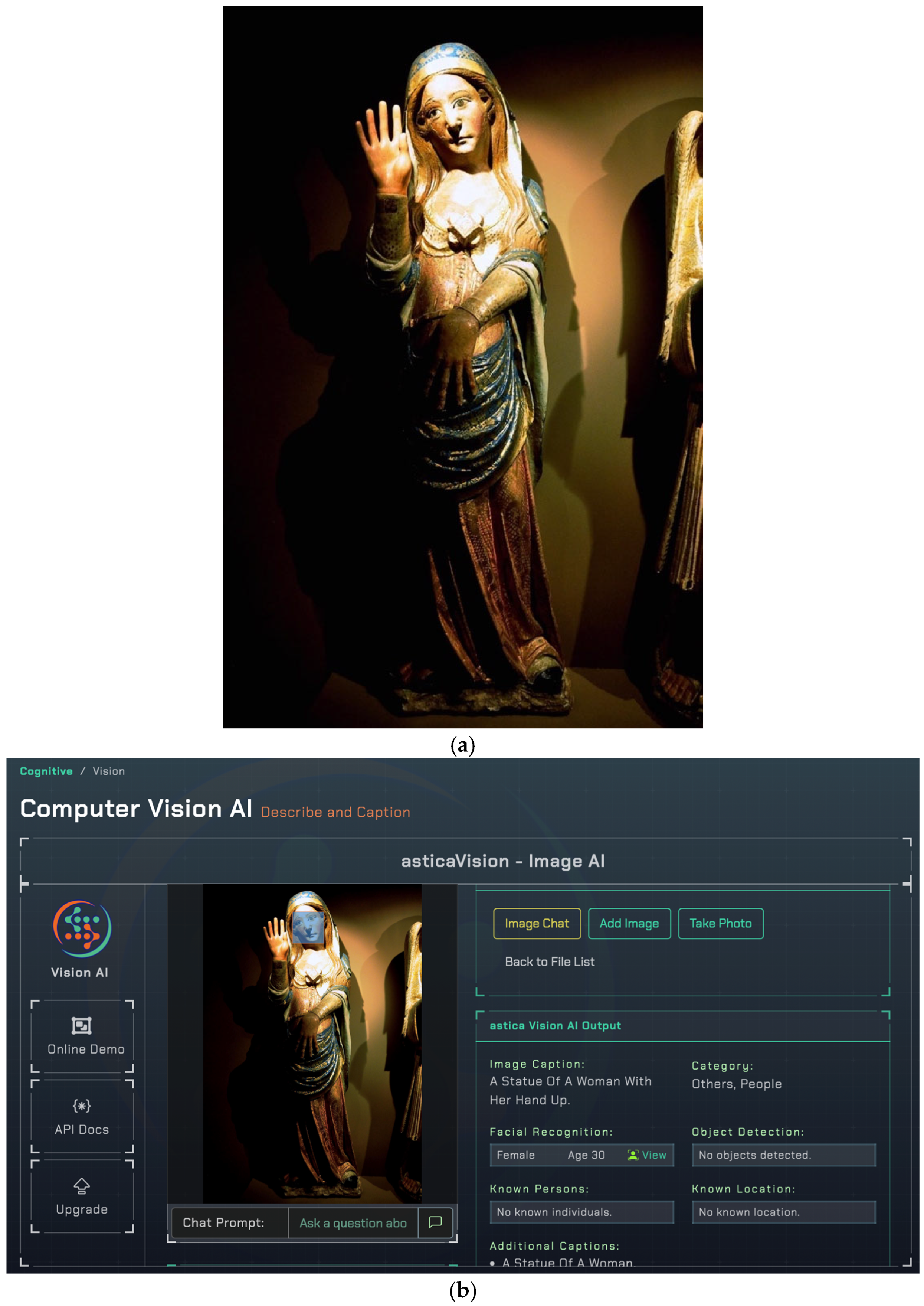
In several works from the present corpus, including the 14th-century painted sculpture from the Museo Diocesano in Santiago de Compostela (
Figure 1), the belly is intentionally volumetric, her pose largely frontal and composed, with subtle shifts in posture typical of Gothic devotional sculpture, and the clothing tightly drawn over the abdomen. However, it should be considered that even in these examples the representation remains stylistically mediated. The abdomen is clearly volumetric and the gesture of the hand placed over the belly draws attention to Mary’s pregnancy, yet the figure follows the formal conventions of Gothic sculpture, which privilege symbolic clarity and devotional presence over physiologically detailed representation of the body which may explain the absence of more physical pregnant signs.
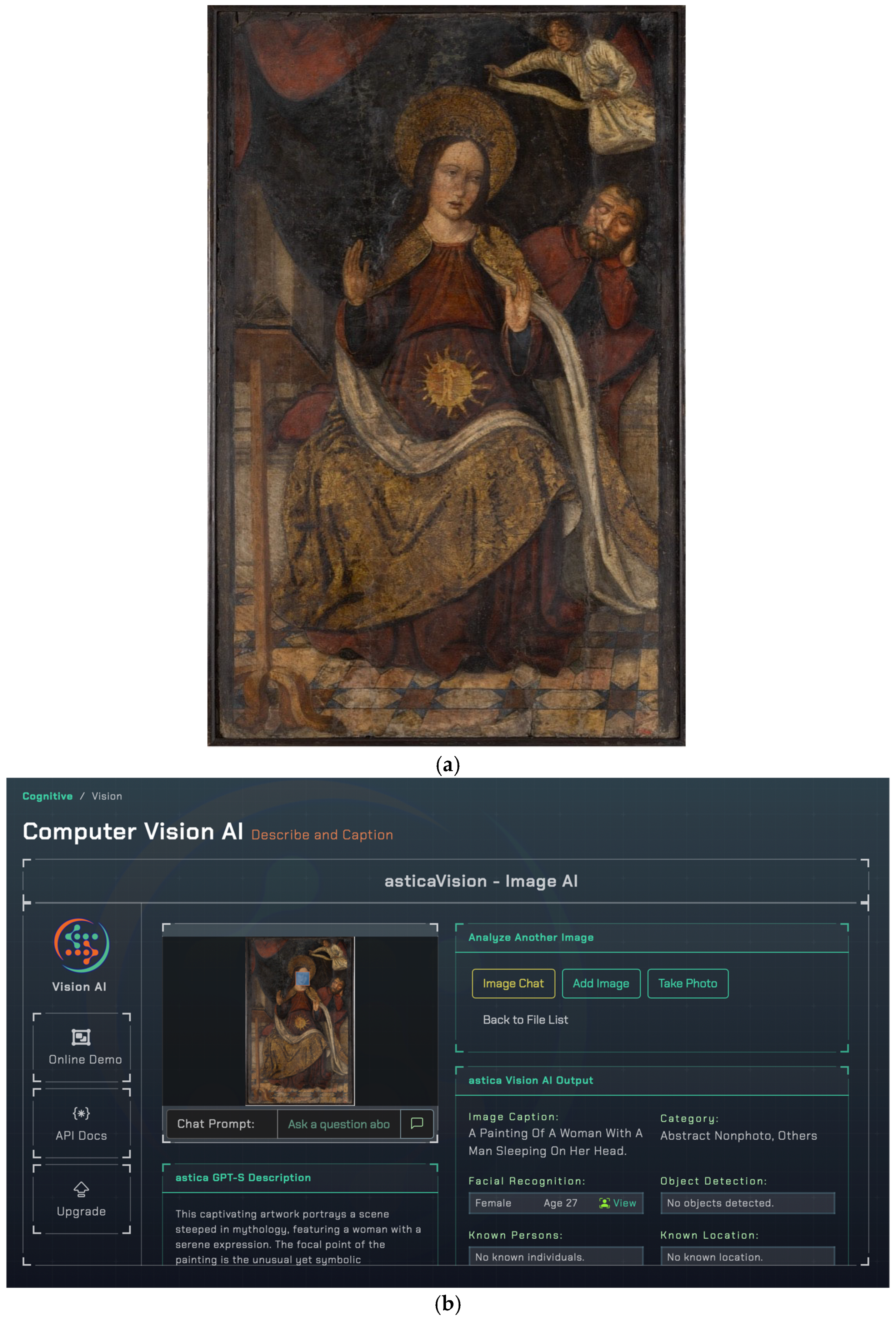
In the first phase of AI analysis, where no metadata was provided, the Astica model described this figure simply as a “religious woman in prayer, wearing a long robe.” No mention was made of pregnancy, maternal anticipation, or gestational form. The figure’s frontality and symmetry—meant to evoke reverence and serenity—seemed to suppress, rather than highlight, the bodily sign of gestation in the model’s interpretation. Emotional tone was labeled as “calm” or “solemn,” with symbolic attributes such as halos noted, but no biological reading was triggered. Even in cases when the fetus is represented on the abdomen, the AI does not identify the fetus as neither a real fetus or a baby, and when asking specifically about the figure it is interpreted just as “a doll on the abdomen of a woman”. In one notable example of this, The Virgin of Good Hope by Rodrigo de Osuna (
Figure 2), the AI model initially described the central figure as “a seated woman in ceremonial clothing with hands raised,” making no reference to pregnancy or religious symbolism. The radiant emblem with a fetus over the Virgin’s abdomen, intended to signify the unborn Christ, was not interpreted as such, and the background figures were described in generic terms (“a man resting,” “a flying figure”). When theological context was added in the second phase, the AI recognized the scene as Marian and gestational, attaching symbolic terms such as “divine presence” and “sacred expectation.” This contrast exemplifies how sacred pregnancy is visually encoded not through anatomy but through iconographic cues that must be culturally decoded.
Once metadata were added in the second phase, identifying the figure as the Virgin Mary and noting that she is pregnant, the model shifted its description. Now it referred to “a sacred image of maternal expectation” and suggested the presence of “a symbolic or divine pregnancy”. However, even with context, Astica avoided bodily or relational language. The pregnancy was interpreted as part of Mary’s divine mission, not as a human or emotional condition. Terms like “serenity,” “purity,” and “devotional intensity” appeared frequently, while maternal–fetal connection remained entirely absent.
This failure is epistemologically significant. It suggests that even when pregnancy is visually emphasized, as in these cases of the Virgen de la O, the visual coding of the body in sacred art remains mediated by liturgical posture and iconographic abstraction, rather than biological signification. The AI’s inability to recognize pregnancy in the first phase, and its symbolic reinterpretation in the second, reflects a long-standing theological resistance to corporealizing Mary’s maternity. As some scholars have noted, Mary is often portrayed not as a waiting mother, but as a vessel of immaculate doctrine (
Betterton 2018;
Warner 1976).
Moreover, the lack of affective cues—no smile, no hand on the belly, no relational gesture—reinforces this visual theology. The body becomes emblematic, not expressive. The AI’s reading, therefore, does not distort the image so much as amplify its original ideological silences.
4.2. The Visitation—Two Hidden Pregnancies
The Visitation, a canonical moment from the Gospel of Luke in which the pregnant Virgin Mary visits her cousin Elizabeth, also pregnant of John the Baptist, is one of the most powerful potential depictions of maternal recognition and intersubjective gestation in Christian iconography. However, as revealed by both traditional analysis and AI examination, this potential is rarely realized visually.
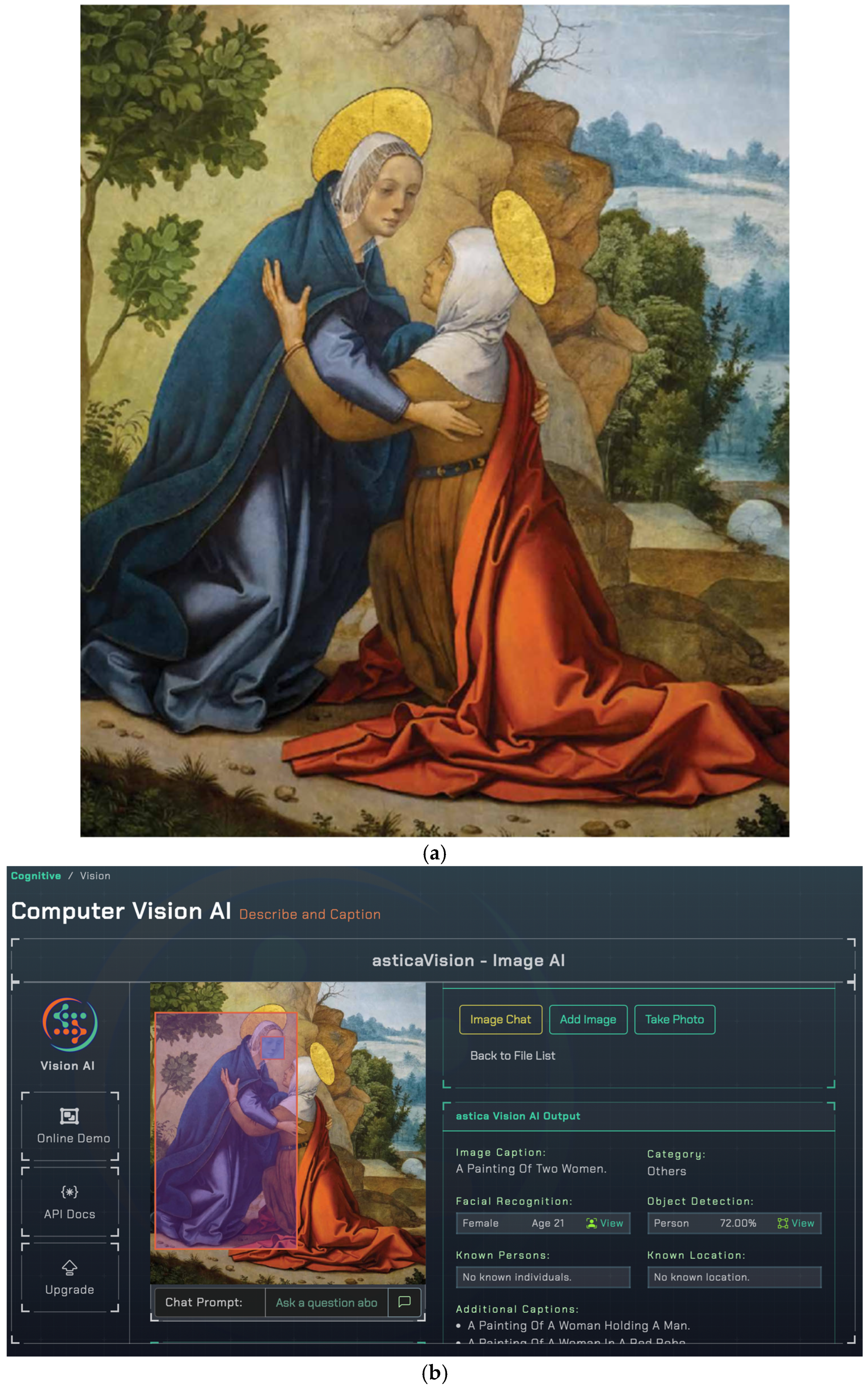
Among the artworks in the corpus, several represent this scene with subtle variations. In the Visitation from the Sala Capitular of the Cathedral of Toledo (1508) (
Figure 3), both women appear in physical proximity, their hands joined or placed on each other’s arms. A similar gesture is present in The Visitation by Luis Tristan, an Oil on Canvas from 1623 in the Iglesia del Convento de Santa Clara la Real, Toledo, where Elizabeth inclines herself toward Mary in a pose of intimacy and devotion. Nevertheless, in both cases, the clothing remains voluminous and the belly unaccented. The facial expressions are composed and formally restrained, probably in keeping with the stylistic conventions of the period. Nevertheless, the interaction between the two figures is conveyed through gesture and gaze, particularly in the physical proximity of their bodies and the exchange of glances, which introduce a subtle but perceptible dimension of emotional recognition. During the first, context-free analysis, the AI typically failed to identify either figure as pregnant. Descriptions included phrases like “two women greeting” or “religious figures embracing near an architectural background.” The gestures were registered, but the emotional or gestational significance was not. Elizabeth is often depicted as an older woman, and the AI occasionally misidentifies her as a man. No reference was made to shared motherhood, intimacy, or prenatal awareness. Emotional tone was labeled as “respectful” or “formal.”
In the second phase, with metadata provided (e.g., “This is a representation of the Visitation; both Mary and Elizabeth are pregnant”), the AI introduced terms such as “holy encounter,” “spiritual recognition,” or “divine announcement.” Yet even with this additional framing, references to physical pregnancy remained absent or euphemistic. The AI did not mention bellies, hands over wombs, or any physical signifiers of gestation. Instead, the moment was described in symbolic language: “sacred mission,” “blessing,” or “anticipation of destiny.”
An especially evocative example appears in a 14th-century ivory diptych from the Museo Lázaro Galdiano, in which Elizabeth places her hand over Mary’s abdomen, while Mary herself points inward, toward her womb. This dual gesture, rare in Visitation iconography, suggests mutual recognition and embodied awareness of pregnancy. In its initial analysis, the AI did not detect these nuances, describing the scene merely as “two women carved in ivory under arches.” Only when iconographic context was added did the model interpret the exchange as maternal and sacred, underscoring the need for symbolic decoding to reveal gestational meaning in sacred imagery.
This gap is telling us something. The Visitation is, textually, a scene of intersubjective recognition between two pregnant women, but in visual tradition, that recognition is abstracted into gesture, never embodied through form or affect. The AI’s silence on pregnancy echoes the iconography’s own evasions. Sacredness is conveyed through posture, not corporeality; theological resonance takes precedence over maternal relation.
Thus, the AI does not fail in this case, but it reveals the original visual regime’s reluctance to represent pregnancy as a living, emotive state. As in the case of the Virgin of Expectation, the model amplifies what is absent, making visible the cultural suppression of maternity in sacred narrative.
4.3. The Nativity of the Virgin: Emphasis on Ritual, Not Maternity
Unlike the Annunciation or the Visitation, the Nativity of the Virgin does not depict Mary herself pregnant but instead focuses on her mother, Saint Anne, in the act of giving birth. In this sense, it offers a rare opportunity within Christian iconography to observe how maternal labor and the early moments of life are visually conceptualized in sacred settings. These images shift the focus from divine conception to intergenerational maternity, potentially enriching the affective and corporeal registers.
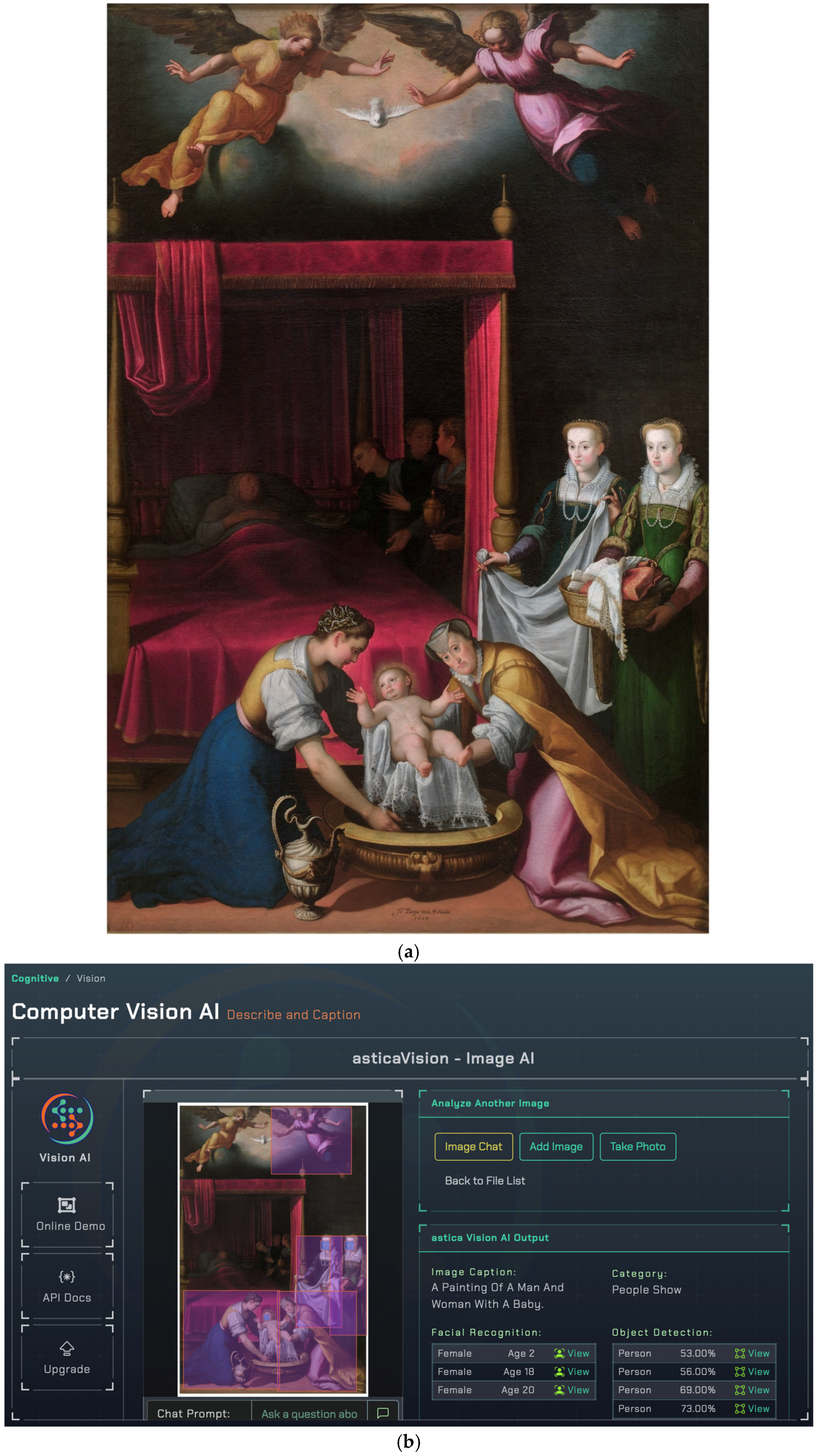
In the case of Juan Pantoja de la Cruz’s The Birth of the Virgin (1603) (
Figure 4), the AI initially interpreted the scene as a richly symbolic family portrait with mythological undertones. Without metadata, Astica described the composition as showing “a man and a woman tenderly interacting with a baby,” in a dark-toned, emotionally resonant environment. The woman holding the child was read as a generic maternal figure or possibly a Virgin-like archetype, while the presence of an angelic figure “with wings” suggested a spiritual overlay. Despite the historical specificity of the image, Astica projected a universal, almost allegorical reading, invoking “themes of mythology,” “maternal love,” and “divine-human connection,” without detecting its biblical context.
Once contextual information was introduced—first, noting it might represent a birth scene, and then identifying the painting by title, author, and historical setting—the AI’s analysis shifted. It acknowledged the likelihood that “the woman holding the baby had recently given birth,” and gradually reinterpreted the figures as participating in a sacred event. Still, the AI failed to identify the gazes of the courtly women directed toward the viewer until prompted explicitly, at which point it theorized that such expressions “invite viewers to project their own emotions,” contributing to a sense of “timelessness and universality.” The model also associated the emotional tone with “warmth, maternal protection, reverence, and solemnity,” but avoided direct religious identification until heavily guided.
This example demonstrates not only the gap between encoded religious meaning and algorithmic perception, but also the extent to which visual understanding—human or artificial—relies on cultural framing and interpretive cues. Astica’s misreadings and hesitations become tools for critical reflection: they foreground the epistemological opacity of sacred imagery and its resistance to naïve or context-free interpretation.
Another Nativity scene analyzed using the Astica Vision API is The Birth of the Virgin (1562–1567) by Luis de Morales. In the initial, decontextualized phase, the AI described the image as a serene and intimate representation of femininity and motherhood. The model emphasized the emotional atmosphere, “warmth,” “tenderness,” and “protection”, while identifying three female figures surrounding a child, interpreted as expressing intergenerational care. No recognition of Saint Anne, the Virgin Mary, or the religious context was made. Upon contextualization with title and author, Astica adjusted its interpretation to acknowledge the painting as a sacred representation of the Virgin Mary’s birth. It incorporated religious symbolism such as “divine motherhood,” “prophecy,” and “Christian tradition,” while maintaining its original reading of strong maternal and feminine bonds. Interestingly, the model continued to prioritize emotional resonance over doctrinal narrative, focusing on the presence of “supportive women,” the “cyclical nature of life,” and the “universal experience of female solidarity.” This response aligns with the methodological findings of the study: even when primed with contextual metadata, AI tends to frame sacred artworks through emotional and affective lenses, often privileging visible human connection over symbolic theological content.
In general, in the first phase of analysis, when these images were submitted to Astica without context, the model identified things like “a woman lying in bed,” “figures holding a baby,” or “scene of caregiving.” There was no attribution of sacred identity, and no indication that the moment represented a holy birth. The emotional tone was occasionally marked as “gentle” or “warm,” but no symbolic or theological reading emerged. Crucially, the act of birth was not interpreted as maternal or miraculous, but rather as generic domestic activity.
When metadata was introduced in the second phase, for example, “This is a depiction of Saint Anne giving birth to the Virgin Mary”, the AI revised its reading slightly, noting a “holy scene,” “early moment in the life of the Virgin,” or “attendants caring for the newborn Mary.” However, even with this information, the model did not refer to pregnancy, childbirth, or maternal affect in explicit terms. The event was flattened into historical or hagiographic reporting. The mother–child bond, central in secular depictions of childbirth, was dissolved into sacred distance.
The absence is particularly revealing when compared with earlier sections. While the Visitation omits bodily signs of pregnancy, the Nativity of the Virgin omits any emotional or sensory engagement with birth. The AI’s readings underscore the extent to which sacred art strips childbirth of its materiality, even in scenes where it is the subject. Instead of pain, struggle, or intimacy, the compositions present ordered rituals of care, with Anne passive and serene—iconographically sanitized.
Thus, the AI serves again as an epistemological tool: its lack of recognition is not a technological failure, but a mirror of the visual tradition’s own de-eroticized, disembodied maternity. If the model cannot “see” motherhood in its affective, embodied sense, it is because sacred art refuses to show it.
4.4. A Modern Image: Explicit Gestation and Emotional Intimacy
To test the boundaries of both sacred iconography and machine vision, a final control image was added to the corpus: a coloured photograph of a woman in her third trimester of pregnancy (
Figure 5), seated in profile with her hands gently resting on her bare belly. The image is intimate, secular, and unambiguously maternal, serving as a visual and emotional counterpoint to the religious artworks analyzed above.
When submitted to the Astica Vision API in the first, context-free phase, the AI immediately recognized key features: “a pregnant woman,” “large belly typical of late gestation,” “serene facial expression,” and “hands placed protectively over the abdomen.” Emotional tone was identified as “calm,” “introspective,” and “nurturing.” The model also detected a possible relationship between the woman and the unborn child, describing the pose as “reflective” and “intimate.” Notably, all of this occurred without any contextual metadata.
In the second phase, with the added prompt “This is a modern photographic portrait of a pregnant woman,” the AI reinforced its interpretation. It expanded on emotional tone, adding “anticipation,” “maternal tenderness,” and “emotional connection to the unborn.” It also described the composition in relational terms: “a visual expression of the bond between mother and child before birth.”
This stark contrast with the sacred images is profoundly telling. Whereas the Virgen de la O and Visitation scenes required metadata for the AI to approximate a theological reading of pregnancy—and even then, avoided bodily or affective detail—the secular photograph was immediately and thoroughly legible in terms of gestation, emotion, and relational posture.
The comparison highlights two central insights:
Pregnancy, as a visual and emotional reality, is not self-evident in sacred art—even when the subject is explicitly pregnant.
Contemporary visual culture has re-inscribed pregnancy as a visible, affective, and relational condition, in contrast to the symbolic abstraction and theological distancing that dominate historical religious representations.
Astica’s differential reading thus becomes a tool for historiographic critique. It not only exposes what sacred images omit but also helps us understand how visual culture codes certain bodies as visible, expressive, or sacred—and others as silent, symbolic, or erased.
5. Discussion
The findings of this study demonstrate a profound asymmetry between the visual presence of pregnancy in sacred art and its iconographic legibility, both for human viewers and for artificial intelligence systems. By applying Astica Vision AI in a two-phase methodology, this research shows not just the technological limits of machine perception, but the cultural construction of visibility and meaning in religious imagery.
Across the corpus, we observed a consistent pattern: even when sacred artworks depicted pregnancy obviously, e.g., through abdominal volume, gestures, or narrative context, these signs were frequently undetected by the AI without metadata and symbolically framed rather than bodily described when context was added. This suggests that sacred representations of pregnancy in early modern Iberia frequently privilege theological symbolism and devotional meaning over explicit physiological realism, even though expressive gestures and stylistic conventions may still convey emotional interaction.
In some pieces such as those of the Virgin of Expectation, where Mary’s pregnancy is visually central, the AI failed to identify gestation in the absence of textual cues. This mirrors a broader aesthetic strategy within Catholic Marian art: the suppression of maternal affect and the coding of the pregnant body as a vessel for divine mystery, not human emotion. The AI’s “misreading” in these cases is instructive, not as a failure of artificial perception, but as a faithful reproduction of visual traditions that avoid embodied motherhood in favor of dogmatic purity.
This pattern extends to the Visitation, a moment that theoretically offers the richest opportunity for maternal intersubjectivity. Theologically, it is a scene of mutual recognition between two women who are both pregnant. Iconographically, however, it is rendered as a formal encounter devoid of visible gestation or affective resonance. Again, the AI’s generic reading (“two women greeting”) reflects the historical marginalization of pregnancy as a symbolic and spiritual event, not a physical one. Even with contextual prompts, the model describes “divine mission” or “sacred meeting,” but avoids maternal language entirely. It is important to distinguish between affective expression and physiological realism. Many of these artworks do convey emotional interaction through gesture, gaze, or compositional structure, even when pregnancy itself is not articulated through visually explicit bodily markers.
The Nativity of the Virgin offers a different absence. Here, the body in question is not Mary’s but Saint Anne’s. Still, the depiction of childbirth, an inherently corporeal and emotional act, is stripped of any intimate or sensory dimension. The model identifies scenes of care, but no sign of labor, exhaustion, or maternal bonding. This confirms that even when birth itself is the subject, sacred art in early modern Iberia maintains a ritualized, decorous distance from maternal embodiment.
The contrast with the modern control image could not be sharper. The secular photograph of a pregnant woman was immediately interpreted by the AI in affective, biological, and relational terms, even without context. The model identified pregnancy, emotion, bodily posture, and a maternal–fetal bond. This suggests that in contemporary visual culture, gestation has become hyper-visible, a condition to be celebrated, aestheticized, and personalized. Pregnancy is no longer a theological abstraction but an embodied state, laden with emotional and social meaning.
This contrast illustrates how the visual legibility of pregnancy depends on culturally specific codes of representation rather than on the mere presence of a pregnant body. Its visibility depends not on the presence of the body, but on the interpretive frameworks, religious, aesthetics or social that authorize what can be seen, and how. The AI, operating without pre-encoded doctrinal knowledge, fails to detect gestation not because it is incapable, but because the images themselves conceal or abstract the signs of it. Stylistic conventions also play an important role in this process, since Gothic and early modern visual languages often encode bodily states through stylized forms rather than physiologically explicit representation.
Furthermore, the use of AI here is not an attempt to replace human interpretation, but to reveal the deep structure of iconographic invisibility. The machine’s silences become hermeneutic tools. As Griselda Pollock has argued, feminist readings of art must attend not only to what is represented, but to what is omitted, effaced, or repressed. In this sense, the AI’s inability to detect pregnancy mirrors a visual tradition that deliberately marginalizes the female reproductive experience in favor of divine mystery.
From a methodological perspective, the two-phase AI approach, pre-iconographic and iconographic, works as both diagnostic and critical device. It reveals not only the dependence of image interpretation on context and metadata, but also the fragility of visual symbolism when divorced from theological narrative. Sacred images require hermeneutic framework to be “read” as sacred. Without it, even a powerful image like the Virgen de la O becomes visually mute. This is in line with what is experienced in the phenomena of pilgrimage or miraculous images in which the image itself is, in many cases, crude and devoid of formal aesthetics, and the alleged powers of the same are more correlated with its context than with the image itself.
Finally, the study invites a broader reflection on how machine vision can be repurposed in the humanities. Rather than using AI to generate new images or automate analysis, this project positions AI as a form of controlled estrangement, a way to defamiliarize what we think we know. By failing to “see” what we expect, the machine reveals the layers of convention, doctrine, and suppression embedded in centuries of religious visual culture. However, one possible explanation for this difficulty is that current machine vision systems are not trained to interpret stylistic conventions developed throughout the history of art, which often encode meaning through historically specific visual languages.
6. Conclusions
This study has demonstrated how artificial intelligence, specifically, the Astica Vision model, can serve not only as a tool for iconographic analysis, but as a critical lens through which to interrogate the visual construction of pregnancy in sacred art. By applying a two-phase interpretive model, this research revealed consistent patterns of omission, abstraction, and symbolic displacement in early modern Iberian representations of gestation.
Taken together, the findings highlight how Marian pregnancy in early modern Iberian art operates within a visual regime that prioritizes theological meaning while rendering gestation visually ambiguous or symbolically mediated. The pregnant body is not denied completely, but rather aesthetically neutralized, stripped of affect, biology, or relationality. As a result, even sophisticated AI systems trained to recognize emotion and human form struggle to detect the visual signs of pregnancy in these images, unless prompted with explicit contextual cues.
The contrast with the modern secular photograph of a pregnant woman underscores this point. In that image, the AI instantly identified the gestational state, emotional posture, and maternal–fetal connection without any additional metadata. This suggests that pregnancy is highly legible in contemporary visual culture, not because the body has changed, but because the semiotic and social frameworks surrounding maternity have shifted dramatically. What was once invisible, abstract, or sacred has become visible, embodied, and affectively charged.
Importantly, this article does not claim that AI provides a more “accurate” interpretation of artworks than human viewers. Rather, it argues that machine misreading can function as a productive form of estrangement, exposing the ideological structures that guide both human and algorithmic vision. When the machine cannot “see” what is supposedly obvious, it draws attention to the cultural codes that make certain meanings visible and others obscure.
From a historiographic point of view, the article adds to a growing body of scholarship that critiques the erasure of female corporeality and affect in religious art. It affirms the insights of feminist and visual culture theorists who have long argued that the sacred body, especially the maternal body, is governed by aesthetics of modesty, purity, and abstraction. The utilization of AI here does not bypass that legacy. On the contrary, it illuminates its persistence.
This research offers a methodological proposition: that AI, when used critically and reflexively, can act as a diagnostic instrument in the humanities. Not to replicate human judgment, but to challenge it, to reveal what centuries of interpretation have naturalized, hidden, or spiritualized. The pregnant body in sacred art is not absent, but visually coded to evade recognition. In confronting these evasions, both scholars and machines are invited to see not only what is depicted, but what has been made invisible. These results also suggest that future studies combining art history and machine vision should pay closer attention to stylistic conventions, since they strongly condition how bodily states are visually encoded in historical imagery.
Finally, this project also opens further paths for research. How might machine vision respond to non-Western iconographies of gestation, such as in Buddhist or Andean religious art? What happens when AI is exposed to deliberately eroticized or medicalized images of pregnancy in visual culture? As AI tools become more prevalent in the humanities, scholars will need to ask not only what machines can see, but what their seeing reveals about our cultural defaults, silences, and thresholds of visibility.