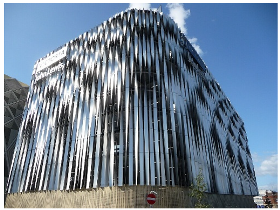
Article

The Role of Interference Patterns in Architecture: Between Perception and Illusion

by
Alina Lipowicz-Budzyńska
Department of Architecture and Urban Planning, Faculty of Civil Engineering, Architecture and Environmental Engineering, Bydgoszcz University of Science and Technology, 85-796 Bydgoszcz, Poland
Arts 2026, 15(2), 37; https://doi.org/10.3390/arts15020037
Submission received: 30 September 2025 / Revised: 24 December 2025 / Accepted: 19 January 2026 / Published: 6 February 2026

Abstract

Interference patterns are increasingly explored in contemporary architectural façades as visual configurations generated through the superposition of repetitive and layered geometric structures. This study examines the role of interference patterns in contemporary architecture, with particular attention to the perceptual effects and illusion-related phenomena that may emerge during their observation. The research is based on a comparative, case-based analysis of selected architectural examples in which interference patterns are introduced through façade articulation, layered glazing systems, spatial textures, or form-related strategies. The analysed material is classified into four groups: semi-spatial façades, façade graphics applied to multi-layer glass systems, spatial textures, and interference embedded in the overall building form. The analysis focuses on identifying recurring perceptual effects associated with interference patterns, such as illusion-related phenomena, including visual aliasing, motion parallax, apparent depth, figure–ground ambiguity, flicker effects, and dynamic perspective. The comparative analysis indicates that interference patterns can significantly influence the perception of architectural space within its urban context. This influence extends beyond visual appearance and aesthetic composition, contributing to architectural communication, meaning-making processes, and the cognitive engagement of the viewer with spatial and visual structures. The study provides a structured analytical framework that may support further research on perceptual strategies in contemporary architectural design.

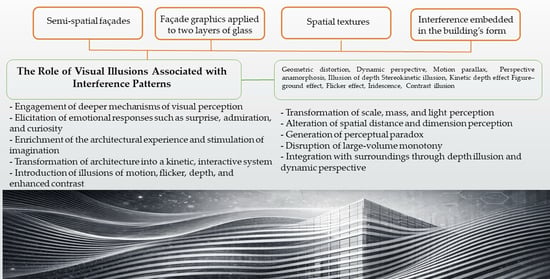
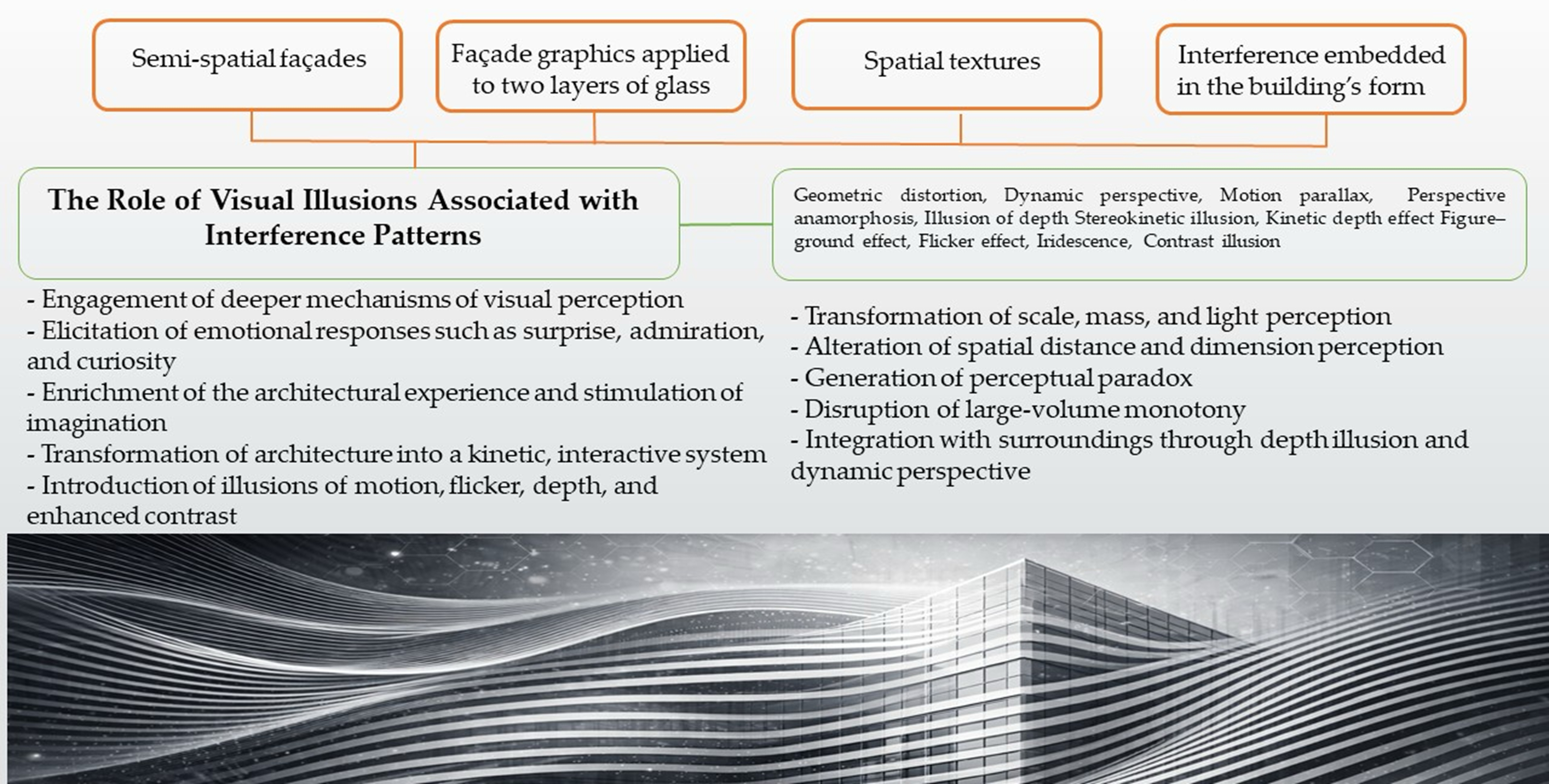
Graphical Abstract

1. Introduction

In contemporary architectural practice, spatial design is no longer limited to the creation of material structures but increasingly aims to activate perception, stimulate imagination, and evoke emotional responses. Architecture has become a medium of interaction that extends beyond its physical form, encouraging users to engage with space in dynamic, multisensory ways. This shift reflects a broader cultural tendency to perceive buildings not only as functional enclosures but also as perceptual devices capable of shaping meaning, identity, and memory.
Contemporary architecture increasingly employs perceptual and optical strategies to enrich spatial experience and engage users beyond purely functional aspects. Designers seek to activate architecture as an interactive medium that not only defines physical boundaries but also stimulates cognitive and emotional responses. Within this framework, optical illusions and interference patterns emerge as powerful design tools capable of transforming static forms into dynamic perceptual environments.
This article examines selected optical illusions that may occur in conjunction with interference patterns, focusing on their manifestation in architectural façade surfaces. Interference patterns are considered an optical and perceptual phenomenon.
Optical phenomena refer to effects that arise from physical and geometric properties of visual systems, such as superimposition, repetition, transparency, or spatial frequency, and can be described using principles of optics and geometry. Perceptual phenomena, by contrast, concern the interpretation of visual stimuli by the observer, including effects such as apparent motion, depth illusion, or figure–ground ambiguity. While optical configurations provide the physical conditions for these effects, perceptual phenomena emerge through visual processing and interpretation rather than being inherent material properties of architectural form. Interference patterns, understood here as visual effects resulting from the superimposition of repetitive geometric structures, have moved from the domain of physics and optics into the realm of architectural experimentation. They occur together with illusions of depth, motion, or contrast. It expands the expressive repertoire of architecture by introducing variability, ambiguity, and dynamism into built forms. In the present study, architectural surfaces are approached as perceptual interfaces that mediate the experience of architectural space, rather than as autonomous visual objects.
The aim of this article is to define the scope of influence that interference phenomena exert on the perception of architectural space, and to examine the phenomenon in the context of illusions. A significant aspect of the study is to establish the role that interference patterns play in the experience and perception of space.
This paper is divided into several sections. Section 1 outlines the importance of visual perception in architecture and defines the phenomenon of interference patterns, emphasizing its role in the perception of architectural objects. The literature review presents key research—ranging from foundational studies on interference pattern mechanisms and perception to research on the application of these effects in architectural designs. Section 2 provides a theoretical foundation for understanding perceptual mechanisms and the experience of architecture, emphasizing the relationship between visual stimuli, cognitive interpretation, and spatial awareness. It identifies phenomena accompanying interference patterns and provides an analysis of selected architectural designs in terms of their occurrence and the role in the surroundings. Section 3 outlines the theoretical and practical implications of these phenomena, highlighting the benefits and potential challenges of using them in a built environment. Section 4 describes the methods employed in the research. The article ends with Section 5, summarizing key findings and indicating potential pathways for future research.
In the literature, Western architecture has often been described as ocularcentric (Pallasmaa 1996), meaning that it is oriented around and dominated by visual perception. Although architectural design has long employed optical and perceptual strategies, explicit (Pérez-Gómez and Pelletier 1997; Evans 1995) references to the visual language of Op-Art began to appear in architecture primarily in the second half of the twentieth century, mainly at the level of surfaces and graphic articulation.
Artists and architects consciously began introducing optical effects—such as illusions and interference patterns—into their work as artistic tools and forms of spatial intervention. Ludwig Wilding, Victor Vasarely, Jesús Rafael Soto, Bridget Riley or Michael Kidner (Lipowicz-Budzyńska 2023) deliberately experimented with overlapping geometric patterns to generate moiré-based optical illusions. Their work demonstrated that the superimposition of two grids of lines or dots can produce new, shifting visual images. In buildings where interference patterns play a dominant role, their scale and application become powerful artistic tools that introduce new compositional values (Lipowicz-Budzyńska 2024).
This article refers to selected theoretical concepts related to visual perception in order to contextualize the analysis of interference patterns in architectural façades.
The research focuses on the analysis of 2D and 3D interference phenomena occurring in architectural façades. 2D interference patterns are associated with a single surface or mesh layer.
3D interference patterns occur in the following spatial configurations:
  • Semi-spatial façades;
  • Double-layered glass façades or at least two mesh layers;
  • Spatial textures applied to façades;
  • Spatial elements integrated into the building’s form.
The scope of knowledge on interference in architecture includes theoretical publications in optics and physics, which serve as a foundation for analysis. Research on the topic can be found in the fields of mathematics, optics, physics, psychology, and semiotics. One of the earliest discussions of raster imagery appears in the “Raster Imaging and Digital Typography II” conference journal, where Isaac Amidror analyses digital images in the section entitled “The moiré phenomenon in color separation” (Amidror 1991). He later developed comprehensive studies focused on periodic image structures (Amidror 2007a) and aperiodic images (Amidror 2007b), using mathematical modelling to explore the moiré effect in both contexts.
A pioneering study of interference pattern effects in layered graphic surfaces can be found in “Advances in Optics Reviews”, in the chapter “Moiré Effect in 3D Structures” edited by Vladimir Saveljev, which discusses visual interference occurring between the layers of flat structures such as metal meshes, cables, or openwork elements (Saveljev 2018).
A key publication on the perception of interference patterns is “The Perception of Movement and Depth in Moiré Patterns” by Lothar Spillmann (Spillmann 1993). The paper mathematically describes forms of “optical line interference” that arise from the superimposition and movement of repeating visual stimuli (e.g., grids). The study explores the physical laws underlying moiré phenomena and their relationship to psychophysical perception. Another group of studies focuses on the application of interference in optics and optical engineering (Malacara and Thompson 2001).
An important contribution to architectural research is Marcin Brzezicki’s article “Designer’s Controlled and Randomly Generated Moiré Patterns in Architecture” (Brzezicki 2011). The study examines various aspects of the moiré effect in architectural space. The research section provides an image analysis and discusses parameters influencing the formation of moiré patterns, such as the angle of lines, intensity, and frequency. One subsection is devoted to the mobility of interference pattern imagery and its perception.
A relevant paper concerning optical illusions and changing perception in architecture is “Perception and Illusion in Interior Design” (Jaglarz 2011). In the context of architectural applications, an important reference is the publication presenting the work of the Dutch architectural studio UNStudio. In ”UNStudio: Diagramma struttura modello pelle ibridazione”, the chapter “Pelle come nuovo paradigma: superficie digitale” discusses architectural projects that incorporate interference patterns (Corsi et al. 2015).
Further studies confirm the importance of illusions in spatial perception. One of the first researchers to investigate and describe such phenomena was Joseph Oppel, who in 1855 introduced the concept of “geometrical–optical illusions” (Wade et al. 2017). He defined them as systematic discrepancies between the actual and perceived properties of objects, such as length, angle, or curvature. Oppel’s pioneering work laid one of the earliest scientific foundations for the study of spatial illusions and continues to serve as a key reference in vision psychophysics as well as in analyses of perception within art and architecture. In the 2008 publication “Illusions in the Spatial Sense of the Eye: Geometrical–Optical Illusions and the Neural Representation of Space”, Gerald Westheimer analyses geometrical–optical illusions and their link with the neural space representation. Geometrical–optical illusions are phenomena in which the perception of objects’ geometrical properties differs from their actual characteristics, such as length, angle or curvature.
Westheimer discusses various illusions, showing how they differ from other perceptual phenomena such as brightness illusions, ambiguous figures, or impossible objects. He emphasizes that these illusions reveal the discrepancy between objective and perceived space, suggesting that the transformation between these two spaces can be investigated through differential geometry and metric properties (Westheimer 2008).
On the one hand, architectural theorists have emphasized the importance of sensory experience, e.g., architectural phenomenology (Heidegger 1971). Norberg-Schulz and Pallasmaa have argued that spatial perception is multisensory, with vision playing a leading role but one that is integrated with other senses. On the other hand, scholars have also explored the dominant role of vision in architecture. Bafna (Bafna et al. 2010) even proposed a theory of “visual functioning of buildings”, suggesting that buildings are shaped in equal parts by functional requirements as well as the need to maintain the viewer’s visual attention.

2. Results

Studies have shown that the perception and reception of architectural space result from complex processes occurring in the central nervous system, during which our visual system receives information and passes it on for interpretation in terms of form, depth, and movement. Fundamental spatial depth cues—such as perspective, the convergence of parallel lines, shading, texture gradients, and relative object motion—allow us to evaluate distance and object size. Previous research suggests that the human brain also applies principles of perceptual organization described by perception psychology (Gestalt principles) (Arnheim 2009), attempting to group elements into coherent wholes and distinguish them from the background (Hoffman 2000). When we see architectural designs, we utilize these mechanisms, shaping our spatial experience through the conscious processing of visual stimuli (Field 1987; Glassner 1995).
Interference patterns introduce—or add—atypical stimuli to the perception process. Patterns may emerge that do not correspond to any physical objects and lack materiality, yet they are still perceived. The brain interprets these illusory structures as surface features or even as new surfaces. The observer becomes an active participant in the spatial experience, processing ambiguous visual information. As a result, architectural objects employing interference patterns are more cognitively engaging and sustain visual attention for longer periods. In this context, the moiré effect can be understood as a perceptual tool that both attracts and retains the viewer’s gaze, functioning as an intriguing phenomenon at the boundary of perception.
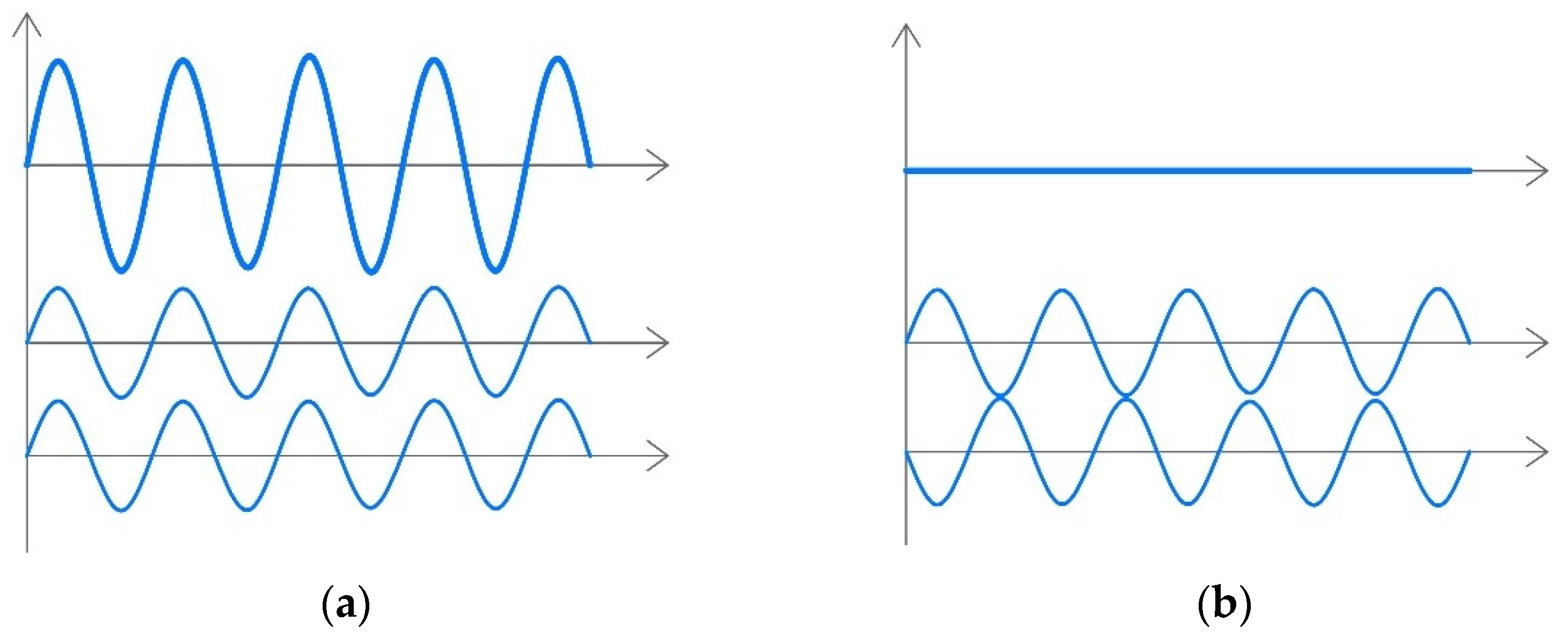
The term “interference phenomenon” refers to a physical effect associated with waves occurring between at least two overlapping arrangements located within each other’s range of influence. Wave sources may be either point-like or linear, and their range may correspond to the frequencies of visible light or sound. Where the waves overlap, they are either amplified (Figure 1a) or reduced (Figure 1b).
Interference patterns, known as the moiré effect, are a phenomenon that occurs when two (or more) regular, semi-transparent patterns with similar spatial frequencies (e.g., grids, lines, or stripes) are superimposed. This superposition under specific geometric conditions may generate a third, emergent pattern—typically in the form of rhythmic bands, waves, or vibrating structures—that does not exist physically, but arises through perceptual processing in the eye and brain.
This phenomenon results from the neural integration of overlapping spatial frequencies. The visual system interprets these relationships as emergent structures perceived at lower spatial frequencies (i.e., larger visible bands), making it an instance of spatial aliasing.
The moiré effect can occur naturally (e.g., when viewing fabrics, mesh façades, louvre systems, or LCD screens) or be intentionally used in art and architecture to create illusions of motion, depth, or visual instability.
The definitions presented above are based on established research in vision science, optics, and perceptual psychology, including studies by Spillmann (1993), Palmer (1999), and Westheimer (2008).

2.1. 2D Interference Patterns

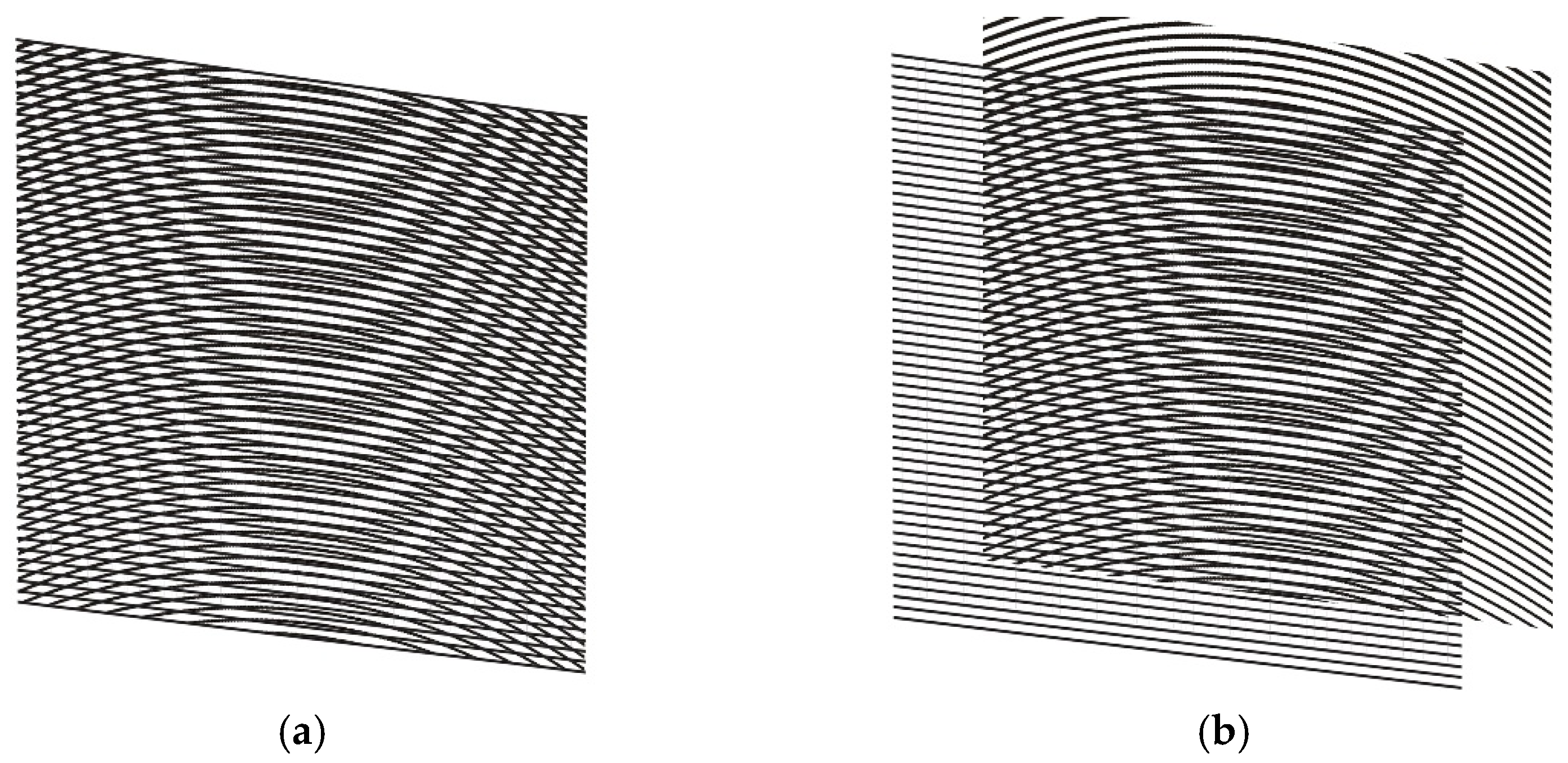
The moiré effect arises when two regularly structured patterns (e.g., grids, lines, stripes) are overlaid on top of each other with slight displacement or rotation (Figure 2a). As a result, the eye no longer perceives the two original patterns separately but instead registers a virtual interference pattern. Even minimal changes in frequency, angle, or spacing between the patterns generate pronounced moiré effects (Spillmann 1993). Small differences in line density or orientation are amplified into large-scale interference pattern bands.
This phenomenon is analogous to wave interference, where the superposition of waves with similar frequencies produces an image composed of duplex stripes. In visual perception, this means the visual system treats the overlapping patterns as a new unified configuration. Illusory forms appear at points where the patterns intersect, creating a perceived structure that is not present physically.

2.2. 3D Interference Patterns

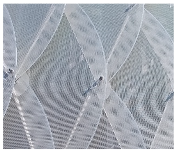
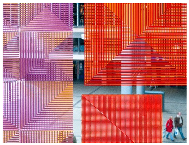
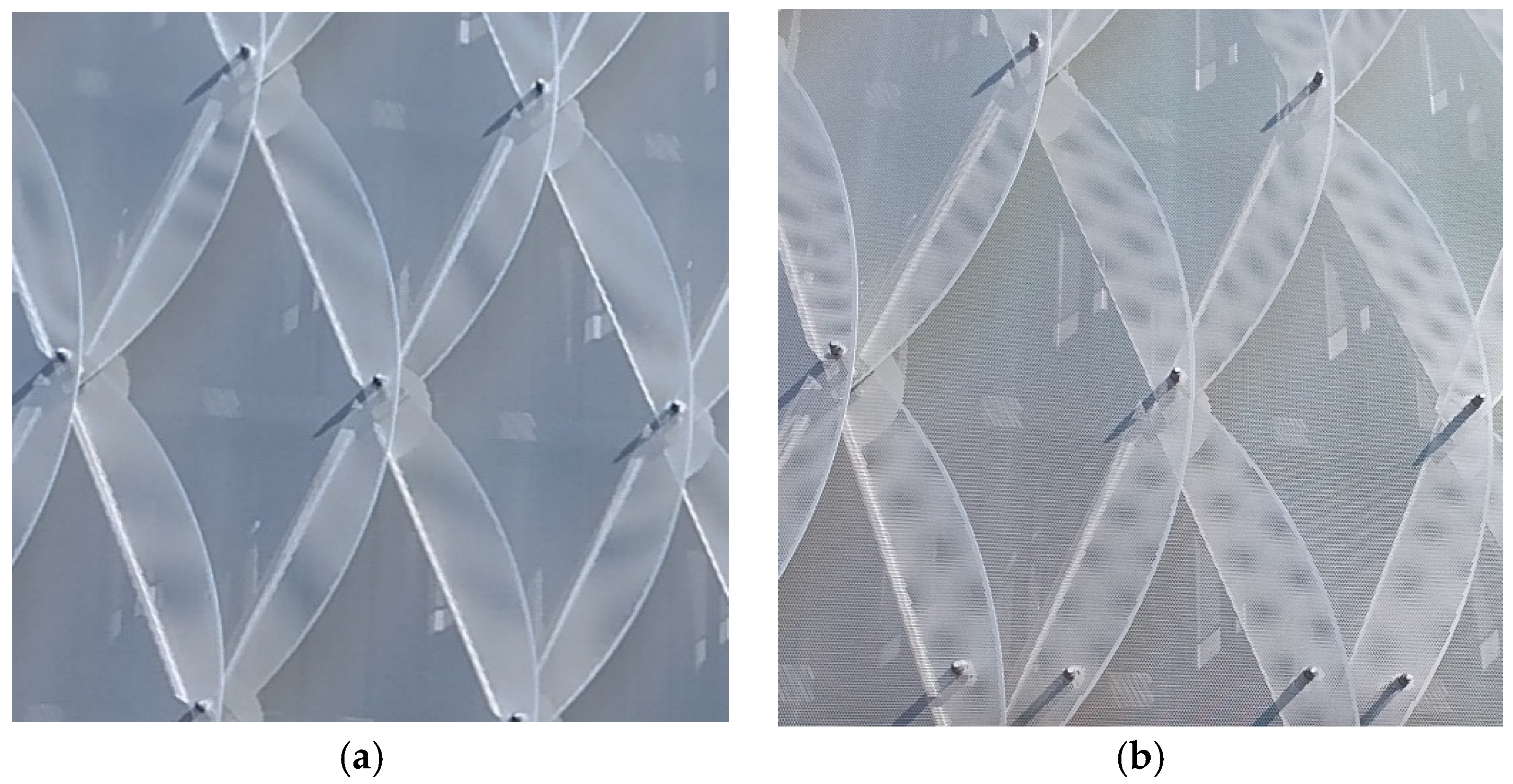
An even more complex and intensified effect emerges when two or more grids are placed on separate spatial planes (or on a transparent substrate such as glass) (Figure 2b). Our visual system then engages stereoscopic (binocular) vision. As a result, the three-dimensional arrangement of layers amplifies the perception of interference patterns, with the viewer perceiving dynamic, spatial patterns seemingly floating between the grids. Research indicates (Saveljev 2018) that 3D interference patterns have a significantly stronger perceptual impact than 2D ones. This is due to more complex illusion-generation processes that intensify the mobility of the interference patterns’ image. As the observer moves, the layered graphics shift relative to one another, producing dynamic visual interference—bands appear to move, oscillate, or rotate (Figure 3a,b). Increasing the distance between layers adds further properties: illusions of depth (three-dimensionality of the bands) (Lipowicz-Budzyńska 2020), perceived velocity and direction of movement, and, when curved patterns are involved, even rotational illusions. This phenomenon is often referred to as spatial interference patterns, as it arises from the superimposition of stimuli from spatially separated layers (e.g., two transparent screens) and engages the depth-processing capabilities of human vision. The dynamic character of these illusions can be further intensified by altering the geometry of the planes on which the grids are applied.
The following section briefly addresses selected perceptual and cognitive aspects relevant to the visual interpretation of interference patterns in architectural façades. Rather than providing an exhaustive account of neurocognitive mechanisms, this discussion is intended to contextualize how interference phenomena and illusions may be interpreted by the human visual system under specific viewing conditions. The focus remains on architectural application, and references to perceptual processes serve to support the analysis of façade-based visual effects presented before and after this section (Palmer 1999; Spillmann 1993).
Recent developments in perceptual psychology and neurocognitive science emphasize that vision is an active, constructive process rather than a direct reflection of stimuli on the retina. Interference pattern phenomena (e.g., moiré effect, aliasing, motion parallax, figure–ground ambiguity) reveal how the visual system integrates multiple signals and assumptions in order to interpret conflicting or ambiguous sensory input.
A prominent example is the moiré effect, which occurs when two regular patterns are superimposed: the observer perceives new rhythmic bands or movement that are not physically present in the static stimulus (Palmer 1999). This results from neural responses to the combined spatial frequencies, where fine details are subject to aliasing and perceived as slower, emergent patterns. The aliasing phenomenon (artifacts due to undersampling) accounts for the appearance of false contours and apparent motion within the visual field. Furthermore, overlapping structures may simulate depth cues—studies have shown that moiré effects presented in two spatial planes can evoke stereoscopic depth perception, similar to binocular disparity or motion parallax (Wade and Swanston 2013).
A complete interpretation of such stimuli requires the involvement of higher-order cognitive processes and feedback mechanisms. The figure–ground effect (already described by Gestalt psychology) illustrates that perceptual organization depends not only on bottom-up processing but also on contextual interpretation. Contemporary research demonstrates that figure extraction involves recurrent processing within the visual cortex (Lamme and Roelfsema 2000). Neurons in areas V2/V4 that encode border ownership send feedback to V1, thereby enhancing the representation of the figure relative to the background (Zhou et al. 2000). Neuroimaging studies confirm that conscious figure–ground discrimination activates higher-order brain regions (e.g., the prefrontal cortex), suggesting a top-down influence of attention and memory processes (Wagemans et al. 2012). Similarly, motion parallax-based depth perception depends on integrating retinal motion with information about eye movements. Dorsal stream neurons (in MT/MST areas) use eye-movement signals to calculate relative depth from motion (Bradley and Andersen 1998), transforming seemingly conflicting retinal shifts into coherent spatial interpretations.

2.3. Physiology of Vision

From the perspective of visual psychology, interference patterns can reveal important information about how our perceptual system operates. The visual system responds to spatial frequencies in an image—when two patterns overlap, local areas of increased or decreased line density occur, which are interpreted by the visual system as darker, lighter, or moving. Moiré can be viewed as a form of perceptual aliasing (Glassner 1995). For example, when pattern resolution exceeds the eye’s resolving capacity, aliasing appears in the form of a moiré pattern. Lothar Spillmann’s research shows that moiré patterns can induce illusory motion and even stereoscopic depth in static, two-dimensional images.
Studies also reveal that the brain amplifies minor dynamic differences (e.g., slight differences in the speed of moving patterns); therefore, when two sets of lines moving at slightly different speeds overlap (Hine et al. 1995), we will register apparent movements with totally different resultant velocities (Bryngdahl 1974). Neural mechanisms attempt to integrate these conflicting signals, resulting in new, illusory interpretations (Bulatov et al. 1997). Consequently, our perception of motion and depth is tricked—we perceive movement where none exists and recognize additional planes and shapes in space that are generated solely by the nervous system.

2.4. Optical Illusions

Architectural illusions can significantly alter the perception of form and space. Architectural design can intentionally mislead observers regarding actual scale or proportions. Depending on the form and dimensionality, optical illusions are often accompanied by perceptual phenomena, including:
  • Visual aliasing: The appearance of false geometric patterns (including the very moiré effect) when the resolution of a grid or pattern approaches the perceptual limits of the human eye (Watt 1991; Glassner 1995). In this context, perceptual limits refer to the spatial and temporal resolution of the human visual system, beyond which fine repetitive patterns can no longer be accurately resolved and may generate aliasing effects. The observer perceives false or secondary geometric structures—often in the form of ripples, bands, or moiré patterns—that are not physically present. In architecture, visual aliasing appears when repetitive façade elements such as louvres, mesh panels, or fine perforations are observed from a distance or at oblique angles. This phenomenon exposes the limits of human spatial sampling and introduces an unintended but aesthetically engaging layer of visual complexity (Oxman 2008).
  • Perspective anamorphosis: Perceived shape distortion based on the observer’s position (Wade and Swanston 2013; Kitaoka 2014). This effect often coexists with interference patterns (moiré effect), enhancing the perceptual dynamism of an architectural object (Shapiro and Todorovic 2016). In architectural design, perspective anamorphosis is intentionally employed to direct movement or create surprise effects—revealing hidden images, texts, or symbolic forms.
  • Motion parallax: The apparent speed of object movement within the field of vision varies with the observer’s position and depends on the distance from the grid arrangement. The observer’s movement results in additional perception of motion. Depending on how far he or she is from the arrangement, the observer perceives different speeds at which the patterns seem to move. Objects closer to the viewer appear to move faster across the visual field than those farther away (Wade and Swanston 2013).
  • Flicker effect: This occurs when moving past overlaid grids (e.g., perforated panels or louvres), resulting in the illusion of rhythmic flickering or pulsing. The effect arises from temporal stimulation of the retina and neural interpretation rather than actual luminance change, producing a sense of optical vitality in architectural envelopes (Martinez-Conde and Macknik 2017).
  • Figure-ground effect: A perceptual process in which interference patterns are interpreted as either the dominant figure or background (Shapiro and Todorovic 2016). This can produce illusions of depth. In façade compositions with strong contrast or layered interference, this process becomes ambiguous—patterns may alternate between foreground and background, leading to depth illusions or visual reversals. Such oscillations engage the observer cognitively, making the architectural surface appear active and changeable.
  • Illusion of depth: Interference patterns can create a sense of spatial depth. A phenomenon where two-dimensional interference patterns evoke the impression of three-dimensional space. Through modulation of contrast, scale, and alignment, flat compositions gain spatial presence. In glass façades or printed laminates, these effects contribute to a sense of environmental responsiveness.
  • Stereokinetic illusion: Spatial perception of motion induced by viewing two-dimensional geometric patterns. Flat façades may appear spatial or animated when observed in motion (Gregory 1997; Kitaoka 2014). As the observer moves, shifting viewpoints produce apparent rotation, expansion, or undulation of the surface. In architecture, this illusion transforms planar façades into visually kinetic entities, enhancing the experiential dimension of space.
  • Kinetic depth effect: Illusory depth perceived as geometric patterns on grids or panels shifting with observer movement (Wallach and O’Connell 1953). This enhances the spatial perception of layered structures.
  • Contrast illusion: Interference patterns may lead to perceived differences in brightness, colour, or intensity. Local enhancements or reductions in contrast result from interactions between adjacent elements, not material properties (Gregory 1997, pp. 84–86). Rather than reflecting material variation, these differences stem from neural processing of local contrast. In architecture, contrast illusions influence how materials are read under varying light conditions—creating apparent modulation of surface tone or texture.
  • Iridescence: The formation of rainbow-like reflections (Palmer 1999) on surfaces with specific structures, such as perforated metal, irregular glass, or microtextured cladding. In architecture, iridescence emerges on surfaces with microstructured or layered coatings—such as dichroic glass, perforated metal, or interference films—producing dynamic chromatic shifts that respond to daylight conditions.
  • Contextual distortion: A perceptual misinterpretation of size, shape, or proportion caused by surrounding spatial configurations (Shapiro and Todorovic 2016). For example, in perspective illusions where parallel lines converge in depth (e.g., colonnades, tree rows), the observer may wrongly assess distances and heights.
  • Dynamic perspective: Changing form perception based on the observer’s viewing angle. Movement relative to layered grids intensifies interference patterns, producing additional illusions of motion and depth (Gibson 2015). The interplay between physical motion and interference patterns produces additional illusions of motion and depth, fostering active engagement between observer and architecture.

2.5. Analysis of Research Material

The following tables present analyses of architectural objects incorporating interference patterns within their façades. Table 1 contains an overview of the visual features of façades in which interference patterns occur. The table contains information about material, colour, building form geometry, and repeated elements contributing to the interference patterns. It also evaluates interference metrics, particularly distinguishing between 2D and 3D interference geometries.
Table 2 summarizes the occurrence of optical illusion types, their influence on the perception and spatial experience, and the roles illusions and interference play in the overall reception of the architectural object.
The purpose of Table 1 and Table 2 is not to present empirical findings in the strict quantitative sense, but to provide a structured classification and comparative overview of selected architectural examples. The tables organize observable formal, material, and perceptual characteristics of façade configurations that generate interference patterns, serving as an analytical framework for subsequent discussion.
Table 1 provides not only an overview of architectural objects employing interference but also a systematic analysis of their material configuration, façade typology, and the geometrical principles responsible for interference pattern effects. By distinguishing between 2D and 3D geometries, the table demonstrates how interference patterns become more perceptually intense when patterns are distributed across separate layers, thus engaging binocular vision and producing illusions of depth and motion. This typology establishes a comparative framework for future studies, allowing readers to evaluate how different design strategies—from semi-spatial façades to double-glass layers and structural textures—generate distinctive forms of visual illusions. In doing so, the table connects materiality, form, and perception, showing that interference patterns in architecture are not merely a visual artifact but a designed phenomenon with measurable impact on spatial experience.
Table 2 complements the geometrical analysis by focusing on perceptual outcomes and their implications for architectural experience. It identifies which types of illusions—including motion parallax, stereokinetic effects, flicker, figure–ground alternation, and dynamic perspective—accompany specific interference patterns, and clarifies the perceptual roles they fulfil. The examples demonstrate that interference patterns rarely occur in isolation; rather, they coexist with multiple illusory processes that intensify spatial perception, manipulate scale and depth, and animate otherwise static architectural forms. By linking illusions to their aesthetic, cognitive, and symbolic functions, the table illustrates how interference patterns become a medium of communication between architecture and its users. It thereby underscores the broader thesis of the paper: that interference patterns and illusory processes together transform architecture into an interactive, dynamic system.

3. Discussion

The examples presented above illustrate the significant creative potential of interference patterns and illusion processes in architecture. The integration of phenomena such as the moiré effect into architectural design expands the traditional understanding of architecture. A building is no longer perceived solely as a static object with a fixed shape; rather, it becomes a perceptual device whose properties transform according to the viewer’s experience. This interactive dimension aligns with design paradigms that emphasize the role of user experience.
Architecture in this context can be understood not merely as a backdrop for events, but as an active participant in a dialogue with the observer, evolving in tandem with their movement. According to the principles of architectural phenomenology (Norberg-Schulz 1980), the meaning of space is constructed in the mind of the perceiver through sensory experience, and interference patterns serve as a powerful medium to articulate this phenomenon.
The analysis reveals the diversity of optical illusions employed in conjunction with the spatial perception of architecture. These phenomena hold substantial value as tools in shaping contemporary architecture, influencing both the aesthetic quality of buildings and the emotional responses of users.
In the examined cases, multiple illusion types were often employed simultaneously. The dynamic perspective appeared most frequently, with many forms designed to present varied appearances depending on the viewpoint. As a result, users experience the building incrementally, discovering its features over time, thereby rendering the architecture multidimensional—integrating time and movement, and transforming it into a kinetic visual experience.
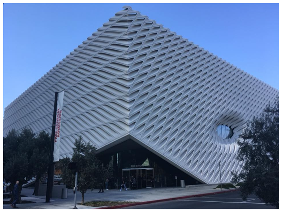
Another commonly employed strategy involves geometric distortion induced by contextual elements. Façades adorned with unconventional graphic patterns or openwork structures can significantly alter spatial perception. The façade of The Broad, for instance, uses a mesh system that creates the illusion of slanted geometry, while the Galleria Centercity modifies the perceived scale of the building. These illusions of moving bands and vibrations induce a sensation of motion or depth across otherwise static surfaces, representing a form of autokinetic illusion embedded in architecture.
Illusions of motion have been deliberately implemented in projects aiming to animate or activate space. The France Pavilion, through its reflection in water, appears to levitate—a serene illusion of elevation. Conversely, the P22a parking structure in Cologne and the Brisbane CLC façade utilize illusions of pulsation or oscillation to instil a sense of liveliness in the built form.
In travel environments, such as the Mediopadana train station, rhythmic structural elements produce a stroboscopic effect: as users pass by at speed, sequential segments recreate an illusion of fluid architectural undulation. These dynamic illusions enrich the sensory experience, making static structures appear responsive to the presence of the observer and thereby enhancing the interactivity of space.
Optical illusions also exert a strong influence on the perception of scale and mass of buildings. In numerous examples (Ginza Place, John Lewis car park, Galleria Centercity), visual strategies were used to obscure the true dimensions of buildings. Observers are unable to immediately discern height or floor count, rendering large buildings less imposing. This is often achieved through façade segmentation into smaller modules or by employing a gradient in the scale of architectural elements—the human eye is drawn to ornamentation rather than measuring vertical extent. Such techniques improve the perception of scale, allowing space to be experienced as more human, intimate, or harmonious.
Motion parallax, wherein closer objects appear to move faster than those farther away, is an innate feature of perception in motion. Architects can amplify this effect, as demonstrated in Gardens by the Bay, where Supertrees were strategically positioned against the urban skyline to intensify the sensation of depth and spatial magnitude. In buildings with double-skin façades (Basel or Tonetsu), the spatial gap between layers causes the patterns to shift relative to one another as the observer moves, reinforcing the illusion of three-dimensionality and depth in the elevation.
These approaches bring architecture closer to kinetic art and scientific–artistic installations, raising interesting research questions: to what extent can spatial perception be shaped through precise manipulation of visual stimuli? Where does the boundary lie between architecture and illusion art in public space? Such inquiries underscore the need for continued theoretical reflection and interdisciplinary investigation.
From a practical perspective, interference patterns offer both distinct advantages and certain challenges. Among the benefits are aesthetic and experiential values—well-executed moiré effects can bestow a building with a unique identity and enhance its impact on the surroundings. A dynamically transforming façade can capture attention, energize public space, and contribute to the identity of a place, often positioning the building as a symbol of innovation or interactivity. These effects can be achieved through passive means—playing with patterns does not require power or complex mechanical systems. The ‘moving’ interference pattern image can, in some cases, substitute for a multimedia façade, offering an environmentally friendly alternative that is energy-efficient (Lipowicz-Budzyńska 2024). In terms of sustainable design, this presents a significant advantage: dynamic effects without electronics result in a reduced carbon footprint and lower maintenance costs compared to LED screens, for instance. Interference patterns may also fulfil functional roles, such as reducing sunlight exposure (as in Galleria Centercity, where the double façade with slats functions as a sunshade) or aiding spatial orientation (a moving pattern can indicate the entrance area by attracting attention). Its visual appeal can enhance a building’s marketing and symbolic value, rendering it more recognizable and memorable—a desirable trait in commercial or public architecture.
The discussion does not interpret Table 1 and Table 2 as standalone research results, but rather as a basis for identifying recurring patterns and tendencies across the analysed examples. These patterns emerge from the comparative classification of façade configurations and their associated perceptual effects, and they inform the interpretative synthesis presented below.
The synthesis of the research findings presented in Table 1 and Table 2 indicated that, across the case set, interference patterns consistently act as an attention engine that deepens cognitive engagement while also conveying meaning. Depth- and motion-related illusions (dynamic perspective, motion parallax, and kinetic depth) increase perceived spaciousness or lightness and create rhythmic cues that structure how façades are read in time, turning static envelopes into legible, time-based narratives (e.g., P22a Garage, AV Mediopadana). At the same time, project-specific interference “grammars” support identity work: dematerialization and flicker communicate lightness or refinement (Ginza Place), while geometric distortion and stereokinetic effects build iconicity and brand recall (The Broad, Phoenix Media Centre). In cultural or programmatic contexts, these perceptual strategies anchor messages—such as innovation, openness, or harmony with nature—without literal signage (France Pavilion, Gardens by the Bay). The communicative value, therefore, emerges from a calibrated coupling of illusion type and intended meaning: lightness ↔ dematerialization/flicker; dynamism ↔ parallax/kinetic depth; landmark identity ↔ strong geometric distortion; environmental affinity ↔ depth cues and layered lattices. Crucially, intensity must be tuned to preserve legibility, comfort, and wayfinding.
However, some limitations must be considered. Predicting precise 3D interference patterns during the design phase can be difficult, and the final result may not always be fully controllable. In public spaces, intense visual stimuli can distract or even irritate—for example, drivers might be affected by strong light reflections, and sensitive individuals may experience flicker-related discomfort. Literature highlights instances of perceptual irritation, where sudden pattern changes can lead to unease. Designers must therefore carefully balance the intensity of the effect, ensuring it remains perceptible but not overwhelming.
Recent literature also highlights cases of perceptual irritation and cognitive overload, where excessive pattern contrast or unexpected changes in rhythm produce discomfort and a loss of spatial orientation. To mitigate such risks, architects should evaluate both the aesthetic and cognitive dimensions of interference patterns, maintaining perceptual clarity and legibility. Therefore, future studies should aim to develop predictive simulation tools and visual comfort metrics to help designers calibrate intensity, frequency, and contrast. The goal is to ensure that interference remains perceptible and communicative, yet balanced enough to preserve spatial harmony and perceptual well-being.

4. Materials and Methods

This study aimed to assess the impact of interference and illusion-generating processes on the perception of architecture. The research was conducted using a sample of seventeen architectural objects, which were categorized according to the following typology: semi-spatial façades, graphic compositions applied to double-glass layers, spatial textures, and interference phenomena embedded in the building’s form. The spatial form of the façade and the nature of the interference patterns were treated as the main variables for categorization. All interpretative statements regarding perception and experience are formulated as analytical observations rather than empirical measurements.
The main research methods applied in the study include:
-
Comparative case-based analysis (CCA) of selected architectural examples;
-
Comparative analysis of façade configurations and modes of interference pattern generation;
-
Logical–analytical reasoning used to interpret and synthesize observed patterns;
-
In situ observations, focusing on image structure, applied artistic techniques, and the relationship between image and architectural space;
-
Review of academic and critical literature, with a qualitative synthesis of theoretical insights;
-
Examination of high-profile academic publications and publicly available project documentation, supplemented where available by designers’ statements and content from project websites.
The study incorporates a comparative case-based analysis of selected architectural examples. Each case is examined with regard to its overall building form, façade configuration, pattern geometry, and the mode of interference pattern generation. The analysis does not aim to reconstruct the full design process or user behaviour, but focuses on observable architectural features and their potential perceptual implications.
The discussion develops through a comparative reading of the selected cases, using logical–analytical reasoning to identify recurring patterns and tendencies across different architectural configurations.
In addition to the comparative classification of architectural examples, the study employs logical–analytical reasoning. This method is used to derive coherent interpretations from the observed configurations by systematically relating façade geometry, modes of interference pattern generation, and associated perceptual effects. The reasoning process is based on internal consistency, comparison across cases, and established theoretical principles from perception studies, rather than on statistical inference.
The research material included photographic documentation, field notes, drawings, sketches, measurements, and analyses. For each project, an analysis was conducted regarding the occurrence and perception of illusions coexisting with visual interventions. The data set included:
-
The architectural form and local context;
-
The image character and its structure.
The image analysis addressed the following aspects:
-
Overall architectural form;
-
Location and form of interference patterns;
-
Shape and character of interference patterns;
-
Colour palette;
-
Symbolic content.
Two tables were created for the purposes of analysis:
Table 1 contains key data on each façade, including material, colour, geometric form of the building, and repetitive elements contributing to the interference patterns. It also presents an analysis of interference pattern geometry, with a particular focus on distinguishing between 2D and 3D geometries.
Table 2 summarizes the presence of specific optical illusion types, their influence on the perception of interference and spatial experience, and the role of illusion and interference patterns in the reception of the architectural object.
The synthesis of these findings is presented in Section 5.

5. Conclusions

The conclusions are derived from a qualitative synthesis of patterns and tendencies identified through the structured classification presented in Table 1 and Table 2, rather than from statistical or experimental results. The study, therefore, contributes a conceptual and typological framework that may support further empirical research on façade-based interference patterns.
The perception of architectural space can be shaped and modulated through design strategies that engage the senses. Interference patterns represent a relatively new tool within the expressive repertoire of architectural design. While interference patterns have a long history in optics and visual culture, recent decades have seen an increased architectural interest in their application, particularly in façade design enabled by contemporary materials and fabrication technologies.
The examined case studies demonstrate that the deliberate use of interference patterns can enhance both the aesthetic expression and experiential qualities of buildings. The effects of interference patterns can initiate and influence the user’s interaction with space and the discovery of shifting visual impressions.
The study of interference pattern phenomena, such as the moiré effect, reveals that the reach of architecture’s impact on perception can be further extended by engaging deeper visual mechanisms. The theoretical analysis shows that moiré effects are based on precise geometric dependencies, but their ultimate reception is shaped by the human visual system. This can lead to captivating illusions of movement, flicker, depth, and increased contrast. Optical illusions enrich the architectural experience by stimulating the imagination. Façades can act as carriers of messages regarding the building’s purpose, its relationship with the environment or natural elements (e.g., air, water, landscape), and can evoke emotional responses such as surprise, admiration, or curiosity. Architecture, though static in structure, can be perceived as kinetic and interactive, enhancing the user’s engagement with space.
Illusions help shape the perception of scale, mass, and light; they break the monotony of large building forms, making them more approachable while also improving environmental conditions (e.g., sun protection, ventilation). This demonstrates a holistic approach, where visual effects stem from structural or climatic solutions, as seen in the works of Calatrava or in the façade of The Broad.
Illusions serve to either anchor a building within its context or to make it stand out. On the one hand, strategies such as depth illusion or dynamic perspective help integrate the structure into its surroundings—referring to local tradition (e.g., Ginza Place), the landscape (Frihamnskyrkan), or adjacent buildings (Ginza). On the other hand, spectacular illusions can visually detach the architectural object from its background (Cheonan, Phoenix Media Centre, Supertrees). The architect can consciously decide whether an illusion is intended to merge the building with its environment or, conversely, to emphasize its distinctiveness.
Users experience space more intensely—they perceive the size of rooms and distances differently, and may even encounter sensory paradoxes (e.g., a heavy structure may appear as light as fabric).
Several conclusions and suggestions emerge from the above considerations:
Future research should focus on developing tools and design methods that enable better prediction of moiré effects already at the conceptual stage.
High-resolution computer simulations, virtual reality models, and generative algorithms could help architects experiment with interference patterns in a controlled manner, shortening the path from idea to realization.
It would be valuable to clearly define the role of inter-referential imagery in shaping user experience. This would allow for the assessment of the real impact of such phenomena on people’s well-being, behaviour, and opinions in everyday use of spaces—currently an underexplored research area.
Interdisciplinary collaboration between architecture, structural engineering, and vision psychology is highly recommended. Researchers from these fields should work together to establish optimal parameters for the use of interference patterns (e.g., recommended pattern densities, angles, or layer distances) that ensure the desired effect without negative consequences. Such parameters could serve as the basis for future standards and design guidelines for innovative façades.
Cultural and social context is a critical factor in designing this type of architecture—not every public space is appropriate for bold optical illusions.
Finally, the cultural and social context constitutes a critical framework for the application of interference patterns. Not every urban or social environment is equally suited to strong optical effects. While some contexts welcome bold interventions that generate iconic identities (e.g., Phoenix Media Centre, Supertrees in Singapore), others demand moderation to preserve legibility and comfort. Rigorous site-specific analyses of cultural expectations, social functions, and behavioural patterns should therefore precede the application of strong interference pattern effects. Striking a balance between perceptual novelty and spatial legibility is key to ensuring that visual complexity enhances, rather than diminishes, user experience.
The architecture of the future may draw on interference patterns to create more interactive and multisensory environments. The key, however, will be to strike a balance between aesthetic innovation and spatial comfort and legibility. One may argue that the moiré effect in architecture constitutes a bridge between science and the art of design—its further exploration will undoubtedly bring new inspirations and possibilities, enriching both architectural theory and the everyday experiences of space users.
At the same time, it is important to acknowledge that the cultural and social parameters of space significantly influence how optical illusions and interference effects are perceived. Not all environments share the same level of perceptual tolerance or aesthetic readiness for such experimental visual phenomena. Responses to intense optical effects may vary depending on the social function of a space, users’ psychological predispositions, and cultural associations related to pattern, movement, or light. Consequently, the integration of interference patterns in architecture requires careful site-specific evaluation, including analyses of local behaviour patterns, symbolic meanings, and community identity.
In this perspective, the ethical and perceptual responsibility of the designer becomes as crucial as artistic experimentation itself. Visual innovation should coexist with perceptual well-being, ensuring that the environment remains legible, comfortable, and inclusive. Such an approach aligns with the principles of human-centred and context-sensitive design, allowing optical experimentation to enrich public space while respecting its cultural and emotional dimensions.

Funding

This research was funded by Bydgoszcz University of Science and Technology.

Institutional Review Board Statement

Not applicable.

Informed Consent Statement

Not applicable.

Data Availability Statement

No new data were created or analyzed in this study. Data sharing is not applicable to this article.

Conflicts of Interest

The author declares no conflict of interest.

References

  1. Amidror, Isaac. 1991. The moiré phenomenon in color separation. In Raster Imaging and Digital Typography II, Proceedings of the Conference on Raster Imaging and Digital Typography. Edited by Robert Morris and Jacques Andre. Boston: Cambridge University Press. [Google Scholar]
  2. Amidror, Isaac. 2007a. The Theory of the Moiré Phenomenon. Volume 1: Periodic Layers. London: Springer. [Google Scholar]
  3. Amidror, Isaac. 2007b. The Theory of the Moiré Phenomenon. Volume 2: Aperiodic Layers. London: Springer. [Google Scholar]
  4. Arnheim, Rudolf. 2009. The Dynamics of Architectural Form: Based on the 1975 Mary Duke Biddle Lectures at the Cooper Union. Berkeley: University of California Press. [Google Scholar]
  5. Bafna, Sonit, Carina Antunez, Myung Seok Hyun, Hyun Kyung Lee, and Yi Lu. 2010. The Visual Functioning of Buildings: Outline of a Possible General Theory. The Journal of Space Syntax 1: 133–48. [Google Scholar]
  6. Bradley, David C., and Richard A. Andersen. 1998. Center-surround antagonism based on disparity in primate area MT. Journal of Neuroscience 18: 7552–65. [Google Scholar] [CrossRef] [PubMed]
  7. Bryngdahl, Olof. 1974. Moiré: Formation and interpretation. Journal of the Optical Society of America 64: 1287–94. [Google Scholar] [CrossRef]
  8. Brzezicki, Marcin. 2011. Designer’s controlled and randomly generated moiré patterns in architecture. Paper presented at the XV Generative Art Conference (GA2011), Rome, Italy, December 5–7; Available online: https://www.generativeart.com/GA2011/marcin.pdf (accessed on 18 June 2023).
  9. Bulatov, Aleksandr, Algis Bertulis, and Lina Mickiene. 1997. Geometrical illusions: Study and modelling. Biological Cybernetics 77: 395–406. [Google Scholar] [CrossRef] [PubMed]
  10. Corsi, Andrea, Martina Dedda, Elnaz Ghazi, Elisa Morselli, and Valentina Nunnari. 2015. UNStudio pelle come nuovo paradigma: Superficie digitale. In UNStudio: Diagramma Struttura Modello Pelle Ibridazione. Edited by Gaetano De Francesco, Elnaz Ghazi and Isabella Santarelli. Raleigh: Lulu. Available online: https://www.researchgate.net/publication/326273394_UNStudio_PELLE_COME_NUOVO_PARADIGMA_SUPERFICIE_DIGITALE (accessed on 20 June 2023).
  11. Evans, Robin. 1995. The Projective Cast: Architecture and Its Three Geometries. Cambridge, MA: MIT Press. [Google Scholar]
  12. Field, David J. 1987. Relations between the statistics of natural images and the response properties of cortical cells. Journal of the Optical Society of America A 4: 2379–94. [Google Scholar] [CrossRef] [PubMed]
  13. Gibson, James J. 2015. The Ecological Approach to Visual Perception. Abingdon-on-Thames: Psychology Press. [Google Scholar] [CrossRef]
  14. Glassner, Andrew. 1995. Principles of Digital Image Synthesis. San Francisco: Morgan Kaufmann. [Google Scholar]
  15. Gregory, Richrd L. 1997. Eye and Brain: The Psychology of Seeing. Oxford: Oxford University Press. [Google Scholar]
  16. Heidegger, Martin. 1971. Building, dwelling, thinking. In Poetry, Language, Thought. Edited by Albert Hofstadter. New York: Harper & Row, pp. 141–59. [Google Scholar]
  17. Hine, Trevor, Michael Cook, and Garry Rogers. 1995. An illusion of relative motion dependent upon spatial frequency and orientation. Vision Research 35: 3093–102. [Google Scholar] [CrossRef] [PubMed]
  18. Hoffman, Donald D. 2000. Visual Intelligence: How We Create What We See. New York: W. W. Norton & Company. [Google Scholar]
  19. Jaglarz, Anna. 2011. Perception and Illusion in Interior Design. In Universal Access in Human-Computer Interaction. Context Diversity. Edited by Constantine Stephanidis. UAHCI 2011; Lecture Notes in Computer Science. Berlin/Heidelberg: Springer, vol. 6767. [Google Scholar] [CrossRef]
  20. Jodidio, Philip. 2016. Calatrava: Complete Works 1979–Today. Cologne: Taschen. [Google Scholar]
  21. Kitaoka, Akiyoshi. 2014. Visual Illusions in Art and Science. The Japanese Journal of Psychonomic Science 33: 19–26. [Google Scholar]
  22. Lamme, Victor A. F., and Pieter R. Roelfsema. 2000. The distinct modes of vision offered by feedforward and recurrent processing. Trends in Cognitive Sciences 4: 573–82. [Google Scholar] [CrossRef] [PubMed]
  23. Lipowicz-Budzyńska, Alina. 2020. Visual Interference in the Glass Façade. IOP Conference Series Materials Science and Engineering 960: 042079. [Google Scholar] [CrossRef]
  24. Lipowicz-Budzyńska, Alina. 2023. Image Using Interference Effects in the Glass Façade. New York: AIP Publishing. [Google Scholar] [CrossRef]
  25. Lipowicz-Budzyńska, Alina. 2024. Visual interference—Artistic possibilities of linear mixed arrangements. Architectus 3: 101–10. [Google Scholar] [CrossRef]
  26. Malacara, Daniel, and Brian J. Thompson. 2001. Handbook of Optical Engineering. Boca Raton: CRC Press. [Google Scholar]
  27. Martinez-Conde, Susana, and Stephen L. Macknik. 2017. Champions of Illusion: The Science Behind Mind-Boggling Images and Mystifying Brain Puzzles. New York: Scientific American/Farrar, Straus and Giroux. [Google Scholar]
  28. Norberg-Schulz, Christian. 1980. Genius Loci: Towards a Phenomenology of Architecture. New York: Rizzoli. [Google Scholar]
  29. Oxman, Rivka. 2008. Digital architecture as a challenge for design pedagogy: Theory, knowledge, models and medium. Design Studies 29: 99–120. [Google Scholar] [CrossRef]
  30. Pallasmaa, Juhani. 1996. The Eyes of the Skin: Architecture and the Senses. Chichester: Wiley-Academy. [Google Scholar]
  31. Palmer, Stephen E. 1999. Vision Science: Photons to Phenomenology. Cambridge, MA: MIT Press. [Google Scholar]
  32. Pérez-Gómez, Alberto, and Louise Pelletier. 1997. Architectural Representation and the Perspective Hinge. Cambridge, MA: MIT Press. [Google Scholar]
  33. Saveljev, Vladimir. 2018. Moire effect in 3D structures. In Advances in Optics. Reviews. Edited by Sergey Y. Yurish. Barcelona: IFSA Publishing, vol. 1, pp. 61–75. [Google Scholar]
  34. Shapiro, Arthur, and Dejan Todorovic, eds. 2016. The Oxford Compendium of Visual Illusions. Oxford: Oxford University Press. [Google Scholar]
  35. Spillmann, Lothar. 1993. The perception of movement and depth in moiré patterns. Perception 22: 287–308. [Google Scholar] [CrossRef] [PubMed]
  36. Wade, Nicholas J., and Michael T. Swanston. 2013. Visual Perception: An Introduction, 3rd ed. Abingdon-on-Thames: Psychology Press. [Google Scholar]
  37. Wade, Nicholas J., Dejan Todorović, David Phillips, and Bernd Lingelbach. 2017. Johann Joseph Oppel (1855) on Geometrical–Optical Illusions: A Translation and Commentary. i-Perception 8: 2041669517712724. [Google Scholar] [CrossRef] [PubMed]
  38. Wagemans, Johan, James H. Elder, Michael Kubovy, Stephen E. Palmer, Mary A. Peterson, Manish Singh, and Rdiger von der Heydt. 2012. A century of Gestalt psychology in visual perception: I. Perceptual grouping and figure–ground organization. Psychological Bulletin 138: 1172–217. [Google Scholar] [CrossRef] [PubMed]
  39. Wallach, Hans, and Daniel N. O’Connell. 1953. The kinetic depth effect. Journal of Experimental Psychology 45: 205–17. [Google Scholar] [CrossRef] [PubMed]
  40. Watt, Roger J. 1991. Understanding Vision. San Diego: Academic Press. [Google Scholar]
  41. Westheimer, Gerald. 2008. Illusions in the spatial sense of the eye: Geometrical–optical illusions and the neural representation of space. Vision Research 48: 2128–42. [Google Scholar] [CrossRef] [PubMed]
  42. Zhou, Hong, Howard S. Friedman, and Rüdiger von der Heydt. 2000. Coding of border ownership in monkey visual cortex. Journal of Neuroscience 20: 6594–611. [Google Scholar] [CrossRef] [PubMed]
Figure 1. Interference results from the superposition of waves: (a) wave amplification; (b) wave reduction (own study).
Arts 15 00037 g001
Figure 2. Typology of interference patterns—comparison of 2D and 3D effects: (a) 2D interference patterns; (b) 3D interference patterns. Author’s original contribution.
Arts 15 00037 g002
Figure 3. Deformation, rotation, and densification of interference patterns depending on the viewing distance from the façade, P22a Garage at the Trade Fair, Cologne, Germany: (a) approximately 10 m from the façade; (b) 3 m from the façade. Photos by Alina Lipowicz-Budzyńska.
Arts 15 00037 g003
Table 1. Overview of examples of the application of interference patterns in architecture. Author’s own study.
#BuildingKey DataInterference Pattern Geometry Analysis
Semi-spatial façades
1Arts 15 00037 i001
France Pavilion, EXPO 2010, Shanghai, China; France, Jacques Ferrier Architects (photo by Walter Lim)
Façade type: openwork façade moved away from the main wall
Type of interference patterns: 2D, 3D
Material: metal, concrete
Colour: white
Building form: the shape of the façade is a parallelogram with rounded corners
Place of interaction: openwork façade, façade shadows
Component form: curved linear elements
Form of interference: horizontal stripes
Interference pattern type:
2D interference patterns—flat façade,
3D interference patterns—mainly in the corners between the arrangements of the openwork façade
2Arts 15 00037 i002
Frihamnskyrkan, Gothenburg, Sweden, Elding Oscarson, 2023 (photo by DKjellby)
Façade type: system façade with added diagonal elements
Type of interference patterns: 2D, 3D
Material: aluminium
Colour: white, light brown
Building form: cube
Symbolism: refers to a cornfield
Place of interaction: openwork façade
Component form: straight parallel lines arranged at an angle
Form of interference: horizontal stripes
Interference pattern type: mainly 3D interference patterns—semi-spatial façade
3Arts 15 00037 i003
The Broad museum in Los Angeles, USA, Diller Scofidio + Renfro, 2015 (photo by Kerstin Bednarek)
Façade type: openwork façade moved away from the main wall
Type of interference patterns: 2D, 3D
Material: concrete
Colour: white
Building form: parallelogram
Symbolism: refers to honeycomb
Place of interaction: on the surface of the façade
Component form: straight linearly placed parallel forms, arranged at an angle
Form of interference: linear forms located at an angle
Interference pattern type: mainly 2D interference patterns—flat façade
Due to the semi-spatial form of the façade, also 3D interference patterns
4Arts 15 00037 i004
Gallery of Ginza Place, Chuo, Japan, Klein Dytham Architecture, 2017 (photo by Edomura no Tokuzo)
Façade type: curtain wall
Type of interference patterns: 2D
Material: aluminium panels
Colour: white
Building form: parallelogram
Symbolism: refers to Japanese craftsmanship and traditional sukashibori lattices
Place of interaction: façade
Component form: curved linear elements
Form of interference: horizontal stripes
Interference pattern type: mainly 2D interference patterns—flat façade
Due to the semi-spatial form of the façade, also 3D interference patterns
5Arts 15 00037 i005
P22a garage at the trade fair, Cologne, Germany, Wulf Architekten GmbH, 2017 (photos by Alina Lipowicz-Budzyńska)
Arts 15 00037 i006
Façade type: curtain wall
Type of interference patterns: 3D
Material: aluminium mesh panels
Colour: white
Building form: two interconnected irregular forms
Symbolism: scale, gills
Place of interaction: glass façade
Component form: curved linear elements—edges of the sheets, between the layers of meshes
Form of interference: horizontal stripes, circles
Interference pattern type: mainly 3D interference patterns, due to the semi-spatial form of the façade, and two layers of metal meshes
Façade graphics applied to two layers of glass
6Arts 15 00037 i007
Institute for Hospital Pharmaceuticals,
Basel, Switzerland, Herzog and de Meuron, 1998 (photos by Alina Lipowicz-Budzyńska)
Arts 15 00037 i008Place of interaction: glass façade
Component form: print points and white mesh holes, façade graphics’ shadows
Form of interference: vertical stripes
Façade type: glass curtain wall
Type of interference patterns: 3D
Material: glass wall moved away from white perforated mesh
Colour: green
Building form: orthogonal forms
Interference pattern type: mainly 3D interference patterns, due to the location of the image on two separated planes, visually variable
7Arts 15 00037 i009
Women’s Health Clinic, Basel, Switzerland, Studio Vacchini, 2003 (photos by Alina Lipowicz-Budzyńska)
Arts 15 00037 i010Place of interaction: glass façade
Component form: small strips placed on two separated layers of glass, shadows of façade graphics
Form of interference: horizontal stripes
Façade type: glass curtain wall
Type of interference patterns: 3D
Material: two layers of glass—screen print
Colour: white
Building form: parallelogram
Interference pattern type: mainly 3D interference patterns, due to the location of the image on two separated planes, visually variable
8Arts 15 00037 i011
University Library, Cottbus, Germany, Herzog & de Meuron, 1999 (photos by Alina Lipowicz-Budzyńska)
Arts 15 00037 i012Place of interaction: glass façade
Component Form: small dots placed on two layers of spaced glass
Form of interference: geometric patterns that form a grid
Façade type: glass curtain wall, double-layer with a buffer zone
Type of interference patterns: 3D
Material: two glass layers—image printed on glass—screen print
Colour: white
Building form: parallelogram
Interference pattern type: mainly 3D interference patterns, due to the location of the image on two distant planes, visually variable
9Arts 15 00037 i013
QUAD, Derby, Great Britain, arch.: John Sutton, artist: Alexander Beleschenko, 2011 (photos by Alexander Beleschenko)
Arts 15 00037 i014Place of interaction: glass façade
Component form: small stripes forming squares, placed on two layers of spaced glass, shadows of façade graphics
Form of interference: stripes along graphics lines
Interference pattern type: mainly 3D interference patterns, due to the location of the image on two separated planes, visually variable
Façade type: glass curtain wall
Type of interference patterns: 3D
Material: two layers of glass—image printed on glass
Colour: multicolour
Building form: a form circumscribed on an irregular oval plan
Spatial textures
10Arts 15 00037 i015
Tonetsu Corporation Head Office Building, Tokyo, Japan, Kengo Kuma Kajima Design, 2013 (photo by Mizuhara gumi)
Façade type: adaptive façade
Type of interference patterns: 3D
Material: metal panels
Colour: light grey
Building form: a parallelogram building
Place of interaction: spatial façade
Component form: moving panels
Form of interference patterns: geometric patterns
Interference pattern type: mainly 3D interference patterns, due to the spatial form of the arrangement, visually variable
11Arts 15 00037 i016
Victoria John Lewis car park, Leeds, United Kingdom, Arturo Tedeschi (photo by Immanuel Giel)
Façade type: open structure made of rolled metal components
Type of interference patterns: 3D
Material: aluminium
Colour: metallic
Building form: complex raised parallelogram shape
Place of interaction: spatial façade
Component form: twisted panels
Form of interference: geometric patterns in the form of a grid
Interference pattern type: mainly 3D interference patterns, due to the spatial form of the arrangement, visually variable
12Arts 15 00037 i017
Galleria Centercity, Cheonan, Korea, UNStudio, 2010 (photo by Kim Yong-Kwan)
Façade type: a two-layer illuminated façade, consisting of vertical elements
Type of interference patterns: 3D
Material: metal profiles
Colour: grey
Building form: a parallelogram building with rounded corners
Place of interaction: spatial façade
Component form: vertical lines, shadows cast by three-dimensional elements
Form of interference: oblong, irregular forms
Interference pattern type: mainly 3D interference patterns, due to the spatial form of the arrangement, visually variable
13Arts 15 00037 i018
Girls’ School, Brisbane, Australia, M3 Architects (photo by Rory Hyde)
Façade type: openwork façade added to the building
Type of interference patterns: 3D
Material: aluminium panels, lines painted on the façade
Colour: black, white
Building form: a parallelogram building
Place of interaction: spatial façade
Component form: aluminium components, painted vertical lines, shadows cast by three-dimensional aluminium elements
Form of interference: irregular forms
Interference pattern type: mainly 3D interference patterns, due to the spatial form of the arrangement, visually variable
Interference embedded in the building’s form
14Arts 15 00037 i019
AV Mediopadana train station, Reggio Emilia, Italy, Santiago Calatrava, 2013 (photo by Daniele Valtorta)
Façade type: platform shelter
Type of interference patterns: 3D
Material: metal panels
Colour: white
Building form: an elongated, wave-like form articulated by repetitive linear elements
Place of interaction: spatial façade
Component form: vertical linear panels
Form of interference: irregular forms
Interference pattern type: mainly 3D interference patterns, due to the spatial form of the arrangement, visually variable
15Arts 15 00037 i020
Train Station, Liege, Belgium, Santiago Calatrava, 2009 (photo by Bert Kaufmann)
Façade type: curtain wall
Type of interference patterns: 3D
Material: metal panels
Colour: light grey
Building form: a spindle-shaped object
Place of interaction: spatial façade
Component form: vertical lines
Form of interference: irregular stripes
Interference pattern type: mainly 3D interference patterns, due to the spatial form of the arrangement, visually variable
16Arts 15 00037 i021
Phoenix International Media Centre, Beijing, China, Shao Weiping, 2014 (photo by Nico Villanueva)
Façade type: curtain wall
Type of interference patterns: 3D
Material: structural components
Colour: light grey
Building form: deformed torus
Place of interaction: glass façade
Component form: parallel lines placed at an angle, shadows cast by spatial elements
Form of interference: irregular lines
Interference pattern type: mainly 3D interference patterns, due to the spatial form of the arrangement, visually variable
17Arts 15 00037 i022
Gardens By The Bay, Singapore, Grant Associates, Gustafson Porter Ltd., 2012 (photo by Seloloving)
Façade type: two-layer curtain wall
Type of interference patterns: 3D
Material: Structural Components
Colour: white
Building form: two spindle-shaped forms
Place of interaction: exterior (lines) and (lattice) glass façade
Component form: linear frames—external façade, lattice—internal façade, shadows cast by spatial elements
Form of interference: irregular lines
Interference pattern type: mainly 3D interference patterns, due to the spatial form of the arrangement, visually variable
Table 2. Exploration of the role of perceptual illusions within the framework of interference patterns in architecture. Author’s own study.
ObjectOptical Illusions Accompanying Interference PatternsInfluence on the Perception of SpaceThe Role of Illusion and Interference Patterns in Architectural Objects
1France Pavilion EXPO 2010, Shanghai, ChinaGeometric distortion, motion parallax, dynamic perspective, figure-ground effect, illusion, stereokinetic patternsThe façade may contribute to an impression of spatial expansion, levitation, and lightnessIt highlights the perceptual transformation of the mass of the building; adding space, uniqueness, innovation, emphasizing the idea of “Sensual City”
2Frihamnskyrkan, Gothenburg, SwedenGeometric distortion, dynamic perspective, motion parallax, stereokinetic illusion, perspective anamorphosisDistorts volume and spatial orientation, wavy contour (referring to ears of grain)It activates visual orientation and mapping of space, refers to past gatherings in nature
3The Broad Museum, Los Angeles, United States of AmericaGeometric distortion, dynamic perspective, stereokinetic illusion, perspective anamorphosis, illusion of depthReinforcement of geometric deformation of the façade mesh, distortion of the façade surfaceIncreasing expression of the form, dynamic perception of the mass of the building, creating identity, adding space to the form
4Gallery of Ginza Place, Chuo, JapanGeometric distortion, motion parallax, dynamic perspective, illusion of depth, stereokinetic illusion, flicker-effectReduces mass, illusion of space, illusion of flickeringDematerialization of architecture: impact on emotions
5Garage P22a, Cologne, GermanyMotion parallax, dynamic perspective, kinetic depth effect, flicker-effectThe undulation and pulsation of the façade, the illusion of rhythm of breathingAdds a kinetic aspect, humanization of space
6Institute for Hospital Pharmaceuticals, Basel, SwitzerlandGeometric distortion, moiré effect, dynamic perspective, kinetic depth effect, perspective anamorphosis, flicker-effectGeometric distortion of the façade; the illusion of flickering and undulation, and the variability of the visual structureReference to biological trends, interaction with the recipient, impact on users’ emotions
7Women’s Health Clinic, Basel, SwitzerlandGeometric distortion, dynamic perspective, kinetic depth effect, perspective anamorphosis, flicker-effect, iridescenceContinuous visual variability of the surface, undulation of the façade, flickering, shiningThe building is perceived as a light structure, interaction with the recipient
8University Library, Cottbus, GermanyDynamic perspective, geometric distortion, perspective anamorphosis, stereokinetic illusion, figure-ground effectIntensifying the illusion of lightness and changeability, it strengthens the depth Integration with the environment, the effect of mystery, adding space to the façade, highlighting the mass of the building
9QUAD, Derby, Great BritainDynamic perspective, geometric distortion, illusion of depth, stereokinetic illusion, contrast illusionThe impression of geometric undulations and the movement of geometric shapesIntroduces rhythm, emphasizes graphics
10Tonetsu Corporation HQ, TokioMotion parallax, dynamic perspective, perspective anamorphosis, kinetic depth effect, stereokinetic illusionGenerates strong parallax effect, geometric patterns, illusion of undulationThe optical illusions of the façade symbolize the flow of air masses and climate variability
11Victoria John Lewis car park, LeedsGeometric distortion, motion parallax, illusion of depth, perspective anamorphosis, kinetic depth effect, stereokinetic illusionThe illusion of curvature and constant variability of the façade visually reduces the weight of the buildingAdds dynamic to the building, the aesthetics of uniqueness
12Galleria Hanwha, Cheonan, KoreaDynamic perspective, motion parallax, perspective anamorphosis, kinetic depth effect, stereokinetic illusionHighlighting the vertical arrangements, impression of undulation, vibrationsManipulation of space, the building does not seem so high, supports the branding
13Girls’ School, Brisbane, AustraliaDynamic perspective, motion parallax, perspective anamorphosis, kinetic depth effect, stereokinetic illusionThe illusion of flickering and a changing pattern on the façade, arouses curiosity and the desire to observePerception of space as dynamic, interactive and inspiring
14AV Mediopadana station, Reggio Emilia, ItalyDynamic perspective, motion parallax, kinetic depth effect, stereokinetic illusion The illusion of wave movement, pulsation and manipulation of space, the impression of rhythmThe illusion of undulating architecture symbolizes the dynamics of travel and the modern form of transport
15Train station, Liege, BelgiumDynamic perspective, motion parallax, anamorphosis perspective, kinetic depth effect, stereokinetic illusion, figure-ground effectDematerialization of the building structure, illusion of undulation (Jodidio 2016)Perception of space as dynamic, pulsating structure
16Phoenix International Media Centre, Beijing, ChinaDynamic perspective, motion parallax, perspective anamorphosis, kinetic depth effect, stereokinetic illusion, geometric distortion Dynamic variability of reflections creates a strong impression of continuous transformation of the buildingDynamic, changing perception symbolizes the flow of information, the impression of availability and openness
17Gardens by the Bay, SingaporeDynamic perspective, motion parallax, perspective anamorphosis, kinetic depth effect, stereokinetic illusion, geometric distortionA strong sense of depth, scale, and kinetic variability of space Changing perspectives and blurring scales, emphasizing the idea of harmony with nature
Disclaimer/Publisher’s Note: The statements, opinions and data contained in all publications are solely those of the individual author(s) and contributor(s) and not of MDPI and/or the editor(s). MDPI and/or the editor(s) disclaim responsibility for any injury to people or property resulting from any ideas, methods, instructions or products referred to in the content.