Article

Verification and Establishment of Techniques of Ajami Artwork

by
Ziad Baydoun
*,†,
Tenku Putri Norishah Tenku Shariman
* and
Fauzan Mustaffa
Faculty of Creative Multimedia, Multimedia University, Cyberjaya 63100, Malaysia
*
Authors to whom correspondence should be addressed.
Current address: Department of Architecture, Faculty of Built Environment, University of Malaya UM, Kuala Lumpur 50603, Malaysia.
Arts 2024, 13(4), 113; https://doi.org/10.3390/arts13040113
Submission received: 20 March 2024 / Revised: 22 April 2024 / Accepted: 23 April 2024 / Published: 29 June 2024
(This article belongs to the Special Issue Visual Arts and Design: Practice-Based Research)

Abstract

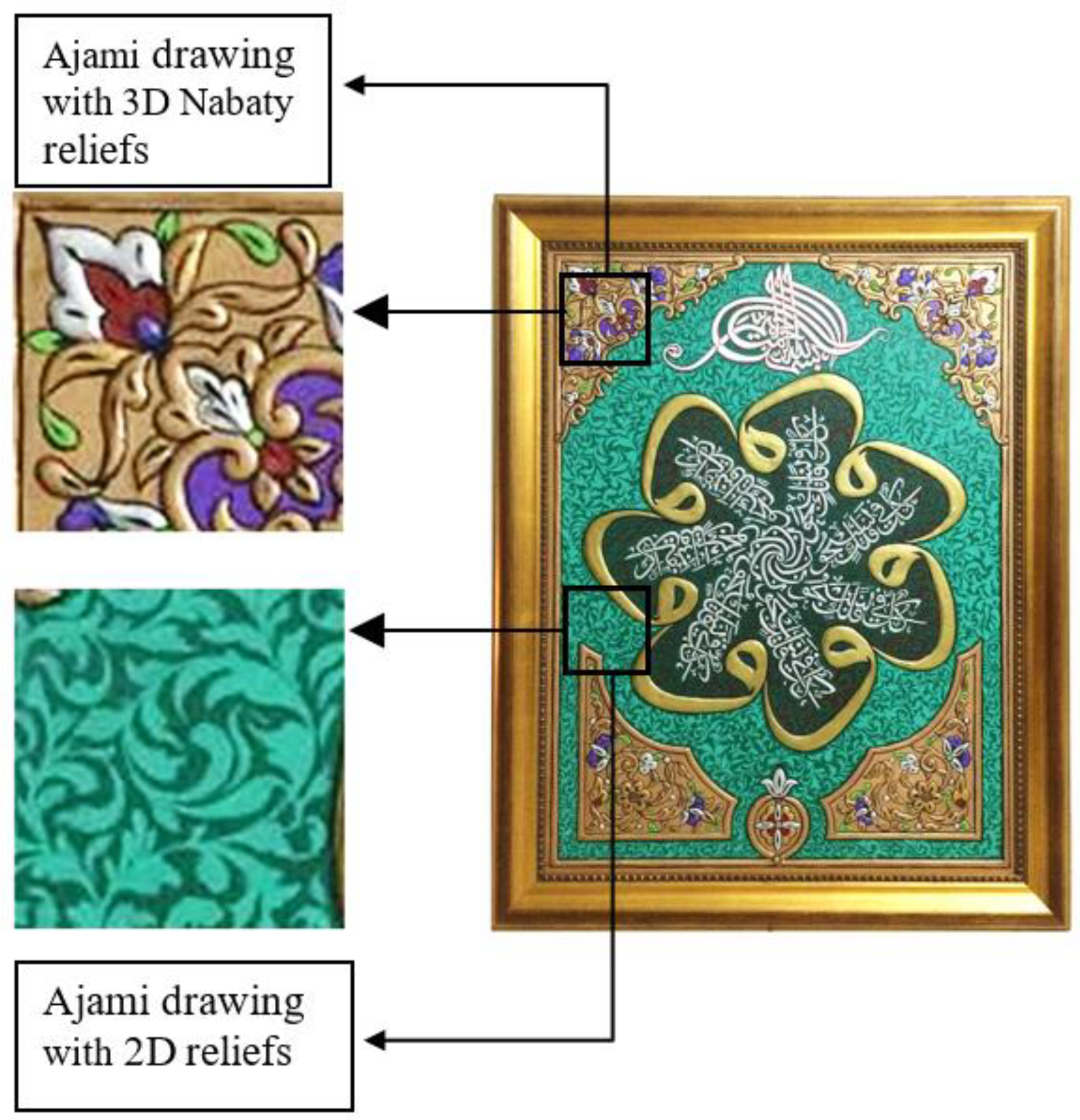
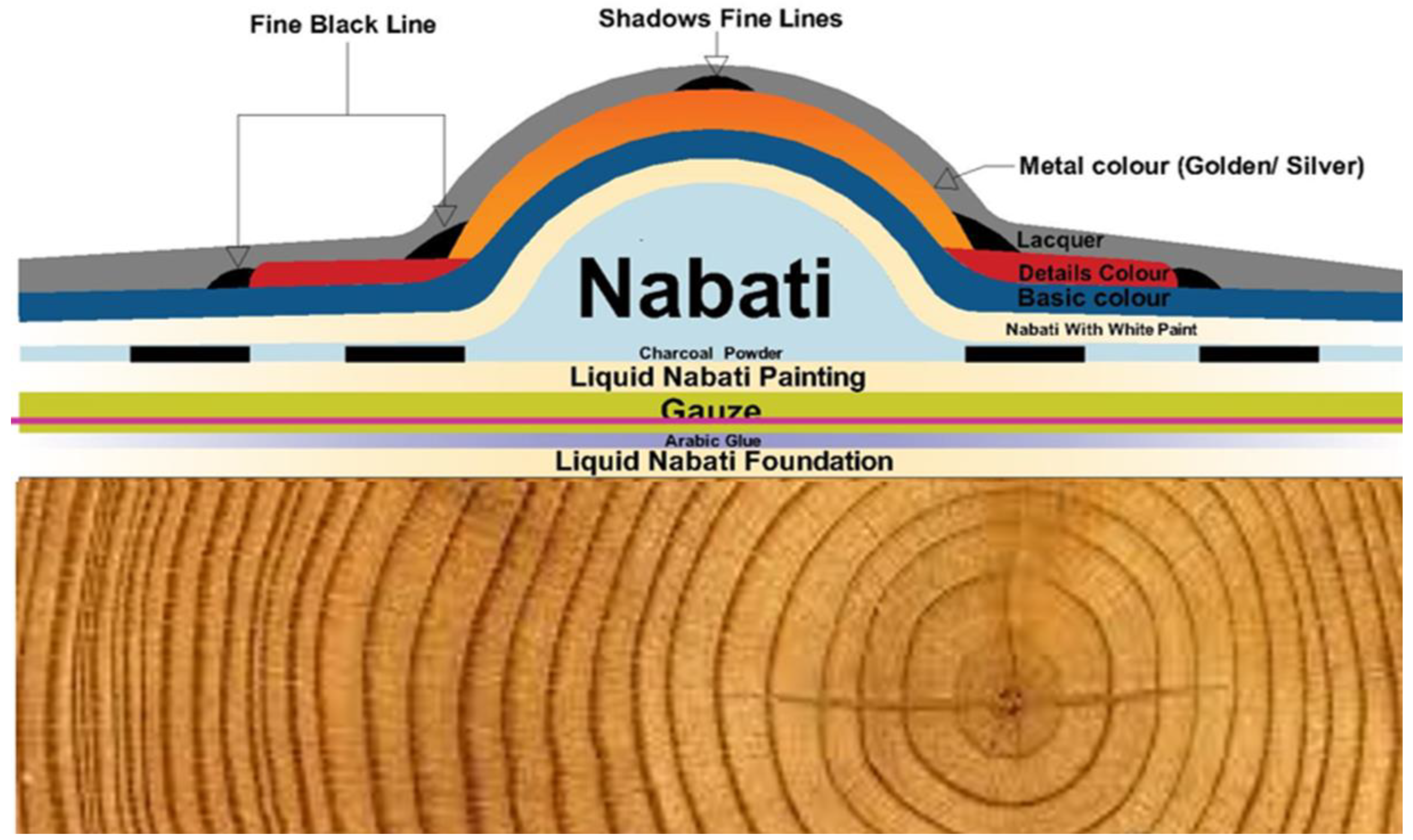
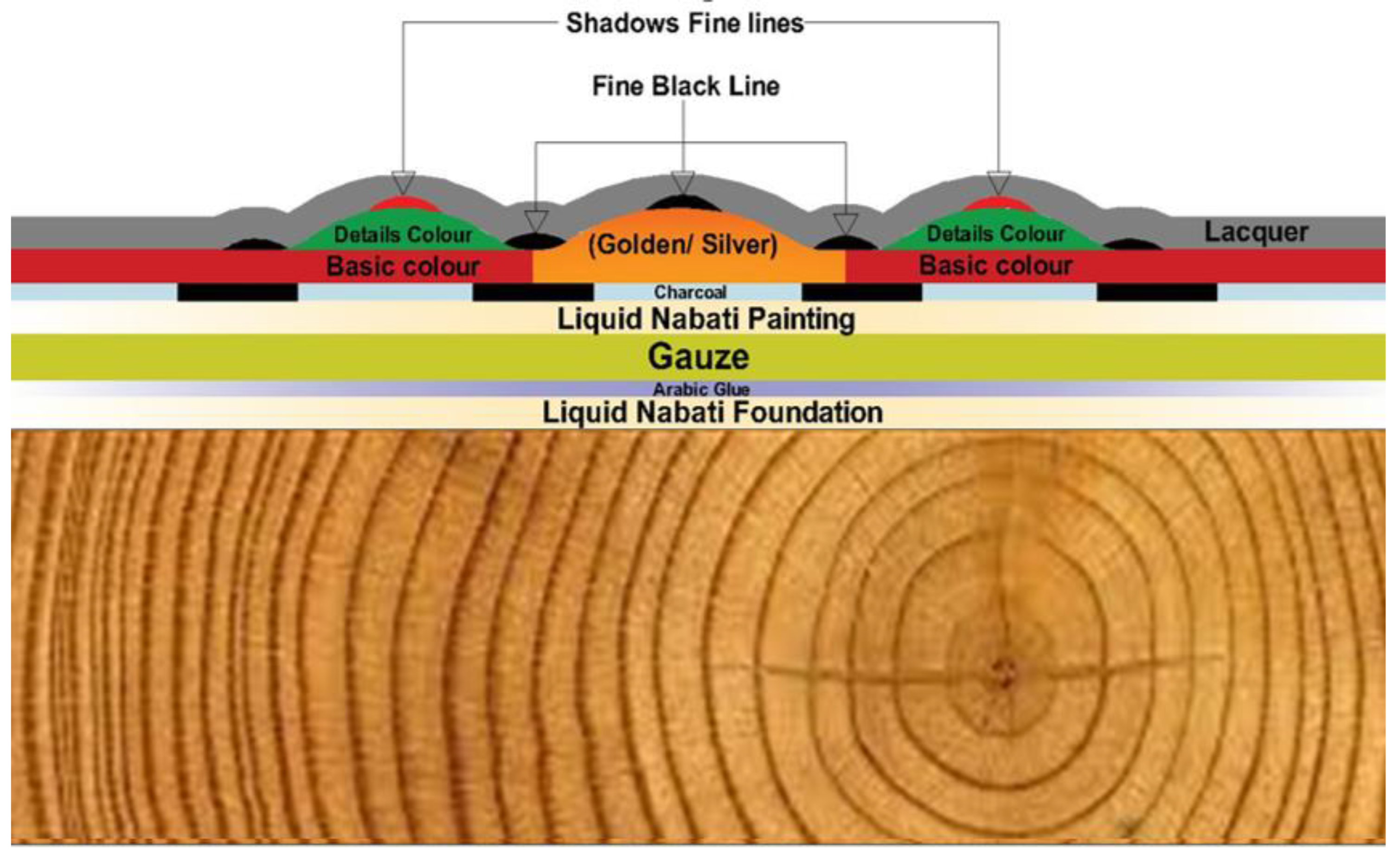
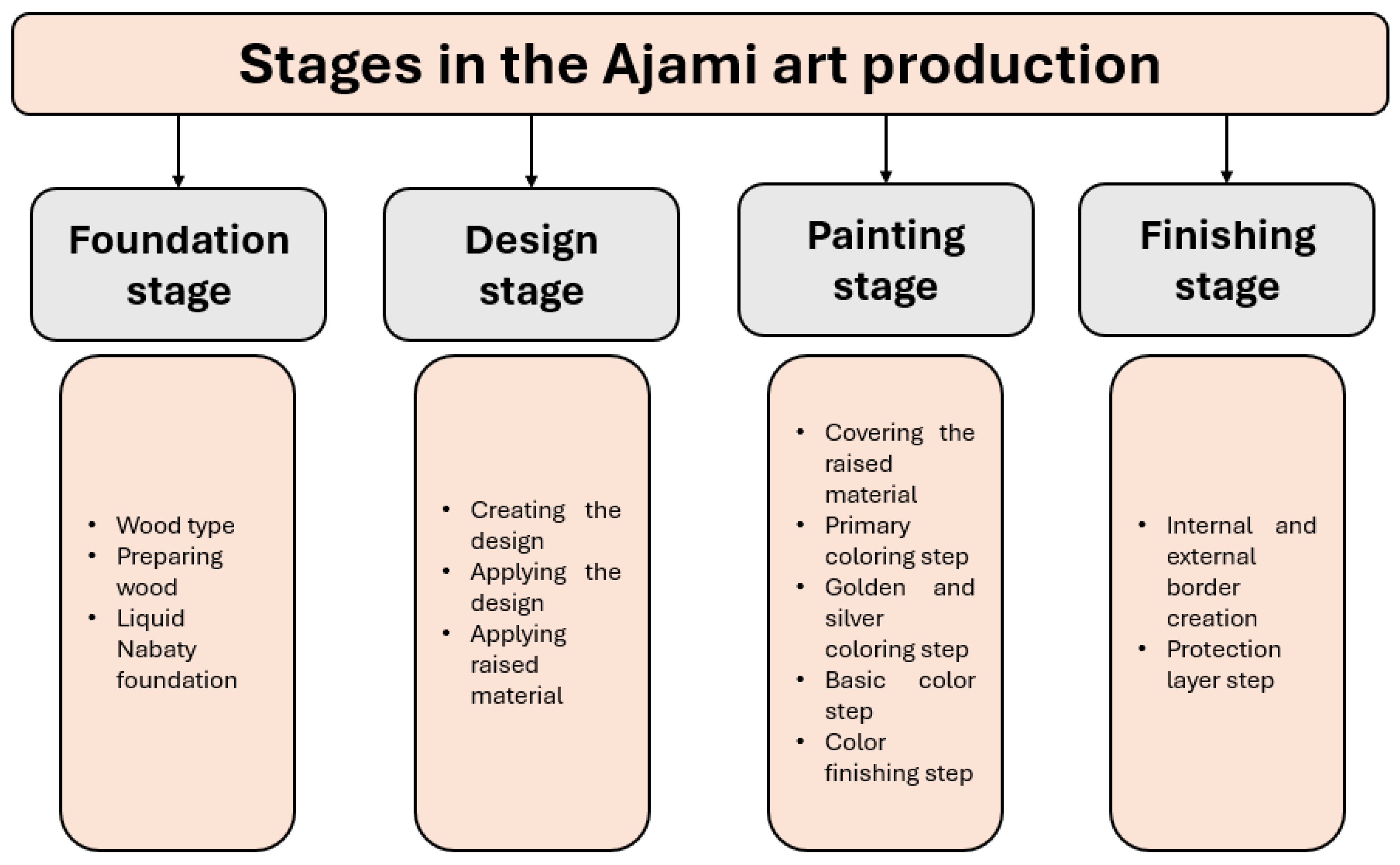
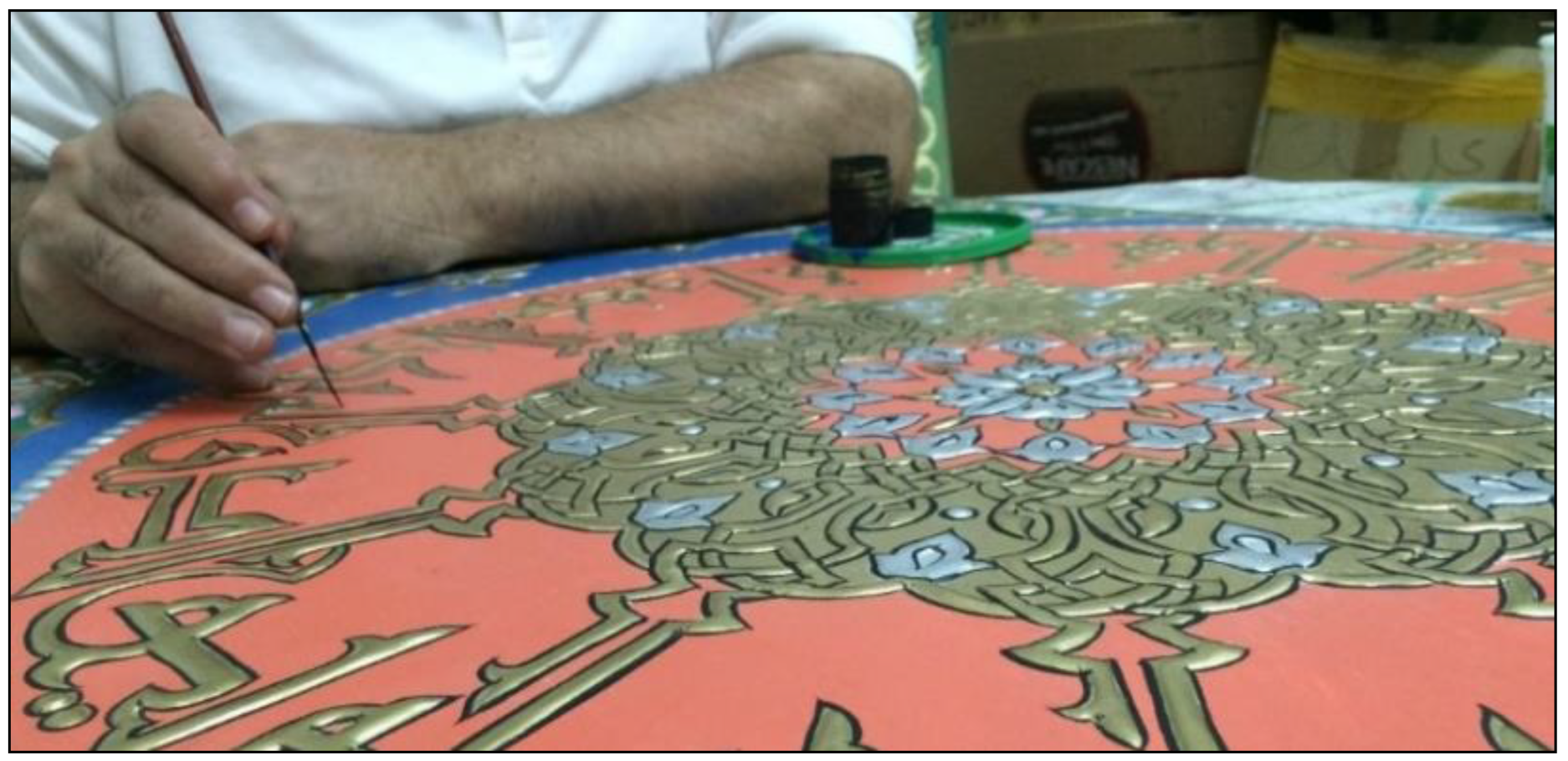
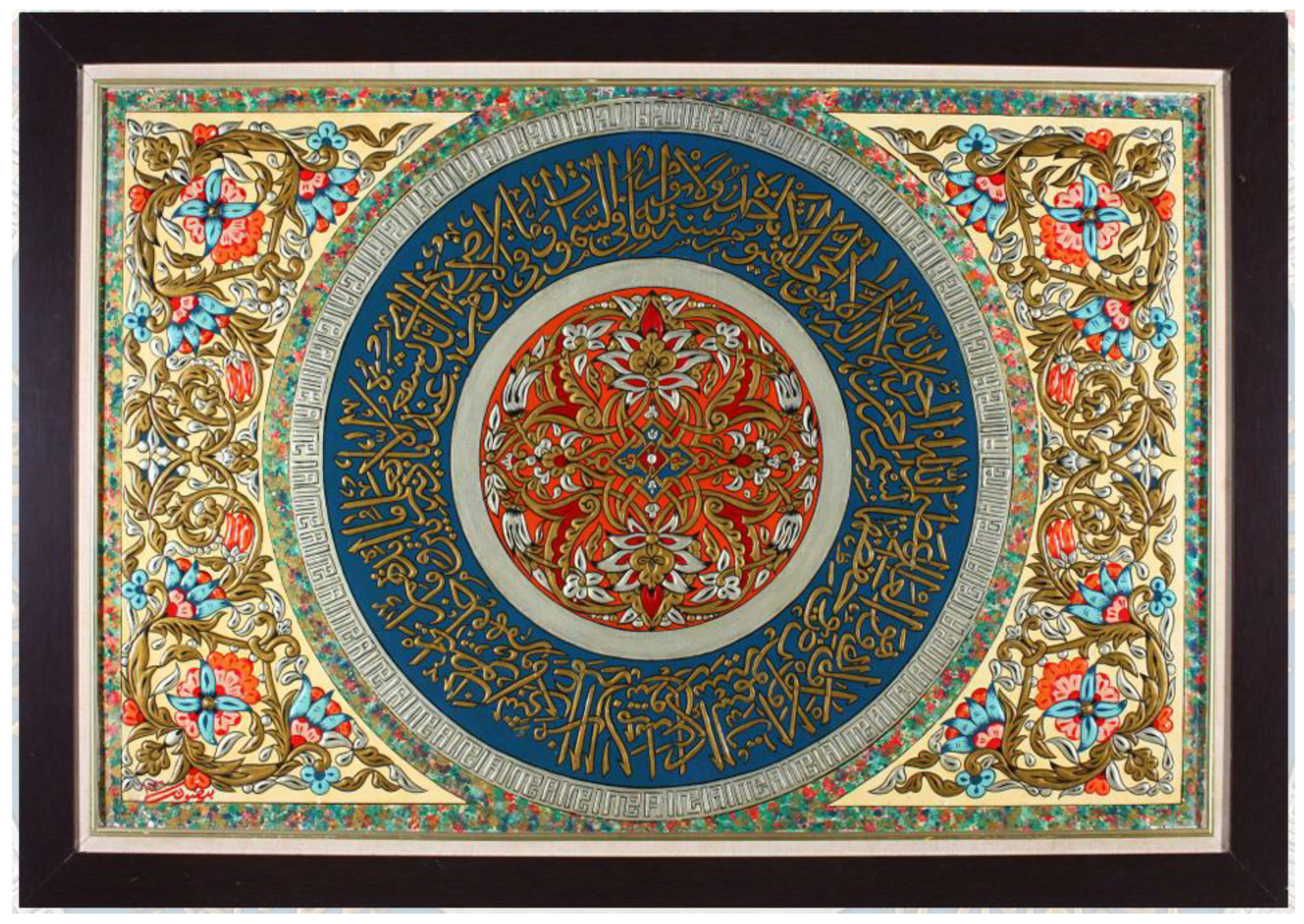
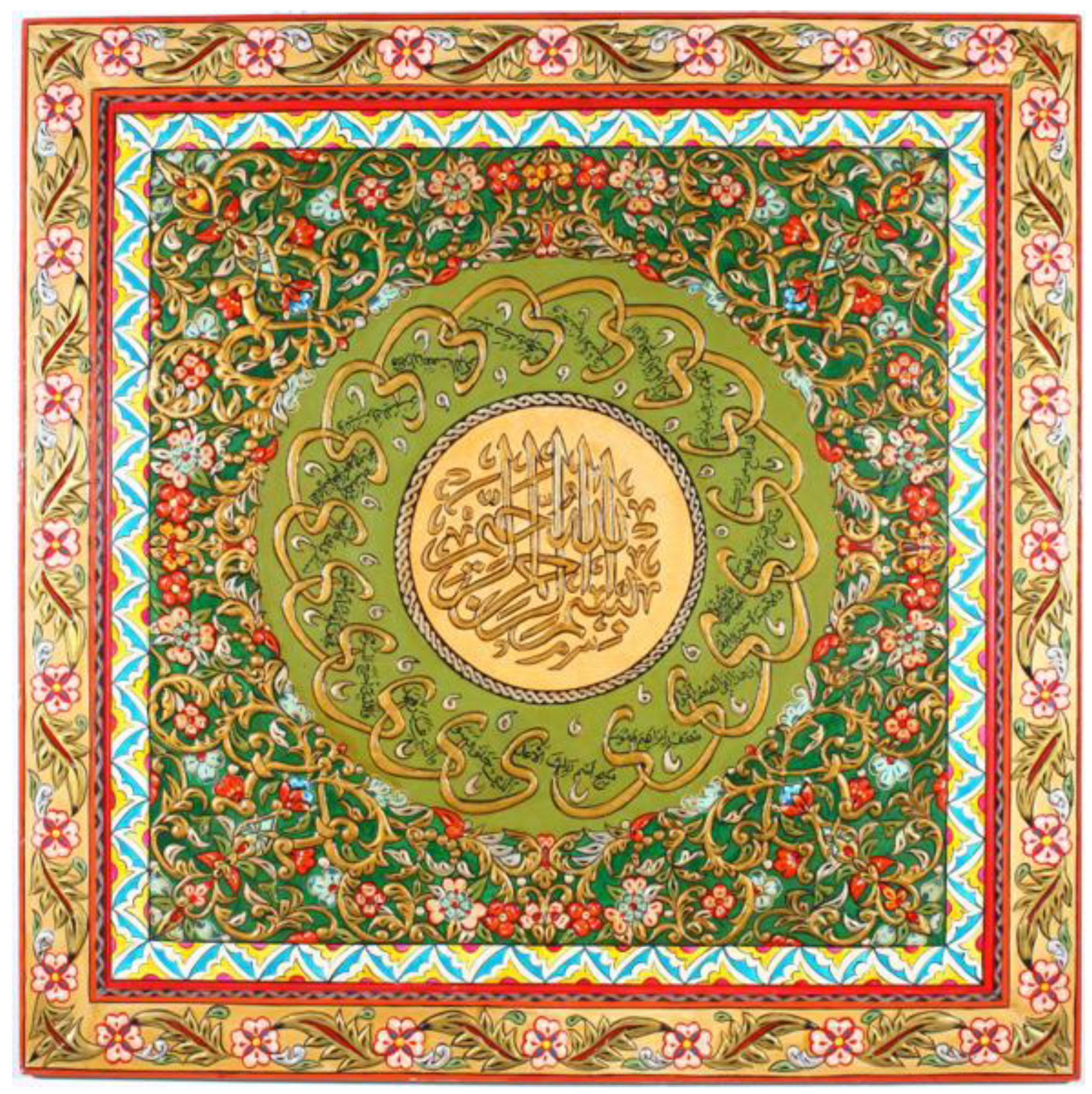
Ajami, a technique of painted wood paneling, was popular in the Ottoman Empire from the 17th to the late 18th centuries. Ajami art became prominent in Syria after the decline of tile production, and it rose to a sophisticated level of art in both local and global markets. Today, however, Ajami art has become almost forgotten and unknown by the modern generation, due to being an exclusive art that can be seen only in palaces, museums, and historical houses. This study investigates the traditional method and techniques of making Ajami, with a focus on the work of a renowned Syrian Ajami art master artisan named Mr. Abdulraouf. The study aims to identify and document the traditional method of Ajami production and determine the materials and techniques used for making Ajami. The study found that Ajami art consists of natural elements that are utilized in four main stages; foundation, design, painting, and finishing. The artisans have a strong preference for floral and geometric designs, influenced by Islamic religious beliefs. The findings of this study could serve as an educational guide to preserve heritage and make it presentable for the present and future generations.
Keywords: Ajami art; Ottoman Empire; Syria; painted wood paneling; traditional crafts Ajami art; Ottoman Empire; Syria; painted wood paneling; traditional crafts