3. Results and Discussion
As shown in
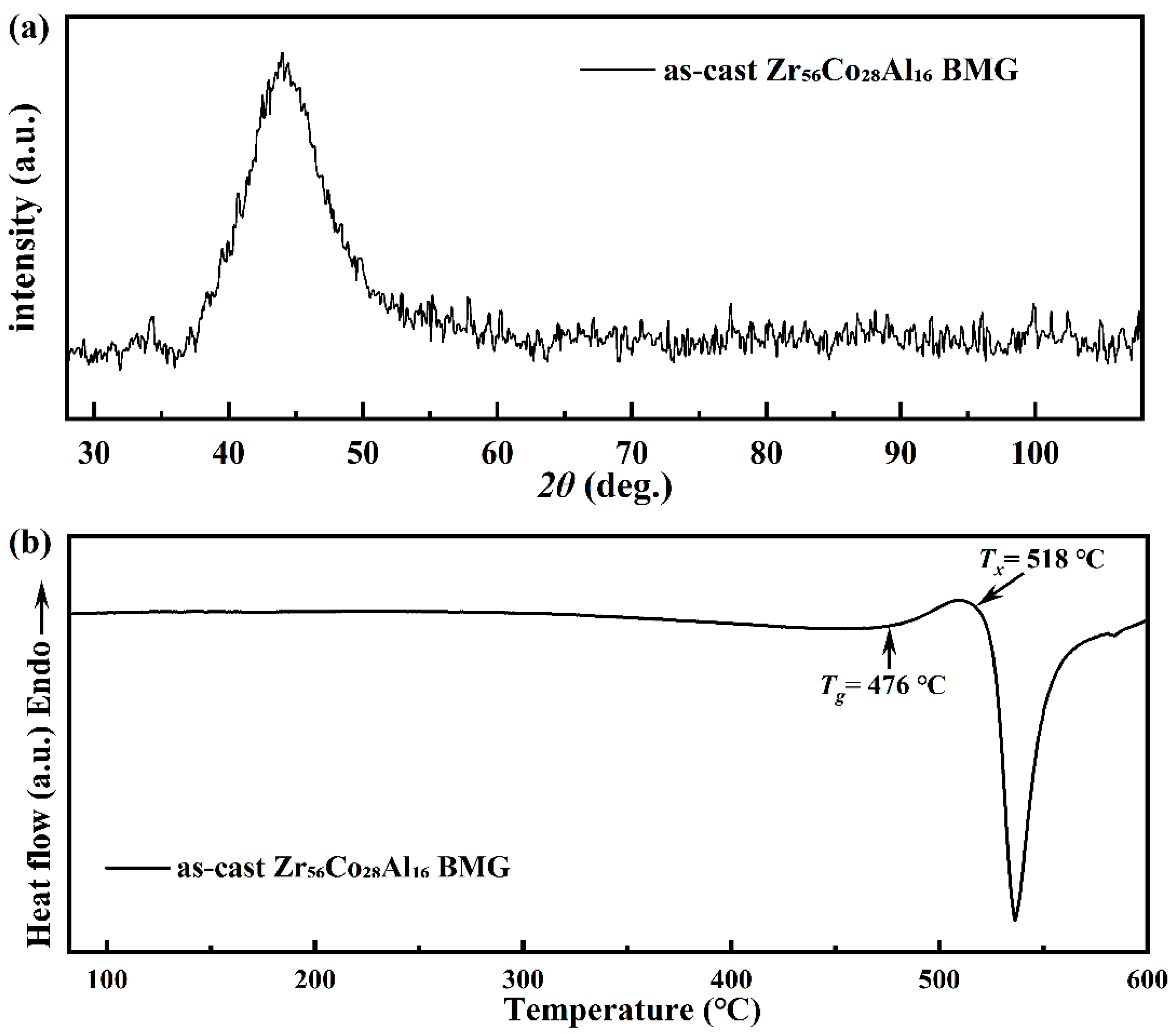
Figure 1a, the XRD pattern of the as-cast Zr
56Co
28Al
16 BMG exhibits a broad diffuse scattering halo at around
2θ ≈ 44° with no sharp Bragg diffraction peaks corresponding to any crystalline phases, indicating that the as-cast BMG is fully amorphous.
Figure 1b presents the DSC curve of the as-cast Zr
56Co
28Al
16 BMG. The results reveal distinct glass transition and crystallization exotherms, with the glass transition temperature
Tg = 476 °C, the crystallization onset temperature
Tx = 518 °C, and the supercooled liquid region width Δ
T = 42 °C. These thermal characteristics not only further confirm the amorphous nature of the as-cast samples but also provide a direct basis for selecting the deformation temperatures within the supercooled liquid region.
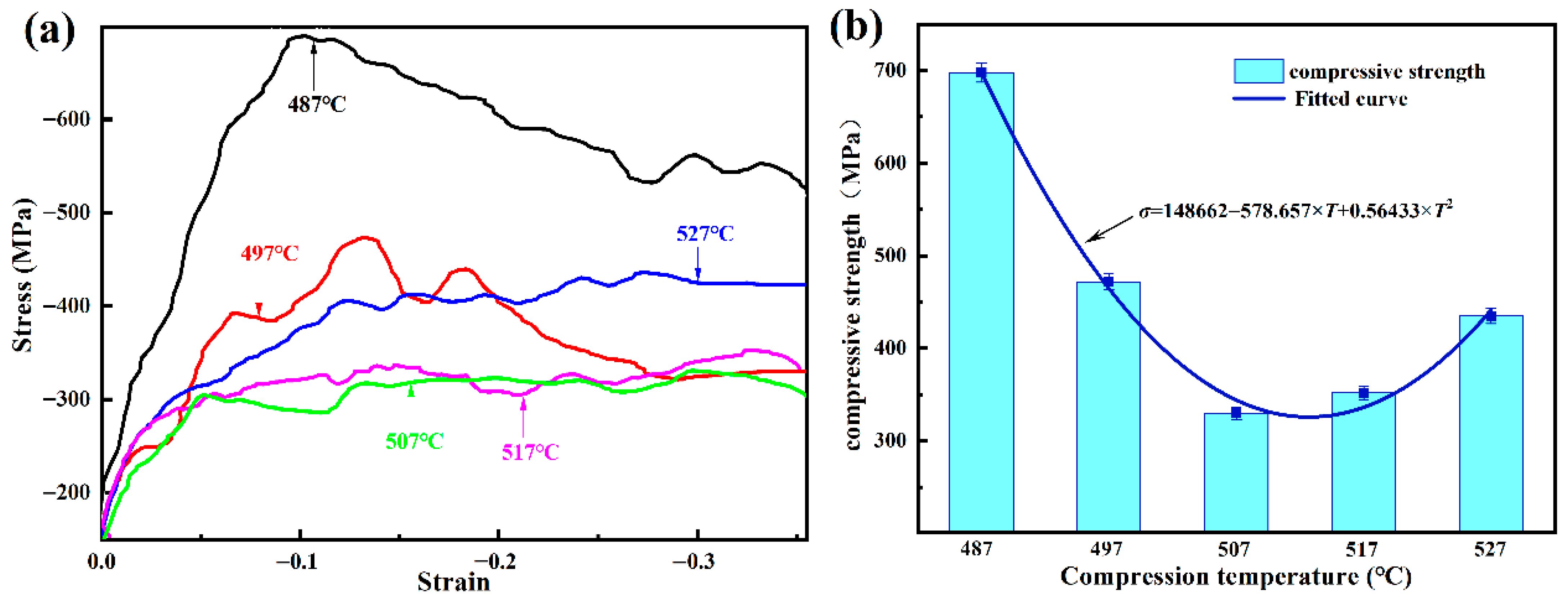
Figure 2a shows the stress–strain curves of the Zr
56Co
28Al
16 bulk metallic glass compressed at a strain rate of 0.01 s
−1 within the temperature range of 487 to 527 °C. It can be seen that the compressive flow behavior of BMGs within the supercooled liquid region is highly sensitive to the deformation temperature. The compressive strength is taken as the maximum stress on the upper envelope of the stress–strain curve. At a compression temperature of 487 °C, the bulk metallic glass reached a peak stress of 689 MPa at an elastic strain of approximately 0.10, followed by strain softening. Similarly, at 497 °C, the stress–strain curve was characterized by a maximum stress of 472 MPa corresponding to an elastic strain of 0.13, after which strain softening was observed. Strain softening is caused by the work conducted up to the peak stress, which squeezes atoms into a smaller volume, thereby generating new free volume. This facilitates atomic participation in flow, leading to a decrease in stress. At compression temperatures of 507 and 517 °C, the bulk metallic glass exhibited homogeneous plastic deformation following elastic deformation, with compressive strengths of 330 MPa and 352 MPa, respectively. Compared with the compressive strengths of the bulk metallic glass at 507 and 517 °C, when the compression temperature was increased to 527 °C, which is above the onset crystallization temperature (
Tx) of 518 °C, the compressive strength increased to 435 MPa. All samples exhibited serrated flow behavior in their stress–strain curves, which is attributed to the plastic deformation model of metallic glasses [
31].
To provide a more intuitive analysis of the effect of compression temperature on the high-temperature deformation behavior of the bulk metallic glass, the compressive strength values at different temperatures are summarized in
Table 1 and presented graphically in
Figure 2b. It was found that the compressive strength first decreased and then increased with rising compression temperature. This non-monotonic trend is likely related to changes in the dominant plastic deformation mechanism of the BMGs at different temperatures. Specifically, the compressive strength reached its minimum value of 330 MPa at 507 °C. When the compression temperature was below 507 °C, the compressive strength decreased monotonically. This can be attributed to thermal activation just above
Tg, which increases atomic mobility and thus makes the evolution of free volume the dominant factor. This promotes the transition of the glass from a “rigid glassy structure” to a “viscoplastic supercooled liquid structure”. When the compression temperature exceeded 507 °C, the compressive strength of the bulk metallic glass increased monotonically. This may be attributed to the increased crystallization of the amorphous matrix within the bulk metallic glass, which facilitates the rapid annihilation of free volume generated during deformation. This process is accompanied by dynamic atomic rearrangement and crystallization phenomena. Consequently, both the interatomic bonding strength and the structural rigidity recover, leading to a notable increase in deformation resistance. Macroscopically, the deformation mode transitions from strain softening to homogeneous plastic flow.
To further analyze the relationship between compressive strength and compression temperature for the bulk metallic glass within the supercooled liquid region, the data were fitted with a binomial function, as shown in Equation (1):
where
σ is the compressive strength, and
T is the compression temperature.
The binomial fitting curve for the compressive strength versus temperature of the bulk metallic glass is shown in
Figure 2b. From this fitting, it was found that with increasing compression temperature, the compressive strength first decreases and then increases, exhibiting a parabolic trend. The minimum peak stress occurs at around 510 °C, which is not the midpoint temperature of the supercooled liquid region. This deviation may be attributed to stress inhomogeneity within the bulk metallic glass during compression. This binomial relationship provides theoretical guidance for processing the bulk metallic glass within its supercooled liquid region.
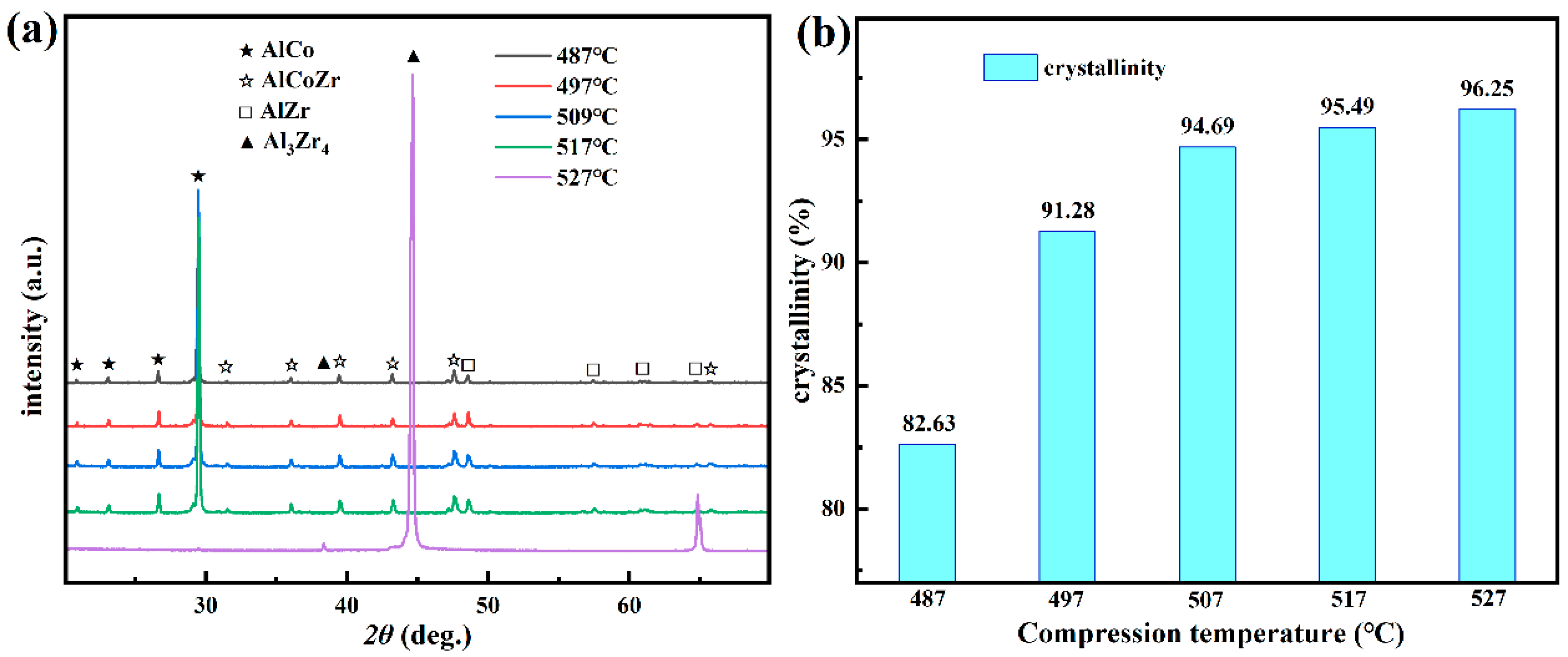
Even when deformed within the supercooled liquid region, the bulk metallic glass can still undergo partial crystallization with prolonged deformation time. To analyze the degree of crystallization in the bulk metallic glass during high-temperature compression within the supercooled liquid region, XRD measurements were performed on samples compressed at different temperatures.
Figure 3a shows the XRD patterns of the bulk metallic glass after compression at different temperatures. All specimens exhibited varying levels of crystallization. The crystalline phases corresponding to the bulk metallic glass compressed at various temperatures are presented in
Figure 3a. It was found that within the compression temperature range of 487–517 °C (below the onset crystallization temperature), the crystalline phases in the Zr
56Co
28Al
16 bulk metallic glass remained essentially consistent, consisting of AlCo, AlCoZr, and AlZr phases, and possibly containing B
2 phases such as ZrCo and Al
5Co
2. The intensity of the crystallization peaks increased with higher compression temperatures. When the compression temperature reached 527 °C (above the onset crystallization temperature), an additional Al
3Zr
4 phase appeared in the crystalline phases of the bulk metallic glass. This may be related to the atomic radii of Zr, Co, and Al, with Zr having a significantly larger atomic radius than the other two elements. With increasing compression temperature and deformation, AlCo-rich regions formed first. Subsequently, stress release and the resulting adiabatic heating effect promoted the diffusion of Zr, leading to the formation of AlCoZr and AlZr phases. When the temperature is further increased to 527 °C, the metallic glass forms an Al
3Zr
4 phase with sharp diffraction peaks.
To further analyze the degree of crystallization in the bulk metallic glass at different compression temperatures, the crystallinity of each sample was estimated using Formula (2):
where
Ic is the crystallinity of the sample,
ωc is the mass fraction of the crystalline phase, and
ωA is the mass fraction of the amorphous phase. The crystallinity ω
c was determined by the integrated intensity method using the crystalline peaks in the XRD pattern. The crystallinity of the bulk metallic glass at different compression temperatures is summarized in
Table 2 and plotted in
Figure 3b. It was found that the crystallinity of the bulk metallic glass increased with increasing compression temperature. Despite the high-temperature compression tests being conducted within the supercooled liquid region, the crystallinity of all samples was nevertheless high, exceeding 80%. This is likely due to the activation of atomic diffusion in this temperature range, where the applied compressive stress can provide the driving force for nucleation and growth of crystals.
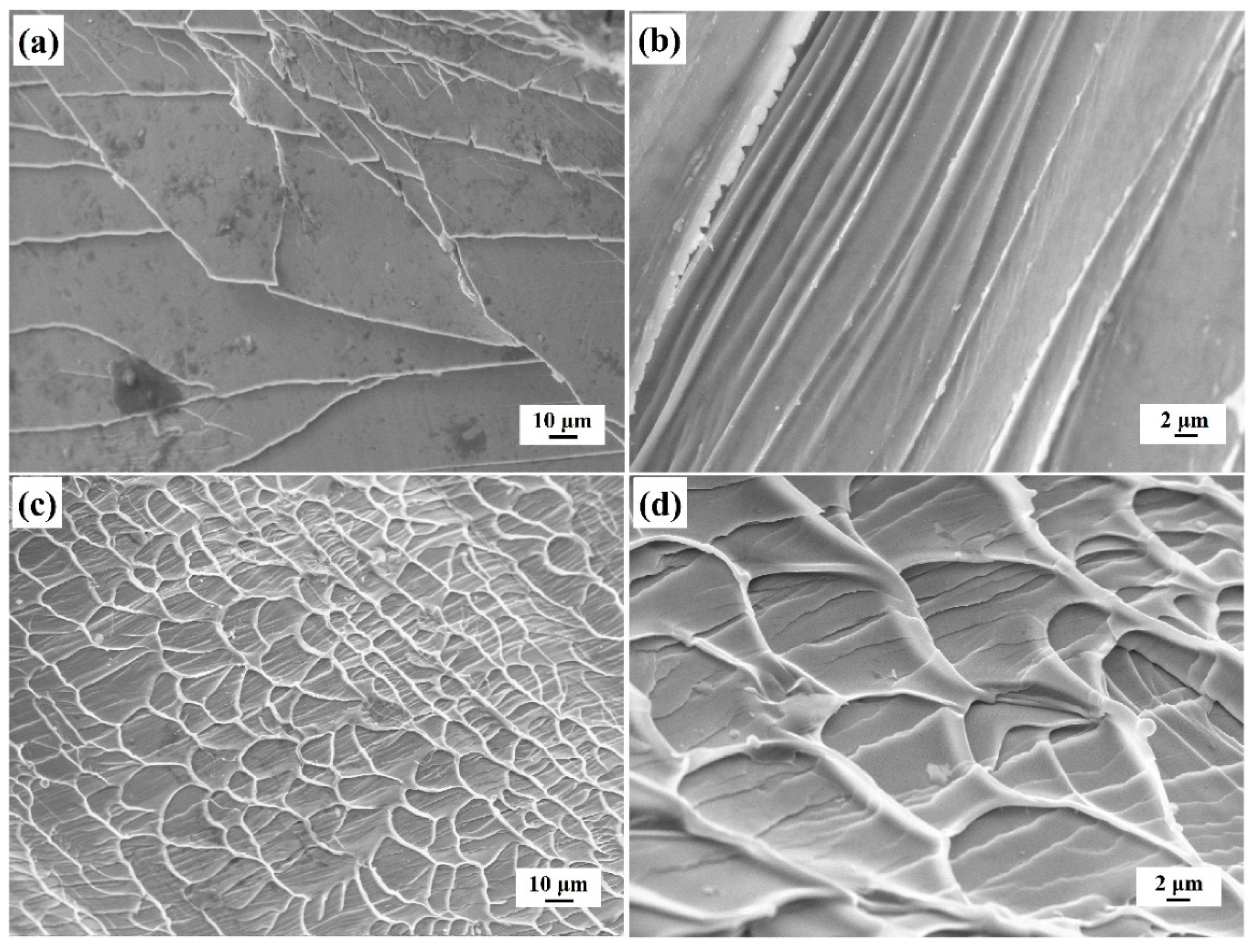
To further analyze the high-temperature compression model of the bulk metallic glass within the supercooled liquid region, SEM observations were performed on the fracture surfaces or deformed surfaces of samples compressed at different temperatures. Among all deformed bulk metallic glass samples, only the one compressed at 487 °C exhibited fracture. The corresponding surface deformation features and fracture morphology of this sample are shown in
Figure 4. Two distinct types of surface deformation features were observed, one consisting of large-area, intersecting shear bands forming a network (
Figure 4a), and the other is characterized by dense, parallel, and uniformly distributed fine shear bands (
Figure 4b). This can be attributed to the fact that at 487 °C, a temperature only slightly above the glass transition temperature (
Tg), part of the BMG retains the rigid structure of the glassy state, while another part transforms into the viscoplastic structure of the supercooled liquid.
Figure 4a corresponds to the deformation characteristics of the rigid glassy structure, featuring intersecting shear bands that form a network, where localized sliding along these shear bands is observed. The rigid amorphous structure undergoes highly localized deformation, leading to stress concentration and the initiation of a primary shear band. When the propagation of this primary band is impeded, a large number of secondary shear bands are triggered, forming an interconnected network to dissipate stress. Ultimately, a brittle fracture occurs along the primary shear band.
Figure 4b corresponds to the deformation characteristics of the partially viscoplastic supercooled liquid structure. It is characterized by dense, parallel, and uniformly distributed fine shear bands, which are regularly aligned without noticeable intersection or branching. In these regions, deformation is no longer confined to a single primary shear band. Stress is released through the nucleation of numerous fine shear bands, forming a dense, parallel array. The continuous nucleation and sliding of these bands indicate more homogeneous plastic deformation. At 487 °C, the bulk metallic glass fractured during high-temperature compression. The corresponding fracture surface morphologies are shown in
Figure 4c,d. The occurrence of brittle fracture in this sample indicates that deformation was dominated by highly localized shear banding characteristic of the rigid glassy structure, rather than by the homogeneous plastic flow of the viscoplastic supercooled liquid structure. The fracture surface is predominantly characterized by a vein-like pattern, which is consistent with previously reported vein patterns on deformed BMG fracture surfaces [
32]. Additionally, fine molten droplets are observed on these veins, resulting from adiabatic heating caused by the catastrophic propagation of highly localized shear bands.
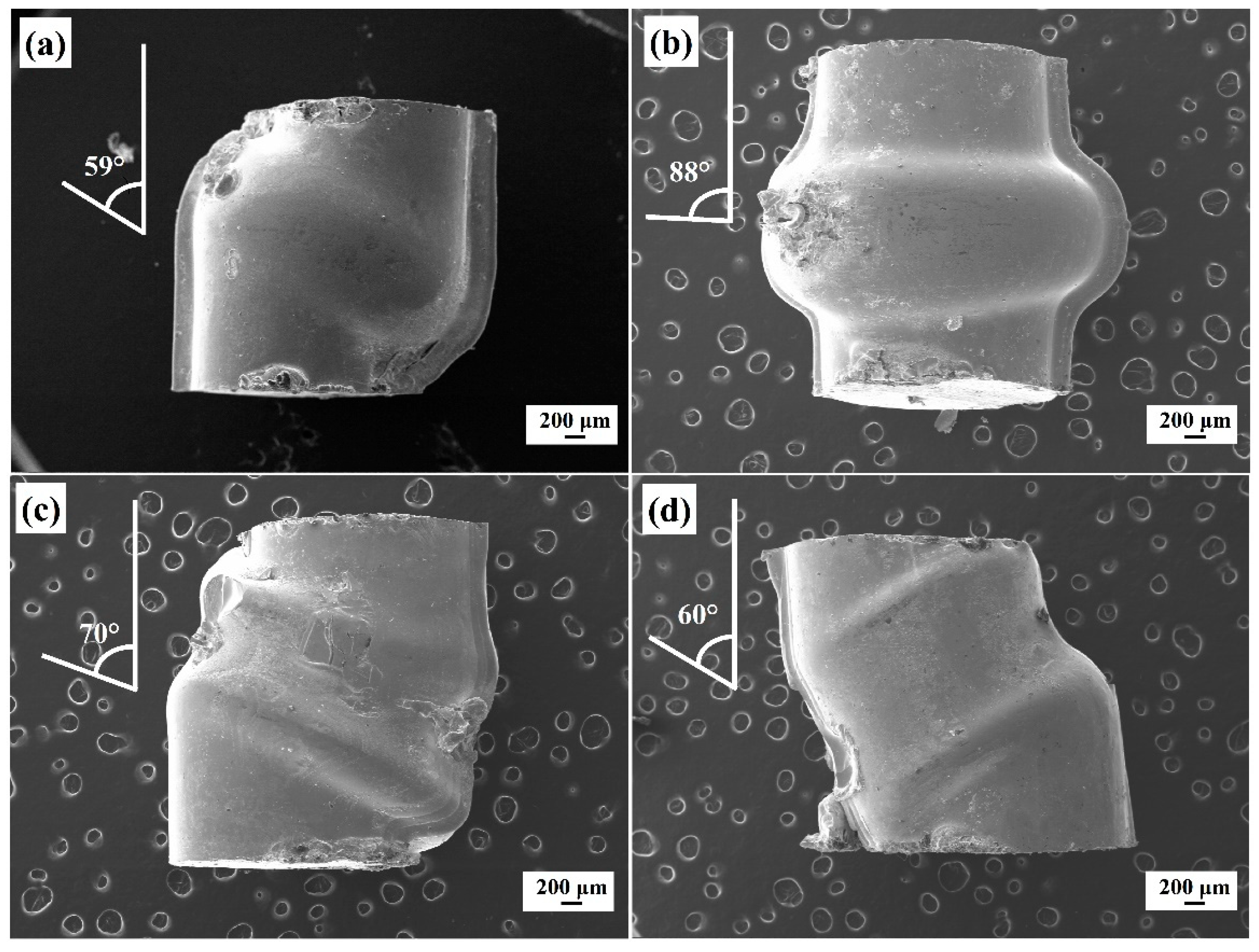
Figure 5 shows the macroscopic deformation morphologies of the Zr
56Co
28Al
16 bulk metallic glass compressed at temperatures ranging from 497 °C to 527 °C. This indicates that the bulk metallic glass did not undergo catastrophic fracture under these compressive conditions. With increasing compression temperature, the macroscopic deformation morphology of the bulk metallic glass transitioned from an N-shape to a single-drum shape and finally to a double N-shape.
Figure 5a shows the macroscopic deformation morphology of the bulk metallic glass compressed at 497 °C. The deformed sample exhibits N-type barreling, with the bulging direction approximately 59° to the loading axis, and localized cracking at the edges. This suggests the absence of homogeneous viscoplastic flow. The likely reason is the high viscosity and limited atomic mobility at this temperature, causing deformation to remain dominated by the propagation of localized shear bands rather than transitioning to uniform viscous flow.
Figure 5b shows the macroscopic deformation morphology of the bulk metallic glass compressed at 507 °C. It displays pronounced single-barrel homogeneous necking, with the bulging direction perpendicular (88°) to the loading axis and a smooth, crack-free surface. This indicates homogeneous plastic flow, demonstrating excellent thermoplasticity. This behavior is likely due to the substantial decrease in viscosity and significant increase in atomic mobility at this elevated temperature, allowing deformation to proceed via uniform viscoplastic flow. Stress is thus dissipated through homogeneous viscoplastic flow without highly localized deformation, resulting in uniform necking. Consequently, this temperature represents the optimal temperature for the thermoplastic forming of this BMG. As shown in
Figure 5c and
Figure 5d, the macroscopic deformation morphologies of the BMG compressed at 517 °C and 527 °C, respectively, are presented. Both samples exhibit double N-type barreling with pronounced torsional slip, manifested as helical shear striations on the surface, accompanied by localized fracture. For the BMGs compressed at 517 °C and 527 °C, the bulging direction forms angles of 70° and 60° with the loading direction, respectively. This indicates that deformation in these samples is dominated by viscous torsional shear. This can be attributed to a further decrease in the viscosity of the BMG, where the compressive stress induces torsional slip, forming helical shear bands. Concurrently, the higher temperatures promote partial crystallization, leading to stress concentration and some cracking.
When compressed at 487 °C, the BMG fractured along a direction oriented at 45° to the loading axis. The angles between the fracture/bulging direction and the loading direction at different compression temperatures are summarized in
Table 3. It is observed that with increasing compression temperature, the angle first increases and then decreases, reaching a maximum value of 88° at 507 °C. This trend is exactly opposite to the variation in compressive strength with temperature. The lower the compressive strength, the higher the plastic deformability of the bulk metallic glass.
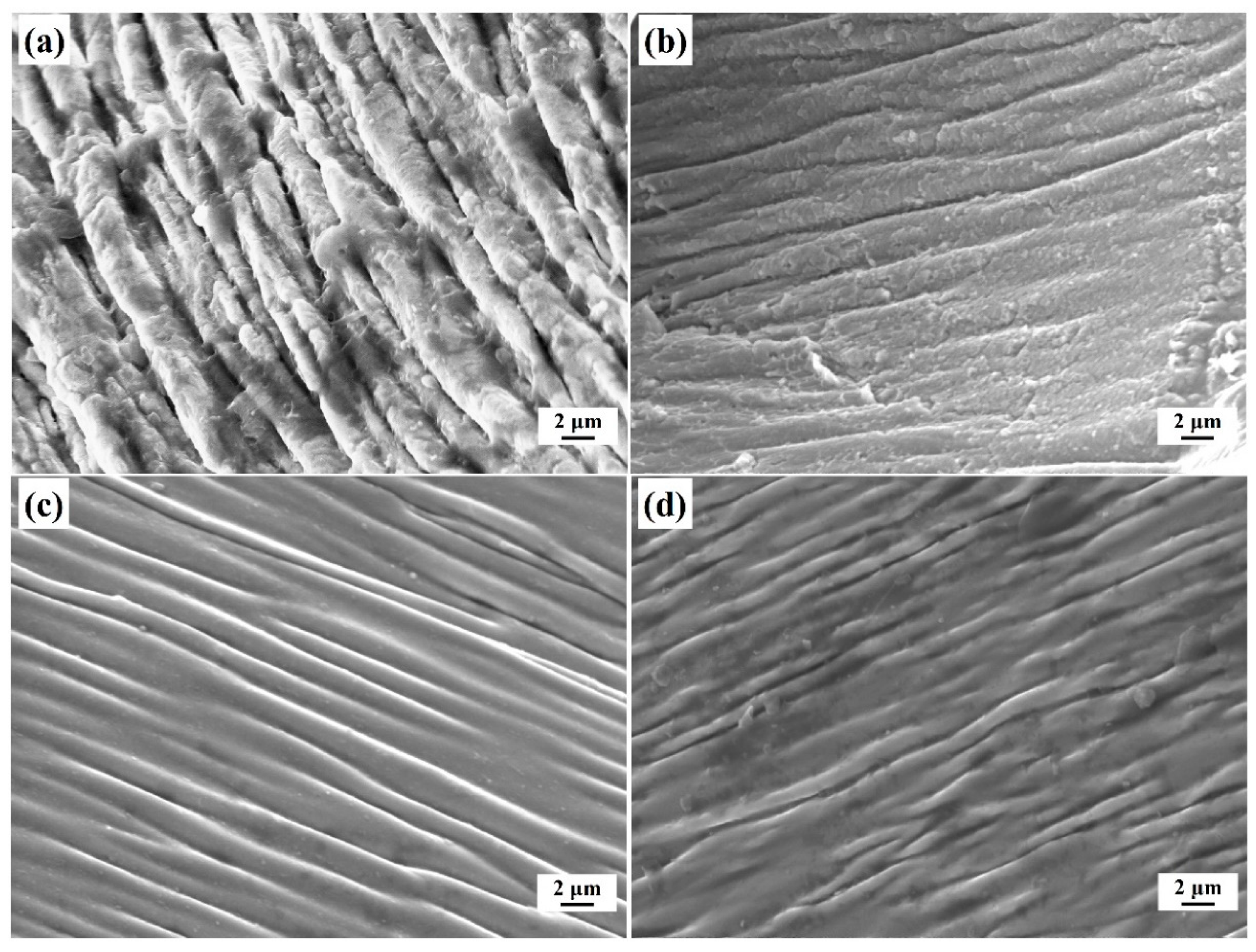
To further investigate the plastic deformation model of the bulk metallic glass within the supercooled liquid region, SEM observations were conducted on the surface deformation features of samples compressed at different temperatures. As shown in
Figure 6a, the surface deformation features of the bulk metallic glass compressed at 497 °C are presented. The shear bands appear rough, broad, and intricately interwoven, with irregular edges showing distinct undulations and tear marks. This can be attributed to the high viscosity and limited atomic mobility at this temperature, which leads to highly localized deformation. Additionally, the high rigidity of the amorphous matrix impedes smooth shear band propagation, resulting in tearing and interweaving. As shown in
Figure 6b, the surface deformation features of the bulk metallic glass compressed at 507 °C are presented. The shear bands have become finer, more densely spaced, parallel, and more regularly aligned. This is attributed to the decreased viscosity and enhanced atomic mobility at this higher temperature, which facilitates a transition in deformation mode from highly localized to more homogeneous. Consequently, the shear bands are narrower and greater in number. As shown in
Figure 6c, the surface deformation features of the bulk metallic glass compressed at 517 °C are presented. The shear bands appear as uniform, parallel fine striations with a smooth surface, showing minimal undulation or interweaving. This is because the viscosity is moderate and atomic mobility is favorable at this temperature, allowing deformation to proceed via homogeneous viscoplastic flow. A multitude of fine shear bands nucleate uniformly and slide stably, leading to homogeneous stress dissipation and ultimately resulting in the formation of regular, smooth, parallel shear bands.
Figure 6d reveals the surface deformation features of the bulk metallic glass compressed at 527 °C. The shear bands appear blurred, with their edges displaying a molten or wavy appearance, and show evidence of adhesion in some regions. This complex morphology can be attributed to a combination of factors. First, when the temperature exceeds the onset crystallization temperature (
Tx), the viscosity becomes extremely low and atomic mobility becomes extremely high, leading to a transition of the deformation mechanism from sliding to viscoplastic flow. Second, the rapid stress release generates significant adiabatic heating, leading to localized melting and consequent adhesion at shear band edges. Furthermore, concurrent partial crystallization introduces hardened phases that impede shear band sliding. The interplay of these processes ultimately yields the observed blurred and adherent shear bands.
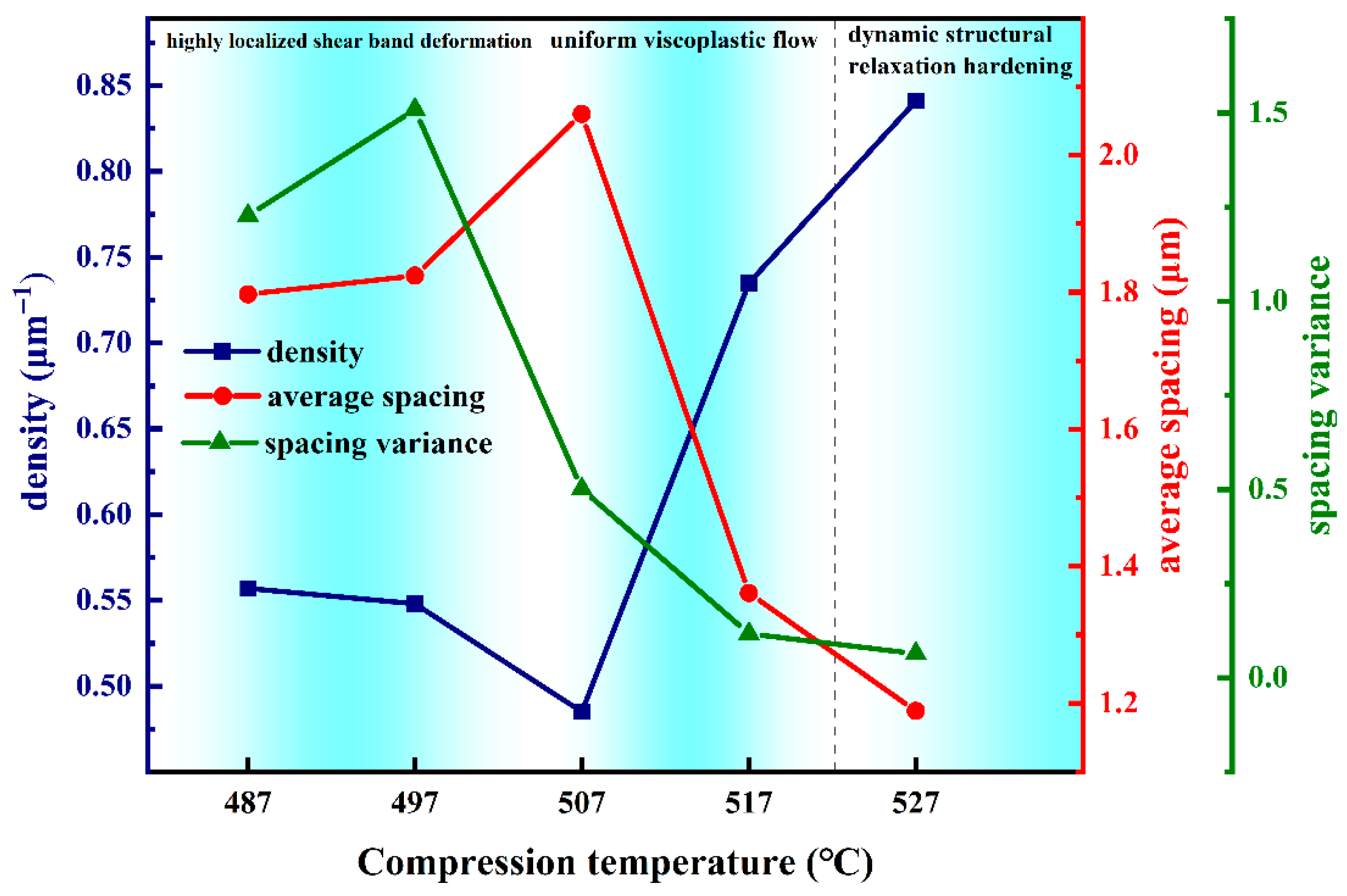
Given that the plastic deformation of metallic glasses is primarily governed by shear band propagation, this study aims to clarify the evolution of the deformation model within the supercooled liquid region. To investigate the deformation mechanism of the bulk metallic glass in the supercooled liquid region at elevated temperatures, a quantitative analysis of the shear bands formed at different compression temperatures was conducted based on
Figure 5 and
Figure 6. The analysis included measurements of shear band density, spacing, and spacing variance. Shear band density is defined as the number of shear bands per unit length along a direction perpendicular to the shear bands in SEM images. This parameter reflects the degree of deformation homogenization. The higher the shear band density, the more uniform the deformation. The formula for calculating the shear band density,
ρ, is given by Equation (3):
where
L is the length of the measurement line drawn perpendicular to the shear bands,
n is the number of such measurement lines, and
Ni is the number of intersections between the i-th measurement line and the shear bands.
The average shear band spacing is inversely proportional to the shear band density. The smaller the spacing, the more uniform the deformation. The formula for calculating the average shear band spacing,
, is given by Equation (4):
where
x1,
x2, …,
xN are the positional coordinates of all marked shear bands along the measurement line, and
N is the total number of shear bands.
The variance in shear band spacing reflects the uniformity of their distribution; the smaller the variance, the more regular the band arrangement. The formula for calculating this variance,
, is given by Equation (5):
The shear band density, average spacing, and spacing variance of the bulk metallic glass at different compression temperatures are summarized in
Table 4 and plotted in
Figure 7. As can be seen from
Figure 7, with increasing compression temperature, the shear band density first decreases and then increases, while the average shear band spacing is inversely proportional to the density. With the exception of the 487 °C sample, which fractured, the higher the compression temperature, the lower the variance in shear band spacing. At a compression temperature of 507 °C, the variance is relatively low at 0.501, indicating that deformation is relatively uniform and dominated by homogeneous viscoplastic flow at this temperature. Concurrently, the shear band spacing is relatively large at 2.060 μm, suggesting that the sample retains potential for further plastic deformation. At a compression temperature of 527 °C, the shear bands become blurred and adherent. This is accompanied by a molten appearance due to adiabatic heating, and concurrent crystallization induces the phenomenon of dynamic structural relaxation hardening. Therefore, within the compression temperature range of 507–517 °C, the surface deformation features indicate uniform viscoplastic flow, making this range more suitable for processing the bulk metallic glass within its supercooled liquid region.
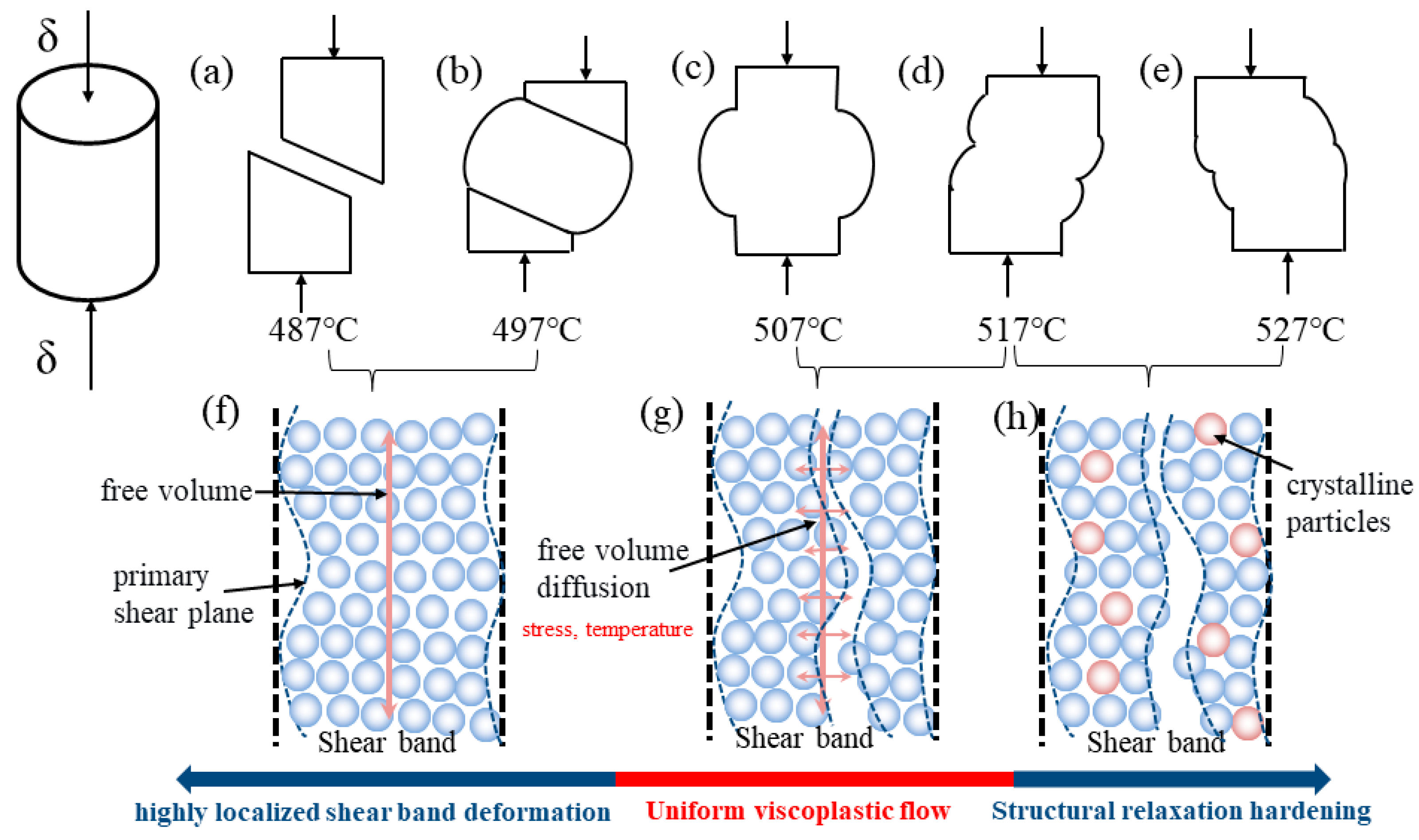
Based on the integration of macroscopic and microscopic deformation characteristics, a plastic deformation model for the BMG at different compression temperatures in the supercooled liquid region is proposed, as illustrated in
Figure 8. Based on the macroscopic deformation morphologies shown in
Figure 5, schematic illustrations of the BMG’s macroscopic deformation at different compression temperatures are provided in
Figure 8a–e. Combined with the surface deformation features, the deformation mechanisms corresponding to each temperature are derived and illustrated in
Figure 8f–h. As shown in
Figure 8f, which illustrates the deformation mechanism of the BMG at 487 °C and 497 °C, stress concentration induces free-volume clusters, which eventually lead to the formation of shear bands. The deformation in these BMGs is dominated by highly localized shear banding. As shown in
Figure 8g, the deformation mechanism schematic for the BMGs at 507–517 °C indicates that the shear band spacing decreases and deformation becomes more uniform. This leads to uniform deformation dominated by viscoplastic flow, driven by free-volume diffusion in response to temperature and stress. At compression temperatures of 517–527 °C (above the onset crystallization temperature,
Tx), the shear band spacing remains relatively small, and deformation appears uniform, as shown in
Figure 8h. However, compared to the 507–517 °C range, this BMG features larger crystalline particles. These particles impede shear-band motion, causing stress concentration. The rapid release of this concentrated stress generates adiabatic heating, leading to local melting within shear bands, which consequently become blurred and adherent. The dominant deformation mechanism in this temperature range is therefore dynamic structural relaxation hardening.