Effects of Residual Stress on Springback in Creep Age Forming of 2219 Aluminum Alloy Double-Curvature Thin-Walled Parts




Abstract
1. Introduction
2. Experiments
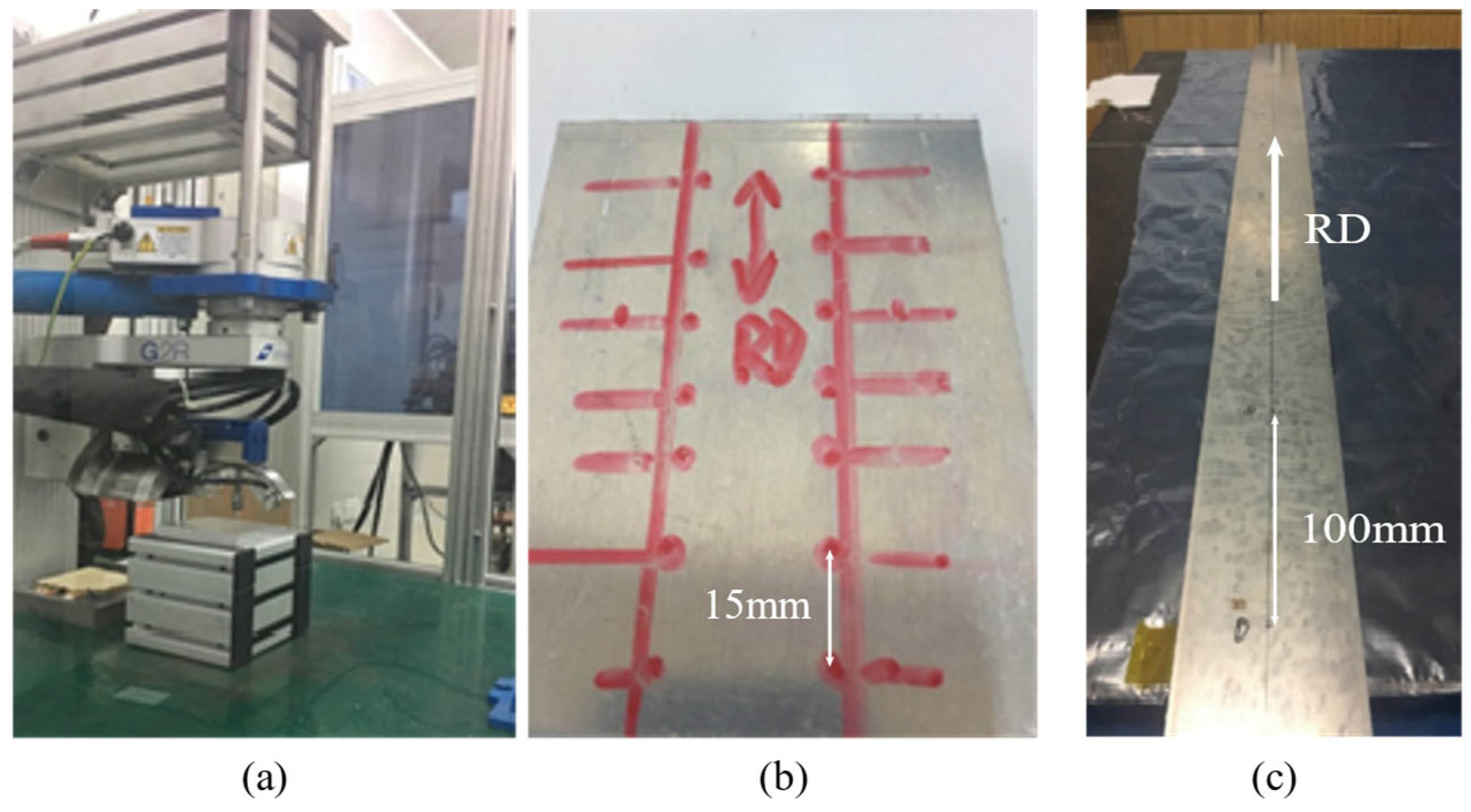
2.1. Residual Stress Measurement
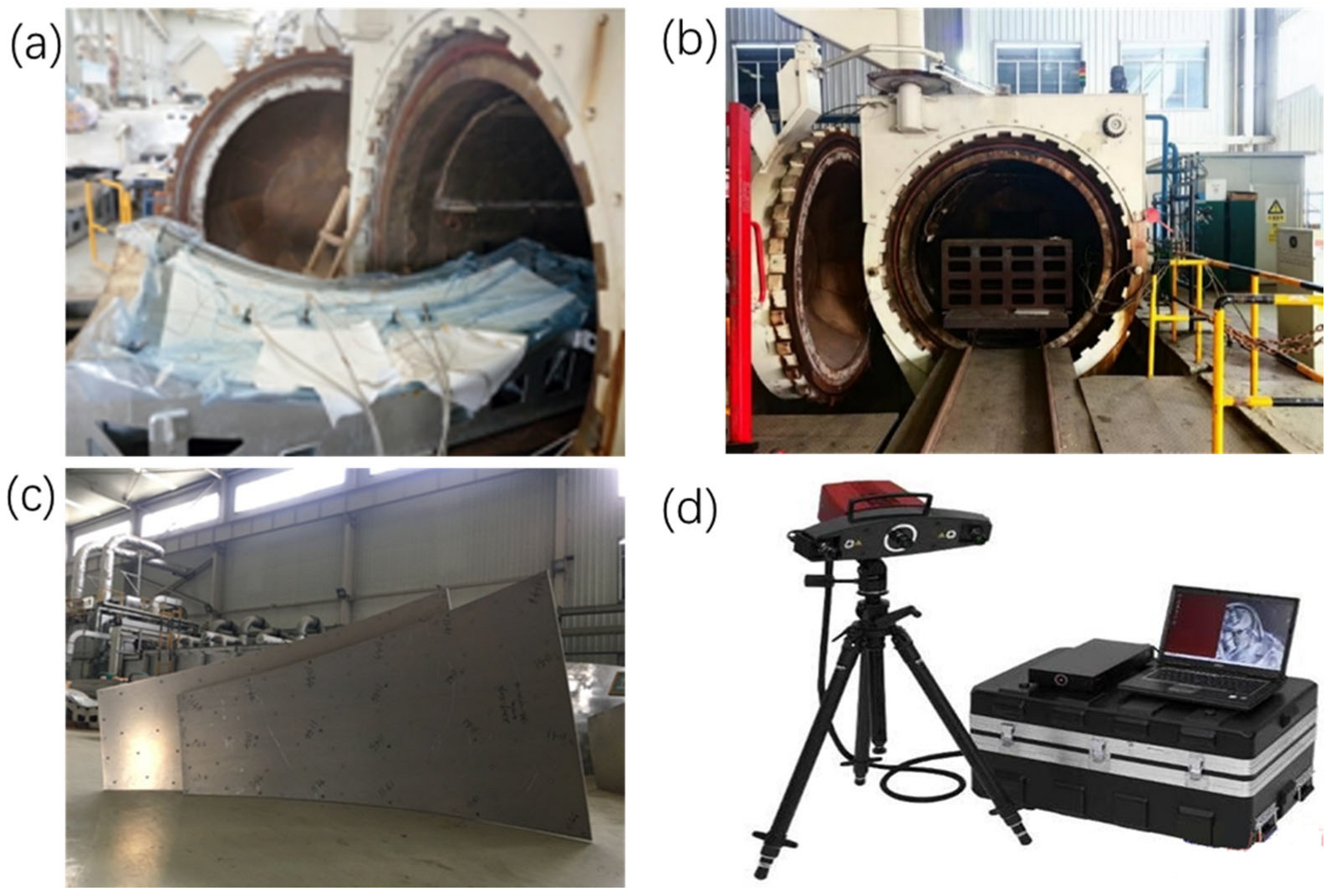
2.2. Creep Age Forming Experiment
3. Finite Element Modeling Considering Residual Stress
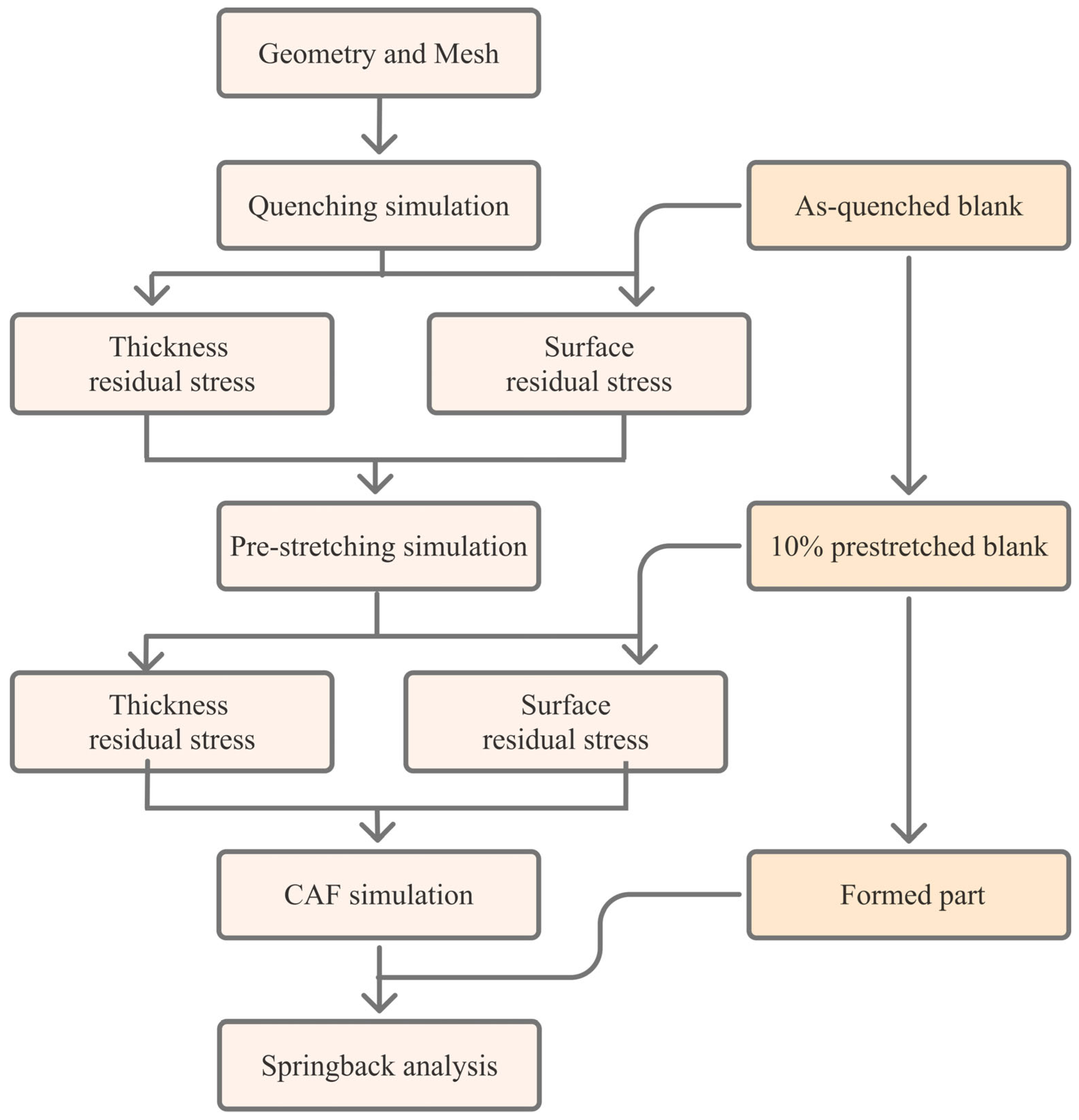
3.1. Quenching and Pre-Stretching Model
3.2. Creep Age Forming Model
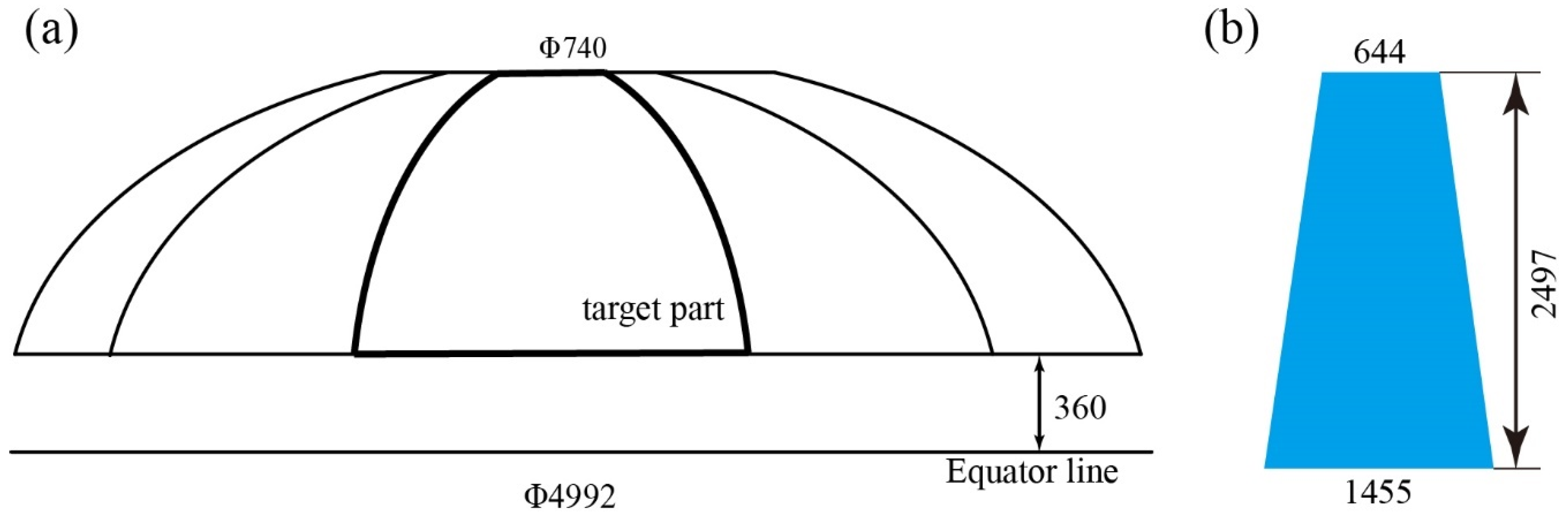
3.2.1. Geometry and Mesh
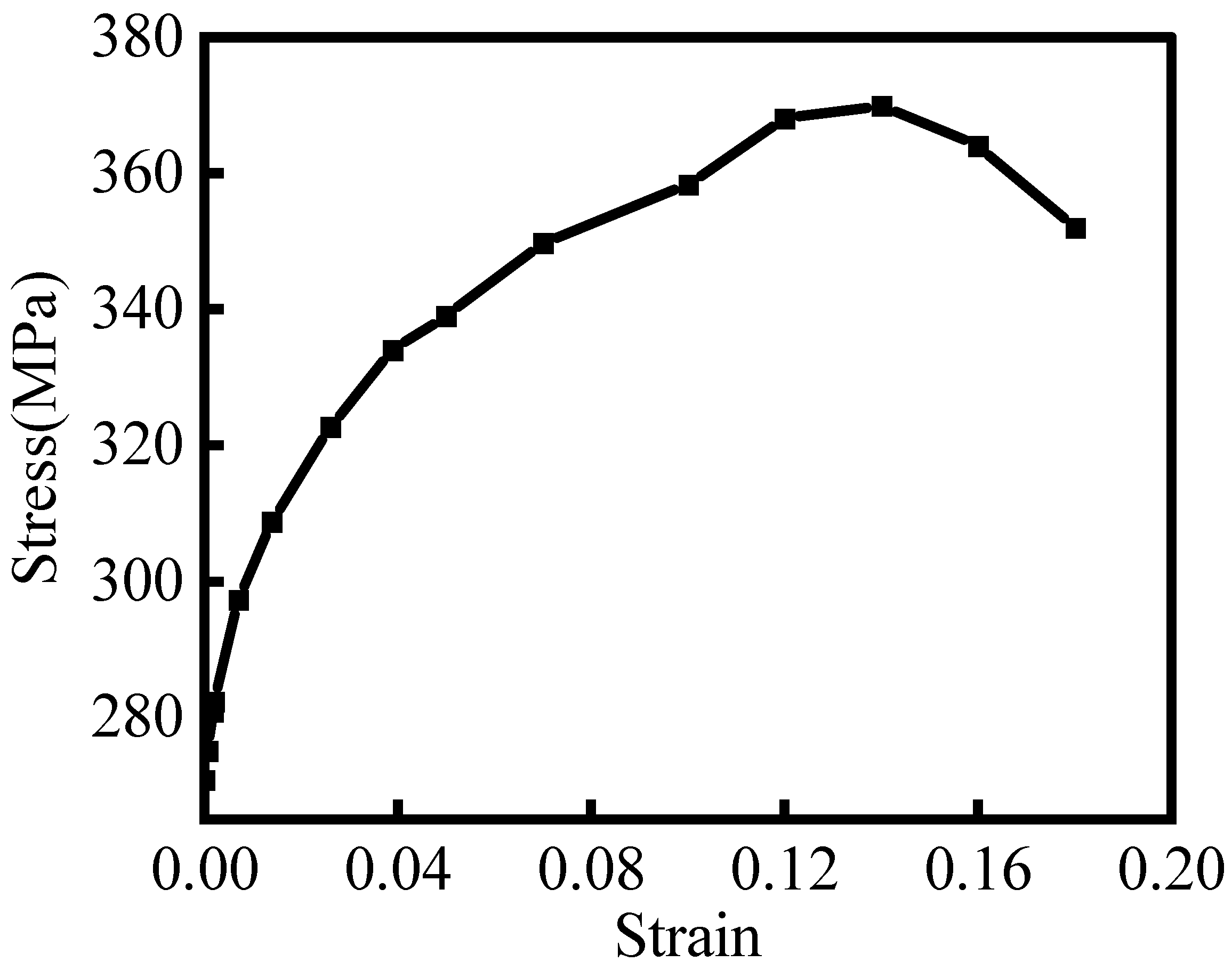
3.2.2. Creep Constitutive Model
3.2.3. Mesh Convergence Analysis
4. Results and Discussion
4.1. Surface Residual Stress
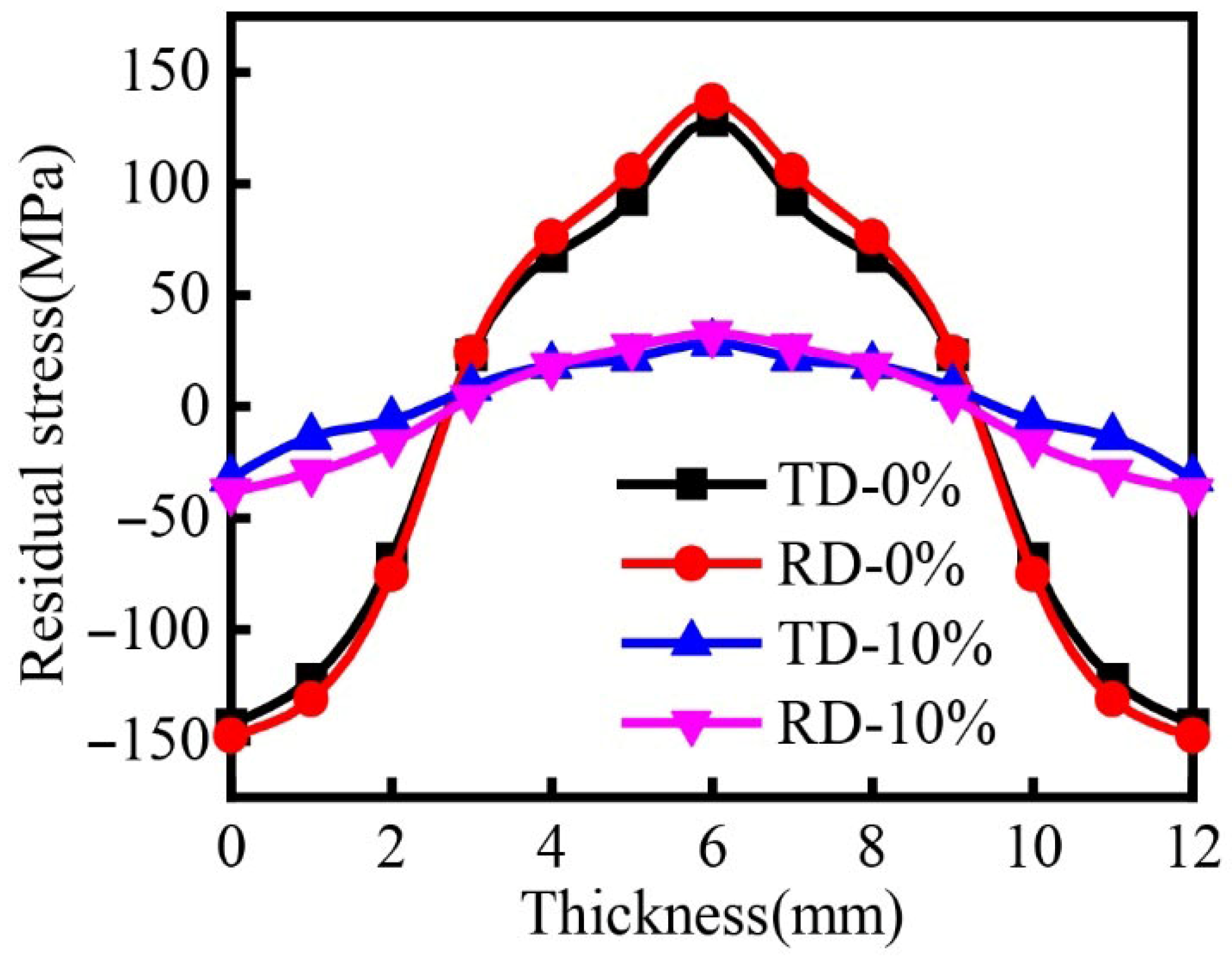
4.2. Through-Thickness Residual Stress
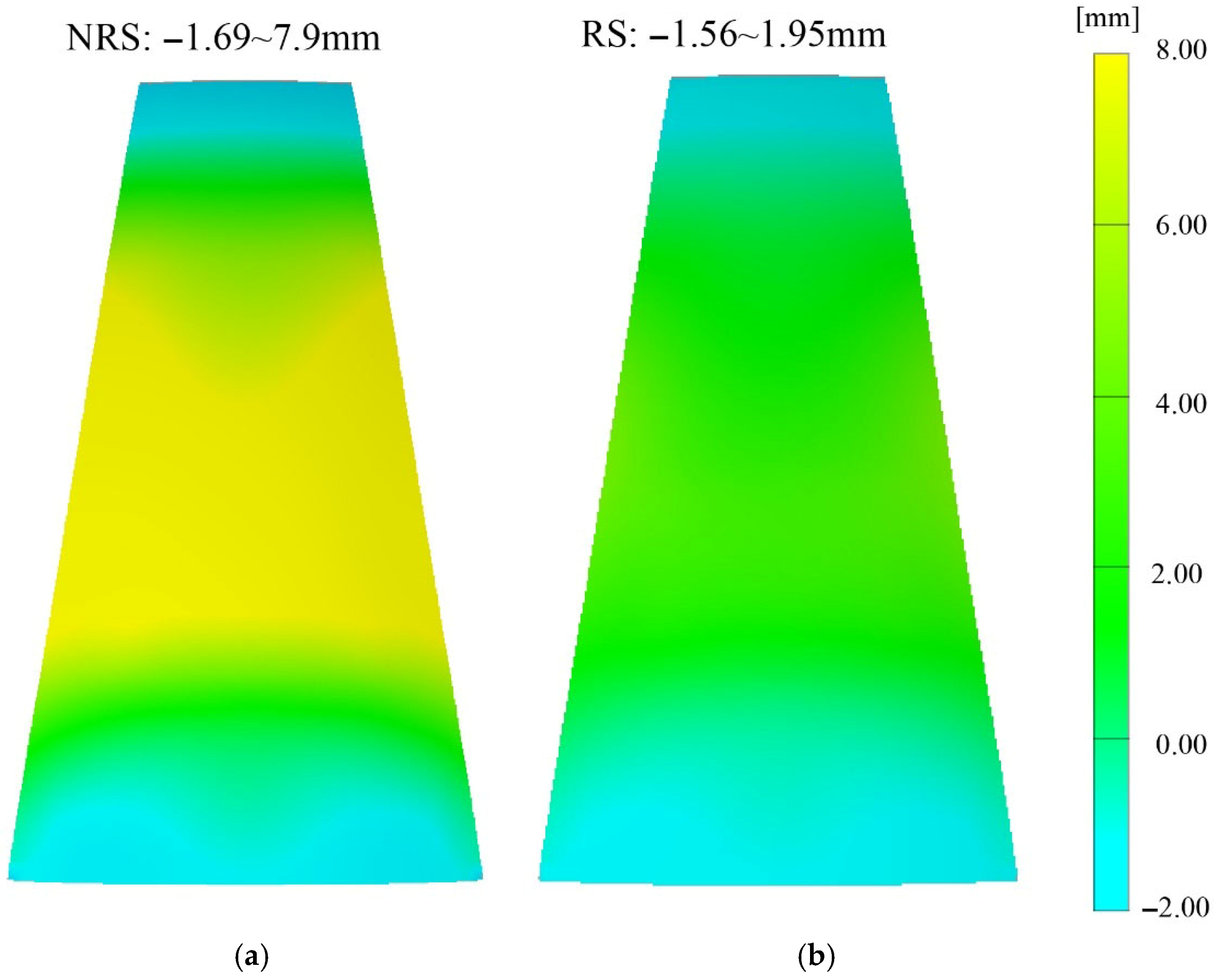
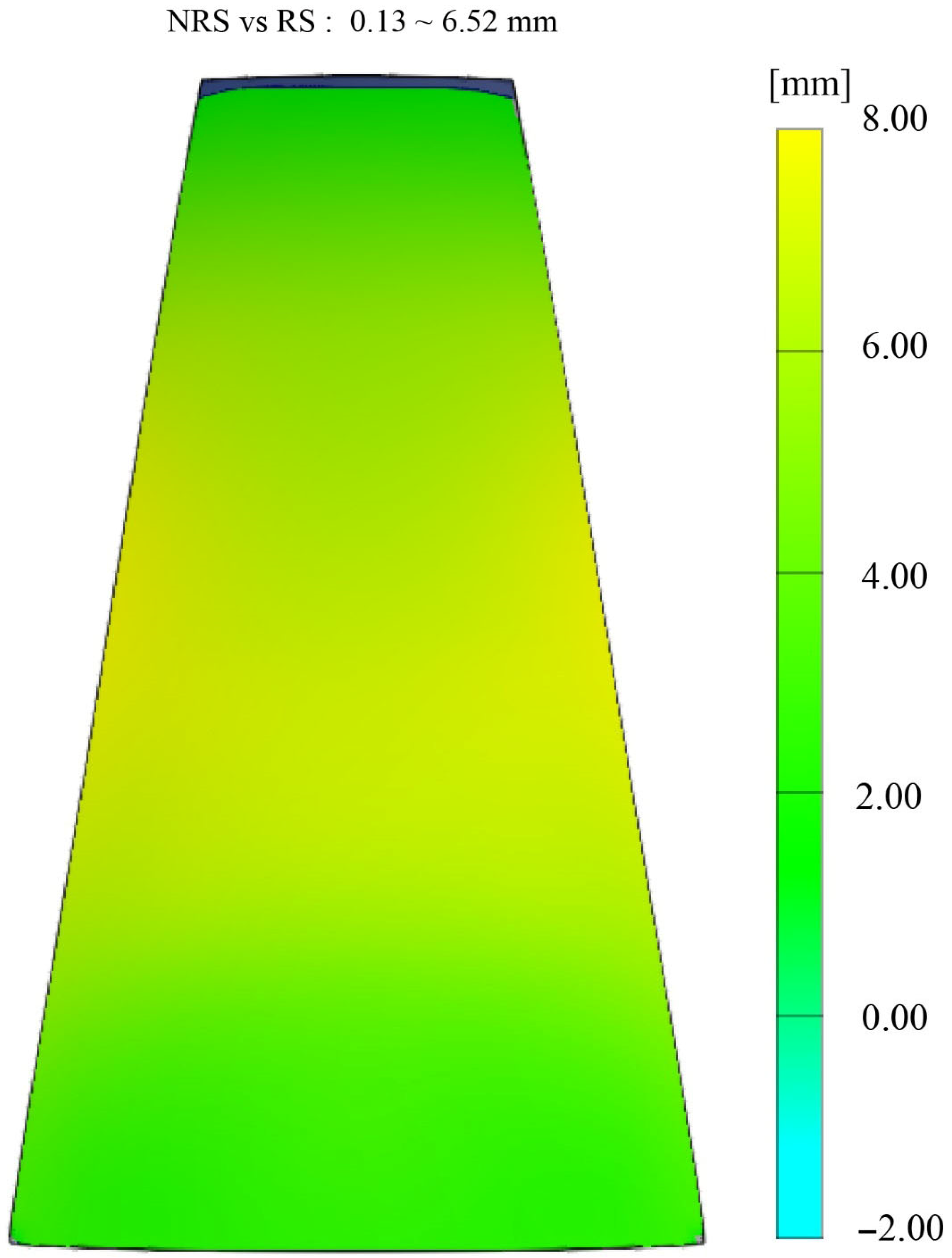
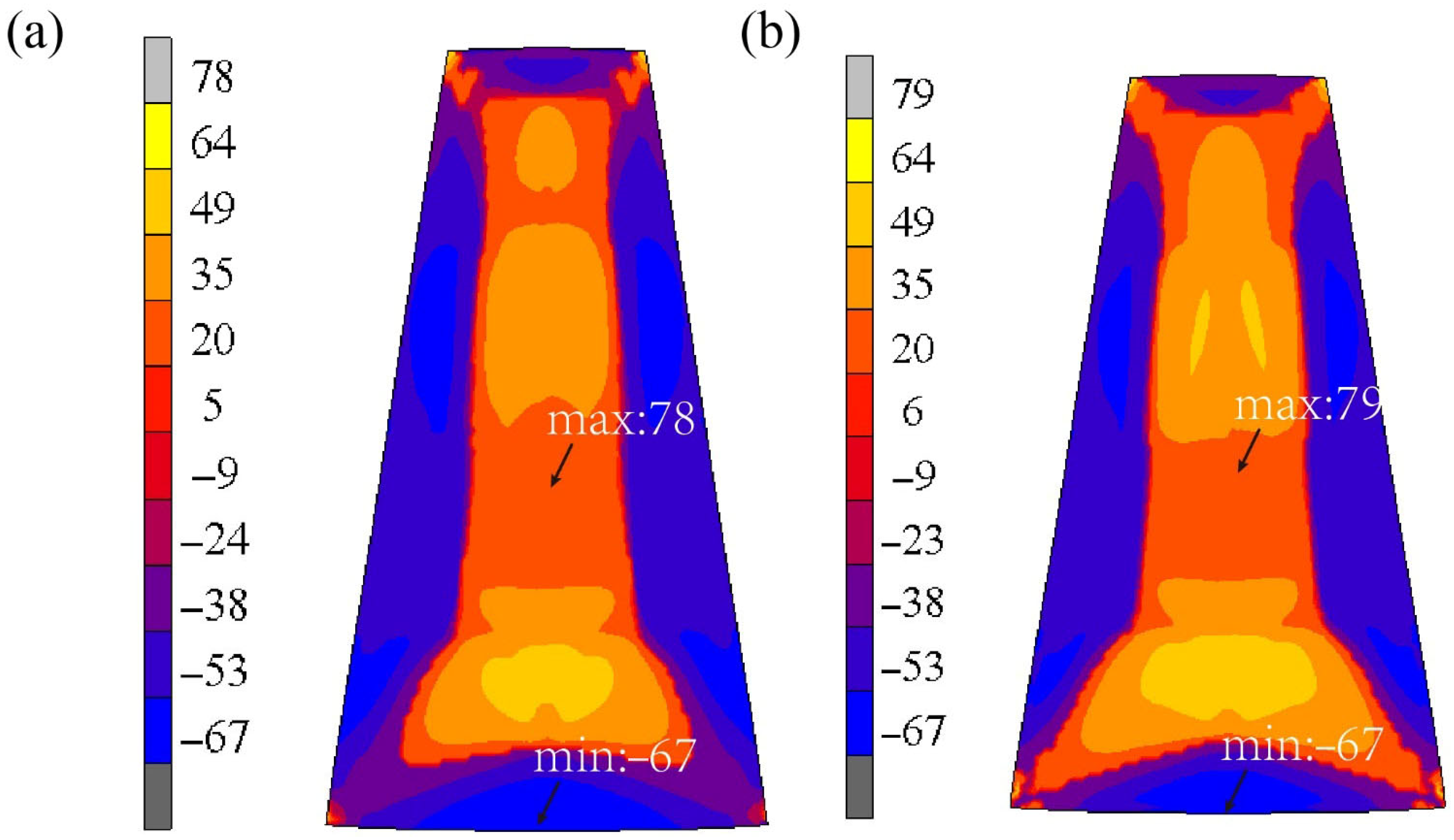
4.3. Springback Prediction Accuracy Under Different Die Curvatures
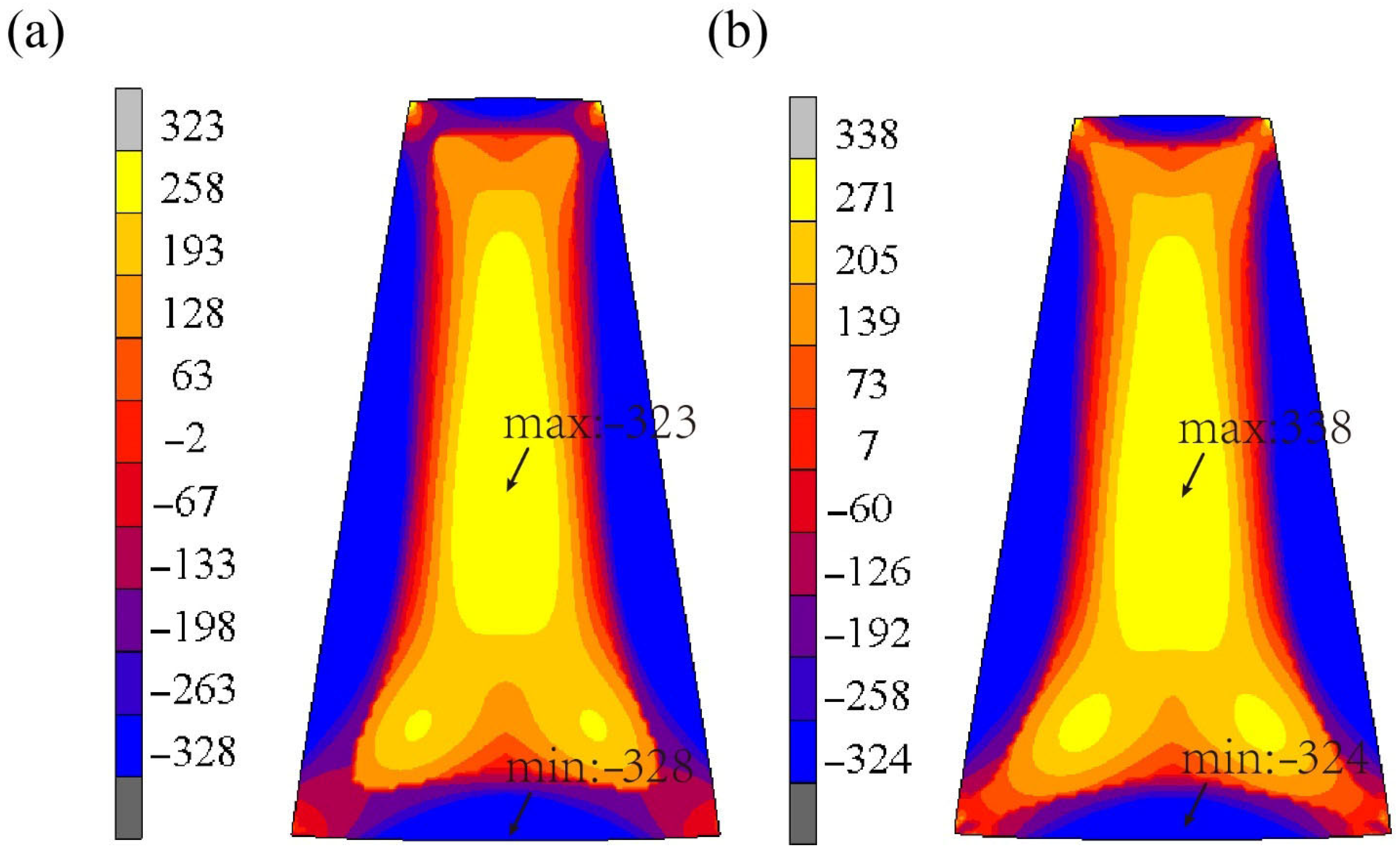
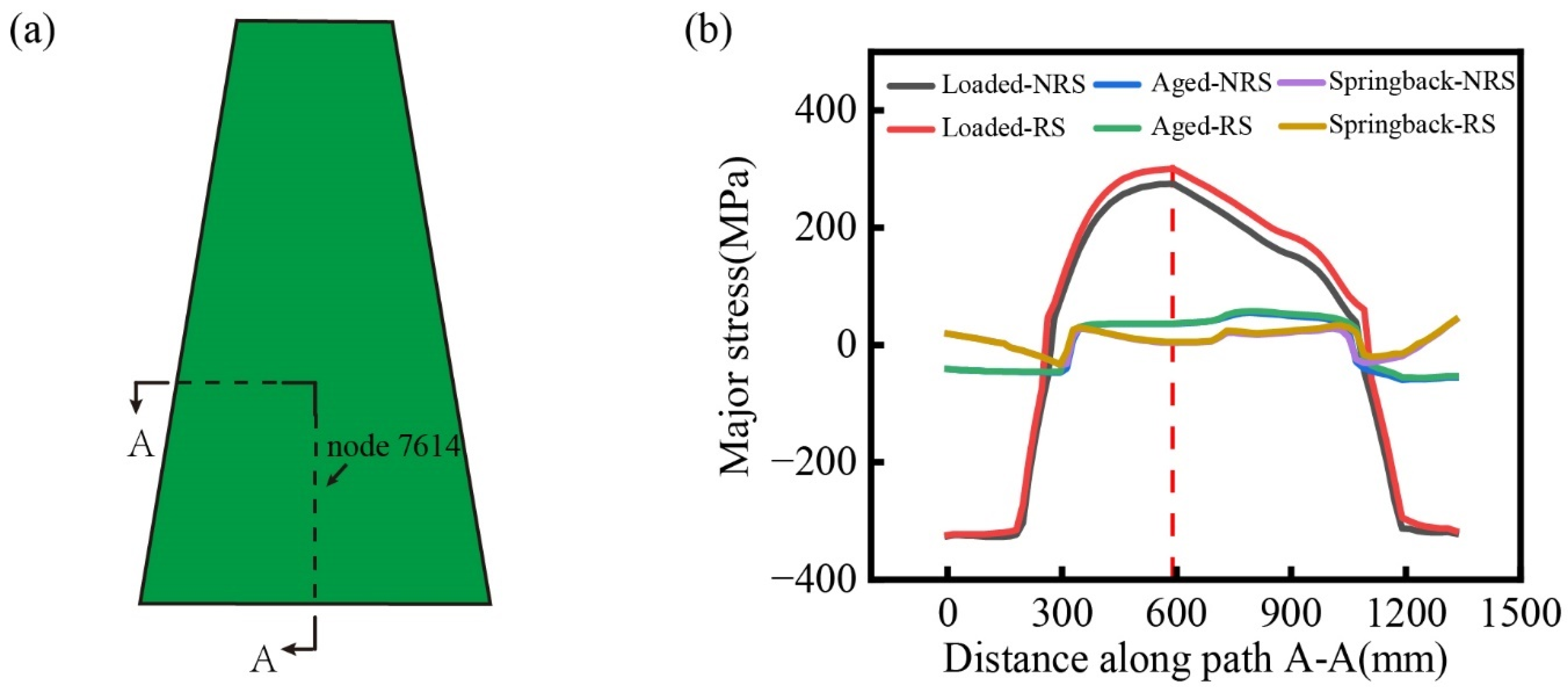
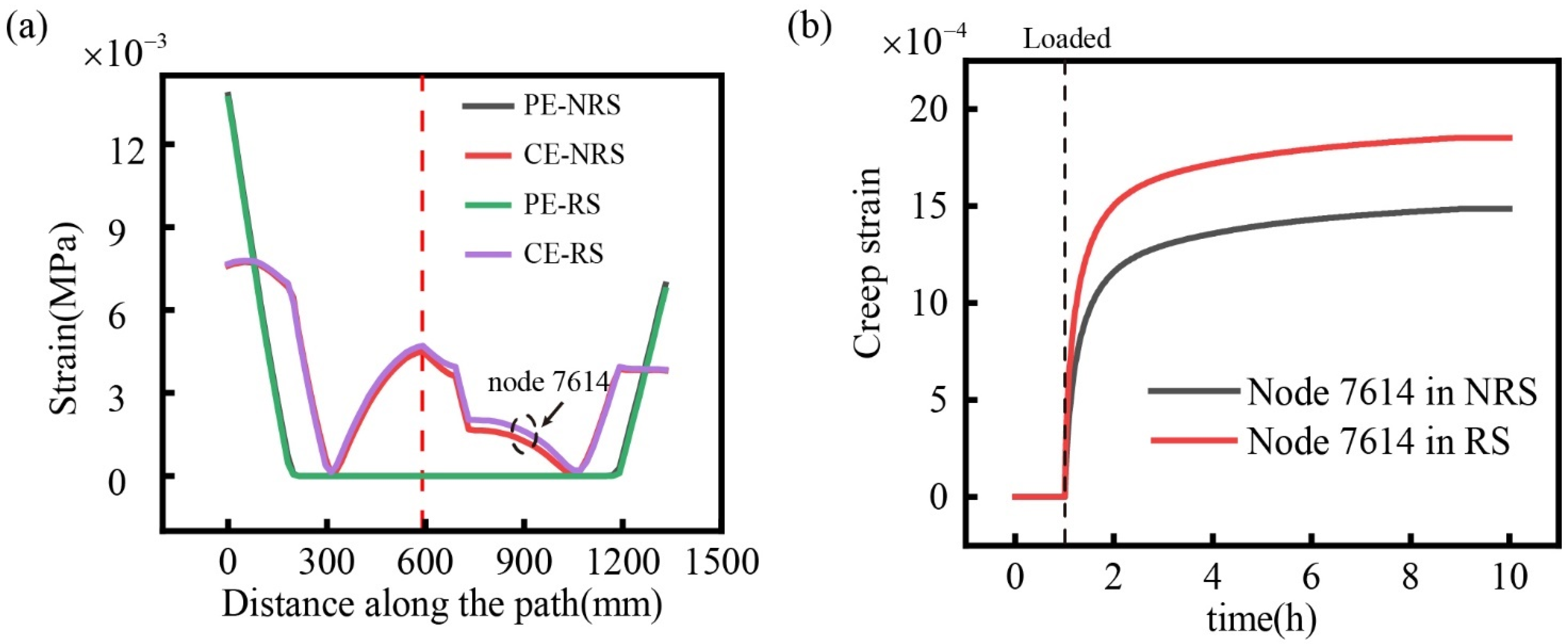
4.4. Stress and Strain Evolution
5. Conclusions
- (1)
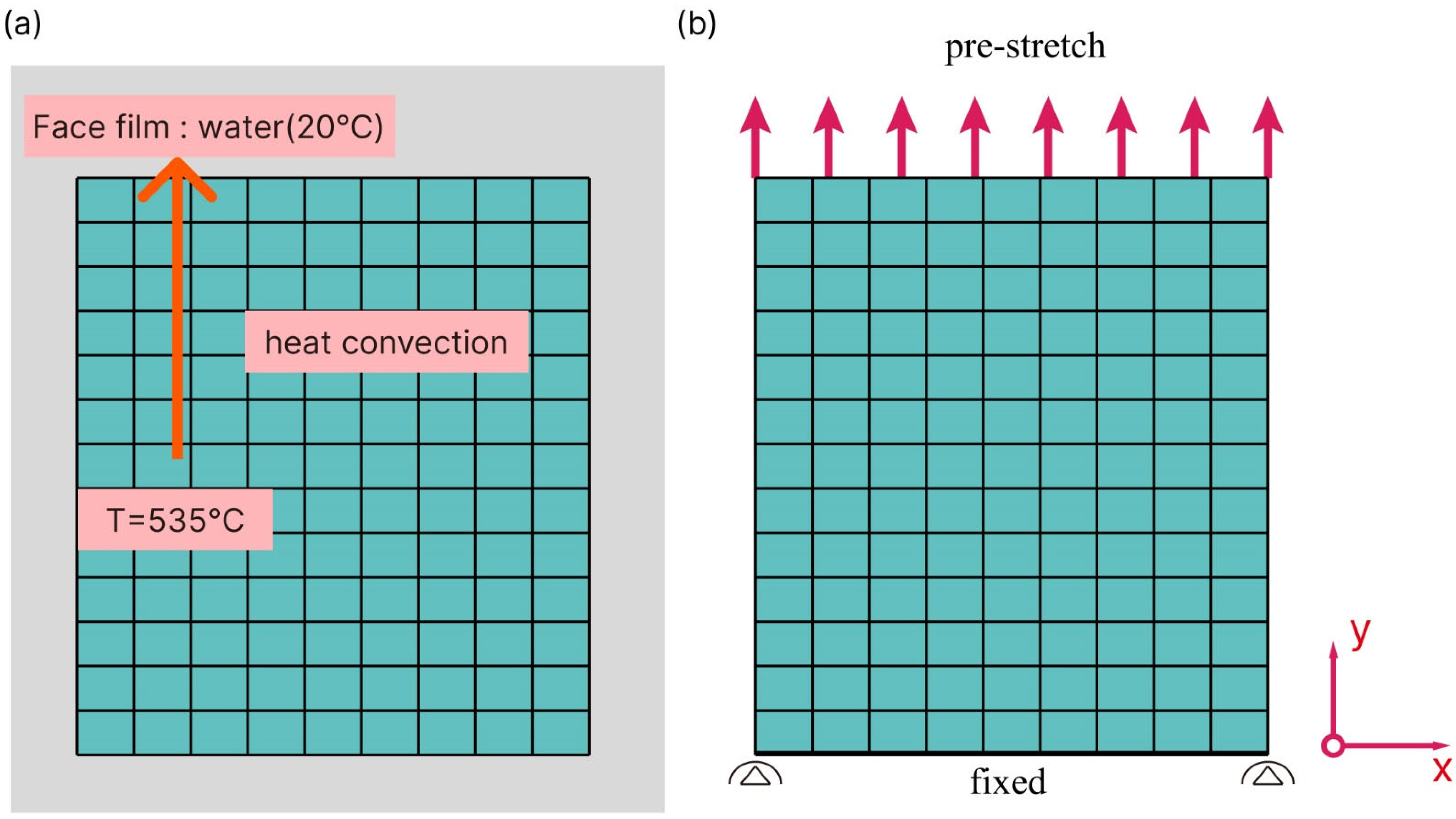
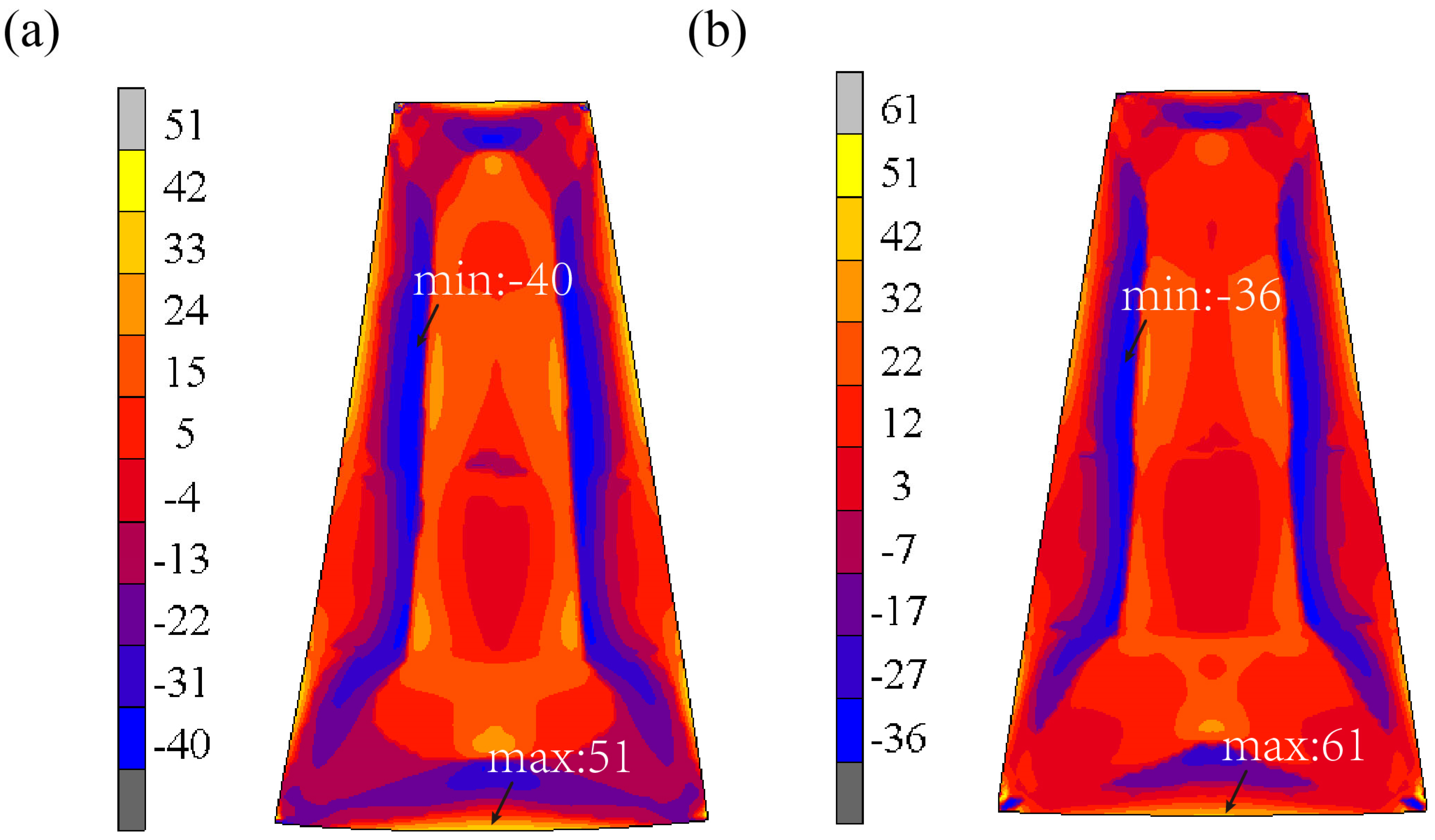
- After quenching, the through-thickness residual stress exhibits a ‘compressive at the surfaces and tensile in the core’ distribution, with maximum tensile stress of about 154 MPa on the mid-plane. Pre-stretching effectively reduces the residual stress level; the maximum mid-plane tensile stress decreases to about 40 MPa. The multi-step FE model successfully captures the residual stress evolution during the pre-processing stages.
- (2)
- During the creep age forming of doubly curved components, the initial residual stress field influences springback primarily through its effect on accumulated creep deformation rather than plastic deformation during loading. Although the initial stress difference is largely equilibrated in the loading stage, small differences persist in creep strain accumulation, which ultimately govern the final springback discrepancy.
- (3)
- Incorporating the initial residual stress field into the CAF simulation improves the springback prediction accuracy by approximately 63% under the original die configuration. Additional simulations conducted under a shallower die curvature (with a geometric deviation of about 6 mm) show that the springback reduction remains at the millimeter scale (0.09–6.52 mm), indicating that the proposed modeling framework maintains a consistent predictive improvement under different curvature conditions.
- (4)
- The results demonstrate that accounting for pre-processing-induced residual stresses is essential for high-accuracy springback prediction in CAF. The established multi-step FE process chain provides a physically consistent and transferable approach to analyzing residual stress effects in thin-walled aluminum alloy components.
Author Contributions
Funding
Institutional Review Board Statement
Informed Consent Statement
Data Availability Statement
Conflicts of Interest
References
- Zhou, C.; Zhan, L.; Liu, C.; Huang, M. Dislocation density-mediated creep ageing behavior of an Al–Cu–Li alloy. J. Mater. Sci. Technol. 2024, 174, 204–217. [Google Scholar] [CrossRef]
- Zhan, L.; Xie, H.; Yang, Y.; Zhao, S.; Chang, Z.; Xia, Y.; Zheng, Z.; Zhou, Y. Investigation on creep deformation and age strengthening behavior of 304 stainless steel under high stress levels. Materials 2024, 17, 642. [Google Scholar] [CrossRef]
- Yang, Y.; Zhan, L.; Liu, C.; Wang, X.; Wang, Q.; Tang, Z.; Li, G.; Huang, M.; Hu, Z. Stress-relaxation ageing behavior and microstructural evolution under varying initial stresses in an Al–Cu alloy: Experiments and modeling. Int. J. Plast. 2020, 127, 102646. [Google Scholar] [CrossRef]
- Liu, C.; Yang, J.; Ma, P.; Ma, Z.; Zhan, L.; Chen, K.; Huang, M.; Li, J.; Li, Z. Large creep formability and strength–ductility synergy enabled by engineering dislocations in aluminum alloys. Int. J. Plast. 2020, 134, 102774. [Google Scholar] [CrossRef]
- Yang, Y.; Zhan, L.; Shen, R.; Liu, J.; Li, X.; Huang, M.; He, D.; Chang, Z.; Ma, Y.; Wan, L. Investigation on the creep-age forming of an integrally-stiffened AA2219 alloy plate: Experiment and modeling. Int. J. Adv. Manuf. Technol. 2018, 95, 2015–2025. [Google Scholar] [CrossRef]
- Yang, Y.; Zhan, L.; Shen, R.; Yin, X.; Li, X.; Li, W.; Huang, M.; He, D. Effect of pre-deformation on creep age forming of 2219 aluminum alloy: Experimental and constitutive modelling. Mater. Sci. Eng. A 2017, 683, 227–235. [Google Scholar] [CrossRef]
- Xiong, Y.; Yang, Y.; Xie, H.; Zhan, L. Effect of ageing temperature on the mechanical properties and microstructures of cryogenic-rolled 2195 Al–Cu–Li alloy. Mater. Sci. Eng. A 2025, 924, 147855. [Google Scholar] [CrossRef]
- Yang, Y.; Zhan, L.; Ma, Q.; Feng, J.; Li, X. Effect of pre-deformation on creep age forming of AA2219 plate: Springback, microstructures and mechanical properties. J. Mater. Process. Technol. 2016, 229, 697–702. [Google Scholar] [CrossRef]
- Zhan, L.; Tan, S.; Yang, Y.; Huang, M.; Shen, W.; Zhao, X. A research on the creep age forming of 2524 aluminum alloy: Springback, mechanical properties, and microstructures. Adv. Mech. Eng. 2014, 2014, 707628. [Google Scholar] [CrossRef]
- Abvabi, A.; Rolfe, B.; Hodgson, P.D.; Weiss, M. The influence of residual stress on a roll forming process. Int. J. Mech. Sci. 2015, 101, 124–136. [Google Scholar] [CrossRef]
- Sedeh, M.R.N.; Ghaei, A. The effects of machining residual stresses on springback in deformation machining bending mode. Int. J. Adv. Manuf. Technol. 2021, 114, 1087–1098. [Google Scholar] [CrossRef]
- Zhang, M.; Li, D. Theoretical and experimental investigation of the deformation shape in press-braking bending considering surface residual stresses induced by milling operation. Int. J. Adv. Manuf. Technol. 2024, 131, 1059–1069. [Google Scholar] [CrossRef]
- Zhang, M.; Tian, X.; Wang, G. Residual stress analysis and its effect on springback for multi-step press-brake bending. Proc. Inst. Mech. Eng. Part B J. Eng. Manuf. 2023, 237, 1787–1797. [Google Scholar] [CrossRef]
- Lam, A.C.L.; Shi, Z.; Lin, J.; Huang, X. Influences of residual stresses and initial distortion on springback prediction of 7B04-T651 aluminium plates in creep-age forming. Int. J. Mech. Sci. 2015, 103, 115–126. [Google Scholar] [CrossRef]
- Li, Y.; Gan, W.; Huang, X.; Zhang, Y.; Zhou, W.; Li, D.; Zeng, Y. A quantitative study of machining-induced residual stress and its effect on subsequent creep age forming of aluminium alloy panels. J. Mater. Process. Technol. 2023, 321, 118147. [Google Scholar] [CrossRef]
- Li, Y.; Shi, Z.; Lin, J.; Yang, Y.-L.; Saillard, P.; Said, R. Effect of machining-induced residual stress on springback of creep age formed AA2050 plates with asymmetric creep-ageing behaviour. Int. J. Mach. Tools Manuf. 2018, 132, 113–122. [Google Scholar] [CrossRef]
- Salvatore, F.; Halila, F.; Mabrouki, T.; Hamdi, H. Numerical and experimental study of residual stress induced by machining process. Int. J. Surf. Sci. Eng. 2012, 6, 136–147. [Google Scholar] [CrossRef]
- Acquesta, A.; Monetta, T.; Franchitti, S.; Borrelli, R.; Viscusi, A.; Perna, A.S.; Penta, F.; Esposito, L.; Carrino, L. Green electrochemical polishing of EBM Ti6Al4V samples with preliminary fatigue results. Int. J. Adv. Manuf. Technol. 2023, 126, 4269–4282. [Google Scholar] [CrossRef]
- Viscusi, A. Numerical investigations on the rebound phenomena and the bonding mechanisms in cold spray processes. In AIP Conference Proceedings; AIP Publishing LLC: Melville, NY, USA, 2018; Volume 1960, p. 100017. [Google Scholar]
- Viscusi, A.; Astarita, A.; Genna, S.; Leone, C. On the influence of different superficial laser texturing on the deposition of powders through cold spray process. Trans. IMF 2018, 96, 34–40. [Google Scholar] [CrossRef]
- Wang, H.; Tong, R.; Liu, G.; Sha, A.; Song, L.; Zhang, T. In-Situ Synchrotron HEXRD Study on the Micro-Stress Evolution Behavior of a Superalloy during Room-Temperature Compression. Materials 2023, 16, 3761. [Google Scholar] [CrossRef]
- Selbmann, R.; Gibmeier, J.; Simon, N.; Kräusel, V.; Bergmann, M. Residual Stress Engineering for Wire Drawing of Austenitic Stainless Steel X5CrNi18-10 by Variation in Die Geometries—Effect of Drawing Speed and Process Temperature. Materials 2024, 17, 1174. [Google Scholar] [CrossRef]
- Liu, M.; Tao, X.; Di, Z.; Qin, M.; Liu, Z.; Bai, S. Effect of Pre-Rolling on Microstructure and Fatigue Crack Propagation Resistance of a Third-Generation Al–Li Alloy. Materials 2023, 16, 7540. [Google Scholar] [CrossRef] [PubMed]
- Zeng, H.; Shi, D.; Zheng, Y.; Zhang, J. Effect of the Second Phases on Composite Spinning-Extrusion Forming and Mechanical Properties of Al–Cu–Li Alloy. Materials 2023, 16, 3573. [Google Scholar] [CrossRef] [PubMed]
- Chen, Z.; Duan, Y.; Wang, P.; Qian, H. Residual Stress Redistribution Analysis in the Repair Welding of AA6082-T6 Aluminum Alloy Joints: Experiment and Simulation. Materials 2022, 15, 6399. [Google Scholar] [CrossRef] [PubMed]
- Aubert & Duval. Aluminium Alloy 2219 Datasheet; Aubert & Duval: Paris, France, 2024. [Google Scholar]
- Withers, P.J.; Bhadeshia, H.K.D.H. Residual stress. Part 1—Measurement techniques. Mater. Sci. Technol. 2001, 17, 355–365. [Google Scholar] [CrossRef]
- Fitzpatrick, M.E.; Fry, A.T.; Holdway, P.; Kandil, F.A.; Shackleton, J.; Suominen, L. Determination of Residual Stresses by X-Ray Diffraction—Issue 2; Measurement Good Practice Guide No. 52; National Physical Laboratory: Teddington, UK, 2005. [Google Scholar]
- Mo, F.; Sun, G.; Li, J.; Zhang, C.; Wang, H.; Chen, Y.; Liu, Z.; Yang, Z.; Li, H.; Yang, Z.; et al. Recent Progress of Residual Stress Distribution and Structural Evolution in Materials and Components by Neutron Diffraction Measurement at RSND. Quantum Beam Sci. 2018, 2, 15. [Google Scholar] [CrossRef]








| Cu | Mg | Mn | Si | Fe | Ni | Zr | Ti | Al |
|---|---|---|---|---|---|---|---|---|
| 5.24 | 0.028 | 0.27 | 0.042 | 0.13 | 0.03 | 0.14 | 0.065 | Bal. |
| Parameter | Value | Parameter | Value | Parameter | Value |
|---|---|---|---|---|---|
| 0.9533 | 141.9358 | 4.6796 | |||
| 0.1420 | 271.8296 | 0.1744 | |||
| 15.3682 | 1.6252 | 0.1 | |||
| 111.2442 | 0.3753 | 3.1997 | |||
| 70.3445 | 0.5569 | 0.5459 | |||
| 79.0815 | 0.0102 | 0.6015 | |||
| 125.0606 | 0.2217 | 94.05 | |||
| 3.701 × 10⁻⁶ | 0.0497 | −0.115 | |||
| 1.0000 | 4.9997 | 11 |
| Through-Thickness Elements | 4 | 6 | 8 |
|---|---|---|---|
| Springback (mm) | 85.56 | 88.30 | 88.28 |
| Die Configuration | Error Range (NRS vs. Exp.) (mm) | Error Range (RS vs. Exp.) (mm) | ΔSpringback Deviation (mm) (Δ = Springback (NRS) – Springback (RS)) |
|---|---|---|---|
| Experimental die | 9.59 (−1.69 to 7.90) | 3.51 (−1.56 to 1.95) | 6.08 (−0.13 to 5.95) |
| Shallower die (deviation = 6 mm) | — | — | 6.43 (0.09 to 6.52) |
Disclaimer/Publisher’s Note: The statements, opinions and data contained in all publications are solely those of the individual author(s) and contributor(s) and not of MDPI and/or the editor(s). MDPI and/or the editor(s) disclaim responsibility for any injury to people or property resulting from any ideas, methods, instructions or products referred to in the content. |
© 2026 by the authors. Licensee MDPI, Basel, Switzerland. This article is an open access article distributed under the terms and conditions of the Creative Commons Attribution (CC BY) license.
Share and Cite
Yu, J.; Zhan, L.; Yang, Y. Effects of Residual Stress on Springback in Creep Age Forming of 2219 Aluminum Alloy Double-Curvature Thin-Walled Parts. Metals 2026, 16, 269. https://doi.org/10.3390/met16030269
Yu J, Zhan L, Yang Y. Effects of Residual Stress on Springback in Creep Age Forming of 2219 Aluminum Alloy Double-Curvature Thin-Walled Parts. Metals. 2026; 16(3):269. https://doi.org/10.3390/met16030269
Chicago/Turabian StyleYu, Jiwang, Lihua Zhan, and Youliang Yang. 2026. "Effects of Residual Stress on Springback in Creep Age Forming of 2219 Aluminum Alloy Double-Curvature Thin-Walled Parts" Metals 16, no. 3: 269. https://doi.org/10.3390/met16030269
APA StyleYu, J., Zhan, L., & Yang, Y. (2026). Effects of Residual Stress on Springback in Creep Age Forming of 2219 Aluminum Alloy Double-Curvature Thin-Walled Parts. Metals, 16(3), 269. https://doi.org/10.3390/met16030269