Article

Ti2AlNb Sheet Pulse Current-Assisted Flexible Granular Medium Forming of Box-Shaped Components

1
School of Mechanical Engineering, Yanshan University, Qinhuangdao 066004, China
2
Harbin Institute of Technology, School of Materials Science and Engineering, Harbin 150001, China
*
Author to whom correspondence should be addressed.
Metals 2026, 16(1), 77; https://doi.org/10.3390/met16010077
Submission received: 4 December 2025 / Revised: 4 January 2026 / Accepted: 8 January 2026 / Published: 9 January 2026
(This article belongs to the Section Metal Casting, Forming and Heat Treatment)

Abstract

Pulse current-assisted flexible granular medium forming is a promising approach for manufacturing complex thin-walled components from difficult-to-deform Ti2AlNb-based alloys. In this study, the electro-thermo-mechanical deformation behavior of Ti2AlNb sheets is investigated through pulse current-assisted uniaxial tensile tests, microstructural characterization, and finite element simulations. The influences of pulse current intensity and strain rate on flow behavior, fracture characteristics, and phase evolution are clarified, and an effective forming window is identified. Numerical simulations are employed to analyze the role of granular medium friction in material flow and wall thickness distribution, providing guidance for forming box-shaped components. The results demonstrate that forming at approximately 950 °C with a strain rate of 0.001 s−1 reduces deformation resistance, while enhanced tangential interaction between the granular medium and the sheet improves wall thickness uniformity. This study provides a feasible processing route and practical guidelines for the fabrication of complex Ti2AlNb sheet components.

1. Introduction

The Ti2AlNb-based alloy exhibits excellent comprehensive mechanical properties in the 650–750 °C temperature regime and possesses a substantially lower density than nickel-based superalloys. These characteristics make it a promising candidate for replacing traditional superalloys in aerospace and other high-temperature applications, contributing to partial structural weight reduction [1]. Ti2AlNb-based alloys are typical multiphase alloys, usually consisting of two or three phases (α2, B2/β, and O phases) [2]. The B2/β phase acts as the matrix and primary carrier of plastic deformation, whereas the α2 phase serves as a strengthening phase primarily existing in particulate morphology [3]. With increasing temperature, the brittle α2 phase tends to precipitate along grain boundaries, effectively pinning them to hinder grain growth and restrict continuous deformation. During plastic deformation, a large number of dislocations are generated within O phase laths and at O/β phase interfaces, introducing additional obstacles to further deformation [4]. Therefore, Ti2AlNb-based alloys exhibit significant processability challenges and relatively low forming efficiency even in hot forming processes.
Recent studies on Ti2AlNb-based alloys have mainly centered on microstructure evolution and heat treatment optimization. Cheng et al. [5] conducted a systematic review of the current understanding of phase transformation mechanisms and the growth kinetics of B2/β and O phases in Ti2AlNb-based alloys, pointing out a notable research gap regarding the kinetics of the ordered-disordered transformation of the O phase. Wu [6] systematically investigated the microstructural evolution of Ti2AlNb-based alloys under various heat treatment temperatures, finding that elevated temperatures resulted in a gradual decrease in α2 and O phases while promoting the formation of B2/β phase, with the O phase completely dissolving at 1020 °C. Bu et al. [7] examined phase transformations during continuous cooling, developing critical cooling rate diagrams for Ti2AlNb-based alloys. Zhang Jian [8] investigated the effect of trace boron doping, demonstrating that while boron effectively refined the grain structure and modified the precipitate morphology, it exerted an adverse impact on mechanical properties. Xing et al. [9] characterized the effects of solution treatment parameters, indicating that temperature (rather than holding time) was the dominant factor regulating the O phase content and consequently influencing mechanical performance. Microstructural softening mechanisms of Ti2AlNb-based alloys are mainly ascribed to O phase spheroidization and dynamic recrystallization [10,11,12,13]. Jia et al. [12,13] contributed substantially to the field by establishing quantitative dynamic recrystallization kinetic models. Meanwhile, scholars have promoted the development of various forming technologies for Ti2AlNb-based alloys: Zhou Xianjun et al. [14] successfully realized diffusion bonding of Ti2AlNb-based alloy and TA15 titanium alloy, while Xue Kemin et al. [15] verified the feasibility of fabricating Ti2AlNb-based alloy components via gradient extrusion technology. Additionally, Du et al. [16] studied the superplastic deformation behavior and diffusion bonding properties, successfully fabricating a four-layer honeycomb structure with uniform wall thickness via superplastic forming/diffusion bonding at 970 °C. Xie et al. [17] established a strain-compensated Arrhenius constitutive model for Ti2AlNb-based alloy (Ti-22Al-24Nb-0.5Mo), accurately describing its hot deformation behavior at 875–950 °C and strain rates of 0.001–0.55 s−1 with a correlation coefficient of 0.994, while Jiao et al. [18] systematically investigated the precision and performance for hot gas forming of Ti2AlNb-based alloy thin-walled components, establishing unified viscoplastic constitutive equations based on physical variables and simulating the forming process by coupling deformation and microstructure evolution to effectively control the forming accuracy and mechanical properties. Illarionov et al. [19] systematically summarized the additive manufacturing technology of Ti2AlNb-based alloys, realizing the preparation of fully dense, fine-grained components via powder bed fusion (PBF) process and revealing the correlation between process parameters, phase composition and mechanical properties of the fabricated parts.
China has made significant progress in the development of Ti2AlNb-based alloys, with institutions such as the General Research Institute for Nonferrous Metals and the Shenyang Institute of Metals achieving industrial-scale plate production. These advancements have created an urgent need for developing novel forming technologies to fabricate high-temperature, complex thin-walled structures using Ti2AlNb-based alloys. In recent years, external field-assisted forming technologies have demonstrated remarkable effectiveness in various material processing fields. Hu [20] achieved precise multi-point stretch bending of aluminum alloys using acoustic field assistance. Zhao [21] improved the surface quality of additively manufactured aluminum alloys via magnetic field assistance. Huang [22] successfully fabricated titanium alloy special-shaped tubes by combining electric field assistance with gas bulging technology. Additionally, the transition from rigid to flexible medium forming dies has gained industrial traction in recent years due to its adaptability for forming complex components [23]. Pulse current-assisted forming has evolved into an efficient and cost-effective thermal processing technology; this approach not only enables rapid material heating but also regulates microstructure evolution, thereby significantly enhancing material formability [24,25,26]. Comparative studies by Li [11,24] revealed that current-assisted hot compression of Ti2AlNb-based alloys facilitates O phase transformation and spheroidization while accelerating recrystallization nucleation, resulting in more complete dynamic recrystallization and substantially improved plasticity compared to conventional furnace heating. Wang et al. [25] demonstrated remarkable superplasticity enhancement in Ti-23Al-26Nb alloys during current-assisted gas bulging. Chen [26] achieved high-precision forming of Ti2AlNb-based ultra-thin corrugated plates using pulsed current, observing that increased current density effectively reduced dislocation density, relieved residual stresses, and minimized springback. This study investigates the synergistic combination of pulse current assistance and flexible medium forming, focusing on the electro-thermodynamic properties of Ti2AlNb sheets and their application in box-shaped component fabrication. Existing studies have independently explored pulse current-assisted forming or flexible medium forming for Ti2AlNb alloys, but none has systematically investigated their synergistic effect. This work innovates by: (1) establishing the coupling mechanism between pulse current-induced phase evolution and flexible granular medium’s tangential force on material flow; (2) optimizing the forming window for box-shaped components (900–1000 °C, 0.001 s−1) to balance formability and efficiency; (3) revealing the critical role of granular medium friction coefficient (μ = 0.4) in reducing thinning rate, which has not been reported in previous Ti2AlNb forming studies. This research fills the gap in complex thin-walled Ti2AlNb component manufacturing via combined external field and flexible forming technologies. To clearly illustrate the characteristics of existing mainstream forming technologies for Ti2AlNb alloys and highlight the advantages of the proposed method, Table 1 summarizes the core parameters, performance, and limitations of three conventional technologies (conventional hot forming, gas bulging, rigid die forming) and the coupled forming technology developed in this study. The comparison reveals that conventional hot forming suffers from poor wall thickness uniformity, gas bulging lacks adaptability to box-shaped components, and rigid die forming restricts material flow severely. In contrast, the proposed method integrates the strengths of pulse current-induced phase regulation and granular medium-enhanced material feeding, addressing the key drawbacks of existing technologies. The findings offer valuable insights for advancing Ti2AlNb-based sheet processing technologies.

2. Materials and Methods

2.1. Material and Experimental Studies

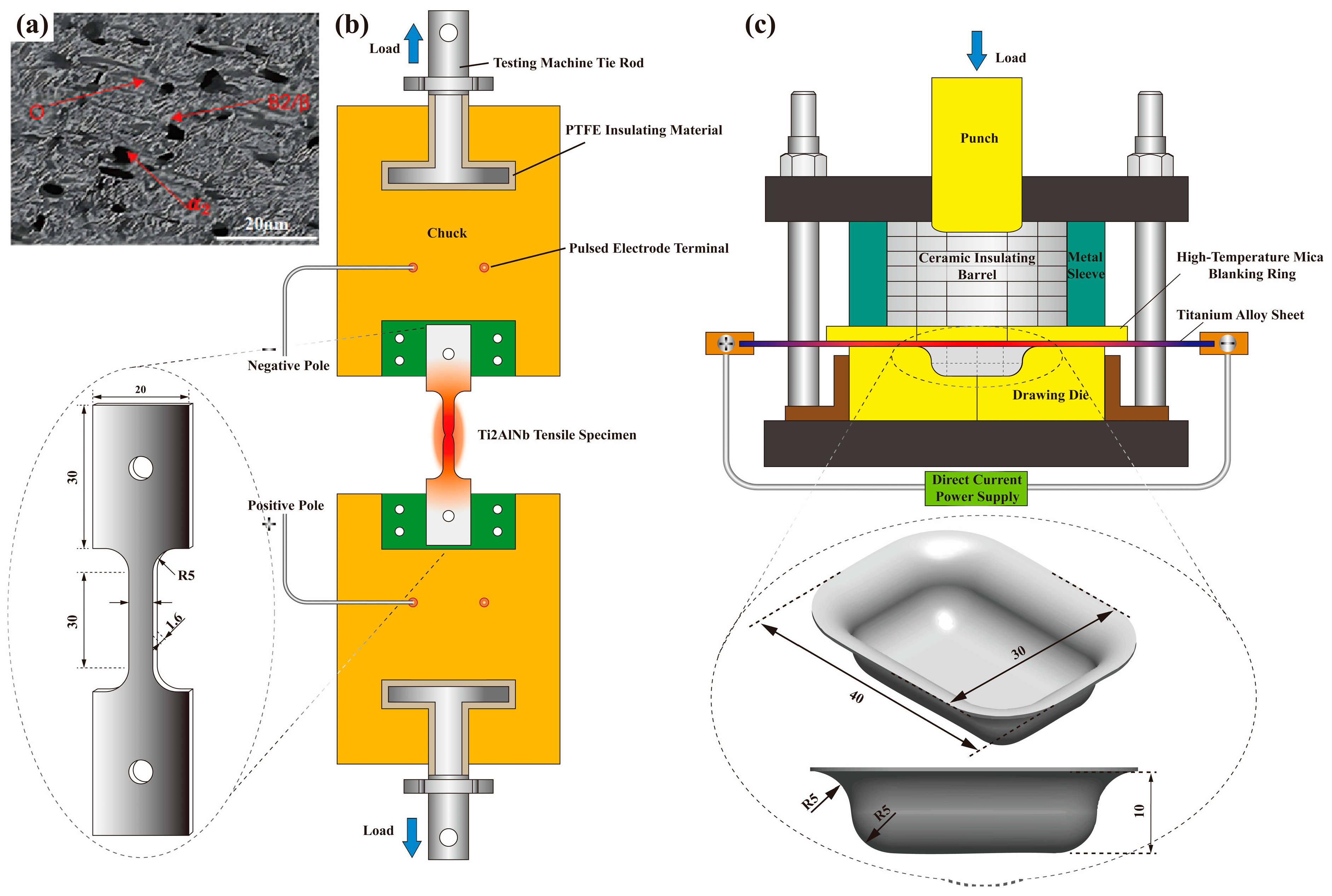
The experimental material was an industrial-grade Ti2AlNb-based sheet produced by the General Research Institute for Nonferrous Metals and the Shenyang Institute of Metals. The 1.6 mm-thick sheet had a nominal composition of Ti-22Al-24.5Nb-0.5Mo (at.%) and was subjected to a final rolling process at 960 °C. Following a 2 h vacuum annealing treatment at 1000 °C, the material exhibited a density of 5.3 g/cm3. Figure 1a shows the microstructure of the as-received Ti2AlNb-based sheet. In backscattered electron (BSE) imaging, the contrast is directly associated with the average atomic number of each phase. since Nb and Mo have higher atomic masses than Ti and Al, regions rich in Nb/Mo appear brighter. Quantitative analysis revealed that the Nb and Mo content follow the order: α2 phase (lowest) < O phase (intermediate) < B2/β phase (highest). Accordingly, the BSE image exhibits three distinct contrast levels: dark gray α2 phase grains, medium gray O phase regions, and bright white B2/β phase grains.
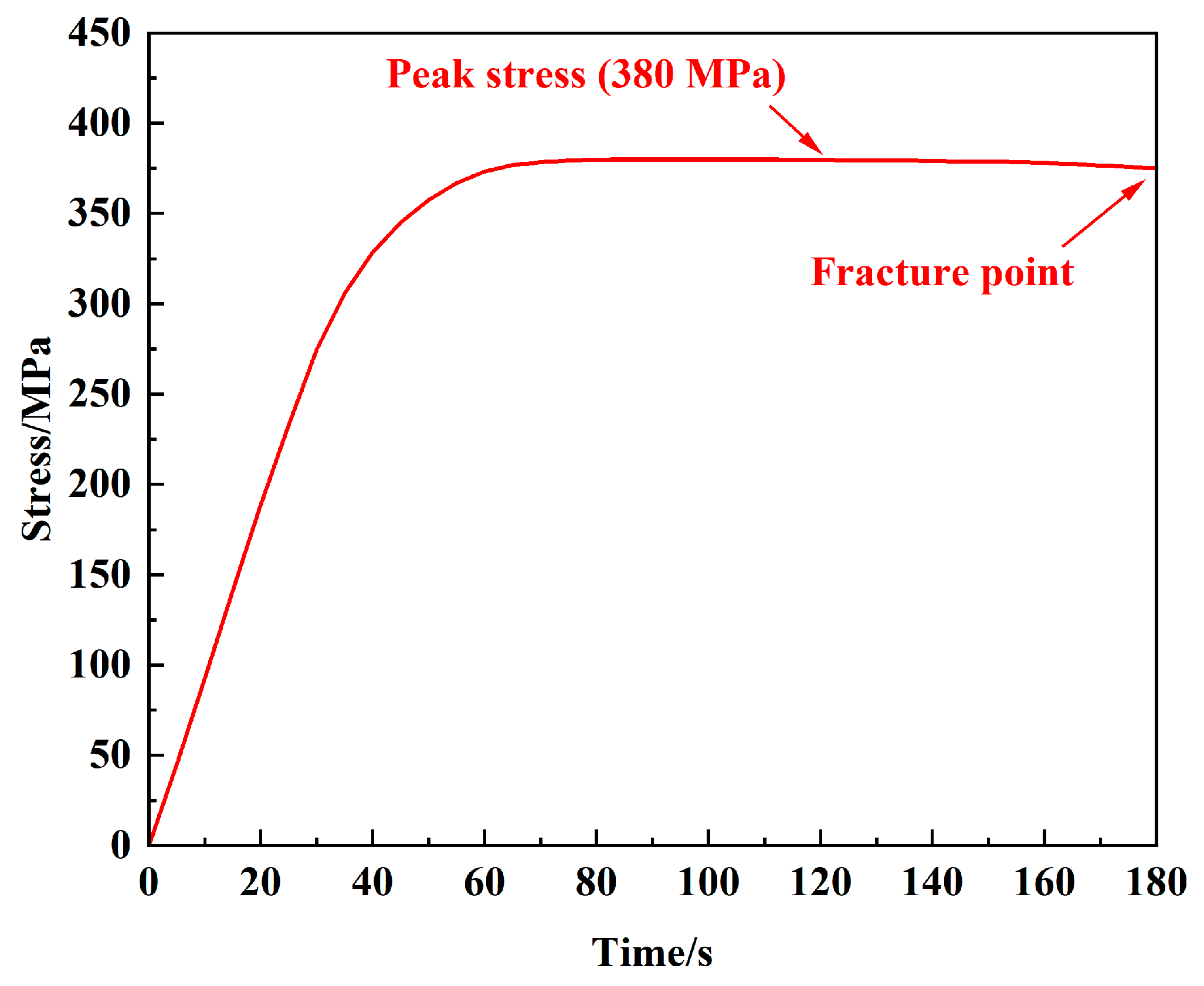
To investigate the electro-thermodynamic behavior of Ti2AlNb-based alloy under pulse current loading, we performed pulse current-assisted uniaxial tensile tests. These experiments obtained true stress–strain curves under pulse current-induced electrothermal conditions, enabling systematic analysis of the alloy’s mechanical response. This study systematically examined the influence of two critical process parameters: (1) applied pulse current density (positively correlated with the initial specimen temperature) and (2) strain rate on the tensile strength and elongation of the alloy. The strain rate was kept constant during tensile tests (0.001, 0.01, 0.1 s−1), with a maximum strain of 0.6 (before fracture). Figure 2 shows the stress–time curve under the condition of 57 A and 0.001 s−1. The stress first increases to a peak value (380 MPa at 120 s), then enters a stable flow stage until fracture occurs at 180 s. This parametric analysis determined the optimal processing window for subsequent forming operations under low forming force conditions. Additionally, fracture mechanisms and microstructural evolution were characterized under various pulse current-assisted electrothermal deformation conditions. The experimental setup consisted of a pulse DC power supply integrated with a high-precision biaxial universal testing machine (with a load capacity of 40 kN). Figure 1b illustrates the specimen geometry and specialized high-temperature clamping assembly adopted for these tests. All tensile tests and forming experiments were repeated three times, and the mechanical property data are presented as ‘mean ± standard deviation’ (see Table 2).
The unique force transfer properties of flexible granular media offer an innovative approach to improving wall thickness uniformity in bulge-formed components. Currently, research on pulse current-assisted heating in flexible granular medium forming remains scarce. To investigate thickness variation during the forming process, experiments were performed using optimal parameters determined from electro-thermodynamic characterization tests. The tensile die structure and target box dimensions are illustrated in Figure 1c. The die design prioritizes electrical insulation and high-temperature resistance. Accordingly, the lower die utilizes Zr2O3 ceramics, which provide both excellent thermal stability and reliable electrical insulation. A segmented die structure was adopted to prevent thermal stress concentration and cracking. For the blank holder, HP8 high-temperature-resistant phlogopite mica was selected; this material ensures electrical insulation, and its low thermal conductivity (0.7 W/(m·K)) significantly reduces heat dissipation during self-resistance heating, thereby enhancing temperature field uniformity. The granular medium container employs a stacked ceramic sheet structure, which serves three key purposes: (1) preventing thermal stress-induced cracking, (2) minimizing heat loss, and (3) maintaining temperature field stability during the alloy’s self-resistance heating process.
In the forming experiments, the Ti2AlNb-based alloy sheet was positioned between the mica blank holder and the die. Both ends of the sheet were securely clamped by copper electrodes to realize stable self-resistance heating. The electrodes were made of oxygen-free copper (Cu-ETP) to ensure high electrical conductivity and thermal stability. The contact resistance between the electrode and sheet was measured as 0.02 Ω, minimized by polishing the sheet surface to a roughness Ra < 0.8 μm. The insulation system consisted of Zr2O3 ceramic sleeves (for electrode insulation) and HP8 mica sheets (for blank holder insulation), ensuring no electrical leakage during forming. The clamping force of the electrode was maintained at 5 kN to avoid contact loosening under thermal expansion. The flexible granular medium was contained within a ceramic insulating barrel, which is reinforced with an external metal sleeve. An upper supporting plate was employed to seal and confine the flexible granular medium. The flexible granular medium used in experiments is composed of spherical alumina particles with a purity of 99.5% and a particle size range of 200–300 μm. This selection balances fluidity and force transmission efficiency, ensuring uniform pressure distribution during forming. The punch, connected to the press mechanism, exerted a downward force on the flexible granular medium upon actuation of the press, thereby transmitting the forming pressure to drive the Ti2AlNb-based alloy sheet to deform. All current-assisted tensile and forming experiments were conducted in an argon-filled atmosphere (vacuum level ≤ 5 × 10⁻³ Pa before argon filling, argon purity ≥ 99.99%, oxygen content ≤ 50 ppm) to avoid high-temperature oxidation of Ti2AlNb alloy. After the experiments, the thickness of the surface oxide film was detected by X-ray photoelectron spectroscopy (XPS, Thermo Scientific K-Alpha, Thermo Fisher Scientific, Waltham, MA, USA). The results showed that the oxide film thickness was ≤0.5 μm, mainly composed of TiO2 and Al2O3, which had no significant effect on the mechanical properties and material flow during forming.

2.2. Finite Element Analysis

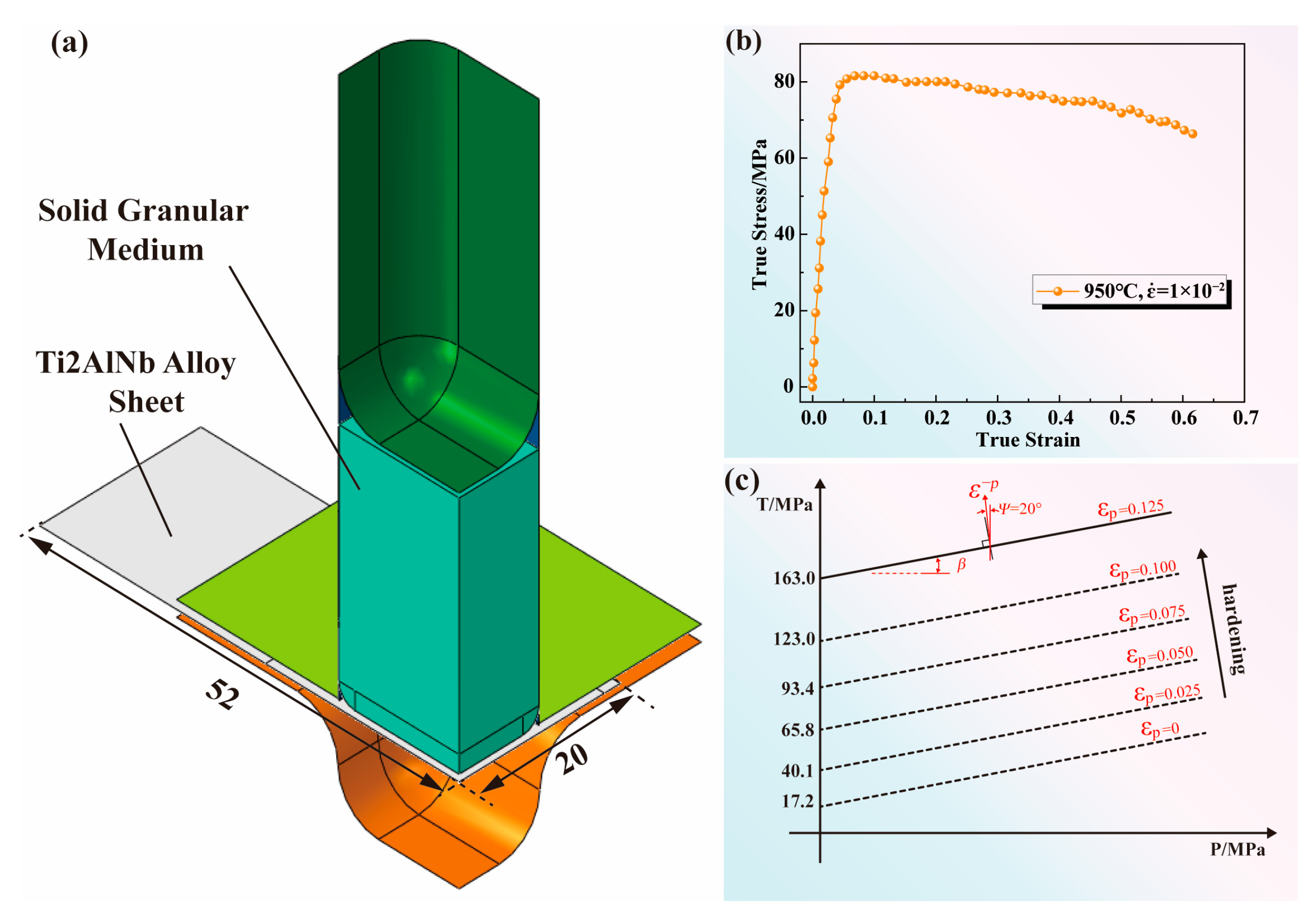
The finite element (FE) model for flexible granular medium forming was established using ABAQUS 2022 (Dassault Systèmes, Vélizy-Villacoublay, France), as illustrated in Figure 3a. The model comprises six key components: punch, granular container, flexible granular medium, blank holder, Ti2AlNb-based alloy sheet, and die. Utilizing the part’s symmetrical characteristics, only one-quarter of the model was constructed to optimize computational efficiency. The sheet dimensions were specified as 104 × 40 × 1.6 mm (length × width × thickness) based on mold design requirements and electrode clamping constraints. In the simulation, particular attention was given to modeling the deformation behavior of both the Ti2AlNb-based alloy sheet and the flexible granular medium, while all other components were defined as 3D discrete rigid bodies. The degrees of freedom (DOFs) of all nodes for each component were coupled to a predefined reference point. For discretization, distinct element types were selected: the die was meshed using R3D4 four-node 3D rigid elements with a uniform size of 1 mm; the flexible granular medium was represented by C3D8R eight-node 3D reduced integration elements (also with a 1 mm element size); and the Ti2AlNb-based alloy sheet was modeled with S4R four-node shell elements, featuring a thickness of 1.6 mm and a refined element size of 0.5 mm to ensure accurate deformation prediction.
Based on systematic characterization of the material’s electrical and thermal properties, the deformation temperature was determined as 950 °C with a target strain rate of 0.001 s−1. Figure 3b shows the high-temperature mechanical response of the Ti2AlNb-based alloy sheet under these conditions. The thermo-elastoplastic parameters of Ti2AlNb alloy at 950 °C are as follows: elastic modulus E = 85 GPa, thermal expansion coefficient α = 11.2 × 10⁻⁶ °C−1, yield strength σs = 320 MPa, and thermal conductivity λ = 18 W/(m·K). These parameters were obtained from quasi-static tensile tests and differential scanning calorimetry (DSC) measurements. For modeling the flexible granular medium, ABAQUS’s linear Drucker–Prager (D-P) model was employed to accurately simulate the compressive yield and frictional behavior characteristic of granular materials (e.g., soil and rock), with its constitutive relationship mathematically expressed in Equation (1). The Drucker–Prager model was selected because it effectively describes the compressive yield and frictional behavior of granular materials under multi-axial stress states, which is consistent with the mechanical characteristics of the alumina particle medium. The model parameters were determined via triaxial compression tests: cohesion (d) = 2.5 MPa, dilation angle = 10°, and Poisson’s ratio = 0.28 (constant for granular alumina at 950 °C). The parameter K (ratio of triaxial tensile to compressive yield stress) was set to 0.8, reflecting the medium’s slight tensile softening behavior. The material’s Poisson’s ratio was set as a constant throughout the analysis, while its hardening behavior was shown in Figure 3c. The friction angle, serving as a key parameter governing granular medium fluidity, was systematically varied between 15–35° in the simulation experiments to investigate its influence on forming characteristics. A fixed shear angle of 20° was maintained for consistency. The flexible granular medium in this study comprised granular particles, whose mechanical interactions were carefully modeled to capture their complex behavior during the forming process.
F = t p t a n β d = 0
t—deviatoric stress, MPa, t = 1 2 q [ 1 + 1 K 1 1 K r q 3 ] ;
q—Mises equivalent stress, MPa;
r—Third deviatoric stress tensor, MPa;
p—hydrostatic pressure, MPa;
β —Friction angle of the material (slope of the linear yield surface in the P-T stress plane), °;
d—Yield stress of materials, MPa;
K —Ratio of yield stress in triaxial tension to triaxial compression.

3. Results and Discussions

3.1. High-Temperature Deformation Behavior

The electro-thermal tensile tests of Ti2AlNb-based alloy were performed using a Sansi Zongheng electronic universal testing machine (SANS CMT5105, Beijing SANS Test Machine Co., Ltd., Beijing, China). The selected current range (50–300 A) and strain rate (0.001–0.1 s−1) align with the industrial forming requirements of Ti2AlNb aerospace components (e.g., engine blade casings), where low forming force (≤40 kN) and high dimensional accuracy (±0.1 mm) are critical. The strain rate of 10−3 s−1 balances production efficiency and formability, consistent with existing hot forming processes for difficult-to-deform alloys. To achieve different initial equilibrium temperatures (700 °C, 800 °C, 900 °C, and 1000 °C), pulse currents of 50 A, 53 A, 57 A, and 60 A were respectively applied. The initial equilibrium temperature was defined as the stable temperature measured by a thermocouple at the specimen midpoint after current application (prior to tensile deformation) when the testing system reached thermal equilibrium with the surrounding environment. Temperature was measured using K-type thermocouples (calibrated with a standard platinum resistance thermometer, accuracy ±1 °C) welded to the midpoint of the specimen’s gauge section. The temperature gradient across the specimen thickness was less than 5 °C, verified by additional thermocouples placed at the surface and center of the sheet. Subsequently, uniaxial tensile tests under electrothermal conditions were performed across various strain rates (0.001 s−1, 0.01 s−1, and 0.1 s−1).
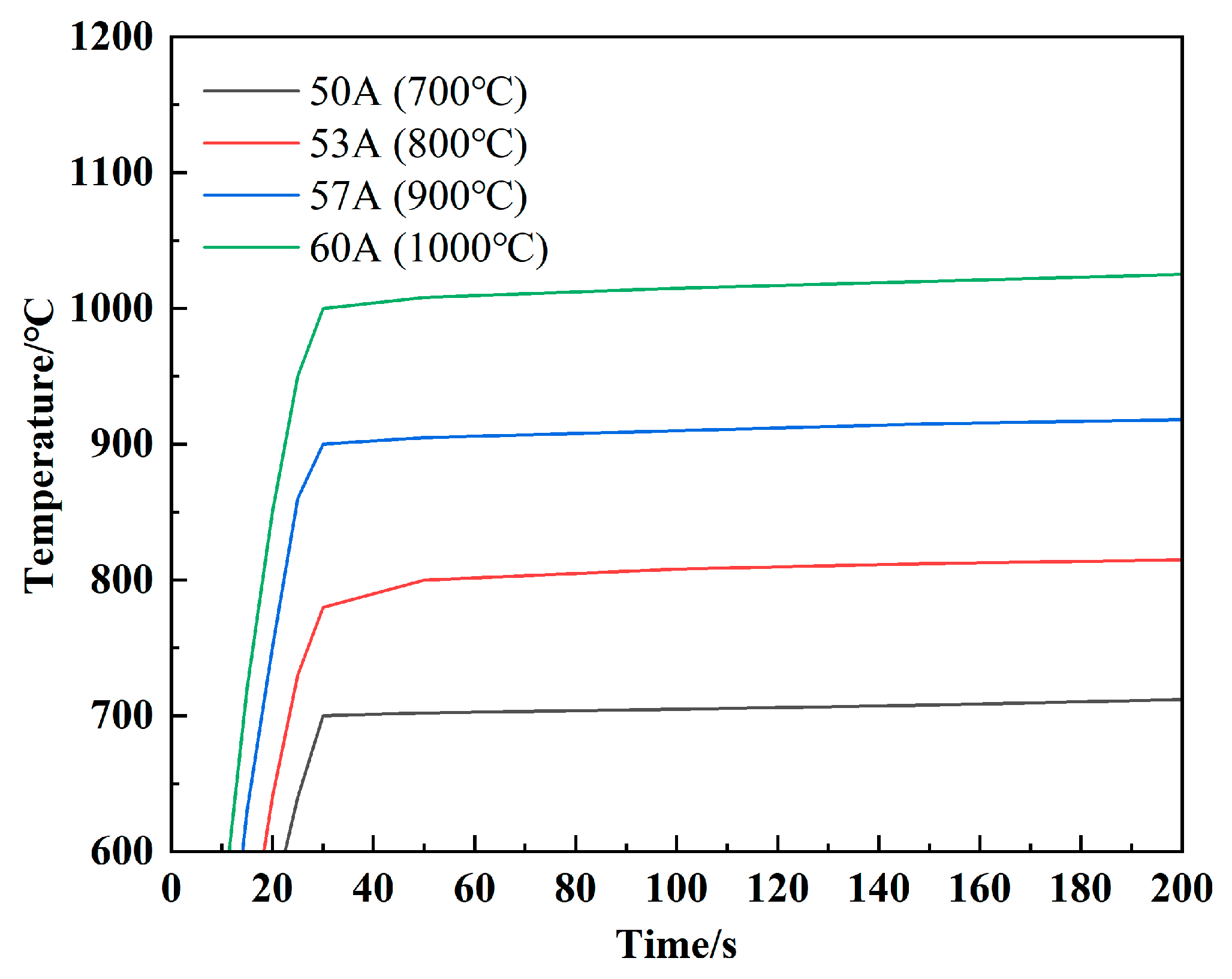
Figure 4 presents the temperature–time curves during tensile tests under different currents. The abscissa is time/s, and the ordinate is temperature/°C. The curves correspond to initial current conditions of 50 A (700 °C), 53 A (800 °C), 57 A (900 °C), and 60 A (1000 °C), respectively. Three K-type thermocouples were arranged along the gauge length (at 1/4, 1/2, and 3/4 of the gauge length) to quantify the temperature gradient. The results show that the maximum temperature difference between the ends and the center is ≤8 °C, with the smallest difference (3.2 °C) at 57 A and the largest (7.8 °C) at 60 A.
Equation (2) was validated using experimentally measured temperature data. Taking the condition of 57 A and 0.001 s−1 as an example, the calculated temperature rise rate is 12.5 °C/s, while the experimentally measured value is 12.0 °C/s, with a relative error of 4.2%. The relative errors under other parameters are all ≤ 4.3%, indicating that this equation can accurately describe the current-induced temperature rise law.
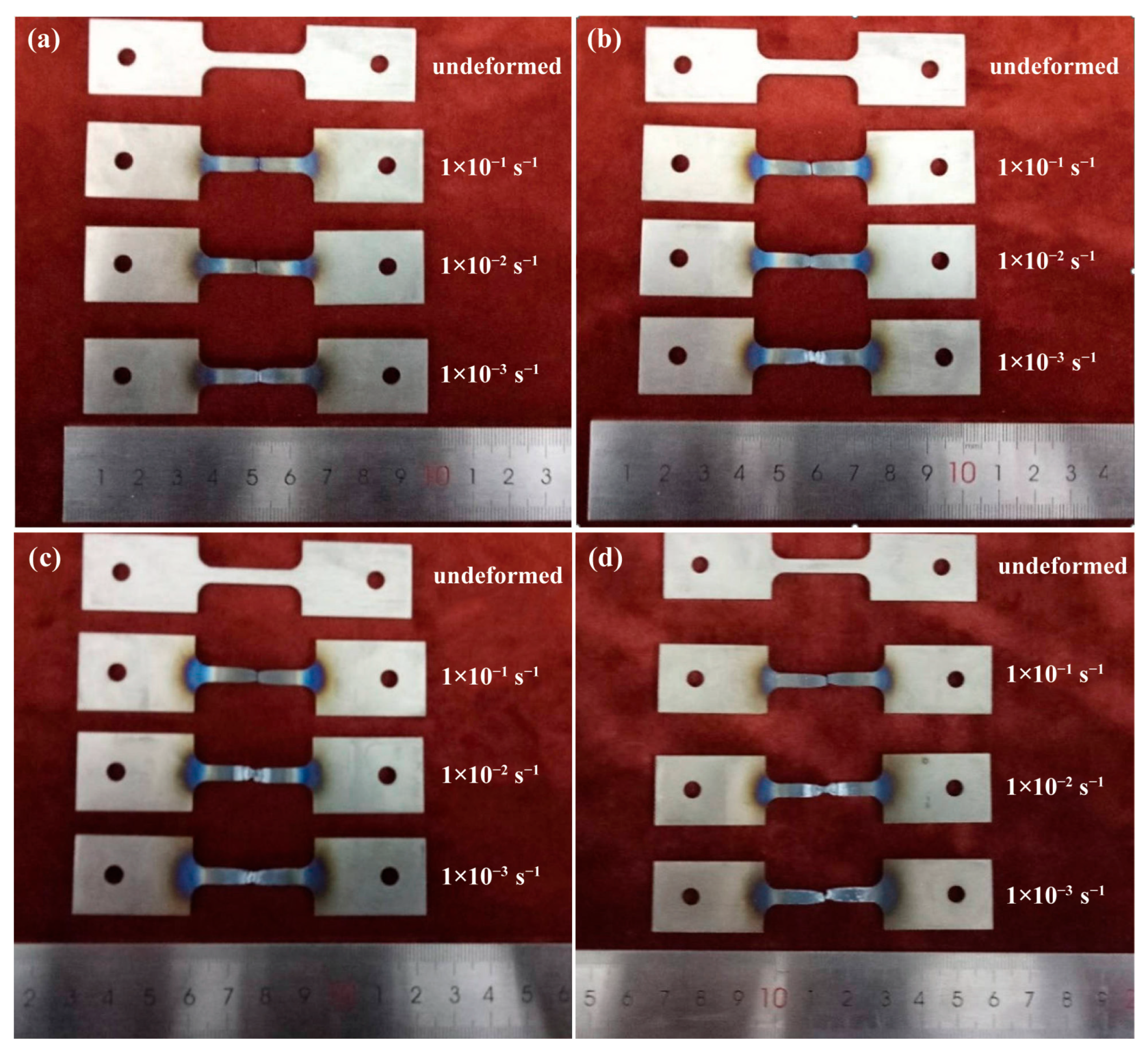
Figure 5 captures Ti2AlNb-based alloy specimens during electrothermal tensile experiments, as well as their deformation morphologies before and after testing under different strain rates with consistent current loading conditions (corresponding to isothermal initial temperatures).
The images of Ti2AlNb-based alloy specimens before and after electrothermal tensile tests reveal that necking and subsequent fracture consistently occurred in the central region. During the electrothermal tensile process, the onset of necking coincided with the peak load, exhibiting rapid and uniform contraction across all directions of the cross-section at the necking zone. The specimen’s geometry, combined with thermal exchange with the clamping assemblies and surrounding environment during self-resistance heating, creates a temperature gradient where the middle section remained hotter than the ends. Under uniaxial tensile stress, the reduction in cross-sectional area at the necking zone increases electrical resistance, thereby resulting in elevated current density and intensified Joule heating effects in this region. This thermal feedback mechanism further amplifies the temperature differential: higher initial currents cause localized melting in the central section, while lower currents predominantly lead to plastic fracture.
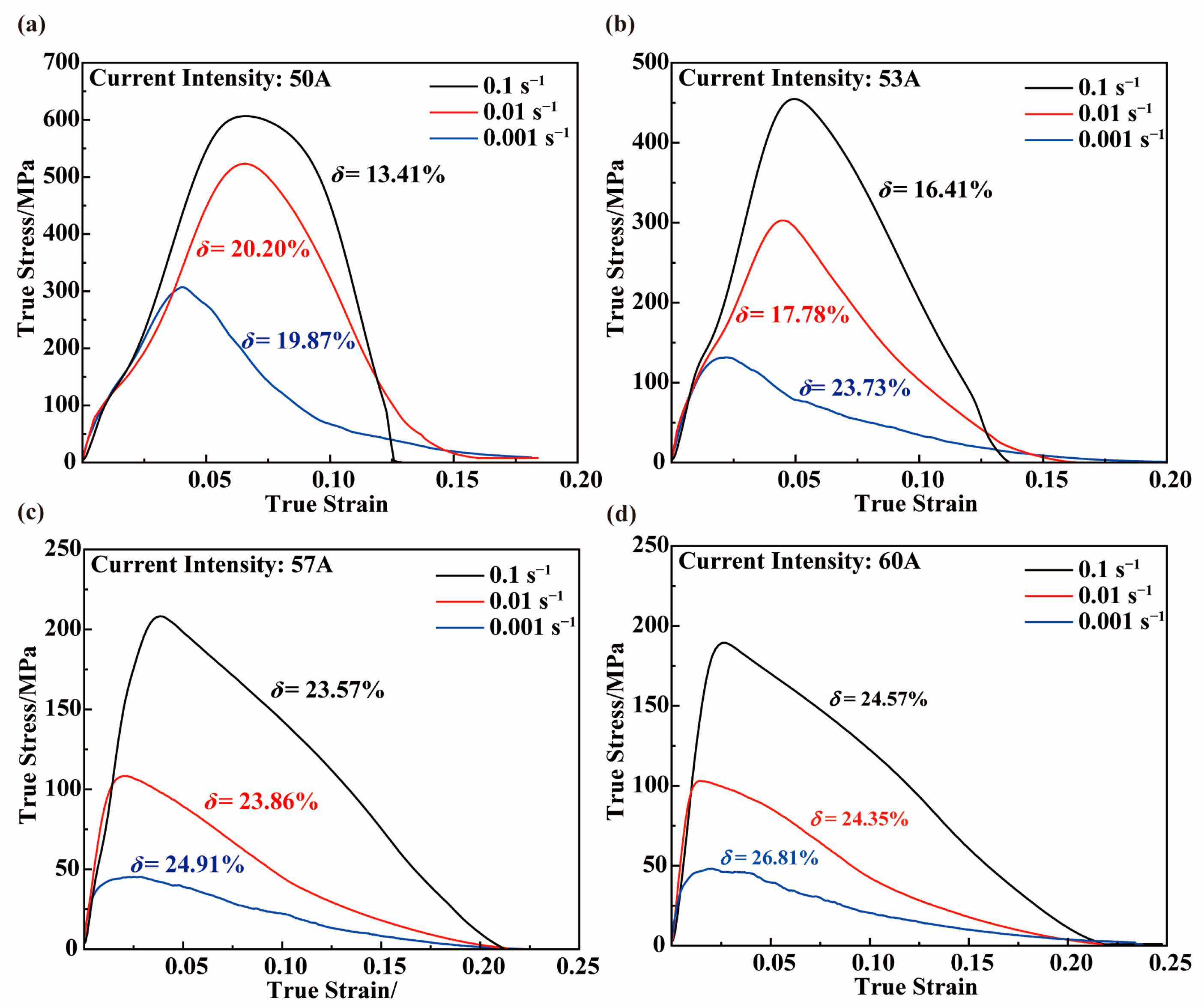
Figure 6 presents the true stress–strain curves of the Ti2AlNb-based alloy sheet under uniaxial tension at different current intensities, revealing three distinct deformation stages: initial hardening, stable plastic flow, and final necking. The flow stress increased rapidly during the hardening stage, driven by dominant work hardening mechanisms including dislocation accumulation, entanglement, and cutting. During this phase, the softening effects of dynamic recovery and recrystallization remained relatively insignificant. As tensile deformation proceeded, the material entered the stable plastic flow stage where dynamic recovery and recrystallization processes became increasingly pronounced. This led to a gradual reduction in the slope of the flow stress curve as these thermally activated softening mechanisms began to counteract the work hardening effects. The dynamic balance between these competing mechanisms governed the material’s deformation behavior until the onset of necking marked the final stage of the tensile process.
Upon reaching peak stress, dynamic recovery and recrystallization became the dominant mechanisms that dominated the material’s deformation behavior. These thermally activated processes effectively reduced the dislocation density within the material microstructure. Under specific conditions of 57 A (900 °C) and 60 A (1000 °C) at a strain rate of 0.1 s−1, the competing effects of dynamic recovery/recrystallization softening and work hardening reached an equilibrium state, manifesting as a characteristic plateau region in the stress–strain curves. This plateau signifies the transition to stable plastic flow, where the balance between softening and hardening mechanisms maintains relatively constant flow stress. The temperature dependence of these mechanisms is particularly noteworthy. Elevated temperatures significantly enhance dynamic recovery and recrystallization processes, as evidenced by the more pronounced softening effects at higher temperatures. In contrast, at 700 °C with the same strain rate of 0.1 s−1, the material exhibits substantially different behavior—the rapid dislocation accumulation rate leads to prominent dominance of work hardening, resulting in distinctly different flow characteristics compared to higher temperature conditions. This temperature-dependent transition in deformation mechanisms highlights the complex interaction between thermal activation and strain rate effects in the deformation behavior of Ti2AlNb-based alloy.
As tensile deformation progressed to a critical stage, localized necking developed in the gauge section. This necking phenomenon induced a self-reinforcing electro-thermal-mechanical (ETM) coupling effect under current-assisted conditions. The reduced cross-sectional area in the necking zone simultaneously led to increased stress concentration and current density according to basic electromechanical principles. Equation (2) shows that this scenario results in an accelerated temperature rise specifically in the necking region compared with other sections. The localized temperature increase subsequently reduced deformation resistance in this zone, further exacerbating the stress concentration. This established a positive feedback loop where increasing current density elevated temperature, which in turn further reduced the material’s strength and promoted additional current concentration. This thermal runaway process inevitably culminated when the necking zone temperature exceeded the Ti2AlNb-based alloy’s melting point, resulting in fuse-type failure. This failure mode characterizes a distinctive feature of current-assisted uniaxial tension under unidirectional stress conditions, where the coupled electrical-thermal-mechanical effects generated an intrinsic instability that could not be mitigated by conventional deformation control methods. The phenomenon underscores the complex interaction between electrical and mechanical fields in current-assisted forming processes.
d T d t = R c ρ I S 2
T—temperature, °C;
t—time, s;
R—The resistivity of the material, Ω·m;
c—specific heat capacity, J/(kg·°C);
ρ —density, kg/m3;
I—current, A;
S—Material cross-sectional area, mm2.
Furthermore, the observed reduction in flow stress with decreasing strain rate under constant loading current conditions can be attributed to two synergistic mechanisms. Primarily, this behavior conformed to the Ti2AlNb-based alloy’s Backofen equation (Equation (3)), which intrinsically describes the strain rate sensitivity of flow stress. More significantly, the current-assisted tension introduced unique electro-thermal coupling effects that became particularly pronounced at lower strain rates. The prolonged duration of low strain rate testing facilitated more significant Joule heating accumulation, creating increasingly nonuniform temperature distributions throughout the Ti2AlNb-based alloy specimen. This thermal heterogeneity manifested most prominently in the specimen’s central region, where temperatures rose significantly higher than those in other sections. The elevated thermal energy enhanced atomic kinetic energy and activated additional slip systems through several mechanisms: (1) increased dislocation mobility, (2) reduced Peierls stress, and (3) greater thermal activation of cross-slip and climb processes. These thermally driven phenomena collectively produced a pronounced softening effect that became progressively more dominant at lower strain rates. The extended exposure time at elevated temperatures during slow strain rate testing permitted more complete thermal activation of these deformation mechanisms, resulting in the characteristic stress reduction observed in the experimental data. This dual explanatory framework, combining fundamental constitutive behavior with current-specific thermal effects, provides a comprehensive understanding of the alloy’s strain rate-dependent response under electro-thermal loading conditions.
σ = K ε ˙ m
σ —flow stress, MPa;
K—strength coefficient, MPa·sm;
ε ˙ —strain rate, s−1;
m—strain rate sensitivity exponent.
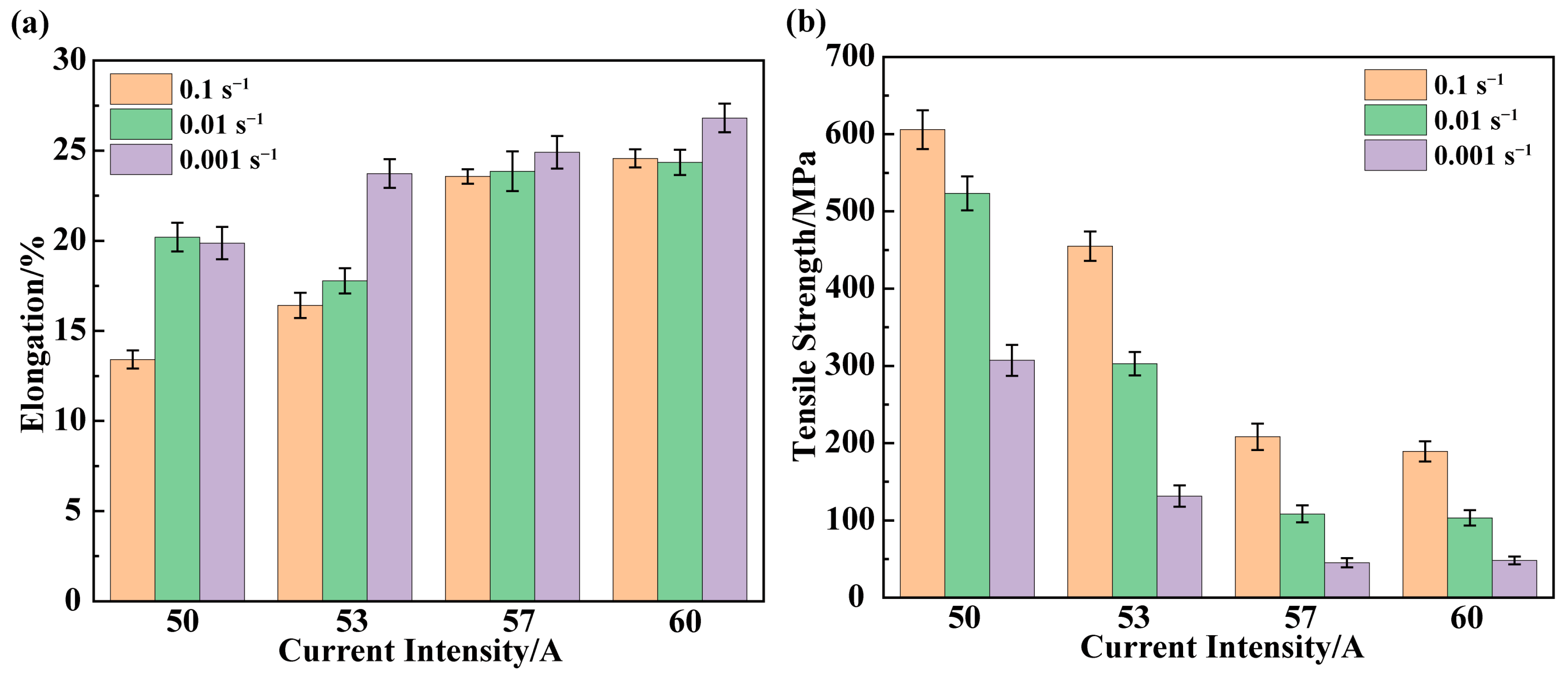
Figure 7 shows the combined effects of current intensity and strain rate on the elongation and tensile strength of Ti2AlNb-based alloy. The data revealed two distinct trends: first, at constant strain rates, increasing current intensity led to a gradual reduction in tensile strength. This behavior stemmed from thermally activated mechanisms including enhanced atomic kinetic energy, increased dislocation mobility, activation of additional slip systems, and accelerated dynamic recovery/recrystallization processes—all of which collectively diminished the alloy’s deformation resistance at elevated temperatures. Conversely, under fixed current conditions, decreasing strain rates produced a gradual decline in tensile strength through three primary mechanisms: (1) weakened work hardening effects at lower strain rates reduce deformation resistance, (2) inadequate time for full dynamic recovery and recrystallization processes at higher strain rates maintained greater strength, and (3) prolonged deformation duration at reduced strain rates exacerbated electro-thermally induced thermal non-uniformity during current-assisted tension. This third mechanism is particularly noteworthy as it creates an electro-thermally driven self-reinforcing thermal gradient—the extended stretching time allows greater Joule heating accumulation in the specimen’s central region compared to the ends. The resulting temperature differential generated a corresponding variation in deformation resistance, with the warmer central section exhibiting preferentially reduced strength. These findings demonstrate how current-assisted forming processes introduce complex electro-thermal-mechanical coupling effects that fundamentally alter conventional strain rate dependence in metallic alloys.
At a constant strain rate, the elongation of Ti2AlNb-based alloy exhibited a slight increase with rising deformation temperature. Conversely, when maintaining constant current loading, a slight decrease in strain rate led to a gradual increase in elongation. The alloy’s elongation performance under these conditions remained inferior to that of conventional high-temperature tensile tests. This discrepancy primarily stemmed from the non-uniform temperature distribution inherent to current-assisted uniaxial tensile processes. Particularly after the onset of necking, the temperature gradients intensified, leading to localized “hot spot” formation that ultimately caused the specimen to undergo fuse-type failure at the central section.
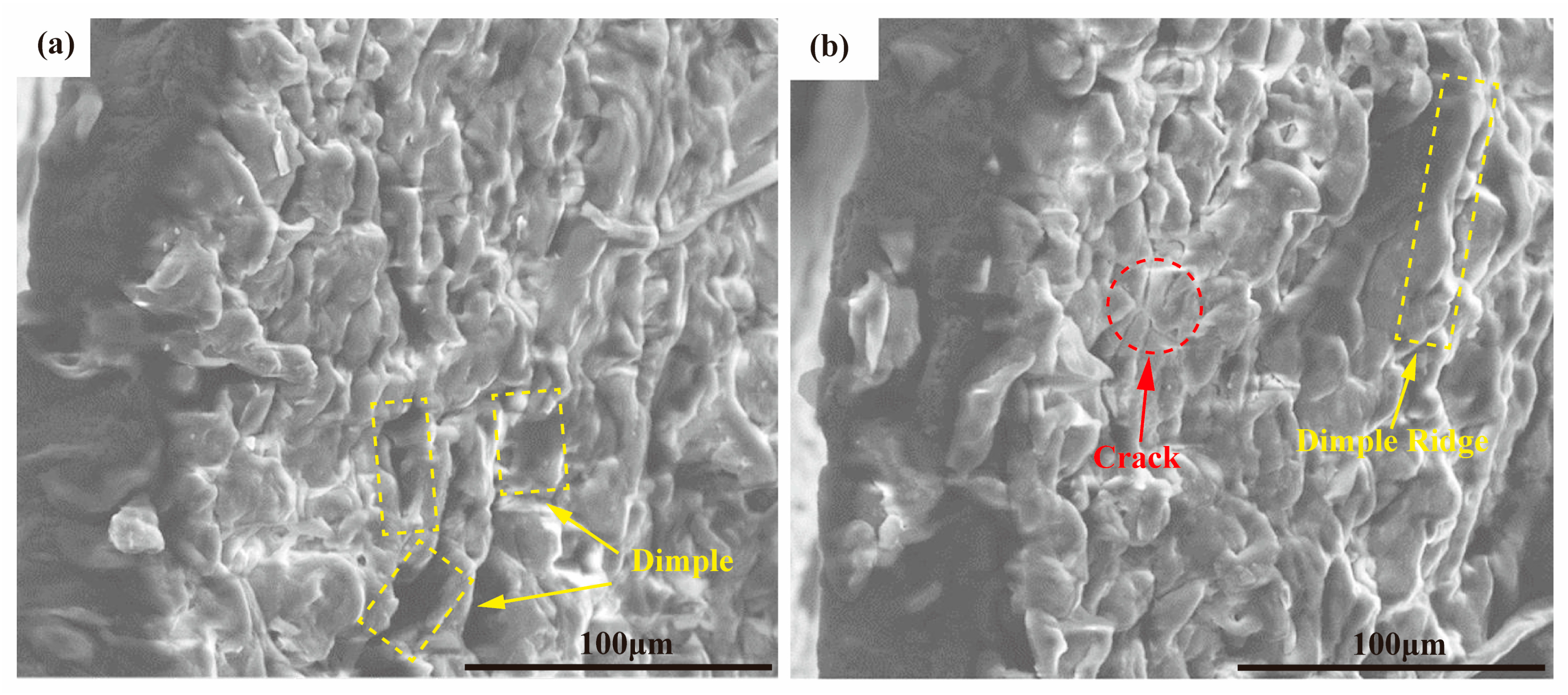
At a high strain rate of 0.1 s−1, the Ti2AlNb-based alloy specimens tested under initial currents of 50 A and 57 A exhibited plastic fracture behavior. Scanning electron microscopy (SEM) observations demonstrated that the fracture surfaces at this strain rate exhibited a micropore aggregation fracture morphology, featuring dimples on the fracture surface, as shown in Figure 8. This dimpled structure suggests ductile fracture mechanisms under the specific loading parameters.

3.2. Microstructure Evolution

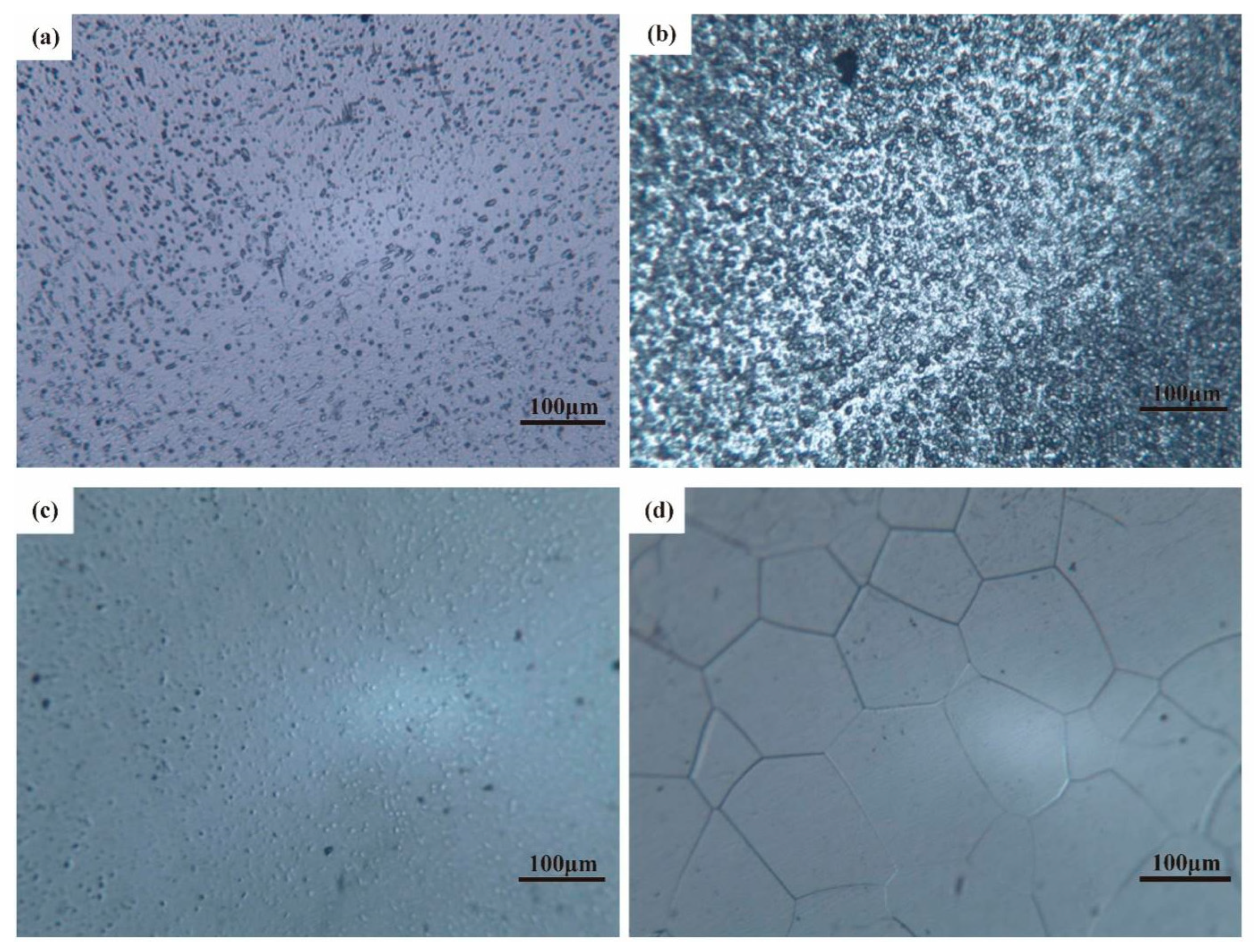
The microstructure evolution of the formed parts was characterized using a ZEISS Sigma 300 scanning electron microscope (SEM, Carl Zeiss AG, Oberkochen, Germany) equipped with an electron backscatter diffraction (EBSD) detector. Specimens were cut from the deformed regions, grounded with SiC papers (400–2000 grit), and polished with diamond paste (1–0.5 μm). To reveal the phase morphology, the polished surfaces were etched using a solution of 5% HF + 10% HNO3 + 85% H2O (volume ratio) for 10 s. For EBSD analysis, the scanning step size was set to 0.5 μm with an analysis area of 500 × 500 μm to ensure statistical reliability. The phase fraction and grain size distributions were quantified using OIM Analysis software (Version 8.0, EDAX, Inc.) and ImageJ (Version 1.54f, National Institutes of Health, USA), and the grain size was determined by the linear intercept method based on at least three random fields of view, as summarized in Table 3. Figure 9 shows the metallographic microstructures of current-assisted tensile Ti2AlNb-based alloy specimens under different loading currents at a strain rate of 0.001 s−1. Compared with the as-received microstructure of the alloy, significant microstructural changes occurred when the loading current reached 50 A: the volume fractions of O phase and α2 phase decreased significantly, while the B2/β phase exhibited substantial growth. Due to the enhanced etching resistance of B2/β phase grain boundaries at elevated temperatures, their outlines appeared faintly visible, and the B2/β phase grains displayed obvious coarsening behavior under these conditions. As the loading current further increased, the volume fractions of O phase and α2 phase continued to decline sharply. The gradual reduction in α2 phase progressively weakened its pinning effect on the B2/β phase, facilitating continuous grain growth. At 60 A, the O phase completely disappeared, leaving only trace amounts of α2 phase, while the B2/β phase grains became exceptionally coarse. Simultaneously, localized recrystallization was observed, which is attributed to the non-uniform temperature distribution during electrothermal heating. At this stage, the grain boundaries were distinctly visible, highlighting the remarkable microstructural evolution under high-current conditions.
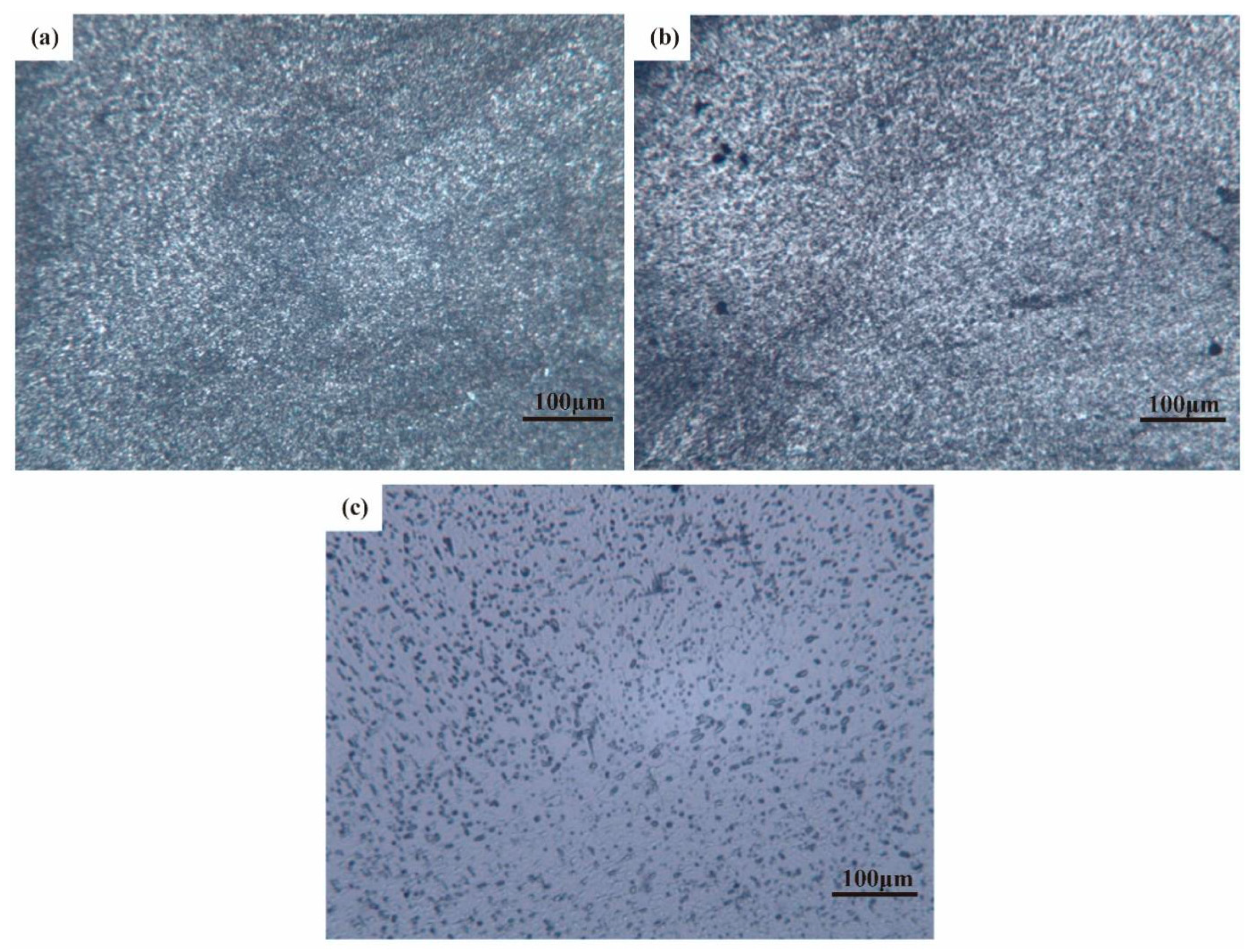
Figure 10 shows the metallographic microstructures of the current-assisted tensile Ti2AlNb-based alloy specimen subjected to a loading current of 50 A at strain rates of 0.1 s−1, 0.01 s−1, and 0.001 s−1, exhibiting the deformation bands formed during tensile deformation. The microstructural analysis demonstrated that as the strain rate decreases, there is a corresponding reduction in the volume fractions of O phase and other secondary phases, accompanied by the continuous growth of B2/β phase. This phenomenon was primarily attributed to the prolonged tensile process at lower strain rates, which prolonged the alloy’s heating duration and induced significant temperature accumulation in the specimen’s central region. This microstructural evolution is a direct reflection of the temperature-dependent effects during deformation.

3.3. FEM Simulation Results of Flexible Granular Medium Forming

Friction significantly influences the plastic flow behavior of Ti2AlNb-based alloy during forming. The presence of friction induces localized plastic deformation of the alloy, resulting in non-uniform strain distribution and severe local thinning of the formed component. However, in the forming process, the flexible granular medium exerts combined tangential and normal forces during contact with the Ti2AlNb-based alloy sheet. The flexible granular medium promotes the deformation and flow of the alloy sheet via tangential forces, which facilitates the material feeding of the sheet and thereby optimizes the wall thickness uniformity of the formed component. ABAQUS software (2022, Dassault Systèmes, Vélizy-Villacoublay, France) was employed for numerical simulation, with the following key parameters: friction angle of the flexible granular medium set to 25°, forming temperature of 950 °C, and target strain rate of 0.001 s−1. The friction coefficient between the alloy sheet and the mold was 0.1, while the friction coefficient of the flexible granular medium was set to a predefined value. The wall thickness distribution of the target formed component was simulated under these parameters.
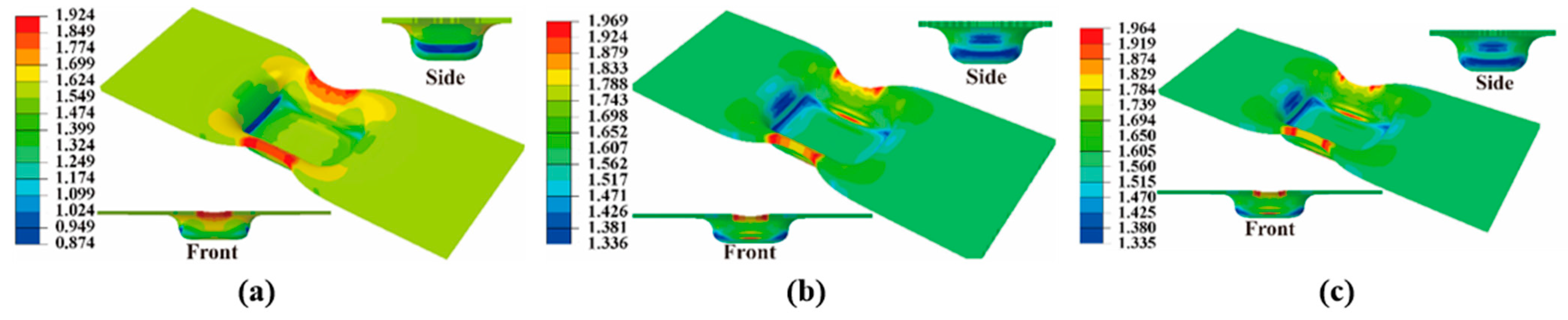
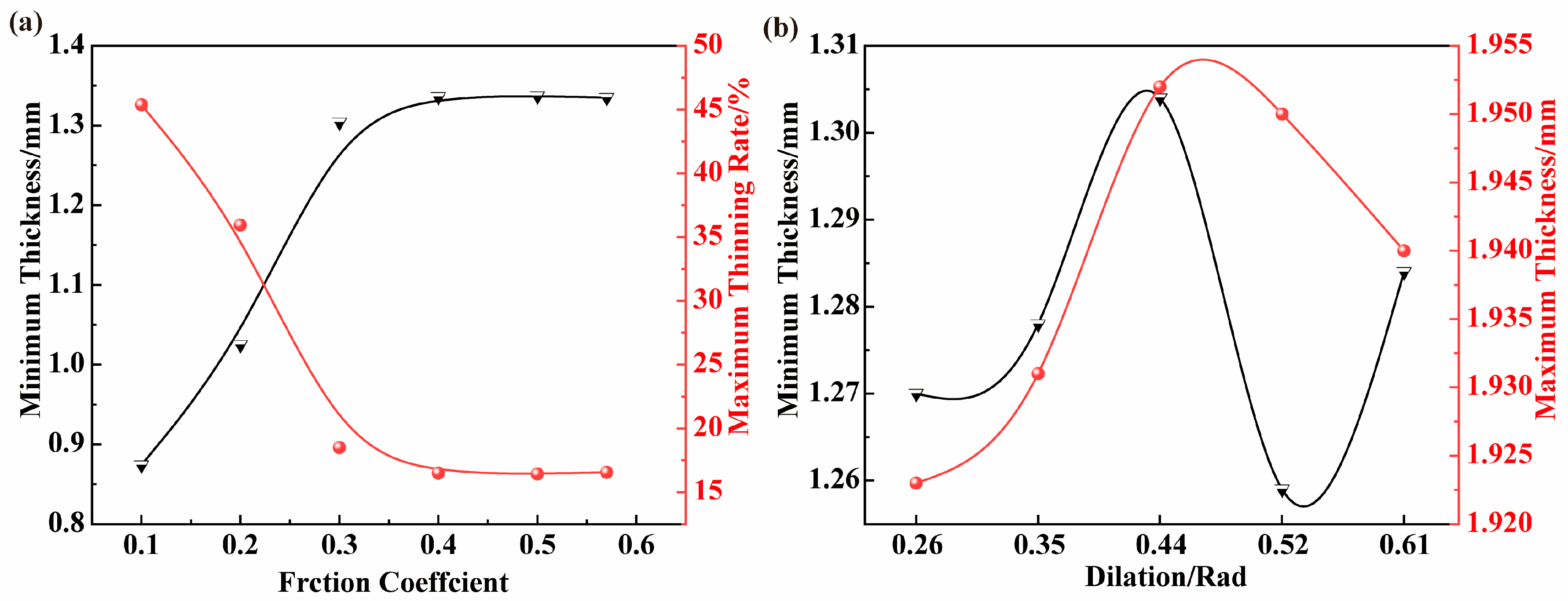
Figure 11 demonstrates the critical influence of the friction coefficient between the flexible granular medium and the Ti2AlNb-based alloy sheet on the formed wall thickness. The simulation results confirm that this interfacial friction plays a crucial role in determining the final wall thickness distribution. The minimum wall thickness of 0.874 mm was measured at the corner of the short sidewall and the formed component base, where the risk of fracture was evident. As the friction coefficient increases from 0.2, a significant improvement in wall thickness uniformity is observed. When the friction coefficient increases from 0.2 to 0.3, the maximum thinning rate drops sharply from 35.94% to 18.50%. The maximum thinning shifts to the fillets at the junction of the long and short sides, which underwent severe thinning during the final forming stage.
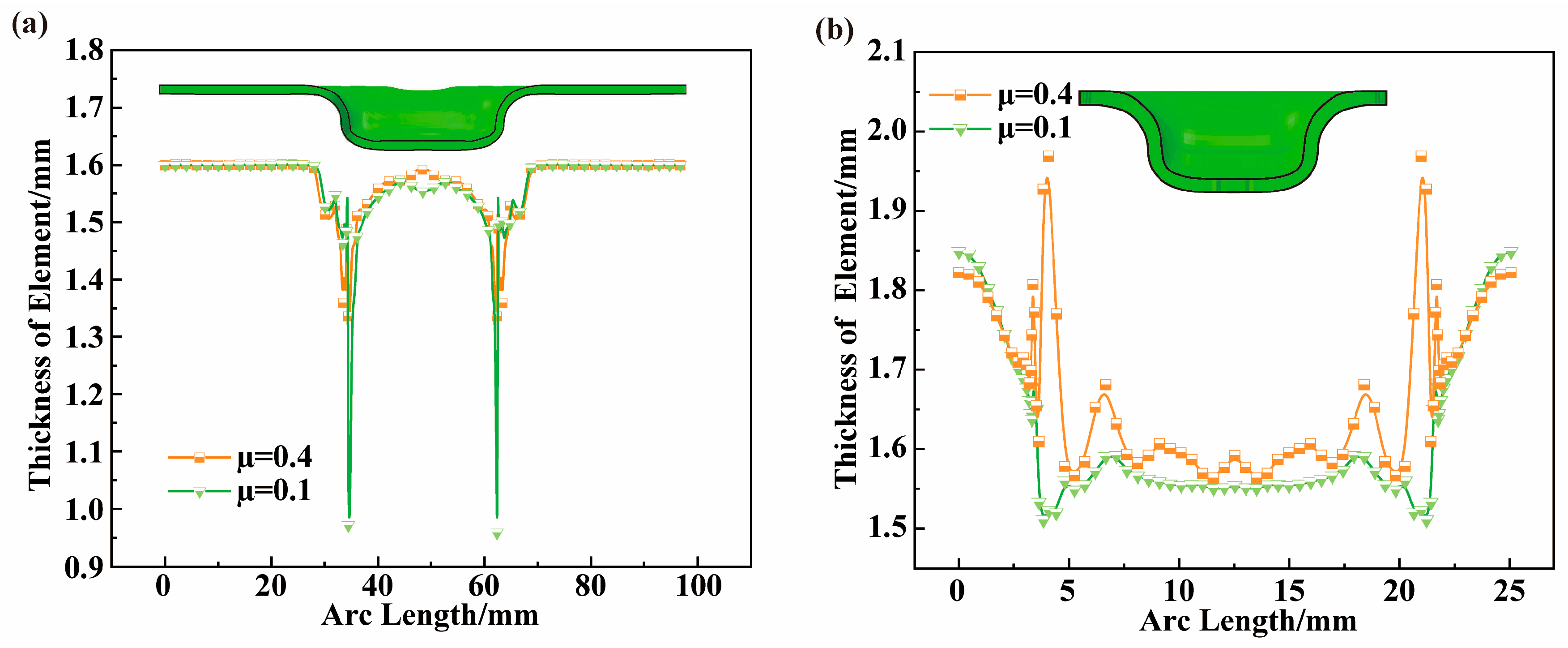
Table 4 shows the correlation between the friction coefficient at the flexible granular medium-Ti2AlNb-based alloy sheet interface and the maximum thinning rate of the Ti2AlNb-based alloy sheet. At a low friction coefficient (μ = 0.1), the sheet exhibited a notably high maximum thinning rate of 45.37%. However, when the friction coefficient increased to μ = 0.2, an improvement was observed with the thinning rate dropping significantly to 35.94%. Further increases in the friction coefficient beyond 0.2 continued to decrease the thinning rate, though the decreasing trend became more gradual. The thinning rate eventually stabilized at approximately 16% when the friction coefficient reached 0.4. This phenomenon can be attributed to the enhanced interfacial tangential frictional interaction between the flexible granular medium and the alloy sheet at higher friction coefficients. As the frictional forces increase, the flexible granular medium exerts greater control over the sheet’s material flow, significantly improving material feeding efficiency during forming. This stronger tangential frictional interaction effectively alleviates excessive local thinning of the sheet, demonstrating the beneficial role of interfacial friction in formed component forming. Figure 12 compares the forming results under two distinct friction conditions: a weak tangential effect (μ = 0.1) and a strong tangential effect (μ = 0.4). The comparison clearly reveals that enhanced interfacial friction significantly optimizes material flow and distribution. Specifically, the critical fillet region at the base of the short sidewall, which previously exhibited fracture risk due to excessive thinning, shows significantly improved thickness uniformity. Additionally, both the sidewalls and the fillet regions of the long sides benefit from the increased friction, resulting in more uniform wall thickness distribution throughout the formed component.
The friction angle is a fundamental parameter in flexible granular medium modeling, representing both the shear strength of the flexible granular medium and its flow behavior during deformation. This parameter essentially characterizes two core aspects: the interparticle surface friction and the mechanical interlocking forces generated when particles undergo geometric interlocking. Typically, lower friction angle values correspond to better particle fluidity, enabling more efficient pressure transfer efficiency during forming processes. Figure 13b analyzes the impact of varying friction angles (15°, 20°, 25°, 30°, and 35°) on the maximum thinning rate during Ti2AlNb-based alloy sheet forming with flexible granular medium-assisted technology. Results indicate that the friction angle exerts limited influence on thickness distribution compared to other parameters. As the friction angle decreases, minor but observable changes occur in critical forming regions: the corner sidewalls and bottom bulging areas experience slightly increased deformation, accompanied by a slight gradual thinning trend. This phenomenon occurs because reduced friction angles enhance particle mobility and pressure transfer efficiency. Consequently, regions experiencing concentrated contact stresses—particularly the bottom fillets and sidewall junctions—develop higher tensile stresses in the alloy sheet, leading to localized thinning. However, it’s important to note that these thickness variations remain within operationally acceptable ranges, as the friction angle’s influence on overall wall thickness uniformity proves comparatively minor in practical forming applications. The findings suggest that while the particle friction angle should be considered in process optimization, its adjustment offers limited control over final part quality compared to more dominant factors like interface friction coefficients.

3.4. Processing of Ti2AlNb-Based Alloy Box Structures

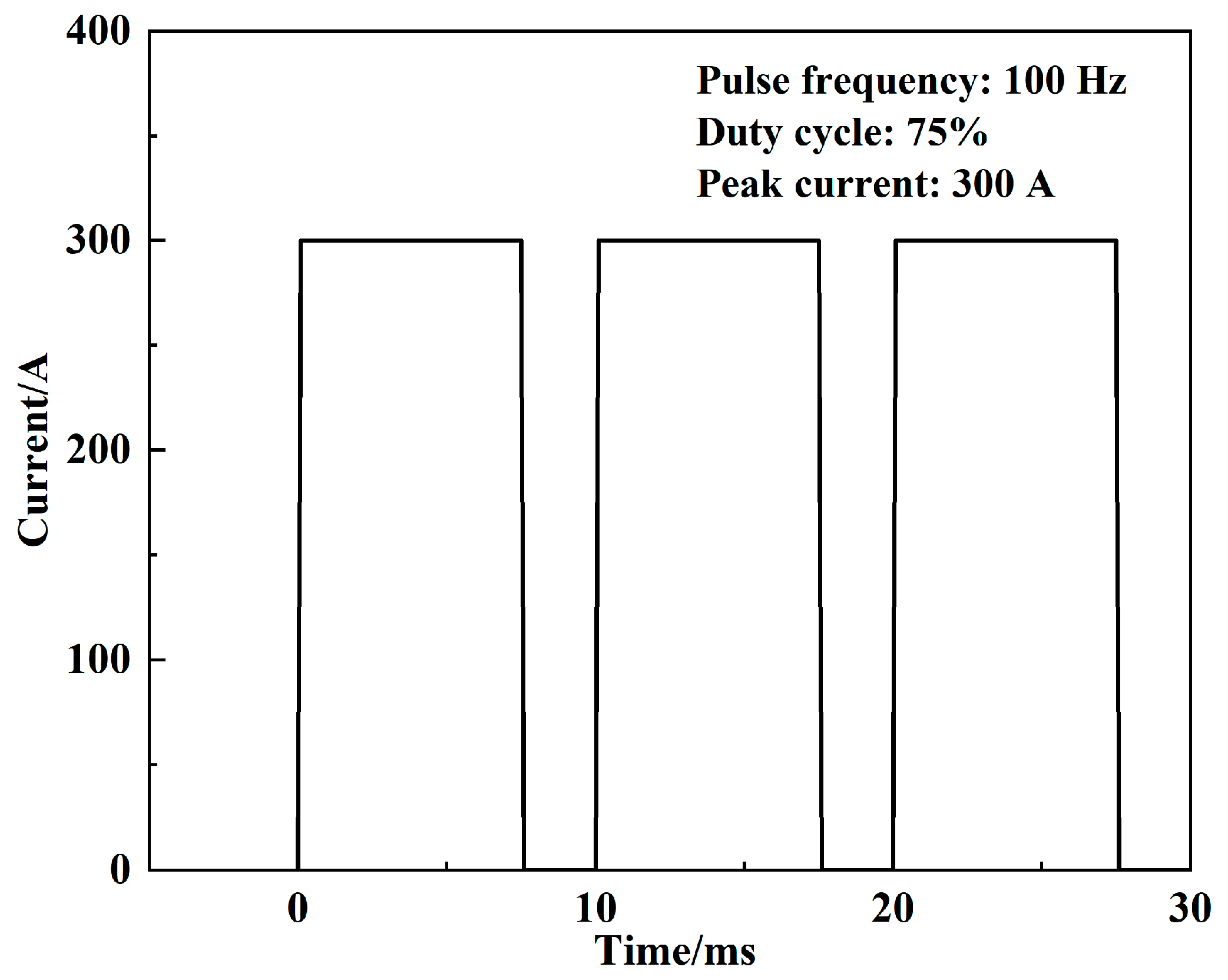
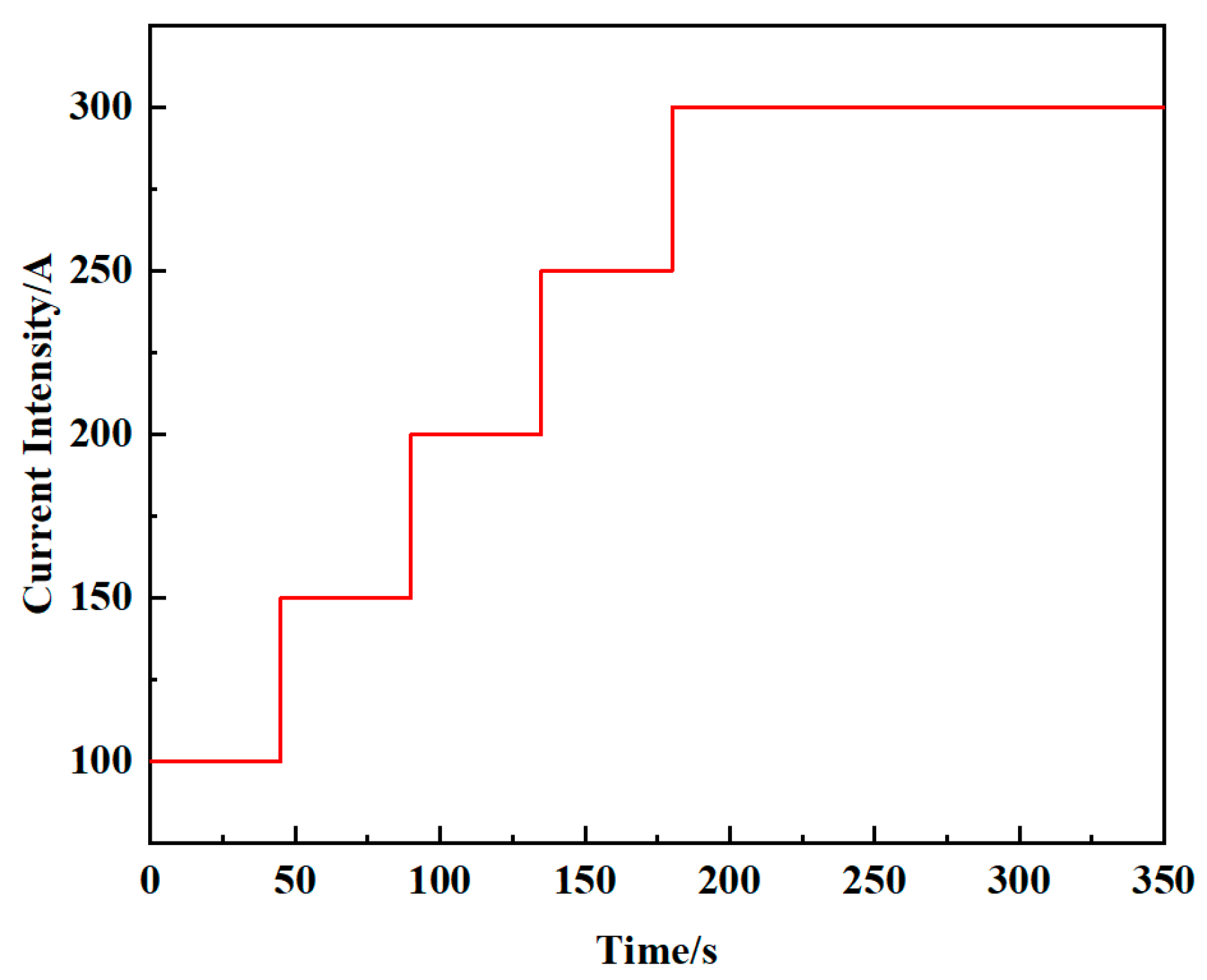
A pulsed direct current (DC) power supply precisely regulates the current and voltage applied to the Ti2AlNb-based alloy sheet, with its duty cycle configured to 75%. The pulse current adopts a continuous pulse mode without intermittent periods, with a square wave waveform (Figure 14). The pulse frequency is 100 Hz, and the pulse width is 7.5 ms (consistent with the 75% duty cycle). This waveform achieves stable energy input and avoids local overheating of the Ti2AlNb sheet. This low-voltage electrothermal heating process primarily controls the sheet’s forming temperature through precise current adjustment. To achieve uniform temperature distribution across the entire Ti2AlNb-based alloy sheet, a stepwise current loading strategy is adopted: initially applying 100 A for 45 s, followed by gradual increments to 150 A, 200 A, 250 A, and 300 A, with each current level maintained for 45 s (as illustrated in Figure 15). Throughout the heating process, thermocouples continuously monitored the sheet temperature to ensure adherence to the predefined thermal process parameters. The optimal forming parameters were identified as a final current of 300 A and a corresponding voltage of 3.12 V.
The punch was directly coupled to the universal testing machine, with its displacement precisely controlled by adjusting the descending speed of the machine’s upper crosshead through computer programming. Throughout the forming process, the computer software continuously recorded the forming force and displacement data. Upon completion of the forming operation, the application of current was maintained for an additional 120 s. During this critical phase, the Ti2AlNb-based alloy formed component underwent a gradual reduction in the applied current while being subjected to thermal insulation, aiming to minimize springback effects and ensure dimensional accuracy.
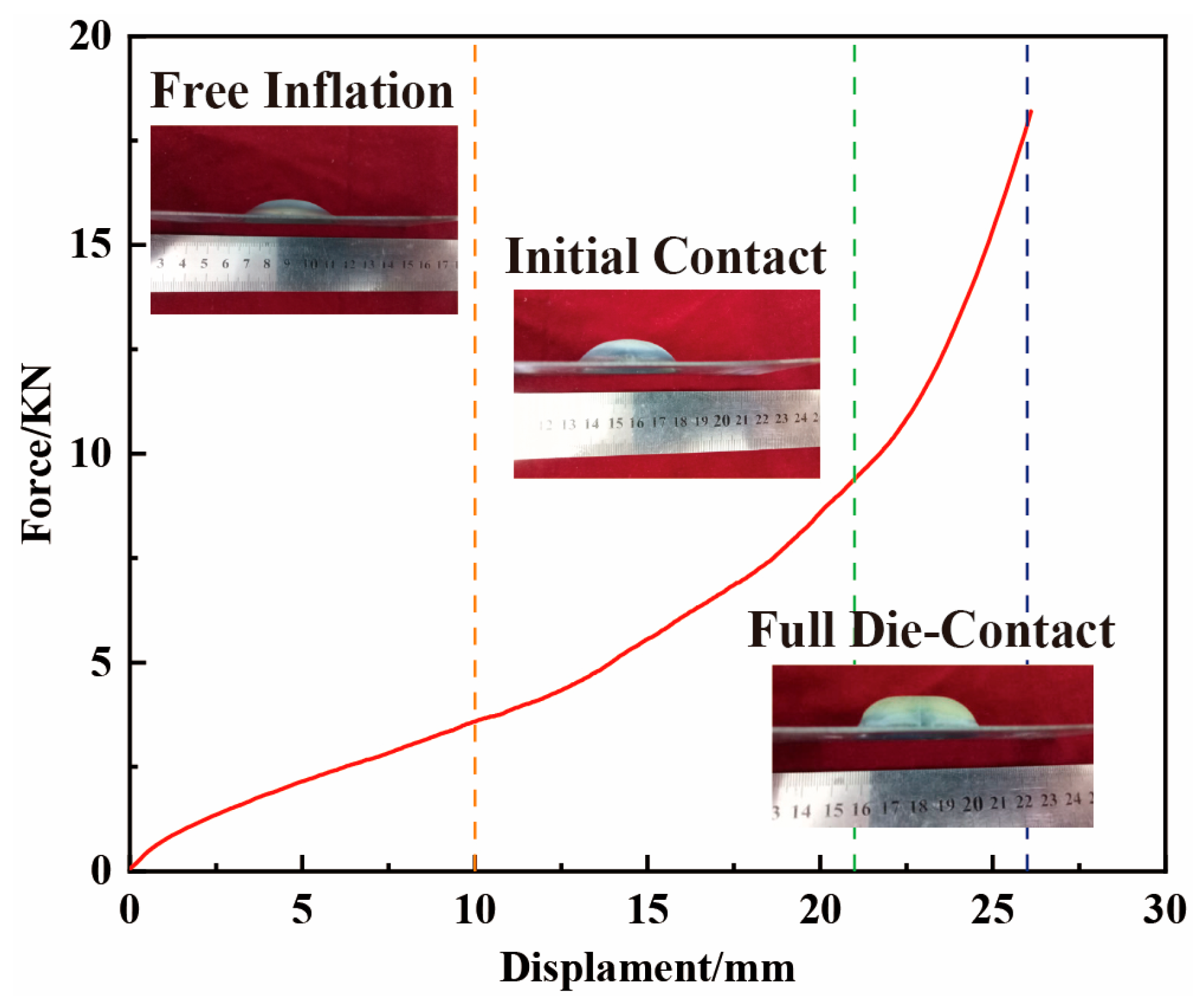
The pulsed-current assisted forming process of Ti2AlNb-based alloy box-shaped components comprised four distinct stages, as illustrated in Figure 16. (1) Initial contact stage: Flexible granular medium particles underwent compaction under punch-induced loading, with the forming force gradually increasing due to low initial stress levels; (2) Free inflation stage: The compacted granular medium reached critical stress, triggering sheet deformation through central free inflation; both the forming force magnitude and the slope of the force–displacement curve increased significantly; (3) Die contact stage: Central sheet deformation ceased with radial expansion of the contact area; the forming force maintained a steady upward trend throughout this radial expansion phase; (4) Final forming stage: Full conformity of the sheet to the bottom die induced flow of the flexible granular medium during sidewall and fillet forming; this critical phase is characterized by a significant rise in stress levels within the granular medium. The diagram clearly exhibits a notable force surge when the punch displacement reaches approximately 24 mm, signifying the completion of bottom forming and the initiation of sidewall and fillet forming.
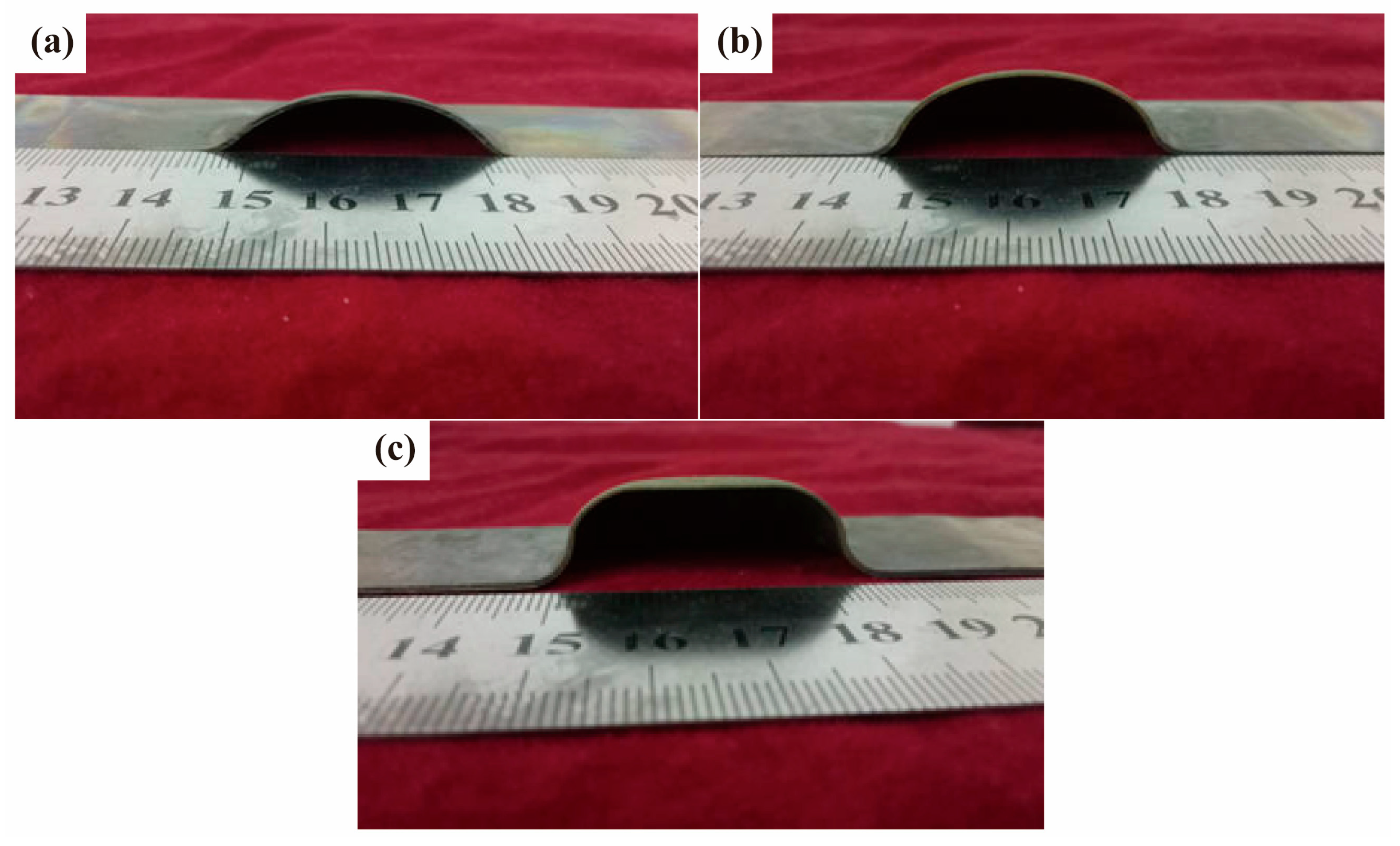
As illustrated in Figure 17, the diagram presents three key aspects of the forming process: free inflation, bottom conformity to the die, and the semi-sectional thickness distribution of the fully formed Ti2AlNb-based alloy component. The maximum strain during forming occurs at the fillet between the short sidewall and the bottom, with a value of 0.45 (measured by digital image correlation, DIC). The force–time curve corresponds to Figure 16 (forming force–displacement curve), with a peak force of 28 kN at a displacement of 24 mm, which corresponds to the forming stage of the sidewall and fillet. During the free inflation phase, the Ti2AlNb-based alloy sheet maintained relatively uniform thickness, exhibiting minimal thickness fluctuation. After the sheet contacts the die, the bottom thickness stabilized without further thinning. The final forming stage primarily affected the fillet and sidewall regions, where significant tensile stresses induced by the flexible granular medium during the forming process led to further thinning. This characteristic is clearly reflected in Figure 17c, which confirmed these areas as undergoing the most pronounced thickness reduction in the completed component.
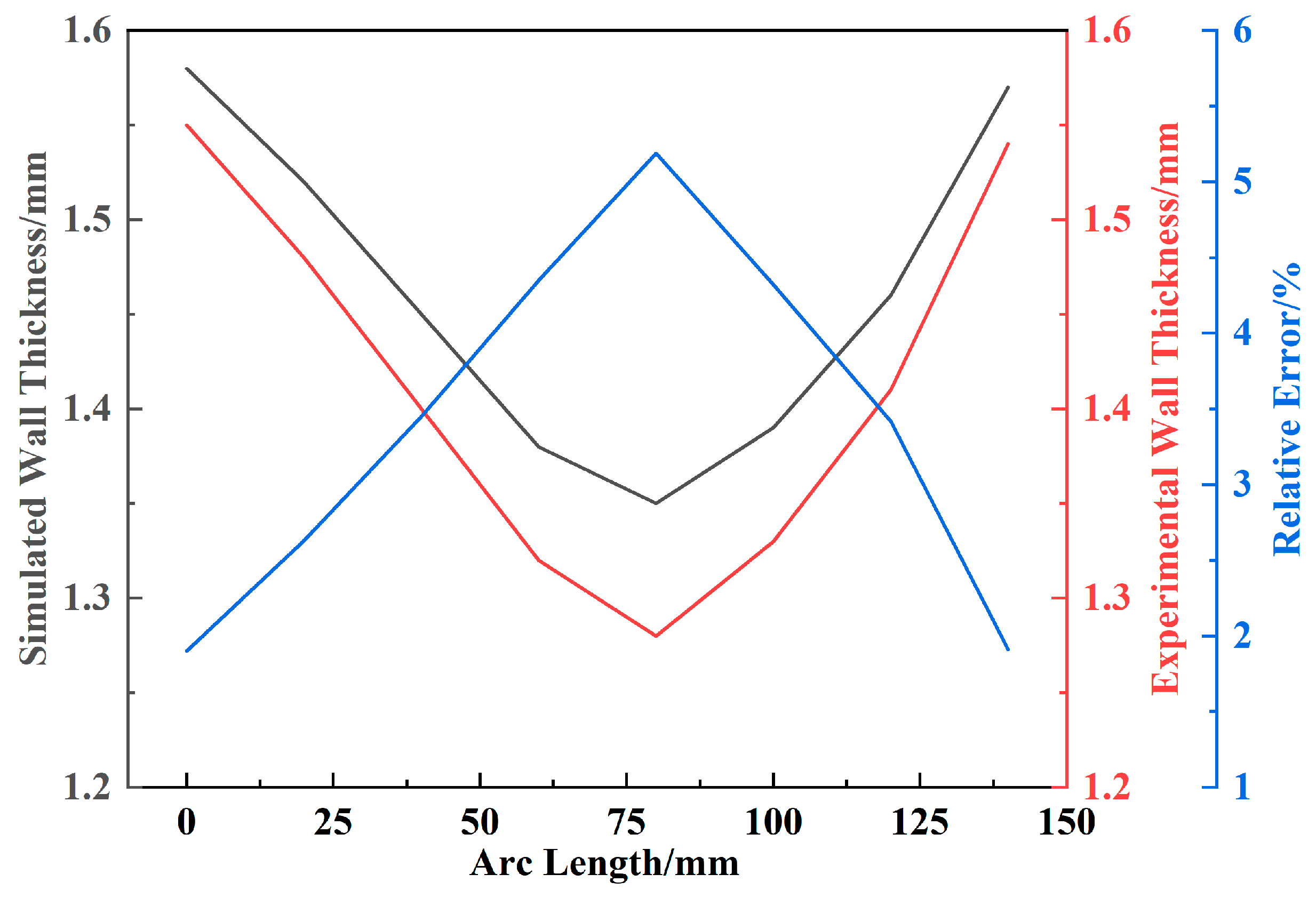
The experimental results show that the overall deformation behavior of the Ti2AlNb-based alloy sheet during actual forming exhibits good consistency with the ABAQUS simulation predictions, particularly in terms of the wall thickness distribution pattern. However, the actual forming process exhibits greater thickness reduction than simulations, particularly in the magnitude of thinning. Figure 18 compares the simulated and experimental wall thickness distributions of the box-shaped component at the mid-length section. The simulation was performed with a preset friction coefficient of μ = 0.4, which was determined as the optimal parameter through preliminary process optimization. The maximum relative error between simulation and experiment is 5.2%, confirming the reliability of the FE model. The slight deviation is attributed to unmodeled oxidation-induced friction in the experiment. This difference primarily stems from the constrained transverse material flow behavior observed in the actual forming process. Several key factors account for this deviation between experimental and simulation outcomes: (1) the friction coefficient between the Ti2AlNb-based alloy sheet and the ceramic mold in the actual forming process is significantly higher than the preset simulation parameters, which significantly hinders material flow; (2) the elevated temperatures during the forming process accelerate the oxidation of the alloy sheet surface, which further increases the interfacial friction between the mold and the workpiece; (3) although the simulation adopts the assumption of uniform temperature distribution, the actual heating process induces temperature gradients due to heat conduction through the mold and thermal radiation to the environment, leading to a higher temperature in the central region of the sheet than in the peripheral regions. This non-uniform temperature field increases the flow resistance of the edge material and makes it difficult to maintain a stable material feeding ratio. Lastly, the mechanical properties of the actual flexible granular medium are inconsistent with the idealized Drucker–Prager material model used in the simulation, thereby introducing additional deviations in the deformation behavior of the sheet.

4. Conclusions

This study develops a pulse current-assisted flexible granular medium forming technology for Ti2AlNb box-shaped components, revealing the electro-thermo-mechanical coupling mechanism and process optimization rules. Key findings and implications are as follows:
(1)
The optimal forming window (900–1000 °C, 0.001 s−1) effectively reduces the alloy’s deformation resistance, enabling low-force forming of complex thin-walled structures. This window balances formability and processing efficiency, providing a practical reference for industrial applications.
(2)
Pulse current regulates phase evolution via thermal effects: increasing current (50–60 A) and decreasing strain rate (0.1–0.001 s−1) reduce α2/O phase content and promote B2/β phase growth, which weakens the alloy’s deformation resistance and improves plastic flow capacity.
(3)
A friction coefficient of 0.4 for the granular medium minimizes the maximum thinning rate to 16.5%, as the tangential forces between the granular medium and the sheet enhance material feeding, significantly optimizing the wall thickness uniformity of formed components.
(4)
The four-stage forming process (initial contact → free inflation → die contact → final forming) exhibits a force surge at 24 mm displacement, which is critical for controlling fillet forming quality. Compared with conventional hot forming, the proposed technology shortens heating time and reduces forming force, contributing to improved production efficiency and cost reduction.
Limitations include unconsidered pulse frequency effects and oxidation-induced interface behavior. Future research will explore variable frequency pulse current and anti-oxidation coatings to further improve formability. Industrial applications include aerospace components requiring high temperature resistance and complex geometries, such as engine blade casings, spacecraft thermal protection panels, and aircraft exhaust nozzles—where the proposed technology’s advantages in wall thickness uniformity (maximum thinning rate ≤ 16.5%) and low-force forming make it a promising alternative to conventional processes.

Author Contributions

S.S.: Writing—original draft, methodology, and investigation; Y.X.: Writing—review and editing and formal analysis; C.J.: Investigation, methodology, data curation, and conceptualization; M.D.: Investigation and formal analysis; X.L.: Validation and supervision; Y.D.: Investigation and conceptualization; S.J.: Funding acquisition, methodology, supervision. All authors have read and agreed to the published version of the manuscript.

Funding

The authors acknowledge the financial support from the NSAF Joint Fund of the National Natural Science Foundation of China (JQ2020E002), the Outstanding Youth Project of Heilongjiang Provincial Natural Science Foundation, and the General Program of the National Natural Science Foundation of China.

Data Availability Statement

The original contributions presented in this study are included in the article. Further inquiries can be directed to the corresponding authors.

Conflicts of Interest

The authors declare no conflicts of interest.

Nomenclature

Symbol/AbbreviationDefinitionUnit
Ti2AlNbTitanium–aluminum–niobium alloy
α2 phaseHexagonal close-packed intermetallic phase (Ti3Al)
B2/β phaseBody-centered cubic solid solution phase
O phaseOrthorhombic intermetallic phase (Ti2AlNb)
μFriction coefficient
ε ˙ Strain rates−1
σFlow stressMPa
σsYield strengthMPa
EElastic modulusGPa
βFriction angle (Drucker–Prager model)°
dCohesion (Drucker–Prager model)MPa
KRatio of triaxial tensile to compressive yield stress
SEMScanning electron microscope
SDStandard Deviation

References

  1. Lu, Z.-G.; Xu, L.; Wu, J.; Lu, B.; Cui, X.; Yang, R. Engineering Forming Technology of Ti2AlNb Alloy. J. Precis. Eng. 2022, 14, 55–63. [Google Scholar]
  2. Li, Z.; Zhang, Y.; Yan, X.; Xia, G.; Yu, Q.; Li, X.; Cai, Q. Effect of Sn Addition on Microstructure and Mechanical Properties of Sintered Ti2AlNb-Based Alloys. Materials 2025, 18, 715. [Google Scholar] [CrossRef] [PubMed]
  3. Shao, B.; Shan, D.B.; Guo, B.; Zong, Y. Plastic deformation mechanism and interaction of B2, α2, and O phases in Ti22Al25Nb alloy at room temperature. Int. J. Plast. 2019, 113, 18–34. [Google Scholar] [CrossRef]
  4. Wang, W.; Zeng, W.; Liu, Y.; Xie, G.; Liang, X. Microstructural Evolution and Mechanical Properties of Ti-22Al-25Nb (At.%) Orthorhombic Alloy with Three Typical Microstructures. J. Mater. Eng. Perform. 2018, 27, 293–303. [Google Scholar] [CrossRef]
  5. Cheng, J.-W.; Rao, Q.-L.; Li, J.-F.; Yao, T.-T. Research Progress on Microstructure Transformation and Its Kinetics in Ti2AlNb-Based Alloys. J. Aeronaut. Mater. 2022, 42, 1–8. [Google Scholar]
  6. Wu, Y. Microstructure-Deformation Coupling Modeling and Simulation of Ti-22Al-24.5Nb-0.5Mo Alloy Sheet in Gas Blow Forming. Ph.D. Thesis, Harbin Institute of Technology, Harbin, China, 2017. [Google Scholar]
  7. Bu, Z.Q.; Zhang, Y.G.; Yang, L.; Kang, J.; Li, J. Effect of cooling rate on phase transformation in Ti2AlNb alloy. J. Alloys Compd. 2022, 893, 162364. [Google Scholar] [CrossRef]
  8. Zhang, J.; Zhang, X.-W.; Wang, H.; Wu, M.; Ma, X.; Liang, X.; Zhang, J.; Liu, R.; Zhao, H.; Sun, Z. Effect of Trace Boron on Microstructure and Mechanical Properties of Cast Ti2AlNb Alloy. J. Precis. Eng. 2022, 14, 210–218. [Google Scholar]
  9. Xing, P.-C.; Shi, J.-D.; Ma, X.; Zhang, X.-W.; Liang, X.-B.; Zhang, J.-W. Effect of Heat Treatment Process on Microstructure and Tensile Properties of Ti2AlNb Alloy Forgings. Hot Work. Technol. 2022, 51, 119–124. [Google Scholar]
  10. Zhang, X.L.; Yan, S.L.; Meng, M.; Li, P. Macro-micro behaviors of Ti–22Al–26Nb alloy during warm tension. Mater. Sci. Eng. A 2022, 850, 143580. [Google Scholar] [CrossRef]
  11. Li, H.; Zhang, W.C.; Jiao, X.Y.; Pan, J.; Zhan, L.; Xie, W.; Wang, G.; Yang, J. Effect of electric current on microstructure and texture evolution of the Ti2AlNb alloy during hot deformation. J. Mate. Res. Technol. 2024, 30, 1368–1379. [Google Scholar] [CrossRef]
  12. Jia, J.B.; Zhang, K.F.; Lu, Z. Dynamic recrystallization kinetics of a powder metallurgy Ti–22Al–25Nb alloy during hot compression. Mater. Sci. Eng. A 2014, 607, 630–639. [Google Scholar] [CrossRef]
  13. Jia, J.B.; Zhang, K.F.; Liu, L.M.; Wu, F. Hot deformation behavior and processing map of a powder metallurgy Ti–22Al–25Nb alloy. J. Alloys Compd. 2014, 600, 215–221. [Google Scholar] [CrossRef]
  14. Zhou, X.-J.; Wu, Y.; Qin, Z.-H.; Li, B.-Y.; CEHN, M.-H. Microstructure and Deformation of TA15/Ti2AlNb Diffusion Bonding Interface. J. Plast. Eng. 2022, 29, 120–126. [Google Scholar]
  15. Xue, K.-M.; Zhou, J.-C.; Guo, S.-H.; Yan, Z.-Y.; Zhang, Y.-Q.; Li, P. Numerical Simulation and Experimental Study on Gradient Extrusion Process of Hard-to-Deform Ti2AlNb-Based Alloy. J. Plast. Eng. 2022, 29, 1–10. [Google Scholar]
  16. Du, Z.H.; Jiang, S.S.; Zhang, K.F.; Lu, Z.; Li, B.; Zhang, D. The structural design and superplastic forming/diffusion bonding of Ti2AlNb based alloy for four-layer structure. Mater. Des. 2016, 104, 242–250. [Google Scholar] [CrossRef]
  17. Xie, L.Y.; Jiao, X.Y. Study on Arrhenius Constitutive Model of Ti-22Al-24Nb-0.5Mo Alloy Based on Strain Compensation. Acad. J. Mater. Chem. 2025, 6, 71–78. [Google Scholar]
  18. Jiao, X.Y.; Liu, Z.Q.; Wu, Y.; Liu, G. Investigation on precision and performance for hot gas forming of thin-walled components of Ti2AlNb-based alloy. MATEC Web Conf. 2018, 190, 07001. [Google Scholar] [CrossRef]
  19. Illarionov, A.G.; Stepanov, S.I.; Naschetnikova, I.A.; Popov, A.A.; Soundappan, P.; Thulasi Raman, K.H.; Suwas, S. A Review—Additive Manufacturing of Intermetallic Alloys Based on Orthorhombic Titanium Aluminide Ti2AlNb. Materials 2023, 16, 991. [Google Scholar] [CrossRef] [PubMed]
  20. Hu, Z. Research on Ultrasonic-Assisted Multi-Point Stretch Bending Process of Aluminum Profiles. Ph.D. Thesis, Jilin University, Changchun, China, 2022. [Google Scholar]
  21. Zhao, H. Research on Forming Process and Microstructure/Properties of Aluminum Alloy by Magnetic Field-Assisted TOPTIG Additive Manufacturing. Master’s Thesis, Shenyang University of Technology, Shenyang, China, 2022. [Google Scholar]
  22. Huang, Y. Research on Pulsed Electric Current-Assisted Gas Bulging Forming Process of Titanium Alloy. Ph.D. Thesis, Nanjing University of Aeronautics and Astronautics, Nanjing, China, 2021. [Google Scholar]
  23. Men, X.; Yan, D.; Lang, L.; Zhang, C.-Y.; Guo, Q.-L.; Li, L. Influence of Rigid-die and Flexible-medium Deep Drawing Processes on Forming Limit and Wall-thickness Distribution of GLARE Laminate Cylindrical Components. Forg. Stamp. Technol. 2022, 47, 53–59. [Google Scholar]
  24. Li, H. Research on Pulsed Electric Current-Assisted Hot Deformation and Microstructure Evolution of Ti2AlNb Alloy. Ph.D. Thesis, Harbin Institute of Technology, Harbin, China, 2021. [Google Scholar]
  25. Wang, G.F.; Li, X.; Liu, S.Y.; Gu, Y. Improved superplasticity and microstructural evolution of Ti2AlNb alloy sheet during electrically assisted superplastic gas bulging. Int. J. Adv. Manuf. Technol. 2018, 99, 773–783. [Google Scholar] [CrossRef]
  26. Chen, Z. Research on Pulsed Current-Assisted Deformation Behavior and Roll Forming Process of Ti2AlNb Alloy Foil. Ph.D. Thesis, Harbin Institute of Technology, Harbin, China, 2023. [Google Scholar]
Figure 1. Experimental Materials and Schematic Diagram of Pulsed Current-Assisted Forming: (a) Back scattered electron image of microstructure of the original sheet; (b) Diagram of electro-thermal assisted tensile testing apparatus; (c) Diagram of current-assisted flexible medium tensile mold.
Metals 16 00077 g001
Figure 2. Stress–time curve of Ti2AlNb alloy under 57 A and 0.001 s−1 electrothermal tensile condition.
Metals 16 00077 g002
Figure 3. Finite element model: (a) Geometric model; (b) True stress–strain curve of Ti2AlNb sheet at 950 °C (0.001 s−1); (c) Linear Drucker–Prager hardening model.
Metals 16 00077 g003
Figure 4. Temperature–time curves of Ti2AlNb alloy during electrothermal tensile tests under different currents.
Metals 16 00077 g004
Figure 5. Different strain rate electro-tensile specimens at the same current (initial temperature): (a) 50 A (700 °C), (b) 53 A (800 °C); (c) 57 A (900 °C); (d) 60 A (1000 °C).
Metals 16 00077 g005
Figure 6. True stress–strain curve of Ti2AlNb sheet under different current intensity: (a) 50 A (700 °C); (b) 53 A (800 °C); (c) 57 A (900 °C); (d) 60 A (1000 °C).
Metals 16 00077 g006
Figure 7. Effect of different deformation conditions on the elongation and tensile strength of Ti2AlNb sheet: (a) Elongation; (b) Tensile strength.
Metals 16 00077 g007
Figure 8. When the initial current is 50A and 57A, the fracture morphology of the tensile specimen is: (a) 50A; (b) 57A.
Metals 16 00077 g008
Figure 9. Microstructures of electro-tensile specimens at different loading currents (strain rate = 0.001 s−1): (a) 50 A; (b) 53 A; (c) 57 A; (d) 60 A.
Metals 16 00077 g009
Figure 10. Microstructures of electro-tensile specimens at different strain rates (loading current = 50 A): (a) 0.1 s−1; (b) 0.01 s−1; (c) 0.001 s−1.
Metals 16 00077 g010
Figure 11. Effects of friction coefficients between granular medium and sheet on forming results: (a) μ = 0.1 (worst uniformity); (b) μ = 0.4 (optimal uniformity); (c) μ = 0.57 (stable state).
Metals 16 00077 g011
Figure 12. Effects of friction coefficients (μ = 0.1 and μ = 0.4) on component wall thickness distribution: (a) Along length direction; (b) Along width direction.
Metals 16 00077 g012
Figure 13. Effects of granular medium friction characteristics on maximum thinning of formed parts: (a) Friction coefficient; (b) Friction angle.
Metals 16 00077 g013
Figure 14. Pulse current waveform used in forming experiments.
Metals 16 00077 g014
Figure 15. Stepwise current loading strategy for sheet heating.
Metals 16 00077 g015
Figure 16. Forming force and results at different stages (the dashed-line regions denote different forming stages).
Metals 16 00077 g016
Figure 17. Semi-sectional thickness distribution of parts during forming: (a) Free inflation stage; (b) Bottom die contact stage; (c) Full die contact stage.
Metals 16 00077 g017
Figure 18. Comparison of simulated and experimental wall thickness distributions along the length section of Ti2AlNb box-shaped components.
Metals 16 00077 g018
Table 1. Comparison of Forming Technologies for Ti2AlNb Alloys.
Forming MethodCore TechnologyKey ParametersCore AdvantagesLimitationsMaximum Thinning Rate
Conventional hot formingFurnace heating + plastic deformationTemp: 900–1050 °C; Strain rate: 0.001–0.01 s−1Mature; Low costPoor wall thickness uniformity30%
Gas bulgingGas pressure + furnace heatingTemp: 900–970 °C; Pressure: 2–5 MPaHigh precision; Less mold wearUnsuitable for box-shaped components25%
Rigid die formingRigid mold + hot stampingTemp: 850–950 °C; Friction coeff.: 0.2–0.3High production efficiencySevere material flow restriction35%
Pulse current-assisted flexible granular medium formingPulse current heating + granular medium force transmissionTemp: 900–1000 °C; Friction coeff.: 0.4; Strain rate: 0.001 s−1Uniform wall thickness; Suitable for complex componentsRequires precise parameter matching16.5%
Table 2. Mechanical Properties of Ti2AlNb Alloy Under Different Process Parameters.
Current/AStrain Rate/s−1Tensile Strength/MPa (Mean ± SD)Elongation/% (Mean ± SD)
500.001580 ± 1218.5 ± 1.2
500.01620 ± 1516.3 ± 1.0
500.1680 ± 1812.7 ± 0.8
530.001510 ± 1020.2 ± 1.3
530.01550 ± 1317.8 ± 1.1
530.1610 ± 1614.2 ± 0.9
570.001420 ± 822.3 ± 1.5
570.01460 ± 1119.5 ± 1.2
570.1520 ± 1415.6 ± 1.0
600.001380 ± 723.5 ± 1.4
600.01410 ± 921.1 ± 1.3
600.1480 ± 1217.3 ± 1.1
Table 3. EBSD Quantitative Analysis Results.
Current/AStrain Rate/s−1α2 Phase Volume Fraction/% (Mean ± SD)O Phase Volume Fraction/% (Mean ± SD)B2/β Phase Grain Size/μm (Mean ± SD)
500.00118.2 ± 1.125.3 ± 1.528.5 ± 3.2
530.00112.5 ± 0.918.7 ± 1.235.7 ± 3.8
570.0016.8 ± 0.68.3 ± 0.742.3 ± 4.1
600.0012.1 ± 0.30.0 ± 0.052.8 ± 4.5
500.0120.5 ± 1.328.6 ± 1.725.2 ± 2.9
500.123.7 ± 1.532.1 ± 1.922.8 ± 2.6
Table 4. Relationship between the friction coefficient of flexible granular medium and the maximum thinning rate of the formed components.
Friction Coefficient of Flexible Granular Medium0.10.20.30.40.50.57
Maximum thinning rate/%45.3735.9418.5016.5016.4316.56
Disclaimer/Publisher’s Note: The statements, opinions and data contained in all publications are solely those of the individual author(s) and contributor(s) and not of MDPI and/or the editor(s). MDPI and/or the editor(s) disclaim responsibility for any injury to people or property resulting from any ideas, methods, instructions or products referred to in the content.