Oxidation and Microstructural Evolution of GTD-111 at 850 °C and 1000 °C

 , , and
Abstract
1. Introduction
2. Materials and Methods
2.1. Materials
2.2. Specimens for Tensile Test and Microstructural Analysis
- Sample Preparation
- (1)
- Specimens for SEM analysis were sectioned, mounted, and mechanically polished using SiC sandpaper (grades #220 to #2000), followed by polishing with 3 μm and 1 μm alumina suspensions. The specific specimen groups included:
- (2)
- Oxidation Specimens: Circular disks (∅12.4 mm) heat-treated at 850 °C and 1000 °C for up to 5000 h. These were sectioned diametrically to obtain a cross-section of ~6.2 × 3.2 mm2.
- (3)
- Tensile Specimens: Samples obtained from tensile tests performed on both airfoil and root sections at 25 °C, 800 °C, and 900 °C.
- (4)
- Stress-Rupture Specimens: Samples obtained from stress-rupture tests conducted at 816 °C, 871 °C, 926 °C, and 982 °C.
- Microstructural Characterization
3. Results and Discussion
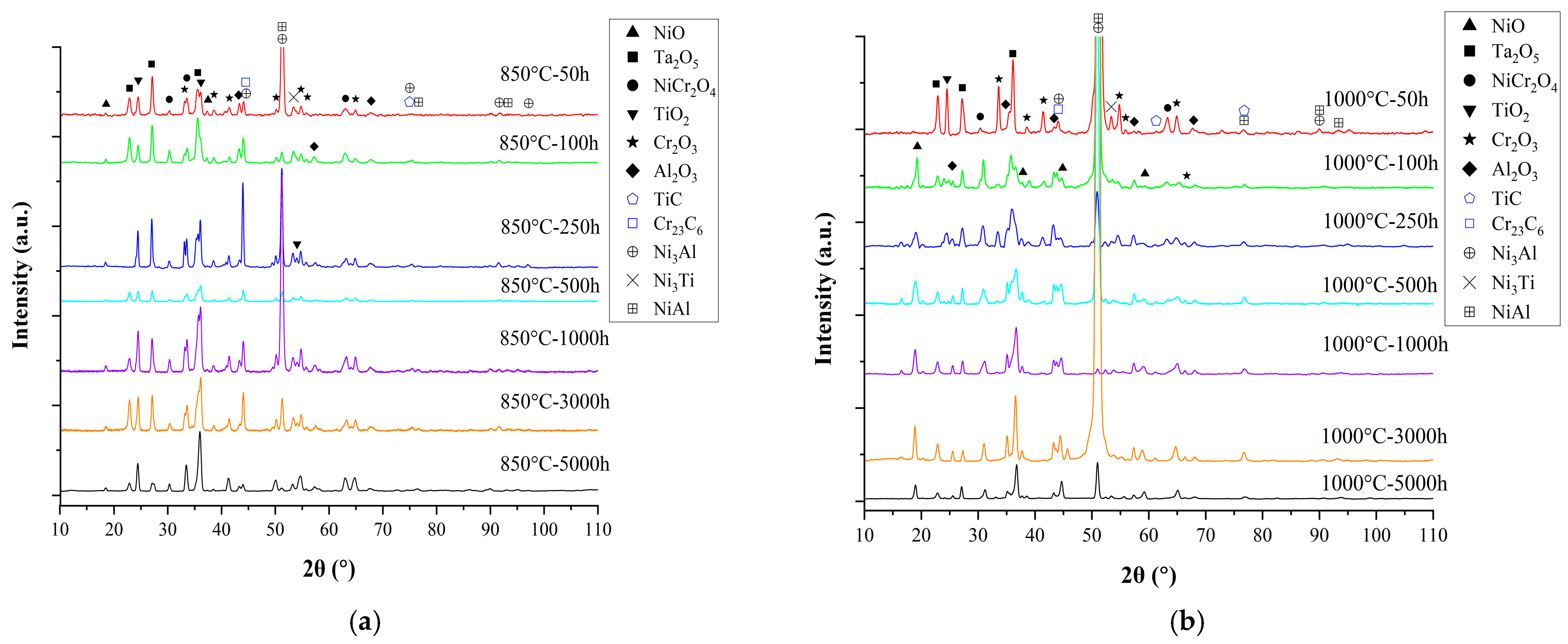
3.1. XRD Analysis of the Oxide Layer
3.2. Microstructure and Kinetics of the Oxide Layer in the Surface Region
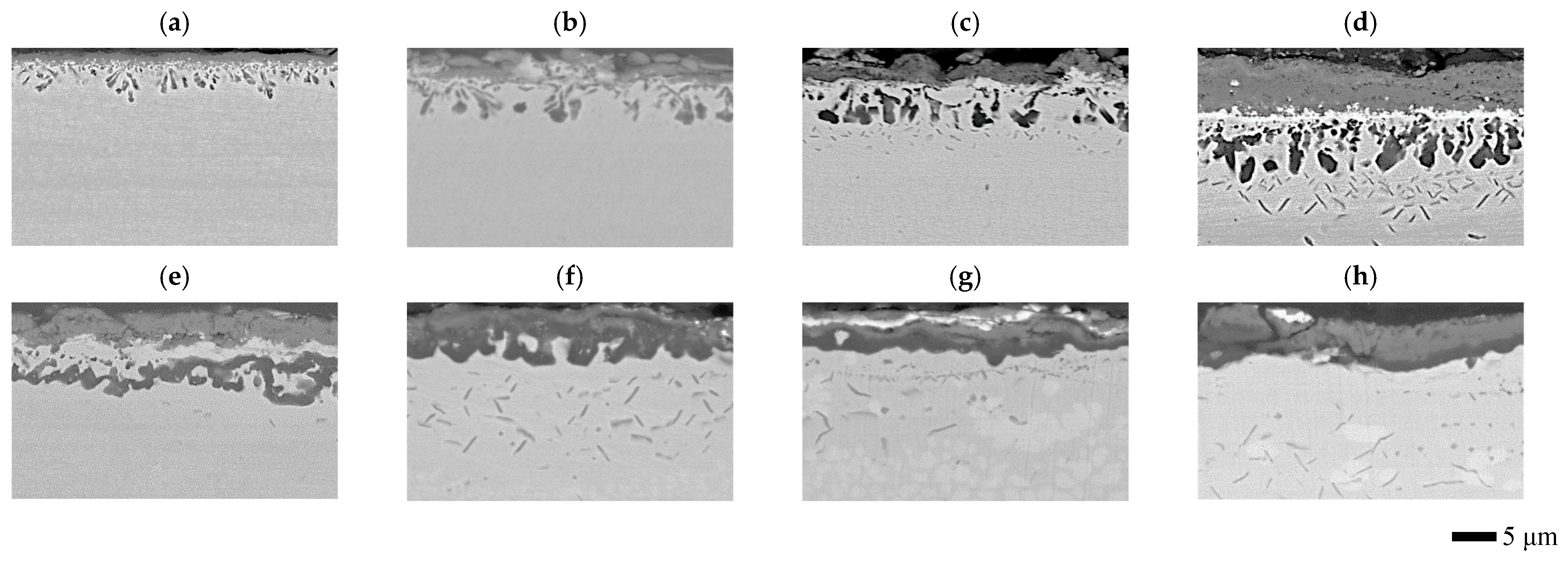
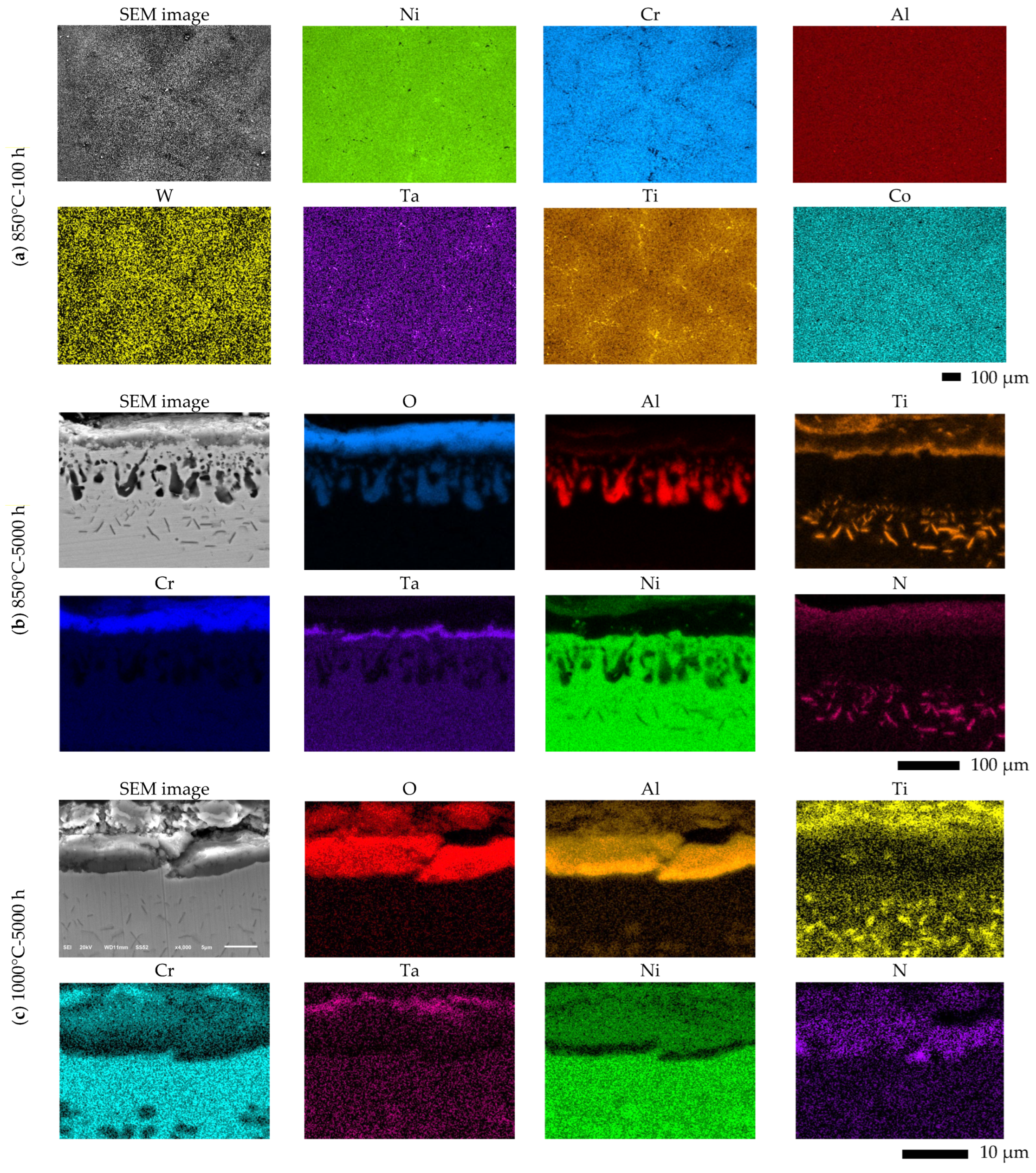
3.2.1. Microstructure of the Oxide Layer in the Surface Region
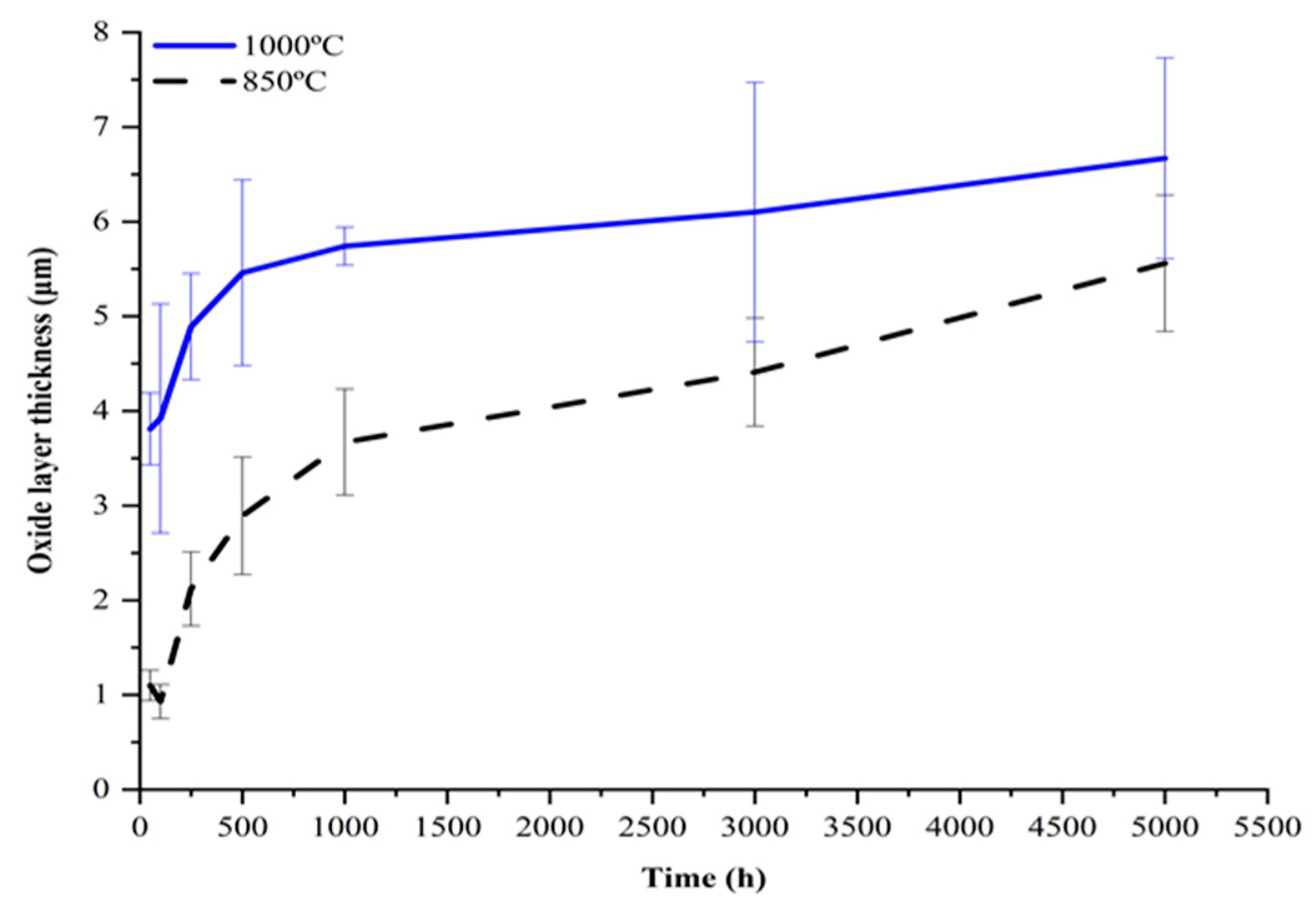
3.2.2. Kinetics of the Oxide Layer in the Surface Region
3.3. Microstructure of the γ′ Precipitates
3.4. Morphology of the Carbides in the Matrix
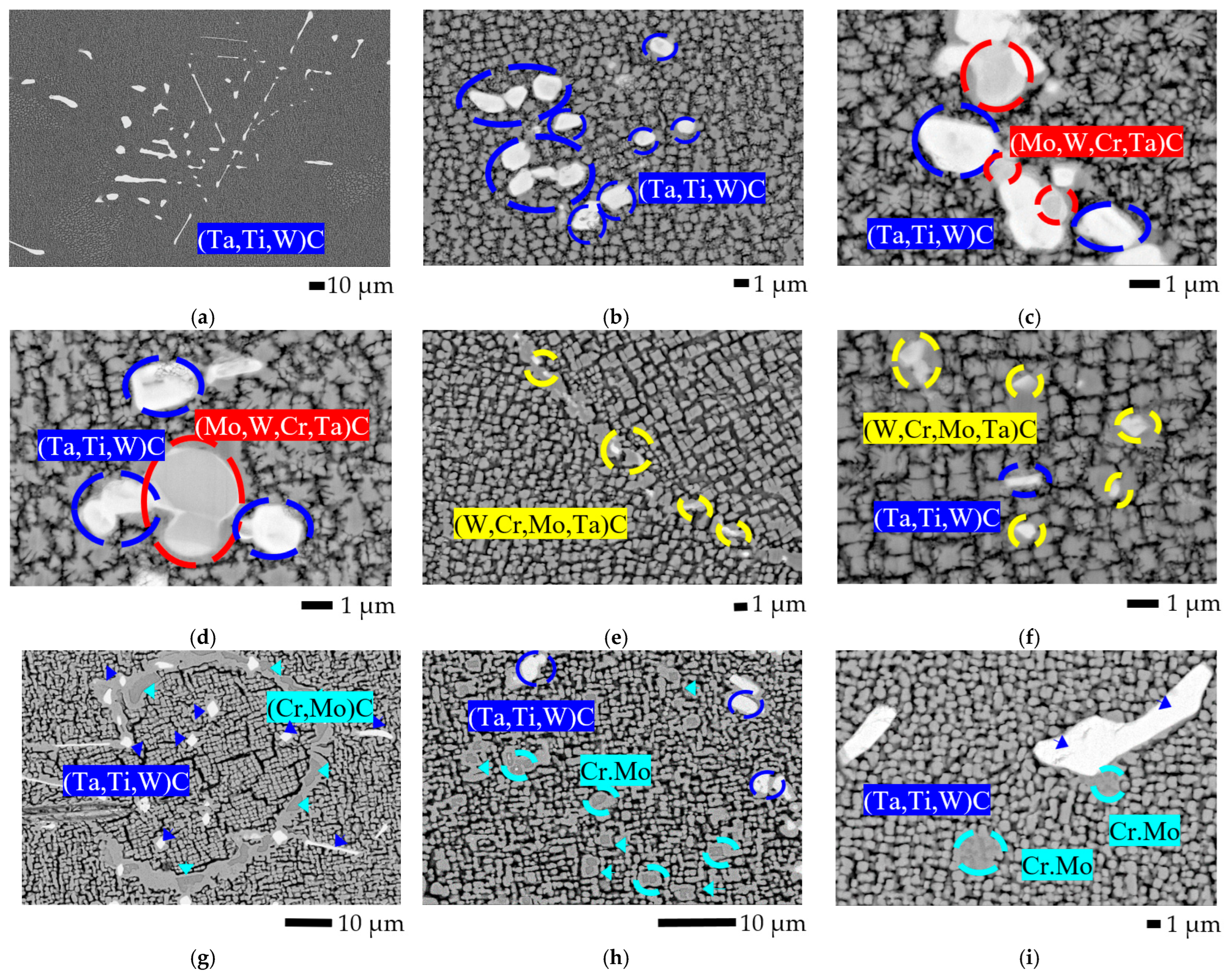
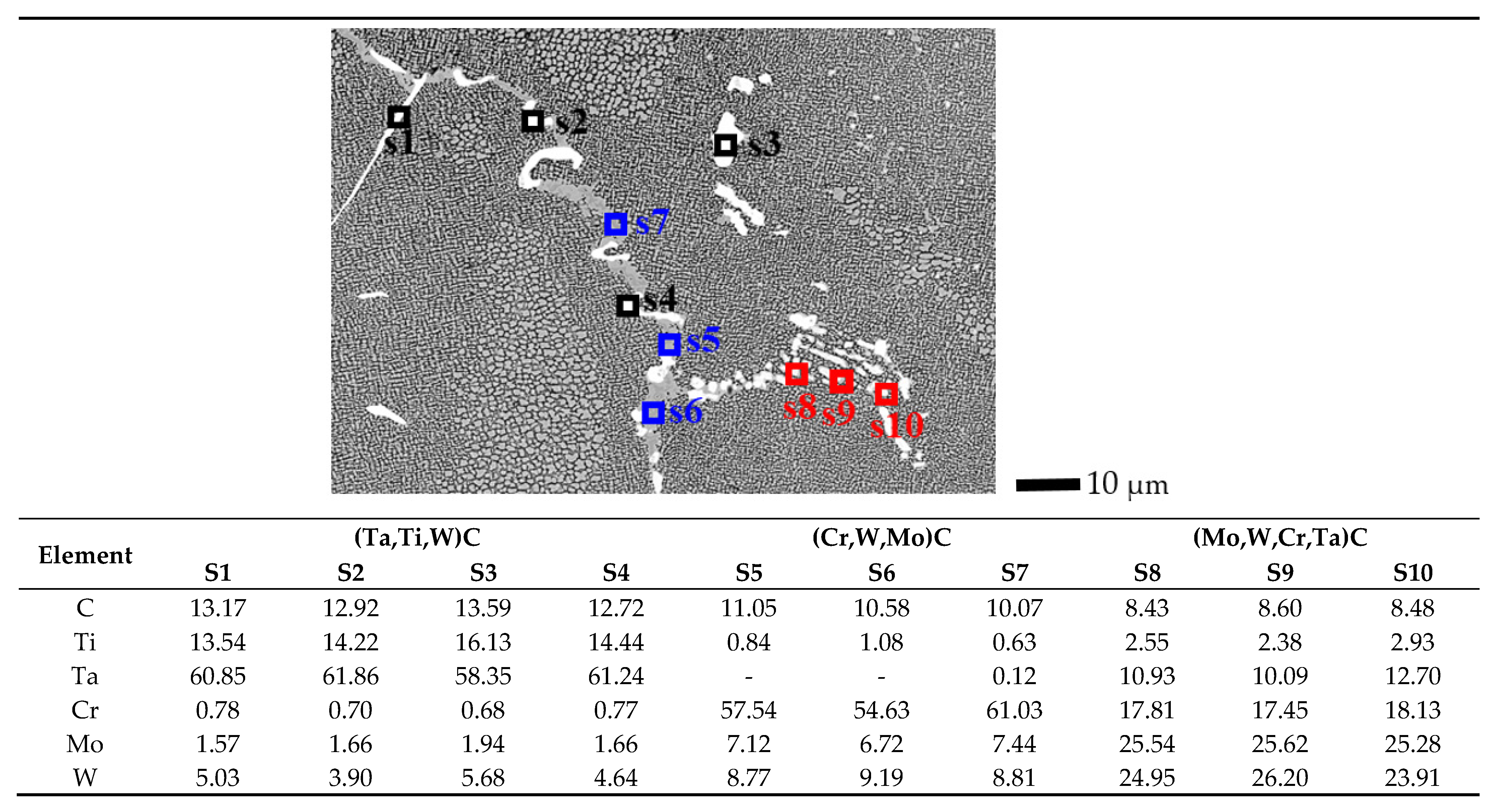
3.4.1. MC Carbide
3.4.2. M23C6 Carbide
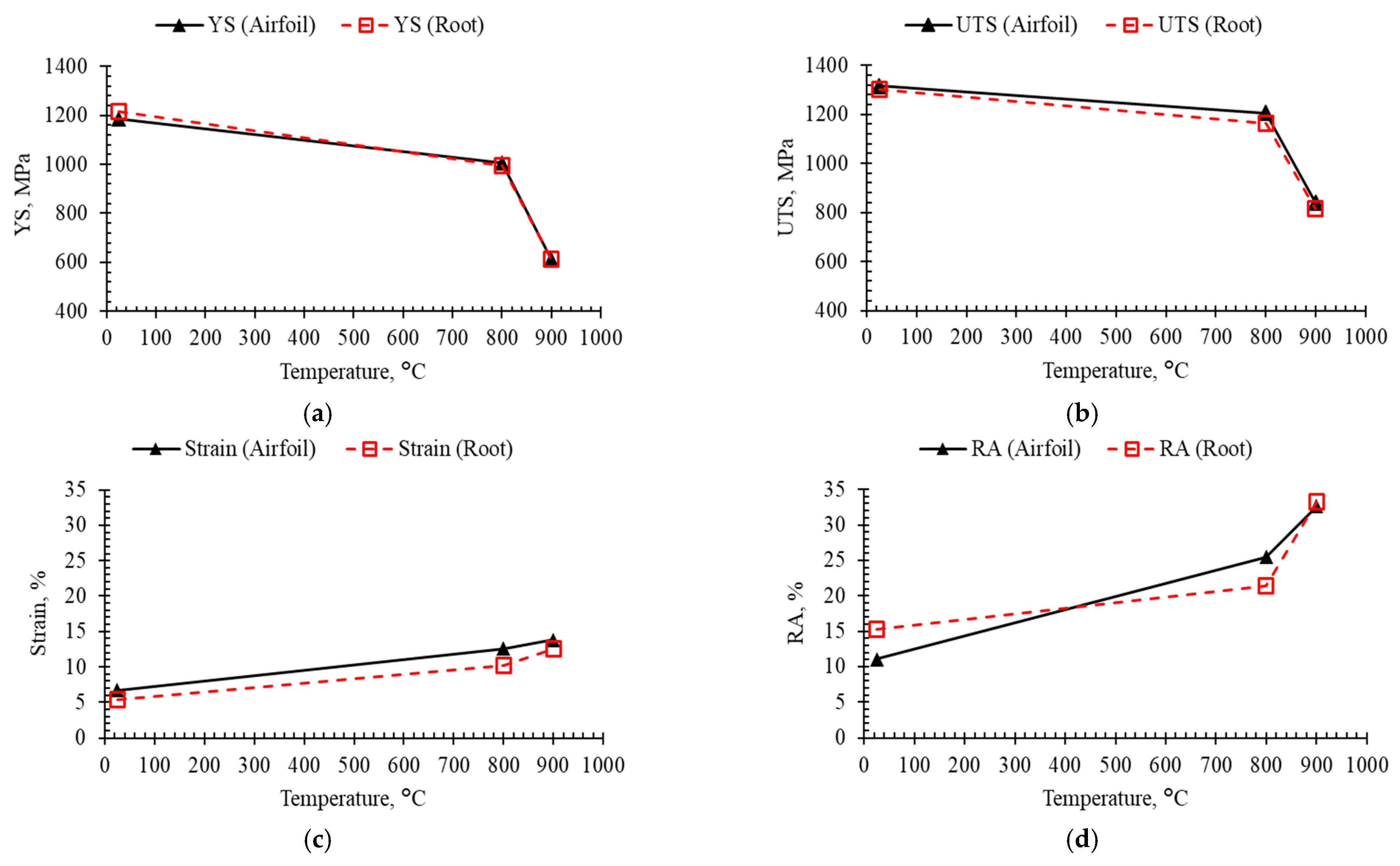
3.5. Mechanical Property
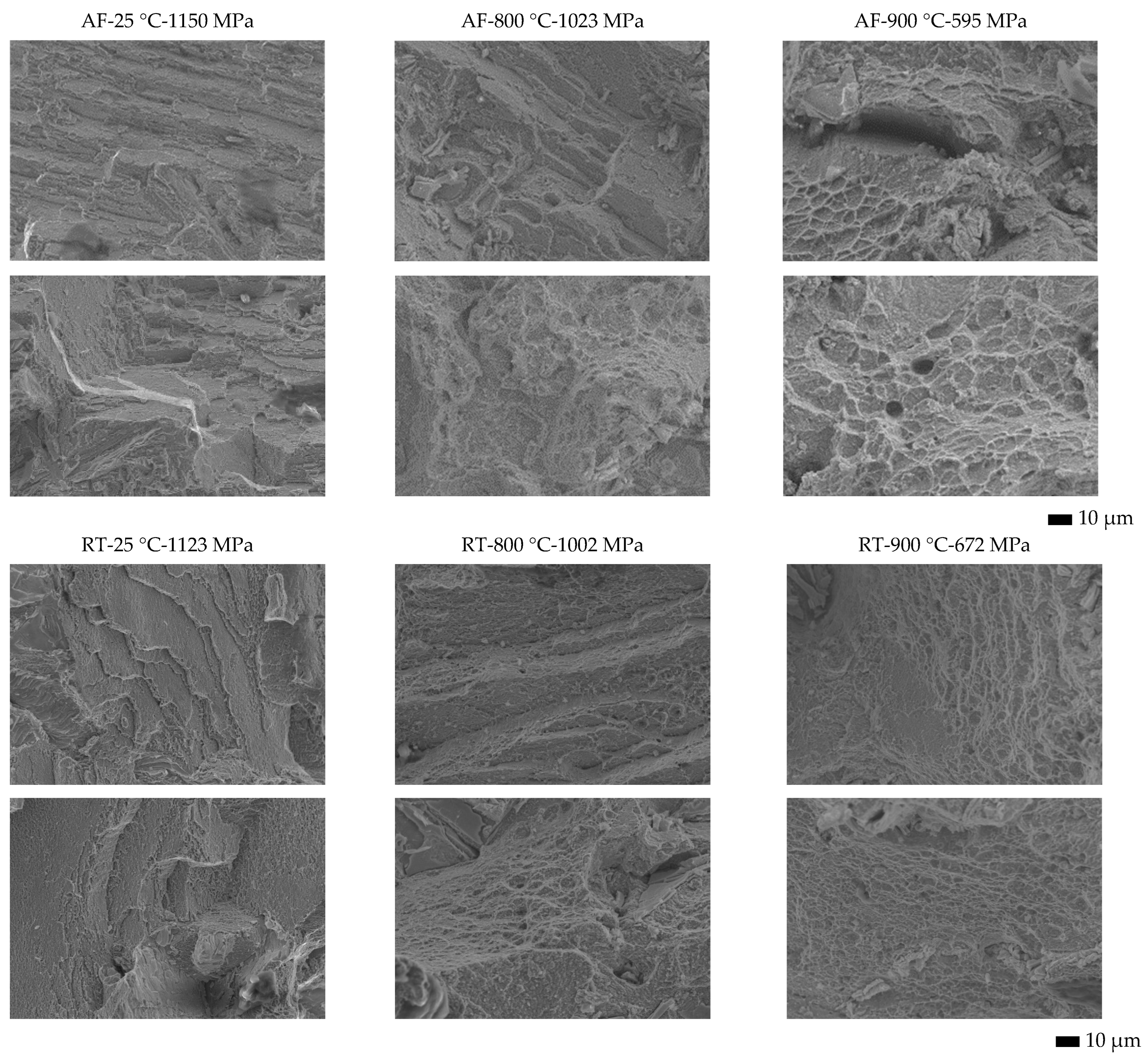
3.6. Microstructure of the Tensile Tested Specimen
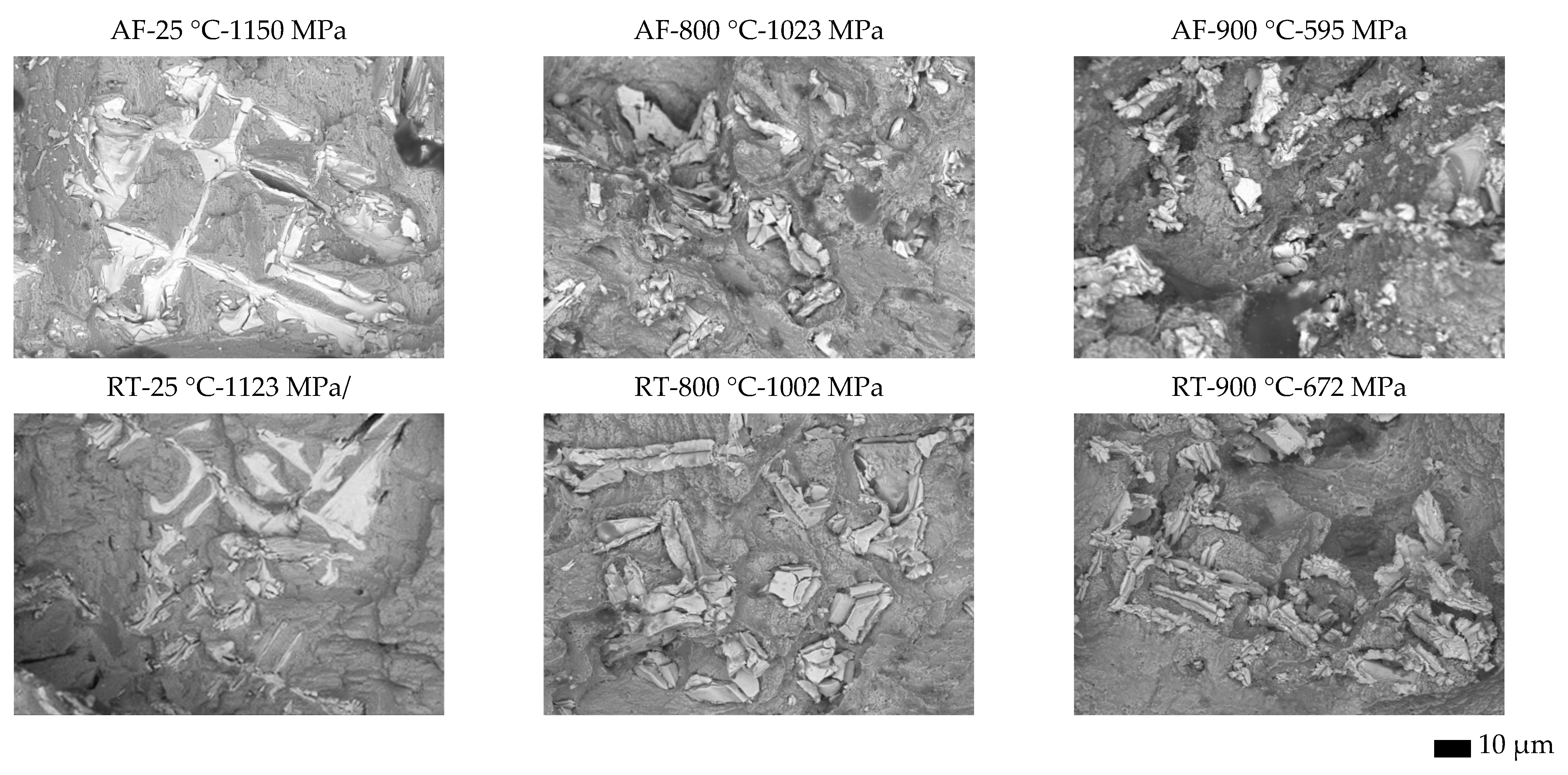
- AF-25 °C (1150 MPa): Exhibited predominantly cleavage (brittle) fracture morphology.
- AF-800 °C (1023 MPa): Displayed a mixed mode of cleavage and ductile fracture features.
- AF-900 °C (595 MPa): Showed a fully ductile fracture morphology characterized by dimples.
3.7. Microstructure of the Stress-Rupture Specimens
4. Conclusions
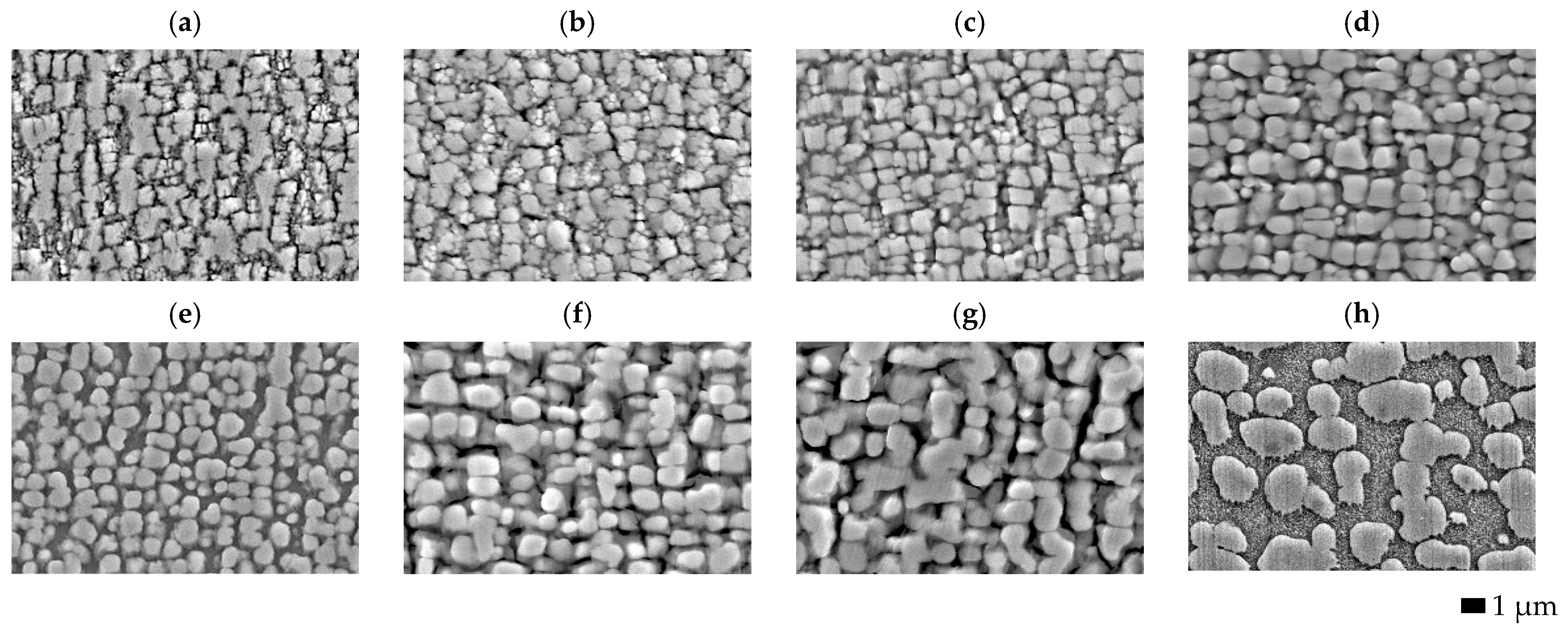
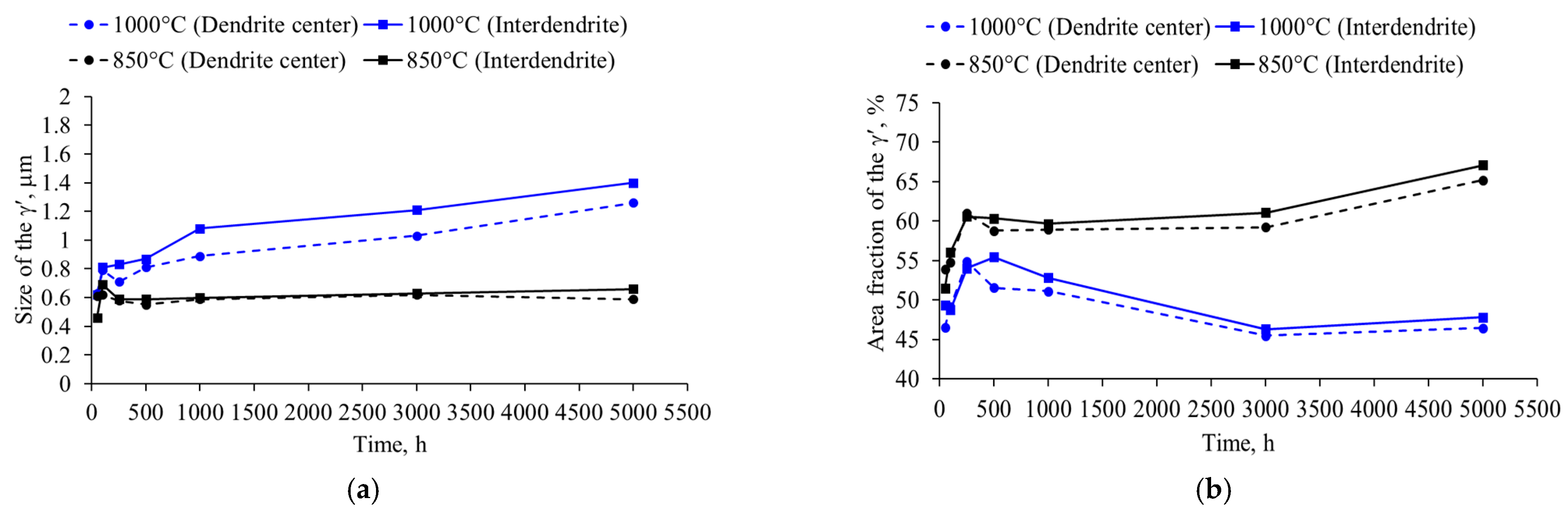
- γ′ Precipitates: The morphology of the γ′ precipitates evolved with increasing temperature, while their size varied depending on the dendritic location. It is concluded that the γ′ precipitates coarsen with increasing heat treatment temperature and duration. This microstructural degradation is associated with the observed deterioration of mechanical properties.
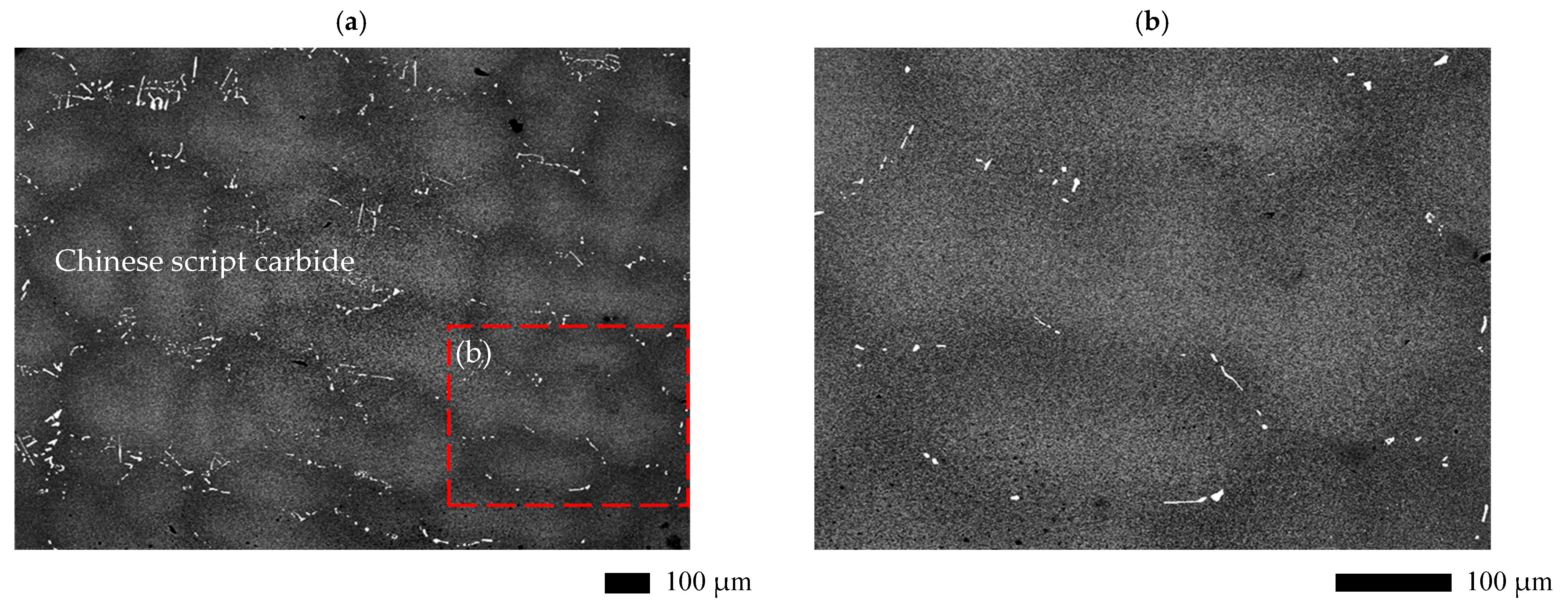
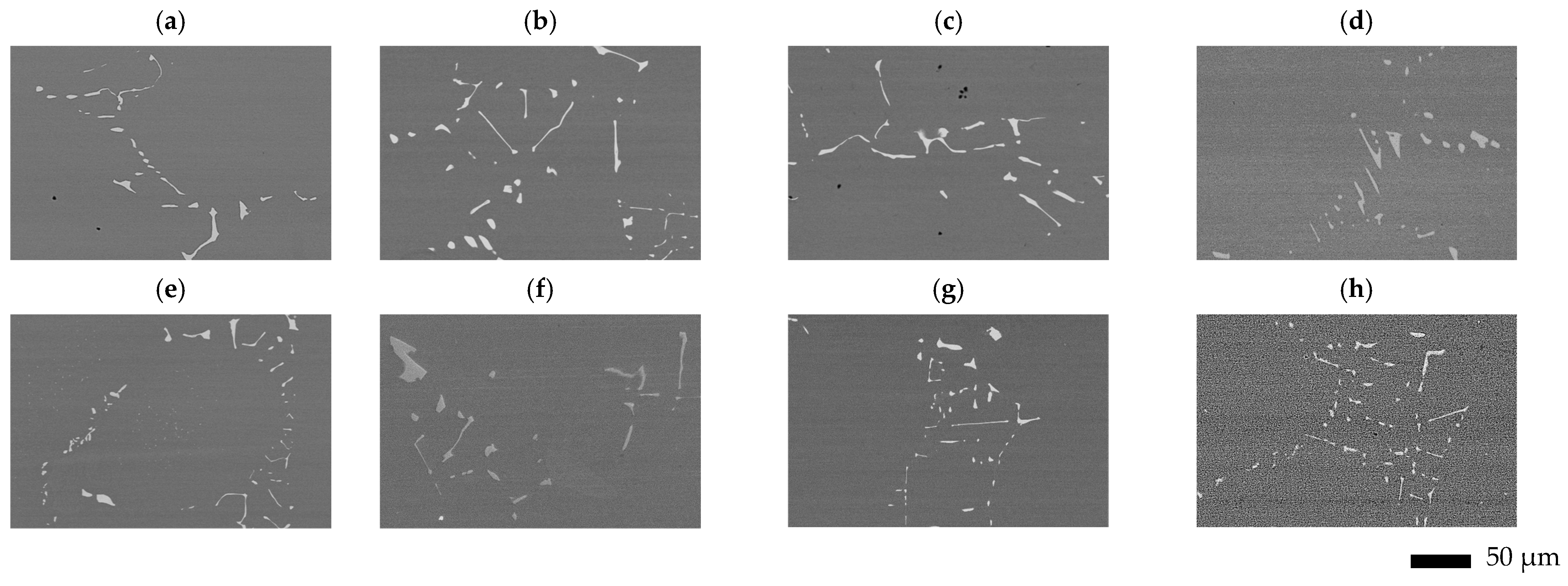
- Carbides: Four carbide variants were identified in the 850 °C and 1000 °C specimens: MC, and three types of M23C6 (Mo-rich, W-rich, and Cr-rich). MC carbides, characterized by Chinese script-like and blocky morphologies, were observed in the interdendritic regions. Regarding the M23C6 phase: spherical Mo-rich (Mo,W,Cr,Ta)23C6 carbides formed at the edges of MC carbides, irregular Cr-rich (Cr,W,Mo)23C6 carbides precipitated at domain boundaries, and W-rich (W,Cr,Mo,Ta)23C6 carbides appeared as rod-shaped precipitates.
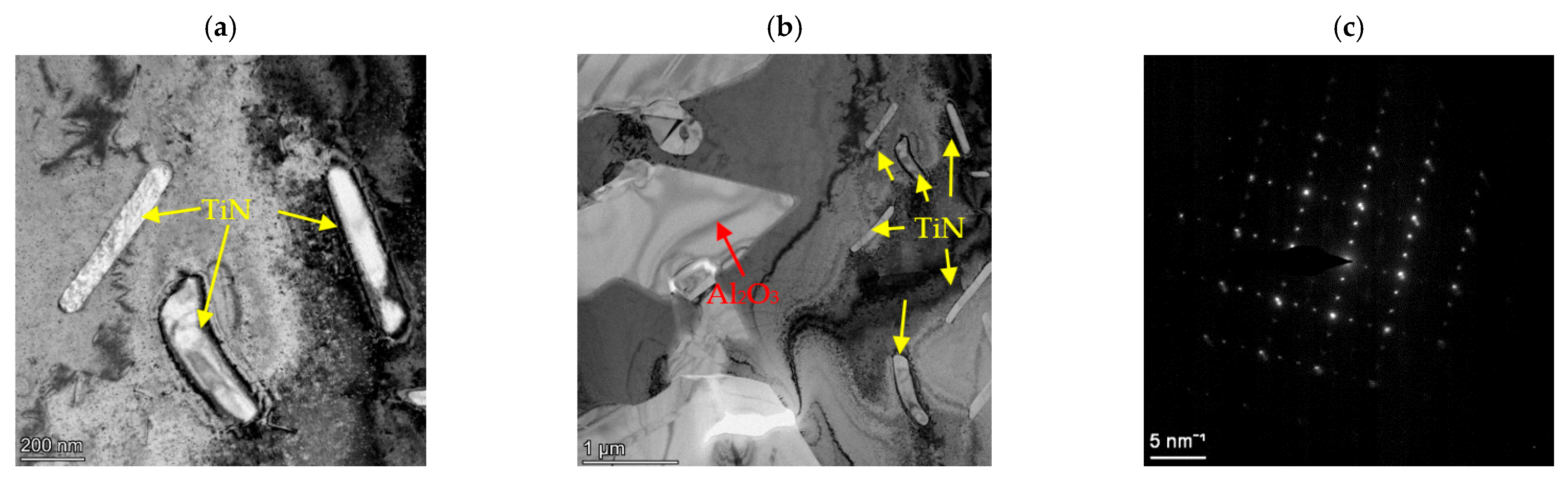
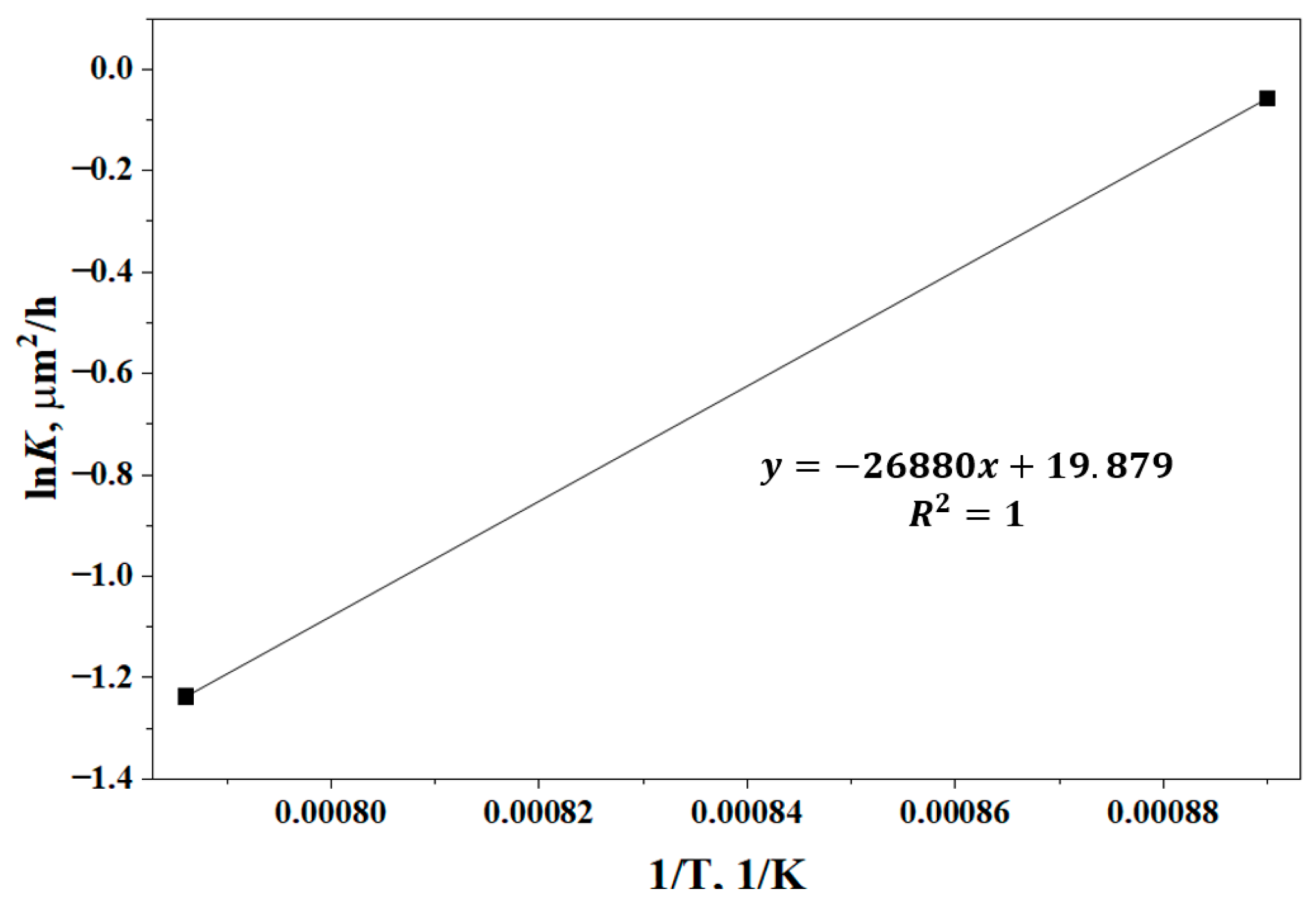
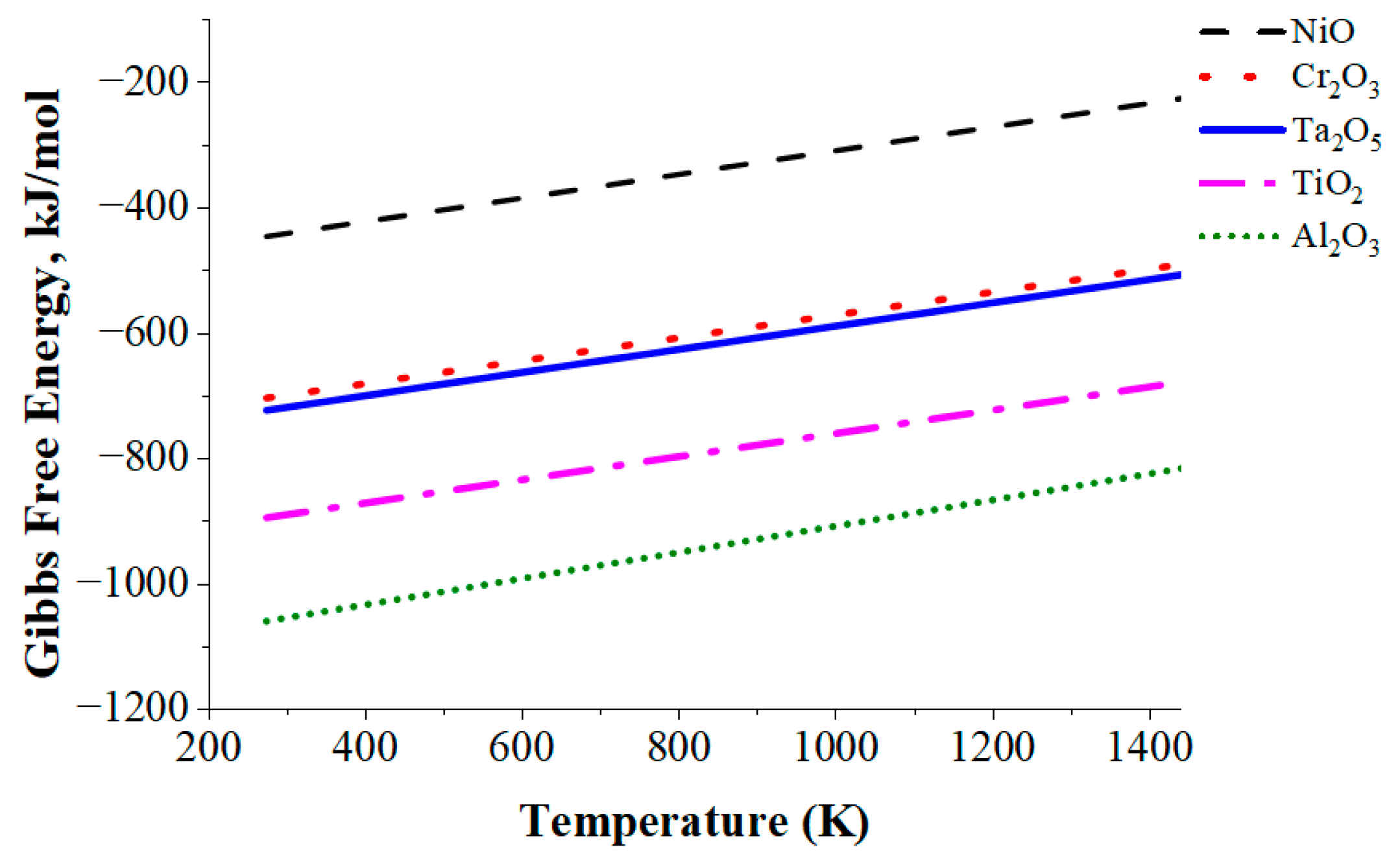
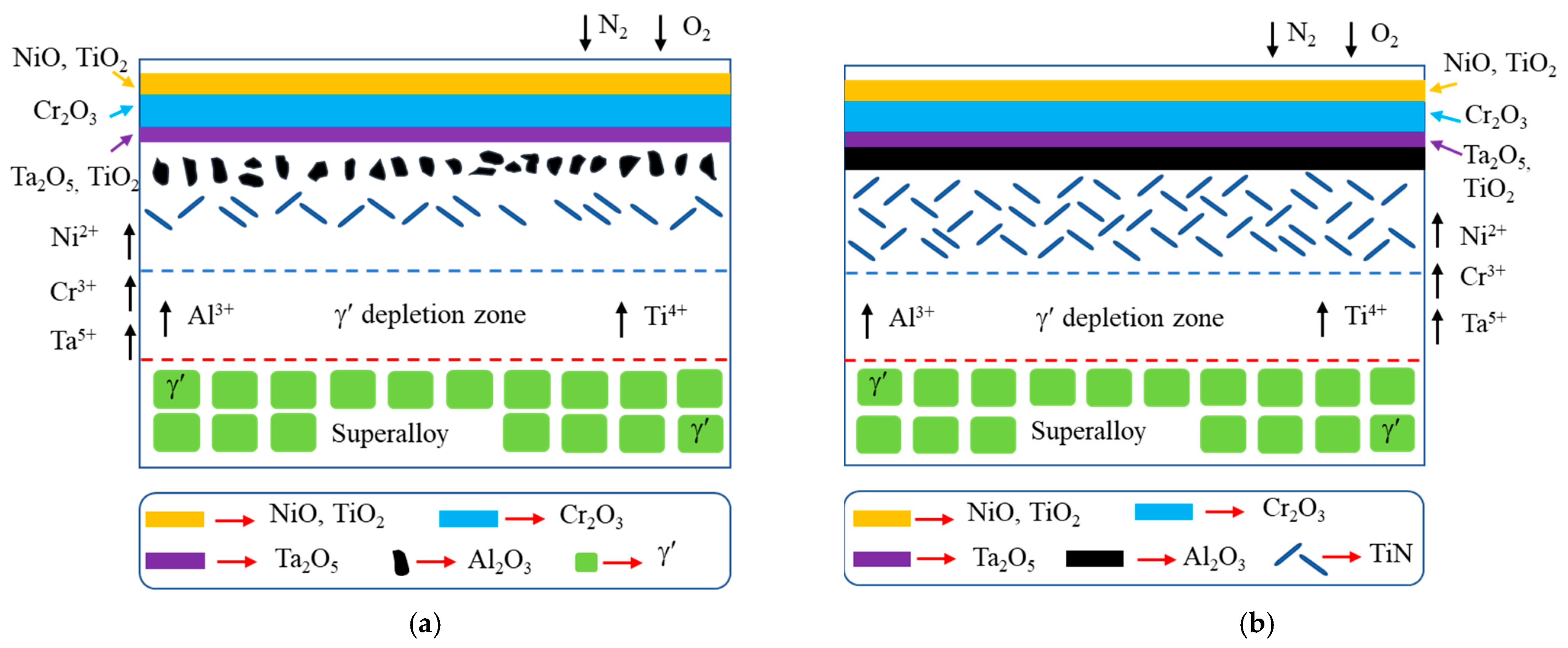
- Surface Oxidation: The sequential formation of oxide layers—comprising Cr2O3, NiO, and TiO2 at the outermost layer, Ta2O5 in the sublayer, and Al2O3 at the inner layer—is consistent with thermodynamic predictions and the Ellingham diagram. Morphologically, the Al2O3 formed as discontinuous islands in the 850 °C specimens, whereas it coalesced to form continuous oxide layers in the 1000 °C specimens. A Ti-containing phase was observed forming beneath the Al2O3 layer, initiating in the 850 °C-1000 h specimen. The oxide layer growth followed the parabolic rate law, increasing with temperature and time. The parabolic rate constants (K) were determined to be 0.0173 μm2/h at 850 °C and 0.2903 μm2/h at 1000 °C. The activation energy for oxidation was calculated as 223.5 kJ/mol, which is comparable to the activation energy for Cr3+ diffusion (255 kJ/mol). This suggests that the oxidation process is primarily controlled by the diffusion of Cr3+ ions.
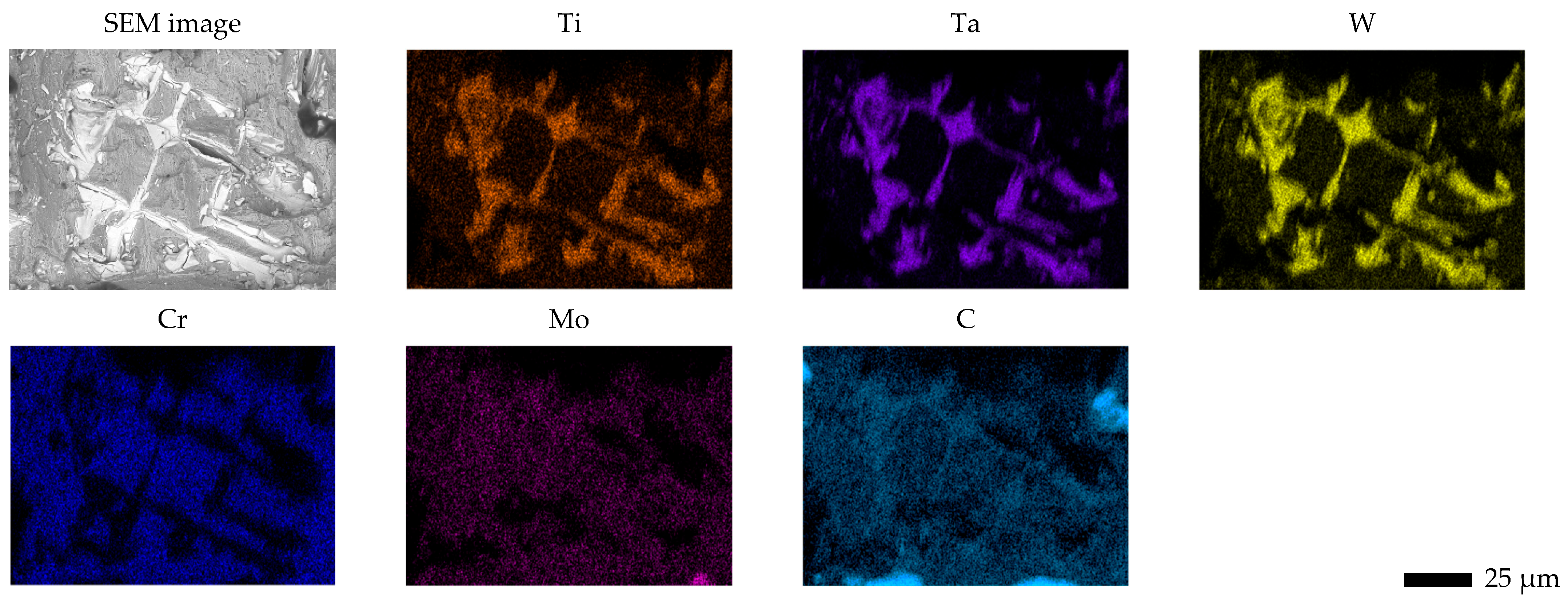
- Tensile Fracture Behavior: The fracture morphologies of the airfoil and root specimens were consistent at equivalent temperatures. A clear brittle-to-ductile transition was observed as the test temperature increased. Mechanistically, the initial cracks formed within the MC carbides, identifying them as the primary crack initiation sites. These cracks propagated through the brittle (Ta,Ti,W)C phase, facilitating the final failure of the specimen.
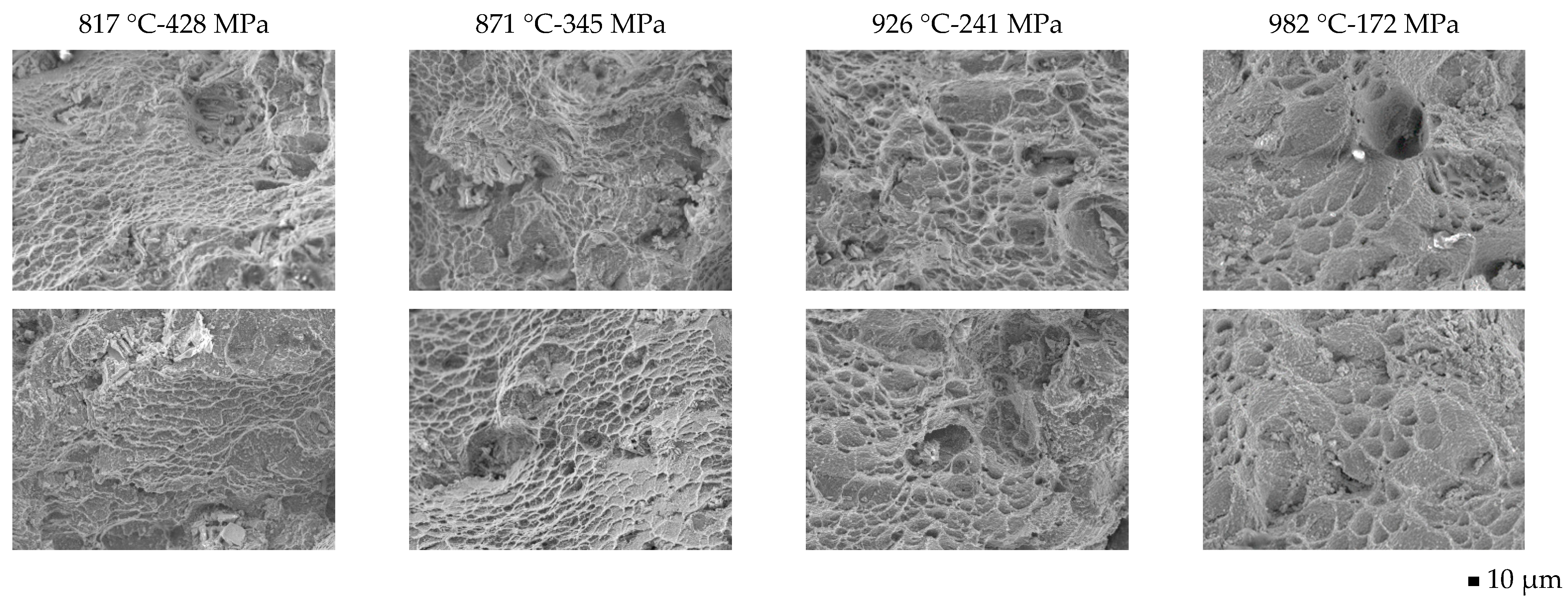
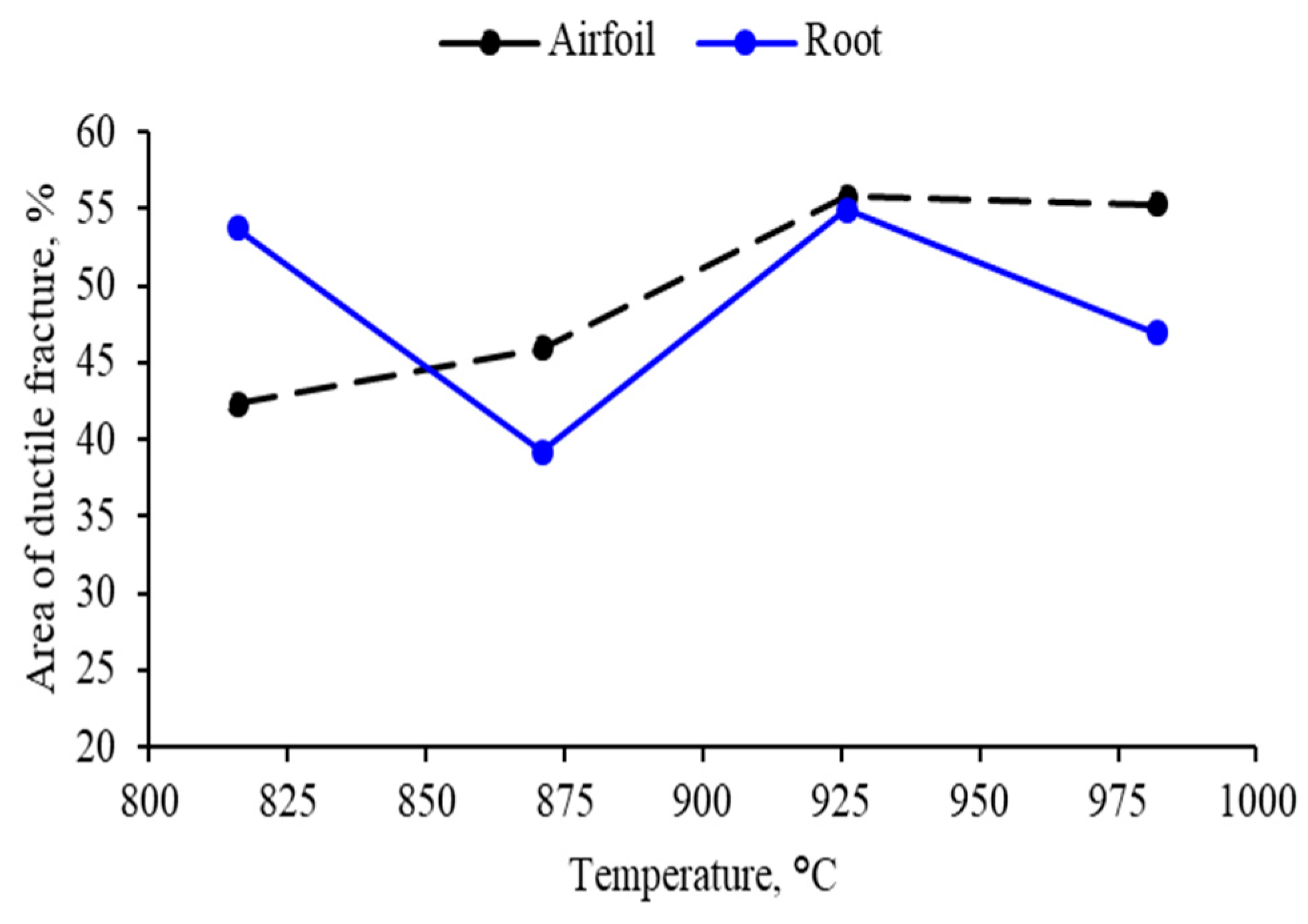
- Stress-Rupture Fracture Behavior: A ductile fracture morphology was dominant in all stress-rupture specimens. Notably, the average dimple size on the fracture surfaces increased with increasing test temperature.
Author Contributions
Funding
Data Availability Statement
Conflicts of Interest
References
- Reed, R.C. The Superalloys: Fundamentals and Applications; Cambridge University Press: Cambridge, UK, 2006; pp. 128–130. [Google Scholar]
- Liu, C.T.; Ma, J.; Sun, X.F. Oxidation behavior of a single-crystal Ni-base superalloy between 900 and 1000 °C in air. J. Alloys Compd. 2010, 491, 522–526. [Google Scholar] [CrossRef]
- Sajjadi, S.A.; Nategh, S.; Guthrie, R.I.L. Study of microstructure and mechanical properties of high performance Ni-base superalloy GTD-111. Mater. Sci. Eng. A 2002, 325, 484–489. [Google Scholar] [CrossRef]
- Ghorbani, H.; Farhangi, H.; Malekan, M. Material Characterization of Long-Term Service-Exposed GTD-111 Nickel Based Superalloy. Eng. Fail. Anal. 2023, 148, 107061. [Google Scholar] [CrossRef]
- Ghorbani, H.; Farhangi, H.; Malekan, M. Microstructural Investigation and Creep Behavior of Long-Term Exposed Directionally Solidified GTD-111 Nickel Based Superalloy. Mater. Sci. Eng. A 2024, 890, 145811. [Google Scholar] [CrossRef]
- Wang, X.; Cui, Y.; Zhou, Y.; Li, Z.; Zhao, Y.; Wang, J. The Microstructure Evolution of a Ni-Based Superalloy Turbine Blade at Elevated Temperature. Coatings 2025, 15, 835. [Google Scholar] [CrossRef]
- León-Henao, H.; Herderick, E.D.; Toro, A.; Giraldo-Barrada, J.E.; Ramirez, A.J. Assessing the Printability of Rene 65 Powder for Repairing Degraded GTD 111 Gas Turbine Blades Using L-DED and L-PBF. Coatings 2025, 15, 410. [Google Scholar] [CrossRef]
- Brenneman, J.; Wei, J.; Sun, Z.; Liu, L.; Zou, G.; Zhou, Y. Oxidation Behavior of GTD111 Ni-Based Superalloy at 900 °C in Air. Corros. Sci. 2015, 100, 267–274. [Google Scholar] [CrossRef]
- Kónya, G.; Szabó, N.; Kovács, Z.F. Investigation of the Machinability of GTD-111 Type Nickel-Base Superalloy During Face Milling. Acta Mater. Transylvanica 2023, 6, 23–28. [Google Scholar] [CrossRef]
- Sajjadi, S.A.; Nategh, S. A high temperature deformation mechanism map for the high performance Ni-base superalloy GTD-111. Mater. Sci. Eng. A 2001, 307, 158–164. [Google Scholar] [CrossRef]
- Hu, Y.-B.; Cheng, C.-Q.; Cao, T.-S.; Zhang, L.; Zhao, J. Film evolution and growth mechanism of a Ni-based superalloy in the two models at different temperatures. Vacuum 2021, 194, 110538. [Google Scholar] [CrossRef]
- Taylor, M.; Ding, R.; Mignanelli, P.; Hardy, M. Oxidation behaviour of a developmental nickel-based alloy and the role of minor elements. Corros. Sci. 2022, 196, 110002. [Google Scholar] [CrossRef]
- Zheng, L.; Zhang, M.C.; Chellali, R.; Bouchikhaoui, H.; Dong, J.X. Oxidation property of powder metallurgy EP741NP Ni-based superalloy at elevated temperatures. Mater. Technol. 2013, 28, 122–128. [Google Scholar] [CrossRef]
- Hou, X.M.; Chou, K.C. Quantitative interpretation of the parabolic and nonparabolic oxidation behavior of nitride ceramic. J. Eur. Ceram. Soc. 2009, 29, 517–523. [Google Scholar] [CrossRef]
- Tan, T.; Chen, Y.; Chen, H. A diffusion controlling duplex-layer oxidation model with scale removal in oxygen containing liquid metal flow. Comput. Mater. Sci. 2008, 44, 750–759. [Google Scholar] [CrossRef]
- Sajjadi, S.A.; Zebarjad, S.M. Study of fracture mechanisms of a Ni-base superalloy at different temperatures. J. Achiev. Mater. Manuf. Eng. 2006, 18, 227–230. [Google Scholar]
- Liang, T.; Wang, L.; Liu, Y.; Song, X. Roles of script MC carbides on the tensile behavior of laser-welded fusion zone in DZ125L/IN718 joints at 650 °C. J. Mater. Sci. 2020, 55, 13389–13397. [Google Scholar] [CrossRef]
- Pour-Ali, S.; Tavangar, R.; Akhtari, F.; Hejazi, S. High-temperature oxidation behavior of GTD-111 Ni-based superalloy with an ultrafine-grained surface at 900 °C. Corros. Sci. 2023, 212, 110935. [Google Scholar] [CrossRef]
- Yun, D.W.; Seo, S.M.; Jeong, H.W.; Yoo, Y.S. The cyclic oxidation behaviour of Ni-based superalloy GTD-111 with sulphur impurities at 1100 °C. Corros. Sci. 2015, 90, 392–401. [Google Scholar] [CrossRef]
- Battulga, N.-E.; He, Y.; Kim, Y.; Kang, Y.; Jung, J.; Shin, K.; Lee, J.-H. High-Temperature Effects on TGO Growth and Al Depletion in TBCs of Ni-Based Superalloy GTD111. Coatings 2025, 15, 1145. [Google Scholar] [CrossRef]
- Biyamin, S.A.; Shaiful Bahari, A.M.; Ng, G.P.; Sanmugham, T.; Ghazali, R.; Ramli, R.; Azmin, A.N. Microstructure Evaluation of Service Aged and Rejuvenated Nickel Super Alloys Using Hot Isostatic Pressing Treatment. Malays. J. Microsc. 2022, 18, 245–255. Available online: https://www.researchgate.net/publication/360077242_MICROSTRUCTURE_EVALUATION_OF_SERVICE_AGED_AND_REJUVENATED_NICKEL_SUPER_ALLOYS_USING_HOT_ISOSTATIC_PRESSING_TREATMENT (accessed on 18 November 2025).
- Balsone, S.J. Nickel-Base Superalloy Materials Technology for Advanced IGT Applications. In Niobium for High Temperature Applications; Kim, Y.-W., Carneiro, T., Eds.; TMS (The Minerals, Metals & Materials Society): Warrendale, PA, USA, 2004; pp. 3–9. Available online: https://niobium.tech/-/media/niobiumtech/attachments-biblioteca-tecnica/nt_nickel-base-superalloy-materials-technology-for-advanced-igt-applications.pdf (accessed on 18 November 2025).
- Yu, S.; Zhan, X.; Liu, F.; Guo, Y.; Wang, Q.; Li, Y.; Wang, Z.; Wang, Z.; Tan, L.; Fan, X.; et al. 900 °C oxidation resistance of Ni-base superalloys alloyed with different refractory elements. J. Alloys Compd. 2022, 904, 164071. [Google Scholar] [CrossRef]
- Cao, J.; Zhang, J.; Chen, R.; Ye, Y.; Hua, Y. High temperature oxidation behavior of Ni-based superalloy GH202. Mater. Charact. 2016, 118, 122–128. [Google Scholar] [CrossRef]
- Pérez-González, F.A.; Garza-Montes-de-Oca, N.F.; Colás, R. High temperature oxidation of the Haynes 282® nickel-based superalloy. Oxid. Met. 2014, 82, 145–161. [Google Scholar] [CrossRef]
- Hamidi, S.; Rahimipour, M.R.; Eshraghi, M.J.; Hadavi, S.M.M.; Esfahani, H. Kinetics and microstructural investigation of high temperature oxidation of IN-738LC superalloy. J. Mater. Eng. Perform. 2017, 26, 563–570. [Google Scholar] [CrossRef]
- Giggins, C.S.; Pettit, F.S. Oxidation of Ni-Cr-Al alloys between 1000° and 1200 °C. J. Electrochem. Soc. 1971, 118, 1782–1790. [Google Scholar] [CrossRef]
- Szczotok, A.; Chmiela, B. Effect of heat treatment on chemical segregation in CMSX-4 nickel-base superalloy. J. Mater. Eng. Perform. 2014, 23, 2739–2747. [Google Scholar] [CrossRef]
- Strutt, V.C.I.; Jenkins, B.M.; Woolrich, J.M.; Appleton, M.; Moody, M.P.; Bagot, P.A.J. Effect of microsegregation and heat treatment on localized compositions in single crystal Ni-based superalloys. J. Alloys Compd. 2023, 949, 169861. [Google Scholar] [CrossRef]
- Wang, J.; Xue, H.; Wang, Y. Oxidation behavior of Ni-based superalloy GH738 in static air between 800 and 1000 °C. Rare Met. 2021, 40, 616–625. [Google Scholar] [CrossRef]
- Chen, J.H.; Rogers, P.M.; Little, J.A. Oxidation behavior of several chromia-forming commercial nickel-based superalloys. Oxid. Met. 1997, 47, 381–410. [Google Scholar] [CrossRef]
- Zheng, L.; Zhang, M.; Dong, J. Oxidation behavior and mechanism of powder metallurgy Rene-95 nickel based superalloy between 800 °C and 1000 °C. Appl. Surf. Sci. 2010, 256, 7510–7515. [Google Scholar] [CrossRef]
- Falk-Windisch, H.; Svensson, J.-E.; Froitzheim, J. The Effect of Temperature on Chromium Vaporization and Oxide Scale Growth on Interconnect Steels for Solid Oxide Fuel Cells. J. Power Sources 2015, 287, 25–35. [Google Scholar] [CrossRef]
- Nguyen, L.; Shi, R.; Wang, Y.; De Graef, M. Quantification of rafting of precipitates in Ni-based superalloys. Acta Mater. 2016, 103, 322–333. [Google Scholar] [CrossRef]
- Wang, H.; Long, H.; Liu, Y.; Zhao, Y.; Li, X.; Yang, G.; Yang, X.; Chen, Y.; Mao, S.; Zhang, Z.; et al. The widening of the solution heat treatment window by the addition of Ru in Ni-based single crystal superalloy. Mater. Charact. 2023, 203, 113057. [Google Scholar] [CrossRef]
- Lavakumar, A.; Singh, P.K.; Srivastava, S.; Kori, S.; Kumar, L.A. Gamma prime coarsening behavior of nickel superalloy supercast 247A after prolonged thermal exposures. IOSR J. Mech. Civ. Eng. 2013, 4, 37–42. [Google Scholar]
- Baldan, A. Review: Progress in Ostwald ripening theories and their applications to nickel-base superalloys. J. Mater. Sci. 2002, 37, 2171–2202. [Google Scholar] [CrossRef]
- Chen, Q.Z.; Jones, C.N.; Knowles, D.M. Effect of alloying chemistry on MC carbide morphology in modified RR2072 and RR2086 SX superalloys. Scr. Mater. 2002, 47, 669–675. [Google Scholar] [CrossRef]
- Yu, Z.-H.; Liu, L.; Zhao, X.-B.; Zhang, W.-G.; Zhang, J.; Fu, H.-Z. Effect of solidification rate on MC-type carbide morphology in single crystal Ni-base superalloy AM3. Trans. Nonferrous Met. Soc. China 2010, 20, 1835–1840. [Google Scholar] [CrossRef]
- Szczotok, A.; Rodak, K. Microstructural studies of carbides in MAR-M247 nickel-based superalloy. IOP Conf. Ser. Mater. Sci. Eng. 2012, 35, 012006. [Google Scholar] [CrossRef]
- Zhu, Z.-Y.; Cai, Y.-F.; Gong, Y.-J.; Shen, G.-P.; Tu, Y.-G.; Zhang, G.-F. Isothermal oxidation behavior and mechanism of a nickel-based superalloy at 1000 °C. Int. J. Miner. Metall. Mater. 2017, 24, 776–783. [Google Scholar] [CrossRef]
- Wang, J.; Zhou, L.; Qin, X.; Sheng, L.; Hou, J.; Guo, J. Primary MC decomposition and its effects on the rupture behaviors in hot-corrosion resistant Ni-based superalloy K444. Mater. Sci. Eng. A 2012, 553, 14–21. [Google Scholar] [CrossRef]
- Huang, Y.; Wang, L.; Liu, Y.; Fu, S.-M. Microstructure evolution of a new directionally solidified Ni-based superalloy after long-term aging at 950 °C up to 1 000 h. Trans. Nonferrous Met. Soc. China 2011, 21, 2199–2204. [Google Scholar] [CrossRef]
- Rakoczy, Ł.; Rutkowski, B.; Grudzień-Rakoczy, M.; Cygan, R.; Ratuszek, W.; Zielińska-Lipiec, A. Analysis of γ′ precipitates, carbides and nano-borides in heat-treated Ni-based superalloy using SEM, STEM-EDX and HRSTEM. Materials 2020, 13, 4452. [Google Scholar] [CrossRef]
- Dong, X.; Zhang, X.; Du, K.; Zhou, Y.; Jin, T.; Ye, H. Microstructure of carbides at grain boundaries in nickel based superalloys. J. Mater. Sci. Technol. 2012, 28, 1031–1038. [Google Scholar] [CrossRef]
- Ejaz, N.; Mansoor, M.; Salam, I. Effect of high temperature exposure on the microstructure of Udimet-500 super alloy. J. Mater. Sci. 2010, 45, 4507–4517. [Google Scholar] [CrossRef]
- He, L.Z.; Zheng, Q.; Sun, X.F.; Guan, H.R.; Hu, Z.Q.; Tieu, A.K.; Lu, C.; Zhu, H.T. Effect of heat treatment on microstructures and tensile properties of Ni-base superalloy M963. Mater. Sci. Eng. A 2005, 398, 128–136. [Google Scholar] [CrossRef]







| Alloy | Cr | Co | Mo | W | Al | Ti | Ta | C | Zr | Ni |
|---|---|---|---|---|---|---|---|---|---|---|
| GDT-111 | 13.6–14.1 | 9.5–10.8 | 1.38–1.60 | 3.0–4.4 | 3.0–4.0 | 2.7–5.1 | 2.54–4.70 | 0.07–0.10 | 0.02–0.03 | Bal. |
| T, °C | 1/T, 1/K | K, μm2/h | ln K, μm2/h |
|---|---|---|---|
| 850 | 8.9 ×10⁻⁴ | 0.0173 | −4.0572 |
| 1000 | 7.86 × 10⁻⁴ | 0.2903 | −1.2368 |
| Temperature, °C | Gibbs Free Energy, kJ/mol | ||||
|---|---|---|---|---|---|
| NiO | Cr2O3 | Ta2O5 | TiO2 | Al2O3 | |
| 850 | −285.22 | −548.03 | −565.45 | −736.52 | −881.77 |
| 1000 | −256.92 | −520.64 | −537.70 | −708.71 | −850.45 |
| # | Part of the Specimen | Temperature, °C | YS, MPa | UTS, MPa | Elongation, % | RA, % |
|---|---|---|---|---|---|---|
| 1 | Airfoil (AF) | 25 | 1150 | 1295 | 7.4 | 10.8 |
| 2 | 800 | 1031 | 1201 | 18.9 | 25.7 | |
| 3 | 900 | 595 | 808 | 15.3 | 30.2 | |
| 4 | Root (RT) | 25 | 1223 | 1303 | 4.5 | 15.2 |
| 5 | 800 | 1002 | 1169 | 11.7 | 26.6 | |
| 6 | 900 | 672 | 831 | 11.7 | 33.6 |
| Temperature °C (°F) | Stress, MPa (ksi) | Rupture hr. Airfoil (AF) | Rupture hr. Root (RT) |
|---|---|---|---|
| 816 (1500) | 428 (62) | 1239.3 | 765.2 |
| 871 (1600) | 345 (50) | 420.1 | 217.5 |
| 926 (1700) | 241 (35) | 308.3 | 252.3 |
| 982 (1800) | 172 (25) | 183.5 | 144.4 |
Disclaimer/Publisher’s Note: The statements, opinions and data contained in all publications are solely those of the individual author(s) and contributor(s) and not of MDPI and/or the editor(s). MDPI and/or the editor(s) disclaim responsibility for any injury to people or property resulting from any ideas, methods, instructions or products referred to in the content. |
© 2025 by the authors. Licensee MDPI, Basel, Switzerland. This article is an open access article distributed under the terms and conditions of the Creative Commons Attribution (CC BY) license.
Share and Cite
Renchindorj, O.; Battulga, N.-E.; He, Y.; Kim, Y.; Kang, Y.; Jung, J.; Shin, K.; Lee, J.-H. Oxidation and Microstructural Evolution of GTD-111 at 850 °C and 1000 °C. Metals 2026, 16, 14. https://doi.org/10.3390/met16010014
Renchindorj O, Battulga N-E, He Y, Kim Y, Kang Y, Jung J, Shin K, Lee J-H. Oxidation and Microstructural Evolution of GTD-111 at 850 °C and 1000 °C. Metals. 2026; 16(1):14. https://doi.org/10.3390/met16010014
Chicago/Turabian StyleRenchindorj, Odnyam, Nomin-Erdene Battulga, Yinsheng He, Youngdae Kim, Yeonkwan Kang, Jinesung Jung, Keesam Shin, and Je-Hyun Lee. 2026. "Oxidation and Microstructural Evolution of GTD-111 at 850 °C and 1000 °C" Metals 16, no. 1: 14. https://doi.org/10.3390/met16010014
APA StyleRenchindorj, O., Battulga, N.-E., He, Y., Kim, Y., Kang, Y., Jung, J., Shin, K., & Lee, J.-H. (2026). Oxidation and Microstructural Evolution of GTD-111 at 850 °C and 1000 °C. Metals, 16(1), 14. https://doi.org/10.3390/met16010014