Article

Optimizing S20C Steel and SUS201 Steel Welding Using Stainless Steel Filler and MIG Method

1
Faculty of Mechanical Engineering, Ho Chi Minh City University of Technology and Engineering, Ho Chi Minh City 71307, Vietnam
2
Faculty of Mechanical Engineering, Industrial University of Ho Chi Minh City, Ho Chi Minh City 70000, Vietnam
*
Author to whom correspondence should be addressed.
Metals 2026, 16(1), 110; https://doi.org/10.3390/met16010110 (registering DOI)
Submission received: 26 December 2025 / Revised: 12 January 2026 / Accepted: 15 January 2026 / Published: 18 January 2026

Abstract

The reliable joining of dissimilar stainless steel and carbon steel remains a critical challenge in Metal Inert Gas (MIG) welding due to complex thermal–metallurgical interactions and the formation of brittle phases at the weld interface. In this study, a Taguchi-based design of experiments was employed to systematically optimize MIG welding parameters for SUS201/S20C dissimilar joints using a SUS201 filler wire, with particular attention to the welding current, voltage, travel speed, and electrode stick-out. The welding process was performed using an automatic welding robot. Tensile specimens were tested on a universal testing machine. Microstructural analysis was performed using a metallurgical microscope. The microstructure reveals that the development of the carbon side’s large ferrite and the stainless steel side’s δ-ferrite both significantly degrade joint quality. Among all process parameters, electrode stick-out is identified as the most influential parameter governing both tensile and bending performance, highlighting a critical process sensitivity that has received limited attention in prior studies. Optimized parameter combinations are required to maximize tensile and flexural responses. The highest tensile strength is 450.96 MPa. These findings advance the understanding of parameter–microstructure–property relationships in dissimilar MIG welding. Future work applying numerical welding simulations and advanced evaluation techniques is recommended.

1. Introduction

Dissimilar welding is gaining significant attention in the modern era due to its many major advantages, including the ability to achieve lightweight, low-cost, and high-strength constructions [1,2,3,4]. Given these benefits, it is unsurprising that this technology is widely applied across vital industries, such as the aerospace, automotive, and even medical sectors [5,6,7]. Common material combinations being joined currently include aluminum–copper, aluminum–steel, and carbon steel-to-stainless steel [8,9,10]. The steel-to-stainless steel combination is frequently employed in structural applications to enhance overall durability while realizing material savings [10,11,12]. The lower price of carbon steel and the high corrosion resistance of stainless steel create a high potential for application in industry and manufacturing. Especially with low-carbon steel, the combination of “steel-to-stainless steel” can achieve good welding quality. However, the process is facing various challenges and issues, such as welding defects and non-optimized welding parameters. Consequently, research into the effective joining of dissimilar metals remains crucial for continually improving weld quality and structural reliability.
Abioye et al. [13] investigated the influence of travel speed on microstructure and corrosion between plain carbon steel and stainless steel 304 using 309 L filler in Gas Metal Arc Welding (GMAW). They tried to modify the heat input during the welding process by changing the welding speed. The results showed that decreasing the welding speed increased the Cr and Ni contents in the weld joint and enhanced the corrosion resistance. However, a low travel speed can lead to an improvement in heat input, which leads to poor weld bead geometry. Shojaati et al. [14] investigated various filler materials for welding ferritic (AISI 409) and austenitic (AISI 304) steel using Gas Tungsten Arc Welding (GTAW). Interestingly, most filler-type products have good welding quality. The result also suggested that ER 316 L is an optimal filler for these metals due to its balance between cost and performance. The impact of both filler material and shield gas on dissimilar welding joints also plays a critical role in many investigations [15,16]. Mustafa Elmas et al. [17] investigated the dissimilar weld joints of DP450/S275 steels, produced by gas metal inert welding (MIG). Their research focused on optimizing welding parameters and successfully achieved the highest tensile strength, reaching 105.5% of the base metal’s strength.
As a robust design methodology, the Taguchi method employs statistical techniques, primarily using orthogonal analysis, to effectively improve the product quality and achieve high quality at minimal manufacturing cost [18,19]. Van-Thuc Nguyen et al. [20] successfully optimized the MIG parameters for SUS304 and SS400 carbon steel using AWS ER 308 L filler through the Taguchi method. The optimal parameters identified are 105 A, 14.5 V, 420 mm/min, and 12 mm, corresponding to the welding current, welding voltage, welding speed, and stick-out, respectively. Interestingly, the optimal UTS value is 469.2 MPa, which is very close to the confirmation tensile strength. In addition, Van-Huong Hoang et al. [21] examined the optimal MIG welding parameters for S20C and SUS 304 stainless steel using ER 70S-6 filler wire. Their findings revealed the optimal parameters for different mechanical properties; for example, the maximum tensile strength was achieved using parameters of 15 V, 500 mm/min, and 12 mm. However, these two prior studies focused on SUS304 steel, which is more expensive than SUS201 steel. Moreover, using carbon steel filler, as in the study presented in [21], reduces the corrosion resistance of the weld joints. Thejasree et al. [22] applied the Taguchi method with a gray approach to optimize the laser welding of dissimilar metals. The results revealed that gray relational analysis could improve the optimization process and help create high-quality weld joints with a good weld bead and deep penetration. Said et al. [23] applied the Taguchi method with RSM design and ANOVA to optimize bending strength and weld bead geometry via MIG welding parameters. They applied a 3 × 3 orthogonal design and examined the impacts of welding current, welding voltage, and travel speed. According to these studies’ findings [20,21,22,23], using parameters optimally greatly enhances the strength and quality of the weld, making it crucial for metal welding. However, due to complicated thermal–metallurgical interactions and the production of brittle phases at the weld interface, reliable joining of different stainless steel and carbon steel remains a key problem in Metal Inert Gas (MIG) welding. Further research is needed to provide insights into parameter–microstructure–property correlations in dissimilar MIG welding, as well as to enhance its industrial applicability.
Despite having the same austenite structure, SUS201 steel has a lower cost than SUS304 steel. However, dissimilar welding between SUS 201 and plain carbon steel using stainless steel filler has not been fully investigated. This paper focuses on the dissimilar welding of SUS 201 compared to 20C using SUS 201 filler wire, using the MIG technique. The Taguchi method was used to construct the experiment and maximize the impact of key welding parameters. Additionally, the macro and microstructure of the weld joints were examined via related metallurgical techniques. The study results could offer valuable insights into the field of dissimilar welding. These findings contribute to obtaining better knowledge of parameter–microstructure-property correlations in dissimilar MIG welding, as well as an increase in its industrial application.

2. Materials and Methods

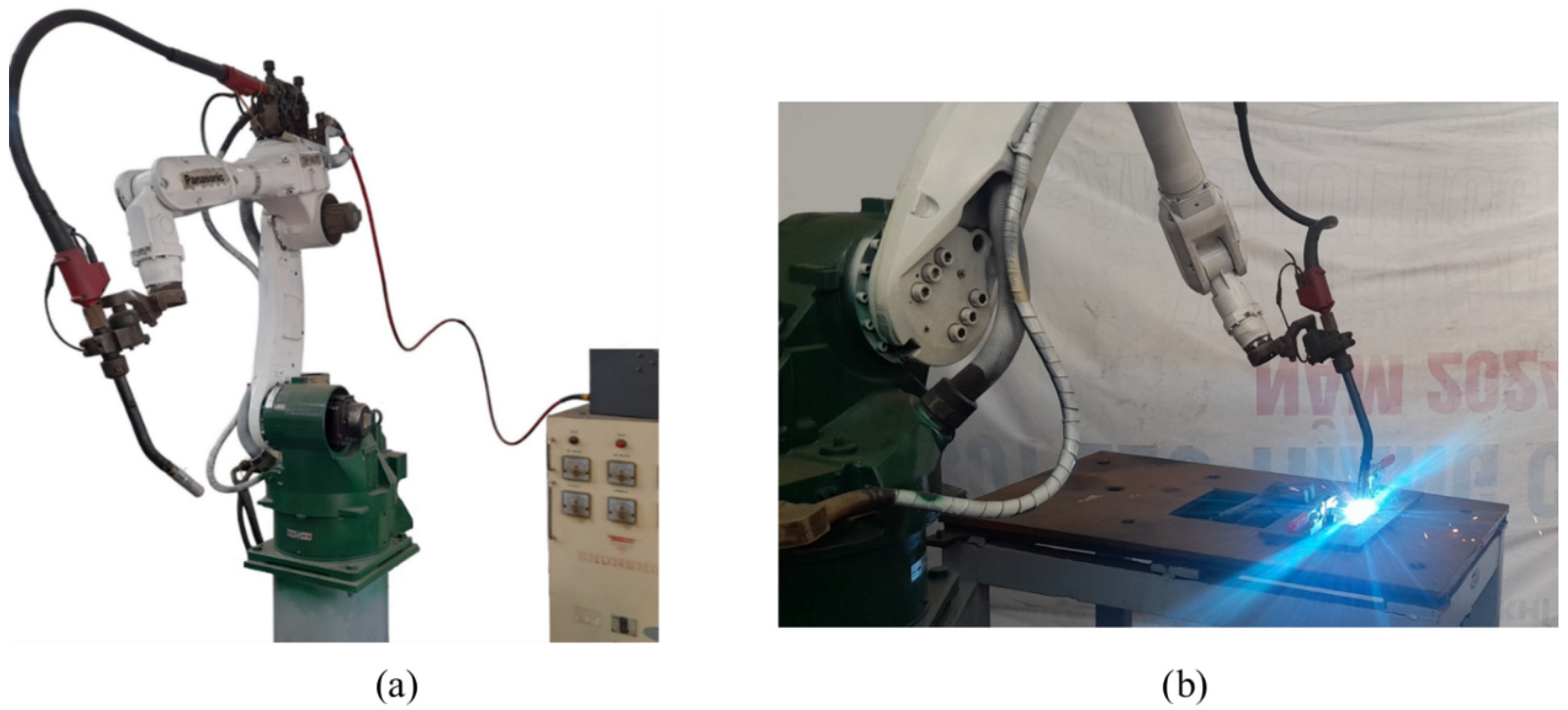
In this research, the fixture illustrated in Figure 1 was used to position and support the welding process between two materials, S20C and SUS 201, with each plate having dimensions of 105 mm × 110 mm × 2 mm. The chemical composition of these steels is presented in Table 1. Figure 1b,c demonstrate the manufactured specimens, including the tensile specimen and the bending specimen, following the ASTM E8/E8M standard [24] and ASTM E290 standard [25], respectively. Each experimental number consists of three samples. The testing speed is set at 5 mm/min for both the tensile test and the bending test. After that, the sample is analysed via microstructure test, as shown in Figure 2. The welding process was performed using an automatic welding robot, as shown in Figure 3, with SUS 201 used as the filler, to ensure high precision and minimize variations caused by manual operation. The diameter of the SUS 201 filler is 1.0 mm.
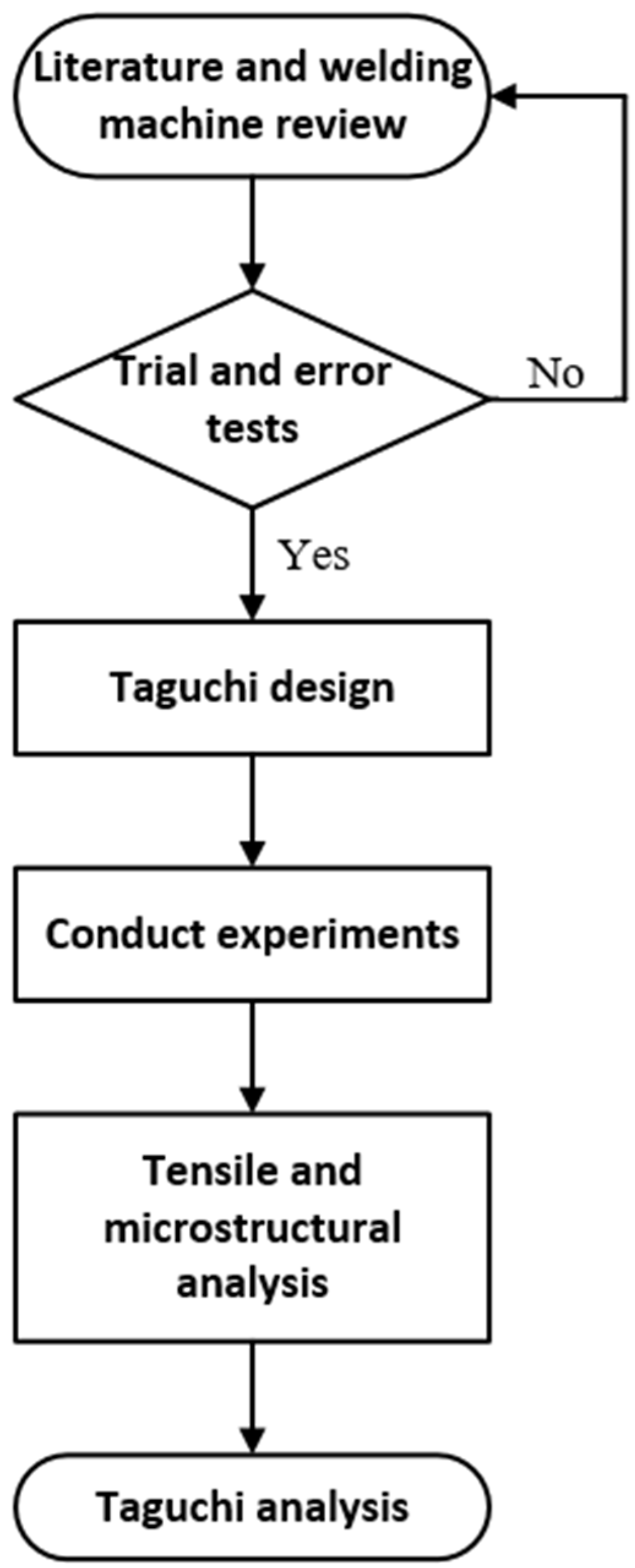
Initially, trial-and-error tests are conducted to identify the raw parameters required to prevent significant welding defects (Table 2). Moreover, review of previous studies [18,19,20,21,22,23] and the parameters of the welding machine also contribute to the selection of process parameter levels and values. Four variable parameters were selected for optimization using the Taguchi method, including the welding current (I), voltage (U), travel speed (v), and electrical stick-out (d), as shown in Table 2, while maintaining a constant Argon gas flow rate of 12 L/min, a travel angle of 0 ° , and a working angle of 90 ° , as shown in Table 3. To ensure statistical reliability, three replicates were manufactured for each experimental condition. Tensile specimens were precision-cut from the dissimilar weld sheets using wire electrical discharge machining (WEDM) and tested on a WE1000B universal testing machine (Jinan, Shandong, China). Microstructural analysis was performed using an Oxion OX.2153-PLM metallurgical microscope (Euromex, Duiven, The Netherlands). Standard metallographic preparation was involved at every step, including sectioning, grinding, polishing the samples, and etching with either 4% Nital for the plain carbon steel side or HCl/HNO3 for the stainless steel side.

3. Results and Discussion

3.1. Tensile Properties

Table 4 shows the welding current, welding voltage, welding speed, and stick-out constructed using the Taguchi method and the output outcomes of the experiment samples. This is the Taguchi L16 orthogonal array design. The following figures and tables will analyze these results.
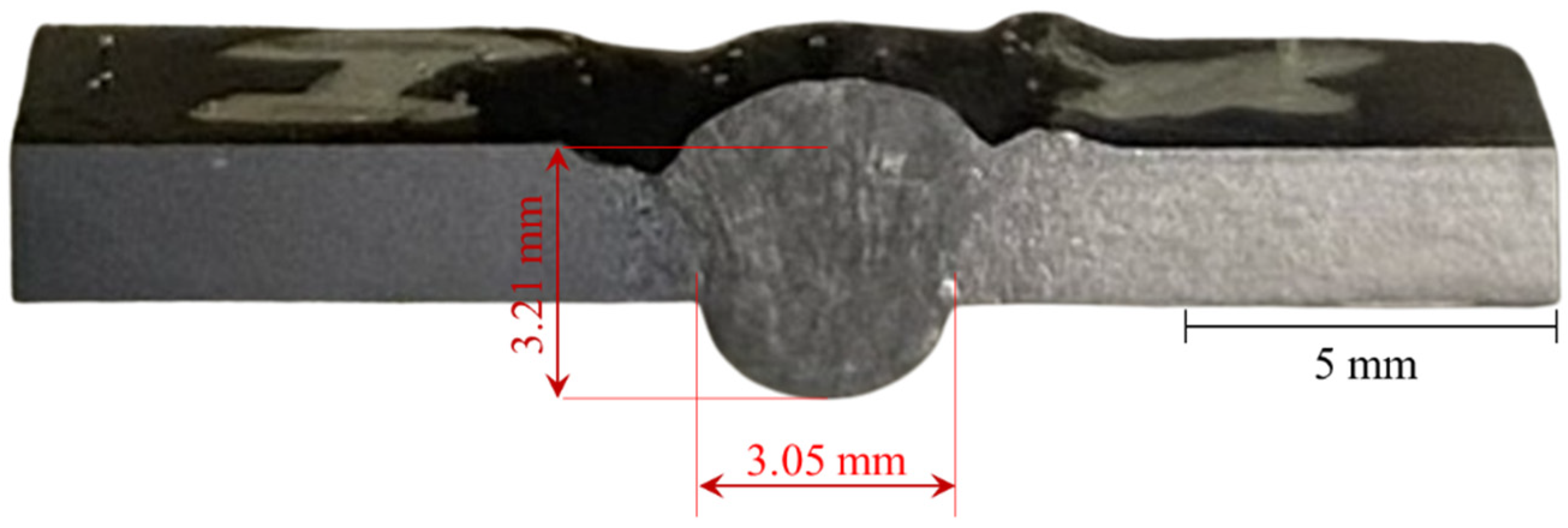
Figure 4 presents the overall visual inspection macrostructure. In the dissimilar welding between carbon steel and stainless steel, a weld is considered acceptable when the minimum depth of penetration (DOP) and elongation value are good enough. A DOP that is too low leads to low strength; however, a DOP that is too high increases the heat input and decreases the welding quality. In this study, we conducted dissimilar welding, which does not have a single penetration standard number. The general purpose is to ensure a balance between good strength and elongation. Therefore, the pass sample should have a reasonable DOP/thickness ratio over 0.5 (or 1.0 mm), and elongation should be higher than 10%. Most samples passed these criteria; however, samples 1, 2, 3, 5, and 10 failed due to low DOP or low elongation, as shown in Table 4. Among them, sample No. 11 exhibited the highest UTS of 450.96 MPa and the greatest elongation of 38.83%.
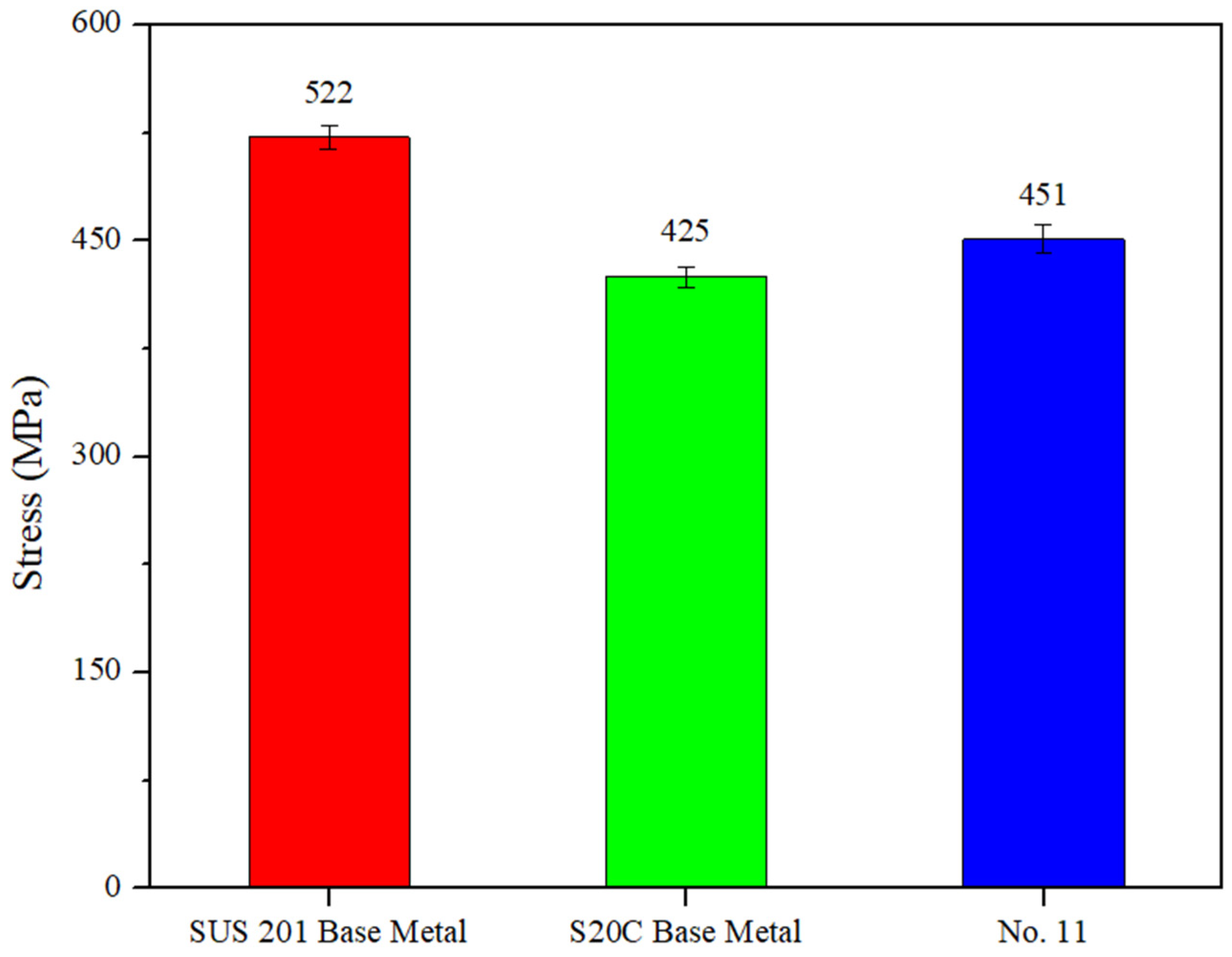
The bar chart in Figure 5 compares the UTS values for the two base metals, S20C and SUS 201, and the sample No. 11 weld joint SUS 201, with the peak UTS being 522.5 MPa, indicating that it is the material with the highest tensile strength among the group. The SUS201/S20C weld joint has the highest UTS value of 451 MPa. This value is lower than SUS 201 but still significantly higher than that of S20C, which is the lowest. Considering the welding efficiency, it achieves a rate of 106.1%, which exceeds a typical value of 80–90%, indicating good weld joint quality. This value is compatible with a prior study [21], which obtained a UTS value of 469.4 MPa for the SUS340/S20C welding joint. That study also applied the Taguchi method for optimizing the welding parameters. This result is also compatible with the study by Sahin et al. [28], who achieved an efficiency of 90% when welding mild steel and stainless steel using the laser welding technique. The high efficiency of 106.1% is also compatible with the study by Mustafa Elmas et al. [17], indicating a value of 105.5%. Laser welding is a popular welding method; however, the loss of laser energy reflection on the metal surface is a critical issue. In general, when examining the whole sample results, the average UTS value is 365.1 MPa, which gains an efficiency rate of 85.9%. This result also indicates a good welding quality range. Only samples 3, 4, 9, 10, and 15 have lower welding efficiency rates, as shown in Table 5. This comparison confirms the finding that the weld joint has a UTS value intermediate to the two base materials (S20C/SUS201). When welding these two materials, consideration of the balance between the cost of the welding process and materials is critical, ensuring optimization of production while maintaining the necessary structural integrity.

3.2. Microstructure

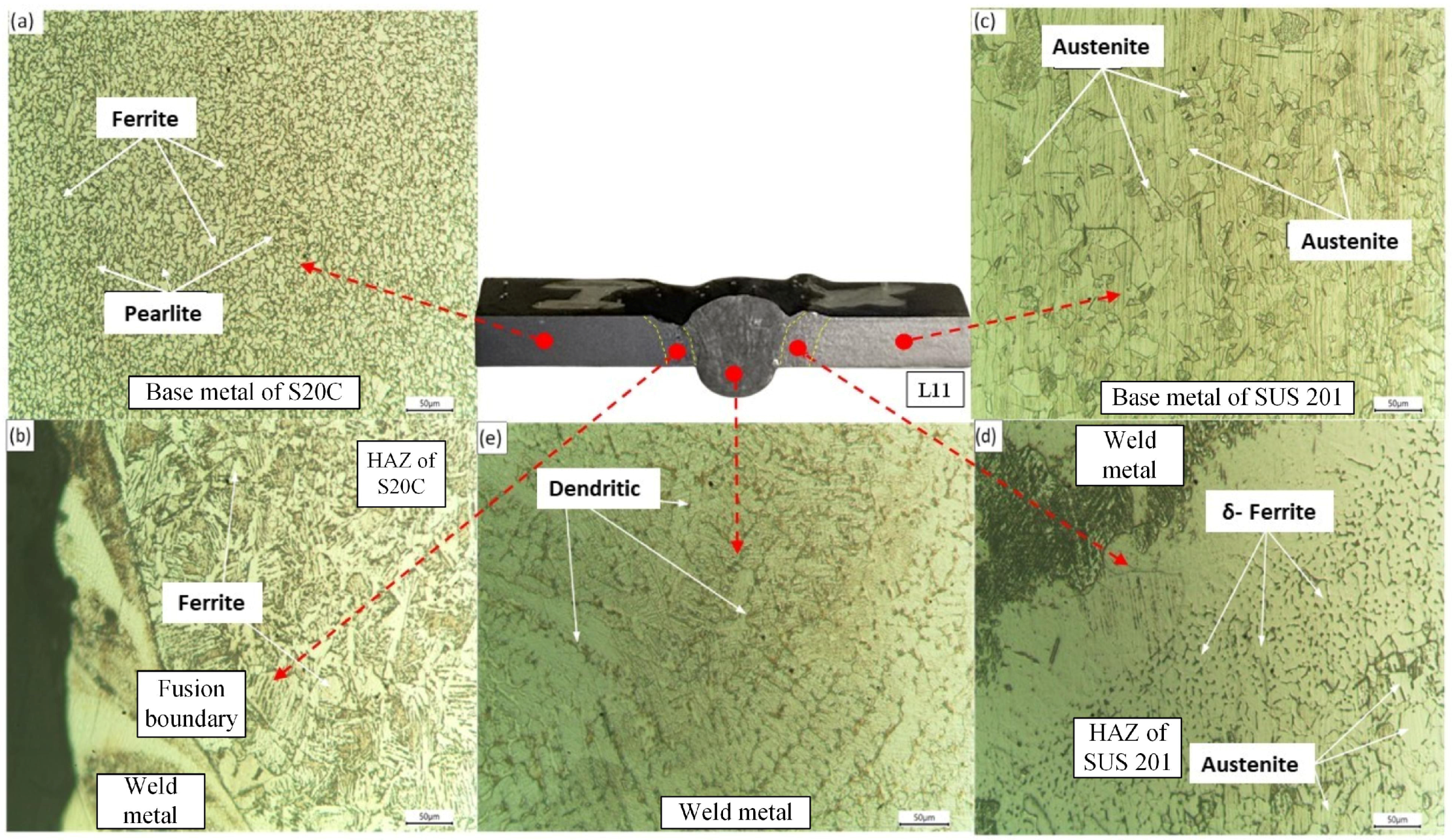
Figure 6 illustrates the microstructure of the weld joint between SUS 201 and S20C using stainless steel filler. The weld structure comprises three types of zones, which are base metals (Figure 6a,c), heat-affected zones (HAZ) (Figure 6b,d), and the weld bead (Figure 6e). The macro-region was ground and prepared to clearly show the weld penetration, which is also presented in the table. Upon close observation, distinct differences in grain structure are noticeable across these zones. These microstructural changes directly impact the mechanical characteristics of the joint. Therefore, a thorough analysis of the microstructure is essential for accurately assessing weld quality and, subsequently, controlling the final product quality.
The typical microstructure of low-carbon steel with ferrite in a brilliant color and pearlite in gray shades is shown in Figure 6a. Figure 6c shows the presence of austenite phases with twin boundaries, indicating a typical microstructure of the austenite SUS 201 steel. The HAZ of S20C steel indicates the ferrite structure with a large size as a result of the welding heat input [29]. The large size of the ferrite could lead to a reduction in the impact toughness and strength. Moreover, Figure 6d presents the appearance of δ-ferrite, which has a brittle characteristic [30]. Remarkably, the average tensile strength of all passed samples is 380.2 MPa, which is lower than both base metals SUS201 (522 MPa) and S20C (425 MPa). This phenomenon could indicate the negative impact of the coarse ferrite and δ-ferrite on the welding quality. Interestingly, different from using carbon steel filler [20,21], which creates martensite and bainite in the weld bead, the weld bead in this study is made from stainless steel filler. It consists of a dendritic austenite structure caused by rapid cooling and thermal gradient during the welding process. Overall, on both the right and left sides of the weld bead, there are brittle phases surrounding it. This phenomenon increases the brittle properties of the whole weld joint.

3.3. Taguchi Optimization of Tensile Strength

Taguchi is a robust design methodology widely used in industry and academia to optimize and enhance product quality. The goal of this research is to identify the best parameters for weld quality using Taguchi analysis performed with Minitab 18 software. For this investigation, the Signal-to-Noise (S/N) ratio associated with the “Larger-the-Better” quality characteristic was chosen because this ratio is central to analyzing variation in weld quality. Furthermore, the S/N ratio has a dual role, such as evaluating process performance and facilitating parameter optimization to ensure better and more stable results. In this study, the UTS value applies the “Large-the-Better” S/N ratio as follows [31]:
S / N = 10 log ( 1 n i = 1 n 1 y i 2 )
where yi is the ith measurement’s value, and n represents the total number of orthogonal experiments.
Table 6 presents the response value for the S/N ratio of the UTS results. It can be observed that the factor with the greatest influence on the tensile strength of the weld during the tensile test is the ESO (d) with a value of 2.57. This is followed by the welding speed (d) with a value of 1.85. The welding current (I) ranks third with a value of 1.61, and the welding voltage (U), which has the least influence on the weld, ranks last with a value of 1.28.
In the surveyed range, the ESO (d) is the greatest influence factor due to its direct impact on the electrical resistance of the wire during welding. Moreover, the ESO (d) strongly impacts welding quality by changing heat input, amperage, penetration, and weld bead geometry [32]. Short stick-outs increase amperage and overpenetration; on the other hand, long stick-outs decrease amperage, leading to flatter, wider beads with less penetration.
In the arc welding technique, the weld heat input Q (Joule/mm) is indicated as follows [33]:
Q = k U × I v
where k is the thermal efficiency, varying between 70% and 85% for the GMAW process.
While the welding current has a major effect, other factors like welding voltage and speed are also significant, directly impacting the Q value, as defined by Equation (2). Notably, because the ranges of variables tested in Table 2 were not established in equal or linear increments, the influence levels of these factors differ.
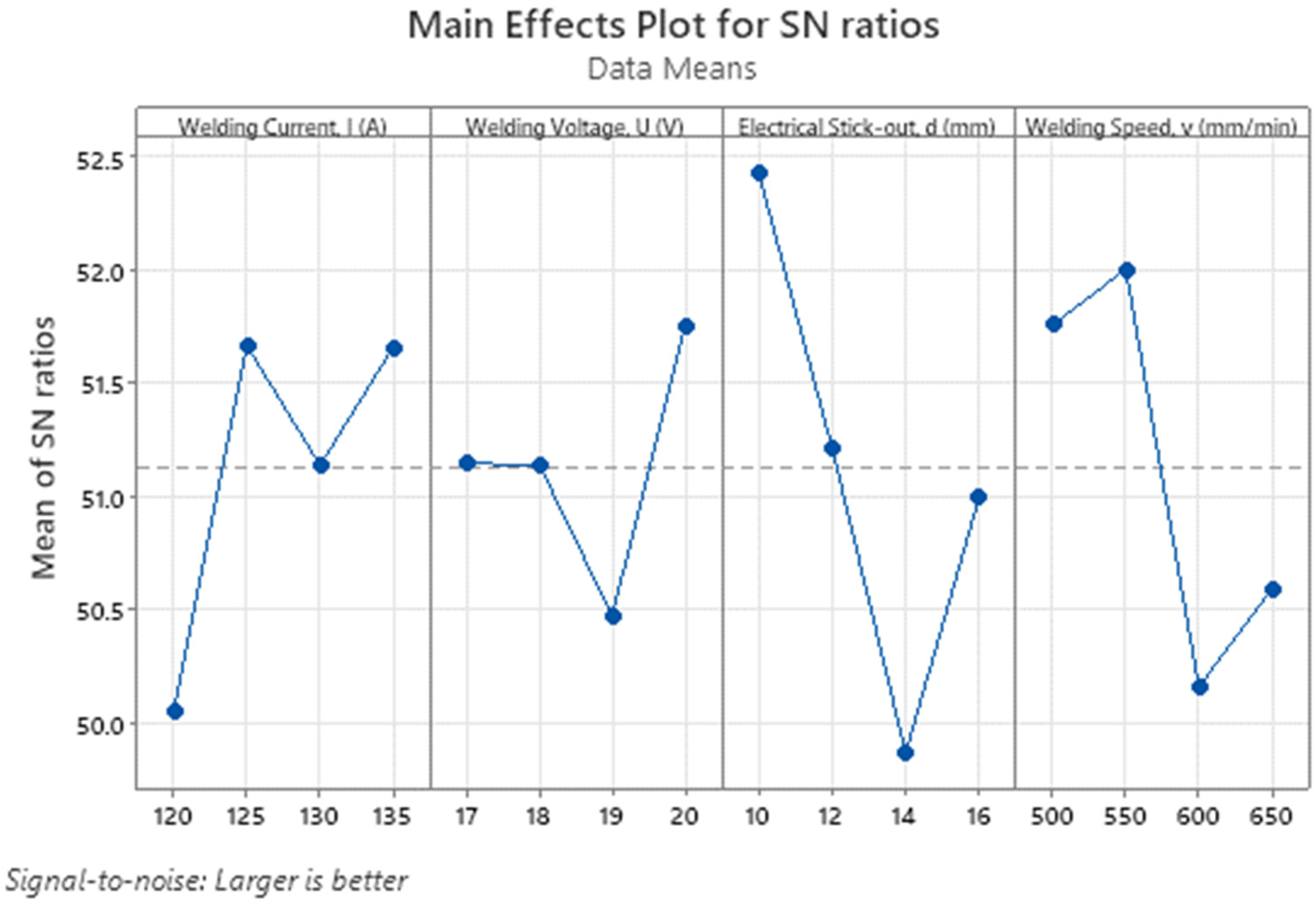
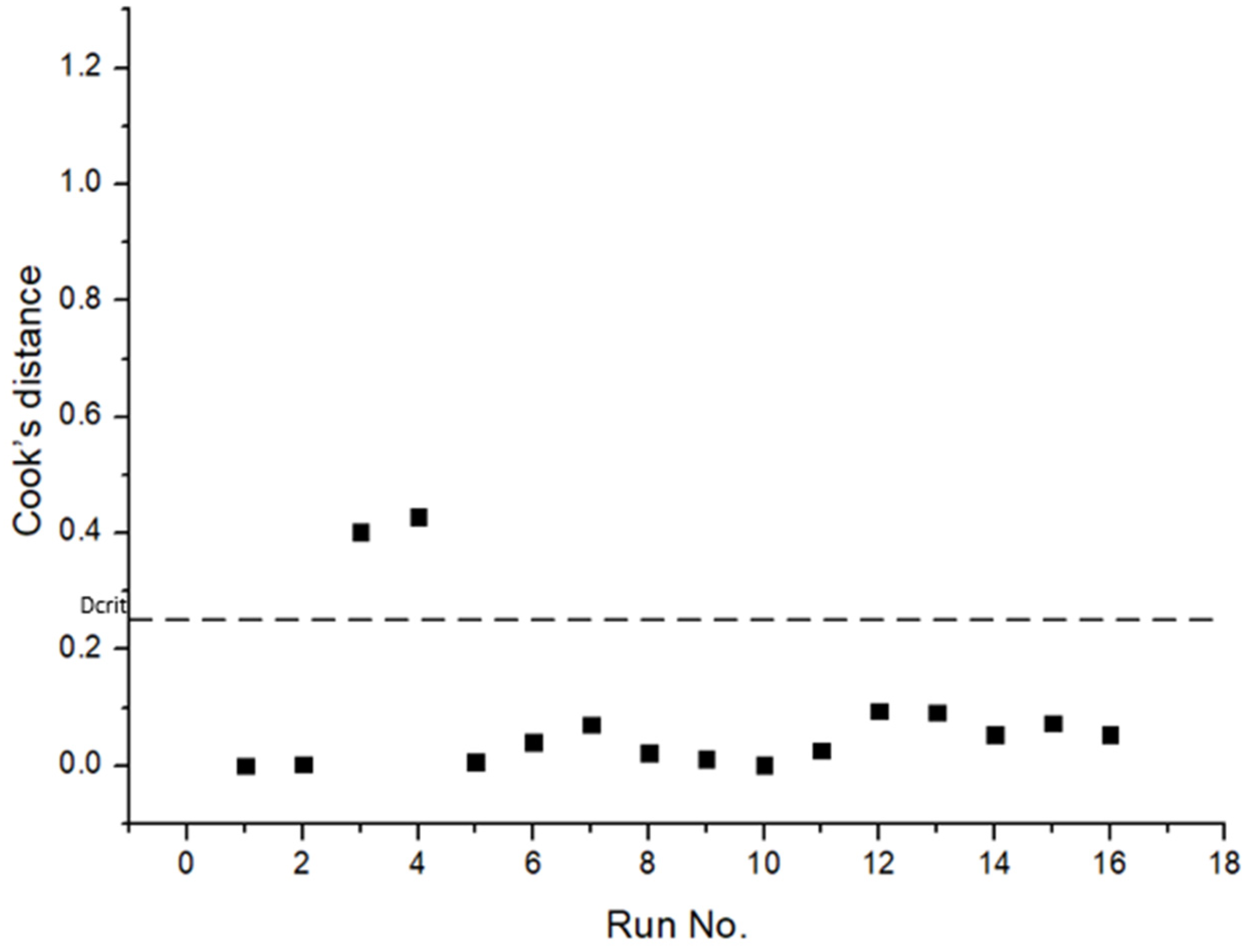
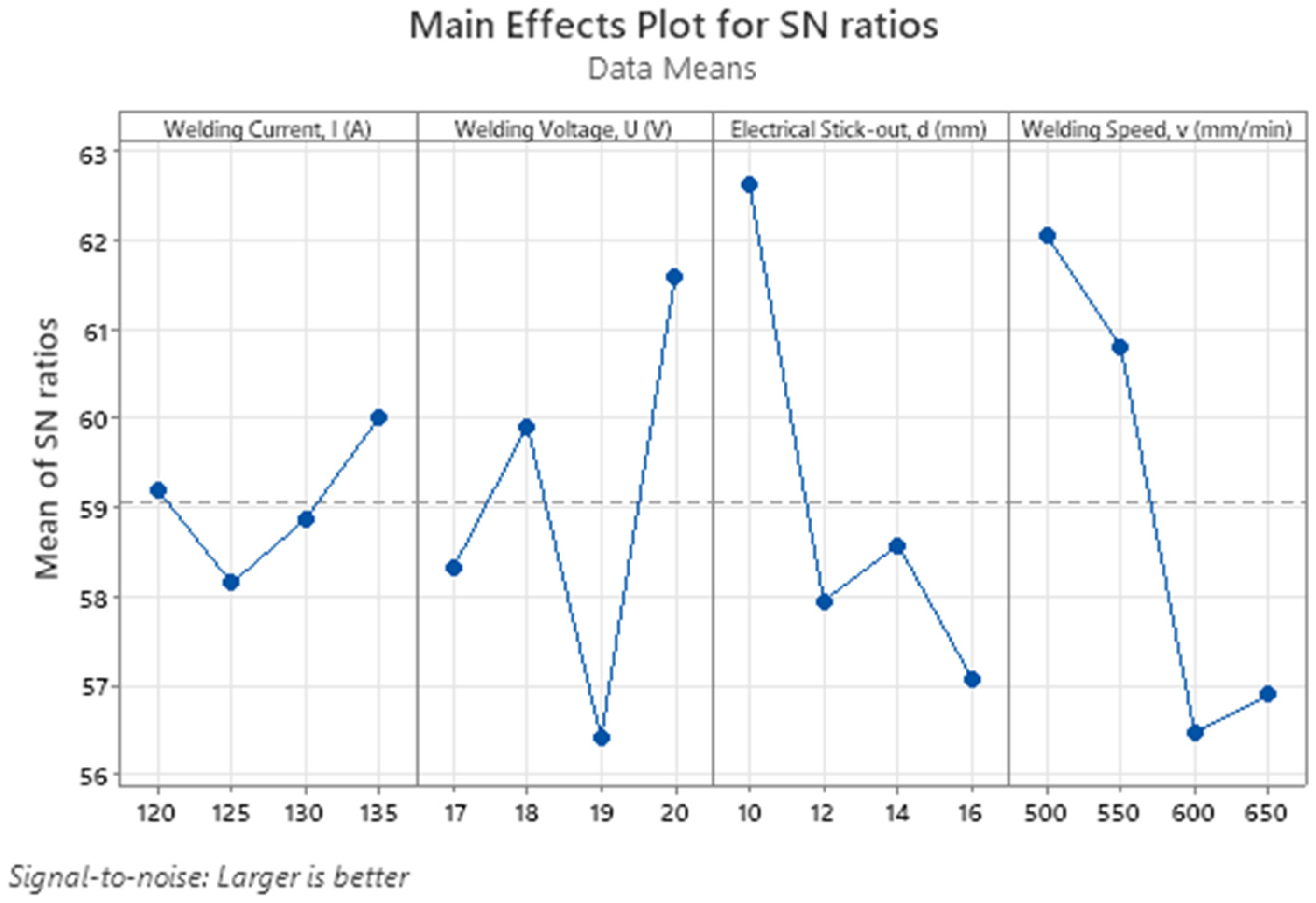
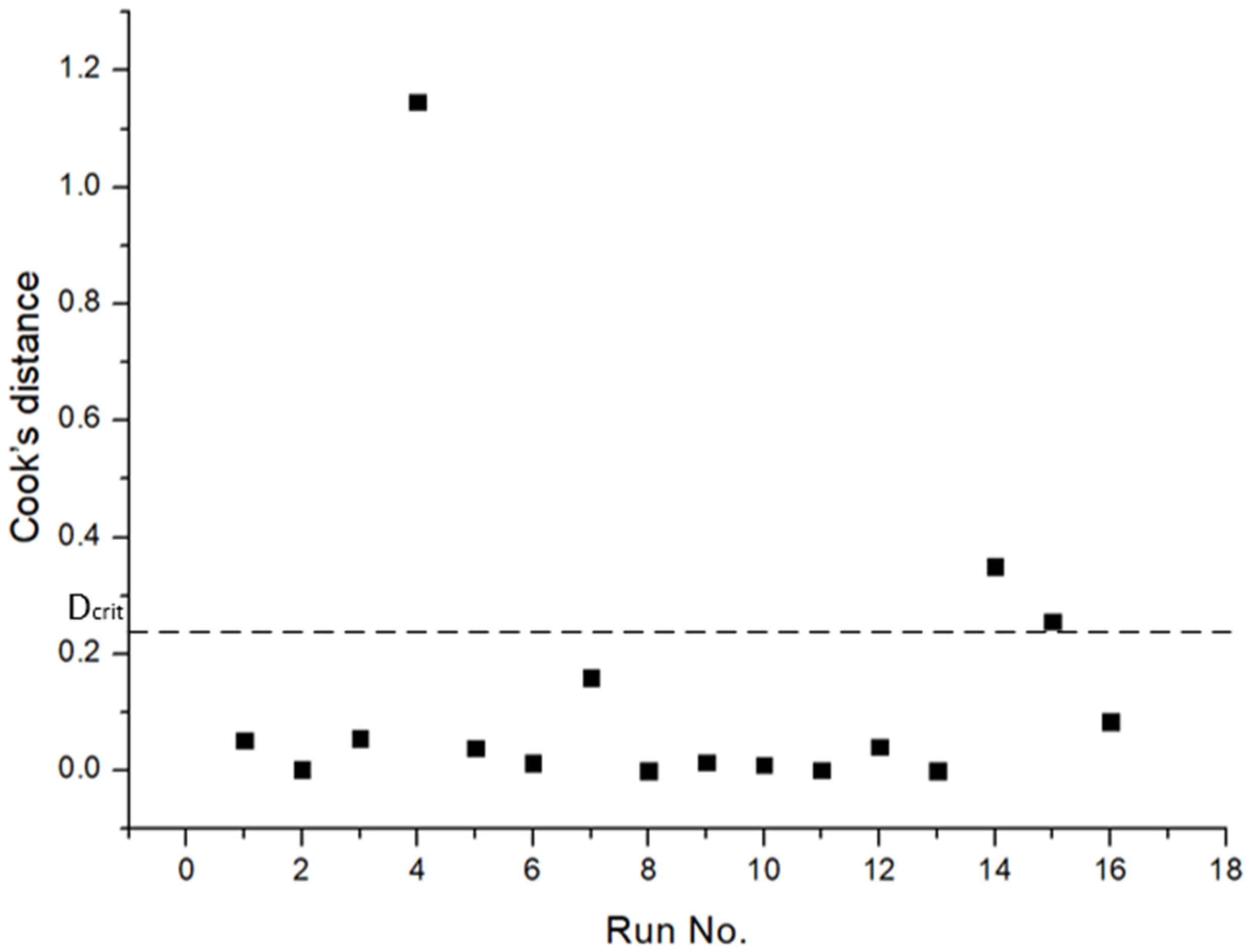
Figure 7 presents the main effect diagrams for the tensile strength of the S20C/SUS 201 weld joint using stainless steel filler. The result indicates that the preliminary optimal parameters for maximizing tensile strength are 125 A, 20 V, 550 mm/min, and 10 mm, corresponding to the welding current, welding voltage, welding speed, and stick-out, respectively. To improve the optimal parameters, future investigations should consider diffusion and phase formation via other advanced evaluation techniques. The table presents the analysis of variance (ANOVA) for the tensile strength of SUS 201 and S20C weld joints using stainless steel filler. Essentially, the ANOVA evaluates whether the means of two or more groups are equivalent and identifies the influence of each factor by comparing the mean response variables at different levels. With 50.66%, the R-squared exceeds 50%, which is evidence of good statistical significance. However, this value is not too high and needs further investigation. The adjusted R-squared value confirms that the model adequately explains the experimental data, while the predicted R-squared value demonstrates satisfactory predictive capability. The close agreement between the two values indicates the absence of significant overfitting. Cook’s distance analysis in Figure 8 proves that the majority of experimental runs had a negligible influence on the developed regression model (Di < 4/n). Runs 3 and 4 exhibited relatively higher Cook’s distance values, indicating increased influence. However, inclusion of these runs did not alter the statistical significance or ranking of the control factors, confirming the robustness of the ANOVA results.
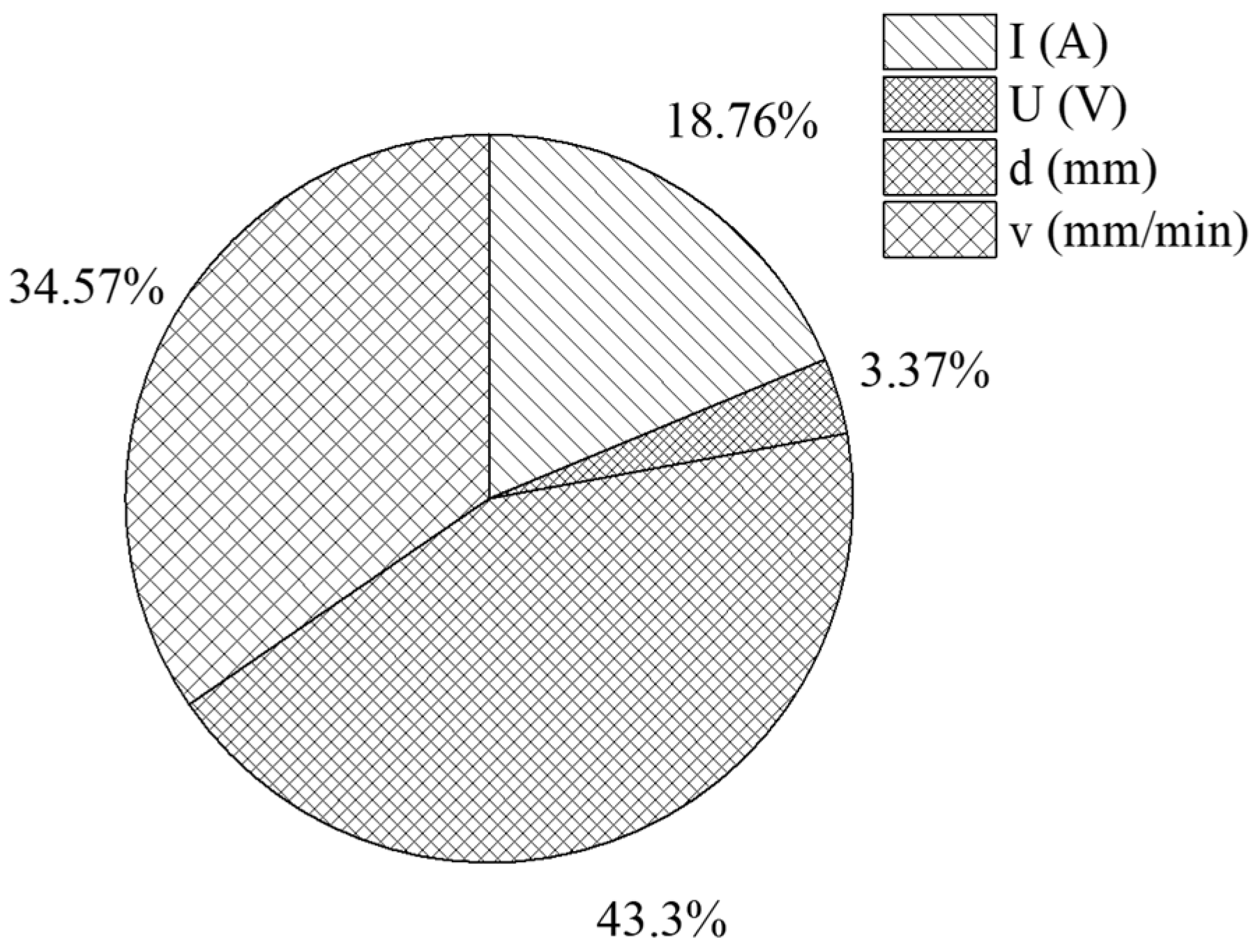
Figure 9 illustrates the influence of welding parameters on the tensile strength of the S20C/SUS 201 weld joint using stainless steel filler. The results indicate that stick-out is the parameter with the greatest impact, accounting for 43.3% of the total variance. Similarly, the welding speed was the second most impactful parameter, representing 34.57%. The impact of the welding current in this case was not high, contributing only 18.76%. Finally, the voltage had the lowest influence ratio, contributing only 3.37%. With a p-value lower than 0.05, the stick-out parameter has good statistical significance. The other parameters, such as I, U, and speed, have a p-value higher than 0.05 and therefore do not have statistical significance.
Furthermore, to establish the relationship between factors affecting weld tensile strength, a linear regression function equation was generated using Minitab software:
U T S = 485 + 3.07 I + 13.0 U 11.65 d 10.416 v
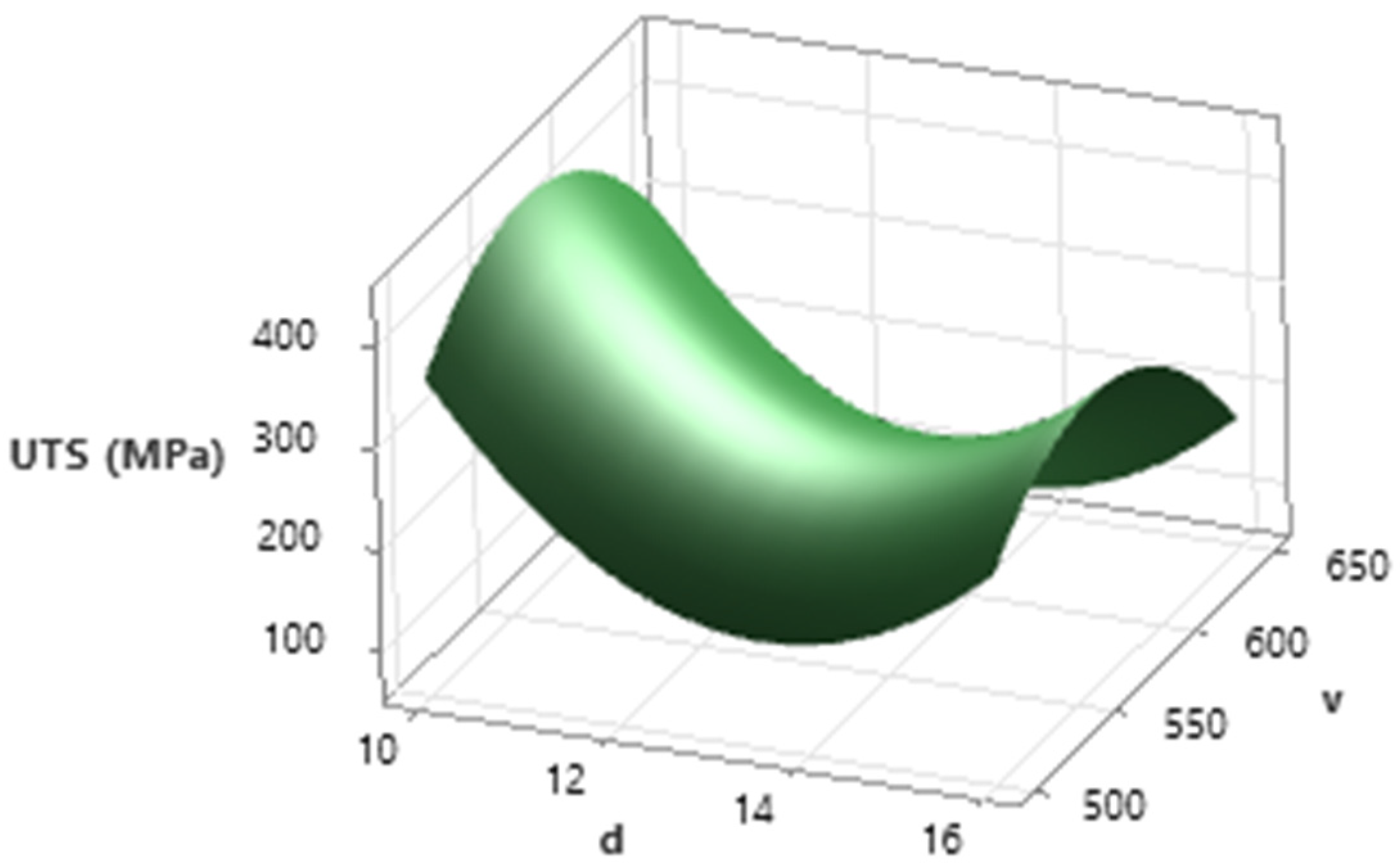
Equation (3) demonstrates that I and U are directly proportional to the tensile strength. Therefore, the higher the I and U values, the higher the weld tensile strength. Electrical stick–out (d) and welding speed (v) are inversely proportional to the value of σ . t e n s i l e . So, the lower their values, the higher the tensile strength. Notably, as shown in Table 7, the R-squared value exceeds 50% at 50.66%, indicating strong statistical significance. Figure 10 shows the surface plot of the UTS value vs. d and v, where d and v are the highest and second-highest impact factors. The figure shows that at a stick-out value of 10 or 16 mm and a travel speed range of 550–600 mm/min, the UST can achieve a high value.

3.4. Bending Strength

Besides the tensile test, the weld joints are also bent via a bending test. Table 8 shows the input parameters that were created via the Taguchi method, the bending test outcomes, and the gray relational grade (GRG) for multi-objective optimization. As shown in Table 5, many samples passed DOP standards, and most samples had high bending strength (1, 2, 8, 11, 12, 14, and 16). Sample 16 achieved the highest bending strength of 1542.48 MPa. This sample also passed the DOP test and gained a good UTS value of 444.65 MPa. In contrast, sample 10 was an exception with a strength of only 484.80 MPa. This reduction in performance is likely attributed to the limited ductility, as shown in the table, indicating that sample 10 possessed an elongation of only 7.66%. Consequently, sample 10 demonstrated significantly lower bending strength during the bending test compared to other passing samples, as shown in Table 7.

3.5. Taguchi Optimization of Bending Strength

Analysis of the Signal-to-Noise ratio from Table 9 revealed the notable findings. Instead of a single dominant factor, the results indicate that the d and v parameters play a primary role in determining the bending strength. The electrode stick-out has a slightly higher “delta of factor” value, indicating a stronger impact. This uniform distribution of influence suggests that bending strength is a sensitive and complex mechanical property.
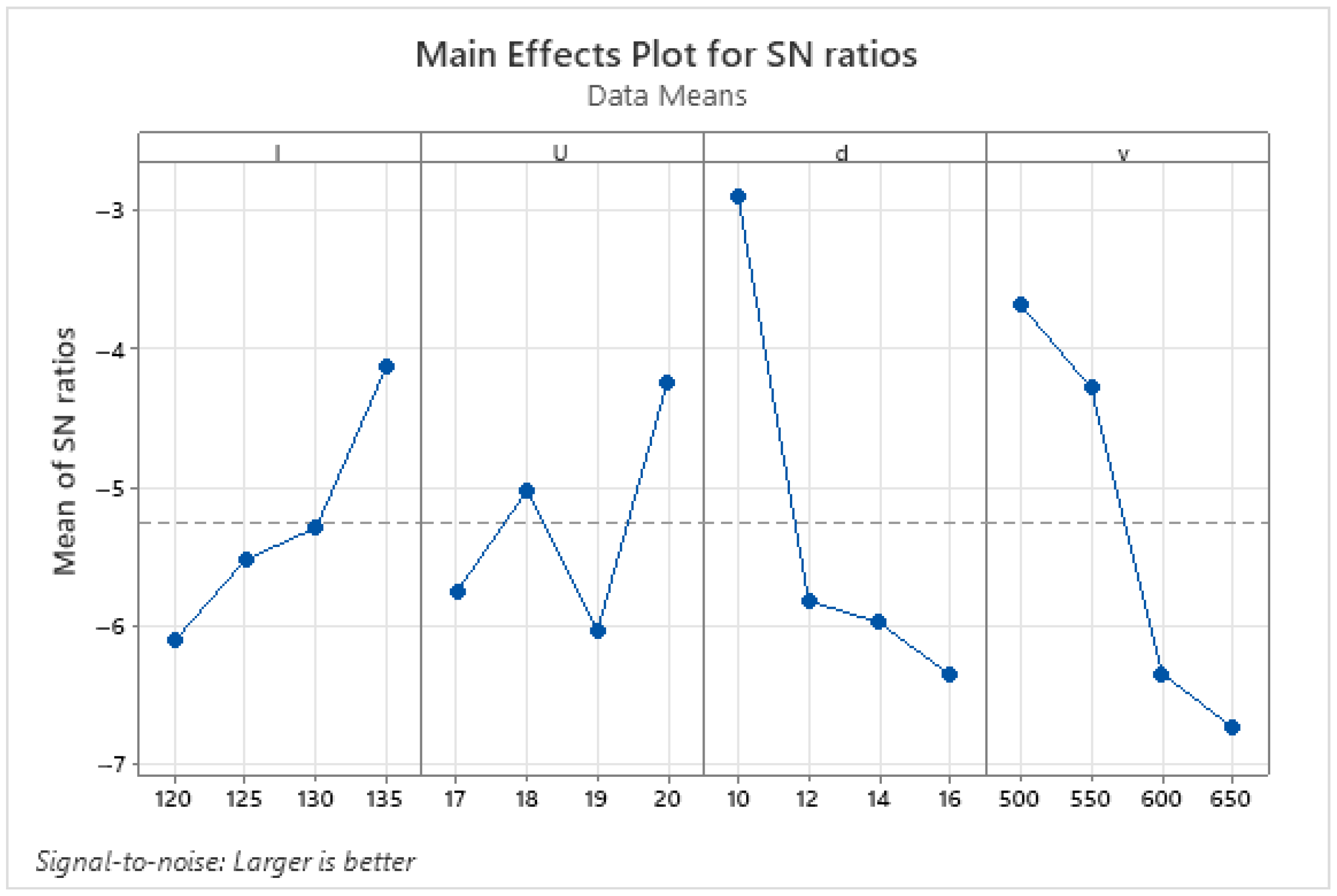
The preliminary optimal parameters for the bending strength with the “larger is better” option were 135 A, 20 V, 10 mm, and 500 mm/min, corresponding to the welding current, welding voltage, welding speed, and stick-out, as presented in Figure 11.
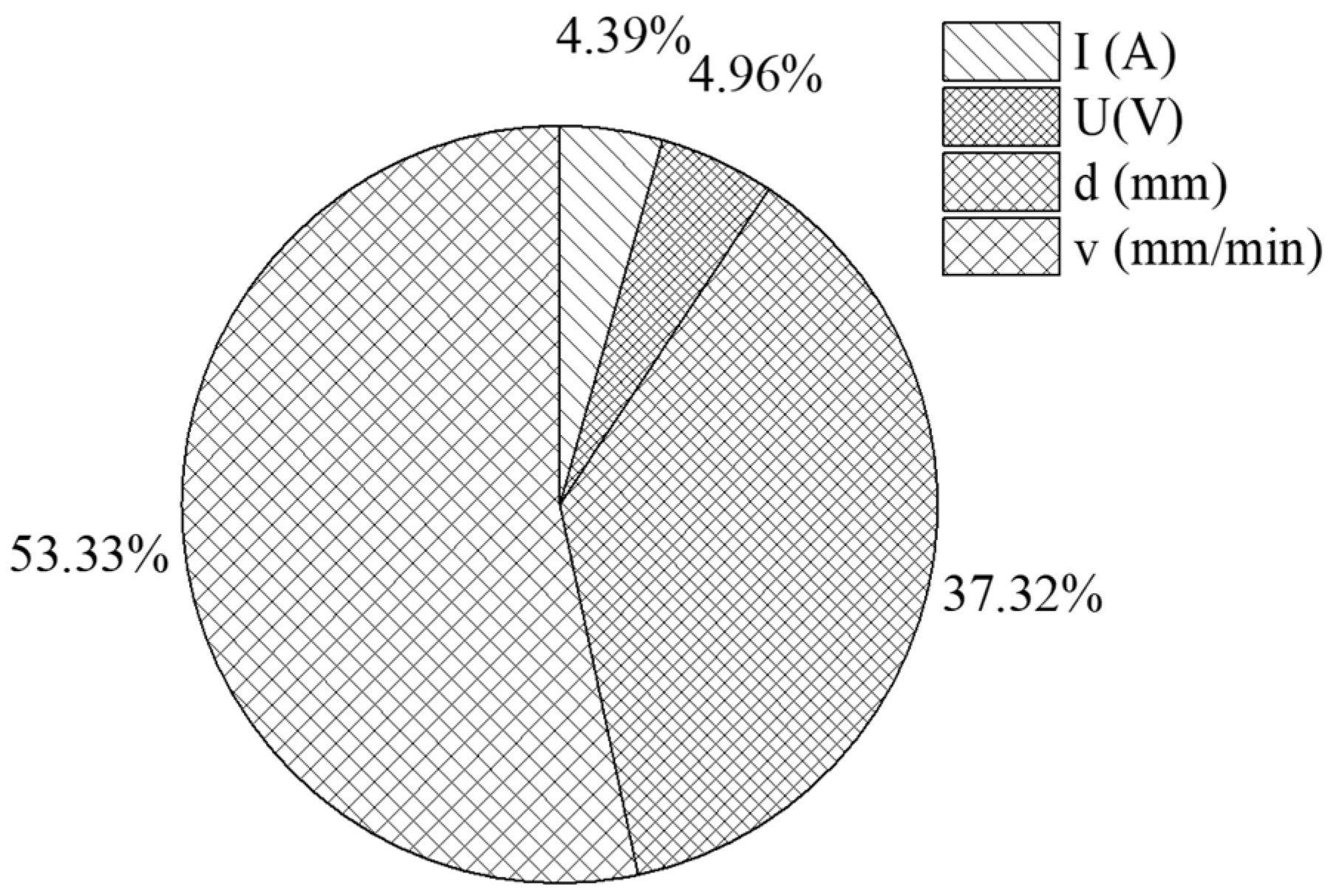
Table 10 also shows the ANOVA value that investigated the factors affecting the bending strength of the weld joint. The statistical model proved to be robust, with an R2 value of 60.23%, which significantly exceeds the 50% threshold. Notably, since this figure is not excessively high, more research may be performed. The ANOVA results indicate that the welding speed and stick-out are statistically significantly impacted by bending results, as their p-values were both less than 0.05, establishing their effect with 95% confidence. Meanwhile, the values for current (I) and voltage (U) did not have a significant effect. Cook’s distance analysis in Figure 12 revealed that the majority of experimental runs had a minimal impact on the regression model (Di < 4/n). Runs 4, 14, and 15 have relatively higher Cook’s distance values, indicating greater influence. However, including these runs did not affect the statistical significance or ranking of the control factors, validating the reliability of the ANOVA results. The investigated values from Table 9 will be more clearly illustrated in Figure 13 via a pie chart.
The data presented in Figure 13 illustrates the level of influence each welding parameter has on the resulting bending strength value. The result indicates that the welding speed has the largest impact, accounting for 53.33%. The next most significant factor is the welding stick-out distance, contributing 37.22%. Finally, the values for the welding current (I) and welding voltage (U) have the lowest influences at 4.39% and 4.96%, respectively. With a p-value lower than 0.05, the stick-out and travel parameters have good statistical significance. The I and U parameters have a p-value higher than 0.05 and therefore do not have statistical significance.
In addition, a linear regression function equation representing the bending strength was generated using Minitab software:
B e n d i n g   s t r e n g t h = 1856 + 12.5 I + 66.2 U 90.8 d 4.34 v
In Equation (4), the welding current (I) and voltage are positively proportional to the bending strength. Conversely, the stick-out value (d) and welding speed (v) are inversely proportional; therefore, the lower the values of (d) and (v), the higher the bending strength. Remarkably, as shown in Table 9, the R-squared value exceeds 50% at 60.23%, proving strong statistical significance.
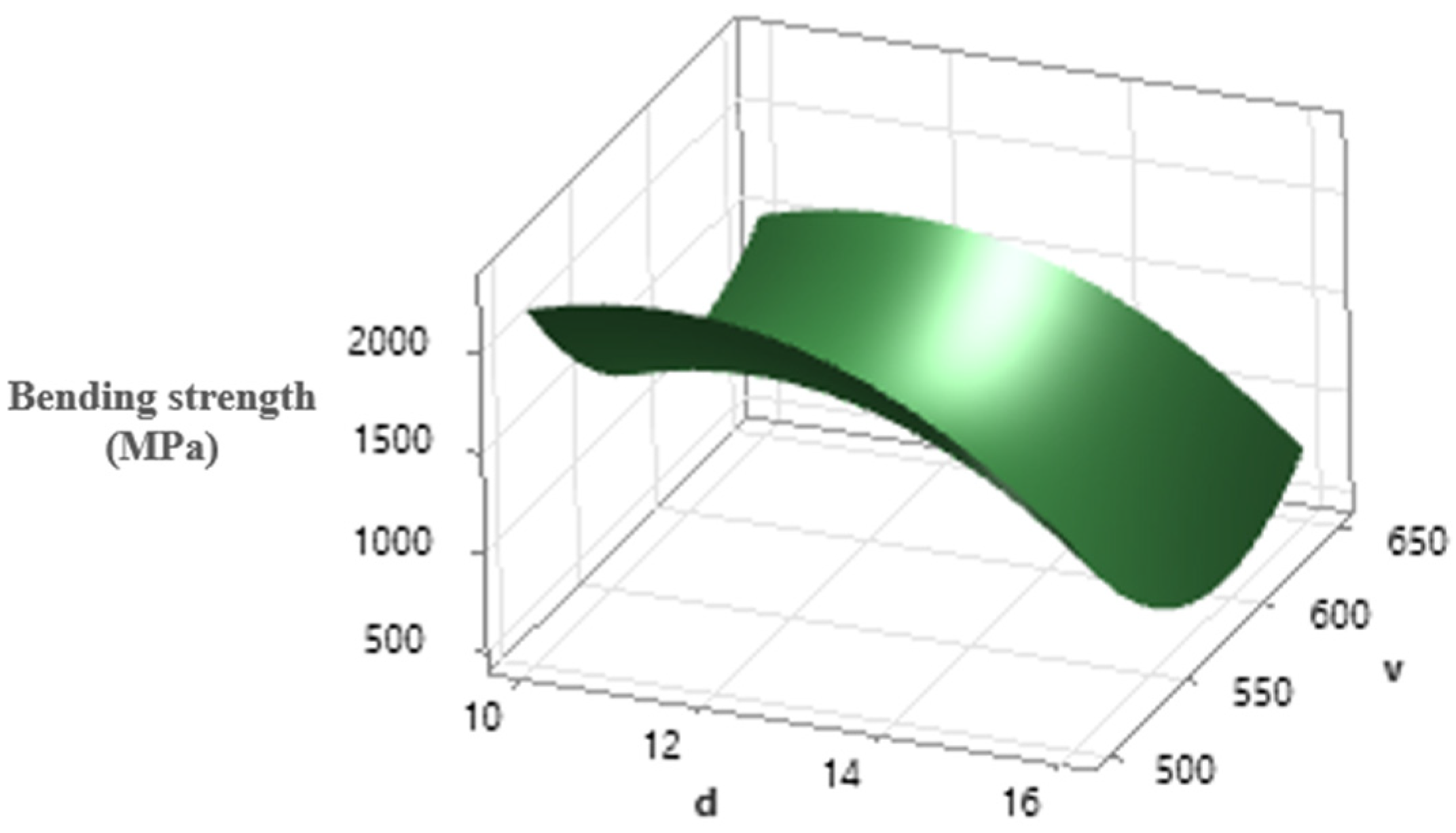
Figure 14 shows the surface plot of the bending strength value vs. d and v. The figure illustrates how the bending strength can reach a high value at a stick-out value of 10 or 12 mm and a travel speed value of 500 or 600 mm/min.
Figure 15 shows the main effect diagram for the multi-objective optimization procedure (tensile strength and bending strength) via gray relational analysis of the S20C/SUS 201 weld joint using stainless steel filler. A Taguchi–gray relational analysis (GRA) was conducted to optimize MIG welding parameters for simultaneous maximization of tensile and bending strengths. The optimal conditions were found to be I = 130 A, U = 19 V, d = 10 mm, and v = 550 mm/min, gaining the highest gray relational level, as shown in Table 7. The proposed approach provides a robust methodology for multi-objective welding optimization and can be extended to other dissimilar or advanced material systems.

4. Conclusions

This study investigated the effects of I, U, d, and v on the mechanical properties of MIG welding, focusing on the dissimilar welding joint between SUS 201 and S20C steel using SUS 201 filler wire. The optimization of the experimental outcomes was examined using the Taguchi method. Several important conclusions can be drawn, including the following:
The average UTS value is 365.1 MPa, which possesses an efficiency rate of 85.9%, indicating a good welding quality range. The large size of the ferrite in the HAZ of the carbon side and the appearance of δ-ferrite in the HAZ of the stainless steel side all have a brittle characteristic. There are brittle phases surrounding the weld bead, which reduce the overall strength of the weld joint. In the examined range, stick-out is the most impactful parameter for both tensile and bending strengths.
The preliminary optimal welding parameters for tensile strength are 125 A, 20 V, 550 mm/min, and 10 mm. The maximum tensile strength is 450.96 MPa. Among the investigated parameters, d has the greatest influence on the UTS value, followed by v, I, and U.
For bending strength, the preliminary optimal welding parameters were identified as 135 A, 20 V, 500 mm/min, and 10 mm. The influence of welding parameters on the tensile strength of the S20C/SUS 201 weld joint was determined using stainless steel filler. The maximum bending strength reached 1542.48 MPa. Both d and welding speed were the most influential factors affecting the bending strength.
GRA was conducted to optimize for the simultaneous maximization of tensile and bending strengths. The optimal conditions were found to be I = 130 A, U = 19 V, d = 10 mm, and v = 550 mm/min.
Further investigation should be conducted to simulate the welding process to clarify the thermal expansion or critical point on the weld joints. The other parameters, such as working angle and gas flow rate, also need further investigation. To increase the quality of the optimal parameters, additional research should be conducted using advanced evaluation techniques to account for diffusion and phase formation. More attention should be concentrated on stick-out and travel speed.

Author Contributions

T.T.N., V.H.H. and V.-T.N.: conceptualization and funding acquisition; M.T.H., V.T.T.N. and V.-T.N.: writing—original draft and investigation; V.T.T.N., P.T.M.T., V.H.H., N.V.S. and V.T.T.N.: analyzing, visualization, and project administration; V.T.T.N., T.T.N. and V.H.H.: writing, review, and editing. All authors have read and agreed to the published version of the manuscript.

Funding

This study was funded by a grant (No. T2025-58) from the Ho Chi Minh City University of Technology and Engineering.

Institutional Review Board Statement

Not applicable.

Informed Consent Statement

Not applicable.

Data Availability Statement

The original contributions presented in this study are included in the article. Further inquiries can be directed to the corresponding author.

Conflicts of Interest

The authors declare no conflicts of interest.

References

  1. Kleinbaum, S.; Jiang, C.; Logan, S. Enabling sustainable transportation through joining of dissimilar lightweight materials. MRS Bull. 2019, 44, 608–612. [Google Scholar] [CrossRef]
  2. Kumar, S.; Gao, S.; Wu, C.; Kar, A.; Basak, S. Towards Sustainability: Critical Insights into Solid-State Joining Processes for Developing Lightweight Hybrid Structures. Int. J. Precis. Eng. Manuf.-Green Technol. 2025, 13, 89–115. [Google Scholar] [CrossRef]
  3. Kah, P.; Shrestha, M.; Martikainen, J. Trends in Joining Dissimilar Metals by Welding. Appl. Mech. Mater. 2013, 440, 269–276. [Google Scholar] [CrossRef]
  4. Arifin, A. Dissimilar metal welding using Shielded metal arc welding: A Review. Technol. Rep. Kansai Univ. 2020, 62, 1935–1948. [Google Scholar]
  5. Martinsen, K.; Hu, S.J.; Carlson, B.E. Joining of dissimilar materials. CIRP Ann. 2015, 64, 679–699. [Google Scholar] [CrossRef]
  6. Kim, H.-T.; Kil, S.-C. Research Trend of Dissimilar Metal Welding Technology. In Computer Applications for Modeling, Simulation, and Automobile; Kim, T., Ramos, C., Abawajy, J., Kang, B.-H., Ślęzak, D., Adeli, H., Eds.; Communications in Computer and Information Science; Springer: Berlin/Heidelberg, Germany, 2012; Volume 341, pp. 199–204. [Google Scholar] [CrossRef]
  7. Taban, E.; Deleu, E.; Dhooge, A.; Kaluc, E. Laser welding of modified 12% Cr stainless steel: Strength, fatigue, toughness, microstructure and corrosion properties. Mater. Des. 2009, 30, 1193–1200. [Google Scholar] [CrossRef]
  8. Kaspar, J.; Zimmermann, M.; Ostwaldt, A.; Goebel, G.; Standfuß, J.; Brenner, B. Challenges in Joining Aluminium with Copper for Applications in Electro Mobility. Mater. Sci. Forum 2014, 783–786, 1747–1752. [Google Scholar] [CrossRef]
  9. Atabaki, M.M.; Nikodinovski, M.; Chenier, P.; Ma, J.; Harooni, M.; Kovacevic, R. Welding of Aluminum Alloys to Steels: An Overview. J. Manuf. Sci. Prod. 2014, 14, 59–78. [Google Scholar] [CrossRef]
  10. Baskutis, S.; Baskutiene, J.; Bendikiene, R.; Ciuplys, A.; Dutkus, K. Comparative Research of Microstructure and Mechanical Properties of Stainless and Structural Steel Dissimilar Welds. Materials 2021, 14, 6180. [Google Scholar] [CrossRef]
  11. Reddy, G.M.; Rao, K.S. Microstructure and mechanical properties of similar and dissimilar stainless steel electron beam and friction welds. Int. J. Adv. Manuf. Technol. 2009, 45, 875–888. [Google Scholar] [CrossRef]
  12. Wang, J.; Lu, M.; Zhang, L.; Chang, W.; Xu, L.; Hu, L. Effect of welding process on the microstructure and properties of dissimilar weld joints between low alloy steel and duplex stainless steel. Int. J. Miner. Metall. Mater. 2012, 19, 518–524. [Google Scholar] [CrossRef]
  13. Abioye, T.E.; Ariwoola, O.E.; Ogedengbe, T.I.; Farayibi, P.K.; Gbadeyan, O.O. Effects of Welding Speed on the Microstructure and Corrosion Behavior of Dissimilar Gas Metal Arc Weld Joints of AISI 304 Stainless Steel and Low Carbon Steel. Mater. Today Proc. 2019, 17, 871–877. [Google Scholar] [CrossRef]
  14. Shojaati, M.; Beidokhti, B. Characterization of AISI 304/AISI 409 stainless steel joints using different filler materials. Constr. Build. Mater. 2017, 147, 608–615. [Google Scholar] [CrossRef]
  15. Bahador, A.; Hamzah, E.; Mamat, M.F. Effect of filler metals on the mechanical properties of dissimilar welding of stainless steel 316L and carbon steel A516 GR 70. J. Teknol. 2015, 75, 61–65. [Google Scholar] [CrossRef]
  16. Yılmaz, R.; Tümer, M. Microstructural studies and impact toughness of dissimilar weldments between AISI 316 L and AH36 steels by FCAW. Int. J. Adv. Manuf. Technol. 2013, 67, 1433–1447. [Google Scholar] [CrossRef]
  17. Elmas, M.; Koçar, O.; Anaç, N. Study of the Microstructure and Mechanical Property Relationships of Gas Metal Arc Welded Dissimilar Protection 600T, DP450 and S275JR Steel Joints. Crystals 2024, 14, 477. [Google Scholar] [CrossRef]
  18. Yelamasetti, B.; Sandeep, M.; Narella, S.S.; Tiruchanur, V.V.; Sonar, T.; Prakash, C.; Shelare, S.; Mubarak, N.M.; Kumar, S. Optimization of TIG welding process parameters using Taguchi technique for the joining of dissimilar metals of AA5083 and AA7075. Sci. Rep. 2024, 14, 23694. [Google Scholar] [CrossRef]
  19. Ogbonna, O.S.; Akinlabi, S.A.; Madushele, N.; Fatoba, O.S.; Akinlabi, E.T. Grey-based taguchi method for multi-weld quality optimization of gas metal arc dissimilar joining of mild steel and 316 stainless steel. Results Eng. 2023, 17, 100963. [Google Scholar] [CrossRef]
  20. Nguyen, V.T.; Nguyen, T.T.; Hoang, V.H.; Thien, T.N.; Yen, D.T.K.; Minh, T.H.; Tuan, L.M.; Nguyen, A.T.; Nghia, H.T.; Anh, P.Q.; et al. Influence of Post-Heat Treatment on the Tensile Strength and Microstructure of Metal Inert Gas Dissimilar Welded Joints. Crystals 2025, 15, 586. [Google Scholar] [CrossRef]
  21. Van Huong, H.; Nguyen, T.T.; Nguyen, V.-T.; Nguyen, V.T.T. Material Strength Optimization of Dissimilar MIG Welding between Carbon and Stainless Steels. Metals 2024, 14, 1011. [Google Scholar] [CrossRef]
  22. Thejasree, P.; Natarajan, M.; Khan, M.A.; Vempati, S.; Yelamasetti, B.; Dasore, A. Application of a hybrid Taguchi grey approach for determining the optimal parameters on laser beam welding of dissimilar metals. Int. J. Interact. Des. Manuf. (IJIDeM) 2025, 19, 175–184. [Google Scholar] [CrossRef]
  23. Said, J.M.; Turan, F.M. Optimising MIG Welding Parameters for Enhanced Material Properties and Weld Quality: An Experimental Approach. In Symposium on Intelligent Manufacturing and Mechatronics; Springer Nature: Singapore, 2024. [Google Scholar] [CrossRef]
  24. ASTM E8/E8M-13; Standard Test Methods for Tension Testing of Metallic Materials. ASTM: West Conshohocken, PA, USA, 2013.
  25. ASTM E290; Standard Test Methods for Bend Testing of Material for Ductility. ASTM: West Conshohocken, PA, USA, 2022.
  26. ASTM A276/A276M; Standard Specification for Stainless Steel Bars and Shapes. ASTM: West Conshohocken, PA, USA, 2023.
  27. JIS G 4051; Carbon Steels for Machine Structural Use. JSA: Tokyo, Japan, 2023.
  28. Sahin, A.Z.; Ayar, T.; Yilbasi, B.S. Laser Welding of Dissimilar Metals and Efficiency Analysis. Lasers Eng. (Old City Publ.) 2009, 19, 139. [Google Scholar]
  29. Wan, X.L.; Wei, R.; Wu, K.M. Effect of acicular ferrite formation on grain refinement in the coarse-grained region of the heat-affected zone. Mater. Charact. 2010, 61, 726–731. [Google Scholar] [CrossRef]
  30. García-García, V.; Reyes-Calderón, F.; Frasco-García, O.D.; Alcantar-Modragón, N. Mechanical behavior of austenitic stainless-steel welds with variable content of δ-ferrite in the heat-affected zone. Eng. Fail. Anal. 2022, 140, 106618. [Google Scholar] [CrossRef]
  31. Tsui, K.-L. An overview of Taguchi method and newly developed statistical methods for robust design. IIE Trans. 1992, 24, 44–57. [Google Scholar] [CrossRef]
  32. e Silva, R.H.G.; dos Santos Paes, L.E.; Barbosa, R.C.; Sartori, F.; Schwedersky, M.B. Assessing the effects of solid wire electrode extension (stick out) increase in MIG/MAG welding. J. Braz. Soc. Mech. Sci. Eng. 2018, 40, 31. [Google Scholar] [CrossRef]
  33. Zhao, Y.; Zhan, X.; Zhou, X.; Liu, T.; Kang, Y. Effect of heat input on macro morphology and porosity of laser-MIG hybrid welded joint for 5A06 aluminum alloy. Int. J. Adv. Manuf. Technol. 2021, 115, 4035–4045. [Google Scholar] [CrossRef]
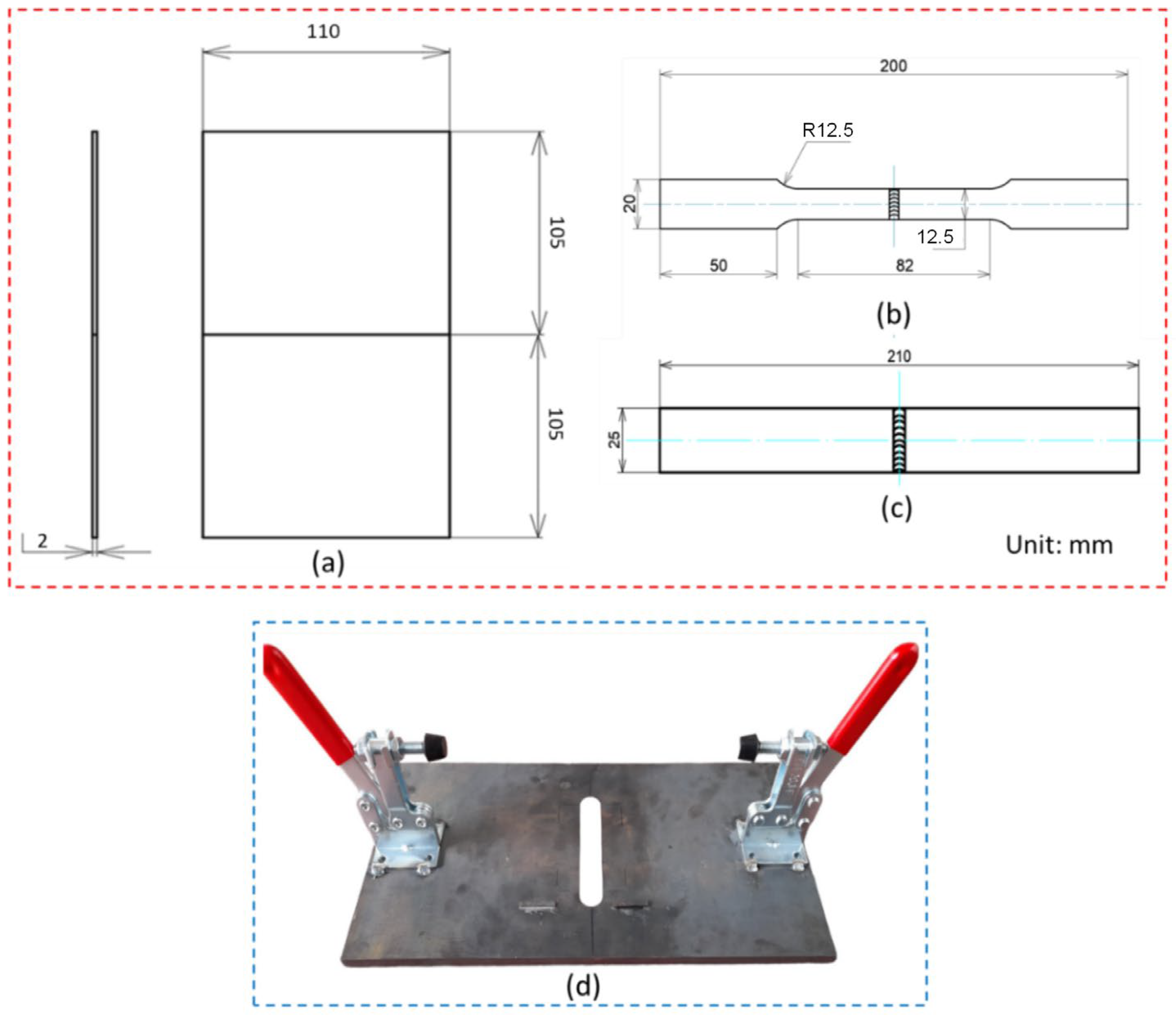
Figure 1. Welding setup. (a) Welding plate. (b,c) Geometry of the tensile and bending test specimens. (d) Welding fixture configuration used for joint preparation.
Metals 16 00110 g001
Figure 2. The methodology diagram of the dissimilar welding research procedure.
Metals 16 00110 g002
Figure 3. (a) Industrial MIG welding robot Panasonic model TA-1400G2 series YA-1NA (Panasonic, Osaka, Japan); (b) MIG welding robot performing gas arc welding.
Metals 16 00110 g003
Figure 4. The macrostructure of the dissimilar welding joint of the No. 11 specimen.
Metals 16 00110 g004
Figure 5. Tensile strength of SUS 201, S20C, and sample No. 11.
Metals 16 00110 g005
Figure 6. The dissimilar weld joint microstructure: (a) S20C steel, (b) HAZ of S20C steel, (c) SUS 201, (d) HAZ of SUS 201 steel, and (e) weld bead.
Metals 16 00110 g006
Figure 7. Main effect diagrams for the tensile strength of the S20C/SUS 201 weld joint using stainless steel filler.
Metals 16 00110 g007
Figure 8. Cook’s distance table for the tensile strength test.
Metals 16 00110 g008
Figure 9. The influence of welding parameters on the tensile strength of the S20C/SUS 201 weld joint using stainless steel filler.
Metals 16 00110 g009
Figure 10. The surface plot of the UTS value vs. d and v.
Metals 16 00110 g010
Figure 11. Main effect diagram for the bending strength of S20C/SUS 201 weld joint using stainless steel filler.
Metals 16 00110 g011
Figure 12. Cook’s distance table for the bending strength test.
Metals 16 00110 g012
Figure 13. The influence of welding parameters on the bending strength of the S20C/SUS 201 weld joint using stainless steel filler.
Metals 16 00110 g013
Figure 14. The surface plot of the bending strength value vs. d and v.
Metals 16 00110 g014
Figure 15. Main effect diagram for multi-objective optimization procedure (tensile strength and bending strength) via GRA of S20C/SUS 201 weld joint using stainless steel filler.
Metals 16 00110 g015
Table 1. Chemical composition of SUS201 stainless steel and S20C steel (wt.%).
Steel GradeCSiMnPSCrNiCuFe
SUS201 [26]≤0.15≤1.05.5–7.5≤0.06≤0.0316–183.5–5.5balance
S20C [27]0.18–0.230.15–0.350.3–0.6≤0.03≤0.035≤0.2≤0.20.3balance
Table 2. Selection of welding current, welding voltage, welding speed, and stick-out after the raw survey.
Welding ParametersLevel 1Level 2Level 3Level 4
I (A)120125130135
U (V)17181920
d (mm)10121416
v (mm/min)500550600650
Table 3. Constant welding parameter.
Welding ParametersValue
Argon flow rate12 L/min
Travel angle
Working angle90°
Table 4. The welding current, welding voltage, welding speed, and stick-out were constructed using the Taguchi method and the output outcomes of the experiment samples.
No.I (A)U (V)d (mm)v (mm/min)UTS (MPa)UTS Deviation (%)Elongation (%)Elongation Deviation (%)Yield Strength (MPa)Yield Strength Deviation (%)
11201710500397.7712.637.2337.23300.6313.0
21201812550370.2111.537.3237.32286.1110.9
31201914600209.1024.2 6.33 6.33178.815.6
41202016650332.6815.110.2510.25216.6126.3
51251712600363.965.818.3718.37302.243.2
61251810650384.276.333.3733.37292.592.0
71251916500391.495.630.7130.71321.648.6
81252014550393.4519.619.5719.57291.1020.7
91301714650305.382.513.9513.95253.7112.7
101301816600317.8710.57.667.66252.964.3
111301910550450.962.338.8338.83363.416.3
121302012500385.642.926.3126.31272.117.6
131351716550383.101.525.9025.90261.1818.6
141351814500374.272.730.6430.64262.7215.4
151351912650336.6815.718.0918.09272.6222.1
161352010600444.655.136.9536.95365.164.1
Table 5. Welding efficiency, elongation, and depth of penetration values of SUS 201 and S20C weld joints using wire SUS 201.
No.Welding EfficiencyElongation (%)DOP (mm)Pass/Fail
193.637.230.84Failed
287.137.320.90Failed
349.26.330.35Failed
478.310.251.32Passed
585.618.370.56Failed
690.433.371.53Passed
792.130.711.20Passed
892.619.571.99Passed
971.913.951.29Passed
1074.87.660.83Failed
11106.138.833.21Passed
1290.726.312.24Passed
1390.125.901.42Passed
1488.130.641.26Passed
1579.218.091.28Passed
16104.636.952.14Passed
Table 6. The S/N ratios response table of the UTS value.
LevelI (A)U (V)d (mm)v (mm/min)
1327.4362.6419.4387.3
2383.3361.7364.1399.4
3365.0347.1320.5333.9
4384.7389.1356.3339.8
Delta of factor57.242.098.965.5
Ranking of the factor3412
Table 7. ANOVA for the tensile strength of the S20C/SUS 201 weld joint using stainless steel filler.
SourceDFAdj SSAdj MSF-Valuep-Value
I (A)14704.44704.42.120.173
U (V)1846.5846.50.380.549
Stick-out (mm)110,852810852.84.890.049
Speed (mm/min)1866686663.90.074
Error1124,41252219.3
Total 1549,4822
S = 47.1097; R-sq: 50.66%; R-sq (adj): 32.72%
Table 8. The input parameters were created via the Taguchi method, the bending test outcomes, and GRG for multi-objective optimization.
No.I (A)U (V)d (mm)v (mm/min)Bending Strength (MPa)Bending Strength Deviation (%)GRG
112017105001510.4213.90.6940
212018125501112.695.50.5479
31201914600440.3321.00.3342
41202016650930.2313.10.4722
51251712600596.5415.50.4720
61251810650977.6315.70.5485
71251916500687.7610.70.5255
812520145501058.2312.50.5777
91301714650610.8412.70.4095
101301816600484.8018.80.4093
1113019105501471.6017.70.8338
1213020125001357.9610.80.6255
131351716550833.7015.90.5271
1413518145001817.142.30.8060
151351912650429.4215.20.4237
1613520106001542.488.40.8334
Table 9. The S/N ratios of the bending strength value.
LevelI (A)U (V)d (mm)v (mm/min)
1998.4887.91375.51343.3
2830.01098.1874.21119.1
3981.3757.3981.6766.0
41155.71222.2734.1737.0
Delta of factor325.6464.9641.4606.3
Ranking of the factor 4312
Table 10. ANOVA for bending strength results.
SourceDFAdj SSAdj MSF-Valuep-Value
I (A)177,64077,6400.730.411
U (V)187,72087,7200.830.383
d (mm)1660,113660,1136.220.03
v (mm/min)1943,419943,4198.880.013
Error111,168,035106,185
Total 152,936,926
S = 325.860; R-sq: 60.23%; R-sq (adj): 45.77%
Disclaimer/Publisher’s Note: The statements, opinions and data contained in all publications are solely those of the individual author(s) and contributor(s) and not of MDPI and/or the editor(s). MDPI and/or the editor(s) disclaim responsibility for any injury to people or property resulting from any ideas, methods, instructions or products referred to in the content.