Article

Softening and Melting Behavior of Lead Blast Furnace Slags

by
Josué López-Rodríguez
1,
Cancio Jiménez-Lugos
1,2,
Manuel Flores-Favela
3,
Aurelio Hernández-Ramírez
1,
Alejandro Cruz-Ramírez
4,
Carmen Martínez-Morales
1,
Miguel Pérez-Labra
5 and
Antonio Romero-Serrano
1,*
1
Instituto Politécnico Nacional, Escuela Superior de Ingeniería Química e Industrias Extractivas, Metallurgy and Materials, Ciudad de México 07738, Mexico
2
Division of Mechanical, Mechatronics and Industrial, Engineering, Tecnológico de Estudios Superiores de Ecatepec, Ecatepec 55210, Estado de Mexico, Mexico
3
Servicios Administrativos Peñoles S.A. de C.V., Torreón 27300, Coahuila, Mexico
4
Instituto Politécnico Nacional, Unidad Profesional Interdisciplinaria de Ingeniería, Specific Vocational Training, Carretera Pachuca-Actopan km 1-500, Distrito de Educación, Salud, Ciencia, Tecnología e Innovación, San Agustín Tlaxiaca 42162, Hidalgo, Mexico
5
Academic Area of Earth Sciences and Materials, Autonomous University of Hidalgo State, Road Pachuca-Tulancingo km 4.5, Mineral de la Reforma 42184, Hidalgo, Mexico
*
Author to whom correspondence should be addressed.
Metals 2026, 16(1), 104; https://doi.org/10.3390/met16010104 (registering DOI)
Submission received: 12 December 2025 / Revised: 7 January 2026 / Accepted: 14 January 2026 / Published: 16 January 2026
(This article belongs to the Section Extractive Metallurgy)

Abstract

In this work, the characteristic temperatures (solidus and liquidus) of selected lead blast furnace slags were investigated using in situ high-temperature optical microscopy. The effects of the basicity of the slag (CaO/SiO2), the Fe/SiO2 ratio, and the Zn content were investigated. The deformation temperature associated with the rounding of the sample edges and the temperature at which 75% of the sample height decreases were experimentally considered as the solidus and liquidus temperatures, respectively. The pseudoternary phase diagrams CaO-SiO2-Fe0.63Zn0.37O and FeO-Ca0.54Si0.46O1.46-ZnO were calculated, along with the crystallization curves, using the thermodynamic software FactSage to estimate the characteristic temperatures and phase evolution during the cooling of the slag. The difference between the calculated and experimental solidus and liquidus temperatures was about 70 °C. The results of XRD, SEM, and DSC analysis at high temperatures showed that spinel (ZnFe2O4), melilite (Ca2ZnSi2O7), and andradite (Ca3Fe2Si3O12) were the base crystals for all slag samples. The liquidus temperature increases with decreasing slag basicity (CaO/SiO2), while the liquidus temperature increases with increasing Fe/SiO2 ratio or Zn content.

1. Introduction

Lead blast furnace slags are primarily represented by the CaO-FeO-SiO2 system, with significant additions of ZnO, Al2O3, Fe2O3, and MgO. The basic ternary CaO-FeO-SiO2 system shows that the commonly used slag region lies within the low liquidus temperature zone of the eutectic trough, roughly along the line joining Ca2SiO4 and Fe2SiO4. Slag viscosity is a critical parameter for furnace performance; a low viscosity is preferred to allow for the effective separation of slag and bullion, and to enable furnace tapping at a practical rate. In addition to lowering viscosity by increasing temperature, slag viscosity at a given temperature increases with higher silica and alumina content and decreases with higher CaO, FeO, MgO, and PbO content [1,2,3]. Two important parameters that influence the melting temperature and viscosity of the slag are the CaO/SiO2 and FeO/SiO2 ratios. For viscosity, both CaO and FeO disrupt the polymer structure of SiO2, making the slag more fluid [1,4,5].
Determining the melting temperature of the slag is of great importance in pyrometallurgical processes, as a fully liquid slag enables increased kinetics of the chemical reactions and ensures refining and adequate separation of the metallic phase [6,7,8]. Various methods have been proposed to determine the characteristic temperatures of slags. One common method is in situ high-temperature optical microscopy, which is based on the dimensional change in samples during heating. In this method, four types of temperatures are distinguished, the deformation temperature (DT), which is related to the rounding of the edges of the sample; the softening temperature (ST), which is associated with the plastic deformation; the hemisphere temperature (HT), which is related to the liquidus temperature; and the flow temperature (FT), which is considered to be the one at which the mobility of the liquid occurs.
Several researchers associate these temperatures with specific shapes formed during heating [9,10,11]. The hemispherical temperature is referred to as the liquidus when the sample assumes a hemispherical shape. In other studies, the temperatures ST, HT, and FT correspond to decreases in sample size by 25%, 50%, and 75%, respectively [12,13]. Wang et al. [14] defined the initial softening temperature as the point at which charge shrinkage reaches 10%, and the final softening temperature as the point at which charge shrinkage reaches 40%.
In a recently developed hot thermocouple technique, a small amount of slag is placed on a thermocouple and heated until the slag melts completely [15,16,17,18,19]. It is then slowly cooled to the temperature at which solid particles begin to form, and the solid–liquid ratio of the sample is recorded. The disadvantage of this method is that it can only be applied to systems that are transparent in the liquid state and do not produce volatile species when heated. Other common methods for investigating slag solidification are differential thermal analysis (DTA) and differential scanning calorimetry (DSC), in which the slag sample is heated in a furnace along with a reference substance, and the temperature difference between the two samples is recorded [20,21]. The limitations of these methods are that they are not direct methods for observing the melting and solidification processes and that they are only useful in those systems where the release or absorption of heat is sufficient to be quantified.
The phase diagrams in the literature provide the liquidus temperature only for a limited range of slag types and compositions. Therefore, it is necessary to investigate the liquidus temperature of each slag for a specific process. Changing the composition of an individual component can significantly influence its interaction with other components and substantially change the properties of the slag. Additionally, the characteristic temperatures of slags can vary significantly due to the diversity of species and the composition of their constituents.
Recently, computer programs and databases have been developed that enable the investigation of phase changes in multi-component slag systems. The thermodynamic software FactSage v 8.4 [22] has been used to investigate interactions between metals and slags in pyrometallurgical ferrous and non-ferrous processes. It has also been applied to the study of metallurgical processes, phase equilibria, liquidus temperature calculations, and process modeling. Jak et al. [23,24] worked on optimizing thermodynamic models for multi-component systems. They described phase equilibria and physicochemical properties in complex slag systems. The properties of slags are highly relevant in the lead blast furnace process, as slags can become very viscous due to the precipitation of solid phases, leading to problems with slag tapping and proper separation of the metallic phase. This issue can result in the loss of valuable metals such as gold and silver. The recovery of precious metals during lead production in a blast furnace increases the profitability of the process [25].
The objective of this work is to determine the characteristic temperatures of slags from the lead blast furnace and to establish a relationship between the results of the in situ observation method—monitoring changes in specimen dimensions—and the phase diagrams that can be determined thermodynamically. In the extractive metallurgy of lead, it is crucial to estimate the start and end temperatures of solidification for complex slags, such as those encountered in lead blast furnaces. The slag and the lead-rich metallic phase flow from the furnace into a settling tank, where they separate by density. For efficient phase separation, both phases must be completely liquid and have low viscosity; otherwise, the lead-rich phase and other valuable elements, such as silver and gold, will be trapped in the slag.
We also identify the solid phases, both calculated and experimental, that form during the cooling of the liquid slag. To achieve this objective, slags from lead processing are used, along with the FactSage v 8.4 computer program [22], to build pseudoternary diagrams of the CaO-SiO2-FeO-ZnO system and the corresponding crystallization curves, considering PbO, Cu2O, Al2O3, and MgO as minor components.

2. Materials and Methods

2.1. Materials

Typical slag samples obtained from the smelting of lead concentrate in a blast furnace were used. The as-received samples were crushed to −100 mesh size for X-ray fluorescence analysis, RIGAKU Model Primus II [Reuzeit, Temecula, CA, USA]. Table 1 shows the chemical composition of the slag in mass%. The slag samples were selected to study the effect of the following composition parameters (in mass): CaO/SiO2, Fe/SiO2, and Zn content on the characteristic temperatures, while keeping the composition of the other components as constant as possible.

2.2. Softening-Melting Method

The experimental equipment was used to determine the changes in size and shape of the samples resulting from the heating process. For this purpose, the slag samples were first ground to −100 mesh size (149 μm) and then compacted at a constant pressure of 0.1 MPa to obtain cylinders 6 mm in diameter and 8 mm in height. They were then introduced into a furnace with a temperature controller, equipped with a video camera, and recorded by a computer. A Pt/Pt-Rh 10 thermocouple was placed close to the sample to measure the temperature. The slag cylinder was subjected to a controlled heating process, starting from room temperature until reaching a fully molten state under an air atmosphere. The heating rate was 20 °C min−1 from room temperature to 800 °C, and subsequently, the rate was 3 °C min−1 up to 1500 °C.
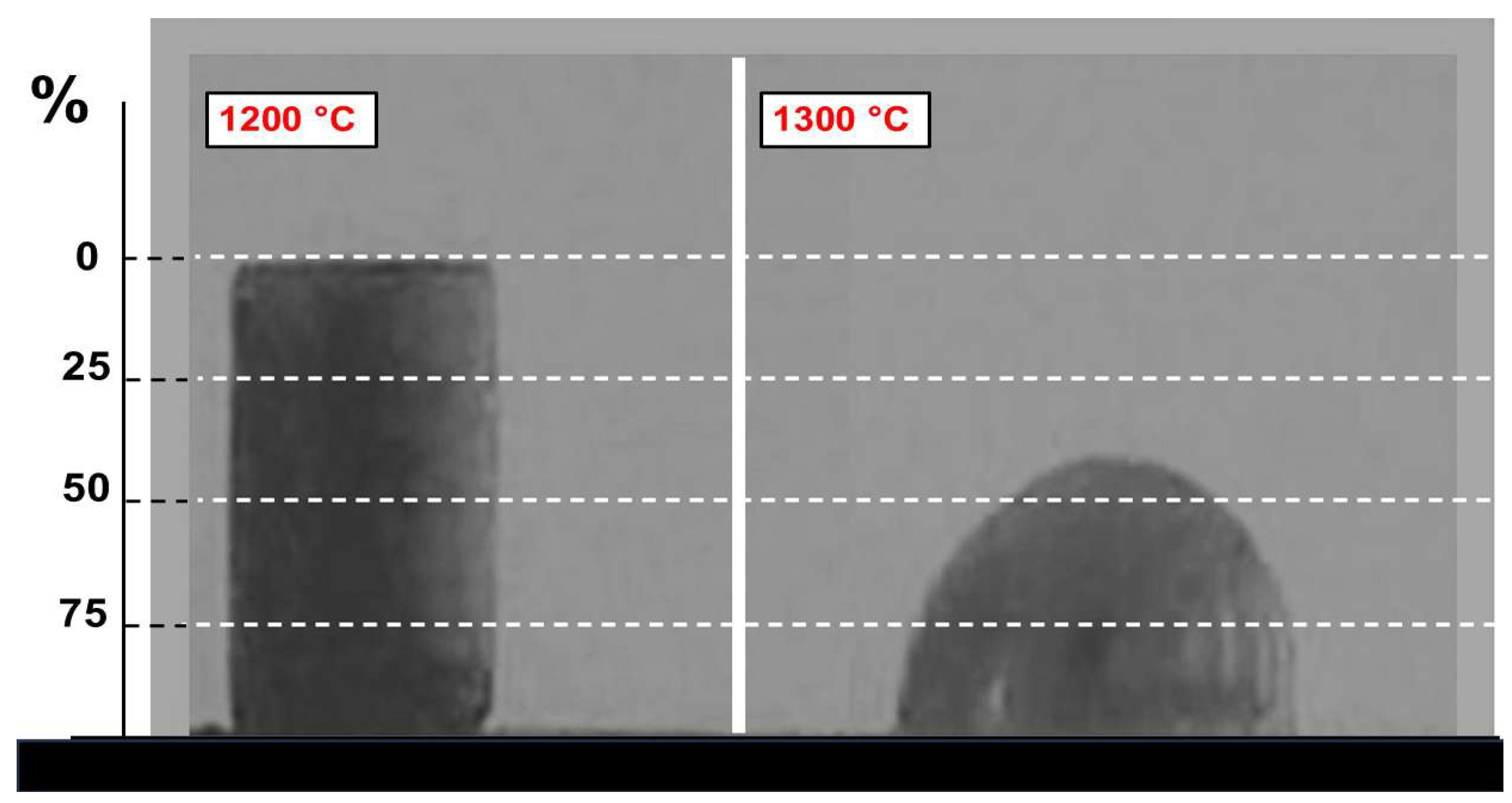
The experimental procedure is based on the DIN 51730 standard [26], which specifies the preparation of cylindrical samples and the identification of characteristic temperatures during heating. The softening temperature is defined as the point at which the first signs of softening, such as edge rounding and the onset of swelling, appear. At the hemisphere temperature, the sample assumes a hemispherical shape, with its height equal to half the length of its baseline. The flow temperature is reached when the height of the sample is one-third of its height at the hemisphere temperature. The images obtained from the tests allowed the determination of characteristic temperatures during heating. However, not all slags yielded results for the flow temperature using this method. Therefore, we consider the first recorded temperature, which corresponds to the complete rounding of the edges, as the deformation temperature. The subsequent temperatures correspond to decreases in sample height by 25%, 50%, and 75%. Each slag sample was tested twice, and the results were averaged, with a margin of error of less than 10 °C. Figure 1 shows the images obtained in sample A1 (low-CaO/SiO2) at 1200 °C and 1300 °C as an example.
The as-received samples of each slag were characterized by high-temperature X-ray diffraction (Bruker Corporation, Madison, WI, USA) using Cu Kα (λ = 1.5406 Å) radiation over a 2θ range of 10° to 90° at a speed of 2°/min to determine the mineralogical species present at temperatures from 800 °C to 1100 °C. The phases present in the samples heated to 1100 °C and rapidly cooled were also determined by mounting and polishing the samples, followed by examination using optical microscopy and scanning electron microscopy coupled with an energy-dispersive spectrometer (SEM–EDS, Jeol 6300, JEOL, Peabody, MA, USA). Finally, differential scanning thermal analysis (TGA/DSC; TA Instruments SDT Q600, TA Instruments, New Castle, DE, USA) was also performed on the slag samples.

3. Thermodynamic Analysis

3.1. Pseudoternary Phase Diagrams

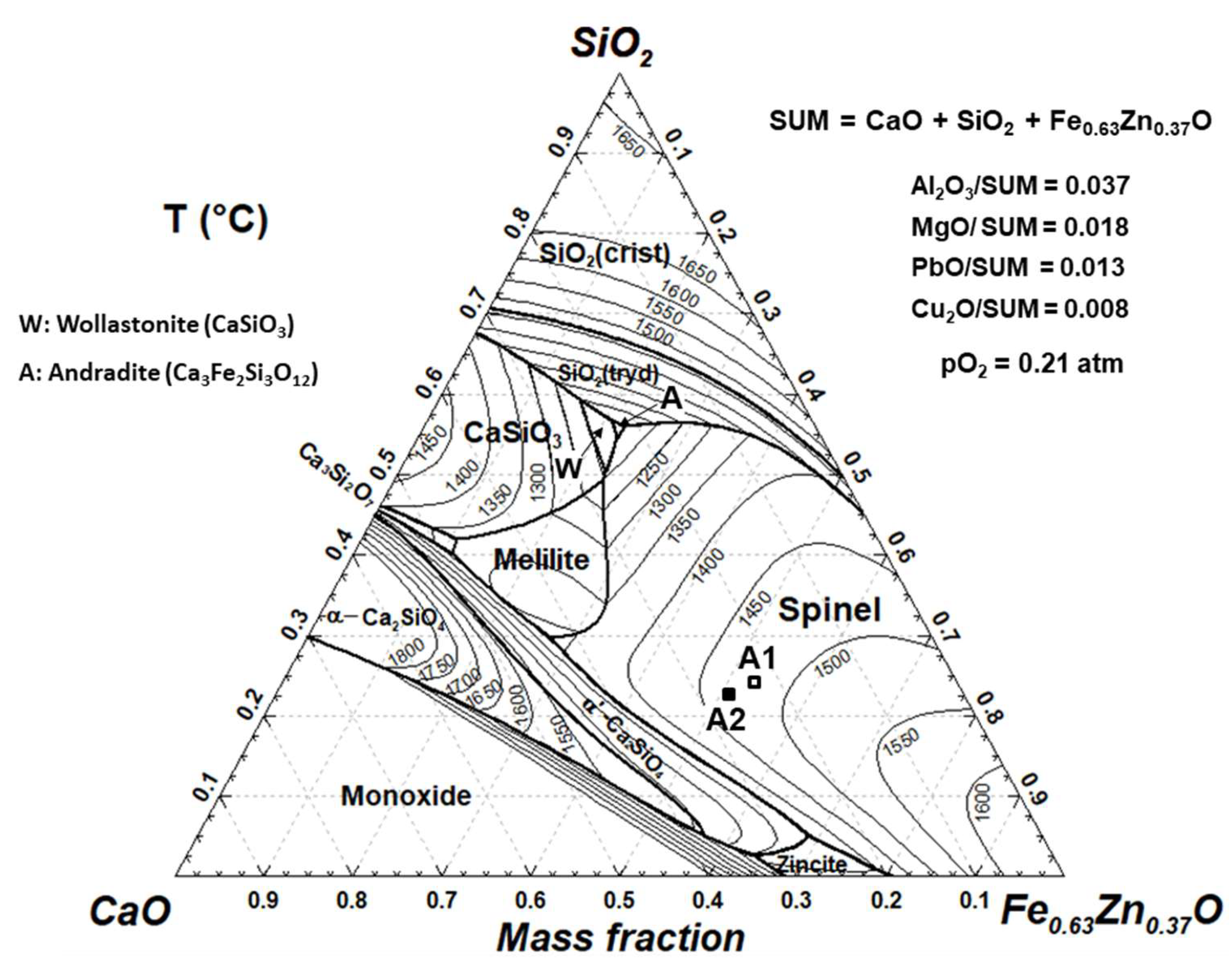
The FactSage software enables the calculation of pseudoternary phase diagrams for slag systems, allowing the determination of the effects of various composition parameters on the liquidus temperature. The procedure for calculating these diagrams and determining the effect of slag basicity is illustrated as an example. In this case, the pseudoternary CaO-SiO2-FexZnyO diagram will be calculated, and the composition of slag A1 (low basicity) will be taken from Table 1. Here, sulfur content will be neglected, and all species will be considered as oxides, as shown in Table 2. It is essential to note that the FactSage databases for solution systems that include sulfur do not yield consistent results at low temperatures, rendering them unsuitable for calculating the solidus temperature. For this reason, sulfur was not considered in the present thermodynamic analysis.
The procedure to calculate the pseudoternary CaO-SiO2-FexZnyO phase diagrams is as follows:
(a)
Determine the amount of Zn and Fe in the FexZnyO species from Table 1 using slag A1:
Fe + Zn = 34.56; Fe/(Fe + Zn) = 0.63; Zn/(Fe + Zn) = 0.37
Then, FeO and ZnO can be considered the combined species Fe0.63Zn0.37O, whose mass is FeO + ZnO = 43.96.
(b)
Determine the sum of the species CaO, SiO2, and Fe0.63Zn0.37O:
SUM = CaO + SiO2 + Fe0.63Zn0.37O = 83.86
(c)
Recalculate the quantities of all species, considering that CaO + SiO2 + Fe0.63Zn0.37O corresponds to 100%: Xi = mi/SUM, where mi and Xi represent the mass and mass fraction of each species in the slag, respectively:
XCaO = 0.242; XSiO2 = 0.234; XFe0.63Zn0.37O = 0.524
XAl2O3 = 0.037; XMgO = 0.018; XPbO = 0.013; XCu2O = 0.008
Similar calculations for the high basicity slag (A2) provide the following values:
XCaO = 0.27; XSiO2 = 0.225; XFe0.63Zn0.37O = 0.505
XAl2O3 = 0.036; XMgO = 0.018; XPbO = 0.011; XCu2O = 0.009
The values of the minor components (Al2O3, MgO, PbO, and Cu2O) are very similar in slags A1 and A2; therefore, the same phase diagram can be used to observe the effect of slag basicity on the liquidus temperature. The diagrams were calculated assuming equilibrium of the slag in air with an oxygen partial pressure pO2 = 0.21 atm. Figure 2 shows the calculated pseudoternary CaO–SiO2–Fe0.63Zn0.37O phase diagram. Slags with low (A1) and high (A2) basicity have liquidus temperatures of approximately 1480 °C and 1460 °C, respectively. Thus, increasing the basicity (CaO/SiO2) in the lead blast furnace slag lowers the liquidus temperature. Figure 2 also shows that the first phase to solidify is the spinel, consisting mainly of franklinite (ZnFe2O4). Considering the cooling path of both global compositions, melilite (Ca2ZnSi2O7), wollastonite (CaSiO3), and andradite (Ca3Fe2Si3O12) solidify after the spinel.
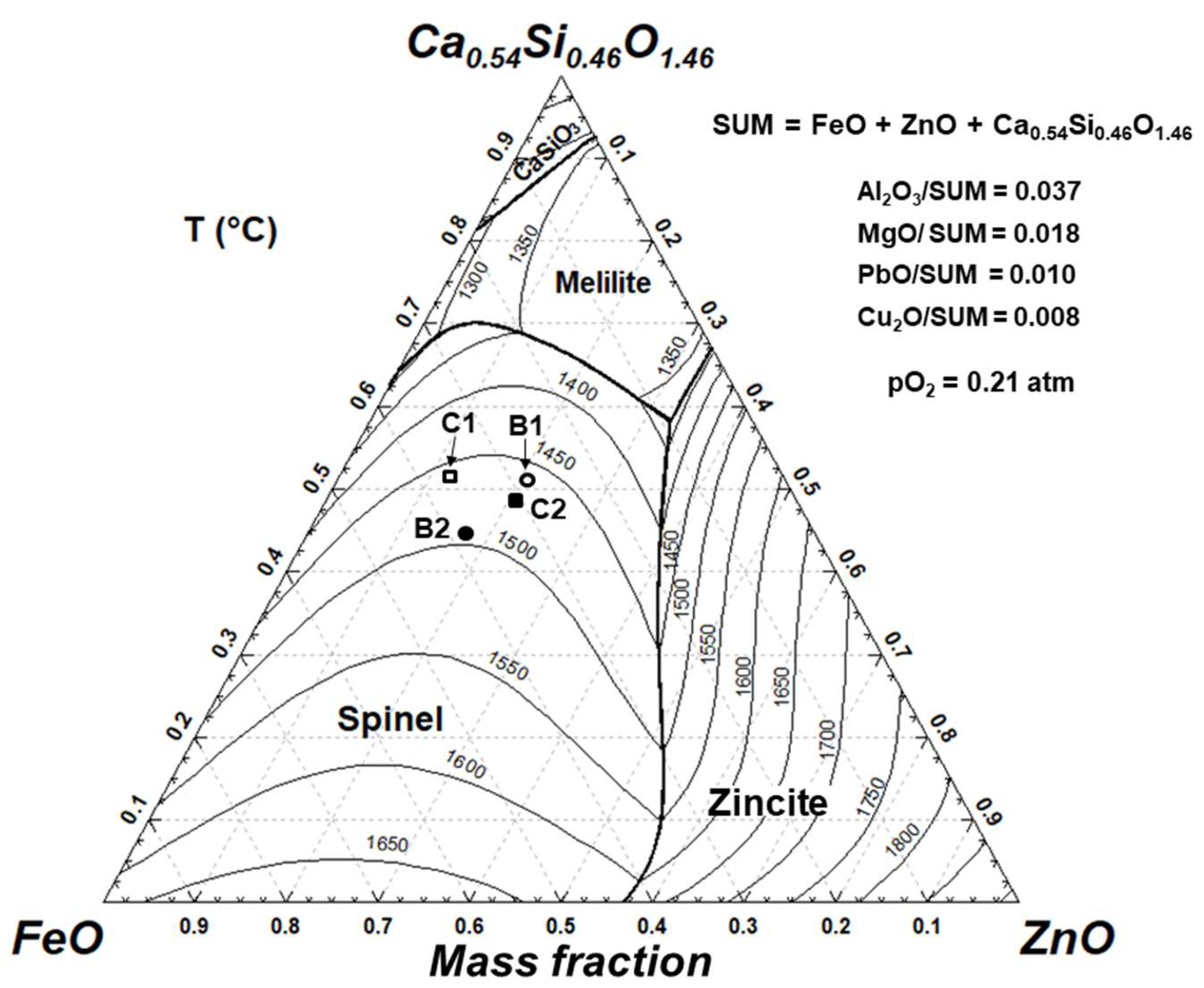
The effect of Fe and Zn content on the liquidus temperature of the system is illustrated in the pseudoternary FeO-CaxSiyOz-ZnO phase diagram, using a method similar to that employed for obtaining the CaO + SiO2 + Fe0.63 Zn0.37O phase diagram. Figure 3 presents the FeO-Ca0.54Si0.46O1.46-ZnO phase diagram, where the liquidus temperatures for slags with low (C1) and high (C2) Zn content are approximately 1455 °C and 1470 °C, respectively. In both slags, the first chemical species to solidify is the spinel, followed by melilite. The figure also shows that the liquidus temperatures for slags with low (B1) and high (B2) Fe/SiO2 ratios are about 1460 °C and 1490 °C, respectively, indicating that increasing the Fe/SiO2 ratio raises the liquidus temperature.

3.2. Crystallization Curves

The ternary phase diagrams display the liquidus temperatures and the chemical species formed during cooling based on the slag composition. However, these diagrams make it difficult to determine the solidus temperature or the amount of solid phases formed as a function of temperature. To address this issue, the EQUILIB module of the FactSage program can be used to calculate crystallization curves, providing the equilibrium phases as a function of the system’s overall composition and temperature. In this work, we calculated the crystallization curves for each slag composition listed in Table 1 (excluding sulfur). We used an excess amount of oxygen gas to enable the formation of oxides of the elements identified in the chemical analysis (Fe, Zn, Cu, and Pb). For example, for slag A1, the amounts in grams of each component are:
20.3CaO +19.6SiO2 + 1.5MgO + 3.13Al2O3 +21.9Fe +12.66Zn + 0.59Cu + 1.03Pb + 10O2
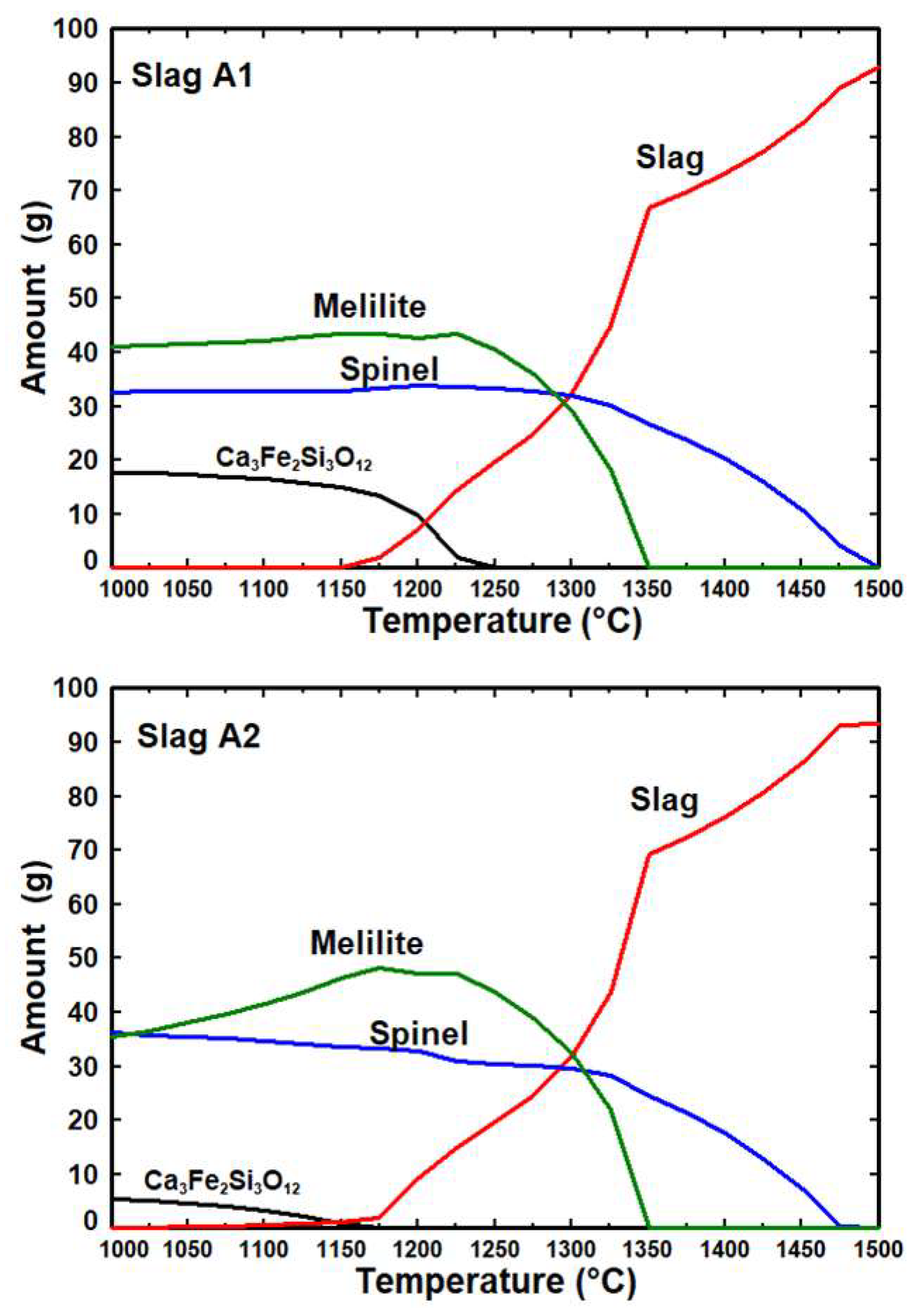
The thermodynamic databases of the solution systems in the FactSage software allow calculation of the equilibrium between liquid slag and solid solutions (spinel and melilite), as well as pure components such as wollastonite and andradite. Figure 4 shows the crystallization curves for slags with low (A1) and high (A2) slag basicity. In both slags, the solid phases are spinel, melilite, and andradite; however, the liquidus temperature of slag A1 is about 1485 °C, while that of slag A2 is about 1470 °C. These values are similar to those obtained from the pseudoternary phase diagram (Figure 2).
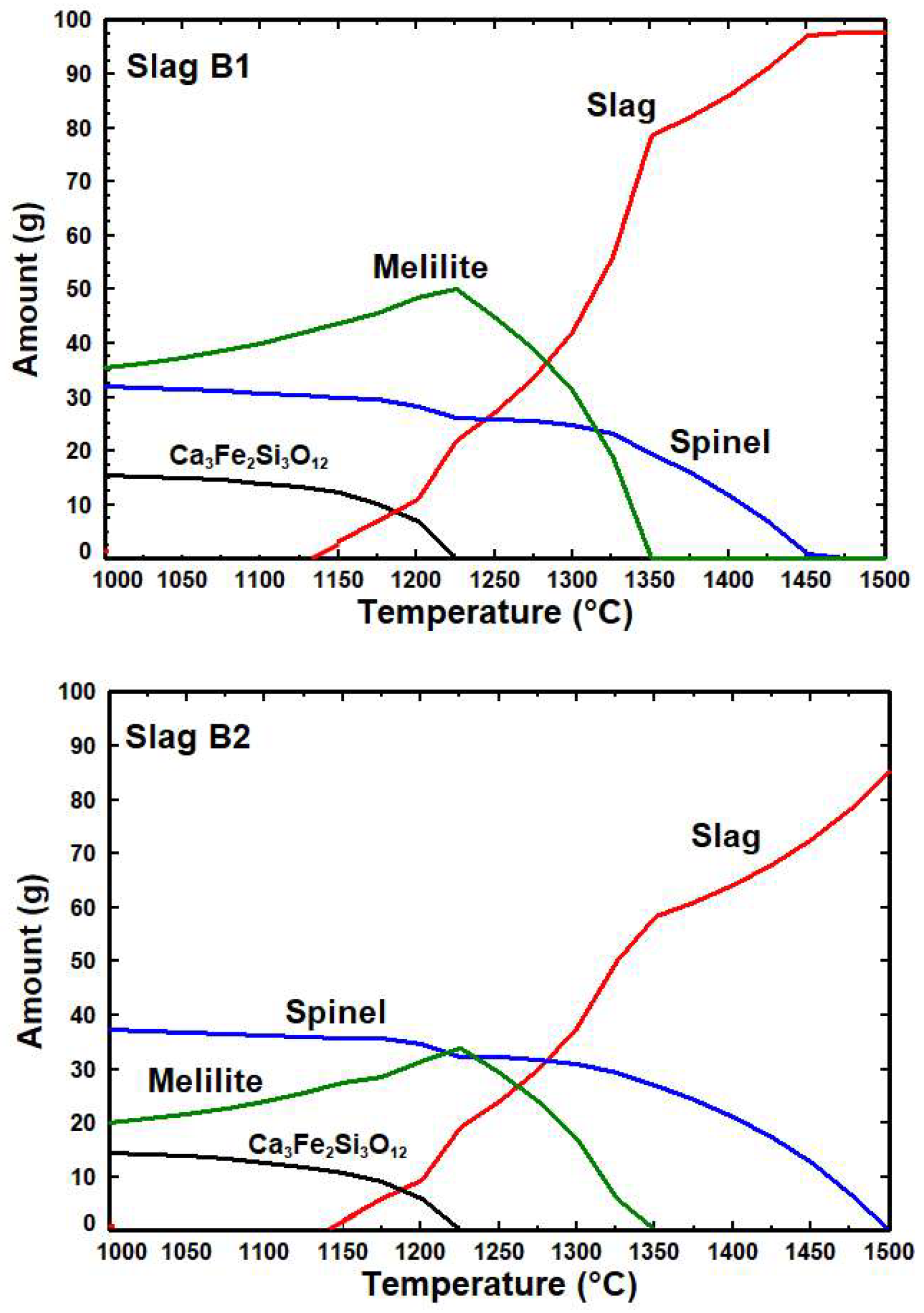
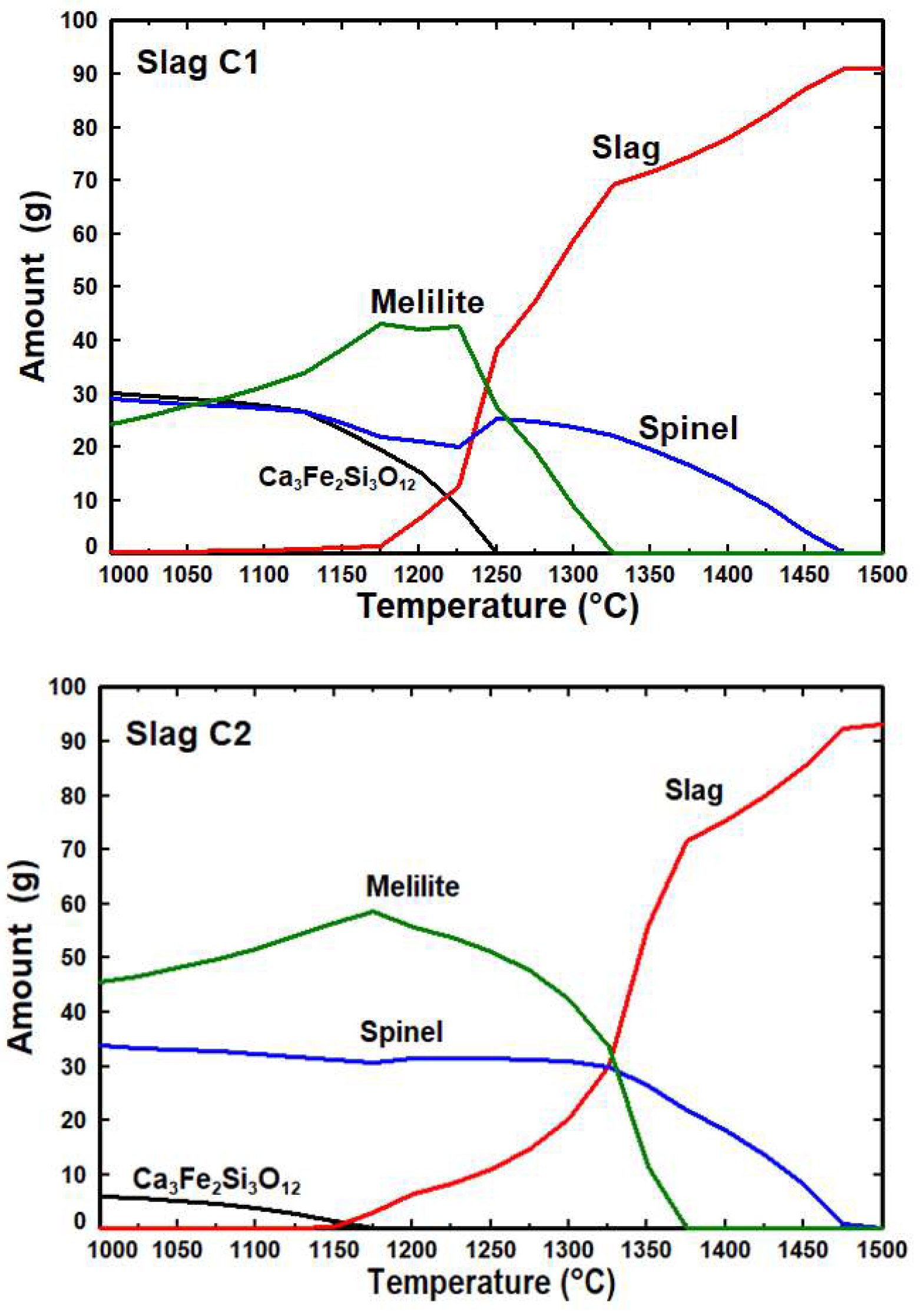
Figure 5 shows the crystallization curves for slags with low (B1) and high (B2) Fe/SiO2 ratios. It is observed that the liquidus temperature increases as the Fe/SiO2 ratio increases, from 1450 °C (slag B1) to 1500 °C (slag B2). The predominant solid phase at low temperature is melilite for slag B1, whereas for slag B2, the predominant phase is spinel. Figure 6 shows the crystallization curves for slags with low (C1) and high (C2) Zn content. The liquidus temperatures are 1460 °C and 1480 °C for slags C1 and C2, respectively. The solidus temperatures are similar in these systems; however, the predominant solid phases at low temperature are andradite and spinel for slag C1, whereas for slag C2, the predominant phase is melilite.

4. Experimental Results and Discussion

4.1. Characteristic Temperatures

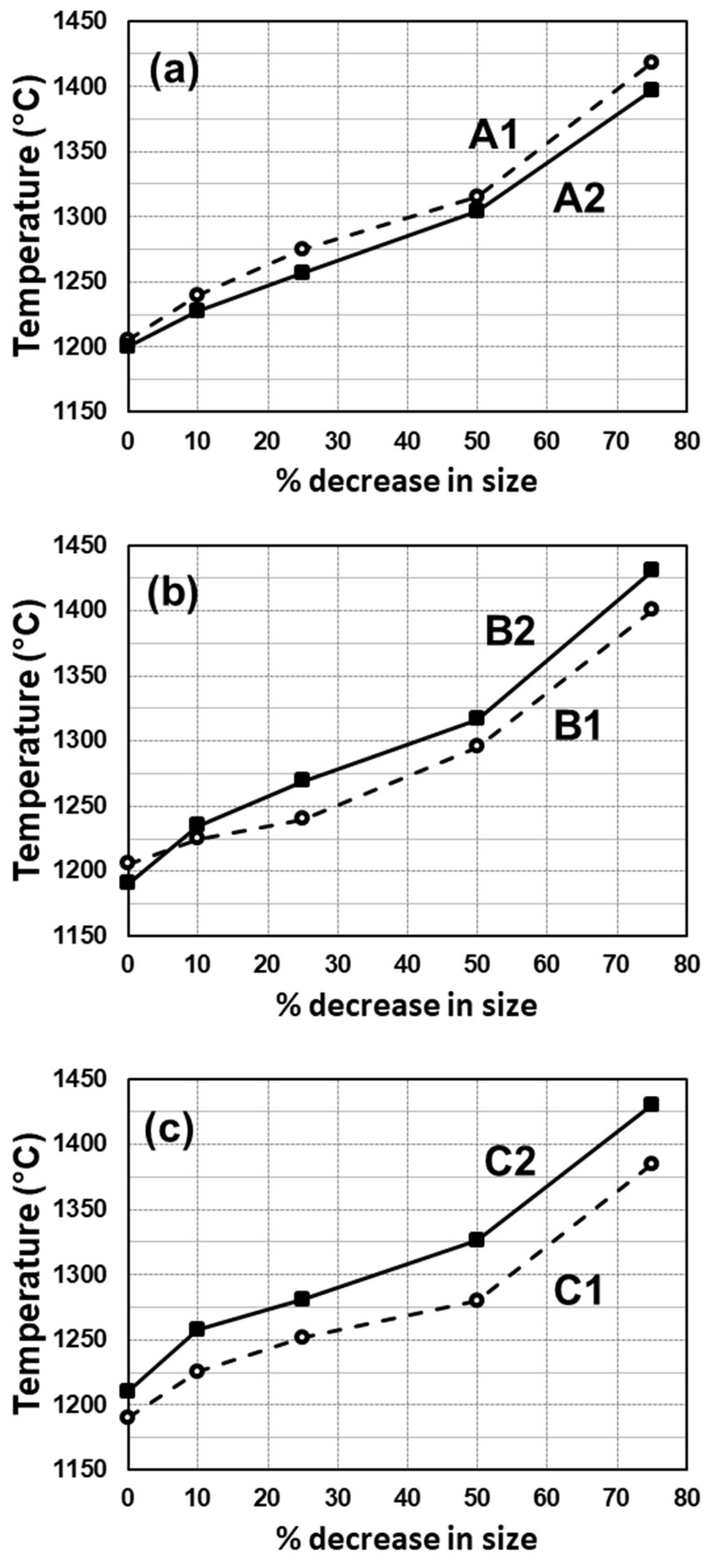
Figure 7 presents the experimental results for the reduction in specimen size up to 75%. The figure indicates that increasing slag basicity (CaO/SiO2) decreases the characteristic temperatures, while increasing the Fe/SiO2 ratio or Zn content raises these temperatures.
It is not easy to establish a direct relationship between the percentage reduction in the specimen in the experimental tests and the solidus and liquidus temperatures. Some authors suggest that the liquidus temperature corresponds to a 50% reduction in the original sample’s volume height [12,13,14]. According to our results, the solidus and liquidus temperatures obtained by thermodynamic analysis correspond approximately to the deformation temperature (DT) and a 75% reduction in sample size, respectively. Table 3 summarizes the calculated and experimental solidus and liquidus temperatures.
Some authors associate the liquidus temperature with the hemispherical shape of the specimen; however, we found it difficult to determine this temperature precisely, as this shape can appear over a wide range of temperatures. Therefore, we consider it more accurate to associate the liquidus temperature with a 75% decrease in size. Figure 7 shows the effect of composition parameters on characteristic temperatures; however, to obtain more conclusive results, further tests should be conducted in the future by varying the composition parameters.

4.2. XRD Results

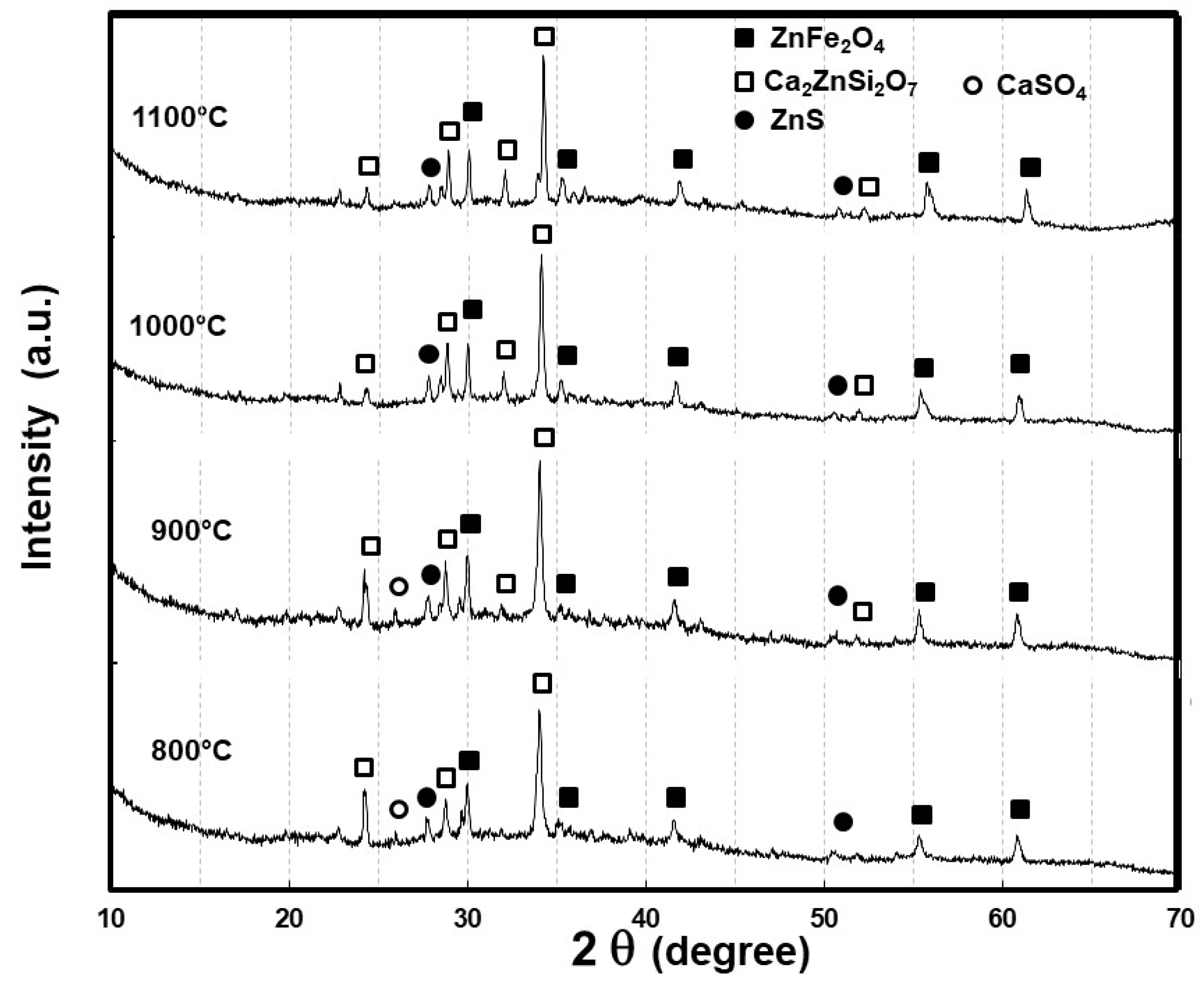
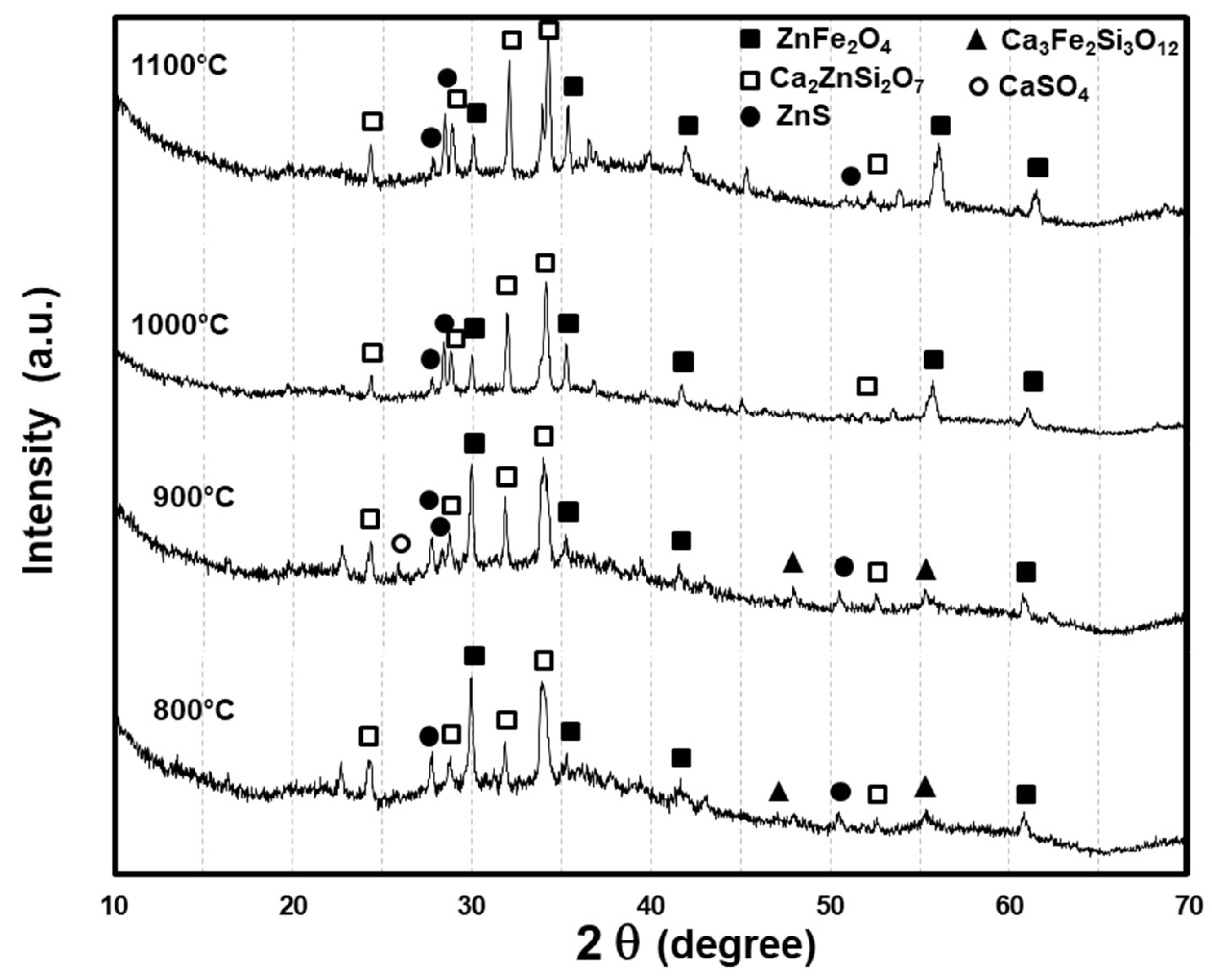
Figure 8 and Figure 9 show the species obtained between 800 °C and 1100 °C for slag with low and high Zn content, respectively. These figures indicate that at 1100 °C, a large amount of hardystonite (JCPDS file 35-0745) is present. As the temperature decreases, the peaks of franklinite (JCPD file 22-1012) and andradite (JCPD file 10-288) increase in intensity. This is qualitatively consistent with the calculated results. Figure 8 and Figure 9 also show the presence of small amounts of wurtzite (ZnS) (JCPD file 10-1012) and anhydrite (CaSO4) (JCPD file 6-226). Similar XRD patterns were obtained for slag samples A1, A2, B1, and B2.

4.3. SEM-EDS Results

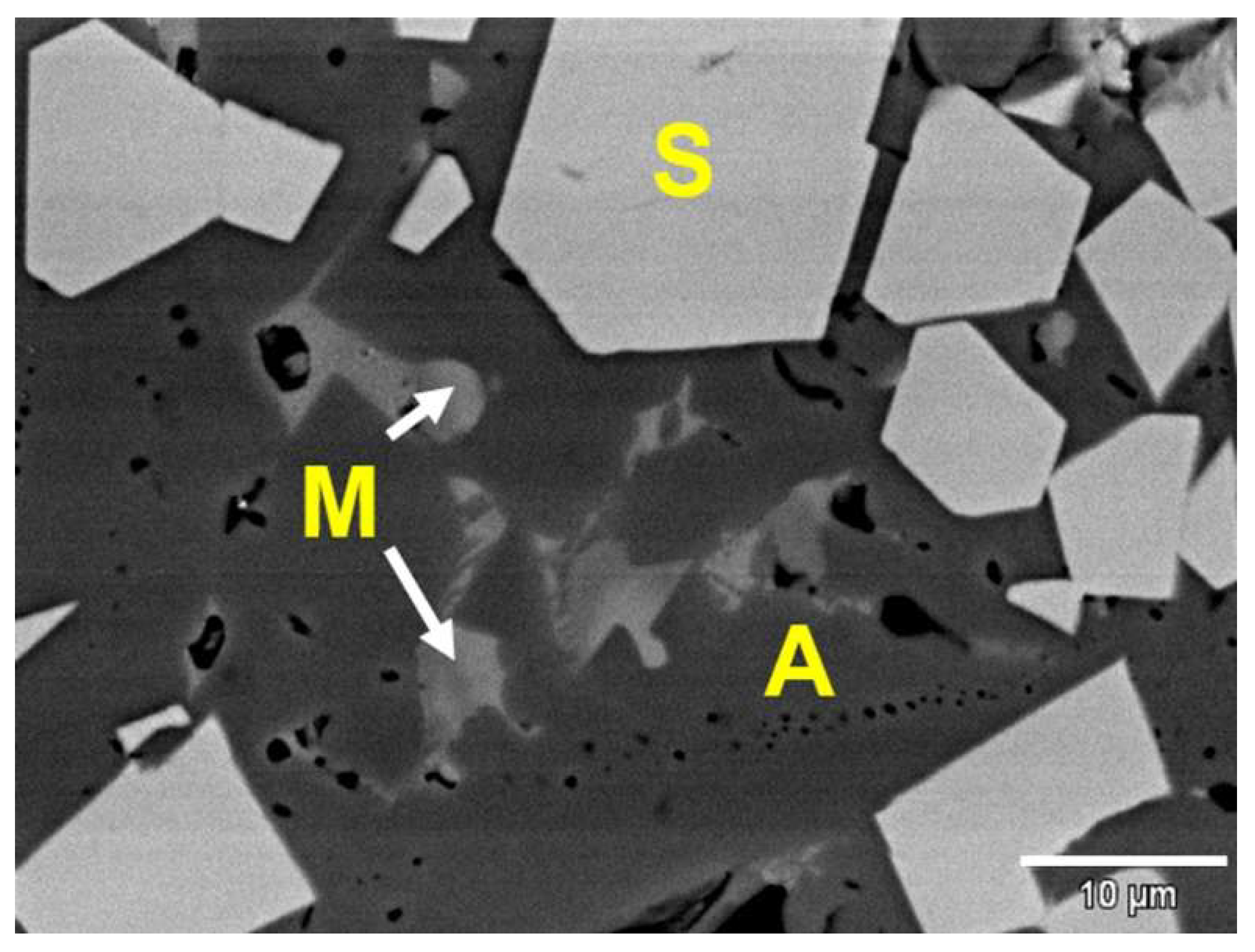
Figure 10 shows the micrograph of sample C2 equilibrated at 1100 °C and rapidly cooled. Dark angular crystals of the spinel phase are observed. The present experiments indicate that the composition of spinel in equilibrium at high temperature approaches that of franklinite (ZnFe2O4). SEM-EDS microanalysis also reveals the presence of melilite, primarily composed of hardystonite (Ca2ZnSi2O7), and andradite (Ca3Fe2Si3O12).

4.4. DSC Results

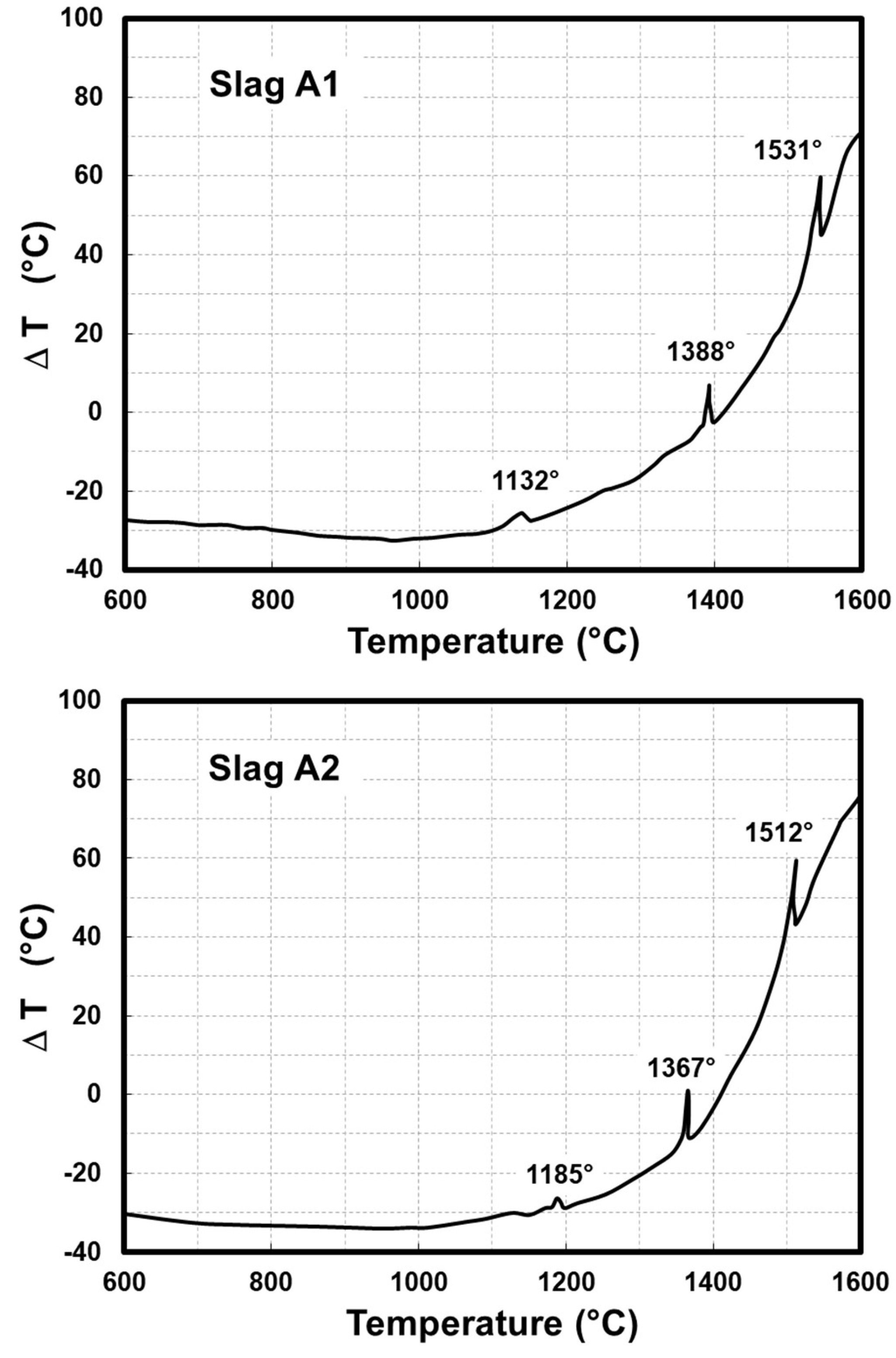
The DSC results allow the determination of key characteristics of slag solidification, such as the temperature peaks at which crystallization of specific chemical species occurs. Figure 11 shows the non-isothermal DSC curves for slags with low (A1) and high (A2) CaO/SiO2 ratios. The three exothermic peaks in these figures correspond to the formation of crystalline phases. The liquidus temperatures (initial solidification temperatures) are 1531 °C and 1512 °C for slags with low and high basicity, respectively. The first crystalline phase to form is spinel, as thermodynamically determined in Figure 4. As the temperature decreases, peaks for the formation of melilite are observed at 1388 °C and 1367 °C, and andradite at 1132 °C and 1185 °C, for slags with low and high basicity, respectively. The liquidus temperature increases as slag basicity decreases, which is consistent with both experimental and calculated results.
The experimental and calculated solidus and liquidus temperature results show a difference of approximately 70 °C, which may be primarily due to the omission of sulfur’s effect in the thermodynamic calculations. This component can form volatile chemical species as well as sulfides and sulfates, as detected in the XRD results, even though a qualitative congruence was observed regarding the effect of the different composition parameters. It is important to note that the solidus temperature results obtained by the DSC method show a difference of about ±30 °C compared to the calculated values.

5. Conclusions

In this study, the characteristic temperatures of slags from the lead blast furnace with different composition parameters were investigated using in situ high-temperature optical microscopy. The crystalline phases were predicted by FactSage software and compared with the experimental results. The conclusions are summarized as follows:
  • The pseudoternary phase diagrams and crystalline curves calculated by FactSage can help estimate the effect of composition parameters on characteristic temperatures, as well as the crystalline phases formed during cooling.
  • The solidus and liquidus temperatures were considered to correspond to the deformation temperature (DT) and the temperature at 75% shrinkage of the sample, respectively. The temperatures calculated by FactSage differed from the experimental values by about 70 °C for both the solidus and liquidus temperatures.
  • The phase evolution obtained by XRD, SEM, and DSC was consistent with the results calculated by FactSage. Spinel was the first crystalline phase to solidify, followed by melilite and andradite.
  • The liquidus temperature increases as the slag basicity (CaO/SiO2) decreases, whereas the liquidus temperature increases as the Fe/SiO2 ratio or Zn content increases.

Author Contributions

Conceptualization, A.R.-S., A.H.-R., C.J.-L. and M.F.-F.; methodology, A.R.-S., C.J.-L., M.F.-F. and A.C.-R.; formal analysis, M.P.-L., C.J.-L., J.L.-R., C.M.-M. and A.H.-R.; investigation, J.L.-R., A.C.-R., M.P.-L. and C.M.-M.; resources, M.F.-F. and A.H.-R.; data curation, A.H.-R., J.L.-R., A.C.-R. and M.P.-L.; writing—original draft preparation, A.R.-S. and J.L.-R.; writing—review and editing, A.R.-S., C.J.-L., C.M.-M. and A.C.-R. All authors have read and agreed to the published version of the manuscript.

Funding

This research received no external funding.

Institutional Review Board Statement

Not applicable.

Informed Consent Statement

Not applicable.

Data Availability Statement

The original contributions presented in the study are included in the article. Further inquiries can be directed to the corresponding author.

Acknowledgments

The authors wish to thank the company Servicios Administrativos Peñoles, the National Council for Science and Technology (SECIHTI), the National Polytechnic Institute (IPN), and the National Research System (SNI) for the support of this research.

Conflicts of Interest

Author Manuel Flores-Favela was employed by the company Servicios Administrativos Peñoles S.A. de C.V. The remaining authors declare that the research was conducted in the absence of any commercial or financial relationships that could be construed as a potential conflict of interest.

References

  1. Sinclair, R. The Extractive Metallurgy of Lead; The Australasian Institute of Mining and Metallurgy: Carlton, Australia, 2009; pp. 72–75. [Google Scholar]
  2. Habashi, F. Handbook of Extractive Metallurgy; Wiley-VCH: Weinheim, Germany, 1997; Volume 2, pp. 591–596. [Google Scholar]
  3. Nowinska, K.; Adamczyk, Z. Zinc and lead metallurgical slags as a potential source of metal recovery: A review. Materials 2023, 16, 7295. [Google Scholar] [CrossRef]
  4. Andersson, A.; Isaksson, J.; Lennartsson, A.; Roos, A.; Engström, F. The role of FeO/SiO2 ratio in valorizing iron silicate slags as supplementary cementitious materials. J. Sustain. Metall. 2025, 11, 657–669. [Google Scholar] [CrossRef]
  5. Isaksson, J.; Andersson, A.; Lennartsson, A.; Gyakwaa, F.; Shu, Q.; Samuelsson, C. Effect of FeO/SiO2 ratio, Al2O3, and CaO content on viscosity and ionic structure in FeO-SiO2-Al2O3-CaO-MgO-Cr2O3 melts. Metall. Mater. Trans. B 2025, 56, 2573–2586. [Google Scholar] [CrossRef]
  6. Chiu, Y.-N.; Chang, K.-C.; Tsai, W.-C.; Hu, Y.-J.; Shiau, J.-S.; Lu, K.-M.; Huang, T.-Y.; Du, S.-W.; Cheng, P.-C.; Kuo, Y.-C.; et al. Revisiting the softening and melting behavior of sinter under simulated blast furnace conditions: Part II—Characteristics of microstructure evolution and grain coarsening. J. Taiwan Inst. Chem. Eng. 2025, 171, 106066. [Google Scholar] [CrossRef]
  7. Xin, R.; Zhao, J.; Gao, X.; You, Z.; Yu, W.; Zhang, S.; Dang, J.; Bai, C. Softening-melting properties and slag evolution of vanadium titano-magnetite sinter in hydrogen-rich gases. Crystals 2023, 13, 210. [Google Scholar] [CrossRef]
  8. Fan, X.; Zhang, J. Relationship between slag phase and softening & melting properties of cohesive zone. ISIJ Int. 2023, 63, 1919–1922. [Google Scholar] [CrossRef]
  9. Kamireddy, V.; Wang, D.; Pan, W.; Chen, S.; Evans, T.; Tang, F.; Zhao, B.; Ma, X. Liquid formation in sinters and its correlation with softening behaviour. Metals 2022, 12, 885. [Google Scholar] [CrossRef]
  10. Huang, Q.; Min, X.; Chai, L.; Li, Y.; Wang, Y.; Ke, Y.; Peng, C.; Ku, H.; Lu, J.; Wang, X. Melting properties and bath reduction of high-Zn materials for zinc and lead recovery. J. Alloys Compd. 2025, 1022, 179783. [Google Scholar] [CrossRef]
  11. Fan, K.; Jiang, X.; Zhang, X.; Wang, Q.; Gao, Q.; Zheng, H.; Shen, F. Investigation of the testing method of softening-melting properties of iron-bearing materials. Minerals 2024, 14, 1214. [Google Scholar] [CrossRef]
  12. Mohanty, U.K.; Behera, R.C. Fusion behaviour of synthetic aluminothermic ferro-chrome slags. ISIJ Int. 2003, 43, 1875–1881. [Google Scholar] [CrossRef]
  13. Wang, L.; Zhang, C.; Cai, D.; Zhang, J.; Sasaki, Y.; Ostrovski, O. Effects of CaO/SiO2 ratio and Na2O content on melting properties and viscosity of SiO2-CaO-Al2O3-B2O3-Na2O mold fluxes. Metall. Mater. Trans. B 2017, 48, 516–526. [Google Scholar] [CrossRef]
  14. Wang, G.-L.; Kang, J.; Zhang, J.-L.; Wang, Y.-Z.; Wang, Z.-Y.; Liu, Z.-J.; Xu, C.-Y. Softening-melting behavior of mixed burden based on low-magnesium sinter and fluxed pellets. Int. J. Miner. Met. Mater. 2021, 28, 621–628. [Google Scholar] [CrossRef]
  15. Barret, N.; Mitra, S.; Doostmohammadi, H.; O’Dea, D.; Zulli, P.; Chew, S.; Honeyands, T. Development of softening and melting testing conditions simulating blast furnace operation with hydrogen injection. Ironmak. Steelmak. 2023, 50, 1248–1259. [Google Scholar] [CrossRef]
  16. Li, Z.; Li, T.; Sun, C.; Yang, S.; Wang, Q. The effect of MgO and Al2O3 content in sinter on the softening-melting properties of mixed ferrous burden. Materials 2023, 16, 5490. [Google Scholar] [CrossRef] [PubMed]
  17. Yang, J.; Zhang, J.; Sasaki, Y.; Ostrovski, O.; Zhang, C.; Cai, D.; Kashiwaya, Y. Crystallization behavior and heat transfer of fluorine-free mold fluxes with different Na2O concentration. Metall. Mater. Trans. B 2016, 47, 2447–2458. [Google Scholar] [CrossRef]
  18. Chen, J.; Wang, W.; Zhou, L.; Pan, Z. Effect of Al2O3 and MgO on crystallization and structure of CaO–SiO2–B2O3-based fluorine-free mold flux. J. Iron Steel Res. Int. 2020, 28, 552–562. [Google Scholar] [CrossRef]
  19. Zhou, L.; Wang, W.; Zhou, K. Viscosity and crystallization behavior of F-free mold flux for casting medium carbon steels. ISIJ Int. 2015, 55, 1916–1924. [Google Scholar] [CrossRef]
  20. Wang, Z.; Shu, Q.; Chou, K. Crystallization kinetics and structure of mold fluxes with SiO2 being substituted by TiO2 for casting of titanium-stabilized stainless steel. Metall. Mater. Trans. B 2013, 44, 606–613. [Google Scholar] [CrossRef]
  21. Seo, M.; Shi, C.-B.; Cho, J.-W.; Kim, S.-H. Crystallization behaviors of CaO-SiO2-Al2O3-Na2O-CaF2-(Li2O-B2O3) mold fluxes. Metall. Mater. Trans. B 2014, 45, 1874–1886. [Google Scholar] [CrossRef]
  22. Bale, C.W.; Bélisle, E.; Chartrand, P.; Decterov, S.A.; Eriksson, G.; Gheribi, A.E.; Hack, K.; Jung, I.H.; Kang, Y.B.; Melançon, J.; et al. Reprint of: FactSage Thermochemical Software and Databases, 2010–2016. Calphad 2016, 55, 1–19. [Google Scholar] [CrossRef]
  23. Jak, E.; Hayes, P.C. Experimental study of phase equilibria in the PbO-ZnO-“Fe2O3”-CaO-SiO2 system in air for high lead smelting slags (CaO/SiO2 = 0.35 and PbO/(CaO + SiO2) = 5.0 by weight). Metall. Mater. Trans. B 2002, 33, 817–825. [Google Scholar] [CrossRef]
  24. Jak, E.; Kondratiev, A.; Christie, S.; Hayes, P.C. The prediction and representation of phase equilibria and physicochemical properties in complex slag systems. Metall. Mater. Trans. B 2003, 34, 595–603. [Google Scholar] [CrossRef]
  25. Flores-Favela, M.; Pelaez-Ramirez, H.; López-Rodriguez, J.; Romero-Serrano, A.; Hernández-Ramírez, A.; Cruz-Ramírez, A.; Almaguer-Guzman, I. Effect of CaO/SiO2 and Fe/SiO2 ratios on the viscosity at 1300 °C of partly crystallized silicate slags. Glass Phys. Chem. 2021, 47, 75–82. [Google Scholar] [CrossRef]
  26. DIN 51730; Testing of Solid Fuels—Determination of Ash Fusibility. DIN: Berlin, Germany, 2022. Available online: https://www.dincodes.com/product/din-51730/ (accessed on 21 January 2025).
Figure 1. Image illustrating the characteristic temperatures of a slag. Sample A1.
Metals 16 00104 g001
Figure 2. Calculated pseudoternary phase diagram of the CaO-SiO2-Fe0.63Zn0.37O system.
Metals 16 00104 g002
Figure 3. Calculated pseudoternary phase diagram of the FeO-Ca0.54Si0.46O1.46-ZnO system.
Metals 16 00104 g003
Figure 4. Crystallization curves for the slags with low (slag A1) and high (slag A2) basicity.
Metals 16 00104 g004
Figure 5. Crystallization curves for the slags with low (slag B1) and high (slag B2) Fe/SiO2 ratios.
Metals 16 00104 g005
Figure 6. Crystallization curves for the slags with low (slag C1) and high (slag C2) Zn content.
Metals 16 00104 g006
Figure 7. Effect of (a) CaO/SiO2, (b) Fe/SiO2, and (c) Zn content on the characteristic temperatures.
Metals 16 00104 g007
Figure 8. XRD pattern at high temperatures for the slag with low Zn content (slag C1).
Metals 16 00104 g008
Figure 9. XRD pattern at high temperatures for the slag with high Zn content (slag C2).
Metals 16 00104 g009
Figure 10. Micrograph of the slag sample C2 equilibrated and quenched from 1100 °C. S: Spinel, M: Melilite, A: Andradite.
Metals 16 00104 g010
Figure 11. DSC curves of non-isothermal crystallization of slags with low (A1) and high (A2) slag basicity.
Metals 16 00104 g011
Table 1. Chemical composition (mass%) of the lead blast furnace slags.
SampleParameter C a O S i O 2 F e S i O 2 CaOSiO2MgOAl2O3FeZnCuPbS
A1Low-CaO/SiO21.041.1220.319.61.53.1321.912.660.591.034.0
A2High-CaO/SiO21.191.1222.619.01.53.0221.312.380.710.884.2
B1Low-Fe/SiO21.110.9324.9222.391.482.0720.9111.830.451.734.1
B2High-Fe/SiO21.131.3918.4316.291.471.8722.6310.840.540.994.2
C1Low-Zn1.121.1722.219.91.453.3723.37.880.530.673.8
C2High-Zn1.121.0421.919.61.463.2520.313.590.590.774.0
Table 2. Chemical composition (mass%) of the slags, considering the components as oxides.
SampleParameterCaOSiO2MgOAl2O3FeOZnOCu2OPbO
A1Low-CaO/SiO220.319.61.53.1328.215.760.661.11
A2High-CaO/SiO222.619.01.53.0227.415.410.800.95
B1Low-Fe/SiO224.9222.391.482.0726.9014.720.511.86
B2High-Fe/SiO218.4316.291.471.8729.1113.490.611.07
C1Low-Zn22.219.91.453.3729.979.810.600.72
C2High-Zn21.919.61.463.2526.1216.920.660.83
Table 3. Calculated and experimental characteristic temperatures.
SampleSolidus (°C)Liquidus (°C)
ExperimentalCalculatedExperimentalCalculated
A11205115014201485
A21200115014001470
B11205113514001450
B21190114014301495
C11190117513851460
C21210115014251480
Disclaimer/Publisher’s Note: The statements, opinions and data contained in all publications are solely those of the individual author(s) and contributor(s) and not of MDPI and/or the editor(s). MDPI and/or the editor(s) disclaim responsibility for any injury to people or property resulting from any ideas, methods, instructions or products referred to in the content.