Article

Comparative Study on Reduction in Oolitic High-Phosphorus Iron-Ore Lumps and Pellets Under H2 Atmosphere


State Key Laboratory of Advanced Metallurgy, University of Science and Technology Beijing, Beijing 100083, China
*
Author to whom correspondence should be addressed.
Metals 2025, 15(12), 1319; https://doi.org/10.3390/met15121319
Submission received: 14 October 2025 / Revised: 23 November 2025 / Accepted: 25 November 2025 / Published: 28 November 2025
(This article belongs to the Special Issue Recent Developments in Ironmaking)

Abstract

High-phosphorus iron ore can be utilized using a technical route of hydrogen-based shaft furnace reduction, followed by electric arc furnace (EAF) melting separation. In shaft furnace reduction, both pellet and lump ore could serve as feedstock. To optimize the charge pattern in the H2-based shaft furnace, an investigation of the reduction behavior of high-phosphorus iron ore lumps and pellets under H2 atmosphere was conducted. Results revealed distinct differences between the lumps and the pellets in terms of physicochemical characteristics, maximum reduction fractions, microstructure evolution, and reduction kinetics characteristics. The lumps exhibited a notable presence of oolitic structures with 60.08 wt.% total iron, 11.69 wt.%. Fe2+ ion, and 0.80 wt.% phosphorus. Under H2 atmosphere, the lumps achieved a maximum reduction fraction of 0.80. During the reduction, fayalite formed in the early stage, and glassy phases appeared in the later stage. The rate-controlling steps included internal gas diffusion, interfacial chemical reaction, and solid-state diffusion of ions. In contrast, the oolitic structures were completely disrupted in the pellets. The pellets contained 56.01 wt.% total iron, 0.86 wt.% Fe2+ ions, and 0.73 wt.% phosphorus. The pellets reached a full reduction under H2 atmosphere with negligible formation of fayalite and glassy phases. The rate-controlling steps included internal gas diffusion and interfacial chemical reaction.

1. Introduction

The depletion of high-grade, easily processed iron ores has necessitated the search for alternative resources to advance global iron and steel production. Among these alternatives, the oolitic high-phosphorus iron ores have attracted significant attention [1,2,3]. The oolitic high-phosphorus iron ores are mainly distributed in the United States, France, Britain, Canada, Algeria, Nigeria, Kazakhstan, and China, and have a global reserve exceeding 20 billion tons [4,5,6,7,8]. However, their exploitation is constrained by the fine dissemination of gangue minerals, particularly silica, alumina, and phosphorus-bearing phases. The finely interlocked nature of undesirable minerals in the oolitic high-phosphorus iron ores presents a major barrier to cost-effective and environmentally sustainable processing.
In the past few decades, various beneficiation and dephosphorization techniques have been proposed, these techniques include magnetic separation [9,10], flotation [11], acid leaching [12,13], microbiological leaching [14,15], and pyrometallurgical treatment [16,17,18], and so on. Most have proven economically infeasible or environmentally hazardous. Tang et al. [19,20] proposed an innovative technical route combining gaseous reduction followed by electric arc furnace (EAF) melting separation to process the high-phosphorus iron ore. Recently, this technical route has been improved to use hydrogen-based shaft furnace reduction in the gaseous reduction stage [21]. In this improved route, the oolitic high-phosphorus iron ore is pelletized and then reduced in a shaft furnace using hydrogen-rich gases, yielding direct reduced iron (DRI) with a carbon content below 1.0 wt.%. The low-carbon DRI is subsequently melted in an electric arc furnace (EAF) to obtain low-phosphorus molten iron qualified for steelmaking. Demonstration of this method on a laboratory scale was carried out, and the results showed that the iron recovery rate was 88% with a phosphorus content in the molten iron of 0.34 wt% [22], making it suitable for further steelmaking. In the DRI melting process, the phosphorus transfer from slag to metal is inhibited due to the low carbon content in DRI [23,24]. The feasibility of this approach is underpinned by existing commercial technologies. The MIDREX and HYL processes, which produce direct reduced iron (DRI) using hydrogen-based shaft furnaces, have been demonstrated to be successful by large-scale production units [25,26,27]. The annual output of MIDREX reaches 2.0 million tons, and HYL reaches 2.5 million tons [28]. These figures are comparable to the blast furnace (BF) productivity, positioning hydrogen-based shaft furnace reduction as a competitive alternative. Presently, to produce zero-carbon steel, the MIDREX and HYL processes are developing towards full hydrogen reduction [29,30,31,32], making it more suitable for processing the oolitic high-phosphorus iron ore on an industrial scale. Both MIDREX and HYL processes use pellets and lumps as the primary feed material. Pelletizing, however, is cost-intensive, energy-consuming, and environmentally taxing. In contrast, the use of natural lumps could significantly reduce capital investment, lower energy consumption, and improve environmental outcomes. In the view of sustainable development, direct reduction using lumps in the shaft furnace is highly desirable.
For using the high-phosphorus iron ore lumps in the proposed technical route of a hydrogen-based shaft furnace reduction followed by EAF melting, this research presented a study of the reduction behaviors of lumps and pellets made of oolitic high-phosphorus iron ore under H2 atmosphere. A direct comparison of maximum reduction fraction, reduction kinetics, and phase transformation mechanisms in the hydrogen reduction in natural lumps and synthetic pellets of oolitic high-phosphorus iron ores was provided.

2. Materials and Methods

2.1. Raw Material

The high-phosphorus iron ore used in this study was sourced from Gara Djebilet, Algeria. A photo of the as-received ore is shown in Figure 1. The raw ore samples had an average particle size of approximately 50 mm. The chemical composition of the ore is listed in Table 1.

2.2. Preparation of Lumps and Pellets

The preparation procedure for lumps is the following. A total of 6 kg of the received iron ore was crushed to obtain particles in a size range from 10 mm to 15 mm. These particles were then dried at 773 K for one hour to produce lumps.
The pellet preparation procedure has been described in detail elsewhere [19]. A summary is provided here. A total of 6 kg of ore particles were ground in a ball mill until over 80% of the ore fines had a size smaller than 84 µm. Bentonite, whose composition is listed in Table 2, was used as a binder and added to the ore fines at a mass ratio of 2.5%. The mixture was then formed into green pellets with diameters ranging from 10 mm to 15 mm. The green pellets underwent a roasting process under an air atmosphere, following the temperature profile below: (1) held the temperature at 723 K for 15 min for drying, (2) raised and held at 1223 K for 15 min for uniform heating, (3) increased and held at 1498 K for 16 min for roasting, (4) reduced and held at 1273 K for 15 min, (5) power was cut off and the pellets were allowed to cool naturally inside the furnace.

2.3. Reduction Under H2 Atmosphere

Isothermal reduction experiments of lumps or pellets were carried out in a thermogravimetric setup, which is detailed elsewhere [33,34]. The setup included a vertical tubular furnace, a reaction tube, a gas supply system, and a data acquisition system. Two mass-flow controllers in the gas supply system were employed to control the flow rates of N2 and H2, and the accuracy of the mass-loss sensor in the data acquisition system is 0.01 g. In each test, approximately 40 g of samples (lumps or pellets) were loaded into the reaction tube. High-purity nitrogen was introduced into the reaction tube after the furnace was heated. After the reaction tube reached the predetermined temperature and stabilized for 10 min, the atmosphere inside the tube was switched from N2 to the H2-N2 mixture. The mass loss of the samples was measured by the mass sensor at a time step of 10 s and recorded by the computer. After the predetermined time, the atmosphere in the reactor switched back to N2, and the reactor was withdrawn from the furnace and cooled. During the reduction process, the total flow rate of the H2-N2 mixture introduced into the reaction tube was maintained at 2 L/min (standard pressure and temperature). Each test was repeated twice.
Only the oxygen in the iron oxide was removed in the reduction under the hydrogen atmosphere [19]; therefore, the obtained mass-loss data were converted into reduction fraction, which is calculated using Equation (1).
f = Δ m / m O
where f is the reduction fraction at time t (-), Δ m represents the mass loss of the sample at time t (g), and m O is the total iron-oxide oxygen mass in the sample (g).

2.4. Analysis and Characterization

The original lumps, the original pellets, and the partially reduced samples were subjected to the following analysis and characterization. The contents of total iron and Fe2+ ions were measured using the titration method (ferric chloride method). The phosphorus content was determined using an OPTIMA 7000DV inductively coupled plasma-atomic emission spectrometry (ICP-AES, PE Co., Austin, TX, USA). The phase identification was conducted using a M21X X-ray diffractometer (XRD, MAC Science Co., Tokyo, Japan), and the microstructure was examined using a QUANTA-250 scanning electronic microscope (SEM, FEI Co., Hillsboro, OR, USA) and an XFLASH 760 energy dispersive spectrometer (EDS, BRUKE Co., Karlsruhe, Germany).

3. Results and Discussion

3.1. Characteristics of Lumps and Pellets

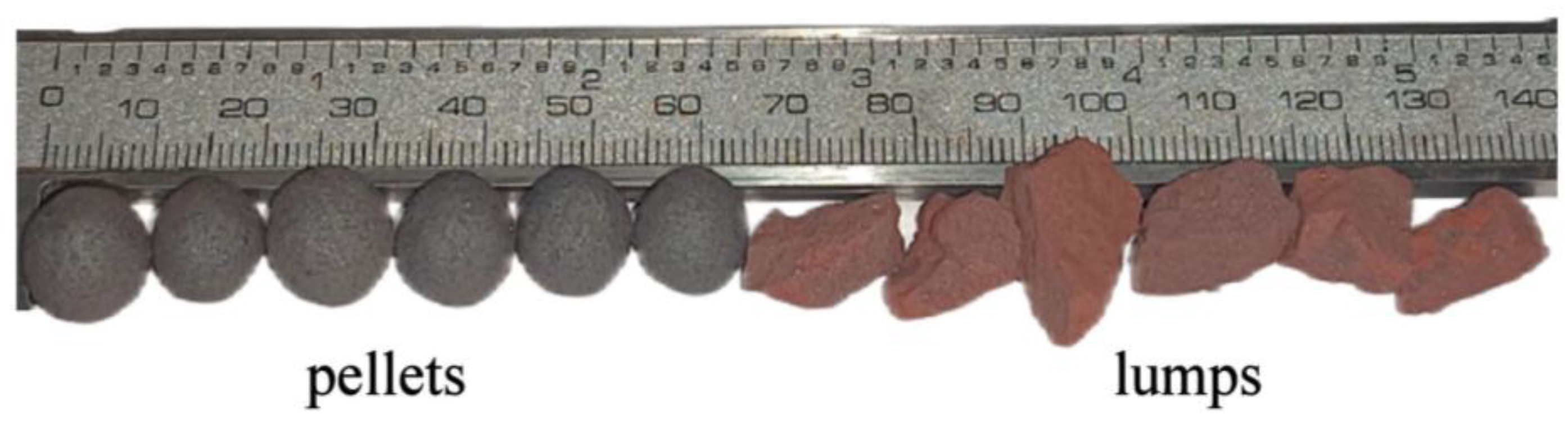
A photo of the prepared lumps and pellets is shown in Figure 2. The pellets have a diameter ranging from 8 mm to 11 mm, and the lumps have dimensions ranging from 8 mm to 13 mm in length and width.
Chemical analysis results of the lumps and the pellets are presented in Table 3. Compared to the original ore, the lumps exhibit a higher total iron content of 60.08 wt.%, and the pellets show a much lower Fe2+ ion content of 0.86 wt.%. However, regarding phosphorus content, the lumps and pellets remained at a similar level to that of the original ore sample.
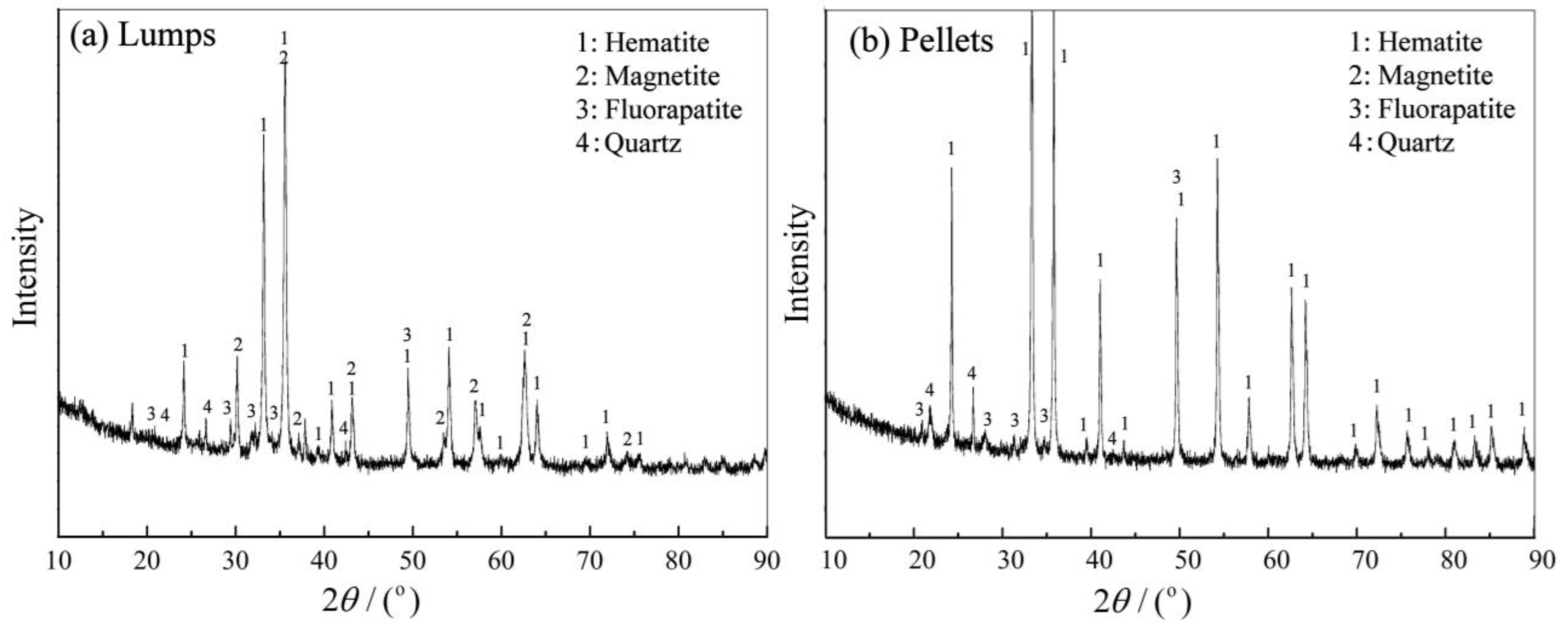
Phase compositions of the two samples are shown in Figure 3. The main phases in the lumps are hematite, magnetite, fluorapatite, and quartz (Figure 3a). In the pellet, the iron-bearing phase is predominantly present as hematite, and other main phases are quartz and fluorapatite (Figure 3b).
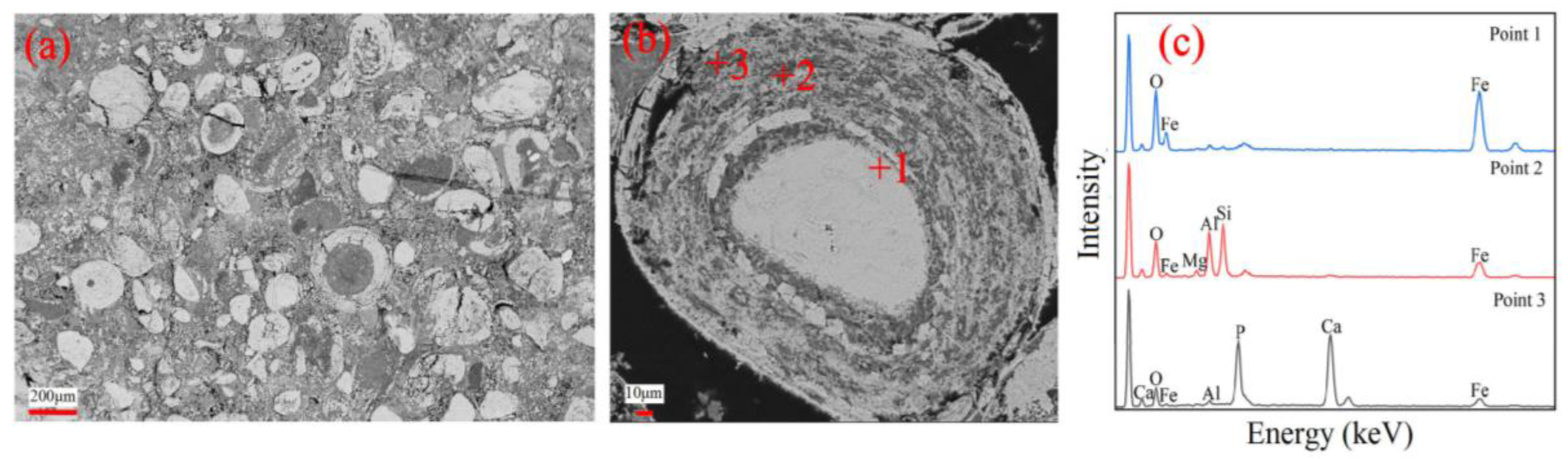
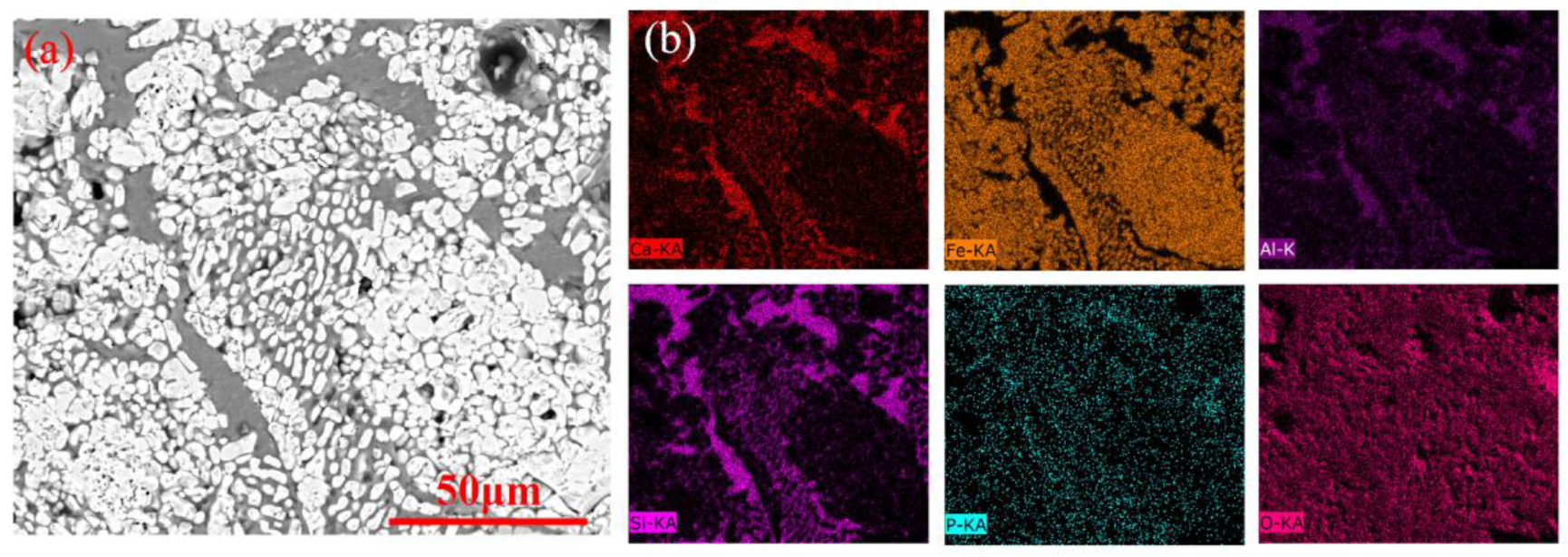
The morphology of the lumps is shown in Figure 4. Multiple oolites can be observed within a single lump (Figure 4a). The morphology of an oolite is shown in Figure 4b. The oolite consists of alternating thin layers of iron oxide (Point 1) and gangue (Points 2, 3) with individual layer thicknesses of less than 10 μm. The microstructure of the pellets is shown in Figure 5. After grinding and roasting, the oolitic structures were destroyed, and at the same time, the iron-bearing phases were fully oxidized, forming numerous fine hematite grains embedded in the gangue matrix (Figure 5a). Results of elemental mapping analysis reveal that phosphorus was evenly distributed throughout the gangue matrix after pelletizing (Figure 5b).

3.2. The Effect of Hydrogen Concentration and Temperature on Reduction

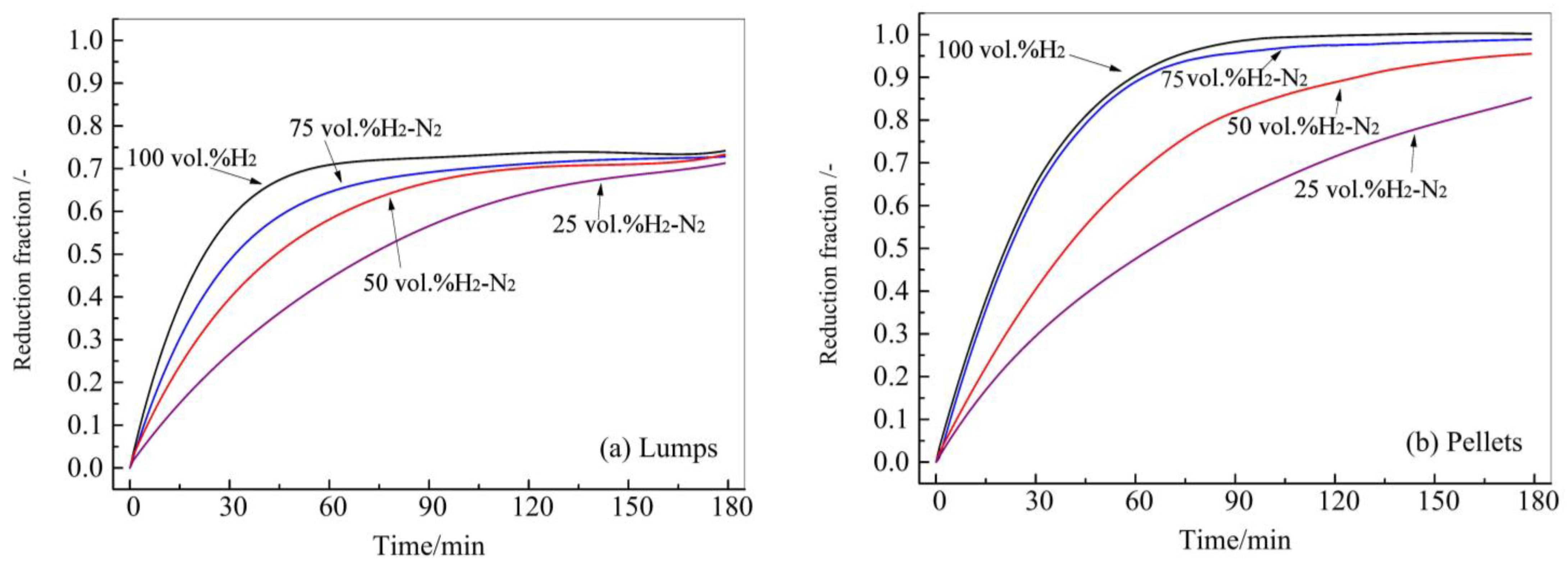
The influence of the atmosphere on the reduction in lumps and pellets was investigated. The tests were carried out under a temperature of 1173 K, a reduction time of 180 min, and atmospheres with H2 concentration ranging from 25 vol.% to 100 vol.%. The results are presented in Figure 6. The lumps reached a maximum reduction fraction of 0.75 under all atmospheres (Figure 6a). However, the pellet reached a final reduction fraction of 0.85 under the atmosphere with H2 concentration of 25 vol.%, and the pellet reached a complete reduction under the atmosphere with H2 concentration above 75 vol.% (Figure 6b).
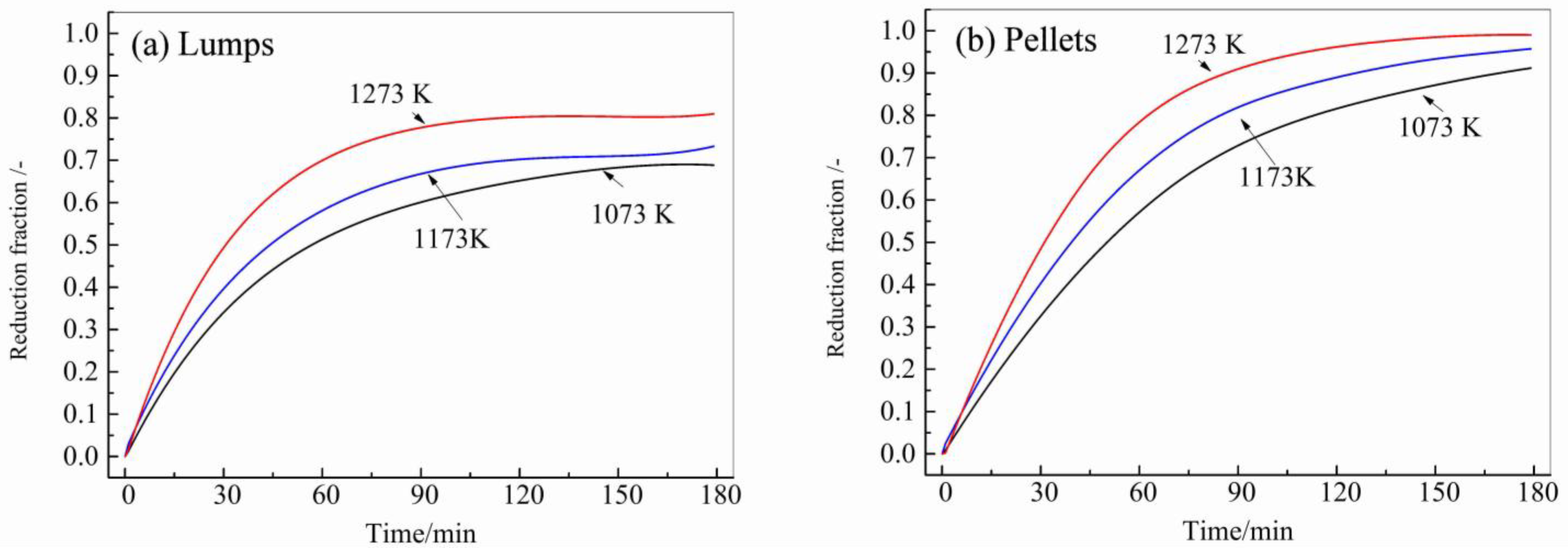
The influences of temperature on the reduction in lumps and pellets were examined under an atmosphere of 50 vol.% H2-N2 for a reduction time of 180 min, with temperatures ranging from 1073 K to 1273 K. The results are presented in Figure 7. As the temperature increased from 1073 K to 1273 K, the final reduction fraction of lumps rose from 0.70 to 0.81 (Figure 7a), while that of pellets increased from 0.90 to 0.99 (Figure 7b).
The above analysis indicates that, under all conditions investigated, the pellets have a much higher reducibility than the lumps under H2 atmosphere.

3.3. Microstructure Evolution

The microstructural evolution of the lumps and pellets was investigated under a 50 vol.% H2-N2 atmosphere and a temperature of 1173 K. The lump and pellet samples were collected at reduction times of 30, 60, 120, and 180 min.
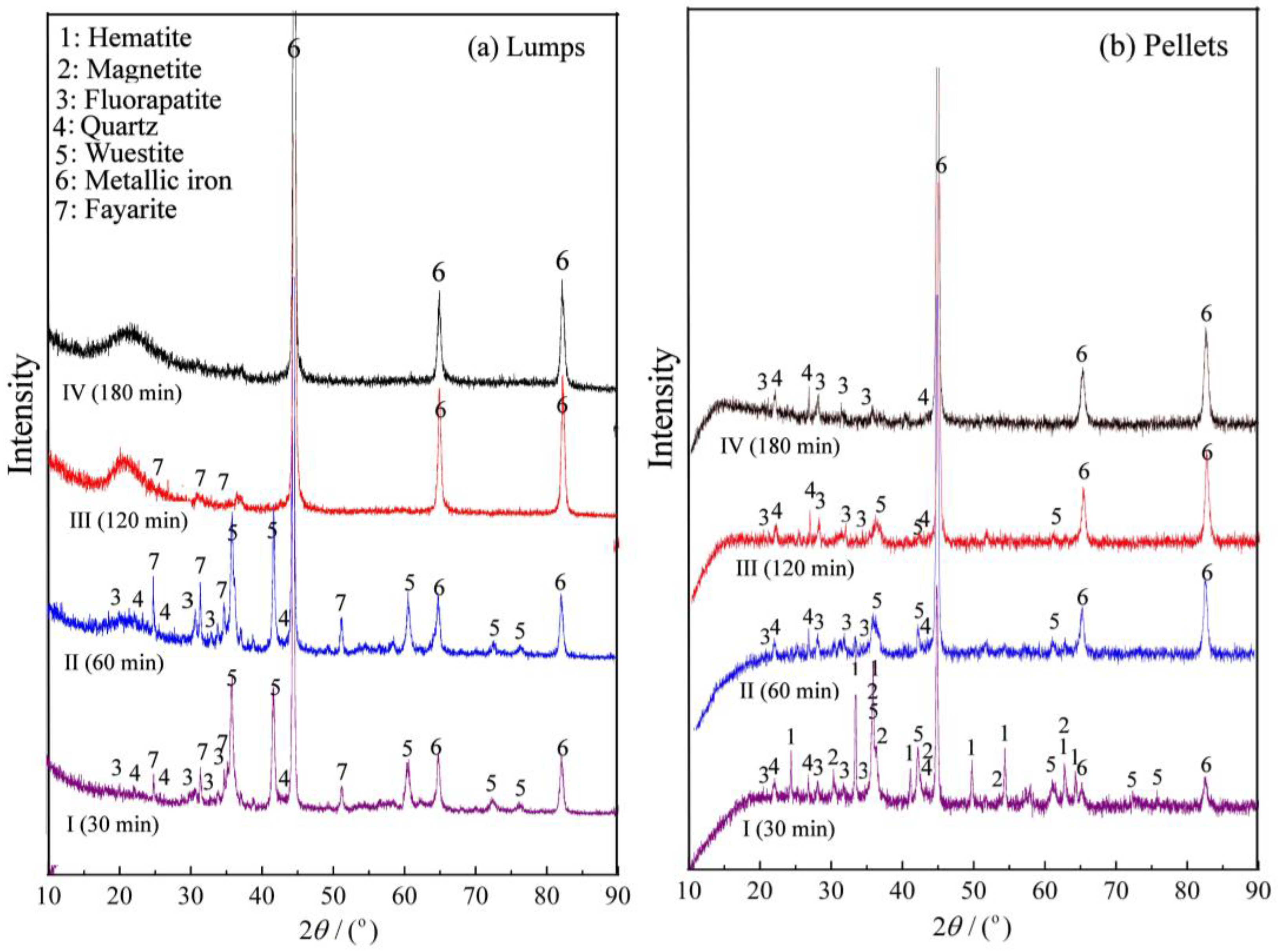
The phase evolution in the lumps is shown in Figure 8a. After 30 min of reduction, hematite and magnetite were partially converted to wuestite and metallic iron. At this stage, some wuestite also reacted with quartz to form fayalite (Figure 8a, I). With increasing reduction time, the intensity of fayalite peaks became more pronounced, indicating a growing presence of fayalite in the lump (Figure 8a, II). After 120 min, metallic iron was the predominant identifiable phase, and most of the gangue had softened and transformed into amorphous, glassy phases (Figure 8a, III and IV).
The phase evolution of the pellets is shown in Figure 8b. Initially, as hematite was reduced by hydrogen, magnetite, wuestite, and metallic iron were formed in the pellets (Figure 8b, I). After 60 min of reduction, the iron-bearing phases consisted mainly of wuestite and metallic iron (Figure 8b, II). After 120 min, metallic iron became the predominant phase (Figure 8b, III and IV). Unlike in the lumps, the formation of fayalite was not observed throughout the reduction process; and, at the end of the reduction, quartz and fluorapatite remained detectable (Figure 8b, IV), indicating that only a limited amount of glassy phase had formed in the reduction.
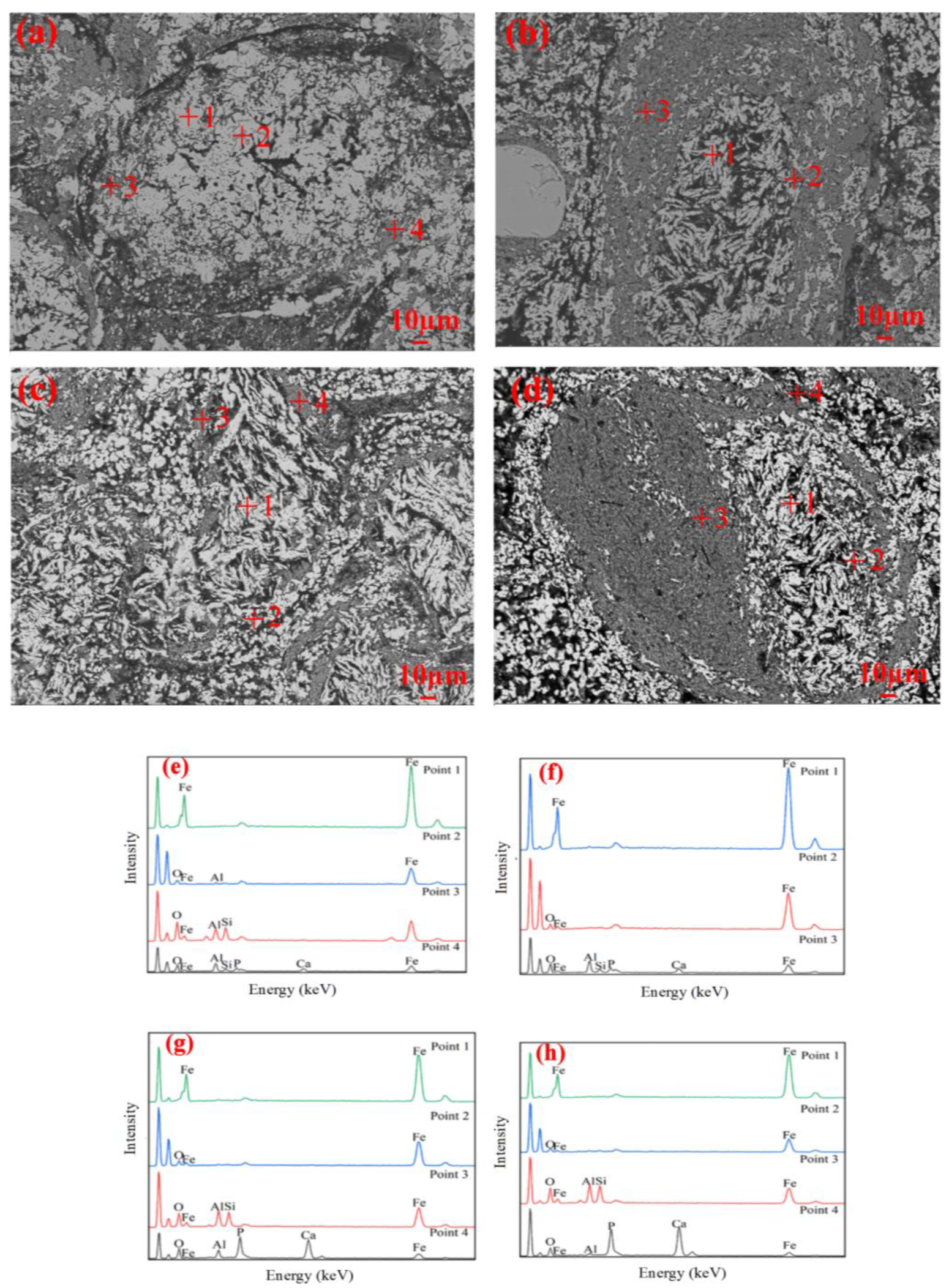
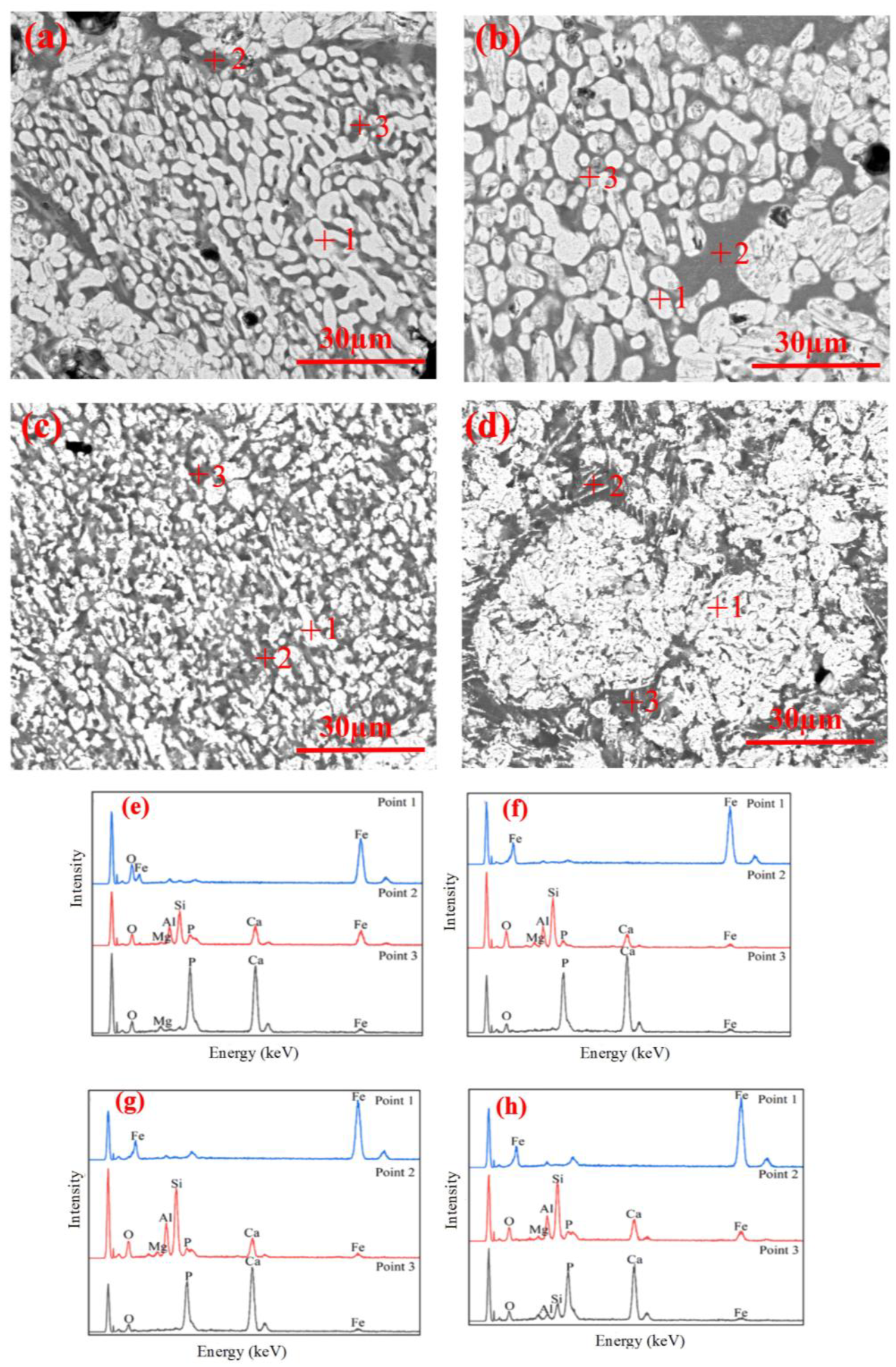
The morphological evolution near the core of the lump during reduction is shown in Figure 9. As seen in the figure, the oolitic structure remained intact in the reduction process. In the early stage, iron oxides in the core of the oolites were reduced to metallic iron and wuestite (Figure 9a, points 1 and 2). As reduction progressed, small iron grains gradually coalesced and developed into feather-like iron structures (Figure 9b, point 1; Figure 9c, point 1; Figure 9d, point 1). In the zone where alternating layers of iron oxide and gangue were present, partial reduction of iron oxide occurred, while in some areas, iron oxide was fully intermixed with the gangue phases. Based on the analysis in Figure 9a, this intermixing likely led to the formation of fayalite and glassy phases. Due to the large interfacial area between the thin iron-oxide layers and adjacent gangue layers, wuestite readily reacted with quartz to form fayalite. Since fayalite is difficult to reduce with hydrogen and has a low melting point, it further reacted with other gangue components during the later stages of reduction, leading to the formation of low-melting-point compounds (glassy phases).
The morphological evolution near the core of the pellet is shown in Figure 10. In the early stage of reduction, as hematite transformed into magnetite, wuestite, and eventually metallic iron, the iron-oxide grains exhibited continuous growth (Figure 10a, point 1; Figure 10b, point 1). In the later stage, the metallic iron grains coalesced (Figure 10c, point 1), resulting in the formation of dense iron layers by the end of the reduction process (Figure 10d, point 1). From Figure 10, it is evident that very little iron oxide remained in the gangue phases (Figure 10a, point 3; Figure 10b, point 3; Figure 10c, point 1; Figure 10d, point 1). This suggests that the roasting process significantly reduced the interface between hematite and gangue. As a result, the formation of dispersed iron particles within the gangue was minimized, preventing the generation of fayalite. Furthermore, due to the low FeO content, no glassy phases were formed in the reduction.
The above analysis indicates that the low reducibility of the lumps was attributed to the formation of fayalite in the early stage and the formation of glassy phases in the later stage.

3.4. Reduction Kinetics

To understand the reduction kinetics of lumps and pellets under H2 atmosphere, the integral method [35] was employed. In this method, the reaction rate is a function of temperature and reduction fraction, which is expressed in Equation (2).
d f / d t = A exp E / R T × F f
where t is time (min), F(f) is the function of f, A is the pre-exponential factor (min−1), T is temperature (K), E is the apparent activation energy (kJ·mol−1), and R is the gas constant (8.314 J·mol−1·K−1).
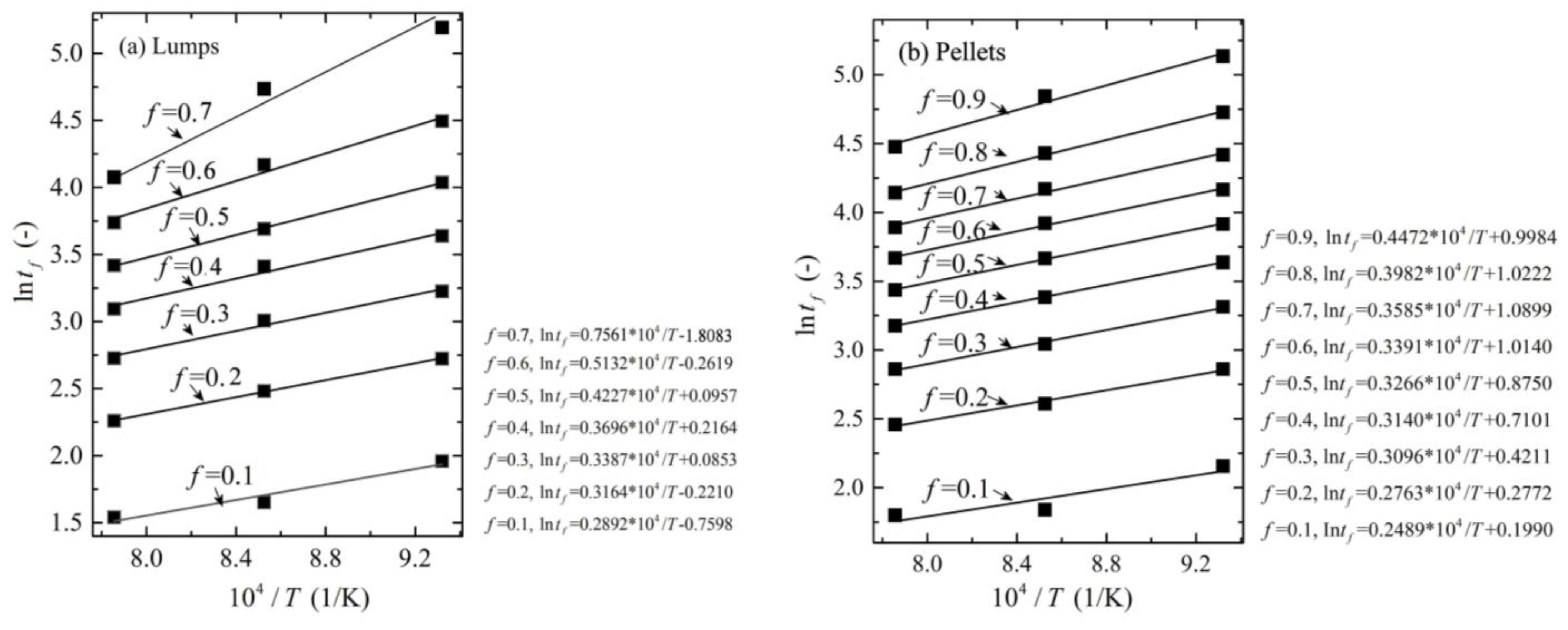
In Figure 7, for a given f, t f at three different temperatures (1073 K, 1173 K, and 1273 K) could be obtained for pellets or lumps. A linear fit of ln ( t f ) versus 10 4 / T was then performed for the different reduction fractions of both pellets and lumps using the method given in Ref. [32]. The results are presented in Figure 11. The slope of each line in Figure 11 corresponds to E / ( 10 4 R ) . Therefore, E at various reduction fractions for both pellets and lumps were calculated and are listed in Table 4.
The reduction of iron ore pellets or lumps under an H2 atmosphere is a typical gas–solid reaction following the unreacted core model. The main rate-controlling steps include external gas diffusion, internal gas diffusion, interfacial chemical reaction, and solid-state diffusion of Fe2+ ions. In the present research, the influence of external gas diffusion can be excluded based on the calculation of gas superficial velocity at the reaction temperatures in the reactor. Liu et al. [36] reviewed the relationship between the rate-controlling step and apparent activation energy for iron ore reduction under H2 atmosphere. It is stated that the rate controlling step is internal gas diffusion under E = 8~28 kJ/mol, internal gas diffusion and interfacial chemical reaction under E = 28–40 kJ/mol, interfacial chemical reaction under E = 40–70 kJ/mol, interfacial chemical reaction and solid-state diffusion of ions under E = 70–90 kJ/mol, and solid-state diffusion of ions under E > 90 kJ/mol. From the data in Table 4, it is evident that the reduction mechanisms differ between the lumps and pellets. For the lumps, it is controlled by internal gas diffusion in the stage with f < 0.3, by internal gas diffusion and interfacial chemical reactions in the stage with 0.3 < f < 0.6, by interface chemical reactions in the stage with 0.6 < f < 0.7, and by solid-state diffusion of ion in the stage with f > 0.7. For the pellets, this is controlled by internal gas diffusion in the stage with f < 0.6, controlled by both internal gas diffusion and interfacial chemical reaction in the stage with f > 0.6.

4. Conclusions

In this research, the reaction behaviors of the lumps and pellets made from high-phosphorus iron ore under H2 atmosphere were studied and compared for optimizing the charge pattern in the H2-based shaft furnace. The following conclusions could be drawn.
  • The lumps had 60.15 wt.% total iron, 11.04 wt.% Fe2+ ions, and 0.83 wt.% phosphorus, and consisted of multiple oolites. In contrast, the pellets had 56.01 wt.% total iron, 0.86 wt.% Fe2+ ions and 0.73 wt.% phosphorus, and no oolitic structures existed in the pellets.
  • Under the temperature range from 1073 K to 1273 K, and the concentration range of H2 from 25 vol.% to 100 vol.%, the maximum reduction fraction of lumps was 0.81, whereas the pellets reached a full reduction.
  • During the reduction, the lumps retained the oolitic structure, with fayalite forming in the early stage, and glassy phases appearing in the later stage. In contrast, the pellets showed growth and agglomeration of iron particles, with negligible formation of fayalite or glassy phase.
  • The reduction in lumps was controlled by internal gas diffusion under f < 0.3, by internal gas diffusion and interfacial chemical reactions under 0.3 < f < 0.6, by interface chemical reactions under 0.6 < f < 0.7, and by solid-state diffusion of ion under f > 0.7. The reduction in pellets was controlled by internal gas diffusion under f < 0.6, controlled by both internal gas diffusion and interfacial chemical reaction under f > 0.6.

Author Contributions

Conceptualization, H.T.; methodology, H.T.; validation, H.M., Y.L.; formal analysis, H.M., Y.L.; investigation, H.M., Y.L.; resources, H.M., Y.L.; data curation, H.M., Y.L.; writing—H.M.; writing—review and editing, H.T.; visualization, H.M., Y.L.; supervision, H.T.; project administration, H.T.; funding acquisition, H.T. All authors have read and agreed to the published version of the manuscript.

Funding

The authors thank the National Natural Science Foundation of China for supporting this work (Project No. U1960205).

Data Availability Statement

The original contributions presented in this study are included in the article. Further inquiries can be directed to the corresponding author.

Acknowledgments

The financial support from the State Key Laboratory of Advanced Metallurgy, University of Science and Technology Beijing was appreciated.

Conflicts of Interest

The authors declare no conflicts of interest.

References

  1. Pereira, A.C.; Papini, R.M. Processes for phosphorus removal from iron ore—A review. Rem-Rev. Esc. Minas 2015, 68, 331–335. [Google Scholar] [CrossRef]
  2. Ji, G.H.; Gao, X.; Sohn, I.L.; Ueda, S.; Wang, W. Review of beneficiation techniques and new thinking for comprehensive utilization of high-phosphorus iron ores. Miner. Eng. 2025, 223, 109176. [Google Scholar] [CrossRef]
  3. Singh, A.; Singh, V.; Patra, S.; Dixit, P.; Mukherjee, A.K. Review on high phosphorous in iron ore: Problem and way out. Min. Metall. Explor. 2024, 41, 1497–1507. [Google Scholar] [CrossRef]
  4. Bendaikha, W.; Larbi, S.; Ramdane, A. Mineralogical and chemical characterization of an oolitic iron ore, and sustainable phosphorus removal. J. S. Afr. Inst. Min. Metall. 2024, 124, 59–66. [Google Scholar] [CrossRef]
  5. Song, S.X.; Campos-Toro, E.F.; Zhang, Y.M.; Lopez-Valdivieso, A. Morphological and mineralogical characterizations of oolitic iron ore in the Exi region, China. Int. J. Miner. Metall. Mater. 2013, 20, 113–118. [Google Scholar] [CrossRef]
  6. Baioumy, H.; Omran, M.; Fabritius, T. Mineralogy, geochemistry and the origin of high-phosphorus oolitic iron ores of Aswan, Egypt. Ore Geol. Rev. 2017, 80, 185–199. [Google Scholar] [CrossRef]
  7. Xiao, J.; Kai, Z.; Zhen, W. Studying on mineralogical characteristics of a refractory high-phosphorus oolitic iron ore. SN Appl. Sci. 2020, 2, 1051. [Google Scholar] [CrossRef]
  8. Ofoegbu, S.U. Technological challenges of phosphorus removal in high-phosphorus ores: Sustainability implications and possibilities for greener ore processing. Sustainability 2019, 11, 6787. [Google Scholar] [CrossRef]
  9. Wu, S.; Sun, T.; Kou, J.; Xu, H. A new iron recovery and dephosphorization approach from high-phosphorus oolitic iron ore via oxidation roasting-gas-based reduction and magnetic separation process. Powder Technol. 2023, 413, 118043. [Google Scholar] [CrossRef]
  10. Wu, S.; Sun, T.; Kou, J.; Li, X.; Xu, C.; Chen, Z. Influence of sodium salts on reduction roasting of high-phosphorus oolitic iron ore. Miner. Process Extr. Metall. Rev. 2022, 43, 947–953. [Google Scholar] [CrossRef]
  11. Chen, C.; Zhang, Y.; Zou, K.; Zhang, F. Flotation dephosphorization of high-phosphorus oolitic ore. Minerals 2023, 13, 1485. [Google Scholar] [CrossRef]
  12. Ali, M.A.; Yassin, A.A. Integrated roasting and acid leaching for phosphorus removal from high-p oolitic hematite ore: A case study from el Bagrawiya, Sudan. Curr. J. Appl. Sci. Technol. 2025, 44, 109–118. [Google Scholar] [CrossRef]
  13. Li, W.; Yu, Y.; Wang, M.; Wang, H.; Huang, J. Efficient iron recovery and dephosphorization from high-phosphorus oolitic iron ore: Process optimization and mineralogy. J. Environ. Chem. Eng. 2025, 13, 118121. [Google Scholar] [CrossRef]
  14. Silva, L.M.D.; Giese, E.C.; Medeiros, G.A.D.; Fernandes, M.T.; Castro, J.A.D. Evaluation of the use of burkolderia caribensis bacteria for the reduction of phosphorus content in iron ore particles. Mater. Res. 2022, 25, e20210427. [Google Scholar] [CrossRef]
  15. Xiao, C.; Wu, X.; Chi, R. Dephosphorization of high-phosphorus iron ore using different sources of aspergillus niger strains. Appl. Biochem. Biotechnol. 2015, 176, 518–528. [Google Scholar] [CrossRef] [PubMed]
  16. Hu, M.; Zhu, D.; Pan, J.; Guo, Z.; Yang, C.; Li, S.; Cao, W. Fe–P alloy production from high-phosphorus oolitic iron ore via efficient pre-reduction and smelting separation. Minerals 2025, 15, 778. [Google Scholar] [CrossRef]
  17. Bao, Q.; Guo, L.; Guo, Z. A novel direct reduction-flash smelting separation process of treating high-phosphorus iron ore fines. Powder Technol. 2021, 377, 149–162. [Google Scholar] [CrossRef]
  18. Zhang, G.; Ni, H.; Li, Y.; Liu, T.; Wang, A.; Zhang, H. Fe-based amorphous alloys with superior soft-magnetic properties prepared via smelting reduction of high-phosphorus oolitic iron ore. Intermetallics 2022, 141, 107441. [Google Scholar] [CrossRef]
  19. Tang, H.Q.; Guo, Z.C.; Zhao, Z.L. Phosphorus removal of high phosphorus iron ore by gas-based reduction and melt separation. J. Iron Steel Res. Int. 2010, 17, 1–6. [Google Scholar] [CrossRef]
  20. Tang, H.Q.; Liu, W.D.; Zhang, H.Y.; Guo, Z.C. Effect of microwave treatment upon processing oolitic high-phosphorus iron ore for phosphorus removal. Metall. Mater. Trans. B 2014, 45, 1683–1694. [Google Scholar] [CrossRef]
  21. Guo, Z.C.; Tang, H.Q.; Li, B.K.; Zhou, Z.P. A Method of Utilization of the Oolitic High-Phosphorus Iron Ore. Chinese Patent CN202210901575.5A, 28 July 2022. [Google Scholar]
  22. Yu, H.; Tang, H. Research on pellet hydrogen reduction followed by melting separation for utilizing oolitic high-phosphorus iron ore. In TMS Annual Meeting & Exhibition 2024; Springer Nature: Cham, Switzerland, 2024; pp. 2034–2043. [Google Scholar] [CrossRef]
  23. Tang, H.Q.; Qi, T.F.; Qin, Y.Q. Production of low-phosphorus molten iron from high-phosphorus oolitic hematite using biomass char. JOM 2015, 67, 1956–1965. [Google Scholar] [CrossRef]
  24. Tang, H.Q.; Ma, L.; Wang, J.W.; Guo, Z.C. Slag/metal separation process of gas-reduced oolitic high-phosphorus iron ore fines. J. Iron Steel Res. Int. 2014, 21, 1009–1015. [Google Scholar] [CrossRef]
  25. Korobeinikov, Y.; Meshram, A.; Harris, C.; Kovtun, O.; Govro, J.; O’Malley, R.J.; Sridhar, S. Reduction of iron-ore pellets using different gas mixtures and temperatures. Steel Res. Int. 2023, 94, 2300066. [Google Scholar] [CrossRef]
  26. Sun, M.; Pang, K.; Barati, M.; Meng, X. Hydrogen-based reduction technologies in low-carbon sustainable ironmaking and steelmaking: A review. J. Sustain. Metall. 2024, 10, 10–25. [Google Scholar] [CrossRef]
  27. Pang, Z.; Bu, J.; Yuan, Y.; Zheng, J.; Xue, Q.; Wang, J.; Guo, H.; Zuo, H. The low-carbon production of iron and steel industry transition process in China. Steel Res. Int. 2024, 95, 2300500. [Google Scholar] [CrossRef]
  28. Zhang, J.; Guo, H.; Yang, G.; Wang, Y.; Chen, W. Sustainable transition pathways for steel manufacturing: Low-carbon steelmaking technologies in enterprises. Sustainability 2025, 17, 5329. [Google Scholar] [CrossRef]
  29. Tang, J.; Chu, M.S.; Li, F.; Feng, C.; Liu, Z.G.; Zhou, Y.S. Development and progress on hydrogen metallurgy. Int. J. Miner. Met. Mater. 2020, 27, 713–723. [Google Scholar] [CrossRef]
  30. Venkataraman, M.; Csereklyei, Z.; Aisbett, E.; Rahbari, A.; Jotzo, F.; Lord, M.; Pye, J. Zero-carbon steel production: The opportunities and role for Australia. Energy Policy 2022, 163, 112811. [Google Scholar] [CrossRef]
  31. Ling, J.; Yang, H.; Tian, G.; Cheng, J.; Wang, X.; Yu, X. Direct reduction of iron to facilitate net zero emissions in the steel industry: A review of research progress at different scales. J. Clean. Prod. 2024, 441, 140933. [Google Scholar] [CrossRef]
  32. Von Schéele, J. Pathways towards full use of hydrogen as reductant and fuel. Mater. Tech. 2023, 111, 405. [Google Scholar] [CrossRef]
  33. Liu, Y.; Yao, J.; Tang, H. Reduction kinetics of high-phosphorus iron ore pellet under hydrogen atmosphere. In TMS Annual Meeting and Exhibition 2025; Springer Nature: Cham, Switzerland, 2025; pp. 295–302. [Google Scholar]
  34. Zhang, T.; Liu, Y.; Tang, H. Reaction behavior of biochar composite briquette under H2-N2 atmosphere: Experimental study. Metals 2025, 15, 236. [Google Scholar] [CrossRef]
  35. Hu, R.Z.; Gao, S.L.; Zhao, Q.F.; Shi, Q.Z.; Zhang, T.L.; Zhang, J.J. Kinetics of Thermal Analysis; Science Press: Beijing, China, 2018. [Google Scholar]
  36. Liu, J.H.; Zhang, J.Y.; Zhou, T.P. Assessment of apparent activation energies for reduction reactions of iron oxides by hydrogen. J. Iron Steel Res. 1999, 6, 9–13. (In Chinese) [Google Scholar]
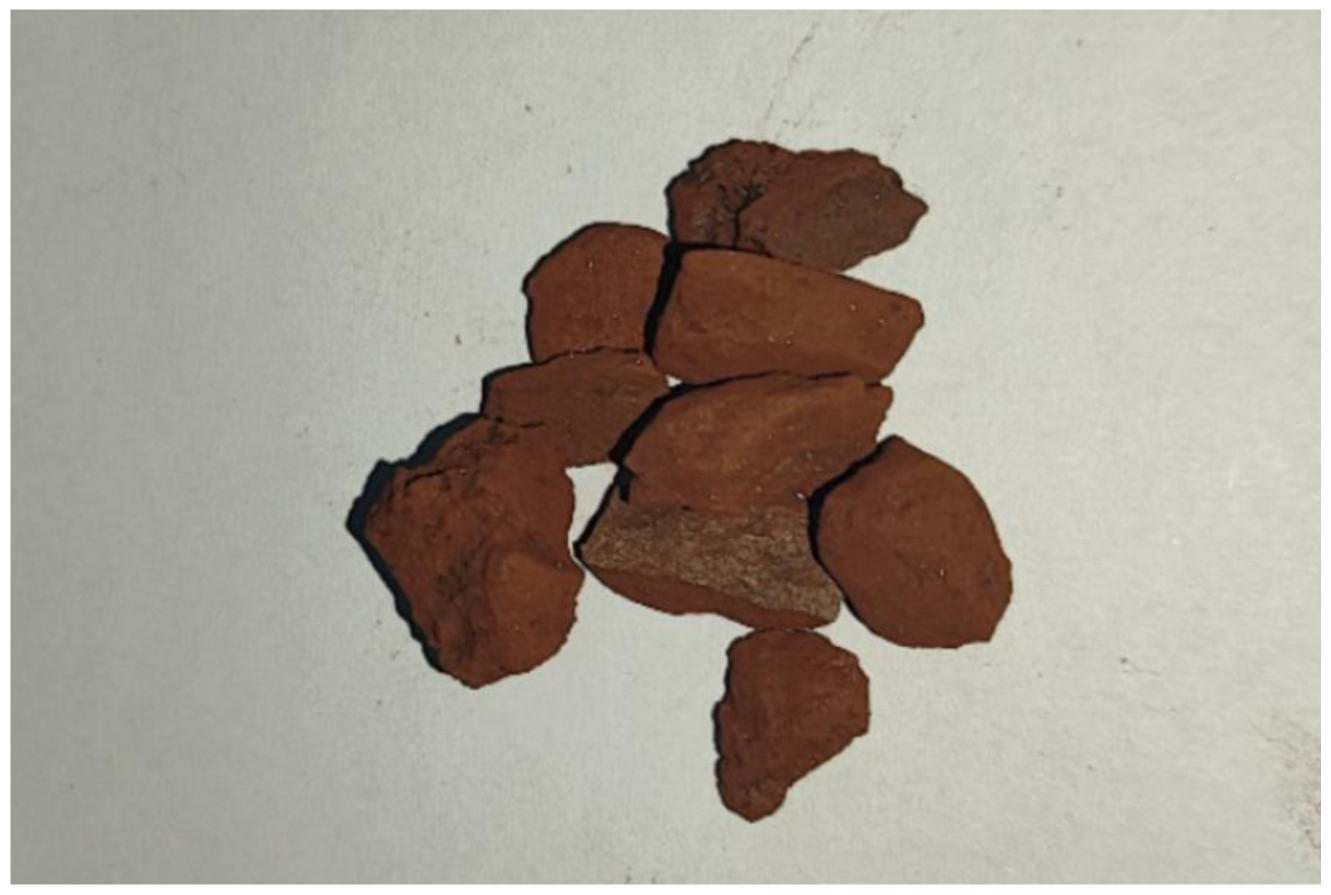
Figure 1. Image of the received ore sample.
Metals 15 01319 g001
Figure 2. Photo of lumps and pellets.
Metals 15 01319 g002
Figure 3. The XRD pattern of lumps (a) and of pellets (b).
Metals 15 01319 g003
Figure 4. SEM-EDS results of the lumps: (a) morphology of the lump, (b) morphology of a single oolite, and (c) EDS of points 1, 2, 3 in (b).
Metals 15 01319 g004
Figure 5. SEM-EDS results of the pellets: (a) morphology of pellet and (b) element mapping.
Metals 15 01319 g005
Figure 6. Influence of atmosphere on the reduction curve of the lumps (a) and of the pellets (b).
Metals 15 01319 g006
Figure 7. Influence of temperature on the reduction curve of the lumps (a) and of the pellets (b).
Metals 15 01319 g007
Figure 8. XRD patterns at different reaction times of the lumps (a) and of the pellets (b).
Metals 15 01319 g008
Figure 9. SEM-EDS results of lumps at different reaction times: (a,e): 30 min, (b,f): 60 min, (c,g): 120 min, and (d,h): 180 min.
Metals 15 01319 g009
Figure 10. SEM-EDS results of pellets at different reaction times: (a,e) 30 min, (b,f) 60 min, (c,g) 120 min, and (d,h) 180 min.
Metals 15 01319 g010
Figure 11. Linear fitting results under different reduction fractions of lumps (a) and pellets (b).
Metals 15 01319 g011
Table 1. Chemical composition of the received ore sample (wt.%).
Fe2O3Fe3O4SiO2Al2O3CaOP2O5MgOLOITotal
31.7646.148.284.222.741.680.404.78100
LOI: loss of ignition.
Table 2. Composition of the bentonite (wt.%).
SiO2Al2O3MgOCaONa2OFe2O3K2OTiO2Total
63.5718.244.974.294.162.442.220.11100
Table 3. Chemical composition analysis of lump ore and pellets (wt.%).
Total IronFe2+ IonsPhosphorus
Lumps60.0811.690.80
Pellets56.010.860.73
Table 4. Apparent activation energies at different reduction fractions of lumps and pellets.
Reduction Fraction/-0.10.20.30.40.50.60.70.80.9
Lumps (kJ/mol)24.0526.3128.1830.7335.1442.6762.86
Pellets (kJ/mol)20.7022.9725.7426.1127.1628.1929.8033.1137.18
Disclaimer/Publisher’s Note: The statements, opinions and data contained in all publications are solely those of the individual author(s) and contributor(s) and not of MDPI and/or the editor(s). MDPI and/or the editor(s) disclaim responsibility for any injury to people or property resulting from any ideas, methods, instructions or products referred to in the content.