Skip to Content
MetalsMetals
  • Review
  • Open Access

17 August 2023

Influence of Organic Acids and Related Organic Compounds on Corrosion Behavior of Stainless Steel—A Critical Review


,
and
Interdisciplinary Research Center for Advance Materials, King Fahd University of Petroleum and Minerals, Dhahran 31261, Saudi Arabia
*
Author to whom correspondence should be addressed.
This article belongs to the Special Issue Fatigue, Fracture and Damage of Steels

Abstract

Stainless steel is one of the most commonly used structural materials in industry for the transportation of liquids such as water, acids, and organic compounds. Corrosion is a major concern in industry due to the use of strong mineral acids, feedstock contamination, flow, aqueous environments, and high temperatures. Stainless steel is the most commonly used material in the petrochemical industry because of its characteristics of self-protectiveness, offered by thin passive oxides, and its metallurgical composition. However, chlorides and mineral acids attack the stainless steel continuously, consequently breaking down the passivation film, causing a continuous challenge from corrosion. The corrosion in stainless steel is influenced by many factors including flow rate, temperature, pressure, ethanol concentration, and chloride ion content. This review describes the impact of organic compounds and organic acids on the degradation behavior of stainless steel. The review also summarizes the commonly used organic compounds and their applications. It has been demonstrated that organic acid concentration, temperature, and halide impurities have significant effects on susceptibility to pitting corrosion by damaging the passivation film. The phenomenon of corrosion in stainless steel is quite different in immersion tests and electrochemical potentiodynamic polarization. This review article discusses the importance of organic compounds and their corrosion behavior on steel. The article also puts emphasis on the roles of corrosion inhibitors, monitoring methods, corrosion management, and forms of corrosion.

1. Introduction

Organic compounds are a large class of hydrocarbons that may contain nitrogen, oxygen, halogens, and phosphorous atoms, in the form of solid chemical compounds, liquids, and gases. The most used foodstuffs in our daily life such as vinegar, starch, fats, sugar, etc., are organic compounds. They are known to humans since prehistoric times but practical studies began in the 18th century [1]. Organic compounds are insoluble in water but in organic solvents and are combustible in nature. The properties of organic solvents are determined by the active carbon atoms in the group. The presence of the covalent bond makes the organic compounds (a) have low boiling and melting points, (b) less strong acids and bases, (c) exhibit the phenomenon of isomerism, and (d) be volatile in nature [1,2]. The importance of organic compounds can be described by the fact that they are present in all organisms in the form of proteins, fats, and the basic structures of life. They are the basic components of the cycles that drive the earth such as the carbon exchange between animals and plants through cellular respiration and photosynthesis [3].
Organic compounds are the major source of energy in the form of fossil fuels. They are combined with metals to form organometallic compounds which are very beneficial for pharmaceuticals and the food industry in which they serve as stabilizers, analyzers, promotors, and catalysts [4]. Some of the organic compounds are tabulated below (Table 1).
Table 1. Organic compounds and their applications.
Organic acids are organic compounds with weaker acidic properties than mineral acids and their acidity is associated with one or more carboxylic groups (–COOH). The lower reactivity and weak acidity make organic acids usable at higher temperatures and for a longer time. The reactivity/strength of acids is characterized by the value of the acid-dissociation constant (Ka). It measures the acid-ionization strength. The logarithmic values of Ka are referred to as pKa. A higher value of pKa denotes a weak acid and a lower value indicates a strong acid. The pKa value for formic acid is 3.75 and for HCl is less than unity. The most commonly used organic acids in the oil and gas industry are lactic acid, citric acid, acetic acid, and formic acid because of their ability to meet different application specifications. They are widely distributed in nature and release hydrogen ions when dissolved in water [5,6,7].
Organic acids have been produced from petrochemicals via fermentation or synthesized through chemical processes. They are commonly derived from agricultural waste, foods, and juices, and used in the process industry as catalysts or processing agents [8]. The commonly used production method for organic acids is one step acid-based fermentation process that induces corrosive contaminants such as sulfuric acid and chlorides [9]. The traditional fermentation process for crop-based organic acids focuses on the mechanical behavior, not the corrosion performance. The corrosion problems must be addressed in the production process of organic acids. Efficient and fast techniques have also been developed to extract organic acids from plant materials.
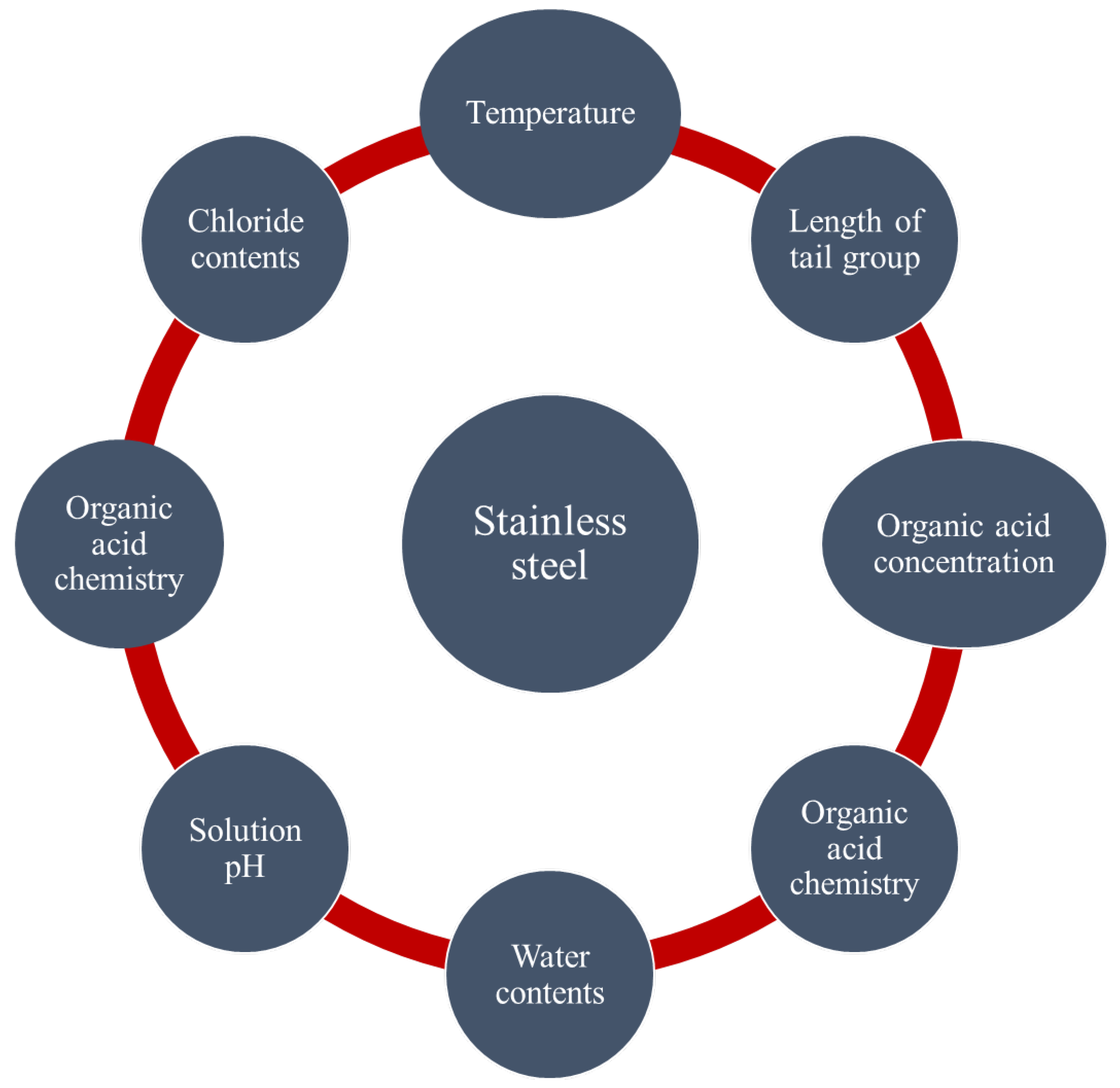
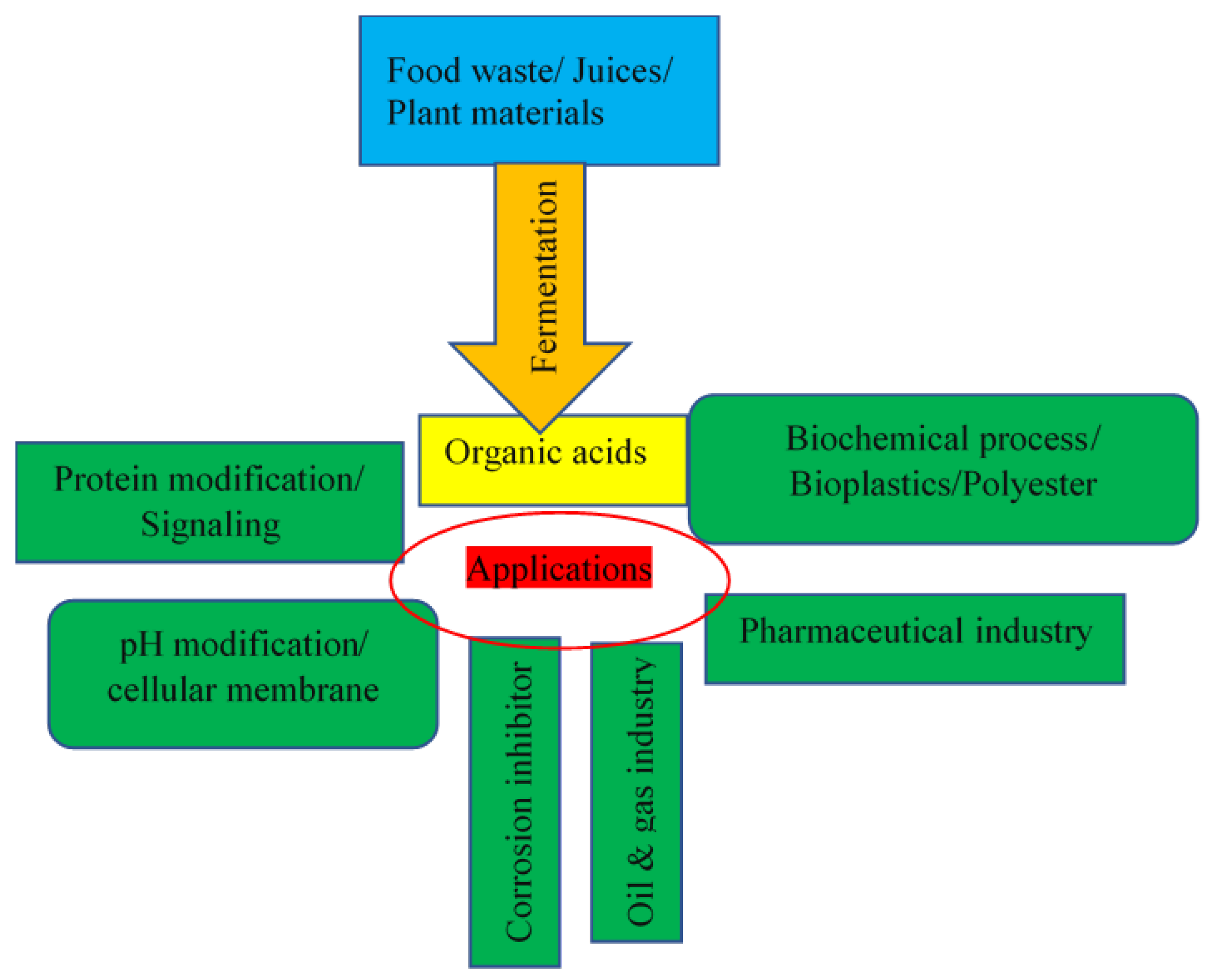
Organic acids exceptionally found applications in biochemical processes such as modulating transport across the cellular membrane, pH modification, signaling the messenger, and protein modification. They are promising chemicals for producing bio-plastic, polyester, and degradable polymers which have commercial applications in the processing of foods, pharmaceuticals, and chemical industries. Organic acids have been used in the oil and gas industry for well-stimulation treatments and to improve resistance against the corrosion of different metals such as phosphonates and act as corrosion inhibitors in stainless steel. The whole process of organic acid extraction and their application is summarized in Figure 1. The corrosion inhibition properties of organic acids are synergistically determined by surface energy, surface roughness, and wettability/hydrophobicity [10]. The wettability of the tail group commonly decreases in the order of CH2 > CH3 > CF2 > CF2H > CF3. The stability of the hydrophobic surface on stainless steel is related to the chain length of the tail group.
Figure 1. Organic acid extraction and their applications.
Stainless steel is used in the petrochemical, chemical, nuclear, and food industries for the transportation and storage of hydrocarbons [11,12,13]. The corrosion in pipelines in the petrochemical industry is caused by the presence of chlorides and water content in organic liquids [14,15,16]. Stainless steel is considered an excellent corrosion-resistant material in the industry due to the presence of high chromium content [17]. Therefore, many petrochemical industries experience greater uncertainty in selecting material for equipment to manufacture chemical products in organic/mixed solvents compared with the process that takes place in aqueous media [18]. The corrosion resistance of materials in organic solutions comprising acid contamination and low water concentration is of particular interest. Systematic studies of the corrosion performance of the different metals and alloys used in the chemical industry have been performed by many researchers.
Many industrial and research standards have been published over the last twenty years. The objective of the research was focused on critically reviewing the role of organic solvents and acids on the corrosion resistance of stainless steel. The impact of organic acid concentration, contact time, flow rate, oxygen level, and contaminants, including water content and inorganic additives has been carefully analyzed. The evaluation of the chemical and physiochemical mechanisms and mitigation for the occurrence and control of corrosion in organic acids and related solvents is discussed. The impact of organic acids and solvents on the corrosion behavior of ferrous and nonferrous materials is discussed. Types of corrosion under organic solvents, corrosion mitigation techniques, and process optimization are also briefly reviewed and discussed.

3. Influence of Alloying Elements on Corrosion Behavior of Steel in Organic Acids and Compounds

Erosion–corrosion is a prominent failure at the pipe outlet of the distillate column-free heater in the petrochemical industry [47]. The failure leads to leakage in the outlet and inlet of the radiant tube heater and piping systems due to the effects of temperature, pressure, flow, and corrosion. Erosion plays a key role in failure while pit corrosion formation is caused by electrochemical corrosion [48]. The root causes of leakage are the composition (chlorides and sulfur), fluid flow rate, temperature, and pressure of the corrosive environment [49]. The corrosion of nickel in organic solvent + H2SO4 exhibits unexpected behavior. The weight loss curves of nickel in acetic acid, ethanol, and acetone with a small amount of sulfuric acid were compared with weight loss curves in an aqueous solution [78,79]. It can be summarized that: (1) corrosion rates are very low in acetone solution; (2) corrosion rates are decreased in acetic acid by the addition of sulfuric acid; (3) ethanolic solution exhibits larger corrosion rates than aqueous solution; (4) the influence of temperature on corrosion is dependent on solvents [26,38]. Similar results were observed for Cu in the same environment. The nickel content is detrimental to the corrosion resistance of stainless steel in formic acid media which is a very aggressive corrosive agent. A similar phenomenon exists also for urea production. The difficulties lie in the solubility of nickel at high temperatures which can be addressed by ferric alloys [58]. An alloy with molybdenum can improve corrosion resistance against strong organic acids. Adding chromium enhances corrosion resistance at higher temperatures [80,81]. The corrosive attack is controlled by pH and chloride concentration in organic acids containing halides and can be changed, according to Jinyang Jiang and H. Sun [30,82].
It is believed that Mo and Cr contribute to the corrosion resistance of stainless steel in aqueous media and Ni contributes slightly. The corrosion resistance is mainly contributed by Cr and slightly by Fe and Mo in the nonaqueous solution of formic acid, changing the composition by adding corrosion-resistant elements such as nickel, and zinc [70,83]. Formic acid (HCOOH) is the most corrosive monocarboxylic acid at all concentrations and aeration increases the corrosion rates. The presence of chloride ions initiates corrosion and makes its general corrosion ability more severe [84].
The addition of chromium is effective for improvements in corrosion protection in Cl containing brines. The corrosion performance of the steel is strongly influenced by the grain size. The corrosion rate of steel is increased with the increase in grain size in an alkaline solution. Metal surfaces consist of boundaries, corners, edges, complex crystals, and disturbed layers which in turn dictate the properties of the surface [85]. The surface characteristics are determined by free energy because of the different arrangements of crystal faces. The physical properties of the surface are extensively changed when the grain size is reduced to 100 nm. The high grain density has a different corrosion behavior from that of polycrystalline materials [86].
The corrosion investigations of metallic biomaterials are of significance because of their critical applications. The increased corrosion rate leads to increased release of metallic ions. Lower corrosion rates are desired because of the corrosion interface with the cell metabolism. The corrosion behavior of titanium in uric acid was investigated by Liu et al. [87]. They observed the pitting holes on the surface at higher concentrations and the amount of TiO2 was decreased. The titanium surface pretreated with uric acid becomes hydrophobic and the corrosion susceptibility of titanium is increased. The uric acid concentration influences the release of titanium ions and surface characteristics. The corrosion rate is increased by destroying the titanium oxide barrier and accelerating titanium ion release.
The corrosion behavior of stainless steel in tartaric acid, citric acid, and oxalic acid was investigated by Gouda et al. at different pH values. [88]. The corrosion potential decreased and the corrosion rate increased at higher concentrations of organic acids and up to pH = 4 of the medium. When the pH of the corrosive medium is increased to 5 and 6, the corrosion potential becomes nobler causing a decrease in corrosion rate. The steady-state corrosion potential (E) and concentration (C) of the organic acid is related below:
E = a − b × logC
where a and b are the constant. The corrosion mechanism is anodically controlled by the complexing of Sn2+ ions with organic acid anions. The aggressiveness of the organic acid increase in the order of tartaric acids < citric < oxalic. The corrosion is inhibited at a pH of 5 and 6 because of passive film formation on the surface.
Pitting is a key phenomenon in electrochemical corrosion and erosion is a key failure in nonferrous metals. Chloride and sulfur concentration, pH and pKa value of organic acid flow rate, and pressure with some nickel content are the main reasons for the failure. Corrosion is controlled by halide ions.

4. Types of Corrosion

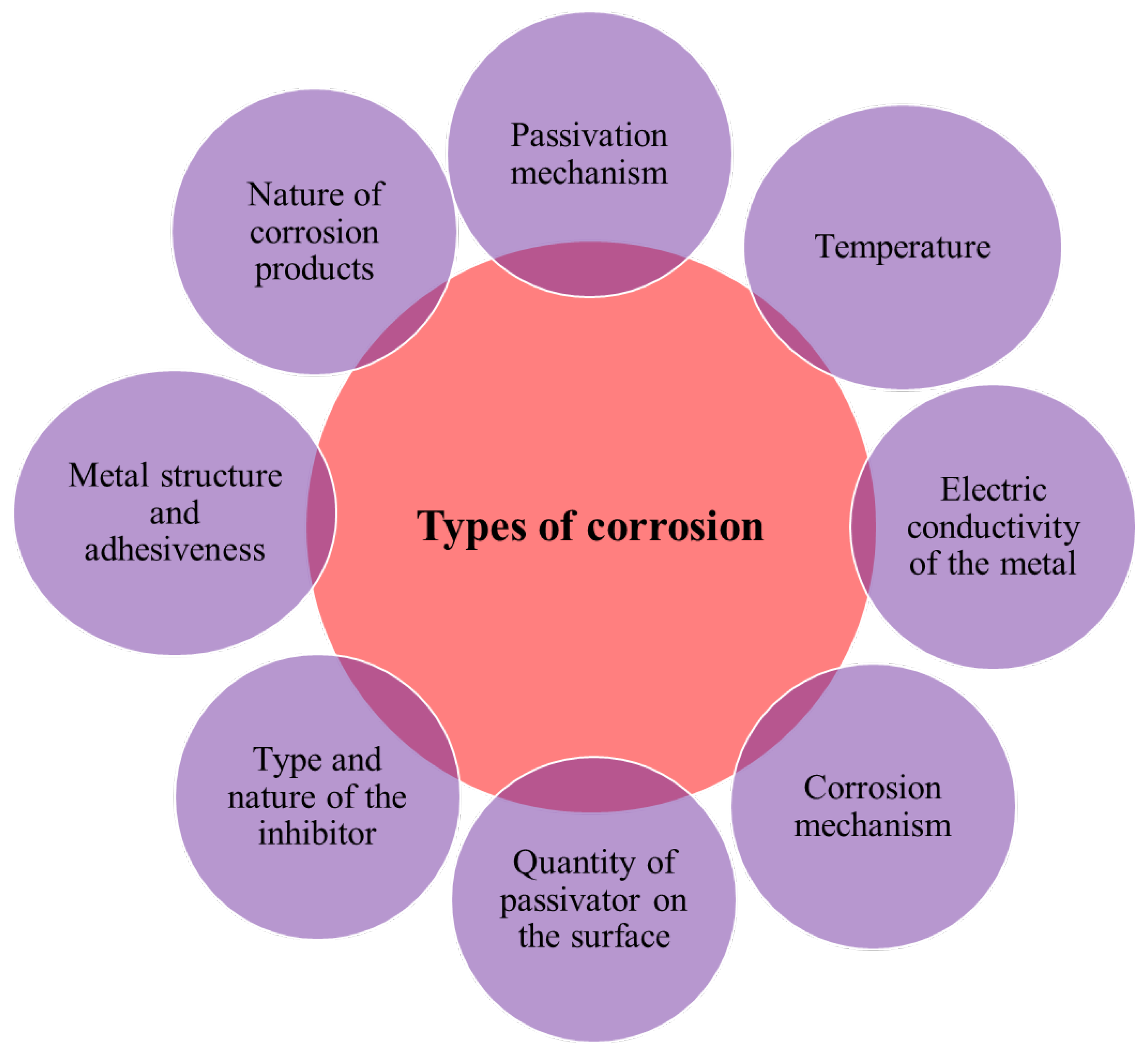
The corrosion type and mechanism are influenced by many factors such as metal structure, surface morphology, inhibitor type, and passivation characteristics of the organic acid and stainless steel. The parameters are summarized in the symmetric diagram in Figure 3. The common organic acid corrosion types and their effects are summarized here.
Figure 3. Parameters that determine the types of corrosion (a symmetric diagram).

4.1. Pitting Corrosion

Pitting corrosion is caused by the de-passivation of the passive layer. Some researchers claim that it is an intrinsic property of the acid used and the corrosive environment. Others claim that acid molecules penetrate into the metal surface and release the proton which in turn causes damage to the passivation layer. The oxygen pressure is decreased at localized sites which results in the formation of crevices and inhibits the regeneration of the passivation.
The corrosion of steel is directly related to organic acid concentrations. It has been observed that corrosion potential is decreased with the increased concentration of organic acids. The degradation of the metal matrix in pits is slowed down because of less diffusion of metal cations. Ethanolic solutions present a similar phenomenon. With the increase in the concentration of organic acids, breaking the potential is significantly decreased which indicates that pitting resistance deteriorates with no change in the thickness of the passivation film. The increase in organic acid concentration leads to the dispersion of breaking potential.
The pit density is increased exponentially with the increase in the concentration in the potentiodynamic polarization test but not in the immersion test. There are a finite number of precursor sites and sufficient time is required to incubate stable pits at the lower voltage. Thus, the reason for different pitting behaviors in immersion is because of the deprivation of precursor sites and inadequate activation time.
The pits on the surface of 316L steel were initiated in 1 M NaCl solution with 0 and 10 M ethanol at 1 mA·cm−2. The dissolution charge was contributed by a single pit on the surface which rapidly developed and generated at higher current density. Several pits contribute to form a dissolution charge. The single pits fail to generate sufficient current density which causes the pits to grow pits in scale size. Multiple pits are generated at a current density of 1 mA·cm−2 and a single pit is generated at the breaking potential.
The pitting in the ethanolic solution is simplified and development is suppressed. The pits tend to be deeper. The growth of stable pits is an electrochemical process and is controlled by the viscosity of the ethanolic solution and metal cations. The inhibition of pitting development is ascribed to the drop-in ions diffusion rate. The deterioration of passivation films does not affect the pit initiation and the theory of alcohol electro-oxidation is not applicable to the ethanolic system [18,89,90]. The increase in concentration leads to an increase in metal cations at the pit’s bottom and changes the solution’s pH. The hydrolysis of metal cations is enhanced with an increase in organic acid concentration which consequently results in a decrease in the pH of the solution. The pitting is initiated when concentrations of cation Mn+ are far from saturation. The pH of the solution is decreased with the increase in concentration. When the solution is saturated with metal cations Mn+ and pits are developed; this results in the synergic effects of solubility reduction, and hydrolysis enhancement [55,91,92].
The metastable pits are initiated with the inclusion of chloride ions and the puncture behavior of chloride ions is not affected by the passivation film. The solution inflows during void expansion and the pits initiation is influenced by the difference in hydrolysis. The concentration of metal cations is lower with a higher content at the bottom of the pit than in a non-acidic solution, resulting in dissatisfaction with the pH on the surface. This results in more dissolution at the top and less dissolution at the bottom in alcoholic solutions, causing the formation of a lacy cover and steeper pits.
The current density of the pit in metal cation dissolution could be approximated by:
i d i f f ,   s i t e = 3 n F D C s i t e 2 π r
where n is the average oxidation state of the metal cations, F is the Faraday constant, D is the effective diffusivity of the metal cations, Csite is the concentration of metal cations at the site, and r is the radius of the hemispherical pit.

4.2. General Corrosion

The commonly observed corrosion in stainless steel is uniform corrosion which is characterized by a thinning of the component wall. General corrosion occurs when the passivation film is damaged and a new passivation film is not attained either because of shear stress effects or higher pit density distribution. The randomly alternating anodic and cathodic spots cause uniform attacks and the entire metal surface would be damaged. The uniform or general corrosion is caused by hydrogen embrittlement which results in load redistribution causing local stress risers, and secondary bending stresses which accelerate the crack growth [23,38,93]. Reasonable corrosion resistance is offered by stainless steel in the presence of impurities such as HCl, sulfuric acid, and formic acid. An elevated operational temperate can result in rapid general attacks on steel. Elevated temperature and high acid concentration are of particular concern for corrosion protection. These conditions would cause the corrosion rate in steel to reach 500 mpy. Moderate operating conditions will prevent corrosion to a large extent because of the standard composition, especially molybdenum content.

4.3. Stress Corrosion Cracking

Stress corrosion cracking is a major corrosion problem in stainless steel in chloride-contaminated environments at higher temperatures. Stainless steel (316L) is more vulnerable to corrosion in 70–90% acetic acid-containing chlorides at 90 °C. The susceptibility of 316L stainless steel is higher in 400 ppm chlorides within a 30-day period. The vulnerability of stainless steel to stress corrosion cracking is influenced by many factors including local passivity breakdown, electrochemical potential, aqueous environment, halide salt contamination, elevated temperature, and the menace of sustained stress corrosion in petrochemical plants. These alloys have the intrinsic property of developing a thin protective film against corrosion [94]. Under typical conditions, EA plants operate at temperatures above 100 °C and concentrations higher than 70% EA. Thus, feedstock contamination and these parameters must be monitored during the processing to avoid SCC.

4.4. Other Types of Corrosion

Some other types of corrosion such as intergranular and crevice galvanic corrosion are also encountered in food process plants. Although they are less common, their impact cannot be eliminated in the production process. The crevice type of corrosion happens in sealed locations where differential concentration is present. The crevice type of corrosion in nuts, bolts, lap joints, and butt joints made up of 316L steel has been reported.
Galvanic corrosion is associated with welding active and noble metals. The massive difference in potential leads to preferential corrosion in less noble metals. The crevice and galvanic forms of corrosion can be controlled by proper material selection and design to ensure metal coupling and minimize the crevices.
Intergranular corrosion is affiliated with heat-affected zones of weldments in stainless steel. It happens due to the depletion of chromium and the formation of chromium carbide precipitates along grain boundaries at elevated temperatures. Intergranular corrosion occurs in aqueous media in which chromium carbides are activated at grain boundaries and the rest of the material is under passivation.

4.5. Interaction of Corrosion Types

The different types of corrosion occur and interact in EA plants due to complex processes. A typical example of corrosion interaction is pitting in the crevice. The feed streams are stocked in crevices and create a microenvironment that has a different composition than the bulk. The environment is suitable for pit initiation and proliferation through autocatalytic pitting. Thus, the occurrence of pitting corrosion coupled with rapid general corrosion has been reported [23,81,95].
Pitting acts as a stress raiser by localized loss in thickness. The continuous degeneration of pits leads to crack initiation and propagation which causes fatigue and SCC. The pit–crack transition phenomenon takes place and the crack grows subsequently. Pitting corrosion behaves as the denominator in localized corrosion such as SCC, fatigue, and hydrogen. Similarly, sensitized stainless steel is vulnerable to other types of corrosion such as crevices, SCC, and pitting. Stabilizing steel with titanium or niobium or using 316L stainless steel can prevent it from being sensitized and protect it from the intergranular corrosion property by developing a thin protective film [57,95,96,97]. Therefore, the supreme importance of this interaction between the different forms of corrosion in suitable and susceptible organic environments should be given due consideration.

5. Mechanism of Corrosion

Green chemistry represents the holistic approach to managing chemical risk. It eliminates chemical pollution and waste management. Ensuring the natural resources and minimizing the environmental effects and sustainability are the fundamental concepts in green chemistry. Green corrosion inhibitors and biodegradable inhibitors do not have toxic compounds. They potentially inhibit the corrosion of metals in alkaline and acidic environments.
In the corrosion inhibition process, a protective layer is formed on the metal surface by absorption of the molecules. The coordinate bonds are formed when these molecules donate the electron to the vacant d-orbital. The metal ions are transferred from the anode in the solution to the cathode during the corrosion process. The cathodic process requires hydrogen as an electron acceptor and oxygen as an oxidizing agent. Corrosion can be minimized by stopping the anodic or cathodic reactions. The inhibitors are absorbed on the surface, forming barriers to protect from corrosion. Then, they interact with cathodic, anodic, or both sites and decrease the reduction, oxidation, or both corrosive reactions.
Cathodic reactions are given by the following equations:
2H+ + 2e → H2
O2 + 4H+ + 4e → 2H2O
The reductions are given as:
2H+ + 2e → Hads → 2H2
The hydrogen ions in combination with oxygen ions are absorbed into the surface of the metal and they act as catalysts in passive film formation. Then, hydrogen gas evolves at the cathode surface. The inhibitor molecules neutralize the metal surface by absorption onot the metal surface. The process is described by the following relation:
Inhibitor + nHads → Inhibitorads + H2
The most reliable and conventional ways to measure corrosion are electrochemical measurements, the kinetics of corrosion, and weight loss measurements.
It is well established that the metal reactions in protic media follow electrochemical reactions and the anodic reaction is the partial dissolution of the metal. Mixtures of aprotic and protic solvents are used in many industrial applications. The behavior of the system is determined by the nature of the protic component. The water content in the aprotic solvent with aggressive components causes inhibition, stimulation, or no effects on corrosion rates. The dissolution of the metal is an anodic partial reaction according to the following equation:
Me → Men+ + ne
The cathodic partial reaction (reduction process) is presented as:
HA + e → 1/2H2 + A
Most of the processes involve a direct reaction metal with a non-dissociated proton donor.

6. Mitigation Methods for Organic Acid Corrosion

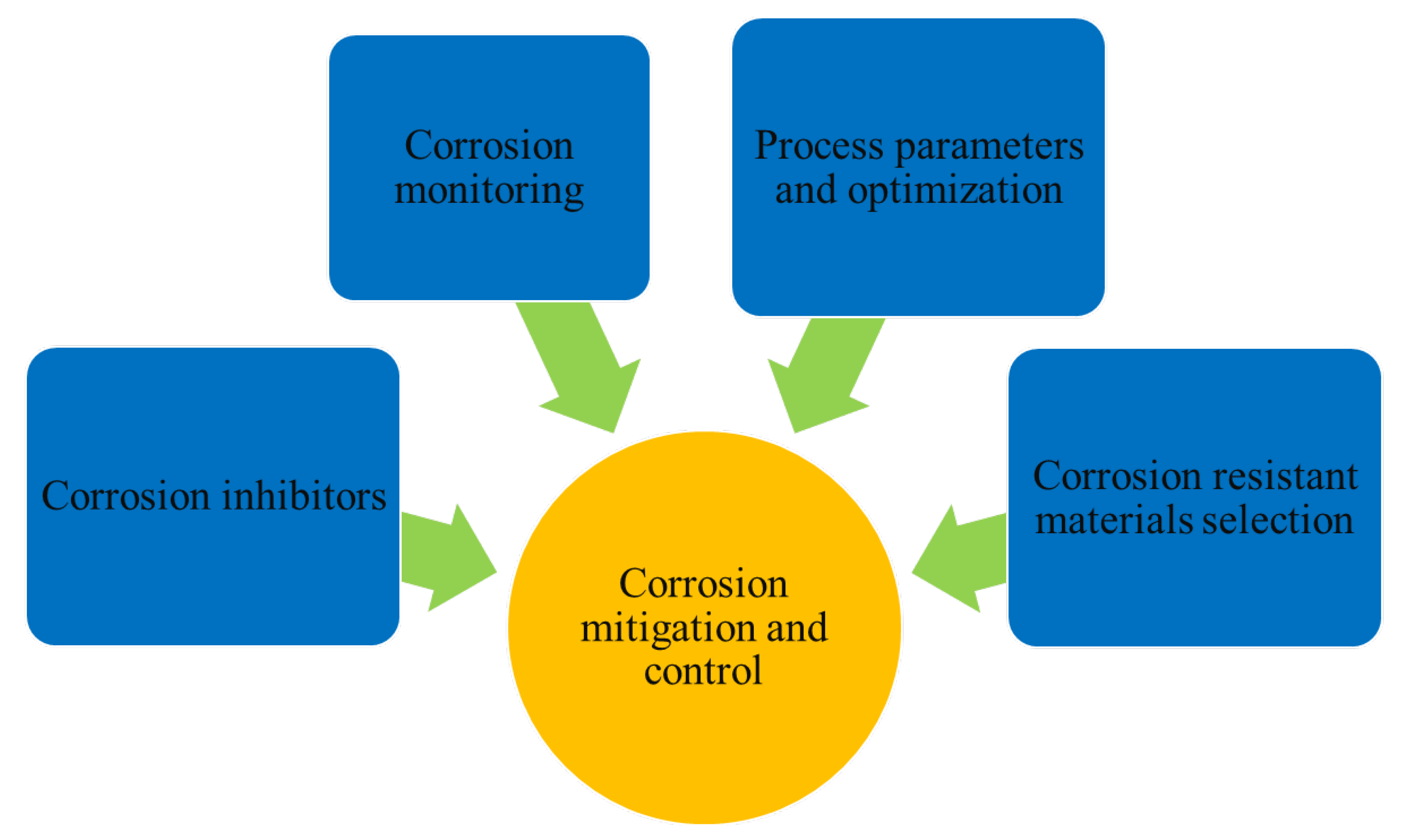
Steel has versatile applications in construction, structure, and chemical industries owing to its excellent mechanical properties. However, it is susceptible to corrosion in an acidic environment and one-third of the steel is lost due to corrosion, causing a 3% loss in GDP. The corrosion is affected by temperature, pressure, surface impurities, and solution activities. Several protection techniques such as coatings, inhibitors, and different corrosion-resistant steels are used to mitigate the corrosion. Means of corrosion mitigation and their relations with control are summarized in Figure 4.
Figure 4. Parameters for corrosion mitigation and control.

6.1. Corrosion Monitoring Methods

Corrosion measurements and monitoring during the process minimize fatal accidents and reduce the chances of failure. They are useful in assessing the reliable life of equipment. Corrosion in organic media is controlled by many parameters such as flow, low pH, water content, and high temperature. It is difficult to predict the synergic effects of these parameters. Therefore, corrosion and elements that instigate the corrosion process should be monitored.
Monitoring techniques can be divided into indirect and direct techniques. The indirect techniques measure parameters that affect the corrosion rate such as ion count or pH. Direct measurement methods involve the monitoring of the parameters that directly influence corrosion. It can be categorized into intrusive and nonintrusive techniques with reference to monitoring from inside or outside the pipe, respectively, against corrosion [98,99].
Corrosion can be monitored continuously or periodically. Direct intrusive measurement techniques use electrochemical techniques (harmonic distortion, electrochemical impedance spectroscopy, electrochemical noise, potentiodynamic polarization), electrical resistance probes, and mass loss coupons. These are more sensitive and reliable techniques for measuring the corrosion rate.
Nonintrusive techniques use radiography, eddy current, magnetic flux leakage, ultrasonic acoustic emission, and electrical field mapping. The actual plant materials are tested for monitoring in this technique. These are used at critical locations such as tees, pipe bends, welds, and similar nonuniformities [100].
The indirect/continuous measurement techniques involve the monitoring of dissolved oxygen, corrosion potentials, process parameters, pH, pressure, temperature, and evaluation of corrosion products. The indirect/periodic techniques use the measurement of the total acid number, ion count and analysis, and water chemistry. The corrosion measurement and monitoring details are found in NACE standards.
The mass loss coupon technique is the most commonly used method in the petrochemical industry because of its cost implication and reliability. The coupons are periodically retracted for evaluation. It is compromised by localized corrosion at critical locations such as welds and tees. The above methods are employed in combination. The measures over a short period of time during operation permit the changing of the process parameters to obstruct the rate of corrosion. The corrosion monitoring techniques require improvement to obtain more sophisticated results. It has been a challenge to detect localized corrosion but technological advancements have made it possible to measure the hydrogenation penetration, pitting corrosion, and localized corrosion. Indirect monitoring is important to examine the daily operating parameters and corrosion condition trends.

6.2. Corrosion-Resistant Material Selection

Correct material selection is the primary approach for designing industrial equipment with protection against corrosion in particularly aggressive environments. Appropriate materials such as corrosion-resistant alloys are imperative in mitigating corrosion in petrochemical industries to enhance performance and life expectancy. The performance of the equipment’s materials is affected by many factors such as operation, quality control, fabrication, materials’ specification, and transportation. The unique environmental conditions for specific applications determine the extent and type of corrosion at all stages of component life including maintenance, operation, commissioning, installation, storage, transportation, fabrication, and procurement [101].
The corrosion can be controlled by modifying the microstructure, and surface structure of the equipment. The microstructure can be changed by changing the composition by adding corrosion-resistant elements such as nickel, zinc, and chromium. Stainless steel, titanium alloys, and nickel-based alloys are excellent corrosion-resistant alloys to mitigate the corrosion menace in petrochemical plants. These alloys have the intrinsic property of developing a thin protective film against corrosion [98].
Hastelloy, Inconel, and Monel alloys are employed as corrosion-resistant alloys in place of stainless steel. These materials offer excellent corrosion resistance properties under specific conditions and processes and experience severe corrosion attacks when the environment is slightly changed [80]. For instance, stainless steel 316L has outstanding corrosion resistance in an up to 90% concentrated acetic acid environment; however, a slight change in concentration enhances the corrosion rate by almost 400% [102]. Ferric alloys are preferred in the pulp and paper industry because of their corrosion resistance over stainless steel. In a similar way, Monel has excellent corrosion performance in unaerated acidic environments but is severely attacked in the aerated environment. Inconel has good corrosion resistance performance in strongly oxidizing conditions; however, it has less corrosion resistance in dilute acid at higher temperatures. Therefore, materials for equipment and components should be investigated for particular process conditions [103].
Stainless steel is considered to be an excellent corrosion-resistant material in ethyl acetate plants under process conditions. However, high flow velocity, contamination, strong catalysts, and elevated temperature cause various corrosion failures and problems. Nitrogen, molybdenum, and chromium content are optimized for excellent crevice and pitting corrosion resistance in steels [104,105]. The development of corrosion-resistant coatings is another good technique to control the corrosion process and rate degradation. The film thickness and elements in coating films are important parameters by which to estimate the performance of the coatings [99,106].

6.3. Process Parameters and Optimization

The parameters such as oxygen, suspended solids, dissolved metal chlorides, flow rate, corrosion potential, pH, pressure, temperature, and chemical residuals control corrosion. Any change in the above-mentioned parameters will influence the corrosion potential and the susceptibility of the plant can be assessed by using this information [107]. A significant impact on corrosion is induced by flow rate, pressure, and temperature. For example, the temperature in the reaction container is above 100 °C, and the pressure of 1 MPa under the flow rate of 2.5 m/s. If these parameters are adjusted according to the required yields in the plant, they will consequently affect the corrosion. A slight change in these parameters has significant effects on the breakdown of the passivation film, activity, increased dissolved ions, and increased chloride mobility [108,109,110,111,112].
The change in electrolyte activity can be indicated by the tendency in the concentration of dissolved metals such as Fe and Cr, which reveals the corrosion rate and corrosivity. The corrosion rate is significantly affected by pH, so controlling the pH monitors the corrosion rate [99,106]. The pH is influenced by chemical residuals, dissolved oxygen, and other impurities. The feedstocks in the plant are agitated for mixing and heat transfer and then transported through pipelines [113,114]. The shear stresses are induced by high feedstock velocity which causes additional erosion–corrosion problems in the equipment of the plant [115,116]. This becomes more severe when suspended particles are in the stream [39,96]. It has been reported that the corrosion rate approached 2.6 mm/y for 304 stainless steel at a flow rate of 2.4 m/s under 0.3% H2SO4 catalyst at 103 °C. This is how process parameters influence the corrosion process and corrosion can be managed in a better way by optimization.

6.4. Corrosion Inhibitors

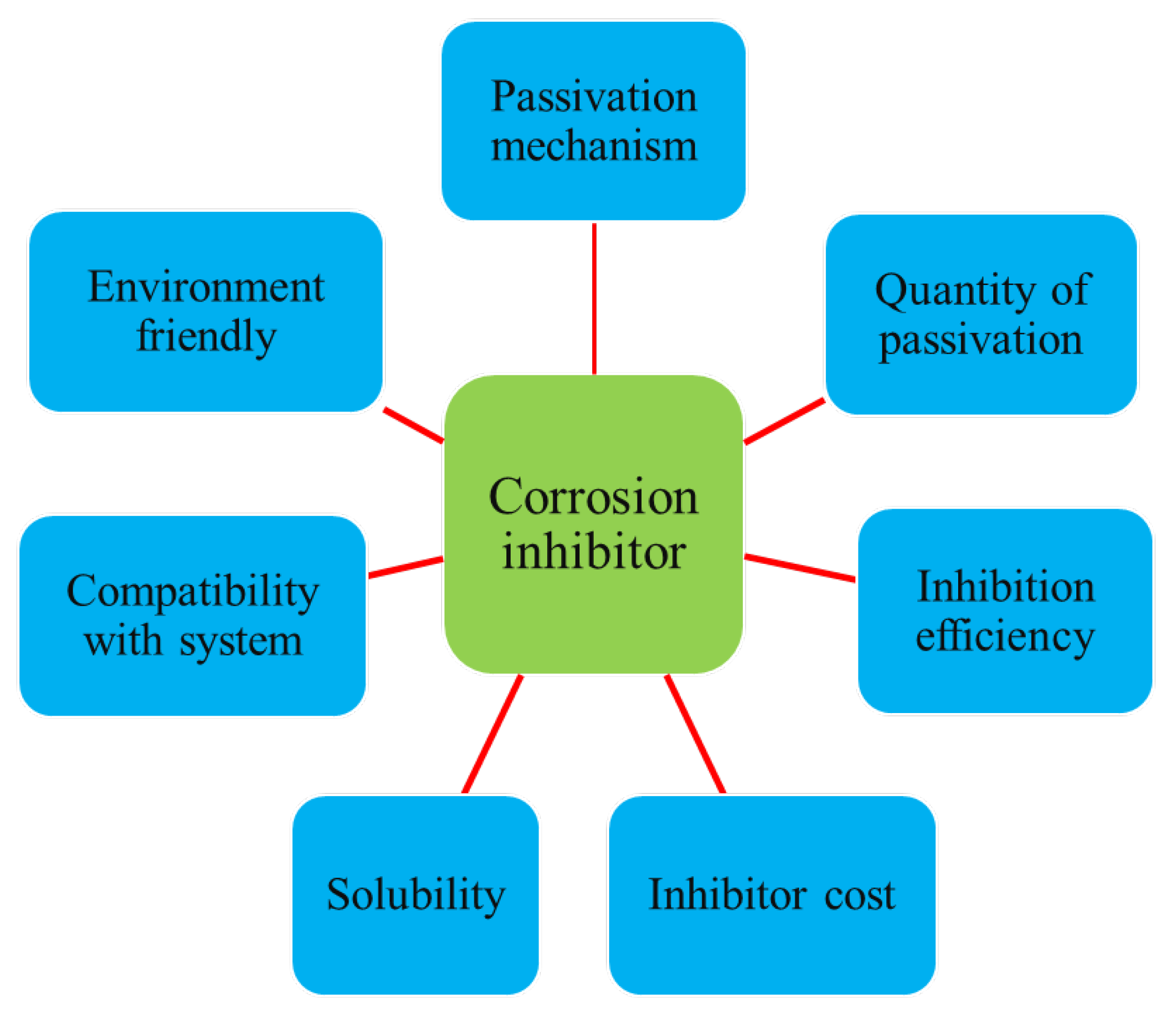
Inhibitors are the best remedies to control corrosion in steel in various sectors owing to their economic efficiency, simple process, strong adaptability, and low cost. The characteristics of excellent corrosion inhibitors are summarized in Figure 5. Organic inhibitors reduce the dissolution of the steel in an acidic environment but are expensive, hazardous, and need expertise to manufacture. The inhibitors should be eco-friendly and must show more than 90% efficiency [117]. Most corrosion inhibitors are extracted from plants. The roots, leaves, seeds, flowers, and stems contain organic compounds such as tannins, heteroatoms, flavonoids, alkaloids, and nitrogen-based compounds. These organic inhibitors have excellent performance against corrosion and are safe and non-toxic. The green inhibitors include herbs, leaves, natural honey, yeast, flour, oil, roots, drugs, and chitosan. Natural and biodegradable biomaterials are effective inhibitors.
Figure 5. Factors that influence the characteristics of inhibitors.
Corrosion is influenced by temperature, time, surface impurities, and other functions of the solution. Several techniques have been used to avoid thermal and mechanical degradation. Annealing, carburization, and design modifications have been used during the manufacturing process for optimum performance [96]. The application of a coating is one of the major techniques to reduce material degradation and consequently, the environment is one of the major factors influencing corrosion behavior.
The combination of propargyl and octyl in an HCl solution is an efficient corrosion inhibitor. Ethanol mixed with sulfuric acid is a better corrosion inhibitor than other organic inhibitors. The composition of corrosion deposits and the medium in which the corrosion of steel takes place are the factors that determine the corrosion inhibitors and their efficiency [118].
The corrosion inhibition of 304 stainless steel in 1M H2SO4 at 50 °C was studied using propargyl triphenyl phosphonium bromide (PgTPhPBr) [119]. The Tafel curves indicated that the cathodic region gave corrosion inhibition of 98% at 1 × 10⁻³ M. In the anodic region, PgTPhPBr acted as a good passivator. The impedance spectra of corrosion potential revealed that the charge transfer process controls the corrosion in inhibited and uninhibited states. The effects of chloride ions on the corrosion behavior of three stainless sheets of steel were investigated at 110 °C in an aqueous solution of H2S/CO2.
Stainless steel AISI 316L forms a high passivation film under higher temperature and pressure which consequently acts as a corrosion inhibitor [120]. A thicker passivation film could form on the surface at high temperatures and 316L steel would offer better resistance. The corrosion resistance of 316L steel can be improved by adding copper because copper can (1) stabilize the martensite restraints and austenite transformation, (2) replace the nickel and reduce the production cost, (3) enhance the corrosion resistance of the stainless steel [121]. It was investigated that Cu aggregates on the surface and forms oxides on the surface to protect against continuous corrosion [94]. The investigation of the electrochemical and passivation behavior of 304 steel in 0.1 M H3PO4 revealed that the current density and passivation current decreased with the increase in copper content because copper changed the stability of the passivation film [122]. The double-layer passivation structure could be formed on the surface of the steel containing copper in 0.1H2SO4 solution [123].
A corrosion inhibitor was extracted from Ziziphora leaves and mixed with HCl acid to protect mild steel [97,117]. The corrosion rate was reduced to 93% after 2.5 h. The cysteine amino acid was used as a corrosion inhibitor for mild steel and excellent results were observed [118]. The pyrimidine derivatives were used with 15% hydrochloric acid and applied on N80 steel and a 96.4% reduction in corrosion rate was found [124].
Nonpolar compounds containing heterocyclic rings, functional moieties, aliphatic chains, aromatic rings, and polar compounds with nitrogen and oxygen are rich in plant extracts. These organic compounds are efficiently absorbed on the metal surface to protect from corrosion without spoiling the environment [125,126,127].
Corrosion can be prevented by cathodic protection, inhibitors, and coatings. There are two types of corrosion inhibitors: organic and inorganic [128]. Inorganic inhibitors include phosphate, dichromate, chromate, nitrate, and nitrite. On the other hand, organic inhibitors contain two or more polar groups, having S, P, N, and O atoms, and π electrons. Organic inhibitors are more effective than inorganic ones in preventing corrosion.
A cathodic corrosion protection system is used in the metallic substrate used in structural foundations, cables, oil and gas pipelines, and utility pipelines [75,129]. They are also used in aircraft, bridges, oil-drilling platforms, and condenser tubes in heat exchangers. However, the cathodic protection system is not suitable in the marine environment.
The inhibition effects of water are very common in organic solvents acidified with HCl for stainless steel. The presence of water causes the formation of a passivation layer which is lost at a higher content, consequently leading to higher corrosion rates [130]. Coatings are on the surface of the steel are advisable to avoid corrosion during production in an organic corrosive environment. The widely used coatings are of blunt materials such as graphite, alumina, epoxy, and polyaniline. However, there are still many difficulties in administering coatings in large tanks. Thus, it is necessary to investigate the corrosion behavior of stainless steel in organic solutions. Organic type, pH, water content, solution viscosity, and contaminants are the main factors that influence the passivation film and the corrosion behavior of the metals [131].

7. Future Aspects

The specific intention of this work was to analyze the existing experience of corrosion on stainless steel under organic solvents, the means of controlling the corrosion rate and how to improve the technical operation and metallurgical guidelines for the future.
There is consensus on the many possible factors contributing to corrosion in organic solvents that must be addressed to reduce the corrosion rate. The different natures of the sources of organic solvents have different compositions which influence corrosion and erosion in stainless steel.
The following factors must be addressed to mitigate and control corrosion in steel in an organic environment.
The selection of materials is one of the key parameters in the piping and process industries. The 316L stainless steel is an efficient alloy, having excellent corrosion resistance with a good metallurgical composition. The metallurgical composition plays a key role in improving the corrosion resistance.
The process parameters, for instance, flow rate, temperature, pH, concentration, and water content must be optimized. Corrosion inhibitors can play an important role in controlling the corrosion rate. Artificial intelligence and machine learning would be future tools for selecting the appropriate material composition, process parameters, and corrosion inhibitors.

8. Conclusions

Corrosion of stainless steel by organic compounds, specifically organic acids, is of great concern due to many factors such as flow, high temperature, chloride contamination, water content in feed, and the presence of strong acids. The increasing demands for food processing and preservation will lead to an increase in plant operation and consequently an increase in corrosion problems. The commonly used organic compounds and their impact on the corrosion behavior of stainless steel have been summarized. The influence of commonly used organic acids on the corrosion behavior of 316L steel has also been discussed.
A comprehensive understanding of the corrosion mechanisms, corrosion inhibitors, their efficiency, mitigating measures, corrosion challenges, and prevention techniques is necessary. Some conclusions can be drawn. (a) Stainless steel is the most widely used steel in the petrochemical, food and pharmaceutical industries because of its self-protective characteristics of forming a stable passive oxide layer on the surface. (b) Pitting corrosion is the most significant form of corrosion in stainless steel, causing damage to the material. Pitting corrosion is followed by uniform corrosion and SCC. (c) The presence of halides, especially chlorides, surface stress raisers, impurities, water, and oxides breaks down the passive film and acts as pit initiators. Pit initiation and growth are controlled by mechanical and chemical mechanisms.

Author Contributions

Formal analysis, A.A.; resources, A.A.; data curation, A.A.; writing—original draft, A.A.; writing—review editing, A.A.; visualization, A.A.; conceptualization, A.Y.A.; methodology, A.Y.A.; supervision, R.K.S., project administration, R.K.S., funding acquisition, R.K.S. All authors have read and agreed to the published version of the manuscript.

Funding

We acknowledge the support for APC from the Interdisciplinary Research Center for Advance Materials and Deanship of Research and Oversight Co-operation, King Fahd University of Petroleum and Minerals.

Data Availability Statement

Data can be provided on request.

Conflicts of Interest

The authors declare that they have no conflict of interest.

References

  1. Pan, Q.; Liu, Q.-Y.; Zheng, J.; Li, Y.-H.; Xiang, S.; Sun, X.-J.; He, X.-S. Volatile and semi-volatile organic compounds in landfill gas: Composition characteristics and health risks. Environ. Int. 2023, 174, 107886. [Google Scholar] [CrossRef] [PubMed]
  2. Suto, T.; Kawano, N.; Okazaki, K.; Takebuchi, Y.; Shiratori, D.; Fukushima, H.; Kato, T.; Nakauchi, D.; Yanagida, T. Optical and scintillation properties of organic–inorganic perovskite-type compounds with various hydroxyl alkyl amines or alkyl ether amines. Radiat. Phys. Chem. 2023, 209, 110981. [Google Scholar] [CrossRef]
  3. Wu, C.; Zhu, B.; Liang, W.; Ruan, T.; Jiang, G. Molecular characterization of nitrogen-containing organic compounds in fractionated atmospheric humic-like substances (HULIS) and its relationship with optical properties. Sci. Total. Environ. 2022, 832, 155043. [Google Scholar] [CrossRef] [PubMed]
  4. Giraudet, S.; Pré, P.; Tezel, H.; Le Cloirec, P. Estimation of adsorption energies using the physical characteristics of activated carbons and the molecular properties of volatile organic compounds. Carbon 2006, 44, 2413–2421. [Google Scholar] [CrossRef]
  5. Lawrence, G.B.; Roy, K.M. Ongoing increases in dissolved organic carbon are sustained by decreases in ionic strength rather than decreased acidity in waters recovering from acidic deposition. Sci. Total. Environ. 2021, 766, 142529. [Google Scholar] [CrossRef]
  6. Montaña, M.; Navas, M.B.; Bideberripe, H.P.; Barbelli, M.L.; Lick, I.D.; Casella, M.L. A heterogeneous catalytic process to mitigate the acidity of bio-oils caused by the presence of volatile organic acids. Fuel 2021, 299, 120919. [Google Scholar] [CrossRef]
  7. Baccichet, I.; Chiozzotto, R.; Spinardi, A.; Gardana, C.; Bassi, D.; Cirilli, M. Evaluation of a large apricot germplasm collection for fruit skin and flesh acidity and organic acids composition. Sci. Hortic. 2022, 294, 110780. [Google Scholar] [CrossRef]
  8. Mahjoob, M.K.M.; Akbarizadeh, M.; Hasheman, P.; Rattanapan, N.; Moradi-Gholami, A.; Amin, H.I.M.; Jalil, A.T.; Saleh, M.M. Recent advances in metal-organic frameworks synthesis and characterization with a focus on electrochemical determination of biological and food compounds, and investigation of their antibacterial performance. Chin. J. Anal. Chem. 2023, 51, 100286. [Google Scholar] [CrossRef]
  9. Osorio, V.; Medina, R.; Acuña, J.R.; Pabón, J.; Álvarez, C.I.; Matallana, L.G.; Fernández-Alduenda, M.R. Transformation of organic acids and sugars in the mucilage and coffee beans during prolonged fermentation. J. Food Compos. Anal. 2023, 123, 105551. [Google Scholar] [CrossRef]
  10. Aslam, R.; Serdaroglu, G.; Zehra, S.; Verma, D.K.; Aslam, J.; Guo, L.; Verma, C.; Ebenso, E.E.; Quraishi, M.A. Corrosion inhibition of steel using different families of organic compounds: Past and present progress. J. Mol. Liq. 2022, 348, 118373. [Google Scholar] [CrossRef]
  11. Santamaria, M.; Tranchida, G.; Di Franco, F. Corrosion resistance of passive films on different stainless steel grades in food and beverage industry. Corros. Sci. 2020, 173, 108778. [Google Scholar] [CrossRef]
  12. Korakana, A.; Korakana, S.; Ulmek, N.; Pagare, A.K. Analyzing the effect of the parameters of laser etching process influencing the corrosion resistance and surface roughness of marine grade 316 stainless steel. Mater. Today Proc. 2020, 32, 452–462. [Google Scholar] [CrossRef]
  13. Zaffora, A.; Di Franco, F.; Santamaria, M. Corrosion of stainless steel in food and pharmaceutical industry. Curr. Opin. Electrochem. 2021, 29, 100760. [Google Scholar] [CrossRef]
  14. García-Rodríguez, S.; Torres, B.; Pulido-González, N.; Otero, E.; Rams, J. Corrosion behavior of 316L stainless steel coatings on ZE41 magnesium alloy in chloride environments. Surf. Coat. Technol. 2019, 378, 124994. [Google Scholar] [CrossRef]
  15. Kumar, M.S.; Sujata, M.; Venkataswamy, M.A.; Bhaumik, S.K. Failure analysis of a stainless steel pipeline. Eng. Fail. Anal. 2008, 15, 497–504. [Google Scholar] [CrossRef]
  16. Xu, Z.; Eduok, U.; Tiamiyu, A.A.; Szpunar, J. Anodic dissolution pattern of magnesium alloy in different media: Effects of solution treatment on its microstructure and corrosion behaviour. Eng. Fail. Anal. 2019, 107, 104234. [Google Scholar] [CrossRef]
  17. Gu, Y.; Xu, Y.; Shi, Y.; Feng, C.; Volodymyr, K. Corrosion resistance of 316 stainless steel in a simulated pressurized water reactor improved by laser cladding with chromium. Surf. Coat. Technol. 2022, 441, 128543. [Google Scholar] [CrossRef]
  18. Abd-El-Nabey, B.A.; Khalil, N.; Eisa, M.M.; Sadek, H. Pitting corrosion of stainless steel in water-organic solvent mixtures. Surf. Technol. 1983, 20, 209–217. [Google Scholar] [CrossRef]
  19. Zhang, B.; Liu, J.; Guo, Q.; Zhang, D.; Luo, J.; Zhu, H.; Zhou, X.; Lu, J.; Yang, J. Body-thorough ultrahigh strength and ductility of austenitic 316L stainless steel by industry-applicable 3-axis stress-released impact. Mater. Sci. Eng. A 2023, 870, 144822. [Google Scholar] [CrossRef]
  20. Moeinfar, K.; Khodabakhshi, F.; Kashani-Bozorg, S.F.; Mohammadi, M.; Gerlich, A.P. A review on metallurgical aspects of laser additive manufacturing (LAM): Stainless steels, nickel superalloys, and titanium alloys. J. Mater. Res. Technol. 2022, 16, 1029–1068. [Google Scholar] [CrossRef]
  21. Potgieter, J.H.; Olubambi, P.A.; Cornish, L.; Machio, C.N.; Sherif, E.-S.M. Influence of nickel additions on the corrosion behaviour of low nitrogen 22% Cr series duplex stainless steels. Corros. Sci. 2008, 50, 2572–2579. [Google Scholar] [CrossRef]
  22. Li, F.; An, M.; Liu, G.; Duan, D. Effects of sulfidation of passive film in the presence of SRB on the pitting corrosion behaviors of stainless steels. Mater. Chem. Phys. 2009, 113, 971–976. [Google Scholar] [CrossRef]
  23. Shudo, T.; Suzuki, K. Performance improvement in direct methanol fuel cells using a highly porous corrosion-resisting stainless steel flow field. Int. J. Hydrog. Energy 2008, 33, 2850–2856. [Google Scholar] [CrossRef]
  24. Wang, L.; Kang, B.; Gao, N.; Du, X.; Jia, L.; Sun, J. Corrosion behaviour of austenitic stainless steel as a function of methanol concentration for direct methanol fuel cell bipolar plate. J. Power Sources 2014, 253, 332–341. [Google Scholar] [CrossRef]
  25. Hu, E.; Xu, Y.; Hu, X.; Pan, L.; Jiang, S. Corrosion behaviors of metals in biodiesel from rapeseed oil and methanol. Renew. Energy 2012, 37, 371–378. [Google Scholar] [CrossRef]
  26. Sui, P.; Sun, J.; Hua, Y.; Liu, H.; Zhou, M.; Zhang, Y.; Liu, J.; Wang, Y. Effect of temperature and pressure on corrosion behavior of X65 carbon steel in water-saturated CO 2 transport environments mixed with H 2 S. Int. J. Greenh. Gas Control. 2018, 73, 60–69. [Google Scholar] [CrossRef]
  27. Schwarzenböck, E.; Wiehler, L.; Heidenblut, T.; Hack, T.; Engel, C.; Maier, H.J. Crack initiation of an industrial 7XXX aluminum alloy in humid air analyzed via slow strain rate testing and constant displacement testing. Mater. Sci. Eng. A 2021, 804, 140776. [Google Scholar] [CrossRef]
  28. Hossain, H.; Hossain, N.; Chowdhury, M.A.; Kowser, A.; Rana, M. Surface synthesization of magnesium alloys for improving corrosion resistance and implant applications. Arab. J. Chem. 2023, 16, 1044665. [Google Scholar] [CrossRef]
  29. Dudareva, N.; Zaynullina, L.; Kiseleva, S.; Abramova, M. The influence of alloy microstructure on corrosion resistance and other properties of coatings formed by microarc oxidation. Mater. Chem. Phys. 2022, 288, 126379. [Google Scholar] [CrossRef]
  30. Liu, S.; Sun, H.; Sun, L.; Fan, H. Effects of pH and Cl− concentration on corrosion behavior of the galvanized steel in simulated rust layer solution. Corros. Sci. 2012, 65, 520–527. [Google Scholar] [CrossRef]
  31. Du, J.; Wang, C.; Wang, W.; Cui, Y.; Zhang, W. Effects of high pressure and temperature on carbon isotope compositions of some acyclic alkanes and preservation of organic matter. High Press. Res. 2012, 32, 220–232. [Google Scholar] [CrossRef]
  32. Abdelhadi, R.A.; Ahmed, Z.E.; Abouzeid, A.M. Synthesis, spectroscopic analysis and electrochemical studies of novel organic compound based on N-alkylphthalazinone chemistry as corrosion inhibitor for carbon steel in 1M HCl. Int. J. Electrochem. Sci. 2023, 18, 100121. [Google Scholar] [CrossRef]
  33. Mayerhöfer, T.G.; Spange, S. Understanding Refractive Index Changes in Homologous Series of Unbranched Organic Compounds Based on Beer’s Law. ChemPhysChem 2023, e202300430. [Google Scholar] [CrossRef] [PubMed]
  34. Meredith, W.; Kelland, S.-J.; Jones, D.M. Influence of biodegradation on crude oil acidity and carboxylic acid composition. Org. Geochem. 2000, 31, 1059–1073. [Google Scholar] [CrossRef]
  35. Mellmer, M.A.; Sanpitakseree, C.; Demir, B.; Ma, K.; Elliott, W.A.; Bai, P.; Johnson, R.L.; Walker, T.W.; Shanks, B.H.; Rioux, R.M.; et al. Effects of chloride ions in acid-catalyzed biomass dehydration reactions in polar aprotic solvents. Nat. Commun. 2019, 10, 1132. [Google Scholar] [CrossRef]
  36. Lu, X.; Hasegawa, G.; Kanamori, K.; Nakanishi, K. Hierarchically porous monoliths prepared via sol–gel process accompanied by spinodal decomposition. J. Sol-Gel Sci. Technol. 2020, 95, 530–550. [Google Scholar] [CrossRef]
  37. Abbas, A.; Huang, S.-J. Investigating the Synergic Effects of WS2 and ECAP on Degradation Behavior of AZ91 Magnesium Alloy. Coatings 2022, 12, 1710. [Google Scholar] [CrossRef]
  38. Wei, T.; Yan, F.; Tian, J. Characterization and wear- and corrosion-resistance of microarc oxidation ceramic coatings on aluminum alloy. J. Alloy. Compd. 2005, 389, 169–176. [Google Scholar] [CrossRef]
  39. Subasree, N.; Selvi, J.A.; Pillai, R.S. Effect of alkyl chain length on the corrosion inhibition of mild steel in a simulated hydrochloric acid medium by a phosphonium based inhibitor. J. Adhes. Sci. Technol. 2021, 37, 83–104. [Google Scholar] [CrossRef]
  40. Nagels, M.; Verhoeven, B.; Larché, N.; Dewil, R.; Rossi, B. Corrosion behaviour of lean duplex stainless steel in advanced oxidation process (AOP) based wastewater treatment plants. Eng. Fail. Anal. 2022, 136, 106170. [Google Scholar] [CrossRef]
  41. Wan, Y.; Sun, Y.; Cai, D.; Yin, L.; Dai, N.; Lei, L.; Jiang, Y.; Li, J. Influence of Ethanol on Pitting Corrosion Behavior of Stainless Steel for Bioethanol Fermentation Tanks. Front. Chem. 2020, 8, 529. [Google Scholar] [CrossRef] [PubMed]
  42. Liu, Q.X.; El Abedin, S.Z.; Endres, F. Electroplating of mild steel by aluminium in a first generation ionic liquid: A green alternative to commercial Al-plating in organic solvents. Surf. Coat. Technol. 2006, 201, 1352–1356. [Google Scholar] [CrossRef]
  43. Dastpak, A.; Hannula, P.-M.; Lundström, M.; Wilson, B.P. A sustainable two-layer lignin-anodized composite coating for the corrosion protection of high-strength low-alloy steel. Prog. Org. Coat. 2020, 148, 105866. [Google Scholar] [CrossRef]
  44. de Moraes, F.P.; Alves, S.F.; Plaut, R.L.; Padilha, A.F. Degradation of microstructure and properties of an AISI 316L steel pipe after more than 100,000 hours usage at 640 °C in a petrochemical industry. Procedia Struct. Integr. 2019, 17, 131–137. [Google Scholar] [CrossRef]
  45. Paulraj, P.; Garg, R. Effect of intermetallic phases on corrosion behavior and mechanical properties of duplex stainless steel and super-duplex stainless steel. Adv. Sci. Technol. Res. J. 2015, 9, 87–105. [Google Scholar] [CrossRef] [PubMed]
  46. Chan, K.; Tjong, S. Effect of Secondary Phase Precipitation on the Corrosion Behavior of Duplex Stainless Steels. Materials 2014, 7, 5268–5304. [Google Scholar] [CrossRef]
  47. Farrell, J.; Melitas, N.; Kason, M.; Li, T. Electrochemical and Column Investigation of Iron-Mediated Reductive Dechlorination of Trichloroethylene and Perchloroethylene. Environ. Sci. Technol. 2000, 34, 2549–2556. [Google Scholar] [CrossRef]
  48. Alam, A.-M.; Shon, Y.-S. Water-Soluble Noble Metal Nanoparticle Catalysts Capped with Small Organic Molecules for Organic Transformations in Water. ACS Appl. Nano Mater. 2021, 4, 3294–3318. [Google Scholar] [CrossRef]
  49. Safonov, V.A.; Haruyama, S. Electrochemical impedance of passive iron in sulfuric acid water-organic solutions. Russ. J. Electrochem. 2000, 36, 1108–1116. [Google Scholar] [CrossRef]
  50. Wang, L.; Zhu, M.-J.; Yang, F.-C.; Gao, C.-W. Study of a Triazole Derivative as Corrosion Inhibitor for Mild Steel in Phosphoric Acid Solution. Int. J. Corros. 2012, 2012, 573964. [Google Scholar] [CrossRef]
  51. Kuznetsov, Y.I.; Redkina, G.V. Thin Protective Coatings on Metals Formed by Organic Corrosion Inhibitors in Neutral Media. Coatings 2022, 12, 149. [Google Scholar] [CrossRef]
  52. Frank, M.A.; Meltzer, C.; Braunschweig, B.; Peukert, W.; Boccaccini, A.R.; Virtanen, S. Functionalization of steel surfaces with organic acids: Influence on wetting and corrosion behavior. Appl. Surf. Sci. 2017, 404, 326–333. [Google Scholar] [CrossRef]
  53. Constantinescu, E.; Heitz, E. On the influence of the water content on corrosion of metals in mono-carboxylic acids. Corros. Sci. 1976, 16, 857–867. [Google Scholar] [CrossRef]
  54. Lou, X.; Singh, P.M. Role of water, acetic acid and chloride on corrosion and pitting behaviour of carbon steel in fuel-grade ethanol. Corros. Sci. 2010, 52, 2303–2315. [Google Scholar] [CrossRef]
  55. Tavares, S.S.M.; Moura, V.; da Costa, V.C.; Ferreira, M.L.R.; Pardal, J.M. Microstructural changes and corrosion resistance of AISI 310S steel exposed to 600–800 °C. Mater. Charact. 2009, 60, 573–578. [Google Scholar] [CrossRef]
  56. Li, D.G.; Chen, D.R.; Liang, P. Influences of plastic strain and strain rate on corrosion behavior of 316L stainless steel in simulated cathodic environment of proton exchange membrane fuel cell. Int. J. Hydrog. Energy 2020, 46, 6239–6250. [Google Scholar] [CrossRef]
  57. Muñoz, A.I.; Antón, J.G.; Guiñón, J.L.; Herranz, V.P. Effects of solution temperature on localized corrosion of high nickel content stainless steels and nickel in chromated LiBr solution. Corros. Sci. 2006, 48, 3349–3374. [Google Scholar] [CrossRef]
  58. Schmitt, G. Fundamental Aspects of CO2 Metal Loss Corrosion. Part II: Influence of Different Parameters on CO2 Corrosion Mechanism. In Corrosion; NACE: Houston, TX, USA, 2015; Available online: http://onepetro.org/NACECORR/proceedings-pdf/CORR15/All-CORR15/NACE-2015-6033/1343307/nace-2015-6033.pdf/1 (accessed on 15 March 2015).
  59. Hou, X.; Ren, Q.; Yang, Y.; Cao, X.; Hu, J.; Zhang, C.; Deng, H.; Yu, D.; Li, K.; Lan, W. Effect of temperature on the electrochemical pitting corrosion behavior of 316L stainless steel in chloride-containing MDEA solution. J. Nat. Gas Sci. Eng. 2021, 86, 103718. [Google Scholar] [CrossRef]
  60. Zhang, N.; Zeng, D.; Xiao, G.; Shang, J.; Liu, Y.; Long, D.; He, Q.; Singh, A. Effect of Cl accumulation on corrosion behavior of steels in H2S/CO2 methyldiethanolamine (MDEA) gas sweetening aqueous solution. J. Nat. Gas. Sci. Eng. 2016, 30, 444–454. [Google Scholar] [CrossRef]
  61. Singh, M.M.; Gupta, A.; Deyab, M.A.M.; Sowards, J.W.; Mansfield, E.; Williamson, C.; Weeks, T.; McColskey, J.; Spear, J.; Kappes, M.; et al. Corrosion Behavior of Mild Steel in Acetic Acid Solutions. Corrosion 2000, 56, 371–379. [Google Scholar] [CrossRef]
  62. El–Maksoud, S.A.A. The Effect of Organic Compounds on the Electrochemical Behaviour of Steel in Acidic Media. A review. Int. J. Electrochem. Sci. 2008, 3, 528–555. [Google Scholar] [CrossRef]
  63. Qin, R.; Chen, H.; Wen, R.; Li, G.; Meng, Z. Effect of Boric Acid on the Ionization Equilibrium of α-Hydroxy Carboxylic Acids and the Study of Its Applications. Molecules 2023, 28, 4723. [Google Scholar] [CrossRef] [PubMed]
  64. Wysocka, J.; Cieslik, M.; Krakowiak, S.; Ryl, J. Carboxylic acids as efficient corrosion inhibitors of aluminium alloys in alkaline media. Electrochim. Acta 2018, 289, 175–192. [Google Scholar] [CrossRef]
  65. Baena, L.M.; Calderón, J.A. Effects of palm biodiesel and blends of biodiesel with organic acids on metals. Heliyon 2020, 6, e03735. [Google Scholar] [CrossRef] [PubMed]
  66. Zhang, S.; Zheng, L.; Yan, J.; Sun, J.; Gao, J. Effects of AC interference on the corrosion behavior of X70 steel in seawater and acidic solutions. Int. J. Electrochem. Sci. 2023, 18, 59–67. [Google Scholar] [CrossRef]
  67. Zhang, H.; Cui, J.; Sun, J.; He, W. Corrosion inhibition of methanol towards stainless steel bipolar plate for direct formic acid fuel cell. Int. J. Hydrog. Energy 2020, 45, 30924–30931. [Google Scholar] [CrossRef]
  68. Badea, G.E.; Ionita, D.; Cret, P. Corrosion and passivation of the 304 stainless steel in formic acid solutions. Mater. Corros. 2014, 65, 1103–1110. [Google Scholar] [CrossRef]
  69. Invernizzi, A.J.; Sivieri, E.; Trasatti, S.P. Corrosion behaviour of Duplex stainless steels in organic acid aqueous solutions. Mater. Sci. Eng. A 2008, 485, 234–242. [Google Scholar] [CrossRef]
  70. Qu, Q.; Jiang, S.; Li, L.; Bai, W.; Zhou, J. Corrosion behavior of cold rolled steel in peracetic acid solutions. Corros. Sci. 2008, 50, 35–40. [Google Scholar] [CrossRef]
  71. Sheng, X.; Ting, Y.-P.; Pehkonen, S.O. The influence of sulphate-reducing bacteria biofilm on the corrosion of stainless steel AISI 316. Corros. Sci. 2007, 49, 2159–2176. [Google Scholar] [CrossRef]
  72. Cobá-Tec, E.Y.; Pech-Canul, M.A. Corrosion behavior and surface properties of mild steel in aqueous citrate solutions. Chem. Eng. Commun. 2023, 210, 297–313. [Google Scholar] [CrossRef]
  73. Fekry, A.M. The influence of chloride and sulphate ions on the corrosion behavior of Ti and Ti-6Al-4V alloy in oxalic acid. Electrochim. Acta 2009, 54, 3480–3489. [Google Scholar] [CrossRef]
  74. Latif, N.; Wahyuadi, M.J.; Triwibowo; Riastuti, R. Erosion corrosion failure on elbow distillate heater system in the petrochemical industry. Mater. Today Proc. 2022, 62, 4235–4241. [Google Scholar] [CrossRef]
  75. Yang, Y.; Cheng, Y.F. Parametric effects on the erosion–corrosion rate and mechanism of carbon steel pipes in oil sands slurry. Wear 2012, 276–277, 141–148. [Google Scholar] [CrossRef]
  76. Rezaei, M.; Mahidashti, Z.; Eftekhari, S.; Abdi, E. A corrosion failure analysis of heat exchanger tubes operating in petrochemical refinery. Eng. Fail. Anal. 2021, 119, 105011. [Google Scholar] [CrossRef]
  77. Heitz, E. Corrosion of Metals in Organic Solvents. In Advances in Corrosion Science and Technology: Volume 4; Springer: Boston, MA, USA, 1974; pp. 149–243. [Google Scholar] [CrossRef]
  78. Ekilik, V.V.; Grigor’Ev, V.P. Metal Corrosion in Organic and Aqueous-Organic Media. Prot. Met. 2002, 38, 124–131. [Google Scholar] [CrossRef]
  79. Mandel, M.; Kietov, V.; Hornig, R.; Vollmer, M.; Frenck, J.-M.; Wüstefeld, C.; Rafaja, D.; Niendorf, T.; Krüger, L. On the polarisation and Mott-Schottky characteristics of an Fe-Mn-Al-Ni shape-memory alloy and pure Fe in NaCl-free and NaCl-contaminated Ca(OH)2,sat solution—A comparative study. Corros. Sci. 2021, 179, 109172. [Google Scholar] [CrossRef]
  80. Tan, L.; Ren, X.; Allen, T.R. Corrosion behavior of 9–12% Cr ferritic–martensitic steels in supercritical water. Corros. Sci. 2010, 52, 1520–1528. [Google Scholar] [CrossRef]
  81. Ai, Z.; Sun, W.; Jiang, J.; Song, D.; Ma, H.; Zhang, J.; Wang, D. Passivation Characteristics of Alloy Corrosion-Resistant Steel Cr10Mo1 in Simulating Concrete Pore Solutions: Combination Effects of pH and Chloride. Materials 2016, 9, 749. [Google Scholar] [CrossRef]
  82. Sekine, I.; Masuko, A.; Senoo, K. Corrosion Behavior of AISI 316 Stainless Steel in Formic and Acetic Acid Solutions. Corrosion 1987, 43, 553–560. [Google Scholar] [CrossRef]
  83. Kriaa, A.; Hamdi, N.; Jbali, K.; Tzinmann, M. Corrosion of iron in highly acidic hydro-organic solutions. Corros. Sci. 2009, 51, 668–676. [Google Scholar] [CrossRef]
  84. Mubarak, N.M.; Anwar, M.; Debnath, S.; Sudin, I. Corrosion. In Fundamentals of Biomaterials; Springer: Singapore, 2023; pp. 91–99. [Google Scholar] [CrossRef]
  85. Li, S.; Zuo, Y.; Tang, Y.; Zhao, X. The electroplated Pd–Co alloy film on 316L stainless steel and the corrosion resistance in boiling acetic acid and formic acid mixture with stirring. Appl. Surf. Sci. 2014, 321, 179–187. [Google Scholar] [CrossRef]
  86. Liu, Y.; Zhang, W.; Tang, Z.; Zhang, S.; Qiu, J. The potential influence of high uric acid exposure on surface and corrosion susceptibility of pure titanium. J. Mater. Sci. Mater. Med. 2022, 33, 44. [Google Scholar] [CrossRef] [PubMed]
  87. Gouda, V.K.; Rizkalla, E.N.; Abd-El-Wahab, S.; Ibrahim, E.M. Corrosion behaviour in organic acid solutions—I. Tin electrode. Corros. Sci. 1981, 21, 1–15. [Google Scholar] [CrossRef]
  88. Shi, Y.Y.; Zhang, Z.; Cao, F.H.; Zhang, J.Q. Dimensional analysis applied to pitting corrosion measurements. Electrochim. Acta 2008, 53, 2688–2698. [Google Scholar] [CrossRef]
  89. Radi, P.A.; Vieira, A.; Manfroi, L.; de Farias Nass, K.C.; Ramos, M.A.R.; Leite, P.; Martins, G.V.; Jofre, J.B.F.; Vieira, L. Tribocorrosion and corrosion behavior of stainless steel coated with DLC films in ethanol with different concentrations of water. Ceram. Int. 2019, 45, 9686–9693. [Google Scholar] [CrossRef]
  90. Pardo, A.; Merino, M.C.; Coy, A.E.; Viejo, F.; Arrabal, R.; Matykina, E. Pitting corrosion behaviour of austenitic stainless steels—Combining effects of Mn and Mo additions. Corros. Sci. 2008, 50, 1796–1806. [Google Scholar] [CrossRef]
  91. Cai, C.; Zhang, Z.; Cao, F.; Gao, Z.; Zhang, J.; Cao, C. Analysis of pitting corrosion behavior of pure Al in sodium chloride solution with the wavelet technique. J. Electroanal. Chem. 2005, 578, 143–150. [Google Scholar] [CrossRef]
  92. Ralston, K.D.; Birbilis, N. Effect of Grain Size on Corrosion: A Review. Corrosion 2010, 66, 075005. [Google Scholar] [CrossRef]
  93. Rao, A.C.U.; Vasu, V.; Govindaraju, M.; Srinadh, K.V.S. Stress corrosion cracking behaviour of 7xxx aluminum alloys: A literature review. Trans. Nonferrous Met. Soc. China 2016, 26, 1447–1471. [Google Scholar] [CrossRef]
  94. Hong, J.H.; Lee, S.H.; Kim, J.G.; Yoon, J.B. Corrosion behaviour of copper containing low alloy steels in sulphuric acid. Corros. Sci. 2012, 54, 174–182. [Google Scholar] [CrossRef]
  95. Dias, D.; Nakamatsu, S.; Della Rovere, C.A.; Otubo, J.; Mariano, N.A. Characterization and Corrosion Resistance Behavior of Shape Memory Stainless Steel Developed by Alternate Routes. Metals 2019, 10, 13. [Google Scholar] [CrossRef]
  96. Dong, B.; Wen, X.-D.; Feng, L. Temperature Effect on Corrosion Behavior of 304LN Stainless Steel and Carbon Steel Rebars in Chloride Contaminated Concrete Pore Solution Using Electrochemical Method. Int. J. Electrochem. Sci. 2020, 15, 10844–10853. [Google Scholar] [CrossRef]
  97. Dehghani, A.; Bahlakeh, G.; Ramezanzadeh, B.; Ramezanzadeh, M. Potential role of a novel green eco-friendly inhibitor in corrosion inhibition of mild steel in HCl solution: Detailed macro/micro-scale experimental and computational explorations. Constr. Build. Mater. 2020, 245, 118464. [Google Scholar] [CrossRef]
  98. Nogara, J.; Zarrouk, S.J. Corrosion in geothermal environment Part 2: Metals and alloys. Renew. Sustain. Energy Rev. 2018, 82, 1347–1363. [Google Scholar] [CrossRef]
  99. Ren, L.; Jiang, T.; Jia, Z.; Li, D.; Yuan, C.; Li, H. Pipeline corrosion and leakage monitoring based on the distributed optical fiber sensing technology. Measurement 2018, 122, 57–65. [Google Scholar] [CrossRef]
  100. Gloria, N.B.S.; Areiza, M.C.L.; Miranda, I.V.J.; Rebello, J.M.A. Development of a magnetic sensor for detection and sizing of internal pipeline corrosion defects. NDT E Int. 2009, 42, 669–677. [Google Scholar] [CrossRef]
  101. Raja, S.; Saranya, R.; SaiYaswanth, V.; SachinAdithya, A.; Kumar, M.B.R. A Review on Influencing Welding Parameters of Super Alloys. IOP Conf. Ser. Mater. Sci. Eng. 2020, 995, 012041. [Google Scholar] [CrossRef]
  102. Jafari, H.; Idris, M.H.; Ourdjini, A.; Rahimi, H.; Ghobadian, B. EIS study of corrosion behavior of metallic materials in ethanol blended gasoline containing water as a contaminant. Fuel 2011, 90, 1181–1187. [Google Scholar] [CrossRef]
  103. Ramkumar, K.D.; Joshi, V.; Pandit, S.; Agrawal, M.; Kumar, O.S.; Periwal, S.; Manikandan, M.; Arivazhagan, N. Investigations on the microstructure and mechanical properties of multi-pass pulsed current gas tungsten arc weldments of Monel 400 and Hastelloy C276. Mater. Des. 2014, 64, 775–782. [Google Scholar] [CrossRef]
  104. Takeuchi, M.; Nakajima, Y.; Hoshino, K.; Kawamura, F. Controls of chromium and third element contents in nickel-base alloys for corrosion resistant alloys in hot HNO3–HF mixtures. J. Alloy. Compd. 2010, 506, 194–200. [Google Scholar] [CrossRef]
  105. Bhaskaran, R.; Palaniswamy, N.S.; Rengaswamy, N.; Jayachandran, M. A review of differing approaches used to estimate the cost of corrosion (and their relevance in the development of modern corrosion prevention and control strategies). Anti-Corros. Methods Mater. 2005, 52, 29–41. [Google Scholar] [CrossRef]
  106. Farmer, J.; Farmer, C.J. Highway Infrastructure Focus Area Next-Generation Infrastructure Materials Volume I—Technical Proposal & Management Enhancement of Transportation Infrastructure with Iron-Based Amorphous-Metal and Ceramic Coatings; U.S. Department of Energy Office of Scientific and Technical Information: Livermore, CA, USA, 2007. [Google Scholar] [CrossRef]
  107. Glass, G.K.; Page, C.L.; Short, N.R. Factors affecting the corrosion rate of steel in carbonated mortars. Corros. Sci. 1991, 32, 1283–1294. [Google Scholar] [CrossRef]
  108. Vidyasagar, K.E.C.; Rana, A.; Kalyanasundaram, D. Optimization of laser parameters for improved corrosion resistance of nitinol. Mater. Manuf. Process. 2020, 35, 1661–1669. [Google Scholar] [CrossRef]
  109. Prashar, G.; Vasudev, H. A review on the influence of process parameters and heat treatment on the corrosion performance of Ni-based thermal spray coatings. Surf. Rev. Lett. 2022, 29, 2230001. [Google Scholar] [CrossRef]
  110. Popoola, A.P.I.; Fatoba, O.S.; Popoola, O.M.; Pityana, S.L. The Influence of Heat Treatment and Process Parameters Optimization on Hardness and Corrosion Properties of Laser Alloyed X12CrNiMo Steel. Silicon 2016, 8, 579–589. [Google Scholar] [CrossRef]
  111. Songur, F.; Arslan, E.; Dikici, B. Taguchi optimization of PEO process parameters for corrosion protection of AA7075 alloy. Surf. Coat. Technol. 2022, 434, 128202. [Google Scholar] [CrossRef]
  112. Ettefagh, A.H.; Guo, S.; Raush, J. Corrosion performance of additively manufactured stainless steel parts: A review. Addit. Manuf. 2021, 37, 101689. [Google Scholar] [CrossRef]
  113. Xu, X.; Lu, H.; Qiu, J.; Luo, K.; Su, Y.; Xing, F.; Lu, J. High-speed-rate direct energy deposition of Fe-based stainless steel: Process optimization, microstructural features, corrosion and wear resistance. J. Manuf. Process. 2022, 75, 243–258. [Google Scholar] [CrossRef]
  114. Ramesh, S.; Kudva, S.A.; Anne, G.; Manne, B.; Arya, S. Optimization of ball-burnishing process parameters on surface roughness, micro hardness of Mg–Zn–Ca alloy and investigation of corrosion behavior. Mater. Res. Express 2019, 6, 1065e8. [Google Scholar] [CrossRef]
  115. Singh, J.; Singh, S.; Singh, J.P. Investigation on wall thickness reduction of hydropower pipeline underwent to erosion-corrosion process. Eng. Fail. Anal. 2021, 127, 105504. [Google Scholar] [CrossRef]
  116. Ramesh, N.R.; Kumar, V.S.S. Experimental erosion-corrosion analysis of friction stir welding of AA 5083 and AA 6061 for sub-sea applications. Appl. Ocean Res. 2020, 98, 102121. [Google Scholar] [CrossRef]
  117. Mehta, R.K.; Yadav, M. Corrosion inhibition properties of expired Broclear medicine and its carbon dot as eco-friendly inhibitors for mild steel in 15% HCl. Mater. Sci. Eng. B 2023, 295, 116566. [Google Scholar] [CrossRef]
  118. Farahati, R.; Mousavi-Khoshdel, S.M.; Ghaffarinejad, A.; Behzadi, H. Experimental and computational study of penicillamine drug and cysteine as water-soluble green corrosion inhibitors of mild steel. Prog. Org. Coat. 2020, 142, 105567. [Google Scholar] [CrossRef]
  119. Umoren, S.A.; Solomon, M.M. Effect of halide ions on the corrosion inhibition efficiency of different organic species—A review. J. Ind. Eng. Chem. 2015, 21, 81–100. [Google Scholar] [CrossRef]
  120. Cheng, X.; Feng, Z.; Li, C.; Dong, C.; Li, X. Investigation of oxide film formation on 316L stainless steel in high-temperature aqueous environments. Electrochim. Acta 2011, 56, 5860–5865. [Google Scholar] [CrossRef]
  121. Xi, T.; Shahzad, M.B.; Xu, D.; Sun, Z.; Zhao, J.; Yang, C.; Qi, M.; Yang, K. Effect of copper addition on mechanical properties, corrosion resistance and antibacterial property of 316L stainless steel. Mater. Sci. Eng. C 2017, 71, 1079–1085. [Google Scholar] [CrossRef]
  122. Luo, H.; Li, X.G.; Dong, C.F.; Xiao, K. The influence of Cu on the electrochemical behaviour of 304 stainless steel in 0.1M H3 PO4 solution. Surf. Interface Anal. 2013, 45, 793–799. [Google Scholar] [CrossRef]
  123. Oguzie, E.E.; Li, J.; Liu, Y.; Chen, D.; Li, Y.; Yang, K.; Wang, F. The effect of Cu addition on the electrochemical corrosion and passivation behavior of stainless steels. Electrochim. Acta 2010, 55, 5028–5035. [Google Scholar] [CrossRef]
  124. Singh, A.; Ansari, K.R.; Chauhan, D.S.; Quraishi, M.A.; Kaya, S. Anti-corrosion investigation of pyrimidine derivatives as green and sustainable corrosion inhibitor for N80 steel in highly corrosive environment: Experimental and AFM/XPS study. Sustain. Chem. Pharm. 2020, 16, 100257. [Google Scholar] [CrossRef]
  125. Carranza, M.S.S.; Reyes, Y.I.A.; Gonzales, E.C.; Arcon, D.P.; Franco, F.C. Electrochemical and quantum mechanical investigation of various small molecule organic compounds as corrosion inhibitors in mild steel. Heliyon 2021, 7, e07952. [Google Scholar] [CrossRef] [PubMed]
  126. Abd El Haleem, S.M.; Abd El Wanees, S.; Abd El Aal, E.E.; Farouk, A. Factors affecting the corrosion behaviour of aluminium in acid solutions. I. Nitrogen and/or sulphur-containing organic compounds as corrosion inhibitors for Al in HCl solutions. Corros. Sci. 2013, 68, 1–13. [Google Scholar] [CrossRef]
  127. Chen, L.; Lu, D.; Zhang, Y. Organic Compounds as Corrosion Inhibitors for Carbon Steel in HCl Solution: A Comprehensive Review. Materials 2022, 15, 2023. [Google Scholar] [CrossRef] [PubMed]
  128. Mahdavian, M.; Attar, M.M. Another approach in analysis of paint coatings with EIS measurement: Phase angle at high frequencies. Corros. Sci. 2006, 48, 4152–4157. [Google Scholar] [CrossRef]
  129. Al-Sabbagh, A.M.; Osman, M.M.; Omar, A.M.A.; El-Gamal, I.M. Organic corrosion inhibitors for steel pipelines in oilfields. Anti-Corros. Methods Mater. 1996, 43, 11–16. [Google Scholar] [CrossRef]
  130. Ramgopal, T. Localized Corrosion of Tantalum in Chloride-Containing Methanol Solutions—Effect of Water Concentration. Corrosion 2005, 61, 757–765. [Google Scholar] [CrossRef]
  131. Hiraide, N.; Sakamoto, S.; Yakawa, A. Corrosion Resistance Test of Stainless Steels in the Biofuel Environment. Int. J. Automot. Eng. 2019, 10, 144–149. [Google Scholar] [CrossRef][Green Version]
Disclaimer/Publisher’s Note: The statements, opinions and data contained in all publications are solely those of the individual author(s) and contributor(s) and not of MDPI and/or the editor(s). MDPI and/or the editor(s) disclaim responsibility for any injury to people or property resulting from any ideas, methods, instructions or products referred to in the content.

Article Metrics

Citations

Article Access Statistics

Multiple requests from the same IP address are counted as one view.