Article

From Human to Hybrid: Artificial Intelligence and the Transformation of Language Services

1
CEOS.PP, ISCAP Polytechnic of Porto, 4465-004 São Mamede de Infesta, Portugal
2
Independent Researcher, 4465-268 São Mamede de Infesta, Portugal
*
Author to whom correspondence should be addressed.
Societies 2026, 16(8), 236; https://doi.org/10.3390/soc16080236
Submission received: 21 April 2026 / Revised: 8 July 2026 / Accepted: 23 July 2026 / Published: 27 July 2026
(This article belongs to the Section Science, Technology, and Society)

Abstract

The growing presence of artificial intelligence (AI) in everyday life has generated debate regarding its impact on language services, where tools such as Large Language Models (LLMs) are increasingly being integrated. Framed as an exploratory and preliminary study, this article examines how a self-selected sample of 60 language-service professionals working in European contexts perceive the adoption of AI, particularly LLMs, in relation to professional practices, quality, ethical concerns, and emerging competence requirements. An embedded mixed-methods design was adopted, combining descriptive quantitative analysis with the thematic analysis of open-ended responses. The findings suggest a cautious and selective adoption of LLMs. While respondents recognise potential advantages related to speed, productivity, and support for specific tasks, they also identify persistent limitations concerning quality, terminology, contextual adequacy, cultural sensitivity, and the need for human revision. Respondents also report concerns about professional devaluation, changing work conditions, and the need for reskilling, particularly in relation to general translation and AI-assisted workflows. At the same time, some participants identify opportunities for innovation, enhanced human oversight, and the revaluation of specialised expertise. Overall, the study suggests that, from the perspective of the surveyed professionals, AI is contributing to the reconfiguration of language-service practices, while reinforcing the continued importance of human judgement, linguistic expertise, ethical responsibility, and critical engagement with AI-generated outputs.

1. Introduction

The world in which we live has been shaped over recent decades by biological, social, economic and, above all, technological advances. One of the most significant technological milestones of our time is the advent of artificial intelligence (AI), particularly generative artificial intelligence (GenAI). Although the true magnitude of its impact is not yet fully understood, its growing presence has prompted considerable debate and uncertainty. Part of this discussion is grounded in poorly informed perceptions, often fuelled by feelings of threat associated with the introduction of AI: “The public discourse on generative AI is so vociferous, so polarized, so ill-informed, so removed from empirical assessment (…)” [1].
Given that AI is now present across multiple sectors of everyday life, it is important to monitor these developments and to understand their implications. One of the sectors most affected by this technological shift is the language services industry, with particular emphasis on the translation sector, whose activity has shown signs of decline and increasing devaluation in recent years, as illustrated by the European Language Industry Survey reports, commonly referred to as ELIS [2,3]. This devaluation is largely driven by the automation of translation processes, which, in addition to machine translation (MT) tools, can now also be performed by Large Language Models (LLMs), such as Generative Pre-trained Transformers (GPT). This shift has required continuous updating and adaptation on the part of professionals, who face new challenges related to translation practice and to the redefinition of the translator’s professional identity [4].
Despite the existence of literature such as the previously mentioned reports, which examine the global impact of AI on the language services industry, these studies primarily adopt a macroeconomic perspective and devote less attention to how the integration of LLMs is transforming the everyday work and professional experience of language service providers in Europe.
Thus, this study addresses the following research question: how do language-service professionals working in European contexts perceive the integration of AI, with particular emphasis on LLMs, as transforming workflows, tools and competencies? The study aims to examine professionals’ levels of familiarity with these technologies, their modes and frequency of use, and the purposes for which they are employed. In addition, it analyses practitioners’ perceptions of the quality, performance, and applicability of LLMs across different work contexts, as well as the factors that facilitate or hinder their adoption. The research also explores the ethical implications associated with the use of AI in language services, the perceived impacts on the sector, and identifies emerging competencies and training needs that may enable professionals to integrate these technologies effectively. Finally, it seeks to anticipate future transformations arising from the increasing integration of AI within the language services industry.

2. Theoretical Background

2.1. The Evolution of Translation Technologies

The evolution of translation technologies has been marked by significant advances over the years, driven primarily by the emergence of personal computers and the internet, which have profoundly transformed the field of translation [5]. The advent of digital computing enabled the development of machine translation (MT), while also laying the foundations for computer-assisted translation (CAT) tools [6]. Although MT and CAT evolved along distinct trajectories, they increasingly became complementary technologies, supporting translators in different aspects of the translation process.
MT is defined as a process in which a machine automatically translates a text from a source language into a target language [7,8]. The earliest experiments in MT date back to 1933 and were largely literal in nature, later evolving into rule-based machine translation (RBMT), which relies on linguistic rules defined by experts [9]. Despite its advances, RBMT revealed significant limitations, primarily due to the impossibility of encoding all the linguistic rules required for satisfactory translation, particularly in structurally divergent language pairs [8].
With advances in machine learning, statistical machine translation (SMT) emerged in the 1990s as a data-driven approach that learns from large corpora of previously translated texts [9]. Corpora became essential tools for linguistic analysis, enabling the study of word and expression usage in context. The digitalisation of corpora was decisive for the development of SMT, as it enabled the automatic analysis of large volumes of data and the prediction of the most probable linguistic combinations without the need for explicit rules.
Despite the progress achieved by SMT, it was gradually superseded by neural machine translation (NMT), which represents a major milestone in MT by enabling higher-quality translation across multiple language pairs [9]. This progress resulted from increased computational capacity, the development of artificial neural networks, and improvements in machine learning algorithms. Tools such as Google Translate, DeepL and Reverso exemplify this evolution, with Google Translate supporting over one hundred languages since adopting NMT in 2016.
The development of MT also led to the emergence of the concept of post-editing (PE), defined by ISO standard 18587:2017 [10] as the editing and correction of MT output. In PE, the translator works on a text previously translated by a machine, performing either light or full post-editing depending on the required level of quality. This process involves the coexistence of three versions of the text: the source text, the machine-translated version, and the final version edited by the translator.
CAT tools, although related to MT, place the translator at the centre of the translation process by providing support through translation memories, terminological databases and the integration of MT engines, as recognised by [10]. By segmenting texts and retrieving exact or approximate matches, these tools enhance productivity and terminological consistency without replacing human intervention [7].
In summary, both MT and CAT tools play a central role in the evolution of translation technologies, fostering an increasingly collaborative relationship between translators and machines. At the same time, recent developments associated with large language models (LLMs) are giving rise to new debates regarding the future of translation and its relationship with NMT systems.

2.2. Machine Translation: MT vs. LLMs

Large Language Models (LLMs) have the ability to perform a wide range of tasks related to Natural Language Processing (NLP), including machine translation (MT), whose relevance has increased in recent years. The promising performance of these models has attracted considerable interest, particularly in comparisons between translation outputs produced by LLMs and those generated by neural machine translation (NMT) systems [11]. In light of this evolution, several LLMs have emerged from different companies, most notably ChatGPT, in all its versions, developed by OpenAI and supported by Microsoft, as well as Meta’s LLaMA [12], alongside other competing tools such as Google’s Gemini.
LLMs, such as GPT models, differ from NMT systems in both their internal architecture and operational mechanisms [13]. While NMT systems follow an encoder–decoder architecture, in which the source sentence is first processed by the encoder and then automatically translated by the decoder, GPT models adopt a decoder-only architecture. In this configuration, all the information provided, both the input (the text supplied by the user) and the context (the user’s interaction history with the system or other relevant information), is processed as a whole to generate the desired output [13]. This characteristic is directly associated with the concept of prompting, defined as a command or set of instructions provided to LLMs [14]. In general terms, the prompt guides the model in terms of the actions to be performed according to the specified requirements [15].
Another relevant difference lies in the way these models process natural language. LLMs are trained on vast volumes of predominantly monolingual data, mainly in English, whereas NMT systems rely on parallel datasets in multiple languages [13]. Consequently, NMT systems tend to be more specialised in translation tasks, while LLMs are designed to perform a broader range of functions. Nevertheless, GPT models have increasingly demonstrated their potential as promising tools within the translation industry [16]. According to Sai Siu, these models stand out for their ability to clarify terms or expressions depending on the context in which they are used. In specialised texts, such as technical documents, LLMs are capable of identifying domain-specific terminology or even reformulating language to assist translators in interpreting the source text [16]. From this perspective, Ling Ye also highlights the potential of these models to enhance MT by integrating terminological management and ensuring coherence and consistency throughout the translation [17]. However, the quality of the outputs depends largely on the specificity of the prompts provided to the models [13,16,18,19,20].
There is broad agreement among these authors regarding the importance of context in determining the quality of LLM-generated outputs, as more specific prompts tend to produce better results. Sai Siu reinforces this view by emphasising that one of the major advantages of GPT models is the possibility of providing the system with all the necessary content [16]. In the context of translation, this means that the more detailed the translation brief, the more accurate and appropriate the translation produced by the model will be. If the output is not acceptable, users may request improvements in fluency and accuracy through direct interaction with the system [16,17]. This interaction may also contribute to the future refinement of the models, as their architecture allows for adjustment based on user feedback.
This characteristic of LLMs contrasts with NMT systems, which operate as closed systems. In such systems, particularly those offered free of charge, users are not able to directly modify the system’s databases, as observed by Sin-wai Chan: “[…] as they do not allow users to make any changes to their databases to meet the needs of the user” [6]. This implies that when an error is identified in a translation, users cannot permanently correct it within the system. While global and delayed learning may occur through retraining cycles controlled by the companies that manage these platforms, this process takes place without user control and without any guarantee that the correction will be incorporated.
Nevertheless, LLMs also present significant challenges. Walid Hariri warns of cybersecurity risks associated with the use of LLMs, particularly their potential exploitation in the development of malware or other forms of cyberattacks [18]. Furthermore, LLMs are prone to hallucinations, producing incorrect or fabricated information with high confidence, raising concerns about their reliability in critical domains [21]. They may also exhibit bias and fairness issues, reflecting and amplifying societal biases present in their training data [22].
Thus, Hendy et al. [13] propose a hybrid approach that combines GPT models with NMT systems in order to optimise translation quality. Along similar lines, Ye [17] emphasises the importance of human intervention in the translation process, arguing that despite the impact of GPT models on the field of translation, their knowledge remains limited: “Although ChatGPT seems to have taken the translation world by storm, its knowledge database is limited to translations (…)” (p. 54). Indeed, regardless of the number of versions and models developed, LLMs continue to present shortcomings, as the data on which they are trained is determined by the companies that develop them [17]. This results in gaps in specialised linguistic knowledge, translation studies, cultural sensitivity, and creativity, which are areas in which human translators are still able to outperform machines [4].
So far, this section has outlined the concepts, developments, advantages, and limitations of AI-driven and non-AI-driven technologies and their application as support tools for machine translation. However, it is also relevant to examine the relationship between artificial intelligence and language services.

2.3. Adoption of AI in Language Services

Advances in AI have redefined not only the technological sector but also the way in which language services are delivered. According to the Language Services Global Market Report [23], language services play a crucial role in communication between individuals and organisations, fostering intercultural understanding and overcoming linguistic barriers in an increasingly globalised world. These services encompass linguistic tasks such as translation, transcreation, interpreting and localisation, which are essential across various sectors of the global economy. These services are typically provided by specialised companies known as both Language Service Providers (LSPs) [24] or Language Service Companies, as well as by independent language professionals.
In this context, the following analysis focuses specifically on translation and post-editing (PE), two areas that have been particularly affected by advances in AI. This discussion is partially supported by the European Language Industry Survey [2,3,25], known as ELIS, which is developed by several organisations, including the European Union of Associations of Translation Companies (EUATC), which provides insight into the adoption of AI and its impact on the professional translation market.
Data from 2024 ELIS [2] indicated a growing integration of AI within the translation sector, predicting that by 2025 more than 50% of translations would rely, in some form, on AI technologies. This prediction was subsequently confirmed in the following year’s report: “And it is now official: both LSCs and independent professionals confirm that machine translation is used in more than 50% of their professional translation work.” [3] (p. 5). Following the completion of this study, the ELIS report from 2026 [25] was also released, confirming that “language service companies report largely the same types of challenges as in 2025.” [25] (p. 21).
This increasing reliance reflects the rapid incorporation of AI technologies into the language services market. Similar trends have been identified by CSA Research [26], which reports a continued decline in demand for human-only translation alongside sustained growth in MT editing. The report further suggests that language service providers are increasingly adapting their business models towards AI-enabled services while responding to persistent economic uncertainty and pricing pressures. However, AI integration is not without challenges. In addition to the growing adoption of MT tools, the frequent requirement for PE raises concerns regarding the financial devaluation of translators’ work, both in comparison with human translation and in the perceived undervaluation of PE services. Independent language professionals in the field have expressed dissatisfaction with task automation, fearing that the quality of human work may be underestimated and, consequently, that remuneration may decline: “[…] the financial issue is linked to the rise in machine translation and artificial intelligence and the replacement of human translation with less rewarding post-editing work […]” [2] (p. 36).
By contrast, a more optimistic perspective is presented by Varga in the Nimdzi report [27] analysing the world’s 100 largest language service providers. Contrary to fears that AI would replace professionals and diminish the value of their work, the study shows that AI has primarily been integrated as a complementary tool: “AI is viewed as a feature enhancement rather than a job replacement, a way to gain further efficiencies in existing workflows […]” [27] (p. 62). According to the author, since 2024 many LSPs have been exploring ways to collaborate effectively with AI, using it to enhance service quality and create new market opportunities rather than viewing it as a threat. Within this complementary framework between human expertise and technological advantages, Varga identifies three main objectives driving AI adoption among major LSPs: improving existing processes, modernising outdated technological systems, and diversifying service offerings [27].
Nevertheless, professionals also acknowledge several limitations of this technology, particularly with regard to hallucinations, as noted by Peng et al. [20], high latency, prompt-related issues and the lack of quality verification in AI-generated content: “LLMs have very high computational requirements, high latency, hallucination issues, buggy prompt engineering, and often unverified quality outcomes.” [27] (p. 62). Despite these constraints, the report emphasises that large LSPs are responding proactively to the challenges of AI integration by investing in staff training, revising workflows, and maintaining transparency and open communication with clients [27].
Similarly, many independent professionals are increasingly feeling pressure to adapt to this new landscape by acquiring new skills, repositioning themselves within other services and sectors, and expanding their client networks [3]. Beyond individual motivation, the ELIS report also highlights the importance of language industry associations actively supporting their members—many of whom are frustrated with current market conditions—by providing guidance, training and new networking opportunities [3].
In contrast to translation and post-editing, other services such as interpreting, post-editing of AI-generated content, audiovisual translation, certified translation and several branches of localisation have followed different trajectories and demonstrated more gradual growth in response to AI integration, [3,27]. Interpreting, in particular, has increasingly stood out as one of the least affected areas by AI, due to the need for near-instant verbal communication and its critical role in high-stakes contexts such as armed conflict: “immigration and war always spur additional demand for verbal communication in diverse languages, resulting in the strong performance of interpreting LSPs.” [27] (p. 42). This trend remains evident in the current ELIS report, which states that “among independent language professionals we see a further decline of income satisfaction, except for those that are only active as interpreters, whose satisfaction rose considerably” [25].
Beyond industry reports, the adoption of AI can also be interpreted through technology acceptance theories. The Technology Acceptance Model (TAM) [28] proposes that perceived usefulness and perceived ease of use influence individuals’ willingness to adopt new technologies. More recent models, such as UTAUT [29], further emphasise facilitating conditions and social influence. Although the present study does not seek to validate these models, they provide a useful conceptual lens for understanding professionals’ perceptions of LLM adoption.
These developments are consistent with the European Master’s in Translation (EMT) Competence Framework [30], which identifies technological competence as one of the core competences required of contemporary translators. The increasing implementation of AI extends this competence to include AI literacy, critical evaluation of AI outputs, prompt design, and effective human–AI collaboration.
Taken together, the implementation of AI into the provision of language services is uneven, requiring a careful balance between technological adoption and the continued recognition and valuation of human labour. Beyond workflow and market implications, the recent literature has also drawn attention to the ethical dimensions of AI use in language services, particularly with regard to transparency toward clients, authorship, copyright, and responsibility for AI-assisted outputs [31,32]. These concerns suggest that the professional integration of AI is not only a technical or economic matter, but also a question of disclosure, accountability, and rights protection.

3. Related Research

Despite the existing literature on the impact of AI on the European language industry [2,3,25,27], these studies largely adopt a macro-level perspective (neural machine translation and AI in general) and provide limited insight into how the integration of LLMs, in particular, is reshaping the daily practices and professional experiences of LSPs in Europe, as well as the ethical implications associated with this transformation.
Against this background, a growing body of empirical research has examined translators’ attitudes towards machine translation (MT), post-editing (PE), and, more recently, generative AI tools. While translators recognise the productivity gains associated with MT and PE, particularly for repetitive or highly standardised texts, they also express concerns regarding translation quality, increased cognitive effort during PE, professional devaluation, changing working conditions, and the continued need for human expertise [33,34,35,36]. Rather than viewing these technologies as replacements for professional translators, they are generally perceived as complementary tools whose effectiveness depends on the task, language pair, domain, and degree of human intervention.
As research has expanded to include LLMs, similar trends have emerged. Although these models are increasingly valued for supporting several language-related tasks, professionals continue to express reservations regarding factual accuracy, hallucinations, domain-specific terminology, cultural adequacy, confidentiality, copyright, and ethical responsibility [4,31,32].
Taken together, these findings indicate that AI adoption within language services is characterised by cautious acceptance rather than unconditional enthusiasm. Rather than replacing human expertise, AI appears to be integrated into hybrid workflows in which professionals continue to play a central role in ensuring linguistic quality, ethical responsibility, and professional accountability.
While most empirical evidence has been generated through international or cross-national studies, national-level research remains comparatively limited. Moreover, the available studies differ in scope and objectives from the perspective adopted in the present research. Nevertheless, although not directly comparable, they provide valuable contextual insights that help situate the findings of this study.
For example, in Portugal [37], a study provides relevant insights into the awareness and knowledge of AI among Portuguese language service providers, focusing specifically on NMT and LLMs, their actual use and perceived usefulness, and their potential impact on work performance and the labour market. Similarly, in the United Kingdom, reports published by the Association of Translation Companies (ATC) offer periodic overviews of the language services market, including recent sections dedicated to the adoption of generative AI, perceived risks, and strategic opportunities among UK-based LSPs [38].

4. Materials and Methods

4.1. Research Design

This research aims to understand how language-service professionals working in European contexts perceive AI adoption, particularly LLMs, as transforming workflows within the sector. The study seeks to encompass different provider profiles, including individual translators, translation agencies, professional associations and higher education institutions offering recognised training in translation.
Accordingly, the study seeks to address the following research question: How is the integration of AI, with particular emphasis on LLMs, transforming the workflows, tools and competences of the language services industry in Europe?
Therefore, the general objective of this study is to analyse the impact of the adoption of AI-powered technologies on translators’ professional practice and on the operation of language services.
The present study should be understood as exploratory and preliminary, given the emerging nature of the phenomenon under analysis, the self-selected sample, and the limited size of the final sample (N = 60). Its exploratory and descriptive purpose, combined with the complexity of AI adoption in language services, justified the adoption of an embedded mixed-methods design, drawing on both quantitative and qualitative data. In this design, the quantitative component provides a descriptive overview of respondents’ perceptions and reported practices, while the qualitative component, based on open-ended questionnaire responses, is used to contextualise and deepen the interpretation of those descriptive patterns. The aim is therefore not to test hypotheses or produce statistically generalisable findings, but to identify preliminary trends, perceptions, and areas requiring further research [39,40].
As argued by some authors [40,41] this approach is characterised by its versatility in examining a research question from multiple perspectives, thus avoiding the limitations inherent in the isolated use of a single approach, whether quantitative or qualitative. In other words, the combination of methods enables the development of a more comprehensive and robust data collection instrument by simultaneously integrating quantitative and qualitative data. This approach is particularly relevant in emerging research contexts, such as artificial intelligence in language services, where scientific knowledge is still in the process of consolidation.
The study adopts a cross-sectional design, as data collection took place at a single point in time, allowing for the capture of a synchronic snapshot of the perceptions, practices and expectations of the professionals involved [39].
Although the present research does not formulate testable hypotheses, it establishes a descriptive and thematic analytical framework, guided by the core dimensions identified in the literature review:
  • Degree of familiarity and use (Effective Use);
  • Quality perception (Quality Perception);
  • Impact on language professions (Impact on Language Professions);
  • Ethical issues related to the integration of LLMs in the industry (Ethical Issues of LLM Integration in the Industry);
  • Training and skills for LLM use (Training and Skills for LLM Use);
  • Future implications for the profession (Future Implications for the Profession).
Quantitative data were analysed using absolute and relative frequencies, as well as measures of central tendency, while qualitative analysis was followed by a thematic content analysis approach [42], based on the open-ended responses collected through the questionnaire. Given the exploratory and preliminary nature of the study, no inferential statistical tests were conducted. References to gender, age, professional experience, education, or other subgroup patterns should therefore be interpreted as descriptive observations within the surveyed sample only, and not as evidence of statistically significant differences between groups.

4.2. Research Tools, Data and Procedures

Data were collected through a self-administered online questionnaire consisting of 31 questions organised into seven sections (see Table 1). The questionnaire was designed on the basis of the research objectives and relevant literature and includes a section on sociodemographic and professional background, followed by six sections corresponding to the main analytical dimensions: degree of familiarity with and use of LLMs, perceived quality, impact on language professions, ethical issues, training and skills, and future implications for the profession.
Although no formal pilot study was conducted, the questionnaire was informed by previous research [37], and reviewed by two subject-matter experts to ensure linguistic, conceptual, and technical coherence. Nevertheless, the absence of a formal pilot study constitutes a limitation of the instrument. In addition, given the length and thematic breadth of the questionnaire, respondent fatigue may have affected responses in later sections, particularly where participants were asked to evaluate services or tasks with which they may have had limited direct experience. Most questions were closed-ended and used Likert-type scales, complemented by open-ended questions, allowing for the collection of both quantitative and qualitative data. The questionnaire was developed using the LimeSurvey platform, ensuring compliance with the General Data Protection Regulation (GDPR) and the collection of informed consent from participants (see Appendix A).

4.3. Sample and Participants

A non-probabilistic convenience sampling approach was adopted, given the exploratory nature of the study and participant accessibility criteria [43]. The recruitment strategy prioritised institutional contacts with professional translation associations and academic networks, namely:
  • The European Union of Associations of Translation Companies (EUATC)
  • European Master’s in Translation (EMT)
  • Networks of professional translators in forums and online platforms (Professional Translators and Interpreters (Proz.com), All Translators and Interpreters Together; Tradutores com Vida; International Association of Professional Translators and Interpreters (IAPTI))
  • Direct contact with professionals via LinkedIn and email
Due to the European scope of the study and the dissemination method employed, it was not possible to determine in advance the exact number of potential participants. The sample, therefore, consisted of respondents who voluntarily completed the questionnaire during the defined data collection period, from 29 April to 31 July (N = 60).
Efforts were made to ensure the widest possible geographical coverage, benefiting from the access provided by the EUATC and EMT to professionals and organisations, which enabled outreach to a diverse range of language service providers across Europe. However, prioritised contact with these organisations did not yield the desired number of responses, making it necessary to broaden the scope of questionnaire dissemination. The recruitment strategy may have introduced both nonresponse bias and self-selection bias. Because the questionnaire was distributed through professional associations, academic networks, online platforms, LinkedIn, and email, the total number of professionals reached is unknown and no response rate could be calculated. As a result, the sample may overrepresent professionals who were more available, more engaged with professional networks, or more interested in AI, LLMs, and technological change. This may have influenced the patterns observed in the results and reinforces the exploratory nature of the study.
A minimum sample of 50 participants is considered sufficient for descriptive studies aimed at observing trends and potentially identifying hypotheses [44]. Johanson and Brooks likewise indicate that samples of 30 to 50 participants are widely used in exploratory studies seeking to identify patterns, feasibility, or preliminary relationships [45]. Accordingly, the collected sample of 60 participants was deemed appropriate. Nevertheless, the sample size and recruitment strategy constitute important limitations. The study relied on a non-probabilistic, convenience-based, and self-selected sample of 60 respondents, with uneven geographical distribution and a predominance of highly qualified and experienced professionals. Samples of this size are appropriate for exploratory and descriptive purposes, but they do not allow for statistically representative generalisations to European language professionals as a whole.

4.4. Procedures

Prior to the implementation of the data collection instrument, the study was submitted to and approved by the Ethics Committee of the Porto Accounting and Business School (ISCAP). This approval confirms that the project complies with the ethical principles governing scientific research, particularly with regard to voluntary participation, informed consent, participant anonymity, and the protection of collected data, in accordance with the General Data Protection Regulation (GDPR).
The questionnaire was administered between 29 April 2025 and 31 July 2025. Before completing it, participants were provided with an informed consent statement containing clear information about the objectives of the study, confidentiality, anonymity, and the right to withdraw.
The data were analysed using Microsoft Excel through descriptive statistical procedures, complemented by thematic content analysis of the open-ended responses. Quantitative data were analysed using absolute and relative frequencies and, where appropriate, measures of central tendency. Open-ended responses were first read in full to identify recurring meanings and concerns related to the analytical dimensions of the questionnaire. Initial codes were then grouped into broader thematic categories, and representative verbatim excerpts were selected to illustrate the most salient patterns. The qualitative component was used to contextualise and deepen the interpretation of the descriptive quantitative findings, rather than to support independent generalisations. The coding process was guided by the analytical dimensions of the questionnaire while remaining open to recurring themes emerging from the responses.

5. Results and Discussion

5.1. Characterisation

To characterise the study sample, the following variables were considered: age, gender, country of residence, profession, years of professional experience, level of education, field of study, working languages, and affiliation with the EUATC and its member associations.
Overall, 53.3% of participants are not members of the EUATC, and 90.0% do not belong to any association affiliated with this organisation. From a geographical perspective, the sample covers 22 European countries, indicating a broad territorial reach, although unevenly distributed. Portugal (16.7%) and France (13.3%) are the most strongly represented countries, followed by Germany and the Czech Republic (10.0% each), with smaller numbers of respondents distributed across a range of other national contexts.
The sample is predominantly composed of women (66.7%), while men represent 31.7% of respondents. It also reflects a relatively mature and experienced professional profile: the mean age is 47.3 years, and the average length of professional experience is 19.9 years. Additionally, the sample is highly qualified, with 83.3% of respondents holding a Master’s or Doctoral degree.
In professional terms, only 15.0% of respondents work exclusively as full-time freelance translators. Most participants report either other professional roles or multiple functions within the language-services sector (61.7%), including activities such as translation, interpreting, post-editing, revision, subtitling, and project-related work. This suggests that the sample captures a professionally diverse group of practitioners whose experience extends beyond a single narrowly defined role.

5.2. Effective Use and Familiarity

Participants were asked about their level of familiarity with and use of AI-powered tools, such as neural machine translation (NMT) and large language models (LLMs), in the provision of language services.
71.6% of respondents report moderate to high familiarity with AI-powered linguistic tools (38.3% moderately familiar; 33.3% highly familiar). The “moderately familiar” category is the most prevalent; within the sample, this category was observed more frequently among female respondents (42.5%). Notably, all participants demonstrate some degree of familiarity with these technologies within the language services industry.
However, 20% of respondents report not using any AI tools, instead relying on previously established work methods. This selective pattern of adoption is broadly consistent with industry evidence suggesting that AI integration is advancing across the language-services sector, but not in a uniform or fully consolidated way [2,3,27]. Among users, the combined use of NMT and LLMs (46.6%) is the most common, indicating increasing technological integration in professional practice. This preference for combining NMT systems with LLMs is also consistent with the view that hybrid configurations may allow professionals to draw on the distinct strengths of different AI systems rather than relying on a single tool alone [13]. The proportion of non-users is slightly higher among men (21.1%), who also show lower adoption of combined NMT and LLM use (42.1%) compared to women (50%).
Regarding the frequency of LLM use, the data indicate that most professionals (33.3%) use LLMs rarely, that is, in approximately 25% of their workload. Descriptively, rare use of LLMs was reported by 36.4% of female respondents. In contrast, 33.3% of male respondents report using LLMs frequently, integrating them into more than half of their workload.
The reasons for using LLMs are varied (Table 2), with the most common being the ability to generate multiple translation options (19.05%), the speed with which the models perform tasks (17.7%), and the opportunity to assess the technology’s potential (15.9%). This may reflect that some professionals are still in an exploratory phase of engagement with these models. At the same time, this selective pattern of use helps contextualise the more cautious evaluations of LLM performance presented in the following section.

5.3. Quality Perception

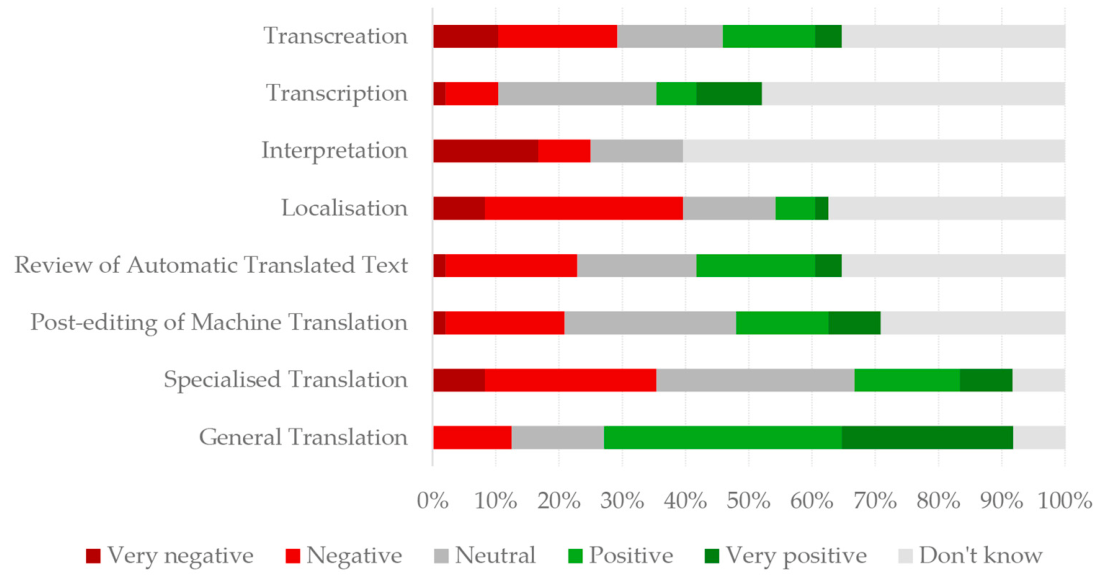
When asked about the perceived performance of LLMs in relation to different linguistic tasks, respondents reported clearly differentiated evaluations depending on the service considered. General translation stands out as the most favourably assessed task, with 37.6% rating LLM performance as positive and 27.1% as very positive. By contrast, tasks typically requiring greater contextual sensitivity, communicative judgement, cultural adaptation, creativity, or real-time decision-making tend to receive less favourable evaluations and higher levels of uncertainty (Figure 1).
This high proportion of “don’t know” responses should be interpreted cautiously. It may reflect limited direct exposure to interpreting, for example, among some respondents, since not all language-service professionals work across all service areas. Moreover, given the length and thematic breadth of the questionnaire, respondent fatigue may also have contributed to uncertainty in later sections of the instrument. Specialised translation, localisation, and transcreation also attract less favourable assessments than general translation. Collectively, the results suggest that LLMs are perceived as more effective in broader, less specialised tasks than in activities requiring stronger domain knowledge, intercultural mediation, or creative reformulation. This uneven pattern is in line with broader industry observations that AI integration does not affect all language services in the same way and tends to advance more slowly in areas requiring greater immediacy, contextual sensitivity, or specialised expertise [2,3,27].
At the same time, the relatively high proportion of neutral and uncertain responses across several tasks suggests uneven familiarity and uneven practical exposure. Within the limits of the descriptive analysis, no clear pattern emerged by age or years of professional experience. Notably, even in the tasks marked by greater uncertainty, respondents had, on average, more than 15 years of professional experience, indicating that uncertainty may be related to limited direct experience with LLM-supported workflows in specific tasks, as well as to possible respondent fatigue, rather than to lack of professional maturity. Some descriptive variation by gender was nevertheless observed within the sample: female respondents more often rated LLM performance in general translation as positive, whereas male respondents more often classified it as very positive. In interpreting, “don’t know” and “very negative” responses were descriptively more frequent among male respondents.
A more direct comparison between LLM-assisted work and exclusively human work reinforces this cautious assessment. Half of the respondents (50.0%) considered the quality of LLM-assisted work to be slightly worse than that of human-only work, and a further 18.8% rated it as much worse. Only small proportions considered it slightly better (6.3%) or much better (6.3%), while 18.8% viewed the two as practically equivalent. Within the sample, slightly more negative assessments were reported more frequently by female respondents. This descriptive pattern should be interpreted cautiously and should not be understood as evidence of a statistically significant gender difference. This is noteworthy because recent literature has often highlighted the potential value of hybrid human–AI workflows, whereas the present findings suggest that such benefits are not yet being consistently realised in practitioners’ everyday experience [4].
The open-ended responses (Table 3) provide further insight into the criteria underlying these evaluations, revealing how professionals define and judge quality in LLM-assisted language work.
Respondents identified ten main thematic areas shaping their perceptions of output quality, with fluency/cohesion and technical-scientific language standing out most clearly. Fluency is often recognised as a relative strength, but this is repeatedly qualified by the observation that surface-level smoothness may coexist with deeper problems of meaning, consistency, and adequacy. In this sense, respondents clearly distinguish between fluent wording and professionally reliable performance.
The most frequently mentioned issue is terminology (23.4%), followed by fluency (19.5%). Terminological precision emerges as a central concern, particularly in specialised contexts, where respondents report difficulties in recognising specialised terms, handling acronyms, and maintaining consistency throughout the text. These concerns are reinforced by references to semantic shifts, weak contextual understanding, limited functional adequacy, and insufficient sensitivity to communicative purpose. Other recurring issues include literal translation, hallucinations, weak idiomaticity, and lack of cultural depth. This is particularly relevant because recent studies have pointed to the potential of LLMs to support terminological consistency, contextual clarification, and reformulation, yet the present responses suggest that these strengths remain unstable in professional use contexts and do not remove the need for close human revision [16,17].
Although some respondents also mention benefits related to productivity, brainstorming, and speed, these advantages are framed cautiously. Several note that time saved in initial generation may later be offset by the need to correct recurrent errors. Taken together, these findings suggest that professionals do not equate quality with fluency alone: while LLMs may produce usable and often fluent drafts, they are still viewed with caution in tasks where quality depends on specialised judgement, contextual understanding, terminological control, and communicative adequacy. This finding adds a critical qualification to more optimistic accounts of LLM-supported language work: in the respondents’ view, the central issue is not whether LLMs can generate fluent text, but whether that text can meet the layered professional standards required in specialised translation and language-service contexts.

5.4. Impact on Language Professionals

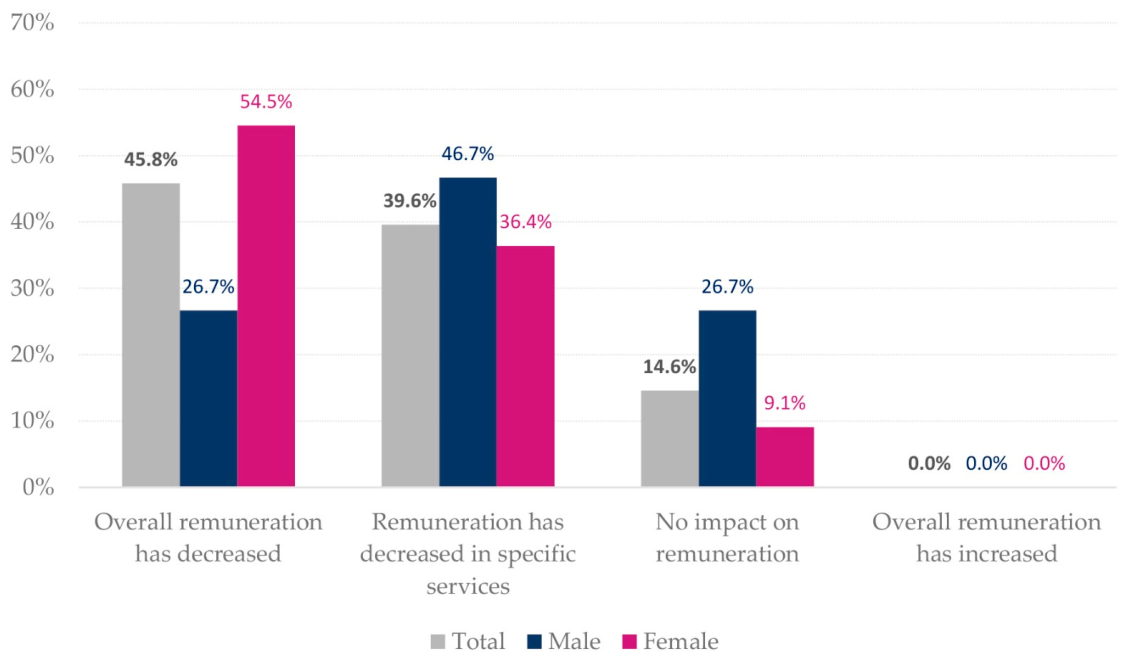
To examine the perceived impact of AI on language professions, respondents were asked whether the integration of LLMs had altered professional practices, affected specific services, and influenced remuneration. Overall, the results indicate that LLMs are perceived as having a tangible effect on professional work. A total of 45.8% of respondents reported that LLMs had substantially changed work dynamics, while a further 37.5% perceived a moderate impact. In descriptive terms, substantial change was reported more frequently by female respondents than by male respondents (Figure 2), although no inferential comparison was conducted.
In terms of the services most affected, translation was identified most frequently (37.7%), confirming its centrality in current experiences of LLM integration. However, respondents also pointed to proofreading and general translation (both 7.5%), legal translation (5.7%), and post-editing (3.8%), suggesting that the perceived impact extends beyond translation in a narrow sense and also affects adjacent forms of revision and specialised language work. Although less frequently mentioned, these responses indicate that the effects of LLM adoption are being felt across different segments of language-service provision rather than within a single isolated task. This is consistent with industry evidence indicating that AI is reshaping translation work in particular, with a gradual shift from fully human translation towards workflows increasingly centred on post-editing, revision, and AI-assisted processing [2].
As shown in Figure 2, 45.8% of respondents stated that the monetary value of language work had decreased with the introduction of LLMs, while 39.6% considered that this devaluation occurs only in specific services. Only 14.6% regarded the impact as neutral, and no respondents reported an increase in value. These findings point to a broadly negative perception among the surveyed professionals regarding the economic implications of LLM adoption, particularly at the entry level, where respondents appear to associate the growing integration of these tools with downward pressure on rates and a reduced market value of human labour. In this sense, the perceived decrease in remuneration appears to be linked not only to technological substitution, but also to a partial redefinition of the service itself, as work previously framed as translation is increasingly reclassified as post-editing or AI-assisted revision. This suggests that the economic impact perceived by respondents is not limited to lower fees, but also concerns the changing symbolic and commercial classification of language work, with potential implications for how professional expertise is recognised and valued.
Within the sample, 54.5% of female respondents reported an overall decrease in remuneration, compared with 26.7% of male respondents. By contrast, 46.7% of male respondents stated that this effect was limited to specific services, compared with 36.4% of female respondents. No respondents in either gender group reported an increase in remuneration. Taken together, these findings suggest that respondents perceive the growing role of LLMs not merely as a technological shift in workflows, but as a broader transformation with perceived implications for the economic valuation of linguistic labour.

5.5. Ethical Issues of LLMs Integration in the Industry

Given the importance of responsible AI adoption in language-service settings, respondents were asked whether the integration of LLMs raises ethical concerns in professional practice. The results show a high level of ethical awareness across the sample. More than half of the respondents (58.3%) reported major ethical concerns, while 29.2% identified moderate concerns. Only 6.3% reported minor concerns, and none stated that LLM use raises no ethical concerns. These findings imply that ethical issues are perceived as a central, rather than peripheral, dimension of LLM adoption in the industry.
Within the sample, major ethical concerns were reported by 66.7% of female respondents and 40.0% of male respondents. Moderate or minor concerns appeared more frequently among male respondents in the descriptive data. This pattern may be read alongside the previous observations on LLM use frequency, but it should be interpreted cautiously and does not allow for inferential conclusions regarding gender differences. When asked to identify the main ethical issues associated with LLM use, respondents highlighted concerns related to reliability, legal accountability, and professional consequences (Table 4).
As shown, the most frequently mentioned issue is misinformation or factual inaccuracies (19.5%), followed by violations of intellectual property (15.9%) and lack of transparency regarding copyright (14.1%). Bias or stereotyping in outputs (12.3%) and excessive reliance on non-human tools (12.7%) were also recurrent concerns. Respondents further referred to the devaluation of professional work (11.8%) and to environmental or energy consumption issues (10.0%). The prominence of misinformation and factual inaccuracy in particular is consistent with broader work showing that LLM outputs remain vulnerable to unreliable or misleading content under certain prompting and generation conditions [20].
Taken together, these findings indicate that professionals view the ethical implications of LLM integration as multidimensional. Their concerns extend beyond output quality alone and include questions of accuracy, transparency toward clients, authorship, accountability, bias, overreliance, professional value, sustainability, and rights protection, in line with broader concerns raised in the literature on AI use in language services [31,32].

5.6. Training and Skills for LLMs Usage

The growing integration of LLMs into language-service workflows not only reshapes professional practice, but also raises questions about how professionals are preparing to use these tools and which competences are now considered essential. Respondents were therefore asked about the training they had received, their level of confidence in using LLMs effectively, and the skills they regard as most important in this evolving context.
The results suggest that adaptation is taking place largely through informal rather than structured pathways. Half of the respondents (50.0%) reported relying primarily on self-directed learning, whereas only 15.7% had received in-house training and 8.6% reported formal training through universities or professional certification. A further 10.0% reported having received no training at all. This distribution points to a gap between the growing professional relevance of LLMs and the still limited provision of formal or employer-supported training. This contrasts with industry reports pointing to stronger institutional investment in AI-related upskilling among larger language-service providers, and suggests that access to structured support may remain uneven across professional contexts [3,27]
Confidence in the effective use of LLMs also appears to be moderate rather than high. Most respondents (58.3%) described themselves as moderately confident, while only 16.7% reported being very or extremely confident. This pattern suggests that familiarity with these tools does not necessarily translate into strong mastery, and that current forms of learning may support use at an operational level without fully consolidating expert or strategic competence. This interpretation is reinforced by the way respondents define the skills now required for professional work in this area (Table 5).
As shown, the most frequently identified competence is critical engagement with AI (16.2%), followed by quality assurance (13.1%), specialised revision and post-editing (12.4%), AI literacy (11.2%), and both prompt engineering and ethical safeguards (10.8%). Terminology management also emerges as a relevant competence (10.4%). The prominence of prompt engineering within this skills profile is also consistent with studies showing that LLM performance depends heavily on the specificity, structure, and quality of user instructions [13,15,16]. Taken together, these results suggest that the surveyed professionals do not frame LLM-related expertise primarily in terms of tool operation alone. Instead, they emphasise the ability to evaluate outputs critically, ensure quality, manage specialised revision processes, and apply linguistic and ethical judgement in context.
This finding is particularly important because it indicates that the perceived professional response to LLM integration is not centred on simple technological adoption, but on forms of critical supervision and specialised mediation. In other words, respondents appear to recognise that effective use of LLMs in language services depends less on basic access to the tools than on the capacity to assess, refine, and govern their outputs according to professional standards. This shifts the focus of professional value from text production alone to evaluation, intervention, accountability, and the capacity to mediate between AI-generated output and the standards of professional language-service provision.
Overall, the results suggest that the integration of LLMs may be generating a dual shift in the profession: one in training pathways, which remain largely informal and self-directed, and another in the definition of competence itself, which is increasingly associated with critical judgement, quality control, revision expertise, and ethical awareness rather than with technical use alone.
These findings reinforce the continued relevance of the EMT Competence Framework [30], suggesting that AI literacy should increasingly become part of translator education and continuing professional development.

5.7. Future Implications for Professionals

Respondents were also asked about the future they anticipate for language professions in light of the ongoing integration of LLMs. The results suggest that this transformation is not viewed as distant or hypothetical, but as a process already underway. A large majority of respondents (87.5%) stated that the transformation of the language-services industry is already happening. Only small minorities located this transformation in the near or medium-term future, and none considered that it would never occur. The findings indicate that many respondents perceive the profession to be entering a period of structural change.
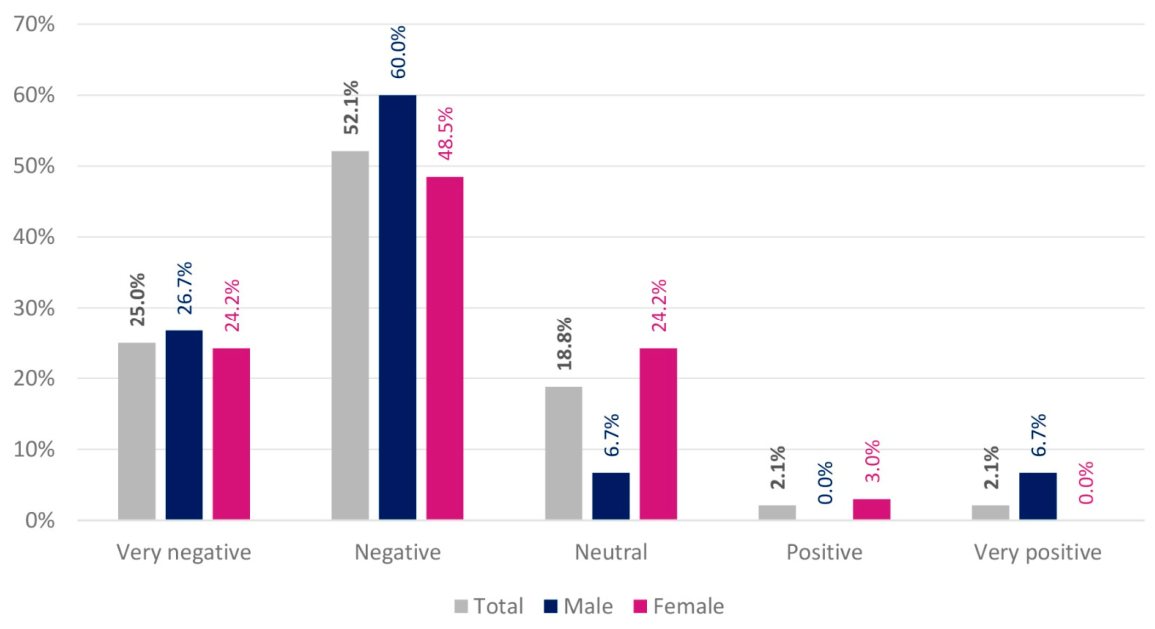
At the same time, the future implications of this transformation are perceived predominantly in negative terms.
As shown in Figure 3, 25.0% of respondents anticipate a very negative impact and 52.1% a negative one, meaning that a combined 77.1% expect adverse effects on the professions most affected by LLM integration. Only 18.8% describe the impact as neutral, while positive and very positive evaluations remain marginal (2.1% each). Within the sample, 86.7% of male respondents anticipated a negative or very negative impact, compared with 72.7% of female respondents. Descriptively, neutral responses were more frequent among female respondents.
When asked which professions would be most affected, respondents identified general translators most frequently (23.6%), followed by subtitlers (13.7%), specialised translators (13.2%), proofreaders (12.1%), localisers (11.0%), and post-editors (10.4%). This suggests that the expected impact is concentrated above all in text-based language work, particularly in roles involving translation, revision, and linguistic adaptation. This distribution is consistent with broader industry evidence suggesting that general translation is especially exposed to automation pressures, while more specialised and revision-oriented roles are being reconfigured rather than simply eliminated [2].
Despite this predominantly negative outlook, respondents also identified some opportunities associated with LLM adoption. The most frequently mentioned were the automation of repetitive tasks (42.9%) and increased productivity (33.0%), followed at a distance by expansion of service provision (19.8%). In parallel, respondents reported taking practical steps to adapt to these changes, most notably by learning to use new software and tools (26.7%), exploring AI-based and automated solutions (24.8%), pursuing further training and learning (21.9%), and keeping up with sectoral developments through research (21.0%). These responses suggest that, even where expectations are cautious or pessimistic, professionals are not passive observers of change but are actively preparing for it. This combination of concern and proactive adjustment is in line with recent literature emphasising that AI adoption in language services is generating not only pressure, but also new demands for technological adaptation and strategic repositioning [3,27]. The open-ended responses (Table 6) provide a more nuanced account of how this future is being imagined.
The most frequently mentioned concern is professional reskilling (21.4%), followed by job reduction (17.9%), standardisation (10.7%), loss of quality standards (7.1%), and growing inequality within the industry (3.6%). These concerns indicate that respondents do not frame the future primarily in terms of simple technological substitution. Rather, they anticipate a broader reconfiguration of professional value, quality expectations, and labour conditions. In particular, the emphasis on reskilling suggests that many professionals see adaptation as unavoidable, but also as demanding, especially in a context where experienced practitioners may feel pressure to respond rapidly to technological change. In this respect, the concern with reskilling is particularly telling, as it suggests that continued professional relevance is increasingly perceived as dependent on the capacity to adapt to new technological and workflow demands.
At the same time, the opportunities identified in the qualitative responses show that this future is not understood in exclusively pessimistic terms. The two most frequent opportunity themes are the valorisation of human work (21.4%) and the possibility of industry recovery or innovation (14.3%). Some respondents thus appear to believe that the expansion of LLMs may ultimately reinforce the importance of human oversight, judgement, and specialised expertise, even if the volume or form of human intervention changes. This is also consistent with strands of recent literature that do not frame AI as a straightforward substitute for human professionals, but rather as a force that may increase the relative importance of supervision, judgement, and specialised human intervention in quality-sensitive tasks [4,16,17]. A smaller number also pointed to the need to strengthen rights and protections for professionals (3.6%), indicating that future adaptation is seen not only as a matter of skills and tools, but also of governance and professional safeguards.
Taken together, these findings suggest that professionals view the future of language work as both immediate and contested. The dominant expectation is one of disruption, with negative effects on employment, quality, and established professional roles. Yet this view coexists with a more adaptive perspective, in which human expertise may be revalued precisely because of the limitations, risks, and governance challenges associated with LLM use. The future imagined by respondents is therefore not one of simple replacement, but one of uneven restructuring, in which threat and opportunity emerge simultaneously within a rapidly changing professional landscape.

6. Conclusions

This study investigates the impact of AI, with particular emphasis on LLMs, on the provision of language services and their implications for the future of the profession. Drawing on empirical data collected through an online questionnaire administered to a sample of European language service professionals, including members of professional associations, academic networks, institutional settings, and independent language professionals. The research adopts an exploratory and descriptive approach with an embedded mixed-method design. The questionnaire examined six key dimensions: effective use; quality perception; impact on language professions; ethical issues of LLM integration in the industry; training and skills for LLM usage; and future implications for the profession. The findings suggest that the participants perceive the increasing presence of AI as gradually reshaping workflows. Rather than signalling the replacement of human professionals, the results indicate that respondents perceive a growing pattern of collaboration between human expertise and technological tools. In practice, respondents report combining NMT systems with LLM-based tools, reflecting the advantages of hybrid approaches that integrate different forms of AI-driven language processing. Nevertheless, the adoption of LLMs appears to be cautious and selective, particularly in tasks that require specialised linguistic knowledge or domain-specific expertise. Persistent limitations, which include occasional lack of textual fluency, terminological inaccuracies, and the frequent need for post-editing, reinforce the continued importance of human intervention in ensuring quality and reliability.
Perceptions of quality associated with LLM-assisted work are generally considered slightly lower than those of fully human-produced translations. While these technologies offer gains in speed and productivity, respondents emphasise the ongoing need for revision and specialised post-editing in order to meet professional standards. The results further suggest that participants perceive the growing automation of certain processes as contributing to a gradual reconfiguration of the translator’s professional role, with greater emphasis placed on post-editing, revision, and quality assurance tasks. At the same time, some respondents associate this shift with concerns regarding professional devaluation and downward pressure on remuneration.
The study also highlights a range of ethical concerns reported by the participants emerging from the adoption of AI tools in language services. These include issues related to misinformation, copyright and intellectual property, and the broader implications of integrating generative technologies into professional workflows. Such concerns are compounded by the perceived absence of clear regulatory frameworks, underscoring the need for the development of guidelines capable of addressing ethical and legal challenges associated with AI integration.
Concerning professional development, the findings indicate that adaptation to technological change largely depends on self-directed learning among the surveyed professionals. This suggests that respondents perceive a discrepancy between the evolving demands of the profession and the level of institutional support available to practitioners. Despite this limitation, respondents generally report confidence in their ability to integrate AI tools into their professional activities. At the same time, they emphasise the increasing importance of acquiring new competencies, particularly critical engagement with AI systems, specialised post-editing expertise, and advanced revision skills.
Looking ahead, participants recognise that the technological transformation associated with AI is already underway and perceive that it is likely to affect general translation tasks most strongly. Although many respondents anticipate potential negative consequences, such as the need for professional reskilling and possible reductions in employment opportunities, the findings also point to opportunities for innovation and for the continued relevance of human expertise within the language services industry. Importantly, the results indicate that the participants perceive transformation of the sector as uneven across tasks, professional roles, and work contexts.
In summary, the study suggests that while LLMs are contributing to the automation of certain processes within language services, they do not eliminate the need for human involvement. Instead, respondents perceive these technologies as contributing to changes in professional practices by introducing new tools, workflows, and skill requirements. Within the limits of this exploratory study, these findings point to both challenges and opportunities as perceived by the surveyed professionals, reinforcing a model of collaboration between human professionals and AI systems rather than one of technological substitution.
Although the exploratory nature of the study and the relatively small sample size limit the generalisability of the findings, the results contribute to a more informed understanding of how the surveyed language service professionals perceive AI is currently influencing language services. The respondents emphasise the continuing significance of human critical judgement, creativity, and linguistic proficiency, which they perceive as difficult for AI systems to emulate fully.
Future research could investigate the long-term economic implications of AI adoption in the Language service industry, including its impact on remuneration models, pricing structures, and employment opportunities for language professionals. In addition, longitudinal studies could explore how professionals’ perceptions evolve as AI technologies mature, while comparative studies across countries, language pairs, and specialisations could possibly provide a clearer understanding of the uneven adoption of AI observed in the present study. Finally, future research may benefit from incorporating qualitative methods, such as interviews or focus groups, to complement survey findings and provide deeper insight into professionals’ experiences, expectations, and adaptation strategies.

Author Contributions

Conceptualization, C.T., L.O. and R.N.; formal analysis, L.O.; funding acquisition, C.T.; investigation, R.N., C.T. and L.O.; methodology, L.O. and R.N.; project administration, C.T. and L.O.; resources, C.T. and R.N supervision, C.T. and L.O.; validation, L.O.; visualization, L.O. and R.N; writing—original draft, C.T., L.O. and R.N.; writing—review and editing, C.T., L.O. and R.N. All authors have read and agreed to the published version of the manuscript.

Funding

This work is financed by Portuguese national funds through FCT—Fundação para a Ciência e Tecnologia, under the project UIDB/05422/2020.

Institutional Review Board Statement

The Ethics Committee associated with the Research Center (CEOS.PP), which is part of ISCAP (the Ethics Committee of the Instituto Superior de Contabilidade e Administração do Porto)—Polytechnic of Porto only intervenes in cases where personal data is collected, and not in the case of anonymous surveys. According to the institution’s guidelines and the nature of the study (anonymous, minimal risk, and non-sensitive data collection), formal ethical approval was not required.

Informed Consent Statement

Informed consent was obtained from all subjects involved in the study.

Data Availability Statement

Data are contained within the article.

Conflicts of Interest

The authors declare no conflicts of interest.

Appendix A. Survey

Exploring the Integration of AI in Translation Workflows
Section 1. Participant Profile
  • Do you work with a company that is an EUATC member?
    • Yes
    • No
    • I don’t know
  • What are your working languages?
    (Please specify both source and target languages.)
    Example: English → Portuguese
  • Are you a member of any of the following associations?
    • QSD—Qualitäts-Sprachendienste Deutschlands e.V.
    • AATC—Austrian Association of Translation Companies
    • BQTA—Belgian Quality Translation Association
    • ACTA—Association of Czech Translation Agencies
    • ATCSK—Association of Translation Companies of Slovakia
    • SATC (ZPP)—Slovenian Association of Translation Companies
    • ASPROSET—Asociación Sectorial de Proveedores de Servicios de Traducción
    • SKY—Suomen kielipalveluyrityset ry
    • CNET—Chambre Nationale des Entreprises de Traduction
    • PROFORD—Hungarian Association of Professional Language Service Providers
    • UNILINGUE—Associazione Nazionale di Imprese di Servizi Linguistici
    • ALTC—Association of Lithuanian Translation Companies
    • VVIN—Netherlands Association of Translation Agencies
    • PSBT—Polish Association of Translation Companies
    • APET—Associação Portuguesa de Empresas de Tradução
    • ATC—Association of Translation Companies
    • AFIT—Romanian Association of Translation and Interpreting Companies
    • ATC RF—Association of Translation Companies Russian Federation
    • SATC (UPPS)—Serbian Association of Translation Companies
    • CID—Turkish Association of Translation Companies
    • I don’t know
  • Country—(List of European countries.)
  • Age—(Open numerical response.)
  • Gender
    • Female
    • Male
    • I prefer not to answer
  • You are:
    • Freelance Translator (full time)
    • Freelance Translator (part time)
    • In-house Translator
    • Project Manager
    • Translation Agency Owner
    • Interpreter
    • Editor/Proofreader
    • Subtitler/Captioner
    • Localizer
    • Developer of linguistic technology
    • Other
  • How many years have you worked in the translation industry?
    (Open response.)
  • Education level
    • Less than high school
    • High school graduate
    • Some college or vocational training
    • University/College non-completion
    • Bachelor’s degree
    • Advanced degree (Master’s, PhD)
  • In which field? (Open response.)
Section 2. AI Familiarity and Use
11.
How familiar are you with the use of Artificial Intelligence (AI) in language-related areas (translation, interpretation, etc.)?
  • Not familiar at all
  • Slightly familiar
  • Moderately familiar
  • Very familiar
  • Extremely familiar
12.
Do you use:
  • Predominantly NMT
  • A combination of NMT and LLM
  • Predominantly LLM
  • I use none
(Questions 13–31 were displayed only to respondents who selected one of the first three options.)
13.
How often do you use LLMs?
  • Never (0%)
  • Rarely (up to 25%)
  • Sometimes (26–50%)
  • Frequently (51–75%)
  • Very frequently (76–99%)
  • Always (100%)
14.
For what purposes do you use LLMs?
  • Speed
  • To comprehend cultural references
  • To comprehend specific terminology
  • To obtain more translation options
  • To save research time
  • To verify clarity of translated text
  • To reduce production costs
  • To evaluate the potential of the technology
  • Other
15.
How do you evaluate the efficiency of LLMs in the following activities?
Activities:
  • General text translation
  • Specialised translation
  • Post-editing of machine translation
  • Review of automatically translated text
  • Localization
  • Interpretation
  • Transcription
  • Transcreation
Scale:
  • Very Negative
  • Negative
  • Neutral
  • Positive
  • Very Positive
  • I don’t know
16.
How does the quality of LLM-supported work compare to human-only work?
  • Much worse
  • Slightly worse
  • About the same
  • Slightly better
  • Much better
17.
What factor most influences your perception of quality? (Open response.)
18.
Have you noticed changes in work practices/tasks due to the introduction of LLMs?
  • Yes, significantly
  • Yes, moderately
  • No, not much change
  • No change at all
19.
Which services are most affected? (Open response.)
20.
Have you noticed any change in salaries or fees due to AI?
  • Yes, the value has decreased
  • Yes, but only for certain services
  • No, the impact is neutral
  • No, the value has increased
21.
To what extent do you believe LLM usage raises ethical concerns?
  • No concerns
  • Minor concerns
  • Moderate concerns
  • Major concerns
  • I don’t know
22.
Which ethical concerns do you associate with LLMs?
  • Intellectual property violations
  • Misinformation or factual inaccuracies
  • Bias or stereotyping
  • De-skilling of professionals
  • Untransparent authorship
  • Over-reliance on non-human tools
  • Environmental/energy consumption
  • Other
23.
What kind of training have you received?
  • Formal course
  • Online short course
  • In-house/company training
  • Self-taught
  • None
  • Other
24.
How confident are you in using LLMs effectively?
  • Not confident
  • Slightly
  • Moderately
  • Very
  • Extremely
25.
Which competencies will be essential for language service providers?
  • Critical engagement with AI
  • Prompt engineering
  • Specialised review and post-editing
  • MT engineering
  • AI literacy
  • Technology competence
  • Terminology competence/management
  • Quality Assurance
  • Ethical Safeguard
  • None of these
  • Other
26.
When do you expect LLMs to significantly transform language services?
  • Already happening
  • Within the next 1–2 years
  • In 3–5 years
  • In 6–10 years
  • Not for at least a decade
  • Never
27.
Which language professions will be most affected? (Select up to three.)
  • Translators (general)
  • Translators (specialised)
  • Interpreters
  • Subtitlers/Captioners
  • Post-editors
  • Project Managers
  • Proofreaders
  • Localizers
  • Other
28.
For the professions most affected, do you believe the change will be:
  • Very negative
  • Negative
  • Neutral
  • Positive
  • Very positive
29.
Which opportunities do you see as being brought by LLMs?
  • Automating repetitive tasks
  • Expanding service offerings
  • Enhancing productivity
  • Other
30.
How are you preparing for this transition?
  • Training and learning
  • Exploring automation and AI-driven solutions
  • Keeping up with industry trends through research
  • Learning and using new software/tools
  • Other
31.
Any other thoughts (concerns or opportunities) about the future of the language industry? (Open response.)

References

  1. Pym, A. On the End of Translation Studies as We Know It. In Proceedings of the Major Problems of Translation Studies and Translator/Interpreter Training, Kharkiv, Ukraine, 19–20 April 2024. [Google Scholar]
  2. ELIS Research. European Language Industry Survey; ELIS Research: Munich, Germany, 2024. [Google Scholar]
  3. ELIS Research. European Language Industry Survey; ELIS Research: Munich, Germany, 2025. [Google Scholar]
  4. Kornacki, M.; Pietrzak, P. Hybrid Workflows in Translation: Integrating GenAI into Translator Training; Routledge Focus on Translation and Interpreting Studies; Routledge Taylor & Francis Group: New York, NY, USA, 2025. [Google Scholar]
  5. Pym, A. Conceptual Tools in Translation History. In The Routledge Handbook of Translation History; Routledge: New York, NY, USA, 2021. [Google Scholar]
  6. Chan, S. The Development of Translation Technology: 1967–2023. In Routledge Encyclopedia of Translation Technology; Routledge: New York, NY, USA, 2023. [Google Scholar]
  7. Bowker, L. Computer-Aided Translation Technology: A Practical Introduction; University of Ottawa Press: Ottawa, ON, Canada, 2002. [Google Scholar]
  8. Kenny, D. Machine Translation for Everyone: Empowering Users in the Age of Artificial Intelligence; Translation and Multilingual Natural Language Processing; Language Science Press: Berlin, Germany, 2022. [Google Scholar]
  9. Liu, X.; Li, C. Artificial Intelligence and Translation. In Routledge Encyclopedia of Translation Technology; Routledge: New York, NY, USA, 2023. [Google Scholar]
  10. ISO 18587:2017. Available online: https://www.iso.org/standard/62970.html (accessed on 24 January 2026).
  11. Son, J.; Kim, B. Translation Performance from the User’s Perspective of Large Language Models and Neural Machine Translation Systems. Information 2023, 14, 574. [Google Scholar] [CrossRef]
  12. Stryker, C. What Are Large Language Models (LLMs)?|IBM. Available online: https://www.ibm.com/think/topics/large-language-models (accessed on 3 February 2026).
  13. Hendy, A.; Abdelrehim, M.; Sharaf, A.; Raunak, V.; Gabr, M.; Matsushita, H.; Kim, Y.J.; Afify, M.; Awadalla, H.H. How Good Are GPT Models at Machine Translation? A Comprehensive Evaluation. arXiv 2023, arXiv:2302.09210. [Google Scholar]
  14. Oliveira, L.; Tavares, C.; Strzelecki, A.; Silva, M. Prompting Minds: Evaluating How Students Perceive Generative AI’s Critical Thinking Dispositions. Electron. J. e-Learn. 2025, 23, 1–18. [Google Scholar] [CrossRef]
  15. White, J.; Fu, Q.; Hays, S.; Sandborn, M.; Olea, C.; Gilbert, H.; Elnashar, A.; Spencer-Smith, J.; Schmidt, D.C. A Prompt Pattern Catalog to Enhance Prompt Engineering with ChatGPT. arXiv 2023, arXiv:2302.11382. [Google Scholar]
  16. Siu, S.C. ChatGPT and GPT-4 for Professional Translators: Exploring the Potential of Large Language Models in Translation. SSRN Electron. J. 2023. [Google Scholar] [CrossRef]
  17. Ye, L. The Feasibility Study of Artificial Intelligence ChatGPT in Translation Field. Front. Comput. Intell. Syst. 2024, 8, 52–57. [Google Scholar] [CrossRef]
  18. Hariri, W. Unlocking the Potential of ChatGPT: A Comprehensive Exploration of Its Applications, Advantages, Limitations, and Future Directions in Natural Language Processing. arXiv 2023, arXiv:2304.02017. [Google Scholar]
  19. Jiao, W.; Wang, W.; Huang, J.; Wang, X.; Shi, S.; Tu, Z. Is ChatGPT A Good Translator? Yes With GPT-4 As The Engine. arXiv 2023, arXiv:2301.08745. [Google Scholar]
  20. Peng, K.; Ding, L.; Zhong, Q.; Shen, L.; Liu, X.; Zhang, M.; Ouyang, Y.; Tao, D. Towards Making the Most of ChatGPT for Machine Translation. arXiv 2023, arXiv:2303.13780. [Google Scholar]
  21. Bang, Y.; Ji, Z.; Schelten, A.; Hartshorn, A.; Fowler, T.; Zhang, C.; Cancedda, N.; Fung, P. HalluLens: LLM Hallucination Benchmark. In Proceedings of the 63rd Annual Meeting of the Association for Computational Linguistics (Volume 1: Long Papers); Association for Computational Linguistics: Vienna, Austria, 2025; pp. 24128–24156. [Google Scholar]
  22. Sakib, S.K.; Bijoy Das, A. Challenging Fairness: A Comprehensive Exploration of Bias in LLM-Based Recommendations. In Proceedings of the 2024 IEEE International Conference on Big Data (BigData); IEEE: Washington, DC, USA, 2024; pp. 1585–1592. [Google Scholar]
  23. The Business Research Company. Language Services Global Market Research. Available online: https://www.thebusinessresearchcompany.com/report/language-services-global-market-report (accessed on 3 February 2026).
  24. Esselink, B. Multinational Language Service Provider as User. In The Routledge Handbook of Translation and Technology; Routledge: New York, NY, USA, 2019. [Google Scholar]
  25. ELIS Research. European Language Industry Survey; ELIS Research: Munich, Germany, 2026. [Google Scholar] [CrossRef]
  26. CSA Research. 2025 Market Forecast; CSA Research: Cambridge, MA, USA, 2025. [Google Scholar]
  27. Varga, L. The 2024 Nimdzi 100; Nimdzi: Washington, DC, USA, 2024. [Google Scholar]
  28. Davis, F.D.; Granić, A. The Technology Acceptance Model: 30 Years of TAM; Human–Computer Interaction Series; Springer International Publishing: Cham, Switzerland, 2024. [Google Scholar]
  29. Venkatesh, V.; Morris, M.G.; Davis, G.B.; Davis, F.D. User Acceptance of Information Technology: Toward A Unified View1. MIS Q. 2003, 27, 425–478. [Google Scholar] [CrossRef]
  30. European Commission. European Master’s in Translation EMT Competence Framework 2022; European Commission: Brussels, Belgium, 2022. [Google Scholar]
  31. Lacruz Mantecón, M.L. Authorship and Rights Ownership in the Machine Translation Era. In Towards Responsible Machine Translation; Moniz, H., Parra Escartín, C., Eds.; Machine Translation: Technologies and Applications; Springer International Publishing: Cham, Switzerland, 2023; Volume 4, pp. 71–92. [Google Scholar]
  32. Moorkens, J. Ethics and Machine Translation. In Machine Translation for Everyone: Empowering Users in the Age of Artificial Intelligence; Language Science Press: Berlin, Germany, 2022. [Google Scholar]
  33. Cadwell, P.; O’Brien, S.; Teixeira, C.S.C. Resistance and Accommodation: Factors for the (Non-) Adoption of Machine Translation among Professional Translators. Perspectives 2018, 26, 301–321. [Google Scholar] [CrossRef]
  34. Guerberof, A.; Moorkens, J. Machine Translation and Post-Editing Training as Part of a Master’s Programme. J. Spec. Transl. 2019, 217–238. [Google Scholar] [CrossRef]
  35. Koponen, M. How to Teach Machine Translation Post-Editing? Experiences from a Post-Editing Course. In Proceedings of the 4th Workshop on Post-Editing Technology and Practice, Miami, FL, USA, 30 October–3 November 2015. [Google Scholar]
  36. Moorkens, J.; O’brien, S. Assessing User Interface Needs of Post-Editors of Machine Translation. In Human Issues in Translation Technology; Routledge: New York, NY, USA, 2017. [Google Scholar]
  37. Tavares, C.; Oliveira, L.; Duarte, P.; Silva, M. Artificial Intelligence: A Blessing or a Threat for Language Service Providers in Portugal. Informatics 2023, 10, 81. [Google Scholar] [CrossRef]
  38. Association of Translation Companies. End of Year Report 2025; Association of Translation Companies: Colchester, UK, 2025. [Google Scholar]
  39. Clark, T.; Foster, L.; Sloan, L.; Bryman, A.; Clark, T. Bryman’s Social Research Methods, 6th ed.; Oxford University Press: Oxford, UK, 2021. [Google Scholar]
  40. Creswell, J.W.; Creswell, J.D. Research Design: Qualitative, Quantitative, and Mixed Methods Approaches, 6th ed.; SAGE: Los Angeles, CA, USA, 2023. [Google Scholar]
  41. Phakiti, A.; De Costa, P.I.; Plonsky, L.; Starfield, S. (Eds.) The Palgrave Handbook of Applied Linguistics Research Methodology; Palgrave Macmillan Limited: London, UK, 2018. [Google Scholar]
  42. Bardin, L. Análise de Conteúdo; Edição Revista e Actualizada; Edições 70: Lisboa, Portugal, 2010. [Google Scholar]
  43. Etikan, I. Comparison of Convenience Sampling and Purposive Sampling. Am. J. Theor. Appl. Stat. 2016, 5, 1–4. [Google Scholar] [CrossRef]
  44. Hill, M.J. Social Policy: A Comparative Analysis; Prentice-Hall/Harvester Wheatsheaf: New York, NY, USA, 1996. [Google Scholar]
  45. Johanson, G.A.; Brooks, G.P. Initial Scale Development: Sample Size for Pilot Studies. Educ. Psychol. Meas. 2010, 70, 394–400. [Google Scholar] [CrossRef]
Figure 1. Evaluation of LLMs’ performance in different linguistic tasks.
Societies 16 00236 g001
Figure 2. Perceived impact of LLM integration on remuneration, with descriptive breakdown by gender. Note. Percentages for male and female respondents are calculated within each gender group. These subgroup percentages are descriptive only; no inferential statistical tests were conducted.
Societies 16 00236 g002
Figure 3. Perceived future impact of LLM integration on the most affected language professions, with descriptive breakdown by gender. Note. Percentages for male and female respondents are calculated within each gender group. These subgroup percentages are descriptive only; no inferential statistical tests were conducted.
Societies 16 00236 g003
Table 1. Analytical dimensions, research objectives, and instrument questions.
DimensionsObjectivesQuestions
Effective UseTo understand the level of familiarity, frequency of use, purposes, and professional perceptions regarding the implementation of AI-supported tools in the language services sector.- How familiar are you with the use of Artificial Intelligence (AI) in language-related areas (translation, interpretation, other)?
- Do you use NMT (Neural Machine Translation) tools (e.g., Google Translate, DeepL) or LLMs (Large Language Models) (e.g., ChatGPT, Gemini, Copilot)?
- How often do you use LLMs?
- For what purpose do you use LLMs?
Quality perceptionTo assess the perceived quality and performance of LLMs, as well as the factors that facilitate or hinder their use.- How do you evaluate the efficiency of LLMs in the following activities?
- How does the quality of LLM-supported work compare with that of fully human work?
- What factors most influence your perception of quality?
Impact on Language ProfessionsTo evaluate the impacts of AI penetration in the language services industry.- Have you noticed changes in work practices/tasks due to the introduction of LLMs?
- Which services are most affected?
- Have you noticed any changes in the salaries or fees of language services providers due to the penetration of AI in the job?
Ethical issues of LLMs integration in the industryTo highlight the ethical issues associated with the use of LLMs in language services and their implications for professional practice.- To what extent do you believe that the use of LLMs in language services raises ethical concerns?
- Which of the following ethical concerns do you associate with LLMs in language services?
Training and skills for LLMs usageTo identify the training and competencies required for proficiency in AI-based tools.- What kind of training have you received on the use of LLMs?
- How confident are you in using LLMs effectively in your professional tasks?
- Which of these competencies do you believe will be essential for language service providers?
Future Implications for the professionTo anticipate the transformations brought about by the integration of large language models (LLMs) in the language services industry.- When do you expect LLMs to significantly transform language services?
- Which language professions do you believe will be most affected by LLMs?
- For the professions most affected, do you believe the change will be mostly positive or negative?
- Which of the following do you see as opportunities brought by LLMs?
- How are you preparing for this transition?
- Do you have any other thoughts, concerns, or perceived opportunities regarding the future of the language-services industry that you would like to share?
Table 2. Purpose of LLM use.
Purpose of LLM UseN%
Obtaining more translation options2219.5
Speed2017.7
Assessing the potential of the technology1815.9
Saving time on research in general1513.3
Checking the clarity of translated text, particularly in long and complex sentences1311.5
Understanding specialised terminology1210.6
Understanding cultural references65.3
Reducing production costs for the client21.8
Obs.: In multiple-choice responses, N and % refer to the frequency with which each option was selected.
Table 3. Factors influencing the perception of LLM quality.
ThemesFactorsN%Verbatim
Linguistic
Norm
Grammar56.5 “(…) grammar is good but sometimes there is a lot of redundancy.”(ID29)
“(…) because grammar and fluency look quite good (…)” (ID41)
Syntax33.9“(…) Syntax is correct. (…)” (ID88)
“(…) Especially for Danish, I should invert most sentences because the syntax remains English, and it does not sound right.” (ID108)
Fluency/
Cohesion
Semantics22.6 “(…) and it changes the meaning to various degrees and approaches (additions, omissions, paraphrases, etc.)” (ID 15)
“Semantic aspects of the text may be shifted (…)” (ID10)
Precision11.3“Accuracy and fluency, and specifically consistency.” (ID28)
Meaning/Context45.2 “I have found that LLMs often twists the meaning focus in sentences and that its primary goal is standard (…)” (ID78)
“Understanding of context very weak.” (ID110)
Fluency1519.5 “Fluency is superficially achieved but there are plenty of errors (…)” (ID24)
“Fluency is relatively good (depending on the text and language combination) (…)” (ID65)
Technical-scientific languageTerminology 1823.4“Terminology very weak.” (ID22)
“(…) LLMs commits fatal mistakes sometimes and consistancy of technical terminology is bad.” (ID45)
Acronyms11.3“(…) unable to handle spécialisés terminology or acronyms.”(ID100)
Translation
theories
Communicative function and functionalist theory33.9“Fluency, consistency, customisation, target text and end-user functionalities, functionalism, tone, register, text type orientation”. (ID23)
“Consisitency and functional adequacy” (ID 70)
Cultural
adequacy
Idiomatic variety33.9“Mostly, incorrect language variant, (…)” (ID133)
“The wording is not fully idiomatic, e.g., always slightly “off”” (ID27)
Idiomatic expressions11.3“Weak on idiomatic expressions.” (ID124)
Cultural references33.9“(…) many problems with cultural reference (…)” (ID9)
“Poor linguistic quality, no cultural depth.” (ID90)
Number conversion11.3“(…) transfer of numbers (not always correct).” (ID125)
ArtificialityLiteral translation56.5“(…) it is sometimes too literal.” (ID79)
Lack of
reliability
Hallucinations56.5“Hallucinations are a problem.” (ID110)
“Can sometimes be really awkward and off the subject.” (ID52)
ProductivityBrainstorming11.3“AI is a productive tool for term extraction, ideas for better wording, etc.” (ID6)
Speed11.3“While it does speed the translation mechanically, i.e., in terms of text quantity (…)” (ID78)
EffectivenessSolving lexical problems11.3“It gives me equivalents that I am not able to find alone.” (ID40)
Creativity11.3“Semi-useful for creating puns and play on words—results rarely usable, (…)” (ID53)
EfficiencyEfficiency imbalance33.9“The gain in efficiency is minimal, sometimes there is even a loss in efficiency.” (ID55)
“In the end the translation speed we gain is lost in revision.” (ID24)
Table 4. Main ethical issues associated with LLM use in language-service provision.
IssueN%
Misinformation or factual inaccuracies4319.5
Infringement of intellectual property rights3515.9
Transparency regarding copyright3114.1
Over-reliance on non-human tools2812.7
Bias or stereotypes in the results2712.3
Discrediting of professionals2611.8
Environmental/energy consumption2210
Other:
A completely inaccurate perception of what translation is and does when using English as a pivot language
Disclosure of personal data
Devaluation of human labour
Loss of critical thinking
Lack of consideration for professionals’ rights
83.6
Table 5. Skills considered essential for professionals working with LLMs in language-service provision.
SkillN%
Critical engagement with AI (ability to evaluate AI outputs)4216.2
Quality assurance3413.1
Specialist proofreading and post-editing3212.4
AI literacy2911.2
Ethical safeguards2810.8
Prompt engineering2810.8
Terminology management2710.4
Technical skills228.5
Machine translation engineering145.4
Other:
Focus on quality
20.8
Table 6. Main concerns and opportunities regarding the future of the language-services industry
ThemesFuture-Oriented ConsiderationsN%Verbatim
Professional retraining621.4“The need to reconceptualise professional profiles, upskilling and reskilling.” (ID23)
“Humans must learn new competences” (ID59)
Job cuts517.9“Ultimately, there is no future for either translators or interpreters.” (ID30)
“The number of freelance translators and also translation companies will decline in the next years.” (ID124)
Standardisation310.7“I am quite worried about decreasing literacy levels in general public, if the only thing they will read will be machine-translated, flat, and boring.” (ID53)
“I am afraid that IA in Language industry, and more generally, contributes to standardise thought and way of thinking.” (ID88)
Decline in quality standards27.1“Using LLMs in sub-titeling and litterary translation is rather inappropriate, (very often the MT has to be deleted and written a new) but some clients refuse to see the danger, they just wish to reduce budget.” (ID41)
“I’m concerned about quality. (...) Average translations are sent out as MTPE assignments, paid at just 50% of the standard rate, yet clients still expect “human quality.” (ID108)
Inequality in industry13.6“It seems that mostly big companies (50,000,000 plus) are benefiting from the change as their clients do have a good concept of how to use an LLMs-Output and that it should not go unchecked. Small and midsized LSPs are suffering the most, because they are basically just losing revenue without the opportunity to recuperate it.” (ID14)
Valuing human labour621.4“As long as people are trained and customers understand that AI cannot replace human translators, the shift in practices should be possible to manage.” (ID9)
“(...) Human translation will survive for minority languages spoken by small communities e for legal translation for trials.” (ID40)
Industrial recovery/innovation414.3“Hopefully, the AI hype will be over soon and the language industry can recover from the significant decrease in sales.” (ID6)
“Language industry will expand in new modalities and with incorporation of AI.” (ID72)
Professional rights13.6“As always, regulation (copyright, privacy, quality safeguards) is the key, similarly to social networks and other tech platforms.” (ID133)
Disclaimer/Publisher’s Note: The statements, opinions and data contained in all publications are solely those of the individual author(s) and contributor(s) and not of MDPI and/or the editor(s). MDPI and/or the editor(s) disclaim responsibility for any injury to people or property resulting from any ideas, methods, instructions or products referred to in the content.