1. Introduction
Entrepreneurship is increasingly seen as invaluable for fostering innovation and economic growth, as well as for creating jobs and developing sustainable economies in both developed and emerging markets [
1]. Consequently, governments and higher education institutions have expanded their entrepreneurship education initiatives to include future generations of entrepreneurs, in their efforts to develop the entrepreneurial skills required to recognise opportunities and create ventures [
2,
3]. Also, entrepreneurial education (EE) is viewed as a learning process that can transform the individual into having an entrepreneurial mindset with creativity and resilience to adapt to the constantly changing environment with the ability to find solutions to problems within the economy and society at large [
4,
5].
A vast body of research has established that EE positively impacts entrepreneurial knowledge, attitudes, self-efficacy, opportunity recognition, and entrepreneurial intention [
2,
3]. More recent reviews continue to emphasise the importance of EE in shaping entrepreneurial behaviour while highlighting the need for greater attention to psychological and contextual mechanisms underlying entrepreneurial development [
6]. It has been demonstrated that educational experiences enhance entrepreneurial self-efficacy—defined here as individuals’ confidence in their ability to successfully perform entrepreneurial tasks—which, in turn, supports engagement in entrepreneurship and aspirations for an entrepreneurial career [
7]. Yet, despite the widespread implementation of entrepreneurship education programs, evidence regarding their association with entrepreneurial outcomes is mixed, particularly regarding motivation for venture creation and long-term entrepreneurial engagement among students [
2]. These inconsistencies have led scholars to move beyond direct-effect and intention-based models toward process-oriented explanations that capture psychological and contextual mechanisms through which EE influences entrepreneurial development [
5].
Most entrepreneurship education (EE) studies traditionally focus on the direct relationship between EE and other entrepreneurial outcomes, such as entrepreneurial intention, entrepreneurial attitudes, and entrepreneurial self-efficacy [
2,
3]. Although useful in shedding light on the topic, these studies do little to unveil the psychological process through which educational experiences shape entrepreneurial development. In fact, recent research has placed greater emphasis on entrepreneurial identity (EI) as a mechanism explaining how educational experiences lead to entrepreneurial outcomes [
4].
EI is defined as the degree to which individuals see entrepreneurship as a central and meaningful part of their self-concept and future aspirations [
8]. Identity Theory posits that people are more likely to behave in ways consistent with identities they consider important and self-defining [
9]. Recent research views the development of an EI as a process by which individuals come to see entrepreneurship as a significant component of who they are and whom they want to be [
4]. EI does not simply result from the acquisition of entrepreneurial knowledge but is formed through repeated exposure to entrepreneurial experiences, role models, narratives, and learning experiences [
4,
10]. These experiences enable students to gradually incorporate entrepreneurial values and behaviour into their self-definition, thereby enhancing their engagement and commitment to entrepreneurship.
The development of entrepreneurship is also situated within wider social settings. According to [
10], Social Support Theory states that people’s ambitions, attitudes, and actions are shaped by the emotional, informational, and instrumental support they receive from significant others and their social network. For university students, support from family members, peers, mentors, and educational institutions will boost their confidence in entrepreneurship, reduce uncertainty and legitimise entrepreneurship as a desirable occupation [
11]. Therefore, social support (SS) can enhance the extent to which EE contributes to the formation of an EI. Although prior studies acknowledge the importance of social support in entrepreneurial development, empirical evidence on its role in strengthening entrepreneurial identity formation remains fragmented and inconclusive.
EE may be especially important for female students. Although women’s participation in higher education has increased significantly over the past few decades, women remain underrepresented in entrepreneurial activity worldwide [
12,
13]. Prior studies have shown that women face more barriers than men in entrepreneurial networks, access to resources, role models, and social legitimacy. Recent evidence from the Middle East and North Africa (MENA) region suggests that women entrepreneurs continue to encounter institutional, social, and network-related constraints despite increasing policy support for entrepreneurship [
12]. These challenges highlight the importance of understanding the factors that encourage entrepreneurial development among female university students. Therefore, educational experiences that enhance entrepreneurial identity and foster supportive social environments may be particularly effective in inspiring women to engage in entrepreneurship.
These issues gain more weight in Saudi Arabia, where Vision 2030 has placed entrepreneurship and women’s economic participation at the core of national development. Recent reforms have opened significant doors for women in higher education, employment, and entrepreneurship. Most universities have also included EE in their curricula. However, social norms, family expectations, and contextual support structures continue to influence women’s entrepreneurial career choices and aspirations [
13]. Therefore, it is pertinent to explore how the interaction of EE, EI, and SS shapes the process of entrepreneurial development among female university students in Saudi Arabia.
Whereas entrepreneurial intention has commonly been used as the primary outcome variable in entrepreneurship research, this study adopts startup motivation as its primary outcome. Startup motivation refers to the strength of an individual’s desire, commitment, and willingness to engage in entrepreneurial activity and create a new venture [
14]. It captures the psychological energy that drives entrepreneurial engagement and persistence, reflecting both intrinsic and extrinsic motivational drivers [
14,
15]. In contrast to entrepreneurial intention, which primarily reflects a conscious plan or decision to create a business venture, startup motivation encompasses the broader forces that drive entrepreneurial behaviour and sustain persistence in entrepreneurial engagement over time. As such, startup motivation (SM) is particularly appropriate for studying early-stage entrepreneurial development among university students, as it captures not only planned behaviour but also the strength of individuals’ commitment and readiness to pursue entrepreneurial opportunities.
Although prior studies have examined EE, EI, and SS separately, limited research has integrated these constructs within a single moderated mediation framework, particularly among female university students in emerging economies. Furthermore, evidence on the role of SS in strengthening EI formation remains fragmented and inconclusive. Therefore, additional research is needed to understand how EI and SS jointly explain the relationship between EE and SM.
To address these gaps, this study develops and tests a moderated mediation model in which EE directly influences SM and indirectly influences EI, and the relationship between EE and EI is moderated by SS. Drawing upon Identity Theory and Social Support Theory, the present study is argued to address an underexplored area in the entrepreneurship education literature by explaining the identity-based mechanism through which EE influences SM and by identifying the contextual role of SS in strengthening this process among female university students in Saudi Arabia.
Beyond its contribution to entrepreneurship education research, this study also aligns with broader sustainable development priorities. By examining how entrepreneurship education influences startup motivation among female university students, the study contributes to understanding educational mechanisms that support quality education, gender Equality, and decent work and economic growth. However, these goals are discussed as contextual implications rather than direct outcomes measured within the empirical model.
2. Literature Review and Theoretical Framework
2.1. Theoretical Foundation
This study provides a theoretical framework for understanding how entrepreneurship education influences motivation for start-ups among female university students, grounded in Identity Theory and Social Support Theory. According to [
9], Identity Theory posits that humans have multiple role identities, and that attitudes, decisions, and behaviours are shaped by the meanings associated with those roles. The salience of a given identity increases when people feel that identity is very important to their future and self-concept. In entrepreneurship research, the entrepreneurial identity is defined as the perception of the individual regarding the importance and meaning of entrepreneurship to them and what they want to become; how they perceive themselves in the future [
8].
Entrepreneurship education may influence entrepreneurial outcomes beyond knowledge and skill acquisition through the framework of Identity Theory. The educational experience involves exposure to the narratives of the entrepreneurs, the role models of the entrepreneurs, and experiential learning. Thus, this paper argues that the educational experience may create those conditions under which students would be more likely to develop an identity as an entrepreneur, a condition of self-definition that would ultimately result in the internalization of values and behaviors associated with entrepreneurship [
4]. As such, the more salient the identity, the more students are likely to interpret entrepreneurial activities as personally meaningful and deserving long-term commitment, thereby strengthening their motivation toward the creation of a venture.
It also draws on Social Support Theory [
10], which posits that what people believe in, aspire to, and choose in their behaviour is significantly influenced by others’ support in the sharing of information, emotions, and resources. To aspiring entrepreneurs, social support can boost confidence, lower uncertainty, and legitimize entrepreneurial aspirations—especially in places where starting a business might mean lots of risk and ambiguity [
16]. Social support is therefore expected to strengthen the extent to which entrepreneurship education contributes to entrepreneurial identity formation among female students.
By integrating Identity Theory and Social Support Theory, this study explains both the psychological mechanism through which entrepreneurship education influences startup motivation and the contextual conditions under which this process is strengthened.
2.2. Entrepreneurship Education and Startup Motivation
Entrepreneurship education (EE) has become the primary vehicle through which universities develop entrepreneurial competencies, entrepreneurial mindsets, and venture creation capabilities among students [
2]. Modern EE is not only about transmitting business knowledge but also includes experience-based learning, opportunity recognition exercises, problem-solving activities, business games, and contact with entrepreneurial role models [
3]. Students become more aware of entrepreneurial opportunities and gain confidence in their ability to pursue entrepreneurial careers after having such experiences.
Many studies have found a positive relationship between EE and entrepreneurial outcomes, such as entrepreneurial attitudes, entrepreneurial self-efficacy, opportunity recognition, and entrepreneurial intention [
2,
5]. However, the findings on whether EE leads to actual long-term engagement in entrepreneurship are mixed. Some students who express entrepreneurial intentions do not pursue entrepreneurial careers, indicating that intention alone may not capture entrepreneurial readiness and commitment.
Ref. [
3] argue that entrepreneurial intentions do not always translate into entrepreneurial careers, suggesting that intention alone may not fully capture entrepreneurial readiness and commitment. The present study addresses this limitation by focusing on startup motivation as a complementary entrepreneurial outcome that captures the motivational commitment underlying entrepreneurial engagement (EI). Startup motivation is defined as the strength of an individual’s desire, commitment, and willingness to engage in entrepreneurial activity and pursue venture creation” [
13,
14].
According to the Theory of Planned Behaviour, intention reflects an individual’s conscious plan or readiness to perform a particular behaviour [
15]. Within entrepreneurship research, entrepreneurial intention refers to an individual’s conscious intention to start a business venture [
17]. In contrast, startup motivation (SM) captures the broader motivational forces that energise entrepreneurial behaviour and sustain entrepreneurial engagement over time. Startup motivation, therefore, reflects both the willingness to become an entrepreneur and the psychological commitment required to pursue entrepreneurial opportunities despite uncertainty and challenges.
Entrepreneurship education (EE) may contribute to startup motivation (SM) through several mechanisms. Educational experiences can increase the awareness of entrepreneurial opportunities, enhance perception of venture feasibility, reduce uncertainty associated with entrepreneurship, and build confidence in the capacity to undertake entrepreneurial activities [
2,
7]. Exposure to entrepreneurial role models and venture creation activities may enhance the perceived attractiveness and meaningfulness of entrepreneurship as a future career. Therefore, positive perceptions of the attractiveness and meaningfulness of entrepreneurship as a future career path among students are expected to lead to stronger startup motivation.
Accordingly, the following hypothesis is proposed:
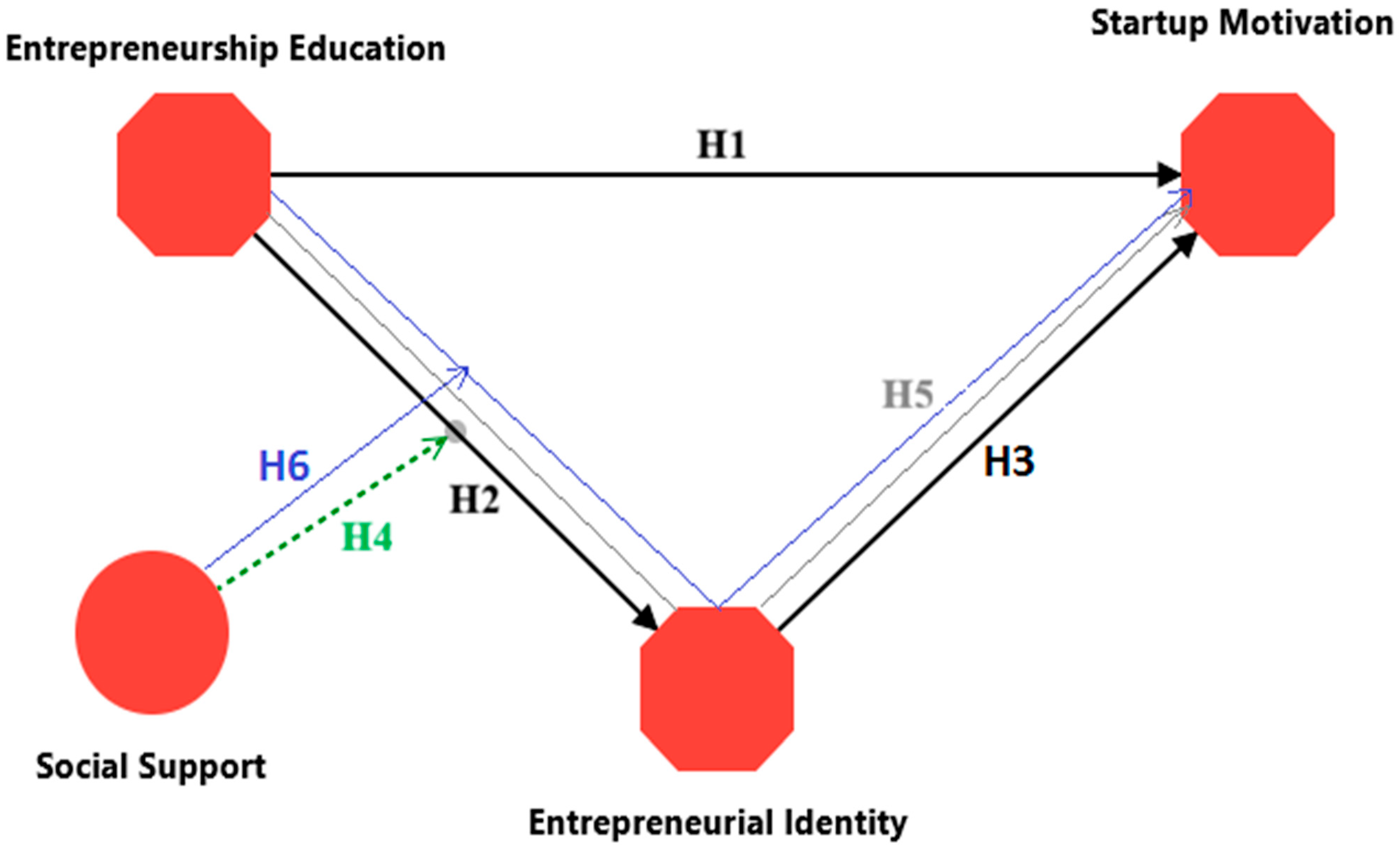
H1. Entrepreneurship Education (EE) is positively associated with Startup Motivation (SM).
2.3. Entrepreneurship Education (EE) and Entrepreneurial Identity (EI)
Whereas the evaluation of entrepreneurship education has traditionally focused on outcomes such as entrepreneurial intention, self-efficacy, and entrepreneurial attitudes, more recent attention has been paid to the role of such education in the process of forming an EI [
4]. EI is defined as that dimension of a person’s self-concept and future self-perceptions that comprises his or her identification with an entrepreneurial role [
8]. EI has emerged as an important construct within entrepreneurship research because it influences entrepreneurial attitudes, persistence, venture creation behaviour, and entrepreneurial outcomes. A recent systematic review by [
18] concluded that EI represents a critical mechanism through which individuals translate entrepreneurial aspirations into entrepreneurial behaviour.
Recent entrepreneurship education research increasingly recognises EI as a critical mechanism linking educational experiences to entrepreneurial outcomes. Ref. [
19] describe EI as the missing link in EE, arguing that educational experiences become more influential when students begin to see entrepreneurship as part of who they are. Similarly, ref. [
20] demonstrate that EI is shaped through both educational experiences and social identity influences, highlighting the importance of contextual and relational factors in identity construction.
Identity-based views suggest that people are more likely to behave entrepreneurially if they have internalised the idea of themselves as entrepreneurs rather than viewing it simply as an alternative career possibility [
9].
The formation of an EI is a developmental, socially constructed process. Therefore, EI does not automatically emerge from acquiring knowledge about entrepreneurship; it is developed through repeated exposure to entrepreneurial experiences, interactions with entrepreneurial role models, engagement in entrepreneurial activities, and participation in entrepreneurial communities [
4]. Through these experiences, students gradually come to view an entrepreneur’s values, behaviours, and aspirations as personally relevant and compatible with their future selves.
Identity formation is not solely an individual cognitive process but also a socially constructed phenomenon. Ref. [
21] argue that EE encourages identity work by exposing students to entrepreneurial narratives and role expectations. More recently, Ref. [
22] suggest that EI develops through different combinations of educational experiences, contextual influences, and individual characteristics rather than through a single pathway. These findings reinforce the view that EI emerges through ongoing interactions between individuals, educational experiences, and broader social contexts, highlighting the importance of considering supportive environments when examining EI formation.
Universities are seen as significant contexts in the formation of EI due to the opportunities they offer for experiential learning, networking, mentoring, and interaction with entrepreneurial ecosystems. As [
23] put it, not only should entrepreneurship education be perceived as a knowledge transmission mechanism, but it should also be understood as a socialised learning process through which students build their EIs. For example, business simulations, startup projects, incubator participation, mentorship programs, and interactions with practising entrepreneurs may help students internalise entrepreneurial roles and strengthen their self-definition as entrepreneurs.
Recent competence-based perspectives further emphasise that EE should be viewed as a developmental process through which students acquire entrepreneurial capabilities, mindsets, and capital, rather than merely entrepreneurial intentions [
1]. This perspective reinforces the importance of examining identity formation as an intermediate mechanism linking EE to entrepreneurial outcomes.
It may be of special importance to the female students. It has been claimed that women have fewer entrepreneurial role models and are more uncertain about entrepreneurial career paths than men [
24]. This will help provide exposure to successful entrepreneurs, give opportunities for entrepreneurial experimentation, and create environments that legitimise entrepreneurial aspirations. Therefore, educational experiences may play an important role in strengthening EI among female university students.
Empirical studies provide mounting evidence of a relationship between EE and the development of an EI. Ref. [
4] showed that EE helps construct an EI by stimulating a reinterpretation of skills and future career possibilities in entrepreneurial terms. Recent research has also suggested that experiential and socially embedded entrepreneurship education environments are particularly effective in facilitating identity development because they allow students to actively enact entrepreneurial roles rather than simply learn about the entrepreneurship conceptually [
4,
5].
In line with Identity Theory, it is assumed that EE will boost EI by increasing students’ exposure to entrepreneurial experiences and by internalising the roles and values of entrepreneurship.
H2. Entrepreneurship Education (EE) is positively associated with Entrepreneurial Identity (EI).
2.4. Entrepreneurial Identity (EI) and Startup Motivation (SM)
The motivational role of EI has been gaining importance as a key driver of entrepreneurial behaviour. According to Identity Theory, people are motivated to act in ways that align with the identities they consider important and central to their self-concept [
9]. Therefore, individuals who consider themselves entrepreneurs at the core of their self-concept will likely engage in entrepreneurial activities and persist in pursuing entrepreneurial objectives.
EI is thus argued to go beyond entrepreneurial knowledge or skills, shaping how people recognise opportunities, assess risks, and set goals for the future. Individuals with a strong EI are more likely to find working as an entrepreneur personally fulfilling and in line with what they want to achieve in the future [
8]. Therefore, EI serves as a source of intrinsic motivation to sustain effort, resilience, and continued involvement in the face of uncertainty and potential failure.
Prior studies indicate that EI enhances an entrepreneur’s commitment by instilling a sense of purpose and personal relevance towards entrepreneurial activities. For example, Ref. [
14] argue that EI fosters sustained passion and motivation in entrepreneurship because individuals become psychologically and emotionally attached to entrepreneurial goals that closely define them. Ref. [
25] also maintain that EI affects entrepreneurial persistence by shaping commitment to entrepreneurial roles and aspirations.
The relationship between EI and motivation to start a business may be most critical in the initial phase of becoming an entrepreneur. University students are often unsure about their careers and may have knowledge about entrepreneurship without a strong commitment to act entrepreneurially. In such cases, EI can work as a motivation connector between entrepreneurial learning and entrepreneurial action. If students perceive entrepreneurship as a significant part of their future selves, they will likely be more motivated to start a business because entrepreneurial activities will be personally meaningful rather than just attractive career options.
This view is particularly applicable to female students. EI might help women overcome social and contextual barriers by enhancing their confidence, legitimacy, and commitment to an entrepreneurial career. Once entrepreneurship is integrated into students’ self-concept, they may pursue such opportunities with greater willingness, even in the presence of external challenges or uncertainty.
Empirical evidence has been mounting to support the positive relationship between EI and entrepreneurial outcomes. For example, behaviours associated with EI include entrepreneurial passion, entrepreneurial persistence, entrepreneurial commitment, and venture creation behaviours [
8,
14]. Based on Identity Theory, the study hypothesises that EI will play a significant role in motivating students to pursue entrepreneurial opportunities and in increasing their willingness to engage in venture creation activities.
Thus, the following hypothesis is proposed:
H3. Entrepreneurial Identity (EI) is positively associated with Startup Motivation (SM).
2.5. Social Support (SS) as a Boundary Condition
While EE may provide knowledge, skills, and entrepreneurial experiences, the extent to which students internalise these experiences as part of their self-concept may depend on the social environment in which they are situated. Social Support Theory suggests that individuals’ aspirations, attitudes, and behavioural choices are influenced by the support they receive in three forms: emotional, informational, and instrumental support from significant others and the social network [
10].
Social support (SS) has been defined as a multidimensional construct comprising emotional, informational, instrumental, and esteem support. Emotional support is encouragement, empathy, and psychological reassurance. Informational support is advice, guidance, and knowledge sharing. Instrumental support is tangible assistance and resources. Esteem support builds confidence and self-belief [
10]. Recent meta-analytic evidence further confirms that social support plays a significant role in shaping entrepreneurial intentions and entrepreneurial behaviour by providing emotional encouragement, informational resources, and confidence-enhancing mechanisms [
26]. All these supports can reduce uncertainty, strengthening the confidence individuals need to pursue challenging goals, such as an entrepreneurial career.
In the entrepreneurship literature, SS has been found to be positively related to entrepreneurial attitudes, entrepreneurial intentions, entrepreneurial persistence, and venture creation outcomes [
16]. SS is especially important in the early stages of entrepreneurship as most aspiring entrepreneurs experience a high degree of uncertainty, ambiguity, and perceived risk. Therefore, a supportive social environment helps raise levels of confidence and legitimizes the entrepreneurial aspiration.
Recent evidence further highlights the importance of social and relational resources in entrepreneurial development. Ref. [
27] found that EE and social capital jointly influence entrepreneurial behaviour through psychological mechanisms, suggesting that supportive social environments enhance the effectiveness of EE. These findings reinforce the argument that SS functions as an important contextual condition influencing EI formation.
In terms of female students, it could be SS that matters most. Prior studies have argued that women are more likely to consider social validation and relational support when evaluating entrepreneurial career opportunities [
24]. Family encouragement, peer acceptance, mentoring relationships, and institutional support may help reduce perceived barriers and strengthen entrepreneurial confidence. In this regard, a lack of SS may weaken students’ willingness to pursue entrepreneurial aspirations, even when experiences in EE are positive. To reduce perceived barriers and build confidence toward entrepreneurship, this can include family encouragement, peer acceptance, mentoring relationships, and institutional support.
Research from the Middle East indicates that women entrepreneurs often face unique social, cultural, and institutional challenges that influence entrepreneurial participation and venture creation. For example, Ref. [
28] found that women entrepreneurs in Oman encountered barriers related to social expectations, access to resources, and business support networks despite strong entrepreneurial aspirations. More recently, Ref. [
29] demonstrated that social support plays a critical role in helping entrepreneurs in emerging economies cope with fear of failure, uncertainty, and perceived entrepreneurial risks. These findings suggest that supportive social environments may be particularly important for female students considering entrepreneurial careers within the broader Middle Eastern context.
SS should not be seen only as a family or external social networks. Universities can have mentoring programs, incubators, networking opportunities, entrepreneurship clubs, peer-learning communities, business competitions, and interactions with successful entrepreneurs. All of these will create opportunities for students to be encouraged and guided, and for the role of an entrepreneur to be validated as they go through identity development processes [
23].
Although EE, EI, and SS have each received considerable scholarly attention, limited research has examined how these constructs interact simultaneously within a moderated mediation framework. In particular, little is known about whether social support strengthens the identity-development process through which EE influences SM among female university students.
This study is based on Identity Theory and Social Support Theory, and it is assumed that the relationship between the EI and EE will be stronger in the presence of social support, therefore making the stated hypothesis tenable. It is assumed in this study that while EE may expose students to entrepreneurial ideas and experiences, supportive social environments increase the likelihood that these experiences will be interpreted as personally attainable, socially legitimate, and compatible with students’ future aspirations. Therefore, the influence of EE on the development of EI is expected to be stronger among students who perceive higher levels of SS.
Accordingly, the following hypothesis is proposed:
H4. Social Support (SS) positively moderates the relationship between Entrepreneurship Education (EE) and Entrepreneurial Identity (EI), such that the relationship is stronger when Social Support is high.
2.6. Conceptual Framework and Hypotheses Development
Identity Theory posits that people are driven to perform actions that align with their dominant role identities. In EE, this process may occur as students are exposed to entrepreneurial experiences, role models, venture-creation activities, and narratives of entrepreneurship, which may gradually reshape their self-concepts and career possibilities. As a result of the above, entrepreneurial activities become more compatible with and supportive of one’s future career aspirations as the EI becomes salient.
Thus, EE can impact SM both directly and indirectly through EI. Educational experiences may help internalise entrepreneurial values and roles, which in turn will enhance motivational commitment to venture creation. Therefore, EI is a significant psychological mechanism through which EE leads to entrepreneurial outcomes.
Recent studies have placed increasing emphasis on identity-based mechanisms in explaining entrepreneurial behaviour. EI has been linked to entrepreneurial passion, entrepreneurial persistence, entrepreneurial commitment, and intentions to create a venture [
8,
14]. These findings suggest that students who develop stronger EI are more likely to exhibit higher levels of startup motivation, as their entrepreneurial activities align with their self-concept and future aspirations.
In this study, EI is proposed to mediate the relationship between EE and SM.
H5. Entrepreneurial Identity (EI) mediates the relationship between Entrepreneurship Education (EE) and Startup Motivation (SM).
The strength of this indirect relationship may vary depending on the level of SS perceived by students. Social Support Theory posits that supportive social environments increase confidence, reduce uncertainty, and legitimise entrepreneurial aspirations [
10]. This means that if students perceive high levels of support from family members, peers, mentors, and educational institutions, they are more likely to internalise entrepreneurial experiences and form stronger EIs. Hence, the indirect effect of EE on SM via EI may be stronger under conditions of high SS.
Conversely, under low social support, translating educational experiences into the formation of an EI is less likely, thereby weakening the indirect effect of EE on startup motivation. SS is, therefore, a factor that not only directly influences context but also shapes the strength of the identity-formation process through which EE influences startup motivation.
Drawing upon the integration of Identity Theory and Social Support Theory, this study proposes a moderated mediation model in which SS strengthens the indirect effect of EE on SM through EI.
H6. Social Support (SS) positively moderates the indirect relationship between Entrepreneurship Education (EE) and Startup Motivation (SM) via Entrepreneurial Identity (EI), such that the indirect effect is stronger when SS is high.
Figure 1 presents the conceptual framework of the study.
5. Discussion
5.1. Entrepreneurship Education and Startup Motivation
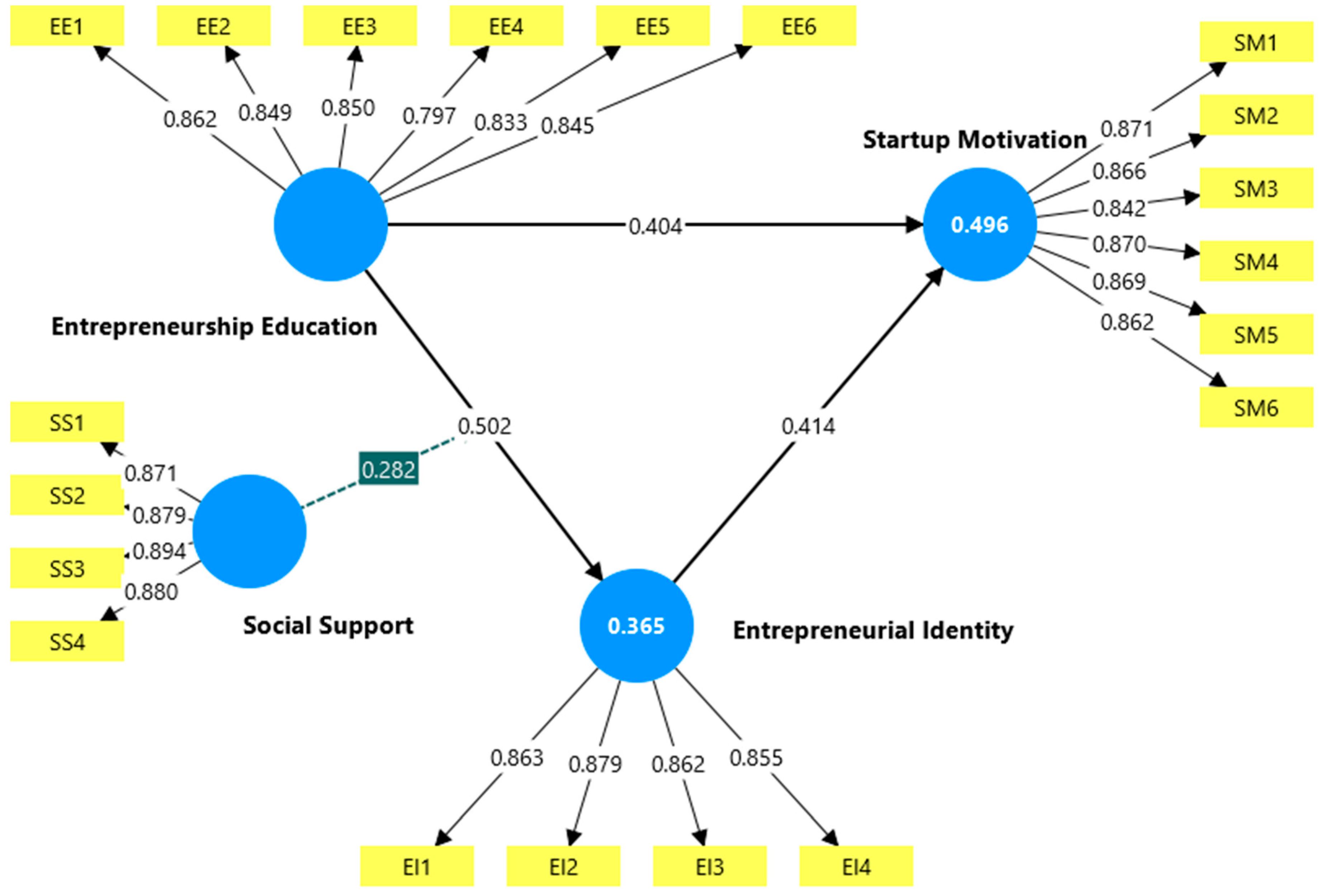
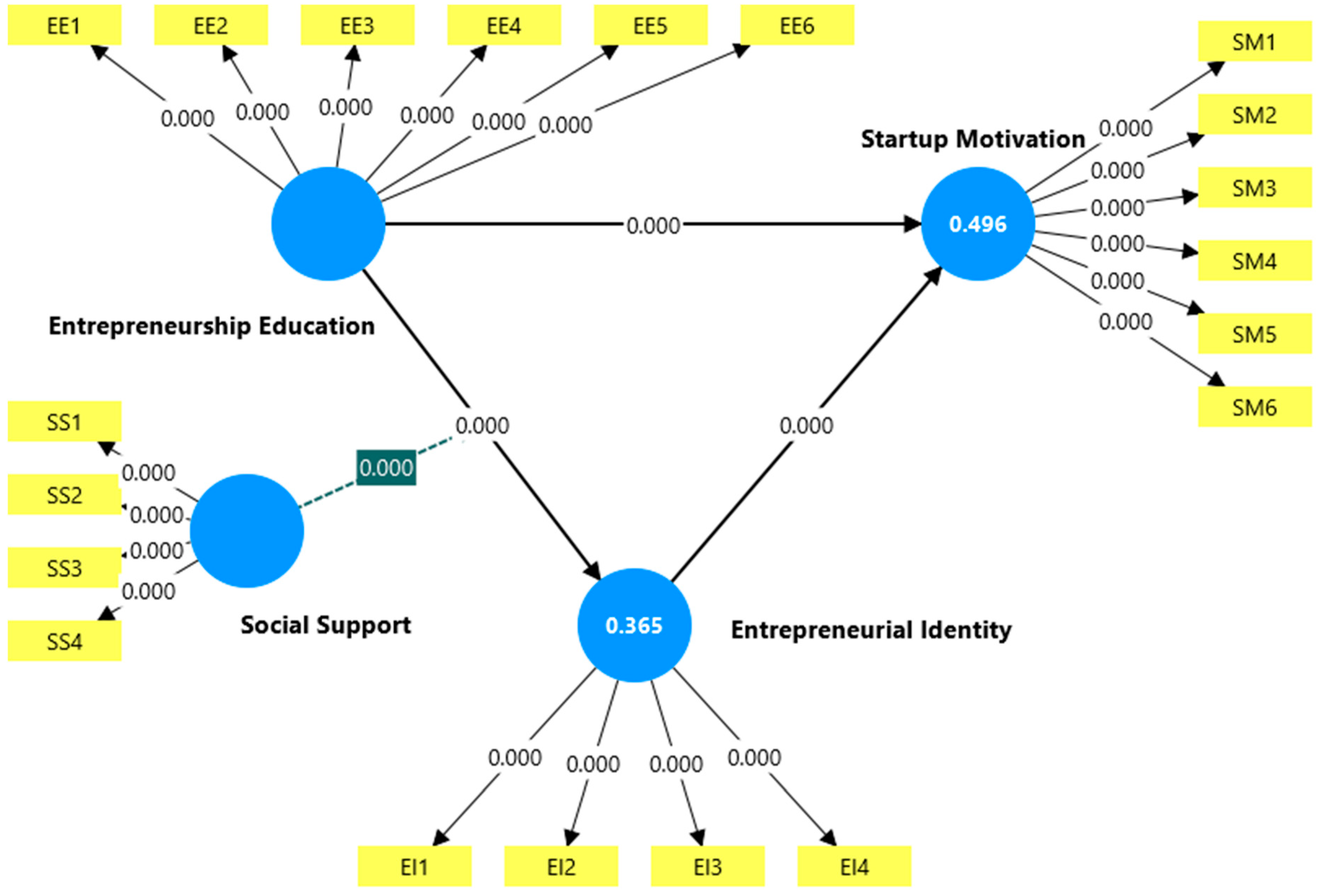
The results show a very significant positive effect of EE on SM among female university students (β = 0.404, p < 0.001). It shows that the effects of EE extend beyond knowledge and are directly related to a student’s willingness to engage in entrepreneurial activities. The results also show that EE increases the opportunity awareness and perceptual feasibility of a venture while reducing the perceived risk and uncertainty associated with a career in entrepreneurship. The finding thus suggests that EE programs may help motivate the students to perceive entrepreneurship as a realistic and desirable career pathway.
This result is consistent with other studies arguing that EE increases entrepreneurial attitudes, confidence, and engagement [
2,
3,
11,
12]. It should be noted that the current study goes a step further from previous research by establishing that SM is one of the aspects influenced by EE among female university students in Saudi Arabia. This finding is important since Vision 2030 has highlighted entrepreneurship as a means of diversifying the economy and increasing women’s participation in it.
5.2. Entrepreneurial Identity as a Psychological Mechanism
The results show a strong and significant relationship between EE and EI (β = 0.502, p < 0.001), and that EI positively affects SM (β = 0.414, p < 0.001). The effect of EE on EI is the strongest direct relationship in the model.
The results support Identity Theory, showing that EE builds not just students’ knowledge but also their self-perception. Educational experiences seem to help students inculcate entrepreneurial values and aspirations, as well as the behaviours associated with them, within their self-concept. Students would perceive entrepreneurship as a meaningful and attainable future role through exposure to entrepreneurial role models, experiential learning activities, stories of successful entrepreneurs, and opportunities to create their own ventures. The findings are also consistent with recent evidence highlighting entrepreneurial identity as a central predictor of entrepreneurial outcomes across diverse entrepreneurial contexts [
18].
This positive relationship between EI and SM also suggests that entrepreneurial behaviour is driven more by identity-related processes than by rational assessments of career opportunity. Students who view entrepreneurship as a significant part of their self-concept are more motivated to pursue entrepreneurial opportunities and stay committed to their entrepreneurial aspirations. This result further supports the arguments put forth by [
8,
14] regarding the motivational importance of EI in the shaping of entrepreneurial behaviour.
5.3. The Moderating Role of Social Support
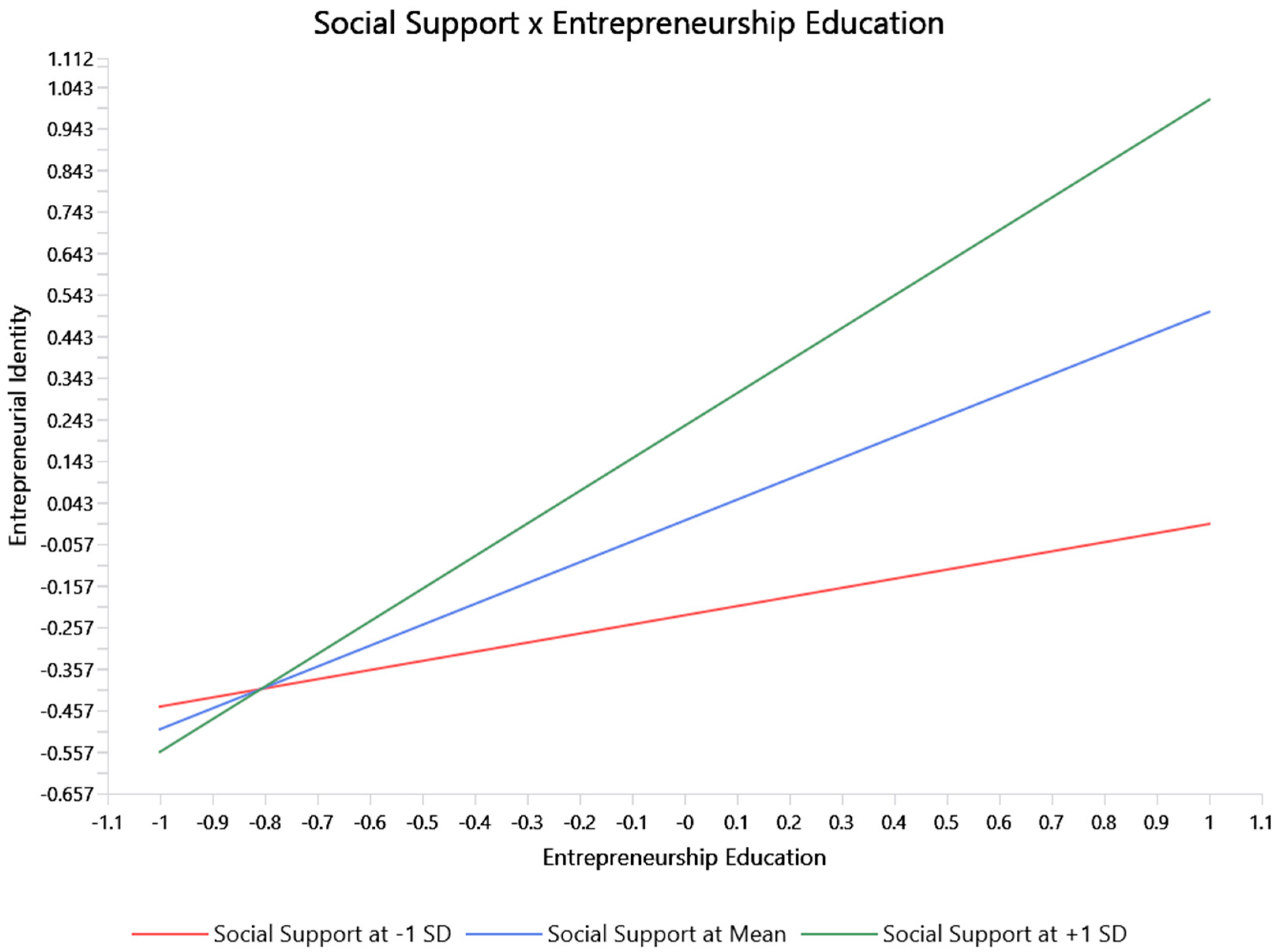
The results showed that social support significantly enhanced the relationship between EE and EI (β = 0.282, p < 0.001). This result showcases the broader social environment as a key factor in entrepreneurial development.
Whereas EE gives both knowledge and entrepreneurial experiences, it seems that students internalise these experiences more when such support is available from family, peers, mentors, and the educational institution. Social support may enhance confidence, reduce uncertainty, and legitimise entrepreneurial aspirations. Thus, the efficacy of entrepreneurship education in shaping EI is a function of the level of encouragement and validation that students perceive from their social environment.
The simple slope analysis once again adds to and supports this claim. Under high levels of social support, the indirect effect of EE on startup motivation through EI was much more pronounced (β = 0.325) as compared to low levels of social support (β = 0.091). These results prove that the development of an entrepreneurial identity is not just an educational process but also socially embedded, requiring supportive interpersonal and institutional environments. It is therefore worth noting that the formation of an EI cannot be considered solely an educational process. Rather, it is socially embedded and depends on supportive interpersonal and institutional environments.
5.4. Mediating and Moderated Mediation Effects
The results also show that EI mediates the relationship between EE and SM (β = 0.208, p < 0.001), thereby providing full support for H2. This means that the effect of EE on SM is realised not only directly but also indirectly through the development of an EI.
The partial mediation finding is theoretically important because it suggests that there are multiple pathways through which the effects of EE can be realised. On one hand, educational experiences directly motivate students by increasing their entrepreneurial awareness and preparedness. On the other hand, startup motivation is enhanced indirectly by entrepreneurship education through the fostering of entrepreneurial identity. These results support the proposition that EI is an important psychological mechanism through which educational experiences influence the attainment of entrepreneurial outcomes.
Also, the moderated mediation analysis showed a significant conditional indirect effect (β = 0.117, p < 0.001). This finding indicates that the mediating effect of entrepreneurial identity is stronger with high levels of perceived social support. In other words, for educational experiences to inculcate an EI and the desire to be an entrepreneur, they should be accompanied by supportive social environments that encourage such pursuits.
Altogether, the findings support the integration of Identity Theory and Social Support Theory by showing that entrepreneurial development comes from the interaction between educational experiences, identity formation processes, and supportive social contexts. These findings are consistent with recent entrepreneurship research emphasising that entrepreneurial outcomes emerge through the interaction of educational experiences, psychological processes, and contextual resources. Recent studies have shown that EE is most effective when supported by identity development mechanisms and favourable social environments that reinforce entrepreneurial aspirations and behaviour [
18,
27,
29].
Beyond the university setting, the findings contribute to a broader understanding of entrepreneurial ecosystem development. They suggest that EE alone may not be sufficient to stimulate SM unless supported by social structures that provide encouragement, mentoring, role models, and validation. This perspective aligns with contemporary views that entrepreneurship is shaped by both individual agency and environmental support systems.
5.5. Theoretical Contributions
This study makes several important contributions to entrepreneurship education and entrepreneurial development literature.
First, the study contributes to EE research by deepening the understanding of the mechanisms by which EE influences entrepreneurial outcomes. While previous research has predominantly focused on entrepreneurial intention, entrepreneurial self-efficacy, and entrepreneurial attitudes as key outcomes of EE [
2,
3,
22], the present study demonstrates that EI represents an important psychological mechanism linking educational experiences to startup motivation. This study, therefore, demonstrates that EE has both direct and indirect effects on startup motivation through entrepreneurial identity, thereby promoting a more process-oriented understanding of entrepreneurial development.
Second, the study also contributes to Identity Theory by demonstrating that EI can serve as a motivational resource in EE. Although there is growing scholarly interest in entrepreneurial identity [
20,
22,
45], relatively few studies have explored its role as a mediator linking educational experiences to startup motivation, particularly among university students. The findings imply that the best form of entrepreneurship education is one that instils in students a sense of belonging to entrepreneurial values and aspirations. This finding underscores the significance of identity formation processes in understanding entrepreneurial behaviour.
Third, it contributes to Social Support Theory by showing that entrepreneurial development occurs within broader social contexts, not just through educational experiences. The significant moderating effect of social support indicates that the efficacy of EE increases with the encouragement, guidance, and validation that students receive from their family members, peers, mentors, and educational institutions. This finding enhances the current understanding of how social environments influence the formation of an EI and entrepreneurial motivation.
Fourth, the study contributes to entrepreneurship research, both methodologically and contextually, by examining a moderated mediation model among female university students in Saudi Arabia. Most of the existing entrepreneurship education literature was conducted in Western contexts. Evidence from emerging economies is relatively scarce [
11,
12] Focusing on female students in Saudi Arabia sheds new light on entrepreneurial development in a fast-changing socio-economic environment, marked by growing support for women’s entrepreneurship under Vision 2030. The findings thus add to the increasing body of entrepreneurship research from non-Western contexts.
The integration of Identity Theory and Social Support Theory sharpens the focus of research on entrepreneurial development and broadens the scope of possible explanations. Educational experiences, processes of identity formation, and the availability of supportive social environments were all found to be determinants of entrepreneurial motivation among the students. The integrated perspective provides a stronger basis for explaining the role of entrepreneurship education in fostering entrepreneurial outcomes among university students.
5.6. Practical Implications
The results have several practical implications for universities and policymakers who are interested in promoting entrepreneurship among female students. First, Universities should move beyond traditional classroom-based EE by providing experiential learning opportunities, venture-creation projects, mentoring initiatives, and interactions with entrepreneurial role models that facilitate EI formation. The positive relationship between EE and SM indicates that universities should invest in EE programs that provide both theoretical knowledge and practical experience through business simulations, startup projects, and interactions with entrepreneurs. The findings are also consistent with recent research in higher education suggesting that entrepreneurial capital is created through the interaction among educational experiences, identity development, and supportive entrepreneurial ecosystems [
1].
Second, Entrepreneurship centres and university incubators should integrate identity-development activities, peer-support networks, and mentoring programs that reinforce students’ entrepreneurial self-concepts and commitment toward venture creation.
The significant role of EI highlights the need to help students perceive entrepreneurship as a viable and meaningful career. Universities can support this process through mentorship programs, entrepreneurship centres, networking events, and exposure to entrepreneurial role models—especially successful women entrepreneurs.
Third, Policymakers responsible for entrepreneurship development under Saudi Vision 2030 should complement investments in EE with initiatives that strengthen SS structures, including mentorship programs, networking platforms, and women-focused entrepreneurial communities. The moderating role of social support suggests that the effectiveness of EE is contingent on the encouragement and guidance students receive from family members, peers, mentors, and educational institutions. Thus, to develop a supportive entrepreneurial ecosystem, universities should engage in entrepreneurship clubs, mentoring schemes, incubator programs, and peer-learning communities.
This study has direct implications for policymakers in Saudi Arabia. Programs targeting female entrepreneurship should place greater emphasis on confidence building, entrepreneurial identity development, and social support mechanisms rather than focusing exclusively on technical business skills. The promotion of entrepreneurship under Vision 2030 should not be limited to education; it should also include programs that strengthen entrepreneurial support systems and expand opportunities for women to engage with entrepreneurial communities. Such programs would likely have a multiplier effect on EE’s efforts to encourage future entrepreneurial activity.
6. Conclusions
This study examined the relationship between entrepreneurship education and startup motivation among female university students in Saudi Arabia. The findings demonstrate that entrepreneurship education influences startup motivation both directly and indirectly through entrepreneurial identity. In addition, social support strengthens the relationship between entrepreneurship education and entrepreneurial identity, resulting in a significant conditional indirect effect.
The study contributes to entrepreneurship education research by demonstrating that entrepreneurial identity serves as an important psychological mechanism linking educational experiences to entrepreneurial motivation. It further highlights the importance of supportive social environments in strengthening entrepreneurial development processes among female students.
The findings suggest that universities, policymakers, and entrepreneurship support organizations should complement entrepreneurship education initiatives with mentoring opportunities, networking activities, and social support mechanisms that facilitate entrepreneurial identity development.
Ultimately, entrepreneurship education appears most effective when it not only provides knowledge and skills but also helps students develop a stronger entrepreneurial self-concept within a supportive social environment.