
Article

Unemployment Factors Among Venezuelan Immigrants in Colombia
by
Miguel Ángel Morffe Peraza
1,
Neida Albornoz-Arias
2,*,
María-Antonia Cuberos
1,
Carolina Ramírez-Martínez
3 and
José Alberto Peña Echezuría
4
1
Departamento de Ciencias Sociales y Humanas, Centro de Investigación en Estudios Fronterizos, Universidad Simón Bolívar, Cúcuta 540006, Colombia
2
Facultad de Administración y Negocios, Centro de Investigación e Innovación Social José Consuegra Higgins, Universidad Simón Bolívar, Cúcuta 54006, Colombia
3
Facultad de Ciencias Jurídicas y Sociales, Centro de Investigación en Estudios Fronterizos, Universidad Simón Bolívar, Cúcuta 540006, Colombia
4
Facultad de Educación, Distribuidor Metropolitano, Universidad Metropolitana, Caracas 1073, Miranda, Venezuela
*
Author to whom correspondence should be addressed.
Societies 2026, 16(1), 15; https://doi.org/10.3390/soc16010015 (registering DOI)
Submission received: 28 February 2025 / Revised: 17 November 2025 / Accepted: 13 December 2025 / Published: 1 January 2026

Abstract

Since 2015, nearly 3 million Venezuelans have fled to Columbia, forced to leave their homeland by a multidimensional humanitarian crisis. Entering the Columbian labour market has become one of the key challenges facing these migrants. In the fragile socio-economic context of cities bordering Venezuela, finding employment is especially difficult. This study aimed to clarify the factors related to unemployment among Venezuelan immigrants in the border municipalities of Villa del Rosario, Los Patios and Cúcuta (Colombia). The target population included 122 Venezuelan migrants who reported being unemployed. The primary data was collected from July to October 2022. Using multiple correspondence analysis and positioning maps, we identified three different profiles that emerge among these unemployed immigrants. Profile 1 is characterised as young people with an education level ranging from primary school to high school and an occupational profile of mainly service workers and salespeople in commerce and markets. Profile 2, of greatest interest in this study, is characterised as mostly young women who received university education but have not managed to enter the labour market. Profile 3 is largely men aged 48 to 61 years and older, with medium technical and higher university-level education and an occupational profile of mostly technical and professional medium level. We conclude with several recommendations to promote formal labour integration among Venezuelan migrants.

1. Introduction

Global migration is motivated by goals, desires and dreams which go hand in hand with uncertainty and suspicion. Migration involves movement to a place, which is often unfamiliar, due to violence and climate change-related adversities, as well as economic hardship in the context of rising inequality [1]. The Global Estimates Report of the International Labour Organization (ILO) records the existence of approximately 272 million migrants across the world, of which almost 169 million (65% of the total) are labour migrants [2]. Latin America and the Caribbean have contributed significantly to this migratory flow, as globalisation and worsening of economic and political crises have fuelled a mass exodus across the region [3]. In other words, features of both economic and forced migrations can be seen within the subregion [4].
Mass migration from Venezuela has been especially dramatic. Since 2015, more than 7 million Venezuelans have been forced to leave their home country as a means of survival [5]. This situation is due to a profound multidimensional crisis that has intensified in the last decade, marked by a dizzying deterioration of basic human rights, political repression and the closure of civic spaces. Namely, Venezuelan migration has its origin in internal causes, among which the deep economic crisis, social and political violence, and the collapse of the institutions in charge of ensuring institutional order and the protection of human rights stand out [6]. Migrants have fled Venezuela to safeguard fundamental rights such as life, personal integrity, and access to basic needs including health care and food [5].
This migration is widely considered a refugee crisis. It should be noted that the term refugee was born as a response to the massive displacements after the Second World War and according to the 1951 Geneva Convention—Status of Refugees and refers to a person who, outside their country, cannot return due to a well-founded fear of persecution for reasons of race, religion, nationality, or for being a member of a particular social group or public opinion [7]. Subsequently, the 1957 Protocol on Refugees established that this term has universal applicability anywhere and at any time [8]. Subsequently, the term was extended to Latin America in response to armed conflicts, dictatorships and violence, and the 1984 Cartagena Declaration on Refugees included persons fleeing because their life, safety or freedom is threatened by generalised violence, foreign aggression, internal conflicts, massive violations of human rights and other circumstances disturbing public order and applies to entire groups [9].
In this context, the United Nations High Commissioner for Refugees (UNHCR) created the category of Venezuelans displaced abroad (VDE), which encompasses Venezuelan persons in need of protection according to the criteria set out in the Cartagena Declaration [10].
Recently, Venezuelan migration has fuelled academic interest because of its magnitude and impact on receiving countries. Colombia, Venezuela’s neighbour, has been especially impacted. By 30 November 2023, 2,875,743 Venezuelan migrants were residing in Colombia [11], an exceptional increase from the 698,109 Venezuelans counted in 2016. During this period, Columbia, because of its proximity and historical ties, became home to more Venezuelan migrants than any other Latin American country [12]. Colombia, despite having incorporated the expanded meaning of the Cartagena Declaration into its national legislation [13], has not granted or considered refugee status in the case of Venezuelans, basically because Venezuela is not a country at war, nor do most Venezuelans fear persecution on grounds of race, religion, nationality or membership of a social group. However, Colombia has created a series of ad hoc mechanisms to guarantee humanitarian reception for Venezuelans in its territory.
Research on international migration focuses largely on migratory processes and cultural adaptation in receiving countries [14], as well as migrants’ health, well-being and social and economic integration [15]. Economic incorporation is a particularly consequential form of integration for migrants. Economic integration is necessary not only for gaining access to basic needs from housing to food, but it is also crucial for social inclusion, spatial integration, and a sense of belonging. At the same time, migration has also increased labour productivity and mitigated labour shortages in receiving countries [16,17].
Despite numerous government policies, Venezuelan migrants in Columbia have faced significant obstacles to economic integration. Venezuelan migrant workers, struggling to meet their needs, have been willing to accept payments and conditions that Colombian citizens with similar skills have declined [18]. Even so, these migrants have faced enormous challenges in obtaining formal sector employment. This paper aims to clarify the barriers to employment that Venezuelan migrants face in Columbia’s border cities. More specifically, our key research question is: What factors are related to unemployment among Venezuelan immigrants in the border municipalities of Villa del Rosario, Los Patios and Cúcuta, Colombia? How do unemployed migrants account for the labour market exclusion they experience in Columbia? What factors, from their perspective, pose the greatest barriers to employment?
Several studies have been conducted on the labour profiles of Venezuelan migrants in Colombia, but few have focused on border areas. From a socio-economic perspective, the Colombian Venezuelan border represents a uniquely complex context. Border departments such as Norte de Santander (Cúcuta) and La Guajira (Riohacha) are main entry points for Venezuelan migrants due to their proximity and cultural ties with Venezuela. Many settle there initially or cross daily for work or services (pendular mobility). These areas also function as transit routes to other countries and supply points [19].
This study is significant because it clarifies the labour profiles of migrants who have settled in these territories, whose reality is dissimilar to those living in regions of Colombia that offer greater employment opportunities. In the metropolitan area of Cúcuta, for example, migrants enter a place where the population-wide poverty is 49.5% (Gini Index: 0.464). In addition, 31.5% of households report unsatisfied basic needs (UBN). The informality rate reaches 64%, which is similar across each of the municipalities that make up the MCA [20]. Our analysis provides greater insight into the difficulties faced by migrants in entering the labour market in this border area. More broadly, we contribute to the growing body of research on South-to-South migratory flows and experiences.

2. Background

2.1. Immigrant Economic Incorporation: Theoretical and Empirical Scholarship in Europe and U.S.

Migration and immigrant incorporation have been the focus of an enormous body of scholarship that spans numerous disciplines. This work has generated multiple theoretical perspectives and a rich collection of empirical findings that underscore the complex realities and dynamics that define migration experiences. Neoclassical theories are among those perspectives that may provide insight to the labour market experiences facing Venezuelan migrants in Columbia. Neo-classical economists along with others [21], highlight the economic motivations and rationality driving many migrants and the role this plays in their approach to navigating labour markets in host countries. More specifically, the neoclassical economic approach views migration as individual decisions aimed at maximising personal income, focusing on differences in wages, working conditions and migration costs between countries [21]. Given their economic rationality coupled with the dire conditions in home countries that push migrants to leave, scholars emphasise that migrants may have an advantage over native born workers in the labour market. They may be willing to accept low-paid positions with deplorable conditions—and employers may capitalise on this vulnerability. Several studies [22] find that employers have often hired migrants over locals to capitalise on a “split labour market”, defined as a “difference in the price of labour holding constant efficiency and productivity”. In the early 20th-century U.S., for example, employers in some sectors favoured African American migrants over whites given the lower price of their labour, and as a result, the black unemployment rates were lower than white unemployment rates. On the other hand, some scholars highlight labour market rigidities and other structural factors that benefit locals over foreigners [23].
Dual Labour Market theories have identified another set of structural factors that migrants must navigate in pursuit of fair employment, often to their disadvantage. Dual labour theory highlights the division of the labour market into two sectors, one stable and the other fragile [24]. In the former, which is more typical in developed countries, the socio-labour contexts are favourable. In the latter, which is more common in developing countries, instability and limited employment opportunities create unfavourable working conditions, and the labour force subject to these conditions is largely women, youth and immigrants [25]. This approach has evolved to become a more sophisticated theory of segmented labour markets.
This theory argues that there is a wider range of jobs than the traditional segmentation between primary and secondary employment, with a persistent discrepancy in conditions between native and migrant workers. This effect is a result of migrants focusing on specific jobs with more flexible employment scenarios than native workers [26,27].
This means that migrants take jobs with less favourable working conditions than native workers, even if they have the same or more training. This disparity is the result of migrants, out of necessity, taking jobs with more flexible employment scenarios. As an example, a Venezuelan engineer who emigrates and fails to validate his degree is forced to work as a taxi driver, a street vendor (informal labour market) or in formal employment not in line with his engineering status. This situation increases underemployment and unemployment among the migrant population, as their qualifications are not valued.
A dual or segmented labour market is characterised by a large difference in the price of labour for the same occupation between at least two groups of workers. This price difference is not a response to race or ethnicity, but results from differences in workers’ resources and motives, which are often correlated with ethnicity where migrant groups are often the ones that introduce or exacerbate this division, as their initial labour price may be considerably lower [28]. By hiring cheaper labour, distrust and antagonism between groups is fostered, weakening their capacity for collective organisation and maintaining control over wages and working conditions [22]. In this case, racial antagonism emerges from economic and political power dynamics [29].
Neo-classical economic theories as well as other perspectives agree that the economic incorporation of migrants in the context of the dual labour market is, in part, shaped by their human capital. In general, the greater the amount of human capital, the better the labour market opportunities [30,31]. This is one of the reasons why professional migration is rarely considered a problem for receiving societies [32]. If migrants have a high education level and meet the legal requirements to work, they can enter the primary labour market [33]. In contrast, when migrant workers have low qualifications and are undocumented, they are prone to take part in the secondary labour market, facing precarious working conditions, or become unemployed [34,35]. For this reason, migration flows made up of workers with low education levels can have a perennial impact owing to the lack of knowledge of many aspects of the receiving countries’ culture and the difficulties they will have in finding employment [36,37].
All immigrants, no matter their human capital, can face underemployment and other barriers to fair employment. Some theories explaining the differences between immigrants and comparable natives focus on the market value of the education and skills obtained in the countries of origin. Migrants’ skills are often undervalued, meaning that their foreign education and experience are considered less valuable than those of locally trained employees. They are also the first to lose their jobs during an economic downturn [38,39]. In addition, migrants may also face disadvantages tied to the lack of specific skills or social networks needed to navigate labour markets in the receiving country. Migrants, for example, may lack language proficiency or knowledge of labour market institutions. Further, spatial segregation, institutional factors and various forms of discrimination may also limit economic opportunities [16,40]. Namely, second-generation migrants working in predominantly ethnic workplaces tend to earn less than those working in conventional settings: This suggests that integration into the wider labour market can be economically advantageous, despite the challenges of discrimination [41].
The role of discrimination has been especially central to the analysis of labour market dynamics that result in exclusion and other disparities among migrants. Discrimination in the labour market manifests itself through two main mechanisms: ethno-stratification and segregation. Ethno-stratification means that the employment status of immigrants depends more on their ethnic origin than on their professional skills, which is also reflected in the wage structure. Labour segregation, meanwhile, concentrates most immigrants in specific sectors such as agriculture, construction, hospitality, retail and domestic service, which tend to operate under poorer conditions and are generally avoided by the local population [42].
Both Becker [43] and Arrow [44] offer complementary perspectives to explain this discrimination. The first approach, known as the Taste Discrimination Theory, was proposed by Becker in 1971 and suggests that discrimination emerges from the personal prejudices of employers, who behave as if they are willing to assume an economic cost, either through lower wages or the loss of a productive employee, in exchange for not hiring individuals from certain social groups. This discrimination is based on irrational perceptions and can have a negative impact on the income of the affected groups [43].
On the other hand, Arrow’s Statistical Discrimination Theory, proposed in 1973, is based on the idea that employers, in the absence of perfect information about individual productivity, use group characteristics (such as nationality or language) as a shortcut to make hiring decisions [44]. According to this precept, an employer might pay lower wages to migrants based on beliefs that they are, on average, less productive even if the worker possesses high skills. This archetype of discrimination is based on imperfect market information and can perpetuate inequity.
Both theoretical approaches are relevant for analysing labour discrimination against Venezuelan migrants at the border. This phenomenon manifests itself as differential and less favourable treatment compared to others in a similar situation. Thus, discrimination can be seen as a process of segregation or exclusion of a given human group [45]. The state must effectively address discrimination against migrants in the labour market to prevent prejudice by employers.
Individual work interactions between migrants and employers, recruitment agents, trainers, clients, supervisors or co-workers responsible for integrating new employees influence segregation. Therefore, instead of referring to labour market discrimination singularly, scholars have emphasised the multiple forms of employment discrimination migrants may encounter, whether in terms of recruitment practices, hiring processes, labour scenarios or specific relationships within the company, among other aspects [46]. Discriminatory practices at each level can result in exclusion from the labour market or, alternately, segregate migrants who secure employment. For example, discrimination based on national or ethnic origin may relegate migrants to jobs in which they face unfavourable conditions, including wage discrimination and discrimination related to union activities [47]. Moreover, labour market discrimination may result in disparities in labour market outcomes not only between natives and immigrants but also between different immigrant groups [48].
Similarly, differences in local labour markets and neighbourhood characteristics can significantly influence the availability of opportunities for well-paid employment in different areas [23]. While several studies have identified positive effects of immigration on income, productivity and employment in receiving countries [49], this is not the case in certain regions with structural weaknesses such as borders, in this case, those of Latin America and the Caribbean. Recently, border studies have ceased to focus solely on the layout, demarcation, and location, and now also focus on the practices of social (re)production of the border, without abandoning the previous aspects [50]. Thus, economic differences and asymmetries between countries turn borders into a resource, as crossing them can generate benefits that are not obtained in the national territory, or at least not to the same extent [51]. In other words, the border is shown as a space with socio-economic precariousness that limits employment opportunities and at the same time constitutes a resource for migrants, where the economic differences between countries offer greater employment opportunities than in their places of origin and allow them to cover their basic needs.

2.2. Unemployment and Informality of Venezuela Migrants in Columbia

Traditionally, migration research has strongly emphasised migration from the Global South to the Global North. However, data indicate that South-South migration constitutes the majority of international crossings [52], which means that most South-South human migration is understudied, due to the dominance of Northern discourse over South–North migration [53]. While there are similarities between migration in the North and the Global South, existing Northern-based theories are often not best suited to understanding the complexities of migration movements in the South [54].
Today’s South-South migration occurs mainly over short distances, within a country or to neighbours, due to lower costs and bilateral agreements. It is often voluntary or forced, in contexts of poverty, and predominantly intra-regional, temporary and cyclical; it includes a high proportion of refugees and displaced persons, often irregular, whose status tends to regularise over time, especially between neighbouring countries [55].
Many migrants in the Global South have irregular or undocumented migration status, which makes them particularly vulnerable to rights violations but they are reluctant to report abuses for fear of detention and deportation [56]. They are subject to exploitative and segmented labour regimes, with low wages, few benefits and high informality [57]. Even with formal jobs, they often do not fully enjoy their labour and employment rights [58].
In this respect, the research on migration and immigrant incorporation, though invaluable, has largely focused on dynamics defining North–South migrant flows and experiences. More specifically, the theories and empirical findings previously reviewed are largely based on studies conducted in the United States and Europe. Scholars have paid much less attention to the dynamics of South-to-South migration [59,60]. Notwithstanding some significant similarities in migrant experiences, theories and research that highlight the disparities in economic development across the North–South divide suggest that migrants may face more insurmountable barriers to economic incorporation across Latin America. Historically, most countries in this region have struggled to grow formal sector employment and most remain heavily dependent on the informal economy to provide jobs and income. The global recession triggered by COVID-19 further limited employment opportunities and the recovery has been uneven. Across Latin America, gross domestic product declined by 7.4 percent in 2020, according to the International Monetary Fund. The restrictions imposed to contain the epidemic led to significant spikes in unemployment and informal employment rates across the region. The International Labour Organization (ILO) estimates that in 2020 approximately 39 million people in Latin America lost their jobs [61].
The Columbian economy was especially hard hit during the pandemic. By the end of 2020, this economy had contracted by 9.0% annually, with sectors such as commerce, construction and mining showing the largest declines [62]. To control the spread of COVID-19, the Columbian government took several actions such as confinement and social distancing. However, these measures also had economic consequences, such as business closures, which resulted in an increase in unemployment and informal employment rates in the country [63]. Since 2022, economic growth has been sluggish after an initially significant surge in GDP in 2021 [64]. In 2022, unemployment remained high at 9.5%, equivalent to 2.3 million people –and opportunities in the formal sector remained limited with informal workers accounting for 58% of the active workforce. Thus, when Venezuelan migrants have arrived at destinations such as Colombia during this period, they have faced a difficult economic landscape, defined by saturated labour markets, high levels of unemployment, and chronic informality. This complexity is intensified in the Colombian-Venezuelan border region, where territorial porosity, weak state presence, smuggling and illegal networks make up an ecosystem that mixes human mobility, subsistence economies and multiple risks.
The dynamics of unemployment among Venezuelan migrants in Columbia have not yet been fully examined. The two most rigorous studies of the labour profile of Venezuelans in Columbia have depended on the Great Integrated Household Survey (GEIH), conducted by the National Administrative Department of Statistics (DANE, for its Spanish acronym). This large household survey uses multiple indicators to track the employment conditions of respondents in addition to the general characteristics of the population (such as sex, age, marital status, and educational level, sources of income and expenses). To capture employment status, the survey gathers information about whether respondents work, what they work in, how much they earn, if they have social security for health care, or if they are looking for a job. Using data for 2019, Galvis Molano et al. [65] find that Venezuelans in Colombia were, on average, seven years younger than Colombian citizens, accounting for a rising proportion of the working age population. Although most Venezuelans had comparatively higher levels of education than natives, 90% of them were part of the informal employment sector, a figure significantly higher compared to local workers. In other words, the majority are employed in positions without job guarantees and in conditions of social vulnerability [65].
A subsequent study that considered GEIH data from 2013 to 2019 and the 2005 census revealed a similarly precarious employment profile. In the early years, employed Venezuelan migrants had a higher average education level than employed non-migrants. However, they were markedly underemployed. Initially, they were employed in manufacturing industries and then shifted to hotels, restaurants and commerce. Venezuelan migrants with low education levels were concentrated in less efficient sectors, such as agriculture, commerce and hospitality [66].
Importantly, these and other studies highlight significant regional differences. Large cities such as Bogotá, Medellín, Cali and Barranquilla offer greater labour opportunities than other places and, thus, Venezuelan migrants have become concentrated in these cities. However, although these migrants have high labour force participation rates, their incomes are lower and informality is much higher than among Colombians. In Medellín, for example, a migrant earns on average 25 per cent less, and informality reaches 68.4 per cent. Factors such as lack of regularisation, difficulties in validating qualifications and discrimination limit their access to formal employment [67].
In Colombia’s border areas, such as Cúcuta, Maicao and Arauca, employment opportunities are even more limited for both locals and migrants. These regions have historically had higher rates of unemployment and informality than elsewhere in Columbia. In fact, the city of Cúcuta, on the Venezuelan border, has experienced worrying features of informality for several decades. As of the first quarter of 2024, 60.9% of the employed population held jobs in the informal sector, the third highest proportion, ranking only behind Sincelejo (69.9%) and Riohacha (61.7%), and above the national average (56.3%) [68]. Local Columbians have been forced to depend more heavily on informal positions than their counterparts in other regions. Many work in sectors such as commerce, construction, restaurants and personal services, mostly in low-skilled positions. Activities such as informal vending, unregulated transport, car washing and cross-border trade, including smuggling, sometimes linked to criminal groups, predominate. These conditions are often precarious, with low incomes, long hours and no social protection [69]
In Cúcuta and its metropolitan area, these economic hardships are exacerbated by a serious crisis of violence and social conflict. The escalating violence is marked by murders, extortion and disappearances linked to the dispute between more than 20 criminal groups for control of micro-trafficking [70]. This situation is aggravated by high levels of unemployment (14.6% in 2025), labour informality (up to 84%) and the impact of Venezuelan migration, which has increased informality and the perception of insecurity, although without a direct statistical relationship [71].
In this context, Venezuelan migrants face enormous barriers in pursuit of economic integration and security. Explaining contemporary Venezuelan migration requires an intellectual effort that goes beyond traditional explanatory frameworks. It is not a linear phenomenon, nor is it a free choice: it is a migration marked by the forced nature of displacement, derived from institutional collapse, structural violence and the precariousness of daily life. Research to date suggests at least three key obstacles migrants may face in pursuit of labour market inclusion and fair employment in Columbia’s border cities. Consistent with U.S. and European studies, educational attainment is likely a key determinant of employment outcomes. Second, Venezuelan migrants may face labour market discrimination rooted in a complex set of negative stereotypes. Many Colombian citizens hold biassed views of Venezuelan migrants driven by concerns that this population may harm employment and increase crime [72]. At the same time, Venezuelan migrants in Colombia are often stereotyped as poor, dependent and disempowered, which fosters a vision of passivity that can hinder their formal labour inclusion. Although many have professional training, their skills are underestimated, both because of the lack of validation of qualifications and because of prejudices that link them to informal jobs. In addition, media and visual campaigns tend to portray them as helpless victims, reinforcing their image of inferiority and feeding the perception that they represent a burden rather than an opportunity for society [73]. These negative stereotypes may lead employers to hesitate to hire migrants, which reinforces their exclusion from the formal market and fuels their presence in temporary or informal jobs.
Similarly, despite sharing language and religion with the local population, Venezuelans are commonly perceived as sympathetic to the political left, which can further create barriers to integration. Data show that 40 per cent of Colombians mistakenly believe that Venezuelan migrants support the left, when in fact only 12 per cent do. This misperception, fuelled by politicians and the media, has generated a strong bias against these migrants, even outweighing factors such as race or poverty. Discrimination is thus expressed not only in social terms, but also in ideological and electoral terms [74].
Gender biases and gendered labour markets also limit the opportunities available to migrants. Women will typically face greater difficulties finding decent jobs in the formal sector, relegated to poorly paid positions without job security [75]. Furthermore, women, in particular, are pigeonholed into care and domestic work, which limits their opportunities and perpetuates the idea that their economic role is secondary or marginal [75].
In addition, high rates of unemployment and informality in border areas where migrants are concentrated, such as Cúcuta, will likely exacerbate their difficulties in finding stable employment [76]. However, unfavourable labour market outcomes may disappear or reduce over time since migration, as immigrants improve their language skills or educational attainment, or when their academic qualifications and work experience are valued and recognised [77].

3. Data and Methods

This study aimed to describe the factors resulting in unemployment among Venezuelan immigrants in the border municipalities of Villa del Rosario, Los Patios and Cúcuta (Colombia). The metropolitan area of Cúcuta (AMC) includes the city of Cúcuta (capital of the department), Los Patios and Villa del Rosario and four other neighbouring municipalities. Ninety two percent of the department’s population in concentrated in this metro area, led by Cúcuta with 812,176 inhabitants, Los Patios with 104,287 inhabitants and Villa del Rosario with 112,798 inhabitants. Economic hardship is more pervasive in these border cities than elsewhere. The poverty rate in the MCA is 49.5% (Gini Index: 0.464). In addition, 31.5% of households report unsatisfied basic needs (UBN) and the informality rate reaches 64%. These rates are similar across each of the municipalities that make up the MCA [20].
Migrants in this metro differ from migrants in cities like Bogota, most notably, in their educational attainment. More specifically, the majority of migrants in Cúcuta have secondary education (high school graduate) as the highest level attained. The percentage of migrants with technical or technological and university education is relatively low, probably associated with the fact that Cúcuta is a border city, receiving forced and immediate migration, often without planning. In contrast, educational attainment among Venezuelan migrants in the city of Bogotá (capital) is generally higher, perhaps indicative of a more selective migration to areas beyond the border or to greater support network resources [19].
In our study, the target population comprised 122 Venezuelan immigrants who declared themselves as unemployed, representing 68.9% of the total population of 177 respondents we recruited from the aforementioned municipalities. The data collected for this article are available as a dataset via open access [78]. The primary data was collected during the period 26 July to 16 October 2022. Respondents were selected based on these criteria: they were Venezuelan by birth, of legal age, and had emigrated to Venezuela a year or more prior to our study. We recruited our respondents using a snowball sampling technique.
Respondents were contacted through the Horizontes de Juventud Foundation, which assists the migrant population in La Parada and Los Patios, and through the Humildad Extrema Foundation, which assists them in the city of Cúcuta. To answer our key research questions, our survey collected demographic data, including age, sex, educational level, professional profile, and marital status. In addition, we asked respondents how long they had been unemployed, why they were unemployed, why they had been denied a job, whether language was an obstacle to resettlement and adaptation, and whether they had experienced mistreatment or discrimination. We also asked them about their immigration status and documents.
Initially, an exploratory and descriptive analysis of the variables under study was carried out. Given the categorical nature of the variables, multivariate analysis techniques were applied to reduce dimensionality and establish joint interdependence relationships. A multiple correspondence analysis was also conducted through optimal scaling, a process based on the assignment of numerical quantifications to the categories of each variable through the alternating least squares method. In addition, the reliability of the optimal scaling was calculated using the Cronbach’s alpha coefficient. The structure of the relationships between categories is described in a two-dimensional plane or perceptual map. To establish the clusters, the k-means unsupervised classification (clustering) data mining algorithm was used, resulting in three internally homogeneous and heterogeneous clusters or groups. In addition, statistical operations were performed using the Multiple Correspondence module and the k-means classification module developed by the Leiden SPSS Group of the Statistical Package for the Social Sciences software (SPSS, version 27 for Windows).

3.1. Study Variables

Table 1 presents the distribution of proportions of the variables of the study population: unemployed Venezuelan migrants ( n = 122 ).
The analysis shows that nearly 80 per cent of respondents are women, and the majority have completed secondary education. In terms of migration status, 62.3% are regular with a permit—mainly through the Temporary Protection Permit—and 17.2% have an identity document issued by Colombia, although nearly 24% lack legal documents, a group that largely coincides with those who declare themselves to be in an irregular situation (23.8%). More than half (53.7%) believe that they have been denied a job because they are migrants or foreigners, and 34.7% attribute their unemployment to not having documents, which is evidence of structural barriers and discrimination in access to work. Despite this, our respondents believed that the local community mostly perceives them as hard-working (67.5%), honest (61.7%) and enterprising (41.7%).

3.2. Data Analysis

Multiple Correspondence Analysis

To reduce dimensionality and establish joint interdependence relationships, the multivariate analysis model of multiple correspondences by optimal scaling was applied, using the iterative method of alternating least squares. The model calculation summary is presented in Table 2. The total percentage of variability or total explained variance is 45.75%; the quantifications of variable categories contribute 23.33% of variance to dimension 1, while 22.41% of variance is contributed to dimension 2. The Cronbach’s alpha coefficient of both dimensions is on average 71.8%, showing that they are within the reliability range of the method’s adequate application.
Table 3 presents the matrix of discriminant measures, considering the two dimensions in the columns and the scores of the transformed variables in the rows. Variables with higher saturations in one dimension indicate an association between the variable and dimension 1, with an explained variance contribution of 23.3%; the following are the most significant variables: Reasons for unemployment, Occupational profile, Education level; Reasons for unemployment, Age, Education level, Reason why jobs are refused, Language as an obstacle for staying, Migratory status and Identity document.
Dimension 2 is explained approximately by 22.4% of variability, with the following variables having the greatest impact: Age, Sex, Have you been refused a job? How long have you been unemployed? and Have you been stigmatised as…?
The variables Language as an obstacle for staying and Psychological abuse are not discriminant; that is, they do not contribute variance to the model.

4. Results

Figure 1 shows the saturations of the variables that are most discriminant in terms of explained variance, as well as the relationships between the variables represented in the two-dimensional plane, where the intervening variables that showed the most evidence of association, in dimension 1 were Education level, Reason of job refusal, Reasons for unemployment and How long have you been unemployed and in dimension 2: How long have you been unemployed, Age and Have you been refused a job?
A correlation analysis between all the study variables was also carried out to find highly related variables; those showing the greatest value are Occupational Profile and Education Level (0.55); Reason for job refusal and Age (0.35); Reason for job refusal and Occupational profile (0.42). The variables with the lowest correlation are Psychological abuse and Language as an obstacle for staying (−0.186).
An analysis of the set of category points was also performed, which jointly reflected the parameters of the categories in each variable, symbolised by the coordinates of the vectors in the two-dimensional plane, where centroids represent the patterns of relationship between categories. The central focus of the graph shows a high concentration of the variable categories. The categories that were furthest from the axis corresponding to dimension 1 associate age group (over 61 years) with Education level (Advanced Technical University), Occupational profile (Scientific and intellectual professional), Have not been denied work and Reasons of unemployment (Because I have been sick since I arrived). For dimension 2, the participants that were furthest from Education level (Medium technical level), Occupational profile (Technician, Director and manager), Reasons for job refusal (High level of competition, no experience), Age (30–35 years, 48–61 years) and Reasons of unemployment (There are no jobs since the pandemic started, I have to take care of the children).

Cluster Analysis

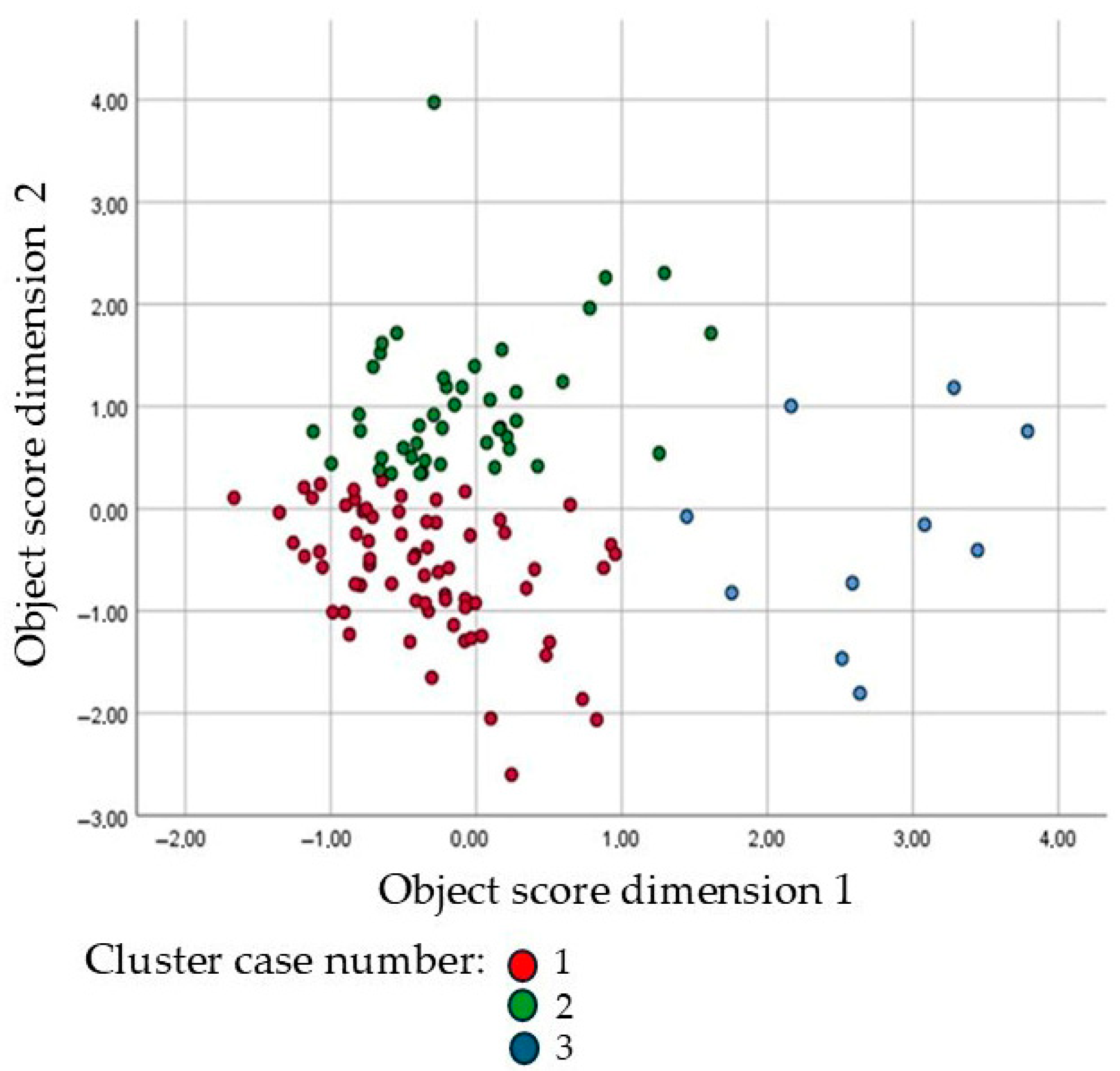
Considering the objective of classifying the population into profiles of unemployed immigrants, the k-means multivariate technique of unsupervised classification (clustering) was used, whose algorithm lies in grouping the observations into k groups based on their characteristics, minimising the sum of distances between each object and the centroid of its group or cluster that are as homogeneous as possible (internal cohesion) and more heterogeneous between groups. From the usefulness of the method to the two dimensions that were established because of the multiple correspondence analysis, three well-differentiated clusters or groups arise, distributed with 54.9% (67 people) of records assigned to the first cluster; 36.1% (44 people) to the second and 9.0% (11 people) to the third cluster.
Figure 2 shows the distribution of clusters in the two-dimensional plane, which allows us to examine the optimal value of k within different indices.

5. Discussion

5.1. Characterisation of the Profiles of Unemployed Venezuelan Migrants

The percentage distribution of the variables characterised among clusters and the differences between proportions when comparing each cluster were measured by the chi- square test with a significance level of ρ < 0.05. The results present statistically significant differences between Sex, Age, Education level, Occupational profile, Migratory status, Identity document, Unemployment period, Reason for unemployment, Being refused a job, Reason for job refusal, Language as an obstacle for staying and clusters or groups. The variables ‘Have been stigmatised as’ and ‘Psychological abuse’ do not show statistically significant differences between groups or clusters.
Based on the previous results, we analysed the behaviour of the variables in terms of patterns, distinguishing three different profiles, which have been explained below.

5.1.1. Profile 1

This group is characterised by the presence of both sexes, participants aged between 18 and 35 years, with an education level ranging from primary school to high school and an occupational profile of mainly service workers and salespeople in commerce and markets. This group is diverse in terms of immigration status, including some who have irregular status, others with RUMV Certification as their immigration document and, in other cases, without any identity document proof of immigration status. Their unemployment period varies between 0 and 6 months.

5.1.2. Profile 2

This profile is mostly made up of females, aged between 18 and 29 years and 36 to 47 years, with education ranging between university and college level. As for their occupational profile, they were mainly essential workers and, in some cases, scientific and intellectual professionals; their migration status was regular with permit and regular resident, with a migratory identification document issued by the host country. The period of unemployment exceeded 12 months. They declare that the main reasons for unemployment are because priority is given to native citizens of the host country, not having networks of friends or acquaintances to help them find a job, in addition to stating that ‘they have been sick since arriving’. Though they are unemployed, most of these migrants indicated that they have not been explicitly denied jobs by prospective employers.
The status, experience and perspective of this group underscore the unique experiences and perspective of women and, more broadly, the gendered dynamics of unemployment for migrants. Notably, women have generally dedicated more time to childcare than men [79]. Furthermore, issues of entering the labour market in households with children could be greater for the migrant population [80]. Women have increased their participation in recent migratory waves, and the reason for the higher prevalence of women migrants could be linked to the urgency of meeting their children’s basic needs [81]. Given the need to provide for their children, unemployment can be devastating.
The growing significance of social networks exacerbates the barriers to employment these migrants face and importantly, this represents a recent shift that has further disadvantaged this group. Appealing to the recommendation of acquaintances or relying on friend networks has always been the most common job search method, but in recent years, it has almost become the exclusive means for migrants to get a job, reducing the importance of more formal channels such as submitting resumes directly to companies [82].

5.1.3. Profile 3

This group is characterised by being made up of men, aged between 48 and 61 years and older than 61 years, with medium technical and higher university level education and an occupational profile of mostly technical and professional medium level. Their migratory status is mainly regular with permit; they state that the main reasons for unemployment is that priority is given to native citizens of the host country, in addition to the fact that there has been no work since the pandemic began; most of them have been refused jobs, and they ascribe this to their age and the higher level of competition (labour supply). As for the previous two profiles, the prioritisation of native workers in a fragile labour market, as is the case of the city of Cúcuta, is a recurrent aspect in the discourse they offer to make sense of their unemployment. The pandemic, they recognise, has further eroded their opportunities.
This group also uniquely cites the barrier that age represents in this labour market. In general, the Venezuelan migrant population residing in Colombia is young. Fully, 37% are between 18 and 29 years old, 33% between 30 and 49 years old, and only 7% are 50 years or older [83]. In competition against younger workers, they believe they are at a decided disadvantage.

6. Conclusions

The labour integration of immigrants in Colombia is a complex challenge that is intensifying to the extent that there is a paucity of socio-economic means to combat it and creative public policies to promote labour inclusion. For Cúcuta, Villa del Rosario and Los Patios, barriers go beyond those envisioned by Venezuelan immigrants who, with scepticism and frustration, describe how many of them are relegated to unstable jobs in the informal market despite being highly qualified, while others are completely excluded from the labour market.
In the context of the social conflict that has shaped the lives of thousands of citizens in the region for many decades exacerbating high rates of unemployment, informal work and poverty, the arrival of immigrants since 2017 and the outbreak of the COVID-19 pandemic in 2020 highlighted the urgency of addressing the situation faced by the department of North Santander. During the pandemic, the restrictions imposed aggravated the already uncertain labour situation in Cúcuta and its metropolitan area, where the preference for native workers over Venezuelan migrants intensified.
This situation posed an enormous challenge for the authorities and society in North Santander as well as across Columbia—and these challenges persist. Border cities, in particular, still struggle to build an economy that offers migrants secure employment. Our analysis provides several key insights about the barriers facing Venezuelans in this context—and the strategies that could more effectively promote their labour market inclusion. First, we identified the common thread that cuts across the labour market experiences of the diverse group of unemployed migrants included in our study; they all cite their status as migrants/foreigners as a key reason that they are unemployed. The economic vulnerabilities of the analysed border, in addition to the absence of effective integration mechanisms, may be influencing employers’ priorities and biases when they favour natives over Venezuelan immigrants, even more so after the impact of the COVID-19 pandemic and the closure of border crossings for more than a year. According to DANE [84], the city of Cúcuta had the highest informal labour rate at the national level, reaching 71.1% at the end of 2019. Further, the city reported the third highest unemployment rate among the country’s 32 departments. The impact of migration on the Colombian economy has been unfavourable in the short term, indicating that, as expected, the local productive system has not yet succeeded in adequately integrating the new labour force or in using immigrants’ income to increase economic activity [85].
Beyond this, we found that migrants’ experiences and perspectives differed in ways that underscore the heterogeneity of this group facing labour market exclusion. Migrant women, in particular, are confronted with greater obstacles to employment than other migrants due to family responsibilities and the urgency of meeting basic needs. In addition, they cited a lack of access to the informal networks needed to secure employment as a significant barrier. Their experience underscores the lack of formal labour integration mechanisms, highlighting the need for more effective and less bureaucratic inclusion policies. For older men, the problem of age discrimination was a more significant concern. For younger migrants, their irregular status was cited as the key obstacle to employment.
Local authorities in border areas with a high presence of migrants, such as Norte de Santander and particularly Cúcuta, should prioritise comprehensive strategies to tackle unemployment, underemployment and informality, in contexts where the structural precariousness of the labour market is much more acute than in other regions of the country. Unlike cities such as Bogotá or Medellín, where there are greater institutional capacities and opportunities for insertion, the Colombian-Venezuelan border faces historical limitations: weak state presence, dominant informal economies, and illegal networks that compete for territorial control.
In this context, public officials and others should more zealously identify the needs of the local labour market in Cúcuta and the skills that Venezuelan migrants possess, offering short- and medium-term courses in trades in high demand in the region, such as construction, services, gastronomy, technology and customer service, certification of labour competencies, training in soft skills, and providing training in business plan development, market research, costs, basic finance and marketing strategies, among others.
Likewise, the complexity of the labour environment for Venezuelan migrants in the border municipalities of Colombia requires equitable and creative actions and interventions from a comprehensive perspective. As long as a dual labour market persists, employment may not be sufficient to provide Venezuelan migrants the economic security and freedom they seek. Uncertain economic conditions, like those that persist post pandemic, lead to greater market segmentation, with natives obtaining better jobs and leaving the worst jobs to immigrants [86]. Due to the high mobility of immigrants, lack of work authorisations and the transition of validating diplomas, among other aspects, immigrants often have to shift to lower positions in the labour market. In addition, xenophobia and hostility can further limit labour market opportunities, especially in border areas where migrants have often been defined as a burden seeking jobs and services, such as education and health care, at the expense of natives [87]. As fiscal resources are stretched and labour market competition escalates, biases and exclusionary employment practices can become more common.
While migrants in this study defined discrimination as a significant challenge, the role of exclusionary hiring practices that deny them jobs on the basis of their status as foreigners or migrants is difficult to disentangle from other factors that work to their disadvantage. In other words, not all discrepancies, differences and disadvantages observed between groups in the workplace can be attributed solely to discrimination. There are multiple factors that may contribute to the persistence of inequality between immigrants and their heirs, even after the first generation has settled [88]. Future research should more systematically track and identify the ways in which labour market discrimination limits the economic opportunities available to migrants. Scholars can use field experiments like those that have uncovered the housing discrimination facing Venezuelan migrants in Columbia [89]. In addition, studies that survey employers about their hiring practices and the challenges facing migrants can also prove revealing, as they have in other countries [90,91].
Tackling these challenges requires broad-based initiatives involving government institutions, private companies and civil society, as well as the migrants themselves, who should strive towards labour inclusion, ensuring migrants’ rights as citizens and improving their quality of life through effective integration, strengthening their ties with the local community and facilitating their access to essential services. Thus, the long-awaited integration in the host country is achievable, and social cohesion will be strengthened.
Finally, South-South migration, which today exceeds South–North migration in volume, involves movements between developing countries and in contexts where the receiving countries have similar structural constraints to those of the countries of origin. These South-South flows are motivated by political and economic crises, conflicts, disasters, regional ties and/or geographical proximity. Understanding it allows us to identify challenges and opportunities; make visible patterns of integration, cross-border support networks, and consolidated legal frameworks; and design supportive public policies that reduce vulnerabilities and strengthen migrants’ contributions to receiving communities. It is therefore recommended that future research should address (1) labour discrimination and gender in the integration of Venezuelan migrants; (2) the impact of informality and the cross-border economy on the employability of migrants; and (3) public policies, skills validation and migrant human capital.

Author Contributions

Conceptualization, M.Á.M.P. and N.A.-A.; methodology, M.Á.M.P., N.A.-A. and M.-A.C.; software, M.Á.M.P., N.A.-A., M.-A.C. and C.R.-M.; validation, M.Á.M.P., N.A.-A., M.-A.C. and C.R.-M.; formal analysis, M.Á.M.P. and N.A.-A.; investigation, M.Á.M.P., N.A.-A., M.-A.C. and C.R.-M.; resources, N.A.-A.; data curation, M.Á.M.P., N.A.-A. and J.A.P.E.; writing—original draft preparation, M.Á.M.P. and N.A.-A.; writing—review and editing, M.Á.M.P., N.A.-A., M.-A.C., C.R.-M. and J.A.P.E.; visualization, M.Á.M.P. and C.R.-M.; supervision, N.A.-A.; project administration, N.A.-A.; funding acquisition, N.A.-A. All authors have read and agreed to the published version of the manuscript.

Funding

This research was funded by Universidad Simón Bolívar (Colombia) grant number C2060020822 and the APC was funded by Universidad Simón Bolívar (Colombia).

Institutional Review Board Statement

The project from which this study was derived had the ethics review and approval of the institutional ethics committee. The study was carried out in accordance with the Declaration of Helsinki and was approved by the Ethics Committee of the UNIVERSIDAD SIMÓN BOLÍVAR (COLOMBIA) (In compliance with the Committee’s recommendations, the endorsement of the Project CIE-USB-0413-00, was legalized by Act of Project Approval No.00362 of 22 August 2022) for studies in humans.

Informed Consent Statement

Informed consent was obtained from all subjects involved in the study.

Data Availability Statement

Albornoz Arias, Neida; Cuberos, Maria Antonia; Ramirez Martinez, Carolina; SANTAFE, AKEVER, 2025, "Situation and perceptions of Venezuelan migrants settled in Cúcuta, La Parada and Los Patios de Norte de Santander, Colombia", https://doi.org/10.17632/TW2PXRVXTT.5, UNISIMON, V1, UNF:6:XtEFFf68IMbw5b1ZFE1+sQ== [fileUNF].

Acknowledgments

We thank the Venezuelan migrants living in Cúcuta, Los Patios and La Parada, Department of Norte de Santander, Colombia, who participated in this study. They participated voluntarily and signed the informed consent to participate in the process. We also thank the directors of the Horizontes de Juventud Foundation in La Parada and Humildad Extrema who serve the migrant population in Cúcuta. Through these two foundations it was possible to contact migrants and conduct surveys in safe environments for both migrants and researchers.

Conflicts of Interest

The authors declare that they have no conflicts of interest.

References

  1. Burzyński, M.; Deuster, C.; Docquier, F.; De Melo, J. Climate change, inequality, and human migration. J. Eur. Econ. Assoc. 2022, 20, 1145–1197. [Google Scholar] [CrossRef]
  2. OIT. Estimaciones Mundiales de la OIT Sobre Los Trabajadores y Las Trabajadoras Migrantes. Resultados y Metodología, 3rd ed.; OIT: Geneva, Italy, 2021; Available online: https://www.fairrecruitmenthub.org/es/resources/estimaciones-mundiales-de-la-OIT-sobre-los-trabajadores-y-las-trabajadoras-migrantes (accessed on 8 December 2024).
  3. Herrera, G.; Nyberg, N. Migraciones internacionales en América Latina: Miradas críticas a la producción de un campo de conocimientos. Iconos 2017, 58, 11–36. [Google Scholar] [CrossRef]
  4. Martínez Pizarro, J.; Cano Christiny, M.V.; Soffia Contrucci, M. Tendencias y patrones de la migración latinoamericana y caribeña hacia 2010 y desafíos para una agenda regional. Santiago de Chile: Comisión Económica para América Latina y el Caribe (CEPAL). Poblac. Y Desarro. 2014, 109, 7–70. Available online: https://www.cepal.org/es/publicaciones/37218-tendencias-patrones-la-migracion-latinoamericana-caribena-2010-desafios-agenda (accessed on 12 December 2024).
  5. CIDH. Personas Refugiadas y Migrantes Provenientes de Venezuela. Comisión Interamericana de Derechos Humanos; Comisión Interamericana de Derechos Humanos (CIDH): Washington, DC, USA, 2023; [Documento OAS 217/23 del 20 de Julio 2023; Available online: https://www.oas.org/es/cidh/informes/pdfs/2023/informe-migrantesVenezuela.pdf (accessed on 20 June 2025).
  6. Koechlin, J.; Vega, E.; Solórzano, X. Migración Venezolana al Perú: Proyectos Migratorios y Repuesta del Estado. In El Éxodo venezolano: Entre el exilio y la emigración; Koechlin, J., Eguren, J., Eds.; Lima, Peru, 2018; pp. 47–96. Available online: https://dialnet.unirioja.es/servlet/articulo?codigo=6746865 (accessed on 5 July 2025).
  7. United Nations-UN. Convention Relating to the Status of Refugees. 1951. Available online: https://www.ohchr.org/en/instruments-mechanisms/instruments/convention-relating-status-refugees (accessed on 18 August 2025).
  8. United Nations-UN. Protocol Relating to the Status of Refugees. 1967. Available online: https://www.refworld.org/legal/agreements/unga/1967/en/41400 (accessed on 18 August 2025).
  9. United Nations High Commissioner for Refugees-UNHCR. Cartagena Declaration on Refugees, Colloquium on the International Protection of Refugees in Central America, Mexico and Panama Adopted by the Colloquium on the International Protection of Refugees in Central America, Mexico and Panama, held at Cartagena, Colombia from 19–22 November 1984. United Nations. Available online: https://www.unhcr.org/about-us/background/45dc19084/cartagena-declaration-refugees-adopted-colloquium-international-protection.html (accessed on 18 August 2025).
  10. Alto Comisionado de las Naciones Unidas para los Refugiados–ACNUR. Tendencias Globales. Desplazamiento Forzado en 2019; ACNUR: Copenhagen, Denmark, 2019; Available online: https://www.acnur.org/stats/globaltrends/5eeaf5664/tendencias-globales-de-desplazamiento-forzado-en-2019.html (accessed on 19 September 2024).
  11. R4V. Refugiados y Migrantes de Venezuela. Actualización de la Plataforma de Coordinación Interagencial para Refugiados y Migrantes. 2024. Available online: https://www.r4v.info/es/refugiadosymigrantes (accessed on 11 November 2024).
  12. Migración Colombia. Radiografía de venezolanos en Colombia. Informe Especial. 2017. Available online: https://unidad-administrativa-especial-migracion-colombia.micolombiadigital.gov.co/infografias-migracion-colombia/infografias-2017 (accessed on 28 October 2024).
  13. Mondelli, J.I. Instrumentos Regionales sobre Refugiados y temas relacionados. La fuerza vinculante de la definición regional de la Declaración de Cartagena sobre Refugiados (1984). 2018. Available online: https://www.refworld.org.es/docid/5d03d0b54.html (accessed on 15 August 2025).
  14. Martine, G.; Hakkert, R.; Guzmán, J.M. Aspectos Sociales de la Migración Internacional: Consideraciones Preliminares. Notas Poblac. 2001, 28, 163–193. Available online: https://repositorio.cepal.org/3c6466e9-7 (accessed on 15 January 2025).
  15. Cabieses, B.; Gálvez, P.; Ajraz, N. Migración internacional y salud: El aporte de las teorías sociales migratorias a las decisiones en salud pública. Rev. Peru. Med. Exp. Y Salud Pública 2018, 35, 285–291. Available online: https://rpmesp.ins.gob.pe/index.php/rpmesp/article/view/3102 (accessed on 15 August 2025). [CrossRef]
  16. Fassio, C.; Kalantaryan, S.; Venturini, A. Foreign Human Capital and Total Factor Productivity: A Sectoral Approach. Rev. Income Wealth 2019, 66, 613–646. [Google Scholar] [CrossRef]
  17. Guzi, M.; Kahanec, M.; Kureková, L.M. How Immigration Grease is Affected by Economic, Institutional, and Policy Contexts: Evidence from EU Labor Markets. Kyklos 2018, 71, 213–243. [Google Scholar] [CrossRef]
  18. World Bank. Migration from Venezuela to Colombia: Short- and Medium-Term Impact and Response Strategy 1–208. Colombia. 2018. Available online: https://hdl.handle.net/10986/30651 (accessed on 17 October 2025).
  19. DANE. Caracterización de los migrantes y retornados desde Venezuela a partir del CNPV-2018. Informes de Estadística Sociodemográfica Aplicada N° 5. 2021. Available online: https://www.dane.gov.co/files/investigaciones/poblacion/informes-estadisticas-sociodemograficas/2021-10-01-caracterizacion-migrantes-y-retornados-desde-venezuela-CNPV.2018.pdf (accessed on 16 June 2025).
  20. DANE. La información del DANE en la toma de decisiones regionales. Área Metropolitana de Cúcuta. 2022. Sistema Estadístico Nacional (SEN). Available online: https://www.dane.gov.co/index.php/estadisticas-por-tema/informacion-regional/informacion-estadistica-desagregada-con-enfoque-territorial-y-diferencial/informacion-del-dane-para-la-toma-de-decisiones-en-departamentos-y-ciudades-capitales?highlight=WyJpbmZsYWNpb24iLCJpbmZsYWNpXHUwMGYzbiIsImRpY2llbWJyZSIsMjAyMV0= (accessed on 20 June 2025).
  21. Massey, D.S.; Arango, J.; Hugo, G.; Kouaouci, A.; Pellegrino, A.; Taylor, J.E. Theories of International Migration: A Review and Appraisal. Popul. Dev. Rev. 1993, 13, 431–466. Available online: https://www.jstor.org/stable/2938462 (accessed on 18 December 2024). [CrossRef]
  22. Bonacich, E. ‘Advanced Capitalism and Race Relations in the United States: A Divided Interpretation of the Labour Market’. Am. Sociol. Rev. 1976, 41, 34–51. Available online: https://www.scilit.com/publications/04b94228bd662d0fb0f97fa7d9d0815c (accessed on 16 June 2024).
  23. Clark, K.; Garratt, L.; Li, Y.; Lymperopoulou, K.; Shankley, W. Local deprivation and the labour market integration of new migrants to England. J. Ethn. Migr. Stud. 2019, 45, 3260–3282. [Google Scholar] [CrossRef]
  24. Piore, M. Birds of Passage: Migrant Labor and Industrial Societies; Cambridge University Press: Cambridge, UK, 1979. [Google Scholar] [CrossRef]
  25. Piore, M. Dualism in the Labor Market: A Response to Uncertainty and Flux: The Case of France. Rev. Écon. 1978, 29, 26–48. Available online: https://www.persee.fr/doc/reco_0035 (accessed on 14 December 2024). [CrossRef]
  26. Hudson, K. The new labor market segmentation: Labor market dualism in the new economy. Soc. Sci. Res. 2007, 36, 286–312. [Google Scholar] [CrossRef]
  27. McCollum, D.; Findlay, A. ‘Flexible’ workers for ‘flexible’ jobs? The labour market function of A8 migrant labour in the UK. Work Employ. Soc. 2015, 29, 427–443. [Google Scholar] [CrossRef]
  28. Bonacich, E. ‘A Theory of Ethnic Antagonism: The Divided Labour Market’. Am. Sociol. Rev. 1972, 37, 547–559. Available online: https://www.jstor.org/stable/2093450 (accessed on 19 October 2024). [CrossRef]
  29. Boswell, T. A Divided Interpretation of the Labour Market Discrimination Against Chinese Immigrants, 1850–1882. Am. Sociol. Rev. 1986, 51, 352–371. Available online: https://www.jstor.org/stable/2095307 (accessed on 25 October 2024). [CrossRef]
  30. Hirschman, C.; Wong, M. The Extraordinary Educational Attainment of Asian-Americans: A Search for Historical Evidence and Explanations. Soc. Forces 1986, 65, 1–27. [Google Scholar] [CrossRef]
  31. Portes, A.; Rumbaut, R. Immigrant America: A Portrait, 3rd ed.; University of California Press: Berkeley, CA, USA, 2006; Available online: https://www.jstor.org/stable/10.1525/j.ctt1pq07x (accessed on 12 August 2025).
  32. Portes, A. Migración y cambio social: Algunas reflexiones conceptuales. RES 2009, 12, 9–37. Available online: https://dialnet.unirioja.es/servlet/articulo?codigo=3753768 (accessed on 6 December 2024).
  33. Beine, M.; Docquier, F.; Rapoport, H. Brain Drain and Human Capital Formation in Developing Countries: Winners and Losers. Econ. J. 2008, 118, 631–652. [Google Scholar] [CrossRef]
  34. Herranz, Y. Inmigración e incorporación laboral. Migr. Publ. Del Inst. Univ. De Estud. Sobre Migr. 2016, 8, 127–163. Available online: https://revistas.comillas.edu/index.php/revistamigraciones/article/view/4414 (accessed on 6 November 2024).
  35. Zhang, H.; Nardon, L.; Sears, G.J. Migrant workers in precarious employment. Equal. Divers. Incl. 2022, 41, 254–272. [Google Scholar] [CrossRef]
  36. Borjas, G. Heaven’s Door: Immigration Policy and the American Economy; Princeton University Press: Princeton, NJ, USA, 2001; Available online: https://press.princeton.edu/books/paperback/9780691088969/heavens-door (accessed on 17 October 2024).
  37. Bauder, H. Labor Movement: How Migration Regulates Labor Markets; Oxford University Press: Oxford, UK, 2020. [Google Scholar] [CrossRef]
  38. Cranston, S. Expatriate as a ‘Good’ Migrant: Thinking Through Skilled International Migrant Categories. Popul. Place Space 2017, 23, 2058. [Google Scholar] [CrossRef]
  39. Winterheller, J.; Hirt, C. Career patterns of young highly skilled migrants from Southeast Europe in Austria: Investigating accumulation and use of career capital. Pers. Rev. 2017, 46, 222–236. [Google Scholar] [CrossRef]
  40. De la Rica, S.; Glitz, A.; Ortega, F. Immigration in Europe: Trends, Policies, and Empirical Evidence. In Handbook of the Economics of International Migration; Chiswick, B.R., Miller, P.W., Eds.; Elsevier: Amsterdam, The Netherlands, 2015; pp. 1303–1362. [Google Scholar] [CrossRef]
  41. Kasinitz, P.; Mollenkopf, J.H.; Waters, M.C.; Holdaway, J. Inheriting the City: The Children of Immigrants Come of Age; Russell Sage Foundation: Cambridge, MA, USA, 2008; Available online: http://www.jstor.org/stable/10.7758/9781610446556 (accessed on 28 August 2025).
  42. Solé, C. Discriminación Racial en el Mercado de Trabajo; Consejo Económico y Social: Madrid, Spain, 1995; Available online: http://bibliotecaced.uab.cat/cgi-bin/koha/opac-detail.pl?biblionumber=6061&shelfbrowse_itemnumber=6004 (accessed on 22 October 2024).
  43. Becker, G. The Economics of Discrimination, 2nd ed.; Chicago University Press: Chicago, IL, USA, 1971; Available online: https://press.uchicago.edu/ucp/books/book/chicago/E/bo22415931.html (accessed on 24 August 2024).
  44. Arrow, K. The Theory of Discrimination. In Discrimination in Labor Markets; Ashenfelter, O., Rees, A., Eds.; Princeton University Press: Princeton, NJ, USA, 1973; pp. 3–33. Available online: https://dataspace.princeton.edu/handle/88435/dsp014t64gn18f. (accessed on 18 October 2024).
  45. Vernby, K.; Dancygier, R. Can immigrants counteract employer discrimination? A field factorial experiment reveals the immutability of ethnic hierarchies. PLoS ONE 2019, 14, e0218044. [Google Scholar] [CrossRef]
  46. Aguilar-Idáñez, M. Discriminaciones múltiples de los migrantes en perspectiva de derechos. In BARATARIA Revista Castellano-Manchega de Ciencias Sociales; Asociación Castellano Manchega de Sociología: Tolodo, Spain, 2014; pp. 39–54. Available online: https://www.redalyc.org/articulo.oa?id=322132552003 (accessed on 18 September 2025).
  47. Doeringer, P.; Piore, M. Mercados Internos de Trabajo y Análisis Laboral. Madrid: Ministerio de Trabajo y Seguridad Social; Ministerio de Empleo y Seguridad Social: Madrid, Spain, 1985; Available online: https://libreriavirtual.trabajo.gob.es/libreriavirtual/detalle/ETR0003 (accessed on 15 October 2024).
  48. Guzi, M.; Kahanec, M.; Kureková, L.M. The impact of immigration and integration policies on immigrant-native labour market hierarchies. J. Ethn. Migr. Stud. 2023, 49, 4169–4187. [Google Scholar] [CrossRef]
  49. Kangasniemi, M.; Mas, M.; Robinson, C.; Serrano, L. The economic impact of migration: Productivity analysis for Spain and the UK. J. Product. Anal. 2012, 38, 333–343. [Google Scholar] [CrossRef]
  50. Ferreira, S. Borders in the age of mobility. In Human Security and Migration in Europe’s Southern Borders; Ferreira, S., Ed.; Palgrave Macmillan: Lisbon, Portugal, 2019; pp. 51–66. Available online: https://link.springer.com/chapter/10.1007/978-3-319-77947-8_4 (accessed on 9 September 2024).
  51. Benedetti, A.; Salizzi, E. Llegar, pasar, regresar a la frontera. Aproximación al sistema de movilidad argentino-boliviano. Transp. Y Territ. 2011, 4, 148–179. Available online: https://dialnet.unirioja.es/servlet/articulo?codigo=3674908 (accessed on 6 November 2024).
  52. Abel, G.J.; Sander, N. Quantifying Global International Migration Flows. Science 2014, 343, 1520–1522. [Google Scholar] [CrossRef]
  53. Fiddian-Qasmiyeh, E.; Daley, P. Introduction. Conceptualising the Global South and South-South Encounters; Routledge Online Handbooks: London, UK, 2018. [Google Scholar] [CrossRef]
  54. Nawyn, S.J. New directions for research on migration in the Global South. Int. J. Sociol. 2016, 46, 163–168. [Google Scholar] [CrossRef]
  55. Crawley, H.; Teye, J.K. South–South migration and inequality: An introduction. In The Palgrave Handbook of South–South Migration and Inequality; Springer International Publishing: Cham, Switzerland, 2024; pp. 1–21. [Google Scholar] [CrossRef]
  56. Vanyoro, K. Rethinking Power and Reciprocity in the “Field”. In The Palgrave Handbook of South–South Migration and Inequality; Springer International Publishing: Cham, Switzerland, 2024; pp. 105–123. Available online: https://link.springer.com/chapter/10.1007/978-3-031-39814-8_6 (accessed on 15 August 2025).
  57. Carella, F. The Governance of South–South Migration: Same or Different? In The Palgrave Handbook of South–South Migration and Inequality; Palgrave Macmillan: Cham, Switzerland, 2024; pp. 587–607. Available online: https://link.springer.com/chapter/10.1007/978-3-031-39814-8_27 (accessed on 15 August 2025).
  58. Mazza, J.; Forero, V.N. Perú and Migration from Venezuela: From Early Adjustment to Policy Misalignment. In The Palgrave Handbook of South–South Migration and Inequality; Springer International Publishing: Cham, Switzerland, 2024; pp. 653–678. Available online: https://link.springer.com/chapter/10.1007/978-3-031-39814-8_30 (accessed on 15 August 2025).
  59. Nawyn, S.J. Migration in the Global South: Exploring New Theoretical Territory. Int. J. Sociol. 2016, 46, 81–84. [Google Scholar] [CrossRef]
  60. Fiddian-Qasmiyeh, E. Recentering the South in Studies of Migration. Migr. Soc. 2020, 3, 1–18. [Google Scholar] [CrossRef]
  61. Acevedo, I.; Castellani, F.; Lotti, G.; Székely, M. Informality in the time of COVID-19 in Latin America: Implications and policy options. PLoS ONE 2021, 16, e0261277. [Google Scholar] [CrossRef] [PubMed]
  62. CEPAL. Balance Preliminar de las Economías de América Latina y el Caribe 2020. Informe Anual de la Comisión Económica para América Latina y el Caribe; CEPAL: Santiago, Chile, 2021; Available online: https://www.cepal.org/es/publicaciones/46501-balance-preliminar-economias-america-latina-caribe-2020 (accessed on 15 August 2025).
  63. Alvarez, J.; Pizzinelli, C. COVID-19 and the Informality-Driven Recovery: The Case of Colombia’s Labor Market; International Monetary Fund: Washington, DC, USA, 2021; Available online: https://www.elibrary.imf.org/view/journals/001/2021/235/article-A001-en.xml (accessed on 15 August 2025).
  64. Bertelsmann Stiftung. Annual Report 2024; Bertelsmann Stiftung: Gütersloh, Germany, 2025; Available online: https://www.bertelsmann-stiftung.de/en/publications/publication/did/bertelsmann-stiftung-jahresbericht-2024 (accessed on 15 August 2025).
  65. Galvis Molano, D.L.; Sarmiento Espinel, J.A.; Silva Arias, A.C. Perfil laboral de los migrantes venezolanos en Colombia-2019. Encuentros 2020, 18, 116–127. Available online: https://dialnet.unirioja.es/servlet/articulo?codigo=7772901 (accessed on 18 October 2024).
  66. Mutis, O.O.M.; Rios, I.C.J.; Montaño, G.L.M.; Monroy, R.V. Crisis u oportunidad: Impacto de la migración venezolana en la productividad colombiana. Rev. Desarro. Y Soc. 2021, 81, 13–56. [Google Scholar] [CrossRef]
  67. Bitácora Migratoria. Observatorio de Venezuela. Reporte N° 24; Universidad del Rosario: Bogota, Colombia, 2024; Available online: https://urosario.edu.co/sites/default/files/2024-04/reporte-abril-de-bitacora-migratoria-2024.pdf (accessed on 16 June 2025).
  68. DANE. Boletín Técnico: Ocupación Informal. Trimestre Enero-Marzo 2024. 10 de mayo de 2024. Departamento Administrativo Nacional de Estadísticas. Available online: https://www.dane.gov.co/files/operaciones/GEIH/bol-GEIHEISS-ene2024-mar2024.pdf (accessed on 23 November 2024).
  69. Mora García, E.M. El trabajo informal y la calidad de vida: Paradigma en la frontera colombo venezolana. Línea Imaginaria 2022, 13, 279–295. [Google Scholar] [CrossRef]
  70. Erazo, K. Cúcuta, la Ciudad Atrapada en la Violencia y la Extorsión Masiva. Reseña publicada en el portal de la Fundación Paz & Reconciliación, 2023, 21 de abril de 2023. Available online: https://www.pares.com.co/cucuta-la-ciudad-atrapada-en-la-violencia-y-la-extorsion-masiva/ (accessed on 21 June 2025).
  71. OIM. Diagnóstico Socioeconómico y Migratorio de Cúcuta (2020–2023); Fondo de la OIM para el Desarrollo: Bogota, Colombia, 2023; Available online: https://repository.iom.int/bitstream/handle/20.500.11788/2409/4.%20C%C3%BAcuta_Diagn%C3%B3stico%20Socioecn%C3%B3mico.pdf.pdf?sequence=15&isAllowed=y (accessed on 17 June 2025).
  72. Taborda Burgo, J.C.; Acosta Ortiz, A.M.; Garcia, M.C. Discriminación en silencio: Percepciones de migrantes venezolanos sobre la discriminación en Colombia. Desarro. Y Soc. 2021, 89, 143–186. [Google Scholar] [CrossRef]
  73. Ossa Rubio, S.L. Vulnerabilidad y pobreza en tránsito: Un caso de representación visual de la migración venezolana en Colombia. Papel Político 2022, 27. [Google Scholar] [CrossRef]
  74. Holland, A.; Peters, M.E.; Zhou, Y.-Y. Left Out: How Political Ideology Affects Support for Migrants in Colombia. J. Politics 2024, 86, 1291–1303. [Google Scholar] [CrossRef]
  75. OIT. Mujeres Refugiadas y Migrantes de Venezuela en Colombia: ¿Quiénes Son y Que Barreras Enfrentan Para su Integración Socioeconómica? Resumen Ejecutivo; Organización Internacional del Trabajo–IOT: Geneva, Switzerland, 2024; Available online: https://www.ilo.org/es/publications/mujeres-refugiadas-y-migrantes-de-venezuela-en-colombia (accessed on 16 June 2025).
  76. Sánchez Calderón, B.J.; Munevar Avila, L.A. Inclusión Laboral para la población migrante proveniente de Venezuela en Colombia: Sistematización del piloto para la identificación y mitigación de barreras de acceso al mercado laboral del servicio público de empleo, 2019; Estudio del Banco Interamericano de Desarrollo en conjunto con la OIT y la Unidad del Servicio de Empleo: Bogotá, Colombia, 2020; Available online: https://www.ilo.org/sites/default/files/wcmsp5/groups/public/%40americas/%40ro-lima/documents/publication/wcms_759357.pdf (accessed on 21 June 2025).
  77. Felbo-Kolding, J.; Leschke, J. Wage Differences between Polish and Romanian Intra-EU Migrants in a Flexi-Secure Labour Market: An Over-Time Perspective. Work Employ. Soc. 2023, 37, 877–896. [Google Scholar] [CrossRef]
  78. Albornoz Arias, N.; Cuberos, M.A.; Ramirez Martinez, C.; Santafe, A. Situation and perceptions of Venezuelan migrants settled in Cúcuta, La Parada and Los Patios de Norte de Santander, Colombia. 2025. UNISIMON, Barranquilla, Colombia, V1, UNF:6:XtEFFf68IMbw5b1ZFE1+sQ== [fileUNF]. [CrossRef]
  79. Oliveira, J. Fertility, migration, and maternal wages: Evidence from Brazil. J. Hum. Cap. 2016, 10, 377–398. [Google Scholar] [CrossRef]
  80. Madhavan, S.; Schatz, E.; Clark, S.; Collinson, M. Child mobility, maternal status, and household composition in rural South Africa. Demography 2012, 49, 699–718. [Google Scholar] [CrossRef]
  81. Schieckoff, B.; Sprengholz, M. The labor market integration of immigrant women in Europe: Context, theory, and evidence. SN Soc. Sci. 2021, 1, 1–44. [Google Scholar] [CrossRef]
  82. Ntioudis, D.; Masa, P.; Karakostas, A.; Meditskis, G.; Vrochidis, S.; Kompatsiaris, I. Ontology-Based Personalized Job Recommendation Framework for Migrants and Refugees. Big Data Cogn. Comput. 2022, 6, 120. [Google Scholar] [CrossRef]
  83. Sánchez, B.; Munevar, L. Inclusión laboral para la población migrante proveniente de Venezuela en Colombia. Sistematización del piloto para la identificación y mitigación de barreras de acceso al mercado laboral del servicio público de empleo 2019; Inter-American Development Bank and the International Labour Organization: Bogotá, Colombia, 2020; Available online: https://www.ilo.org/es/publications/inclusion-laboral-para-la-poblacion-migrante-proveniente-de-venezuela-en (accessed on 19 August 2024).
  84. DANE. Estadísticas por tema. Departamento Administrativo Nacional de Estadística Colombia. 2019. Available online: https://www.dane.gov.co/index.php/estadisticas-por-tema (accessed on 22 August 2024).
  85. Muñoz-Mora, J.C.; Aparicio, S.; Mrtinez-Moya, D.; Urbano, D. From immigrants to local entrepreneurs: Understanding the effects of migration on entrepreneurship in a highly informal country. Int. J. Entrep. Behav. Res. 2022, 28, 78–103. [Google Scholar] [CrossRef]
  86. Stanek, M.; Veira, A. Ethnic nichingin a segmented labour market: Evidence from Spain. Migr. Lett. 2012, 9, 249–262. Available online: https://www.ceeol.com/search/article-detail?id=480921 (accessed on 13 November 2024). [CrossRef]
  87. Bowser, D.M.; Agarwal-Harding, P.; Sombrio, A.G.; Shepard, D.S.; Harker, A. Integrating Venezuelan Migrants into the Colombian Health System During COVID-19. Health Syst. Reform. 2022, 8, 2079448. [Google Scholar] [CrossRef]
  88. Wrench, J.; Modood, T. The Effectiveness of Employment Equality Policies in Relation to Immigrants and Ethnic Minorities in the UK; International Labour Office Geneva: Geneva, Switzerland, 2000. Available online: https://www.ilo.org/sites/default/files/wcmsp5/groups/public/@ed_protect/@protrav/@migrant/documents/publication/wcms_201869.pdf (accessed on 15 August 2025).
  89. Zanoni, W.; Díaz, L. Discrimination against migrants and its determinants: Evidence from a Multi-Purpose Field Experiment in the Housing Rental Market. J. Dev. Econ. 2024, 167, 103227. [Google Scholar] [CrossRef]
  90. Neckerman, K.M.; Kirschenman, J. Hiring strategies, racial bias, and inner-city workers. Soc. Probl. 1991, 38, 433–447. [Google Scholar] [CrossRef]
  91. Moss, P.; Tilly, C. Stories Employers Tell: Race, Skill, and Hiring in America; Russell Sage Foundation: New York, NY, USA, 2021; Available online: https://books.google.com.co/books?hl=es&lr=&id=_gOGAwAAQBAJ&oi=fnd&pg=PR7&dq=Stories+employers+tell:+Race,+skill,+and+hiring+in+America&ots=jeCzeZdNOu&sig=mY1MdIJoGIdvV5DNsddYGPmKlyk&redir_esc=y#v=onepage&q=Stories%20employers%20tell%3A%20Race%2C%20skill%2C%20and%20hiring%20in%20America&f=false (accessed on 30 July 2025).
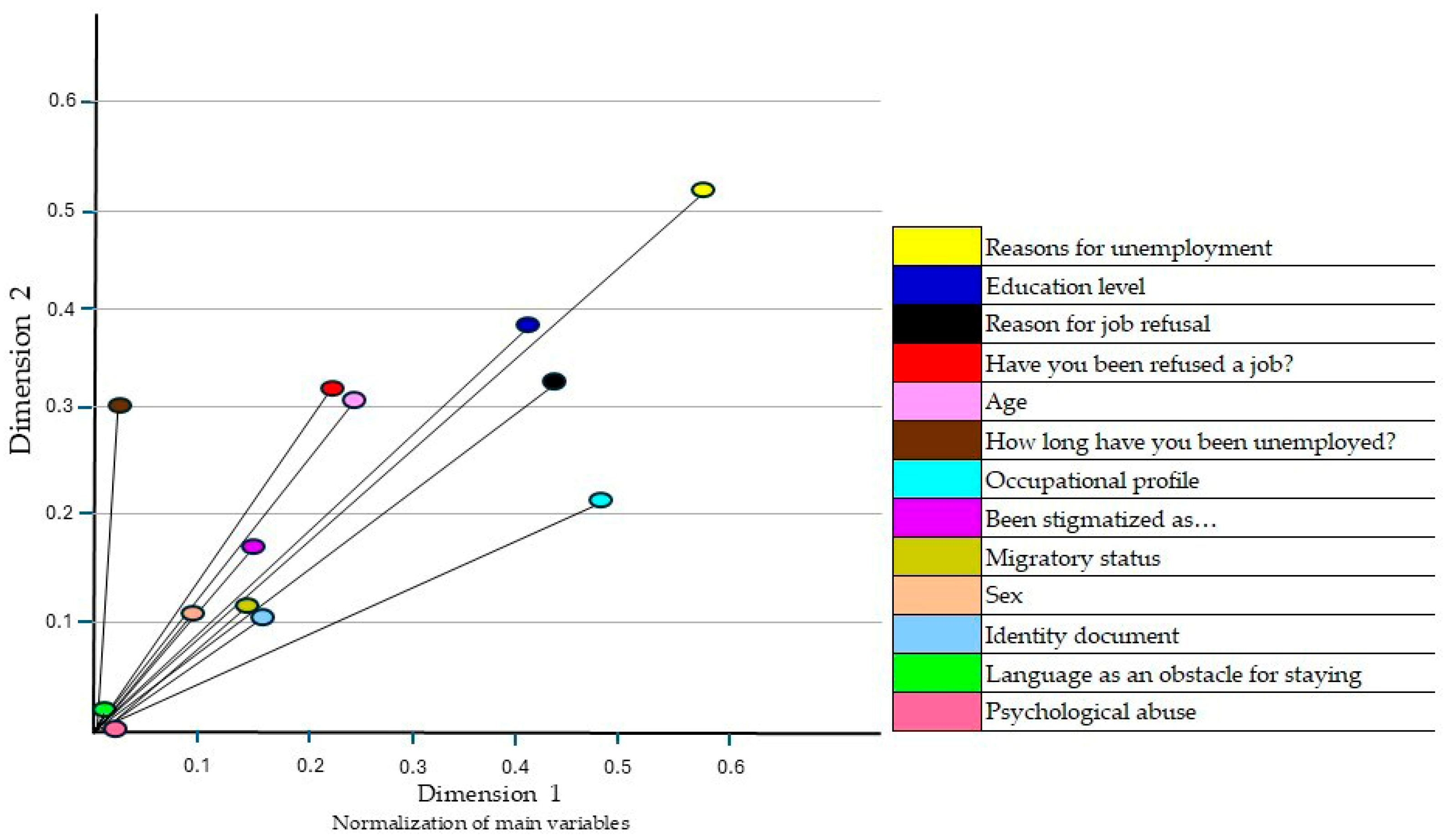
Figure 1. Projections of each variable’s contributions. Source: prepared by the authors.
Societies 16 00015 g001
Figure 2. Cluster chart by dimension variables. Source: prepared by the authors.
Societies 16 00015 g002
Table 1. Distribution of the main variables according to the category ‘Currently does not have a job’.
VariableCodeCategoryn%
Total122100.0%
Age118–29 years old4738.5%
230–35 years old2117.2%
336–47 years old3427.9%
448–61 years old108.2%
6More than 61 years108.2%
Sex1Male2520.5%
2Female9779.5%
Education Level3None10.8%
4Incomplete primary school129.8%
5Completed primary school54.1%
6Did not complete secondary school3528.7%
7Completed secondary school4839.3%
8Graduate00.0%
9Completed primary school54.1%
10Advanced Technical University54.1%
11University119.0%
Occupational profile1Farmer and skilled agricultural, forestry and fishing worker00.0%
2Director and manager21.6%
3(*) Essential occupations1613.1%
4Officer, operator and craftsman of mechanical arts and other trades64.9%
6Installation and assembly machine operator10.8%
7Administrative support staff21.6%
8Scientific and intellectual professional32.5%
9Mid-level technician professional86.6%
10Service worker3125.4%
11Sex worker10.8%
12Retail and trade seller5242.6%
(**) Current immigration status?1Irregular2923.8%
2Regular with permission7662.3%
3Regular migrant with visa00.0%
4Regular refugee54.1%
6Regular resident129.8%
Does an identity document support your regular immigration status?1Certification of Single Registry of Venezuelan Migrants in Colombia (RUMV). Temporary Protection Permit5559.1%
2Identification document issued by the host country1617.2%
3Neither88.6%
4Other99.7%
6Expired passport44.3%
7Valid passport11.1%
How long have you been unemployed?10–3 months3831.1%
210–12 months129.8%
34–6 months2016.4%
47–9 months108.2%
6More than 12 months4234.4%
Why are you out of work?1Native citizens of the host country are prioritised.2319.5%
2Because I’ve been sick since I arrived.108.5%
3Because of my irregular status (no documents).3529.7%
4I have no networks of friends or acquaintances to help me find a job.1815.3%
6I don’t know where to get information about job vacancies.108.5%
7No work is available since the pandemic began.2622.0%
8Others1311.0%
Have you ever been denied a job?1No2621.3%
2Yes9678.7%
(***) Believes he/she was denied the job due to1Being a migrant or foreigner5153.7%
2Age2930.5%
3Sex (being a man or being a woman), age, a lot of competition (labour supply)44.2%
4Not having experience1212.6%
6Not having documents3334.7%
7High level of competition (labour supply)1818.9%
8Skin colour11.1%
Have you ever felt that the language used in your current location has been an obstacle to your settlement or permanence?1Sometimes3932,00%
2Hardly ever108.2%
3Almost always32.5%
4Never7057.4%
(****) In the place where you currently reside, you have been reported as1Worker8167.5%
2Honest7461.7%
3Entrepreneur5041.7%
4Job creator21.7%
5None of the above1310.8%
In the place where you currently reside, have you been a victim of psychological abuse (unequal treatment with respect to nationals, insults, ridicule) by immigration officials?1Sometimes1915.6%
2Hardly ever108.2%
3Almost always54.1%
4Never8670.5%
6Always21.6%
Source: prepared by the authors. (*) Essential occupations refer to those core occupations such as health professionals. (**) Migration status refers to the legal situation of a person in relation to his or her residence in a host country. Irregular migrant refers to a person who is in a country without complying with the legal requirements for entry, stay or residence established by migration regulations. The regular migrant with a permit is the person who is in the country of destination complying with the migration regulations and has a temporary permit granted by the competent authority, which enables his/her to stay and sometimes activities such as work, study, etc. In the case of Venezuelans in Colombia, this is the Temporary Protection Permit (PPT) for 10 years. The regular immigrant with a visa is the person admitted to the country of destination with a valid visa issued by the consular or migration authorities, which allows entry and stay under the conditions established by the visa. Regular migrant refugees are officially recognised as a refugee by the receiving State or by the United Nations High Commissioner for Refugees (UNHCR), in application of the 1957 Convention relating to the Status of Refugees and its 1967 Protocol. The habitual resident is a person living on a stable and prolonged basis in a country, with legal recognition of residence (permanent or long-term) and principal place of life in that territory. (***) The purpose of this question was to inquire about the beliefs of migrants regarding the reason why they consider that they have been denied a job. The responses reveal that the migrant considers that it was because he/she is a migrant, because of his/her age, or because he/she is undocumented, findings that denote discrimination. (****) This question is a multiple-choice question, and Venezuelans are mainly perceived as hard-working, honest and enterprising people.
Table 2. Model summary.
DimensionCronbach’s AlphaVariance Accounted for
Total (Eigenvalue)Inertia *% Variance
10.7253.0270.23323.332
20.7112.9100.22422.419
Total 5.9370.457
Mean0.718 a2.9680.22822.159
a. Cronbach’s alpha mean is based on the eigenvalue mean. * Inertia is a concept semantically close to variance; both are measures of dispersion. Inertia differs from variance because it considers simultaneously all the variables that have been measured in the subjects and are calculated with respect to any point in space although it is generally calculated with respect to the centre of gravity whereas variance refers to a single variable and is always calculated with respect to the centre of gravity. In this case, both inertia and variance show the same statistics. Source: prepared by the authors.
Table 3. Discriminating Measures.
DimensionMean 2
12
Sex0.0980.1100.104
Age0.2470.3130.280
Education level0.4240.3810.403
Occupational profile0.4870.2130.350
Migratory status0.1310.1150.123
Identity document0.1420.1060.124
How long have you been unemployed?0.0880.3000.194
Reasons for unemployment0.4070.3300.369
Have you been refused a job?0.2240.3250.274
Reason for job refusal0.5790.5020.540
Language as an obstacle for staying0.0110.0470.029
Been stigmatized as…0.1450.1640.155
Psychological abuse0.0440.0040.024
Total, active 13.0272.9102.968
1 The ponderations of the variable were incorporated to the stats of the active total. 2 The Mean column refers to the average of both dimensions. Source: prepared by the authors
Disclaimer/Publisher’s Note: The statements, opinions and data contained in all publications are solely those of the individual author(s) and contributor(s) and not of MDPI and/or the editor(s). MDPI and/or the editor(s) disclaim responsibility for any injury to people or property resulting from any ideas, methods, instructions or products referred to in the content.