Global Invasion Potential and Niche Dynamics of Phoracantha recurva Newman, 1840 (Coleoptera: Cerambycidae) Under Climate Change
 ,
,
Simple Summary
Abstract
1. Introduction
2. Materials and Methods
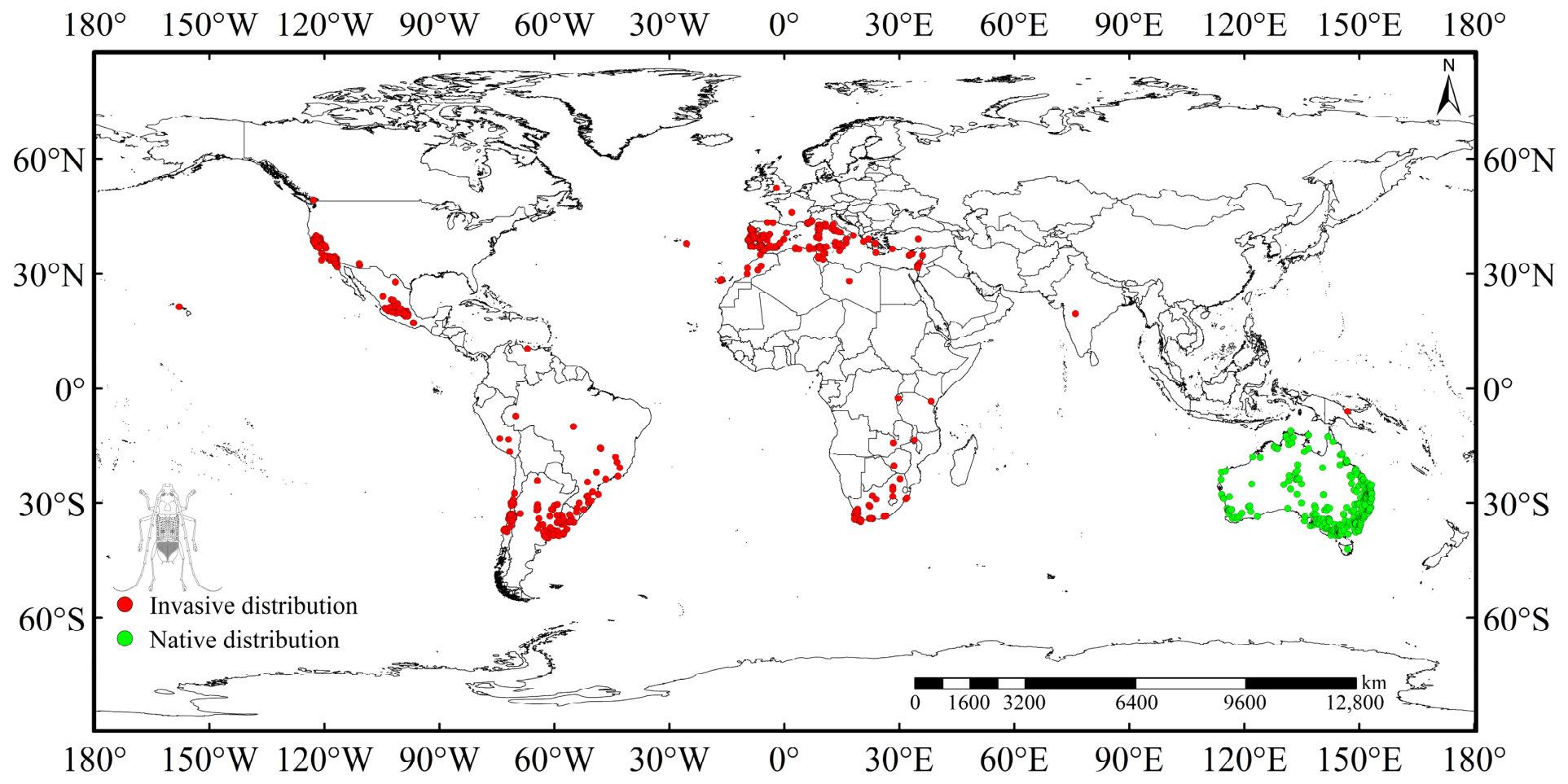
2.1. Occurrence Data
2.2. Bioclimatic Variables
2.3. MaxEnt Model Optimization
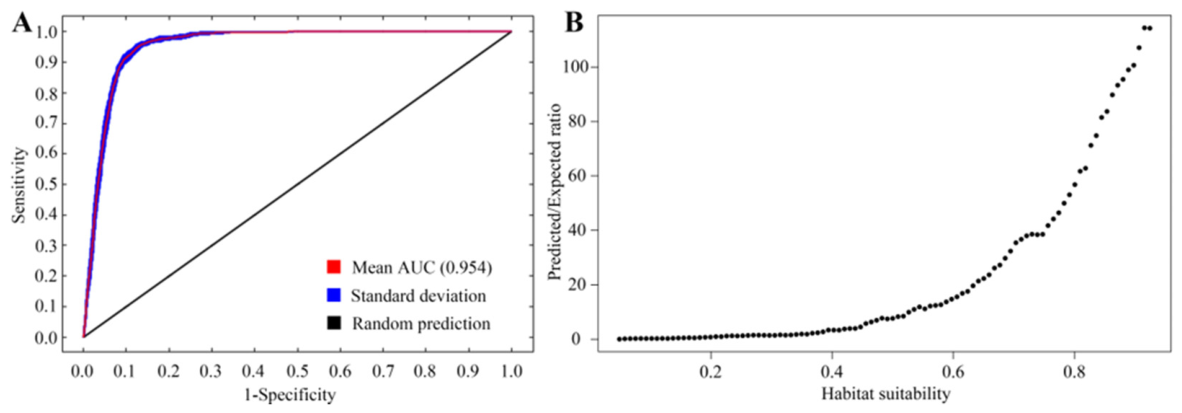
2.4. Suitability Classification and Model Validation
2.5. Niche Shift Analysis
2.5.1. Niche Comparison Within the Observed Distribution Range
2.5.2. Niche Comparison Within the Model-Predicted Spatial Distribution
3. Results
3.1. Model Performance and Accuracy
3.2. Potential Geographical Distribution of P. recurva Under Different Climate Conditions
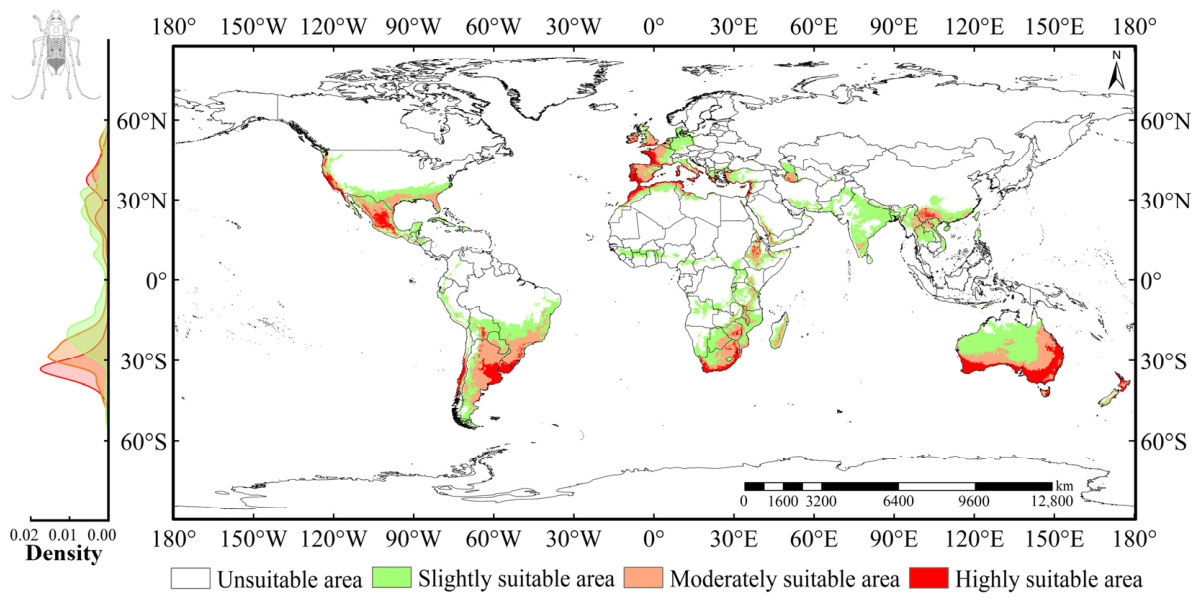
3.2.1. Potential Geographical Distribution Under Near-Current Climate Conditions
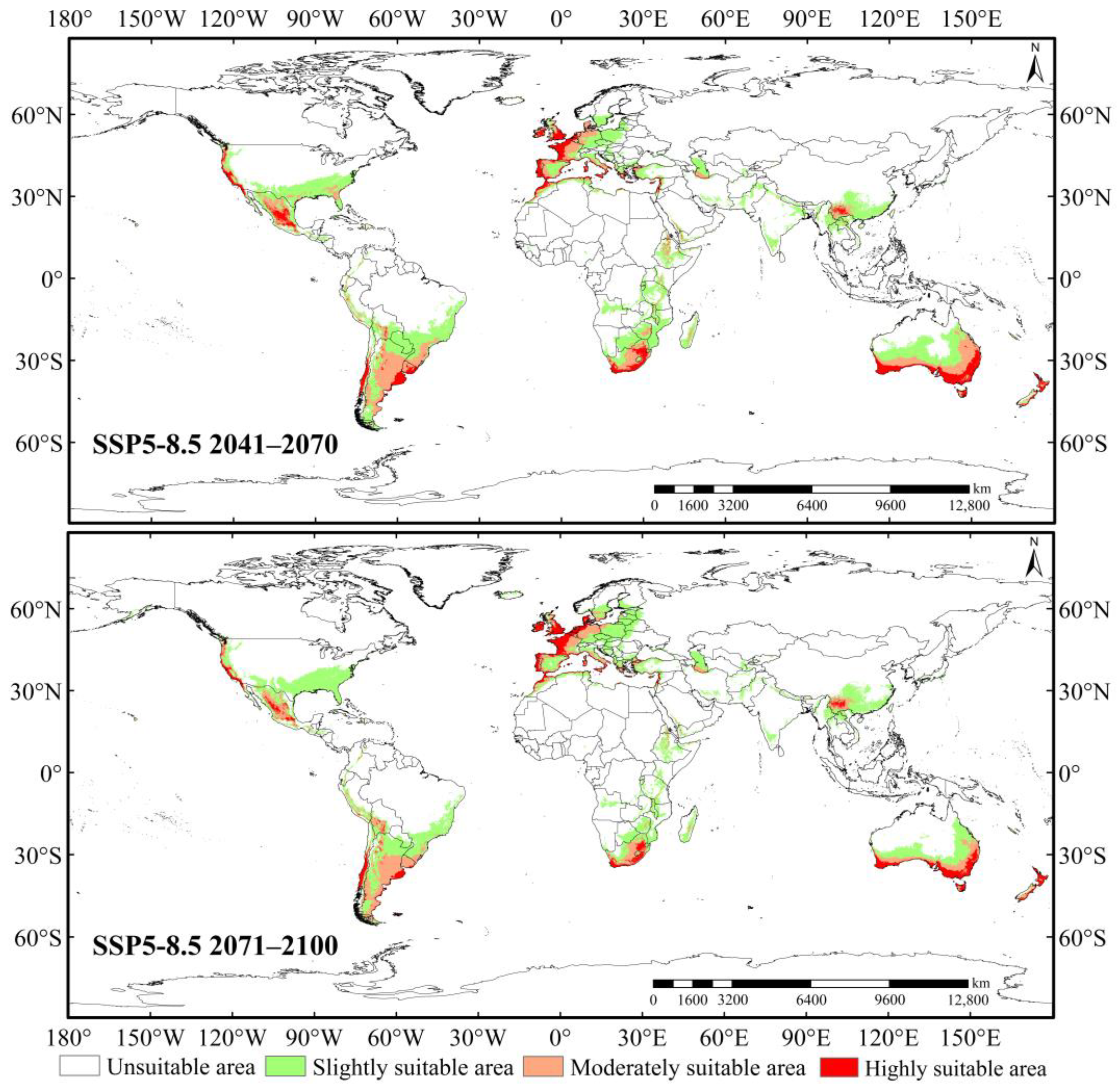
3.2.2. Potential Geographical Distribution Under Future Climate Conditions
3.2.3. Shifts in the Potential Distribution of P. recurva Under Climate Change
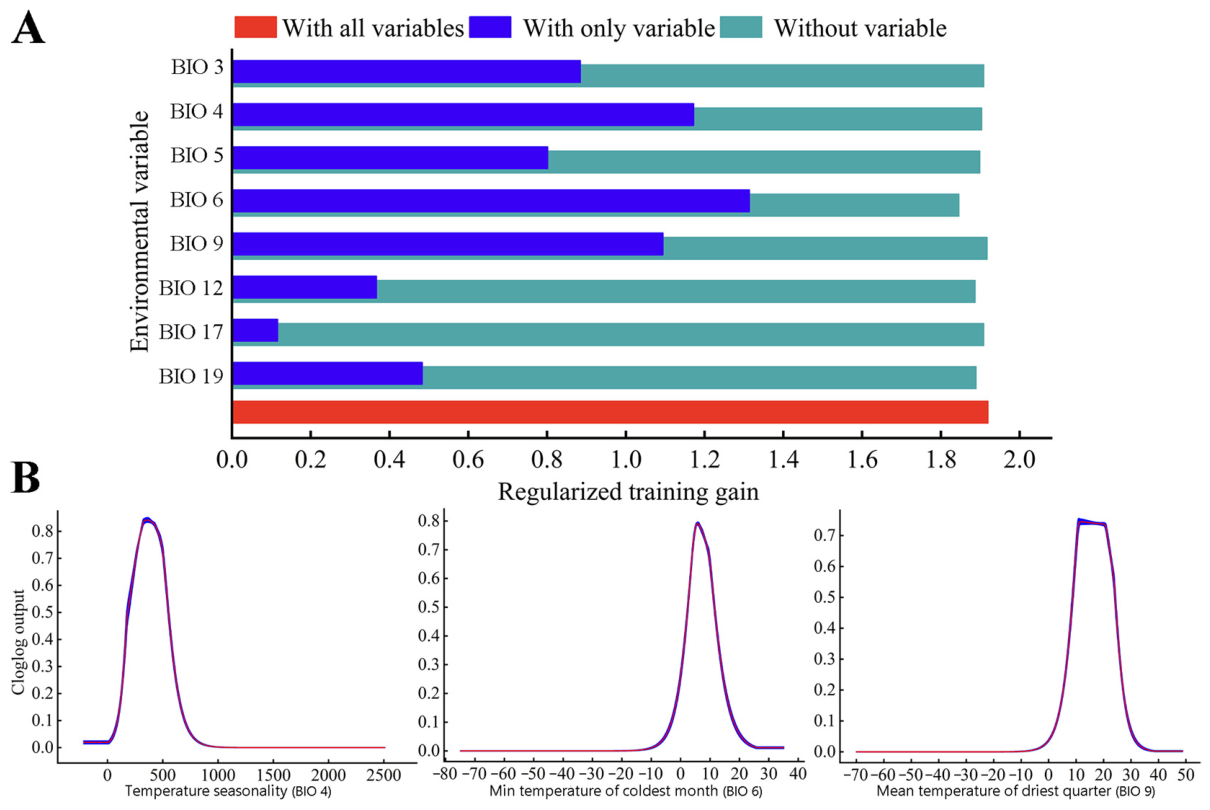
3.3. Relationship Between Potential Distribution and Bioclimatic Variables
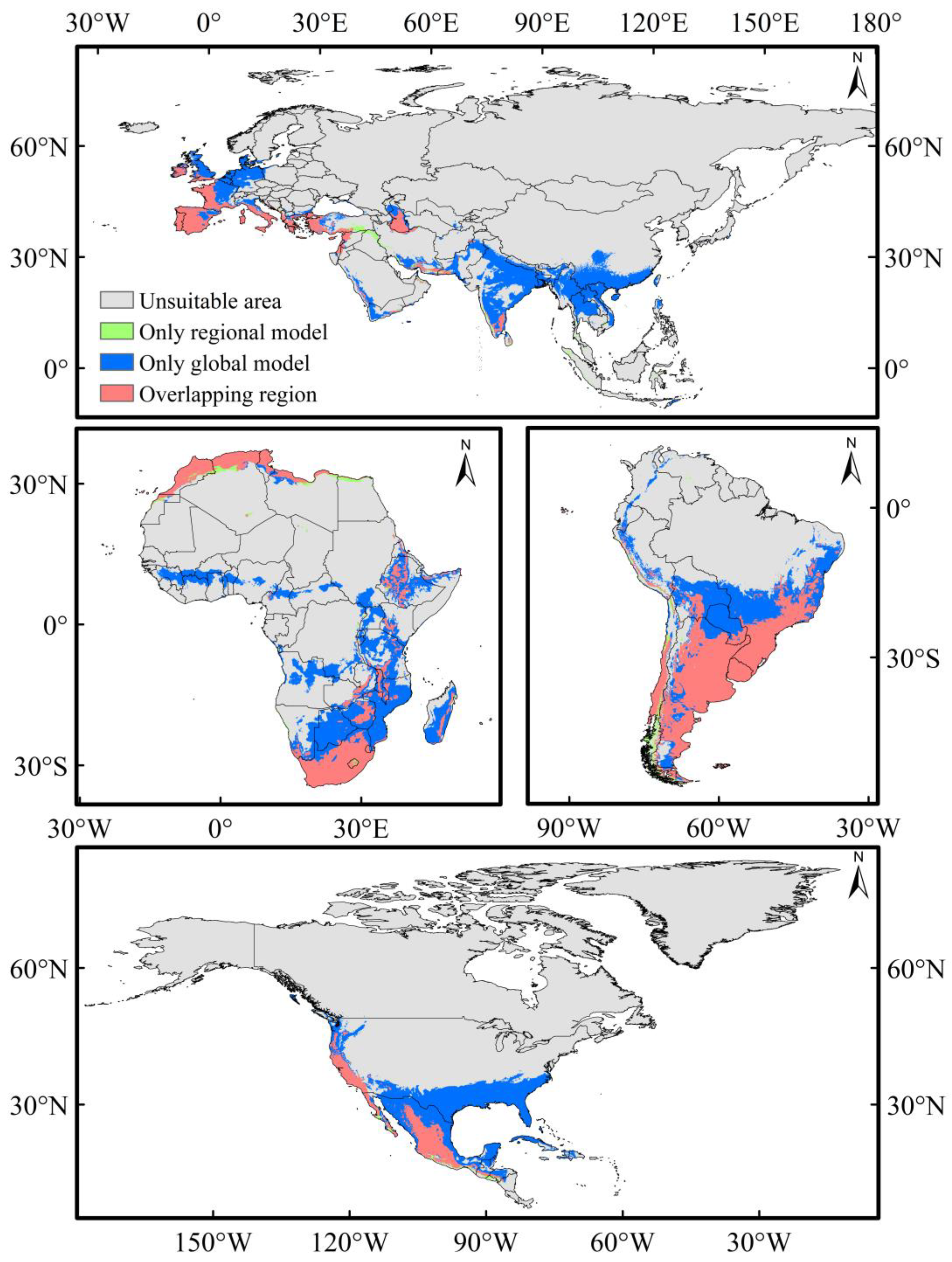
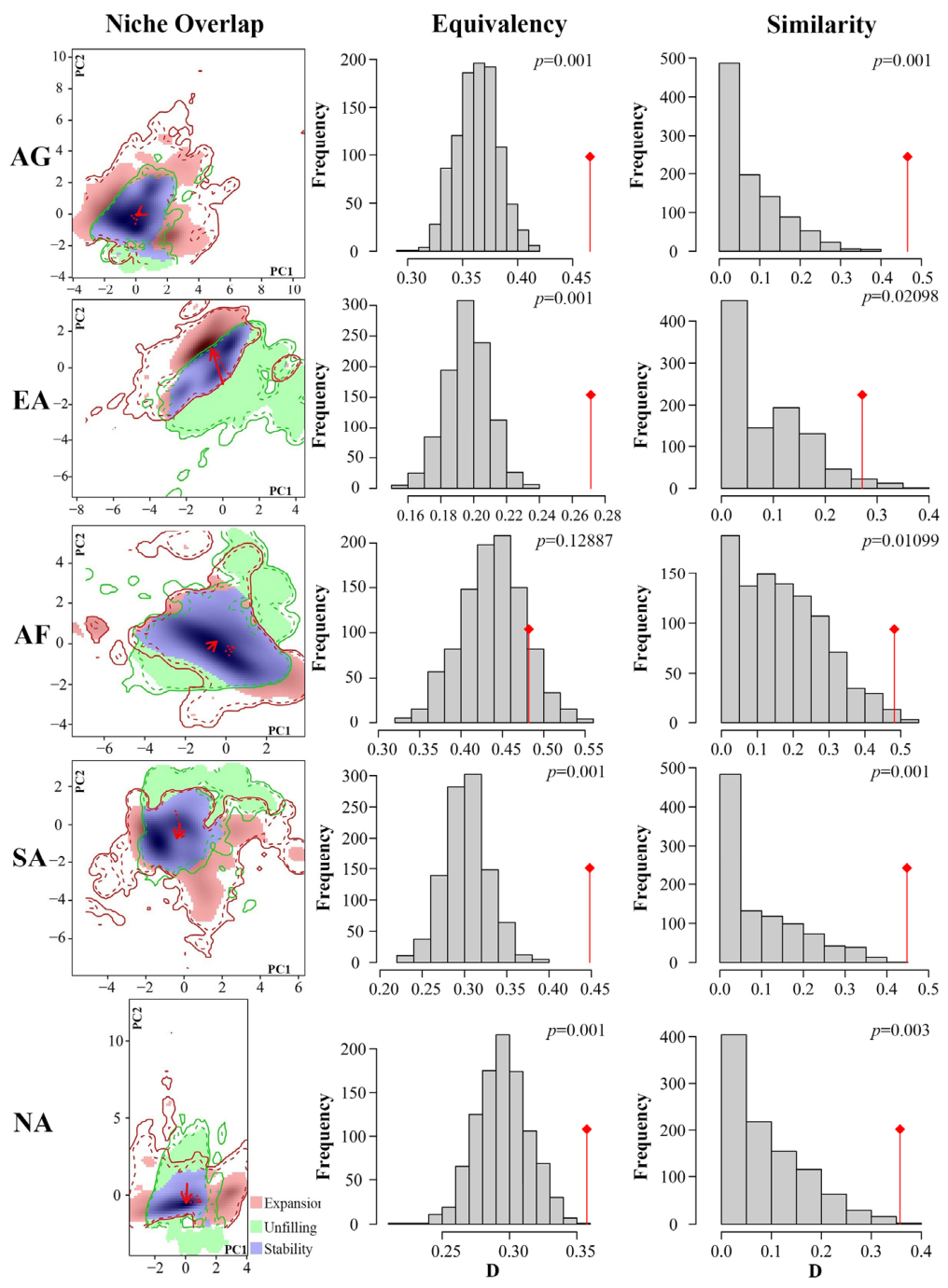
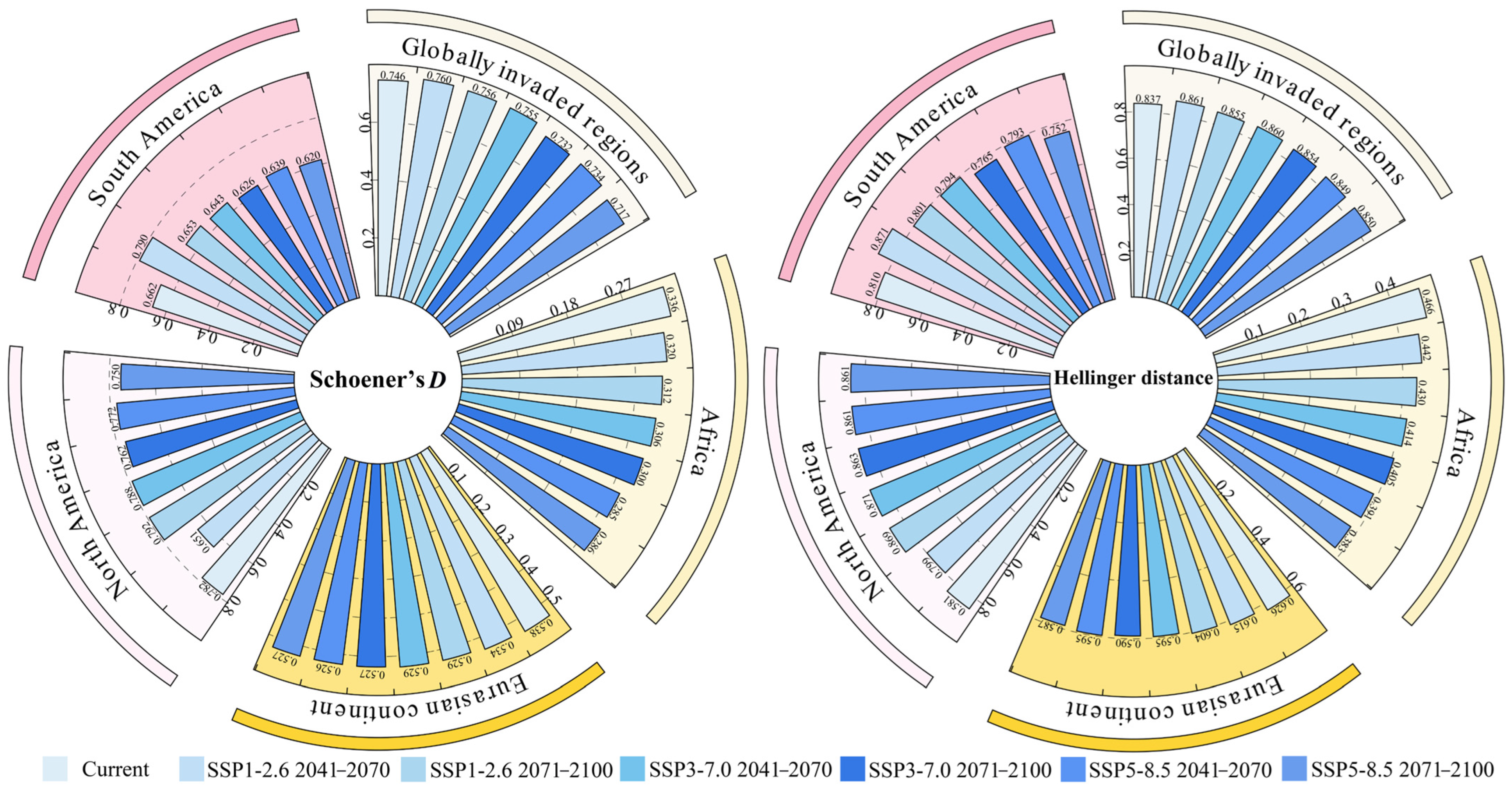
3.4. Analysis of Niche Dynamics in P. recurva
4. Discussion
4.1. Model Prediction and Key Pest Control Regions
4.2. Impact of Climate Change on the Distribution of P. recurva
4.3. Niche Dynamics Analysis
5. Conclusions
Supplementary Materials
Author Contributions
Funding
Data Availability Statement
Acknowledgments
Conflicts of Interest
References
- Sanhueza-Novoa, P.; Fernandez, M.; Hernandez-Fuentes, C.; Valenzuela, S.; Hayat, M.Q.; Ramirez, H.R.; del P. Castillo, R. Detection of Water Deficit Stress in Eucalyptus spp. through VIS-NIR Hyperspectral Imaging and Chemometric Methods. Spectrochim. Acta Part A Mol. Biomol. Spectrosc. 2026, 344, 126675. [Google Scholar] [CrossRef] [Scilit]
- FAO. Eucalypts for Planting; Food and Agriculture Organization: Rome, Italy, 1981. [Google Scholar]
- Wei, J.; Wang, C.; He, B.; You, Y.; Huang, X. Research Progress on Soil Microorganisms in Eucalypt Forests. J. Zhejiang AF Univ. 2022, 39, 1144–1154. [Google Scholar]
- Xie, Y. Analysis of China’s Wood Resource Security and the Contributions of Eucalyptus Plantation. Eucalyptus Sci. Technol. 2018, 35, 3–6. [Google Scholar]
- Correa, C.A.; dos Anjos, N.; Carvalho, A.G.; Soares, M.A.; dos Santos Junior, V.C.; Zanuncio, J.C. Phoracantha recurva (Coleoptera: Cerambycidae): First Report in the Atlantic Rainforest of Minas Gerais, Brazil. Fla. Entomol. 2020, 103, 142–144. [Google Scholar] [CrossRef] [Scilit]
- CABI. Phoracantha recurva (Eucalyptus Longhorned Borer); CABI Compendium: Wallingford, UK, 2022. [Google Scholar]
- Ivory, M.H. Preliminary Investigations of the Pests of Exotic Forest Trees in Zambia. Commonw. For. Rev. 1977, 56, 47–56. [Google Scholar]
- Paine, T.D.; Joyce, A.L.; Millar, J.G.; Hanks, L.M. Effect of Variation in Host Size on Sex Ratio, Size, and Survival of Syngaster lepidus, a Parasitoid of Eucalyptus Longhorned Beetles (Phoracantha spp.). Biol. Control 2004, 30, 374–381. [Google Scholar] [CrossRef] [Scilit]
- Ma, Z.; Liu, H.; Yang, Y. Impacts of Global Climate Change on the Spatial Range of Insects Distributed Across the Pacific Ocean. Ecol. Inform. 2025, 90, 103247. [Google Scholar] [CrossRef] [Scilit]
- Phillips, S.J.; Anderson, R.P.; Schapire, R.E. Maximum Entropy Modeling of Species Geographic Distributions. Ecol. Model. 2006, 190, 231–259. [Google Scholar] [CrossRef] [Scilit]
- Wisz, M.S.; Hijmans, R.J.; Li, J.; Peterson, A.T.; Graham, C.H.; Guisan, A.; NCEAS Predicting Species Distributions Working Group. Effects of Sample Size on the Performance of Species Distribution Models. Divers. Distrib. 2008, 14, 763–773. [Google Scholar] [CrossRef] [Scilit]
- Cui, M.; Yu, Y.; Shen, K.; Kong, J.; Wu, L.; Qi, X. Antarctic Krill Habitat Suitability Changes: Historical Trends and Future Projections under Climate Scenarios. Mar. Pollut. Bull. 2025, 217, 118142. [Google Scholar] [CrossRef] [Scilit] [PubMed]
- Baranowska, M.; Lukowski, A.; Korzeniewicz, R.; Kowalkowski, W.; Dylewski, L. Predicting Parasitic Plants Loranthus europaeus Range Shifts in Response to Climate Change. Sci. Rep. 2025, 15, 18932. [Google Scholar] [CrossRef] [Scilit] [PubMed]
- Li, X.; Yang, Y.; Zhao, P.; Lv, D.; Zhao, J.; Lu, Z.; Huang, P.; Zhu, J.; Song, H.; Bao, B.; et al. Advancing a Climate Smart Strategy for Biodiversity Conservation in Protected Areas on the Qinghai-Xizang Plateau. Geogr. Sustain. 2025, 6, 100264. [Google Scholar] [CrossRef] [Scilit]
- Zhou, L.; Zhang, Y.; Chen, Z.; Bai, G.; Dong, X.; Zhang, Y.; Hou, G. An Entire-Process MaxEnt Framework for Habitat Suitability Modeling on Google Earth Engine: A Case Study of the Oriental White Stork in Eastern Mainland China. J. Environ. Manag. 2025, 386, 125715. [Google Scholar] [CrossRef] [Scilit]
- Zhao, H.; Xian, X.; Liang, T.; Wan, F.; Shi, J.; Liu, W. Constructing an Ensemble Model and Niche Comparison for the Management Planning of Eucalyptus Longhorned Borer Phoracantha semipunctata under Climate Change. Insects 2023, 14, 84. [Google Scholar] [CrossRef] [Scilit] [PubMed]
- Bybee, L.F.; Millar, J.G.; Paine, T.D.; Campbell, K.; Hanlon, C.C. Seasonal Development of Phoracantha recurva and P. semipunctata (Coleoptera: Cerambycidae) in Southern California. Environ. Entomol. 2004, 33, 1232–1241. [Google Scholar] [CrossRef] [Scilit]
- Dhahri, S.; Lieutier, F.; Charfi, F.; Ben Jamaa, M.L. Distribution, Preference and Performance of Phoracantha recurva and Phoracantha semipunctata (Coleoptera: Cerambycidae) on Various Eucalyptus Species in Tunisia. Redia 2016, 99, 83–95. [Google Scholar] [CrossRef] [Scilit]
- Azrag, A.A.G.; Niassy, S.; Bloukounon-Goubalan, A.Y.; Abdel-Rahman, E.M.; Tonnang, H.E.Z.; Mohamed, S.A. Cotton Production Areas Are at High Risk of Invasion by Amrasca biguttula (Ishida) (Cicadellidae: Hemiptera): Potential Distribution under Climate Change. Pest Manag. Sci. 2025, 81, 2910–2921. [Google Scholar] [CrossRef] [Scilit] [PubMed]
- Wang, Z.; Yang, M.; Li, Z.; Miao, X.; Liu, J.; Zhang, J.; Xie, L.; Xu, K.; Ding, W.; Zhang, W.; et al. Habitat Suitability for the Soybean Aphid, Aphis glycines, and Its Natural Enemies: Implications for Biological Control and Soybean Protection. Front. Plant Sci. 2026, 17, 1845163. [Google Scholar] [CrossRef] [Scilit] [PubMed]
- Shcheglovitova, M.; Anderson, R.P. Estimating Optimal Complexity for Ecological Niche Models: A Jackknife Approach for Species with Small Sample Sizes. Ecol. Model. 2013, 269, 9–17. [Google Scholar] [CrossRef] [Scilit]
- Gallien, L.; Douzet, R.; Pratte, S.; Zimmermann, N.E.; Thuiller, W. Invasive Species Distribution Models-How Violating the Equilibrium Assumption Can Create New Insights. Glob. Ecol. Biogeogr. 2012, 21, 1126–1136. [Google Scholar] [CrossRef] [Scilit]
- Liu, C.; White, M.; Newell, G. Selecting Thresholds for the Prediction of Species Occurrence with Presence-Only Data. J. Biogeogr. 2013, 40, 778–789. [Google Scholar] [CrossRef] [Scilit]
- Valavi, R.; Guillera-Arroita, G.; Lahoz-Monfort, J.J.; Elith, J. Predictive Performance of Presence-Only Species Distribution Models: A Benchmark Study with Reproducible Code. Ecol. Monogr. 2022, 92, e01486. [Google Scholar]
- Aidoo, O.F.; Souza, P.G.C.; da Silva, R.S.; Santana, P.A., Jr.; Picanco, M.C.; Kyerematen, R.; Setamou, M.; Ekesi, S.; Borgemeister, C. Climate-Induced Range Shifts of Invasive Species (Diaphorina citri Kuwayama). Pest Manag. Sci. 2022, 78, 2534–2549. [Google Scholar] [CrossRef] [Scilit] [PubMed]
- Liu, C.; Newell, G.; White, M.; Machunter, J. Improving the Estimation of the Boyce Index Using Statistical Smoothing Methods for Evaluating Species Distribution Models with Presence-Only Data. Ecography 2025, 2025, e07218. [Google Scholar]
- Hirzel, A.H.; Le Lay, G.; Helfer, V.; Randin, C.; Guisan, A. Evaluating the Ability of Habitat Suitability Models to Predict Species Presences. Ecol. Model. 2006, 199, 142–152. [Google Scholar] [CrossRef] [Scilit]
- Whitford, A.M.; Shipley, B.R.; McGuire, J.L. The Influence of the Number and Distribution of Background Points in Presence-Background Species Distribution Models. Ecol. Model. 2024, 488, 110604. [Google Scholar] [CrossRef] [Scilit]
- Zhao, J.; Shi, J. Prediction of the Potential Geographical Distribution of Obolodiplosis robiniae (Diptera: Cecidomyiidae) in China Based on a Novel Maximum Entropy Model. Sci. Silvae Sin. 2019, 55, 118–127. [Google Scholar]
- Guisan, A.; Petitpierre, B.; Broennimann, O.; Daehler, C.; Kueffer, C. Unifying Niche Shift Studies: Insights from Biological Invasions. Trends Ecol. Evol. 2014, 29, 260–269. [Google Scholar] [CrossRef] [Scilit] [PubMed]
- Wang, L.; Yang, C.; Wang, Y.; Li, X.; Wan, F.; Zhang, A. Ecological Niche Shift and Suitable Area Expansion of a Globally Invasive Species Phthorimaea operculella. Chin. J. Appl. Ecol. 2024, 35, 797–805. [Google Scholar] [CrossRef] [Scilit]
- Liu, C.; Wolter, C.; Xian, W.; Jeschke, J.M. Most Invasive Species Largely Conserve Their Climatic Niche. Proc. Natl. Acad. Sci. USA 2020, 117, 23643–23651. [Google Scholar] [CrossRef] [Scilit] [PubMed]
- Parravicini, V.; Azzurro, E.; Kulbicki, M.; Belmaker, J. Niche Shift Can Impair the Ability to Predict Invasion Risk in the Marine Realm: An Illustration Using Mediterranean Fish Invaders. Ecol. Lett. 2015, 18, 246–253. [Google Scholar] [CrossRef] [Scilit] [PubMed]
- Hill, M.P.; Gallardo, B.; Terblanche, J.S. A Global Assessment of Climatic Niche Shifts and Human Influence in Insect Invasions. Glob. Ecol. Biogeogr. 2017, 26, 679–689. [Google Scholar] [CrossRef] [Scilit]
- Rodder, D.; Engler, J.O. Quantitative Metrics of Overlaps in Grinnellian Niches: Advances and Possible Drawbacks. Glob. Ecol. Biogeogr. 2011, 20, 915–927. [Google Scholar] [CrossRef] [Scilit]
- Strubbe, D.; Beauchard, O.; Matthysen, E. Niche Conservatism among Non-Native Vertebrates in Europe and North America. Ecography 2015, 38, 321–329. [Google Scholar]
- Legendre, P.; Gallagher, E.D. Ecologically Meaningful Transformations for Ordination of Species Data. Oecologia 2001, 129, 271–280. [Google Scholar] [CrossRef] [Scilit] [PubMed]
- Boieiro, M.; Varga-Szilay, Z.; Costa, R.; Crespo, L.; Leite, A.; Oliveira, R.; Pozsgai, G.; Rego, C.; Calado, H.R.; Teixeira, M.B.; et al. New Findings of Terrestrial Arthropods from the Azorean Islands. Biodivers. Data J. 2024, 12, e136391. [Google Scholar] [CrossRef] [Scilit] [PubMed]
- de Melo, A.B.; da Silva, P.H.M.; de Lima Araujo, S.; da Silva, J.G.M.; de Vicente Ferraz, A.; Rocha, S.M.G.; Almeida, M.N.F.; Araujo, M.; Godinho, T.; Neto, T.C.C.; et al. Productivity and Wood Quality Traits of Corymbia and Eucalyptus Species in Two Soil Water Deficit Sites. Ind. Crops Prod. 2024, 219, 119141. [Google Scholar] [CrossRef] [Scilit]
- Avisar, D.; Manoeli, A.; dos Santos, A.A.; Porto, A.C.D.M.; Rocha, C.D.S.; Zauza, E.; Gonzalez, E.R.; Soliman, E.; Gonsalves, J.M.W.; Bombonato, L.; et al. Genetically Engineered Eucalyptus Expressing Pesticidal Proteins from Bacillus thuringiensis for Insect Resistance: A Risk Assessment Evaluation Perspective. Front. Bioeng. Biotechnol. 2024, 12, 1322985. [Google Scholar] [CrossRef] [Scilit] [PubMed]
- da Costa, E.C.M.; Silva, D.P.; Lodi, S.; Simoes, D.A.; Godoy, B.S. The Effect of Climatic Conditions on the Seasonality of Pest Insect Populations in Eucalyptus Plantations in the Neotropics. Neotrop. Entomol. 2024, 54, 16. [Google Scholar] [CrossRef] [Scilit] [PubMed]
- Florencio, G.W.L.; Martins, F.B.; Fagundes, F.F.A. Climate Change on Eucalyptus Plantations and Adaptive Measures for Sustainable Forestry Development Across Brazil. Ind. Crops Prod. 2022, 188, 115538. [Google Scholar] [CrossRef] [Scilit]
- Liu, T.; Xie, Y. Studies on the Causes of Rapid Development of Eucalyptus Plantations in China. Eucalyptus Sci. Technol. 2020, 4, 38–47. [Google Scholar]
- Li, C.; Ouyang, L.; Chen, S.; Yang, J. Koppen Climate Classification of Eucalyptus Growth Areas in China. J. Cent. South Univ. For. Technol. 2025, 45, 67–76. [Google Scholar]
- Hanks, L.M.; Gould, J.R.; Paine, T.D.; Millar, J.G.; Wang, Q. Biology and Host Relations of Avetianella longoi (Hymenoptera: Encyrtidae), an Egg Parasitoid of the Eucalyptus Longhorned Borer (Coleoptera: Cerambycidae). Ann. Entomol. Soc. Am. 1995, 88, 666–671. [Google Scholar] [CrossRef] [Scilit]
- McDonald, H.; Reed, D.A.; Ahmadian, S.; Paine, T.D. Parasitoid Discrimination between Suitable and Unsuitable Congener Hosts. J. Insect Behav. 2015, 28, 417–425. [Google Scholar] [CrossRef] [Scilit]
- Aiello-Lammens, M.E.; Boria, R.A.; Radosavljevic, A.; Vilela, B.; Anderson, R.P. spThin: An R Package for Spatial Thinning of Species Occurrence Records for Use in Ecological Niche Models. Ecography 2015, 38, 541–545. [Google Scholar] [CrossRef] [Scilit]
- Zhao, J.Q.; Gao, T.; Du, J.J.; Shi, J. Future Trends in Obolodiplosis robiniae Distribution across Eurasian Continent under Global Climate Change. Insects 2023, 14, 48. [Google Scholar] [CrossRef] [Scilit] [PubMed]
- Liu, C.; Berry, P.M.; Dawson, T.P.; Pearson, R.G. Selecting Thresholds of Occurrence in the Prediction of Species Distributions. Ecography 2005, 28, 385–393. [Google Scholar] [CrossRef] [Scilit]
- Belal, G.; Chavanon, G.; Abdelhafid, C.; Chaabane, K. Phenology of Phoracantha recurva Newman, 1840 (Col. Cerambycidae) in Laboratory and Field Conditions in North Eastern Morocco. Vie Milieu 2017, 67, 201–207. [Google Scholar]
- Bybee, L.F.; Millar, J.G.; Paine, T.D.; Campbell, K.; Hanlon, C.C. Effects of Temperature on Fecundity and Longevity of Phoracantha recurva and P. semipunctata (Coleoptera: Cerambycidae). Environ. Entomol. 2004, 33, 138–146. [Google Scholar] [CrossRef] [Scilit]
- Buisson, L.; Thuiller, W.; Casajus, N.; Lek, S.; Grenouillet, G. Uncertainty in Ensemble Forecasting of Species Distribution. Glob. Change Biol. 2010, 16, 1145–1157. [Google Scholar] [CrossRef] [Scilit]
- Chen, I.C.; Hill, J.K.; Ohlemuller, R.; Roy, D.B.; Thomas, C.D. Rapid Range Shifts of Species Associated with High Levels of Climate Warming. Science 2011, 333, 1024–1026. [Google Scholar] [CrossRef] [Scilit] [PubMed]
- Hickling, R.; Roy, D.B.; Hill, J.K.; Fox, R.; Thomas, C.D. The Distributions of a Wide Range of Taxonomic Groups Are Expanding Polewards. Glob. Change Biol. 2006, 12, 450–455. [Google Scholar] [CrossRef] [Scilit]
- Zou, Y.; Ge, X.; Zong, S.; Newman, J.A. Climate Change May Make Pine Wilt Disease More Prevalent. J. Appl. Ecol. 2024, 61, 3028–3039. [Google Scholar] [CrossRef] [Scilit]
- Wiens, J.; Graham, C. Niche Conservatism: Integrating Evolution, Ecology, and Conservation Biology. Annu. Rev. Ecol. Evol. Syst. 2005, 36, 519–539. [Google Scholar] [CrossRef] [Scilit]
- Niu, K.C.; Lin, Y.N.; Shen, Z.H.; Huang, F.L.; Fang, J.Y. Community Assembly: The Relative Importance of Neutral Theory and Niche Theory. Biodivers. Sci. 2009, 17, 579–593. [Google Scholar] [CrossRef] [Scilit]
- Fernandez, M.; Hamilton, H. Ecological Niche Transferability Using Invasive Species as a Case Study. PLoS ONE 2015, 10, e0119891. [Google Scholar] [CrossRef] [Scilit] [PubMed]
- Callen, S.T.; Miller, A.J. Signatures of Niche Conservatism and Niche Shift in the North American Kudzu (Pueraria montana) Invasion. Divers. Distrib. 2015, 21, 853–863. [Google Scholar] [CrossRef] [Scilit]
- Liu, Y.; Heberling, J.M.; Wang, Z.; Soltis, D.E.; Soltis, P.S. Niche Unfilling Dominates the Naturalization of Species from Intercontinentally Disjunct Genera. Glob. Ecol. Biogeogr. 2023, 32, 1977–1990. [Google Scholar] [CrossRef] [Scilit]
- Rosenblad, K.C.; Perret, D.L.; Sax, D.F. Niche Syndromes Reveal Climate-Driven Extinction Threat to Island Endemic Conifers. Nat. Clim. Change 2019, 9, 627–631. [Google Scholar] [CrossRef] [Scilit]
- Liu, Z.H.; Huang, S.B.; Li, Z.Q. The First Systematic Report of an Introduced Species, Phoracantha semipunctata Fabricius in China, and a Risk Analysis for This Pest. Chin. J. Appl. Entomol. 2024, 61, 1104–1113. [Google Scholar]
- Barton, P.S.; Westgate, M.J.; Foster, C.N.; Cuddington, K.; Hastings, A.; O’Loughlin, L.S.; Sato, C.F.; Willig, M.R.; Lindenmayer, D.B. Using Ecological Niche Theory to Avoid Uninformative Biodiversity Surrogates. Ecol. Indic. 2020, 108, 105692. [Google Scholar] [CrossRef] [Scilit]





| Invasive Regions | Schoener’s D | Expansion | Stability | Unfilling |
|---|---|---|---|---|
| Globally invaded regions | 0.466 | 0.282 | 0.718 | 0.043 |
| Eurasian continent | 0.271 | 0.369 | 0.631 | 0.549 |
| North America | 0.357 | 0.333 | 0.667 | 0.406 |
| South America | 0.448 | 0.229 | 0.771 | 0.198 |
| Africa | 0.482 | 0.090 | 0.910 | 0.181 |
Disclaimer/Publisher’s Note: The statements, opinions and data contained in all publications are solely those of the individual author(s) and contributor(s) and not of MDPI and/or the editor(s). MDPI and/or the editor(s) disclaim responsibility for any injury to people or property resulting from any ideas, methods, instructions or products referred to in the content. |
© 2026 by the authors. Licensee MDPI, Basel, Switzerland. This article is an open access article distributed under the terms and conditions of the Creative Commons Attribution (CC BY) license.
Share and Cite
Zhao, J.; Sun, D.; Wang, H.; Liang, T.; Lan, K.; Shi, J. Global Invasion Potential and Niche Dynamics of Phoracantha recurva Newman, 1840 (Coleoptera: Cerambycidae) Under Climate Change. Insects 2026, 17, 729. https://doi.org/10.3390/insects17070729
Zhao J, Sun D, Wang H, Liang T, Lan K, Shi J. Global Invasion Potential and Niche Dynamics of Phoracantha recurva Newman, 1840 (Coleoptera: Cerambycidae) Under Climate Change. Insects. 2026; 17(7):729. https://doi.org/10.3390/insects17070729
Chicago/Turabian StyleZhao, Jiaqiang, Dongrui Sun, Huiru Wang, Te Liang, Keke Lan, and Juan Shi. 2026. "Global Invasion Potential and Niche Dynamics of Phoracantha recurva Newman, 1840 (Coleoptera: Cerambycidae) Under Climate Change" Insects 17, no. 7: 729. https://doi.org/10.3390/insects17070729
APA StyleZhao, J., Sun, D., Wang, H., Liang, T., Lan, K., & Shi, J. (2026). Global Invasion Potential and Niche Dynamics of Phoracantha recurva Newman, 1840 (Coleoptera: Cerambycidae) Under Climate Change. Insects, 17(7), 729. https://doi.org/10.3390/insects17070729