1. Introduction
Megaloptera includes some of the world’s largest freshwater insects and consists of dobsonflies and alderflies (Corydalidae) along with fishflies (Sialidae). This insect order is comparatively small, having between 328 and 397 recognized extant species and sub-species that exhibit a patchy distribution globally [
1,
2]. The sub-family Corydalinae, which includes the largest species and is the focus of this paper, is found only in the Americas, Asia, and South Africa [
1,
2].
Development for all Megaloptera is holometabolous, involving an obligate aquatic larval stage. Larval Corydalinae in aquatic habitats respire via ventral tracheal gills and functional spiracles. Adult Corydalinae are known as dobsonflies while the larvae are referred to as hellgrammites. The larval body form is characterized by dorsoventral flattening, a leathery integument, lateral appendages, and powerful pincers. Hellgrammite development involves 11 instars and requires from one to three years to become winged adults pending latitude and temperature.
Corydalus cornutus populations in the northern part of their range in the U.S. generally take longer to complete development than populations from the southern part of the U.S. range [
3,
4,
5]. The impressive size associated with hellgrammites comes in the late instars with lengths up to 86 mm having been recorded for
C. cornutus [
6] and up to 90 mm for Corydalidae [
7]. Total development from first to final instar may also involve an increase of up to 1000 times the original biomass [
8].
Megaloptera have been used as indicator taxa within monitoring programs, but their assigned pollution sensitivity varies by the taxonomic level. At the family level, Corydalidae hellgrammites have been classified as pollution intolerant for water quality indices in the Midwestern United States [
9,
10].
Corydalus cornutus is classified as moderately intolerant by Ohio Environmental Protection Agency [
11] and
Corydalus spp. are recommended as indicator taxa for assessing the effects of pollutant mixtures and xenobiotics in streams and rivers in Mexico [
12]. Corydalidae hellgrammites are also considered more sensitive pollution indicators than fishfly larvae [
9]. It is well known that
C. cornutus hellgrammites in the eastern United States are associated with stream riffles, which contain greater water velocities, higher oxygen levels, and greater food resources than other stream habitat types [
4,
13,
14]. The association with riffles begins immediately after the first instar larvae hatch from their terrestrial egg cases, drop into the water, and then drift downstream until they encounter a suitable riffle [
14]. Once established within the riffle, Corydalinae hellgrammites typically remain stationary but do exhibit limited nocturnal movement [
2,
15]. From the underside of rocks, hellgrammites engage in ambush predation on the aquatic larvae of other insects and occasionally smaller hellgrammites [
13,
15].
Corydalus cornutus hellgrammites’ preference for riffles and their absence from urban streams of central and southern Michigan [
16] suggests that this species may be suitable for use as an indicator species for physical habitat conditions in streams.
Beyond the documented association of
C. cornutus hellgrammites with riffles, there is limited information on their habitat use, especially in the northern portion of the range. Epperson and Short [
4] documented that
C. cornutus hellgrammites in 2nd and 4th order sites exhibited the greatest density in reaches having the greatest canopy cover, least discharge, and greatest amount of riffle habitat compared to larger downstream sites in the Guadalupe River, Texas. Short et al. [
5] observed that the
C. cornutus hellgrammite biomass and final instar lengths were greater in spring-fed than surface-fed streams and hellgrammite biomass increased with increasing wetted width in stream sites in the Guadalupe River Basin, Texas.
Location within the riffle also appears to be important to hellgrammites. Oviposition sites of
C. cornutus dobsonflies most often occurred within the middle 1/3 of a sand-bottomed stream in Texas [
14], likely to ensure that first instar hellgrammites are positioned over water upon hatching. Radio-tracking of Corydalinae hellgrammites in a stream in Japan also documented larval preference for the center of the riffle [
15]. Substrate stability is another important determinant of position within the riffle. The turbulent hydrologic conditions within riffles likely draw
C. cornutus hellgrammites to cobble and boulders, which provide more stable habitat due to their greater mass [
16,
17].
Corydalus cornutus hellgrammite biomass was best predicted by a combination of water depth, water velocity, and substrate size within riffles of a warmwater stream in Oklahoma [
17]. Similarly, field studies in Arkansas and Utah streams documented that
Corydalus hellgrammite density was greater within stable substrates (gravel, cobble, etc.) than on submerged and floating large instream wood [
18,
19]. However, field studies in low-gradient, sand-bottomed streams in Georgia, South Carolina, and Texas that lacked larger, stable substrate types showed that
C. cornutus hellgrammite density and production were greater on large instream wood than on fine grain sediments (i.e., silt, clay, sand) [
20,
21,
22].
Wherever they are positioned physically within the stream,
C. cornutus hellgrammites occupy an important trophic position within lotic ecosystems, since they function as predators of invertebrates and prey for fishes [
5,
13,
14,
16,
23]. Beyond threats posed by predation and other natural processes (i.e., floods, droughts), hellgrammites may also face anthropogenic threats from eutrophication, pollution, habitat alterations, and over-harvesting for use as bait [
2,
24]. Corydalinae are likely highly susceptible to habitat degradation due to their preference for riffle habitat and restricted instream movement as larvae, as well as their limited mobility as adults. Personal observations (J.P. Bossley) and anecdotal evidence from Ohio Environmental Protection Agency suggest
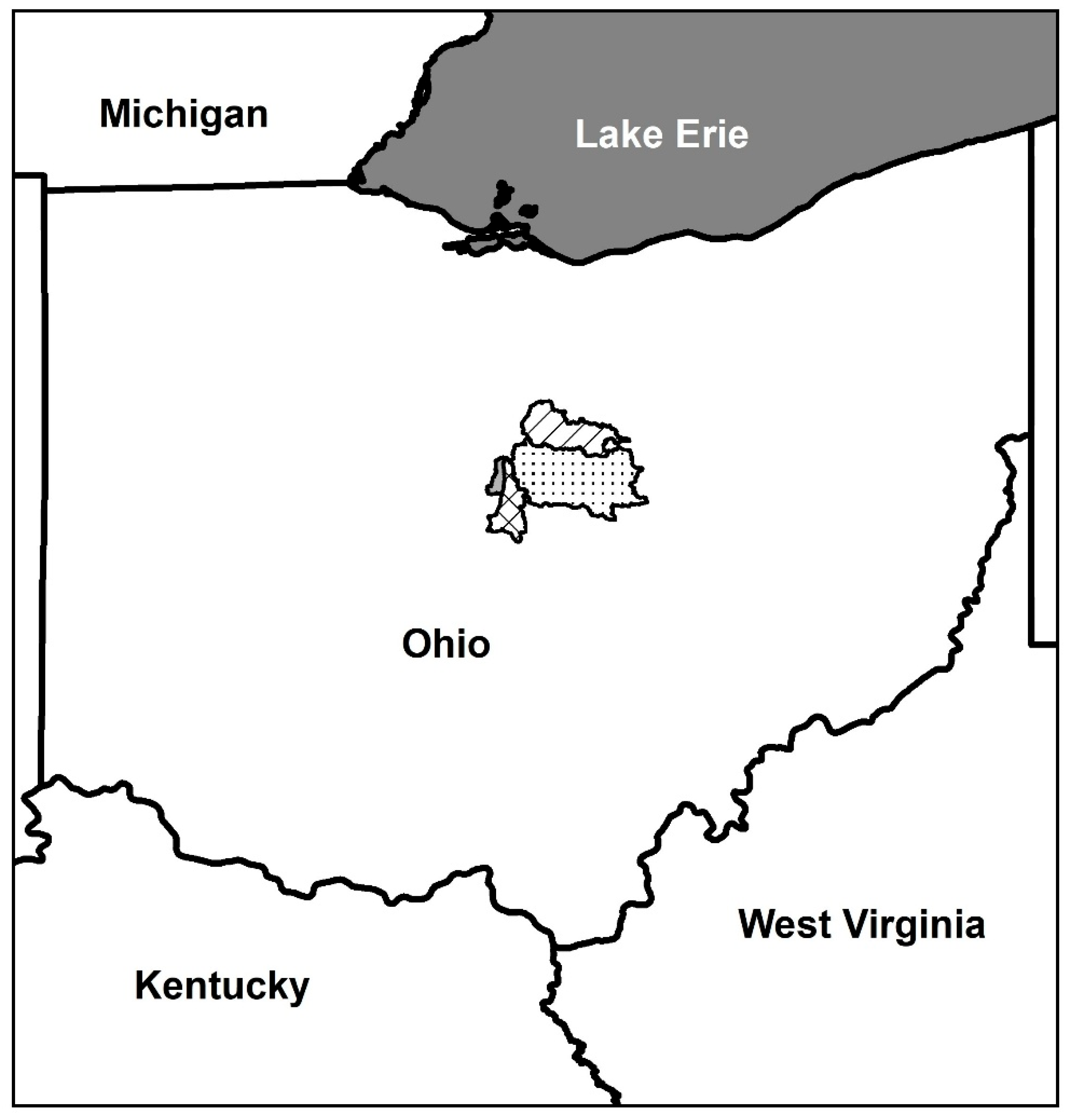
C. cornutus hellgrammite populations in Ohio may be declining. Consequently, we investigated their habitat relationships within central Ohio riffles at the plot scale (1-m
2) over a two-year period to help inform potential conservation strategies. We suspected that
C. cornutus hellgrammites would preferentially occur in plots containing larger substrate (i.e., cobble and boulders) and faster water velocities. Specifically, our research questions were: (1) What environmental variables are good predictors of
C. cornutus hellgrammite occurrence, density, and body size at the plot scale within riffles in central Ohio rivers; and (2) What is the relationship of
C. cornutus hellgrammite occurrence, density, and body size with environmental variables at the plot scale within riffles in central Ohio rivers?
3. Results
We captured 276 hellgrammites over two years of sampling, and all were identified as eastern dobsonfly (C. cornutus). Captured hellgrammites ranged in body length from 11 to 90 mm and the head capsule widths of captured individuals ranged from 1 to 11 mm. Simple linear regression analyses confirmed that head capsule width was strongly (adjusted R2 = 0.888) and positively correlated (p < 0.001) with body length, which supported our use of head capsule width as proxy for body size. In 2023 and 2024 combined, 101 plots (26.6%) sampled contained hellgrammites and 279 plots (73.4%) did not. Hellgrammite density within plots ranged from 0 to 11 individuals/m2 with an overall average density of 0.74 individuals/m2 during the two years of our sampling. Mean hellgrammite head capsule width within plots ranged from 1.50 to 10.00 mm with an overall average of 4.79 mm for the two-year period.
Water depth within the plots ranged from 0.03 to 0.70 m with an average of 0.20 m and water velocity within the plots ranged from −0.02 to 1.27 m/s with an average of 0.41 m/s. Grain size scores within the plots ranged from 0 (bedrock dominated) to 260 (boulder dominated) with an average grain size score of 149, which is slightly smaller than cobble. Large instream wood was rare in our study plots and only occurred in 2 of 380 plots sampled. Qualitative observations indicated that leaf packs and other organic matter accumulations occurred infrequently within our sampled plots. Visual estimates of percent canopy cover over the plots ranged from 0 to 100% with an average of 32%. Distance to the nearest plot with hellgrammites ranged from 0.53 to 33.5 m with an average of 7.28 m.
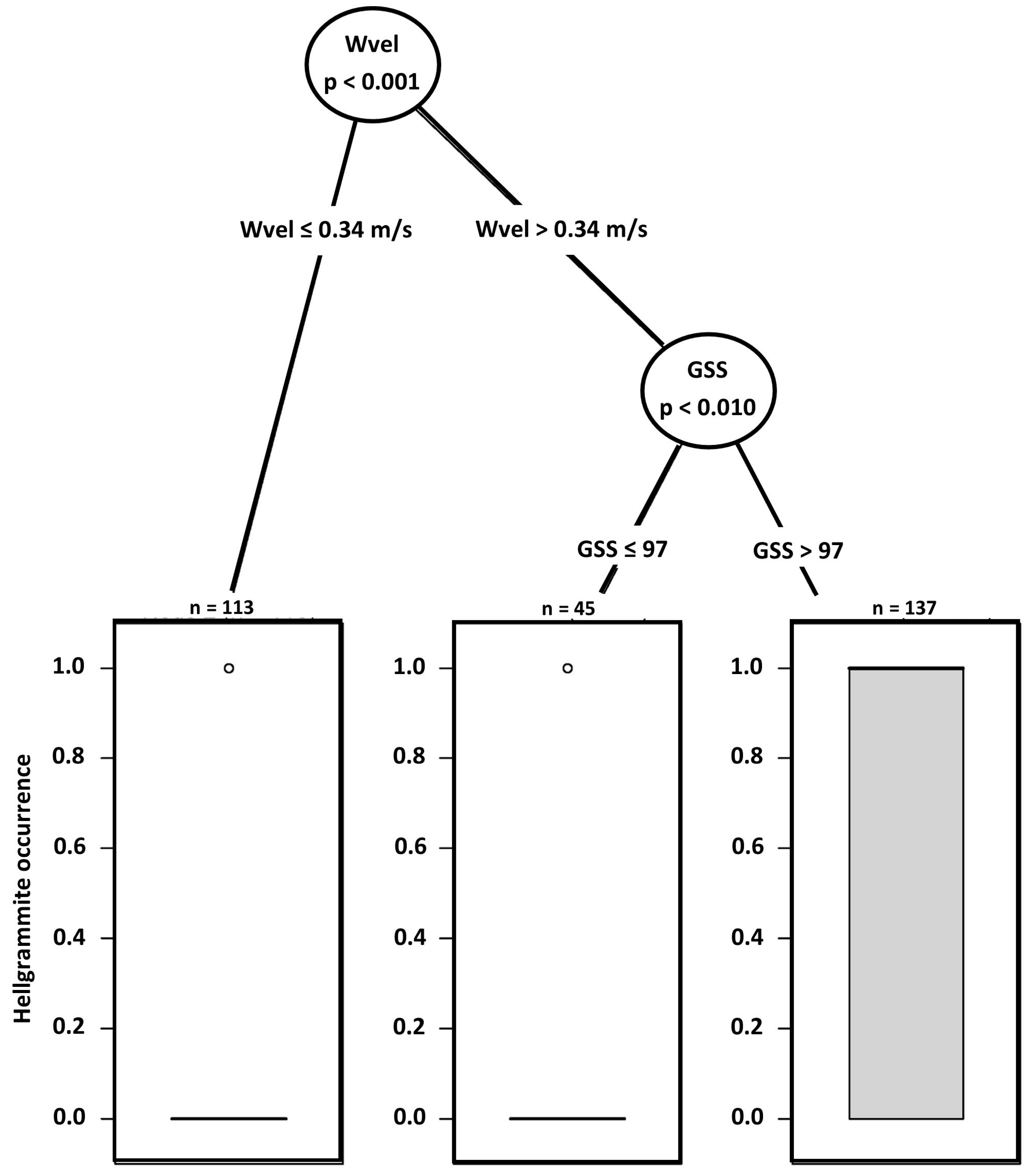
Mixed effects regression tree analyses indicated that hellgrammite occurrence in riffles was predicted by water velocity and grain size score where the greatest occurrence was in plots with water velocities greater than 0.34 m/s and grain size scores greater than 97 (
Figure 2). The lowest occurrence was in plots with water velocities greater than 0.34 m/s and grain size scores less than or equal to 97 and plots with water velocities less than or equal to 0.34 m/s (
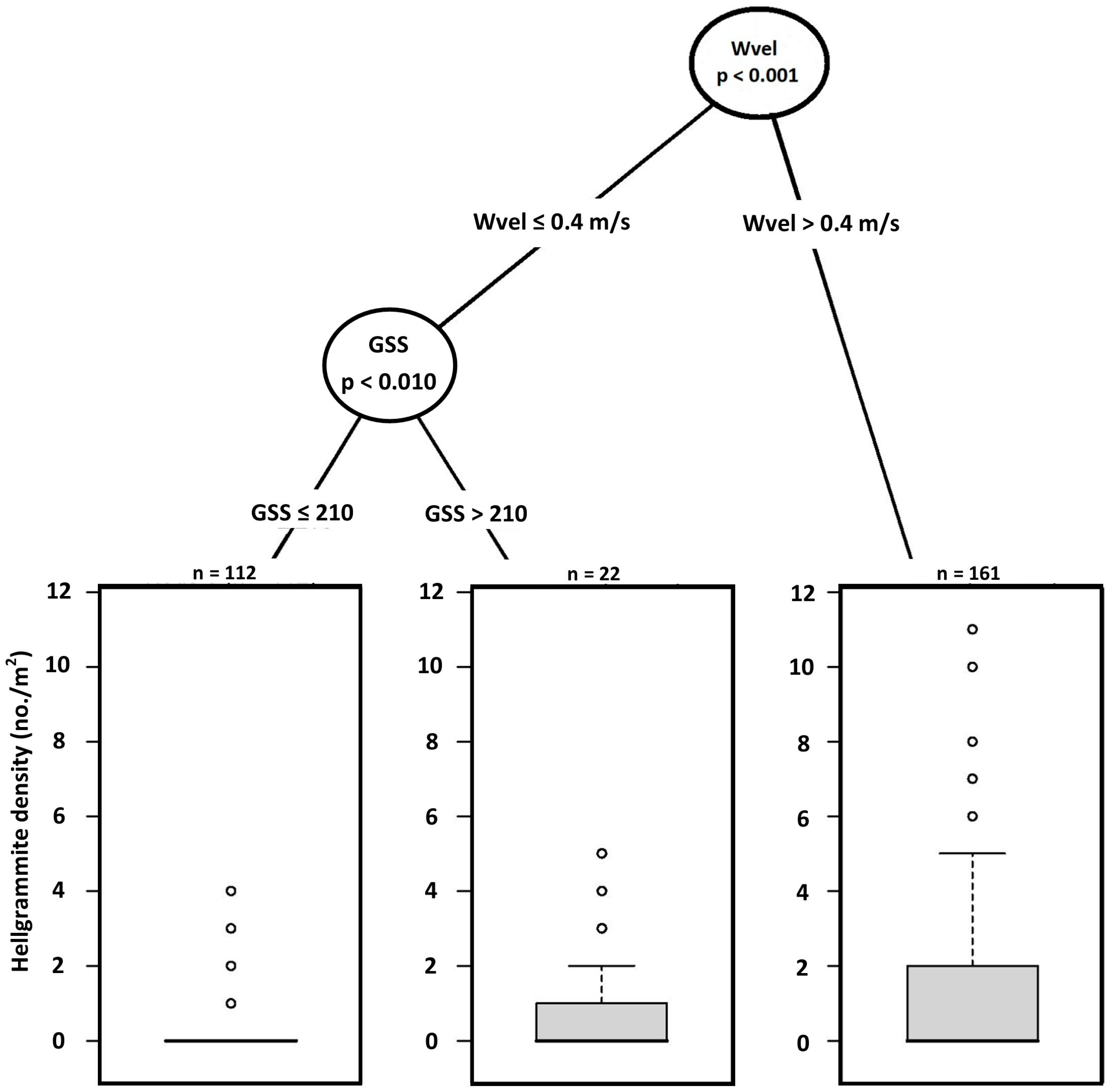
Figure 2). AIC comparisons indicated that the mixed effects regression tree for occurrence (AIC = 231.62) was better than the null occurrence mixed effects regression tree (AIC = 296.82). Hellgrammite density in riffles was also predicted by water velocity and grain size score where the greatest density occurred in plots having water velocities greater than 0.40 m/s (
Figure 3). Plots having water velocities less than or equal to 0.40 m/s and grain size scores greater than 210 had greater density than plots with water velocities less than or equal to 0.40 m/s and grain size scores less than or equal to 210 (
Figure 3). AIC comparisons indicated that the mixed effects regression tree for density (AIC = 635.17) was better than the null density mixed effects regression tree (AIC = 748.60). The linear mixed effects regression tree of hellgrammite head capsule width did not produce a regression tree as none of the 10 measured habitat variables was a significant predictor of head capsule width.
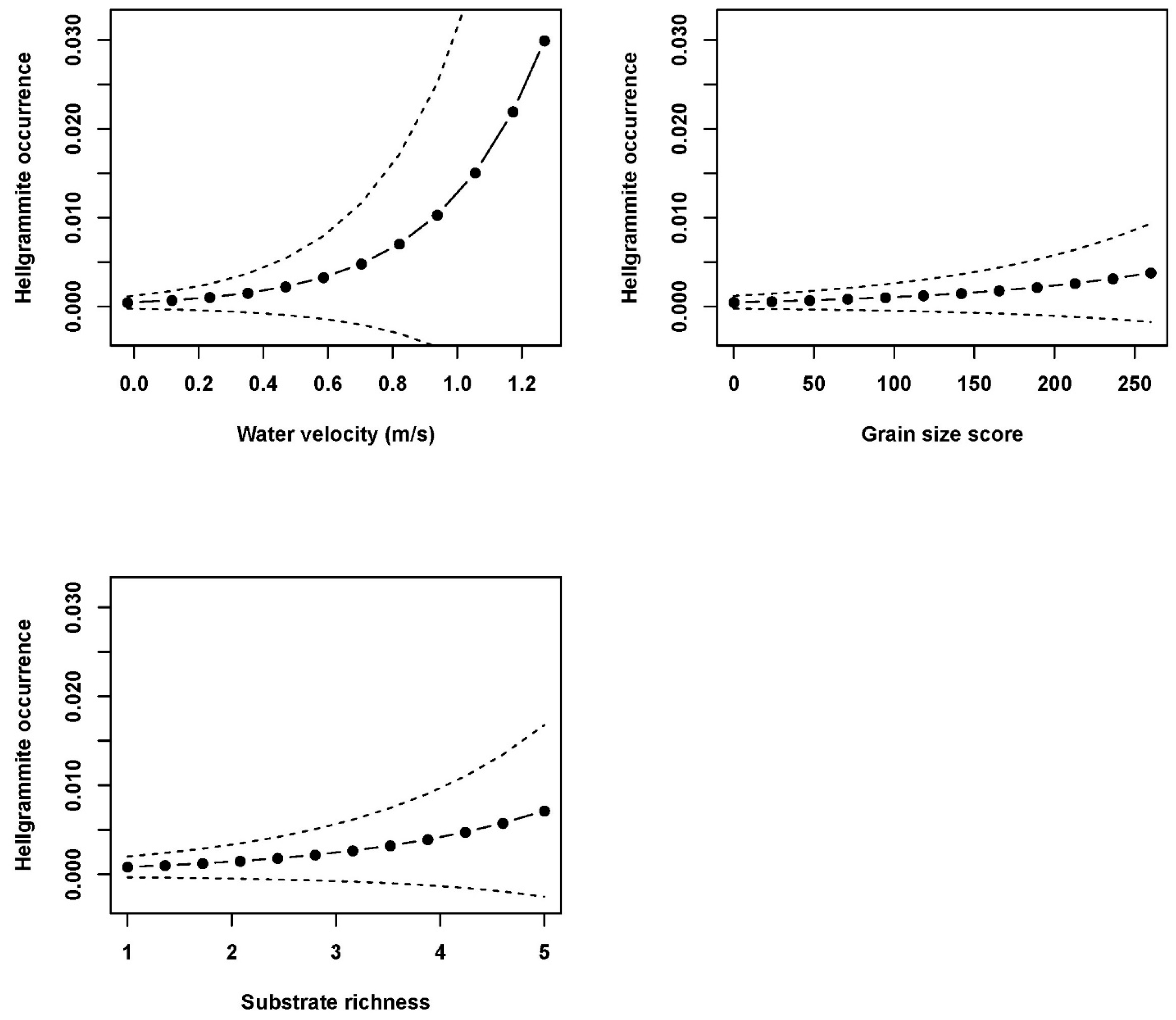
Mixed effects model analyses with the subset of measured environmental variables indicated that hellgrammite occurrence in riffles was significantly correlated with water velocity, grain size score, and substrate richness and not significantly correlated with edge-interior scores (
Table 2). Occurrence increased with increasing water velocity, grain size score, and substrate richness within plots in riffles (
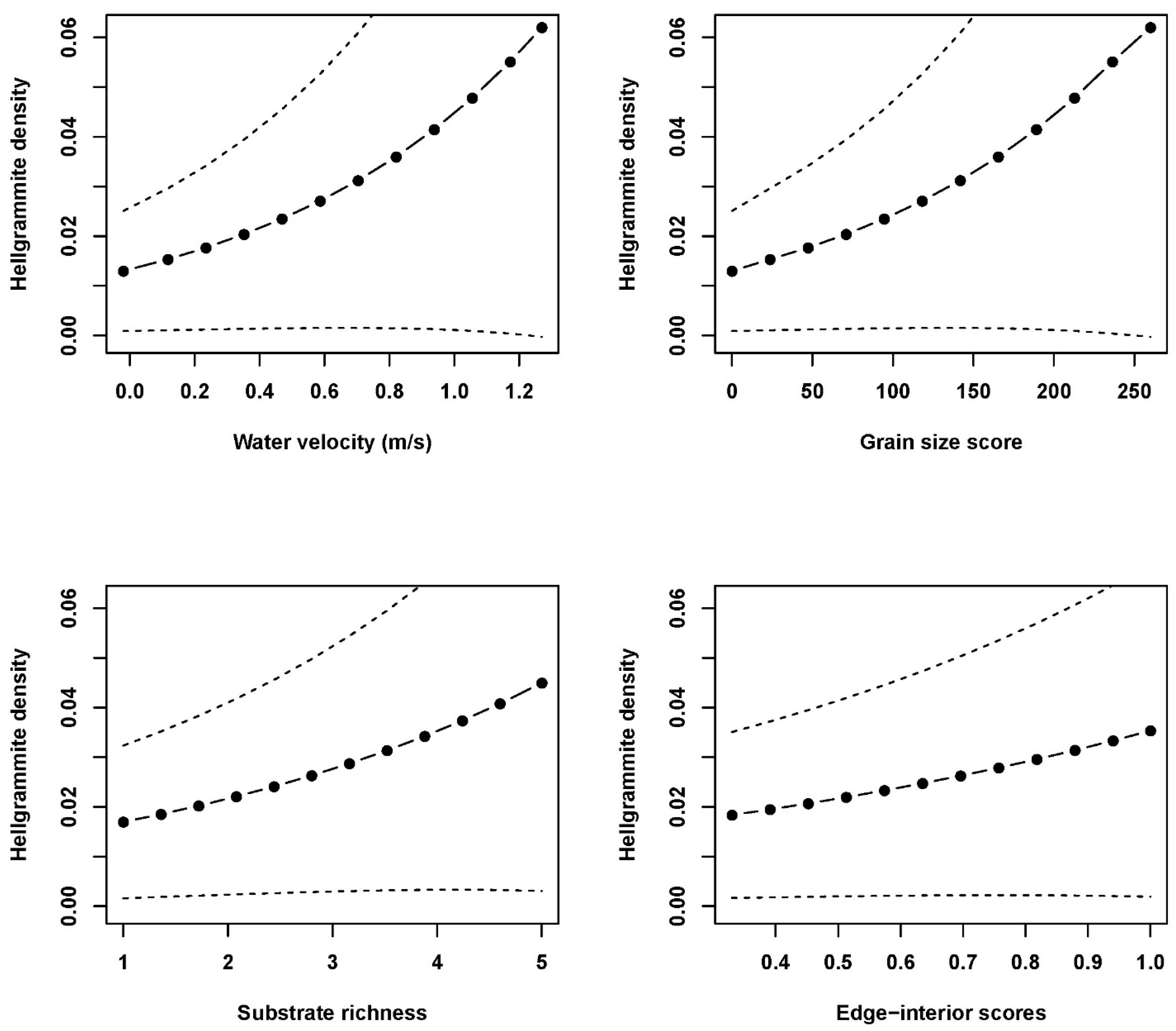
Figure 4). Hellgrammite density in riffles was significantly correlated with water velocity, grain size score, substrate richness, and edge-interior scores and density increased with increases in water velocity, grain size score, substrate richness, and edge-interior scores (
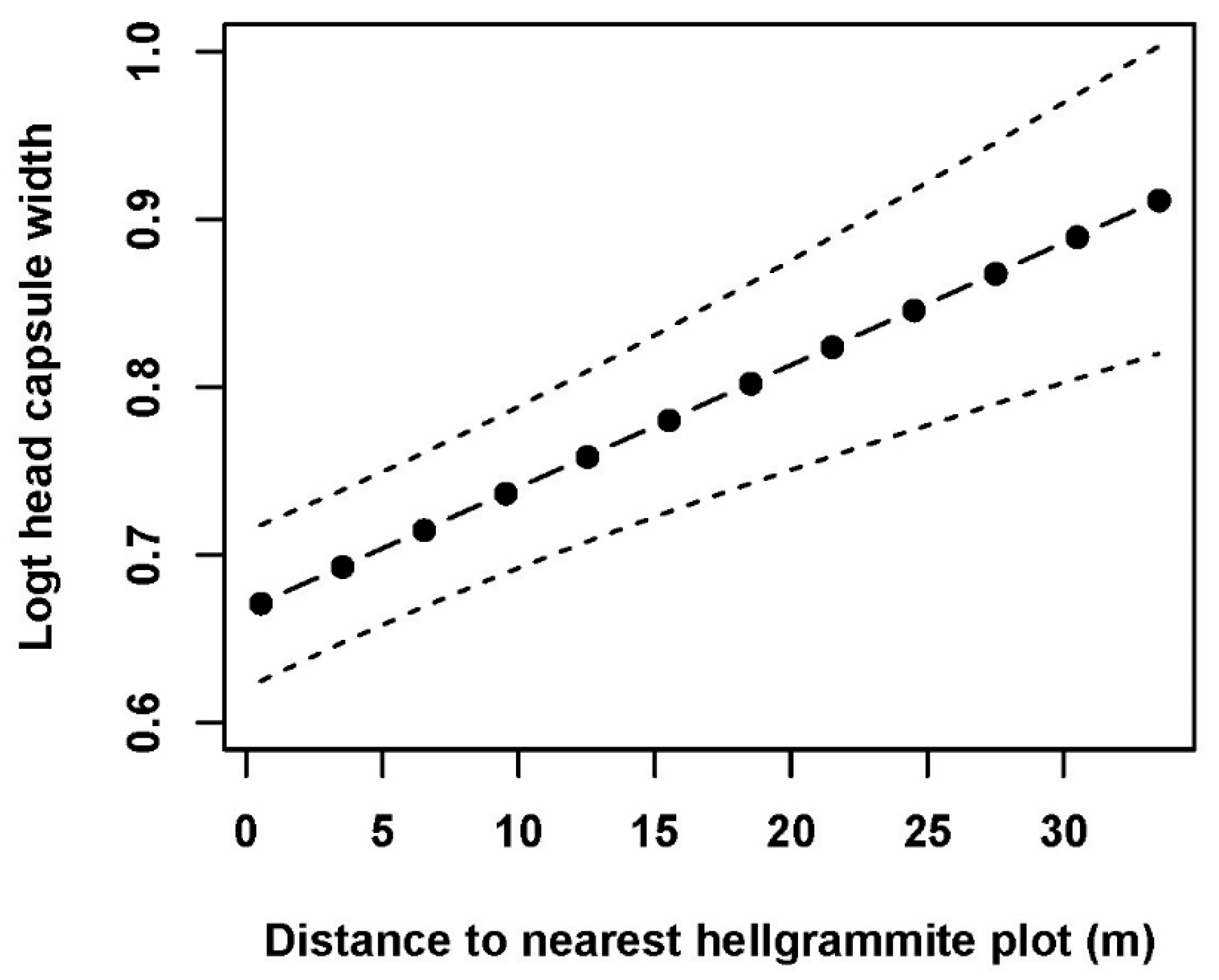
Figure 5). Hellgrammite head capsule width was significantly correlated with distance to nearest plot with hellgrammites and was not significantly correlated with water velocity and grain size score (
Table 2). Head capsule width increased with increasing distances to the nearest plot with hellgrammites (
Figure 6).
4. Discussion
Our results indicated that the best predictors of C. cornutus hellgrammite occurrence and density at the 1 m2 plot scale within riffles of central Ohio rivers were water velocity and grain size score. None of the measured environmental variables were found to be a good predictor of C. cornutus hellgrammite head capsule width. Corydalus cornutus hellgrammite population characteristics at the 1 m2 plot scale within riffles of central Ohio rivers were also positively correlated with water velocity, grain size score, substrate richness, edge-interior scores, and distance to the nearest plot with hellgrammites.
Our findings related to the importance of water velocity and grain size score aligned with our expectations of
C. cornutus hellgrammite habitat relationships. These findings are also consistent with
C. cornutus hellgrammite preferences for riffle habitats that are characterized by the combination of fast water velocities and large substrate sizes [
4,
13,
14]. Our results are similar to those of Orth and Maughan [
17] who documented that
C. cornutus hellgrammite biomass in riffles in a warmwater stream in Oklahoma was best predicted by a combination of water depth, velocity, and substrate type. However, we documented an interaction effect of water velocity and grain size scores on
C. cornutus hellgrammite occurrence and density. Specifically, water velocity was the primary determinant of
C. cornutus occurrence and density within 1-m
2 plots within riffles and grain size score was a secondary factor that influenced occurrence in plots with water velocities >0.34 m/s and density in plots with water velocities ≤0.40 m/s. To our knowledge we are the first to document the influence of an interaction effect of water velocity and grain size score on
C. cornutus hellgrammites.
Our results at the plot scale combined with those at the reach scale [
4,
13,
14] indicate
C. cornutus hellgrammites’ preference for fast water velocities and large substrate sizes in streams and rivers at both the plot scale within individual riffles and at the reach scale encompassing multiple habitat types (pools, riffles, runs, etc.). The preference of
C. cornutus hellgrammites for riffle habitat in the eastern U.S. has been attributed to these habitats containing greater streamflow, higher oxygen levels, and greater food resources than other habitat types [
4,
13,
14]. It is likely that the preference of
C. cornutus hellgrammites for fast water velocities and large substrate sizes at the plot scale also corresponds to increased oxygen levels and greater food resources, but this needs to be confirmed by future research.
We also documented that C. cornutus hellgrammite occurrence and density increased with increasing substrate richness within the plots. We believe our study is the first to document a relationship between C. cornutus hellgrammite occurrence and density with this substrate variable. We originally thought that this relationship might be influenced by the underlying effect of the larger substrates (i.e., cobble and boulder) on C. cornutus hellgrammite occurrence and density, but substrate richness was not correlated (p < 0.05) with percent cobble and boulders, grain size score, or any other habitat variable. The observed relationship between C. cornutus hellgrammite occurrence and density with substrate richness might reflect the ability of a greater assortment of substrate sizes to provide shelter for a greater size range of C. cornutus hellgrammites or it might reflect the effect of an unmeasured habitat variable. We recommend that future research explore the specific mechanisms underlying the influence of substrate richness on C. cornutus hellgrammites.
We observed that
C. cornutus hellgrammite density increased with increasing edge- interior scores, which signifies that density increased in plots located in the center of the riffle compared to plots located at the periphery of the riffle. These results are concordant with those of Lowery and Cook [
14] and Hayashi and Nakane [
15]. In a sand-bottomed stream in Texas,
C. cornutus dobsonflies most often selected oviposition sites in the middle 1/3 of the stream [
14], which would increase the likelihood that newly hatched hellgrammites would drop into the water rather than the dry streambank. Hayashi and Nakane [
15] radio-tagged final instar
Protohermes grandis hellgrammites (Cordalinae) and documented that newly released
Protohermes grandis hellgrammites migrated from the water’s edge to the center of the riffle within a stream in Japan. Along with these findings, our results suggest that the preference for the center of a riffle is reflected in both adult oviposition behavior and hellgrammite habitat selection behavior. Regarding habitat selection behavior, the causal factors for Corydalinae hellgrammites’ preference for the center of the riffle remain unknown. Future research is needed to determine whether this preference occurs primarily due to the water velocity and substrate conditions or because the center of the riffle provides an ideal position for ambush predation [
15] or a combination of both factors.
Corydalus cornutus head capsule width, which is an indicator of body size, increased with increasing distances to the nearest plot with
C. cornutus hellgrammites within central Ohio riffles during the early summer. Laboratory experiments with large and small
C. cornutus hellgrammites found that larger individuals often excluded smaller individuals from refugia [
23], and such exclusionary behavior may be related to the known tendency of Megaloptera larvae to engage in cannibalism [
1,
2]. Stewart et al. [
13] confirmed the cannibalistic tendencies of
C. cornutus hellgrammites by examining the stomach contents of hellgrammites from a large riffle in a Texas River and found that
C. cornutus hellgrammites constituted 0.4% of the food items found in stomachs of
C. cornutus hellgrammites having head capsule widths between 6 and 8 mm. Thus, the positive association between
C. cornutus hellgrammite head capsule widths and increasing distances from nearest plot with hellgrammites likely reflects a combination of the territorial nature of the larger hellgrammites and the risk of cannibalism.
Notably,
C. cornutus hellgrammite head capsule width was not correlated with water velocity, grain size scores, substrate richness, or edge-interior scores within central Ohio riffles in contrast to our observed relationships of
C. cornutus hellgrammite occurrence and density with these environmental factors during the early summer. Perhaps once
C. cornutus hellgrammites select a plot based on water velocity and grain size scores, their subsequent growth is a function of other unmeasured variables, such as food availability or water temperature. This conjecture is supported by Corydalinae hellgrammites’ preference for a stationary existence and their aversion to relocating to different locations within a riffle even when faced with starvation [
15]. However, information on Corydalinae hellgrammite movement is very limited and derives from one short-term study in Japan [
15], and subsequently there are notable information gaps on when and where larval Corydalinae hellgrammite movement occurs within streams. Life history information suggests that final instar Corydalinae hellgrammites will move toward the riffle’s edge to prepare for pupation [
3,
32]. Details related to the timing and extent of hellgrammite movement need to be addressed by future research.
In conclusion, our results documented the importance of water velocity and grain size score on C. cornutus hellgrammite occurrence and density within 1-m2 plots in central Ohio riffles during the early summer. Additionally, specific C. cornutus habitat relationships observed included: (1) increases in occurrence were observed with increasing water velocity, grain size score, and substrate richness; (2) increases in density occurred with increases in the same three variables as well as edge-interior scores; and (3) increases in body size occurred with increasing distance to the nearest plot with hellgrammites. These findings provide new insights regarding C. cornutus hellgrammite habitat relationships within riffles in the northern part of this species’ range in the United States during the early summer. Our results highlighting the importance of water velocity and grain size scores suggest that C. cornutus hellgrammites can function as an indicator species that will reflect the water velocity and substrate conditions within riffles in the Midwestern United States. Our results also suggest that stream habitat management efforts that increase water velocity and grain size scores within degraded riffles will benefit C. cornutus hellgrammite populations in Midwestern U.S. rivers.