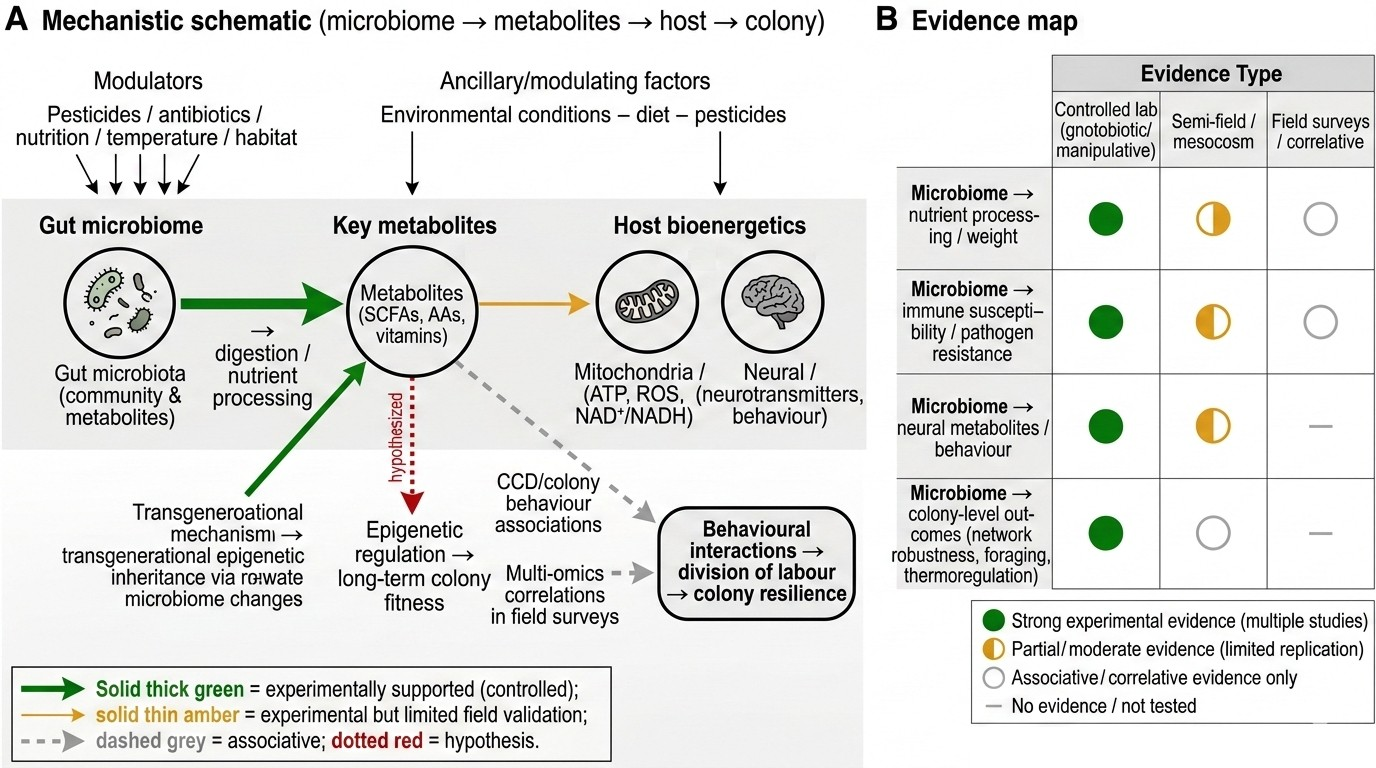
How Environmental and Ecological Stressors Reprogram Honey Bee Chemistry Through the Microbiome–Metabolome Axis




Simple Summary
Abstract
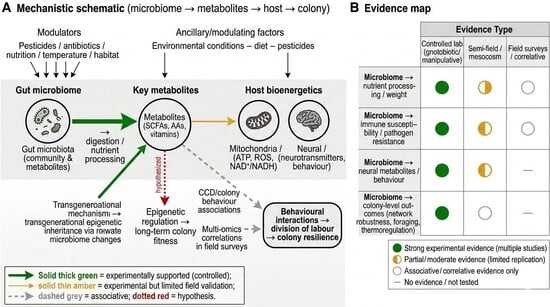
1. Introduction
2. Historical Synthesis: The Evolution of Microbiome Research in Honey Bees
3. Environmental and Ecological Stressors Disrupting the Microbiome–Metabolome Axis
3.1. Pesticides

| Pesticide/Chemical | Class | Exposure Conditions | Dose/Duration | Main Effects on Gut Microbiota and Metabolism | Reference |
|---|---|---|---|---|---|
| Chlorothalonil | Fungicide | Hive exposure | 10 g/L for 6 weeks | Increased predicted gene families associated with oxidative phosphorylation; decreased gene families related to sugar metabolism and protease activity | [28] |
| Carbendazim | Fungicide | Oral exposure | 5 mg/L for 3 days | Significant changes in 112 metabolites; enrichment in energy and amino acid metabolism pathways; down-regulation of detoxification-related metabolites | [29] |
| Propiconazole + Carbendazim (Chunmanchun®) | Fungicide mixture | Oral exposure | 0.159–1.011 g/L for 6 days | Lactobacillus decreased (~13%); Bartonella increased (~10%); Snodgrassella increased (~7.5%); metabolomic alterations affecting lipid metabolism, immunity, and amino acid metabolism | [30] |
| Imidacloprid/Thiamethoxam/Clothianidin | Neonicotinoid insecticides | Oral exposure | Sublethal concentrations | Reduced abundance of core bacteria such as Snodgrassella alvi and Gilliamella apicola, affecting carbohydrate metabolism and SCFA production | [31,32] |
| Thiacloprid | Neonicotinoid insecticide | Oral exposure | 2 mg/L for 3 days | 115 metabolites significantly altered; enrichment in oxidative stress and detoxification pathways | [33] |
| Acetamiprid | Neonicotinoid insecticide | Oral exposure (adults and larvae) | 0, 5, and 25 mg/L for 7 days (adults)/4 days (larvae) | Increased Commensalibacter; decreased Bifidobacterium and Gilliamella in adults; decreased Bombella in larvae; associated with metabolic changes in amino acid, lipid, and carbohydrate pathways | [34] |
| Flumethrin | Acaricide | Oral exposure | 10 μg/L for 14 days | Minimal effect on microbial composition but reduction in Gilliamella spp.; significant changes in intestinal metabolites and glycerophospholipid metabolism | [35] |
| Flupyradifurone/Sulfoxaflor ± Azoxystrobin | Insecticides ± fungicide | Oral exposure | 0.0043 μg μL−1 (flupyradifurone), 0.000047 μg μL−1 (sulfoxaflor), 0.038 μg μL−1 (azoxystrobin) for 10 days | Disruption of bacterial and fungal gut communities; reduced microbial diversity; increase in opportunistic pathogens such as Serratia marcescens; Disruption of the fungal and bacterial communities’ network and coexistence. | [36,37] |
3.2. Antibiotics
3.3. Pathogens
3.4. Nutritional Stress
3.5. Heat Stress
3.6. Habitat Change
3.7. Environmental Contaminants
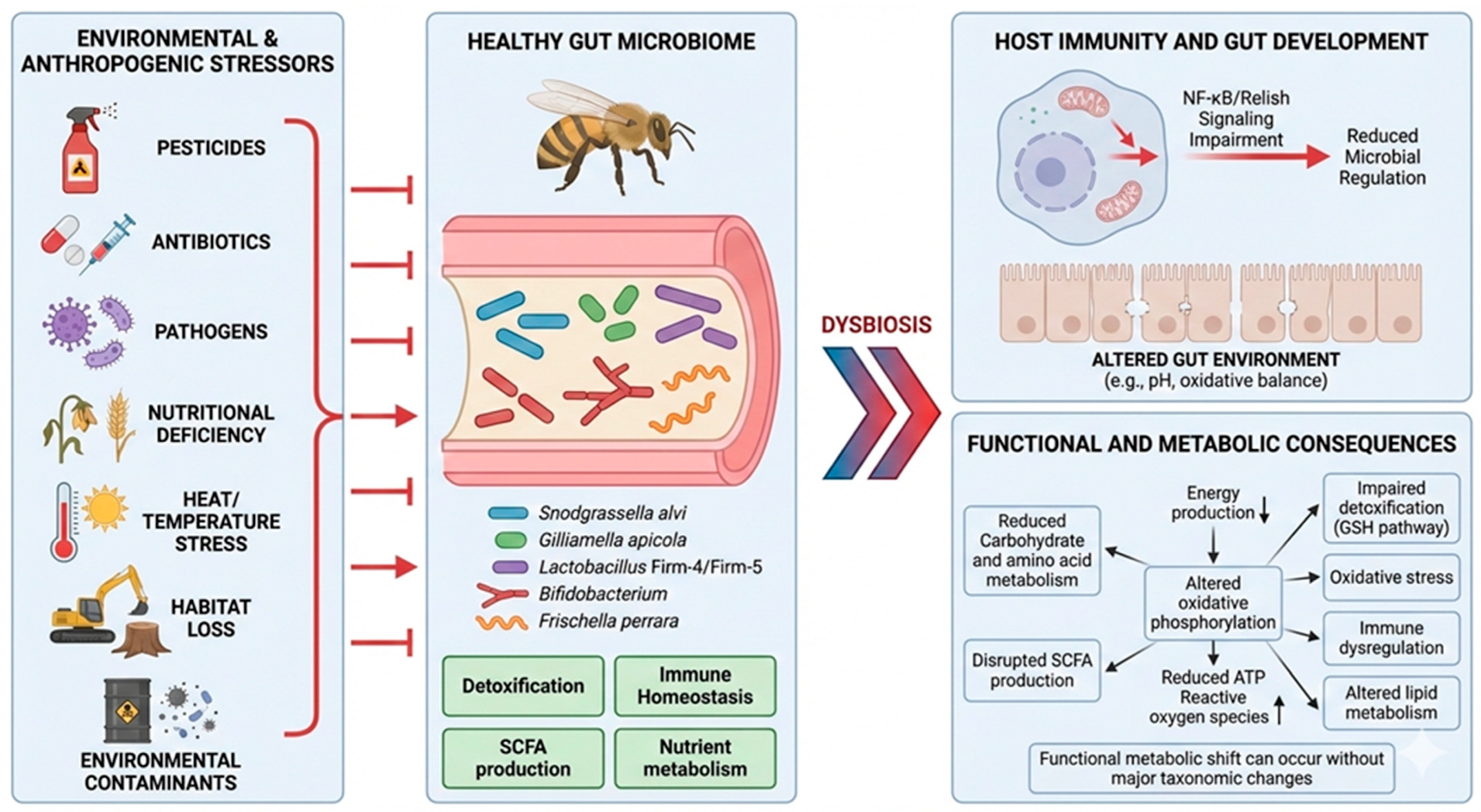
4. Shared Effects of Diverse Stressors on the Gut Microbiota–Metabolome–Host Axis
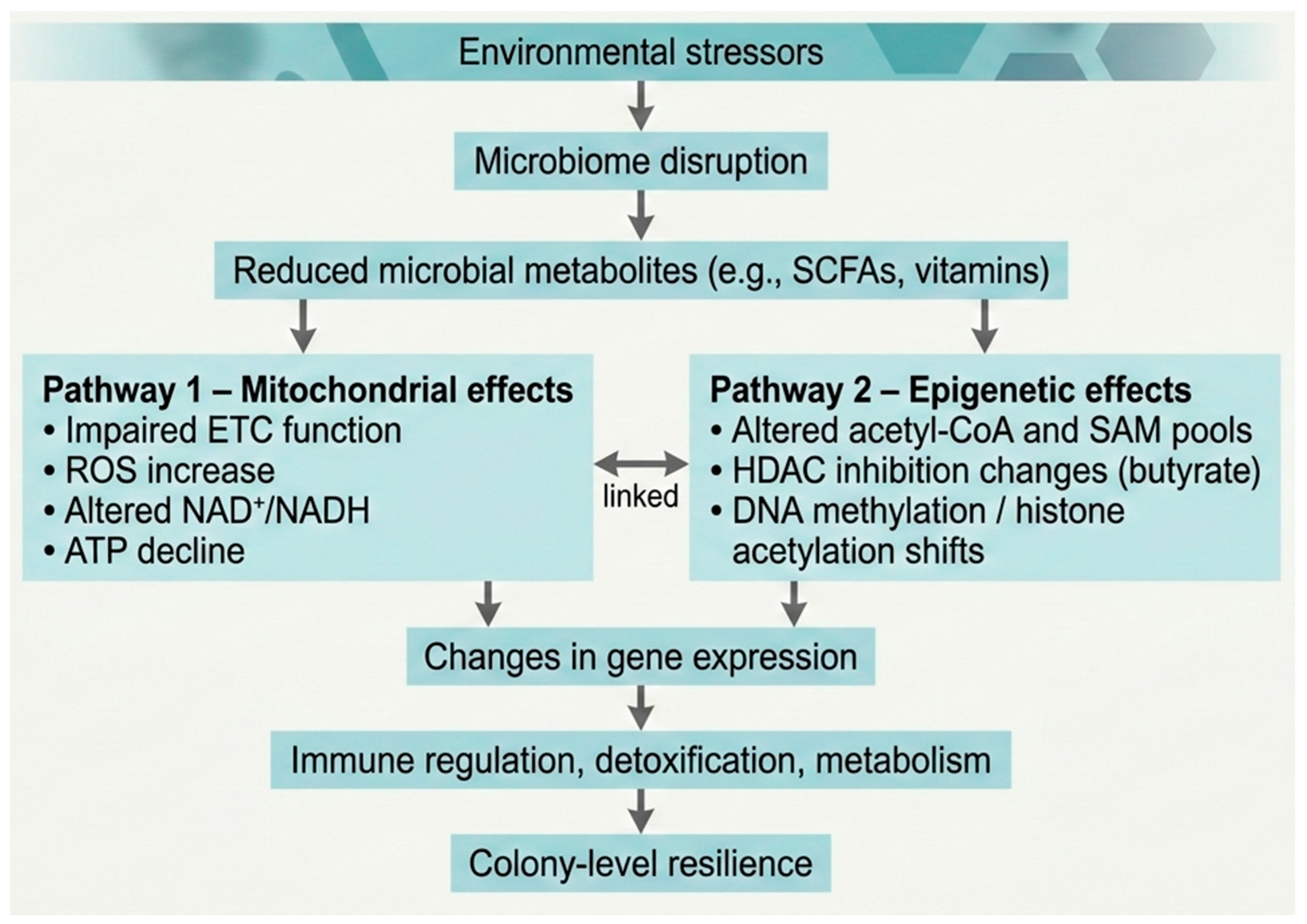
Molecular Mechanisms of Stress-Induced Metabolic Reprogramming: Mitochondria and Epigenetics
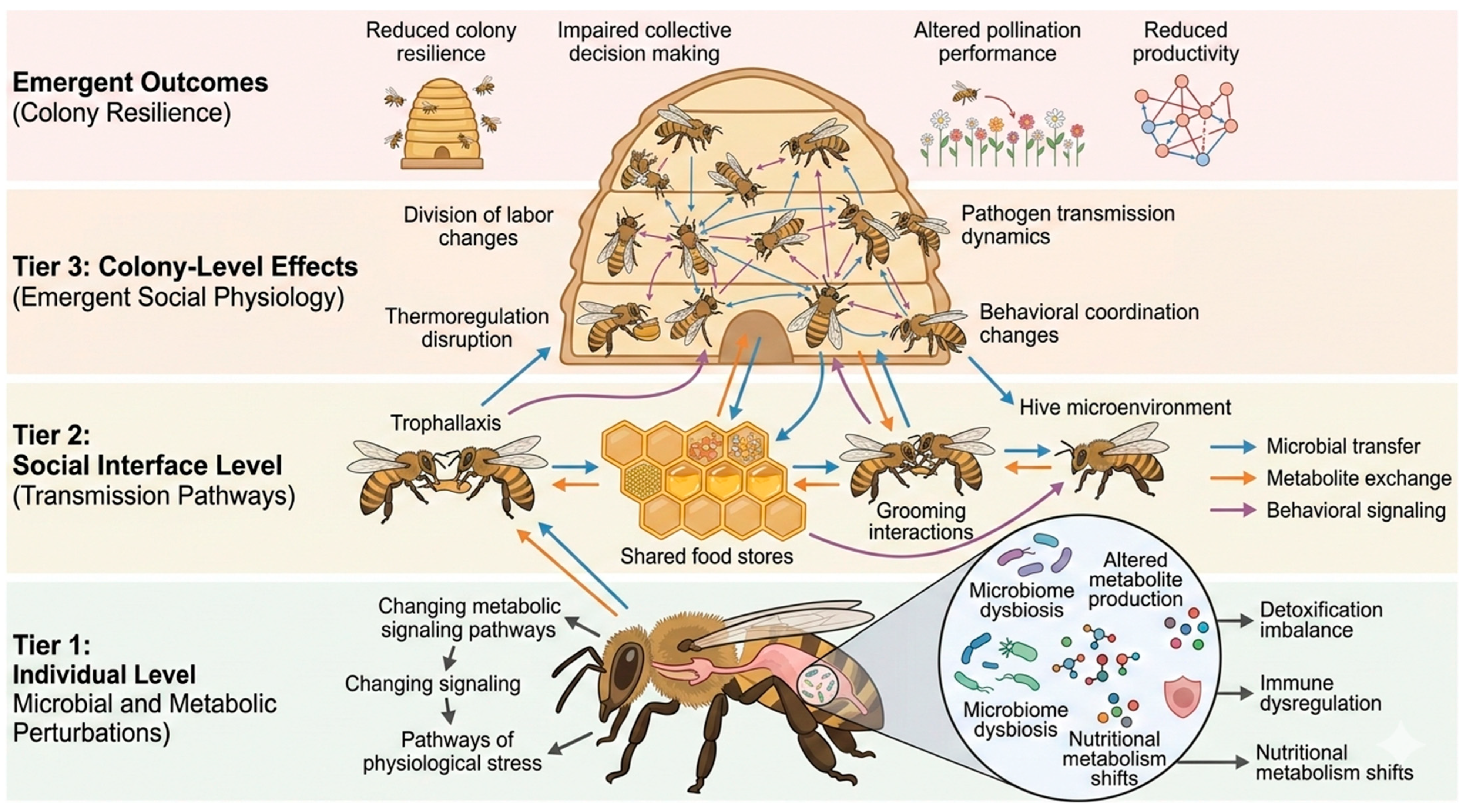
5. Colony-Level Health: From Individual Metabolomes to Social Physiology
| Semiochemical Class | Compound/Signal | Microbial Source/Modulator | Bee Life Stage/Caste | Behavioral/Social Role | Proposed Mechanism of Microbial Influence | Stressor Link & Reference |
|---|---|---|---|---|---|---|
| Contact Pheromones & Recognition Cues | Cuticular Hydrocarbons (CHCs) | Gut microbiota (e.g., Snodgrassella alvi, Gilliamella apicola, Lactobacillus spp.) | Workers, Queen | Nestmate recognition, task thresholds, and social cohesion | Microbiota-derived metabolites (SCFAs, amino acids) influence host lipid metabolism and CHC biosynthesis. Dysbiosis alters CHC profiles, potentially disrupting recognition. | Pesticides & antibiotics deplete key taxa, possibly altering CHC blends and leading to social rejection or impaired task coordination [10,14] |
| Queen Pheromones | Queen Mandibular Pheromone (QMP) components | Indirect modulation via gut microbiome-influenced host nutrition & metabolism | Queen | Inhibition of worker ovary development, retinue attraction, and colony cohesion | The microbiome supports the queen’s nutrition (vitamins, lipid metabolism), which is essential for pheromone synthesis. Dysbiosis may reduce pheromone titre or alter blend. | Nutritional stress & pathogens compromise queen health and pheromone output; microbiome disruption may amplify this [18]. |
| Brood Pheromones | Brood ester pheromone | Potential modulation by hive & brood cell microbes | Larvae | Stimulates worker feeding (nursing), inhibits foraging | Microbial communities on brood or in food may modify pheromone precursors or stability. | Hygienic behavior removes infected brood, altering microbial landscape and pheromone perception [14]. |
| Foraging & Recruitment Signals | Nasonov gland pheromone (geraniol, citral, etc.) | Gut microbiome-influenced terpenoid metabolism | Workers | Orientation, swarm clustering, recruitment to resources | Microbial metabolism of dietary phytochemicals may provide precursors for terpenoid synthesis. | Pesticides impair microbial metabolism, potentially reducing precursor availability [17]. |
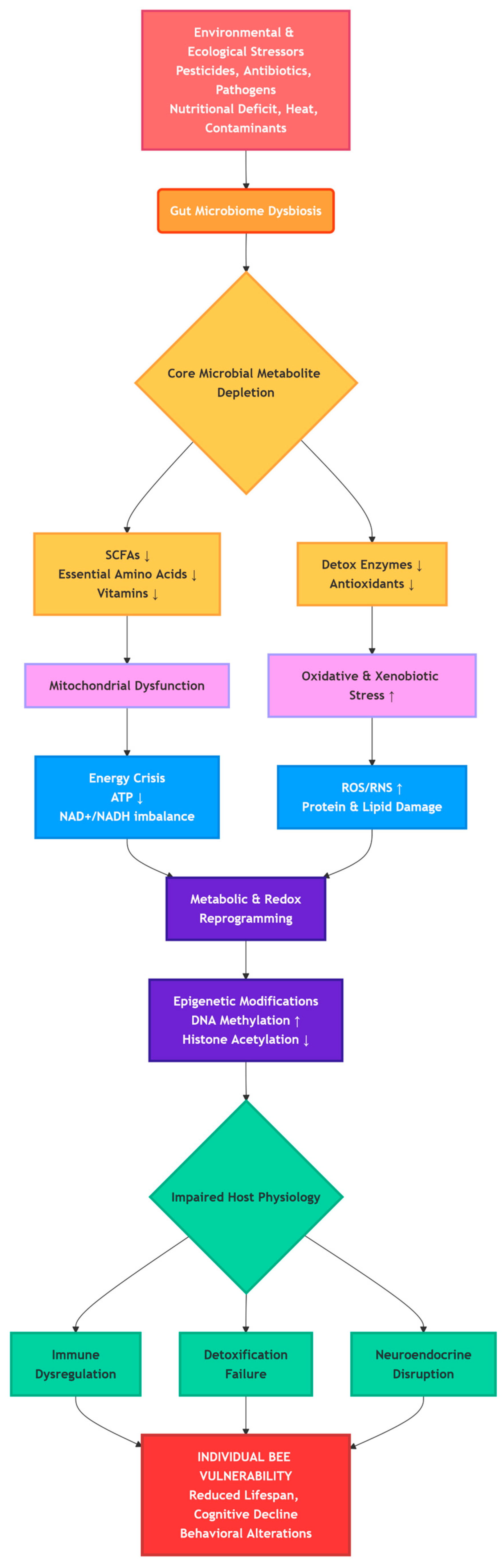
| Alarm Pheromones | Isopentyl acetate (IPA) | Not directly microbially produced, but host synthesis may be metabolically supported | Workers | Defense, alarm recruitment | General host energy and acetyl-CoA metabolism, supported by microbial SCFAs, is required for IPA biosynthesis. | Energy crisis from dysbiosis (SCFA depletion) could limit the capacity to produce alarm signals (Figure 1). |
| Hive Atmosphere & Orientation Cues | Hive-specific volatile organic compound (VOC) blends | 1. Gut microbiota (host-derived VOCs) 2. Hive microbes (in stored pollen, bee bread, honey) | Colony-wide | Hive identity, orientation, social homeostasis | Complex blend arises from host metabolism (influenced by gut microbes) and fermentation products of hive microbes (yeasts, bacteria). | Habitat change & antibiotics reduce microbial diversity in hive, simplifying VOC blend, potentially disorienting foragers [80,96] |
| Trophallaxis & Social Feeding Signals | Post-ingestive metabolites in nectar/honey | Gut microbiota of the donor bee | Workers | Nutrient sharing, information transfer, social immunity | Donor’s gut microbes metabolize food, altering its chemical profile before trophallaxis, potentially conveying health status. | Antibiotic exposure creates a dysbiotic “signature” that may be socially transmitted via trophallaxis [23,39] |
| Egg-marking Pheromones | Surface chemicals on eggs | Potential contribution of reproductive tract or ovipositor microbiota | Queen, Workers | Deterrence of worker egg-laying (queen’s eggs) | Microbes associated with the queen’s reproductive system may contribute to egg-surface chemistry, signaling egg identity. | Pathogens (e.g., Nosema) compromising queen health may alter associated microbiomes and egg signals. |
6. Translational Applications and a Roadmap for Precision Apiculture
6.1. Harnessing the Axis for Colony-Level Diagnostics and Interventions
- Non-invasive VOC diagnostics for American foulbrood: VOC profiling identified a set of volatile biomarkers (e.g., 2,5-dimethylpyrazine and others) that distinguished Paenibacillus larvae-infected brood and were detectable in hive air—a concrete proof-of-concept for sensor development and early-warning detection. This work provides a direct path toward sensor prototypes for on-apiary screening [99].
- Portable MIMS for in-field hive atmosphere screening: a portable membrane-inlet mass spectrometer has been demonstrated for rapid detection of hive VOCs and even residues (e.g., pesticides) in situ, showing the feasibility of near-real-time field monitoring. This demonstrates how lab workflows can be miniaturized and brought to the apiary [98].
- Winter debris molecular surveillance: winter hive debris qPCR workflows have been shown to detect pathogen loads and several viral and bacterial agents noninvasively, supporting debris sampling as an operational surveillance matrix that can inform spring management decisions [101].
- Experimental probiotic interventions: defined lactobacilli-based “BioPatty” supplementation reduced P. larvae burdens in controlled and proof-of-concept experiments, showing that targeted probiotic delivery can influence larval disease dynamics under controlled conditions [103].
- Large-scale field tests of commercial probiotics: a longitudinal field study of commercial colonies found that widely marketed, non-native probiotic products did not rescue antibiotic-induced dysbiosis and were generally not beneficial under commercial management, demonstrating the gap between small experimental trials and large operational deployments and the need for rigorous field validation [102].
6.2. Pillars of a Precision Apiculture Framework
7. Conclusions and Future Directions
- Longitudinal, multi-site cohort studies. Establish temporally resolved sampling (seasonal to multi-year) across contrasting landscapes to capture natural variation, resilience and recovery trajectories and to distinguish transient from persistent alterations.
- Controlled manipulations with field realism. Combine gnotobiotic and manipulative treatments (microbiome depletion/reconstitution, targeted probiotics, microbiome transplants) with semi-field/field deployments (mesocosms, apiary trials) to test causality under ecologically relevant conditions.
- Multifactorial stressor experiments. Design factorial studies that jointly vary nutrition, pesticides, pathogens and temperature to reflect realistic exposure scenarios and to reveal interaction effects.
- Standardization and benchmarking. Develop and adopt community standards for sampling, metabolite extraction, mass-spectrometry and sequencing pipelines, and for reporting metadata to enable cross-study synthesis and meta-analysis.
- Functional validation of candidate metabolites and pathways. Prioritize biochemical and physiological assays (isotope tracing, enzyme assays, mitochondrial function tests, receptor assays) to move from correlation to mechanism for metabolites implicated by discovery omics.
- Strain-resolved genomics and microbial culturing. Increase strain-level resolution and functional annotation of core taxa, expand culture collections, and link strain variation to metabolic phenotypes.
- Integrative analytic frameworks and predictive biomarkers. Invest in causal inference tools (time-series modelling, perturbation experiments, validated machine-learning pipelines) and in development/validation of metabolome- or microbiome-derived biomarkers that are robust across sites and seasons.
- Interdisciplinary coordination and data sharing. Encourage coordinated networks that pair omics with behavioral ecology, toxicology and regulatory science, and commit to open, well-annotated data deposition to accelerate replication and synthesis.
Supplementary Materials
Author Contributions
Funding
Data Availability Statement
Acknowledgments
Conflicts of Interest
References
- Khalifa, S.A.M.; Elshafiey, E.H.; Shetaia, A.A.; El-Wahed, A.A.A.; Algethami, A.F.; Musharraf, S.G.; AlAjmi, M.F.; Zhao, C.; Masry, S.H.D.; Abdel-Daim, M.M.; et al. Overview of Bee Pollination and Its Economic Value for Crop Production. Insects 2021, 12, 688. [Google Scholar] [CrossRef]
- van der Sluijs, J.P.; Vaage, N.S. Pollinators and Global Food Security: The Need for Holistic Global Stewardship. Food Ethics 2016, 1, 75–91. [Google Scholar] [CrossRef]
- Lin, Z.; Shen, S.; Wang, K.; Ji, T. Biotic and Abiotic Stresses on Honeybee Health. Integr. Zool. 2024, 19, 442–457. [Google Scholar] [CrossRef]
- El-Seedi, H.R.; Ahmed, H.R.; El-Wahed, A.A.A.; Saeed, A.; Algethami, A.F.; Attia, N.F.; Guo, Z.; Musharraf, S.G.; Khatib, A.; Alsharif, S.M.; et al. Bee Stressors from an Immunological Perspective and Strategies to Improve Bee Health. Vet. Sci. 2022, 9, 199. [Google Scholar] [CrossRef]
- Willcox, B.K.; Potts, S.G.; Brown, M.J.F.; Alix, A.; Al Naggar, Y.; Chauzat, M.-P.; Costa, C.; Gekière, A.; Hartfield, C.; Hatjina, F.; et al. Emerging Threats and Opportunities to Managed Bee Species in European Agricultural Systems: A Horizon Scan. Sci. Rep. 2023, 13, 18099. [Google Scholar] [CrossRef]
- Ricigliano, V.A.; Fine, J.D.; Nicklisch, S.C.T. Harnessing Biotechnology for Bee Pollinator Health. Trends Biotechnol. 2025, 44, 111–127. [Google Scholar] [CrossRef] [PubMed]
- Bruckner, S.; Wilson, M.; Aurell, D.; Rennich, K.; VanEngelsdorp, D.; Steinhauer, N.; Williams, G.R. A National Survey of Managed Honey Bee Colony Losses in the USA: Results from the Bee Informed Partnership for 2017–18, 2018–2019, and 2019–20. J. Apic. Res. 2023, 62, 429–443. [Google Scholar] [CrossRef]
- Jung, J. Metabolomic Studies in Apis mellifera. J. Apic. 2023, 38, 151–162. [Google Scholar] [CrossRef]
- Furse, S.; Koch, H.; Wright, G.A.; Stevenson, P.C. Sterol and Lipid Metabolism in Bees. Metabolomics 2023, 19, 78. [Google Scholar] [CrossRef]
- Zhang, Z.; Mu, X.; Shi, Y.; Zheng, H. Distinct Roles of Honeybee Gut Bacteria on Host Metabolism and Neurological Processes. Microbiol. Spectr. 2022, 10, e0243821. [Google Scholar] [CrossRef]
- Snart, C.J.P.; Hardy, I.C.W.; Barrett, D.A. Entometabolomics: Applications of Modern Analytical Techniques to Insect Studies. Entomol. Exp. Appl. 2015, 155, 1–17. [Google Scholar] [CrossRef]
- Kranjac, M.; Kuś, P.M.; Prđun, S.; Odžak, R.; Tuberoso, C.I.G. Chromatography-Based Metabolomics as a Tool in Bioorganic Research of Honey. Metabolites 2024, 14, 606. [Google Scholar] [CrossRef]
- Wang, L.; Meeus, I.; Rombouts, C.; Van Meulebroek, L.; Vanhaecke, L.; Smagghe, G. Metabolomics-Based Biomarker Discovery for Bee Health Monitoring: A Proof of Concept Study Concerning Nutritional Stress in Bombus Terrestris. Sci. Rep. 2019, 9, 11423. [Google Scholar] [CrossRef]
- Motta, E.V.S.; Moran, N.A. The Honeybee Microbiota and Its Impact on Health and Disease. Nat. Rev. Microbiol. 2024, 22, 122–137. [Google Scholar] [CrossRef]
- Zheng, H.; Powell, J.E.; Steele, M.I.; Dietrich, C.; Moran, N.A. Honeybee Gut Microbiota Promotes Host Weight Gain via Bacterial Metabolism and Hormonal Signaling. Proc. Natl. Acad. Sci. USA 2017, 114, 4775–4780. [Google Scholar] [CrossRef]
- Ricigliano, V.A.; Cank, K.B.; Todd, D.A.; Knowles, S.L.; Oberlies, N.H. Metabolomics-Guided Comparison of Pollen and Microalgae-Based Artificial Diets in Honey Bees. J. Agric. Food Chem. 2022, 70, 9790–9801. [Google Scholar] [CrossRef]
- Ardalani, H.; Vidkjær, N.H.; Kryger, P.; Fiehn, O.; Fomsgaard, I.S. Metabolomics Unveils the Influence of Dietary Phytochemicals on Residual Pesticide Concentrations in Honey Bees. Environ. Int. 2021, 152, 106503. [Google Scholar] [CrossRef]
- McAfee, A.; Magaña, A.A.; Foster, L.J.; Hoover, S.E. Differences in Honeybee Queen Pheromones Revealed by LC-MS/MS: Reassessing the Honest Signal Hypothesis. iScience 2024, 27, 110906. [Google Scholar] [CrossRef] [PubMed]
- Honeybee Genome Sequencing Consortium. Insights into Social Insects from the Genome of the Honeybee Apis mellifera. Nature 2006, 443, 931–949. [Google Scholar] [CrossRef] [PubMed]
- Cox-Foster, D.L.; Conlan, S.; Holmes, E.C.; Palacios, G.; Evans, J.D.; Moran, N.A.; Quan, P.-L.; Briese, T.; Hornig, M.; Geiser, D.M.; et al. A Metagenomic Survey of Microbes in Honey Bee Colony Collapse Disorder. Science 2007, 318, 283–287. [Google Scholar] [CrossRef]
- Martinson, V.G.; Danforth, B.N.; Minckley, R.L.; Rueppell, O.; Tingek, S.; Moran, N.A. A Simple and Distinctive Microbiota Associated with Honey Bees and Bumble Bees. Mol. Ecol. 2011, 20, 619–628. [Google Scholar] [CrossRef] [PubMed]
- Engel, P.; Martinson, V.G.; Moran, N.A. Functional Diversity within the Simple Gut Microbiota of the Honey Bee. Proc. Natl. Acad. Sci. USA 2012, 109, 11002–11007. [Google Scholar] [CrossRef]
- Raymann, K.; Shaffer, Z.; Moran, N.A. Antibiotic Exposure Perturbs the Gut Microbiota and Elevates Mortality in Honeybees. PLoS Biol. 2017, 15, e2001861. [Google Scholar] [CrossRef]
- Ellegaard, K.M.; Engel, P. Genomic Diversity Landscape of the Honey Bee Gut Microbiota. Nat. Commun. 2019, 10, 446. [Google Scholar] [CrossRef]
- Hotchkiss, M.Z.; Poulain, A.J.; Forrest, J.R.K. Pesticide-Induced Disturbances of Bee Gut Microbiotas. FEMS Microbiol. Rev. 2022, 46, fuab056. [Google Scholar] [CrossRef]
- Daisley, B.A.; Chmiel, J.A.; Pitek, A.P.; Thompson, G.J.; Reid, G. Missing Microbes in Bees: How Systematic Depletion of Key Symbionts Erodes Immunity. Trends Microbiol. 2020, 28, 1010–1021. [Google Scholar] [CrossRef] [PubMed]
- Di Prisco, G.; Cavaliere, V.; Annoscia, D.; Varricchio, P.; Caprio, E.; Nazzi, F.; Gargiulo, G.; Pennacchio, F. Neonicotinoid Clothianidin Adversely Affects Insect Immunity and Promotes Replication of a Viral Pathogen in Honey Bees. Proc. Natl. Acad. Sci. USA 2013, 110, 18466–18471. [Google Scholar] [CrossRef]
- Kakumanu, M.L.; Reeves, A.M.; Anderson, T.D.; Rodrigues, R.R.; Williams, M.A. Honey Bee Gut Microbiome Is Altered by In-Hive Pesticide Exposures. Front. Microbiol. 2016, 7, 1255. [Google Scholar] [CrossRef]
- Chen, H.; Wang, K.; Ji, W.; Xu, H.; Liu, Y.; Wang, S.; Wang, Z.; Gao, F.; Lin, Z.; Ji, T. Metabolomic Analysis of Honey Bees (Apis mellifera) Response to Carbendazim Based on UPLC-MS. Pestic. Biochem. Physiol. 2021, 179, 104975. [Google Scholar] [CrossRef]
- Zhang, X.; Cao, Q.; Wang, F.; Du, Y.; Zhao, W.; Guo, Y.; Rueppell, O. Diverse Sublethal Effects of a Common Fungicide Impact the Behavior and Physiology of Honey Bees. Insects 2025, 16, 603. [Google Scholar] [CrossRef] [PubMed]
- Khan, M.N.; Bilal, H.; Khan, S.; Shafiq, M.; Jiao, X. Collateral Damage of Neonicotinoid Insecticides: Unintended Effects on Gut Microbiota of Non-Target Organisms. Comp. Biochem. Physiol. Part C Toxicol. Pharmacol. 2025, 298, 110330. [Google Scholar] [CrossRef]
- Zheng, H.; Perreau, J.; Powell, J.E.; Han, B.; Zhang, Z.; Kwong, W.K.; Tringe, S.G.; Moran, N.A. Division of Labor in Honey Bee Gut Microbiota for Plant Polysaccharide Digestion. Proc. Natl. Acad. Sci. USA 2019, 116, 25909–25916. [Google Scholar] [CrossRef]
- Shi, T.; Burton, S.; Wang, Y.; Xu, S.; Zhang, W.; Yu, L. Metabolomic Analysis of Honey Bee, Apis mellifera L. Response to Thiacloprid. Pestic. Biochem. Physiol. 2018, 152, 17–23. [Google Scholar] [CrossRef]
- Su, Y.; Shi, J.; Hu, Y.; Liu, J.; Wu, X. Acetamiprid Exposure Disrupts Gut Microbiota in Adult and Larval Worker Honeybees (Apis mellifera L.). Insects 2024, 15, 927. [Google Scholar] [CrossRef] [PubMed]
- Qi, S.; Al Naggar, Y.; Li, J.; Liu, Z.; Xue, X.; Wu, L.; El-Seedi, H.R.; Wang, K. Acaricide Flumethrin-Induced Sublethal Risks in Honeybees Are Associated with Gut Symbiotic Bacterium Gilliamella Apicola through Microbe-Host Metabolic Interactions. Chemosphere 2022, 307, 136030. [Google Scholar] [CrossRef]
- Al Naggar, Y.; Singavarapu, B.; Paxton, R.J.; Wubet, T. Bees under Interactive Stressors: The Novel Insecticides Flupyradifurone and Sulfoxaflor along with the Fungicide Azoxystrobin Disrupt the Gut Microbiota of Honey Bees and Increase Opportunistic Bacterial Pathogens. Sci. Total Environ. 2022, 849, 157941. [Google Scholar] [CrossRef] [PubMed]
- Al Naggar, Y.; Wubet, T. Chronic Exposure to Pesticides Disrupts the Bacterial and Fungal Co-Existence and the Cross-Kingdom Network Characteristics of Honey Bee Gut Microbiome. Sci. Total Environ. 2024, 906, 167530. [Google Scholar] [CrossRef] [PubMed]
- Raymann, K.; Moran, N.A. The Role of the Gut Microbiome in Health and Disease of Adult Honey Bee Workers. In Current Opinion in Insect Science; Elsevier Inc.: Amsterdam, The Netherlands, 2018; pp. 97–104. [Google Scholar] [CrossRef]
- Jia, S.; Wu, Y.; Chen, G.; Wang, S.; Hu, F.; Zheng, H. The Pass-on Effect of Tetracycline-Induced Honey Bee (Apis mellifera) Gut Community Dysbiosis. Front. Microbiol. 2022, 12, 781746. [Google Scholar] [CrossRef]
- Zhang, Z.; Mu, X.; Cao, Q.; Zhai, Y.; Zheng, L.; Liu, Y.; Zheng, H.; Zhang, X. Antibiotic Exposure Alters the Honeybee Gut Microbiota and May Interfere with the Honeybee Behavioral Caste Transition. Insect Sci. 2025, 32, 260–276. [Google Scholar] [CrossRef]
- Shi, J.; Zhang, Y.; Liu, J.; Xu, M.; Wu, X. Larval Antibiotic Exposure Causes Persistent Impacts on Honeybees across Life Stages via Metabolic Succession. J. Hazard. Mater. 2025, 497, 139628. [Google Scholar] [CrossRef]
- Armitage, S.A.; Genersch, E.; McMahon, D.P.; Rafaluk-Mohr, C.; Rolff, J. Tripartite Interactions: How Immunity, Microbiota and Pathogens Interact and Affect Pathogen Virulence Evolution. Curr. Opin. Insect Sci. 2022, 50, 100871. [Google Scholar] [CrossRef]
- McLaren, M.R.; Callahan, B.J. Pathogen Resistance May Be the Principal Evolutionary Advantage Provided by the Microbiome. Philos. Trans. R. Soc. B Biol. Sci. 2020, 375, 20190592. [Google Scholar] [CrossRef] [PubMed]
- Truong, A.-T.; Yoo, M.-S.; Seo, S.K.; Hwang, T.J.; Yoon, S.-S.; Cho, Y.S. Prevalence of Honey Bee Pathogens and Parasites in South Korea: A Five-Year Surveillance Study from 2017 to 2021. Heliyon 2023, 9, e13494. [Google Scholar] [CrossRef] [PubMed]
- Paris, L.; El Alaoui, H.; Delbac, F.; Diogon, M. Effects of the Gut Parasite Nosema ceranae on Honey Bee Physiology and Behavior. Curr. Opin. Insect Sci. 2018, 26, 149–154. [Google Scholar] [CrossRef]
- Al Naggar, Y.; Baer, B. Consequences of a Short Time Exposure to a Sublethal Dose of Flupyradifurone (Sivanto) Pesticide Early in Life on Survival and Immunity in the Honeybee (Apis mellifera). Sci. Rep. 2019, 9, 19753. [Google Scholar] [CrossRef]
- Mahmoud, S.H.; Kandel, M.; El-Seedi, H.; Al Naggar, Y. Honey Bee Venom Promotes the Immune System and Reduces Vairimorpha (Nosema) Ceranae Infection in Honey Bees (Apis mellifera L.). Apidologie 2024, 55, 8. [Google Scholar] [CrossRef]
- Marín-García, P.J.; Peyre, Y.; Ahuir-Baraja, A.E.; Garijo, M.M.; Llobat, L. The Role of Nosema ceranae (Microsporidia: Nosematidae) in Honey Bee Colony Losses and Current Insights on Treatment. Vet. Sci. 2022, 9, 130. [Google Scholar] [CrossRef]
- Sbaghdi, T.; Garneau, J.R.; Yersin, S.; Chaucheyras-Durand, F.; Bocquet, M.; Moné, A.; El Alaoui, H.; Bulet, P.; Blot, N.; Delbac, F. The Response of the Honey Bee Gut Microbiota to Nosema ceranae Is Modulated by the Probiotic Pediococcus Acidilactici and the Neonicotinoid Thiamethoxam. Microorganisms 2024, 12, 192. [Google Scholar] [CrossRef]
- Dussaubat, C.; Brunet, J.-L.; Higes, M.; Colbourne, J.K.; Lopez, J.; Choi, J.-H.; Martín-Hernández, R.; Botías, C.; Cousin, M.; McDonnell, C.; et al. Gut Pathology and Responses to the Microsporidium Nosema ceranae in the Honey Bee Apis mellifera. PLoS ONE 2012, 7, e37017. [Google Scholar] [CrossRef]
- Jabal-Uriel, C.; Alba, C.; Higes, M.; Rodríguez, J.M.; Martín-Hernández, R. Effect of Nosema ceranae Infection and Season on the Gut Bacteriome Composition of the European Honeybee (Apis mellifera). Sci. Rep. 2022, 12, 9326. [Google Scholar] [CrossRef]
- Aguado-López, D.; Urbieta Magro, A.; Higes, M.; Rodríguez, J.M.; Martín-Hernández, R. Influence of Age of Infection on the Gut Microbiota in Worker Honey Bees (Apis mellifera Iberiensis) Experimentally Infected with Nosema ceranae. Microorganisms 2024, 12, 635. [Google Scholar] [CrossRef]
- Li, Z.; Hou, M.; Qiu, Y.; Zhao, B.; Nie, H.; Su, S. Changes in Antioxidant Enzymes Activity and Metabolomic Profiles in the Guts of Honey Bee (Apis mellifera) Larvae Infected with Ascosphaera Apis. Insects 2020, 11, 419. [Google Scholar] [CrossRef]
- Dosch, C.; Manigk, A.; Streicher, T.; Tehel, A.; Paxton, R.J.; Tragust, S. The Gut Microbiota Can Provide Viral Tolerance in the Honey Bee. Microorganisms 2021, 9, 871. [Google Scholar] [CrossRef]
- Steele, M.I.; Motta, E.V.S.; Gattu, T.; Martinez, D.; Moran, N.A. The Gut Microbiota Protects Bees from Invasion by a Bacterial Pathogen. Microbiol. Spectr. 2021, 9, e0039421. [Google Scholar] [CrossRef]
- Alaux, C.; Allier, F.; Decourtye, A.; Odoux, J.-F.; Tamic, T.; Chabirand, M.; Delestra, E.; Decugis, F.; Le Conte, Y.; Henry, M. A ‘Landscape Physiology’ Approach for Assessing Bee Health Highlights the Benefits of Floral Landscape Enrichment and Semi-Natural Habitats. Sci. Rep. 2017, 7, 40568. [Google Scholar] [CrossRef] [PubMed]
- Brodschneider, R.; Crailsheim, K. Nutrition and Health in Honey Bees. Apidologie 2010, 41, 278–294. [Google Scholar] [CrossRef]
- Dolezal, A.G.; Toth, A.L. Feedbacks between Nutrition and Disease in Honey Bee Health. Curr. Opin. Insect Sci. 2018, 26, 114–119. [Google Scholar] [CrossRef]
- Castelli, L.; Branchiccela, B.; Garrido, M.; Invernizzi, C.; Porrini, M.; Romero, H.; Santos, E.; Zunino, P.; Antúnez, K. Impact of Nutritional Stress on Honeybee Gut Microbiota, Immunity, and Nosema ceranae Infection. Microb. Ecol. 2020, 80, 908–919. [Google Scholar] [CrossRef] [PubMed]
- Maes, P.W.; Rodrigues, P.A.P.; Oliver, R.; Mott, B.M.; Anderson, K.E. Diet-related Gut Bacterial Dysbiosis Correlates with Impaired Development, Increased Mortality and Nosema Disease in the Honeybee (Apis mellifera). Mol. Ecol. 2016, 25, 5439–5450. [Google Scholar] [CrossRef]
- Ricigliano, V.A.; Anderson, K.E. Probing the Honey Bee Diet-Microbiota-Host Axis Using Pollen Restriction and Organic Acid Feeding. Insects 2020, 11, 291. [Google Scholar] [CrossRef] [PubMed]
- Branchiccela, B.; Castelli, L.; Corona, M.; Díaz-Cetti, S.; Invernizzi, C.; Martínez de la Escalera, G.; Mendoza, Y.; Santos, E.; Silva, C.; Zunino, P.; et al. Impact of Nutritional Stress on the Honeybee Colony Health. Sci. Rep. 2019, 9, 10156. [Google Scholar] [CrossRef]
- Powell, J.E.; Lau, P.; Rangel, J.; Arnott, R.; De Jong, T.; Moran, N.A. The Microbiome and Gene Expression of Honey Bee Workers Are Affected by a Diet Containing Pollen Substitutes. PLoS ONE 2023, 18, e0286070. [Google Scholar] [CrossRef]
- Khumalo, N.N.; Obi, L.U.; Yusuf, A.A.; Adeleke, R.A. Dietary Modulation of Gut Microbiota and Functional Enzymes in Savannah Honey Bees (Apis mellifera Scutellata Lepeletier). Appl. Microbiol. Biotechnol. 2025, 109, 226. [Google Scholar] [CrossRef] [PubMed]
- Wen, C.; Wei, S.; Zong, X.; Wang, Y.; Jin, M. Microbiota-Gut-Brain Axis and Nutritional Strategy under Heat Stress. Anim. Nutr. 2021, 7, 1329–1336. [Google Scholar] [CrossRef] [PubMed]
- Sepulveda, J.; Moeller, A.H. The Effects of Temperature on Animal Gut Microbiomes. Front. Microbiol. 2020, 11, 384. [Google Scholar] [CrossRef]
- Laine, A.-L.; Leino, S. Plant Microbiomes Feel the Heat. Science 2025, 388, 1150–1152. [Google Scholar] [CrossRef]
- Moghadam, N.N.; Thorshauge, P.M.; Kristensen, T.N.; de Jonge, N.; Bahrndorff, S.; Kjeldal, H.; Nielsen, J.L. Strong Responses of Drosophila Melanogaster Microbiota to Developmental Temperature. Fly 2018, 12, 1–12. [Google Scholar] [CrossRef]
- Horváthová, T.; Babik, W.; Kozłowski, J.; Bauchinger, U. Vanishing Benefits—The Loss of Actinobacterial Symbionts at Elevated Temperatures. J. Therm. Biol. 2019, 82, 222–228. [Google Scholar] [CrossRef] [PubMed]
- Palmer-Young, E.C.; Raffel, T.R.; McFrederick, Q.S. Temperature-Mediated Inhibition of a Bumblebee Parasite by an Intestinal Symbiont. Proc. R. Soc. B Biol. Sci. 2018, 285, 20182041. [Google Scholar] [CrossRef]
- Palmer-Young, E.C.; Ngor, L.; Burciaga Nevarez, R.; Rothman, J.A.; Raffel, T.R.; McFrederick, Q.S. Temperature Dependence of Parasitic Infection and Gut Bacterial Communities in Bumble Bees. Environ. Microbiol. 2019, 21, 4706–4723. [Google Scholar] [CrossRef]
- Palmer-Young, E.C.; Markowitz, L.M.; Huang, W.-F.; Evans, J.D. High Temperatures Augment Inhibition of Parasites by a Honey Bee Gut Symbiont. Appl. Environ. Microbiol. 2023, 89, e0102323. [Google Scholar] [CrossRef]
- Van Wyk, J.I.; Beirne, L.; Bowder, S.; Campbell, E.; Disharoon, M.; Dreyer, M.; Frolichstein-Appel, N.; Gill, A.; Jones-Ducharme, A.; Kinkaid, A.; et al. Hot and Bothered, Bees’ Gut Microbiome Shifts Under Thermal Stress and Pathogen Infection. bioRxiv 2025. [Google Scholar] [CrossRef]
- Potts, S.G.; Biesmeijer, J.C.; Kremen, C.; Neumann, P.; Schweiger, O.; Kunin, W.E. Global Pollinator Declines: Trends, Impacts and Drivers. Trends Ecol. Evol. 2010, 25, 345–353. [Google Scholar] [CrossRef] [PubMed]
- Seto, K.C.; Güneralp, B.; Hutyra, L.R. Global Forecasts of Urban Expansion to 2030 and Direct Impacts on Biodiversity and Carbon Pools. Proc. Natl. Acad. Sci. USA 2012, 109, 16083–16088. [Google Scholar] [CrossRef] [PubMed]
- Meehan, D.E.; O’Toole, P.W. A Review of Diet and Foraged Pollen Interactions with the Honeybee Gut Microbiome. Microb. Ecol. 2025, 88, 54. [Google Scholar] [CrossRef]
- Bridson, C.; Vellaniparambil, L.; Antwis, R.E.; Müller, W.; Gilman, R.T.; Rowntree, J.K. Genetic Diversity of Honeybee Colonies Predicts Gut Bacterial Diversity of Individual Colony Members. Environ. Microbiol. 2022, 24, 5643–5653. [Google Scholar] [CrossRef]
- Sabree, Z.L.; Hansen, A.K.; Moran, N.A. Independent Studies Using Deep Sequencing Resolve the Same Set of Core Bacterial Species Dominating Gut Communities of Honey Bees. PLoS ONE 2012, 7, e41250. [Google Scholar] [CrossRef]
- Moran, N.A.; Hansen, A.K.; Powell, J.E.; Sabree, Z.L. Distinctive Gut Microbiota of Honey Bees Assessed Using Deep Sampling from Individual Worker Bees. PLoS ONE 2012, 7, e36393. [Google Scholar] [CrossRef]
- Gorrochategui-Ortega, J.; Muñoz-Colmenero, M.; Kovačić, M.; Filipi, J.; Puškadija, Z.; Kezić, N.; Parejo, M.; Büchler, R.; Estonba, A.; Zarraonaindia, I. Publisher Correction: A Short Exposure to a Semi-Natural Habitat Alleviates the Honey Bee Hive Microbial Imbalance Caused by Agricultural Stress. Sci. Rep. 2022, 12, 22237. [Google Scholar] [CrossRef]
- Drew, G.C.; Budge, G.E.; Frost, C.L.; Neumann, P.; Siozios, S.; Yañez, O.; Hurst, G.D.D. Transitions in Symbiosis: Evidence for Environmental Acquisition and Social Transmission within a Clade of Heritable Symbionts. ISME J. 2021, 15, 2956–2968. [Google Scholar] [CrossRef]
- Budge, G.E.; Adams, I.; Thwaites, R.; Pietravalle, S.; Drew, G.C.; Hurst, G.D.D.; Tomkies, V.; Boonham, N.; Brown, M. Identifying Bacterial Predictors of Honey Bee Health. J. Invertebr. Pathol. 2016, 141, 41–44. [Google Scholar] [CrossRef]
- Rothman, J.A.; Leger, L.; Kirkwood, J.S.; McFrederick, Q.S. Cadmium and Selenate Exposure Affects the Honey Bee Microbiome and Metabolome, and Bee-Associated Bacteria Show Potential for Bioaccumulation. Appl. Environ. Microbiol. 2019, 85, e01411-19. [Google Scholar] [CrossRef]
- Wang, K.; Li, J.; Zhao, L.; Mu, X.; Wang, C.; Wang, M.; Xue, X.; Qi, S.; Wu, L. Gut Microbiota Protects Honey Bees (Apis mellifera L.) against Polystyrene Microplastics Exposure Risks. J. Hazard. Mater. 2021, 402, 123828. [Google Scholar] [CrossRef]
- An, T.; Feng, W.; Li, H.; Wu, Y.; Dai, P.; Liu, Y.-J. Combined Effects of Microplastics and Flupyradifurone on Gut Microbiota and Oxidative Status of Honeybees (Apis mellifera L.). Environ. Res. 2025, 270, 121026. [Google Scholar] [CrossRef]
- Li, Z.; Wang, Y.; Qin, Q.; Chen, L.; Dang, X.; Ma, Z.; Zhou, Z. Imidacloprid Disrupts Larval Molting Regulation and Nutrient Energy Metabolism, Causing Developmental Delay in Honey Bee Apis mellifera. eLife 2024, 12, RP88772. [Google Scholar] [CrossRef] [PubMed]
- Krautkramer, K.A.; Dhillon, R.S.; Denu, J.M.; Carey, H.V. Metabolic Programming of the Epigenome: Host and Gut Microbial Metabolite Interactions with Host Chromatin. Transl. Res. 2017, 189, 30–50. [Google Scholar] [CrossRef] [PubMed]
- Bebane, P.S.A.; Hunt, B.J.; Pegoraro, M.; Jones, A.R.C.; Marshall, H.; Rosato, E.; Mallon, E.B. The Effects of the Neonicotinoid Imidacloprid on Gene Expression and DNA Methylation in the Buff-Tailed Bumblebee Bombus Terrestris. Proc. R. Soc. B Biol. Sci. 2019, 286, 20190718. [Google Scholar] [CrossRef]
- Fellows, R.; Denizot, J.; Stellato, C.; Cuomo, A.; Jain, P.; Stoyanova, E.; Balázsi, S.; Hajnády, Z.; Liebert, A.; Kazakevych, J.; et al. Microbiota Derived Short Chain Fatty Acids Promote Histone Crotonylation in the Colon through Histone Deacetylases. Nat. Commun. 2018, 9, 105. [Google Scholar] [CrossRef] [PubMed]
- Sieber, K.R.; Dorman, T.; Newell, N.; Yan, H. (Epi)Genetic Mechanisms Underlying the Evolutionary Success of Eusocial Insects. Insects 2021, 12, 498. [Google Scholar] [CrossRef] [PubMed]
- Liberti, J.; Kay, T.; Quinn, A.; Kesner, L.; Frank, E.T.; Cabirol, A.; Richardson, T.O.; Engel, P.; Keller, L. The Gut Microbiota Affects the Social Network of Honeybees. Nat. Ecol. Evol. 2022, 6, 1471–1479. [Google Scholar] [CrossRef]
- Billard, J.-M. D-Amino Acids in Brain Neurotransmission and Synaptic Plasticity. Amino Acids 2012, 43, 1851–1860. [Google Scholar] [CrossRef]
- Menzel, R. The Honeybee as a Model for Understanding the Basis of Cognition. Nat. Rev. Neurosci. 2012, 13, 758–768. [Google Scholar] [CrossRef]
- Galizia, C.G.; Eisenhardt, D.; Giurfa, M. (Eds.) Honeybee Neurobiology and Behavior; Springer: Dordrecht, The Netherlands, 2012. [Google Scholar] [CrossRef]
- Rudelli, C.; Bellei, E.; Andreani, G.; Isani, G. An Innovative Multi-Omics Approach Reveals the Interactions Between Honeybees and Their Environment. Animals 2025, 15, 2660. [Google Scholar] [CrossRef]
- Pokajewicz, K.; Lamaka, D.; Hudz, N.; Adamchuk, L.; Wieczorek, P.P. Volatile Profile of Bee Bread. Sci. Rep. 2024, 14, 6870. [Google Scholar] [CrossRef]
- Simone-Finstrom, M. Social Immunity and the Superorganism: Behavioral Defenses Protecting Honey Bee Colonies from Pathogens and Parasites. Bee World 2017, 94, 21–29. [Google Scholar] [CrossRef]
- Ilić, D.; Vujić, Đ.; Buljovčić, M.; Živančev, J.; Šikoparija, B.; Brkić, B. Beekeeping Breakthrough: Unveiling Hive Health with a Portable Membrane Inlet Mass Spectrometry Detection Method. Environ. Sci. Pollut. Res. 2024, 31, 56610–56620. [Google Scholar] [CrossRef] [PubMed]
- Bikaun, J.M.; Bates, T.; Bollen, M.; Flematti, G.R.; Melonek, J.; Praveen, P.; Grassl, J. Volatile Biomarkers for Non-Invasive Detection of American Foulbrood, a Threat to Honey Bee Pollination Services. Sci. Total Environ. 2022, 845, 157123. [Google Scholar] [CrossRef] [PubMed]
- Wang, B.; Habermehl, C.; Jiang, L. Metabolomic Analysis of Honey Bee (Apis mellifera L.) Response to Glyphosate Exposure. Mol. Omics 2022, 18, 635–642. [Google Scholar] [CrossRef]
- Tlak Gajger, I.; Bakarić, K.; Toplak, I.; Šimenc, L.; Zajc, U.; Pislak Ocepek, M. Winter Hive Debris Analysis Is Significant for Assessing the Health Status of Honeybee Colonies (Apis mellifera). Insects 2024, 15, 350. [Google Scholar] [CrossRef]
- Anderson, K.E.; Allen, N.O.; Copeland, D.C.; Kortenkamp, O.L.; Erickson, R.; Mott, B.M.; Oliver, R. A Longitudinal Field Study of Commercial Honey Bees Shows That Non-Native Probiotics Do Not Rescue Antibiotic Treatment, and Are Generally Not Beneficial. Sci. Rep. 2024, 14, 1954. [Google Scholar] [CrossRef]
- Daisley, B.A.; Pitek, A.P.; Chmiel, J.A.; Al, K.F.; Chernyshova, A.M.; Faragalla, K.M.; Burton, J.P.; Thompson, G.J.; Reid, G. Novel Probiotic Approach to Counter Paenibacillus larvae Infection in Honey Bees. ISME J. 2020, 14, 476–491. [Google Scholar] [CrossRef] [PubMed]
- Dinu, L.-D.; Gatea, F.; Roaming Israel, F.; Lakicevic, M.; Dedović, N.; Vamanu, E. The Modulation Effect of a Fermented Bee Pollen Postbiotic on Cardiovascular Microbiota and Therapeutic Perspectives. Biomedicines 2023, 11, 2712. [Google Scholar] [CrossRef] [PubMed]
- Wang, Q.; Adams, C.A.; Wang, F.; Sun, Y.; Zhang, S. Interactions between Microplastics and Soil Fauna: A Critical Review. Crit. Rev. Environ. Sci. Technol. 2022, 52, 3211–3243. [Google Scholar] [CrossRef]
- Nguyen, P.N.; Rehan, S.M. Wild Bee and Pollen Microbiomes across an Urban–Rural Divide. FEMS Microbiol. Ecol. 2023, 99, fiad158. [Google Scholar] [CrossRef]
- Li, Z.; Guo, D.; Wang, C.; Chi, X.; Liu, Z.; Wang, Y.; Wang, H.; Guo, X.; Wang, N.; Xu, B.; et al. Toxic Effects of the Heavy Metal Cd on Apis Cerana Cerana (Hymenoptera: Apidae): Oxidative Stress, Immune Disorders and Disturbance of Gut Microbiota. Sci. Total Environ. 2024, 912, 169318. [Google Scholar] [CrossRef]


Disclaimer/Publisher’s Note: The statements, opinions and data contained in all publications are solely those of the individual author(s) and contributor(s) and not of MDPI and/or the editor(s). MDPI and/or the editor(s) disclaim responsibility for any injury to people or property resulting from any ideas, methods, instructions or products referred to in the content. |
© 2026 by the authors. Licensee MDPI, Basel, Switzerland. This article is an open access article distributed under the terms and conditions of the Creative Commons Attribution (CC BY) license.
Share and Cite
Al Naggar, Y.; Ghramh, H.A.; Elfarnawany, A.; Mohamed, A. How Environmental and Ecological Stressors Reprogram Honey Bee Chemistry Through the Microbiome–Metabolome Axis. Insects 2026, 17, 336. https://doi.org/10.3390/insects17030336
Al Naggar Y, Ghramh HA, Elfarnawany A, Mohamed A. How Environmental and Ecological Stressors Reprogram Honey Bee Chemistry Through the Microbiome–Metabolome Axis. Insects. 2026; 17(3):336. https://doi.org/10.3390/insects17030336
Chicago/Turabian StyleAl Naggar, Yahya, Hamed A. Ghramh, Amira Elfarnawany, and Amr Mohamed. 2026. "How Environmental and Ecological Stressors Reprogram Honey Bee Chemistry Through the Microbiome–Metabolome Axis" Insects 17, no. 3: 336. https://doi.org/10.3390/insects17030336
APA StyleAl Naggar, Y., Ghramh, H. A., Elfarnawany, A., & Mohamed, A. (2026). How Environmental and Ecological Stressors Reprogram Honey Bee Chemistry Through the Microbiome–Metabolome Axis. Insects, 17(3), 336. https://doi.org/10.3390/insects17030336