First Molecular Verification of the Two-Spot Cotton Leafhopper Amrasca biguttula (Hemiptera: Cicadellidae) in the United States

USDA-ARS, National Soil Dynamics Laboratory, Auburn, AL 36832, USA
*
Author to whom correspondence should be addressed.
Insects 2026, 17(3), 313; https://doi.org/10.3390/insects17030313
Submission received: 20 February 2026
/
Revised: 9 March 2026
/
Accepted: 12 March 2026
/
Published: 13 March 2026
(This article belongs to the Special Issue Exploring Insect Biodiversity: From Ecological Insights to Molecular Research)
Simple Summary
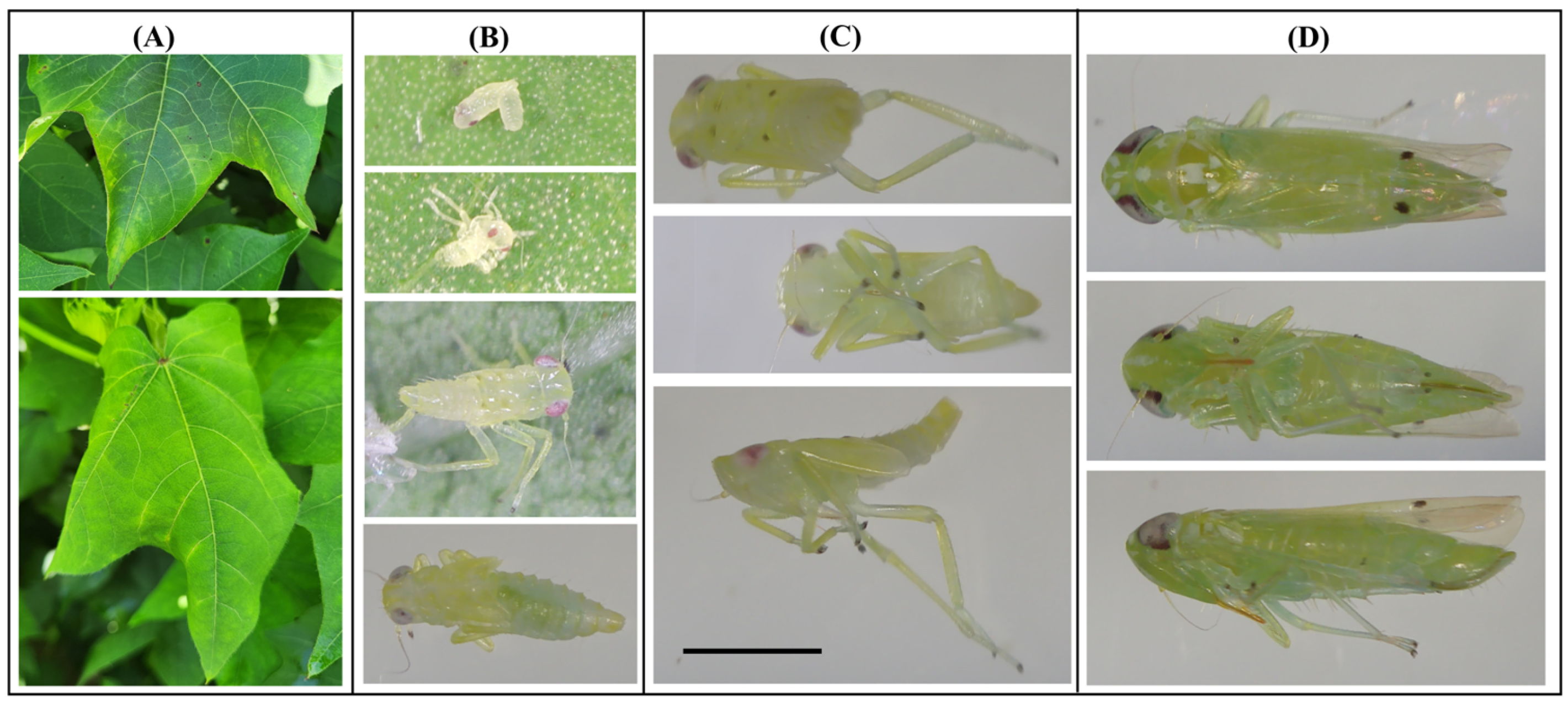
The two-spot cotton leafhopper (Amrasca biguttula) is a destructive insect pest that causes severe yield losses in cotton and other crops across Asia and Africa. Native to Asia, this species was recently reported in the Western Hemisphere based on morphological features, but its presence in the United States had not been confirmed using DNA methods. In this study, we observed A. biguttula activity in a cotton field in Macon County, Alabama, USA, collected specimens across multiple life stages, and confirmed its identity using DNA barcoding. These results represent the first molecular confirmation of A. biguttula in the United States. Accurate identification is critical because this species closely resembles other leafhoppers, especially in immature stages. Our findings provide a reliable genetic reference to support monitoring and management efforts in U.S. cotton production systems.
Abstract
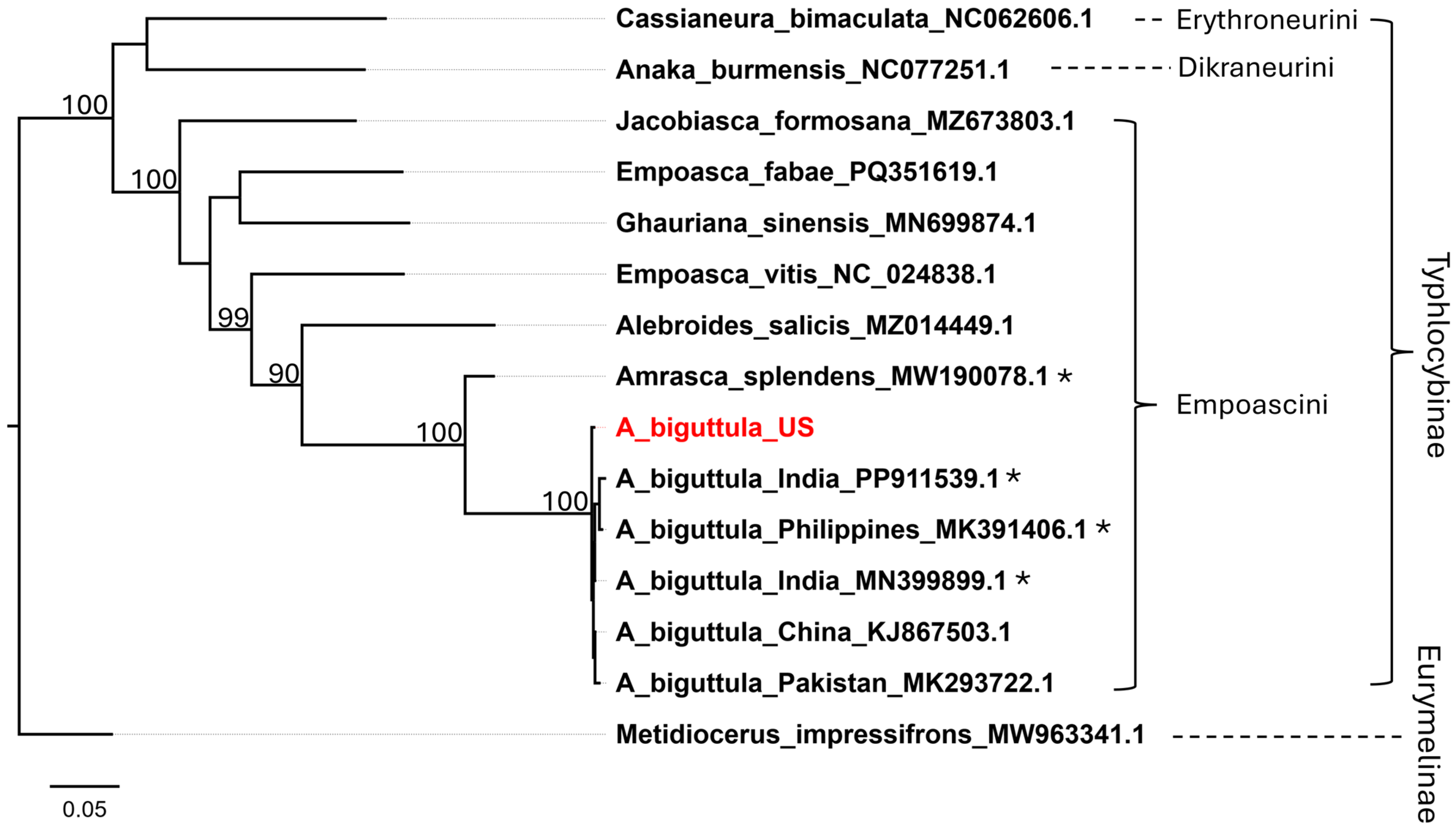
This report contains the first molecular record of the two-spot cotton leafhopper, Amrasca biguttula (Ishida) (Hemiptera: Cicadellidae), in the United States. Nymphs of multiple instars and adult specimens were collected from a cotton (Gossypium hirsutum) field in Macon County, Alabama, in August 2025. While distinct paired dark spots were observed on the forewings of adult specimens, this trait was inconsistently present on nymphal wing pads. Cytochrome oxidase I (COI) DNA barcoding confirmed the specimen identity. The United States sequence shared > 99% identity with Asian A. biguttula references, and phylogenetic analysis placed it within the A. biguttula clade with 100% posterior probability support. Although this pest was previously reported in 2023 from Puerto Rico based solely on morphological traits, our findings provide the first DNA-confirmed evidence of its presence in the United States. Given its well-documented role in damaging cotton across Asia and Africa, this report underscores the urgent need for monitoring and development of management strategies in United States cotton-growing regions.