Effects of the Stress of Beauveria bassiana on the Reproductive Success of an Idiobiont Parasitoid, Sclerodermus guani

1
School of Life Sciences, Guizhou Normal University, Guiyang 550025, China
2
Guizhou Key Laboratory of Forest Cultivation in Plateau Mountain, School of Life Science, Guizhou Normal University, Guiyang 550025, China
3
Guizhou Institute of Biology, Guiyang 550009, China
*
Author to whom correspondence should be addressed.
Insects 2026, 17(3), 278; https://doi.org/10.3390/insects17030278
Submission received: 8 February 2026
/
Revised: 28 February 2026
/
Accepted: 2 March 2026
/
Published: 4 March 2026
(This article belongs to the Special Issue Insect Pathogens as Biocontrol Agents Against Pests)
Simple Summary
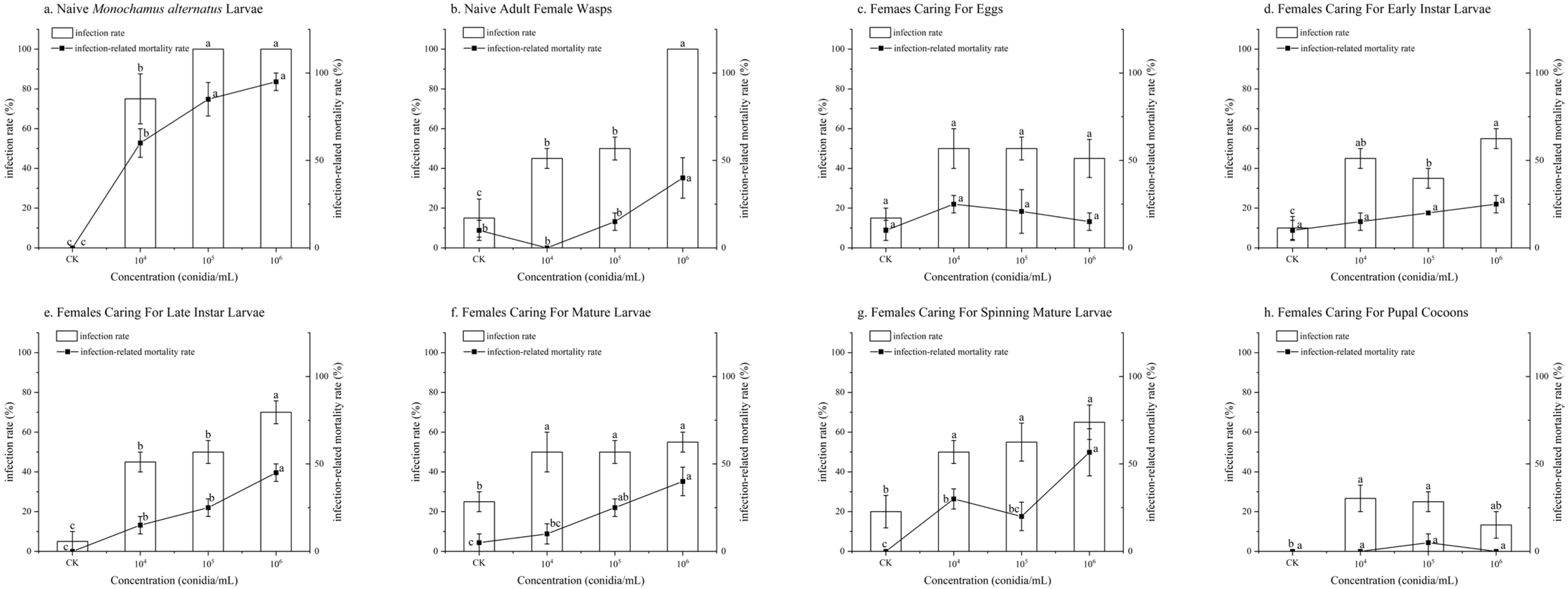
Within the complex interplay between an idiobiont ectoparasitoid, its beetle host, and a common fungus, we studied a scenario where Sclerodermus guani (Hymenoptera: Bethylidae) parasitizes and utilizes Monochamus alternatus (Coleoptera: Cerambycidae) within its sealed chamber. This nursery is often invaded by the Beauveria bassiana (Hypocreales: Cordycipitaceae), which hitchhikes on the female parasitoids or the host beetle. We investigated how different routes (via the female parasitoids of S. guani or the host beetle) and timing of B. bassiana exposure affect S. guani population dynamics and development. Our results showed that B. bassiana caused the most severe harm when it was carried by M. alternatus. The offspring of S. guani were also most vulnerable during their mid-to-late growth stages, while egg and pupa within cocoon stages were better protected. These differences are likely due to combined factors like maternal care, the offspring growth phase, and the nursery environment. The techniques parasitoids use to feed on and manipulate their hosts are ingenious, demonstrating multiple evolutionary pathways to achieve successful development from egg to adult. This study highlights that, in pest control, where S. guani and B. bassiana are used together, the pathway and timing of B. bassiana exposure are crucial to avoid harming the beneficial wasps, thereby improving the sustainable management of tree-boring M. alternatus.
Abstract
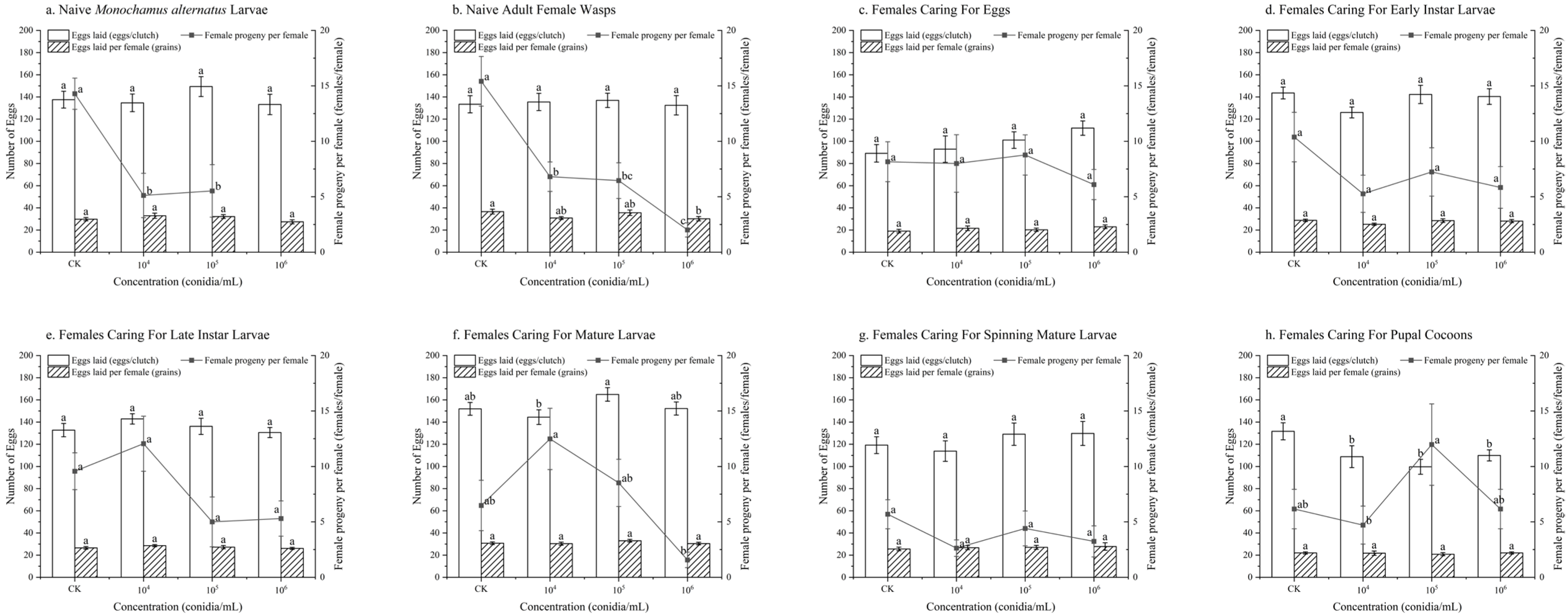
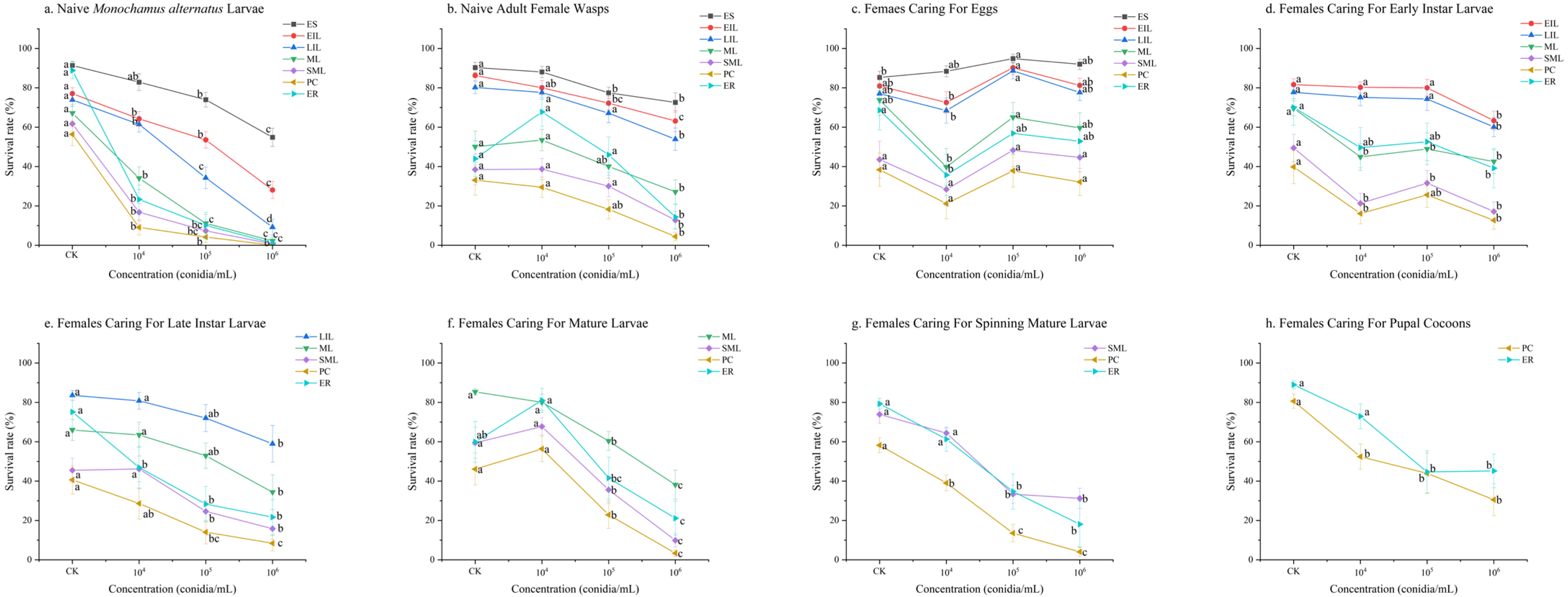
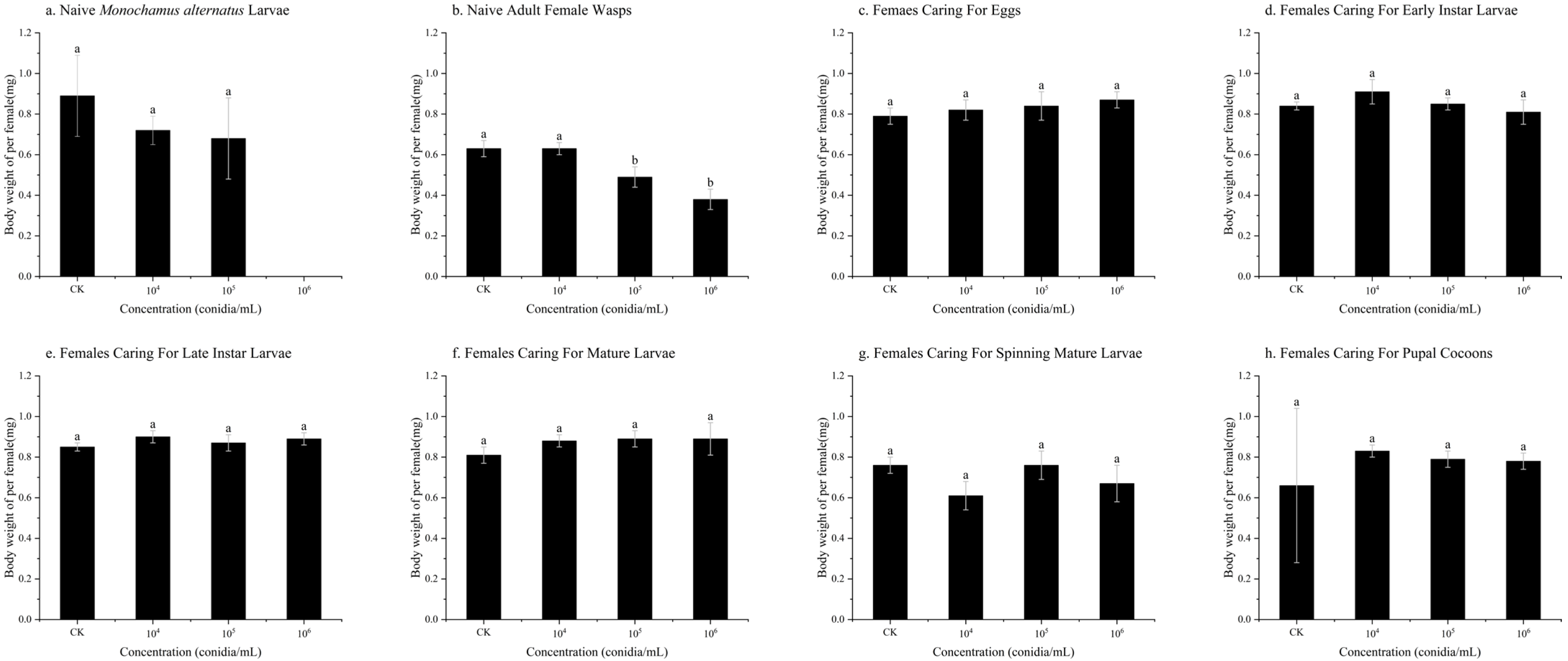
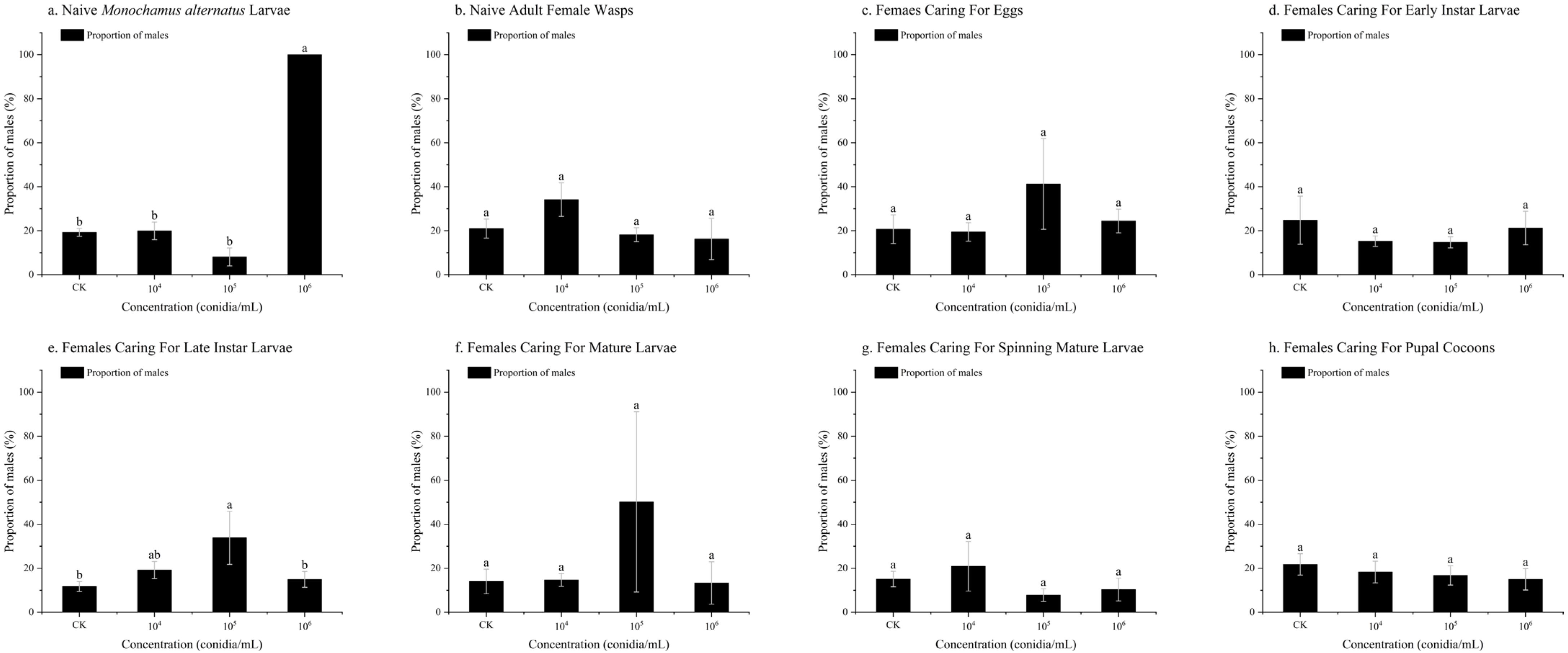
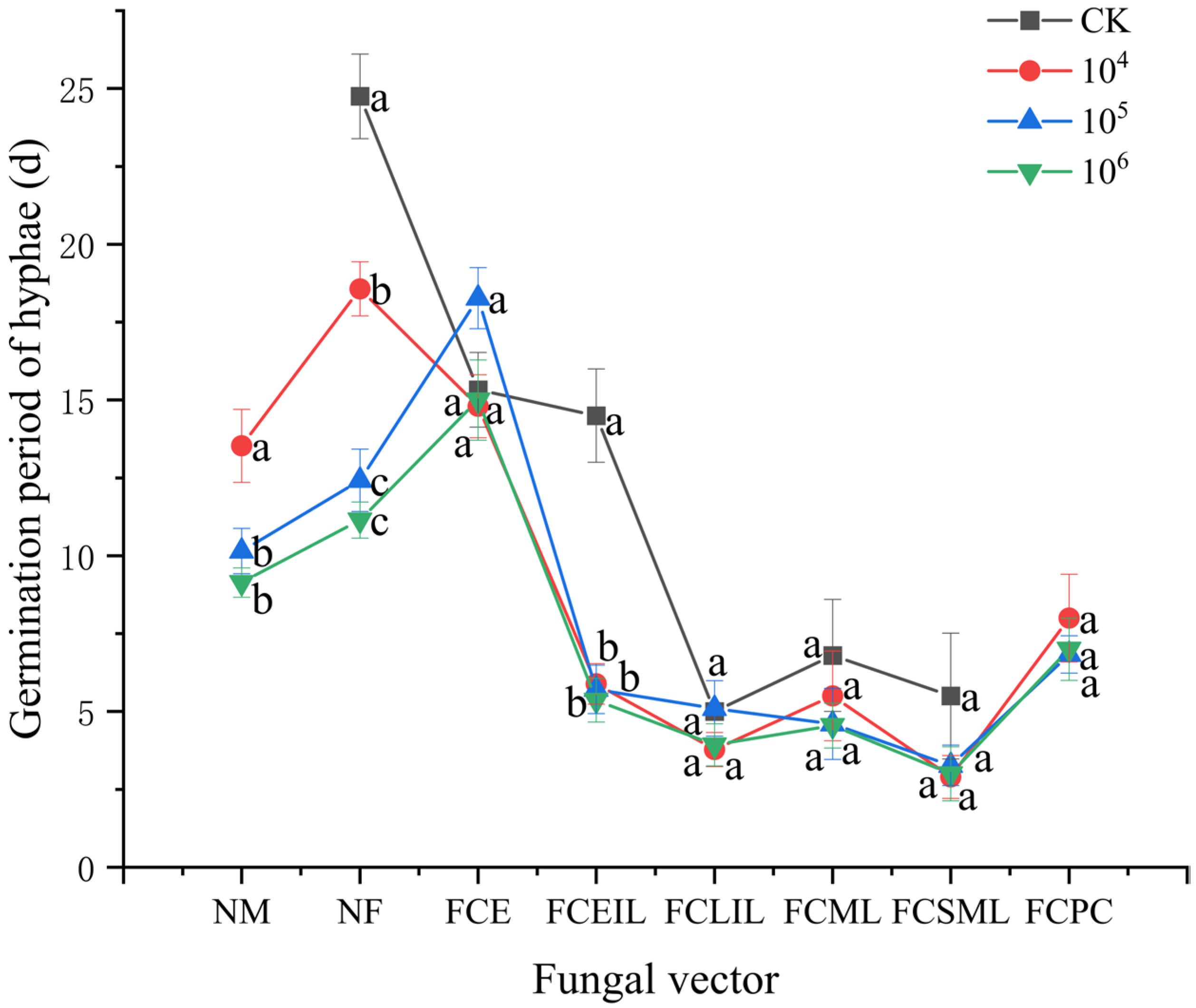
In the complex interplay among parasitic wasps, their insect hosts, and pathogenic microbes, the system involving Sclerodermus guani (Hymenoptera: Bethylidae) (a parasitoid wasp), Monochamus alternatus (Coleoptera: Cerambycidae) (the pine sawyer beetle, its host), and Beauveria bassiana (Hypocreales: Cordycipitaceae) (a fungus) presents a unique scenario where wasp offspring develop within a nearly sealed host gallery. This nursery is vulnerable to fungal invasion, often introduced by the foraging female wasps or M. alternatus itself, creating a three-way interaction where the fungus can infect both M. alternatus and S. guani. To assess how the route and timing of fungal exposure impact the S. guani population, we simulated this system by introducing different concentrations of B. bassiana either directly to the female wasps or to M. alternatus prior to parasitism. We further examined the effect of exposure timing by applying the fungus at different developmental stages of the S. guani offspring. Key population parameters, including the reproductive capacity of female wasps, the survival and developmental fitness of S. guani offspring and the germination period of hyphae, were measured. The results indicated that the most severe damage to populations of S. guani occurs when its host, M. alternatus, is infected by B. bassiana. Among the various developmental stages, S. guani offspring exhibited the greatest vulnerability during mid-to-late larval stages, whereas the egg and pupa within cocoon stages demonstrated a higher tolerance. We conclude that both the pathway and the timing of fungal exposure are critical factors influencing its impact. These findings provide valuable insights for optimizing the integrated use of biological agents in pest management, informing strategies that mitigate adverse effects on beneficial parasitoid wasps.