Mowing Enhances Insect Resistance in Glycyrrhiza uralensis by Reprogramming Volatile Profiles and Inducing Flavonoid Accumulation
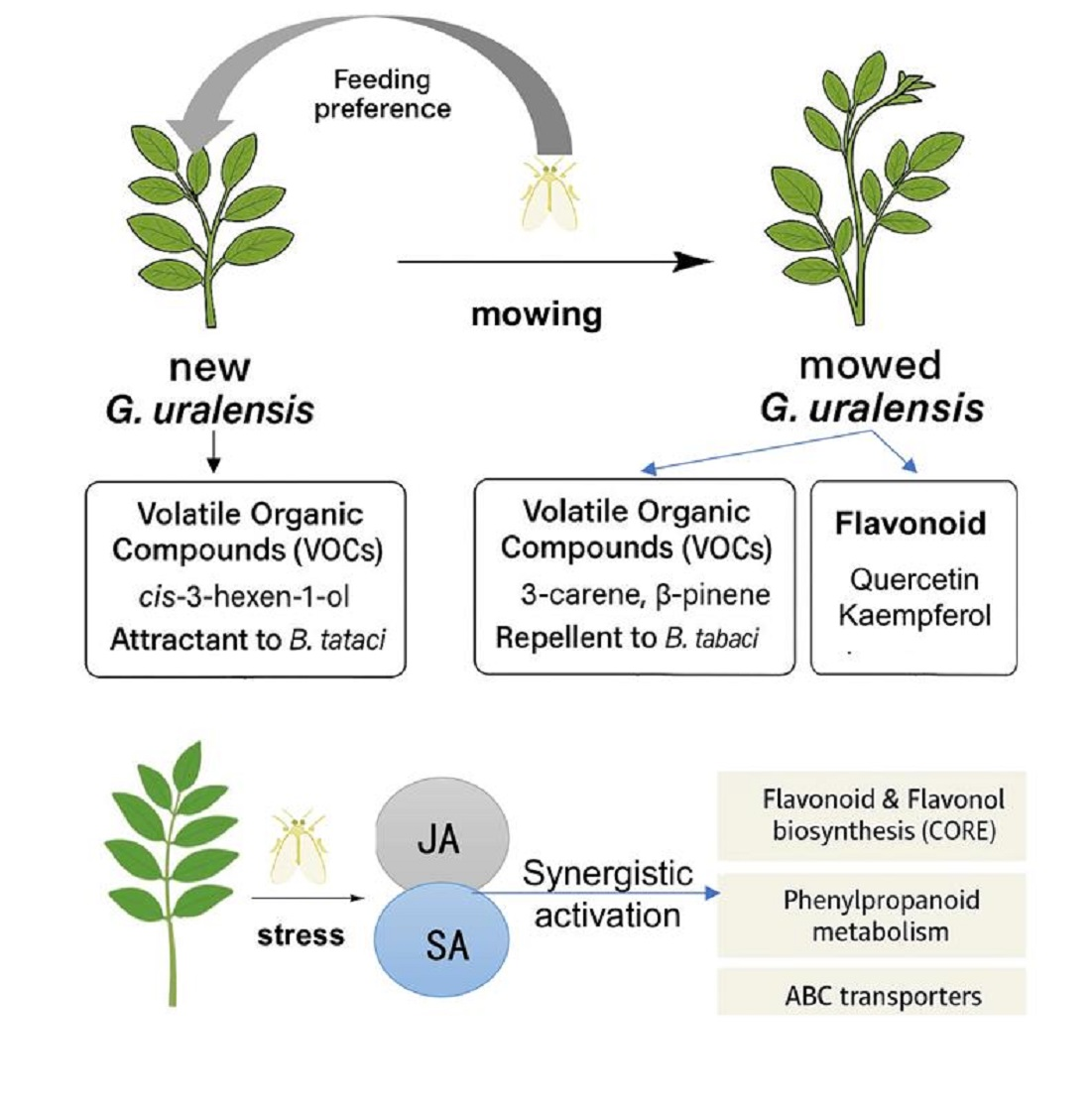
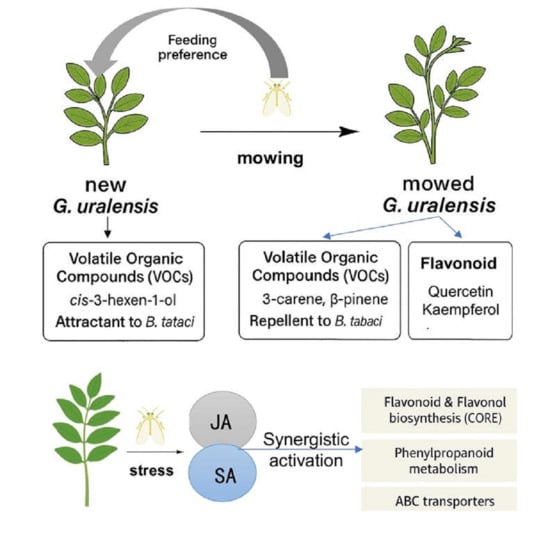
Simple Summary
Abstract
1. Introduction
2. Materials and Methods
2.1. Plant Cultivation and Growth Conditions
2.2. Mowing Treatment and Experimental Material Preparation
2.3. Insect Rearing
2.4. Feeding Preference Assay
2.5. Measurement of Developmental Duration and Longevity
2.6. Volatile Organic Compound (VOC) Analysis
2.6.1. Experimental Design and Plant Treatments
2.6.2. HS-GC-MS Analysis of VOCs
2.7. Transcriptome and Metabolomic Analyses
2.7.1. Transcriptome Sequencing and Analysis
2.7.2. Metabolomic Analysis
2.8. qRT-PCR Analysis
2.9. Statistical Analysis
3. Results
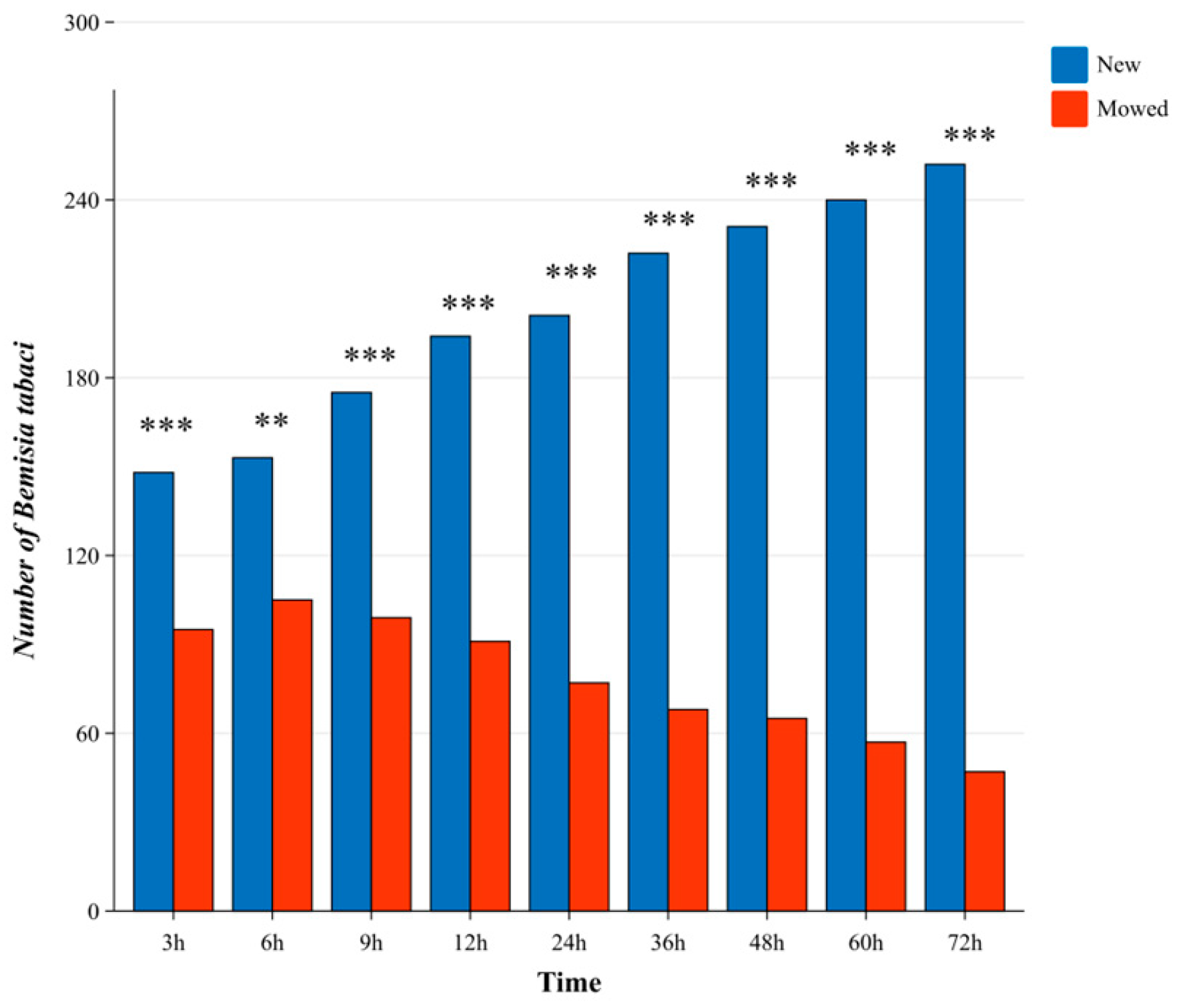
3.1. Feeding Preference of B. tabaci for New and Mowed G. uralensis
3.2. Developmental Duration and Longevity of B. tabaci
3.3. Volatile Organic Compounds Induced by B. tabaci Feeding
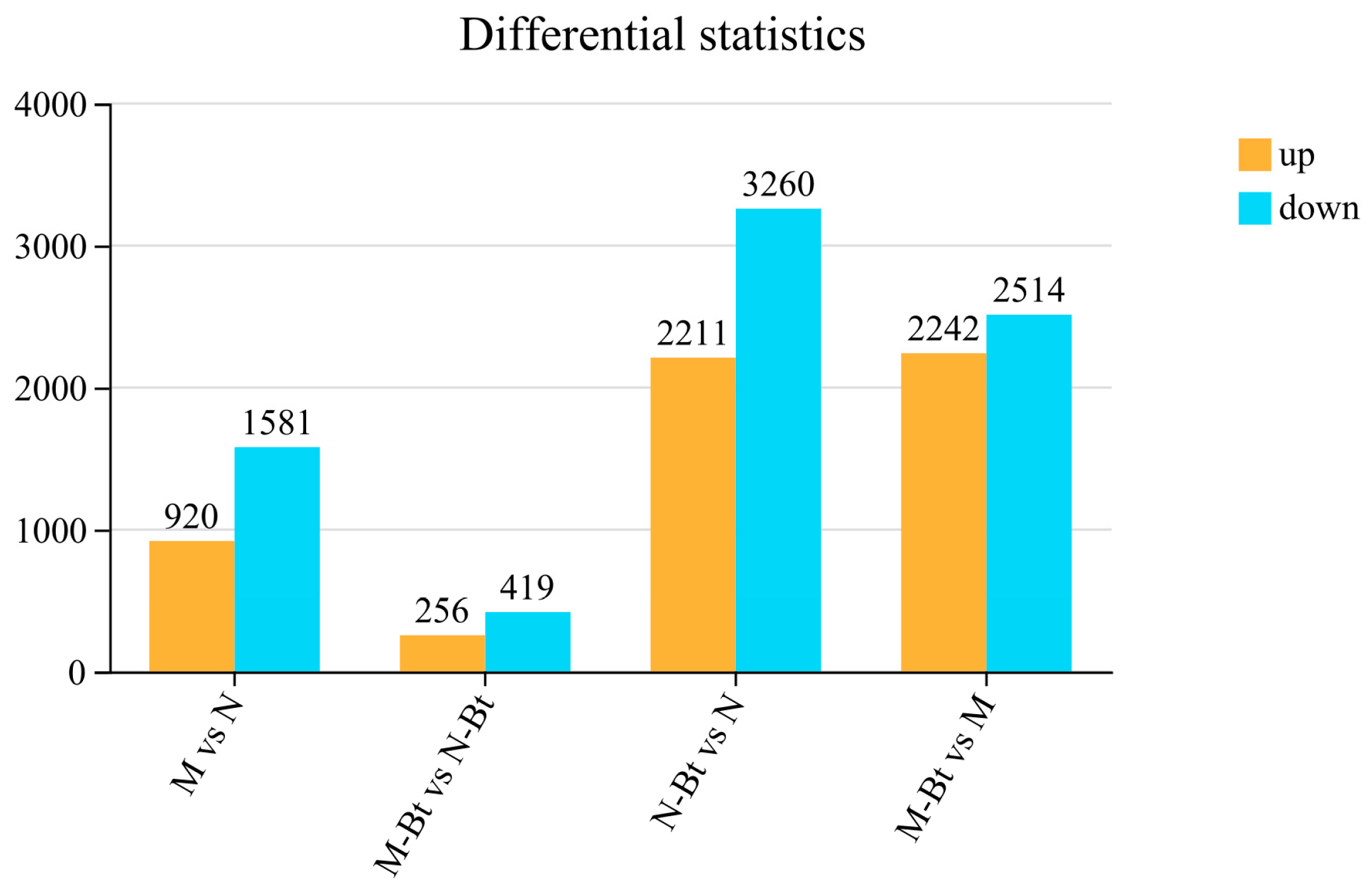
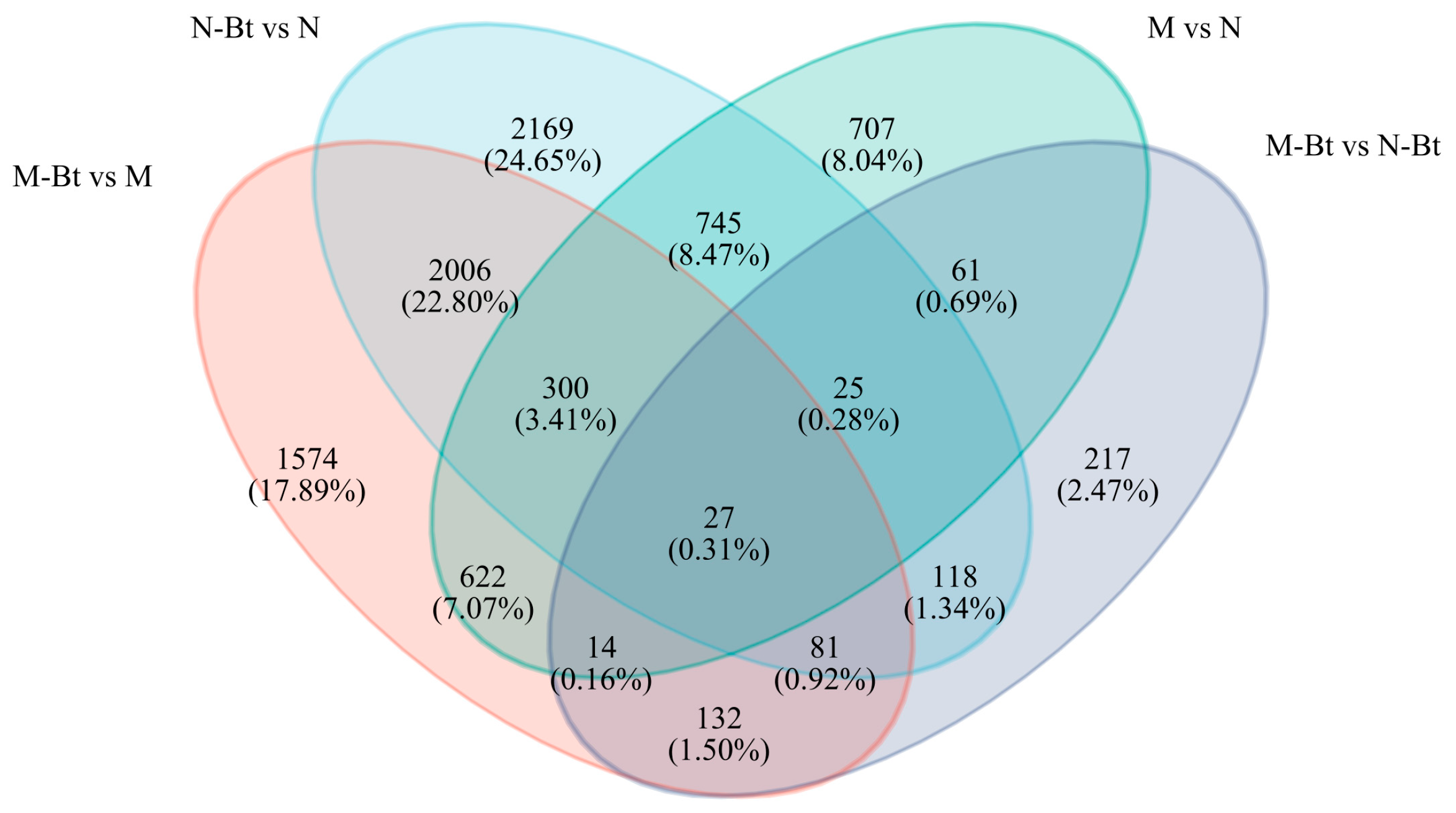
3.4. Transcriptome Analysis under Different Treatments of B. tabaci
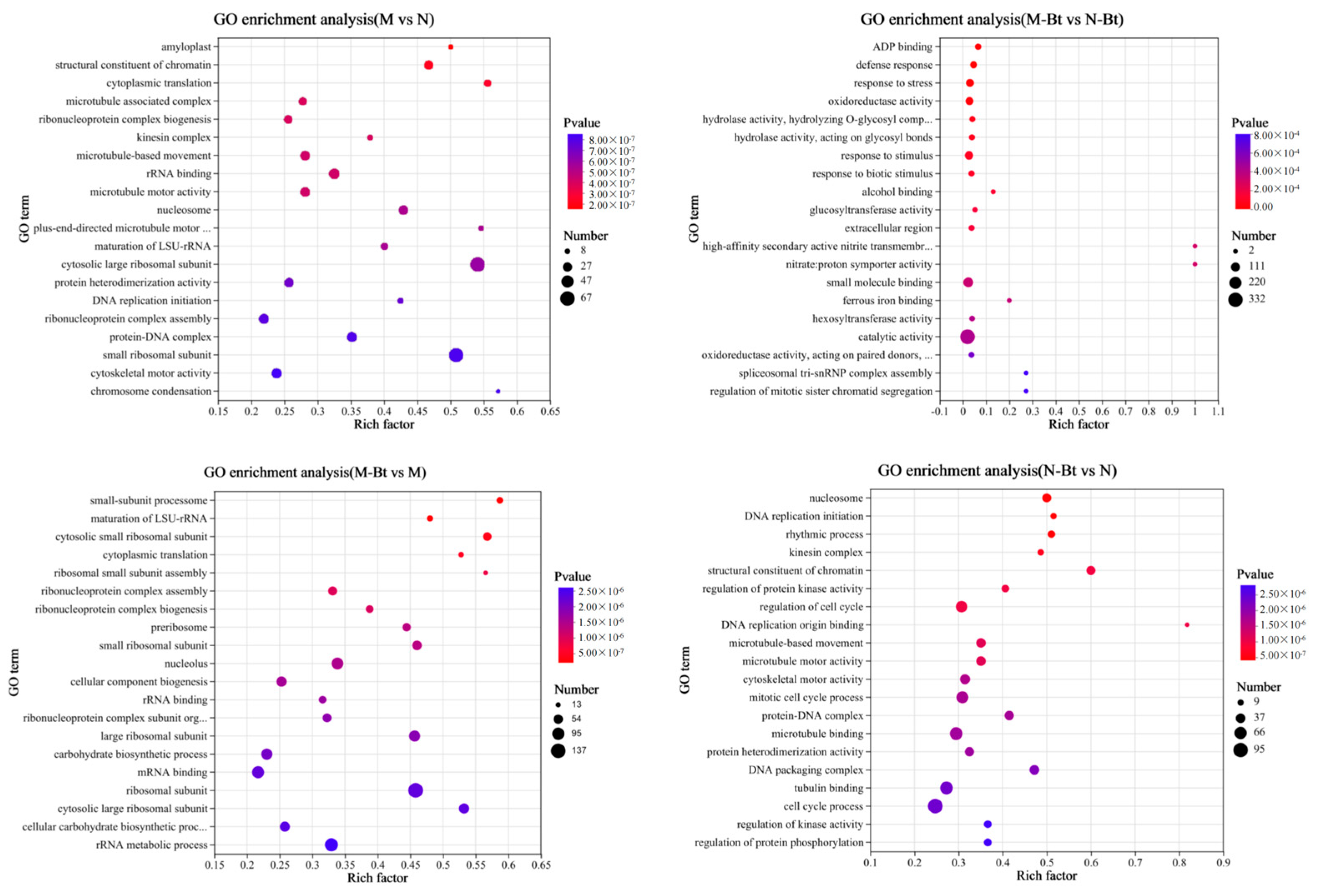
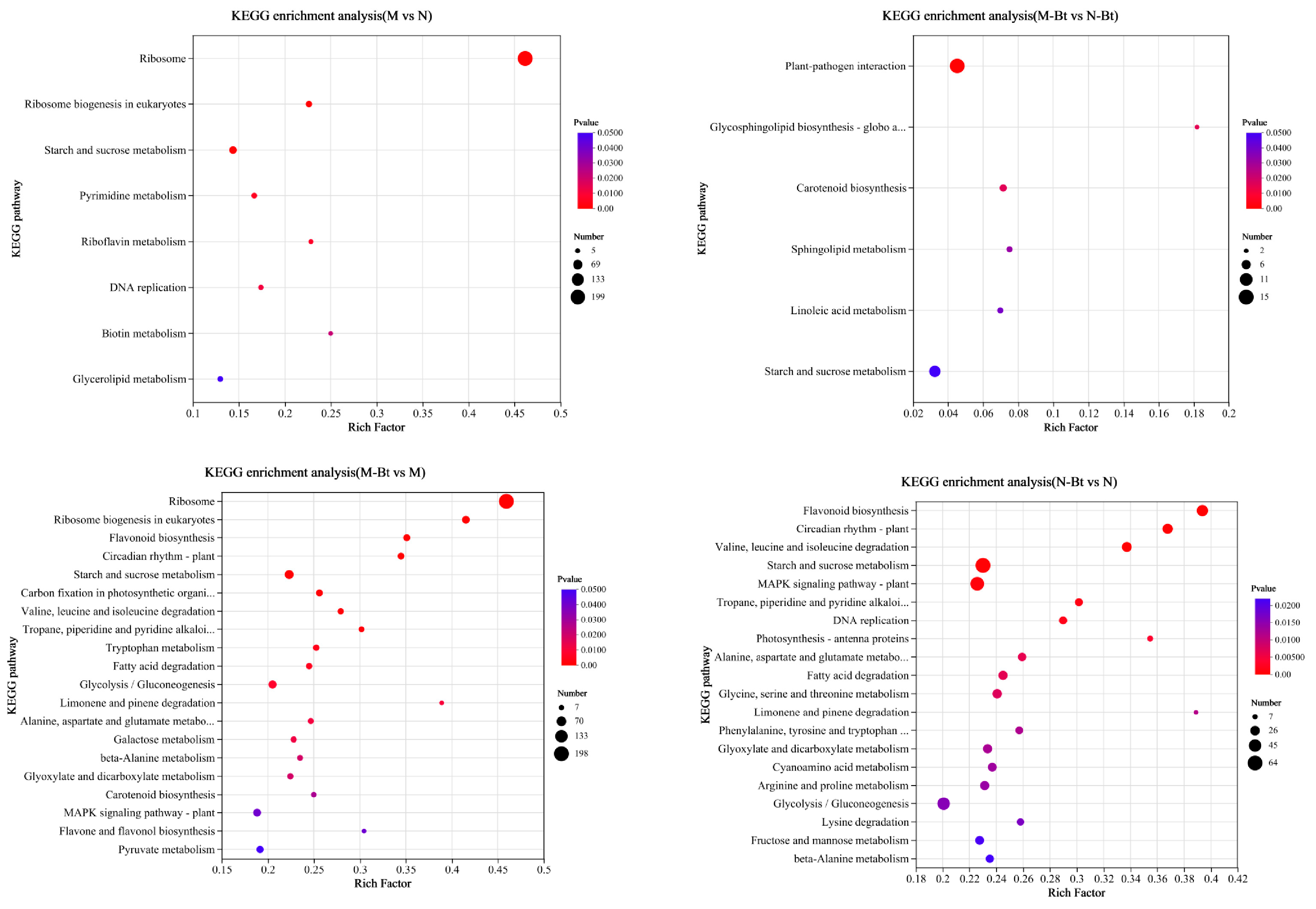
3.5. Functional Enrichment Analysis of the Identified DEGs
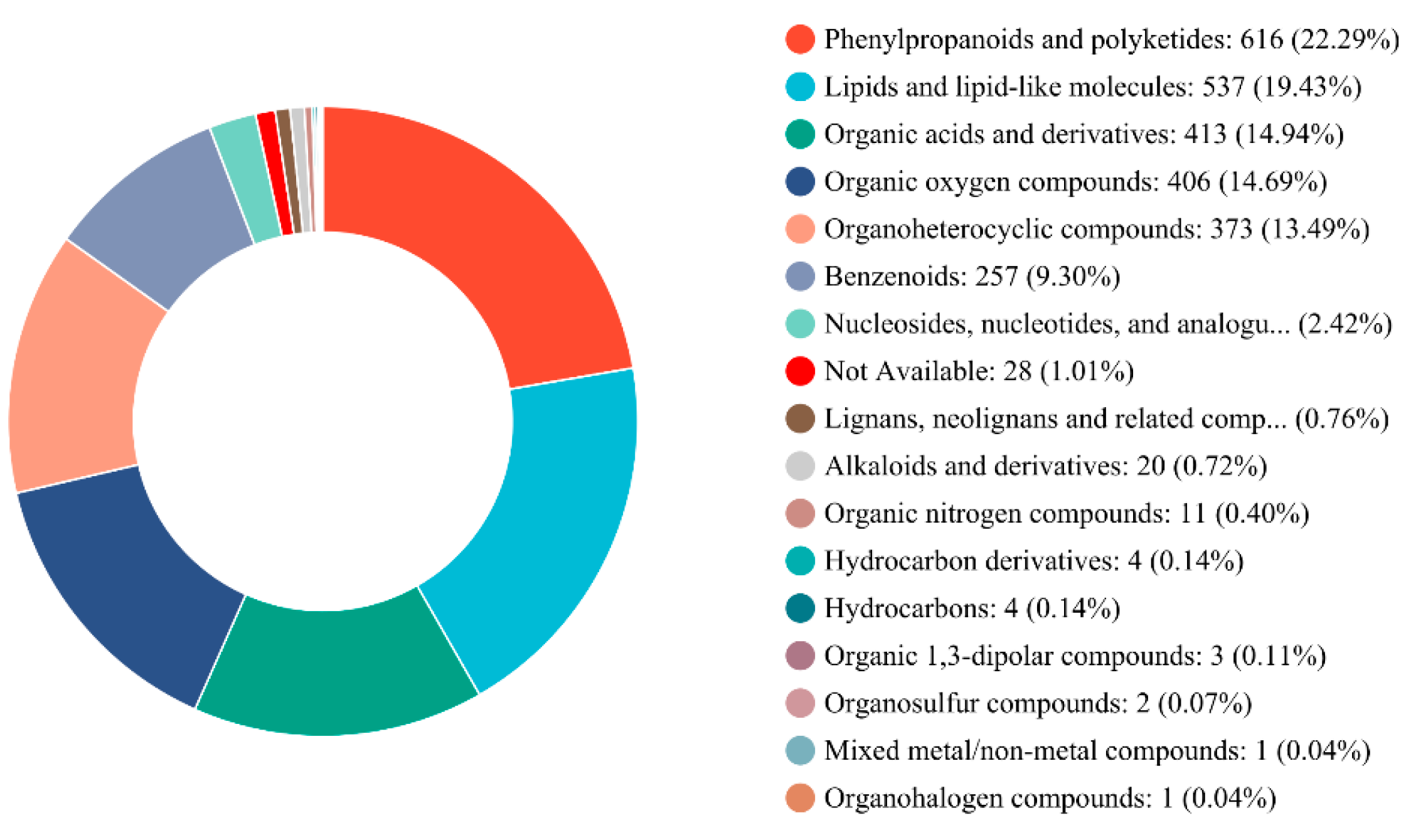
3.6. Annotation of Metabolites
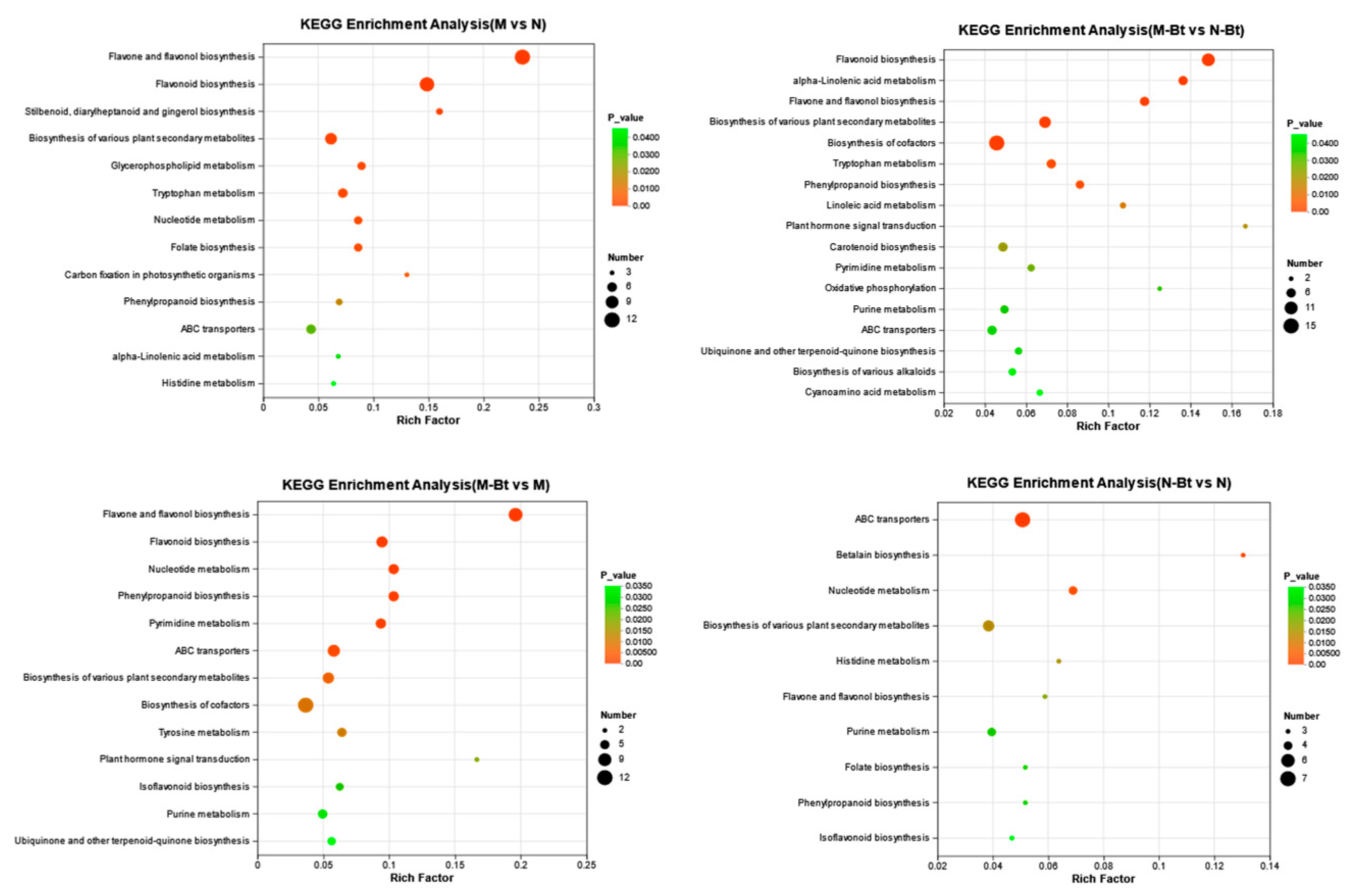
3.7. KEGG Analysis of Differential Metabolite
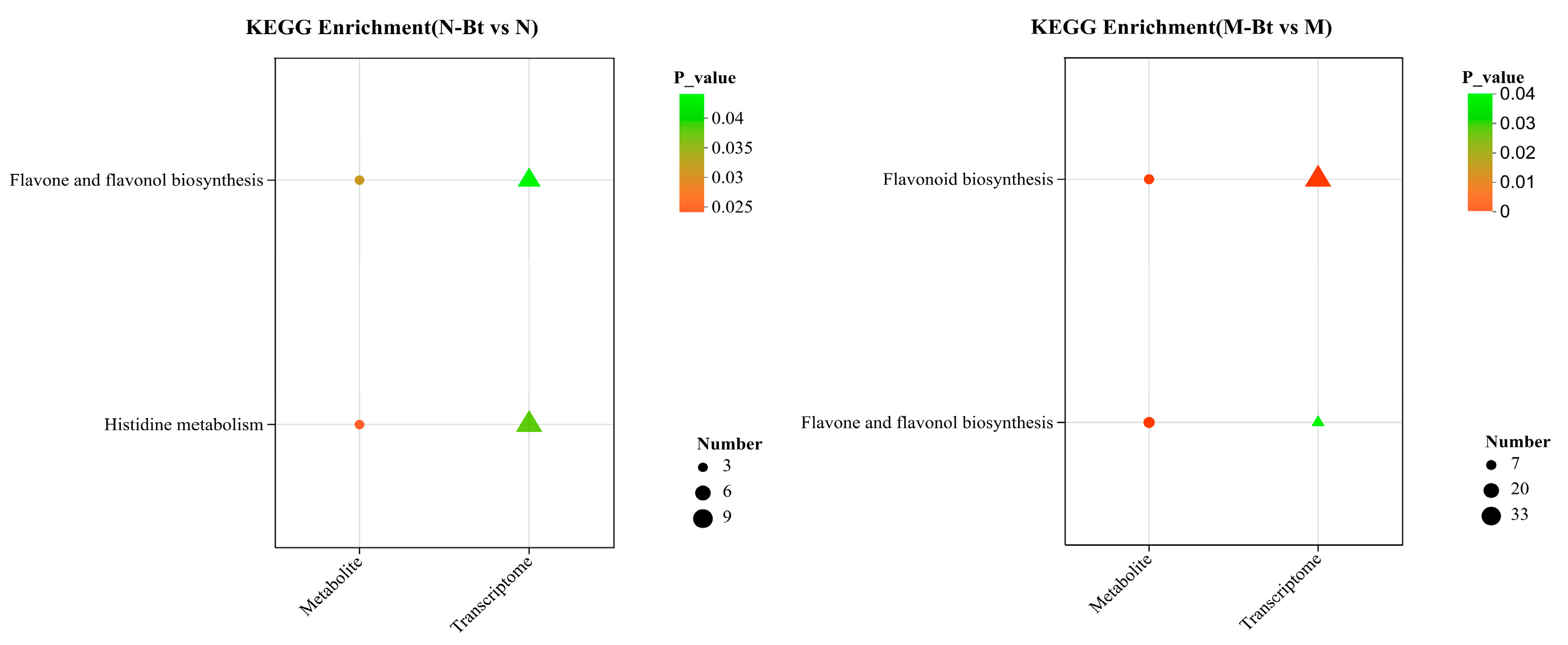
3.8. Combined Analysis of Transcriptomic and Metabolomic Data
3.9. Defense Pathways of G. uralensis in Response to B. tabaci Feeding
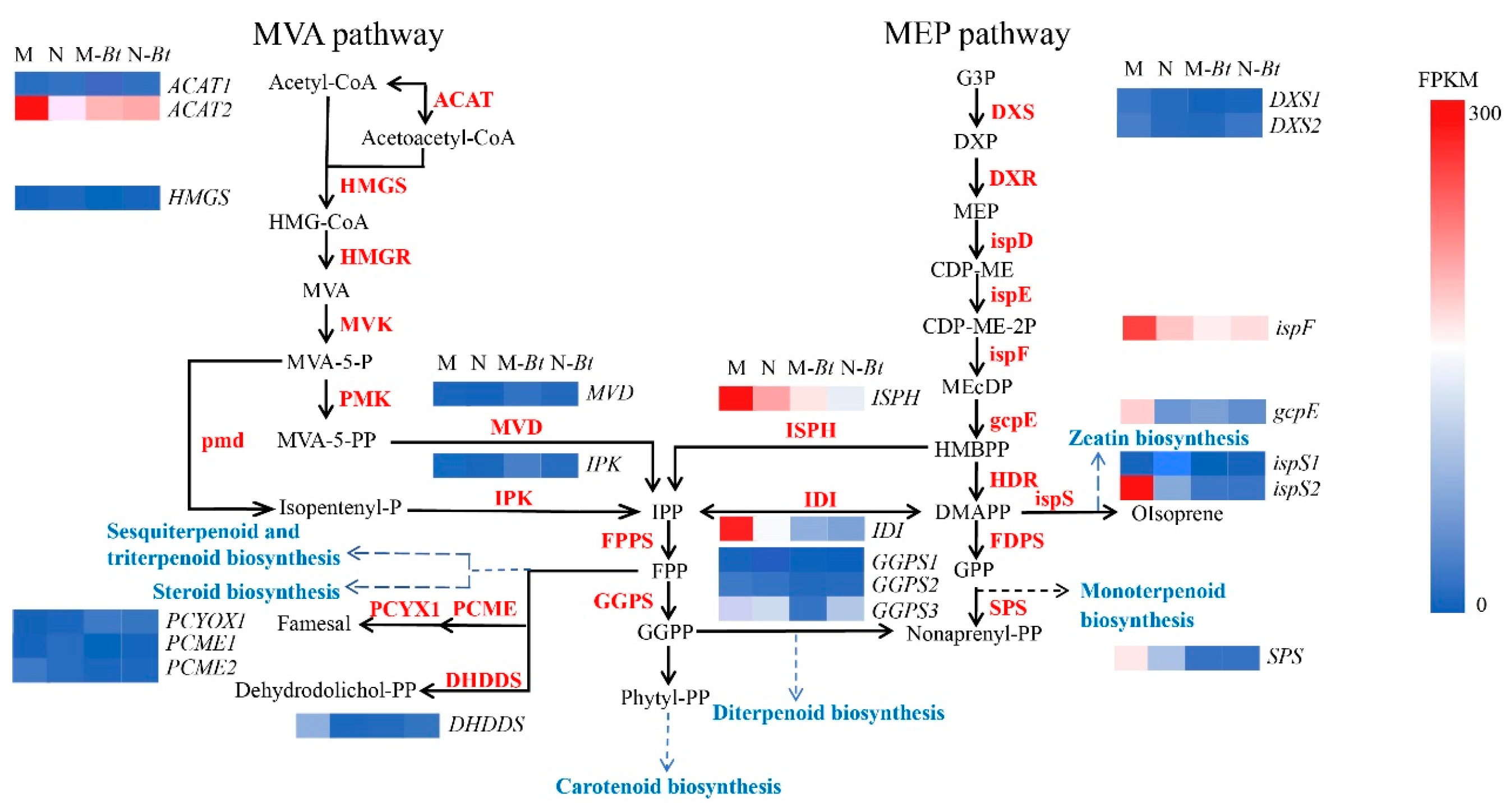
3.9.1. Terpenoid Skeleton Biosynthesis Pathways
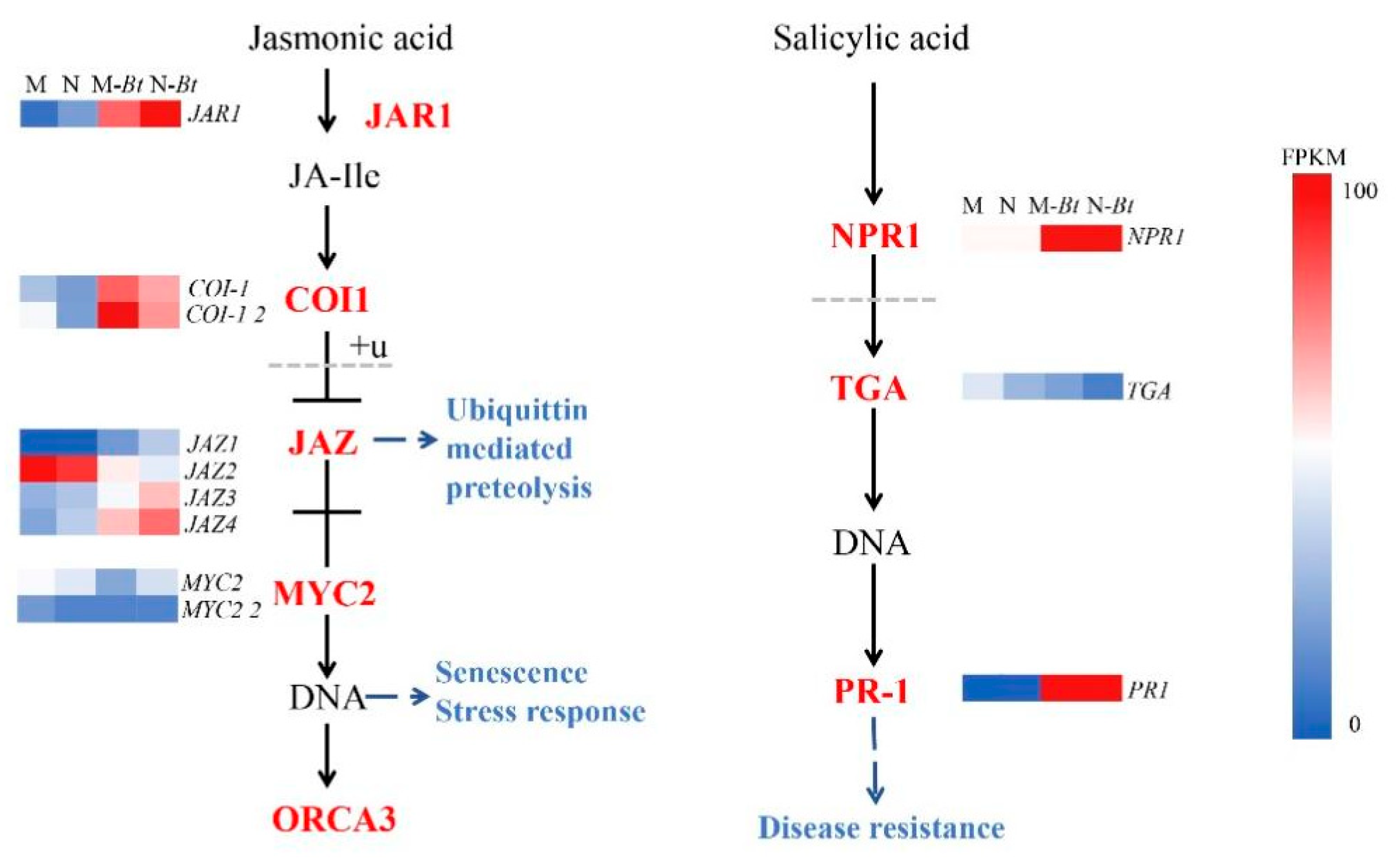
3.9.2. SA and JA Signaling Pathways
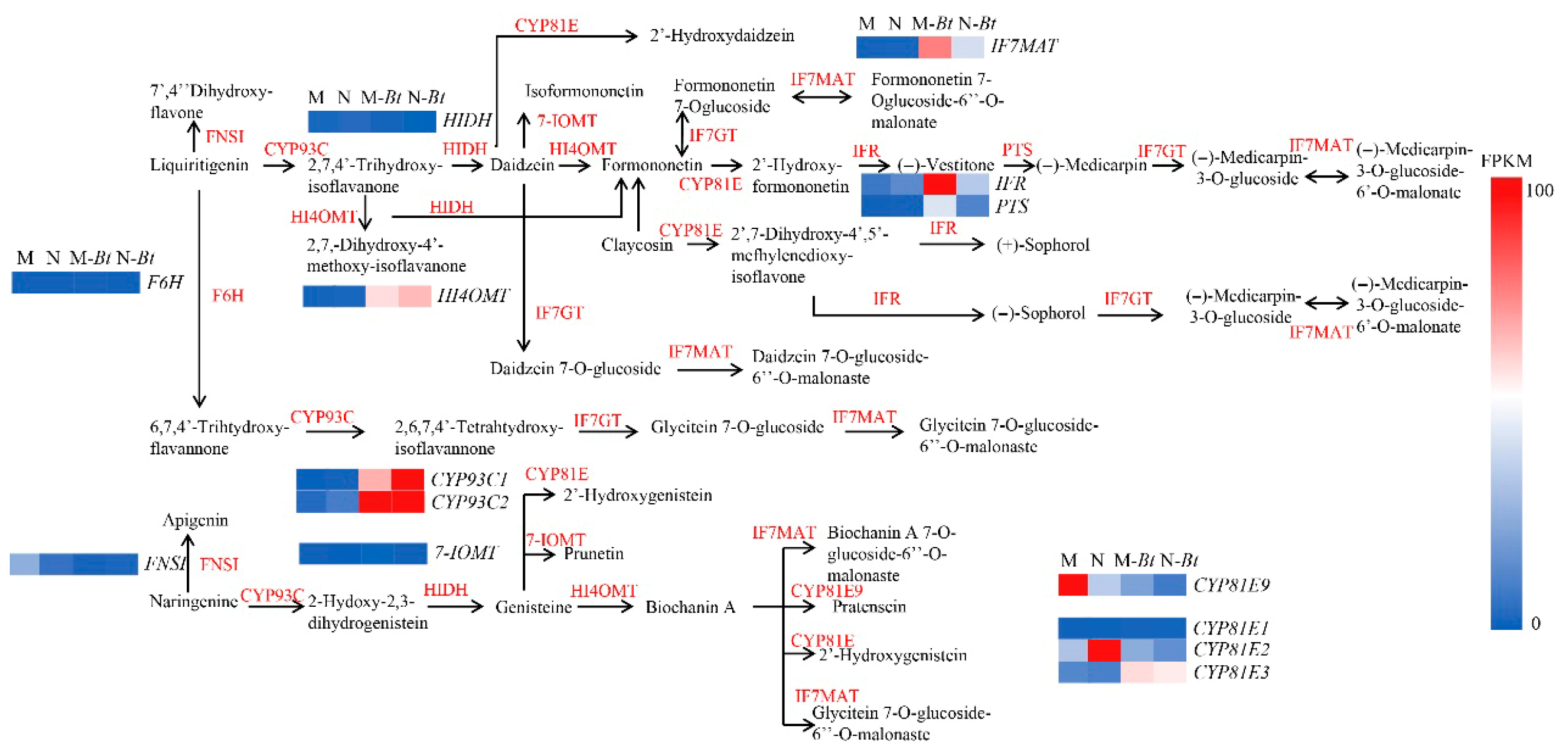
3.9.3. Isoflavone Biosynthesis Pathway
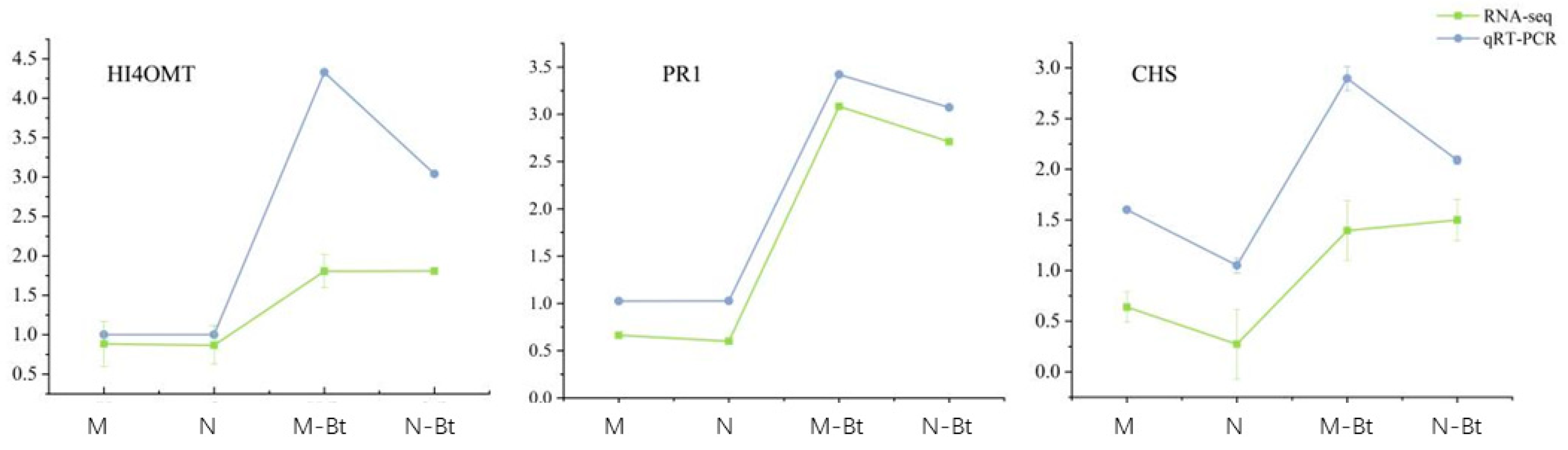
3.10. qRT-PCR Validation
4. Discussion
5. Conclusions
Supplementary Materials
Author Contributions
Funding
Data Availability Statement
Acknowledgments
Conflicts of Interest
References
- Weng, X.F. Research on the Standard and Variant Names of Drugs in “Shennong’s Classic of Materia Medica”. Doctoral Dissertation, China Academy of Chinese Medical Sciences, Beijing, China, 2020. (In Chinese) [Google Scholar]
- Gu, J.; Jia, T.; Ma, M. Influence of habitat and effects of salt stress on biochemical and physiological parameters of Glycyrrhiza uralensis. Plants 2024, 13, 2108. [Google Scholar] [CrossRef] [PubMed]
- He, Z.; Webster, S.; He, S.Y. Growth-defense trade-offs in plants. Curr. Biol. 2022, 32, R634–R639. [Google Scholar] [CrossRef]
- Li, Y.; Jiang, D.; Liu, X.Y.; Li, M.; Tang, Y.F.; Mi, J.; Ren, G.X.; Liu, C.S. Multi-Omics Analysis Provides Crucial Insights into the Drought Adaptation of Glycyrrhiza uralensis Fisch. J. Agric. Food Chem. 2023, 71, 5391–5402. [Google Scholar] [CrossRef] [PubMed]
- Wang, C.; Wu, D.; Jiang, L.; Liu, X.; Xie, T. Multi-omics elucidates difference in accumulation of bioactive constituents in licorice (Glycyrrhiza uralensis) under drought stress. Molecules 2023, 28, 7042. [Google Scholar] [CrossRef] [PubMed]
- Shirazi, Z.; Aalami, A.; Tohidfar, M.; Sohani, M.M. Triterpenoid gene expression and phytochemical content in Iranian licorice under salinity stress. Protoplasma 2019, 256, 827–837. [Google Scholar] [CrossRef]
- Wang, C.; Chen, L.; Cai, Z.; Chen, C.; Liu, Z.; Liu, S.; Zou, L.; Tan, M.; Chen, J.; Liu, X.; et al. Metabolite Profiling and Transcriptome Analysis Explains Difference in Accumulation of Bioactive Constituents in Licorice (Glycyrrhiza uralensis) Under Salt Stress. Front. Plant Sci. 2021, 12, 727882. [Google Scholar] [CrossRef]
- Farina, A.; Barbera, A.C.; Leonardi, G.; Massimino Cocuzza, G.E.; Suma, P.; Rapisarda, C. Bemisia tabaci (Hemiptera: Aleyrodidae): What Relationships with and Morpho-Physiological Effects on the Plants It Develops on? Insects 2022, 13, 351. [Google Scholar] [CrossRef]
- Gelman, D.B.; Blackburn, M.B.; Hu, J.S. Identification of the molting hormone of the sweet potato (Bemisia tabaci) and greenhouse (Trialeurodes vaporariorum) whitefly. J. Insect Physiol. 2005, 51, 47–53. [Google Scholar] [CrossRef]
- Lee, Y.S. Push-pull strategy for control of sweet-potato whitefly, Bemisia tabaci (Hemiptera: Aleyrodidae) in a tomato greenhouse. Korean J. Appl. Entomol. 2020, 58, 209–218. [Google Scholar]
- Ghosh, S.; Ghanim, M. Factors determining transmission of persistent viruses by B. tabaci and emergence of new virus–vector relationships. Viruses 2021, 13, 1808. [Google Scholar] [CrossRef]
- Zhang, X.M. Research on the Biological and Ecological Control Patterns of Whitefly Populations in Cotton Fields. Doctoral Dissertation, Chinese Academy of Agricultural Sciences, Beijing, China, 2013. (In Chinese) [Google Scholar]
- Chavana, J.; Singh, S.; Vazquez, A.; Christoffersen, B.; Racelis, A.; Kariyat, R.R. Local adaptation to continuous mowing makes the noxious weed Solanum elaeagnifolium a superweed candidate by improving fitness and defense traits. Sci. Rep. 2021, 11, 6634. [Google Scholar] [CrossRef]
- Nagy, D.U.; Rauschert, E.S.J.; Callaway, R.M.; Henn, T.; Filep, R.; Pal, R.W. Intense mowing management suppresses invader, but shifts competitive resistance by a native to facilitation. Restor. Ecol. 2022, 30, e13483. [Google Scholar] [CrossRef]
- Brilli, F.; Hörtnagl, L.; Bamberger, I.; Schnitzhofer, R.; Ruuskanen, T.M.; Hansel, A.; Loreto, F.; Wohlfahrt, G. Qualitative and quantitative characterization of volatile organic compound emissions from cut grass. Environ. Sci. Technol. 2012, 46, 3859–3865. [Google Scholar] [CrossRef] [PubMed]
- Ali, J.; Tonğa, A.; Islam, T.; Mir, S.; Mukarram, M.; Konôpková, A.S.; Chen, R. Defense strategies and associated phytohormonal regulation in Brassica plants in response to chewing and sap-sucking insects. Front. Plant Sci. 2024, 15, 1376917. [Google Scholar] [CrossRef]
- Feng, Z.; Zheng, C.Y.; Bo, Y.K.; Li, Y.H.; Zhu, F. Advances in transcriptomics- and metabolomics-based exploration of plant responses to drought and herbivorous insects. Chin. J. Eco-Agric. 2024, 32, 369–379. [Google Scholar]
- Javed, T.; Wang, W.; Yang, B.; Shen, L.; Sun, T.; Gao, S.J.; Zhang, S. Pathogenesis related-1 proteins in plant defense: Regulation and functional diversity. Crit. Rev. Biotechnol. 2025, 45, 305–313. [Google Scholar] [CrossRef]
- Dao, T.T.; Linthorst, H.J.; Verpoorte, R. Chalcone synthase and its functions in plant resistance. Phytochem. Rev. Proc. Phytochem. Soc. Eur. 2011, 10, 397–412. [Google Scholar] [CrossRef]
- Akashi, T.; Sawada, Y.; Shimada, N.; Sakurai, N.; Aoki, T.; Ayabe, S. cDNA cloning and biochemical characterization of S-adenosyl-L-methionine: 2,7,4′-trihydroxyisoflavanone 4′-O-methyltransferase, a critical enzyme of the legume isoflavonoid phytoalexin pathway. Plant Cell Physiol. 2003, 44, 103–112. [Google Scholar] [CrossRef]
- Pazouki, L.; Niinemets, Ü. Multi-Substrate Terpene Synthases: Their Occurrence and Physiological Significance. Front. Plant Sci. 2016, 7, 1019. [Google Scholar] [CrossRef]
- Tian, H.; Xu, L.; Li, X.; Zhang, Y. Salicylic acid: The roles in plant immunity and crosstalk with other hormones. J. Integr. Plant Biol. 2025, 67, 773–785. [Google Scholar] [CrossRef]
- Han, C.; Zhang, X.W.; Gao, G.L.; Han, S.; Du, Y. Regional distribution of tomato yellow leaf curl virus and cryptic species of Bemisia tabaci in Xinjiang, China. J. Shihezi Univ. (Nat. Sci.) 2020, 38, 160–165. (In Chinese) [Google Scholar]
- Hasanuzzaman, A.T.; Islam, M.N.; Zhang, Y.; Zhang, C.Y.; Liu, T.X. Leaf Morphological Characters Can Be a Factor for Intra-Varietal Preference of Whitefly Bemisia tabaci (Hemiptera: Aleyrodidae) among Eggplant Varieties. PLoS ONE 2016, 11, e0153880. [Google Scholar] [CrossRef] [PubMed]
- Chen, K.; Huang, M.X.; Shi, Q.C.; Xie, X.; Jin, L.H.; Xu, W.M.; Li, X.Y. Screening of a potential leafhopper attractants and their applications in tea plantations. J. Environ. Sci. Health Part. B Pestic. Food Contam. Agric. Wastes 2019, 54, 858–865. [Google Scholar] [CrossRef]
- Niu, Y.; Han, S.; Wu, Z.; Pan, C.; Wang, M.; Tang, Y.; Zhang, Q.H.; Tan, G.; Han, B. A push-pull strategy for controlling the tea green leafhopper (Empoasca flavescens F.) using semiochemicals from Tagetes erecta and Flemingia macrophylla. Pest Manag. Sci. 2022, 78, 2161–2172. [Google Scholar] [CrossRef] [PubMed]
- Song, Y.; Liu, C.; Cai, P.; Chen, W.; Guo, Y.; Lin, J.; Zhang, S. Host-Seeking Behavior of Aphidius gifuensis (Hymenoptera: Braconidae) Modulated by Chemical Cues Within a Tritrophic Context. J. Insect Sci. 2021, 21, 9. [Google Scholar] [CrossRef]
- Yan, X.Z.; Ma, L.; Li, X.F.; Chang, L.; Liu, Q.Z.; Song, C.F.; Zhao, J.Y.; Qie, X.T.; Deng, C.P.; Wang, C.Z.; et al. Identification and evaluation of cruciferous plant volatiles attractive to Plutella xylostella L. (Lepidoptera: Plutellidae). Pest Manag. Sci. 2023, 79, 5270–5282. [Google Scholar] [CrossRef]
- Wang, J.F. Effects of Volatile Compounds from Korean Pine Cones on Host Selection by Major Cone Pests. Doctoral Dissertation, Northeast Forestry University, Heilongjiang, China, 2023. (In Chinese) [Google Scholar]
- Ross, D.W.; Neal, T.A.; Wallin, K.F. Role of 3-Carene in Host Location and Colonization by Dendroctonus pseudotsugae (Coleoptera: Curculionidae). Environ. Entomol. 2022, 51, 190–195. [Google Scholar] [CrossRef]
- Gao, W.; Dong, P.; Abduriyim, S.; Wang, X. Glycyrrhiza volatiles mediate the host preference of Bemisia tabaci (Hemiptera: Aleyrodidae). J. Entomol. Sci. 2025, 60, 347–361. [Google Scholar] [CrossRef]
- Lanier, E.R.; Andersen, T.B.; Hamberger, B. Plant terpene specialized metabolism: Complex networks or simple linear pathways? Plant J. For. Cell Mol. Biol. 2023, 114, 1178–1201. [Google Scholar] [CrossRef]
- Simmonds, M.S. Importance of flavonoids in insect-plant interactions: Feeding and oviposition. Phytochemistry 2001, 56, 245–252. [Google Scholar] [CrossRef]
- Gautam, H.; Sharma, A.; Trivedi, P.K. The role of flavonols in insect resistance and stress response. Curr. Opin. Plant Biol. 2023, 73, 102353. [Google Scholar] [CrossRef]
- Gómez, J.D.; Vital, C.E.; Oliveira, M.G.A.; Ramos, H.J.O. Broad range flavonoid profiling by LC/MS of soybean genotypes contrasting for resistance to Anticarsia gemmatalis (Lepidoptera: Noctuidae). PLoS ONE 2018, 13, e0205010. [Google Scholar] [CrossRef] [PubMed]
- Metsämuuronen, S.; Sirén, H. Bioactive phenolic compounds, metabolism and properties: A review on valuable chemical compounds in Scots pine and Norway spruce. Phytochem. Rev. 2019, 18, 623–664. [Google Scholar] [CrossRef]
- War, A.R.; Paulraj, M.G.; Ahmad, T.; Buhroo, A.A.; Hussain, B.; Ignacimuthu, S.; Sharma, H.C. Mechanisms of plant defense against insect herbivores. Plant Signal. Behav. 2012, 7, 1306–1320. [Google Scholar] [CrossRef]
- Yan, X.F.; Liu, Y.H.; Li, G.; He, Y.; Liu, X.Y.; Liu, L. EAG and olfactory behavioral responses of Asias halodendri to six volatiles from Chinese jujube tree. Chin. Agric. Sci. Bull. 2016, 32, 177–181. (In Chinese) [Google Scholar]
- Wu, J.; Song, X.S.; Hu, W.Q.; Cai, P.M.; Chen, J.H. Attraction effects of volatile compounds from eight host plants on Bactrocera dorsalis. J. Fujian Agric. For. Univ. (Nat. Sci. Ed.) 2018, 47, 655–660. (In Chinese) [Google Scholar]
- Zhang, X.M.; Wu, G.Q.; Wei, M. The role of MAPK in plant response to abiotic stress. Acta Prataculturae Sin. 2024, 33, 182–197. [Google Scholar]
- Qiao, L.; Hou, X.; Li, X.; Hu, N.; Yang, X.; Wang, Y.; Li, X.; Lu, L.; Liu, X. Glutamate induction of whole potatoes alleviated the browning of fresh cuts: Jasmonate signalling may play a key role. Food Chem. 2025, 482, 144138. [Google Scholar] [CrossRef]
- Jiao, L.; Bian, L.; Luo, Z.; Li, Z.; Xiu, C.; Fu, N.; Cai, X.; Chen, Z. Enhanced volatile emissions and anti-herbivore functions mediated by the synergism between jasmonic acid and salicylic acid pathways in tea plants. Hortic. Res. 2022, 9, uhac144. [Google Scholar] [CrossRef] [PubMed]
- Zavaliev, R.; Dong, X. NPR1, a key immune regulator for plant survival under biotic and abiotic stresses. Mol. Cell 2024, 84, 131–141. [Google Scholar] [CrossRef]
- Lan, L.; Cao, L.; Zhang, L.; Fu, W.; Luo, C.; Wu, C.; Zeng, X.; Qu, S.; Yu, X.; Deng, W.; et al. A novel mode of WRKY1 regulating PR1-mediated immune balance to defend against powdery mildew in apple. Mol. Hortic. 2025, 5, 17. [Google Scholar] [CrossRef]
- Yao, D.M.; Zou, C.; Shu, Y.N.; Liu, S.S. WRKY transcription factors in Nicotiana tabacum modulate plant immunity against whitefly via interacting with MAPK cascade pathways. Insects 2020, 12, 16. [Google Scholar] [CrossRef] [PubMed]
- Křížová, L.; Dadáková, K.; Kašparovská, J.; Kašparovský, T. Isoflavones. Molecules 2019, 24, 1076. [Google Scholar] [CrossRef]
- Jung, W.; Yu, O.; Lau, S.M.; O’Keefe, D.P.; Odell, J.; Fader, G.; McGonigle, B. Identification and expression of isoflavone synthase, the key enzyme for biosynthesis of isoflavones in legumes. Nat. Biotechnol. 2000, 18, 208–212. [Google Scholar] [CrossRef]
- Ma, B.; Wang, S.; Li, H.; Wang, Q.; Hong, Y.; Bao, Y.M.; Liu, H.; Li, M.; Zhao, Y.; Guo, L.P. Combining metabolomics and transcriptomics to reveal the potential medicinal value of rare species Glycyrrhiza squamulose. Heliyon 2024, 10, e30868. [Google Scholar] [CrossRef] [PubMed]
- Zhao, X.; Chen, S.; Wang, S.; Shan, W.; Wang, X.; Lin, Y.; Su, F.; Yang, Z.; Yu, X. Defensive Responses of Tea Plants (Camellia sinensis) Against Tea Green Leafhopper Attack: A Multi-Omics Study. Front. Plant Sci. 2020, 10, 1705. [Google Scholar] [CrossRef] [PubMed]
- Jiang, H.; Qu, S.; Liu, F.; Sun, H.; Li, H.; Teng, W.; Zhan, Y.; Li, Y.; Han, Y.; Zhao, X. Multi-omics analysis identified the GmUGT88A1 gene, which coordinately regulates soybean resistance to cyst nematode and isoflavone content. Plant Biotechnol. J. 2025, 23, 1291–1307. [Google Scholar] [CrossRef]
- Wang, J.; Li, H.; Li, R.; Chen, L.; Tian, X.; Qiao, Z. Metabolomic and transcriptomic basis of photoperiodic response regulation in broomcorn millet (Panicum miliaceum L.). Sci. Rep. 2024, 14, 21720. [Google Scholar] [CrossRef]




| Treatment | Egg (d) | 1st Instar (d) | 2nd Instar (d) | 3rd Instar (d) | 4th Instar (d) | Egg–Adult (d) | Adult Longevity (d) |
|---|---|---|---|---|---|---|---|
| New plants | 7.00 ± 0.90 | 3.05 ± 0.61 | 2.02 ± 0.02 | 4.05 ± 0.06 | 5.98 ± 0.06 | 22.11 ± 0.13 | 31.33 ± 1.52 |
| Mowed plants | 8.01 ± 0.11 | 3.02 ± 0.15 | 2.04 ± 0.04 | 3.98 ± 0.06 | 6.06 ± 0.11 | 23.22 ± 0.25 | 31.50 ± 0.50 |
| Types | Name | N | M | N-Bt | M-Bt | p | VIP |
|---|---|---|---|---|---|---|---|
| Aldehydes | Heptaldehyde | 0.31 ± 0.50 b | 0.35 ± 0.83 b | 0.45 ± 0.22 ab | 0.73 ± 0.35 a | 0.015 | 0.238 |
| Octanal | 0.36 ± 0.04 a | 0.18 ± 0.04 b | 0.42 ± 0.13 a | 0.30 ± 0.10 ab | 0.019 | 0.170 | |
| Hexanal | 0.26 ± 0.91 b | 0.22 ± 0.12 b | 0.21 ± 0.19 b | 1.43 ± 0.45 a | 0.001 | 0.522 | |
| Isovaleraldehyde | 0.59 ± 0.06 b | 0.91 ± 0.39 b | 0.82 ± 0.34 b | 1.85 ± 0.21 a | 0.003 | 0.444 | |
| Valeraldehyde | 0.11 ± 0.01 c | 0.65 ± 0.13 b | 1.01 ± 0.19 a | 0.53 ± 0.12 b | 0.000 | 0.593 | |
| Benzaldehyde | NA | 0.18 ± 0.01 b | NA | 0.22 ± 0.01 a | 0.000 | 0.193 | |
| Nonanal | 0.29 ± 0.14 | 2.64 ± 0.83 | 1.29 ± 1.66 | 1.48 ± 1.20 | 0.160 | 0.759 | |
| Decanal | 0.17 ± 0.04 b | NA | 1.44 ± 0.49 a | NA | 0.000 | 0.692 | |
| Alcohols | Pentanol | 1.13 ± 0.50 b | 1.42 ± 0.11 b | 1.46 ± 0.17 b | 3.01 ± 1.21 a | 0.022 | 0.523 |
| trans-1,2-Cyclopentanediol | 0.58 ± 0.10 b | 1.55 ± 0.76 a | 0.23 ± 0.50 b | 0.79 ± 0.59 ab | 0.017 | 0.389 | |
| trans-3-Hexen-1-ol | 20.04 ± 0.43 a | 2.18 ± 0.24 b | 22.18 ± 4.38 a | 2.45 ± 0.46 b | 0.000 | 1.859 | |
| cis-3-Hexen-1-ol | 18.91 ± 0.34 b | 1.12 ± 0.21 c | 21.79 ± 1.70 a | 1.11 ± 0.18 c | 0.000 | 1.946 | |
| Terpenes | 3-Carene | 8.83 ± 1.01 b | 18.65 ± 1.26 a | 7.79 ± 0.89 b | 2.25 ± 0.72 c | 0.000 | 1.874 |
| α-Pinene | NA | 2.66 ± 0.26 ab | 0.73 ± 0.44 b | 4.60 ± 3.10 a | 0.028 | 0.842 | |
| (+)-α-Pinene | 0.26 ± 0.16 b | 4.92 ± 3.88 a | NA | 4.07 ± 0.73 ab | 0.031 | 0.850 | |
| β-Pinene | 5.17 ± 1.25 bc | 21.44 ± 0.90 a | 1.31 ± 0.15 c | 9.34 ± 5.60 b | 0.000 | 1.708 | |
| p-Mentha-1,4-diene | 0.23 ± 0.11 b | 1.43 ± 0.21 a | NA | NA | 0.000 | 0.520 | |
| (+)-Limonene | 1.29 ± 0.15 c | 1.81 ± 0.62 bc | 2.31 ± 0.22 ab | 2.76 ± 0.09 a | 0.004 | 0.505 | |
| α-Terpinene | 0.11 ± 0.01 a | NA | NA | NA | 0.000 | 0.205 | |
| α-Copaene | 0.27 ± 0.06 d | 1.36 ± 0.10 b | 0.87 ± 0.07 c | 2.05 ± 0.65 a | 0.000 | 0.512 | |
| trans-Caryophyllene | 0.18 ± 0.10 d | 1.34 ± 0.20 b | 0.84 ± 0.13 c | 1.97 ± 0.23 a | 0.000 | 0.521 | |
| Alloaromadendrene | NA | 1.30 ± 0.16 | NA | NA | 0.000 | 0.538 | |
| Valencene | 0.27 ± 0.05 b | 2.28 ± 0.21 a | 0.31 ± 0.02 b | 2.42 ± 0.09 a | 0.000 | 0.611 | |
| Esters | (3Z)-Hex-3-en-1-yl acetate | 5.34 ± 1.31 b | 5.31 ± 1.14 b | 27.76 ± 9.50 a | 22.37 ± 9.99 ab | 0.008 | 2.474 |
| Linalyl acetate | 0.37 ± 0.10 | 3.40 ± 4.92 | NA | NA | 0.327 | 0.724 | |
| cis-3-Hexenyl isobutyrate | 0.86 ± 0.48 c | 1.85 ± 0.22 ab | 1.54 ± 0.58 bc | 2.58 ± 0.36 a | 0.007 | 0.458 | |
| Cis-3-Hexenyl Butyrate | 0.84 ± 0.17 b | 3.06 ± 0.02 a | 1.44 ± 0.79 ab | 3.10 ± 1.09 a | 0.007 | 0.594 | |
| Cis-3-Hexenyl 2-Methylbutanoate | 0.77 ± 0.20 c | 4.91 ± 1.39 bc | 8.79 ± 0.76 b | 24.95 ± 5.54 a | 0.000 | 1.984 | |
| Acids | Oxalic acid | 0.43 ± 0.25 b | 1.46 ± 0.02 a | NA | NA | 0.000 | 0.508 |
| Malonic acid | 0.14 ± 0.26 b | 0.83 ± 0.27 a | 0.16 ± 0.05 b | 0.37 ± 0.17 b | 0.003 | 0.323 | |
| Others | (−)-Isoborneolaceticacid | NA | NA | 0.57 ± 0.77 | NA | 0.251 | 0.420 |
Disclaimer/Publisher’s Note: The statements, opinions and data contained in all publications are solely those of the individual author(s) and contributor(s) and not of MDPI and/or the editor(s). MDPI and/or the editor(s) disclaim responsibility for any injury to people or property resulting from any ideas, methods, instructions or products referred to in the content. |
© 2026 by the authors. Licensee MDPI, Basel, Switzerland. This article is an open access article distributed under the terms and conditions of the Creative Commons Attribution (CC BY) license.
Share and Cite
Guan, Z.; Gao, W.; Duan, H.; Wang, X. Mowing Enhances Insect Resistance in Glycyrrhiza uralensis by Reprogramming Volatile Profiles and Inducing Flavonoid Accumulation. Insects 2026, 17, 211. https://doi.org/10.3390/insects17020211
Guan Z, Gao W, Duan H, Wang X. Mowing Enhances Insect Resistance in Glycyrrhiza uralensis by Reprogramming Volatile Profiles and Inducing Flavonoid Accumulation. Insects. 2026; 17(2):211. https://doi.org/10.3390/insects17020211
Chicago/Turabian StyleGuan, Zhenghui, Wenjia Gao, Hui Duan, and Xiushuang Wang. 2026. "Mowing Enhances Insect Resistance in Glycyrrhiza uralensis by Reprogramming Volatile Profiles and Inducing Flavonoid Accumulation" Insects 17, no. 2: 211. https://doi.org/10.3390/insects17020211
APA StyleGuan, Z., Gao, W., Duan, H., & Wang, X. (2026). Mowing Enhances Insect Resistance in Glycyrrhiza uralensis by Reprogramming Volatile Profiles and Inducing Flavonoid Accumulation. Insects, 17(2), 211. https://doi.org/10.3390/insects17020211