
Article

Characterization and Insecticidal Efficacy of Green-Synthesized Silver Nanoparticles Against Four Stored Product Insect Species

1
Centro de Investigación Biotecnológica Aplicada al Medio Ambiente (CIBAMA), Universidad de La Frontera, Av. Francisco Salazar 01145, Temuco 4811230, Chile
2
Laboratorio de Entomología Aplicada, Facultad de Ciencias Agropecuarias y Medioambiente, Universidad de La Frontera, Av. Francisco Salazar 01145, Temuco 4811230, Chile
3
Department of Chemical Engineering, Universidad de La Frontera, Av. Francisco Salazar 01145, Casilla 54-D, Temuco 4811230, Chile
4
Departamento de Producción Agropecuaria, Facultad de Ciencias Agropecuarias y Medioambiente, Universidad de La Frontera, Av. Francisco Salazar 01145, Temuco 4811230, Chile
5
Agriaquaculture Nutritional Genomic Center (CGNA), Temuco 4780000, Chile
6
Department of Agriculture, Food and Nutritional Sciences, University of Alberta, Edmonton, AB T6G 2P5, Canada
7
Programa de Magíster en Ciencias Mención Genética, Facultad de Ciencias, Universidad Austral de Chile, Av. Rector Eduardo Morales Miranda 23, Valdivia 5090000, Chile
8
Programa de Doctorado en Ciencias Agroalimentarias y Medioambiente, Facultad de Ciencias Agropecuarias y Medioambiente, Universidad de La Frontera, Av. Francisco Salazar 01145, Temuco 4811230, Chile
9
Programa de Doctorado en Ciencias de Recursos Naturales, Universidad de La Frontera, Av. Francisco Salazar 01145, Temuco 4811230, Chile
*
Authors to whom correspondence should be addressed.
Insects 2026, 17(2), 143; https://doi.org/10.3390/insects17020143
Submission received: 18 November 2025 / Revised: 22 January 2026 / Accepted: 22 January 2026 / Published: 27 January 2026
(This article belongs to the Special Issue Integrated Pest Management in Stored Products)

Simple Summary

This study describes the green synthesis of silver nanoparticles (AgNPs) using Galega officinalis leaf extract and their insecticidal effects against four stored-product pests: Sitophilus granarius, Tribolium confusum (adults), Plodia interpunctella, and Ephestia kuehniella (larvae). AgNPs were characterized by UV–Vis, FTIR, DLS, and TEM. Bioassays using AgNPs (10–1000 ppm) mixed in flour and diet showed dose-dependent mortality after 7 and 31 days, respectively. The highest susceptibility was observed in T. confusum and E. kuehniella. These results suggest the potential of G. officinalis-based AgNPs as eco-friendly candidates for stored pest control.

Abstract

This study aimed to biosynthesize silver nanoparticles (AgNPs) using aqueous leaf extract of Galega officinalis and to evaluate their insecticidal activity against key stored-product pests. AgNP formation was confirmed through UV–vis spectroscopy, which showed a surface plasmon resonance peak at 380 nm. FTIR analysis indicated the presence of plant-derived functional groups likely involved in the reduction and stabilization of Ag+ ions. Dynamic light scattering revealed an average hydrodynamic diameter of 25.07 nm, a PDI of 0.39, and a zeta potential of −22 mV, while TEM images showed predominantly spherical and polydisperse particles ranging from 4.3 to 42.4 nm. Insecticidal bioassays performed on Sitophilus granarius, Tribolium confusum, Plodia interpunctella, and Ephestia kuehniella revealed concentration-dependent mortality. The highest mortality rates were recorded at 1000 ppm, reaching 100% in T. confusum, 83.33% in P. interpunctella, and 76.67% in both S. granarius and E. kuehniella. These findings demonstrate the potent insecticidal activity of G. officinalis-mediated AgNPs and support their potential as environmentally friendly alternatives for stored-product pest management, warranting further studies on safety, large-scale synthesis, and integration into pest-control programs.

1. Introduction

Pests represent a major constraint to global food production and agricultural productivity [1]. Herbivorous insects can cause severe yield losses, exceeding 80% under intense infestations [2]. During the postharvest stage, particularly in stored food products, effective pest management is essential to preserve both quality and safety [3].
Among the most destructive storage pests are the red flour beetle (Tribolium confusum Jacquelin du Val, 1968; Coleoptera: Tenebrionidae) and the granary weevil (Sitophilus granarius Linnaeus, 1758; Coleoptera: Curculionidae). T. confusum primarily infests milled grains and flours, releasing pheromones and toxic benzoquinones that impart off-odors and unpleasant flavors, thus reducing product quality [4,5]. Its larvae feed on damaged grains, further decreasing their market value. Conversely, S. granarius lays its eggs inside intact grains, where larvae develop internally, consuming the endosperm or embryo. In addition to direct damage, infestations by these beetles facilitate moisture migration and localized heating, creating conditions favorable to mold proliferation and mycotoxin production [6,7].
Other common pests of stored cereals include the Indian meal moth (Plodia interpunctella Hübner, 1813; Lepidoptera: Pyralidae), and the Mediterranean flour moth (Ephestia kuehniella Zeller, 1879; Lepidoptera: Pyralidae), both of which infest a wide range of cereal-based products and other dry goods [8,9]. Their larvae contaminate flour with silk webbing, exuviae, and frass, often rendering it unfit for commercialization [10].
Historically, chemical insecticides such as phosphine, organophosphates, and pyrethroids have been extensively used to control these pests. However, their use is increasingly restricted due to concerns over environmental pollution, resistance development, toxicity to non-target organisms, and risks to human health [11,12,13,14].
In response, nanotechnology has emerged as a promising and sustainable tool for pest management. Among various nanomaterials, silver nanoparticles (AgNPs) have received special attention due to their broad-spectrum antimicrobial and insecticidal properties. These effects involve multiple mechanisms, including membrane disruption, oxidative stress, and interference with respiration and development [15,16,17].
Recently, green synthesis of AgNPs using plant extracts has gained interest as an eco-friendly approach that avoids toxic reagents and reduces production costs. This method leverages phytochemicals as both reducing and stabilizing agents, resulting in stable and bioactive nanoparticles [18,19,20,21]
In this context, Galega officinalis L. (commonly known as goat’s rue), a leguminous plant native to Europe and introduced in South America, has attracted interest due to its rich phytochemical profile, which includes flavonoids, alkaloids, and saponins with known antimicrobial and medicinal properties [22]. Notably, G. officinalis extract has already been employed to biosynthesize AgNPs, yielding polydisperse nanostructures with demonstrated antibacterial and insecticidal activities [23].
Building upon this background, the present study aimed to synthesize AgNPs using aqueous extracts of G. officinalis leaves and evaluate their insecticidal efficacy under laboratory conditions against four major stored-product pests: S. granarius, T. confusum, P. interpunctella, and E. kuehniella.

2. Materials and Methods

2.1. Plant Collection

Leaves of Galega officinalis were collected from rural areas surrounding the Maquehue sector (Temuco, La Araucanía Region, Chile). The plant material was thoroughly rinsed several times with potable water to remove particulate matter and surface impurities. Subsequently, the leaves were air-dried under controlled laboratory conditions at 25 °C for 24 h to reduce moisture content prior to further processing.

2.2. Biosynthesis of Silver Nanoparticles

Ten grams of Galega officinalis leaves were placed in a 250 mL Erlenmeyer flask containing 100 mL of deionized water and boiled at 100 °C for 5 min. The resulting aqueous extract was allowed to cool to room temperature (25 ± 2 °C) and filtered under vacuum using Whatman No. 1 filter paper.
The biosynthesis of silver nanoparticles (AgNPs) was carried out following the methodology described by Manosalva et al. [23]. Briefly, the leaf extract was mixed with a 1.5 mM solution of silver nitrate (AgNO3), and the pH of the mixture was adjusted to 11. The synthesis reaction was maintained at room temperature (25 ± 2 °C) under continuous magnetic stirring for 24 h.

2.3. Characterization of Biosynthesized Silver Nanoparticles

The bioreduction of Ag+ ions was monitored via UV-Vis spectroscopy (Genesys10S spectrophotometer, Thermo Fisher Scientific, Madison, WI, USA) by recording absorption spectra in the range of 200–800 nm.
The average hydrodynamic diameter (nm), polydispersity index (PDI), and zeta potential (mV) of the biosynthesized AgNPs were measured using a Zetasizer Nano Zs (Malvern Instruments Co., Ltd., Malvern, UK). Measurements were conducted at 25 °C using disposable folded capillary zeta cells (10 mm path length) and a fixed detection angle of 173°. Prior to analysis, samples were sonicated to ensure homogeneous dispersion.
Nanoparticle morphology and size were analyzed by Transmission Electron Microscopy (TEM) using a Talos F200C G2 instrument (Thermo Fisher Scientific, Hillsboro, OR, USA) equipped with a Ceta 16M CMOS Camera (pixel size: 14 μm × 14 μm; 16 bit resolution).

2.4. Insects Culture

Specimens of Sitophilus granarius, Tribolium confusum, Plodia interpunctella, and Ephestia kuehniella were obtained from long-established laboratory colonies maintained at the Laboratorio of Applied Entomology, Universidad de La Frontera (Temuco, Chile). Species identification was based on morphological traits using the taxonomic keys provided by Artigas [24].
Adults of S. granarius and T. confusum were used in bioassays, whereas third-instar larvae were selected for P. interpunctella and E. kuehniella. Each species was maintained on species-specific diet: whole corn kernels for S. granarius, wheat flour for T. confusum, and a mixture of wheat flour with walnut (Juglans regia) for the lepidopteran species. Insects were reared in 6 L plastic containers filled to one-third with the respective diet, which was replenished periodically. All cultures were kept under controlled conditions (22 ± 1 °C, 40 ± 5% relative humidity, and a 12:12 h light:dark photoperiod).

2.5. Insecticidal Effect of Biosynthesized AgNPs

The insecticidal effect of AgNPs on S. granarius and T. confusum was evaluated using 50 mg of corn kernel powder and 50 mg of wheat flour, respectively, as dietary substrates, placed in 100 mm Petri dishes. Each dish was treated with 150 µL of one of four AgNP concentrations (10, 250, 500 y 1000 ppm). Five adults of the corresponding species were introduced per dish, followed by an additional 150 µL of the same AgNP solution applied directly onto the insects.
Each concentration was tested with 15 replicates, each containing five insects (n = 450 in total). Deionized water and AgNO3 (1.5 mM) were used as negative and positive controls, respectively. Mortality was recorded every 24 h for seven days. Percentage mortality was calculated using Abbot’s [25] formula:
P e r c e n t a g e   o f   m o r t a l i t y = N u m b e r   o f   d e a d   i n d i v i d u a l s N u m b e r   o f   t r e a t e d   i n d i v i d u a l s × 100
For P. interpunctella and E. kuehniella, the bioassay used 50 mg of wheat flour per Petri dish, treated with the same concentrations and volumes of AgNPs. Two third-instar larvae were placed in each Petri dish, and 150 µL of AgNP solution was applied directly to the larvae.
Each concentration was evaluated with 15 replicates (n = 180 total. Negative and positive controls were the same. Mortality was recorded every 24 h for 31 days, covering the full developmental cycle.
All experiments were performed under standardized conditions (24 ± 1 °C, 40 ± 5% relative humidity, and a 12:12 h light:dark photoperiod).

2.6. Statistical Analysis

Mortality data were analyzed using IBM SPSS statistics v20 (IBM corp., Armonk, NY, USA). One-way ANOVA followed by Tukey’s HSD test was used to determine significant differences among treatment groups (p ≤ 0.05). Results are reported as mean ± standard error (SE), and different letters indicate statistically significant differences according to Tukey’s test.

3. Results and Discussion

3.1. Characterization of AgNPs

The biosynthesis of silver nanoparticles (AgNPs) was evidenced by a visible color change from yellow to dark brown upon the addition of 1.5 mM AgNO3 (adjusted to pH 11) to the aqueous leaf extract of Galega officinalis. This chromatic shift is indicative of silver ion reduction (Ag+ → Ag0) and the subsequent formation of colloidal nanoparticles [26]. The observed phenomenon is commonly attributed to the excitation of surface plasmon resonance (SPR), a distinctive optical property of AgNPs [27].

3.1.1. UV-Vis Spectroscopy

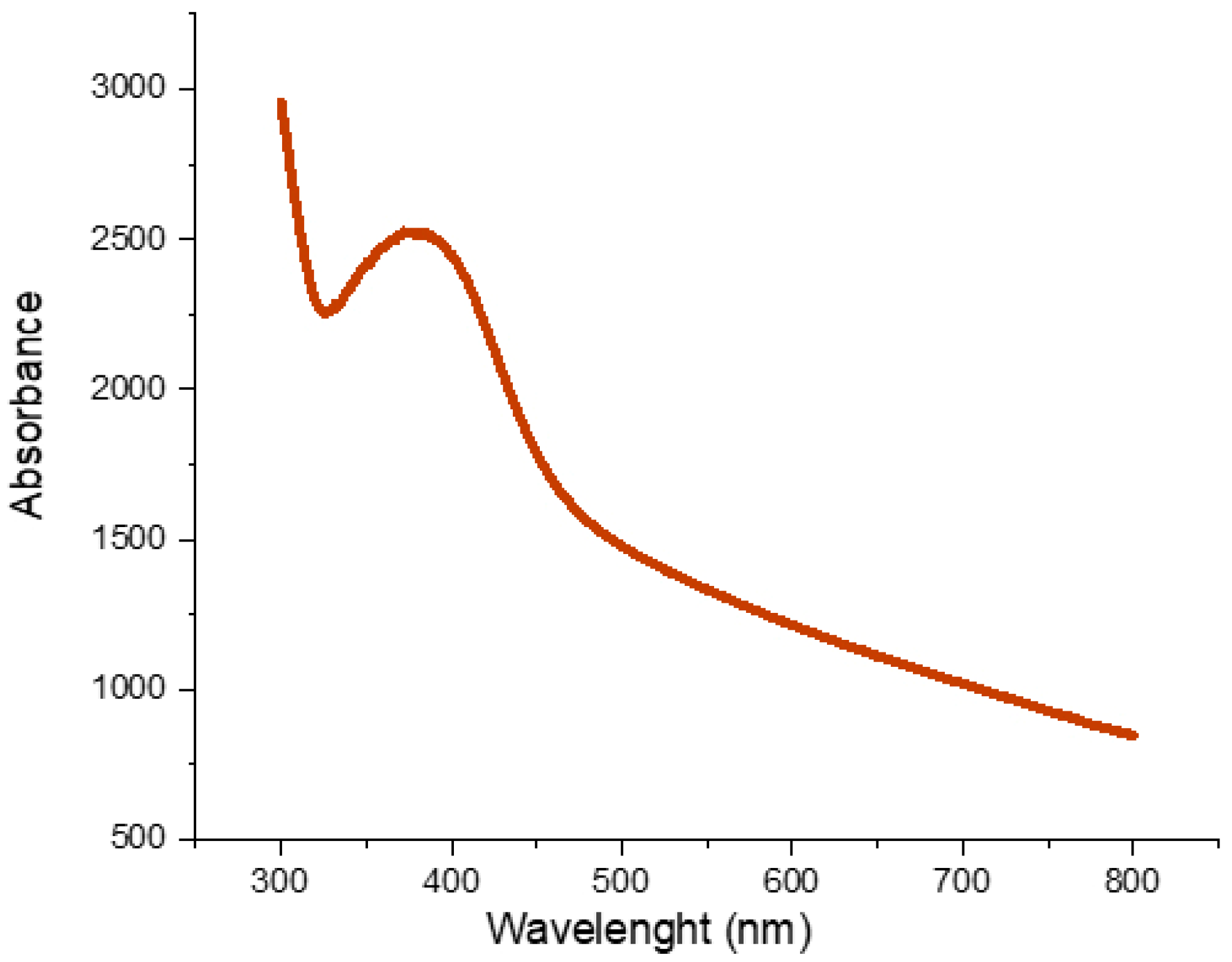
The surface plasmon resonance (SPR) of AgNPs was confirmed by UV-visible spectroscopy, showing a maximum absorption peak at 380 nm (Figure 1). This peak corresponds to the collective oscillation of conduction band electrons on the nanoparticle surface in response to incident light, confirming the reduction of Ag+ to metallic silver (Ag0) [28]. Similar SPR peaks have been reported in other plant-mediated syntheses, such as those using Acacia nilotica extract [29], supporting the reliability of the biosynthetic approach.

3.1.2. FTIR Analysis

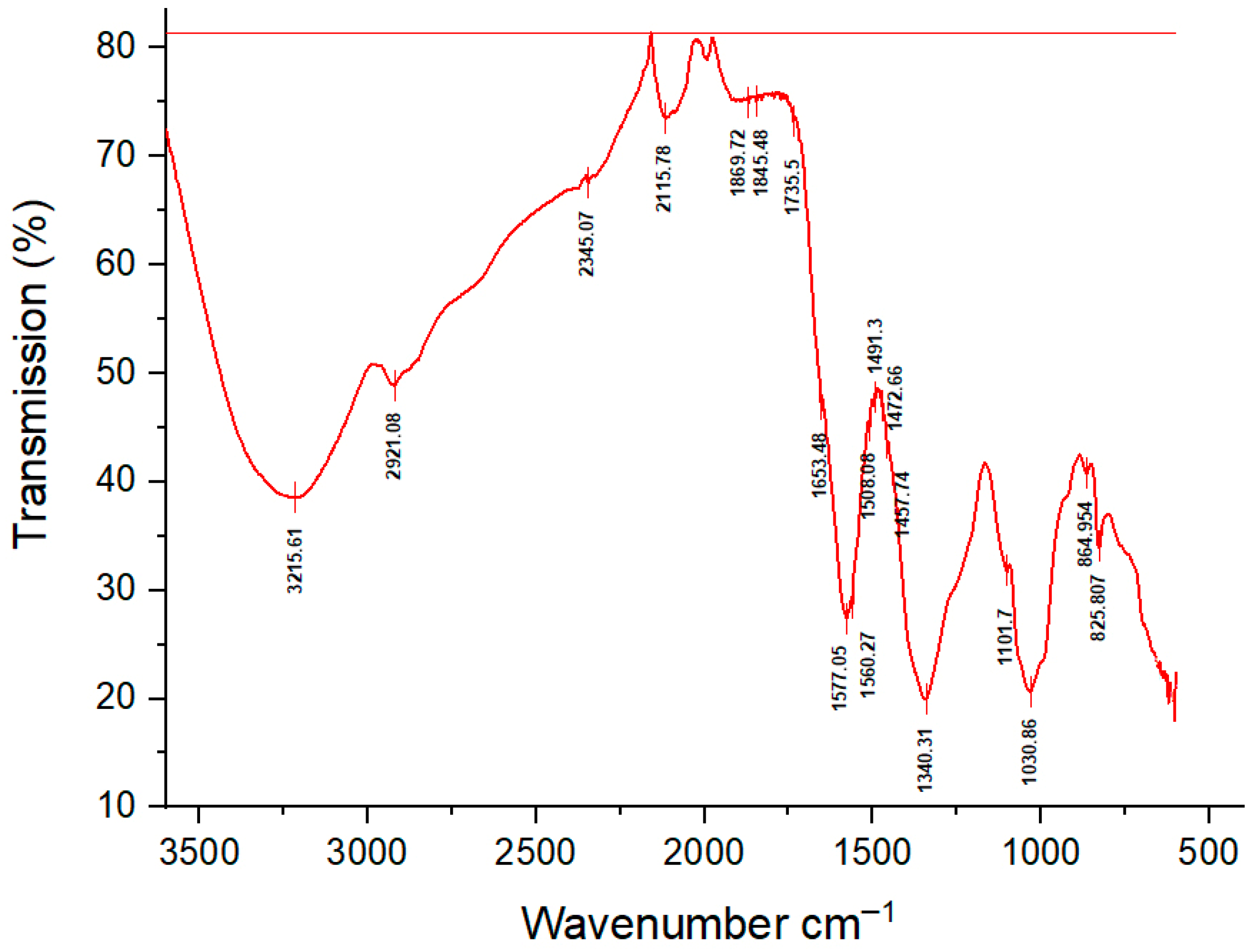
Fourier-transform infrared spectroscopy (FTIR) was conducted to identify the functional groups involved in the reduction and stabilization of AgNPs synthesized with G. officinalis leaf extract. The FTIR spectrum (Figure 2) exhibited prominent absorption bands at 3215.61 cm−1 and 2921.08 cm−1, corresponding to O-H stretching vibrations of hydrogen-bonded phenolic compounds and =C-H stretching of alkenes, respectively [29,30,31,32]. A strong peak at 2345.07 cm−1 was attributed to aliphatic cyanide/nitrile groups [33].
Additional bands at 2115.78 cm−1 and 1735.5 cm−1 were assigned to C=C stretching vibrations of alkynes and C=O stretching of esters and carboxylic acids, respectively [34]. The peak observed at 1577 cm−1 likely resulted from C=C stretching of aromatic rings [35]. A strong band at 1340.31 cm−1 was associated with C-N stretching of aliphatic amines [36], while the peak at 1030.86 cm−1 corresponded to C-O stretching vibrations of alcohols [1]. Peaks between 864.95 cm−1 and 825.81 cm−1 were indicative of C-H bending in alkenes and aromatic moieties [36].
These results highlight the presence of multiple functional groups, including hydroxyl, alkenes, alkyne, amine, ester, and carboxylic acid groups, which are known to participate in the bioreduction and capping of AgNPs. These functional moieties are likely derived from proteins and other bioactive constituents in the plant extract [37,38]. This is consistent with previous findings that phytochemicals such as terpenoids, reducing sugars, flavonoids, and alkaloids play a pivotal role in the green synthesis of AgNPs [39].

3.1.3. Hydrodynamic Diameter, PDI and Zeta Potential

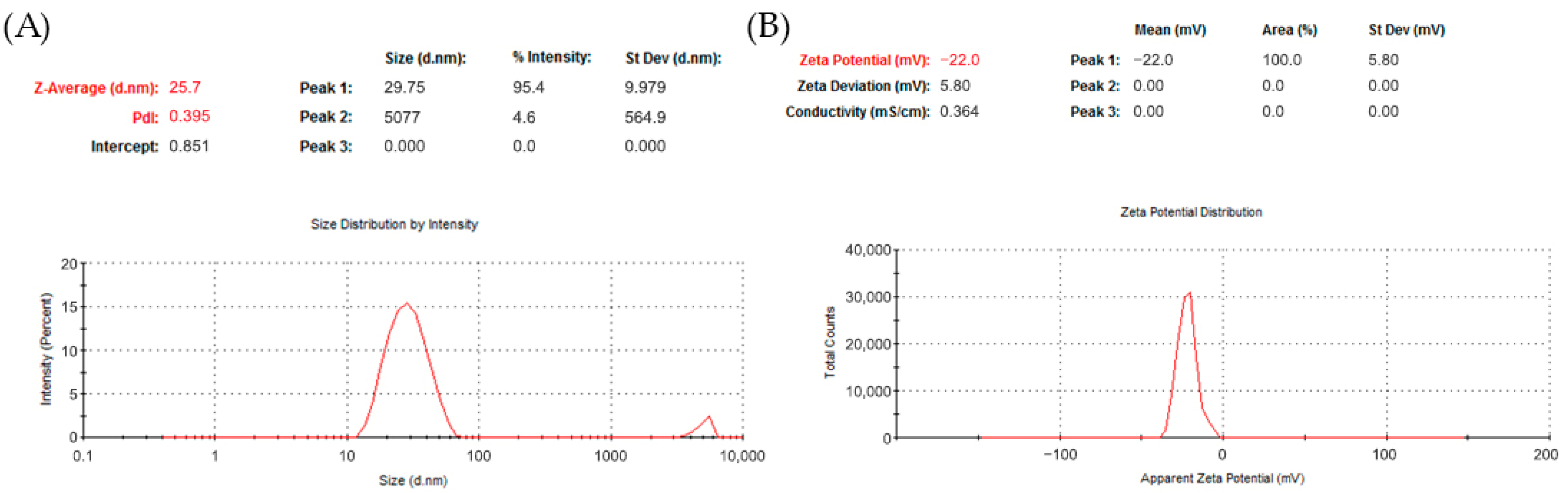
Dynamic light scattering (DLS) analysis revealed that the biosynthesized AgNPs exhibited an average hydrodynamic diameter of 25.07 nm, with a polydispersity index (PDI) of 0.39 (Figure 3A). This PDI value indicates a moderate degree of size distribution heterogeneity among the nanoparticles. The corresponding zeta potential was measured at −22 mV (Figure 3B), suggesting moderate electrostatic stability due to repulsive forces between negatively charged particles in suspension.
The DLS profile showed a single dominant peak, indicating that most particles were distributed within a relatively narrow size range. However, the observed PDI confirms the presence of polydispersity, which is further supported by the zeta potential value. Particles with zeta potentials more negative than −30 mV are generally considered highly stable; thus, the measured value indicates moderate colloidal stability in aqueous media.
These observations are in agreement with the TEM results described in Section 3.1.4, which showed that the AgNPs had a size range of approximately 4.3 to 42.4 nm. The combination of DLS and zeta potential data confirms that the synthesized AgNPs are moderately polydisperse and electrostatically stable, supporting their suitability for biological applications [40].

3.1.4. TEM Analysis

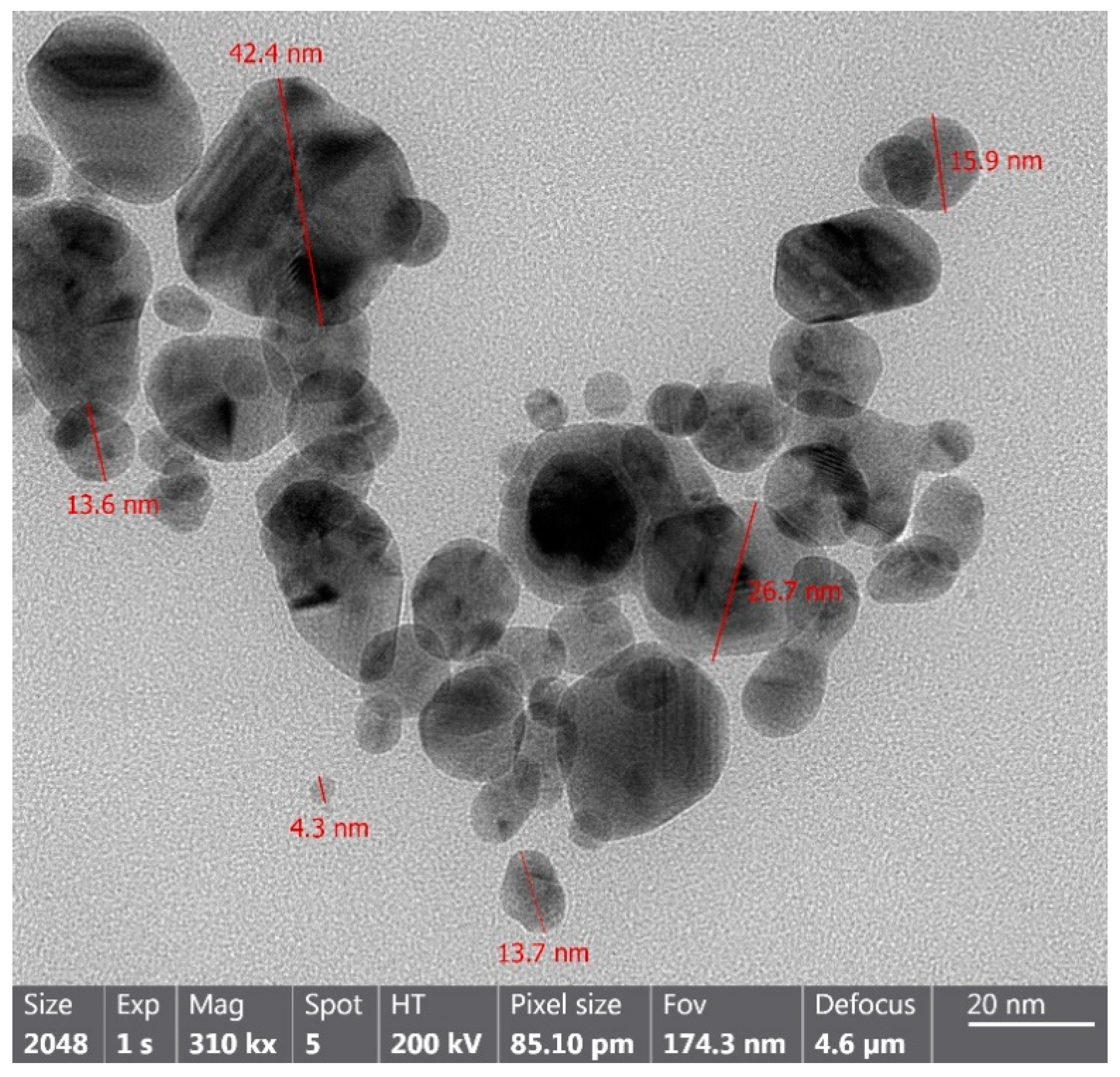
Transmission electron microscopy (TEM) analysis confirmed the formation of polydisperse AgNPs with predominantly spherical morphology and particle sizes ranging from 4.3 to 42.4 nm (Figure 4). These findings are consistent with the DLS results (Section 3.1.3), which also indicated a moderate degree of polydispersity.
Similar morphological patterns have been reported in previous studies employing plant-mediated synthesis. For example, Seekonda and Rani [41] described AgNPs with irregular spherical shapes using Embelia robusta extract, while Thirunavoukkarasu et al. [42] reported AgNPs ranging from 8 to 90 nm with Bougainvillea glabra. Sankar et al. [43] obtained spherical particles of 5–25 nm from Avicennia marina, and Cheng et al. [44] reported diameters between 27.8 and 36.5 nm using Flos sophorae extract.

3.2. Insecticidal Effect of Biosynthesized AgNPs

3.2.1. Insecticidal Effect of Biosynthesized AgNPs on Coleoptera

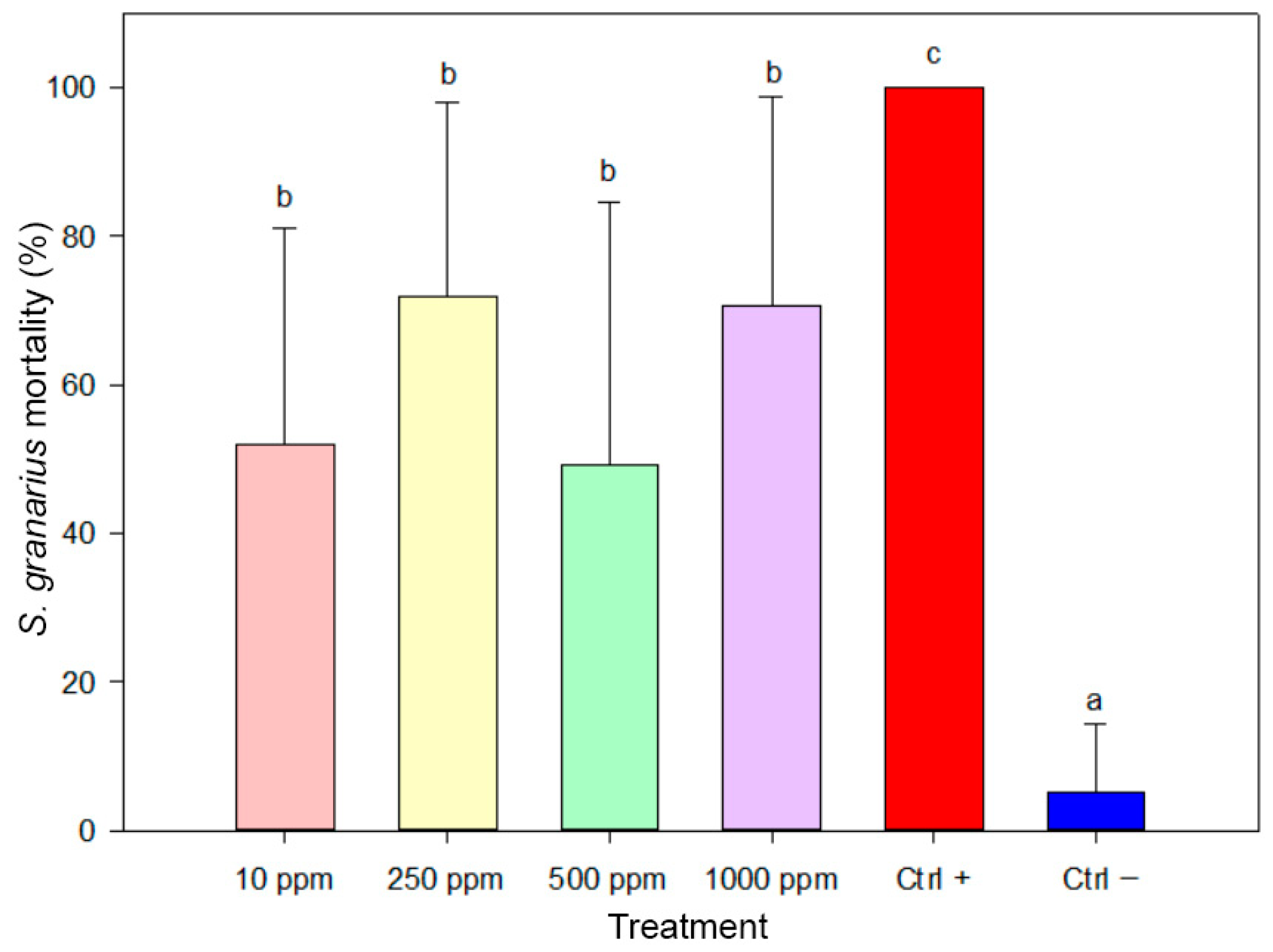
The biosynthesized AgNPs demonstrated significant insecticidal activity against Sitophilus granarius adults (Figure 5). The highest mortality rates were recorded at 1000 ppm (76.67%) and 250 ppm (72.00), closely approaching the 100% mortality observed in the positive control group. In contrast, lower but substantial mortality was observed at 10 ppm (52.00%) and 500 ppm (49.33%).
Despite the differences in mortality percentages across concentrations, no statistically significant differences were detected among the AgNP-treated groups. However, all concentrations resulted in significantly higher mortality compared to the negative control (15.00%). These differences were statistically significant according to one-way ANOVA (F(5,84) = 24.711, p < 0.001)
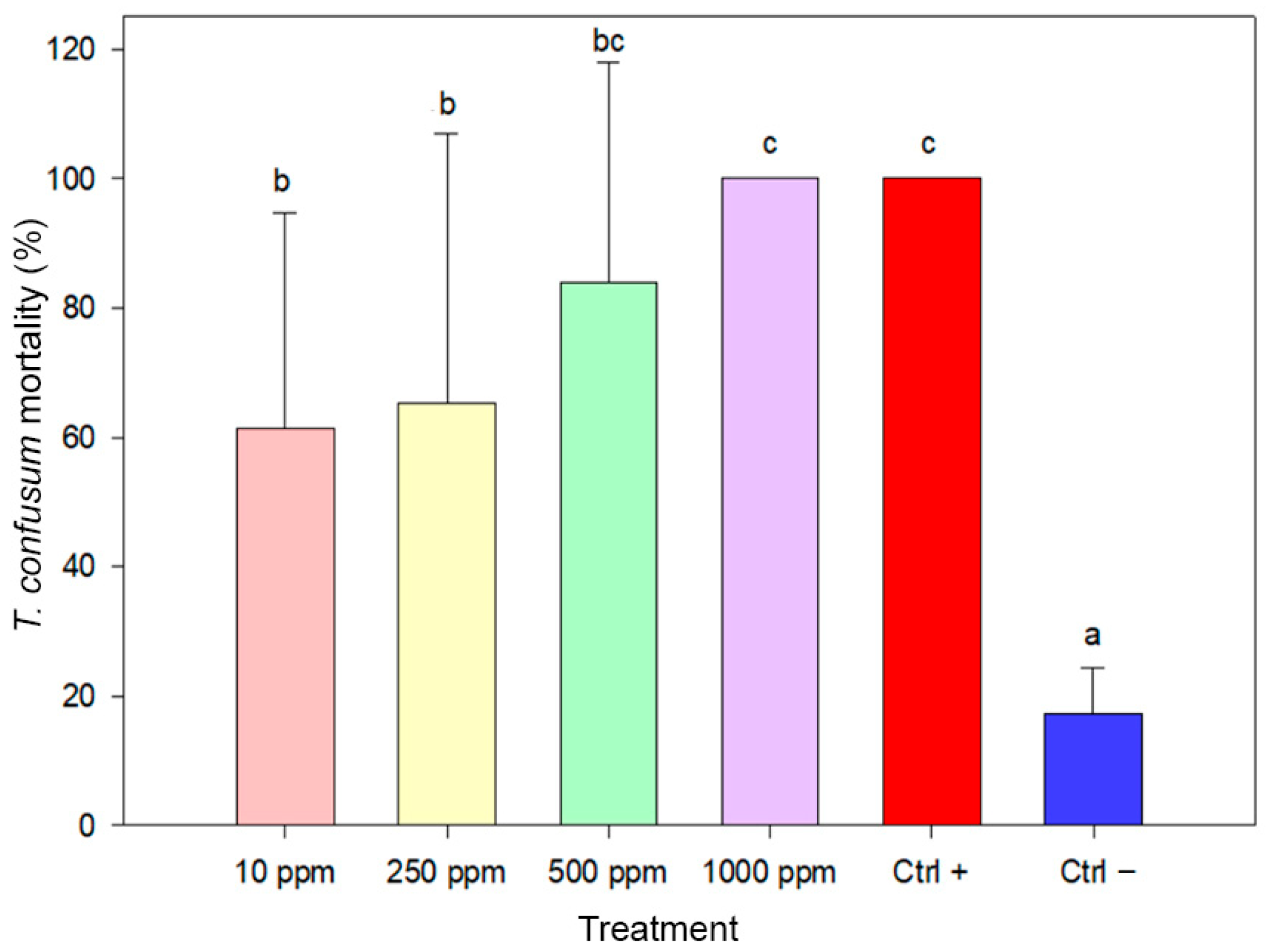
Biosynthesized AgNPs exhibited strong insecticidal activity against adults of T. confusum (Figure 6). The highest mortality rate was recorded at 1000 ppm, reaching 100%, a value equivalent to the positive control. This was significantly different from the lowest concentration (10 ppm), which produced 61.33% mortality, and from the negative control (17.33%). Intermediate mortality levels were recorded at 250 and 500 ppm, with values of 65.33% and 84.00%, respectively. All AgNP treatments differed significantly from the negative control, confirming their high insecticidal efficacy. One-way ANOVA indicated statistically significant differences among treatments (F(5,84) = 21.544, p < 0.001)
These results are consistent with previous studies evaluating the insecticidal properties of AgNPs against stored-product beetles. For instance, Eyssa et al. [45] reported 100% mortality in S. granarius using high-density polyethylene (HDPE) incorporated with synthetic AgNPs. Similarly, Sankar et al. [43] achieved 80% and 100% mortality in S. oryzae at concentrations of 100 and 25 ppm, respectively, employing AgNPs biosynthesized from Avicinia marina. In another study, Almadiy et al. [46] determined LC50 values between 4.1 and 11.4 µg/cm2 for larvae and adults of Trogoderma granarium treated with AgNPs derived from Peganum harmala alkaloids.
The high susceptibility observed in coleopteran species may be attributed to multiple toxicological mechanisms triggered by AgNPs, including disruption of gut epithelial, respiratory inhibition, and oxidative stress due to the generation of reactive oxygen species (ROS), all of which have been widely reported in insects [47].

3.2.2. Insecticidal Effect of Biosynthesized AgNPs on Lepidoptera

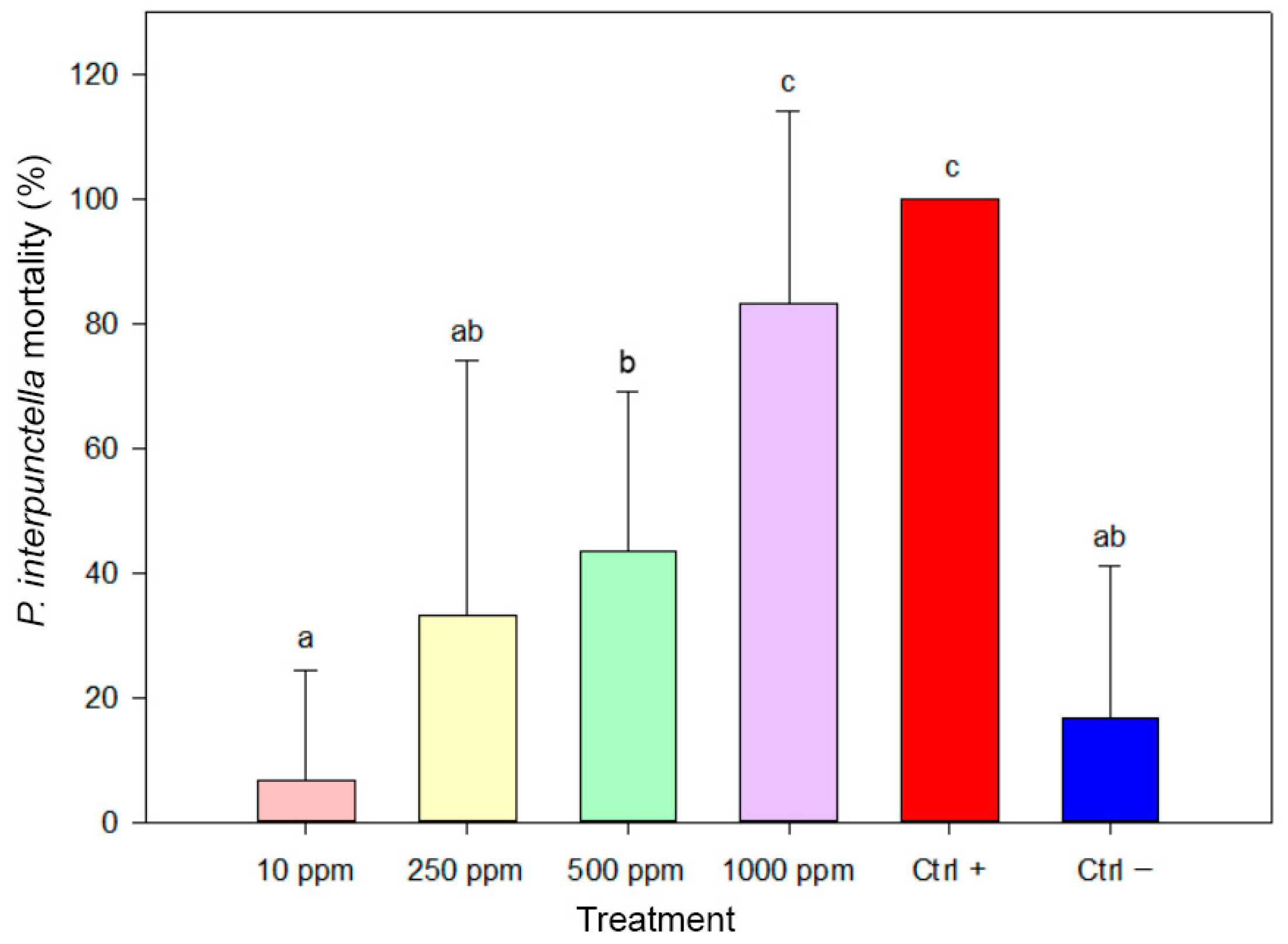
Biosynthesized AgNPs demonstrated significant insecticidal activity against larvae of P. interpunctella (Figure 7). The lowest mortality rate (6.67%) was recorded at 10 ppm, showing no significant difference from the negative control. Mortality increased with concentration: 33.33% at 250 ppm and 43.33% at 500 ppm, although these values did not differ significantly from each other. In contrast, the highest mortality rate was observed at 1000 ppm (83.33%), which did not differ significantly from the positive control, but was statistically higher than all other AgNP treatments. One-way ANOVA confirmed significant differences among treatments (F(5,84) = 29.535, p < 0.001).
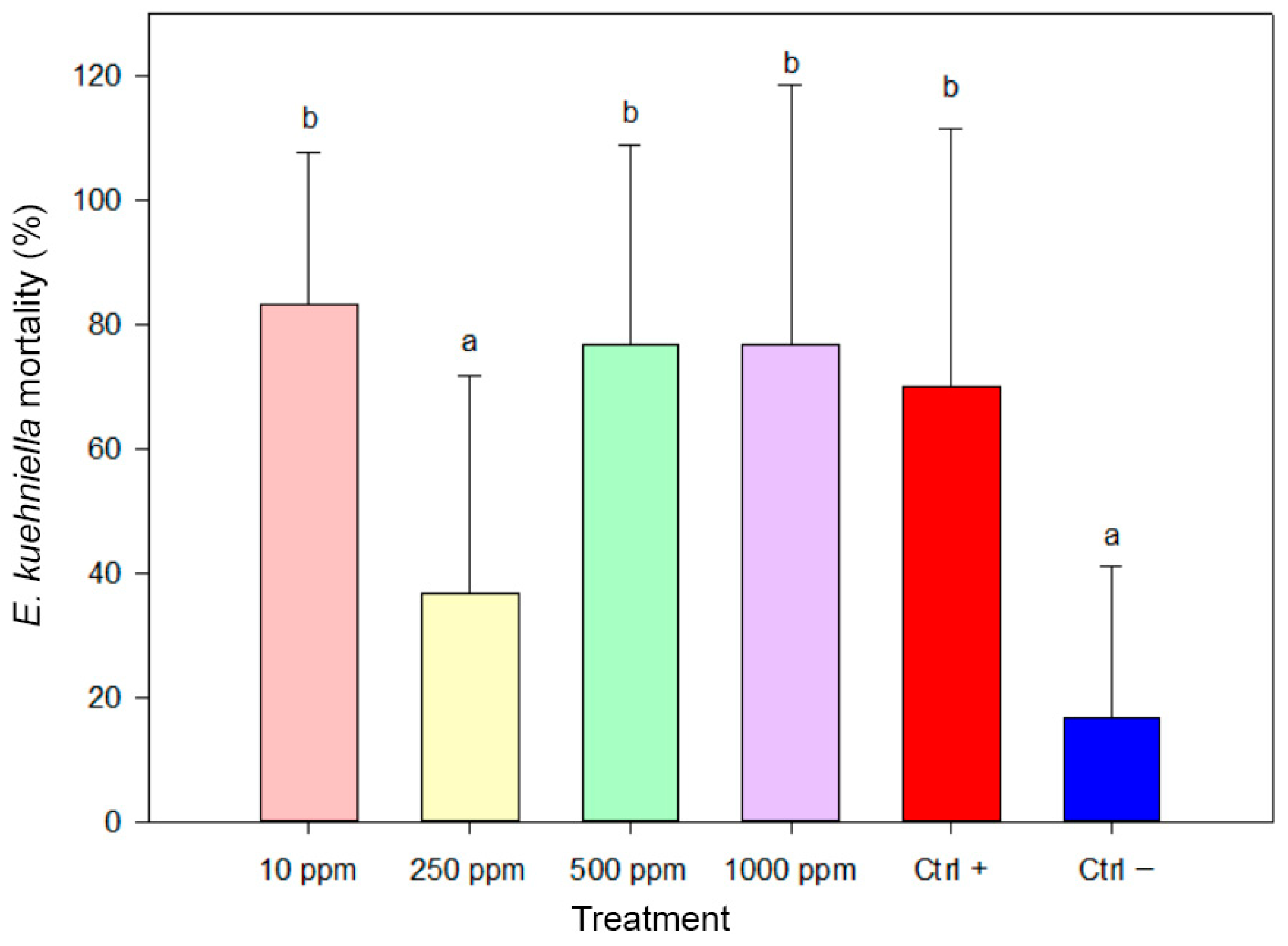
Similarly, biosynthesized AgNPs were effective against Ephestia kuehniella larvae (Figure 8). The highest mortality rate (83.33%) was unexpectedly observed at the lowest tested concentration (10 ppm), showing no significant difference from the positive control (70.00%). Treatments at 500 ppm and 1000 ppm also showed high efficacy, with mortality rates of 76.67%, both statistically comparable to positive control. In contrast, 250 ppm resulted in only 36.67% mortality, which was not significantly different from the negative control. These results suggest a non-linear dose–response in E. kuehniella, possibly due to behavioral or physiological variations. One-way ANOVA confirmed significant differences among treatments (F(5,84) = 9.443, p < 0.001).
These findings align with other reports of AgNP toxicity in lepidopteran pests. For example, Plutella xylostella exhibited an LC50 of 0.691 mg/mL [16], while Spodopttera litura showed LC50 values ranging from 0.0312 mg/L to –46.9 mg/L). In Earias vittela, LC50 values ranged from 25.12 mg/L to 45.46 mg/L, and in Bombyx mori, 100% mortality was observed at 1600–3200 mg/L. Likewise, Agrotis ipsilon and Trichoplusia ni showed LC50 values of 5.20 mg/mL and 0.81 mg/mL, respectively, with larvae being the most susceptible stage [26,31,48,49,50,51,52]. Manimegalai et al. [51] further reported strong antifeedant effects of AgNPs on S. litura (78.77%) and Helicoverpa armigera (82.16%), with maximum larval mortality rates of 78.77% and 72.70% at 150 mg/L.
The observed insecticidal effects may be attributed to the synergistic action of AgNPs and plant-derived phytochemicals from G. officinalis, such as flavonoids, alkaloids and phenolics. These compounds, acting as surface capping agents, may enhance toxicity through mechanisms including feeding deterrence, disruption of midgut epithelium, and interference with hormonal regulation of larval development [26,52].
Overall, the effectiveness of AgNPs depends on various physicochemical parameters such as concentration, particle size, surface functionalization, crystallinity, zeta potential, and aggregation state, which collectively influence their interaction with biological systems and capacity to induce oxidative stress and cellular damage [52].

4. Conclusions

The present study demonstrated that G. officinalis aqueous leaf extract can be effectively employed for the green synthesis of silver nanoparticles (AgNPs), yielding spherical and polydisperse particles with sizes ranging from 4.3 to 42.4 nm. Spectroscopic and microscopic analyses confirmed the presence of plant-derived biomolecules responsible for the reduction and stabilization of AgNPs, as well as their moderate colloidal stability. Bioassays against four major stored-grain pests, S. granarius, T. confusum, P. interpunctella, and E. kuehniella, revealed concentration-dependent insecticidal activity. Notably, T. confusum and E. kuehniella showed the highest susceptibility, followed by S. granarius and P. interpunctella. These results are consistent with previous studies on the insecticidal efficacy of biosynthesized AgNPs and highlight their potential as alternative control agents within integrated pest management programs. Nevertheless, future research should focus on upscaling synthesis, evaluating effects on non-target organisms, and ensuring environmental safety prior to practical application.

Author Contributions

Conceptualization, D.M.-C., L.C., L.B., M.C.-F., R.R. and O.R.; software, D.M.-C., L.C., L.B., R.R. and O.R. validation, D.M.-C., L.C., L.B., R.R. and O.R.; resources, D.M.-C., L.C., L.B., R.R. and O.R.; data curation, D.M.-C., L.C., L.B., R.R. and O.R.; writing—original draft preparation, D.M.-C., L.C., L.B., O.B., P.P., M.L., B.S., M.C.-F., I.M., R.R. and O.R.; writing—review and editing, D.M.-C., L.C., L.B., P.P., M.L., O.B., B.S., M.C.-F., I.M. and O.R.; visualization, D.M.-C., L.C., L.B., P.P., M.L., O.B., B.S., M.C.-F. and O.R.; supervision, D.M.-C., L.C., L.B. and O.R.; project administration, D.M.-C., L.C., L.B. and O.R.; funding acquisition, D.M.-C., L.C., L.B., R.R. and O.R. All authors have read and agreed to the published version of the manuscript.

Funding

This research was funded by grants FONDECYT 1191089, ANID/FONDAP/1523A0001, ANID 21232172, DIUFRO DI19-0082, UFRO scholarship, the Emerging Leaders in the Americas Program (ELAP), and EduCanada.

Data Availability Statement

The original contributions presented in this study are included in the article. Further inquiries can be directed to the corresponding authors.

Conflicts of Interest

The authors declare no conflicts of interest. The funders had no role in the design of this study; the collection, analysis, or interpretation of data; the writing of the manuscript; or the decision to publish the results.

References

  1. Salah-Eddin, A.; Salem, S.A.; Ghabeish, I.H.; Awwad, A.M. Toxicity of Nanoparticles against Drosophila melanogaster (Diptera: Drosophilidae). J. Nanomater. 2015, 2015, 758132. [Google Scholar] [CrossRef]
  2. Innes, R.; Neame, T.; Galpern, P. Contrasting late season pest insect abundance in non-crop vegetation areas and nearby canola fields in the Canadian Prairies. Agric. For. Èntomol. 2024, 26, 421–431. [Google Scholar] [CrossRef]
  3. Sharma, S.; Kooner, R.; Arora, R. Insect Pests and Crop Losses. In Breeding Insect Resistant Crops for Sustainable Agriculture; Arora, R., Sandhu, S., Eds.; Springer: Singapore, 2017. [Google Scholar] [CrossRef]
  4. Berbeć, A.K.; Staniak, M.; Feledyn-Szewczyk, B.; Kocira, A.; Stalenga, J. Organic but Also Low-Input Conventional Farming Systems Support High Biodiversity of Weed Species in Winter Cereals. Agriculture 2020, 10, 413. [Google Scholar] [CrossRef]
  5. Boniecki, P.; Koszela, K.; Piekarska-Boniecka, H.; Weres, J.; Zaborowicz, M.; Kujawa, S.; Majewski, A.; Raba, B. Neural identification of selected apple pests. Comput. Electron. Agric. 2015, 110, 9–16. [Google Scholar] [CrossRef]
  6. Abdelgaleil, S.A.; Gad, H.A.; Atta, A.A.; Al-Anany, M.S. Control of Sitophilus granarius and Sitophilus oryzae on stored wheat using low-rate combinations of natural zeolite with three insecticides. J. Stored Prod. Res. 2022, 97, 101975. [Google Scholar] [CrossRef]
  7. Khan, A.A. Insect as major Carrier of aflatoxins and mycotoxin in foods: A review. J. Entomol. Zool. Stud. 2024, 12, 46–53. [Google Scholar] [CrossRef]
  8. Tarlack, P.; Mehrkhou, F.; Mousavi, M. Life history and fecundity rate of Ephestia kuehniella (Lepidoptera: Pyralidae) on different wheat flour varieties. Arch. Phytopathol. Plant Prot. 2014, 48, 95–103. [Google Scholar] [CrossRef]
  9. Vitta, N.; Aguilar, V. La Polilla India de la Harina Plodia interpunctella (Hübner); Ficha Técnica n° 26, INIA La Platina; INIA: Santiago, Chile, 2019; pp. 1–2. [Google Scholar]
  10. Altunç, Y.E.; Chi, H.; Güncan, A. Life table parameters, consumption, and frass production of Plodia interpunctella on four major cultivars of Turkish hazelnut. Crop. Prot. 2025, 197, 107309. [Google Scholar] [CrossRef]
  11. Fenner, K.; Canonica, S.; Wackett, L.P.; Elsner, M. Evaluating pesticide degradation in the environment: Blind spots and emerging opportunities. Science 2013, 341, 752–758. [Google Scholar] [CrossRef]
  12. Morrissey, C.A.; Mineau, P.; Devries, J.H.; Sanchez-Bayo, F.; Liess, M.; Cavallaro, M.C.; Liber, K. Neonicotinoid contamination of global surface waters and associated risk to aquatic invertebrates: A review. Environ. Int. 2015, 74, 291–303. [Google Scholar] [CrossRef]
  13. Goulson, D. Review: An overview of the environmental risks posed by neonicotinoid insecticides. J. Appl. Ecol. 2013, 50, 977–987. [Google Scholar] [CrossRef]
  14. Riedo, J.; Wettstein, F.E.; Rösch, A.; Herzog, C.; Banerjee, S.; Büchi, L.; Charles, R.; Wächter, D.; Martin-Laurent, F.; Bucheli, T.D.; et al. Widespread Occurrence of Pesticides in Organically Managed Agricultural Soils-the Ghost of a Conventional Agricultural Past? Environ. Sci. Technol. 2021, 55, 2919–2928. [Google Scholar] [CrossRef]
  15. Martínez-Cisterna, D.; Rubilar, O.; Tortella, G.; Chen, L.; Chacón-Fuentes, M.; Lizama, M.; Parra, P.; Bardehle, L. Silver Nanoparticles as a Potent Nanopesticide: Toxic Effects and Action Mechanisms on Pest Insects of Agricultural Importance—A Review. Molecules 2024, 29, 5520. [Google Scholar] [CrossRef]
  16. Santos, T.S.; de Souza Varize, C.; Sanchez-Lopez, E.; Jain, S.A.; Souto, E.B.; Severino, P.; Mendonça, M.d.C. Entomopathogenic Fungi-Mediated AgNPs: Synthesis and Insecticidal Effect against Plutella xylostella (Lepidoptera: Plutellidae). Materials 2022, 15, 7596. [Google Scholar] [CrossRef]
  17. AL-Jaddawi, A.; Hamad, N.; Mohammed, K.; Fahmy, E. Effect of New Bio-component of Cytoplasmic Polyhedrosis Virus (Cypovirus1) with Silver Nanoparticles against Four Pests in Stored Food Products. J. Pure. Appl. Microbiol. 2024, 18, 626–637. [Google Scholar] [CrossRef]
  18. Martínez-Cisterna, D.; Rubilar, O.; Chen, L.; Lizama, M.; Chacón-Fuentes, M.; Quiroz, A.; Parra, P.; Rebolledo, R.; Bardehle, L. Biosynthesized Chitosan-Coated Silver Nanoparticles: Insecticide Activity and Sublethal Effects Against Drosophila suzukii (Diptera: Drosophilidae). Biomolecules 2025, 15, 490. [Google Scholar] [CrossRef]
  19. Jiang, T.; Huang, J.; Peng, J.; Wang, Y.; Du, L. Characterization of Silver Nanoparticles Synthesized by the Aqueous Extract of Zanthoxylum nitidum and Its Herbicidal Activity against Bidens pilosa L. Nanomaterials 2023, 13, 1637. [Google Scholar] [CrossRef]
  20. Rajaganesh, R.; Murugan, K. Anti-dengue potential and mosquitocidal effect of marine green algae-stabilized Mn-doped superparamagnetic iron oxide nanoparticles (Mn-SPIONs): An eco-friendly approach. Environ. Sci. Pollut. Res. Int. 2024, 31, 19575–19594. [Google Scholar] [CrossRef]
  21. Fahim, M.; Shahzaib, A.; Nishat, N.; Jahan, A.; Ahmad, T.; Inam, A. Green synthesis of silver nanoparticles: A comprehensive review of methods, influencing factors, and applications. JCIS Open 2024, 16, 100125. [Google Scholar] [CrossRef]
  22. Vanlalveni, C.; Lallianrawna, S.; Biswas, A.; Selvaraj, M.; Changmai, B.; Lalthazuala, S. Green synthesis of silver nanoparticles using plant extracts and their antimicrobial activities: A review of recent literature. RSC Adv. 2021, 11, 2804–2837. [Google Scholar] [CrossRef]
  23. Manosalva, N.; Tortella, G.; Diez, M.C.; Schalchli, H.; Seabra, A.; Durán, N.; Rubilar, O. Green synthesis of silver nanoparticles: Efect of synthesis reaction parameters on antimicrobial activity. World J. Microbiol. Biotechnol. 2019, 35, 88. [Google Scholar] [CrossRef]
  24. Artigas, J.N. Entomología Económica: Insectos de Interés Agrícola, Forestal, Médico y Veterinario; Editorial Universidad de Concepción: Concepción, Chile, 1994. [Google Scholar]
  25. Abbot, W. A method of computing the effectiveness of an insecticide. J. Econ. Entomol. 1925, 18, 265–267. [Google Scholar] [CrossRef] [PubMed]
  26. Suresh, U.; Murugan, K.; Panneerselvam, C.; Rajaganesh, R.; Roni, M.; Aziz, A.L.; Naji, H.; Trivedi, S.; Rehman, H.; Kumar, S.; et al. Suaeda maritima-based herbal coils and green nanoparticles as potential biopesticides against the dengue vector Aedes aegypti and the tobacco cutworm Spodoptera litura. Physiol. Mol. Plant Pathol. 2017, 101, 225–235. [Google Scholar] [CrossRef]
  27. Murugan, K.; Dinesh, D.; Paulpandi, M.; Althbyani, A.D.; Subramaniam, J.; Madhiyazhagan, P.; Wang, L.; Suresh, U.; Kumar, P.M.; Mohan, J.; et al. Nanoparticles in the fight against mosquito-borne diseases: Bioactivity of Bruguiera cylindrica-synthesized nanoparticles against dengue virus DEN-2 (in vitro) and its mosquito vector Aedes aegypti (Diptera: Culicidae). Parasitol. Res. 2015, 114, 4349–4361. [Google Scholar] [CrossRef]
  28. Al Mashud, M.A.; Moinuzzaman, M.D.; Hossain, M.S.; Ahmed, S.; Ahsan, G.; Reza, A.; Anwar, R.B.; Uddin, M.H.; Momin, M.A.; Hena Mostofa Jamal, M.A. Green synthesis of silver nanoparticles using Cinnamomum tamala (Tejpata) leaf and their potential application to control multidrug-resistant Pseudomonas aeruginosa isolated from hospital drainage water. Heliyon 2022, 8, e09920. [Google Scholar] [CrossRef]
  29. Zubair, M.; Azeem, M.; Mumtaz, C.; Younas, M.; Muhammad, A.; Zubair, E.; Khalid, A.; Hafeez, F.; Rizwan, M.; Ali, S. Green synthesis and characterization of silver nanoparticles from Acacia nilotica and their anticancer, antidiabetic and antioxidant efficacy. Environ. Pollut. 2022, 304, 119249. [Google Scholar] [CrossRef]
  30. Chowdhury, M.; Hossain, N.; Mostofa, M.D.; Roy, M. Green synthesis and characterization of zirconium nanoparticle for dental implant applications. Heliyon 2023, 9, e12711. [Google Scholar] [CrossRef]
  31. De Matteis, V.; Cascione, M.; Costa, D.; Rinaldi, R. Aloe vera silver nanoparticles addition in chitosan films: Improvement of physicochemical properties for eco-friendly food packaging material. J. Mater. Res. Technol. 2023, 24, 1015–1033. [Google Scholar] [CrossRef]
  32. Atrooz, O.; Al-Nadaf, A.; Uysal, H.; El-Gendy, M. Biosynthesis of silver nanoparticles using Coriandrum sativum L. extract and evaluation of their antibacterial, anti-inflammatory and antinociceptive activities. S. Afr. J. Bot. 2023, 158, 219–227. [Google Scholar] [CrossRef]
  33. Kamaraj, C.; Rajakumar, G.; Rahuman, A.A.; Velayutham, K.; Bagavan, A.; Zahir, A.; Elango, G. Feeding deterrent activity of synthesized silver nanoparticles using manilkara zapota leaf extract against the house fly, Musca domestica (Diptera: Muscidae). Parasitol. Res. 2012, 111, 2439–2448. [Google Scholar] [CrossRef]
  34. Pavunraj, M.; Baskar, K.; Duraipandiyan, V.; Abdullah, N.; Rajendran, V.; Benelli, G. Toxicity of Ag Nanoparticles Synthesized Using Stearic Acid from Catharanthus roseus Leaf Extract Against Earias vittela and Mosquito Vectors (Culex quinquefasciatus and Aedes aegypti). J. Clust. Sci. 2017, 28, 2477–2492. [Google Scholar] [CrossRef]
  35. Akif, H.K.; Olutas, E.; Avcioglu, F.; Kaya, H.; Sahin, B. Quercetin- and caffeic acid-functionalized chitosan-capped colloidal silver nanoparticles: One-pot synthesis, characterization, and anticancer and antibacterial activities. Beilstein J. Nanotechnol. 2023, 14, 362–376. [Google Scholar] [CrossRef]
  36. Ghramh, H.; Al-Ghamdi, K.h.M.; Mahyoub, J.; Ibrahim, E. Chrysanthemum extract and extract prepared silver nanoparticles as biocides to control Aedes aegypti (L.), the vector of dengue fever. J. Asia. Pac. Entomol. 2018, 21, 205–210. [Google Scholar] [CrossRef]
  37. Murugan, K.; Benelli, G.; Ayyapan, S.; Dinesh, D.; Panneerselvam, C.; Nicoletti, M.; Hwang, J.S.; Kumar, P.M.; Subramaniam, J.; Suresh, U. Toxicity of seaweed-synthesized silver nanoparticles against the filariasis vector Culex quinquefasciatus and its impact on predation efficiency of the cyclopoid crustacean Mesocyclops longisetus. Parasitol. Res. 2015, 114, 2243–2253. [Google Scholar] [CrossRef]
  38. Vincent, S.; Kovendan, K.; Chandramohan, B.; Kamalakannan, S.; Mahesh, P.; Vasugi, C.; Praseeja, C.; Subramaniam, J.; Govindarajan, M.; Murugan, K.; et al. Swift Fabrication of Silver Nanoparticles Using Bougainvillea glabra: Potential Against the Japanese Encephalitis Vector, Culex tritaeniorhynchus Giles (Diptera: Culicidae). J. Clust. Sci. 2016, 28, 37–58. [Google Scholar] [CrossRef]
  39. Rengga, W.D.P.; Yufisatari, A.; Adi, W. Synthesis of Silver nanoparticles from silver nitrate solution using green tea extract (Camelia sinensis) as bioreductor. JBAT 2017, 6, 32–38. [Google Scholar] [CrossRef]
  40. Elamawi, R.; Al-Harbi, R.; Hendi, A. Biosynthesis and characterization of silver nanoparticles using Trichoderma longibrachiatum and their effect on phytopathogenic fungi. Egypt. J. Biol. Pest Control. 2018, 28, 28. [Google Scholar] [CrossRef]
  41. Seekonda, S.; Rani, R. Eco-friendly synthesis, characterization, catalytic, antibacterial, antidiabetic, and antioxidant activities of Embelia robusta seeds extract stabilized AgNPs. J. Sci. Adv. Mater. Dev. 2022, 7, 100480. [Google Scholar] [CrossRef]
  42. Thirunavoukkarasu, M.; Balaji, U.; Behera, S.; Panda, P.K.; Mishra, B.K. Biosynthesis of silver nanoparticle from leaf extract of Desmodium gangeticum (L.) DC. and its biomedical potential. Spectrochim. Acta Part A Mol. Biomol. Spectrosc. 2013, 116, 424–427. [Google Scholar] [CrossRef]
  43. Sankar, M.V.; Abideen, S. Pesticidal effect of Green synthesized silver and lead nanoparticles using Avicennia marina against grain storage pest Sitophilus oryzae. Dig. J. Nanomater. Biostruct. 2015, 5, 32–39. [Google Scholar]
  44. Cheng, Z.; Tang, S.; Feng, J.; Wu, Y. Biosynthesis and antibacterial activity of silver nanoparticles using Flos sophorae Immaratus extract. Heliyon 2022, 8, e10010. [Google Scholar] [CrossRef]
  45. Eyssa, H.M.; Sawires, S.G.; Senna, M.M. Gamma irradiation of polyethylene nanocomposites for food packaging applications against stored-product insect pests. J. Vinyl. Addit. Technol. 2018, 25, 120–129. [Google Scholar] [CrossRef]
  46. Almadiy, A.A.; Nenaah, G.E.; Shawer, D.M. Facile synthesis of silver nanoparticles using harmala alkaloids and their insecticidal and growth inhibitory activities against the khapra beetle. J. Pest Sci. 2017, 91, 727–737. [Google Scholar] [CrossRef]
  47. Benelli, G. Mode of action of nanoparticles against insects. Environ. Sci. Pollut. Res. 2018, 5, 12329–12341. [Google Scholar] [CrossRef]
  48. Arvind, R.S.; Raja, S.K. Biogenic silver nanoparticles mediated stress on developmental period and gut physiology of major Lepidopteran pest Spodoptera litura (Fab.) (Lepidoptera: Noctuidae)-An eco-friendly approach of insect pest control. J. Environ. Chem. Eng. 2017, 5, 453–467. [Google Scholar] [CrossRef]
  49. Sayed, A.M.; Kim, S.; Behle, R.W. Characterization of silver nanoparticles synthesized by Bacillus thuringiensis as a nanobiopesticide for insect pest control. Biocontrol Sci. Technol. 2017, 27, 1308. [Google Scholar] [CrossRef]
  50. Meng, X.; Abdlli, N.; Wang, N.; Lü, P.; Nie, Z.; Dong, X.; Lu, S.; Chen, K. Effects of Ag Nanoparticles on Growth and Fat Body Proteins in Silkworms (Bombyx mori). Biol. Trace Elem. Res. 2017, 180, 327–337. [Google Scholar] [CrossRef]
  51. Manimegalai, T.; Raguvaran, K.; Kalpana, M.; Maheswaran, R. Green synthesis of silver nanoparticle using Leonotis nepetifolia and their toxicity against vector mosquitoes of Aedes aegepti and Culex quinquefasciatus and agricultural pests of Spodoptera litura and Helicoverpa armigera. Environ. Sci. Pollut. Res. Int. 2020, 27, 43103–43116. [Google Scholar] [CrossRef]
  52. Achari, G.; Kowshik, M. Recent Developments on Nanotechnology in Agriculture: Plant Mineral Nutrition, Health, and Interactions with Soil Microflora. J. Agric. Food Chem. 2018, 66, 8647–8661. [Google Scholar] [CrossRef]
Figure 1. UV-Vis absorption spectrum of biosynthesized AgNPs.
Insects 17 00143 g001
Figure 2. FTIR spectrum of biosynthesized AgNPs.
Insects 17 00143 g002
Figure 3. Dynamic light scattering (DLS) and zeta potential analysis of biosynthesized AgNPs. (A) Size distribution by intensity showing a Z-average diameter of 25.07 nm and a polydispersity index (PDI) of 0.39. (B) Zeta potential distribution with a mean value of −22 mV, indicating moderate colloidal stability.
Insects 17 00143 g003
Figure 4. TEM pictures of AgNPs at 310 kx magnification. The image revealed sizes ranging from 4.3 to 42.4 nm showing the morphological characteristics of biosynthesized AgNPs.
Insects 17 00143 g004
Figure 5. Mortality of Sitophilus granarius adults after seven days of exposure to biosynthesized AgNPs. Bar represents mortality values (±SE). Treatments sharing the same letter are not significantly different (ANOVA, Duncan’s HSD test, p ≥ 0.05).
Insects 17 00143 g005
Figure 6. Mortality of Tribolium confusum adults after seven days of exposure to biosynthesized AgNPs. Bars represent mean mortality values (±SE). Treatments sharing the same letter are not significantly different (ANOVA, Duncan’s HSD test, p ≥ 0.05).
Insects 17 00143 g006
Figure 7. Mortality of Plodia interpunctella larvae after 30 days of exposure to biosynthesized AgNPs. Bars represent mean mortality values (±SE). Treatments sharing the same letter are not significantly different (ANOVA, Duncan’s HSD test, p ≥ 0.05).
Insects 17 00143 g007
Figure 8. Mortality of Ephestia kuehniella larvae after 30 days of exposure to biosynthesized AgNPs. Bars represent mean mortality values (±SE). Treatments sharing the same letter are not significantly different (ANOVA, Duncan’s HSD test, p ≥ 0.05).
Insects 17 00143 g008
Disclaimer/Publisher’s Note: The statements, opinions and data contained in all publications are solely those of the individual author(s) and contributor(s) and not of MDPI and/or the editor(s). MDPI and/or the editor(s) disclaim responsibility for any injury to people or property resulting from any ideas, methods, instructions or products referred to in the content.