Parasitic Recognition Behavior of Telenomus remus Nixon, an Important Egg Parasitoid of Spodoptera frugiperda (J. E. Smith)
Simple Summary
Abstract
1. Introduction
2. Materials and Methods
2.1. Insect Sources
2.2. Experimental Apparatus
2.3. Test Methods
2.3.1. Observation of Parasitization Behavior in T. remus
2.3.2. Parasitism Efficiency of an Individual T. remus Female on Host Eggs at Different Densities
2.3.3. Parasitism Rate of an Individual T. remus Female in Relation to Host Exposure Time
2.3.4. Dissection-Based Examination of Host Discrimination by T. remus Toward Previously Parasitized Host Eggs
2.3.5. Self-Discrimination of T. remus Towards Marked Host Eggs Stored at Different Temperatures
2.3.6. Conspecific Discrimination of T. remus Towards Marked Host Eggs Stored at Different Temperatures
2.3.7. Self-Discrimination of T. remus Towards Marked Host Eggs After Different Time Intervals
2.3.8. Conspecific Discrimination of T. remus Towards Marked Host Eggs After Different Time Intervals
2.3.9. Data Analysis
3. Results
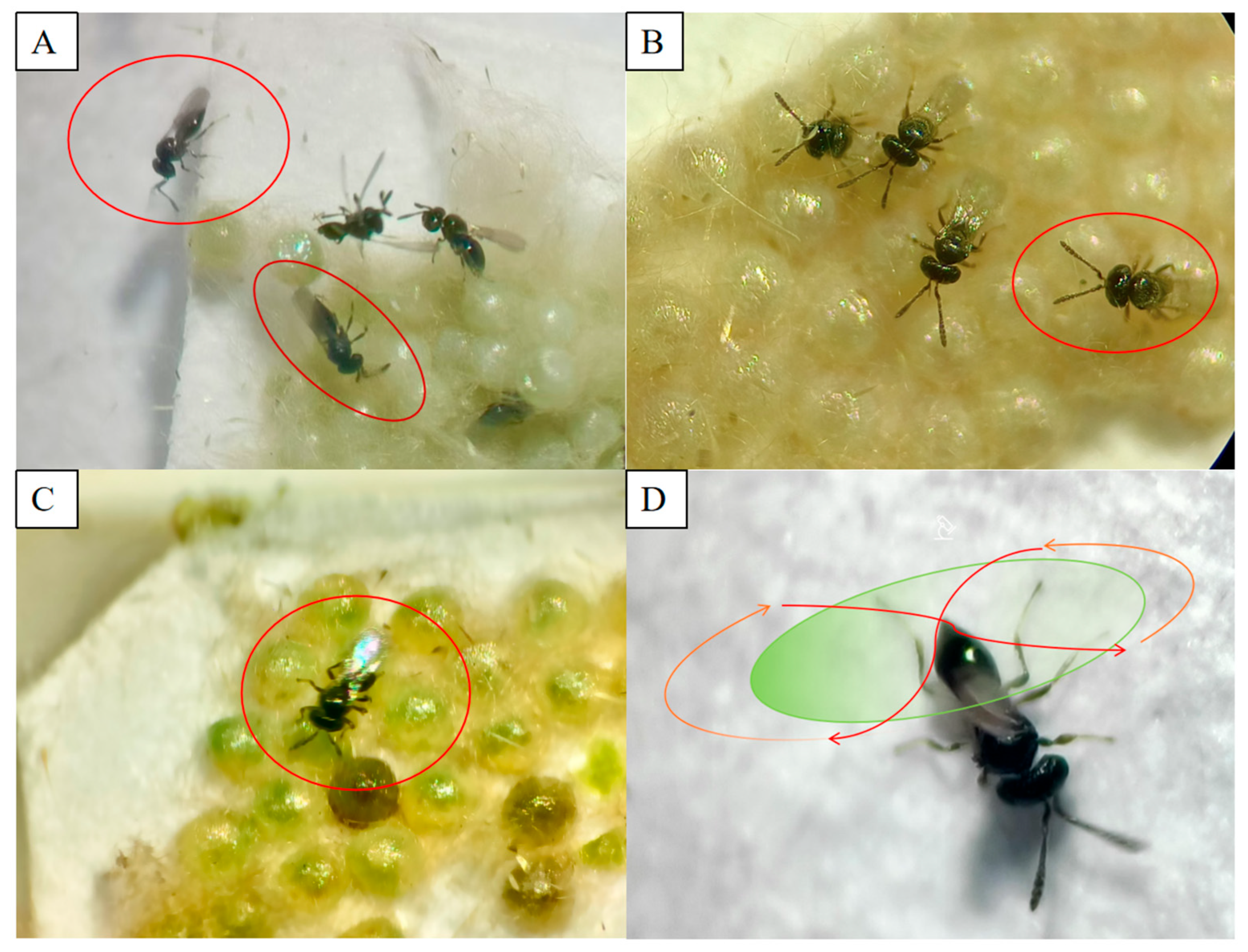
3.1. Parasitization Behavior of T. remus
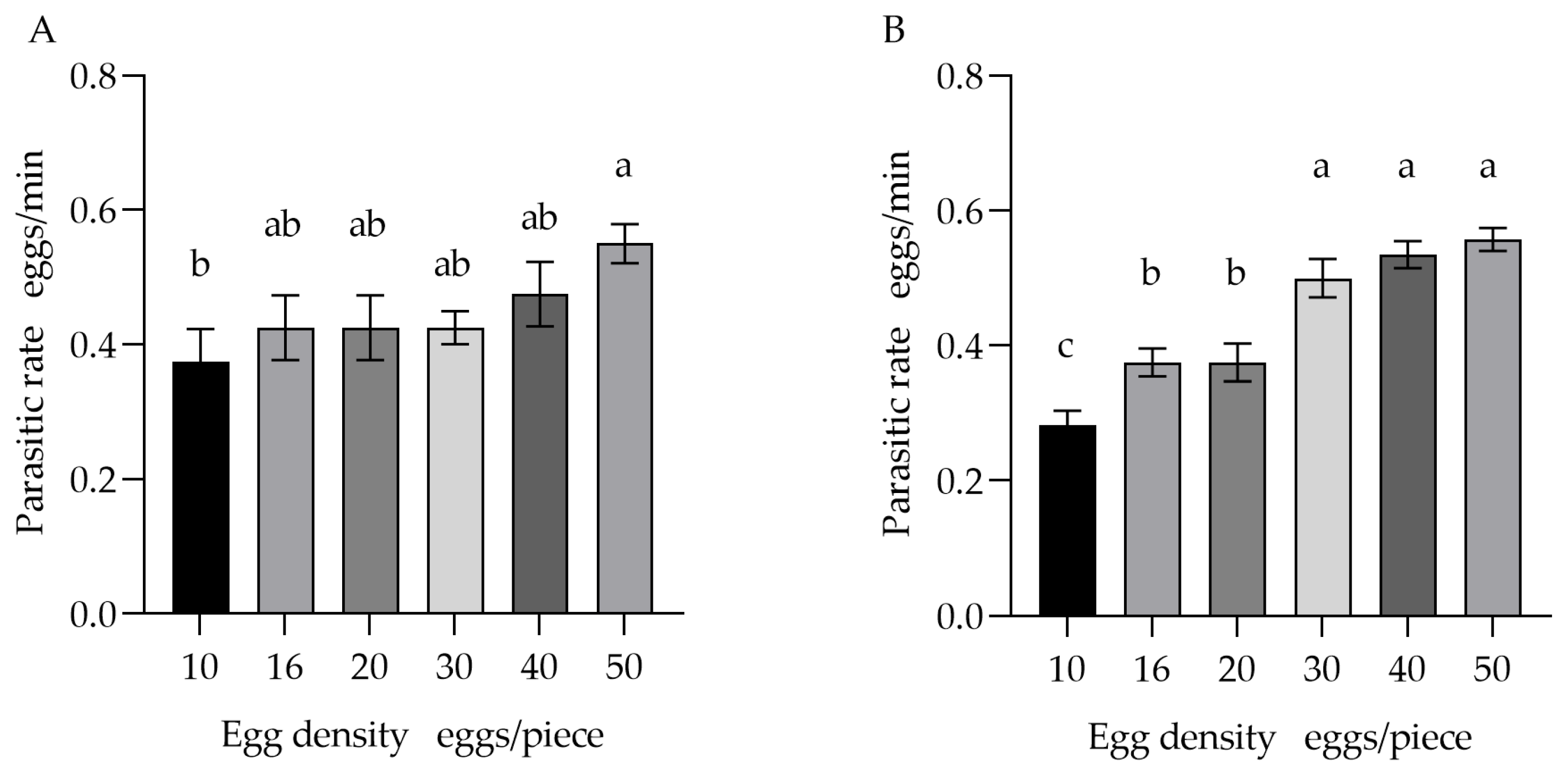
3.2. Parasitism Efficiency of an Individual T. remus Female on Host Eggs at Different Densities
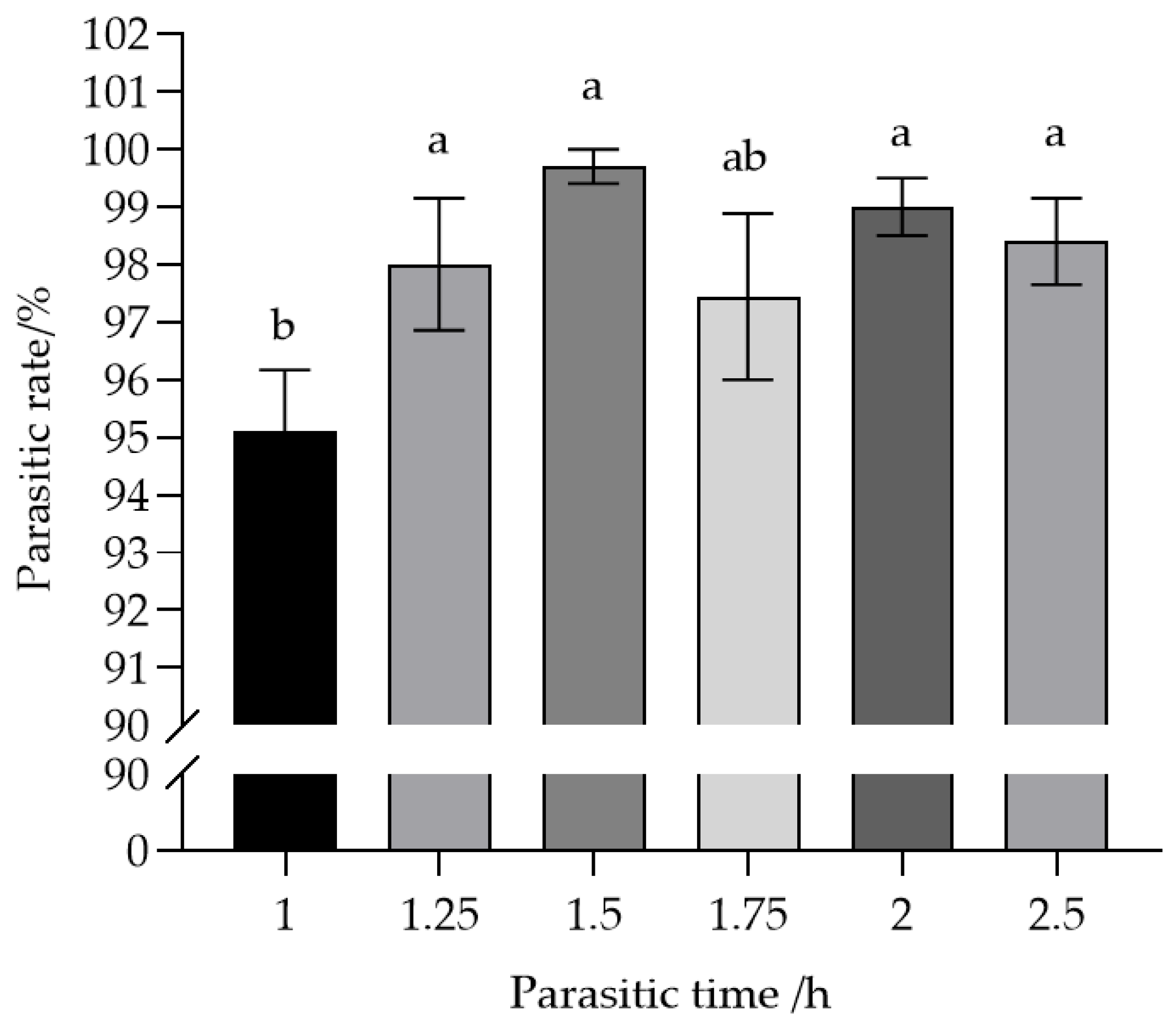
3.3. Parasitism Rate of an Individual T. remus Female in Relation to Host Exposure Time
3.4. Parasitism Recognition of T. remus Towards Parasitized Host Eggs
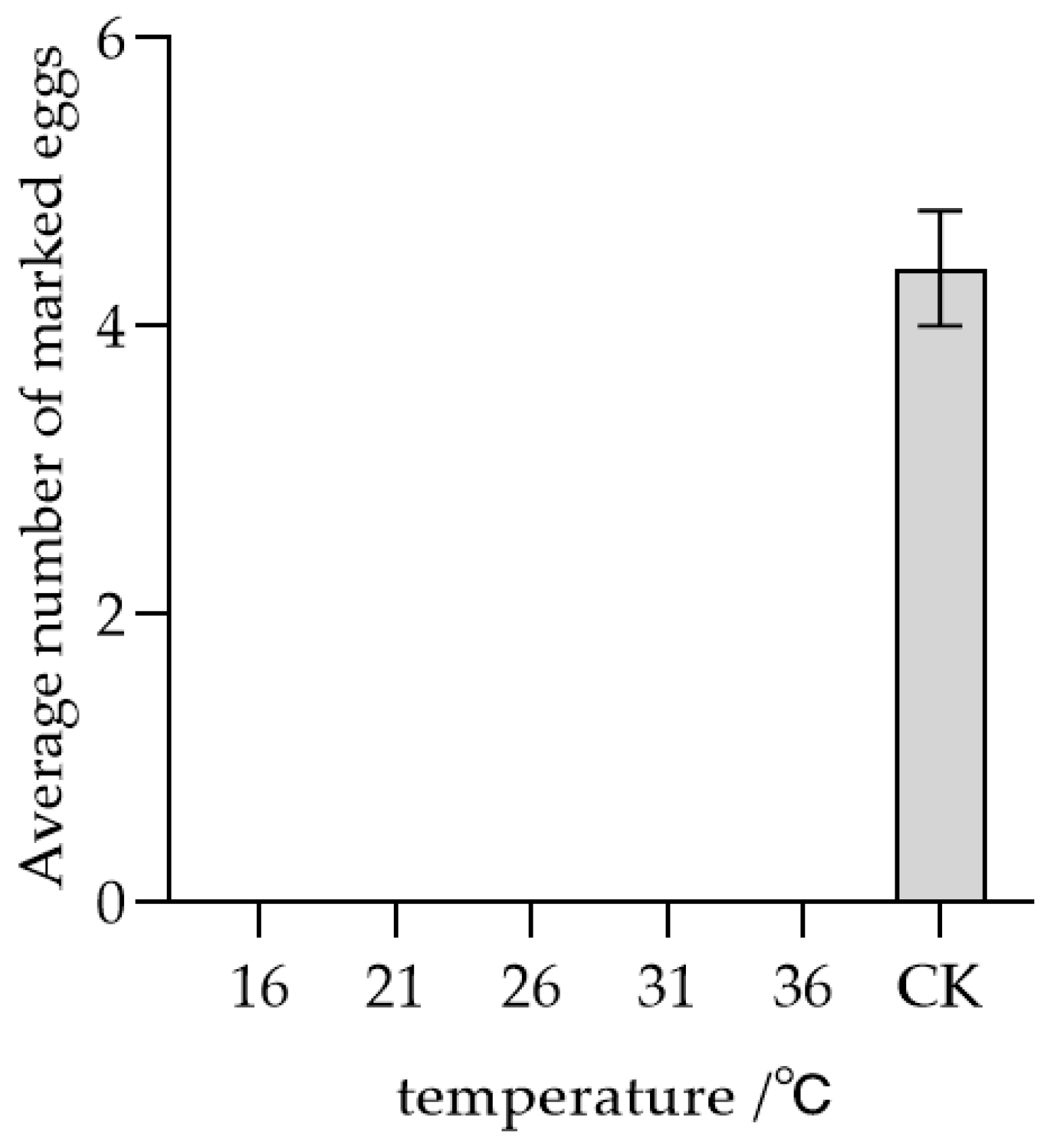
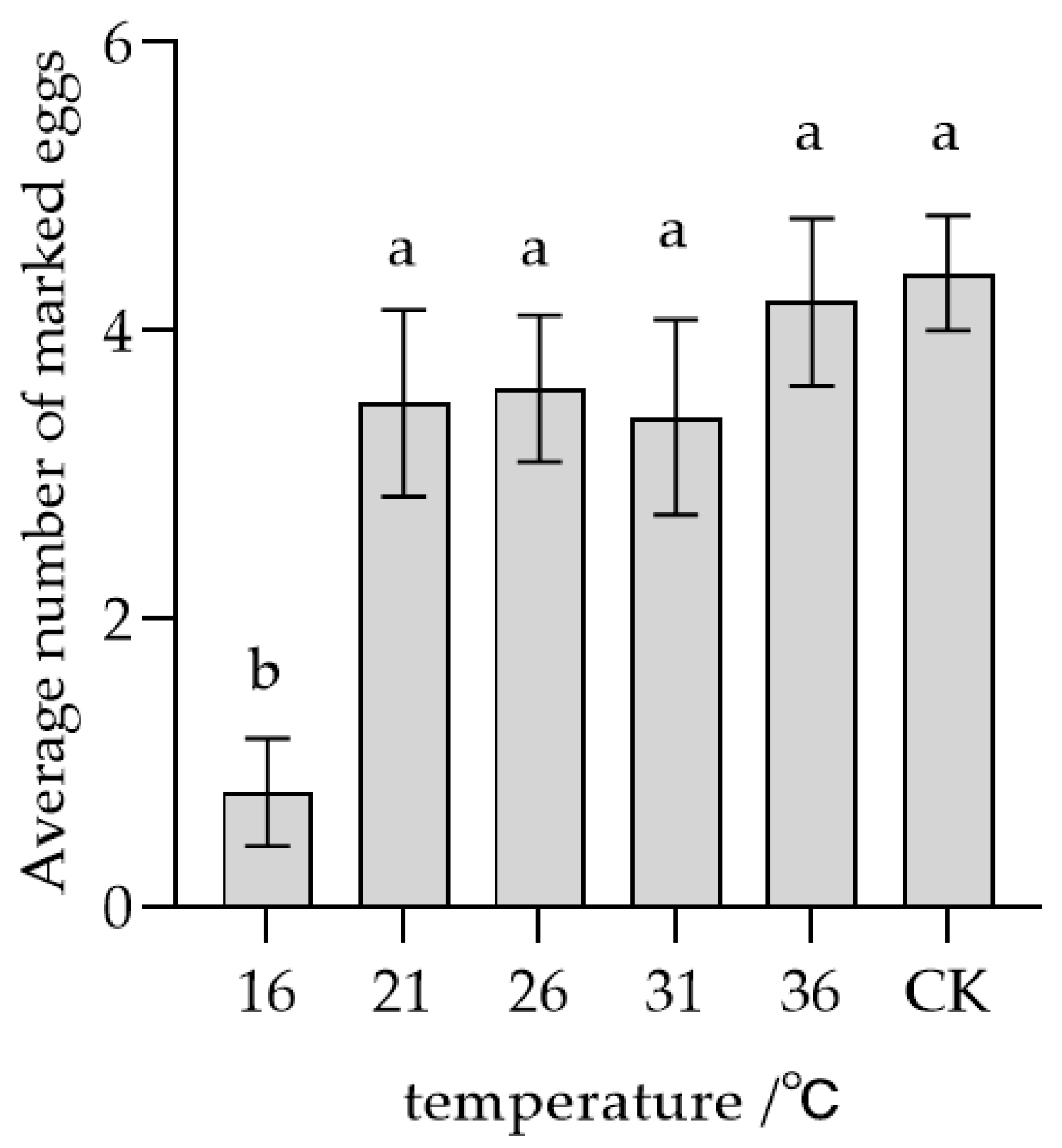
3.5. Host Recognition by T. remus of Self-Marked Eggs Stored at Different Temperatures
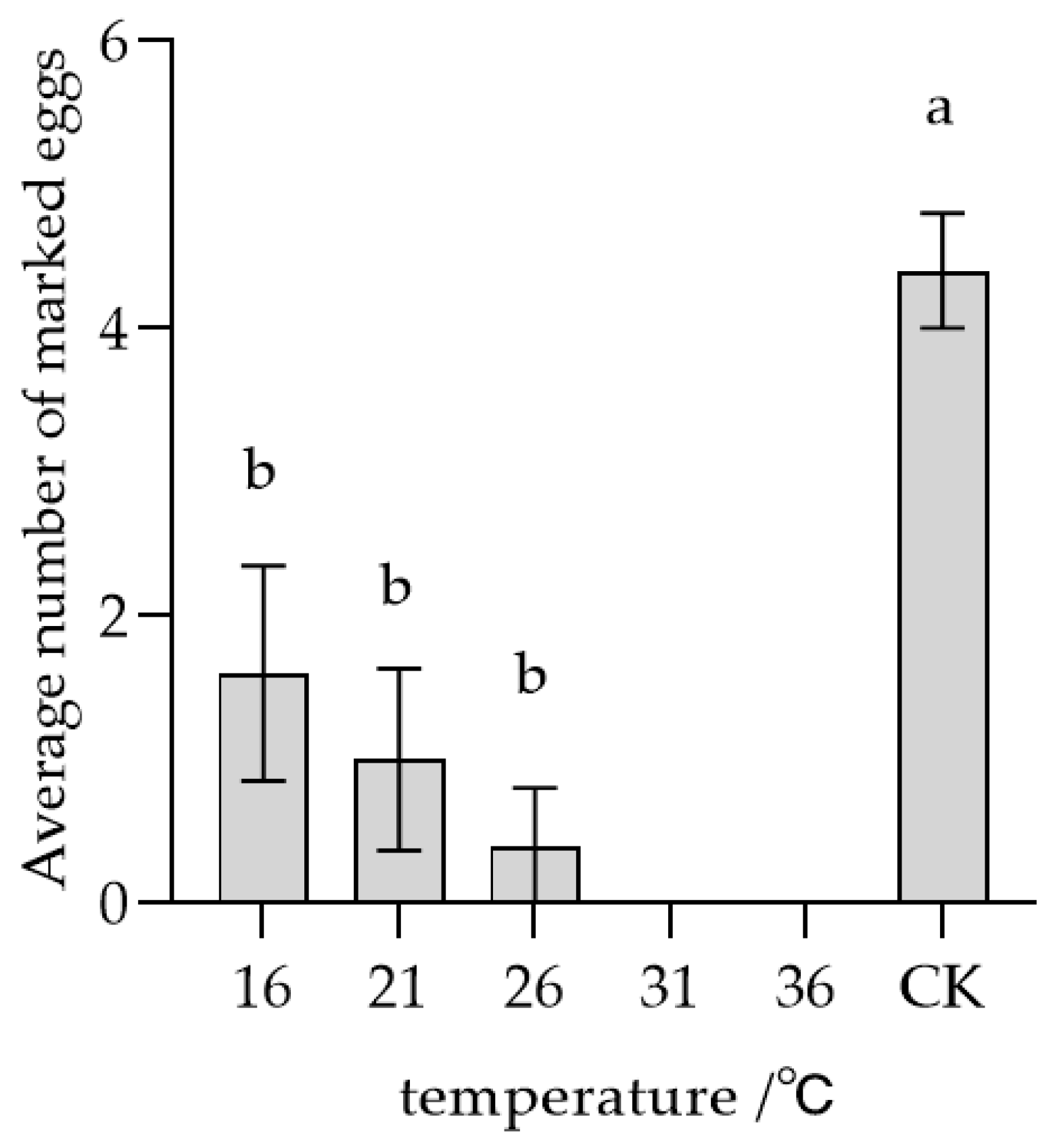
3.6. Host Recognition by Conspecific T. remus Females of Marked Eggs Stored at Different Temperatures
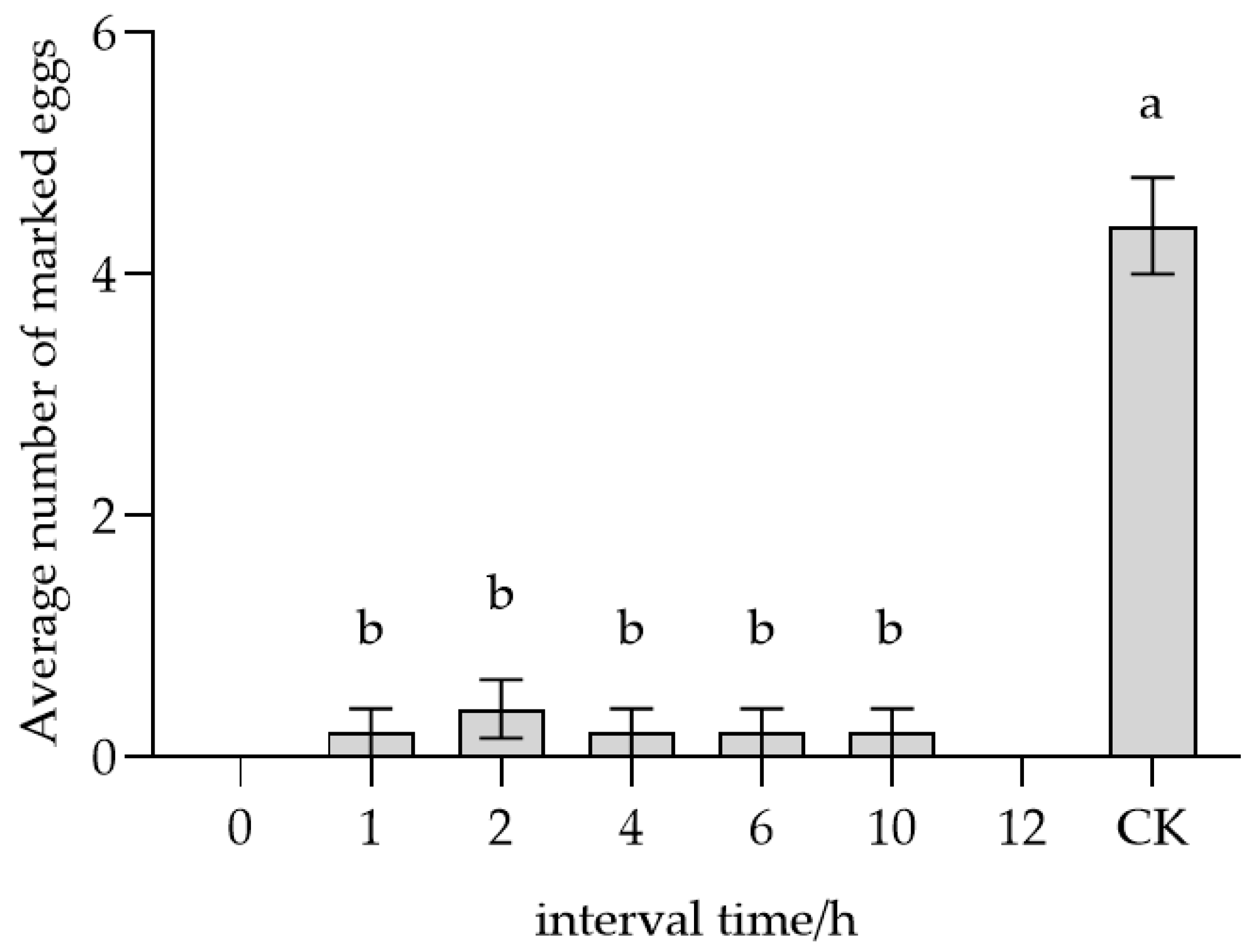
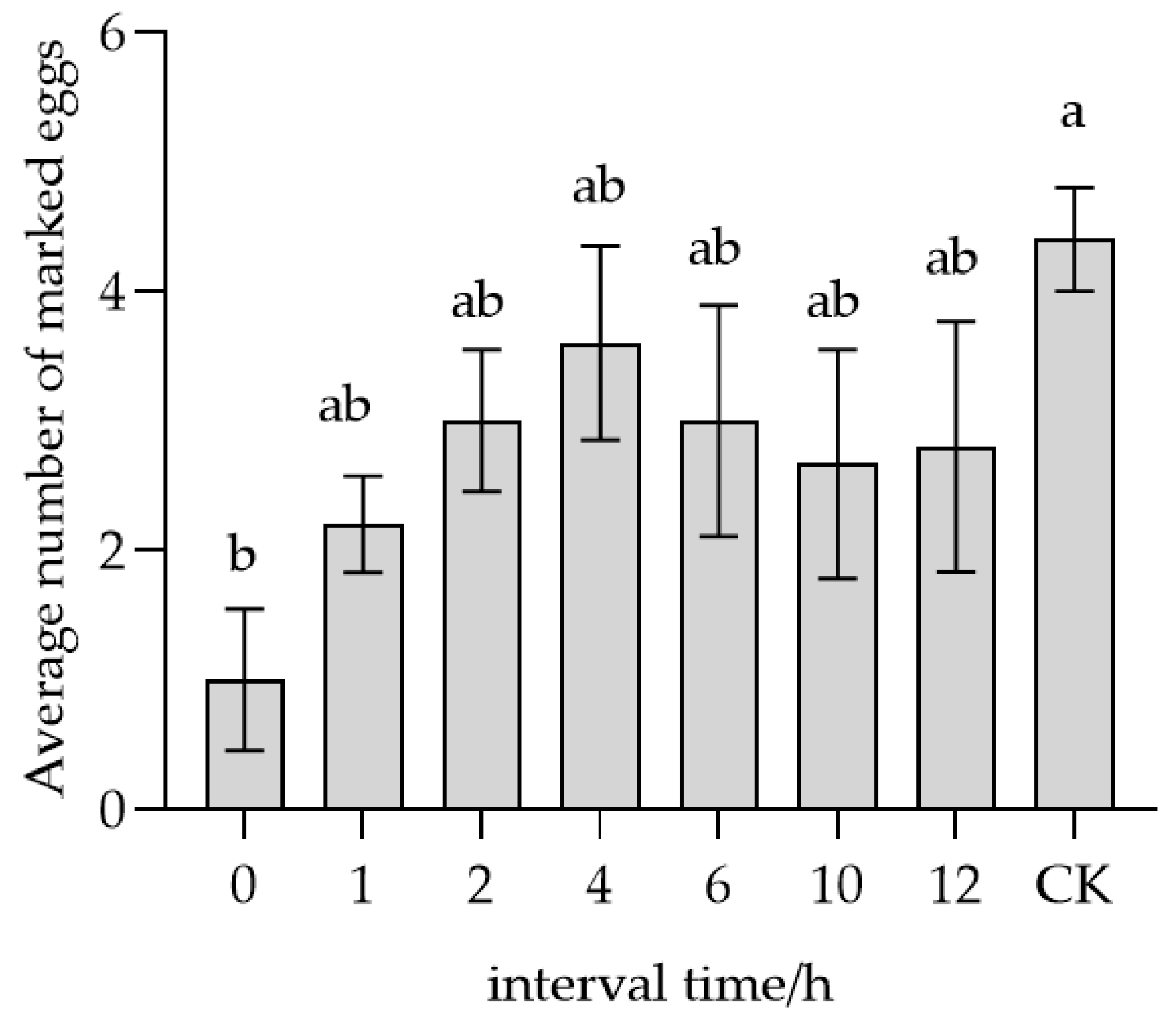
3.7. Host Recognition of Self-Marked Eggs by T. remus over Different Time Intervals
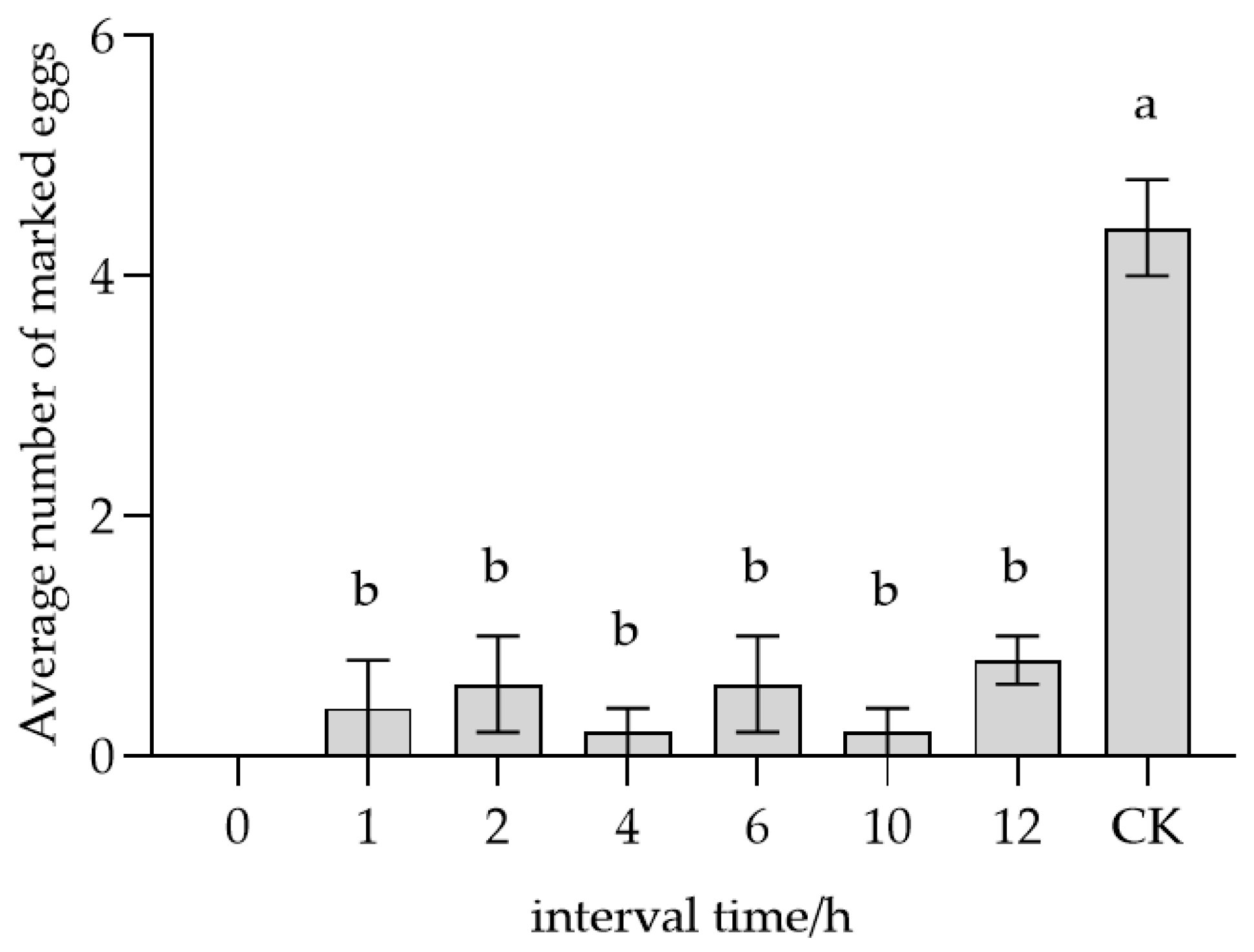
3.8. Host Recognition by Conspecific T. remus on Marked Eggs over Different Time Intervals
4. Discussion
Author Contributions
Funding
Data Availability Statement
Conflicts of Interest
References
- Prokopy, R.J. Epideictic pheromones that influence spacing patterns of phytophagous insects. In Semiochemicals: Their Role in Pest Control; John Wiley & Sons: Hoboken, NJ, USA, 1981; pp. 181–213. [Google Scholar]
- Salt, G. Competition among insect parasitoids. Mechanisms in biological competition. In Proceedings of the Symposium of the Society for Experimental Biology, Birmingham, UK, 1 December 1961; pp. 96–119. [Google Scholar]
- Xue, T.; Pan, J.; LIU, L.; Xu, T.; Huang, J.; He, Y.; Wang, Z. Intraspecific host discrimination and superparasitism in Telenomus remus (Nixon), an egg parasitoid of Spodoptera frugiperda (J. E. Smith). Chin. J. Biol. Control 2024, 40, 1–11. [Google Scholar] [CrossRef]
- Hardy, I.C.W.; Briffa, M. Introduction to Animal Contests; Cambridge University Press: Cambridge, UK, 2013; pp. 1–4. [Google Scholar] [CrossRef]
- Zhu, X.; Liu, Q.; Xu, C.Q.; Guo, K.; Xu, R.; Qiao, H.L.; Chen, J. Advances in research on sensilla structure andfunction in parasitic wasps. Chin. J. Appl. Entomol. 2021, 58, 822–845. [Google Scholar] [CrossRef]
- Eisenstein, E.; Reep, R. Behavioral and cellular studies of learning and memory in insects. Compr. Insect Physiol. Biochem. Pharmacol. 1985, 9, 513–547. [Google Scholar]
- Nufio, C.R.; Papaj, D.R. Host marking behavior in phytophagous insect and parasitoids. Entomol. Exp. Appl. 2001, 99, 273–293. [Google Scholar] [CrossRef]
- Huang, Y.P.; Wang, S.F.; Tang, D.W.; Ren, L.Z. Host discrimination and marking pheromone of Telenomus dendrolimusi. J. Cent. South Univ. For. Technol. 1993, 13, 103–108. [Google Scholar] [CrossRef]
- Li, G.; Mu, L. Competition among parasitoids for host during foraging and oviposition. Acta Ecol. Sin. 2006, 26, 1261–1269. [Google Scholar]
- Wang, H.; Cheng, M.; Wang, S.; Wen, Y.; Cui, J.; Li, J. Discrimination against already parasitized hosts by Aprostocetus prolixus (Hymenoptera: Eulophidae). Acta Sericologica Sin. 2021, 47, 409–415. [Google Scholar] [CrossRef]
- Li, G. Host-marking in hymenopterous parasitoids. Acta Entomol. Sin. 2006, 49, 504–512. [Google Scholar] [CrossRef]
- Beli, W.J. Comprehensive insect physiology, biochemistry and pharmacology: Edited by G. A. Kerkut and L. I. Gilbert. Pergamon press. Oxford. 1985. Volume 9. Behaviour. 734 + xvi pp. Int. J. Biochem. 1985, 17, 1281–1282. [Google Scholar] [CrossRef]
- Klomp, H.; Teerink, B.; Ma, W.C. Discrimination between parasitized and unparasitized hosts in the egg parasite Trichogramma embryophagum (Hym.: Trichogrammatidae): A matter of learning and forgetting. Neth. J. Zool. 1980, 30, 250–277. [Google Scholar] [CrossRef]
- Van Alphen, J.; Nell, H. Superparasitism and host discrimination by Asobara Tabida Nees (Braconidae: Alysiinae), a Larval parasitoid of drosophilidae. Neth. J. Zool. 1981, 32, 232–260. [Google Scholar] [CrossRef]
- Ikawa, T.; Suzuki, Y. Ovipositional experience of the gregarious parasitoid, Apanteles glomeratus (Hymenoptera: Braconidae), influencing her discrimination of the host larvae, Pieris rapae crucivora. Appl. Entomol. Zool. 1982, 17, 119–126. [Google Scholar] [CrossRef]
- Wylie, H. Some factors that reduce the reproductive rate of Nasonia vitripennis (Walk.) at high adult population densities. Can. Entomol. 1965, 97, 970–977. [Google Scholar] [CrossRef]
- Chen, X.; Bordini, G.P.; Stansly, P.A. Avoidance of parasitized hosts by female wasps of Tamarixia radiata (Hymenoptera: Eulophidae), Parasitoid of Diaphorina citri (Hemiptera: Liviidae), vector of citrus greening disease. Fla. Entomol. 2016, 99, 311–313. [Google Scholar] [CrossRef]
- Mehrnejad, M.R.; Copland, M.J.W. Host discrimination by the endoparasitoid Psyllaephagus pistaciae (Hymenoptera: Encyrtidae): A case of time-dependent ability. Biocontrol Sci. Technol. 2007, 17, 401–411. [Google Scholar] [CrossRef]
- Li, X.; Li, B.; Meng, L. Oviposition strategy for superparasitism in the gregarious parasitoid Oomyzus sokolowskii (Hymenoptera: Eulophidae). Bull. Entomol. Res. 2018, 109, 221–228. [Google Scholar] [CrossRef]
- Field, S.A.; Keller, M.A. Short-term host discrimination in the parasitoid wasp Trissolcus basalis Wollaston (Hymenoptera: Scelionidae). Aust. J. Zool. 1999, 47, 19–28. [Google Scholar] [CrossRef]
- Oudenhove, L.V.; Billoir, E.; Boulay, R.; Bernstein, C.; Cerda, X. Temperature limits trail following behaviour through pheromone decay in ants. Naturwissenschaften 2011, 98, 1009–1017. [Google Scholar] [CrossRef]
- Okuda, M.S.; Yeargan, K.V. Intra- and interspecific host discrimination in Telenomus podisi and Trissolcus euschisti (Hymenoptera: Scelionidae). Ann. Entomol. Soc. Am. 1988, 81, 1017–1020. [Google Scholar] [CrossRef]
- McKay, T.; Broce, A.B. Discrimination of Self-parasitized hosts by the pupal parasitoid Muscidifurax zaraptor (Hymenoptera: Pteromalidae). Ann. Entomol. Soc. Am. 2004, 97, 592–599. [Google Scholar] [CrossRef]
- Wang, S.Q.; Lian, Y.G.; Kang, Z.J.; Mo, T.L. Effects of host marking pheromones and experiences on oviposition behavior of Trichogramma ostriniae. Acta Ecol. Sin. 2007, 27, 3910–3915. [Google Scholar]
- Wang, J.W.; Zhou, Q.; Xu, T.; Luo, S.M. Roles of volatile infochemicals and learning behavior in the host selection process of Anastatus japonicus. Acta Ecol. Sin. 2003, 23, 1791–1797. [Google Scholar]
- Liu, S.M. The Strategy and Mechanism of Avoiding Superparasitism of Asobara japonica. Master’s Thesis, Zhejiang University, Hangzhou, China, 2023; p. 101. [Google Scholar]
- Wei, K. Behavioral and Developmental Strategies for Adapting the Heterogeneous Environmental Conditions of the Generalist Ectoparasitoid Sclerodermus pupariae (Hymenoptera: Bethylidae). Ph.D. Thesis, Chinese Academy of Forestry, Beijing, China, 2016; p. 180. [Google Scholar]
- Rabb, R.L.; Bradley, J.R. Marking host eggs by Telenomus sphingis. Ann. Entomol. Soc. Am. 1970, 63, 1053–1056. [Google Scholar] [CrossRef]
- Escalante, G.; Rabinovich, J.E. Population dynamics of Telenomus fariai (Hymenoptera: Scelionidae), a parasite of Chagas’ disease vectors IX. Larval competition and population size regulation under laboratory conditions. Res. Popul. Ecol. 1979, 20, 235–246. [Google Scholar] [CrossRef]
- Strand, M.R.; Vinson, S.B. Host acceptance behavior of Telenomus heliothidis (Hymenoptera: Scelionidae) toward Heliothis virescens (Lepidoptera: Noctuidae). Ann. Entomol. Soc. Am. 1983, 76, 781–785. [Google Scholar] [CrossRef]
- Cave, R.D.; Gaylor, M.J.; Bradley, J.T. Host handling and recognition by Telenomus reynoldsi (Hymenoptera: Scelionidae), an egg parasitoid of Geocoris spp. (Heteroptera: Lygaeidae). Ann. Entomol. Soc. Am. 1987, 80, 217–223. [Google Scholar] [CrossRef]
- Bruce, A.Y.; Schulthess, F.; Makatiani, J.K.; Tonnang, H.E.Z. Oviposition behavior of Telenomus busseolae, Telenomus isis and Trichogramma bournieri on eggs of east African cereal stemborers. Int. J. Trop. Insect Sci. 2021, 41, 157–168. [Google Scholar] [CrossRef]
- Higuchi, H.; Suzuki, Y. Host handling behavior of the egg parasitoid Telenomus triptus to the egg mass of the stink bug Piezodorus hybneri. Entomol. Exp. Appl. 1996, 80, 475–479. [Google Scholar] [CrossRef]
- Ou, X.; Jiang, H.; Chen, C. An Observation on parasitizing Be-havior of Telenomus euproctidis Wilcox (Hymenoptera: Scelionidae). J. Hunan Agric. Univ. 1996, 22, 561–564. [Google Scholar] [CrossRef]
- Mahmoud, A.M.A.; Lim, U.T. Host discrimination and interspecific competition of Trissolcus nigripedius and Telenomus gifuensis (Hymenoptera: Scelionidae), sympatric parasitoids of Dolycoris baccarum (Heteroptera: Pentatomidae). Biol. Control 2008, 45, 337–343. [Google Scholar] [CrossRef]
- Sun, S. Study on the Transfer Pathway and Activate Peptide of Host Recognition Kairomone for Telenomus theophilae. Ph.D. Thesis, Northeast Forest University, Beijing, China, 2003; p. 113. [Google Scholar]
- Mahmoud, A.M.A.; Lim, U.T. Evaluation of cold-stored eggs of Dolycoris baccarum (Hemiptera: Pentatomidae) for parasitization by Trissolcus nigripedius (Hymenoptera: Scelionidae). Biol. Control 2007, 43, 287–293. [Google Scholar] [CrossRef]
- Li, Z. Preliminary Studies on the Trissolcus japonicus Ashmead(Hymenoptera: Scelionidae), a Parasitoid of Halyomorpha picus Fabricius (Heteroptera: Pentatomidae) Eggs. Master’s Thesis, Shandong Agricultural University, Tai’an, China, 2002; p. 64. [Google Scholar]
- Weber, C.A.; Smilanick, J.M.; Ehler, L.E.; Zalom, F.G. Ovipositional behavior and host discrimination in three scelionid egg parasitoids of Stink Bugs. Biol. Control 1996, 6, 245–252. [Google Scholar] [CrossRef]
- Tian, Z.; Wang, Y.; Sun, T.; Hu, X.; Hao, W.; Zhao, T.; Wang, Y.; Zhang, L.; Jiang, X.; Turlings, T.C.J.; et al. An egg parasitoid assesses host egg quality from afar using oviposition-induced plant volatiles. Curr. Biol. CB 2025, 35, 3001–3010.e4. [Google Scholar] [CrossRef]
- Libersat, F.; Delago, A.; Gal, R. Manipulation of host behavior by parasitic insects and insect parasites. Annu. Rev. Entomol. 2009, 54, 189–207. [Google Scholar] [CrossRef]
- Lv, Y.; Guo, X.; Qin, W.; Meng, L.; Li, B. Effects of host life stage and female wasp’s age on parasitizing behaviors and offspring developmental consequences in Aenasius arizonensis (Hymenoptera: Encyrtidae). Chin. J. Appl. Entomol. 2024, 61, 989–994. [Google Scholar] [CrossRef]
- Chabi-Olaye, A.; Schulthess, F.; Poehling, H.-M.; Borgemeister, C. Host location and host discrimination behavior of Telenomus isis, an egg parasitoid of the African cereal stem borer Sesamia calamistis. J. Chem. Ecol. 2001, 27, 663–678. [Google Scholar] [CrossRef]
- Wang, X.; Aparicio, E.M.; Duan, J.; Gould, J.; Hoelmer, K.A. Optimizing parasitoid and host densities for efficient rearing of Ontsira mellipes (Hymenoptera: Braconidae) on Asian Longhorned Beetle (Coleoptera: Cerambycidae). Environ. Entomol. 2020, 49, 1041–1048. [Google Scholar] [CrossRef] [PubMed]
- Power, N.R. Evaluation of the Parasitoid Ooencyrtus mirus (Hymenoptera: Encyrtidae) as a Potential Biological Control Agent of Bagrada hilaris (Heteroptera: Pentatomidae). Ph.D. Thesis, University of California, Riverside, CA, USA, 2020; p. 198. [Google Scholar]
- Morales, S.J.; Gallardo, V.J.S.; Vásquez, C.; Ríos, Y. Functional response of Telenomus remus (Hymenoptera: Scelionidae) to the fall army worm eggs. J. Bioagro. 2001, 13, 49–55. [Google Scholar]
- Zhang, B.; Meng, L.; Li, B.P. Oviposition selection behavior of Meteorus pulchricornis (Hymenoptera: Braconidae) in the field. J. Nanjing Agric. Univ. 2012, 35, 78–82. Available online: https://nauxb.njau.edu.cn (accessed on 11 January 2026).
- Hanan, A.; Shakeel, M.; He, X.Z.; Razzaq, A.; Wang, Q. Superparasitism and host discrimination behavior of Eretmocerus warrae Naumann & Schmidt (Hymenoptera: Aphelinidae). Turk. J. Agric. For. 2016, 40, 1–6. [Google Scholar] [CrossRef]
- Liang, Q.; Jia, Y.; Liu, T. Self-and conspecific discrimination between unparasitized and parasitized green peach aphid (Hemiptera: Aphididae), by Aphelinus asychis (Hymenoptera: Aphelinidae). J. Econ. Entomol. 2017, 110, 430–437. [Google Scholar] [CrossRef]
- Chen, W.-b.; Vasseur, L.; Zhang, S.-q.; Zhang, H.-f.; Mao, J.; Liu, T.-s.; Zhou, X.-y.; Wang, X.; Zhang, J.; You, M.-s. Mechanism and consequences for avoidance of superparasitism in the solitary parasitoid Cotesia vestalis. Sci. Rep. 2020, 10, 11463. [Google Scholar] [CrossRef]
- Tang, Y.; Chen, K.; Xu, Z. Study on ontogenesis of Telenomus remus Nixon (Hymenoptera: Scelionidae). J. Chang. Veg. 2010, 18, 1–3. [Google Scholar] [CrossRef]
- Miura, K.; Matsuda, S.; Kobayashi, M. Discrimination between parasitized and unparasitized hosts in an egg parasitoid, Trichogramma chilonis Ishii (Hymenoptera: Trichogrammatidae). Appl. Entomol. Zool. 1994, 29, 317–322. [Google Scholar] [CrossRef][Green Version]
- Alborn, H.T.; Lewis, W.J.; Tumlinson, J.H. Host-specific recognition kairomone for the parasitoid Microplitis croceipes (Cresson). J. Chem. Ecol. 1995, 21, 1697–1708. [Google Scholar] [CrossRef]
- Hougardy, E.; Hogg, B.N. Host patch use and potential competitive interactions between two egg parasitoids from the family Scelionidae, candidate biological control agents of Bagrada hilaris (Hemiptera: Pentatomidae). J. Econ. Entomol. 2021, 114, 611–619. [Google Scholar] [CrossRef] [PubMed]
- Huigens, M.E.; Pashalidou, F.G.; Qian, M.-H.; Bukovinszky, T.; Smid, H.M.; van Loon, J.J.; Dicke, M.; Fatouros, N.E. Hitch-hiking parasitic wasp learns to exploit butterfly antiaphrodisiac. Proc. Natl. Acad. Sci. USA 2009, 106, 820–825. [Google Scholar] [CrossRef] [PubMed]
- Lewis, W.; Takasu, K. Use of learned odours by a parasitic wasp in accordance with host and food needs. Nature 1990, 348, 635–636. [Google Scholar] [CrossRef]




| Genus | Species | Marking (Yes/No) | Marking Method | References |
|---|---|---|---|---|
| Telenomus | T. sphingis | Yes | Rubbing along a continuous curved trajectory on the egg surface with the ovipositor. | Rabb, R.L.; et al. 1970 [28] |
| T. fariai | Yes | Rubbing the egg surface with the ovipositor. | Escalante, G. and Rabinovich, J.E. 1979 [29] | |
| T. heliothidis | Yes | Moving left and right along the egg surface with the ovipositor. | Strand, M.R. and Vinson, S.B. 1983 [30] | |
| T. reynoldsi | Yes | Drawing irregular circles on the egg surface with the ovipositor. | Cave, R.D.; et al. 1987 [31] | |
| T. busseolae | Yes | Smearing “8”-shaped marking on egg surface with the ovipositor. | Bruce, A.Y.; et al. 2021 [32] | |
| T. isis | Yes | Smearing “8”-shaped marking on egg surface with the ovipositor. | Bruce, A.Y.; et al. 2021 [32] | |
| T. triptus | Yes | Scraping the egg surface with the ovipositor. | Higuchi, H.and Suzuki, Y. 1996 [33] | |
| T. euproctidis | Yes | Making 1–3 lateral sweeps across the egg surface with the ovipositor. | Ou, X.; et al. 1996 [34] | |
| T. podisi | Yes | Not described. | Okuda, M.S. and Yeargan, K.V. 1988 [22] | |
| T. dendrolimusi | Yes | Not described. | Huang, Y.P.; et al. 1993 [8] | |
| T. gifuensis | Yes | Not described. | Mahmoud, A.M.A. and Lim, U.T. 2008 [35] | |
| T. theophilae | Yes | Not described. | Sun, S. 2003 [36] | |
| Trissolcus | T. nigripedius | Yes | Smearing “8”-shaped marking on egg surface with the ovipositor. | Mahmoud, A.M.A. and Lim, U.T. 2007 [37] |
| T. japonicus | Yes | Smearing “8”-shaped marking on egg surface with the ovipositor. | Li, Z. 2002 [38] | |
| T. basalis | Yes | Smearing “8”-shaped marking on egg surface with the ovipositor. | Weber, C.A. et al. 1996 [39] | |
| T. utahensis | Yes | Smearing “8”-shaped marking on egg surface with the ovipositor. | Weber, C.A. et al. 1996 [39] | |
| T. euschisti | Yes | Not described. | Okuda, M.S. and Yeargan, K.V. 1988 [22] |
| Parasitic Mode | Sample Size | Number of Larvae | Parasitism Rate/% | ||
|---|---|---|---|---|---|
| n | 2 | 1 | 0 | ||
| First marking | 30 | 0 | 25.6 | 4.4 | 85.4 ± 0.03 a |
| Secondary marking | 30 | 23 | 5.8 | 1.4 | 76.6 ± 0.04 a |
| Secondary probing | 30 | 0 | 23.8 | 6.2 | 79.2 ± 0.04 a |
Disclaimer/Publisher’s Note: The statements, opinions and data contained in all publications are solely those of the individual author(s) and contributor(s) and not of MDPI and/or the editor(s). MDPI and/or the editor(s) disclaim responsibility for any injury to people or property resulting from any ideas, methods, instructions or products referred to in the content. |
© 2026 by the authors. Licensee MDPI, Basel, Switzerland. This article is an open access article distributed under the terms and conditions of the Creative Commons Attribution (CC BY) license.
Share and Cite
Ma, X.; Luo, Y.; Zhao, Q.; Zhang, R.; Lin, H.; Huang, J.; Wang, Z. Parasitic Recognition Behavior of Telenomus remus Nixon, an Important Egg Parasitoid of Spodoptera frugiperda (J. E. Smith). Insects 2026, 17, 93. https://doi.org/10.3390/insects17010093
Ma X, Luo Y, Zhao Q, Zhang R, Lin H, Huang J, Wang Z. Parasitic Recognition Behavior of Telenomus remus Nixon, an Important Egg Parasitoid of Spodoptera frugiperda (J. E. Smith). Insects. 2026; 17(1):93. https://doi.org/10.3390/insects17010093
Chicago/Turabian StyleMa, Xiaolong, Yujie Luo, Qiufen Zhao, Ruohan Zhang, Haiyan Lin, Jian Huang, and Zhuhong Wang. 2026. "Parasitic Recognition Behavior of Telenomus remus Nixon, an Important Egg Parasitoid of Spodoptera frugiperda (J. E. Smith)" Insects 17, no. 1: 93. https://doi.org/10.3390/insects17010093
APA StyleMa, X., Luo, Y., Zhao, Q., Zhang, R., Lin, H., Huang, J., & Wang, Z. (2026). Parasitic Recognition Behavior of Telenomus remus Nixon, an Important Egg Parasitoid of Spodoptera frugiperda (J. E. Smith). Insects, 17(1), 93. https://doi.org/10.3390/insects17010093