Article

Physical and Physiological Monitoring on Red Palm Weevil-Infested Oil Palms


1
Institute of Systems Biology, Universiti Kebangsaan Malaysia, Bangi 43600, Selangor, Malaysia
2
Department of Biological Sciences and Biotechnology, Faculty of Science and Technology, Universiti Kebangsaan Malaysia, Bangi 43600, Selangor, Malaysia
3
Sime Darby Research Sdn. Bhd., KM10, Jalan Banting-Kelanang, Banting 42700, Selangor, Malaysia
4
Faculty of Science and Marine Environment, Universiti Malaysia Terengganu, Kuala Nerus 21030, Terengganu, Malaysia
*
Author to whom correspondence should be addressed.
Insects 2020, 11(7), 407; https://doi.org/10.3390/insects11070407

Submission received: 14 May 2020 / Revised: 13 June 2020 / Accepted: 14 June 2020 / Published: 30 June 2020

Abstract

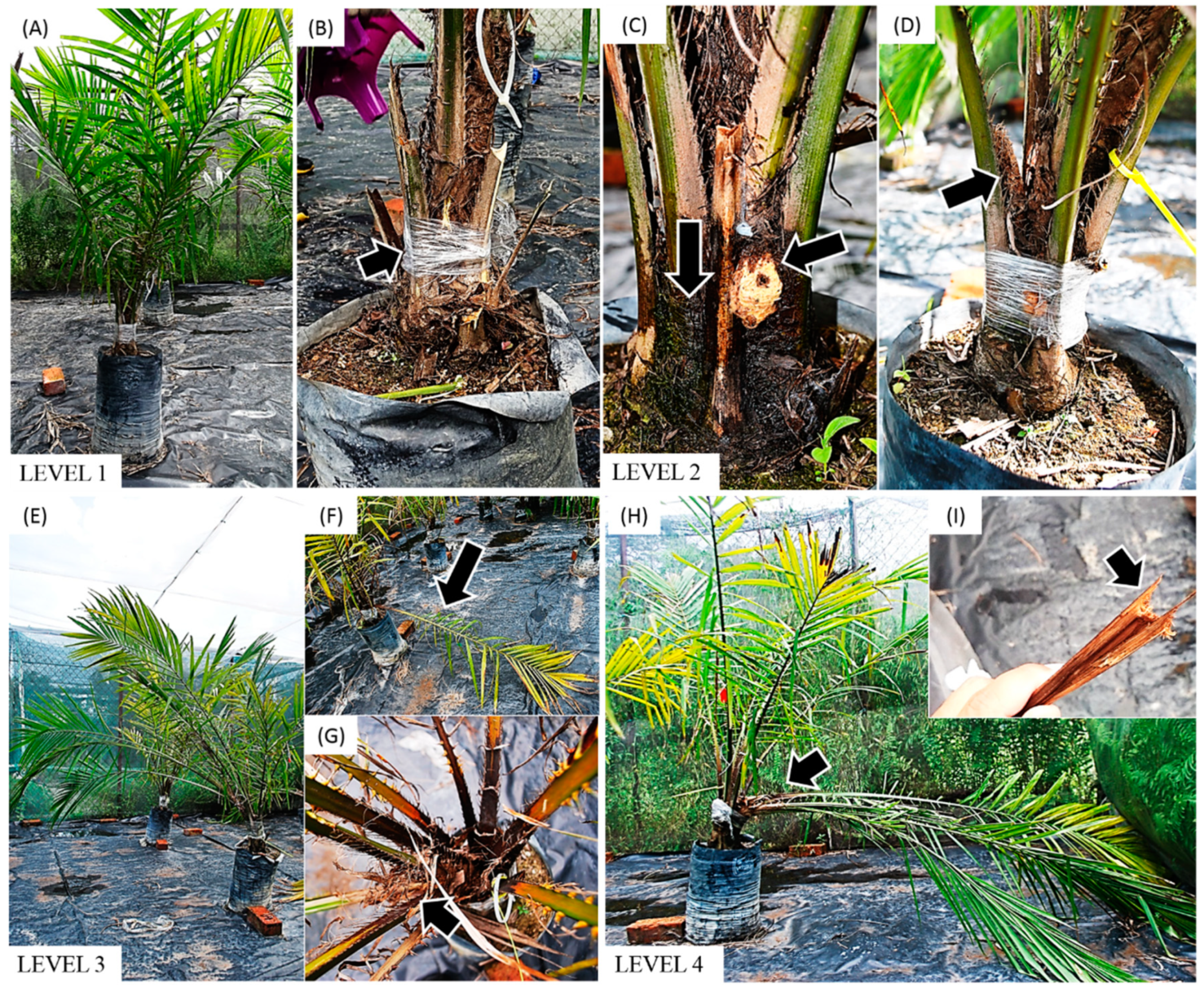
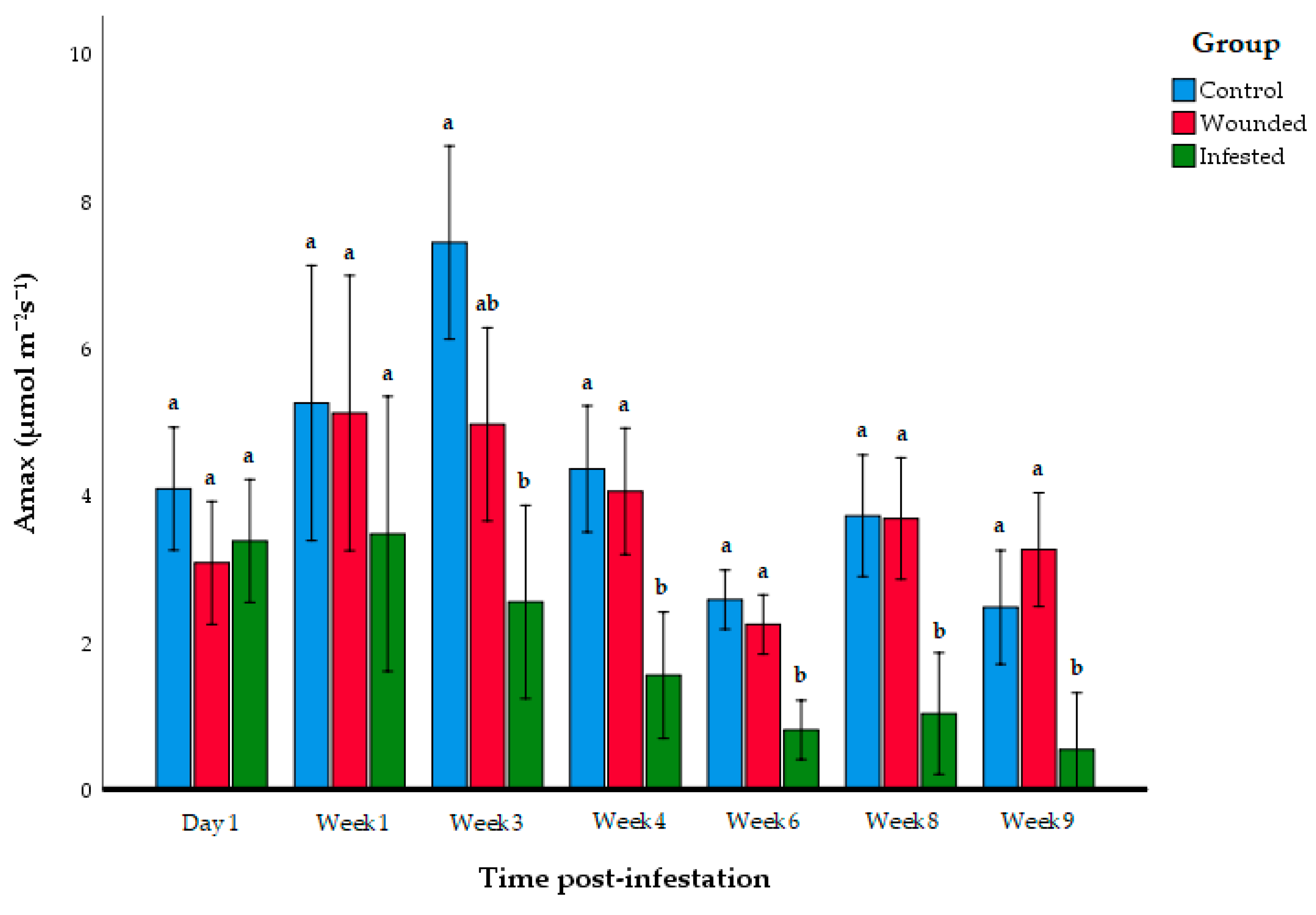
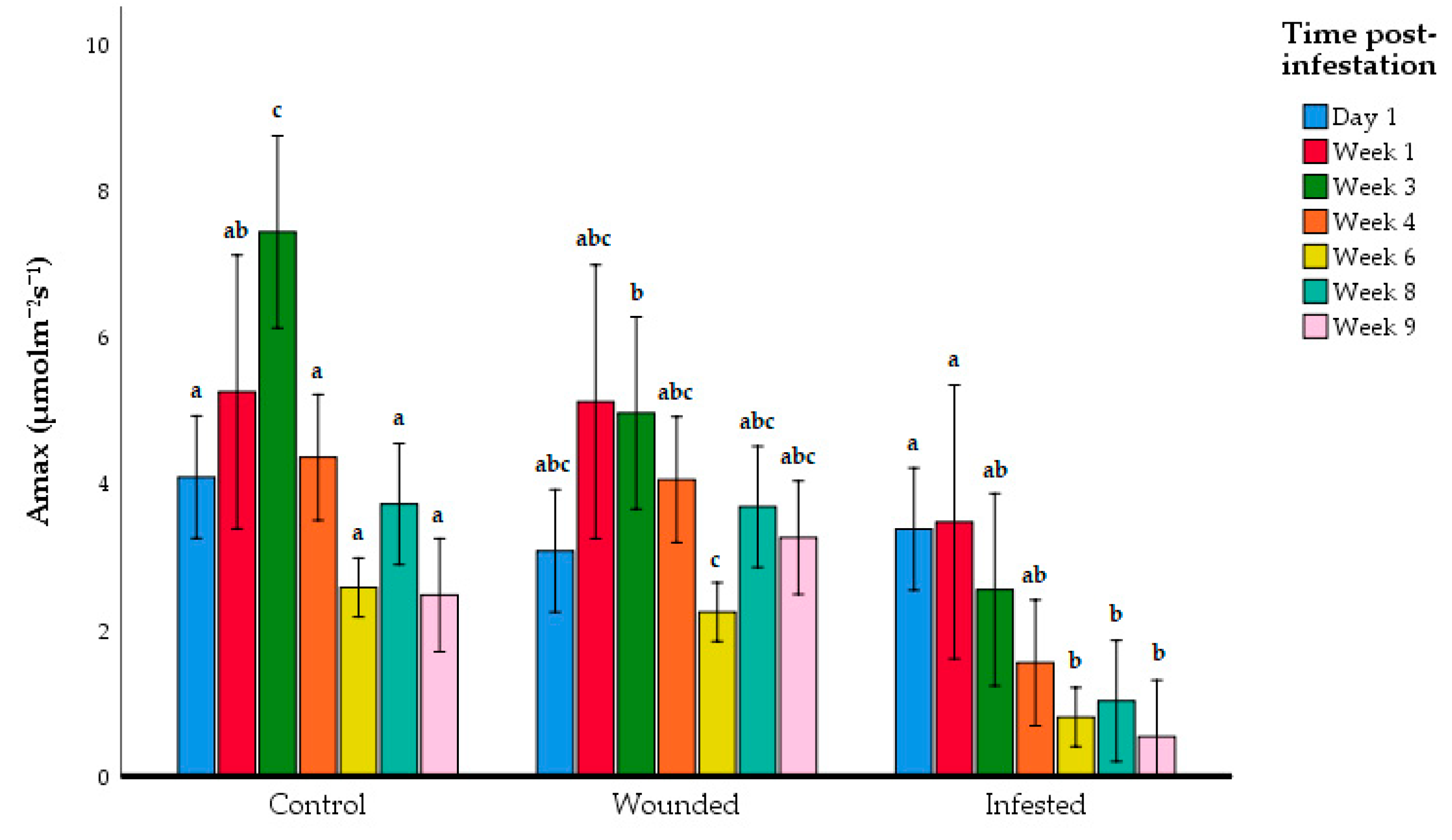
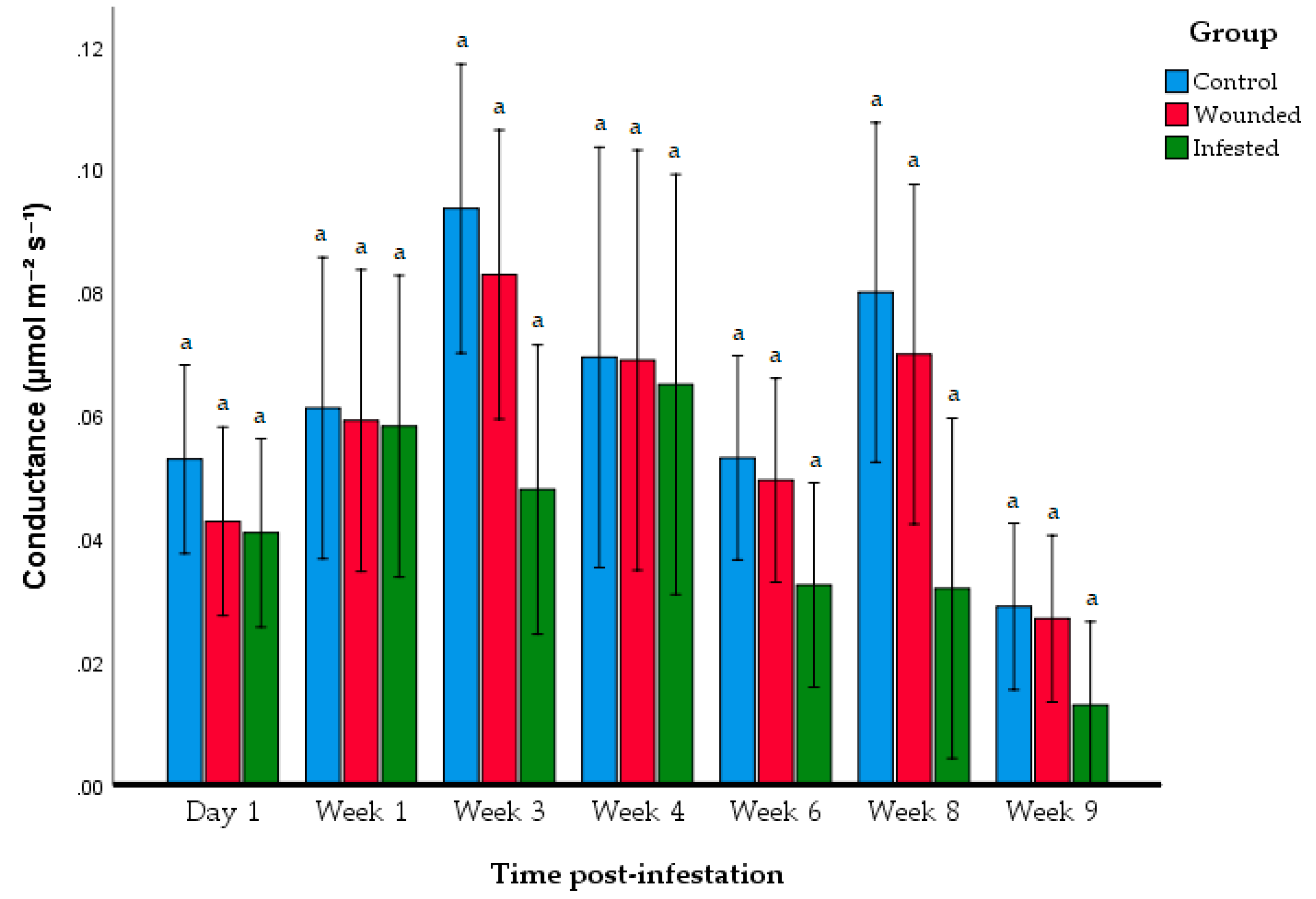
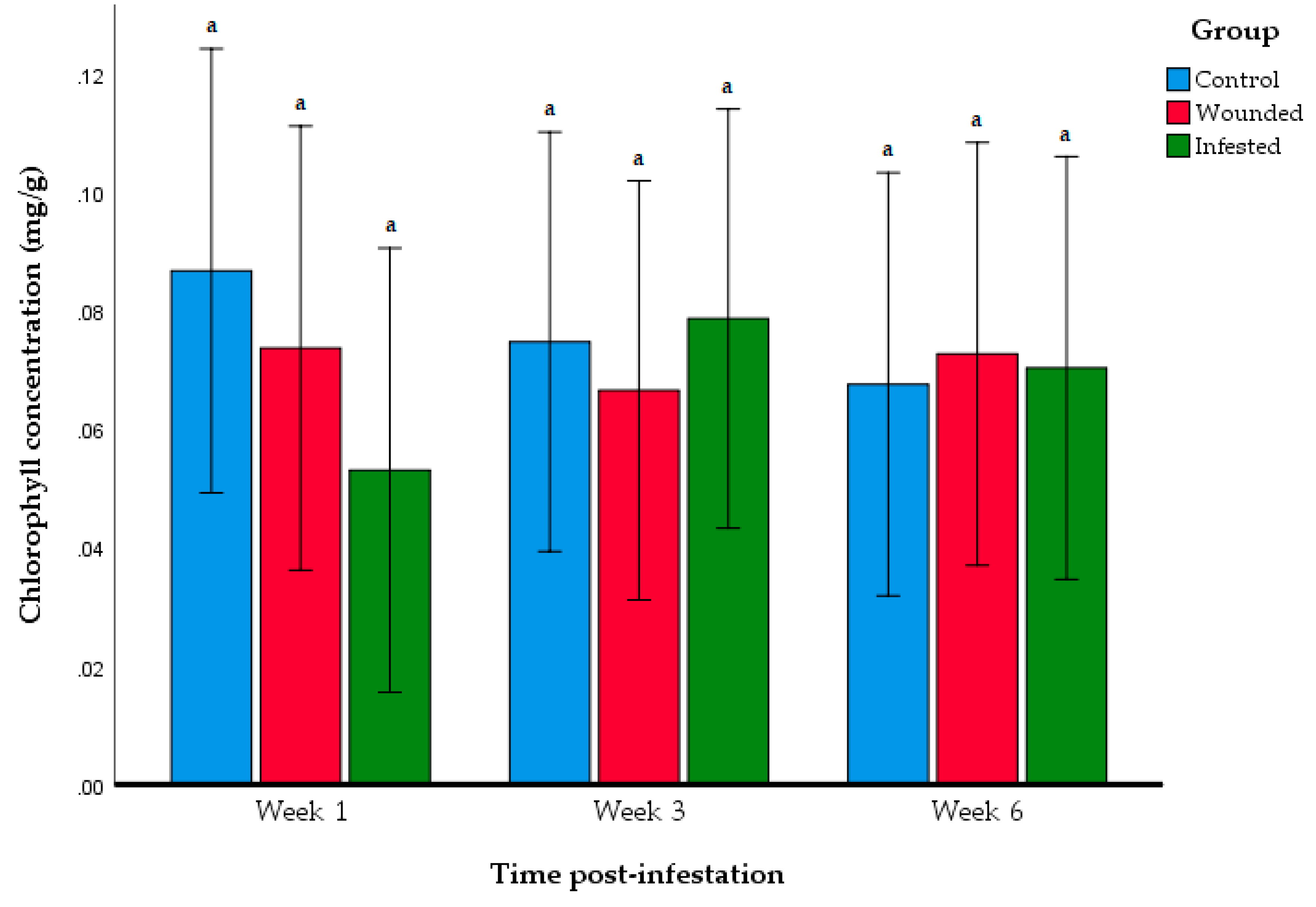
The red palm weevil (RPW) is a stem boring Coleoptera that decimates host palm trees from within. The challenge of managing this pest is due to a lack of physical symptoms during the early stages of infestation. Investigating the physiological changes that occur within RPW-infested palm trees may be useful in establishing a new approach in RPW detection. In this study, the effects of RPW infestation were investigated in Elaeis guineensis by observing changes in physical and physiological parameters during the progress of infestation by visual inspection and the comparison of growth, gas exchange, stomatal conductance, and chlorophyll content between the non-infested control, physically wounded, and RPW-infested E. guineensis groups. During the study period, four distinct levels of physical infestation were observed and recorded. The RPW-infested group displayed significantly lower maximum photosynthesis activity (Amax) starting from the third week post-infestation. However, growth in terms of change in plant height and stem circumference, leaves’ stomatal conductance, and chlorophyll content were not significantly different between the three groups during the duration of the study. The significant drop in photosynthesis was observed one week before physical changes appeared. This suggests the promising utilisation of photosynthesis activity as a signal for detecting RPW infestation at the early stage of attacks, which could be useful for integration in integrated pest management (IPM).
Keywords: Rhynchophorus ferrugineus; red palm weevil; oil palm; Elaeis guineensis; herbivory; photosynthesis; insect-plant interactions Rhynchophorus ferrugineus; red palm weevil; oil palm; Elaeis guineensis; herbivory; photosynthesis; insect-plant interactions