Effects of Aphid Density and Plant Taxa on Predatory Ladybeetle Abundance at Field and Landscape Scales
by
 ,
,
Hongsheng Pan
1,2, 
Bing Liu
1,
Coline C. Jaworski
3 ,
,
Long Yang
1,
Yongqiang Liu
1,
Nicolas Desneux
4,
Eva Thomine
4 and
Yanhui Lu
1,*
1
State Key Laboratory for Biology of Plant Diseases and Insect Pests, Institute of Plant Protection, Chinese Academy of Agricultural Sciences, Beijing 100193, China
2
Scientific Observing and Experimental Station of Crop Pests in Korla, Ministry of Agriculture and Rural Affairs, Institute of Plant Protection, Xinjiang Academy of Agricultural Sciences, Urumqi 830091, China
3
Department of Zoology, University of Oxford, Oxford OX1 3PS, UK
4
Université Côte D’Azur, INRAE, CNRS, UMR ISA, 06000 Nice, France
*
Author to whom correspondence should be addressed.
Insects 2020, 11(10), 695; https://doi.org/10.3390/insects11100695
Submission received: 5 September 2020
/
Revised: 7 October 2020
/
Accepted: 9 October 2020
/
Published: 13 October 2020
Simple Summary
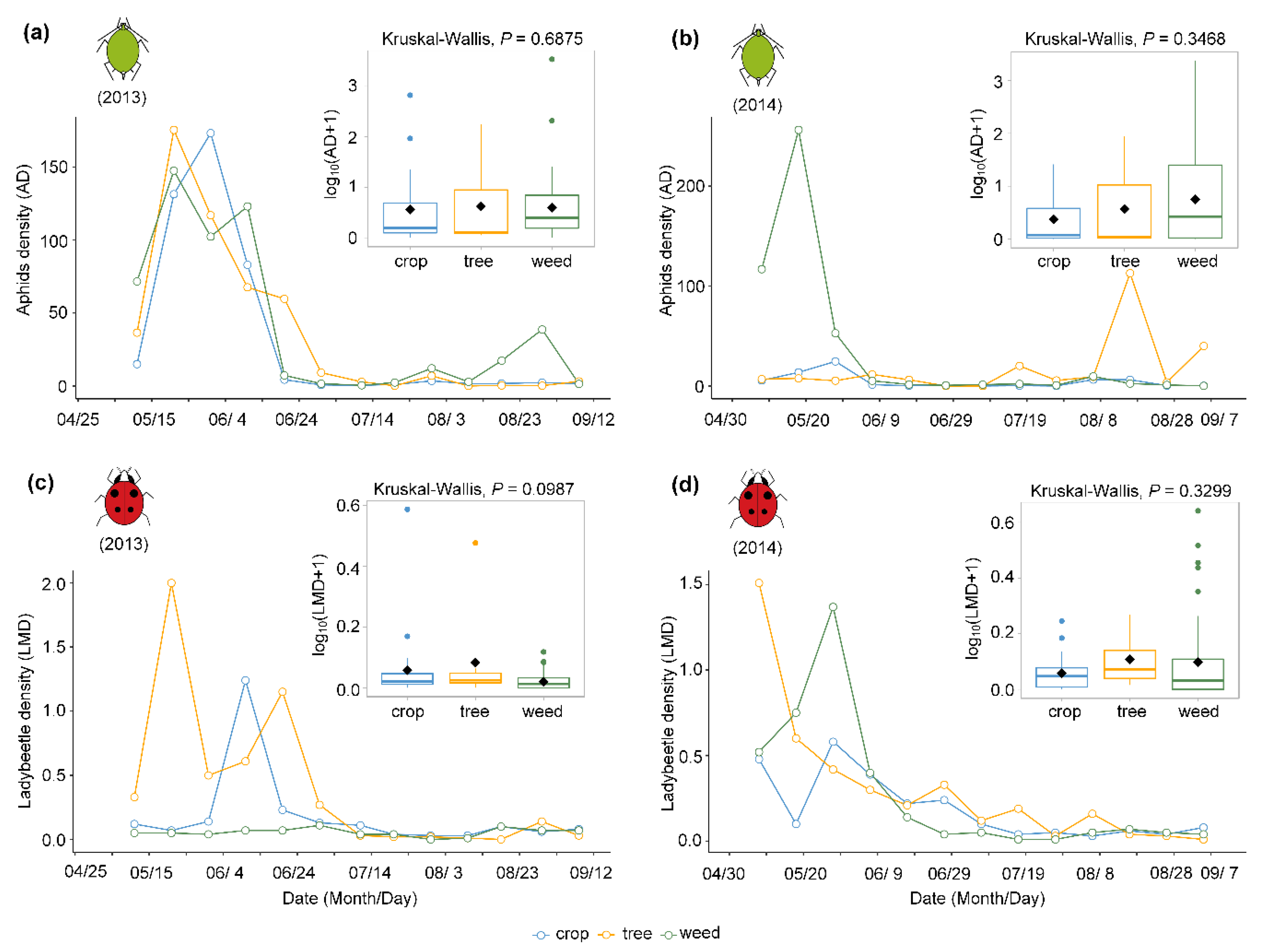
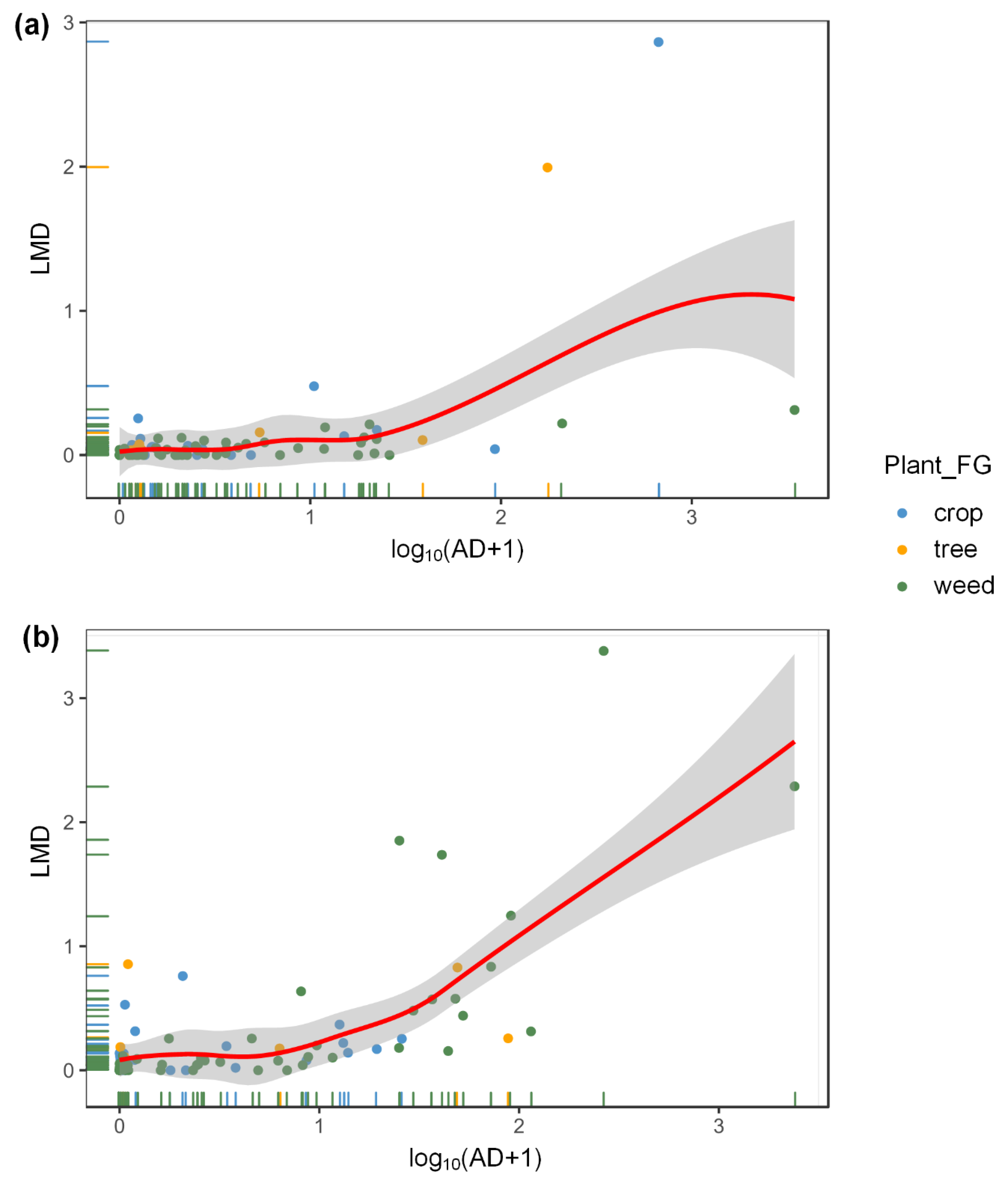
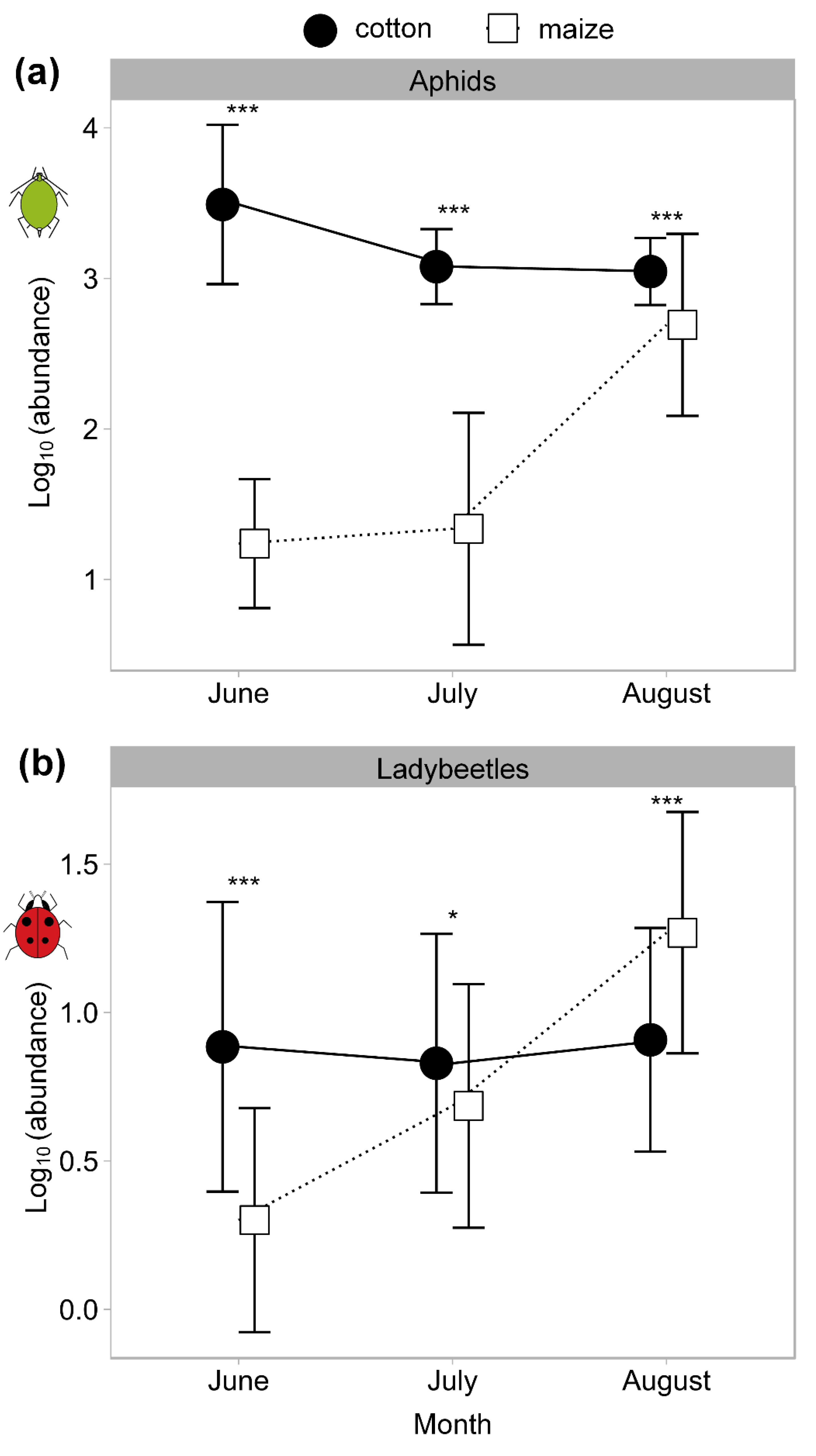
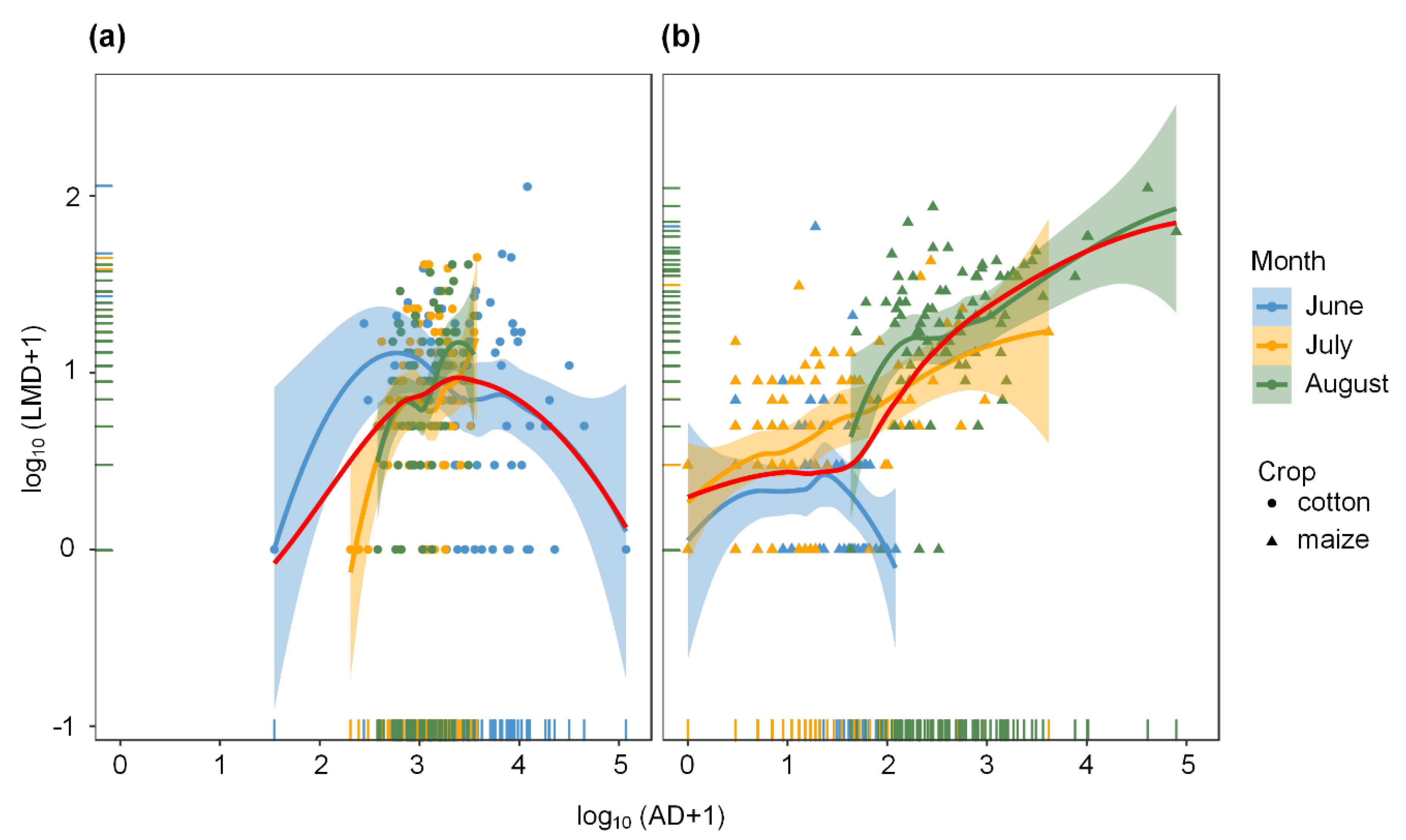
In agroecosystems, predatory ladybeetles play an important role in suppressing aphid populations. How ladybeetles make use of host plant diversity in multicropping landscapes has rarely been documented in China. In this study, we examined the relationship between aphid densities and ladybeetle densities at both the local field and landscape scales. Overall, we found that there was a positive correlation between aphid densities and ladybeetle densities. However, plant taxa had no significant influence on predatory ladybeetle abundance at the local field scale. In addition, the effect of aphids on ladybeetles abundance was influenced by the crop type and growing season at the regional landscape scale. There was a significant positive correlation between aphid and ladybeetle populations on cotton only in July and August, whereas the correlation was significant for maize throughout the whole growing season. The δ13C value indicated that most prey aphids for ladybeetles originated from crops where aphids are abundant (cotton in June and July; both maize and cotton in August). These findings improved our understanding of the migration and dispersal of ladybeetles among different habitats and plant species and provided insight into the promotion of regional conservation and pest control of natural enemies in Northern China.
Abstract
In agroecosystems, predatory ladybeetles play an important role in restraining aphid population growth and suppressing aphid populations. They can adapt to various habitats and make use of various aphid species associated with multiple host plants during their life cycle. Agricultural landscapes in China are composed of a mosaic of small fields with a diverse range of crops, and how ladybeetles make use of host plant diversity in such landscapes has rarely been documented. In this study, we examined the relationship between aphid densities and ladybeetle densities in two different settings: (i) on the majority of plant species (including crops, trees, and weeds) at a local field scale in 2013 and 2014, and (ii) in paired cotton and maize crop fields at a regional landscape scale in 2013. Overall, we found that aphid abundance determined predatory ladybeetle abundance at both the local field and landscape scales, and there was a positive correlation between aphid densities and ladybeetle densities. However, plant taxa had no significant influence on the predatory ladybeetle abundance at the local field scale. In addition, the effect of aphids on ladybeetles abundance was influenced by the crop type and growing season at the regional landscape scale. There was a significant positive correlation between aphids and ladybeetles populations on cotton only in July and August, whereas the correlation was significant for maize throughout the whole growing season. We also conducted an analysis of the stable carbon isotope ratios of the adult ladybeetles caught in cotton and maize fields (C3 and C4 crops, respectively) in a regional landscape-scale survey in 2013. The δ13Cvalue indicated that most prey aphids for ladybeetles originated from crops where aphids are abundant (cotton in June and July; both maize and cotton in August).These findings improved our understanding of the migration and dispersal of ladybeetles among different habitats and plant species and provided insight into the promotion of the regional conservation and pest control of natural enemies in northern China.