1. Introduction
Since its isolation via mechanical exfoliation in 2004, graphene has attracted extensive theoretical and experimental interest owing to its exceptional thermal, mechanical, and electrical properties [
1,
2,
3,
4]. However, the intrinsic zero band gap of pristine graphene severely restricts its applicability in semiconductor devices. To overcome this limitation, various strategies have been employed to induce a finite band gap, including surface modification [
5,
6], substrate engineering [
7,
8], strain application [
9], electric field modulation [
10,
11] and chemical doping [
12,
13]. Among these, atomic doping is regarded as the most direct and effective approach. Boron (B) and nitrogen (N) are primary dopant candidates due to their atomic radii being comparable to carbon and their distinct valence electron configurations, which enable effective band structure modulation while preserving the planar honeycomb lattice.
Consequently, a variety of carbon–boron and carbon–nitrogen compounds with different C/B (C/N) ratios have been theoretically predicted and experimentally explored, such as C
3B, C
5B, C
7B, C
2N, C
3N, C
12N, g-C
3N
4, and C
9N
4 [
14,
15,
16,
17,
18,
19]. Of particular interest are C
3B andC
3N, which exhibit the highest structural similarity to graphene, featuring a non-porous configuration where one-third of the carbon atoms are substituted by B or N atoms, respectively [
17,
18]. Theoretical and experimental studies have confirmed that C
3B and C
3N possess intrinsic band gaps of 1.78 eV and 1.15 eV, respectively, and have been successfully synthesized as thin films [
17,
18]. Following their successful fabrication, extensive research has focused on their fundamental physical properties, including mechanical, electrical, and thermal performance [
20,
21,
22,
23]. Owing to their excellent mechanical and electronic characteristics, C
3B and C
3N are considered promising candidates for applications in hydrogen storage, high-capacity electrodes, electrocatalysis, and gas sensors [
23,
24,
25,
26].
Inheriting the layered structure of graphite, graphene is renowned for its ultra-low friction and high wear resistance, establishing it as the thinnest solid lubricant when used as a coating [
27] or a lubricant additive [
28]. While C
3B and C
3N retain the geometric framework and remarkable mechanical properties of graphene, their electronic structures undergo a significant transition from semimetallic to semiconducting [
22]. Given the established correlation between frictional behavior and electronic structure, investigating the tribological properties of these doped graphene analogs is scientifically warranted. However, research in this area remains limited. To date, the frictional properties of C
3N have been partially addressed by Cui et al., who reported that the interlayer friction of C
3N bilayer and C
3N/graphene heterojunctions is lower than that of bilayer graphene based on first-principles calculations [
29]. Recently, Yang et al. developed anisotropic interlayer potentials for C
3N/graphene and C
3N/
h-BN heterostructures, providing a basis for molecular dynamics simulations [
30]. Notably, the frictional properties of C
3B have not been reported in the literature. Therefore, a systematic comparative study of the frictional properties of C
3B and C
3N, along with an elucidation of the underlying mechanisms, is imperative. Studies on the frictional properties of C
3B and C
3N can not only provide tribological information for the application of these materials in electronic functional devices, but also advance the understanding of nanofriction mechanisms and facilitate the exploration and development of novel nanolubricants.
In this study, we employ density functional theory (DFT) calculations to systematically investigate the interlayer frictional properties of bilayer homojunctions (C3N/C3N, C3B/C3B, graphene/graphene) and heterostructures (C3N/graphene, C3B/graphene, C3B/C3N). The findings of this work provide fundamental insights into the tribological behavior of C3B and C3N, offering a theoretical reference for the design of novel graphene-based nanolubricants.
3. Results and Discussion
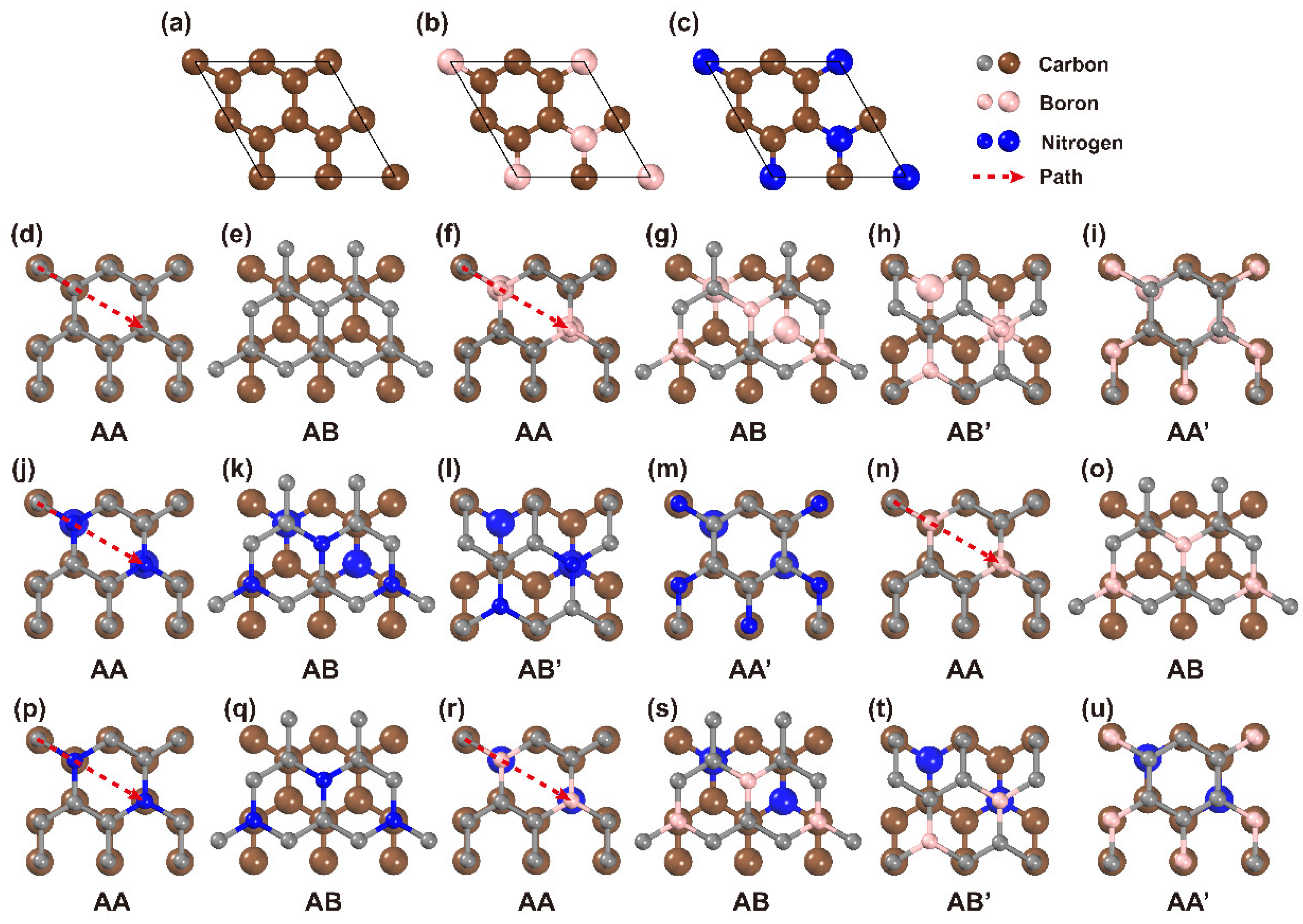
The geometrical configurations of monolayer C
3B and C
3N are depicted in
Figure 1b and
Figure 1c, respectively. Both materials exhibit a graphene-like hexagonal lattice with the space group P6/mmm. Specifically, each primitive cell in monolayer C
3B (or C
3N) comprises six carbon atoms and two boron (or nitrogen) atoms. The optimized lattice constants of graphene, C
3B, and C
3N are 2.466, 5.172, and 4.859 Å, respectively, which are consistent with the experimental observations and other theoretical calculations [
22,
26,
38,
39]. To facilitate a more intuitive comparison of the structural disparities among C
3B, C
3N, and graphene, we also illustrate a 2 × 2 supercell of graphene in
Figure 1a. Compared with the 2 × 2 graphene supercell, the lattice parameter of C
3B exhibits an increase of 0.24 Å, whereas that of C
3N demonstrates a marginal decrease of only 0.073 Å. Notably, in C
3B, the C-B bond length is 1.564 Å, which is longer than the C-C bond length (1.421 Å). In contrast, the C-N bond length in C
3N is 1.402 Å, which is almost identical to the C-C bond length (1.403 Å). This indicates that the introduction of B and N can exert distinct effects on the structure of graphene.
Based on these monolayer structures, we further constructed bilayer models. For the three homogeneous systems, namely Graphene/Graphene (Gra/Gra), C
3B/C
3B, and C
3N/C
3N, the lattice constants were directly adopted from the optimized values of the corresponding monolayer structures as previously described. For the heterostructures, including C
3B/Graphene (C
3B/Gra), C
3N/Graphene (C
3N/Gra), and C
3B/C
3N, lattice mismatch was eliminated by appropriately adjusting the lattice constants of the constituent monolayer structures, either by reducing or increasing them as necessary. The strain ε induced in each layer of the heterostructure was calculated based on the lattice constant change relative to the average lattice constant of the bilayer, defined as:
where
and
are the lattice constants of the two individual monolayers, and
is their average value. The positive and negative signs indicate tensile and compressive strain, respectively. The corresponding detailed structural parameters are presented in
Table 1, where the monolayer lattice constants show good agreement with the reported experimental values. Bilayer sliding structure models were constructed, as illustrated in
Figure 1d–u. The AA stacking structure was formed by stacking two monolayer materials one on top of the other. Specifically,
Figure 1d,
Figure 1f,
Figure 1j,
Figure 1l,
Figure 1n,
Figure 1p and
Figure 1r correspond to the AA stackings of Gra/Gra, C
3B/C
3B C
3N/C
3N C
3B/Gra C
3N/Gra C
3B/C
3N, respectively. We designated the AA stacking as the initial position for relative sliding and selected the diagonal direction of the unit-cell structure as the sliding direction, which is indicated by the red dashed arrow in
Figure 1. This particular direction was chosen because it encompasses more high-symmetry stackings compared to other directions, making it more representative for our study.
Friction simulation was carried out by moving the upper layer along the sliding direction. A total of 12 steps were taken along the sliding direction to complete one sliding period (corresponding to 13 stackings), with a corresponding step size of (√3/12)
a, where a is the lattice vector length of the selected sliding model. During the sliding process along the defined path, all the studied systems encounter another high-symmetry AB stacking. In the AB stacking, half of the atoms from the upper and lower films remain top-aligned, while the other half of the atoms are located at the hexagonal ring center vacancies of the opposite layer, as clearly shown in
Figure 1e.
It is important to note that for the three systems of C
3B/C
3B, C
3N/C
3N, and C
3B/C
3N, in addition to the aforementioned AA and AB stackings, two other high-symmetry stackings, similar to AA and AB, are encountered during the sliding process. One is the AA’ stacking. In this stacking, atoms in the upper and lower layers maintain a one-to-one top-aligned relationship. However, unlike the AA stacking, the B (N) atoms in one layer no longer align with the B (N) atoms in the other layer, but instead align with the carbon atoms in the other layer. The detailed structures of AA’ stacking for the relevant systems are presented in
Figure 1i,m,u. The other is the AB’ stacking. In the previously described AB stacking, one B (N) atom in each layer aligns with one C atom in the other layer, and the other B (N) atom in each layer corresponds to the center of the hexagonal ring containing B (N) atoms in the other layer. In contrast, in the AB’ stacking, one B (N) atom in one layer aligns with one B (N) atom in the other layer, and the other two B (N) atoms in the two layers, respectively, face the centers of the hexagonal rings composed of carbon atoms in the opposite layer. The detailed structures of AB’ stacking for the relevant systems are shown in
Figure 1h,l,t. Due to differences in structures, the energies of these different stacking are not the same, which is manifested in the variations in interlayer spacing and potential energy with sliding distance.
The calculation of the interlayer interaction energy between two sheets constitutes the fundamental basis for the calculation of their interlayer friction via Zhong’s method [
36]. The interfacial interaction energy
of two contacting surfaces was calculated by
where
is the total energy of the two against films at the distance of
d, and
is the energy of the separate film. The interlayer distance from two interfacial films is defined as
d, which varies from 5.0 Å to 2 Å (including 60 positions) for six systems. A negative interaction energy indicates an attractive interaction between the two thin films, and the larger the absolute value of the negative number, the stronger the attraction. In all of our calculations, all atoms were kept frozen.
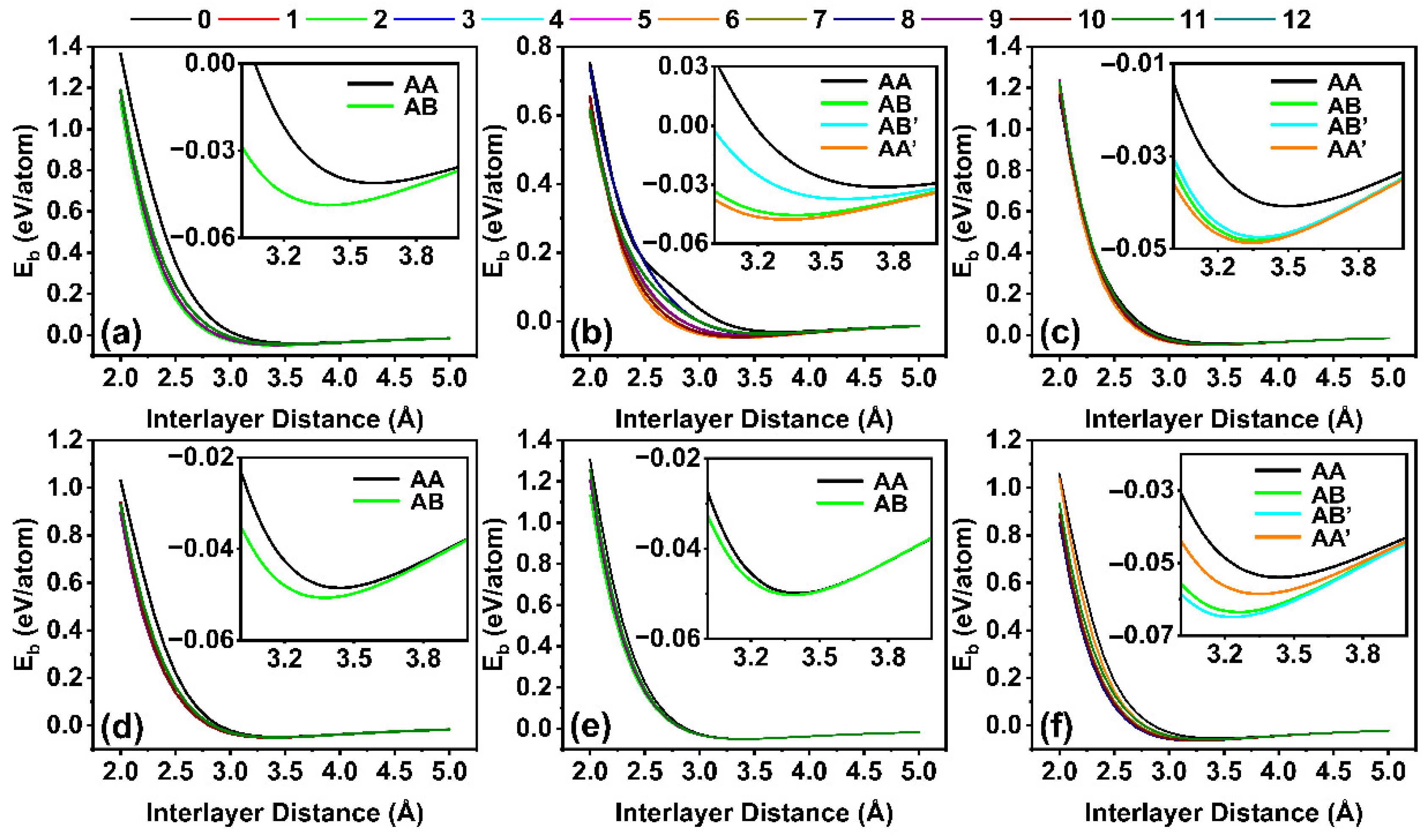
Figure 2 illustrates the calculated interaction energies as a function of interlayer distance for all six systems. The interaction energy curves across these systems share several common features. For each system’s 13 stacking configurations, as the two thin films are brought closer from an initial distance, the attractive interaction progressively intensifies, reaching a peak at the equilibrium adsorption distance. Beyond this point, further compression weakens the attractive force while strengthening the repulsive force. When the interaction energy crosses zero, the repulsive and attractive forces balance each other. Subsequent compression leads to a sharp rise in repulsive energy, attributable to the overlap of electron clouds between atoms in the two films. To elucidate the variations in interaction energies among different stackings near the equilibrium distance, we focused on the magnified adsorption energy curves of high-symmetry stackings around the equilibrium position for each system, as shown in the insets of
Figure 2. Among the six systems studied, the AA stacking configuration consistently exhibits the highest interaction energy, owing to the significant number of top-aligned atom pairs, which induce a strong repulsive interaction. Nevertheless, the stackings with the strongest adsorption vary across systems: for Gra/Gra, C
3B/Gra, and C
3N/Gra, the AB stacking configuration shows the strongest adsorption; for C
3B/C
3B and C
3N/C
3N, the AA’ stacking configuration demonstrates the strongest attraction, suggesting robust B-C and N-C attractive interactions that counterbalance the C-C repulsive forces. In the C
3B/C
3N system, the AB’ stacking configuration exhibits the strongest attractive interaction.
The most stable interlayer distances and the corresponding binding energies of all high-symmetry stackings for the six studied systems are listed in
Table 2. Given the scarcity of experimental data, results from previous theoretical studies are included in the table for comparison. Although minor deviations in absolute values are observed—attributed to differences in computational parameters (e.g., exchange-correlation functionals or vdW corrections)—the overall trends remain highly consistent, which fully validates the reliability of our results. It can be seen from
Table 2 that for the Gra/Gra system, the differences in interlayer distance and interaction energy between the highest-energy AA stacking and the lowest-energy AB stacking are 0.2 Å and 0.07 eV/atom, respectively. In contrast, for the C
3B/C
3B system, the corresponding differences between the highest-energy AA stacking and the lowest-energy AA’ stacking reach 0.42 Å and 0.16 eV/atom, respectively, with both values more than doubled. For the C
3N/Gra system, the disparity in interlayer distance between the highest-energy AA stacking and the lowest-energy AB stacking is remarkably small, amounting to only 0.02 Å, with negligible variation in interaction energy. The differences for the remaining systems fall in between those of the C
3B/C
3N and C
3N/Gra systems. From these variations, it can be predicted that the friction of the C
3B/C
3N system will be significantly enhanced compared with that of the Gra/Gra system, while the C
3N/Gra system is expected to exhibit superlubricity behavior.
The frictional properties of a given system can also be roughly assessed from the divergence degree of interaction energy curves across different stackings. Here, the “divergence degree” denotes the spread of interaction energies across all stacking configurations at a given interlayer distance (roughly gauged by ΔE = E
max − E
min), serving merely as a qualitative reference for frictional anisotropy rather than a rigorous quantitative metric. As clearly shown in
Figure 2, relative to the Gra/Gra system, the interaction energy curves across different stackings of the C
3B/C
3B and C
3B/C
3N systems exhibit a significant divergence, with substantial differences in adsorption energy between distinct stackings at an identical interlayer distance. The divergence degree of the C
3N/C
3N system is comparable to that of the Gra/Gra system. Most notably, the interaction energy curves across different stackings of the C
3B/Gra and C
3N/Gra systems are closely clustered and nearly overlapping, implying negligible differences in adsorption energy across distinct stackings. This curve divergence degree is closely correlated with the system’s frictional properties, following the trend that a smaller divergence degree corresponds to lower frictional resistance.
To clarify the influence of normal load on interfacial friction, we examined the structural evolution of the systems under varying load conditions. The normal load
FN was calculated as
We investigated the variation in interlayer spacing along the sliding path for the target systems under normal pressures ranging from 1 to 9 nN (equivalent to 4–36 GPa).
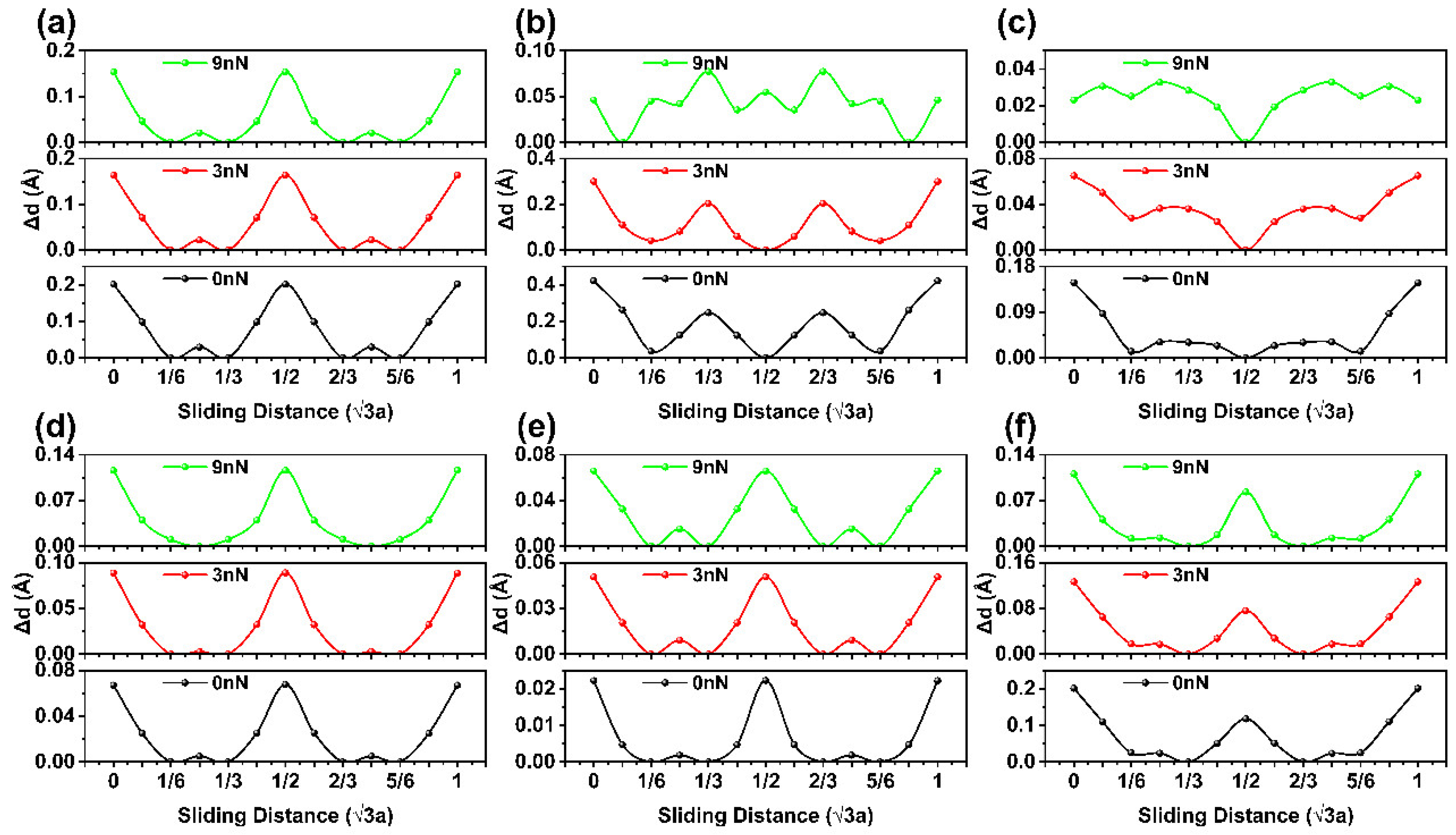
Figure 3 presents the results obtained under 1, 3 and 9 nN, where the relative variation in interlayer spacing is illustrated as
, and
dmin denotes the minimum interlayer spacing along the sliding path. Based on the distinctive features of the curves, the systems can be classified into three types. Type I includes Gra/Gra (
Figure 3a), C
3B/Gra (
Figure 3d), and C
3N/Gra (
Figure 3e). In these systems, the maximum interlayer spacing occurs at the AA stacking (abscissa = 0 and 1), while the minimum interlayer spacing is observed at the AB stacking (abscissa = 1/6, 1/3, 2/3, 5/6). A saddle point is also observed between the maximum and minimum values (located at an abscissa of 1/4). The positions of the maximum and minimum interlayer spacings remain essentially unchanged as pressure increases, except for C
3B/Gra heterostructure, where a slight transition between the saddle point and AB stacking occurs under high-pressure conditions. Regarding the variation amplitude Δ
d (defined as the difference between the maximum and minimum interlayer spacing), the Gra/Gra system exhibits negligible pressure dependence. In contrast, Δ
d for C
3N/Gra and C
3B/Gra increases gradually with pressure. Type II includes C
3N/C
3N (
Figure 3c) and C
3B/C
3B (
Figure 3b). For these two homojunctions, the maximum interlayer spacing occurs at the AA stacking (abscissa = 0 and 1), while the minimum appears at the AA’ stacking (abscissa = 1/2) other than AB stacking (abscissa = 1/6, 5/6). This behavior arises because the interaction energy curve of the AA’ stacking is slightly lower than that of AB stacking (see
Figure 2b,c). Additionally, these systems exhibit relatively large interlayer spacing at the AB’ stacking (abscissa = 1/3, 2/3). Notably, under a high pressure of 9 nN, the maximum interlayer spacing of C
3B/C
3B shifts to the AB’ stacking, and the minimum value migrates to a non-high-symmetry stacking. For C
3N/C
3N, while the minimum remains stable at the AA’ stacking, the maximum value transitions to a non-high-symmetry stacking. More importantly, for this type of system, Δ
d decreases markedly as pressure increases at 9 nN; it reduces to only 25% of its initial value at 0 nN. The C
3B/C
3N heterojunction falls into the third category. (
Figure 3f). Its maximum interlayer spacing occurs at the AA stacking (abscissa = 0 and 1), and the minimum interlayer spacing is observed at the AB’ stacking (abscissa = 1/3, 2/3). The interlayer spacing at the AB stacking is slightly larger than that at the AB’ stacking, while the value at the AA’ stacking is much larger than that at the AB’ stacking. The curve characteristics of this system remain unchanged with increasing pressure. The maximum interlayer spacing occurs at AA stacking (abscissa = 0 and 1), with the minimum observed at AB’ stacking (abscissa = 1/3, 2/3). The spacing at AB stacking is slightly larger than at AB’, while AA’ stacking exhibits much larger spacing than AB’. The curve characteristics remain invariant with increasing pressure. For this system, Δ
d decreases slightly at 9 nN, and it reduces to 75% of its 0 nN value.
Next, we further examine the pressure-dependent evolution of the amplitude of interlayer spacing variation, Δd. Under low pressures (0–3 nN), C3B/C3B exhibits a Δd value of approximately 0.4 Å–twice that observed in C3N/C3N, Gra/Gra, and C3B/C3N, and five times greater than in C3B/Gra. As pressure increases to ~9 nN, Δd for C3B/C3B decreases to 0.1 Å, approaching values comparable to other systems. This pressure-induced transition suggests that C3B/C3B shifts from a high-friction regime to friction levels approaching those of alternative materials. In contrast, C3N/Gra demonstrates an exceptionally small Δd of 0.02 Å at 0 nN, significantly lower than all other systems studied. This finding confirms that C3N/Gra exhibits ultra-low friction behavior.
Potential energy
V is a critical parameter for calculating the coefficient of friction via the method proposed by Zhong et al. [
36], defined as follows:
The potential energy comprises two components: the variation in interaction energy under load, and the work performed against the external force
FN applied to the slab, with
representing the minimum potential energy along the sliding path. Consequently,
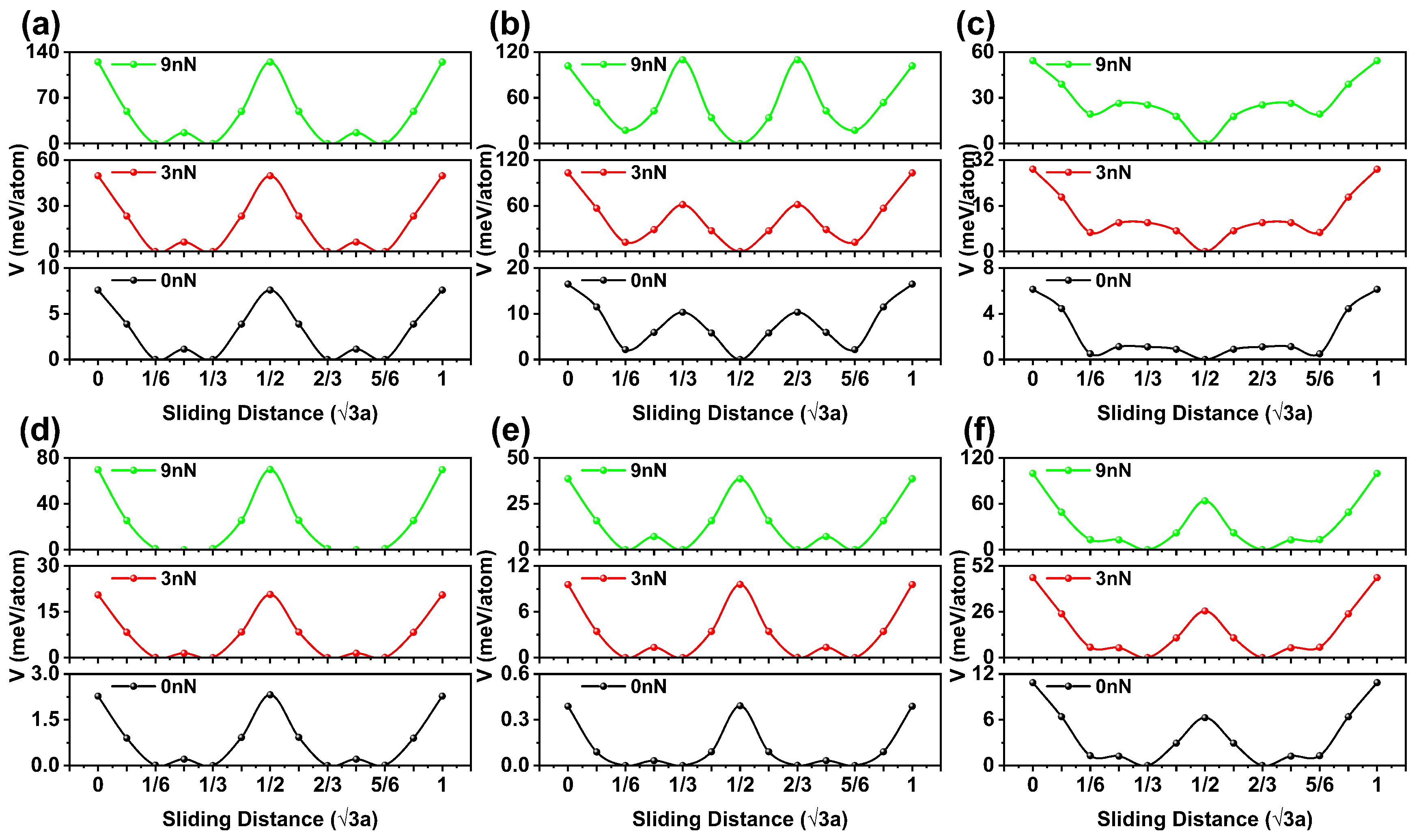
denotes the relative potential barrier along the sliding trajectory, and the potential energy curves under different loads are shown in
Figure 4. Consistent with the load–dependent trend of interlayer spacing, the variation in the sliding potential barrier with load (
Figure 4) falls into three corresponding categories. Type 1 includes the Gra/Gra (
Figure 4a), C
3B/Gra (
Figure 4d), and C
3N/Gra (
Figure 4e) systems, where the maximum potential energy occurs at AA stacking and the minimum at AB stacking, and the positions of these extrema remain unchanged across the entire load range. Type 2 comprises the C
3B/C
3B (
Figure 4b) and C
3N/C
3N (
Figure 4c) systems, with the maximum potential energy at AA stacking and the minimum at AA’ stacking, (AB stacking values are marginally lower than AA’ stacking). Notably, the AB’ stacking energy of C
3B/C
3B is relatively large (~half of AA stacking) and rises rapidly with load, even exceeding AA stacking at 9 nN. In contrast, while AB’ stacking energy of C
3N/C
3N also increases with load, its growth rate is substantially slower than that of AA stacking, maintaining a stable trend across the load range. Type 3 corresponds to the C
3B/C
3N system (
Figure 4f), where the maximum potential energy occurs at AA stacking and the minimum at AB’ stacking. AB stacking values are slightly higher than AB’ stacking, while AA’ stacking energy is markedly larger than AB’ stacking, with the curve characteristics remaining unaltered as load increases.
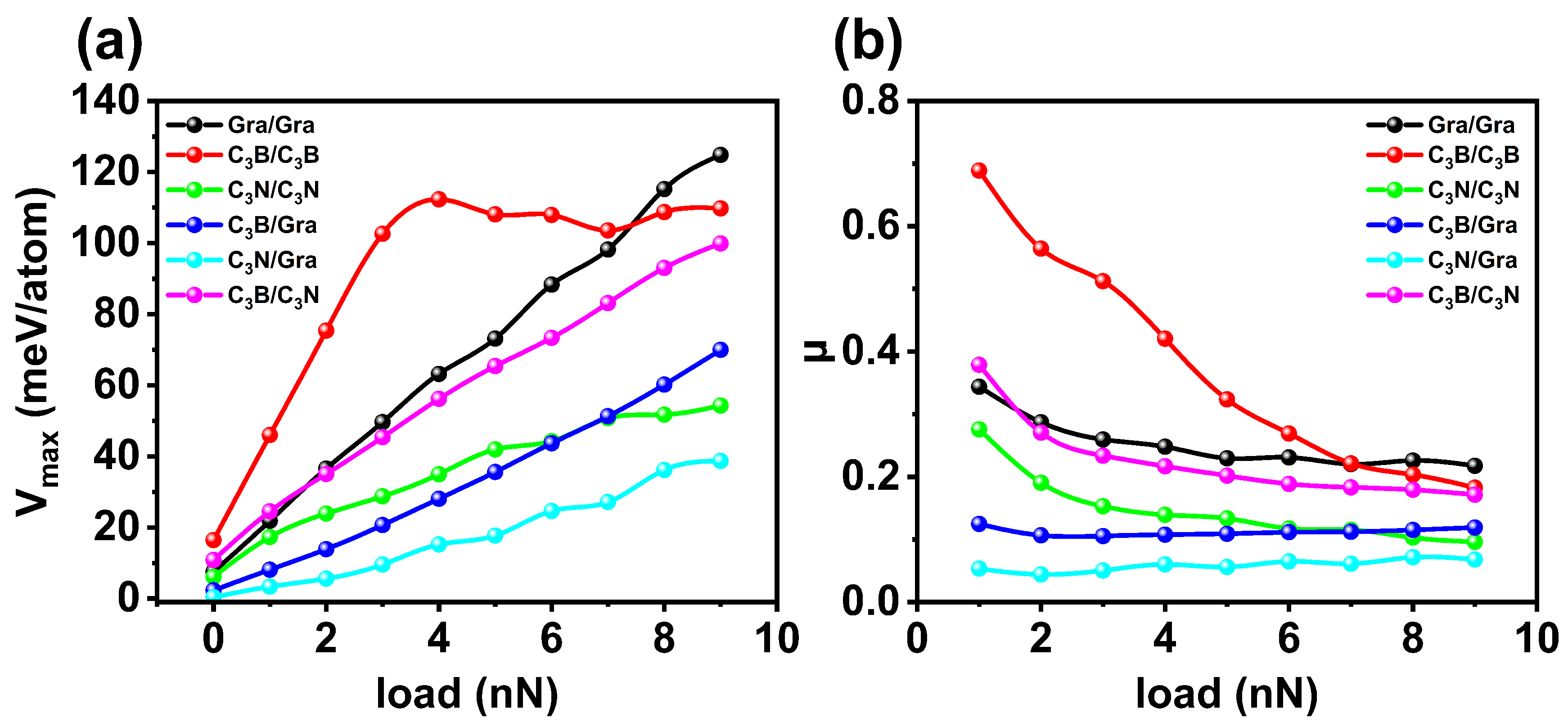
We further compared the magnitudes of potential barriers across all systems. At low loads, the C3B/C3B system exhibits the highest potential barrier, roughly twice that of C3N/C3N, Gra/Gra, and C3B/C3N, and seven times that of C3B/Gra. While the C3N/Gra system possesses the lowest potential barrier (only 0.5 meV/atom), far smaller than those of other systems. At a high load of 9 nN, the potential barrier of the C3B/C3B system is now lower than that of Gra/Gra and comparable to those of C3B/C3N and C3B/Gra. Although the potential barrier of the C3N/Gra system increases rapidly (reaching 50 meV/atom), it remains the lowest among all systems.
To clarify the relationship between the sliding potential barrier and load,
Figure 5a compares
Vmax (maximum sliding potential barrier) of each system as a function of load. In the load range of 1–7 nN, C
3B/C
3B exhibits the highest
Vmax, which increases sharply between 1 and 4 nN, plateaus thereafter, and is overtaken by Gra/Gra above 7 nN. For the other systems,
Vmax increases linearly with load but with distinct slopes: steeper slopes (faster growth) are observed for C
3B/C
3B, C
3B/C
3N, and Gra/Gra, while gentler slopes (slower growth) are seen for C
3N/Gra and C
3N/C
3N. Throughout the entire load range, C
3N/Gra, C
3N/C
3N, and C
3B/Gra maintain substantially lower sliding potential barriers than graphene (Gra/Gra).
For a more direct characterization of tribological properties, the coefficient of friction (
μ) of each system was computed via Equation (5):
where
Vmax (
FN) and
Vmin (
FN) denote the maximum and minimum potential energies along the sliding path under load
FN, and
is the distance between the positions of
Vmax and
Vmin. The calculated
μ are displayed in
Figure 5b. Except for C
3B/C
3B, all other systems exhibit lower values than graphene. Notably, the C
3N/Gra and C
3B/Gra systems consistently maintain a friction coefficient approximately one-fourth that of graphene, highlighting significant application potential in the field of superlubricity.
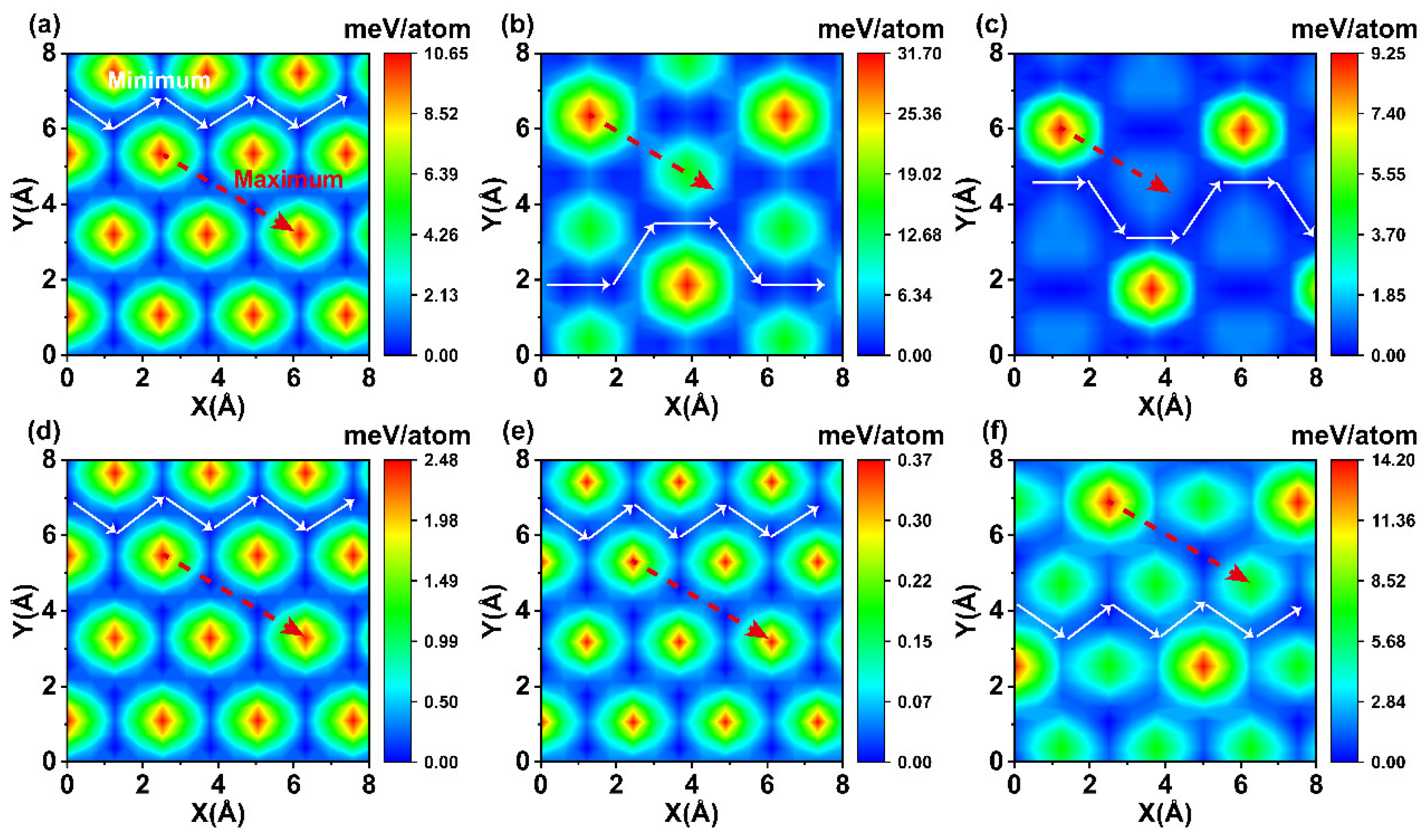
Subsequently, we conducted a comprehensive investigation into the friction behavior of these systems across all sliding directions via the potential energy surface (PES) method. The PES was defined as the variation in binding energy (
Eb) with respect to the relative lateral displacement of the two contacting films at their equilibrium interlayer distance (zeq), represented as ∆
Eb (x, y, zeq) [
46]. This approach enables the assessment of the overall tribological properties of a contacting interface under conditions of zero normal load. The degree of corrugation observed in the PES reflects the inherent resistance to sliding, which corresponds to the maximum energy that can be dissipated during the sliding process.
The calculated PESs are presented in
Figure 6. Notably, the path selected in our previous calculations (indicated by the red dashed line in
Figure 6) encompasses both the maximum and minimum energy values on the PES, thereby representing the maximum barrier path. Along this path, the PES corrugation of the C
3B/C
3B system (
Figure 6b) is approximately 31.70 meV/atom, significantly higher than that of the other systems. In contrast, the C
3N/Gra (
Figure 6d) and C
3B/Gra (
Figure 6e) systems exhibit much lower PES corrugations (0.37 and 2.48 meV/atom, respectively), aligning with our earlier findings.
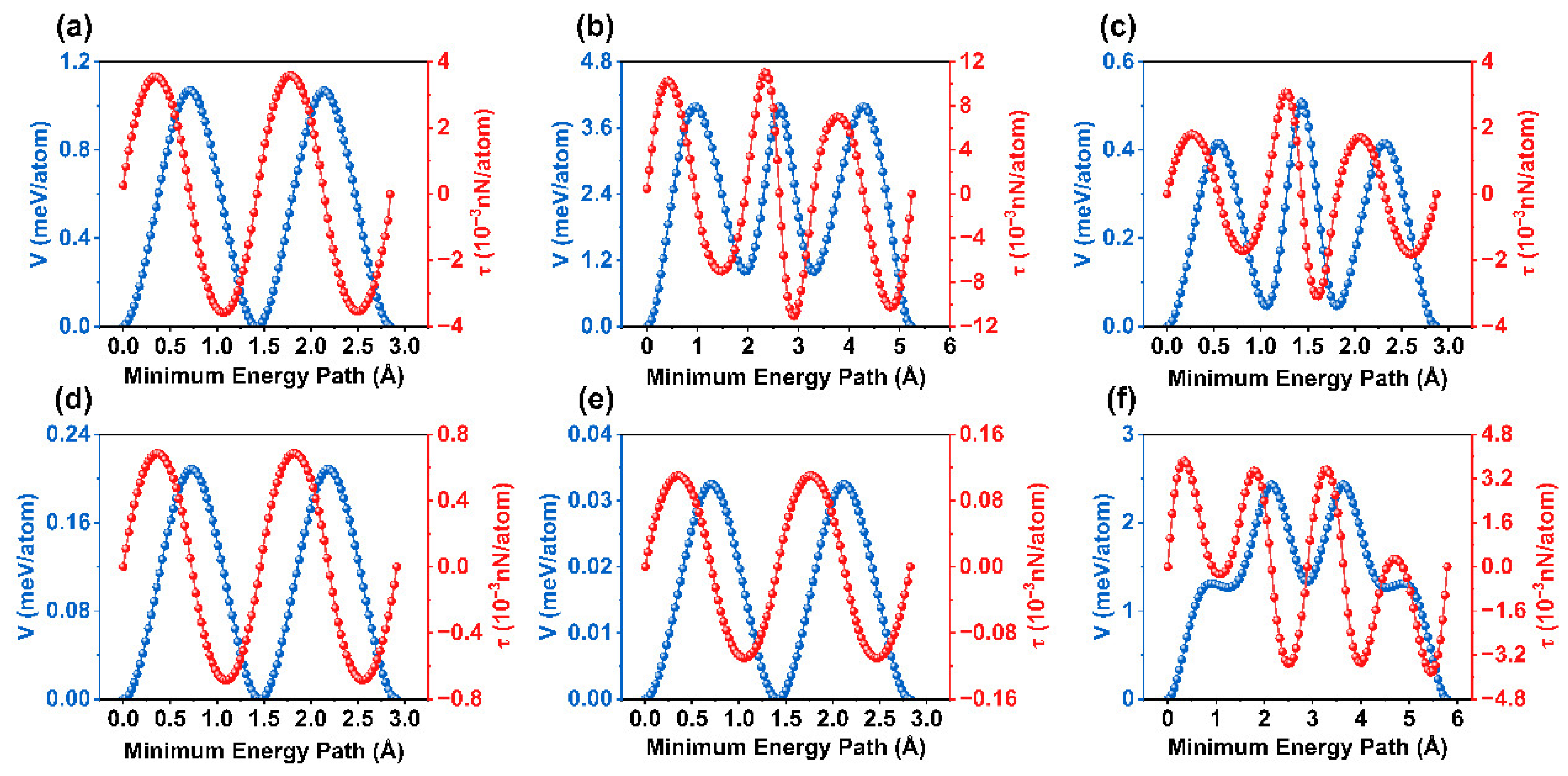
In practical sliding, systems rarely follow the maximum barrier path directly. Instead, they bypass the highest potential energy point and slide along the minimum energy path (MEP), delineated by the white solid line in the figures.
Figure 7 illustrates the corresponding potential barrier (
V) and lateral stress (
τ) as functions of sliding distance s along the minimum barrier paths. As observed, the C
3B/C
3B system (
Figure 7b) exhibits significantly higher sliding potential barriers and shear forces—roughly fourfold those observed in the Gra/Gra system (
Figure 7a). In stark contrast, the C
3B/Gra (
Figure 7d) and C
3N/Gra (
Figure 7e) systems exhibit the lowest sliding potential barriers and shear forces. Particularly, the C
3N/Gra system shows values only about 1/30 of those seen in the graphene system. These results are consistent with our previous findings from the selected sliding path calculations, further confirming the significant application potential of the C
3B/Gra and C
3N/Gra systems in the field of superlubricity.
The charge density characteristics at the center of the contact interface serve as a crucial metric for understanding the microscopic origins of friction in sliding systems [
47,
48,
49,
50]. We further investigated the microscopic mechanism by which the interfacial charge density distribution regulates the friction energy barrier. The planar-averaged charge density (PACD,
) is calculated as:
where
A is the plane area,
a and
b represent the boundaries along the
x- and
y-directions, respectively;
is the charge density at position (
x,
y). Sliding-induced changes in interfacial charge distribution directly modulate the system’s energy barrier. The variation in
between maximum-energy and minimum-energy stacking configurations is quantified by:
where
and
are the PACDs at the maximum-energy and minimum-energy stacking configuration, respectively.
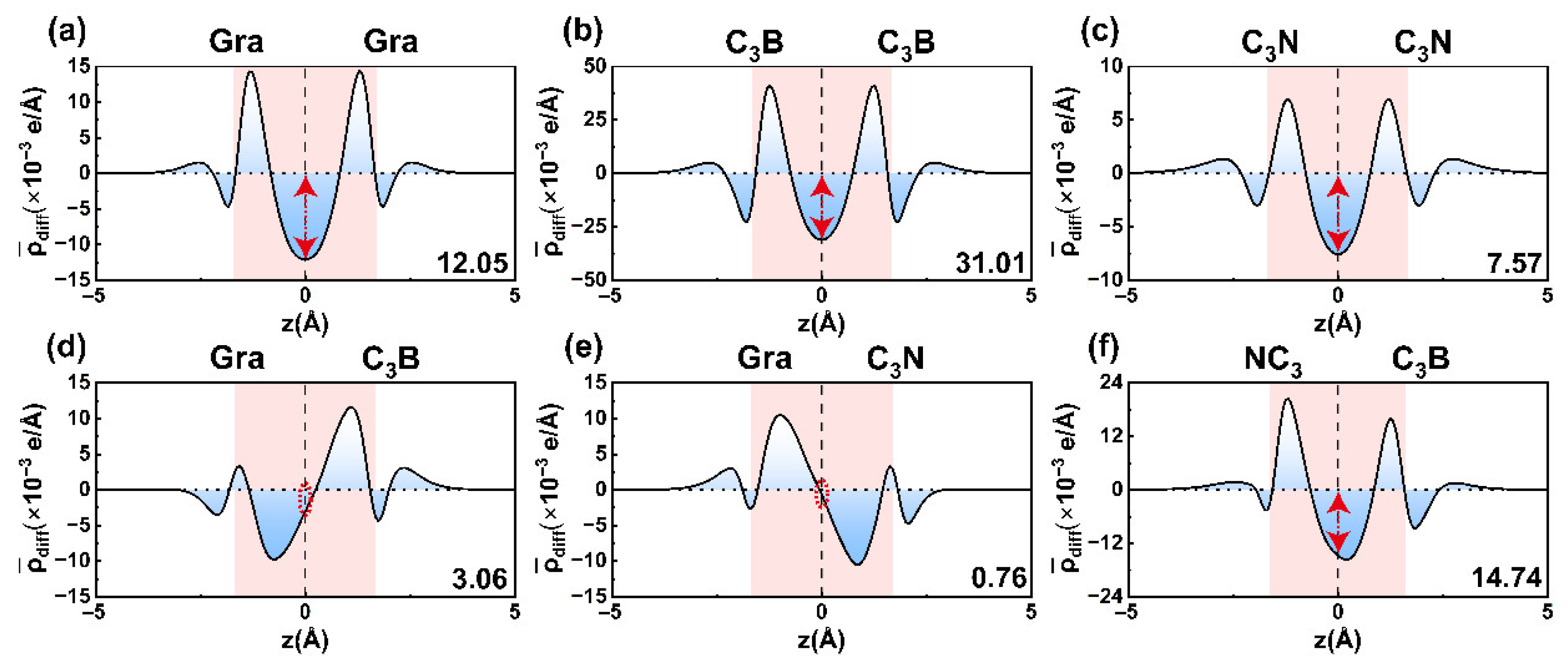
Figure 8 shows the calculated z-axis curves under 0 nN. Pink shaded regions mark the intralayer regions, with boundaries corresponding to atomic layer positions. The black dashed line at z = 0 denotes the interface center. Red dashed arrows and circles highlight charge density fluctuations at the interface, with absolute values displayed in each panel’s bottom-right corner. A comparative analysis reveals that all systems exhibit a pronounced negative trough at
z = 0, indicating reduced electron density at the interface center in high-energy stacking configurations compared to stable low-energy states. Electrons instead accumulate near adjacent atomic layers.
Notably, electron cloud rearrangement differs significantly across systems: homojunctions show symmetric
distributions along the z-axis, while heterojunctions exhibit pronounced asymmetry due to intrinsic differences between the contacting materials. The magnitude of charge density variation at the interface center correlates strongly with macroscopic friction force. The C
3B/C
3B system exhibits the largest charge density fluctuation (31.01 × 10
−3 e/Å
3), reflecting substantial interfacial electron rearrangement and the highest friction energy barrier. Conversely, Gra/C
3N shows minimal fluctuation (0.76 × 10
−3 e/Å
3) and the lowest friction. Furthermore, we performed a
analysis for the special phenomena observed in the C
3B/C
3B system. It was found that the
remains nearly constant starting from 4 nN, as detailed in
Figure S1 in the
Supplementary information. Overall, the order of interfacial charge density variation is: C
3B/C
3B > C
3N/C
3B > Gra/Gra > C
3N/C
3N > Gra/C
3B > Gra/C
3N. This sequence aligns perfectly with the macroscopic friction trends in
Figure 5,
Figure 6 and
Figure 7, confirming that microscopic electronic behavior dictates macroscopic frictional properties.