Article

Numerical Investigation of Gas Film Performance in Face Dry Gas Seals with Combined Micro-Textured Structures


College of Mechanical and Electronic Engineering, China University of Petroleum (East China), Qingdao 266580, China
*
Author to whom correspondence should be addressed.
Lubricants 2026, 14(2), 90; https://doi.org/10.3390/lubricants14020090
Submission received: 8 January 2026 / Revised: 4 February 2026 / Accepted: 12 February 2026 / Published: 15 February 2026

Abstract

To enhance the load-carrying capacity and operational stability of dry gas seal gas films while reducing gas leakage, and to provide a theoretical basis for structural optimization and innovation of face seals, a numerical model of gas film lubrication in face dry gas seals considering the geometric effects of combined micro-textures is developed based on the governing equations of gas lubrication. The finite difference method is employed to numerically solve the gas film pressure distribution. With the objectives of maximizing the opening force and minimizing the leakage rate, the influences of combined micro-texture structural parameters on gas film performance under typical operating conditions are systematically investigated, and favorable parameter ranges are identified. The results show that the proposed model exhibits high accuracy and reliability, with good agreement with published data. Different combined groove textures significantly affect the gas film thickness and pressure distributions, leading to distinct bearing and stability characteristics. When opening force and leakage are jointly considered, the sealing performance ranks as triangular composite texture, semicircular composite texture, rectangular composite texture, and trapezoidal composite texture. Quantitatively, the trapezoidal texture exhibits the largest increase in the opening force–leakage ratio of approximately 0.29%, whereas the triangular texture shows the smallest increase of about 0.19%. Reasonable design of combined micro-textures can effectively improve the comprehensive gas film performance of face dry gas seals, achieving a coordinated enhancement of opening force and reduction in leakage. The present study provides theoretical guidance for the structural design and engineering application of high-performance dry gas seals.

1. Introduction

As a non-contact dynamic sealing technology, dry gas seals (DGSs) have been widely adopted in fields such as petrochemical engineering, natural gas transmission, aerospace, and high-speed rotating machinery, owing to their advantages of low leakage, minimal wear, extended service life, and ease of maintenance [1,2,3]. In particular, DGSs have progressively replaced traditional contact mechanical seals in modern rotating equipment that operates under stringent requirements of high speed, high pressure, and clean working environments. However, during high-speed operation or under variable start–stop conditions, the sealing faces often encounter challenges such as gas film instability, insufficient load-carrying capacity, or increased leakage rates, which have become key bottlenecks limiting further performance enhancement of dry gas seals [4,5]. Consequently, recent research has focused on optimizing the end face geometry and flow-field characteristics to enhance the hydrodynamic and sealing performance of DGS systems.
At present, classical groove structures such as spiral grooves and T-shaped grooves have been widely applied in face dry gas seals and have demonstrated significant effectiveness in enhancing gas film load-carrying capacity and improving opening characteristics [6,7]. However, due to their relatively large groove depth and width, these macro-scale groove structures are often associated with increased gas leakage under high-pressure-difference conditions, and their sealing performance is highly sensitive to variations in rotational speed and applied load. In addition, macro-groove configurations tend to induce local pressure concentration, which may adversely affect the thermal stability and service life of the sealing faces [8,9,10]. Consequently, research attention has gradually shifted from traditional macro-scale groove designs to micro-scale surface texturing approaches, aiming to achieve a balanced improvement in opening force, leakage reduction, and adaptability to varying operating conditions. Micro-textures refer to deliberately designed micro-scale geometric patterns—such as grooves, dimples, and channels—on the sealing end face. These textures can effectively regulate the pressure distribution and velocity field of the gas film, enhance local load-carrying capacity, reduce gas film friction, and improve film stability, thereby enhancing overall sealing performance. In simulation-based studies, Wang et al. [11] employed a hybrid optimization method combining a genetic algorithm with sequential quadratic programming to design an optimal herringbone-shaped groove texture. Under hydrodynamic lubrication conditions, this texture achieved an ultra-low coefficient of friction (COF < 0.01) and significantly reduced gas film temperature rise, demonstrating excellent lubrication performance. He et al. [12] systematically analyzed the influence of various texture geometries and parameters on the performance of floating ring gas film seals, revealing that while different textures could increase lift force, they also led to higher leakage rates; however, the square texture exhibited the best overall sealing performance, providing valuable reference data for lubrication optimization in sealing systems. Shang et al. [13] integrated CFD simulation with experimental validation to compare the effects of four texture configurations with different cross-sections (cylindrical) and shapes (square and triangular) on the performance of hydrostatic spindle bearings. The results indicated that square and isosceles triangular textures were particularly effective in reducing oil film temperature, achieving a maximum reduction of up to 0.47%. Zhang et al. [7] established a turbulent lubrication model for a bidirectional T-shaped groove dry gas seal and, through experimental verification, elucidated the mechanisms by which turbulence and inertia effects influence gas film pressure distribution, dynamic characteristics, and sealing performance under varying operating parameters, thereby providing a solid theoretical foundation for the optimization of dry gas seals under high-parameter conditions. In experimental investigations, Liu et al. [14] fabricated elliptical micro-textures with varying inclination angles using laser machining and deposited DLC coatings. The results showed that a texture inclination of 90° reduced the friction coefficient of the stationary ring by 46.15%, indicating that the primary anti-friction mechanism arose from the debris-trapping capability of the textures. Inspired by the surface morphology of tree frogs, Huang et al. [15] utilized response surface methodology (RSM) to optimize the design of SnAgCu solid-lubricant bionic micro-textures. A uniform lubricating film of approximately 2.4 µm thickness was formed on AISI 4140 steel, significantly mitigating discontinuous layer formation while enhancing lubricant retention and the stability of the surrounding oil film. Chen et al. [16] prepared micro-textured surfaces with varying geometric parameters using laser processing and constructed a friction–vibration test platform to systematically investigate the tribological behavior of micro-textured dry gas seal end faces. Their findings demonstrated that textures with diameters of Φ150 µm and Φ200 µm effectively captured wear debris and strengthened hydrodynamic effects, thereby markedly improving the friction–vibration characteristics of the sealing interface. Shi et al. [17] employed a photolithography–electrochemical composite machining technique to fabricate micro-textures on the rotating ring of 304 stainless steel and revealed the coupled influence of micro-grooves and dimples on sealing performance. It was found that an oblique micro-groove texture with a 45° inclination, 15% area ratio, and 5 µm depth could significantly reduce both the friction coefficient and leakage rate, providing critical parameter guidance for optimizing mechanical seal texture design. Although extensive research has been conducted on the influence of single-type textures (e.g., rectangular, semicircular, and triangular) on gas film performance, confirming their effectiveness under specific conditions, real operating environments are often complex and variable. Consequently, a single texture pattern often fails to simultaneously satisfy multiple performance requirements. This has directed increasing attention towards composite textures in recent years. By combining different types of micro-textures in a structured arrangement, synergistic effects can be achieved, balancing load capacity, stiffness, leakage control, and manufacturability, thereby improving overall sealing performance. However, the application of composite textures in dry gas seals remains in the exploratory stage, with their underlying mechanisms not yet fully understood, and optimization methods along with performance evaluation systems requiring further development. Therefore, conducting systematic modeling and simulation studies is of great significance for elucidating the mechanism by which composite textures influence gas film behavior and for promoting their practical engineering applications.
In summary, to gain a deeper understanding of the mechanisms by which composite micro-texture structures influence the hydrodynamic effects of the end face gas film, a theoretical model of a dry gas seal end face incorporating composite micro-textures was developed based on fluid lubrication theory. Using numerical simulation methods, the gas film sealing characteristics of different groove-type textures were comparatively investigated under specified operating conditions. Furthermore, the relative significance of the geometric parameters of the composite micro-textures on the load-carrying and sealing performance of the end face gas film was analyzed. The study elucidates the regulatory relationships between operating parameters, groove geometry, gas film pressure distribution, load capacity, and leakage rate, with the aim of achieving an optimal balance between maximum opening force and minimum leakage rate. The findings provide a theoretical foundation and methodological guidance for the design and engineering application of high-performance dry gas seal end faces.

2. Theoretical Model

2.1. Geometrical Configuration

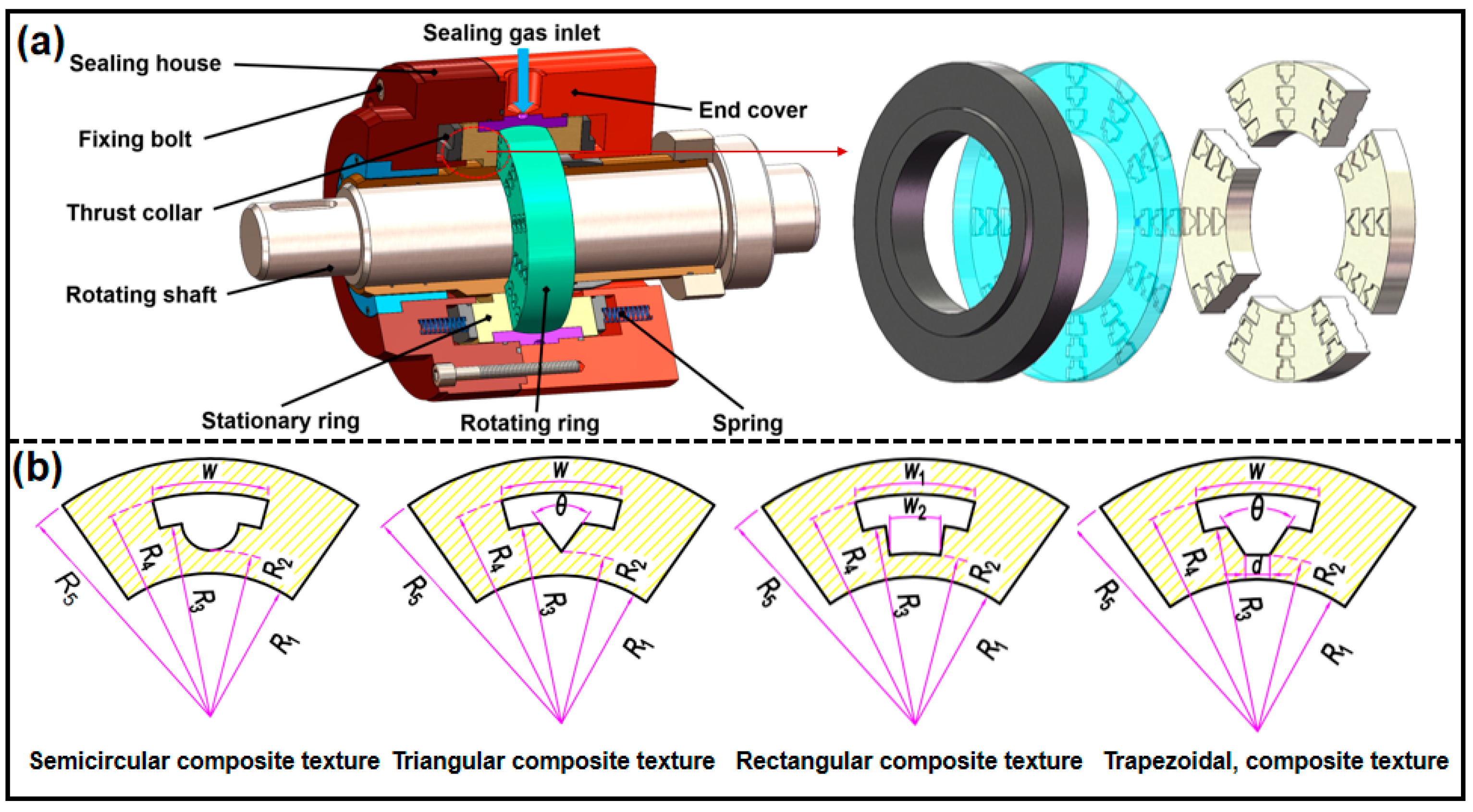
An end face dry gas seal is a type of non-contact mechanical seal, which is widely used in high-speed rotating equipment (such as compressors, steam turbines, etc.) to seal the shaft end and prevent high-pressure gas leakage. Its working principle primarily lies in the hydrodynamic effect of the gas film and the specialized design of the end face structure. Once the equipment is activated, the shaft drives the rotating ring to rotate at a high speed, with a stable gas lubricating film generally formed between the seal rings. When there are changes in pressure or rotational speed, the gas film between the sealing faces adjusts its thickness automatically to keep the system operating stably, thus enabling both sealing functionality and low-friction performance [18,19,20]. The schematic diagram of the end face dry gas seal structure is shown in Figure 1. In this figure, Figure 1a presents the core components of the end face dry gas seal, and Figure 1b displays the geometric dimensions.
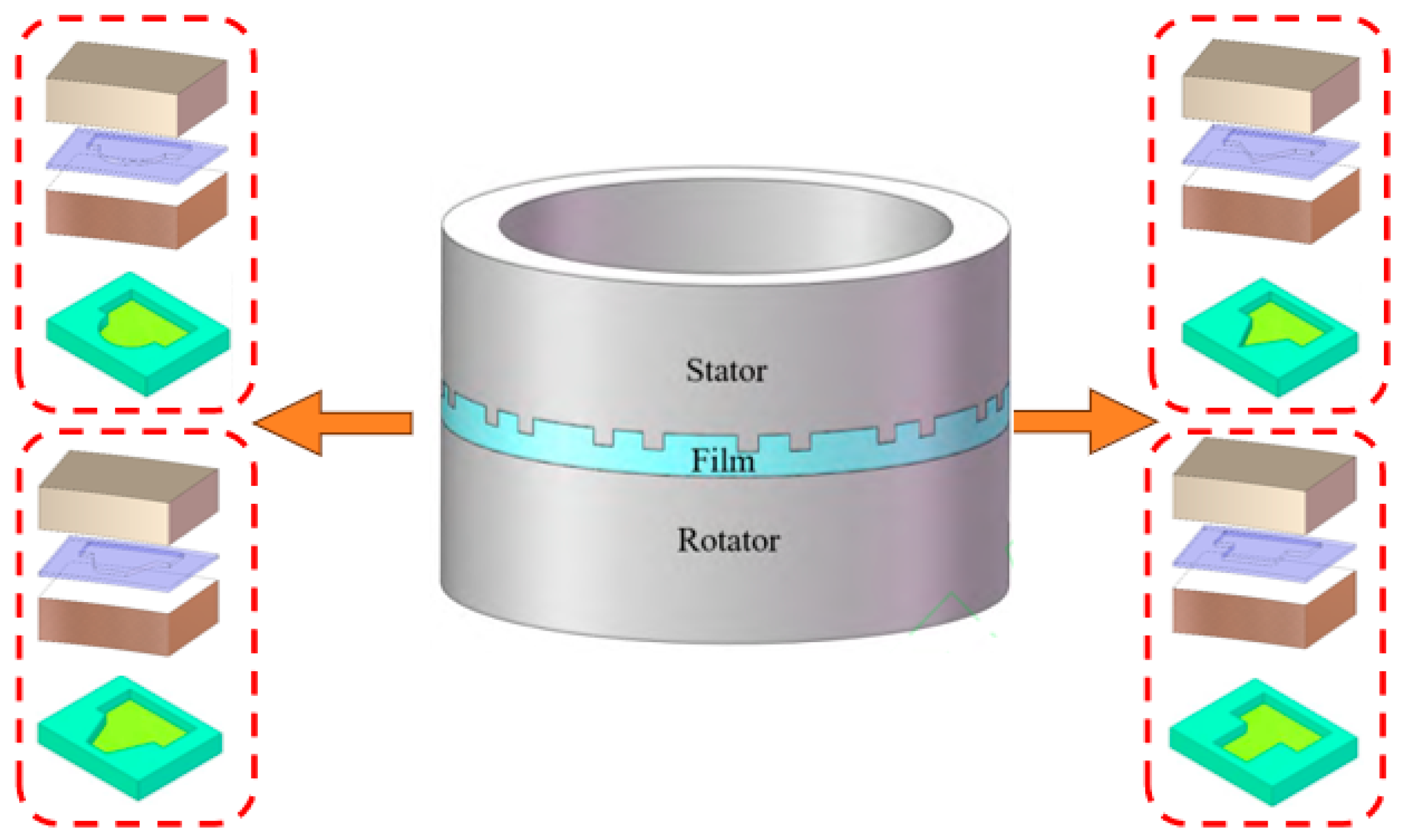
To increase the gas film opening force and friction reduction capability of end face dry gas seals under complex operating conditions, given that rectangular grooves excel in gas film load capacity, semicircular grooves feature minimal flow resistance for optimal gas redistribution, while triangular grooves generate a pronounced shear gradient at the inlet, facilitating pressure difference-driven flow. This study introduces a composite micro-texture design approach, integrating basic structures such as rectangular, semicircular, trapezoidal, and triangular grooves in a specific geometric arrangement to form a synergistic composite texture. This structure enables the formation of a stable multi-scale pressure gradient, thereby enhancing the overall hydrodynamic effect of the sealing surfaces [21,22]. Through the structured arrangement of multiple fundamental structures, such as rectangular, semicircular, trapezoidal and triangular in a specific geometric pattern, a composite texture with synergistic effects is created, which can generate a stable multi-scale pressure gradient and enhance the overall hydrodynamic effect of the sealing end face. The groove model of the dry gas seal end face with composite micro-textures is shown in Figure 2. Without any special clarification, the operating and structural parameters of the end face dry gas seal used in the simulation calculations in the article are shown in Table 1.

2.2. Control Equations

Based on the fundamental principles of fluid mechanics, this study conducts numerical simulation and evaluation analysis on the gas film performance of a novel composite groove seal structure, incorporating the structural characteristics and operating conditions of end face dry gas seals. To improve the computational efficiency and accuracy of the numerical model, the following assumptions and simplifications are adopted in establishing the mathematical model of the gas film flow field [23,24,25]:
  • The gas medium is assumed to be a continuous and homogeneous fluid, ensuring the consistency and stability of the mathematical formulation.
  • Owing to the high machining precision of the sealing end faces, surface micro-roughness is neglected, and the gas film flow is assumed to be governed by smooth surfaces.
  • The gas film flow is dominated by viscous effects; therefore, body forces and inertial forces are neglected.
  • Since the gas film thickness is much smaller than its characteristic radial dimension, the influence of gravity on the gas flow field is ignored.
  • The gas is treated as a compressible ideal gas, and the pressure–density relationship is described by the ideal gas equation of state, ρ = p/(Rg·T).
where ρ is the gas density, p is the local pressure, Rg is the specific gas constant, and T is the absolute temperature. Accordingly, the gas film behavior is governed by the compressible Reynolds equation under isothermal conditions.

2.2.1. Pressure Control Equation

Based on the assumptions described above, the governing equation of the gas film is derived from the Reynolds equation under isothermal compressible flow conditions, ensuring mass conservation in the steady state. For the dry gas seal end face incorporating composite micro-textures, the corresponding Reynolds equation expressed in the polar coordinate system is given as follows [26,27]:
r p h 3 12 μ p r + 1 r 2 θ p h 3 12 μ p θ = ω 2 p h θ
where h denotes the gas film thickness at any point between the end faces, μ is the dynamic viscosity of the sealing medium, p represents the gas film pressure at any point on the sealing end faces, and ω denotes the angular velocity of the seal system, which is related to the rotational speed n by ω = 2πn/60.

2.2.2. Film Thickness Control Equation

To intuitively illustrate the different groove structures of the dry gas seal end face incorporating composite micro-textures, the specific schematic diagram of the seal structure is shown in Figure 2. This diagram clearly presents the influence of different groove designs on the morphology of the sealing end faces, facilitating the analysis of the roles and performance differences in various composite texture grooves in gas film lubrication [28,29]. Based on this, the variation in gas film thickness is jointly affected by the end face geometric characteristics and operating conditions; its governing equation can be expressed as follows:
h = h 0                 θ , z Ω h 0 + h t         θ , z Ω
where h0 is the seal clearance, ht denotes the depth of the composite texture, and Ω represents the grooved region.

2.3. Boundary Condition Settings for Solving the Equations

Owing to the compressibility of the sealing gas and the strong nonlinearity of the pressure distribution, analytical solutions cannot be obtained for gas seal lubrication problems. Therefore, numerical methods are commonly employed to solve the governing equations. In this study, the finite difference method is adopted to discretize and solve the gas film lubrication equations, thereby obtaining the pressure distribution over the sealing face of a periodic structural unit, which can be expressed as follows:
P i , j = 1 D D i , j ( E E i , j P i , j 1 + F F i , j P i , j 1 + G G i , j P i , j 1 + H H i , j P i , j 1 + Q Q i , j )
The expressions of each coefficient are as follows:
E E i , j = h i , j 3 h i , j 1 3 h i , j 3 + h i , j 1 3 1 12 μ R i , j Δ R Δ θ F F i , j = h i , j 3 h i , j + 1 3 h i , j 3 + h i , j + 1 3 1 12 μ R i , j Δ R Δ θ G G i , j = h i , j 3 h i 1 , j 3 h i , j 3 + h i 1 , j 3 1 12 μ ( R i , j + Δ R 2 ) Δ θ Δ R H H i , j = h i , j 3 h i + 1 , j 3 h i , j 3 + h i + 1 , j 3 1 12 μ ( R i , j Δ R 2 ) Δ θ Δ R D D i , j = E E i , j + F F i , j + G G i , j + H H i , j Q Q i , j = R i , j ω Δ R 2 2 h i , j 3 h i , j + 1 3 h i , j 3 + h i , j + 1 3 3 2 h i , j 3 h i , j 1 3 h i , j 3 + h i , j 1 3 3
During the calculation process, the super-relaxation iteration method is employed. The calculation formula is as follows:
P i , j S O R ( n + 1 ) = ( 1 ζ ) P i , j ( n ) + ζ P i , j G S ( n + 1 )
In the formula, the relaxation factor ζ is typically set to 1.5 to 1.8 in fluid lubrication problems, while in this article, it is set to 1.6.
When the calculation results of the super-relaxed iteration meet the requirements of Equation (6), it indicates that the pressure field solution has been completed, and the boundary conditions (7) and (8) are as shown.
max P i , j ( n + 1 ) P i , j ( n ) P i , j ( n ) < 0.000001   ( 1 < i < i max ; 1 < j < j max )
  • Pressure boundary conditions of the sealing gas film:
p ( r i , θ ) = p i p ( r o , θ ) = p o
where pi and po refer to the pressures at the inner and outer diameter contour boundaries, and ri and ro are the inner radius and outer radius of the end face.
2.
Periodic pressure boundary conditions along the circumferential direction:
p ( r , θ ) = p r , 2 π N g + θ
where Ng stands for the number of periods.

2.4. Seal Performance Parameters

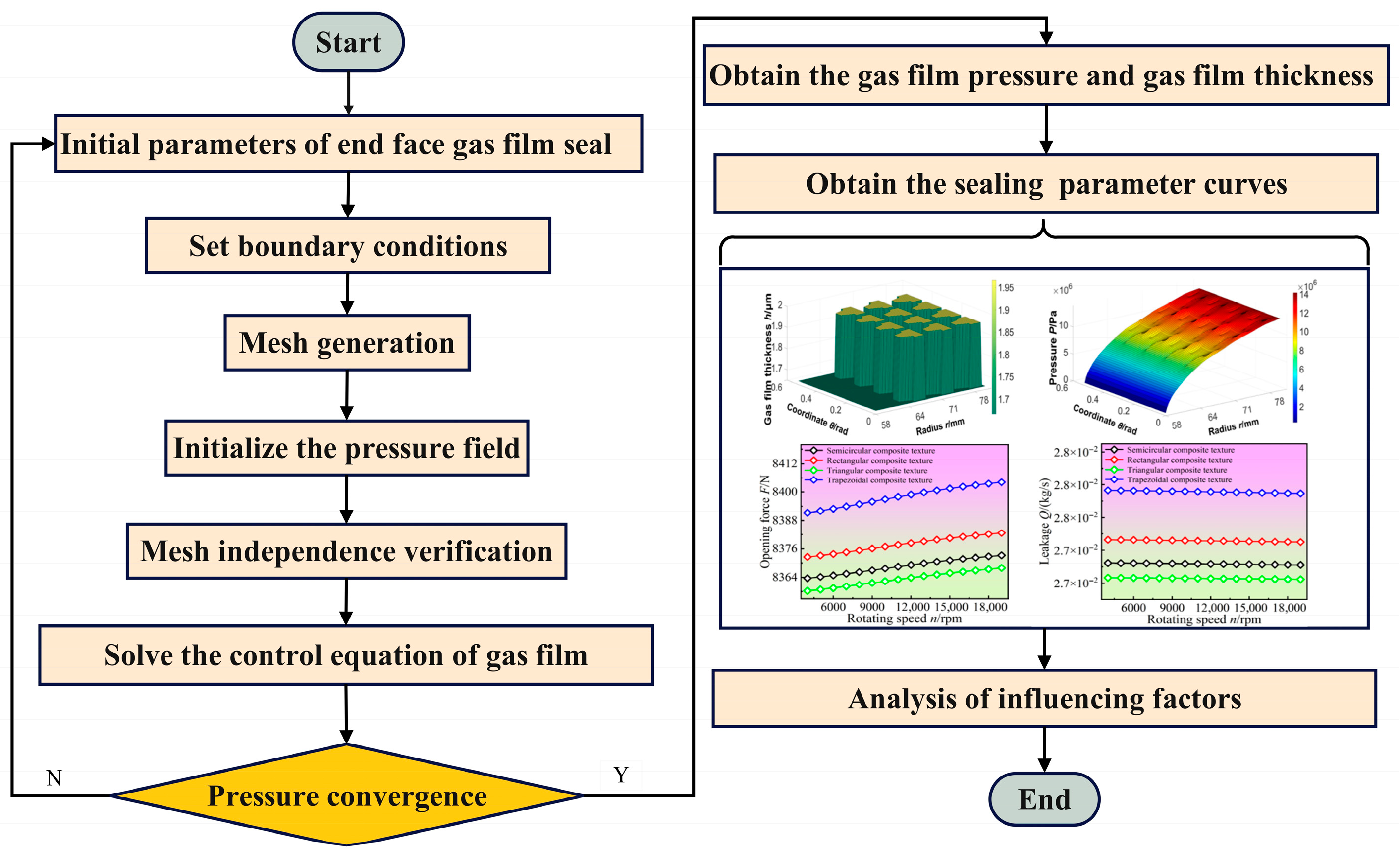
Regarding the calculation of the sealing performance of the end face dry gas seal, the calculation steps are shown in Figure 3.
  • Opening force Fo
The opening force is a key indicator to evaluate whether the sealing end faces can successfully disengage from contact. It represents the ability to overcome the initial contact force and frictional force between the sealing end faces. Only when the opening force matches the closing force can the sealing end faces smoothly enter the non-contact operating state, thereby achieving the ideal working condition of dry gas seals. The opening force can be calculated via the following formula:
F o = N g 0 2 π N g r i r o p r d r d θ
2.
Leakage Q
Leakage rate refers to the volume of gas flowing through the seal clearance per unit time from the DGS device to the atmospheric side. As one of the key performance indicators of dry gas seals, it reflects the gas loss of the sealing system during operation. The mass leakage rate can be calculated using the following formula:
Q = N g 0 2 π N g ρ r h 3 12 μ p r d θ
3.
Friction force f
Gas film friction force refers to the force generated by the relative motion and adhesion between the gas and the end face during the gas film formation process, which is induced by the gas film flow. Its calculation formula is as follows:
f = N g 0 2 π N g r o r i h 2 r p θ + μ ω r h r d r d θ
4.
Opening leakage ratio Λ
The opening-leakage ratio serves to quantitatively describe the relationship between the gas film opening force and the leakage rate, while comprehensively reflecting the load-carrying capacity of the seal system and its ability to control leakage. The mathematical definition for this parameter is as follows:
Λ = F Q

3. Grid Independence Verification and Calculation Validation

3.1. Calculation Method

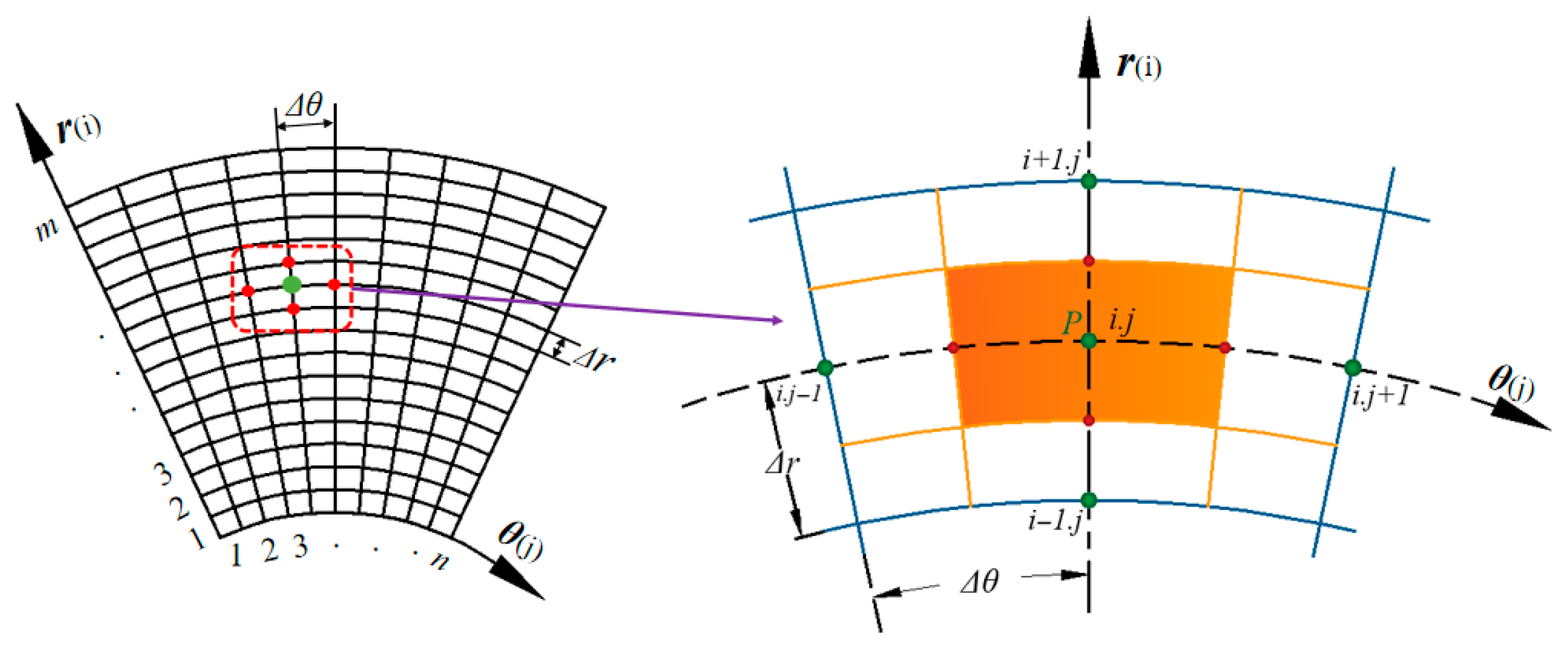
In the numerical simulation of DGS, the boundary conditions between the seal end face and groove are often complicated, so it is necessary to accurately deal with the flow field and pressure distribution. The finite difference method can find a balance between calculation efficiency and accuracy by flexibly adjusting the grid density. Especially in the case of a high-precision solution, the accuracy of the calculation results can be improved by thinning the grid and carefully selecting the difference scheme, thus ensuring the reliability of the simulation results [30,31]. This method can effectively adapt to the changes in different geometric shapes and complex boundary conditions, and accurately capture the behavior of the gas film. Figure 4 shows the schematic diagram of numerical calculation of sealing performance by the finite difference method, which intuitively reflects the key steps in the grid division and calculation process.

3.2. Grid Independence Verification

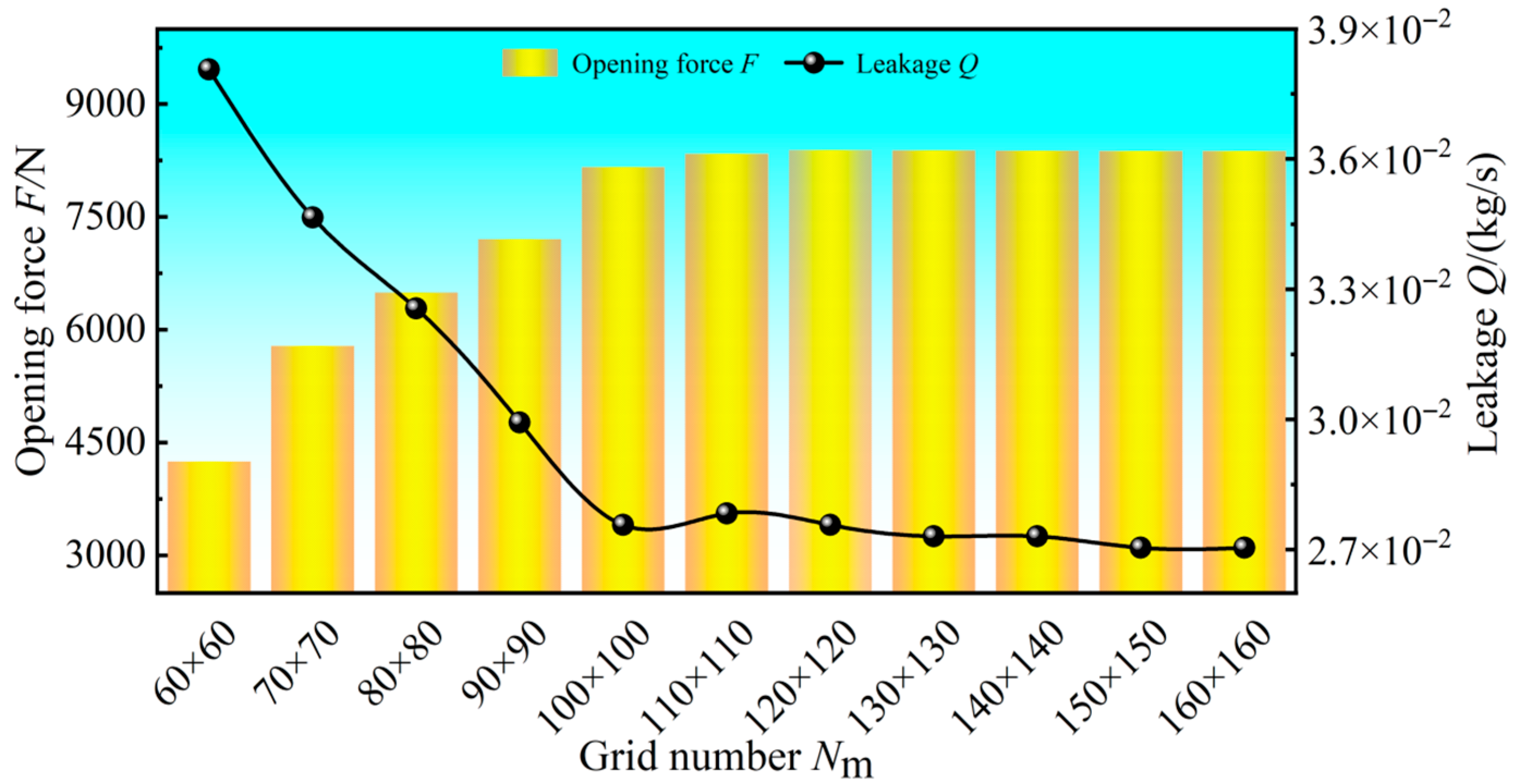
The film with a thickness of 5 μm and a groove depth of 5 μm was selected to verify the grid independence. The number of grids is 60 × 60, 70 × 70, 80 × 80, 90 × 90, 100 × 100, 110 × 110, 120 × 120, 130 × 130, 140 × 140, 150 × 150, and 160 × 160. When the inlet pressure is 0.5 MPa and the rotating speed is 10,000 r/min, the leakage rate under different grid numbers is calculated. Figure 5 shows the change curve of the leakage rate with the increase in grid number. As can be seen from the figure, with the increase in grid number, the leakage rate gradually decreases, and it tends to be stable when the grid number reaches 120 × 120. Therefore, in order to describe the subtle characteristics of flow more accurately, improve the accuracy of calculation, and accelerate the convergence process, this study chose 120 × 120 as the grid number for subsequent research.

3.3. Correctness Verification

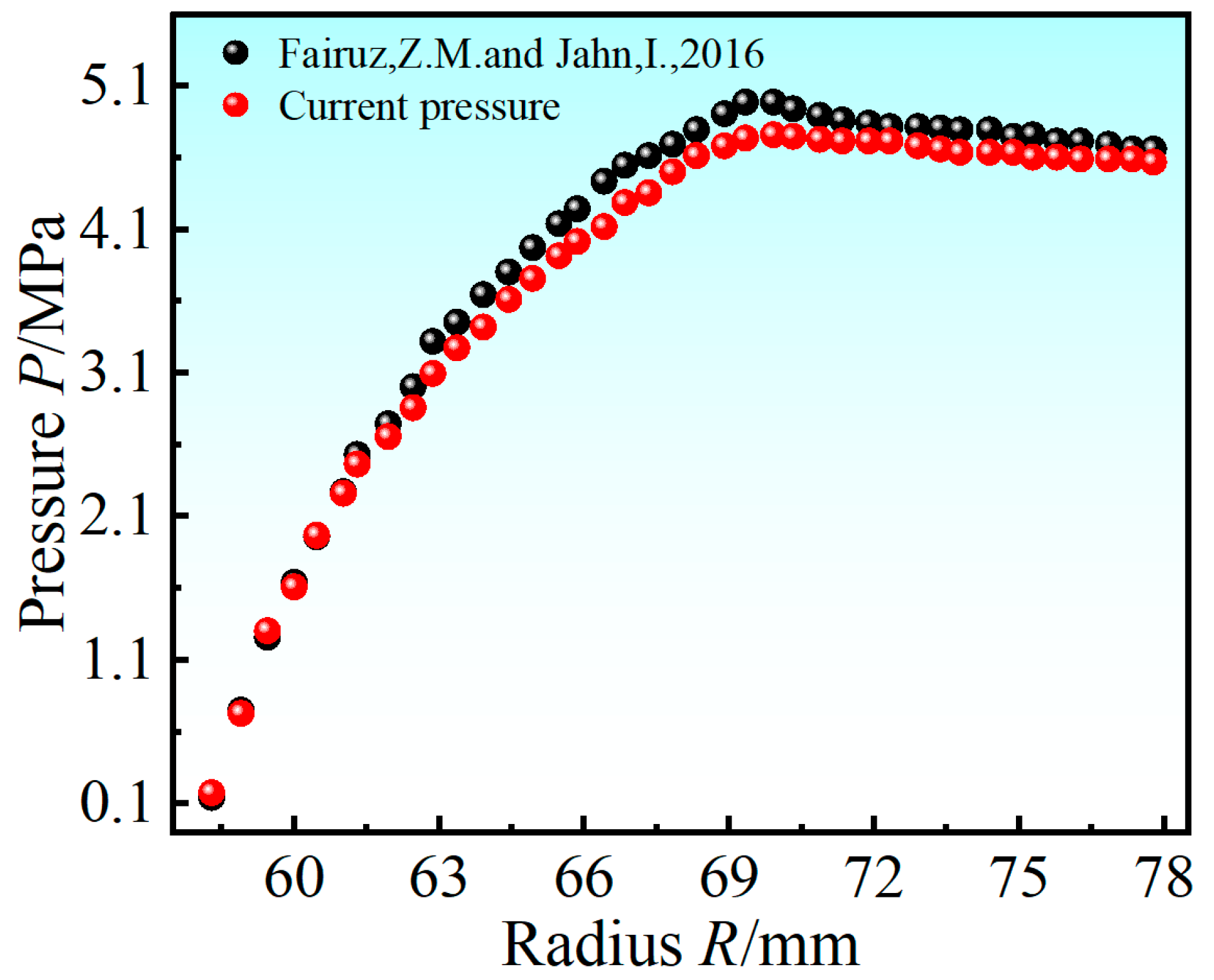
In order to verify the correctness of the model and calculation method in this paper, the structural parameters and working conditions parameters of DGS with air as a lubricating medium in reference [32] are compared and verified. The calculated radial average pressure distribution of the gas film is shown in Figure 6. The results show that under the same parameters, the calculated results of this model are in good agreement with the literature data, and the maximum relative error is less than 4%. Through analysis, it is found that the main reasons for this error include the following points: (1) the numerical discretization scheme and boundary treatment method used in the literature are slightly different from the method in this paper, which leads to a slight deviation in the calculation of gas film pressure gradient at high speed; (2) the effect of fluid compressibility and temperature is more obvious under the condition of high rotating speed, and the simplified assumption may be adopted in the literature model; (3) the difference in grid division accuracy and iterative convergence criterion will also produce cumulative errors in the calculation of gas film opening force. To sum up, this model has high calculation accuracy and reliability, and can accurately reflect the pressure distribution and opening characteristics of dry gas seal film.

3.4. Cloud Map Visualization

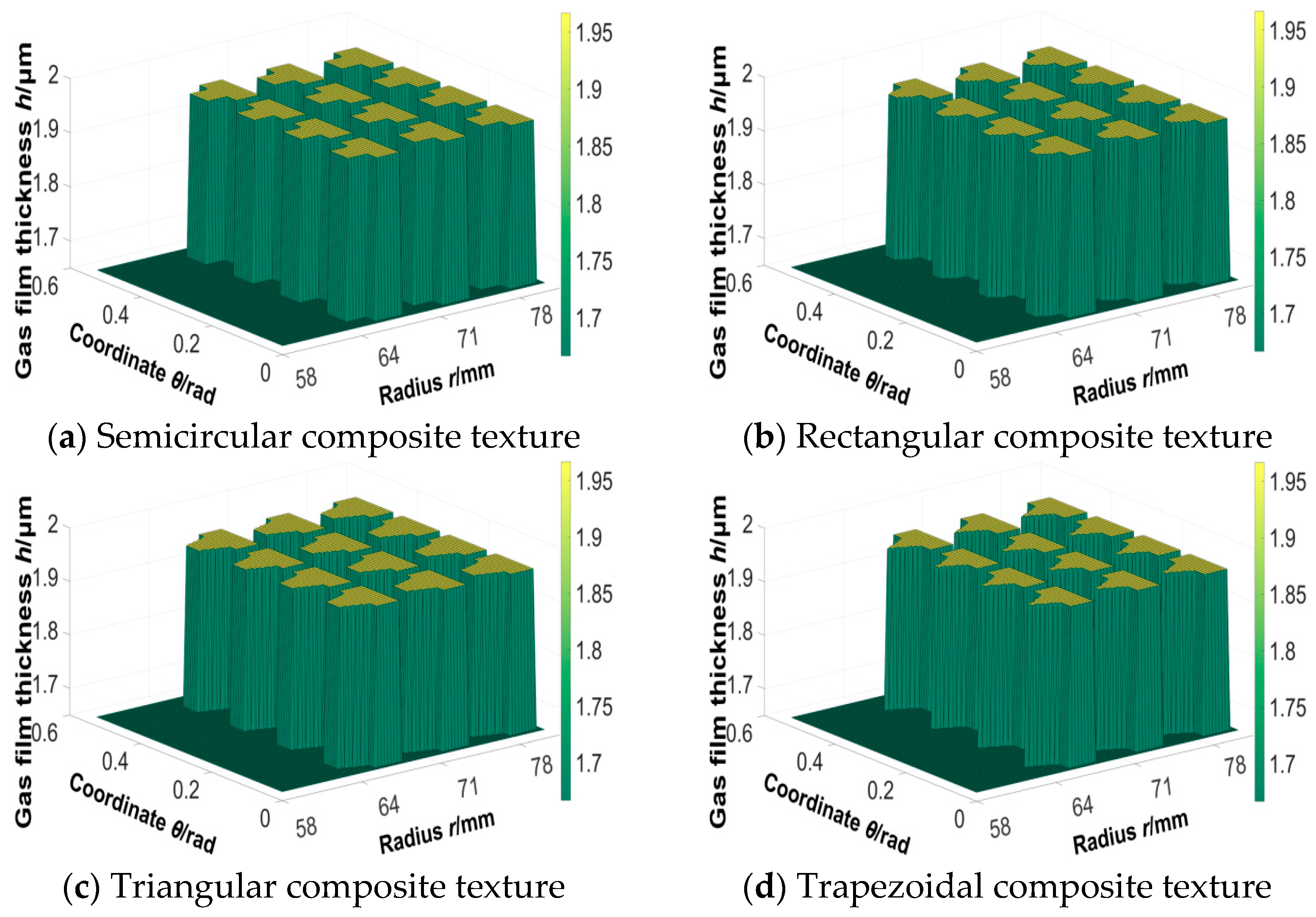
In the face of DGSs, the three-dimensional distribution of gas film thickness is one of the basic factors that determine the sealing performance. The three-dimensional gas film thickness distribution diagram of four specific combined groove textures is shown in Figure 7. For the texture of the combined groove, the large rectangular groove plays a leading role in the overall distribution, while the small geometric structures attached to the groove bottom or edge (such as small triangle, small semicircle, small trapezoid and small rectangle) produce disturbance effect in a local range, which makes the film thickness show non-uniformity in both axial and radial directions. Taking the large rectangular and small triangular groove as an example, due to the geometric characteristics of the triangular groove shrinking gradually, the film thickness presents a continuous transition from large to small at the notch position, forming a triangular distribution. The large rectangle and small semicircle groove form a gentle thickness change at the bottom of the groove, and its three-dimensional film thickness distribution shows a semicircle outline, and the local flow field interference is weak, and the change area tends to be continuous and smooth. The large rectangular and small trapezoidal groove has both rectangular stability and trapezoidal transition characteristics in the distribution of gas film thickness, and the gas film thickness in the width direction of the groove gradually decreases from the bottom of the groove to the outlet, resulting in a gradual effect, which enhances the compression and guiding ability of the fluid. In contrast, the three-dimensional film thickness distribution law of large rectangle and small rectangle grooves is simple, and the local thickness abrupt change is obvious, forming a typical “step” distribution feature, resulting in multiple thickness abrupt changes in the film. The thickness distribution of these composite structural features not only determines the bearing capacity and stiffness characteristics of the gas film but also directly affects the stability of the flow field and the dynamic behavior of the gas film, which provides a geometric basis for the subsequent analysis of pressure distribution and sealing performance [33,34].
Three-dimensional gas film pressure distribution is a key parameter to evaluate the bearing capacity, stiffness and stability of end face DGSs, and its distribution law is directly affected by gas film thickness, groove geometry characteristics and working conditions. In the case of a combined groove structure, the large rectangular groove still plays the role of determining the pressure distribution benchmark, while the additional small groove structure further guides the fluid movement by changing the local gas film thickness, resulting in significant differences in pressure distribution in different regions [35,36].
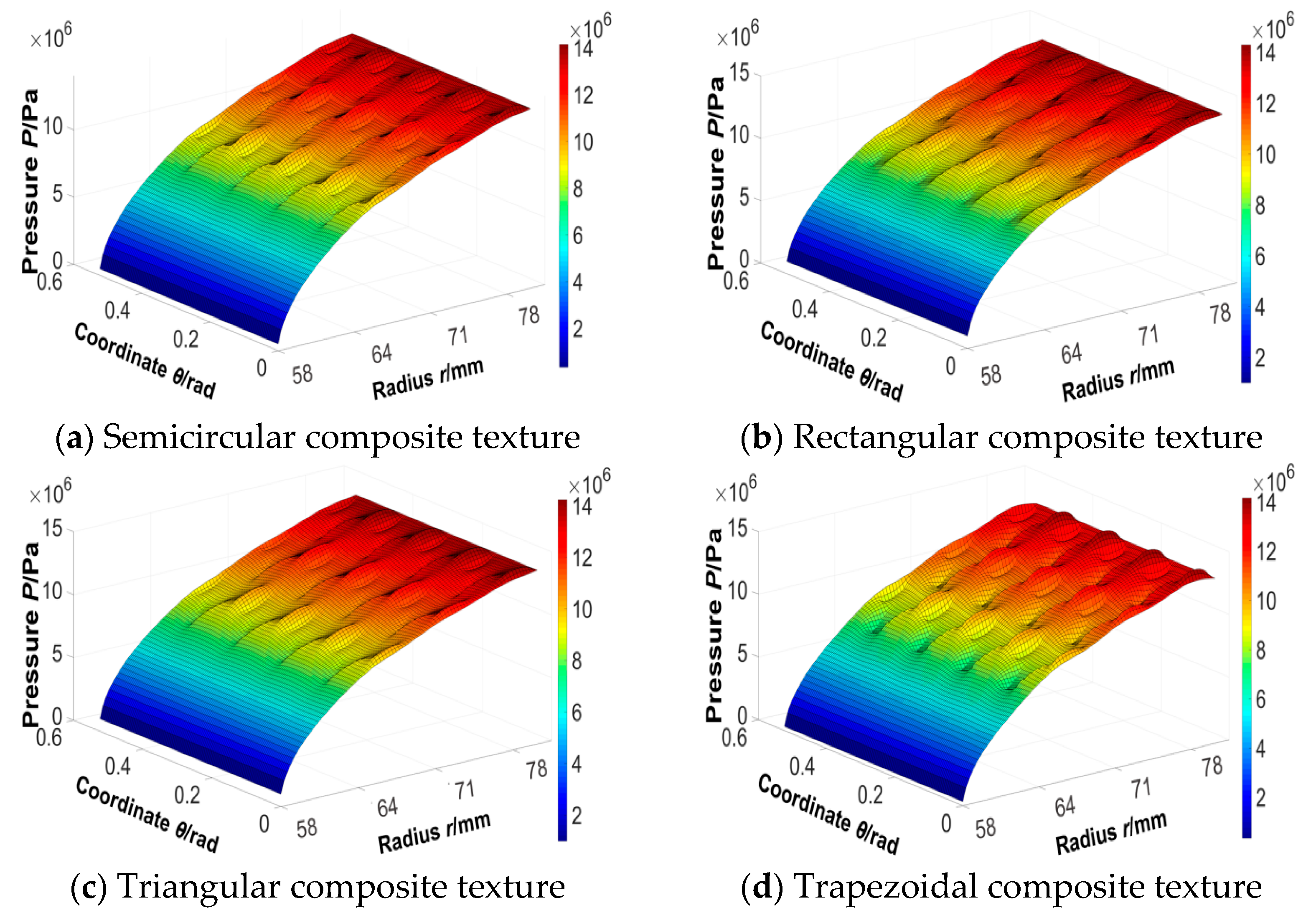
As shown in Figure 8, the gas film pressure distribution of end face gas film seals with different combined groove textures in a laminar flow state is shown. In the structure of a large rectangle and a small triangular groove, the gradual convergence of the triangular groove forces the fluid to compress when it enters the convergence zone. The pressure in the pressure cloud chart is relatively low at the notch, but as the fluid enters the convergent section of the triangular groove, the local pressure gradually increases, and a high-pressure concentration area is formed at the tip of the triangular groove. Although this high-pressure concentration enhances the bearing capacity, too strong a gradient may induce local flow field instability and even produce a small vortex structure. In contrast, the pressure distribution of a large rectangle and a small semicircle is more gentle. The semicircular geometry forms a lens-like effect at the groove bottom, which makes the gas film pressure show a continuous and smooth transition in the radial direction, with a low local maximum pressure and a uniform overall distribution. This feature effectively reduces the pressure pulsation in the flow field and is helpful to improve the stability of the seal at high speed. The pressure distribution of a large rectangular and a small trapezoidal groove shows a typical convergence effect. Due to the geometric characteristics of the trapezoidal groove with a wide inlet and narrow outlet, the fluid gradually receives compression in the groove and accelerates its movement, forming an obvious high-pressure area in the outlet area. This distribution law significantly improves the bearing capacity of the gas film and enhances the dynamic stiffness of the sealing surface. At the same time, the gradual characteristics of pressure distribution in the trapezoidal groove make it superior to the triangular groove combination in stability, taking into account both bearing and stability. The large rectangular and small rectangular groove presents a segmented pressure distribution. At the sudden change in local thickness, the pressure field changes sharply, forming an obvious alternating region of high and low pressure, and the local pressure gradient is large. Numerical simulation shows that these sudden pressure variations lead to pronounced local pressure gradients and non-uniform pressure distributions in the gas film. Such characteristics may result in locally intensified flow and reduced pressure stability, which is unfavorable for maintaining stable sealing performance under long-term operation. Although the rectangular groove combination can enhance the local bearing capacity under certain operating conditions, the associated pressure non-uniformity indicates a potential risk to operational stability.
By comprehensive comparison, it can be found that the effects of different geometric combinations on the three-dimensional gas film pressure distribution are obviously different: the triangular groove combination can significantly improve the local pressure and the overall bearing capacity, but it is not good for the stability of the flow field. Although the bearing capacity of the semicircular groove combination is limited, its gentle pressure distribution makes it more suitable for high-speed and low-pulsation conditions. The trapezoidal groove combination has achieved a balance between bearing capacity and stability, showing good comprehensive performance. Rectangular groove combination has advantages in local pressure strengthening, but the instability problem needs to be alleviated through structural optimization. It can be seen that the three-dimensional distribution of gas film pressure not only determines the bearing performance, but is also closely related to the reliability and life of the sealing system, which provides an important basis for groove optimization and engineering application.

4. Results and Discussion

In practical engineering service, the sealing device is faced with complex and changeable working conditions. An in-depth study on the mechanism of engineering-related parameters and operation-level parameters on sealing efficiency is not only conducive to the refined improvement of the structure, but also provides strong theoretical support for practical engineering practice, thus ensuring that the sealing system can maintain a stable and reliable operation state in various working scenarios.

4.1. Rotational Speed

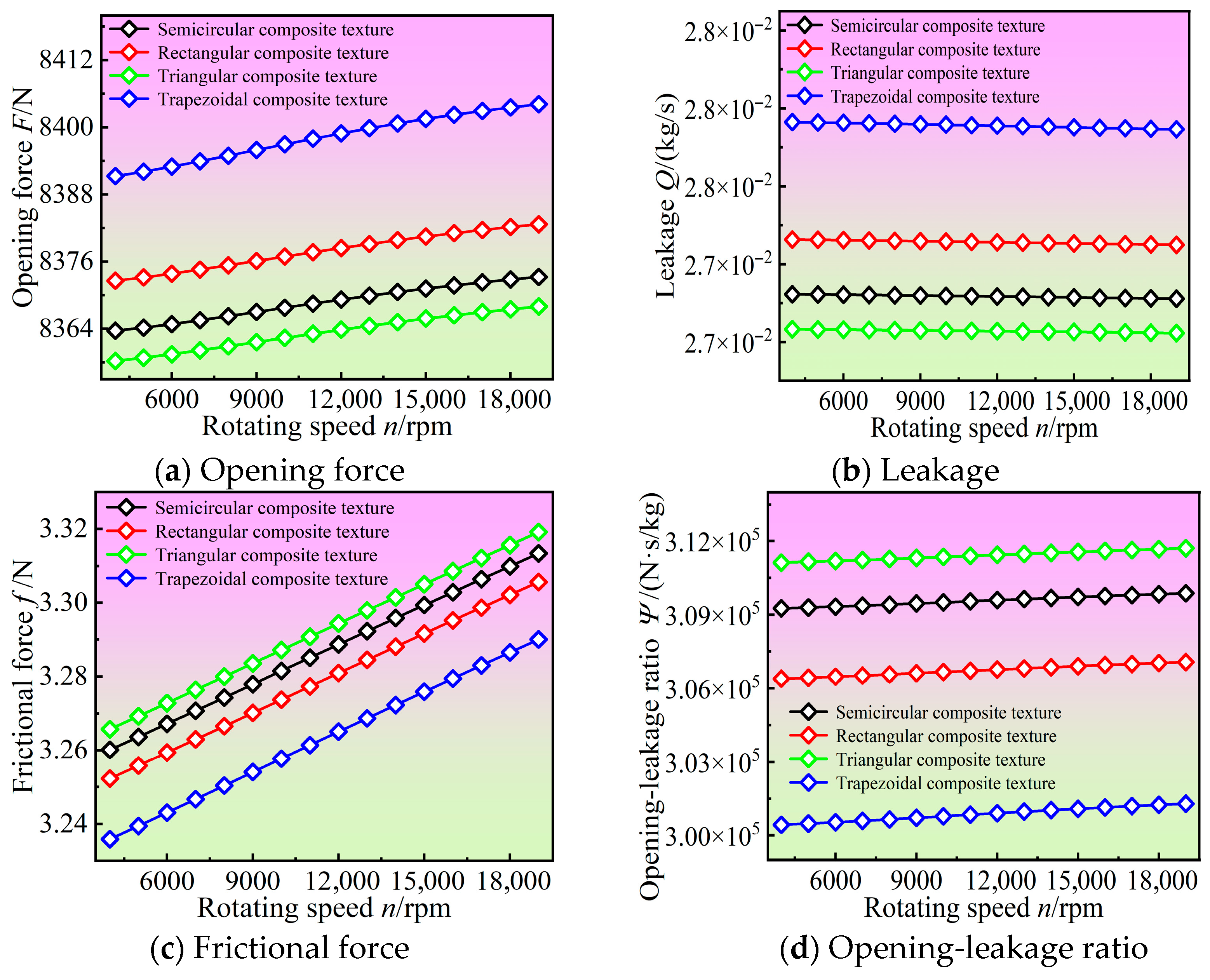
Figure 9 shows the variation law of gas film performance parameters of face DGSs under different rotating speeds and combined micro-texture structures (semicircle, rectangle, triangle and trapezoid). As shown in Figure 9a, the opening forces of all four texture types increase gently with the rise in rotational speed, indicating that the enhanced hydrodynamic effect at higher speeds improves the gas film carrying capacity. Quantitatively, the semicircular texture increases from 8363.64 N to 8373.24 N, a rise of approximately 0.11%, the rectangular texture grows from 8372.59 N to 8382.66 N, an increase of about 0.12%, the triangular texture rises from 8358.24 N to 8367.96 N, increasing by roughly 0.11%, and the trapezoidal texture increases from 8391.28 N to 8404.12 N, with the largest growth of around 0.15%. At any given rotational speed, the trapezoidal texture consistently exhibits the highest opening force, followed by rectangular, while semicircular and triangular structures remain lower. This is because the trapezoidal geometry forms a stronger fluid convergence and bearing area, enhancing the peak gas film pressure. The rectangular structure provides stable bearing performance, whereas the gentle or sharp geometric transitions in semicircular and triangular textures weaken the local pressure gradient and fluid carrying capacity. Overall, the opening force is determined by a coupling effect between rotational speed and texture morphology: while higher speed slightly enhances the overall opening force, the texture geometry dictates the magnitude and ranking of the force, with trapezoidal textures offering the most significant bearing advantage and high engineering application potential.
Figure 9b shows the variation in gas film leakage rate with rotational speed. Overall, the leakage rates of all four texture types decrease slightly as the rotational speed increases. Quantitatively, the semicircular texture decreases from 0.027044 kg/s to 0.027022 kg/s, a reduction of approximately 0.08%, the rectangular texture decreases from 0.027326 kg/s to 0.027298 kg/s, about 0.10%, the triangular texture decreases from 0.026865 kg/s to 0.026846 kg/s, approximately 0.07%, and the trapezoidal texture decreases from 0.027930 kg/s to 0.027893 kg/s, roughly 0.13%, showing the most significant reduction among the four textures. At any given rotational speed, the leakage rates differ clearly among textures: trapezoidal is the highest, followed by rectangular, semicircular, and triangular, which exhibits the lowest leakage. These differences arise from the effects of geometric morphology on fluid transport paths and gas film resistance distribution. Trapezoidal geometries tend to form continuous leakage channels, rectangular and semicircular structures provide moderate leakage control, while the triangular structure, with its sharp corners, enhances fluid blocking and significantly reduces radial leakage. These results highlight the critical role of micro-texture geometry in achieving a balance between load-bearing capacity and leakage suppression.
Figure 9c shows the variation in gas film friction with rotational speed. Overall, the friction of all four texture types increases steadily as the rotational speed rises from 4000 r/min to 19,000 r/min, mainly due to the enhancement of gas film shear. Quantitatively, the semicircular texture increases from 3.26 N to 3.31 N, a rise of approximately 1.63%, the rectangular texture grows from 3.25 N to 3.30 N, about 1.63%, the triangular texture rises from 3.26 N to 3.31 N, increasing by around 1.63%, and the trapezoidal texture increases from 3.23 N to 3.29 N, with the largest increase of approximately 1.68%. The overall friction remains in a controllable range between 3.23 N and 3.32 N. At any given speed, the friction differs significantly among textures: the triangular structure exhibits the highest friction, followed by semicircular and rectangular, while the trapezoidal texture has the lowest friction. This behavior arises from the regulation of texture geometry on flow field distribution and shear energy consumption: sharp corners in the triangular texture induce local high-speed vortices, enhancing shear and friction, whereas the trapezoidal texture reduces the pressure gradient and mitigates the upward trend of friction through a gentle geometric transition. These results indicate that trapezoidal textures achieve a better balance between load bearing and friction reduction, while triangular textures, although providing strong local pressure, incur higher shear loss.
Figure 9d illustrates the variation in the ratio of opening force to leakage rate with rotational speed under different textures. Overall, the ratio increases almost linearly as the rotational speed rises from 4000 r/min to 19,000 r/min, indicating that the enhancement rate of gas film bearing capacity surpasses the growth rate of leakage, resulting in an obvious improvement in the overall performance of the system. Quantitatively, the ratio for the triangular texture increases from 311,119.7 to 311,703.1, a rise of approximately 0.19%; the semicircular texture increases from 309,257.8 to 309,873.1, about 0.20%; the rectangular texture grows from 306,396.0 to 307,074.4, roughly 0.22%; the trapezoidal texture increases from 300,440.5 to 301,301.9, approximately 0.29%. At any given speed, the triangular structure exhibits the highest ratio, followed by semicircular, rectangular, and trapezoidal textures, which is the lowest. This difference arises from the dual regulation of texture geometry on dynamic pressure effect and fluid transport: the triangular texture strengthens bearing capacity while effectively suppressing leakage, achieving the best comprehensive performance. Semicircular and rectangular textures exhibit intermediate performance, whereas the trapezoidal texture, although providing strong convergence and high bearing capacity, has relatively weaker leakage control. These results provide an important reference for the subsequent design of micro-texture morphology and the optimization of the balance between load-bearing capacity and leakage suppression.

4.2. Sealing Pressure

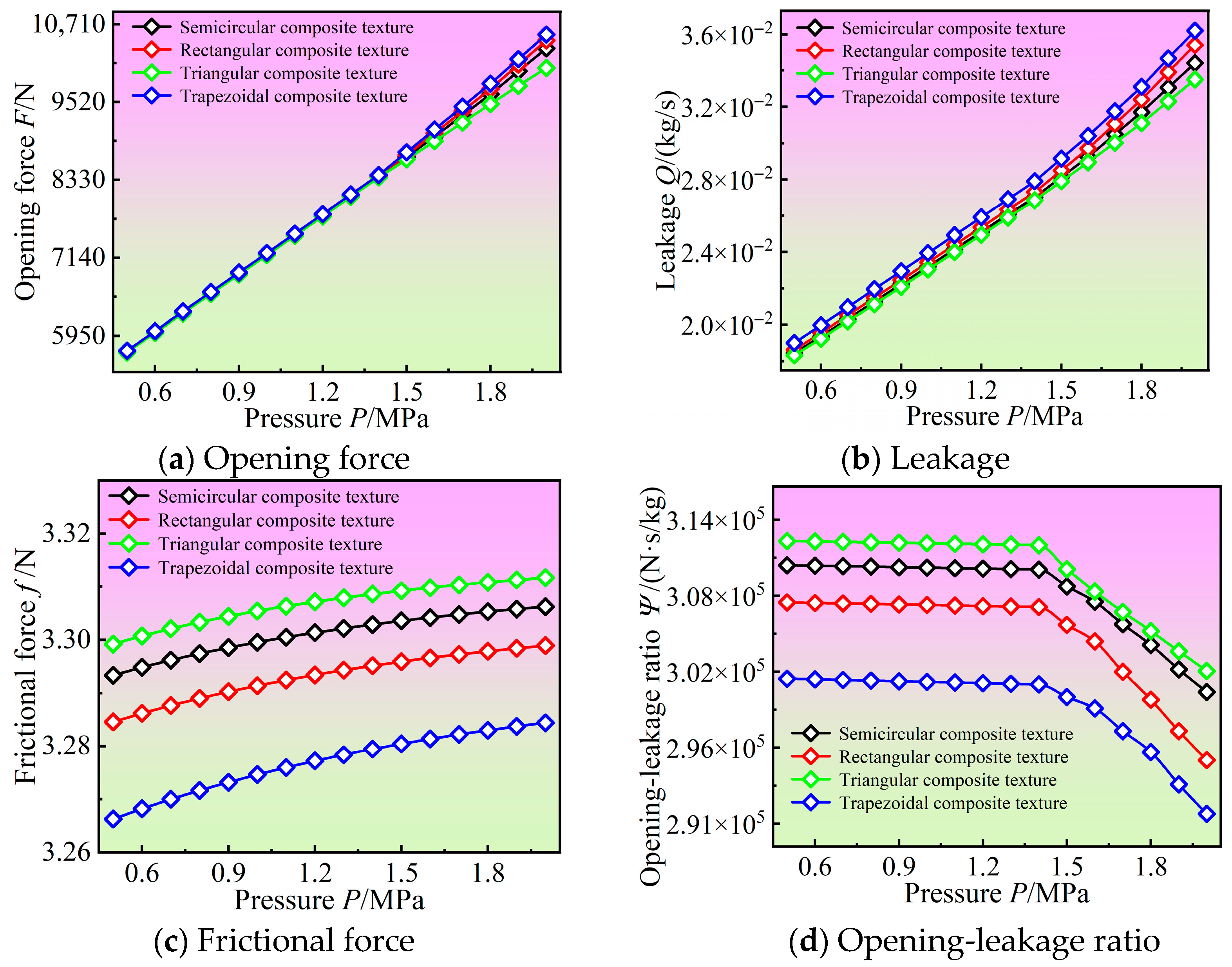
Figure 10 shows the performance changes in DGS with different gas film pressures and combined micro-texture structures (semicircle, rectangle, triangle and trapezoid) to reveal the coupling influence of gas film pressure and texture geometry on seal load-bearing, leakage and friction characteristics. As shown in Figure 10a, the opening force of all textures increases significantly and approximately linearly as the gas film pressure rises from 0.5 MPa to 2 MPa, indicating a strong positive correlation between opening force and gas film pressure. Quantitatively, the trapezoidal texture increases from 5724.2 N at 0.5 MPa to 10,550 N at 2 MPa, a growth of about 84%, the rectangular texture rises from 5709.5 N to 10,460 N, increasing by approximately 83%, the semicircular texture grows from 5703.1 N to 10,340 N, about 81%, and the triangular texture increases from 5699.6 N to 10,040 N, around 76%. At any given pressure, the trapezoidal structure consistently exhibits the highest opening force, followed by rectangular, semicircular, and triangular structures, with the gap widening at higher pressures. This trend reflects the regulatory effect of texture geometry on the dynamic pressure distribution: the trapezoidal structure has a larger effective bearing area and smooth flow transitions, producing a more uniform and higher peak pressure, while rectangular and semicircular structures provide moderate bearing capacity. The triangular structure, due to sharp corners, is prone to local pressure loss, resulting in lower opening force. Overall, increasing gas film pressure enhances bearing capacity for all textures, and trapezoidal geometry demonstrates the most significant improvement, indicating its potential advantages for high-load and high-reliability seal design.
Figure 10b shows the variation in gas film leakage rate with gas film pressure for different micro-texture structures. Overall, the leakage rates of all four textures increase steadily and approximately linearly as the pressure rises from 0.5 MPa to 2 MPa, indicating that higher gas film pressure strengthens fluid infiltration and promotes leakage. Quantitatively, the trapezoidal texture increases from 0.01899 kg/s to 0.03620 kg/s, a rise of approximately 90%, the rectangular texture grows from 0.01861 kg/s to 0.03540 kg/s, about 90%, the semicircular texture increases from 0.01844 kg/s to 0.03440 kg/s, roughly 87%, and the triangular texture rises from 0.01832 kg/s to 0.03350 kg/s, around 83%, showing the smallest growth among the four. At any given pressure, the leakage rate of trapezoidal texture is the highest, followed by rectangular, slightly lower for semicircular, and the lowest for triangular texture. This trend is due to the influence of texture geometry on fluid channels and pressure gradients: trapezoidal structures have a large flow cross-section and smooth transitions, which enhance both uniform pressure distribution and connectivity of leakage paths, while semicircular and triangular structures strengthen boundary constraints and increase local energy dissipation, effectively blocking radial leakage. Therefore, although leakage inevitably increases at higher pressures, geometric optimization—especially triangular textures—can significantly improve sealing retention capacity.
As shown in Figure 10c, the friction force of all four combined textures shows a slow upward trend as the gas film pressure increases from 0.5 MPa to 2 MPa, with the overall change remaining small, indicating good stability. Quantitatively, the triangular texture decreases slightly from 311,907.6 N to 302,154.2 N, a change of approximately 3%; the semicircular texture decreases from 310,086.1 N to 300,581.4 N, about 3.1%; the rectangular texture reduces from 307,301.5 N to 295,480.2 N, roughly 3.8%; the trapezoidal texture decreases from 301,579.0 N to 291,436.5 N, around 3.3%. At any given pressure, the triangular texture exhibits the highest friction, followed by semicircular and rectangular structures, while the trapezoidal texture has the lowest friction. This behavior arises from the influence of texture geometry on the fluid shear field: sharp corners in the triangular structure induce local high-shear zones, enhancing friction, whereas the trapezoidal texture, with smooth boundary transitions, effectively reduces the shear gradient and energy dissipation, mitigating the upward trend of friction. Overall, while the effect of increasing gas film pressure on friction is limited, the geometric shape significantly affects friction regulation, with the trapezoidal structure showing excellent anti-friction characteristics, providing an important reference for the design of low-friction seals.
Figure 10d shows the variation in the opening-leakage ratio, defined as the ratio of opening force to leakage rate, for different texture structures under varying gas film pressure. Overall, the opening-leakage ratio gradually decreases with increasing pressure. The decline is gentle in the low-pressure range from 0.5 MPa to 1.4 MPa, but becomes more pronounced above 1.5 MPa, indicating that the leakage growth rate exceeds the load-bearing enhancement rate under high pressure, resulting in reduced comprehensive performance. Quantitatively, the triangular texture decreases from 311,907.6 to 302,154.2, about 3%; the semicircular texture decreases from 310,086.1 to 300,581.4, roughly 3.1%; the rectangular texture drops from 307,301.5 to 295,480.2, about 3.8%; the trapezoidal texture decreases from 301,579.0 to 291,436.5, approximately 3.3%, showing the largest attenuation in the high-pressure region. At any given pressure, the triangular structure maintains the highest opening-leakage ratio, followed by semicircular, while rectangular and trapezoidal textures are lower, with the trapezoidal structure showing the most pronounced decline. This behavior is attributed to the synergistic regulation of texture geometry on the hydrodynamic pressure field and leakage paths: the sharp corners of the triangular structure enhance dynamic pressure load and partially inhibit leakage, resulting in the best comprehensive performance, semicircular textures offer a balance between bearing and stability, while rectangular and trapezoidal structures improve fluidity and reduce friction but enlarge leakage channels, lowering the opening-leakage ratio. In summary, for maximum comprehensive sealing performance, triangular or semicircular textures are preferred, whereas rectangular and trapezoidal structures are more advantageous for minimizing friction or power loss. These findings provide a theoretical basis for the multi-objective optimization design of DGS micro-texture morphology.

4.3. Gas Film Thickness

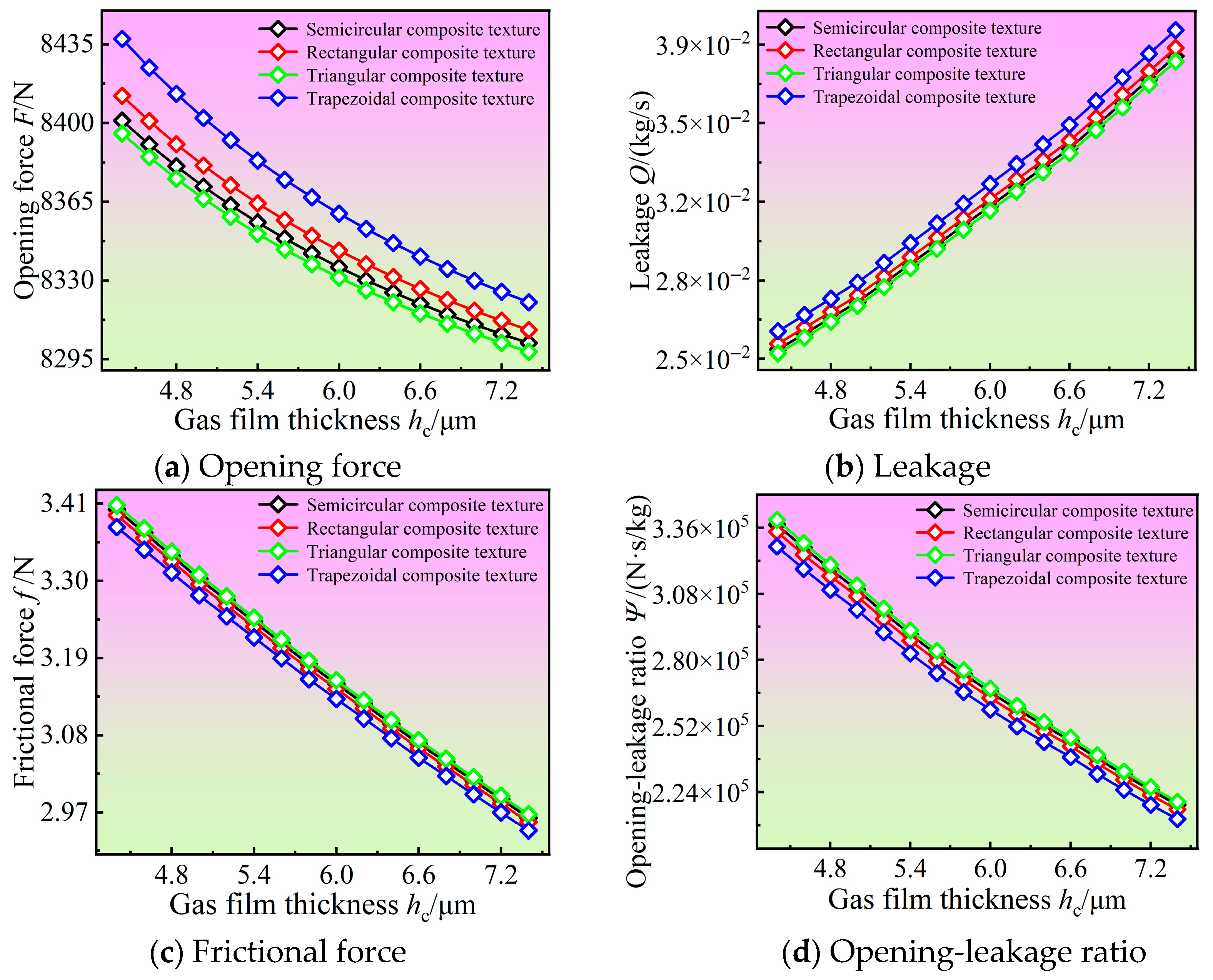
Figure 11 shows the influence of gas film thickness change on the performance parameters of DGS face under different combined micro-textures (semicircle, rectangle, triangle and trapezoid). As shown in Figure 11a, the film opening force of all four combined textures decreases monotonically as the average film thickness increases from 4.4 μm to 7.4 μm. In the small thickness range from 4.4 μm to 5.2 μm, the opening force decreases rapidly, while when the thickness exceeds 6 μm, the decline slows down and gradually stabilizes. Quantitatively, the trapezoidal texture decreases from 8437.3 N to 8320.3 N, about 1.4%, the rectangular texture decreases from 8412.0 N to 8307.9 N, roughly 1.2%, the semicircular texture decreases from 8401.1 N to 8302.1 N, around 1.2%, and the triangular texture decreases from 8395.3 N to 8298.3 N, approximately 1.2%, indicating that the triangular structure has the weakest bearing capacity and the trapezoidal structure has the strongest. At any given thickness, the triangular texture maintains the lowest opening force, semicircular and rectangular structures exhibit similar intermediate values, and the trapezoidal texture always has the highest opening force. This behavior is attributed to the influence of geometric morphology on dynamic pressure distribution: the increase in film thickness weakens the dynamic pressure effect and reduces end bearing capacity, while the trapezoidal structure, with a wider fluid action area, maintains a higher pressure gradient, and the triangular structure, constrained by narrow flow channels, shows limited pressure-lifting ability, resulting in lower opening force.
Figure 11b shows that the gas film leakage rate of all four combined textures increases monotonically with the average film thickness from 4.4 μm to 7.4 μm, exhibiting an approximately linear trend, which reflects the characteristic of “the thicker the gas film, the greater the leakage.” Quantitatively, the trapezoidal texture increases from 0.02572 kg/s to 0.03915 kg/s, about 52%; the rectangular texture increases from 0.02517 kg/s to 0.03835 kg/s, roughly 52%; the semicircular texture increases from 0.02491 kg/s to 0.03798 kg/s, approximately 52%; the triangular texture increases from 0.02474 kg/s to 0.03775 kg/s, around 53%. At any given thickness, the triangular structure always has the lowest leakage rate, indicating its superior ability to suppress gas leakage. Semicircular and rectangular textures are intermediate, while the trapezoidal texture exhibits the highest leakage rate and the most pronounced increase with thickness. This behavior is attributed to the combined effects of increasing film gap and micro-texture geometry: the thicker film reduces fluid resistance and smooths the leakage channel, while trapezoidal structures, with larger equivalent flow areas, enhance leakage, whereas triangular structures create local contractions that obstruct flow, effectively reducing leakage. These results demonstrate that geometric morphology plays a decisive role in controlling leakage, especially under thicker gas film conditions.
Figure 11c shows that the friction force of the gas film under all four combined textures decreases monotonically with the increase in average film thickness from 4.4 μm to 7.4 μm, with an overall variation of about 0.44 N, indicating a slight but steady reduction. Specifically, the trapezoidal texture has the lowest friction, decreasing from 3.37 to 2.94, approximately 13%, while the semicircular texture decreases from 3.40 to 2.96, roughly 13%, the rectangular texture from 3.39 to 2.95, about 13%, and the triangular texture from 3.40 to 2.96, around 13%. The differences between textures are small, but the combination of semicircle and triangle exhibits slightly higher friction compared with the rectangular texture, and trapezoid consistently maintains the lowest friction. This behavior is mainly caused by the weakening of the fluid shear effect between the end faces as the film thickness increases, which reduces flow resistance. However, the micro-texture morphology alters the local flow field and shear stress distribution, leading to minor differences in friction among different textures. Overall, trapezoidal geometry demonstrates better anti-friction characteristics, which is beneficial for low-friction seal design.
Figure 11d shows that the opening-leakage ratio of all four combined textures decreases monotonically with the increase in average film thickness from 4.4 μm to 7.4 μm, indicating that the comprehensive sealing performance deteriorates as the film thickens. Specifically, the triangular texture maintains the highest opening-leakage ratio, decreasing from 339,291 to 219,827, about 35%, followed by the semicircular texture, which decreases from 337,284 to 218,567, approximately 35%, the rectangular texture from 334,249 to 216,612, also around 35%, and the trapezoidal texture from 328,004 to 212,537, roughly 35%. The reason lies in the different regulation of micro-scale flow and pressure field by texture geometry: triangular and semicircular structures can form stronger local pressure gradients and fluid disturbances, which help maintain high comprehensive sealing performance despite the increase in film thickness. In contrast, trapezoidal geometry, although beneficial for bearing capacity, allows larger leakage paths under thickened films, resulting in the lowest opening-leakage ratio. Therefore, triangular and semicircular textures provide better overall sealing performance, while a trapezoidal structure is more suitable when load-bearing is the primary objective.

4.4. Texture Depth

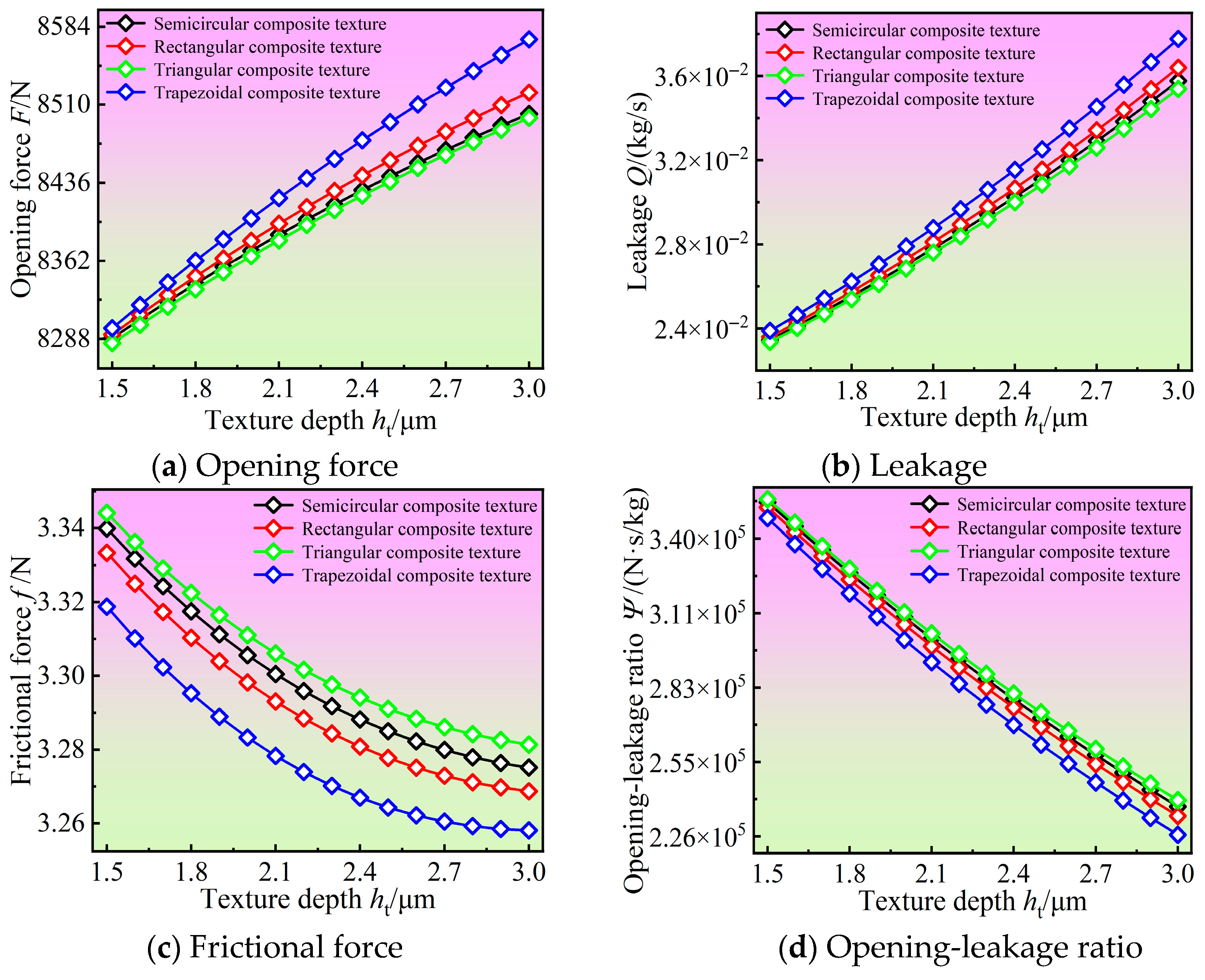
Figure 12 shows the influence of texture depth change on gas film performance parameters of DGS end face under different combined micro-texture conditions (semicircle, rectangle, triangle and trapezoid). As shown in Figure 12a, the opening force of all combined micro-texture structures increases approximately linearly with the increase in groove depth from 1.5 μm to 3.0 μm, indicating that deeper grooves significantly enhance the bearing capacity of the gas film. Among the different geometric shapes, the trapezoidal structure consistently exhibits the highest opening force across the entire depth range, followed by rectangular and semicircular structures, while the triangular structure remains the lowest. Specifically, the opening force increases from 8283 to 8288 N at 1.5 μm to 8497–8572 N at 3.0 μm, with trapezoidal grooves showing the most prominent enhancement. This performance difference is mainly attributed to the ability of groove geometry to redistribute the gas film flow field and generate local dynamic pressure. Deeper grooves can more effectively capture and compress the fluid, strengthening the local dynamic pressure effect and improving the stiffness and bearing capacity of the gas film. Trapezoidal and rectangular grooves, with larger volume and smoother fluid transition, form stronger pressure gradients at the end face. In contrast, triangular grooves, with narrow flow channels and sharp corners, have limited dynamic pressure generation, resulting in lower improvement in bearing capacity.
As shown in Figure 12b, the leakage rate of all four combined textures increases monotonically with the increase in groove depth from 1.5 μm to 3.0 μm, indicating that deeper grooves, while improving bearing capacity, also promote gas leakage. Specifically, the triangular texture maintains the lowest leakage rate, increasing from 0.02337 kg/s to 0.03538 kg/s, about 51.4%, followed by the semicircular texture, which increases from 0.02346 to 0.03576, approximately 52.4%, the rectangular texture from 0.02360 kg/s to 0.03639 kg/s, roughly 54.2%, and the trapezoidal texture from 0.02389 kg/s to 0.03776 kg/s, about 58.1%. The differences arise from the micro-scale regulation of the flow field by groove geometry: triangular grooves form contraction channels that restrict fluid flow and inhibit leakage, semicircular and rectangular grooves provide intermediate flow paths, and trapezoidal grooves, with wide exit channels, facilitate smoother flow and continuous leakage. Therefore, triangular textures offer better leakage control, while trapezoidal grooves, despite higher leakage, enhance bearing capacity, highlighting the trade-off between sealing performance and load-bearing optimization in micro-texture design.
As shown in Figure 12c, the friction of all four combined textures decreases gradually with the increase in groove depth from 1.5 μm to 3.0 μm, indicating that deeper grooves reduce the shear resistance of the gas film. Specifically, the trapezoidal texture exhibits the lowest friction, decreasing from 3.31 N to 3.25 N, about 1.9%, followed by the triangular texture, decreasing from 3.34 N to 3.27 N, approximately 1.9%, the semicircular texture from 3.33 N to 3.27 N, around 2.0%, and the rectangular texture from 3.33 N to 3.26 N, roughly 2.0%. The differences stem from the regulation of local flow and shear by groove geometry: trapezoidal and triangular grooves form smoother flow transitions, reducing local shear stress and stabilizing the flow, whereas semicircular and rectangular grooves can produce local pressure peaks at the groove edges, slightly increasing friction. Therefore, trapezoidal and triangular textures are more effective in reducing friction, while semicircular and rectangular grooves offer slightly higher resistance under the same groove depth.
As shown in Figure 12d, the opening-leakage ratio of all four combined textures decreases monotonically with the increase in groove depth from 1.5 μm to 3.0 μm, indicating that the balance between seal opening performance and leakage control weakens as the grooves deepen. Specifically, the triangular texture maintains the highest opening-leakage ratio, decreasing from 354,526 to 240,152, about 32%, followed by the semicircular texture, which decreases from 353,328 to 237,718, approximately 33%, the rectangular texture from 351,409 to 234,167, around 33%, and the trapezoidal texture from 347,339 to 226,996, roughly 35%. The differences are due to the micro-scale regulation of flow and pressure by groove geometry: triangular and semicircular grooves form stronger local pressure gradients and fluid disturbances, which help maintain a better balance between bearing and leakage. In contrast, trapezoidal grooves, while enhancing bearing capacity, create wider leakage channels as groove depth increases, resulting in the lowest opening-leakage ratio. Therefore, triangular and semicircular textures provide better overall sealing performance, whereas a trapezoidal structure is more suitable when maximizing load-bearing is the priority.

5. Conclusions

  • The proposed model demonstrates high accuracy and reliability, showing good agreement with published results in terms of gas film pressure distribution. The relative errors remain within acceptable limits, confirming its effectiveness in predicting dry gas seal film characteristics.
  • Different combined groove textures significantly influence gas film thickness and pressure distributions in face DGSs. Trapezoidal and semicircular combinations provide a favorable balance between bearing capacity and stability, while triangular and rectangular combinations enhance load capacity but may induce pressure gradients and flow instability.
  • Under identical operating conditions, the ratio of opening force to leakage rate for triangular, semicircular, rectangular, and trapezoidal textures increases approximately linearly with rotational speed. The overall performance ranking of the different texture types is as follows: triangular > semicircular > rectangular > trapezoidal. Among them, the trapezoidal texture exhibits the largest increase in the ratio, reaching approximately 0.29%, whereas the triangular texture shows the smallest increase, at about 0.19%. A systematic comparison with conventional single micro-textures will be addressed in future work to further guide the optimization of texture designs.

Author Contributions

Conceptualization, T.S. and Y.Z.; Methodology, T.S.; Software, T.S.; Validation, T.S. and Y.Z.; Formal Analysis, T.S.; Investigation, T.S.; Resources, Y.Z.; Data Curation, T.S.; Writing—Original Draft, T.S.; Writing—Review and Editing, Y.Z.; Visualization, T.S.; Supervision, Y.Z.; Project Administration, Y.Z.; Funding Acquisition, Y.Z. All authors have read and agreed to the published version of the manuscript.

Funding

This work was supported by the project titled “Cyclic Construction and Mechanism Investigation of a Solar-Assisted Cascade Two-Stage Compression High-Temperature Heat Pump System Utilizing Oilfield Waste Heat.”(Grant No. 5257040912).

Data Availability Statement

The original contributions presented in this study are included in the article. Further inquiries can be directed to the corresponding author(s).

Conflicts of Interest

The authors declare no conflicts of interest.

References

  1. Zhang, L.; Ding, X.; Wang, S.; Zhang, S.; Ding, J. Research progress on the dynamic stability of dry gas seals. Processes 2024, 12, 575. [Google Scholar] [CrossRef]
  2. Shi, L.; Zhang, Y.; Chen, S.; Zhu, W. Comparative research on gas seal performance textured with microgrooves and microdimples. J. Braz. Soc. Mech. Sci. Eng. 2019, 41, 280. [Google Scholar] [CrossRef]
  3. Chen, D.; Ding, X.; Yu, S.; Zhang, W. Friction performance of DLC film textured surface of high pressure dry gas sealing ring. J. Braz. Soc. Mech. Sci. Eng. 2019, 41, 161. [Google Scholar] [CrossRef]
  4. Ding, X.; Chen, D.; Zhang, W.; Yu, S. Experiment of frictional vibration performance of the micro-texture of DLC thin film with dry gas seal rings. Tribol. Int. 2020, 147, 106267. [Google Scholar] [CrossRef]
  5. Yan, W.; Qiong, H.; Sun, J.; Wang, D.; Zheng, X. Numerical analysis of t-groove dry gas seal with orientation texture at the groove bottom. Adv. Mech. Eng. 2019, 11, 1687814018821775. [Google Scholar] [CrossRef]
  6. Yan, R.; Chen, H.; Zhang, W.; Hong, X.; Bao, X.; Ding, X. Calculation and verification of flow field in supercritical carbon dioxide dry gas seal based on turbulent adiabatic flow model. Tribol. Int. 2022, 165, 107275. [Google Scholar] [CrossRef]
  7. Zhang, L.; Ding, X.; Wang, S.; Zhang, S. Flow Characteristics and Experimental Verification of T-Groove Dry Gas Seal Under Different Flow States. Lubricants 2024, 13, 9. [Google Scholar] [CrossRef]
  8. Li, S.X.; Liao, H.R.; Zheng, R.; Li, S.C.; Ma, Y.H.; Chen, K.Y. Performance Analysis and Optimization of Internal Spiral Groove Dry Gas Seal Based on Fluid-solid-thermal Coupling Method. IOP Conf. Ser. Mater. Sci. Eng. 2021, 1081, 012006. [Google Scholar] [CrossRef]
  9. Le, M.; Shen, Y.; Su, H.; Qiu, N.; Zhou, W. Static and rotordynamic characteristics of a sectorial labyrinth seal for centrifugal pump. Tribol. Int. 2025, 214, 111375. [Google Scholar] [CrossRef]
  10. Su, W.T.; Wang, Y.H.; Feng, X.D.; Li, X.-B. Thermal-liquid–solid coupling characteristics of wavy-end-face mechanical seal for reactor coolant pump. Nucl. Eng. Des. 2023, 414, 112545. [Google Scholar] [CrossRef]
  11. Wang, W.; He, Y.; Zhao, J.; Mao, J.; Hu, Y.; Luo, J. Optimization of groove texture profile to improve hydrodynamic lubrication performance: Theory and experiments. Friction 2020, 8, 83–94. [Google Scholar] [CrossRef]
  12. He, Z.; Guo, Y.; Si, J.; Li, N.; Jia, L.; Zou, Y.; Wang, H. Numerical optimization analysis of floating Ring Seal Performance Based on Surface Texture. Lubricants 2024, 12, 241. [Google Scholar] [CrossRef]
  13. Shang, Y.; Cheng, K.; Ding, H.; Chen, S. Design and optimization of the surface texture at the hydrostatic bearing and the spindle for high precision machining. Machines 2022, 10, 806. [Google Scholar] [CrossRef]
  14. Liu, K.; Liu, Z.; Khan, A.M.; Chen, L.; Zhao, M. Effects of the inclination angles of DLC end face micro-texture on the tribological properties of dry gas seal rings. Surf. Topogr. Metrol. Prop. 2021, 9, 045014. [Google Scholar] [CrossRef]
  15. Huang, Q.; Shi, X.; Xue, Y.; Zhang, K.; Wu, C. Optimization of bionic textured parameter to improve the tribological performance of AISI 4140 self-lubricating composite through response surface methodology. Tribol. Int. 2021, 161, 107104. [Google Scholar] [CrossRef]
  16. Chen, D. Influence of microtextured parameters of dry gas sealing rings on tribological performance. Ind. Lubr. Tribol. 2024, 76, 464–473. [Google Scholar] [CrossRef]
  17. Shi, L.; Wei, W.; Wang, T.; Zhang, Y.; Zhu, W.; Wang, X. Experimental investigation of the effect of typical surface texture patterns on mechanical seal performance. J. Braz. Soc. Mech. Sci. Eng. 2020, 42, 227. [Google Scholar] [CrossRef]
  18. Cich, S.D.; Twist, C.; Sihra, I.; Taher, M. Introduction to Dry Gas Seals and Systems; Turbomachinery Laboratory, Texas A&M Engineering Experiment Station: College Station, TX, USA, 2020. [Google Scholar]
  19. Laxander, A. Development and testing of dry gas seals for turbomachinery in multiphase CO2 applications. In Proceedings of the 3rd European Supercritical CO2 Conference, Paris, France, 19–20 September 2019. [Google Scholar]
  20. Bidkar, R.A.; Kumar, U.; Zhang, X.; Molino, N.; Neveu, J.; Klaerner, J.; Johnson, J.; Moore, J.J. Thermal performance characterization of dry gas seals in a Supercritical Carbon Dioxide Compressor. J. Turbomach. 2025, 147, 121012. [Google Scholar] [CrossRef]
  21. Lu, P.; Wood, R.J.K. Tribological performance of surface texturing in mechanical applications—A review. Surf. Topogr. Metrol. Prop. 2020, 8, 043001. [Google Scholar] [CrossRef]
  22. Ma, B.X.; Yan, P.; Yu, J.H.; Li, J.; Qiu, T.Y.; Wang, X.B.; Zhang, B.R.; Zhao, Z.Y. Micro-texture design of high-pressure static sealing surface and finite element analysis of its sealing performance. Surf. Technol. 2021, 50, 237–246. [Google Scholar]
  23. Shang, H.; Chen, Y.; Li, X.; Li, Y.; Wang, B.; Peng, X. Investigation of performance and parametric optimization of the typical spiral groove dry gas seal under transient disturbance operating condition. J. Braz. Soc. Mech. Sci. Eng. 2022, 44, 76. [Google Scholar] [CrossRef]
  24. Xu, Z.; Xu, L.; Sun, J.; Liu, M.; Liao, T.; Hu, X. Research on micro gap flow field characteristics of cylindrical gas film seals based on experimental and numerical simulation. Aerospace 2023, 11, 40. [Google Scholar] [CrossRef]
  25. Rozova, L.; Martynenko, G. Mathematical modeling and program implementation of gas dynamic solution of dry gas seals for centrifugal compressors. In Proceedings of the 2020 IEEE 15th International Conference on Computer Sciences and Information Technologies (CSIT), Zbarazh, Ukraine, 23–26 September 2020; Springer International Publishing: Cham, Germany, 2020; pp. 591–602. [Google Scholar]
  26. Xu, H.; Song, P.; Mao, W.; Deng, Q. The performance of spiral groove dry gas seal under choked flow condition considering the real gas effect. Proc. Inst. Mech. Eng. Part J J. Eng. Tribol. 2020, 234, 554–566. [Google Scholar] [CrossRef]
  27. Kou, G.; Li, X.; Wang, Y.; Lin, M.; Tan, C.; Mou, M. Steady performance and dynamic characteristics of a superellipse groove dry gas seal at a high-speed condition. Ind. Lubr. Tribol. 2020, 72, 789–796. [Google Scholar] [CrossRef]
  28. Jiang, J.; Zhao, W.; Peng, X.; Li, J. A novel design for discrete surface texture on gas face seals based on a superposed groove model. Tribol. Int. 2020, 147, 106269. [Google Scholar] [CrossRef]
  29. Jamshidi, N.; Ebrahimi, M.R. Effect of geometric parameters on the performance of dry gas seal with trapezoidal grooves. Chall. Nano Micro Scale Sci. Technol. 2021, 9, 126–134. [Google Scholar]
  30. Blasiak, S. Numerical modeling and analysis of the noncontacting impulse gas face seals. Proc. Inst. Mech. Eng. Part J J. Eng. Tribol. 2019, 233, 1139–1153. [Google Scholar] [CrossRef]
  31. Wang, S.; Ding, X.; Ding, J.; Wang, J. Numerical analysis on improving the rectangular texture floating ring gas-film seal characteristics with different bottom shapes. J. Appl. Fluid Mech. 2023, 16, 1371–1385. [Google Scholar] [CrossRef]
  32. Fairuz, Z.M.; Jahn, I. The influence of real gas effects on the performance of supercritical CO2 dry gas seals. Tribol. Int. 2016, 102, 333–347. [Google Scholar] [CrossRef]
  33. Wang, S.; Ding, X.; Liu, Z.; Wang, Z.; Wang, Y. Flow mechanism and performance evaluation of a novel bidirectional rotating triangular step groove dry gas seal. Proc. Inst. Mech. Eng. Part J J. Eng. Tribol. 2025. [Google Scholar] [CrossRef]
  34. Chen, Y.; Jiang, J.; Peng, X. Gas film disturbance characteristics analysis of high-speed and high-pressure dry gas seal. Chin. J. Mech. Eng. 2016, 29, 1226–1233. [Google Scholar] [CrossRef]
  35. Men, R.-X.; Liu, C.; Wang, Z.; Wang, S.; Cao, S.-Q. Effect of generalized dimple shape on load-carrying capacity and leakage characteristics of laser surface textured dry gas seal. Surf. Topogr. Metrol. Prop. 2024, 12, 035026. [Google Scholar] [CrossRef]
  36. Du, Q.; Zhang, D. Research on the performance of supercritical CO2 dry gas seal with different deep spiral groove. J. Therm. Sci. 2019, 28, 547–558. [Google Scholar] [CrossRef]
Figure 1. Schematic diagram of the end face dry gas seal structure. (a) Structural diagram of a dry gas seal device. (b) Schematic diagram of the combined micro-texture.
Lubricants 14 00090 g001
Figure 2. Groove model of the dry gas seal end face incorporating composite micro-textures.
Lubricants 14 00090 g002
Figure 3. Calculation flow diagram of end face dry gas seals.
Lubricants 14 00090 g003
Figure 4. Schematic diagram of grid division by the finite difference method.
Lubricants 14 00090 g004
Figure 5. Verification of grid independence.
Lubricants 14 00090 g005
Figure 6. Comparison diagram for correctness verification. Data from Fairuz and Jahn (2016) [32].
Lubricants 14 00090 g006
Figure 7. The three-dimensional gas film thickness distribution of the end face gas film seal.
Lubricants 14 00090 g007
Figure 8. The three-dimensional gas film pressure distribution of the end face gas film seal.
Lubricants 14 00090 g008
Figure 9. Effect of rotating speed on sealing performance.
Lubricants 14 00090 g009
Figure 10. Effect of pressure on sealing performance.
Lubricants 14 00090 g010
Figure 11. Effect of gas film thickness on sealing performance.
Lubricants 14 00090 g011
Figure 12. Effect of texture depth on sealing performance.
Lubricants 14 00090 g012
Table 1. Operating and structural parameters of the end face dry gas seals.
Geometric ParameterValueGeometric ParameterValue
Seal ring inner diameter Ri/mm60Inlet pressure Pi/MPa2
Seal ring outer diameter Ro/mm90Outlet pressure Po/MPa0.1
Average gas film thickness hc/μm5Rotational speed n/rpm5000
Groove depth hg/μm3Density ρ/(kg/m3)23.4
Number of circumferential textures Nθ4Viscosity μ/(Pa·s)1.8 × 10−5
Number of radial textures Nz3Temperature T/K298
Note: Gas density is calculated at Pi = 2 MPa and T = 298 K.
Disclaimer/Publisher’s Note: The statements, opinions and data contained in all publications are solely those of the individual author(s) and contributor(s) and not of MDPI and/or the editor(s). MDPI and/or the editor(s) disclaim responsibility for any injury to people or property resulting from any ideas, methods, instructions or products referred to in the content.