Article

Friction and Wear of Extrusion Dies Under Extreme Transient High-Temperature Conditions in the Extrusion of a Novel Nickel-Based High-Temperature Powder Alloy

1
Qinghai Provincial Key Laboratory of New Light Alloys, Qinghai Provincial Engineering Research Center of High Performance Light Metal Alloys and Forming, Salt Lake Chemical Engineering Research Complex, Qinghai-Provincial Key Laboratory of Salt Lake Materials Chemical Engineering, Qinghai University, Xining 810016, China
2
Qinghai Provincial Engineering Research Center of Casting and Forging, Qinghai Sino Titanium Qingduan Equipment Manufacture Co., Ltd., Haidong 810700, China
3
GAONA Aero Material Co., Ltd., Beijing 100081, China
4
Department of Physical Chemistry, University of Science and Technology Beijing, Beijing 100083, China
*
Author to whom correspondence should be addressed.
Lubricants 2026, 14(2), 55; https://doi.org/10.3390/lubricants14020055
Submission received: 17 December 2025 / Revised: 19 January 2026 / Accepted: 25 January 2026 / Published: 27 January 2026
(This article belongs to the Special Issue Friction and Wear Mechanism Under Extreme Environments)

Abstract

During the extrusion of novel nickel-based powder superalloy bars, the die is subjected to elevated temperatures, high pressures, and severe friction, which readily lead to abrasive wear and thermal-fatigue damage. These failures deteriorate the quality of the extruded products and significantly shorten the service life of the die. Frequent repair and replacement of the tooling ultimately increase the overall manufacturing cost. This study investigates the friction and wear behavior of H13 and 5CrNiMo hot-work tool steels under extreme transient high-temperature conditions by combining finite element simulation with tribological testing. The temperature and stress distributions of the billet and key tooling components during extrusion were analyzed using DEFORM-3D. In addition, pin-on-disk friction and wear tests were conducted at 1000 °C to examine the friction coefficient, wear morphology, and subsurface grain structural evolution under various loading conditions. The results show that the extrusion die and die holder experience the highest loads and most severe wear during the extrusion process. For 5CrNiMo tool steel, the wear mechanism under low loads is dominated by mild abrasive wear and oxidative wear, whereas increasing the load causes a transition toward adhesive wear and severe oxidative wear. In contrast, H13 tool steel exhibits a transition from abrasive wear to severe oxidative wear. In 5CrNiMo steel, friction-induced recrystallization, grain refinement, and softening lead to the formation of a mechanically mixed layer, which, together with a stable third-body layer, markedly reduces and stabilizes the friction coefficient. H13 steel, however, undergoes surface strain localization and spalling, resulting in persistent fluctuations in the friction coefficient. The toughness and adhesion of the oxide film govern the differences in wear mechanisms between the two steels. Owing to its higher Cr, V, and Mo contents, H13 forms a dense but highly brittle oxide scale dominated by Cr and Fe oxides at 1000 °C. This oxide layer readily cracks and delaminates under frictional shear and thermal cycling. The repeated spalling exposes the fresh surface to further oxidation, accompanied by recurrent adhesion–delamination cycles. Consequently, the subsurface undergoes alternating intense shear and transient load variations, leading to localized dislocation accumulation and cracking, which suppresses the progression of continuous recrystallization.

1. Introduction

Powder metallurgy nickel-based superalloys typically contain defects such as thermally induced porosity, metallic inclusions, and prior particle boundaries after hot isostatic pressing (HIP). Therefore, hot extrusion (HEX) is commonly employed to eliminate these defects and to obtain a homogeneous and refined microstructure [1]. In the selection of materials for hot-extrusion dies, H13 steel and 5CrNiMo steel are widely used owing to their favorable overall properties [2,3,4]. However, when extruding powder-metallurgy nickel-based superalloy materials characterized by poor deformability, the issue of die wear remains a serious challenge. Under the combined effects of high temperature (with billet preheating temperatures exceeding 1100 °C), high pressure, and intense friction at the billet-die interface, the die (particularly the exit region) can fail rapidly due to severe wear and thermal softening. Such failure directly results in dimensional deviations of the extruded products and deterioration of surface quality, including poor finish and crack formation. In extreme cases, premature die failure may interrupt the production process and even pose risks to equipment safety [5]. Therefore, investigating the effects of extreme transient high-temperature and high-pressure conditions during the extrusion of nickel-based powder superalloys on the wear behavior of H13 and 5CrNiMo tool steels is crucial for controlling the microstructural evolution of the extruded products, improving surface quality, extending die service life, and reducing manufacturing costs. Moreover, under large extrusion ratios, the forming time of the bar is prolonged, and the die must withstand the extrusion force and friction generated by the plastic deformation and flow of the billet at elevated temperatures. Consequently, tool wear in hot extrusion becomes particularly severe [6].
At present, extensive research has been conducted focusing on the influence of lubricants on the hot extrusion of nickel-based alloys. For example, Jia et al. [5] investigated the effect of glass-based lubricants on the hot extrusion of Inconel 625 alloy by combining numerical simulation and experimental approaches. Their results showed that the glass lubricant left a significant amount of wear debris and grooves on the alloy surface, leading to varied frictional conditions. KöNIG T et al. investigated the effects of temperature, normal force, displacement, and frequency on the tribological behavior of unlubricated cobalt-based materials. And transfer the recognition of experience wear correlation to other materials [7]. V A et al. studied the wear behavior of additive manufacturing materials through pin disk friction tests, and obtained the wear behavior and related wear mechanisms of Inconel 718 [8]. Hu et al. [9] investigated the effect of glass lubricants on the hot extrusion of Inconel 625 alloy tubes. The results indicated that the glass lubricant influenced the billet temperature and extrusion load during the process by altering the friction coefficient. In addition, many researchers have studied the friction and wear behavior of H13 tool steel after surface modification treatments such as nitriding. For example, Björk et al. [10] reported that applying a composite coating on the surface of H13 steel can enhance its wear resistance by approximately one order of magnitude. During the hot extrusion of aluminum alloys, the primary wear mechanisms of the dies are adhesive wear caused by material affinity and abrasive wear due to interfacial oxidation [11], which are similar to the failure behaviors observed in high-temperature alloy dies. Zhao et al. [12] investigated the friction and wear characteristics of H13, YG8, and Chemical Vapor Deposition(CVD)-coated steels under hot extrusion conditions and found that the CVD coating could effectively reduce friction and improve surface quality. Zhou Yin et al. [13] studied the effect of sliding velocity on the high-temperature wear behavior of H13 steel. Li et al. [14] investigated the high-temperature friction and wear behavior of H13 and novel hot-work tool steels, demonstrating that materials with high oxidizability facilitate the formation of frictional oxides during sliding. Müller [15] employed Knoop hardness testing and pin-on-disk friction testing to investigate extrusion dies with a bilayered coating. Coating technology has been extensively researched and applied in other mold fields [16,17,18,19,20]. At present, the commonly used chemical vapor deposition (CVD) coatings in extrusion dies are mostly multilayer structures, which integrate the advantages of TiC, TiN, and TiCN monolayers, offering high hardness, low friction coefficient, excellent corrosion resistance, and thermal stability [21,22,23,24,25,26,27]. However, the aforementioned studies did not systematically address the inherent wear behavior of die steels under direct service conditions at high temperatures and high pressures. In particular, the actual friction and wear mechanisms of key die steels such as H13 and 5CrNiMo under extreme transient high-temperature conditions and varying loads remain largely unexplored.
This study systematically investigates the friction and wear behavior of dies under extreme transient high-temperature conditions during high extrusion ratios (λ ≥ 8:1). Under a high extrusion ratio, the friction behavior in the contact area between the material and the mold is more significant. Friction not only affects the generation of frictional heat, but it also changes the flow resistance of the material. In addition, it is more difficult to achieve ideal flow in high ratio extrusion, and the larger the extrusion ratio, the higher the plastic strain on the material, and more plastic deformation is converted into heat, resulting in a significant increase in temperature in the extrusion zone [28]. By establishing the correlation between external friction conditions and internal microstructural changes, this work provides a theoretical basis for understanding die wear mechanisms and for the development of high-performance die materials.

2. Experimental

2.1. Materials and Specimens

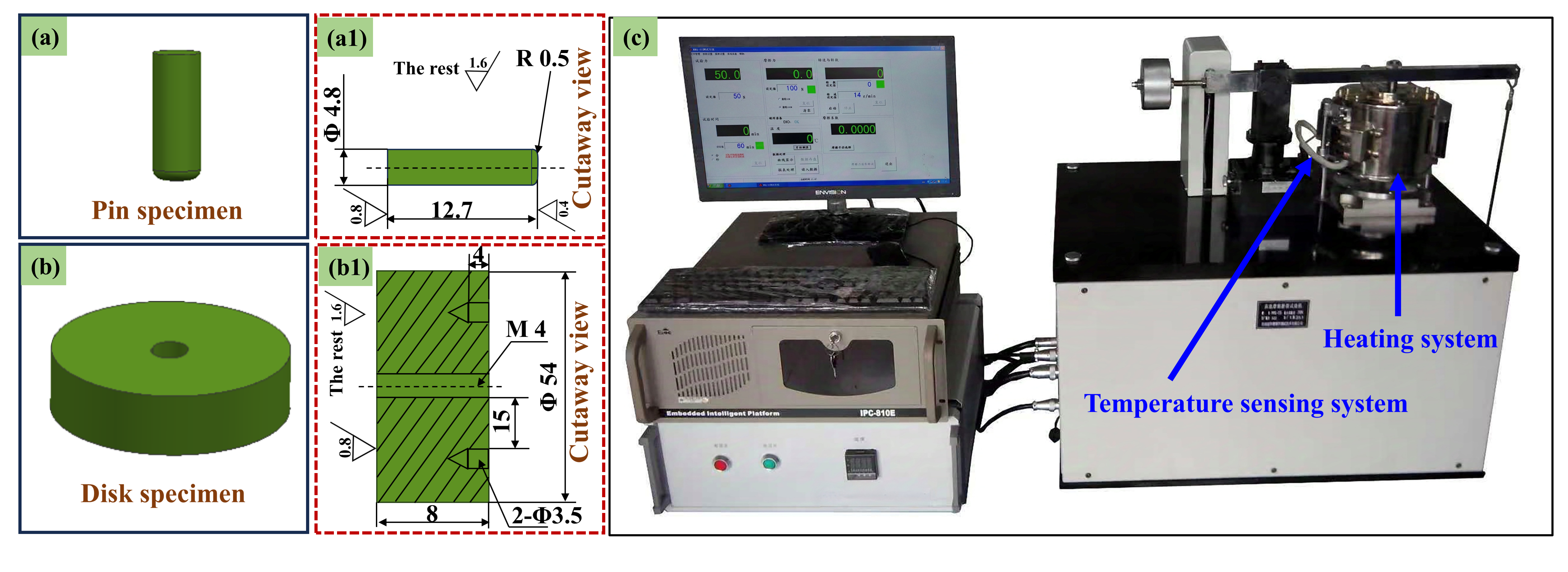
Disk specimens of AISI H13 and 5CrNiMo hot-work tool steels (Φ30 mm × 8 mm) and pin specimens of AISI 304 stainless steel (Φ4.8 mm × 12.7 mm) were used as the wear and counter face materials, respectively. The 304 stainless steel pins simulate the clad layer material used during the hot extrusion of nickel-based powder superalloys. The chemical compositions of the two materials are listed in Table 1 and Table 2. Figure 1 shows a schematic diagram of the pin-disk specimen configuration. The test parameters are summarized in Table 3.

2.2. Test Equipment

A pin-on-disk tribometer was used for the friction and wear tests in this study. Appropriate normal loads were applied using standard weights. A heater installed on the inner wall of the chamber allowed the disk to be heated to the desired temperature. The tribometer was equipped with a computerized data acquisition and control system, enabling precise control and monitoring of the applied temperature, friction radius, load, and motor speed.

2.3. Experimental Procedure

The test parameters were as follows: normal loads of 10 N, 50 N, and 100 N; friction radius of 11 mm; temperature of 1000 °C; motor speed of 13 r/min, corresponding to a sliding velocity of 15 mm/s; and a test duration of 600 s, corresponding to a sliding distance of 9 m. Under each applied load condition, the friction and wear test was repeated three times to ensure the reliability of the experimental results.
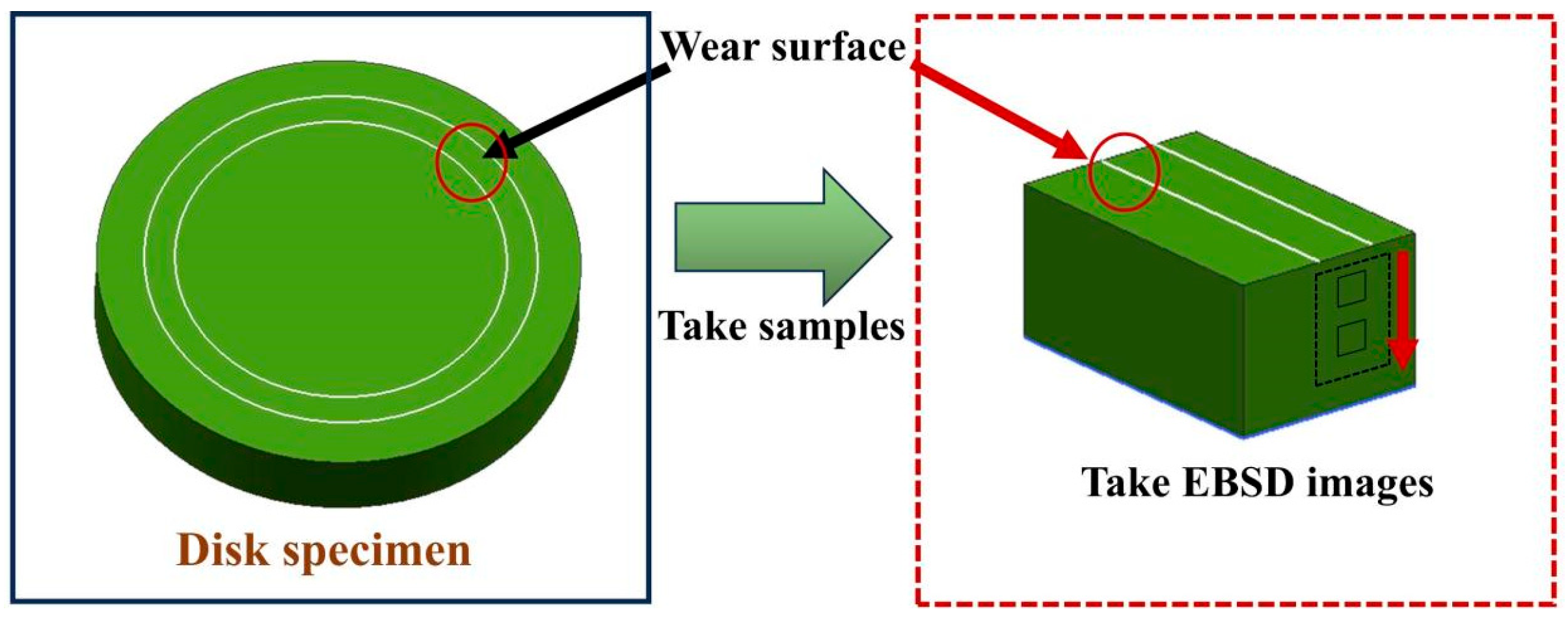
Prior to testing, all disks and pins were ultrasonically cleaned in ethanol for 60 s. During the heating stage, a thermocouple was used to heat the chamber to the desired temperature while the upper pin specimen was kept separated from the disk. Once the target temperature was reached, the pin was brought into contact with the disk, followed by the application of the load and initiation of the test. After the test, each sample was ultrasonically cleaned in ethanol for 60 s. Then, the wear rate of the disk was characterized by scanning electron microscope (SEM), electron backscatter diffraction (EBSD) and 3D profilometer. The wear morphology of the disk was characterized, and the effect of friction on the grain size of the subsurface layer and the wear rate of the disk sample were analyzed. The wear rate is calculated using Equation (1): where V is the Wear volume (mm3) (directly given by profilometer), F is the normal load (N), and L is the total sliding distance (m). Cut a portion of the EBSD sample from the disk sample, as shown in Figure 2.
W v = V F L

3. Finite Element Simulation

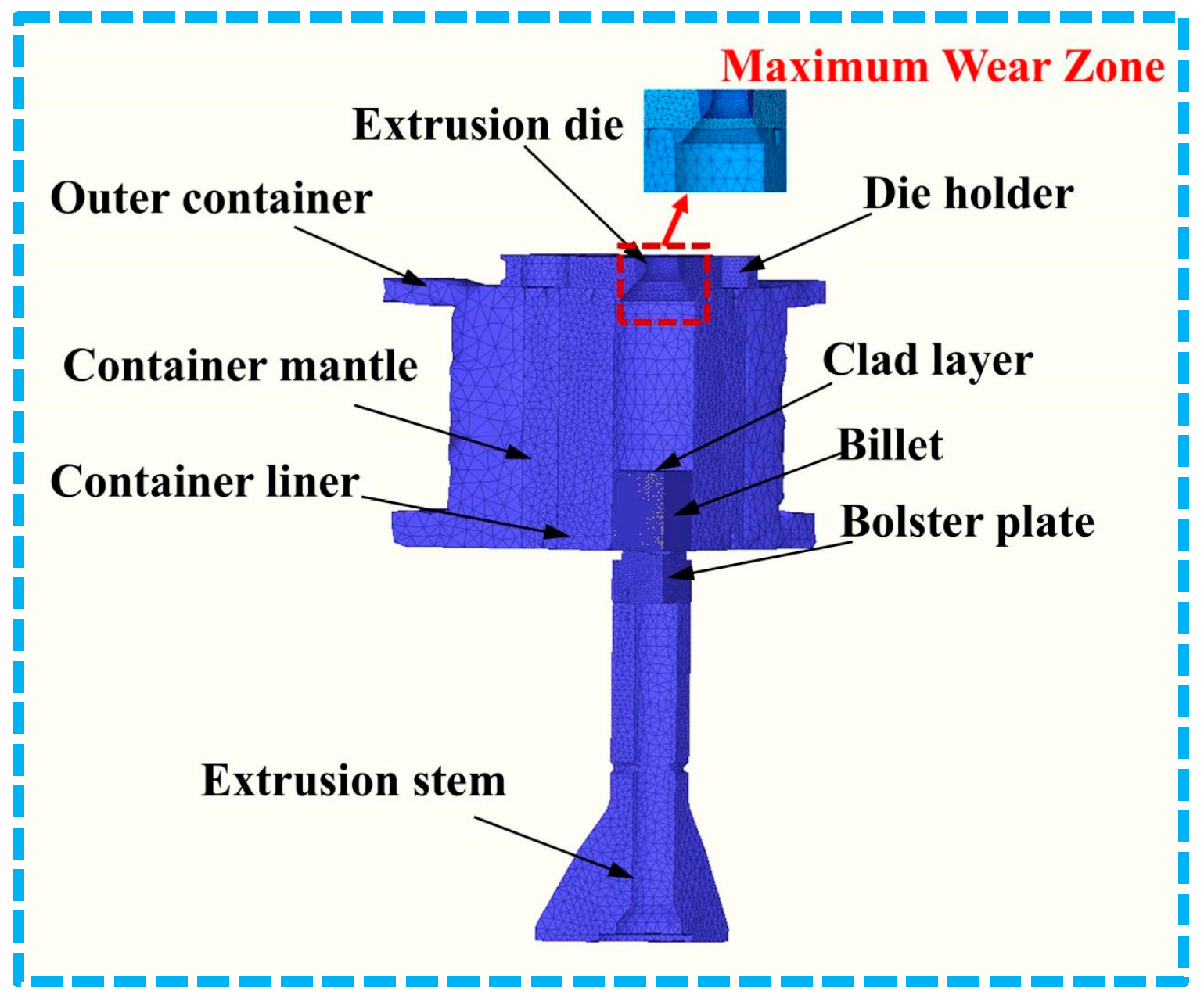
To analyze the stress and temperature distributions of the billet and die during the extrusion of nickel-based powder superalloys, a three-dimensional finite element model of clad extrusion was established using DEFORM-3D v11.0 software. DEFORM-3D is a professional finite element simulation software developed by Scientific Forming Technologies Corporation. SFTC was registered and established in Columbus, OH, USA in 1991. The geometric model included the billet, clad layer, extrusion die, die holder, bolster plate, extrusion stem, and the inner, middle, and outer containers of the extrusion cylinder, as shown in Figure 3. The billet was made of a novel nickel-based powder superalloy, for which true stress-true strain curves were experimentally obtained from hot compression tests at 1000–1250 °C and strain rates of 0.001–1 s−1. These data were used to construct the constitutive relationship of the material, which was then input into the DEFORM-3D material library (in Equation (2)). The clad layer and die materials were selected from the DEFORM-3D built-in material database as AISI 304 and AISI H13 steels, respectively.
ε = A sin α σ n exp Q R T
Including: A, n and α are material constants, Q is the deformation activation energy of the alloy, and its unit is kJ/mol; σ is the flow stress; T is the deformation temperature of the alloy; R is the molar gas constant.
Initial values and boundary conditions were set according to the actual extrusion process. Considering the heat loss of the billet during transfer from the furnace to the extrusion container, the initial temperature of the clad layer was set to 1050 °C, while all die components, except for preheated parts, were initially at room temperature. Meshing was performed for the billet, clad layer, and all die components. The number of elements for the billet, clad layer, extrusion die, die holder, bolster plate, extrusion stem, container liner, container mantle, and outer container were 67,891; 34,422; 11,270; 14,077; 15,046; 10,512; 16,546; 12,582; and 14,796, respectively. The die components were assumed to be rigid bodies and only participated in heat conduction analysis. In contrast, the billet and clad layer were treated as deformable bodies and subjected to coupled deformation-thermal analysis. The interface friction between the billet and die was modeled using a frictional contact approach.
Figure 3. Finite element model of the extrusion process.
Lubricants 14 00055 g003
During the extrusion process, the temperature field, effective stress distribution, and extrusion force variation in the billet were recorded. Using a reverse interpolation method, the contact forces exerted by the billet on the die were back-calculated onto the die surface, thereby obtaining the stress and temperature evolution of components such as the extrusion die, die holder, and extrusion container.

4. Results and Discussion

4.1. Finite Element Simulation Results of the Extrusion Process

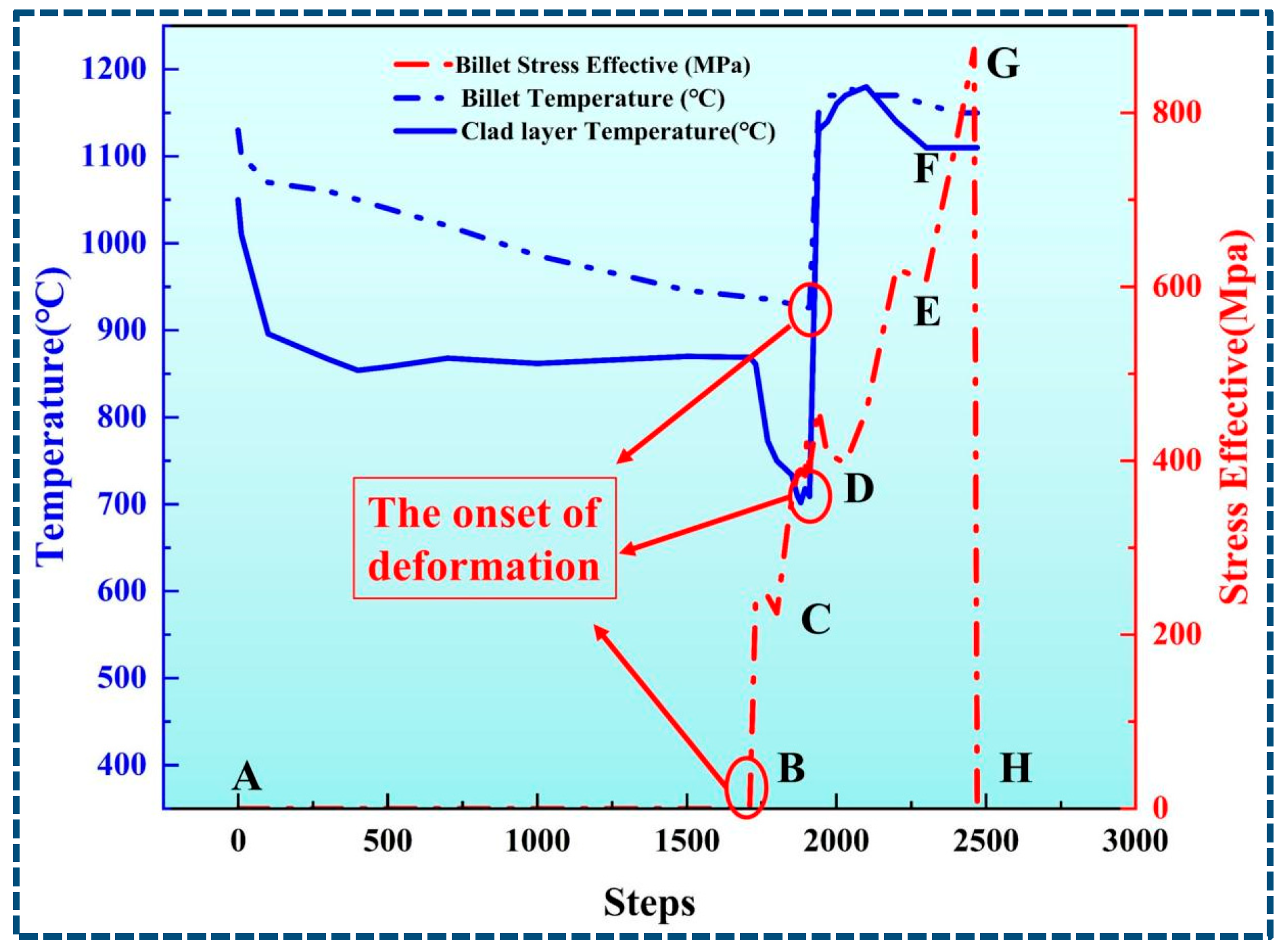
Figure 4 shows the qualitative analysis of the stress on the billet and the temperature variations in both the billet and the clad layer obtained from the extrusion simulation. To analyze the die loading conditions during extrusion, Figure 4 also presents the variation in the effective stress experienced by the billet as the bar is extruded. According to the flow characteristics of the material during extrusion, conventional extrusion theory typically divides the deformation process into three stages: the billet filling stage, the steady-state extrusion stage, and the final tailing stage. These three deformation stages correspond to three distinct regions on the billet stress curve. As shown in Figure 4, for the extrusion of nickel-based powder superalloy cladding, the segments BC, CG, and GH of the curve correspond to the billet filling stage, the steady-state extrusion stage, and the final tailing stage, respectively.
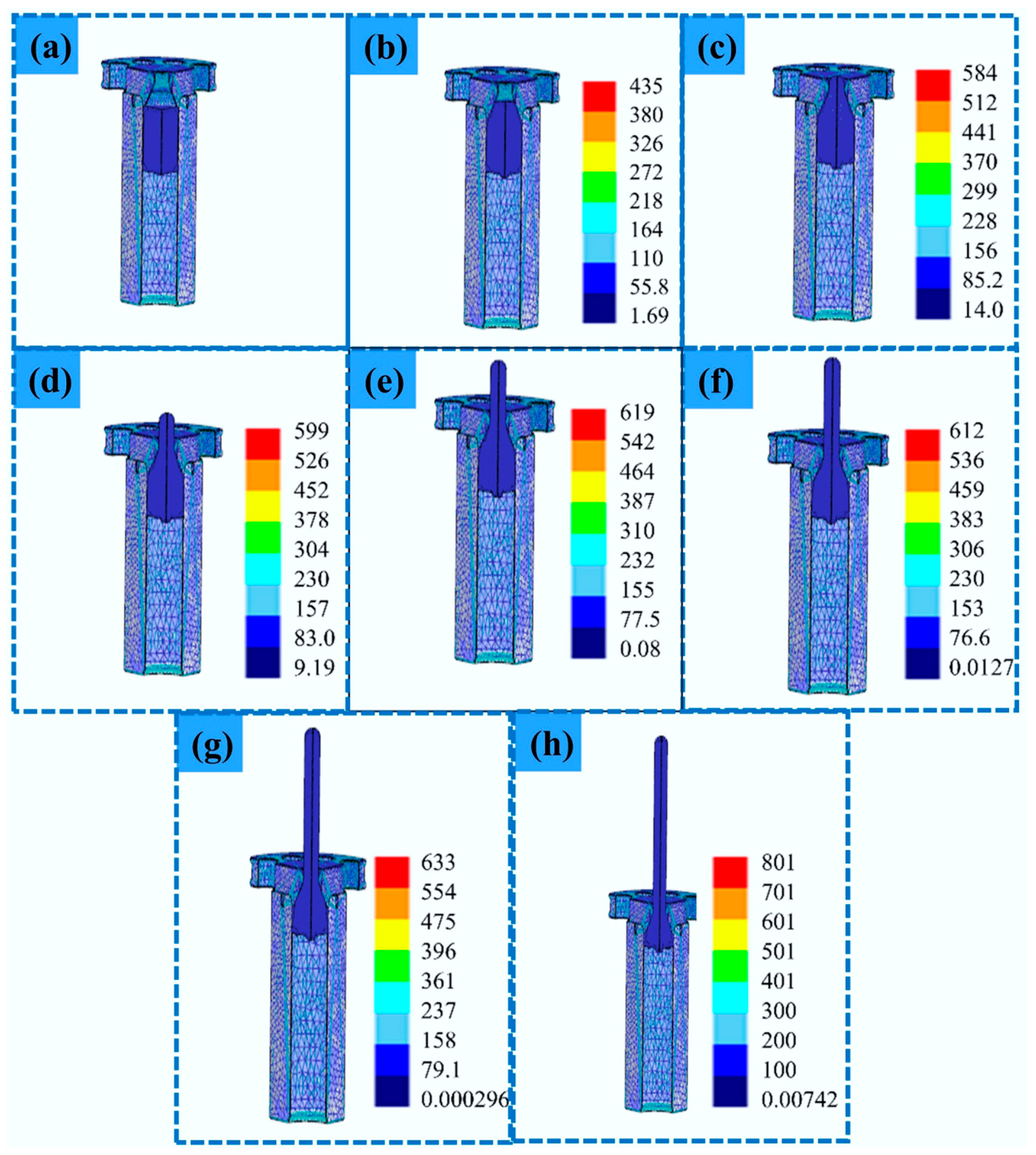
Figure 5 shows the variation in effective stress in the billet during the extrusion process. In the billet filling stage (curve BC in Figure 4 and Figure 5b), due to the gap between the clad layer and the inner wall of the extrusion container, the clad billet undergoes upsetting deformation under the axial force to fill the gap. Since the deformation resistance of the can is lower than that of the billet, the gap between the clad layer and the container wall is filled first. At this stage, as the billet diameter decreases, the extrusion force gradually increases. Once the cladding material completely fills the gap with the container wall, both the clad layer and the billet begin to fill the gap between the billet and the die holder, causing the extrusion force to rise sharply. When the billet is fully extruded from the die, the extrusion force stabilizes. During this stage, the overall deformation of the billet is relatively small, with only a small portion near the die exit undergoing volume change (Figure 5b).
The steady extrusion stage of the clad layer differs from the extrusion of a monolithic material, and the corresponding extrusion force curve exhibits several inflection points, such as points C, D, and E in Figure 4, which cannot be directly analyzed using conventional extrusion theory. Based on the stress curve of the billet shown in Figure 4, the clad layer extrusion process in this study is divided into three stages: (I) extrusion of the clad layer head (corresponding to curve BC), (II) extrusion of the billet (corresponding to curve CD), and (III) extrusion of the clad layer tail (corresponding to curve DE). From Figure 4 and Figure 5d, it can be seen that the clad layer exits the die first and gradually enters steady-state deformation, during which the extrusion force increases with the upward movement of the extrusion and bolster plate and eventually stabilizes. In stage II, the billet enters the deformation zone and is extruded from the die, with several inflection points appearing on the extrusion force curve (Figure 4). Inflection point B marks the beginning of billet entry into the deformation zone, with the extrusion force increasing from 0 to approximately 435 MPa. As shown in Figure 5b, the billet has already begun to deform, and the die starts to experience the resistance caused by billet deformation. Point C corresponds to the onset of billet flow from the die, where the extrusion force is around 584 MPa. At this moment, the clad layer, having exited the die first, experiences a rapid temperature drop (from 1050 °C to about 730 °C), while the billet temperature decreases only slightly. During the subsequent steady extrusion stage, the billet undergoes severe deformation, resulting in a temperature rise, but the increase in effective stress is relatively small, with a maximum effective stress of approximately 612 MPa. As the billet volume in the deformation zone decreases, the extrusion force gradually declines, with point G indicating the complete extrusion of the billet from the container. In stage III, the remaining clad layer continues to be extruded. Due to its prolonged contact with the die, its temperature and deformation resistance slightly increase, causing a minor rise in the extrusion force.
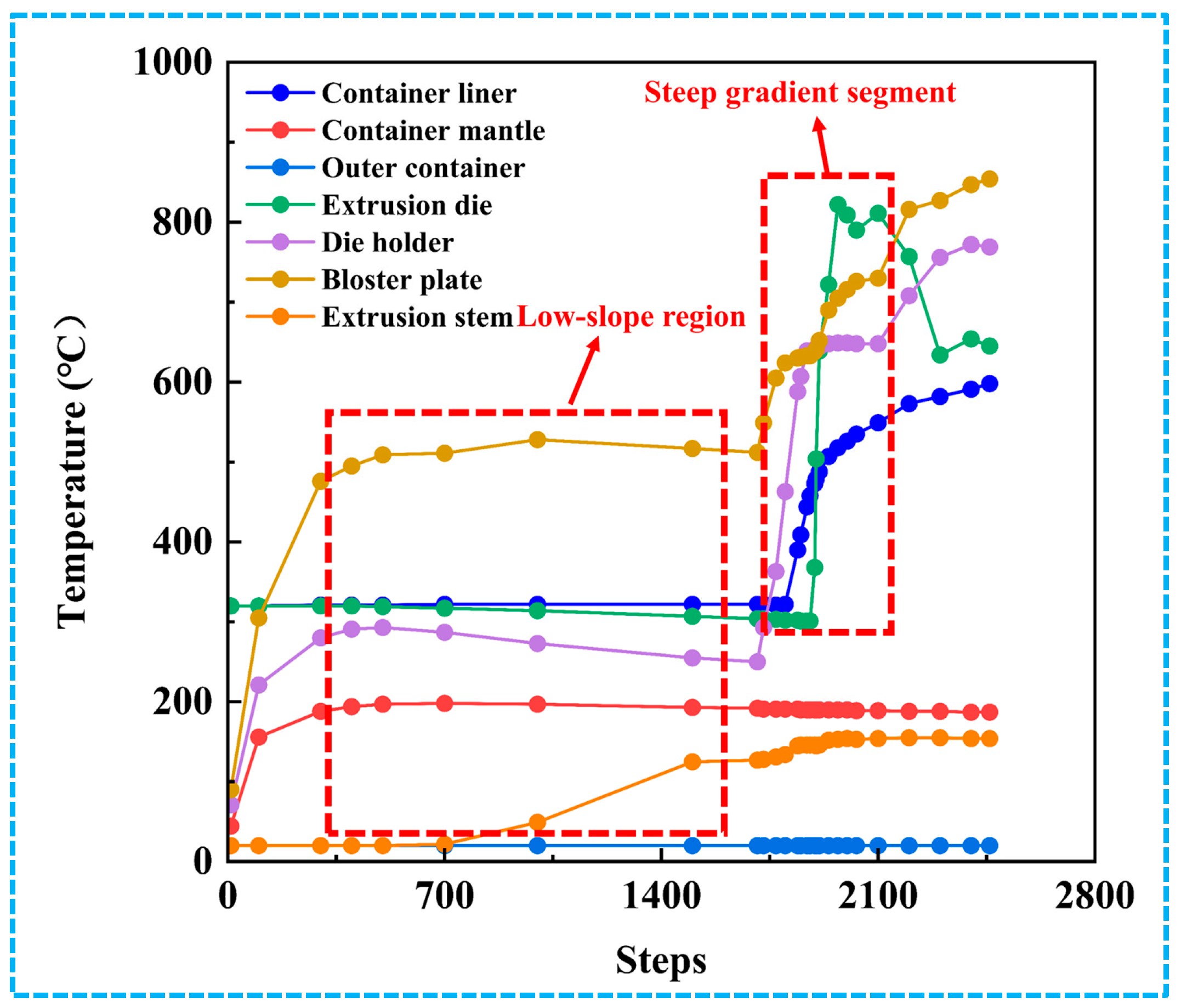
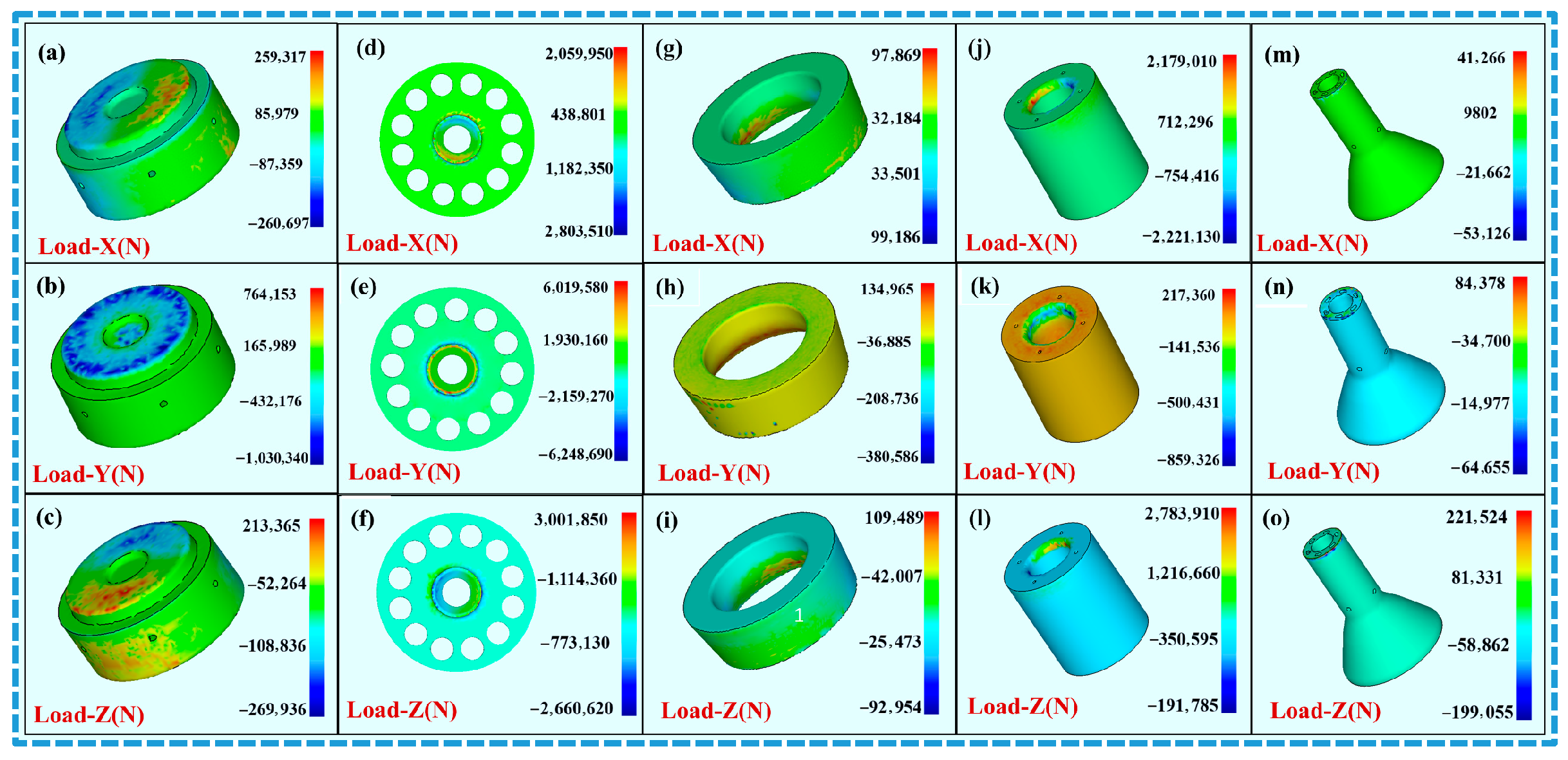
From the above analysis, it can be seen that the extrusion of the billet generates substantial heat and high extrusion forces due to plastic deformation, which readily causes wear and damage to the extrusion die. Based on this, the stress state of each die component during extrusion was further simulated. As shown in Figure 6, the temperature of the die holder rises rapidly during the extrusion process, corresponding to point C in Figure 4. At this stage, the billet experiences significant deformation, resulting in a high deformation resistance and an increase in billet stress to approximately 584 MPa. Consequently, the reaction force on the die holder is also large, with a maximum force of 6.2 MN (Figure 7d–f). The lower end of the extrusion stem is in direct contact with the extrusion press, transmitting the extrusion force to the entire die assembly. According to the simulation results, the extrusion stem bears the second-highest extrusion force after the die holder. The stress on the inner, middle, and outer containers of the extrusion cylinder decreases sequentially.
As shown in Figure 5, during the first 1500 steps, the billet has not yet entered the plastic deformation zone, resulting in minimal temperature variation and near-zero stress. As the billet enters the deformation zone, the temperature rapidly rises to approximately 1150 °C, and the effective stress jumps to over 900 MPa (Figure 4, region (B–C)), mainly due to the high metal flow resistance at the initial stage of extrusion, which significantly increases local contact pressure and frictional heating [29]. Figure 6 shows that the die temperature approaches 900 °C at this stage, exacerbating die softening and leading to the highest wear rate. The stress peak occurs around step 1500, indicating that this stage corresponds to the most wear-prone period of the die. The primary wear mechanisms of the extrusion die are thermal wear and oxidative wear under high-temperature conditions [1].
The temperature of the container liner of the extrusion cylinder increases nearly linearly, and after step 1700, the rise becomes significant, exceeding 600 °C, which may induce thermal fatigue wear. Both the temperature and stress of the extrusion stem are relatively high (Figure 7), and since it transmits the extrusion force, wear is primarily concentrated at the contact area with the extrusion press. The die holder bears the initial deformation resistance of the billet and clad layer. Figure 6 and Figure 7 show that its temperature rapidly rises to approximately 800 °C after step 1600, while it also sustains the highest contact pressure (Figure 7d–f); the maximum load in the Y direction reaches 6.24 MN, with substantial loads also present in the X and Z directions, indicating that the die holder provides die-cavity positioning and radial constraint during extrusion. As a supporting component, the mating surface between the die holder and the extrusion die experiences high contact pressure and friction, making it susceptible to fatigue wear and localized plastic deformation.
The maximum stress occurs at the die exit (Figure 7g–i), where the billet experiences both high shear stress due to material flow and compressive normal stress, resulting in local stress superposition. The high contact pressure causes material adhesion and delamination during sliding, while frictional heating further induces local softening [30]. The bolster plate (Figure 7a–c) bears the axial load required to push the billet through the die cavity as well as lateral frictional forces, resulting in relatively high local stress, which is further increased at elevated temperatures. For the container liner (Figure 7j–l), the peak contact pressure occurs at the upper end of the cylinder, associated with the large contact area with the billet and the onset of billet deformation in this region, making it subject to significant load and wear. The extrusion stem primarily experiences axial compression, with a pronounced stress concentration at its upper end where it connects to the bolster plate. The lower tapered section of the stem transmits the extrusion force to the base, resulting in a maximum load in the Z direction of 221 KN (Figure 7m–o).

4.2. Friction Coefficient and Friction Curves

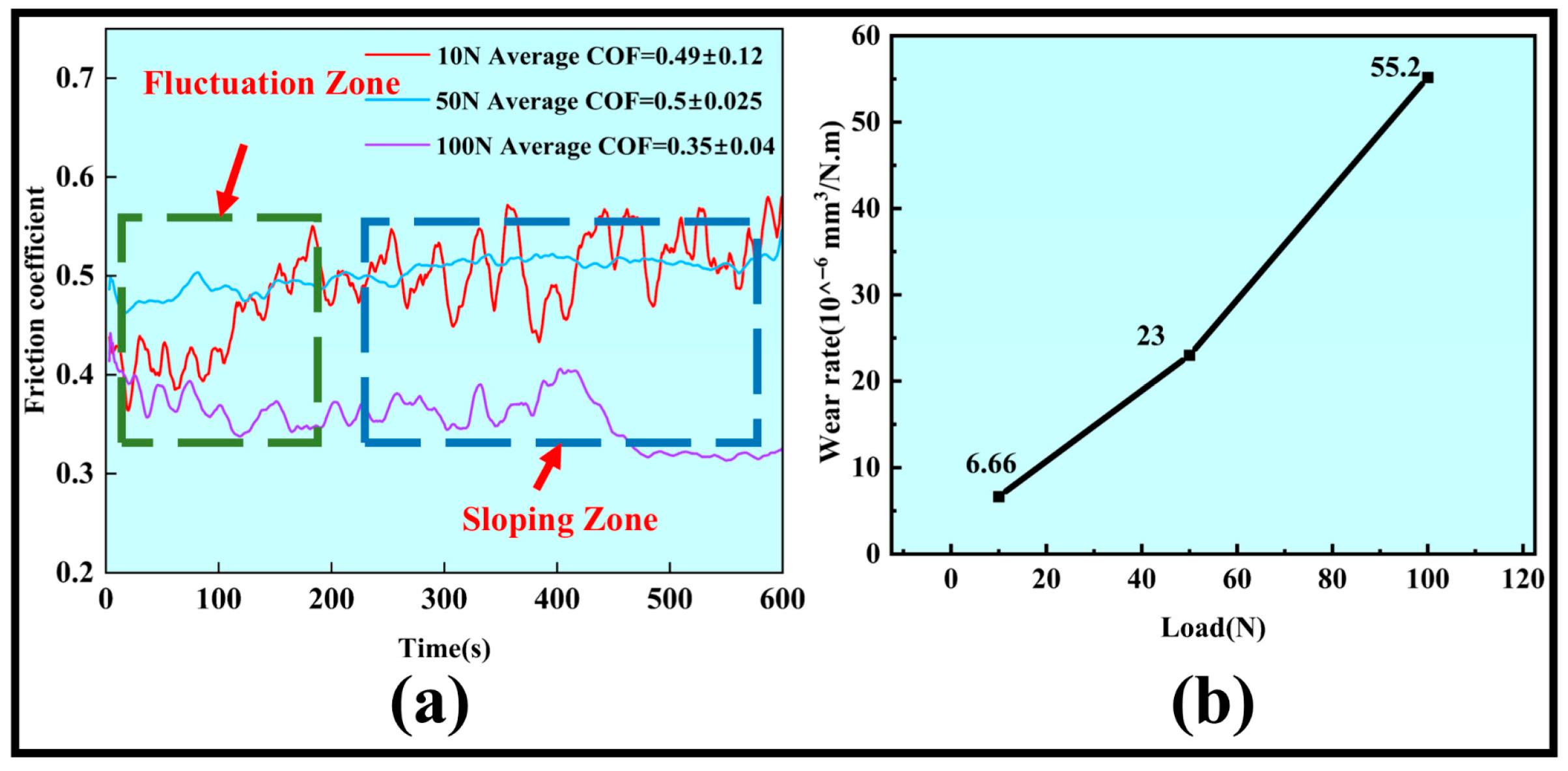
The friction curve and wear rate of H13 hot working tool steel and 304 stainless steel at 1000 °C are shown in Figure 8. From the curves, it can be seen that all curves exhibit a brief initial increase and fluctuation in the friction coefficient, corresponding to the period during which the contacting surfaces gradually undergo running-in to reach a stable state. After this short running-in stage, both specimens enter a relatively stable condition. At a load of 10 N, the friction coefficient exhibits larger fluctuations and a higher average value of 0.49 (Figure 8). This is because, under low load, the true contact stress is small, and the high asperities on the material surface are not significantly flattened. At 1000 °C, the weak oxide film forms and breaks intermittently, and the oxide debris cannot be continuously compacted to form a stable layer. The repeated formation and spalling of the oxide layer lead to sustained fluctuations in the friction coefficient throughout the test [31]. In addition, the high Cr content in H13 steel results in a brittle primary oxide, making it prone to instability. When the load increases to 50 N, the amplitude of friction fluctuations decreases significantly because the higher load provides a more realistic contact pressure, flattening some surface asperities and compacting part of the oxide debris. “This stabilization effect reaches its optimum at 50 N, whereas further increasing the load to 100 N introduces periodic oxide delamination and shear instability, leading to renewed friction fluctuations despite a lower average friction coefficient”. A third-body layer forms locally, but it remains insufficiently continuous or dense to fully separate metal-to-metal contact. At 50 N, the friction behavior corresponds to a transitional regime, where localized adhesive junction formation and delamination intermittently dominate due to the incomplete and mechanically unstable oxide layer, resulting in a slightly higher average friction coefficient. At 100 N, the friction regime shifts toward plastic-flow-and third-body-controlled behavior due to pronounced thermal softening and surface deformation. At a load of 100 N, the friction coefficient decreases noticeably due to enhanced plastic flow and softening of the material surface, which increases the real contact area. Simultaneously, a large amount of oxide debris is compacted under high stress to form a continuous and dense third-body layer or a sufficiently thick oxide film. This layer exhibits lower shear stress and effectively isolates direct metal-to-metal contact, significantly reducing the friction coefficient. Moreover, the combined effect of high-temperature oxides and substrate softening lowers the interfacial shear strength, further decreasing friction [32]. As shown in Figure 8b, the wear rates of 10 N to 100 N are 6.66 × 10⁻⁶, 23 × 10−6, and 55.2 × 10⁻⁶ mm3/(N·m), respectively. The wear rate of H13 steel increases with the increase in load. This result indicates that there is not always a positive correlation between friction coefficient and wear rate.
At low loads, 5CrNiMo exhibits similar frictional dynamics to H13; the formation and rupture rates of the oxide film are in an unstable balance, and the third-body particles cannot be stably compacted, resulting in fluctuations in the friction coefficient. The inherent surface roughness and oxidation tendency of the material determine this initial instability. As the load increases to 50 N and 100 N, the friction coefficient gradually decreases, and its fluctuations stabilize, exhibiting better stability than H13. Compared with H13, the alloying elements in 5CrNiMo (such as Ni and Mo) promote the formation of a denser oxide during high-temperature oxidation. Under higher loads, the surface undergoes faster plastic flow, compacting the oxide debris more effectively, thereby shortening the transition from the unstable to the stable friction regime.
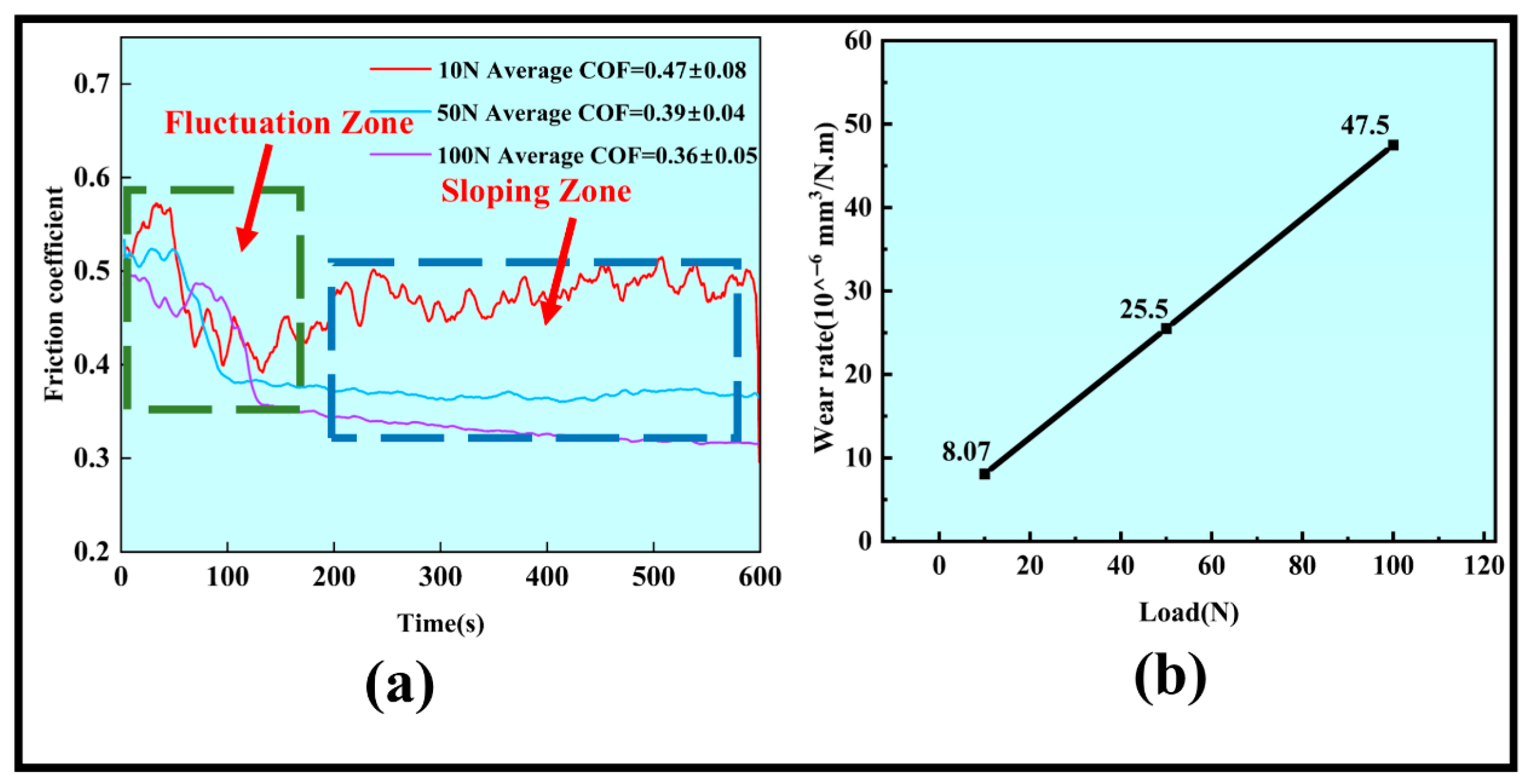
In summary, H13 steel, containing relatively high amounts of Cr, Mo, and V, forms oxide films at high temperatures that are primarily composed of Cr and Fe oxides. Although the Cr-rich oxide layer is dense, it is brittle and prone to cracking or spalling during friction [33,34], resulting in large fluctuations and a relatively high average friction coefficient. In contrast, in 5CrNiMo steel, Ni and Mo form oxides that combine with Fe oxides to produce a more adhesive oxide layer at high temperatures. Moreover, Mo promotes the formation of softened, easily sheared oxide films or Mo-rich lubricating debris [35]. Under high loads, this oxide debris is compacted into a solid lubricating layer with low shear strength and continuity, maintaining a lower and more stable friction coefficient. As shown in Figure 9b, the wear rates of 5CrNiMo steel from 10 N to 100 N show the same trend as H13 steel, which are 8.07 × 10⁻⁶, 23 × 10−6, and 55.2 × 10⁻⁶ mm3/(N·m), respectively. But there is a small difference in numerical values, especially when the load is increased to 100 N, the wear rate of 5CrNiMo steel is smaller, which also indicates that 5CrNiMo steel has better wear performance.

4.3. Wear Mechanisms

To gain a deeper understanding of the wear mechanisms of H13 and 5CrNiMo hot-work tool steels under different load conditions, the specimens after the friction and wear tests were examined using SEM, and EDS was employed for qualitative elemental analysis of the worn surfaces.
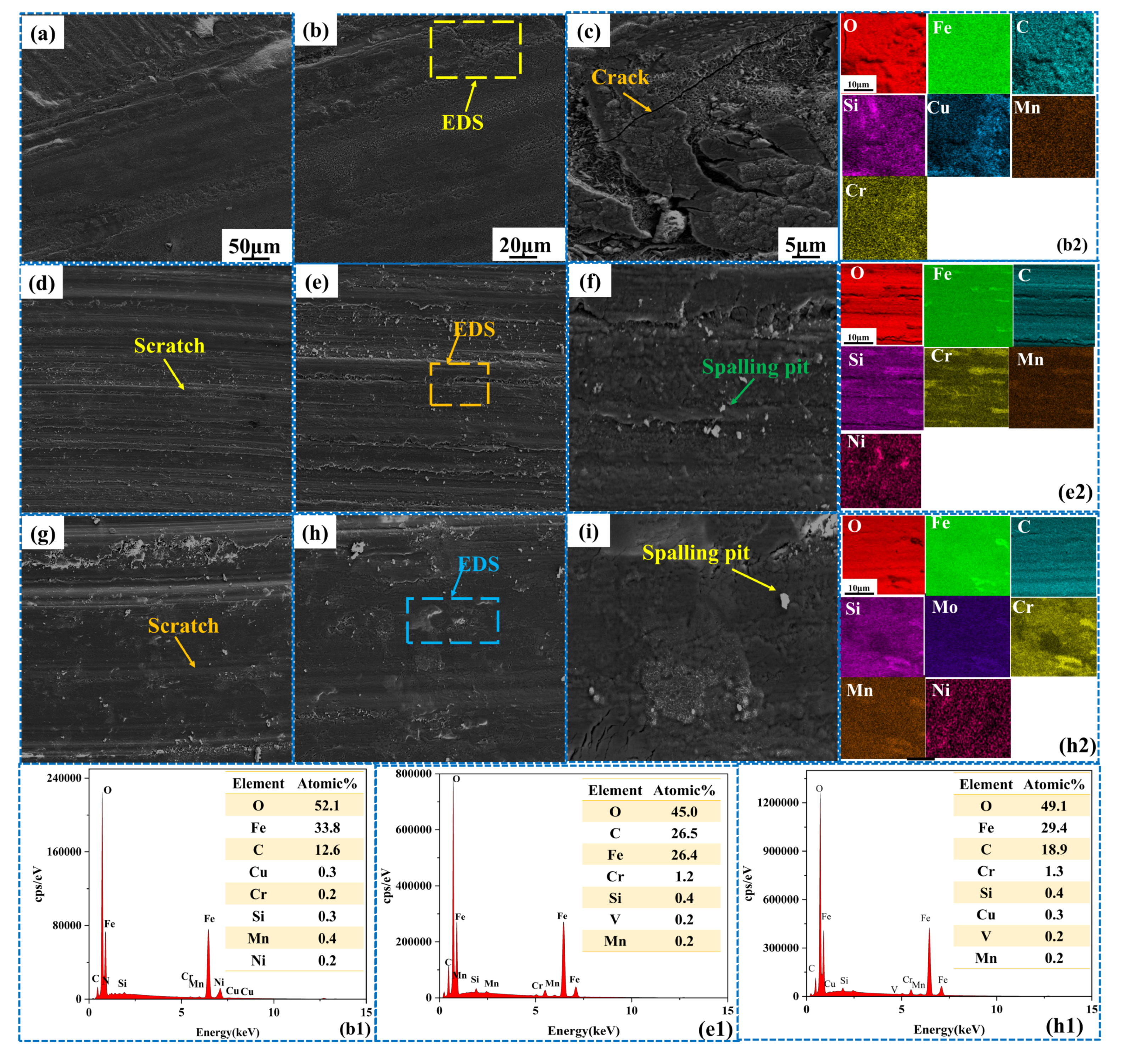
Under a load of 10 N, the worn surface of H13 steel exhibited particles of varying sizes (Figure 10a–c), along with small spallation pits and slight wear scratches in the worn area. Analysis indicates that the surface of H13 steel undergoes oxidation at high temperature, forming hard oxide particles whose hardness is much higher than that of the H13 steel substrate. During relative sliding between the pin and disk specimens, these oxide particles penetrate the surface of the hot-work tool steel, causing plastic deformation and forming grooves and pits, which are characteristic features of abrasive wear [36,37]. SEM images reveal chrysanthemum-like wear morphologies on the worn surface (Figure 10i), along with dendritic cracks in the same region, indicating significant degradation of the contacting surfaces under high temperature. With increasing load, a denser oxide film formed on the worn surface, accompanied by localized spallation pits. Notably, at a load of 100 N (Figure 10d–f), the oxide film thickness increased significantly, and local oxide spalling was observed. EDS analysis shows that the oxide film is primarily composed of Fe oxides, indicating that oxidation is intensified under high load, and the oxide layer contributes to reducing the friction coefficient. Additionally, the spalled oxide particles form granular debris on the surface, further aggravating wear.
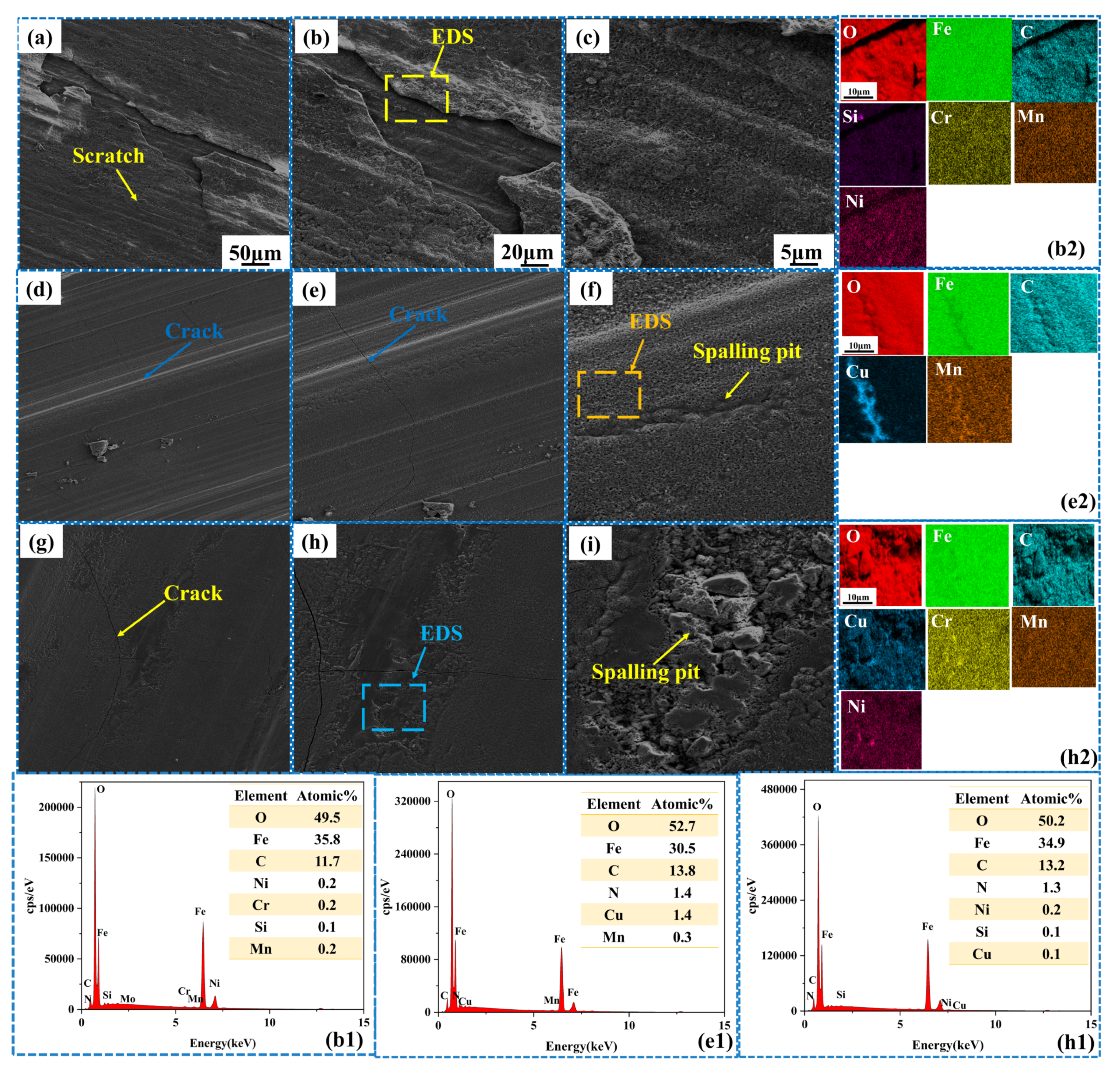
Under a load of 10 N, the worn surface of 5CrNiMo steel (Figure 11a–c) is relatively smooth, with slight grooves and localized spallation features. EDS analysis (Figure 11(b1,b2)) indicates the presence of oxygen on the worn surface, suggesting the formation of an oxide film at 10 N. This oxide film partially isolates direct metal-to-metal contact, thereby reducing friction and adhesion. Consequently, under low load, the wear mechanism is dominated by mild abrasive and oxidative wear, resulting in relatively gentle wear. As the load increases to 50 N (Figure 11d–f), pronounced stretching and tearing marks, along with flake-like spallation structures, appear on the worn surface, indicating that the elevated contact stress causes localized rupture of the oxide film and intensified plastic deformation of the material. EDS analysis (Figure 11(e1,e2)) shows an increase in substrate elements (Fe, Cr, Ni, Mo), indicating that the oxide film cannot maintain complete coverage. At this stage, the wear mechanism transitions from abrasive wear toward adhesive wear and severe oxidative wear, exhibiting pronounced layered spallation, which reflects significant internal shear stress within the material. When the load increases to 100 N (Figure 11g–i), the wear tracks display deep grooves, prominent furrows, extensive spallation, and severe plastic deformation, characteristic of heavy wear. Under these conditions, frictional heating and contact stress are significantly enhanced, causing rapid formation and continuous rupture of the oxide film.
EDS analysis (Figure 11(h1,h2)) shows that oxygen remains abundant on the surface, but the oxide film is discontinuous and fragmented, preventing the formation of a stable protective layer. Due to enhanced softening of the metal at high temperature, the surface material undergoes severe plastic deformation, adhesion, and repeated tearing of the oxide film, resulting in a transition of the wear mechanism toward a mode dominated by severe adhesive wear and delamination wear [38].
The above observations indicate that under high-temperature friction at 1000 °C, both H13 and 5CrNiMo tool steels exhibit a decreasing trend in friction coefficient with increasing load; however, significant differences are observed in their frictional fluctuation behavior. H13 shows prolonged and large-amplitude fluctuations at low load, which decrease at 50 N and are further reduced at 100 N. In contrast, 5CrNiMo exhibits notable fluctuations at 10 N, but when the load increases to 50 N or 100 N, fluctuations only appear during the initial stage and rapidly stabilize to a low-friction state. This behavior can be attributed to differences in high-temperature oxidation, the formation and compaction efficiency of the third-body layer, plasticity of the substrate, and material transfer to the counter face between the two steels. Overall, at high loads, the increased real contact area, compaction of debris and oxides, and formation of a third-body layer reduce interfacial shear strength, thereby lowering and stabilizing the friction coefficient.

4.4. Effect of Friction on Die Grain Structure

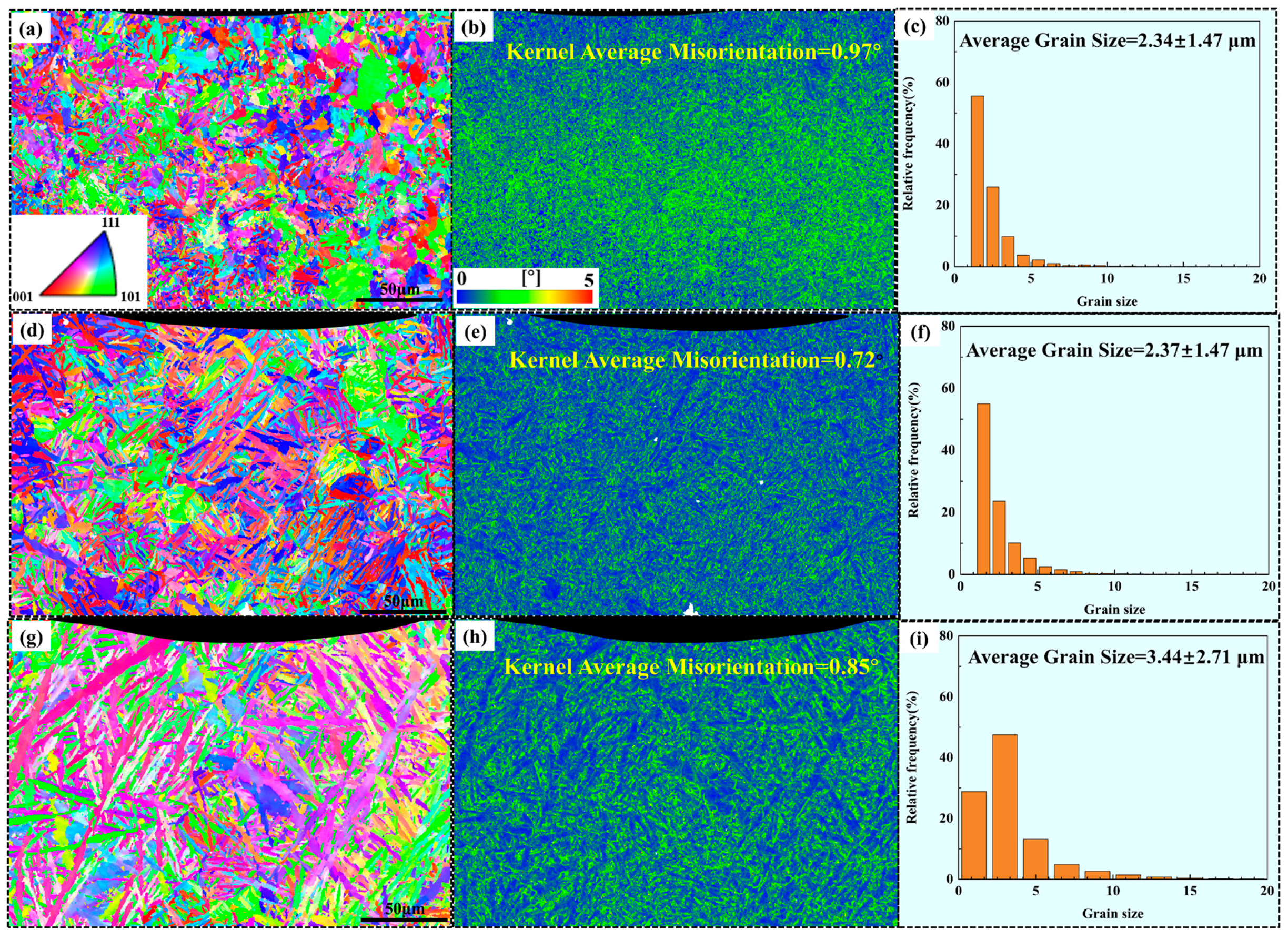
To further investigate the effect of friction on the subsurface microstructure of die materials, EBSD analysis was performed on 5CrNiMo and H13 steel specimens after the friction and wear tests. EBSD images were captured from three different regions of each specimen to analyze the influence of frictional forces on the internal grain structure of the dies.
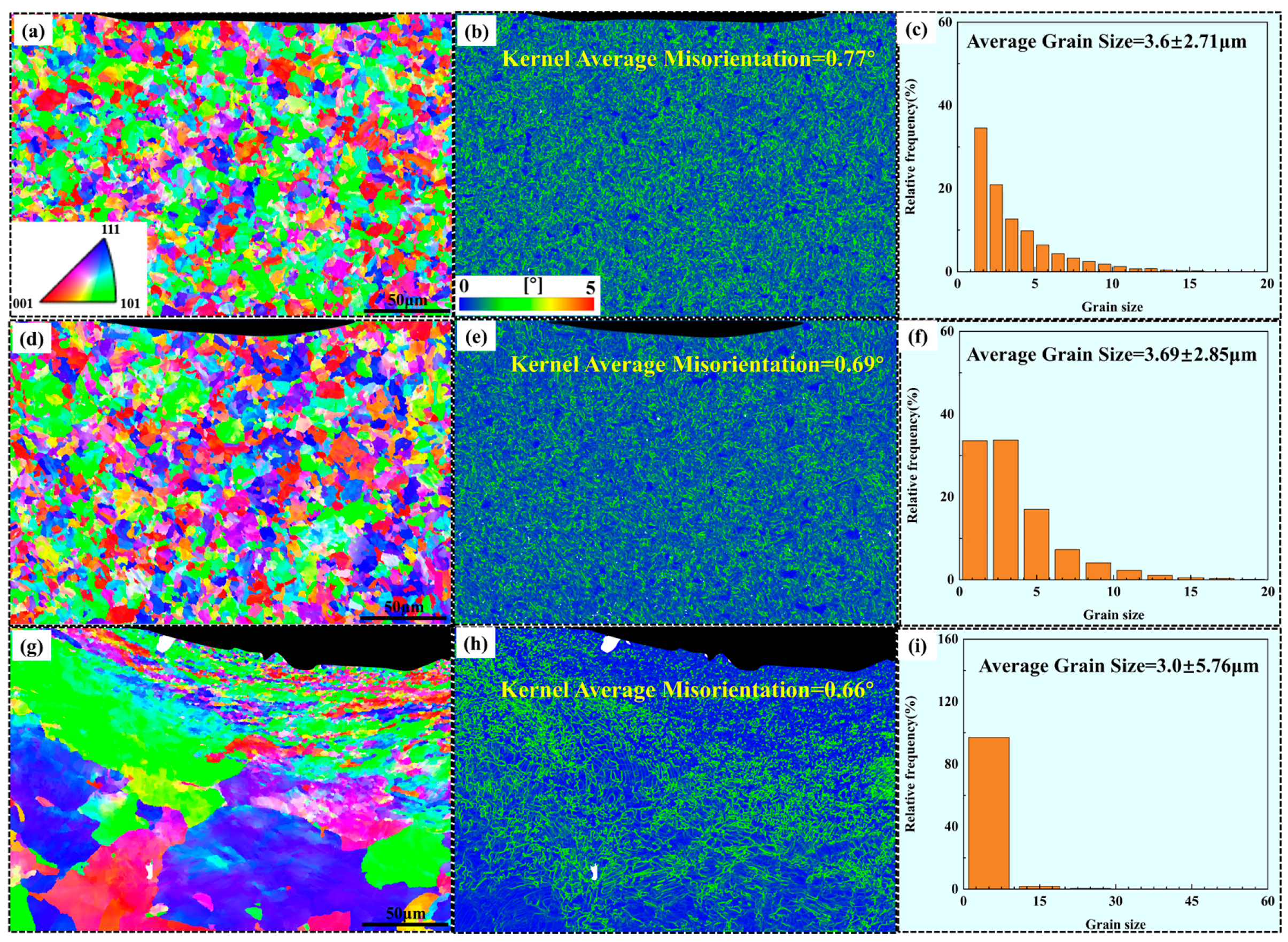
The EBSD results in Figure 12a–c indicate that for 5CrNiMo steel under a load of 10 N, the inverse pole Fig (IPF) maps show that grains near the surface largely retain their original mixed equiaxed structure, with an uneven grain size distribution. Additionally, the high average KAM value (0.77°) and the prevalence of yellow-green regions indicate inhomogeneous dislocation distribution and localized plastic strain in the surface layer, reflecting significant localized deformation and high dislocation density, with relatively large or unchanged average grain size. At 50 N, the IPF maps reveal regions of equiaxed fine grains, indicating grain refinement. The KAM values near the surface initially increase but then decrease in certain areas of the surface layer and exhibit a more uniform distribution, corresponding to a reduction in average grain size. At 100 N, the surface grains show more pronounced equiaxed and refined structures, while the KAM values further decrease and are uniformly distributed, suggesting partial dislocation annihilation due to recrystallization and the formation of a stable mechanically mixed layer, with a smaller average grain size.
At 1000 °C, increasing the load drives continuous recrystallization, rapidly transforming the surface layer through plastic deformation and recrystallization into a mechanically mixed layer with low dislocation density and equiaxed grains. At high temperature, this layer exhibits compliance and combines with oxide debris, promoting the formation and maintenance of a dense third-body layer. Under high load, the near-surface layer undergoes severe shear deformation at higher temperatures, which promotes dynamic recovery and sustained recrystallization processes. The gradual elimination and rearrangement of dislocations lead to a reduction in local distortion and the formation of small equiaxed grains.
For H13 steel under a load of 10 N, the IPF map (Figure 13a) shows no obvious grain refinement layer. The KAM values are high and highly unevenly distributed, indicating localized regions of high dislocation density and strain concentration in the surface layer. Additionally, the average grain size shows little change. At 50 N (Figure 13d), localized grain deformation and some refinements are observed, but the KAM values (Figure 13e) remain high and spatially dispersed. At 100 N (Figure 13g), fine-grained bands are locally visible, but most areas exhibit spallation pits or cracks, and the surface refinement layer is relatively thin.
H13 steel, containing relatively high amounts of Cr, V, and Mo, forms a dense but brittle oxide film primarily composed of Cr and Fe at 1000 °C. This oxide film is prone to cracking and spalling under frictional shear and thermal cycling. The spalling exposes the underlying surface repeatedly, leading to re-oxidation and a cycle of adhesion and delamination. Consequently, the subsurface experiences alternating high shear and instantaneous load variations, generating localized dislocations and cracks, which inhibit continuous recrystallization. This results in high and unevenly distributed KAM values.
Under high-temperature friction, 5CrNiMo steel and H13 steel exhibit significantly different microstructural evolution paths, which is consistent with the research results in the literature. For 5CrNiMo steel, as the load increases from 10 N to 100 N, the surface layer transitions from a state of high dislocation density and uneven distribution (high KAM value) to an equiaxed fine-grained region with low KAM value, indicating the occurrence of dynamic recrystallization (DRX) under high temperature and high strain conditions. These small equiaxed grains are mainly formed by the dynamic recrystallization mechanism, manifested as a thin and dense tribo layer, which combines with compacted oxides to form a stable three-body layer, contributing to the rapid reduction and stability of the friction coefficient [39].
Similar studies have shown that frictional heating and plastic deformation at high temperatures promote grain refinement and significantly improve the wear resistance of steel through dynamic recrystallization. Under high-temperature friction conditions, the formation of the friction layer is dominated by grain refinement and dislocation recombination, which is commonly observed in the research of hot forming die steels and iron-based alloys [40]. These studies further support our observation that as the load increases, the surface grain refinement and KAM value of 5CrNiMo steel decrease.
In contrast, H13 steel exhibits different microstructural evolution under the same friction conditions. When the load is 10 N, the IPF image of H13 steel shows no obvious grain refinement layer, and the KAM value is high and unevenly distributed, indicating a high degree of local dislocation density and strain concentration on the surface. As the load increased to 50 N and 100 N, although some local grain deformation and refinement were observed, the KAM value remained high and unevenly distributed. Similar studies in the literature have also pointed out that the chromium-rich oxide film formed on H13 steel at high temperatures is brittle, prone to cracking and peeling, which exposes the surface of the substrate, leading to repeated oxidation and the formation of adhesion/peeling cycles [14]. The brittleness and repeated rupture of this oxide film inhibit the continuous recrystallization process of H13 steel, leading to the continued existence of frictional instability and severe wear.
These differences are attributed to the different behavior of the chromium-rich oxide film formed on H13 steel at high temperatures compared to 5CrNiMo steel under the same conditions. In 5CrNiMo steel, the formation of oxide film combined with dynamic recrystallization process promotes the stabilization of the friction layer, while the oxide film of H13 steel leads to local fatigue damage and wear in the high strain zone through frequent cracking and peeling, which makes the friction coefficient difficult to stabilize. Similar phenomena have been confirmed in multiple high-temperature wear studies, especially in chromium-containing materials, where the rupture and regeneration cycles of oxide films are considered key factors affecting material surface behavior [41].

5. Conclusions

This study investigated the tribological behavior of H13 and 5CrNiMo hot-work tool steels against 304 stainless steel under different loads. In addition, finite element simulations, wear morphology observations, compositional analysis of worn surfaces, and EBSD analysis of the dies under friction were conducted. The main conclusions are summarized as follows:
(1)
Simulation results indicate that the die exit is the primary wear and failure location in the extrusion system due to the combined effects of contact pressure, relative sliding, and thermal load. Localized stress concentrations in the die holder, bolster plate, container liner, and extrusion stem suggest that targeted improvements in material selection, surface treatment, and lubrication should be considered.
(2)
Under high-temperature friction at 1000 °C, both H13 and 5CrNiMo tool steels exhibit a general decrease in friction coefficient with increasing load; however, significant differences are observed in their fluctuation behavior. This is attributed to differences in high-temperature oxidation behavior, the formation and compaction efficiency of the third-body layer, and the high-temperature plasticity of the substrate. Overall, at high loads, the increased real contact area and the compaction of debris and oxides contribute to a reduction in the friction coefficient.
(3)
Under high-temperature friction and wear at 1000 °C, H13 and 5CrNiMo tool steels exhibit distinctly different subsurface evolution paths. In H13 steel, the brittle Cr-rich oxide film formed at high temperature frequently cracks and spalls during friction, leading to repeated exposure of the surface and localized strain concentration, which inhibits continuous recrystallization and results in prolonged frictional instability and severe wear. In contrast, for 5CrNiMo steel, increasing the load drives continuous recrystallization, rapidly transforming the surface layer through plastic deformation and recrystallization into a low-dislocation-density, equiaxed mechanically mixed layer. At high temperature, this layer exhibits compliance and combines with oxide debris, promoting the formation and maintenance of a dense third-body layer.

Author Contributions

B.S.: Data curation, Conceptualization, Methodology, Writing—original draft. J.W.: Conceptualization. Y.L.: Data curation. K.Z.: Formal analysis. Y.Z.: Data curation. Z.L.: Formal analysis. F.Z.: Software. H.D.: Software. Y.W.: Software. Y.S.: Software. X.H.: Resources. G.D.: Supervision, Writing—review & editing. All authors have read and agreed to the published version of the manuscript.

Funding

This study was funded by the National Natural Science Foundation of China 2022YFB3404503.

Data Availability Statement

The original contributions presented in this study are included in the article. The raw/processed data required to reproduce these findings cannot be shared at this time, as the data also forms part of an ongoing study.

Acknowledgments

Thank you for the support of China’s National Major Research and Development Program.

Conflicts of Interest

Authors Falin Zhang, Hongqiang Du, Yongsheng Wei were employed by Qinghai Provincial Engineering Research Center of Casting and Forging, Qinghai Sino Titanium Qingduan Equipment Manufacture Co., Ltd. Author Yingnan Shi was employed by the company GAONA Aero Material Co., Ltd. The remaining authors declare that the research was conducted in the absence of any commercial or financial relationships that could be construed as a potential conflict of interest.

References

  1. Wang, Y.; Jia, Z.; Ji, J.; Wei, B.; Heng, Y.; Liu, D. Determining the wear behavior of H13 steel die during the extrusion process of pure nickel. Eng. Fail. Anal. 2022, 134, 106053. [Google Scholar] [CrossRef]
  2. Yang, X.; Li, C.; Zhang, Z.; Zhang, X.; Gu, J. Effect of cobalt-based coating microstructure on the thermal fatigue performance of AISI H13 hot work die steel. Appl. Surf. Sci. 2020, 521, 146360. [Google Scholar] [CrossRef]
  3. Pedroso da Silva, S.; Abrão, A.M.; Rodrigues da Silva, E.; Câmara, M.A. Surface modification of AISI H13 steel by die-sinking electrical discharge machining and TiAlN coating: A promising hybrid technique to improve wear resistance. Wear 2020, 462, 203509. [Google Scholar] [CrossRef]
  4. Heinrichs, J.; Jacobson, S. The influence from shape and size of tool surface defects on the occurrence of galling in cold forming of aluminium. Wear 2011, 271, 2517–2524. [Google Scholar] [CrossRef]
  5. Jia, Z.; Sun, X.; Ji, J.; Wang, Y.; Wei, B.; Yu, L. Effect of Glass Lubricant on the Hot Extrusion of Inconel 625 Alloy. Trans. Indian Inst. Met. 2020, 73, 2795–2805. [Google Scholar] [CrossRef]
  6. Menezes, P.L.; Kishore, N.; Kailas, S.V. On the effect of surface texture on friction and transfer layer formation—A study using Al and steel pair. Wear 2008, 265, 1655–1669. [Google Scholar] [CrossRef]
  7. König, T.; Wolf, E.; Daum, P.; Kürten, D.; Kailer, A.; Dienwiebel, M. Influencing factors on high temperature tribology. Wear 2025, 566, 205758. [Google Scholar] [CrossRef]
  8. Anandakrishnan, V.; Sathish, S.; Dillibabu, V.; Balamuralikrishnan, N. Dry sliding wear behavior of Inconel 718 additively manufactured by DMLS technique. Ind. Lubr. Tribol. 2020, 72, 491–496. [Google Scholar] [CrossRef]
  9. Hu, Y.; Wang, X.; Gao, Y.; Xu, J.; Ding, Y. Numerical Simulation of Effect of Glass Lubricant on Hot Extrusion of Inconel 625 Alloy Tubes. Procedia Manuf. 2019, 37, 119–126. [Google Scholar] [CrossRef]
  10. Björk, T.; Westergård, R.; Hogmark, S. Wear of surface treated dies for aluminium extrusion—A case study. Wear 2001, 249, 316–323. [Google Scholar] [CrossRef]
  11. Gutovskaya, J.; Solberg, J.K.; Lange, H.I.; Andersen, L.H. Wear of Inconel 718 die during aluminium extrusion—A case study. Wear 2004, 256, 126–132. [Google Scholar] [CrossRef]
  12. Zhao, L.; Zhou, K.; Tang, D.; Wang, H.; Li, D.; Peng, Y. Experimental and Numerical Study on Friction and Wear Performance of Hot Extrusion Die Materials. Materials 2022, 15, 1798. [Google Scholar] [CrossRef]
  13. Zhou, Y.; Jiang, W. Effect of sliding speed on elevated-temperature wear behavior of AISI H13 steel. J. Iron Steel Res. Int. 2021, 28, 1180–1189. [Google Scholar] [CrossRef]
  14. Li, S.; Wu, X.; Chen, S.; Li, J. Wear Resistance of H13 and a New Hot-Work Die Steel at High temperature. J. Mater. Eng. Perform. 2016, 25, 2993–3006. [Google Scholar] [CrossRef]
  15. Müller, K.B. Deposition of hard films on hot-working steel dies for aluminium. J. Mater. Process. Technol. 2002, 130, 432–437. [Google Scholar] [CrossRef]
  16. List, G.; Nouari, M.; Géhin, D.; Gomez, S.; Manaud, J.P.; Le Petitcorps, Y.; Girot, F. Wear behaviour of cemented carbide tools in dry machining of aluminium alloy. Wear 2005, 259, 1177–1189. [Google Scholar] [CrossRef]
  17. Birol, Y.; İsler, D. Response to thermal cycling of CAPVD (Al,Cr)N-coated hot work tool steel. Surf. Coat. Technol. 2010, 205, 275–280. [Google Scholar] [CrossRef]
  18. Srivastava, A.; Joshi, V.; Shivpuri, R.; Bhattacharya, R.; Dixit, S. A multilayer coating architecture to reduce heat checking of die surfaces. Surf. Coat. Technol. 2003, 163–164, 631–636. [Google Scholar] [CrossRef]
  19. Wang, Y. A study of PVD coatings and die materials for extended die-casting die life. Surf. Coat. Technol. 1997, 94–95, 60–63. [Google Scholar] [CrossRef]
  20. Bobzin, K.; Brögelmann, T.; Brugnara, R.H.; Kruppe, N.C. CrN/AlN and CrN/AlN/Al2O3 coatings deposited by pulsed cathodic arc for aluminum die casting applications. Surf. Coat. Technol. 2015, 284, 222–229. [Google Scholar] [CrossRef]
  21. Miller, T.; Lin, J.-M.; Pirolli, L.; Coquilleau, L.; Luharuka, R.; Teplyakov, A.V. Investigation of thin titanium carbonitride coatings deposited onto stainless steel. Thin Solid Films 2012, 522, 193–198. [Google Scholar] [CrossRef]
  22. Devia, D.M.; Restrepo-Parra, E.; Arango, P.J. Comparative study of titanium carbide and nitride coatings grown by cathodic vacuum arc technique. Appl. Surf. Sci. 2011, 258, 1164–1174. [Google Scholar] [CrossRef]
  23. Kainz, C.; Schalk, N.; Tkadletz, M.; Mitterer, C.; Czettl, C. Microstructure and mechanical properties of CVD TiN/TiBN multilayer coatings. Surf. Coat. Technol. 2019, 370, 311–319. [Google Scholar] [CrossRef]
  24. Salgueiredo, E.; Amaral, M.; Almeida, F.A.; Fernandes, A.J.S.; Oliveira, F.J.; Silva, R.F. Mechanical performance upgrading of CVD diamond using the multilayer strategy. Surf. Coat. Technol. 2013, 236, 380–387. [Google Scholar] [CrossRef]
  25. Zhang, H.; Yu, X.; Nie, Z.; Tan, C.; Wang, F.; Cai, H.; Li, Y.; Wang, F.; Cai, H. Microstructure and growth mechanism of tungsten carbide coatings by atmospheric CVD. Surf. Coat. Technol. 2018, 344, 85–92. [Google Scholar] [CrossRef]
  26. Sun, Y.; Kandan, K.; Shivareddy, S.; Farukh, F.; Bailey, R. Effect of sliding conditions on the macroscale lubricity of multilayer graphene coatings grown on nickel by CVD. Surf. Coat. Technol. 2019, 358, 247–255. [Google Scholar] [CrossRef]
  27. Garg, R.; Rajagopalan, N.; Pyeon, M.; Gönüllü, Y.; Fischer, T.; Khanna, A.S.; Mathur, S. Plasma CVD grown Al2O3 and MgAl2O4 coatings for corrosion protection applications. Surf. Coat. Technol. 2018, 356, 49–55. [Google Scholar] [CrossRef]
  28. Lee, J.S.; Son, H.T.; Oh, I.H.; Kang, C.S.; Yun, C.H.; Lim, S.C.; Kwon, H.C. Fabrication and characterization of Ti–Cu clad materials by indirect extrusion. J. Mater. Process. Technol. 2007, 187–188, 653–656. [Google Scholar] [CrossRef]
  29. Halak, R.M.; Rath, L.; Suhuddin, U.F.H.R.; dos Santos, J.F.; Klusemann, B. Changes in processing characteristics and microstructural evolution during friction extrusion of aluminum. Int. J. Mater. Form. 2022, 15, 24. [Google Scholar] [CrossRef]
  30. Wang, L.; Zhou, J.; Duszczyk, J.; Katgerman, L. Identification of a friction model for the bearing channel of hot aluminium extrusion dies by using ball-on-disc tests. Tribol. Int. 2012, 50, 66–75. [Google Scholar] [CrossRef]
  31. Dohda, K.; Boher, C.; Rezai-Aria, F.; Mahayotsanun, N. Tribology in metal forming at elevated temperatures. Friction 2015, 3, 1–27. [Google Scholar] [CrossRef]
  32. So, H.; Yu, D.S.; Chuang, C.Y. Formation and wear mechanism of tribo-oxides and the regime of oxidational wear of steel. Wear 2002, 253, 1004–1015. [Google Scholar] [CrossRef]
  33. Ding, K.; Duarte, M.J.; Shen, X.; Zhang, S.; Li, J.; Kostka, A.; Bruder, E.; Li, J.; Song, W.; Durst, K.; et al. Microstructural and micromechanical characterization of intergranular oxidation in Fe-15Cr alloy. Corros. Sci. 2023, 225, 111613. [Google Scholar] [CrossRef]
  34. Wang, S.; Li, Z.; Yao, B.; Zhai, H.; Jiang, J.; Ma, X.; Dang, W.-A.; Fan, W.; Wang, Z. Exploring the enhancement mechanism of crack and oxidation resistances of annealed Cr-coated Zr-4 alloy. J. Nucl. Mater. 2025, 616, 156018. [Google Scholar] [CrossRef]
  35. Zhao, T.; Wang, Q.; Chen, R.; Wang, X.; Su, Y.; Fu, H. Optimization of Zr and Mo element on room-temperature fracture toughness and the integrity of oxide film. J. Mater. Res. Technol. 2023, 26, 5683–5695. [Google Scholar] [CrossRef]
  36. Kusumoto, K.; Shimizu, K.; Yaer, X.; Zhang, Y.; Ota, Y.; Ito, J. Abrasive wear characteristics of Fe-2C-5Cr-5Mo-5W-5Nb multi-component white cast iron. Wear 2017, 376–377, 22–29. [Google Scholar] [CrossRef]
  37. Wang, F.; Xu, L.; Zong, L.; Luo, C.; Wei, S. Microstructure and abrasive wear properties of high-vanadium-chromium wear resistant alloy. Mater. Res. Express 2021, 8, 026501. [Google Scholar] [CrossRef]
  38. Boas, M.; Rosen, A. Effect of load on the adhesive wear of steels. Wear 1977, 44, 213–222. [Google Scholar] [CrossRef]
  39. Feng, K.; Shao, T. Tribo-induced surface structure of Nickel-based superalloy at elevated temperature. Appl. Surf. Sci. 2021, 571, 151290. [Google Scholar] [CrossRef]
  40. Sakai, T. Dynamic recrystallization microstructures under hot working conditions. J. Mater. Process. Technol. 1995, 53, 349–361. [Google Scholar] [CrossRef]
  41. Zhang, Y.; Liu, J.; Zhang, X.; Pu, J. Investigation on High-Temperature Wear Resistance of Co-Based Superalloys Modified by Chromium-Aluminizing Coatings. Materials 2025, 18, 1229. [Google Scholar] [CrossRef] [PubMed]
Figure 1. (a,a1) Schematic of the pin; (b,b1) disk specimens; (c) experimental device.
Lubricants 14 00055 g001
Figure 2. Schematic diagram of EBSD sampling locations.
Lubricants 14 00055 g002
Figure 4. Stress distribution and temperature variations in the billet during the extrusion process.
Lubricants 14 00055 g004
Figure 5. Effective stress distribution of the billet during the extrusion process. (ac) billet filling stage, (df) steady-state extrusion stage, (g,h) final tailing stage.
Lubricants 14 00055 g005
Figure 6. Temperature variation curves of die components during extrusion.
Lubricants 14 00055 g006
Figure 7. Simulated stress distribution of die components: (ac) bolster plate, (df) die holder, (gi) extrusion die, (jl) container liner, (mo) extrusion stem.
Lubricants 14 00055 g007
Figure 8. (a) Friction and wear curve of H13 steel at 10–100 N; (b) wear rate of H13 steel at 10–100 N.
Lubricants 14 00055 g008
Figure 9. (a) Friction and wear curve of 5CrNiMo steel at 10–100 N; (b) wear rate of 5CrNiMo steel at 10–100 N.
Lubricants 14 00055 g009
Figure 10. Wear morphologies and EDS analysis of H13 steel at 1000 °C under different loads: (ac,b1,b2) 10 N; (df,e1,e2) 50 N; (gi,h1,h2) 100 N.
Lubricants 14 00055 g010
Figure 11. SEM images and EDS analysis of 5CrNiMo steel at 1000 °C under different loads: (ac,b1,b2) 10 N; (df,e1,e2) 50 N; (gi,h1,h2) 100 N.
Lubricants 14 00055 g011
Figure 12. EBSD maps of 5CrNiMo steel at 1000 °C under different loads: (ac) 10 N; (df) 50 N; (gi) 100 N.
Lubricants 14 00055 g012
Figure 13. EBSD maps of H13 steel at 1000 °C under different loads: (ac) 10 N; (df) 50 N; (gi) 100 N.
Lubricants 14 00055 g013
Table 1. Chemical composition of AISI H13 and 5CrNiMo steels (wt.%).
MaterialFeCSiMnCrVMoNi
5CrNiMoBal.0.450.40.51.2--0.21.0
AISI H13Bal.0.40.90.355.20.91.20.3
Table 2. Chemical composition of AISI 304 steel (wt.%).
FeCSiMnPSCrNiN
Bal.0.070.81.70.040.03188.50.07
Table 3. Conditions for high-temperature wear tests.
ParameterValue/Condition
Counter face materialAISI 304
Disk materialAISI H13/5CrNiMo
Load (N)10, 50, 100
Sliding speed (mm/s)15
Rotation radius/mm11
Temperature/°C1000
LubricationDry friction
AtmosphereAir
Disclaimer/Publisher’s Note: The statements, opinions and data contained in all publications are solely those of the individual author(s) and contributor(s) and not of MDPI and/or the editor(s). MDPI and/or the editor(s) disclaim responsibility for any injury to people or property resulting from any ideas, methods, instructions or products referred to in the content.