1. Introduction
Tribology plays a fundamental role in the design, efficiency, and reliability of mechanical systems involving static or dynamic contact. Frictional losses and wear remain among the largest contributors to global energy waste, and it is estimated that nearly 23% of all primary energy consumption originates from tribological interactions, while even partial implementation of optimized friction- and wear-control strategies could significantly reduce industrial energy demand and CO
2 emissions [
1,,
2]. As engineering systems increasingly adopt lightweight components, polymeric materials are becoming attractive alternatives to metals due to their low density, inherent damping capability, design flexibility, and ability to function in dry or minimally lubricated conditions [
3,
4,
5]. Among engineering polymers, polycarbonate (PC) stands out for its combination of high impact resistance, ductility, thermal stability, and surface durability, leading to broad use in automotive, aerospace, and industrial applications [
6,
7,
8].
The development of additive manufacturing (AM), and, in particular, fused-filament fabrication (FFF), has enabled the production of complex PC components with tailored geometries. However, AM also introduces layer-dependent anisotropy, interlayer bonding imperfections, and orientation-specific surface topography, all of which strongly influence mechanical and tribological performance [
9,
10,
11,
12]. Prior research has shown that yield strength, toughness, and elastic/plastic behavior of PC directly affect its frictional response and wear resistance, particularly under boundary-dominated conditions typical for low-load systems [
13,
14,
15]. Recent work by Jezný et al. [
16] investigated the resistance of FDM-manufactured polycarbonate samples to abrasive action, demonstrating the influence of printing parameters on wear behavior under controlled conditions. Their findings emphasize the role of process-induced surface features on material degradation, reinforcing the need for systematic evaluation of tribological performance in FFF-produced components. Composite modifications—such as incorporating MoS
2, graphite, SiC, carbon fibers, CNTs, TiO
2, or organoclays—have been shown to improve wear resistance and reduce friction, but these benefits depend on interfacial bonding and microstructural uniformity [
14,
17,
18,
19,
20,
21]. More recently, engineered surface coatings such as Diamond-Like-Carbon films have been used to enhance surface hardness and abrasion resistance of PC, again highlighting the sensitivity of this polymer to surface-level modifications [
22].
Lubrication remains one of the most effective approaches for reducing friction and extending the lifetime of polymer–polymer contacts. The performance of lubricants depends on viscosity, shear stability, temperature response, and the ability to form a continuous load-bearing film, even in oscillatory or reciprocating contacts where motion reversal disrupts hydrodynamic entrainment [
5,
23,
24,
25]. Recent advancements in bio-based lubricants, synthetic esters, and environmentally acceptable lubricants (EALs) have introduced new formulations with favorable thermal stability, polarity, and additive activation behavior [
25,
26]. For grease lubrication, rheological parameters—such as viscosity at relevant shear rates, yield stress, and shear-thinning behavior—play a dominant role in film stability in boundary and early mixed lubrication regimes, which are common in low-speed sliding of polymers [
27]. While lubrication of metal–polymer and metal–metal contacts has been widely studied, PC–PC grease-lubricated contacts remain insufficiently explored, particularly in relation to additive manufacturing parameters.
In the context of AM polymers, several studies have investigated the influence of printing parameters, layer orientation, raster angle, and surface roughness on friction and wear [
28,
29]. The general consensus is that surface anisotropy and interlayer bonding quality significantly influence friction behavior at small loads, while higher loads increase the contribution of bulk mechanical properties and plastic deformation in the contact zone. For PC specifically, prior research has mainly focused on mechanical properties, surface integrity, dimensional accuracy, or the effect of temperature on wear, whereas systematic investigations of lubricated PC–PC sliding—and especially the interaction between layer orientation, surface-topography evolution, and lubricant rheology—are still scarce [
22,
26,
30,
31].
Despite the rapid expansion of AM technologies, three key limitations persist in the current literature. First, most studies focus on dry sliding, even though many realistic PC components operate with minimal or grease lubrication, especially in reciprocating systems. Second, the correlation between layer-dependent surface roughness evolution and frictional response remains poorly understood, particularly before and after testing. Third, tribological and rheological properties are rarely integrated into a single analytical framework, leaving unclear how grease viscosity, yield stress, and shear-thinning behavior influence the Stribeck curve for PC–PC contacts.
These gaps are especially important for applications involving low velocities (15–20 mm/s) and low normal loads (39.24–58.86 N), in which film formation is minimal, and friction is governed primarily by asperity interactions, material compliance, and lubricant rheology. Additively manufactured PC components used in guides, sliding bushings, lightweight mechanisms, consumer products, medical devices, and robotics frequently operate under these conditions. As such, a combined analysis of tribology, lubrication behavior, surface-topography evolution, and grease rheology is essential for accurate performance prediction.
To address these gaps, the present study provides a comprehensive investigation of FFF-printed polycarbonate under controlled variations in layer orientation (0°, 45°, 90°), sliding velocity (15 and 20 mm/s), applied load (39.24 and 58.86 N), and lubrication regime (dry vs. two commercial greases). By combining linear reciprocating tribometry, detailed surface-topography evaluation before and after testing, and rheological characterization of both lubricants, this work offers one of the first integrated datasets for PC–PC tribological performance in low-speed reciprocating motion. The results are mapped onto the Stribeck parameter to clarify lubrication regime transitions. The novelty of this study lies in correlating anisotropic surface evolution with frictional behavior, evaluating how grease rheology influences boundary lubrication in polymer–polymer contacts, and providing insights relevant for the design of AM PC components in practical low-load tribosystems.
2. Materials and Methods
2.1. Fabrication of Polycarbonate Specimens
All test specimens were manufactured using a Bambu Lab X1 Carbon fused-filament fabrication (FFF) system equipped with an Automatic Material System (AMS). Polycarbonate (PC) filament supplied by Bambu Lab was used as the feedstock material. Prior to printing, the filament was dried for 12 h at 60 °C to ensure moisture-free extrusion and dimensional stability. A summary of the printer process parameters (extruder temperature, bed temperature, cooling conditions, nozzle diameter, layer height, infill density, and printing speed) is provided in [
32].
The material properties of the PC filament (as tensile modulus, tensile strength, elongation, Vicar softening temperature, glass-transition temperature, impact strength, and heat-deflection temperature) are summarized in
Table 1.
All specimens were allowed to condition at 23 ± 2 °C and 50 ± 5% relative humidity for at least 48 h prior to tribological testing.
2.2. Tribological Test Rig and Contact Specimens
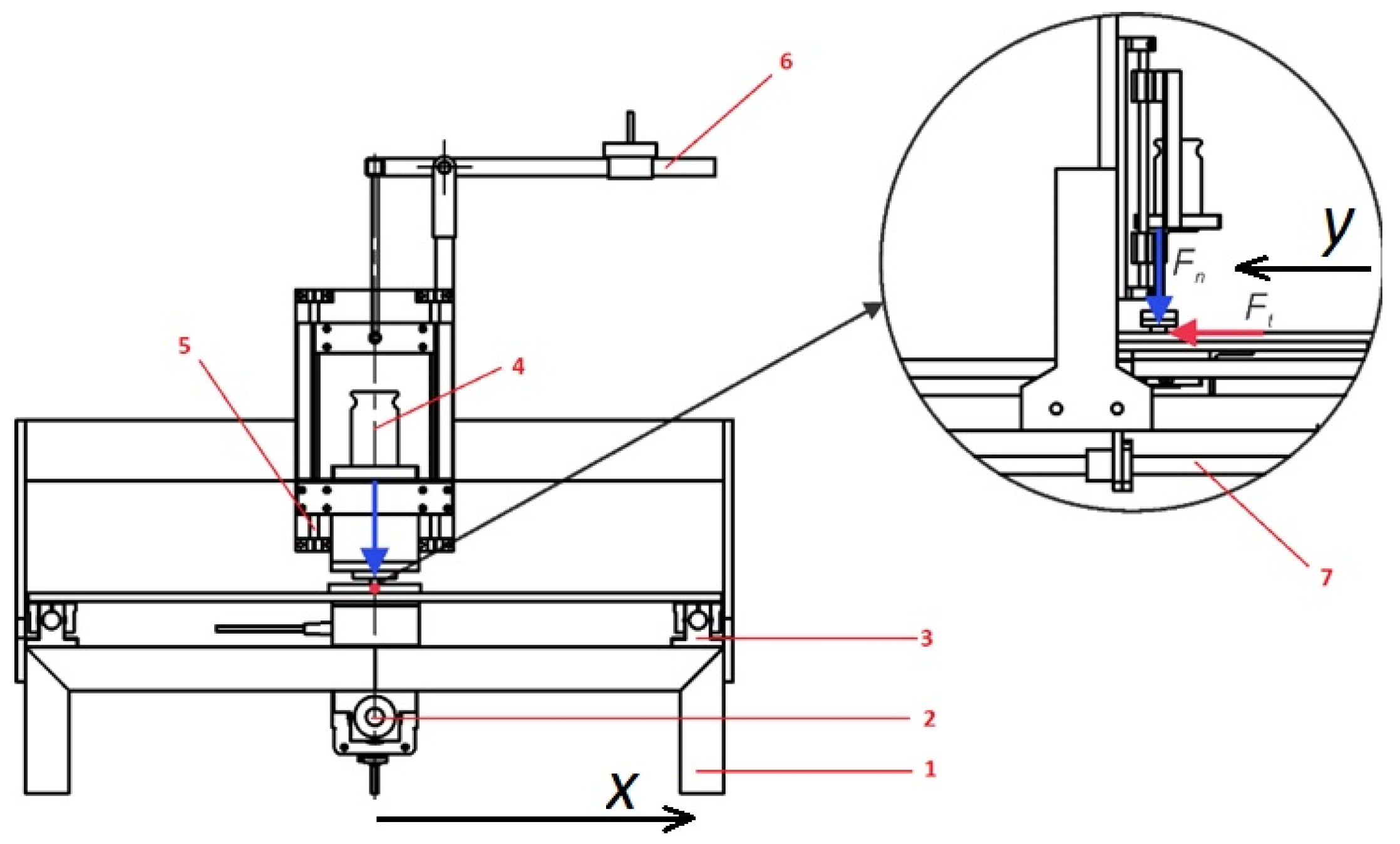
Tribological experiments were performed using a custom-built linear reciprocating tribometer designed to evaluate PC–PC contacts under controlled low-load and low-velocity conditions. A schematic view of the test stand is shown in
Figure 1.
The tribometer consists of a rigid steel frame, a horizontal linear guide system, a computer-controlled servo-stepper motor, and a precision stainless-steel load carrier used to apply normal force through calibrated dead weights. The reciprocating motion is generated by a ball-screw transmission coupled directly to the motor shaft.
The normal load was applied using 4 kg and 6 kg weights, corresponding to nominal contact forces of approximately 39.24 N and 58.86 N, respectively. The sliding velocities were set to 15 mm/s and 20 mm/s, chosen to match the low-speed operating range typical for lightweight PC components. The stroke of the tribometer generated a total sliding distance of 50 m, consistent with ASTM G133 [
33] and ISO 7148-2 [
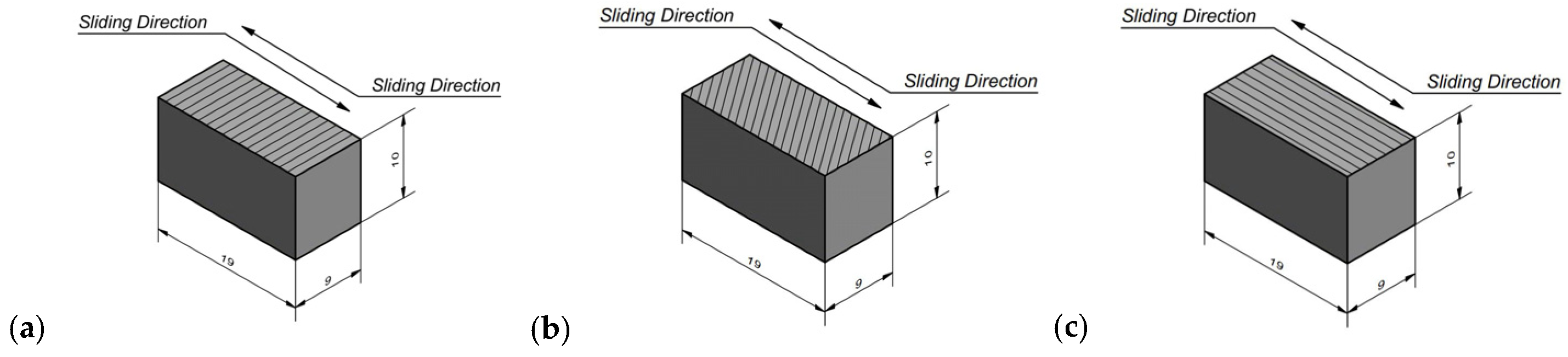
34] recommendations for reciprocating tribology. The stroke size was 0.35 m. The specimens were printed in three build orientations representative of typical anisotropy in FFF manufacturing—0°, 45°, and 90° relative to the printing plane, and they are shown in
Figure 2.
In this study, the printing orientation is defined with respect to the build platform of the FFF process, while the sliding direction during tribological testing is fixed by the experimental setup. Accordingly, the 90° printing orientation corresponds to filament deposition paths aligned parallel to the sliding direction, whereas the 0° orientation represents filament paths oriented perpendicular to the sliding direction. The 45° orientation denotes an inclined filament arrangement relative to the sliding direction. The choice of the 0° reference orientation is directly related to the tribometer coordinate system, where the primary sliding motion is aligned with the
Y-axis, while the perpendicular direction corresponds to the
X-axis, as illustrated in
Figure 1. This definition is consistently applied throughout the manuscript.
The positioning and orientation of the models in the additive manufacturing process were performed in accordance with ISO 17295:2023 [
35], using the 0°, 45°, and 90° build orientations (
Figure 2). In addition to the test specimens, sliding tracks were printed from the same material and under identical printing conditions, also in 0°, 45°, and 90° orientations, according to longitudinal printing direction. This ensured full material and structural uniformity between the contacting surfaces (specimen–track). Each experiment was conducted using the same orientation pair (specimen and track both at 0°, both at 45°, or both at 90°). All printing parameters used in this study (e.g., nozzle and bed temperature, cooling settings, nozzle diameter, layer height, infill density, and printing speed) are reported in
Table 2 to ensure reproducibility; Ref. [
32] is cited only for general information on the printer platform.
The dimensions of the sliding tracks were 450 × 105 mm. The dimensions of the test specimens were 18 × 9 × 12 mm, with an active contact area of 18 × 9 mm (162 mm2). After printing, to ensure uniform starting conditions and eliminate random surface irregularities not inherent to the FFF process, all surfaces were cleaned with isopropanol.
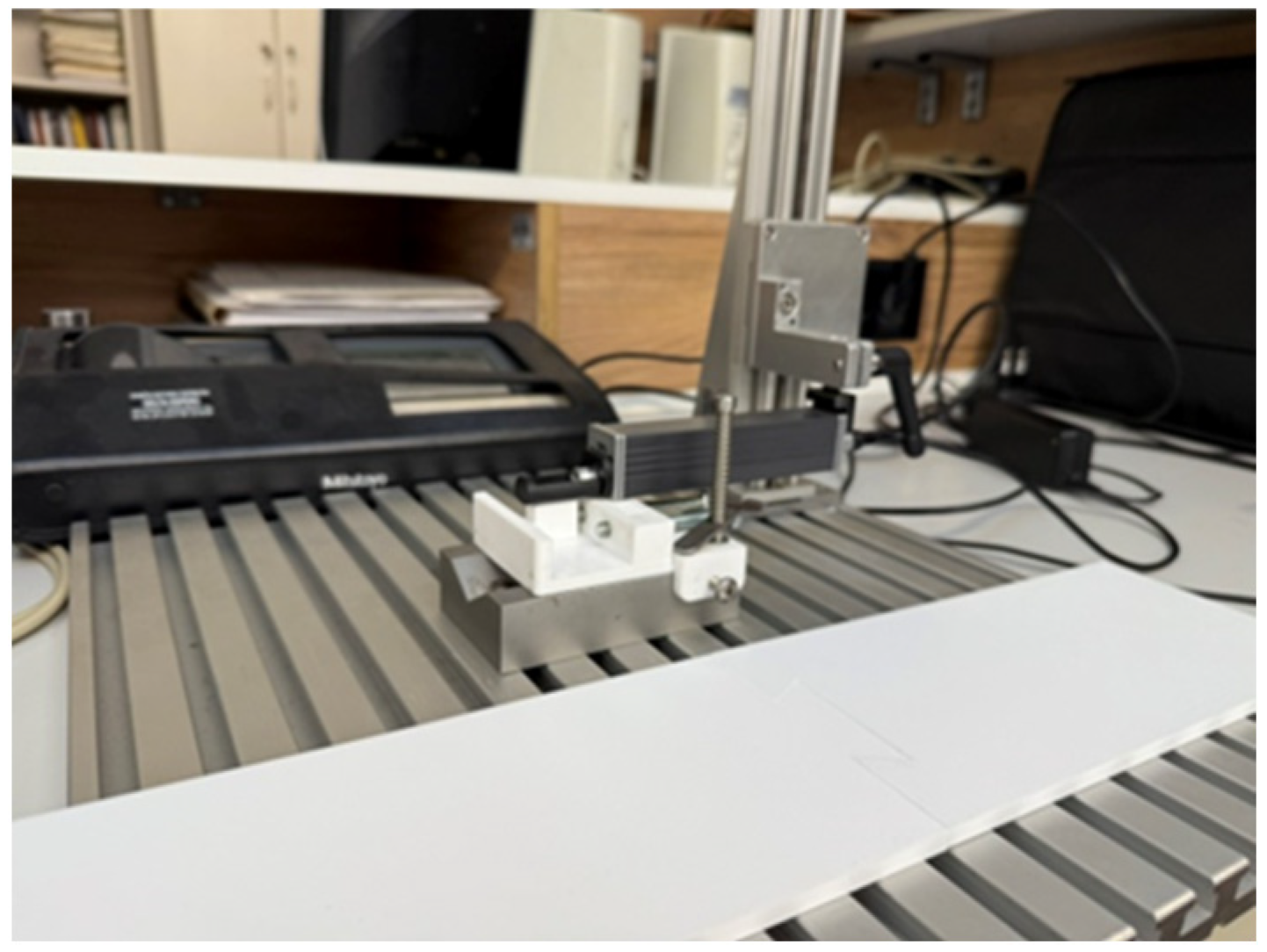
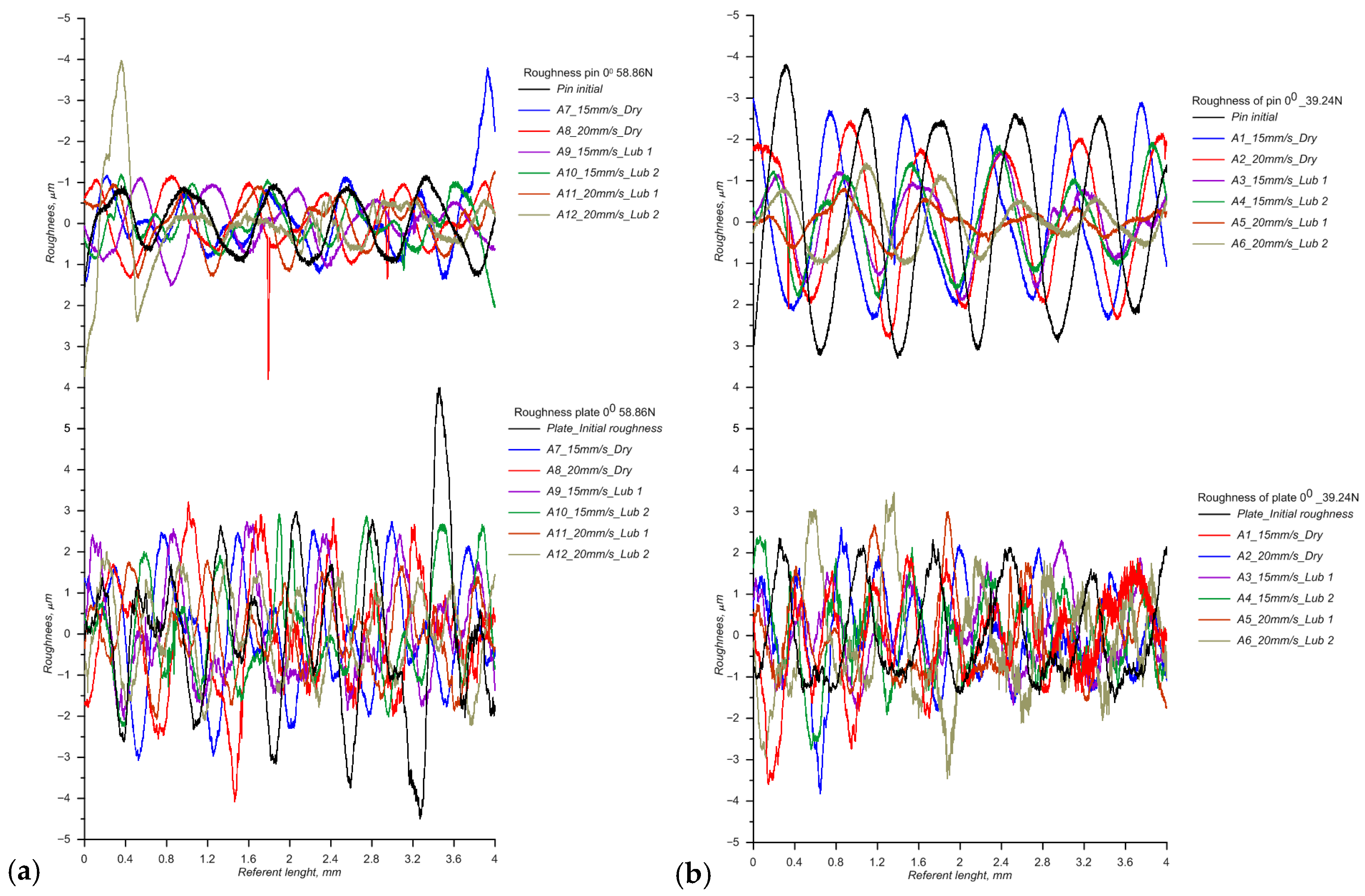
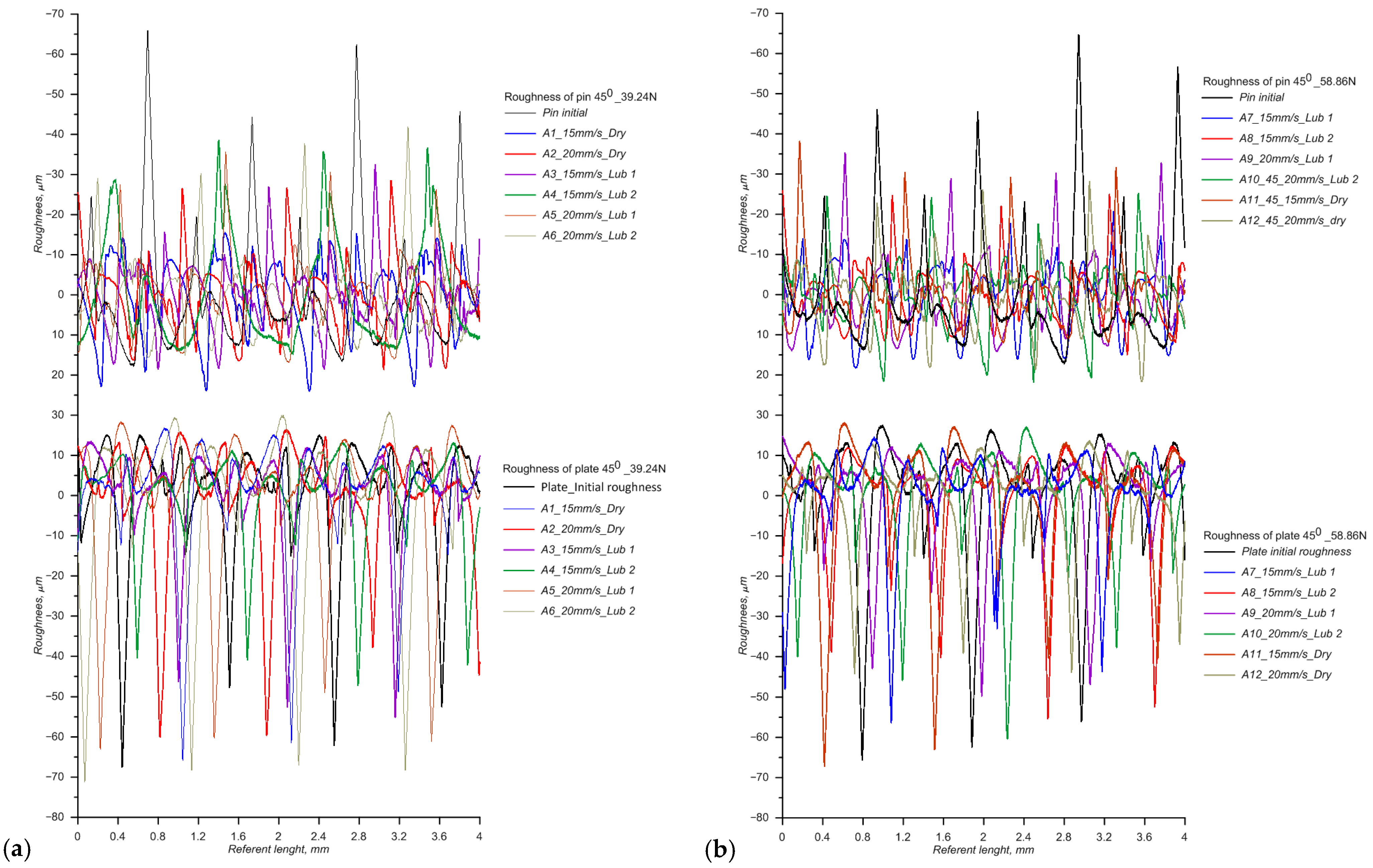
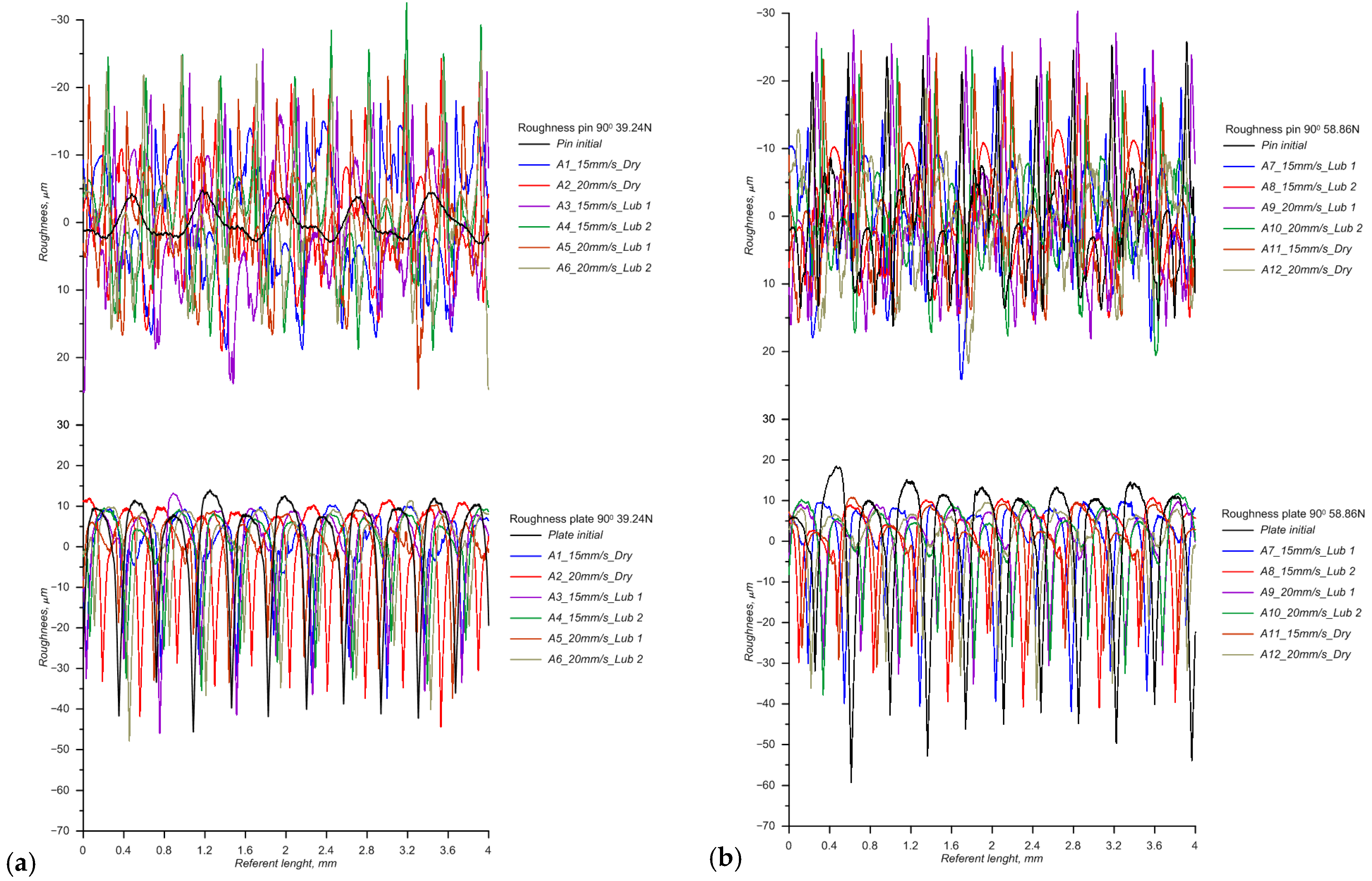
Surface topography of the specimens was measured using a Mitutoyo surface roughness profilometer before and after testing (
Figure 3). Prior to each experiment, the mass of all specimens was measured, ranging from 2.69 g to 2.72 g.
The surface topography measurements were performed using a Mitutoyo surface roughness profilometer, equipped with a high-precision stylus sensor capable of capturing fine surface irregularities. The device provides profilometric data with micrometer-level vertical resolution and is suitable for evaluating both printed and post-processed polymer surfaces. All measurements were carried out in a controlled laboratory environment, following the manufacturer’s recommended scanning procedure to ensure repeatability and accuracy. All specimens’ surface profiles were measured orthogonally relative to the printing orientation.
2.3. Contact Configuration and Measurement Acquisition
A pin-on-plate configuration was used, with both contacting elements fabricated from the same PC filament. The pin was fixed to a rigid holder, while the plate was mounted on the moving carriage of the tribometer. The friction force
Fµ(
t) was measured through a horizontal load cell, and the normal load
Fn through vertical mass loading; this arrangement is illustrated in
Figure 1.
The system acquired friction force and normal force simultaneously through a dedicated data acquisition unit. The coefficient of friction (COF) was calculated as in Equation (1).
The sampling frequency, filtering, and statistical post-processing are described separately in
Section 3 and
Section 4.
Metrology and Load-Cell Calibration
A strain-gauge load cell of the S-CZL301 type (100 kg capacity) was used for friction force measurement, providing high accuracy, stability, and a linear signal response throughout the applied loading range. The key performance specifications of the sensor are summarized in
Table 3.
Prior to testing, the friction load cell was calibrated using certified reference masses of 1, 2, 4, and 6 kg. The corresponding nominal forces (9.81–58.86 N) were compared with the measured load cell output to establish the calibration curve. The response of the load cell was highly linear, with a regression coefficient R
2 > 0.999. The maximum deviation from the nominal value was below 0.1%, confirming excellent load cell linearity and stability. The calibration results are given in
Table 4.
Measurement uncertainty was determined from calibration data, sensor specifications, and the statistical dispersion observed during force acquisition. The expanded uncertainty (k = 2) of the normal force was ±0.06 N, while that of the friction force was ±0.03 N.
The coefficient of friction (COF) was computed as μ = Ft/Fn, and its uncertainty was derived using standard error propagation for a quotient. Considering the uncertainties of both channels, the resulting COF uncertainty was ±0.01 under all operating conditions.
Friction force signals were sampled at 500 Hz and processed with a second-order low-pass Butterworth filter (20 Hz cut-off), ensuring effective noise suppression while preserving the characteristics of the reciprocating motion. Prior to each test, the pin–plate assembly alignment was checked, maintaining parallelism within 50 μm to minimize parasitic force contributions.
2.4. Lubrication Conditions
Two lubricants were used for the grease-lubricated tests, hereafter denoted as Lub 1 and Lub 2. Lub 1 was an N-insulating silicone paste (AG Termopasty), which is highly versatile, suitable for maintaining rubber and plastic components in electronic devices, and for protecting them from environmental influences. It is a solid white substance that does not dissolve in water, and its high resistance to acids, bases, salts, and gases such as sulfur dioxide and ammonia ensures effective protection. The physicochemical characteristics of this lubricant are provided in
Table 1. Lub 2 was a petrolatum “technica vaselina” (AG Termopasty), described as an acid-free, neutral, and chemically inert grease that protects metals, plastics, rubber, and other materials from corrosion, sticking, and drying. This grease contains no acids or additives such as MoS
2, PTFE, or graphite, and therefore does not react with polymers. It was used as a lubricating and protective medium in the PC–PC contact to reduce friction and prevent adhesive wear. The physicochemical characteristics of this lubricant are also given in
Table 5.
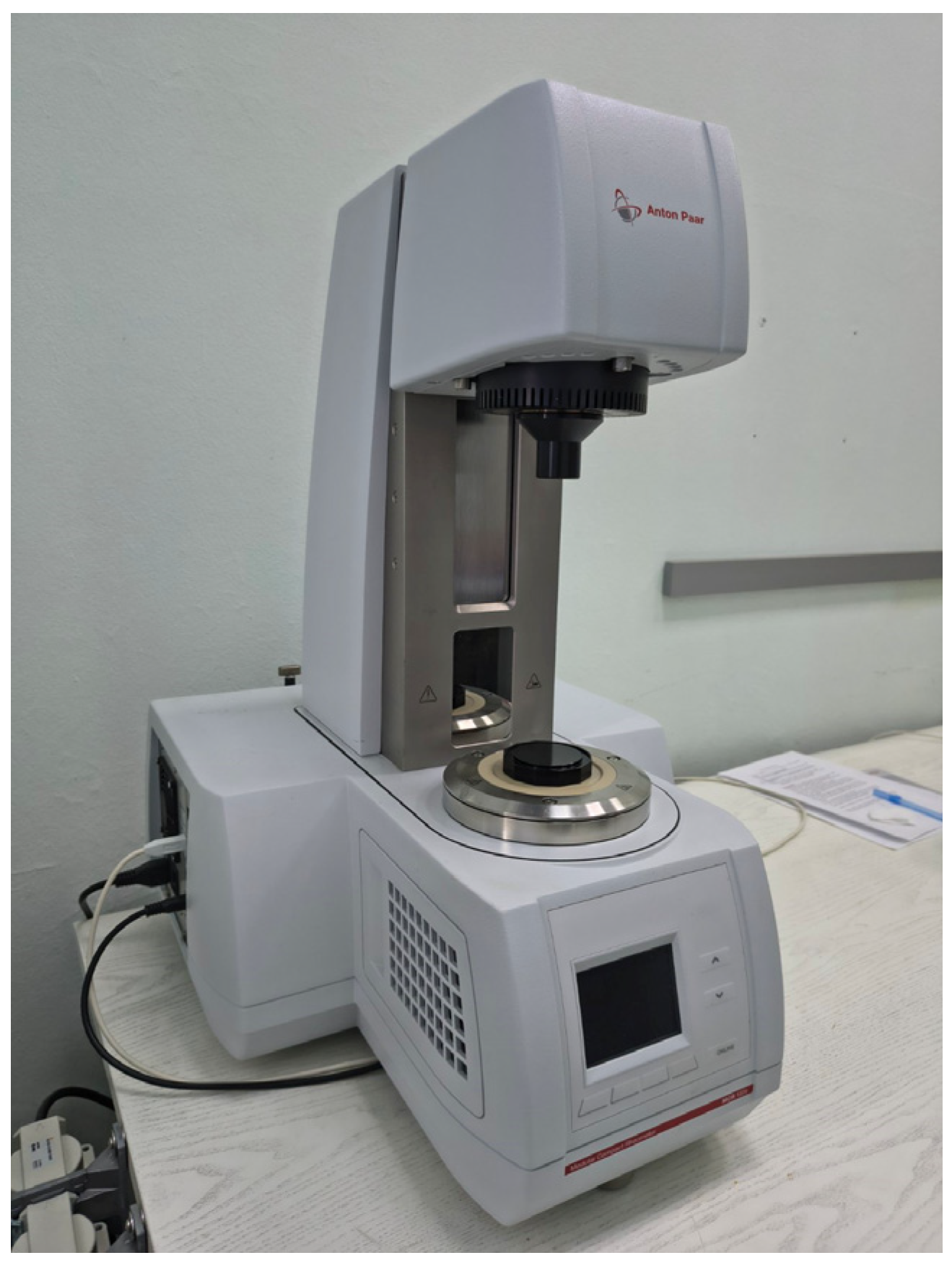
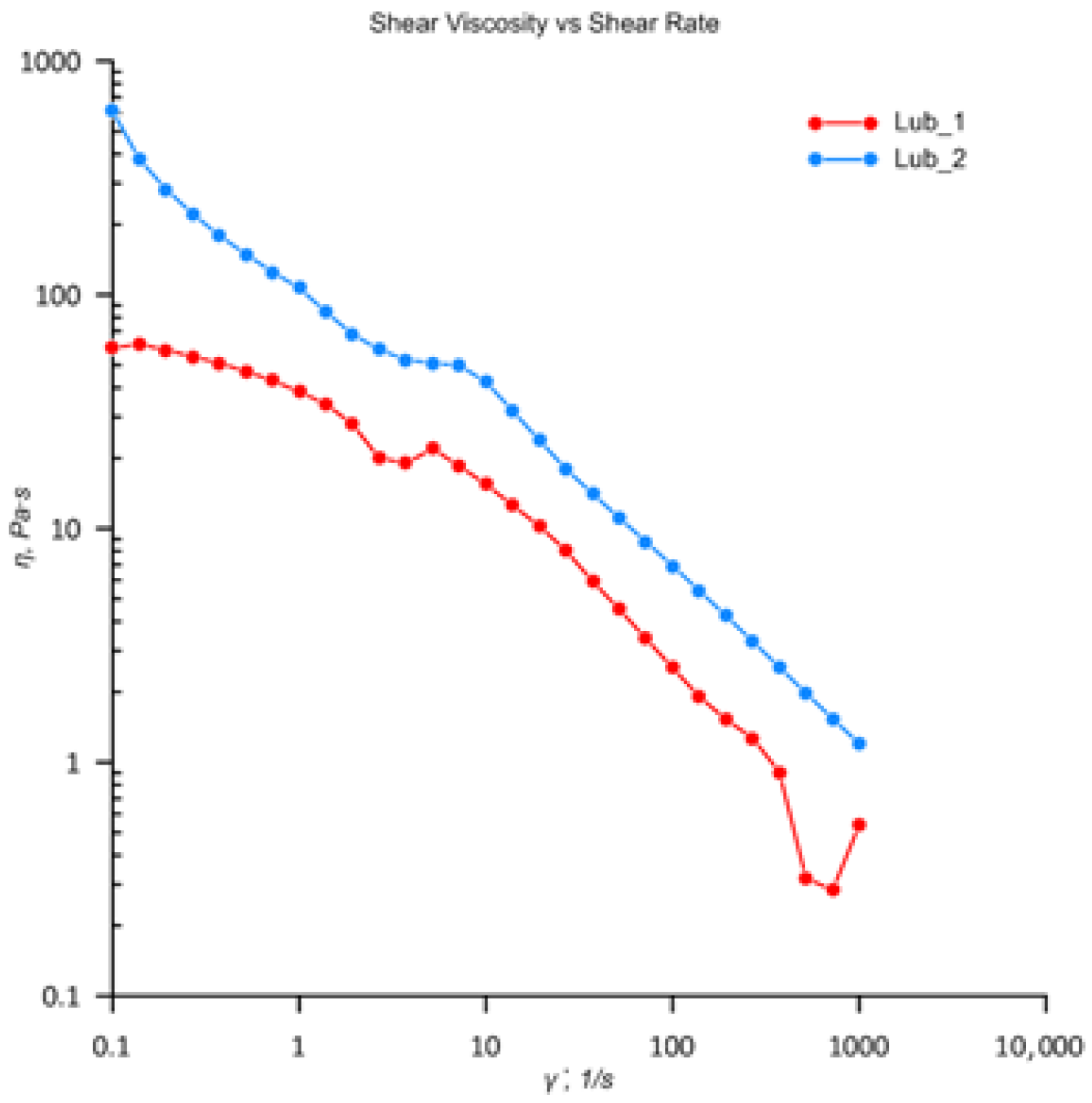
Rheological characterization of both lubricants was conducted at a temperature of 22 °C to determine their temperature-dependent viscosity and resistance to flow under applied shear. The rheological analysis of the lubricants was carried out using an Anton Paar MCR 102e rotational rheometer (
Figure 4), with the aim of obtaining a detailed characterization of their viscoelastic and structural properties. This instrument is a high-precision system based on an advanced air-bearing drive, which ensures minimal mechanical friction and a stable response when measuring sensitive and complex materials. Experimental tests were performed using a plate–plate geometry with a serrated surface (P35/Ti/SE), with a plate gap of 0.5 mm and a controlled temperature of 22 ± 0.1 °C, ensuring the stability and reliability of the results and eliminating potential sample slippage.
Rheocompass 1.31 software was used for test parameter control, programming of loading sequences, and real-time monitoring of rheological parameter changes. The software enables detailed data analysis, including the application of appropriate rheological models to describe lubricant flow, visualization of results, and generation of graphical outputs that facilitate the interpretation of experimental findings. The integrated system for temperature, stress, and shear control ensured a high degree of precision and reliability in measurements.
2.5. Experimental Matrix
The complete test matrix is given in
Table 6, which summarizes the combinations of:
three printing orientations (0°, 45°, 90°);
two normal loads (39.24 N and 58.86 N);
two velocities (15 mm/s and 20 mm/s);
two lubrication regimes (dry and two greases);
three repetitions per condition for a total of 36 unique tests.
The specimens were tested under two levels of normal load, 39.24 N and 58.86 N, as well as two sliding velocities, 15 mm/s and 20 mm/s. Based on the active contact area of 162 mm2, the corresponding nominal contact pressures were approximately 0.247 MPa and 0.370 MPa. This range effectively covers contact conditions representative of engineering applications involving polymer-based tribological pairs.
4. Discussion
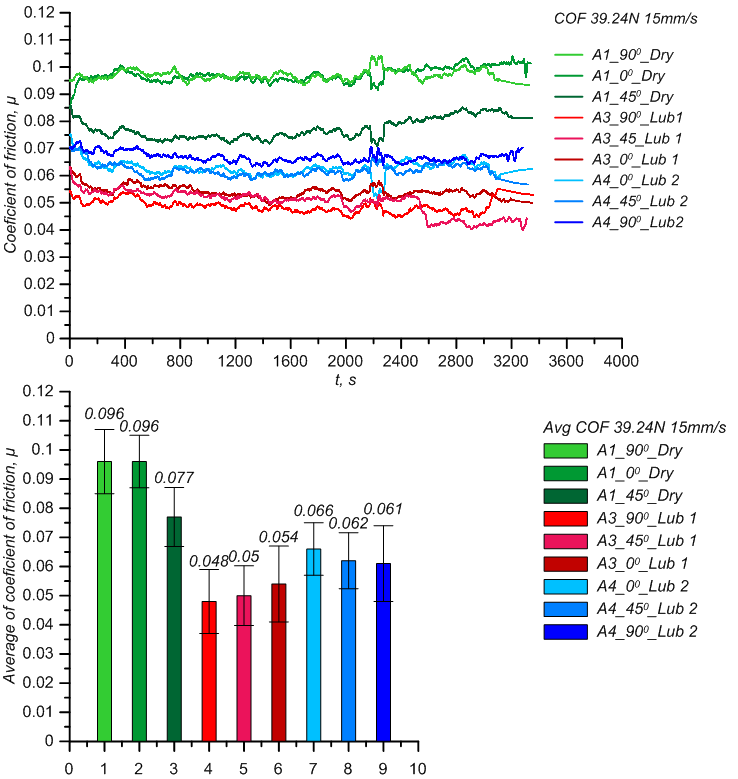
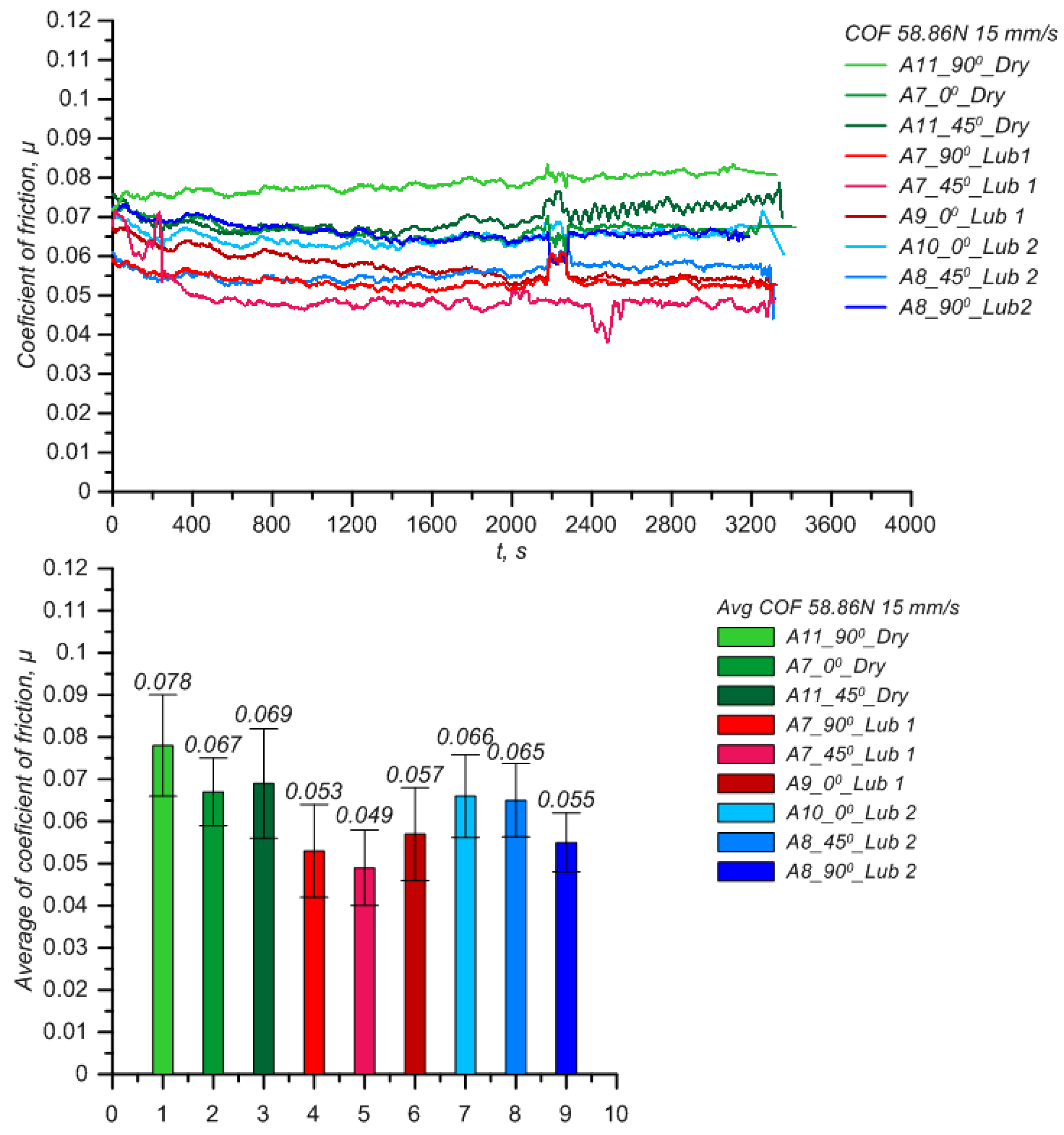
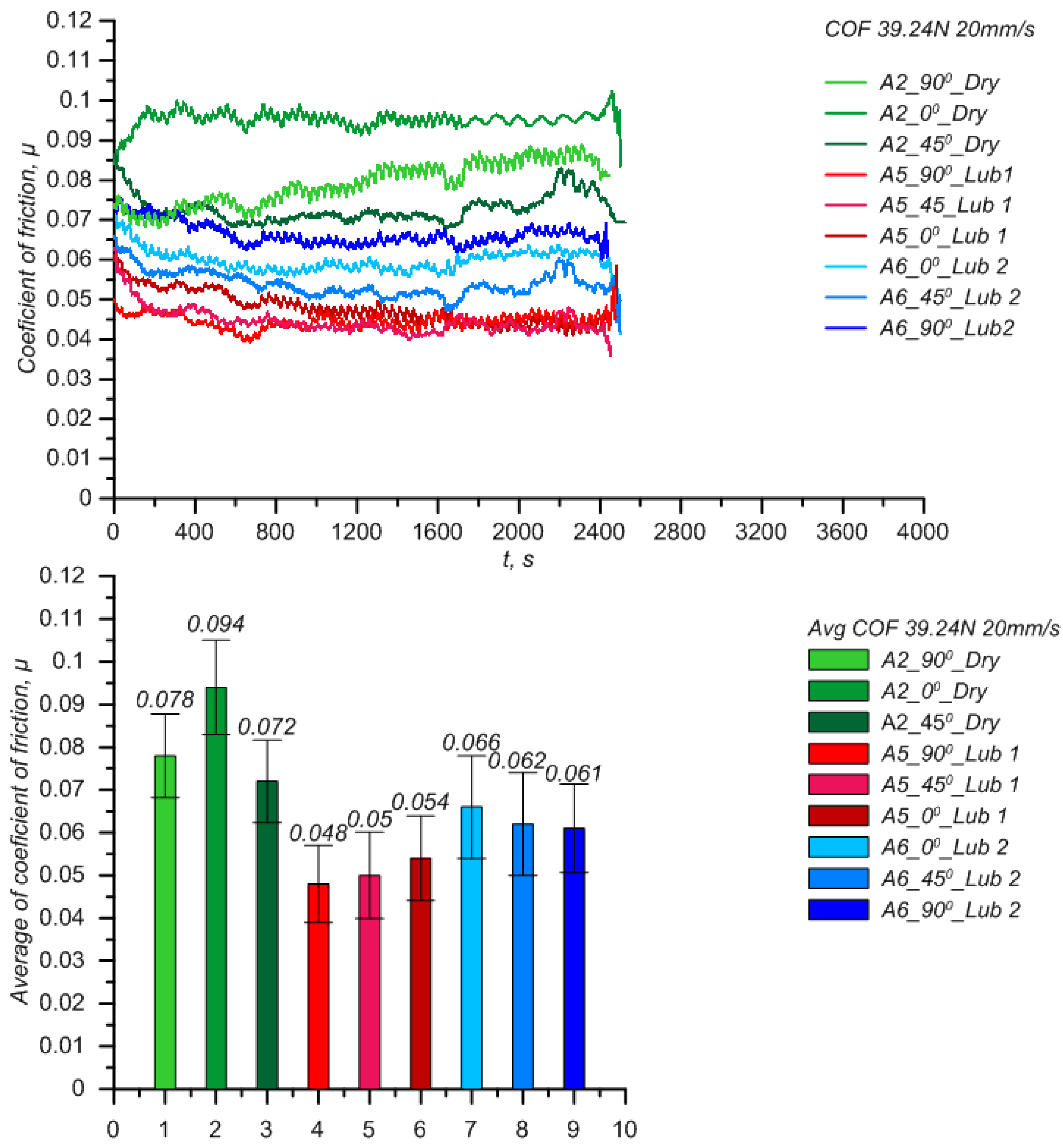
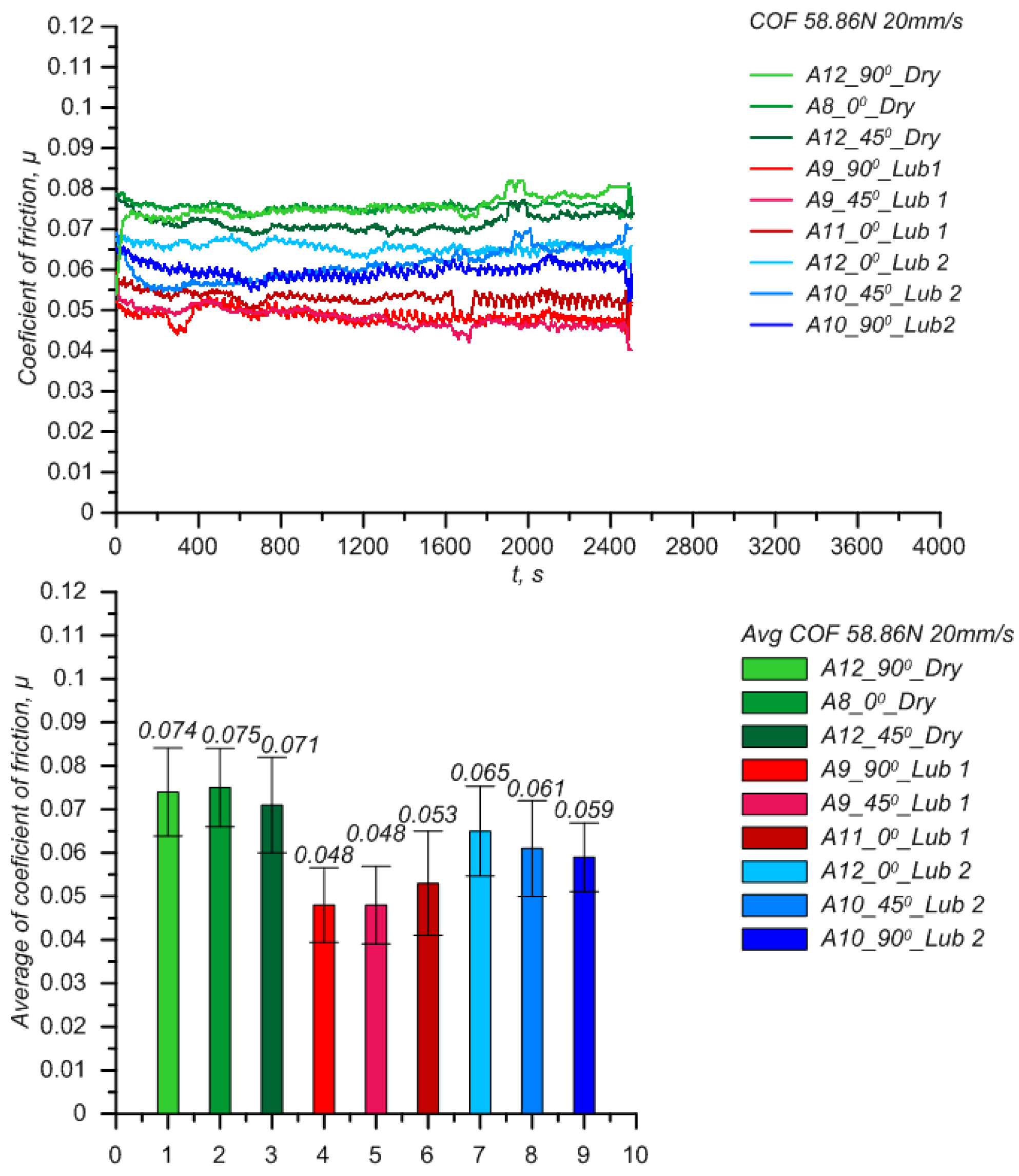
The tribological behavior of FFF-printed polycarbonate was strongly governed by the combined effects of layer orientation, surface-topography evolution, applied load, sliding velocity, and lubricant rheology. The results confirm that polymer–polymer contacts under low loads (39.24–58.86 N) and low velocities (15–20 mm/s) operate predominantly within the boundary lubrication regime, consistent with previous observations for soft polymers and greases in reciprocating motion [
23,
27].
4.1. Influence of Layer Orientation and Surface Topography
The initial roughness measurements demonstrated strong anisotropy, with the 45° orientation showing smoother longitudinal filament alignment, while 0° and 90° presented more pronounced transverse features. After testing, 45° and 90° samples exhibited mostly plastic smoothing, whereas 0° samples developed clear wear tracks and asperity removal, in agreement with adhesive and mild abrasive mechanisms. These trends correlate with prior findings that surface orientation controls asperity interlocking and debris formation in FFF parts.
The comparative analysis of surface roughness for all tested orientations, 90°, 45°, and 0°, clearly shows that the microstructure formed during FFF printing has a decisive influence on how surface topography evolves during reciprocating sliding. For the 0° orientation, where the filament paths are parallel to the sliding direction, the dominant mechanisms are shear and micro-grooving. Although the lubricants fill micro-depressions, the surface still exhibits pronounced Rv values due to sliding along continuous ridges. In this regard, the 0° orientation can be considered the most sensitive to the development of short-wavelength micro-roughness, even though the global geometry remains stable.
In the case of the 45° orientation, a combination of longitudinal shearing and transverse cutting of asperity peaks occurs, but much less than expected. This means that the 45° orientation represents the geometry with the largest surface transformation of asperities and the most pronounced plastic deformation. Lubricants have the strongest effect in this orientation, as the viscosity and shear-thinning behavior of the applied lubricants facilitate easier filling of surface irregularities, especially under higher normal loads.
In contrast to the 0° orientations, the 90° and 45° orientations exhibit the most stable behavior under all testing conditions. This is because the normal load is transmitted perpendicular to the sliding direction and through the structurally stiffest cross-section of the material. This indicates that the 90° and 45° orientations are more resistant to wear and changes in surface roughness under low and medium normal loads.
The strong orientation-dependent behavior is reflected directly in the COF curves:
- ▪
The 45° orientation consistently provided the lowest COF in most regimes (except 58.86 N on the 15 mm/s regime), due to minimized asperity interference and favorable lubricant entrainment pathways.
- ▪
The 0° orientation produced the highest COF, since transverse ridges acted as mechanical barriers and promoted boundary-dominated sliding.
- ▪
The 90° samples showed transitional behavior, combining characteristics of both aligned and misaligned filament structures.
These results reinforce earlier studies on anisotropic friction in additively manufactured polymers but extend them to lubricated PC–PC contacts, which remain scarcely represented in the literature.
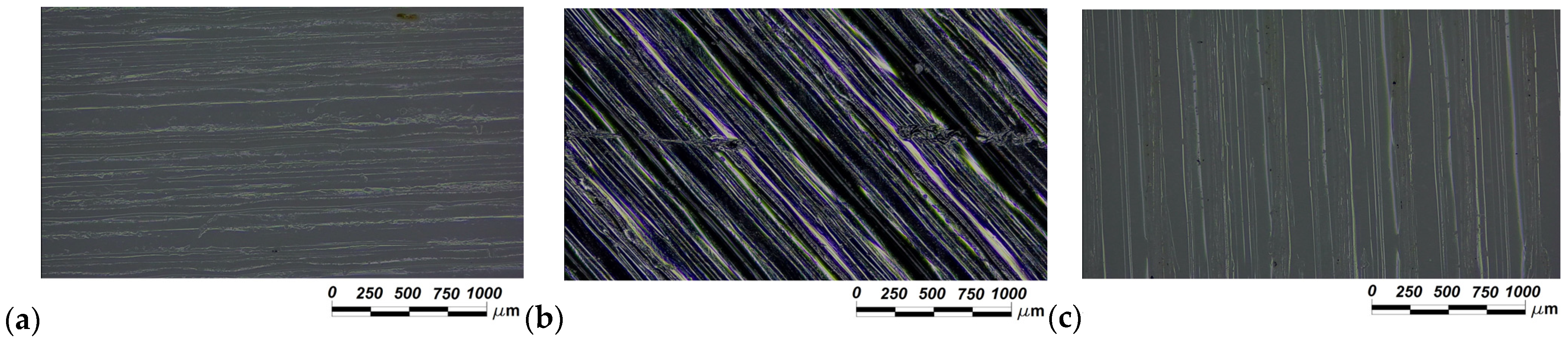
Additional post-test surface images obtained by optical microscopy (
Figure 14) further support the proposed orientation-dependent wear mechanisms.
The 90° orientation exhibits predominantly smooth and continuous wear tracks, indicating stable sliding conditions and uniform load distribution. In the case of the 45° orientation, pronounced asperity smoothing and evidence of plastic flow are observed, consistent with reduced friction and enhanced lubricant interaction. In contrast, the 0° orientation reveals distinct micro-grooving aligned with filament tracks, confirming asperity-dominated contact and explaining the higher friction levels and delayed transition toward mixed lubrication regimes.
4.2. Effect of Load and Sliding Velocity on COF
Across all orientations, increasing the normal load from 39.24 N to 58.86 N caused a modest reduction in COF. This counterintuitive but well-documented phenomenon arises from load-induced real-area increase, which reduces localized stress and smooths micro-asperity motion. Similarly, increasing sliding velocity from 15 to 20 mm/s reduced COF by lowering stick–slip intensity and increasing lubricant entrainment (where applicable).
The superposition of mechanical (load-driven) and kinematic (velocity-driven) effects demonstrates that even small changes in operating conditions significantly alter frictional stability in polymer contacts. These insights are critical for engineering sliding bushings, guides, and low-load reciprocating mechanisms.
4.3. Rheological Effects of Lubricants on COF
Since the experimental investigations were conducted in the boundary lubrication regime at low sliding speeds and low normal loads, and considering the obtained rheological results for lubricants Lub 1 and Lub 2, it can be observed that the COF exhibited the lowest values in all tests under lubrication with Lub 1. This indicates that the COF does not depend directly on the viscosity of the lubricant, but rather on its chemical composition and its ability to form a protective film. Although Lub 2 demonstrates more stable viscosity, Lub 1 consistently achieves lower COF values across all testing conditions. The reason is that Lub 1 exhibits higher adhesiveness to PC surfaces, fills micro-irregularities more effectively, and forms an effective boundary protective layer that reduces direct asperity interaction. In contrast, despite its more stable rheological behavior, Lub 2 adheres less effectively to PC surfaces and is more easily squeezed out of the contact zone, which consequently results in higher COF.
These findings confirm that grease-like media with stable polymeric networks (silicone-based) support more uniform lubrication in PC–PC contacts.
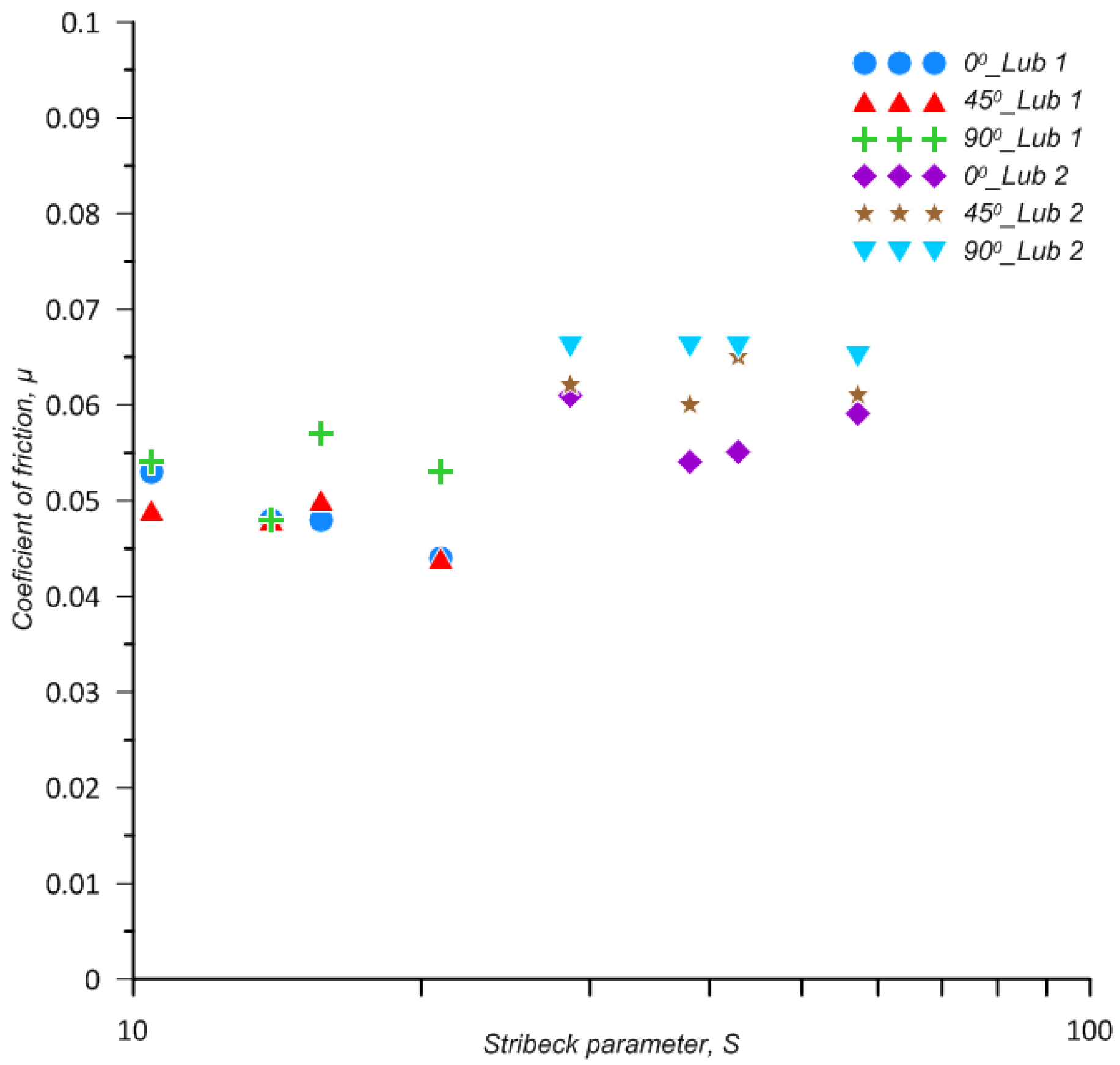
4.4. Stribeck Behavior and Regime Identification
Based on viscosity-corrected Stribeck parameters, all greased contacts operated within the boundary and early mixed lubrication regions, aligning with expectations for soft polymers, low velocities, and limited hydrodynamic film thickness. Notably:
- ▪
The 90° orientation shifted Stribeck curves downward, indicating improved film formation and reduced friction.
- ▪
The 0° orientation displayed a delayed transition, reflecting asperity-dominated sliding.
- ▪
Lub 2 lubricant produced smoother Stribeck curves, while Lub 1 maintained boundary behavior longer.
These combined results confirm that lubrication regime transitions in additively manufactured polymers depend jointly on surface orientation, material compliance, and lubricant rheology—a relationship largely missing in the existing literature.
If, as well the temperature is taken into consideration, given that the experiments were performed at room temperature (22 ± 3 °C), which is far below the Vicat Softening Temperature (VCT ≈ 119 °C) and the glass transition temperature (Tg ≈ 145 °C), it can be concluded that no changes occur in the molecular arrangement of PC and that no thermal softening takes place, which further stabilizes friction and wear.
After the tribological tests under all load, speed, and lubrication conditions, a reduction in the valley depth Rv can be observed.
4.5. Contribution to Research Gap
The present study addresses multiple gaps identified in the introduction:
The work provides one of the first systematic datasets combining dry and greased PC–PC sliding under reciprocating motion.
- 2.
Missing correlation between layer orientation, roughness evolution, and friction
The study directly links anisotropic surface changes to frictional response across four operating regimes.
- 3.
Limited integration of tribology and rheology
By combining rheometry with Stribeck analysis, the work offers a unified understanding of how grease viscosity, temperature sensitivity, and shear-thinning govern lubrication in polymer–polymer sliding.
Overall, the discussion highlights that the interaction between FFF microstructure, lubricant behavior, and operating conditions plays a central role in dictating friction performance.
5. Conclusions
This study provides a comprehensive evaluation of the tribological and rheological behavior of FFF-printed polycarbonate under varying layer orientations, loads, velocities, and lubrication conditions. Based on the experimental findings, the following conclusions can be drawn:
- -
Layer orientation is the dominant factor controlling friction behavior.
The 45° and 90° orientations yielded the lowest COF and mildest wear, while 0° produced the highest friction and most severe asperity disruption.
- -
Surface topography evolution strongly depends on filament alignment.
Longitudinally printed surfaces (90°) deform plastically, whereas transverse layers (0°) exhibit adhesive and abrasive wear patterns.
- -
Moderate increases in load and sliding velocity reduce COF.
Higher loads reduce asperity interference through increased real contact area, while higher velocities diminish stick–slip and improve lubrication.
- -
Lubricant rheology plays a decisive role in friction regulation.
Lub 1 shows steep viscosity decay and boundary-dominated behavior, while Lub 2 maintains stable viscosity and supports smoother friction reduction.
- -
Stribeck analysis confirms the boundary to early mixed lubrication.
No transition to full hydrodynamic regime was observed, consistent with soft polymer surfaces and low velocities.
- -
The results bridge important research gaps.
This work integrates tribological performance, surface evolution, and rheology for PC–PC contacts—a combination rarely reported in the current AM literature.
- -
This work holds practical relevance.
As a consequence of the low and medium normal loads applied at low sliding speeds, polycarbonate exhibits negligible degradation of its tribological characteristics, which makes it suitable for use in FFF-printed sliding guides, electronic components, medical devices, and various robotic mechanisms—fully consistent with the results presented in this study.
From a practical engineering perspective, the results of this study provide direct guidelines for the design and application of FFF-printed polycarbonate sliding components. The findings demonstrate that print orientation should be selected based on the dominant loading and sliding direction: the 45° orientation offers the most favorable compromise between low friction and surface stability, while the 0° orientation ensures robust and stable behavior under repeated loading. In contrast, the 90° orientation should be avoided in applications involving continuous sliding parallel to filament tracks due to increased micro-grooving and higher friction. These recommendations are directly applicable to the design of low-load sliding guides, bushings, positioning mechanisms, and polymer-based tribological pairs in automated and mechatronic systems.
The findings are directly applicable to low-load reciprocating mechanisms, guides, biomedical components, and consumer-product sliding interfaces made from 3D-printed PC. Further investigations should include 3D topographic evolution mapping during sliding and advanced lubrication models incorporating temperature-dependent viscosity and polymer compliance to deepen understanding of lubrication transitions in additively manufactured polymer systems. Future work will also include the possibility of the use of biolubricants in polymer contacts.



 ,
,