


Abstract
To elucidate the corrosion mechanism of orthodontic archwire in fluoride-containing environments, the friction and wear behavior of archwires following corrosion in fluoride-containing oral care products was investigated. Stainless steel archwires were soaked in solutions of fluoride-free toothpaste, fluoride toothpaste, fluoride-free mouthwash, fluoride mouthwash, and sodium monofluorophosphate, followed by friction testing against brackets. The average friction coefficient of the archwire–bracket tribopair increased gradually from 0.17 to 0.28 with prolonged immersion time in the fluoride-containing solution, accompanied by a progressive increase in the wear scar area on the archwire surface. In the fluoride toothpaste solution, the archwire exhibited a corrosion potential and current density of –301.8 mV and 0.348 μA/cm2, respectively, indicating a higher susceptibility to corrosion. Analysis of wear debris revealed significant enrichment of fluorine and oxygen elements on the archwire surface after exposure to fluoride-containing solutions, consistent with pronounced corrosion damage. Integration of friction results and surface characterization elucidated the corrosion mechanism in fluoride-containing environments. It was proposed that fluoride ions facilitated the formation of micro-batteries, while active fluoride species accelerated the dissolution of nickel from the archwire surface and promoted oxygen accumulation, thus driving sustained electrochemical corrosion. This progressive surface degradation ultimately exacerbated the friction and wear of the archwire–bracket tribopair.
1. Introduction
Angle [1] established orthodontics as a distinct dental specialty, proposing that malocclusion not only compromises oral health but also adversely affects facial aesthetics and patients’ psychological well-being. Evidence indicates that individuals across various age groups—including adolescents, adults, and older patients—continue to seek orthodontic treatment for themselves or their children, often demonstrating strong interest or even insistence on undergoing such care. This growing demand underscores the status of orthodontics as a prominent research focus within the field of stomatology [2,3,4,5,6].
An ordinary orthodontic appliance consists of archwires and brackets, primarily serving to achieve proper tooth alignment. During orthodontic treatment, archwires and brackets are directly exposed to the complex and dynamic oral environment, making them highly susceptible to metallic corrosion, particularly electrochemical corrosion [7], leading to surface degradation and compromising the mechanical integrity and clinical performance of orthodontic archwires. Considerable attention has been devoted to investigating the effects of oral environments, including artificial saliva, fluoride-containing solutions, acidic media, and beverage-based solutions, on the corrosion behavior of stainless steel archwires [8,9,10]. Małkiewicz et al. [11] conducted a comparative evaluation of the corrosion resistance of stainless steel, nickel-titanium (NiTi), and titanium-molybdenum alloy (TMA) archwires manufactured by 3M and RMO under laboratory conditions. NiTi archwires exhibited the highest corrosion resistance in artificial saliva, whereas stainless steel archwires were most susceptible to corrosion. Lee et al. [12] employed the linear polarization test, a rapid electrochemical technique, to evaluate the corrosion resistance of four different NiTi archwires. It was revealed that increasing fluoride concentration in artificial saliva was associated with reduced corrosion resistance of NiTi archwires, with the most severe corrosion observed in the environment containing 0.5% NaF. Močnik et al. [13] investigated the effect of pH on the electrochemical behavior of NiTi archwires using the cyclic potentiodynamic method. It was demonstrated that decreasing pH greatly increased the corrosion sensitivity of NiTi archwires, whereas stainless steel archwires exhibited a greater tendency toward localized corrosion. Incerti et al. [14] evaluated the effects of three commonly consumed beverages, i.e., Coca Cola, orange juice, and Gatorade, on the Young’s modulus, hardness, surface morphology, and chemical composition of widely used NiTi archwires and found that, apart from some surface color changes, no significant changes were observed in surface morphology, hardness, and chemical composition. Shahabi et al. [15] examined the in vitro effects of lemon juice, vinegar, and Coca Cola on the corrosion behavior of orthodontic brackets. It was clarified that Coca Cola induced the greatest degree of corrosion compared to the other beverages. Sharma et al. [16] found that artificial saliva juice containing 1% NaCl increased the corrosion rate of orthodontic archwires and promoted the development of pitting corrosion. In addition, Schiff et al. [17] explored the influence of mouthwash on corrosion risk by means of electrochemical coupling between orthodontic archwires and brackets. It was found that fluoride-containing mouthwash significantly exacerbated archwire corrosion and elevated the risk of localized allergic reactions associated with nickel ion release.
Interestingly, chemically active fluoride exhibits a dual effect: on the one hand, it effectively prevents tooth decay and cavities, thereby promoting optimal oral health [18,19,20]; on the other hand, it can induce significant corrosion damage in metallic orthodontic appliances [21,22,23]. However, quantitative studies on the corrosion and tribological behaviors of stainless steel archwires after soaking in fluoride-containing solutions are scarce. Therefore, given the essential role of fluoride-containing oral care products in the daily hygiene routines of patients with fixed metallic appliances, the friction and wear performances of the stainless steel archwires following immersion in various oral care products were systematically investigated in this work. The characteristics and composition of the derived wear debris generated during the friction process, both before and after immersion, were compared and analyzed. Furthermore, the electrochemical corrosion behavior of stainless steel archwires in different fluoride-containing environments was examined. Finally, the underlying corrosion mechanisms were elucidated through surface characterizations of the sliding contacts, aiming to provide guidance for the rational selection and use of oral care products during orthodontic treatment.
2. Materials and Methods
Commercially available orthodontic stainless steel (AISI 304) archwire with a cross-sectional dimension of 0.017 × 0.025 inch was applied with the narrow face designated as the working surface. Commercial stainless steel bracket (AISI 304) with a working surface width of 0.52 mm and length of 0.78 mm was used. Artificial saliva (pH = 6.9) was purchased from Dongguan Chuangfeng Automation Technology Co., Ltd (Dongguan, China). All oral care products were commercially available, including fluoride-free and fluoride toothpaste, fluoride-free and fluoride mouthwash, and sodium monofluorophosphate (Na2PO3F).
Prior to friction tests, stainless steel archwire immersion experiment was performed. The toothpaste and sodium monofluorophosphate mixed solutions were prepared prior to use, whereas other immersion solutions were used as supplied. For the prepared solutions, the solutes consisted of commercial oral care products and deionized water. Specifically, 30 mL of deionized water was measured using a beaker; subsequently, the required amount of solute was weighed by using an electronic balance. The solute and solvent were then homogeneously mixed in the Petri dish, followed by immersion of the stainless steel archwires. The specimens were immersed for a predetermined duration (i.e., 1–16 h), after which they were removed and subjected to ultrasonic cleaning. A typical schematic illustration of the solution preparation procedure for the toothpaste-containing immersion medium is presented in Figure S1. The pH value of the fluoride toothpaste and fluoride mouthwash solution was measured to be 7.0 and 4.4.
Friction and wear behaviors of the stainless steel archwires sliding against stainless steel brackets were evaluated by using a customized reciprocating archwire-bracket tribo-system. The detailed information about the tribo-system could be found in the previous studies [24,25,26]. The friction tests were executed in an artificial saliva environment at a normal load of 1.0 N, a displacement of 0.15 mm, a reciprocating sliding speed of 0.19 mm/s, and a sliding duration of 5000 cycles. The temperature of the artificial saliva droplet at the sliding contact was maintained at 37 °C, closely simulating the physiological condition of the human oral cavity.
Optical microscopy (Eclipse LV150-N, NIKON, Tokyo, Japan) was utilized to examine the worn surfaces on the stainless steel archwires and brackets. Scanning electron microscopy (SEM, Scios, FEI, Hillsboro, OR, USA) was employed to observe the morphology of the worn surfaces on the stainless steel archwire, bracket, and wear debris. Energy dispersive X-ray spectroscopy (EDS, THERMO FISHER, Hillsboro, OR, USA) was applied to analyze elemental variations in the worn surfaces of the stainless steel archwire and bracket as well as in the wear debris. Laser confocal microscopy (VK-X250K, KEYENCE, Osaka, Japan) was used to characterize the three-dimensional morphology of the wear debris.
The electrochemical corrosion behavior of the stainless steel archwire in a fluoride-containing environment was evaluated by using an electrochemical workstation (Reference 600+, Gamry, PA, USA). All tests were conducted in a standard three-electrode configuration. The non-exposed surfaces of the specimen were insulated with paint to limit electrochemical activity to the designated testing area. The specimen served as the working electrode, a platinum sheet (Pt) acted as the counter electrode, and a saturated Ag/AgCl electrode was employed as the reference electrode. The three electrodes were securely connected, immersed in the electrolyte solution, fixed in place, and subsequently interfaced with the electrochemical workstation for data acquisition. The scan speed was 1 mV/s and OCP time was 900 s. The tests were conducted at room temperature. The measured data were imported into the Gamry Echem Analyst software (Version 7.05) to generate the Tafel curve. An appropriate linear region of the curve was selected for Tafel extrapolation to determine the corrosion potential (Ecorr) and corrosion current density (Icorr) of the stainless steel archwire.
All the tests were repeated at least once to confirm the repeatability and reliability of the research. A representative result is shown in the following figures.
3. Results
3.1. Friction Behaviors of Soaked Stainless Steel Archwires
First of all, the stainless steel archwires were immersed in three types of solutions, such as fluoride-free toothpaste, fluoride toothpaste, and fluoride-free mouthwash, for four hours. Then, the friction and wear experiments were conducted in an artificial saliva environment by using a home-built reciprocating archwire-bracket tribo-system. Before and after the friction tests, the archwires and brackets were characterized using an optical microscope to observe the changes on the working surfaces of the stainless steel archwires and brackets.
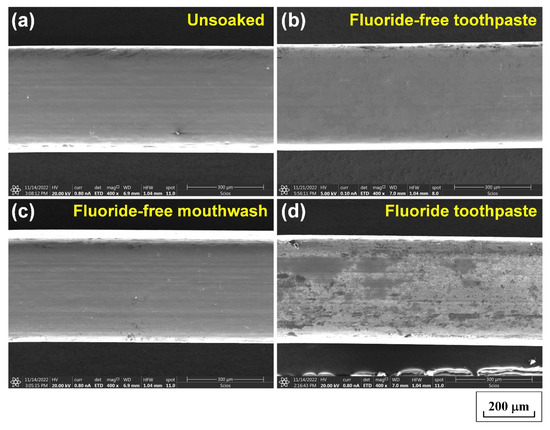
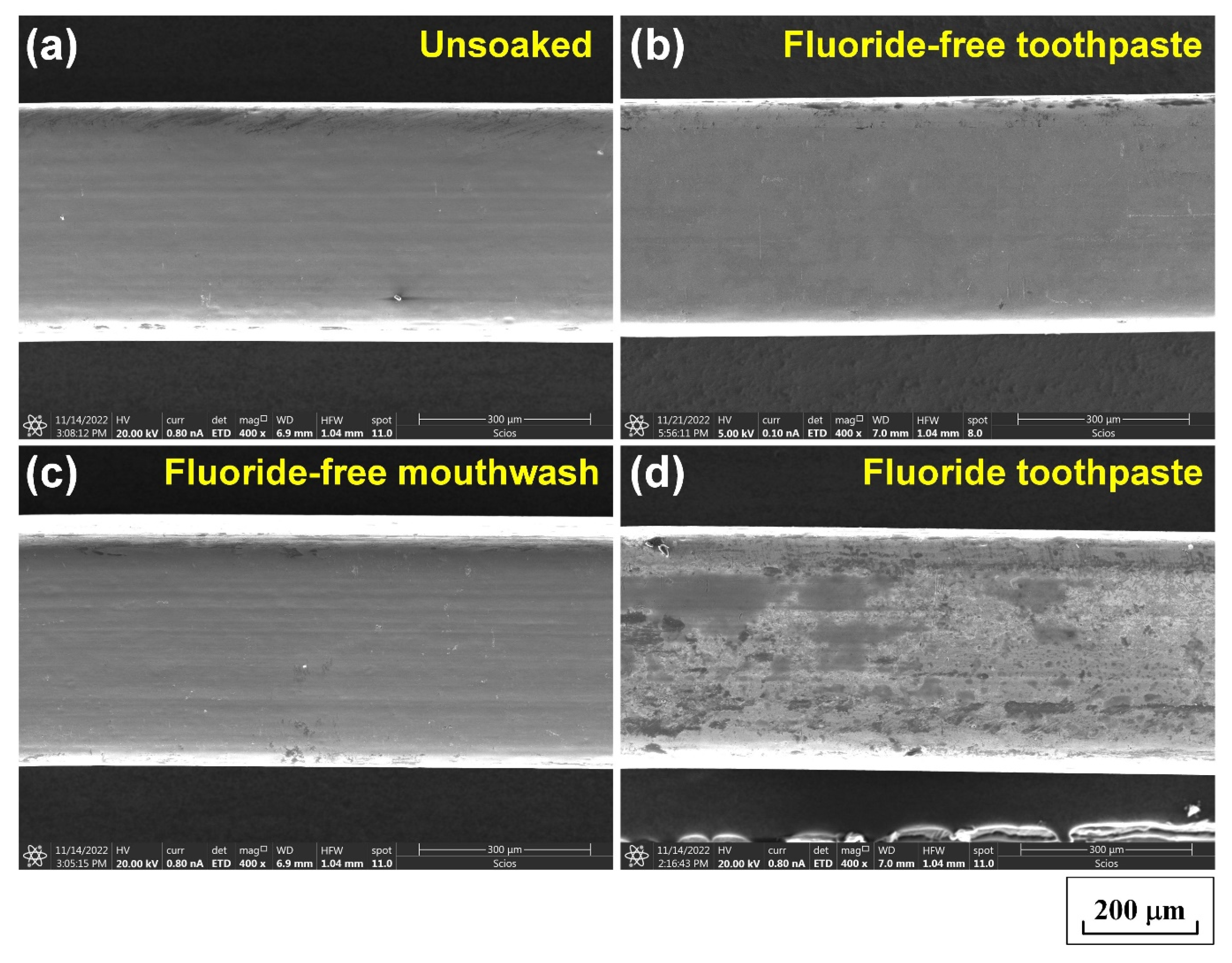
Figure 1 presents the SEM images of the surfaces of stainless steel archwires after soaking in different solutions. The surface of the stainless steel archwire remained relatively smooth without evident sign of corrosion after soaking in a fluoride-free toothpaste and fluoride-free mouthwash solution, as shown in Figure 1b,c, respectively. However, after soaking in a fluoride toothpaste solution, the archwire surface became significantly roughened, exhibiting severe corrosive damage, as shown in Figure 1d. These observations are in good agreement with previous study, which has reported clear evidence of surface degradation in the form of pitting, striations, and cracking in fluoridated archwires [27].
Figure 1.
SEM images of the surfaces on stainless steel archwires after soaking in different solutions. (a) Unsoaked. (b) Fluoride-free toothpaste. (c) Fluoride-free mouthwash. (d) Fluoride toothpaste.
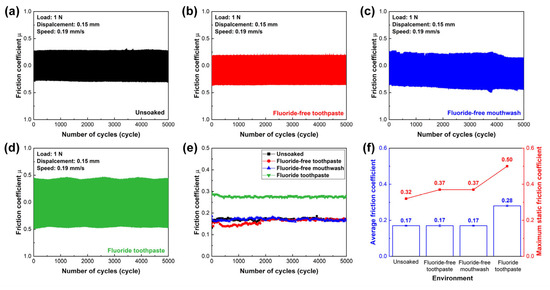
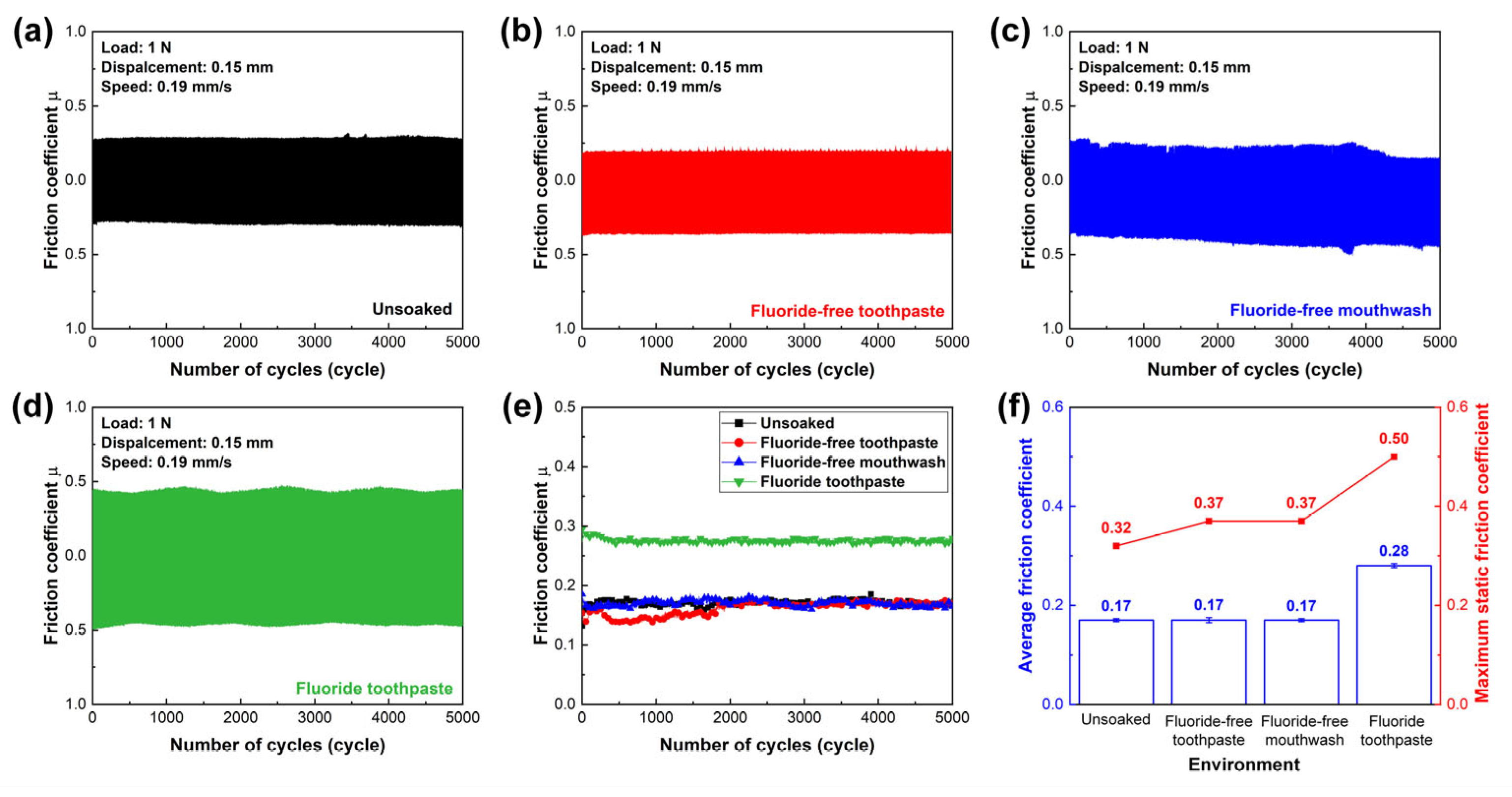
The friction curves of the stainless steel archwires after being soaked in various solutions are shown in Figure 2. Obviously, the friction curves for the unsoaked archwires and those soaked in a fluoride-free toothpaste solution exhibited relatively minor fluctuations, with peak values stabilized at approximately 0.30. However, an archwire soaked in a fluoride-free mouthwash solution displayed an increased fluctuation after 2000 cycles, although the average coefficient remained around 0.30. Furthermore, archwire soaked in a fluoride toothpaste solution demonstrated a pronounced and sustained oscillation throughout the entire testing period, with friction coefficients approaching 0.50. As shown in Figure 2e,f, the friction coefficients of the archwires soaked in a fluoride-free toothpaste and fluoride-free mouthwash solution remained essentially unchanged compared to the unsoaked archwire, with values close to 0.20. The average friction coefficients remained stable at 0.17, with corresponding maximum static friction coefficients of 0.32, 0.37, and 0.37, respectively. However, the friction coefficient increased significantly for the archwire soaked in a fluoride toothpaste solution, reaching approximately 0.30. Both the average friction coefficient and maximum static friction coefficient increased substantially, rising to 0.28 and 0.50, respectively.
Figure 2.
Friction behavior of the unsoaked and soaked stainless steel archwires sliding against stainless steel brackets in an artificial saliva environment. (a) Typical friction curve of the unsoaked archwire. (b) Typical friction curve of archwire after being soaked in fluoride-free toothpaste. (c) Typical friction curve of archwire after being soaked in fluoride-free mouthwash. (d) Typical friction curve of archwire after being soaked in fluoride toothpaste. (e) Mean friction coefficients of each cycle. (f) Average friction coefficients and maximum static friction coefficients.
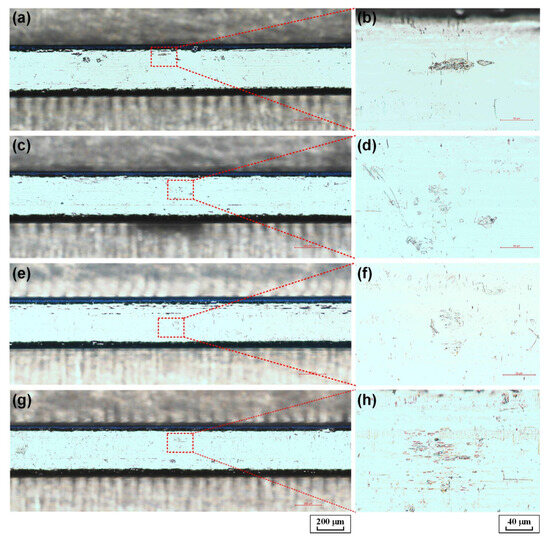
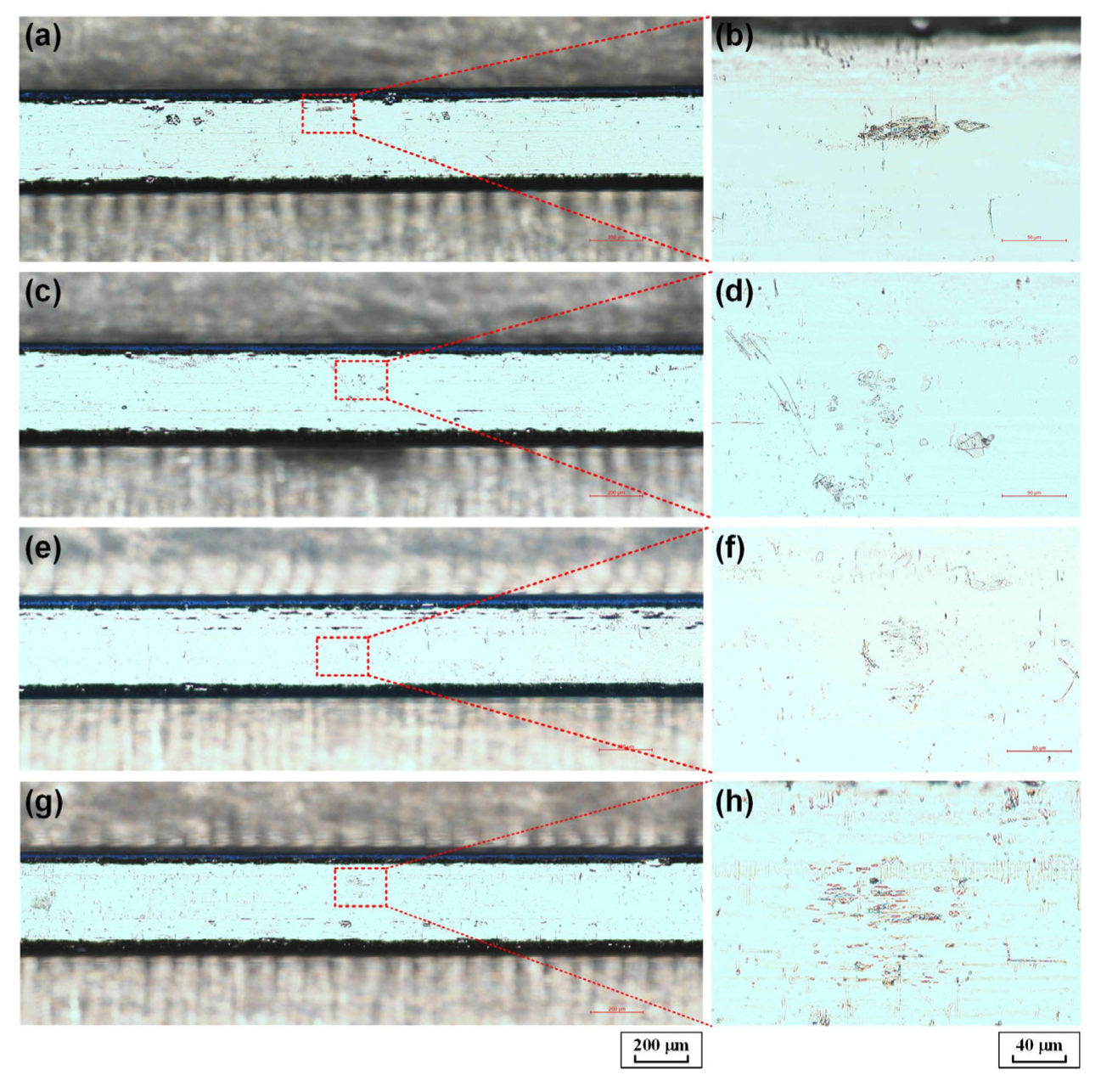
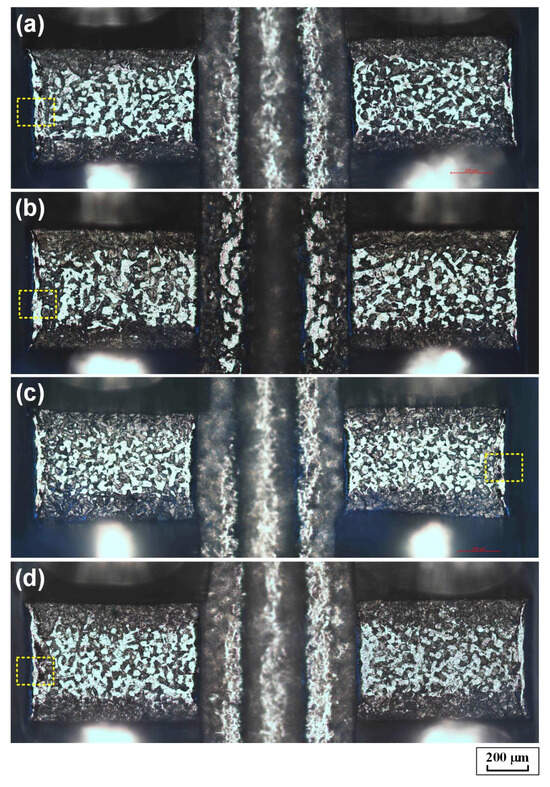
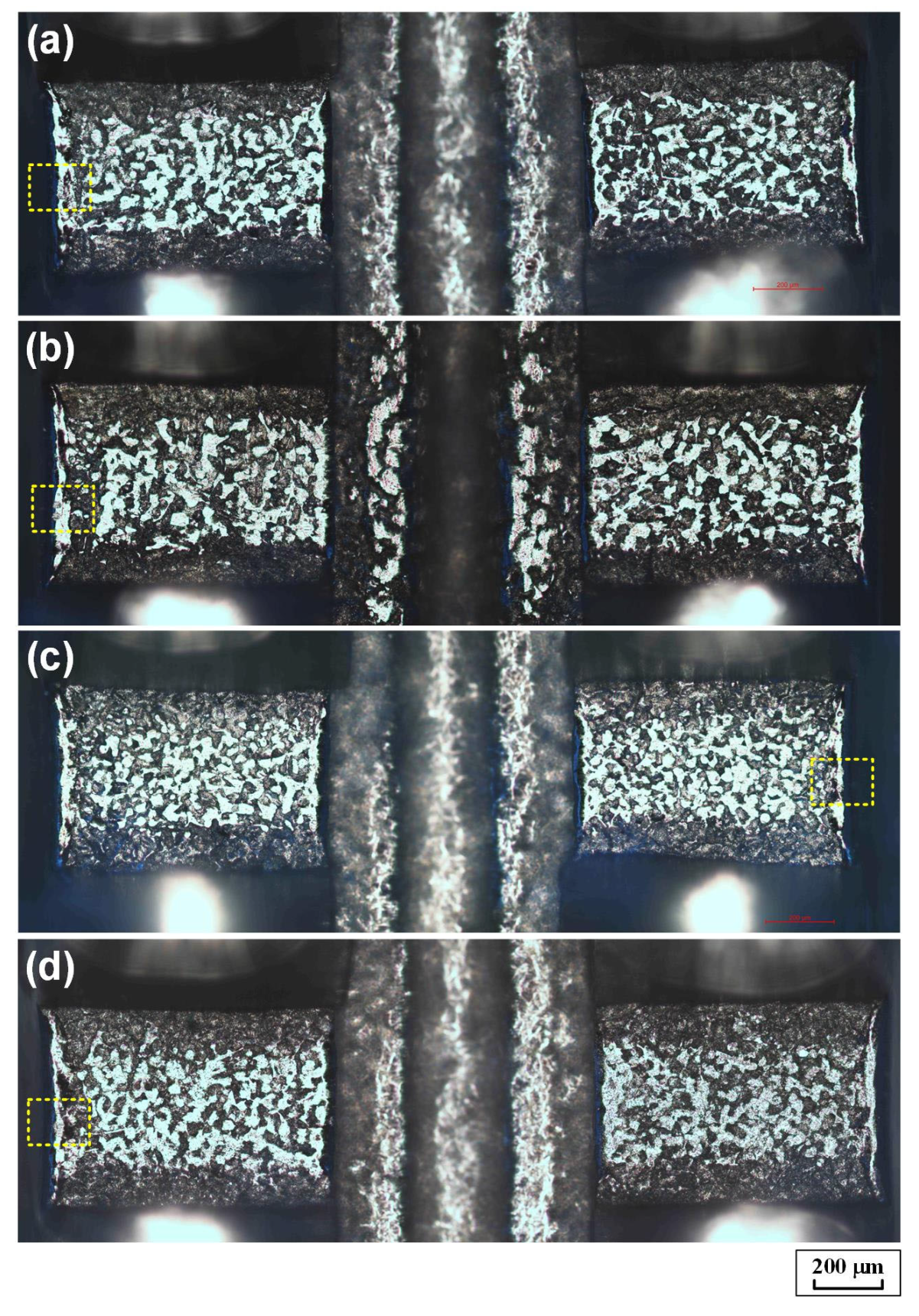
Optical microscopy images of the worn surfaces on the stainless steel archwires and brackets after friction tests in an artificial saliva environment are shown in Figure 3 and Figure 4, respectively. The wear scars on the stainless steel archwire exhibited minimal alteration after soaking in a fluoride-free toothpaste and fluoride-free mouthwash solution. However, a significant increase in wear scar extent was observed after soaking in a fluoride toothpaste solution. Furthermore, the longitudinal widths of the wear scars on the archwires and wear tracks on the brackets were correspondingly matched, indicating consistent contact and wear interaction between the two components.
Figure 3.
Optical microscopy images of the wear scars on the unsoaked and soaked stainless steel archwires after sliding against stainless steel brackets in an artificial saliva environment. (a,b) Unsoaked archwire. (c,d) Archwire after being soaked in fluoride-free toothpaste. (e,f) Archwire after being soaked in fluoride-free mouthwash. (g,h) Archwire after being soaked in fluoride toothpaste.
Figure 4.
Optical microscopy images of the wear tracks on stainless steel brackets after sliding against unsoaked and soaked archwires in an artificial saliva environment. (a) Unsoaked archwire. (b) Archwire after being soaked in fluoride-free toothpaste. (c) Archwire after being soaked in fluoride-free mouthwash. (d) Archwire after being soaked in fluoride toothpaste. The wear tracks located at the edges of the slot surfaces are outlined by yellow dotted rectangles.
It was found that the existence of fluoride in the immersion medium contributed to a significant increase in the friction coefficient of the stainless steel archwire in an artificial saliva environment. To further explore the influence of immersion time as well as immersion medium (i.e., fluoride-containing environments) on the friction and wear behavior of stainless steel archwire-bracket sliding contacts in an artificial saliva environment, the stainless steel archwires were separately immersed in three types of fluoride-containing solutions (i.e., fluoride toothpaste, fluoride mouthwash, and sodium monofluorophosphate) for different periods of time (i.e., 1, 2, 4, 8, and 16 h) and then subjected to friction and wear experiments with the stainless steel brackets in an artificial saliva environment.
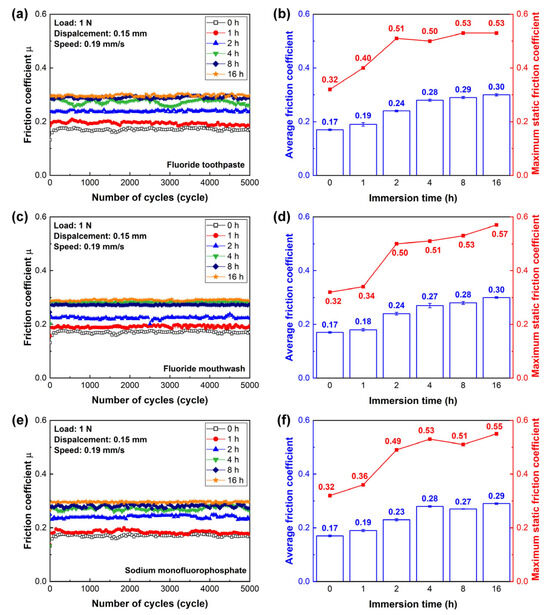
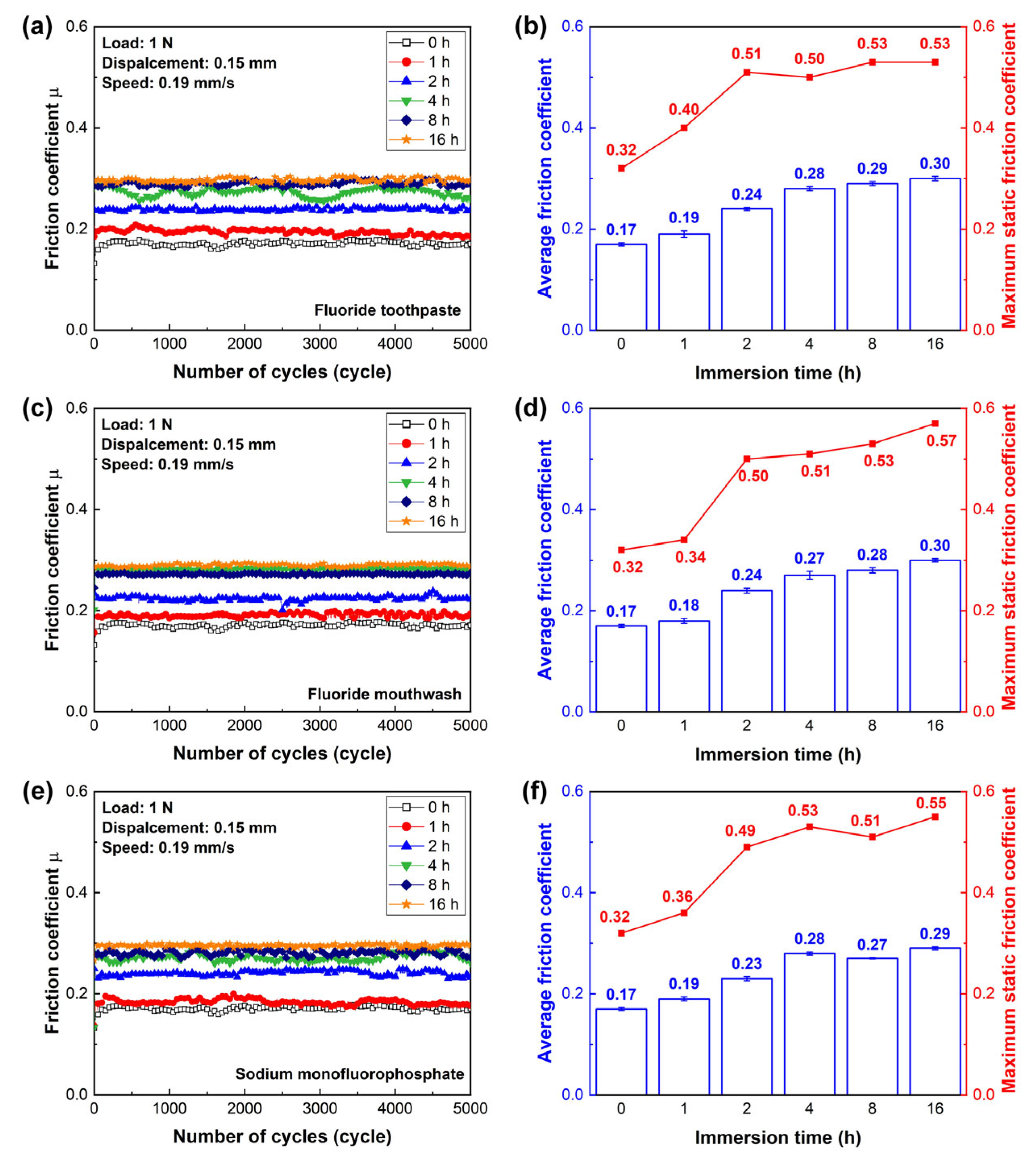
Figure 5 presents the friction behavior of the three types of soaked stainless steel archwires sliding against stainless steel brackets in an artificial saliva environment. It was clearly observed that the average friction coefficient of the archwire soaked in fluoride toothpaste increased gradually from 0.17 to 0.28 with the increase in immersion time from 0 h to 4 h, and then stabilized at round 0.30 with the further increase in immersion time from 4 h to 16 h, as shown in Figure 5b. Similarly, the maximum friction coefficient increased from 0.32 to 0.50, and then stabilized at approximately 0.53. Figure S2 presents the optical microscopy images of the wear scars on the fluoride toothpaste-soaked stainless steel archwires after sliding against stainless steel brackets in an artificial saliva environment. It could be seen that at the same magnification, the wear scars of the stainless steel archwire increased with the extension of the immersion time. When the immersion time was 4 h, 8 h, and 16 h, the furrow-shaped wear scars of the three were not significantly different, indicating a saturation effect. The dominant form of wear was the abrasive wear.
Figure 5.
Friction behavior of the three types of soaked stainless steel archwires sliding against stainless steel brackets in an artificial saliva environment. (a,b) Archwire soaked in fluoride toothpaste. (c,d) Archwire soaked in fluoride mouthwash. (e,f) Archwire soaked in sodium monofluorophosphate. (a,c,e) Mean friction coefficients. (b,d,f) Average friction coefficients and maximum static friction coefficients.
Figure 5d,f present the friction behaviors of stainless steel archwires after soaking in fluoride mouthwash and sodium monofluorophosphate solution for different durations, respectively. Interestingly, the friction behaviors were highly consistent with that observed after soaking in a fluoride toothpaste solution. Furthermore, Figures S3 and S4 further confirmed that the morphological characteristics of the wear scars on the fluoride mouthwash as well as sodium monofluorophosphate-soaked stainless steel archwires after sliding against stainless steel brackets in an artificial saliva environment were identical to those observed in fluoride toothpaste-soaked archwires (as shown in Figure S2).
It was suggested that the effect of the immersion time of the archwire in the three fluoride-containing environments on the friction and wear behavior of the archwire-bracket sliding contact reached a threshold after more than four hours. Moreover, these interesting findings demonstrated that the corrosive effect of fluoride-containing oral care products on the surface of stainless steel archwires was broadly applicable. Regardless of the formulation—whether toothpaste, mouthwash, or other fluoride-containing solutions—similar surface corrosion and alterations in frictional performance were observed. This observation was of significant importance for understanding and mitigating fluoride-induced corrosion of metallic orthodontic materials and provided valuable insights into the development of more corrosion-resistant oral care products as well as dental alloys.
3.2. Surface Characterizations of Archwire-Bracket Sliding Contact
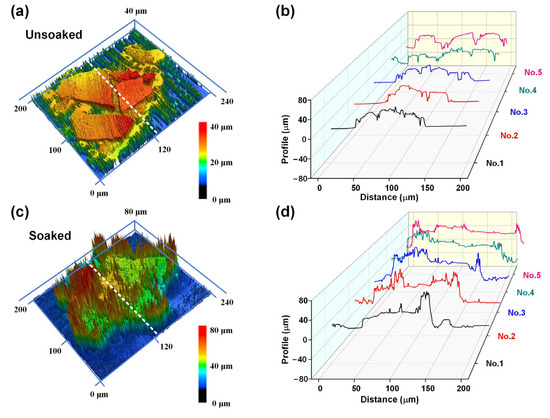
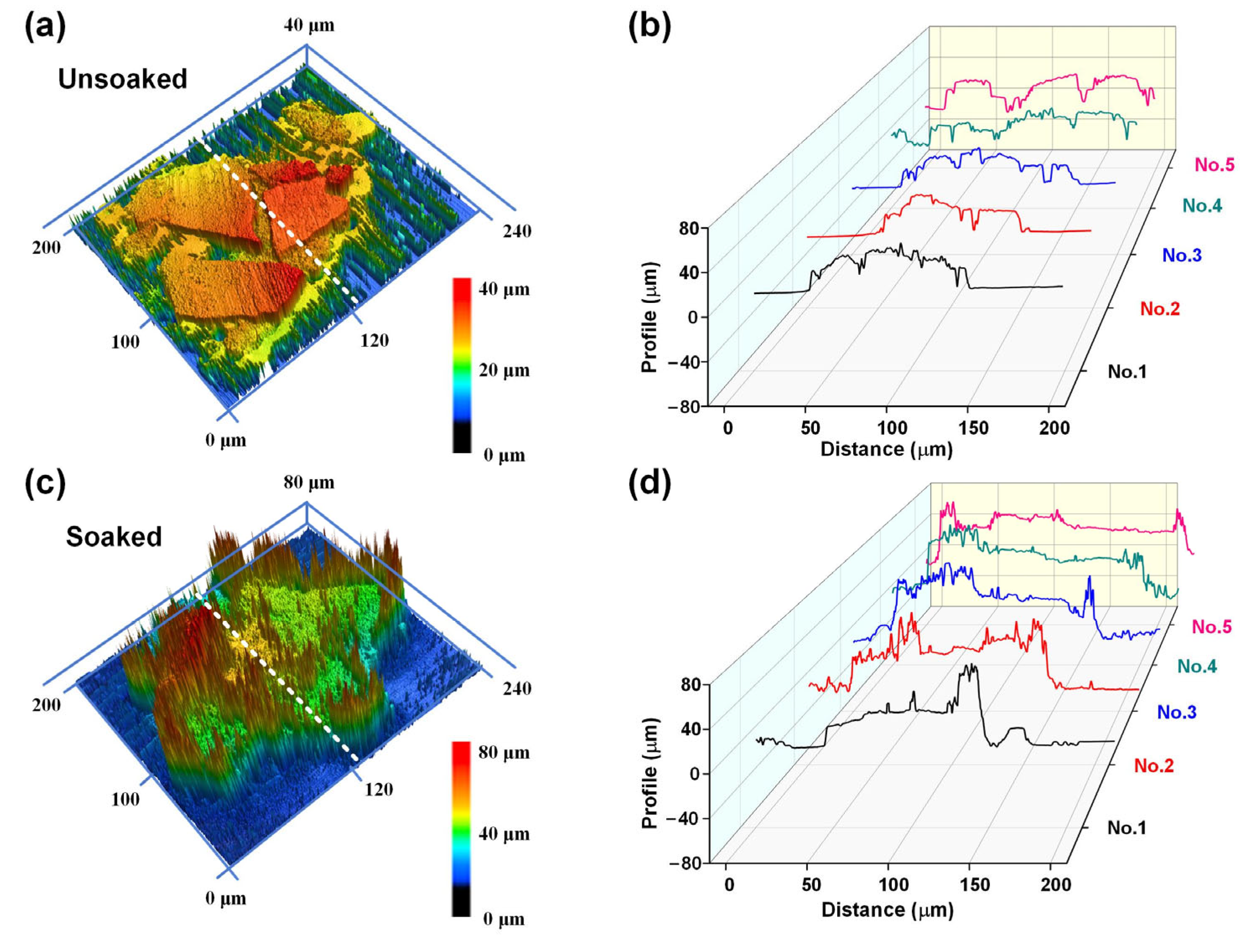
Wear debris was successfully captured from the contact interface of the archwire-bracket tribopair after the friction tests in an artificial saliva environment and then analyzed using a laser confocal microscope and SEM-EDS. Figure 6a,c present the 3D surface morphologies of the derived wear debris, while Figure 6b,d show the profile curves measured at five different locations on the corresponding wear debris, with the measurement direction aligned along the white dotted lines indicated in Figure 6a,c. Specifically, the height of the wear debris from the unsoaked archwire was relatively uniform, averaging approximately 40 µm, whereas the wear debris from the soaked archwire exhibited a height of approximately 80 µm. Based on the profile curve analysis of the wear debris, the zero line along the Z-axis exhibited a relatively flat characteristic, allowing it to be used as a reference baseline. This feature enabled direct integration using multi-file analysis software (Version 9.0) to accurately calculate the wear debris volume. The wear debris from the unsoaked stainless steel archwire had a relatively small volume, with an average value of approximately 67.1 ± 4.0 × 104 μm3. However, the debris volume from the fluoride toothpaste-soaked stainless steel archwire was significantly greater, reaching approximately 114.1 ± 6.7 × 104 μm3, nearly double that of the unsoaked one. This substantial increase in debris volume correlated well with the enlarged wear scar area observed after immersion tests, indicating that the fluoride toothpaste-soaked archwire undergoes more severe friction and wear during interaction with the bracket. Consequently, both the wear scar area and the volume of generated debris were increased. For comparison, the wear volume loss from the stainless steel (SUS 303Cu) bracket after sliding against stainless steel (SUS 302) archwire under a normal load of 0.5 to 1.5 N in air and saliva environments was calculated to be in the range of 20–500 × 104 μm3 by using white light interferometry [28], which further confirmed the accuracy of the result in the present work.
Figure 6.
Surface morphological characteristics of wear debris from the unsoaked and soaked stainless steel archwires. (a) 3D optical image and (b) corresponding cross-sectional profiles of the wear debris from the unsoaked stainless steel archwire after running against bracket in an artificial saliva environment. (c) 3D optical image and (d) corresponding cross-sectional profiles of the wear debris from a fluoride toothpaste-soaked stainless steel archwire after running against bracket in an artificial saliva environment.
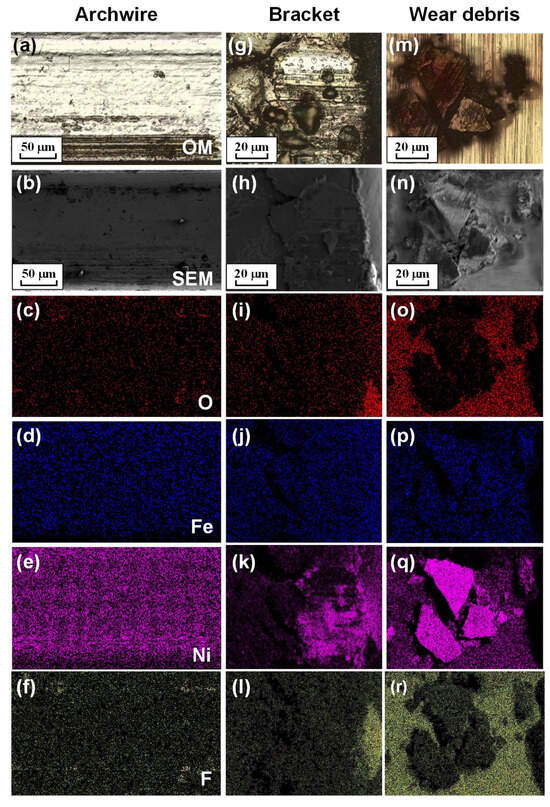
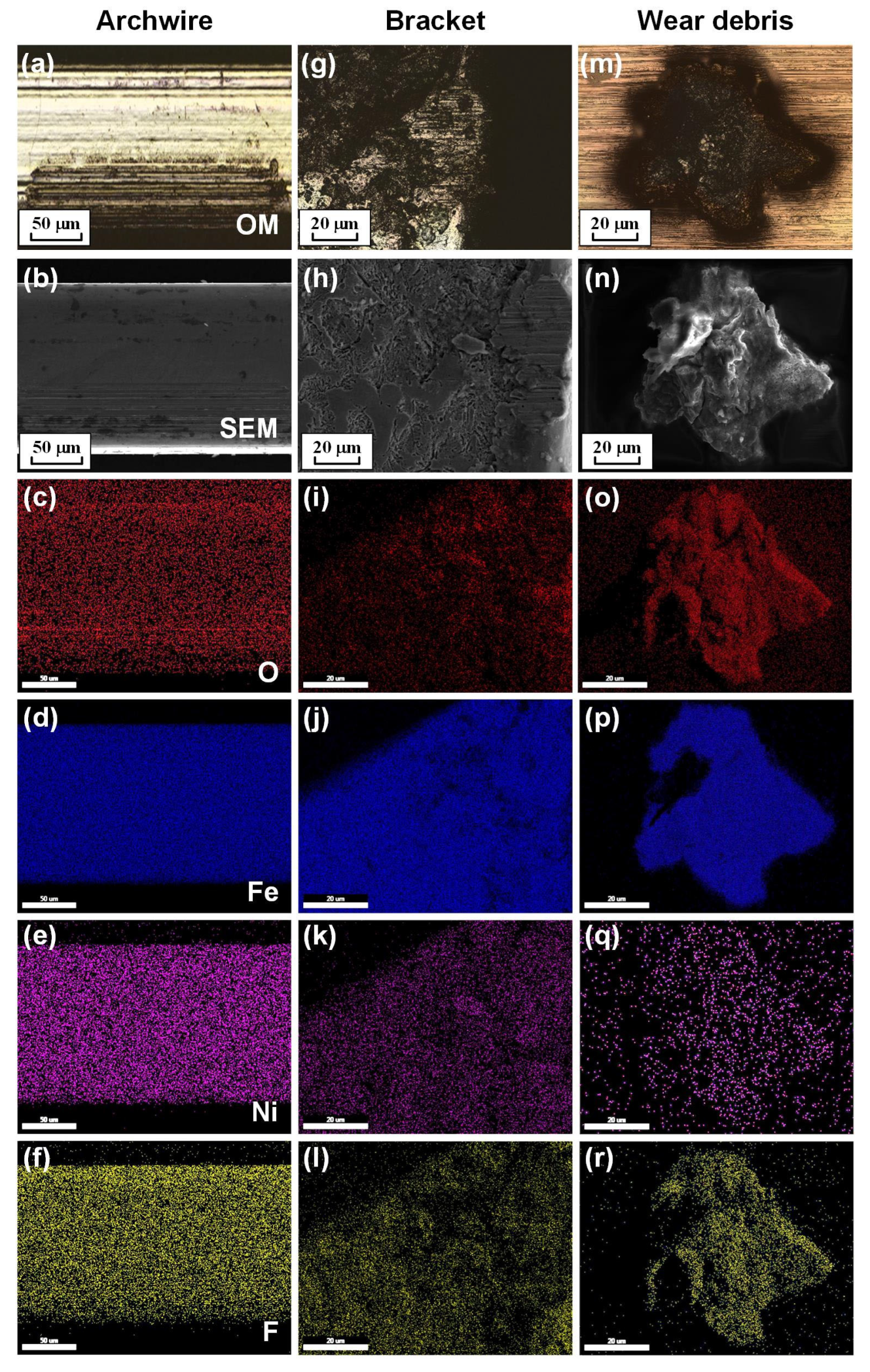
To determine the elemental information of the wear debris and from which side of the archwire-bracket tribopair the debris originated, surface characterizations (i.e., optical microscope and SEM-EDS) were conducted on the derived wear debris, as well as the worn surfaces of the stainless steel archwire and bracket, as shown in Figure 7 and Figure 8.
Figure 7.
Surface characterization of the unsoaked archwire, bracket, and the derived wear debris after reciprocating sliding test in an artificial saliva environment. (a–f) Unsoaked stainless steel archwire. (g–l) Stainless steel bracket. (m–r) Wear debris. (a,g,m) Optical microscopy images. (b,h,n) SEM images. (c–f,i–l,o–r) EDS analysis.
Figure 8.
Surface characterization of the fluoride toothpaste-soaked archwire, bracket, and the derived wear debris after reciprocating sliding test in an artificial saliva environment. (a–f) Fluoride toothpaste-soaked stainless steel archwire. (g–l) Stainless steel bracket. (m–r) Wear debris. (a,g,m) Optical microscopy images. (b,h,n) SEM images. (c–f,i–l,o–r) EDS analysis.
Figure 7 shows the surface analysis results of the wear debris from the unsoaked archwire group. Based on morphological assessment (e.g., Figure 7a,m), the debris size was consistent with material loss from the archwire. Elemental analysis further confirmed that the composition of the wear debris (e.g., Figure 7c–f,o–r) closely matched that of the archwire. Therefore, integrating morphological and EDS data, it could be concluded that the wear debris generated during the friction and wear process between the unsoaked archwire and bracket primarily originated from the archwire.
Figure 8 presents corresponding results for the soaked stainless steel archwire group. Similarly, both size and morphology indicated an archwire origin. From an elemental standpoint, the surface of the soaked archwire exhibited a notable increase in oxygen (O) content compared to the unsoaked sample, with significant enrichment of both O and F elements. The wear debris showed a similar elemental profile, further confirming its origin from the corroded archwire surface. This phenomenon could be attributed to fluoride ion (F−) attack during immersion test, which promoted surface corrosion, coupled with oxidative reactions leading to the accumulation of O and F species on the stainless steel archwire surface. Therefore, these analyses demonstrated that the wear debris predominantly originated from the archwire. During the archwire-bracket interaction, the archwire underwent more severe wear, and exposure to fluoride-containing environments induced surface corrosion characterized by the co-enrichment of O and F.
4. Discussion
4.1. SEM-EDS and Laser Confocal Microscopy Analysis of Soaked Stainless Steel Archwires
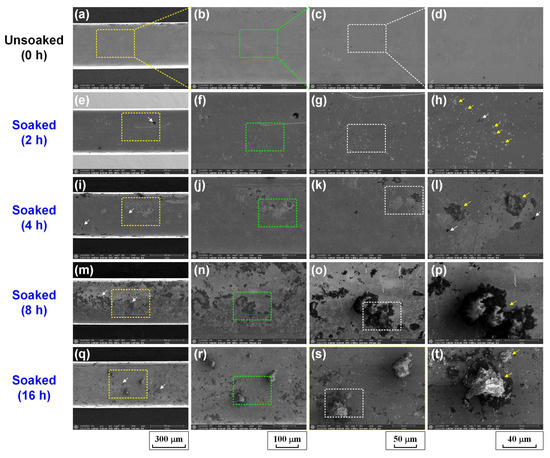
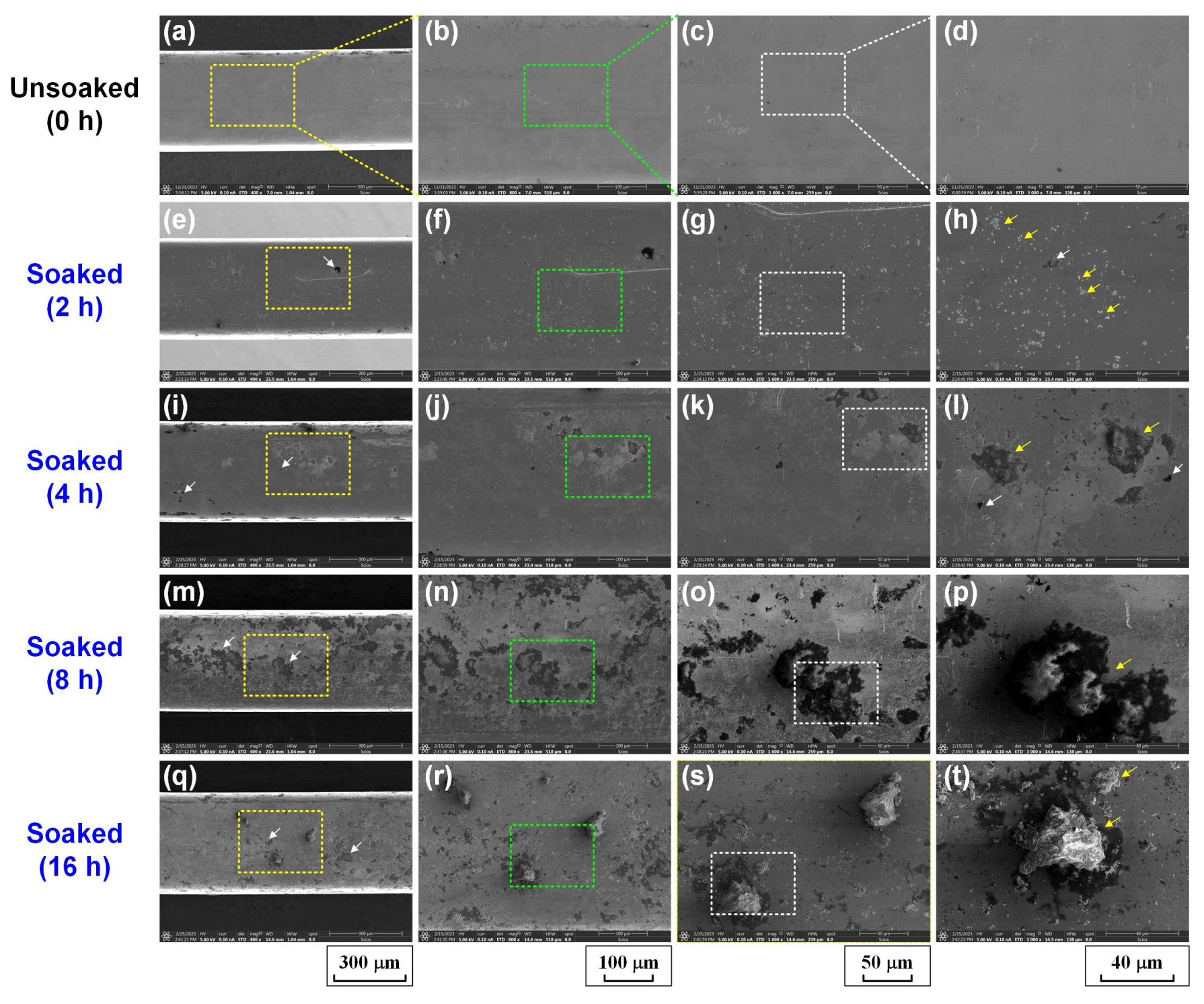
Friction and wear tests conducted between the archwires and brackets following immersion in a fluoride-containing environment revealed that the friction coefficient increased progressively within a specific time frame, as shown in Figure 5b,d,f. To further elucidate the surface corrosion process, stainless steel archwires were immersed in a fluoride-containing mouthwash environment for five predetermined time intervals (0, 2, 4, 8, and 16 h) and subsequently analyzed using SEM-EDS. Figure 9 presents the SEM images of the corrosion surfaces on the stainless steel archwires after being soaked in a fluoride mouthwash solution for different periods of time. It was demonstrated that the archwire surface underwent corrosion after exposure to a fluoride-containing solution for 2 h, which could be clearly identified from the corrosion products (denoted by yellow arrows) in Figure 9h. Moreover, the extent of surface degradation (i.e., corrosion pit and corrosion product) becoming increasingly severe as immersion time extended, as shown in Figure 9l,p,t. This trend correlated well with the observed increase in friction coefficient and wear severity, indicating that corrosion of the archwire surface likely contributed to the deterioration of tribological performance.
Figure 9.
SEM images of the corrosion surfaces on the stainless steel archwires after being soaked in fluoride mouthwash for different periods of time. (a–d) 0 h. (e–h) 2 h. (i–l) 4 h. (m–p) 8 h. (q–t) 16 h. For each period of time, the right image is an enlarged version of the selected dotted rectangle in the left image. Typical corrosion pits are denoted by white arrows. Typical corrosion products are denoted by yellow arrows.
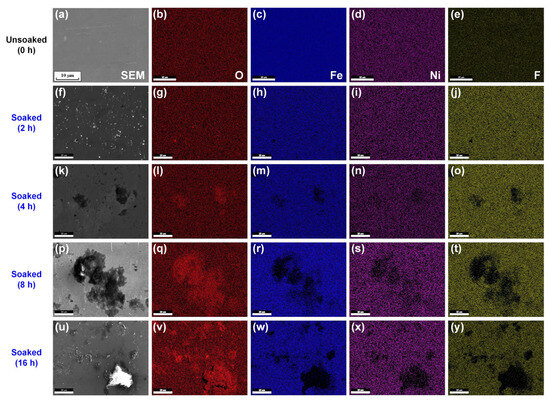
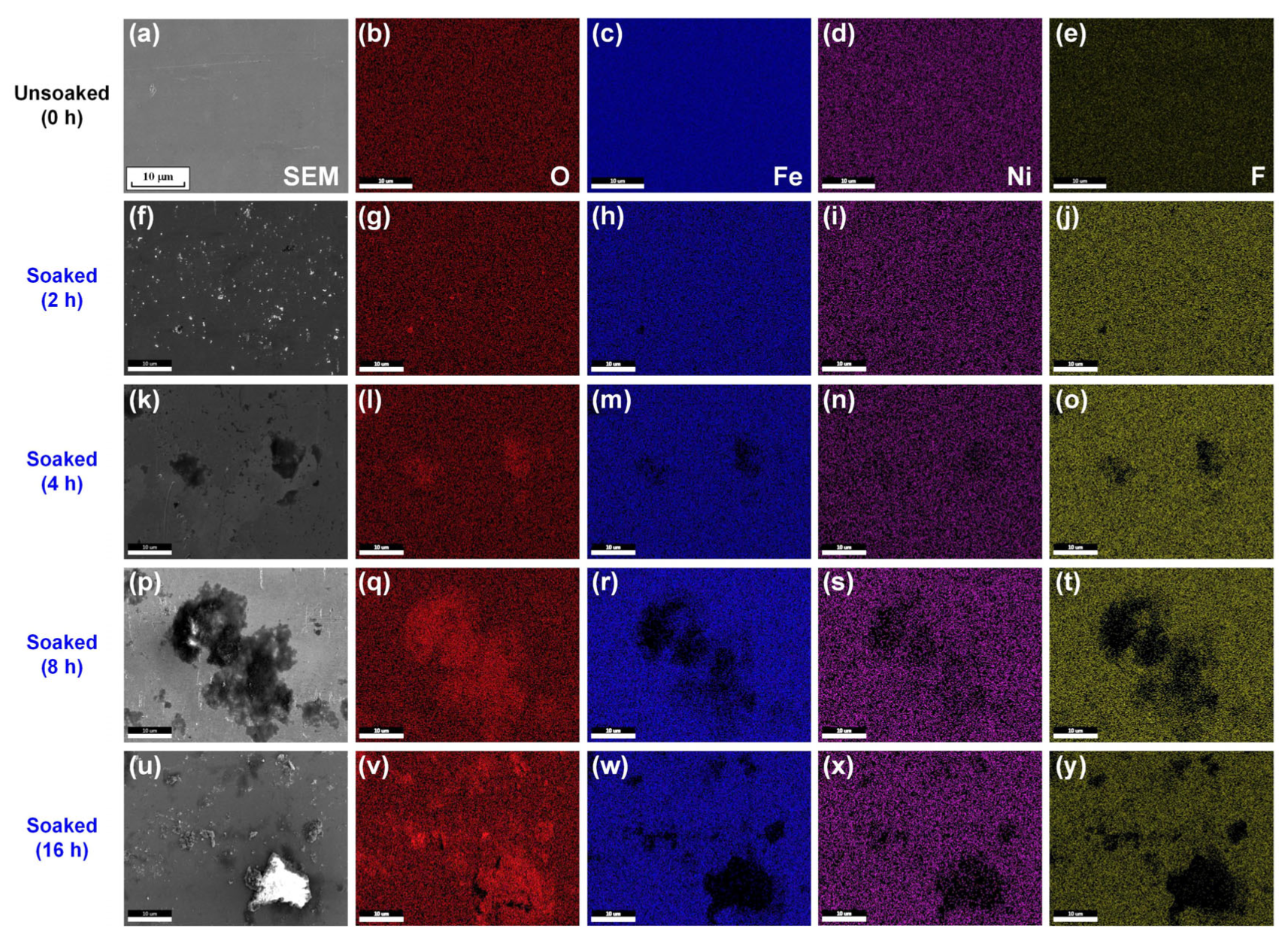
Figure 10 presents the EDS elemental mapping of the stainless steel archwire after being soaked in a fluoride mouthwash solution for different periods of time. It was observed that there was a clear accumulation of oxygen (O, as shown in Figure 10l,q,v) and fluorine (F, as shown in Figure 10o,t,y) elements on the stainless steel archwire surface after exposure to a fluoride-containing solution. This observation was consistent with the surface compositional analysis of wear debris obtained from the friction tests between the archwire and bracket after immersion (shown in Figure 8), further revealing the changes in the surface elements of the stainless steel archwire after immersion in a fluoride-containing solution.
Figure 10.
SEM and EDS analysis of the corrosion surface on the stainless steel archwire after being soaked in a fluoride mouthwash solution for different periods of time. (a–e) 0 h. (f–j) 2 h. (k–o) 4 h. (p–t) 8 h. (u–y) 16 h. The scale bar is 10 μm.
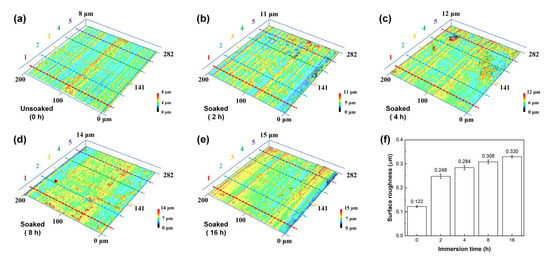
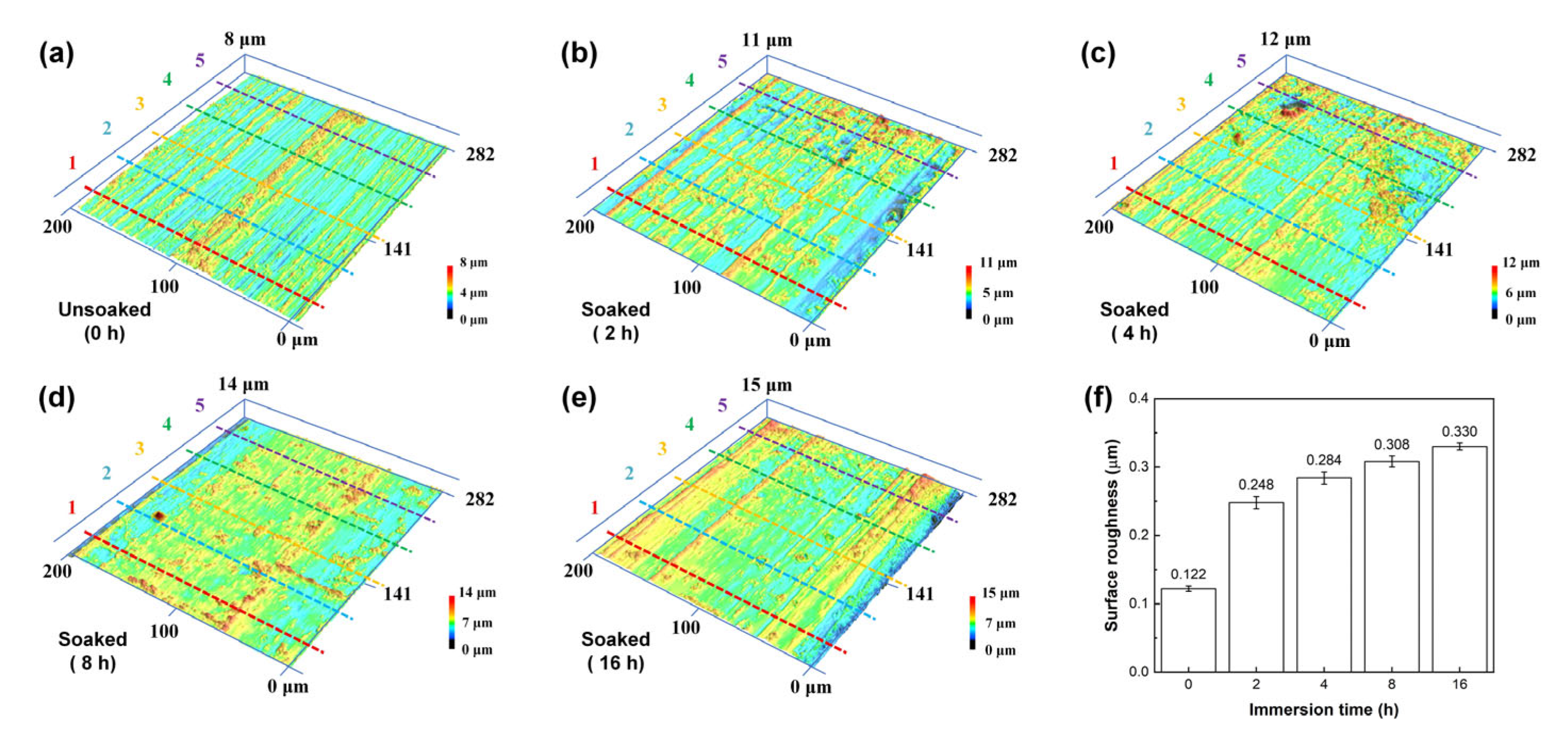
Figure 11a–e show 3D optical images of the corrosion surface on the stainless steel archwire after being soaked in a fluoride mouthwash solution for different periods of time. The surface roughness shown in Figure 11f was calculated from the five selected positions marked with dotted lines in the corresponding optical images. The detailed values of the surface roughness are summarized in Table S1. It was clearly found that the surface roughness increased greatly from 0.122 μm to 0.330 μm with the increase of the immersion time from 0 h to 16 h, which agreed well with the increase of friction coefficient in Figure 5.
Figure 11.
Laser confocal microscopy analysis of the corrosion surface on the stainless steel archwire after being soaked in a fluoride mouthwash solution for different periods of time. 3D optical images of the soaked archwire for (a) 0 h, (b) 2 h, (c) 4 h, (d) 8 h, and (e) 16 h. (f) Calculated surface roughness from the five selected positions marked with dotted lines in the corresponding optical images.
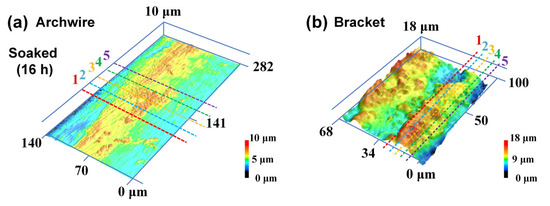
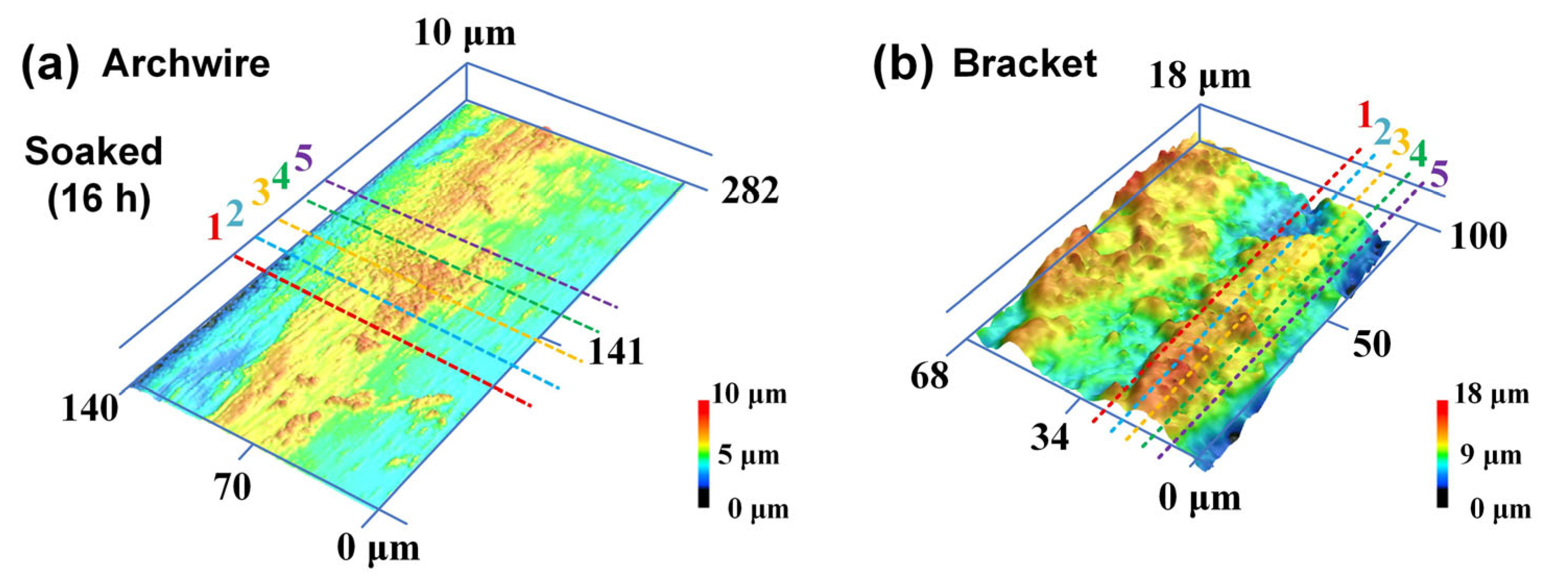
Figure 12 presents the 3D optical images of the worn surfaces on the fluoride mouthwash-soaked (16 h) stainless steel archwire and bracket after friction test in an artificial saliva environment. Table 1 summarizes the three-dimensional parameters of the worn surfaces on the stainless steel archwire and bracket calculated from the five selected positions marked with dotted lines in the corresponding optical images (i.e., Figure 12). The average wear volume of the wear scar on the archwire and wear track on the bracket was calculated to be 9871.5 μm3 and 2330.4 μm3, respectively. Thus, the corresponding wear rates were calculated to 6.58 × 10⁻⁶ mm3/Nm and 1.55 × 10⁻⁶ mm3/Nm. It was further confirmed that the wear status of the archwire was worse than that of the bracket.
Figure 12.
3D optical images of the worn surfaces on the fluoride mouthwash-soaked (16 h) stainless steel archwire and bracket after friction test in an artificial saliva environment. (a) Archwire. (b) Bracket.
Table 1.
Feature parameters of the worn surfaces on the stainless steel archwire and bracket.
4.2. Electrochemical Behaviors of Stainless Steel Archwires
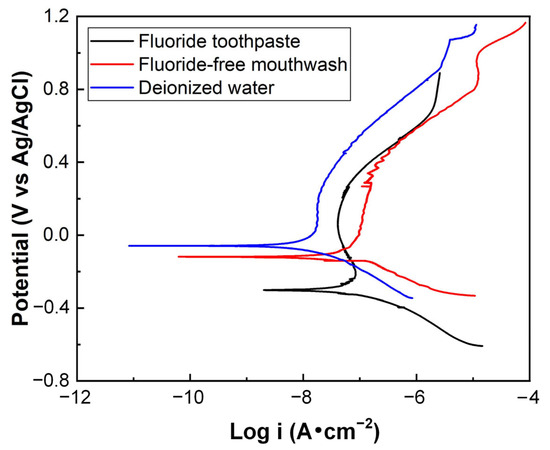
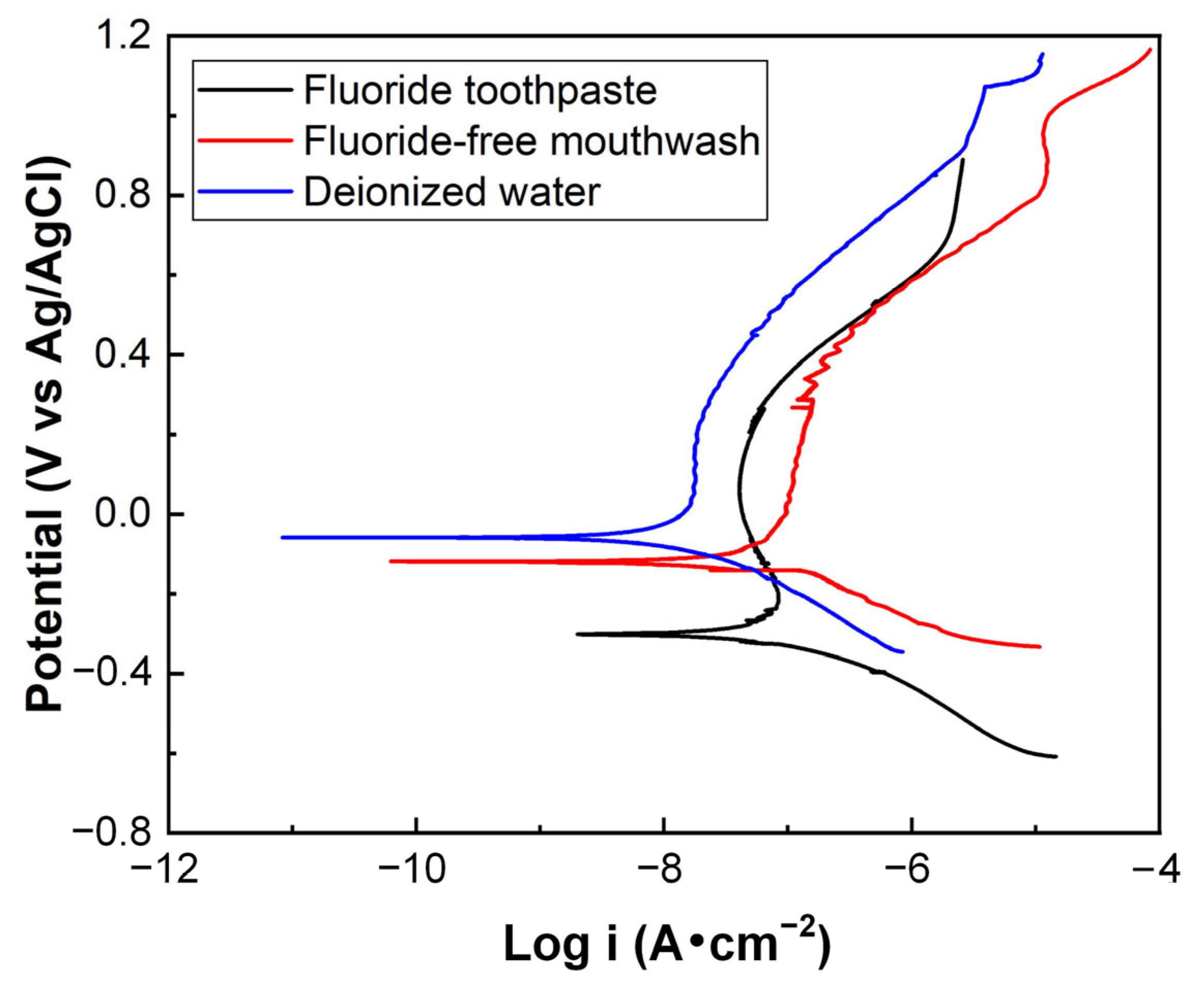
According to electrochemical theory, the corrosion potential (Ecorr) serves as a key indicator of a metal’s susceptibility to corrosion: a more negative Ecorr value indicates a greater thermodynamic tendency for metal oxidation, i.e., electron loss, and thus a higher corrosion propensity; conversely, a less negative or more positive Ecorr suggests a lower corrosion susceptibility. On the other hand, the corrosion current density (Icorr) is a key parameter for assessing material corrosion kinetics, as it is directly proportional to the corrosion rate [29].
Figure 13 presents the potentiodynamic polarization curves of stainless steel archwires in various fluoride-containing solutions. The detailed electrochemical parameters are summarized in Table 2. In deionized water, the Ecorr of the stainless steel archwire was measured at –59.2 mV, decreasing to –120.4 mV in the fluoride-free mouthwash solution, and further shifting to –301.8 mV in the fluoride toothpaste mixed solution. This progressive cathodic shift in Ecorr clearly indicated an increased corrosion tendency of the archwire in fluoride-containing solutions, with the most pronounced effect observed in the fluoride toothpaste solution. The Icorr values were 0.051 μA/cm2 in deionized water, 0.129 μA/cm2 in the fluoride-free mouthwash solution, and 0.348 μA/cm2 in the fluoride toothpaste mixed solution. For comparison, the corrosion potential and current density for stainless steel (AISI 304) in an artificial saliva environment (pH = 6.5) were measured to be –219 mV and 0.153 μA/cm2, respectively [13]. These results demonstrated that the corrosion rate of stainless steel archwires was significantly higher in the fluoride toothpaste mixed solution, indicating increased susceptibility to corrosion in a fluoride-rich environment. On the contrary, both the corrosion tendency and corrosion rate are considerably lower in fluoride-free mouthwash and deionized water, reflecting superior corrosion resistance under these conditions.
Figure 13.
Potentiodynamic polarization curves of the stainless steel archwires in various fluoride-containing solutions.
Table 2.
Electrochemical corrosion parameters of stainless steel archwires in different fluoride-containing solutions.
4.3. Corrosion Mechanisms of Soaked Stainless Steel Archwires
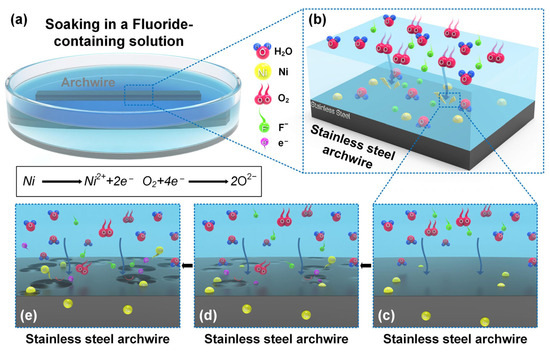
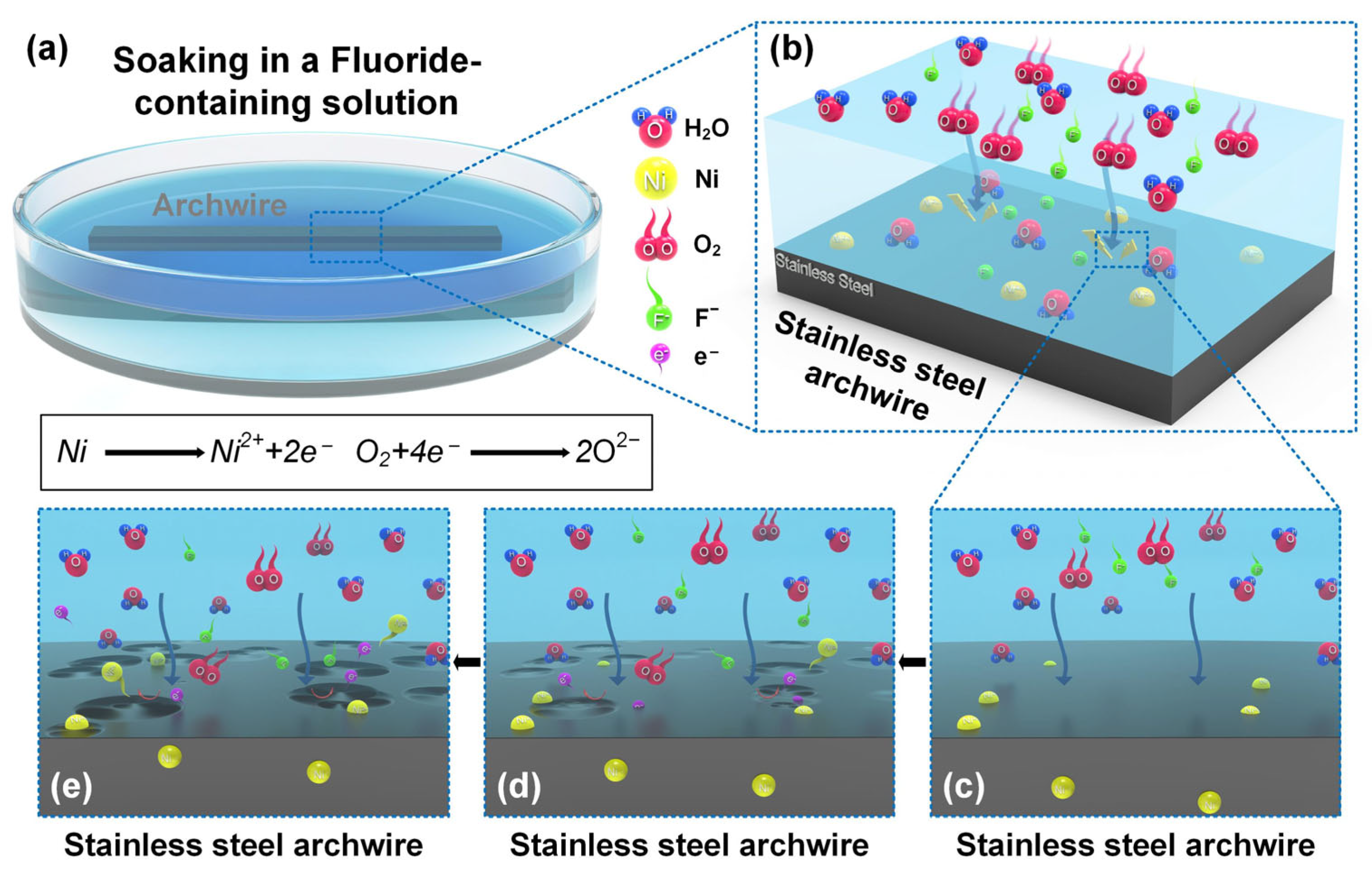
Based on the analysis of surface composition and morphology of the archwire after immersion in a fluoride-containing solution for different periods of time, as well as the surface composition of the wear debris during the friction and wear process of the archwire-bracket tribopair before and after immersion, the electrochemical reaction equation and corrosion mechanism diagram of the archwire were inferred. The electrochemical anode and cathode reactions are shown in Formulas (1) and (2), respectively.
Ni → Ni2+ + 2e−
O2 + 4e− → 2O2−
Tiwari et al. [30] investigated the corrosion behavior of Cu-Ni alloys in chloride-containing environments (e.g., seawater), where surface metal oxides provided temporary protection. The anodic oxidation reaction occurs at the interface between the oxide film and the underlying metal substrate. The cathodic process involves oxygen reduction, while the anodic process consists of the release of Cu2+ ions from the copper oxide layer into the solution. It is believed that metals such as stainless steel typically form a protective passive film on their surface, which inhibits corrosion; however, once this film is compromised, electrochemical corrosion proceeds rapidly. In the present work, friction and wear tests between the stainless steel archwire and bracket after immersion in a fluoride-containing solution for varying durations revealed a time-dependent increase in the friction coefficient and an expansion of wear scars within a certain exposure period. Surface morphology analysis confirmed the presence of irreversible corrosion damage on the archwire surface, with increasing severity over time. Elemental analysis demonstrated a significant enrichment of fluorine (F) and oxygen (O) elements on the archwire surface following immersion. Similarly, analysis of wear debris showed pronounced accumulation of F and O elements, and the volume of wear debris collected after being soaked was approximately twice that observed in unsoaked samples, indicating intensified wear due to prior exposure. Therefore, a hypothesis for the corrosion mechanism was proposed and schematically shown in Figure 14.
Figure 14.
Schematic illustration of the corrosion mechanism for the stainless steel archwire in a fluoride-containing solution. (a) Archwire soaked in a fluoride-containing solution. (b) Surface element diagram of the stainless steel archwire. (c–e) Corrosion process diagram for the formation and development of surface pits.
Figure 14a illustrates the initial stage of a stainless steel archwire immersion in a fluoride-containing solution, while Figure 14b presents the elemental distribution during early-stage interaction. With the increase in the immersion time, electrochemical corrosion progressed, leading to a gradual propagation of surface pits that eventually covered a large portion of the archwire surface, evidence of sustained and advancing corrosion, as shown in Figure 14c–e. It was assumed that fluoride ions (F−) in the solution promoted selective leaching of nickel (Ni) from the alloy matrix, releasing electrons in the process and resulting in F− accumulation on the surface. Concurrently, dissolved oxygen in the fluoride solution captures these electrons through cathodic oxygen reduction, forming hydroxide species that contribute to oxide/hydroxide layer formation and cation aggregation on the metal surface. It was further confirmed by surface composition analysis of the collected wear debris, as shown in Figure 8.
Fluoride ions present in fluoride-containing oral care products act as strong electrophiles, capable of reacting chemically with the metal surface of stainless steel archwires. This interaction disrupts the protective passive oxide layer, exposing the underlying metal to a more aggressive chemical environment and thus accelerating the corrosion process. When stainless steel archwires were immersed in fluoride-containing solutions, micro-batteries might form, leading to an electrochemical corrosion. The high reactivity of fluoride ions might accelerate this process, causing metal ions to dissolve from the surface of the stainless steel archwire, thus resulting in corrosion. Moreover, pH value, temperature, and other environmental factors could also affect the corrosion process [8]. Furthermore, it was suggested that the corrosive pits formed on the surface of the archwire provide an evidence of metal corrosion, while the progressive increase in surface roughness results in a significant rise in the friction force of the orthodontic appliance [31]. Therefore, it was indicated that surface corrosion damage was the primary factor contributing to the increased friction and severe wear observed at the archwire-bracket interface under fluoride exposure. This work provides valuable insights for optimizing oral care product selection and clinical application of orthodontic archwires.
This study clearly confirmed that the presence of fluoride in oral care products induced irreversible corrosion damage on the surface of stainless steel archwires. Furthermore, Močnik et al. [13] demonstrated that the extent of corrosion varies with the concentration of fluoride in the solution. Consequently, fluoride-containing products may be unsuitable for certain clinical conditions involving metal orthodontic appliances [17,27]. However, orthodontists strongly recommend the use of fluoride-containing mouthwash in clinical practice to reduce caries incidence in patients with fixed orthodontic appliances, particularly in young permanent dentition [32]. Moreover, friction and wear of the archwires were observed to reach a threshold after several hours of immersion testing—specifically, within four hours—in fluoride-containing solutions. Therefore, mild corrosion occurring over a limited period and under controlled solution conditions might be considered acceptable for patients. Systematic investigations into fluoride-induced corrosion are highly required in future studies.
5. Conclusions
In this work, to explore the friction and wear behavior of orthodontic archwires after corrosion in various oral care products, stainless steel archwires were soaked in solutions of fluoride-free toothpaste, fluoride toothpaste, fluoride-free mouthwash, fluoride mouthwash, and sodium monofluorophosphate, prior to conducting friction and wear tests with stainless steel brackets in an artificial saliva environment. It was found that in fluoride-containing environments, the friction coefficient between the archwire and bracket increased gradually from 0.17 to 0.28 with prolonged immersion time, accompanied by a progressive increase in the wear scar area on the surface of the stainless steel archwire. In the fluoride toothpaste solution, the archwire exhibited a corrosion potential of –301.8 mV and a corrosion current density of 0.348 μA/cm2, indicating a higher susceptibility to electrochemical corrosion under these conditions. Wear debris was successfully collected from the sliding contact interface between the corroded stainless steel archwire and bracket. Through systematic collection and surface characterization of wear debris, significant enrichment of fluorine and oxygen elements was observed on the archwire surface after exposure to the fluoride-containing solution, indicative of pronounced surface corrosion. The combination of quantitative friction results and surface characterization elucidated the corrosion mechanism in fluoride-containing environments. It was assumed that fluoride ions facilitated the formation of micro-batteries, while active fluoride species accelerated the dissolution of nickel from the archwire surface and promoted oxygen accumulation, thereby driving sustained electrochemical corrosion. This electrochemical process led to continuous surface degradation, which ultimately increased friction and wear at the archwire-bracket interface.
Supplementary Materials
The following supporting information can be downloaded at: https://www.mdpi.com/article/10.3390/lubricants13120525/s1, Figure S1: Schematic illustration of the solution preparation procedure for the toothpaste-containing immersion medium; Figure S2: Optical microscopy images of the wear scars on the soaked stainless steel archwires after sliding against stainless steel brackets in an artificial saliva environment. Archwire after being soaked in a fluoride toothpaste solution for (a,b) 1 h, (c,d) 2 h, (e,f) 4 h, (g,h) 8 h, and (i,j) 16 h; Figure S3: Optical microscopy images of the wear scars on the soaked stainless steel archwires after sliding against stainless steel brackets in an artificial saliva environment. Archwire after being soaked in a fluoride mouthwash solution for (a,b) 1 h, (c,d) 2 h, (e,f) 4 h, (g,h) 8 h, and (i,j) 16 h; Figure S4: Optical microscopy images of the wear scars on the soaked stainless steel archwires after sliding against stainless steel brackets in an artificial saliva environment. Archwire after being soaked in a sodium monofluorophosphate solution for (a,b) 1 h, (c,d) 2 h, (e,f) 4 h, (g,h) 8 h, and (i,j) 16 h; Table S1: Surface roughness of the stainless steel after being soaked in a fluoride mouthwash solution for different periods of time.
Author Contributions
Conceptualization, M.H., S.C. and P.W.; methodology, M.H., S.C. and P.W.; validation, M.H. and S.C.; investigation, C.Z., M.H. and S.C.; resources, P.W.; data curation, C.Z., M.H. and S.C.; writing—original draft preparation, C.Z., M.H. and P.W.; writing—review and editing, P.W.; visualization, C.Z., M.H. and P.W.; supervision, P.W.; project administration, P.W.; funding acquisition, P.W. All authors have read and agreed to the published version of the manuscript.
Funding
This research was funded by the Shenzhen Natural Science Found Project with grant number 20231121101714001.
Data Availability Statement
The original contributions presented in this study are included in the article/Supplementary Material. Further inquiries can be directed to the corresponding author.
Acknowledgments
The Electron Microscopy Center (EMC) of Shenzhen University is kindly acknowledged for technical support in SEM-EDS analysis.
Conflicts of Interest
The authors declare no conflicts of interest.
References
- Alhammadi, M.S.; Halboub, E.; Fayed, M.S.; Labib, A.; El-Saaidi, C. Global distribution of malocclusion traits: A systematic review. Dent. Press J. Orthod. 2018, 23, 40.e1–10. [Google Scholar] [CrossRef] [Scilit] [PubMed]
- Benson, P.; Javidi, H.; DiBiase, A. What is the value of orthodontic treatment? Br. Dent. J. 2015, 218, 185–190. [Google Scholar] [CrossRef] [Scilit]
- Aldrees, A.M.; Tashkandi, N.E.; AlWanis, A.A.; AlSanouni, M.S.; Al-Hamlan, N.H. Orthodontic treatment and referral patterns: A survey of pediatric dentists, general practitioners, and orthodontists. Saudi Dent. J. 2015, 27, 30–39. [Google Scholar] [CrossRef] [Scilit] [PubMed]
- Choi, Y.Y. Relationship between orthodontic treatment and dental caries: Results from a national survey. Int. Dent. J. 2020, 70, 38–44. [Google Scholar] [CrossRef] [Scilit] [PubMed]
- Alshammari, A.K.; Siddiqui, A.A.; Al Shammary, N.H.; Malik, Y.R.; Alam, M.K. Assessment of perception and barriers toward orthodontic treatment needs in the Saudi Arabian adult population. Healthcare 2022, 10, 2488. [Google Scholar] [CrossRef] [Scilit]
- Hung, M.; Zakeri, G.; Su, S.; Mohajeri, A. Profile of orthodontic use across demographics. Dent. J. 2023, 11, 291. [Google Scholar] [CrossRef] [Scilit]
- Chaturvedi, T.P. An overview of the corrosion aspect of dental implants (titanium and its alloys). Indian J. Dent. Res. 2009, 20, 91–98. [Google Scholar] [CrossRef] [Scilit]
- Fróis, A.; Santos, A.C.; Louro, C.S. Corrosion of fixed orthodontic appliances: Causes, concerns, and mitigation strategies. Metals 2023, 13, 1955. [Google Scholar] [CrossRef] [Scilit]
- Kessler, P.; Türp, J.C. Influence of Coca-Cola on orthodontic materials. a systematic review. Swiss Dent. J. 2020, 130, 983–993. [Google Scholar] [CrossRef] [Scilit]
- Mikulewicz, M.; Wołowiec, P.; Loster, B.W.; Chojnacka, K. Do soft drinks affect metal ions release from orthodontic appliances? J. Trace Elem. Med. Bio. 2015, 31, 74–77. [Google Scholar] [CrossRef] [Scilit]
- Małkiewicz, K.; Sztogryn, M.; Mikulewicz, M.; Wielgus, A.; Kamiński, J.; Wierzchoń, T. Comparative assessment of the corrosion process of orthodontic archwires made of stainless steel, titanium-molybdenum and nickel-titanium alloys. Arch. Civ. Mech. Eng. 2018, 18, 941–947. [Google Scholar] [CrossRef] [Scilit]
- Lee, T.H.; Huang, T.K.; Lin, S.Y.; Chen, L.K.; Chou, M.Y.; Huang, H.H. Corrosion resistance of different nickel-titanium archwires in acidic fluoride-containing artificial saliva. Angle Orthod. 2010, 80, 547–553. [Google Scholar] [CrossRef] [Scilit] [PubMed]
- Močnik, P.; Kosec, T.; Kovač, J.; Bizjak, M. The effect of pH, fluoride and tribocorrosion on the surface properties of dental archwires. Mater. Sci. Eng. C 2017, 78, 682–689. [Google Scholar] [CrossRef] [Scilit] [PubMed]
- Incerti Parenti, S.; Guicciardi, S.; Melandri, C.; Sprio, S.; Lafratta, E.; Tampieri, A.; Alessandri Bonetti, G. Effect of soft drinks on the physical and chemical features of nickel-titanium-based orthodontic wires. Acta Odontol. Scand. 2012, 70, 49–55. [Google Scholar] [CrossRef] [Scilit]
- Shahabi, M.; Jahanbin, A.; Esmaily, H.; Sharifi, H.; Salari, S. Comparison of some dietary habits on corrosion behavior of stainless steel brackets: An in vitro study. J. Clin. Pediatr. Dent. 2010, 35, 429–432. [Google Scholar] [CrossRef] [Scilit]
- Sharma, M.R.; Mahato, N.; Cho, M.H.; Chaturvedi, T.P.; Singh, M.M. Effect of fruit juices and chloride ions on the corrosion behavior of orthodontic archwire. Mater. Technol. 2019, 34, 18–24. [Google Scholar] [CrossRef] [Scilit]
- Schiff, N.; Boinet, M.; Morgon, L.; Lissac, M.; Dalard, F.; Grosgogeat, B. Galvanic corrosion between orthodontic wires and brackets in fluoride mouthwashes. Eur. J. Orthodont. 2006, 28, 298–304. [Google Scholar] [CrossRef] [Scilit]
- Sardana, D.; Zhang, J.; Ekambaram, M.; Yang, Y.; McGrath, C.P.; Yiu, C.K. Effectiveness of professional fluorides against enamel white spot lesions during fixed orthodontic treatment: A systematic review and meta-analysis. J. Dent. 2019, 82, 1–10. [Google Scholar] [CrossRef] [Scilit]
- Ramakrishnan, M.; Shukri, M.M. Fluoride, fluoridated toothpaste efficacy and its safety in children-review. Int. J. Pharm. Res. 2018, 10, 109–114. [Google Scholar] [CrossRef] [Scilit]
- Maguire, A. ADA clinical recommendations on topical fluoride for caries prevention. Evid. Based Dent. 2014, 15, 38–39. [Google Scholar] [CrossRef] [Scilit]
- Farrag, O.G.A.E.G.; Shamaa, N.E.D.A.; Elgameay, W.E.; Bayoumi, D.A. Clinical effect of chlorhexidine and sodium fluoride on corrosion behavior and surface topography of nitinol orthodontic archwires. BMC Oral Health 2024, 24, 564. [Google Scholar] [CrossRef] [Scilit]
- Xu, Y.; Li, Y.; Chen, T.; Dong, C.; Zhang, K.; Bao, X. A short review of medical-grade stainless steel: Corrosion resistance and novel techniques. J. Mater. Res. Technol. 2024, 29, 2788–2798. [Google Scholar] [CrossRef] [Scilit]
- Li, X.; Wang, J.; Han, E.H.; Ke, W. Influence of fluoride and chloride on corrosion behavior of NiTi orthodontic wires. Acta Biomater. 2007, 3, 807–815. [Google Scholar] [CrossRef] [Scilit]
- Pan, Z.; Zhou, Q.; Wang, P.; Diao, D. Robust low friction performance of graphene sheets embedded carbon films coated orthodontic stainless steel archwires. Friction 2022, 10, 142–158. [Google Scholar] [CrossRef] [Scilit]
- Wang, P.; Luo, X.; Qin, J.; Pan, Z.; Zhou, K. Effect of graphene sheets embedded carbon films on the fretting wear behaviors of orthodontic archwire–bracket contacts. Nanomaterials 2022, 12, 3430. [Google Scholar] [CrossRef] [Scilit]
- Zhou, K.; Pan, Z.; Luo, X.; Yang, P.; Wang, P. Laser surface textures enhance the friction and wear behaviour of orthodontic brackets. Lubr. Sci. 2024, 36, 135–148. [Google Scholar] [CrossRef] [Scilit]
- Chitra, P.; Prashantha, G.S.; Rao, A. Effect of fluoride agents on surface characteristics of NiTi wires. an ex vivo investigation. J. Oral Biol. Craniofac. Res. 2020, 10, 435–440. [Google Scholar] [CrossRef] [Scilit] [PubMed]
- Barbosa, L.M.; da Silva, W.M., Jr.; de Mello, J.D.B. Orthomicrotribometer. Wear 2019, 426–427 Pt B, 1729–1739. [Google Scholar] [CrossRef] [Scilit]
- Sherief, D.I.; Abbas, N.H. The effect of food simulating liquids on the static frictional forces and corrosion activity of different types of orthodontic wires. J. World Fed. Orthod. 2017, 6, 165–170. [Google Scholar] [CrossRef] [Scilit]
- Tiwari, A.; Singh Raman, R.K. Long-term corrosion protection of a cupro-nickel alloy due to graphene coating. Coatings 2017, 7, 210. [Google Scholar] [CrossRef] [Scilit]
- Liu, G.; Yang, L.; Liu, B.; Wang, X.; Zhou, F. Research progress of orthodontic friction. Tribology 2018, 38, 238–246. (In Chinese) [Google Scholar] [CrossRef]
- Sonesson, M.; Twetman, S. Fluoride mouthrinses for prevention of initial caries in orthodontic patients—A systematic review and meta-analysis. BMC Oral Health 2025, 25, 1058. [Google Scholar] [CrossRef] [Scilit]

Disclaimer/Publisher’s Note: The statements, opinions and data contained in all publications are solely those of the individual author(s) and contributor(s) and not of MDPI and/or the editor(s). MDPI and/or the editor(s) disclaim responsibility for any injury to people or property resulting from any ideas, methods, instructions or products referred to in the content. |
© 2025 by the authors. Licensee MDPI, Basel, Switzerland. This article is an open access article distributed under the terms and conditions of the Creative Commons Attribution (CC BY) license (https://creativecommons.org/licenses/by/4.0/).