Article

Antinuclear Antibodies Predict Treatment Escalation and Biologic Switching in Rheumatoid Arthritis

1
Division of Rheumatology, Department of Physical Therapy and Rehabilitation, Faculty of Medicine, Dicle University, 21280 Diyarbakır, Türkiye
2
Department of Physical Therapy and Rehabilitation, Faculty of Medicine, Dicle University, 21280 Diyarbakır, Türkiye
*
Authors to whom correspondence should be addressed.
Diagnostics 2026, 16(6), 957; https://doi.org/10.3390/diagnostics16060957

Submission received: 21 February 2026 / Revised: 15 March 2026 / Accepted: 20 March 2026 / Published: 23 March 2026
(This article belongs to the Section Clinical Diagnosis and Prognosis)

Abstract

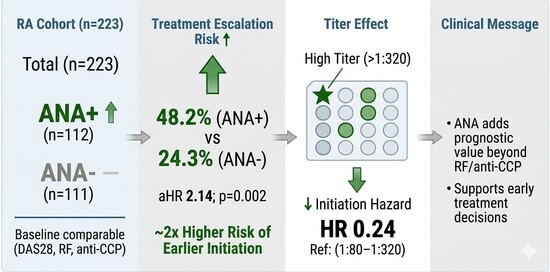
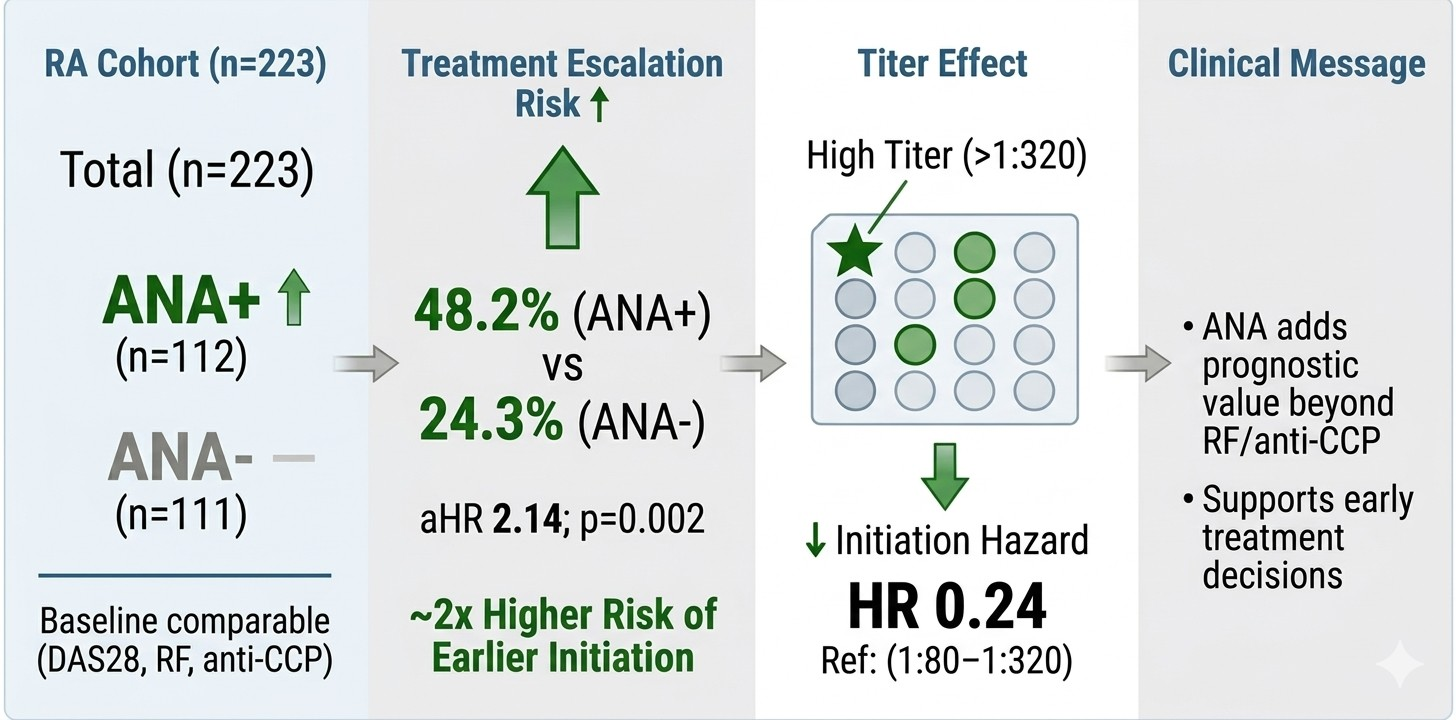
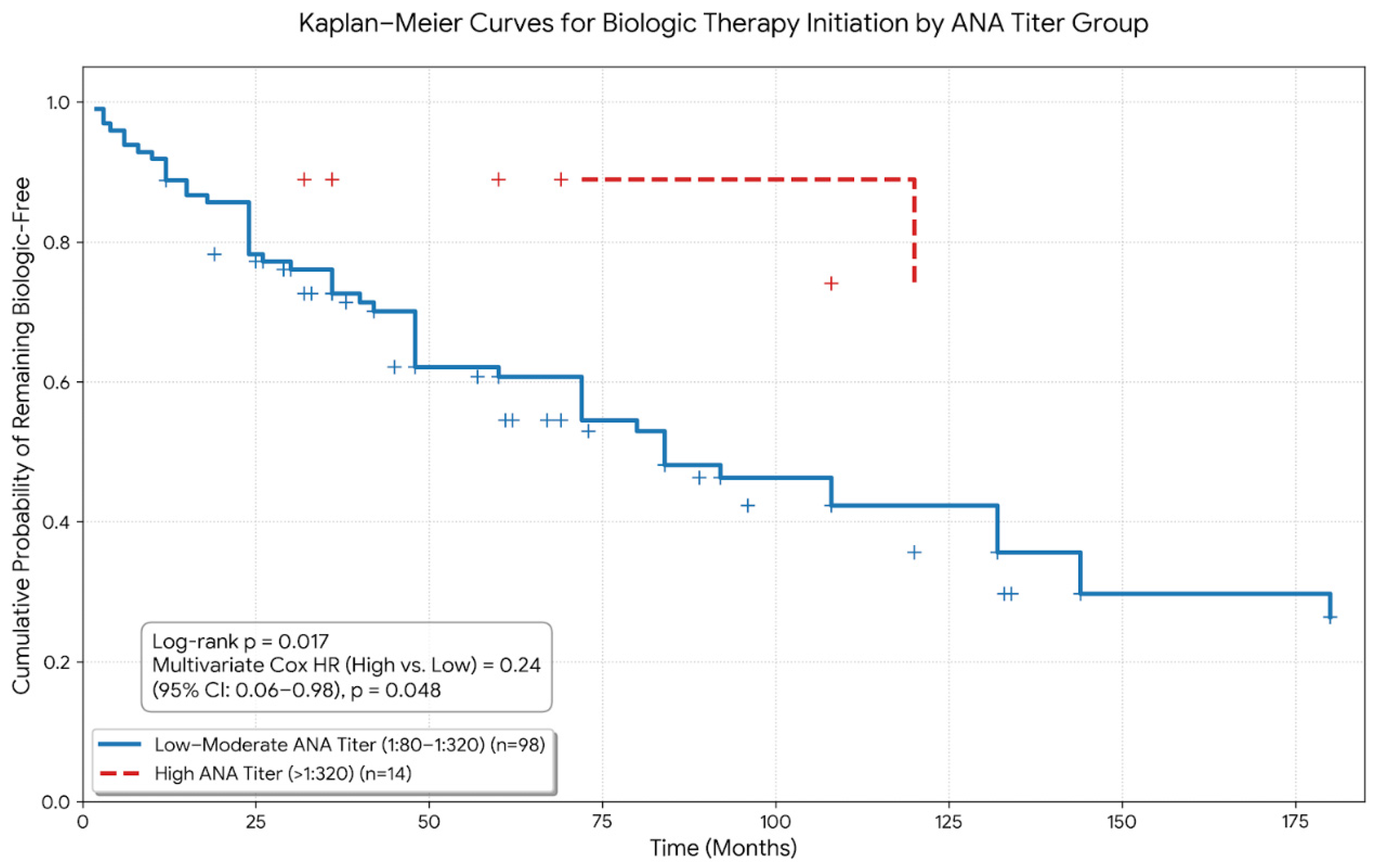
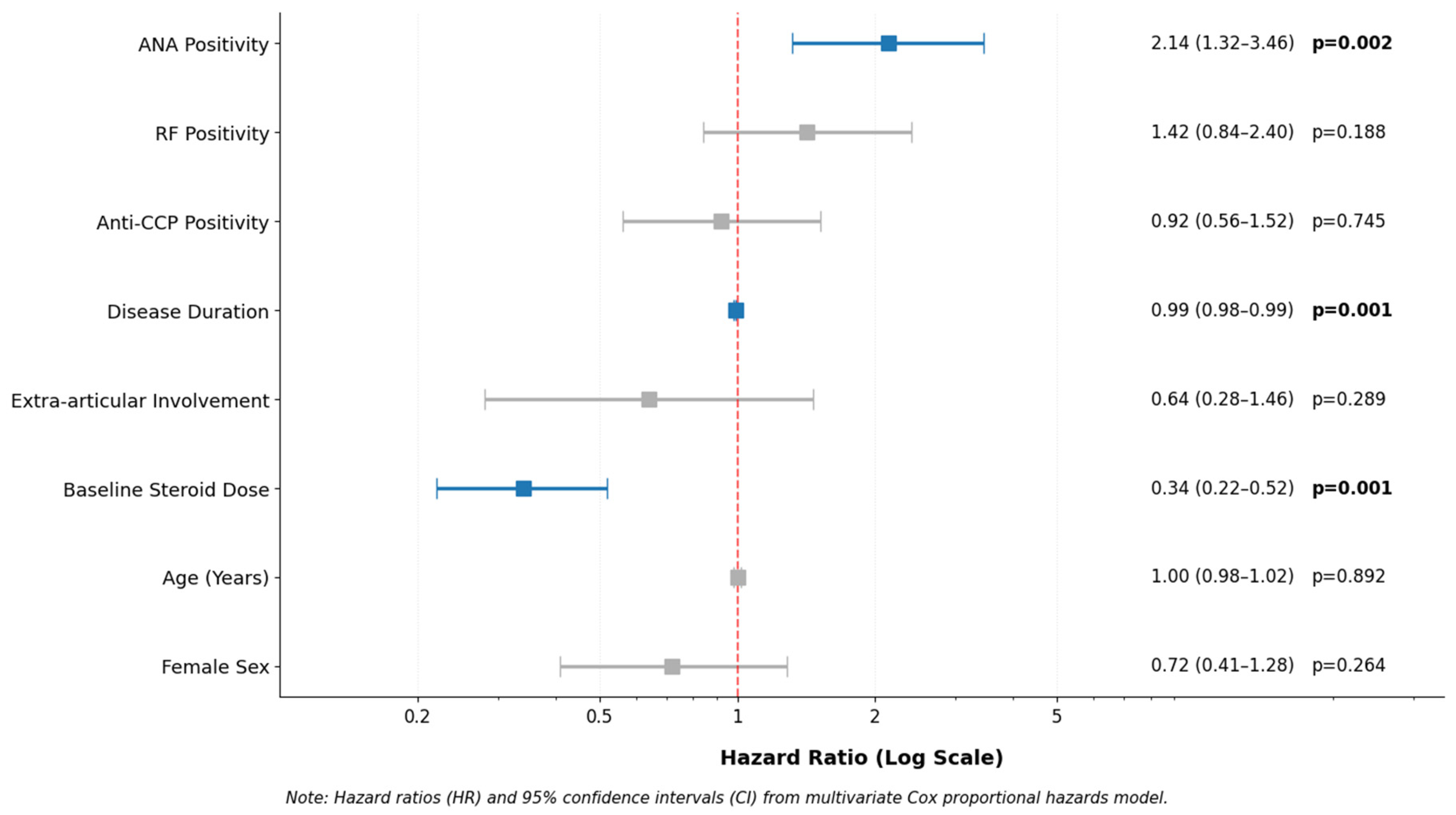
Background: Antinuclear antibodies (ANAs) are frequently detected in patients with rheumatoid arthritis (RA); however, their prognostic relevance for predicting treatment escalation and biologic therapy initiation remains incompletely understood. Identifying biomarkers associated with earlier transition to advanced therapies may enhance individualized, treat-to-target disease management. Objectives: We aimed to evaluate the association of ANA status and titer levels with clinical characteristics, treatment trajectories, and time to biologic therapy initiation in patients with RA. Methods: In this retrospective cohort study, 223 patients with RA were stratified according to ANA status (112 ANA-positive, 111 ANA-negative). Baseline demographic data, disease activity (DAS28), and serological markers (RF, anti-CCP) were analyzed. Time to biologic therapy initiation, defined from the date of RA diagnosis to first biologic or targeted synthetic DMARD use, was assessed using Kaplan–Meier survival analysis and Cox proportional hazards regression. Multivariate models adjusted for clinically relevant covariates (age, sex, disease duration, RF, anti-CCP). Within the ANA-positive group, exploratory analyses compared low–moderate (1:80–1:320) and high (>1:320) ANA titers, highlighting potential non-linear effects. Results: Baseline demographic and clinical characteristics were comparable between groups (all p > 0.05). ANA-positive patients more frequently initiated biologic therapy (48.2% vs. 24.3%, p < 0.001) and experienced multiple biologic switches (29.5% vs. 16.2%, p = 0.028). In multivariate analysis, ANA positivity independently predicted earlier biologic therapy initiation (adjusted HR 2.14; 95% CI 1.32–3.46; p = 0.002), whereas RF and anti-CCP status were not significant predictors. Exploratory subgroup analysis revealed the “titer paradox,” whereby high ANA titers (>1:320) were associated with a lower hazard of biologic therapy initiation compared with low–moderate titers (HR 0.24; 95% CI 0.06–0.98; p = 0.048). Conclusions: ANA positivity serves as an independent prognostic marker for earlier biologic therapy initiation in RA, providing incremental information beyond traditional serological markers. The observed non-linear association between ANA titers and treatment escalation underscores the need for cautious interpretation and validation in prospective, mechanistic studies, and highlights the potential value of integrating ANA profiling into personalized treatment strategies.
Keywords: rheumatoid arthritis; antinuclear antibodies; biologic therapy; Cox regression; treatment escalation; prognostic biomarkers rheumatoid arthritis; antinuclear antibodies; biologic therapy; Cox regression; treatment escalation; prognostic biomarkers
Graphical Abstract